
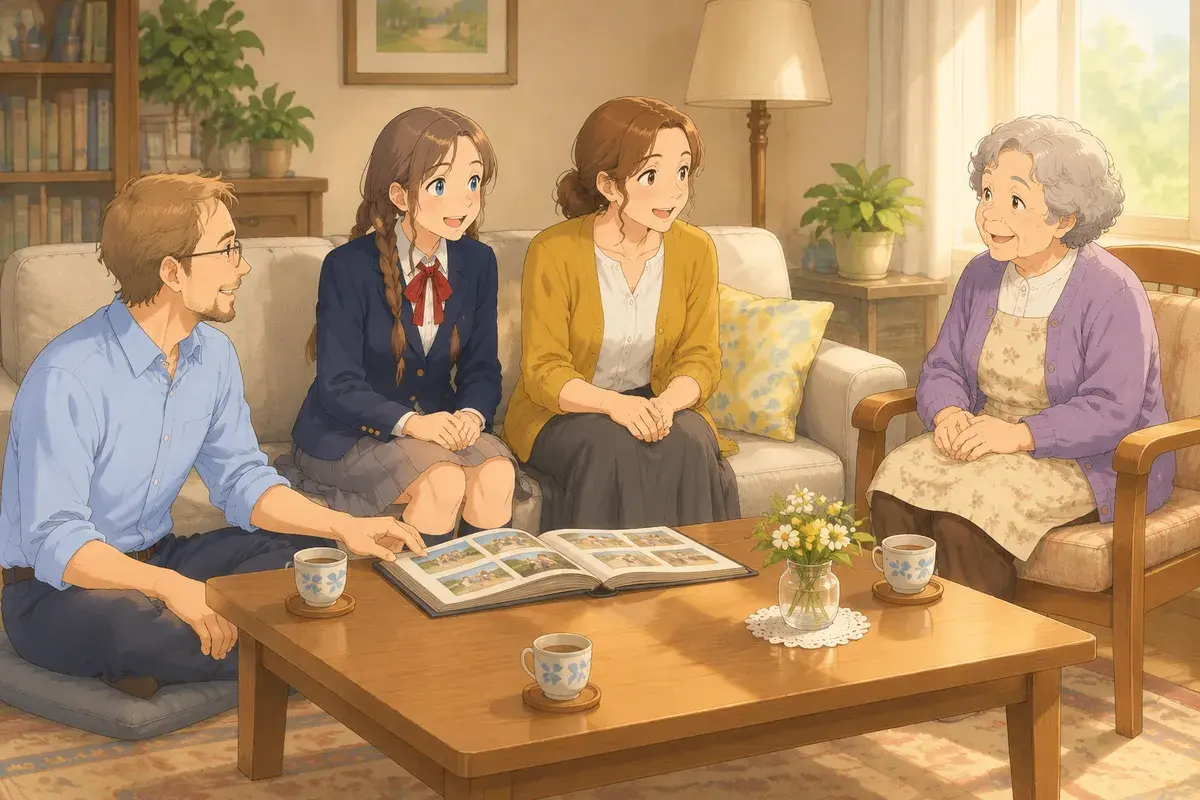
Japanese dialogue with translation · A1 · 13 lines
家族は三人です There are three people in my family
Comic · 13 panels
- ソーニャ
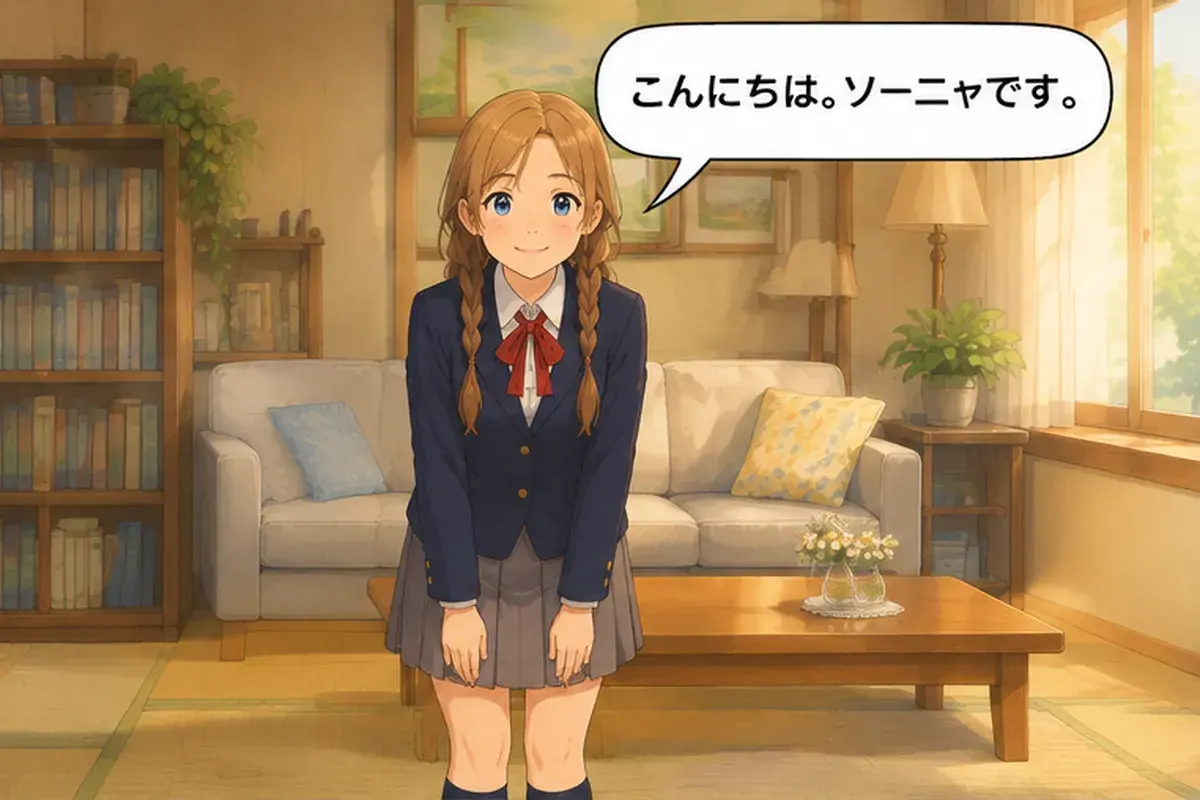
こんにちは。ソーニャです。
Hello. I'm Sonya.
- ソーニャ
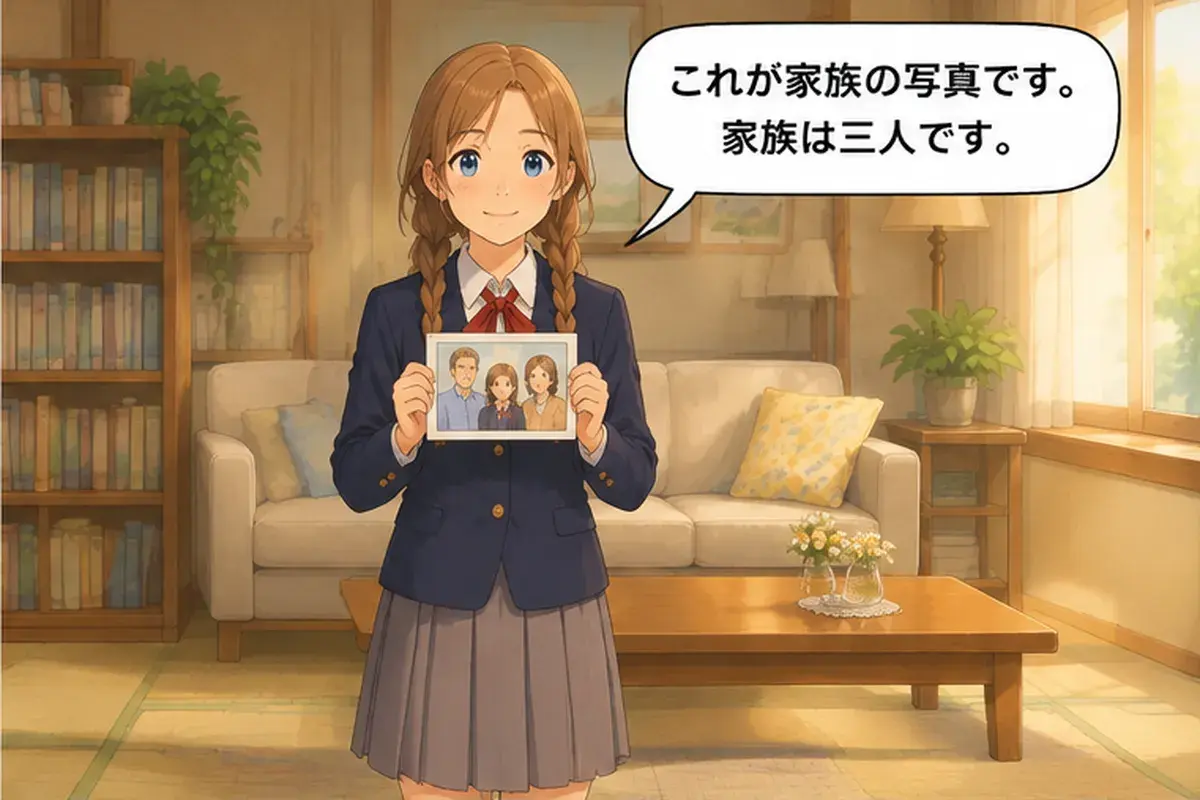
これが家族の写真です。家族は三人です。
Here's a photo of my family. There are three people in my family.
- ソーニャ
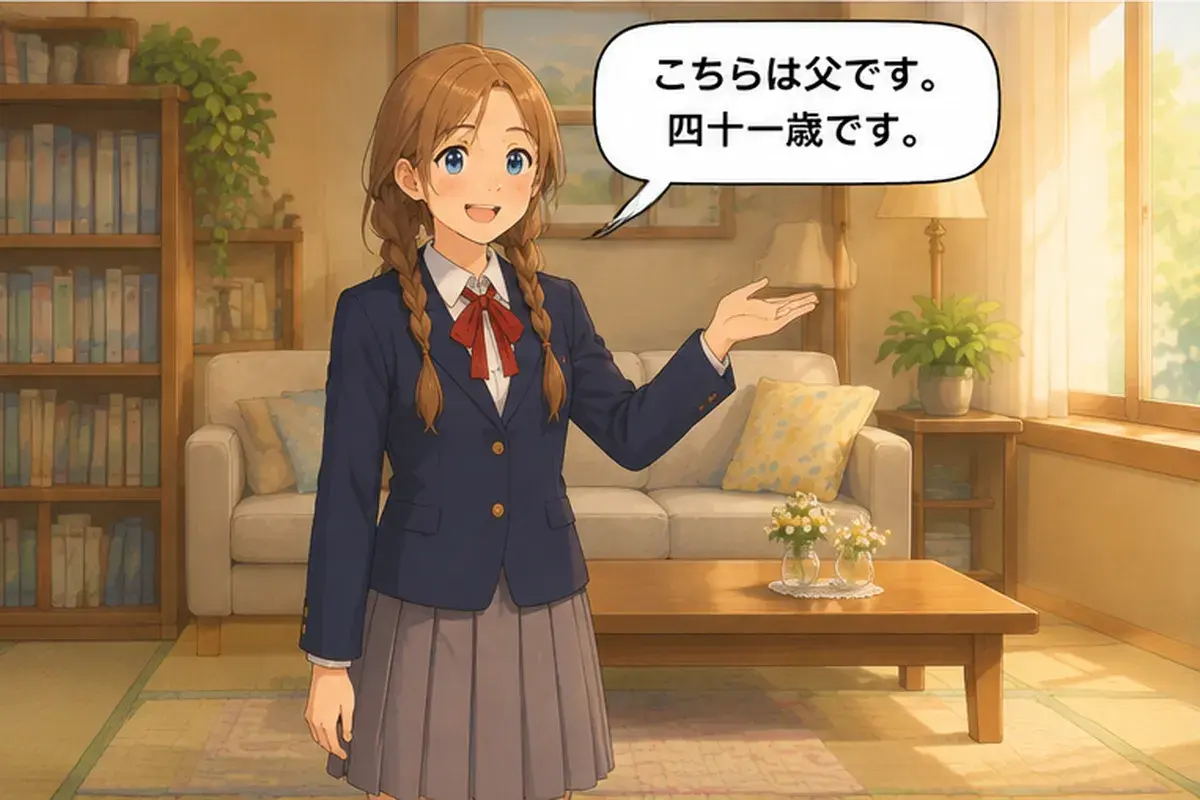
こちらは父です。四十一歳です。
This is my father. He's 41.
- ソーニャ
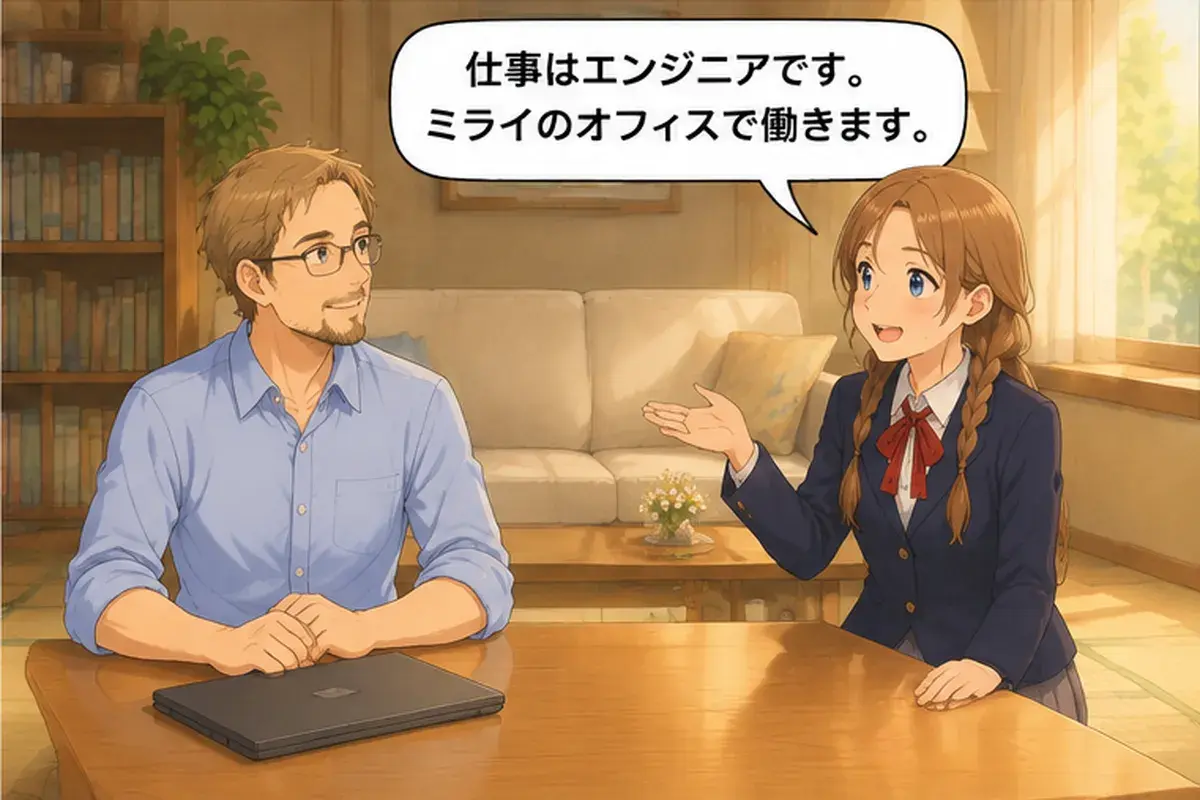
仕事はエンジニアです。ミライのオフィスで働きます。
He's an engineer by trade. He works at the Mirai office.
- ソーニャ
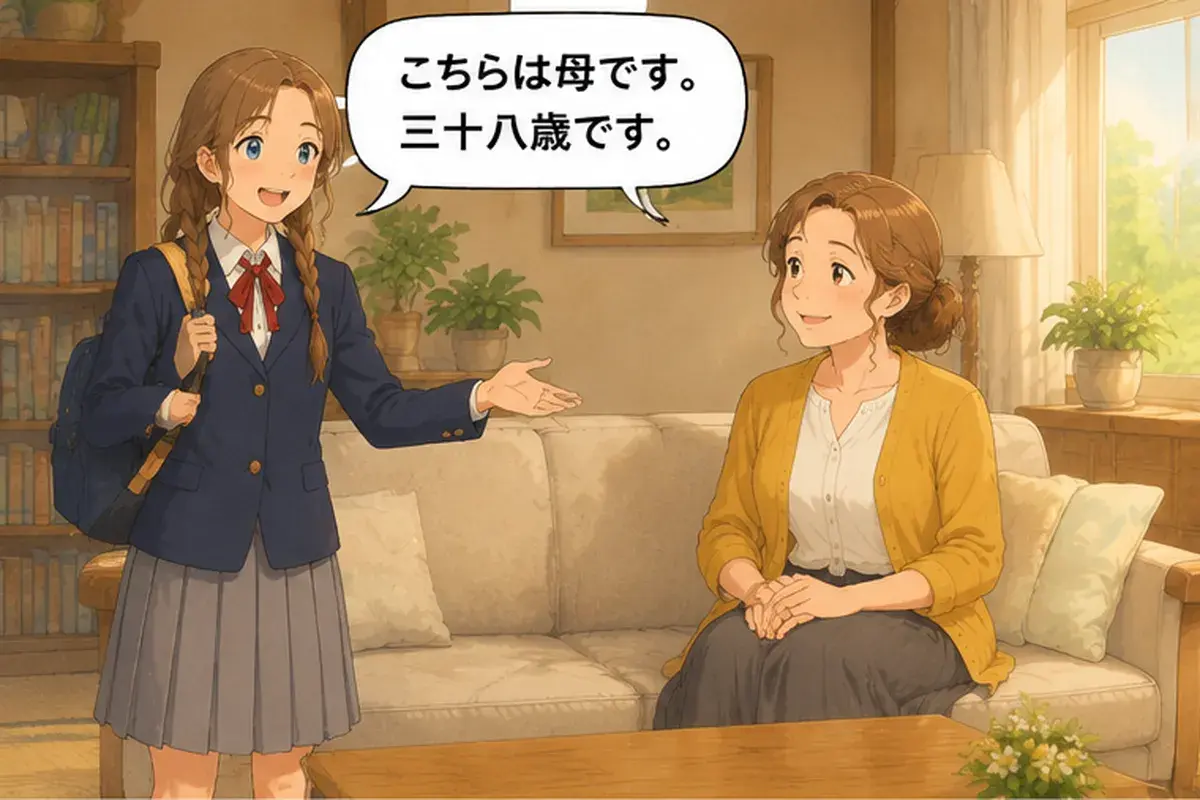
こちらは母です。三十八歳です。
This is my mother. She's 38.
- ソーニャ
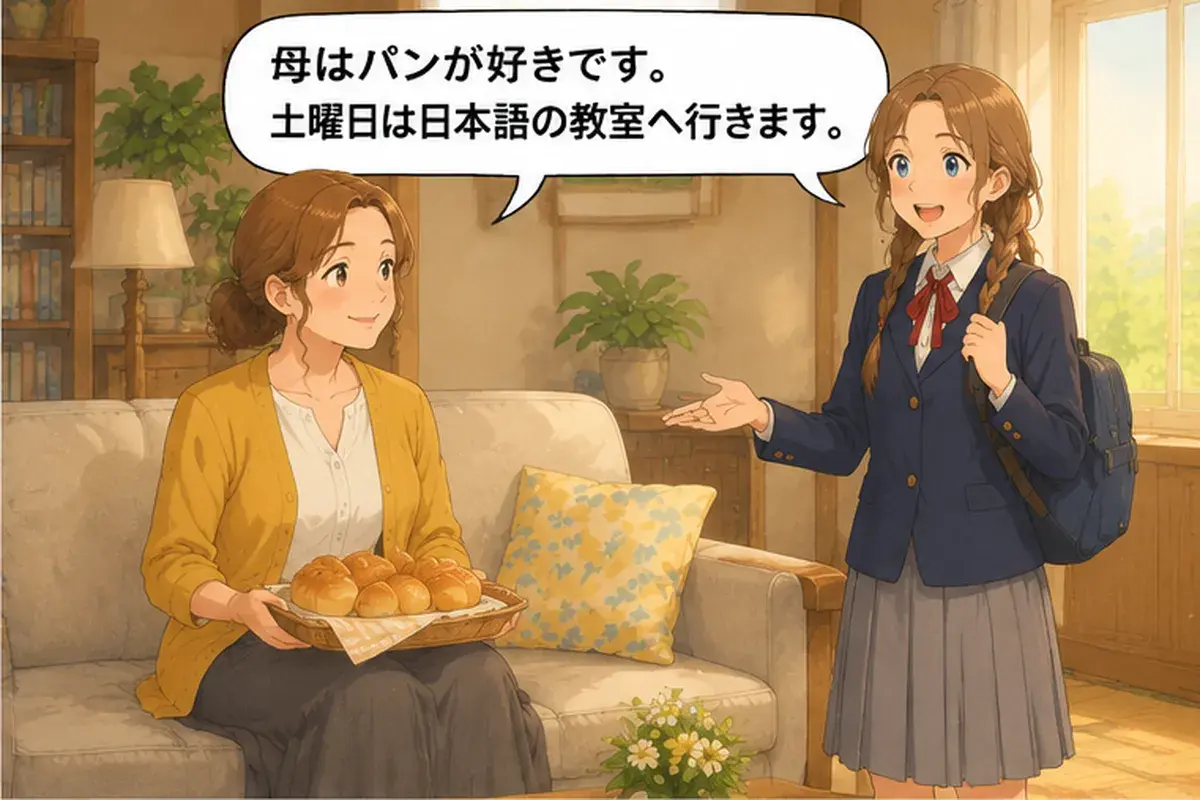
母はパンが好きです。土曜日は日本語の教室へ行きます。
My mother likes bread. On Saturdays she goes to a Japanese class.
- ソーニャ
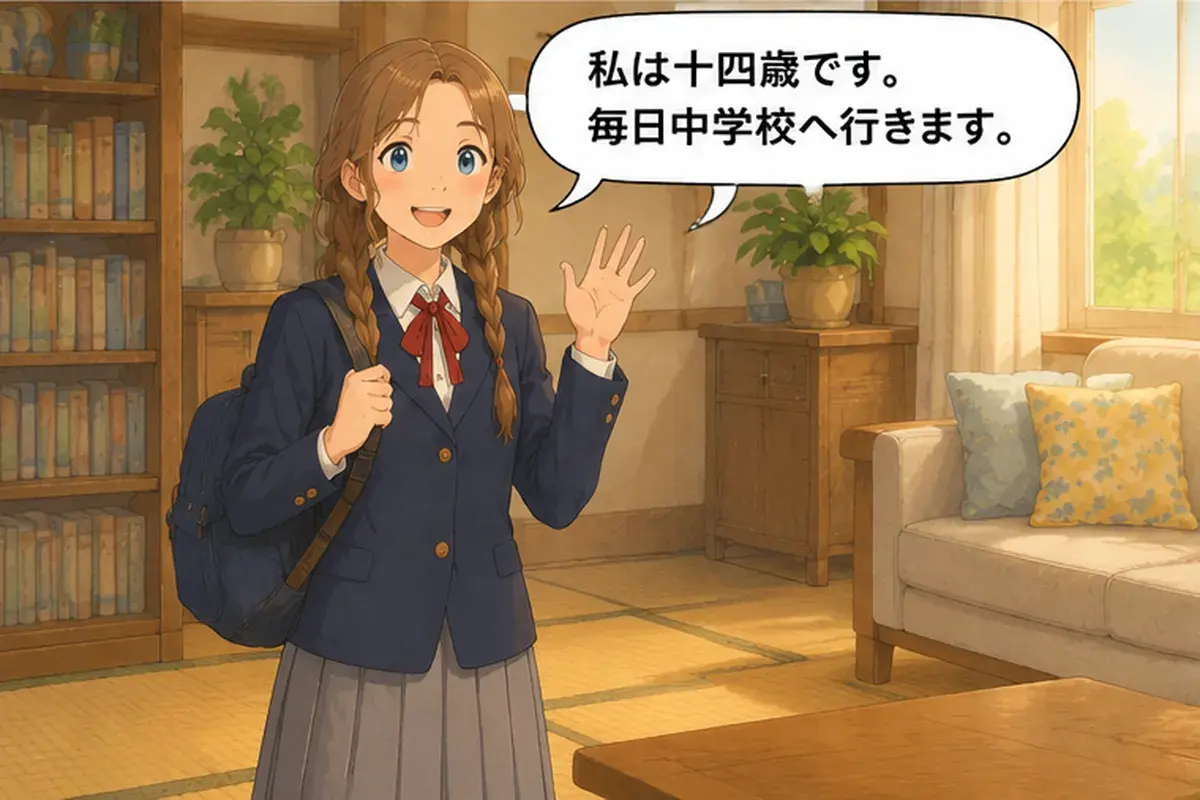
私は十四歳です。毎日中学校へ行きます。
I'm 14. I go to junior high school every day.
- ソーニャ
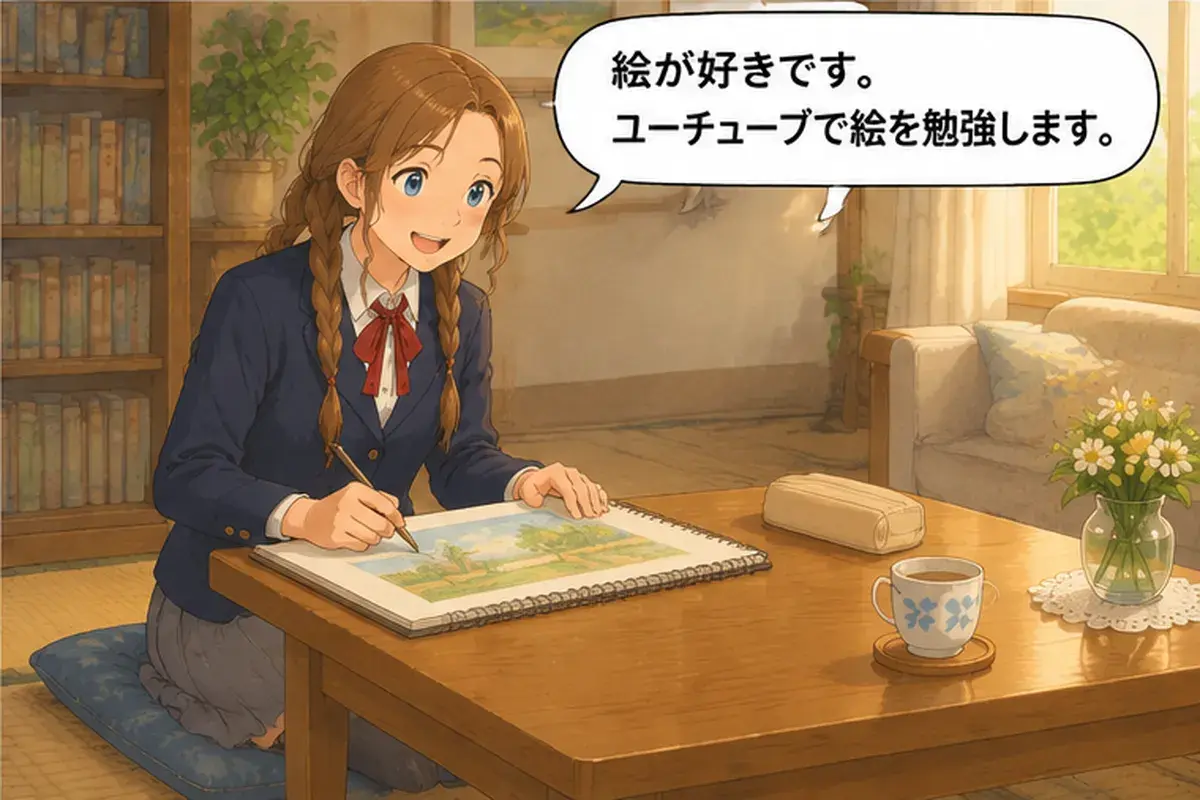
絵が好きです。ユーチューブで絵を勉強します。
I like drawing. I study drawing on YouTube.
- ソーニャ
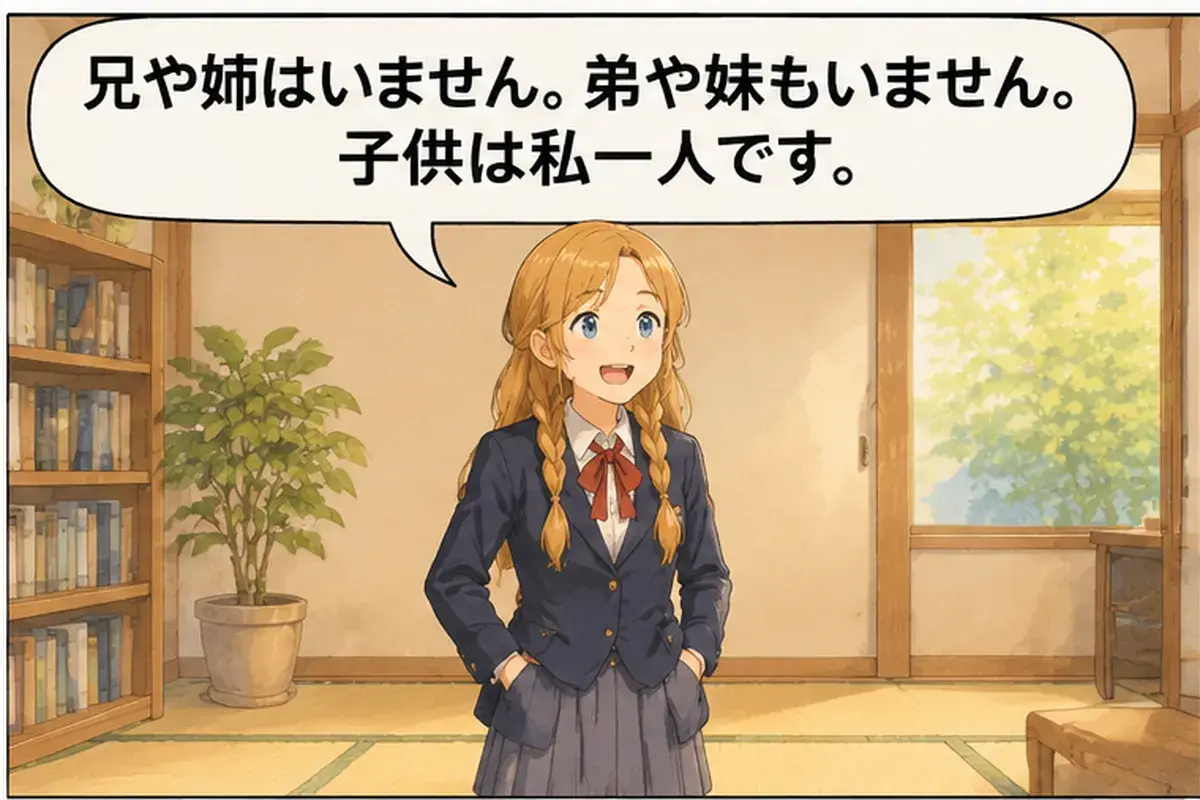
兄や姉はいません。弟や妹もいません。子供は私一人です。
I don't have an older brother or an older sister. I don't have a younger brother or a younger sister either. I'm an only child.
- ソーニャ
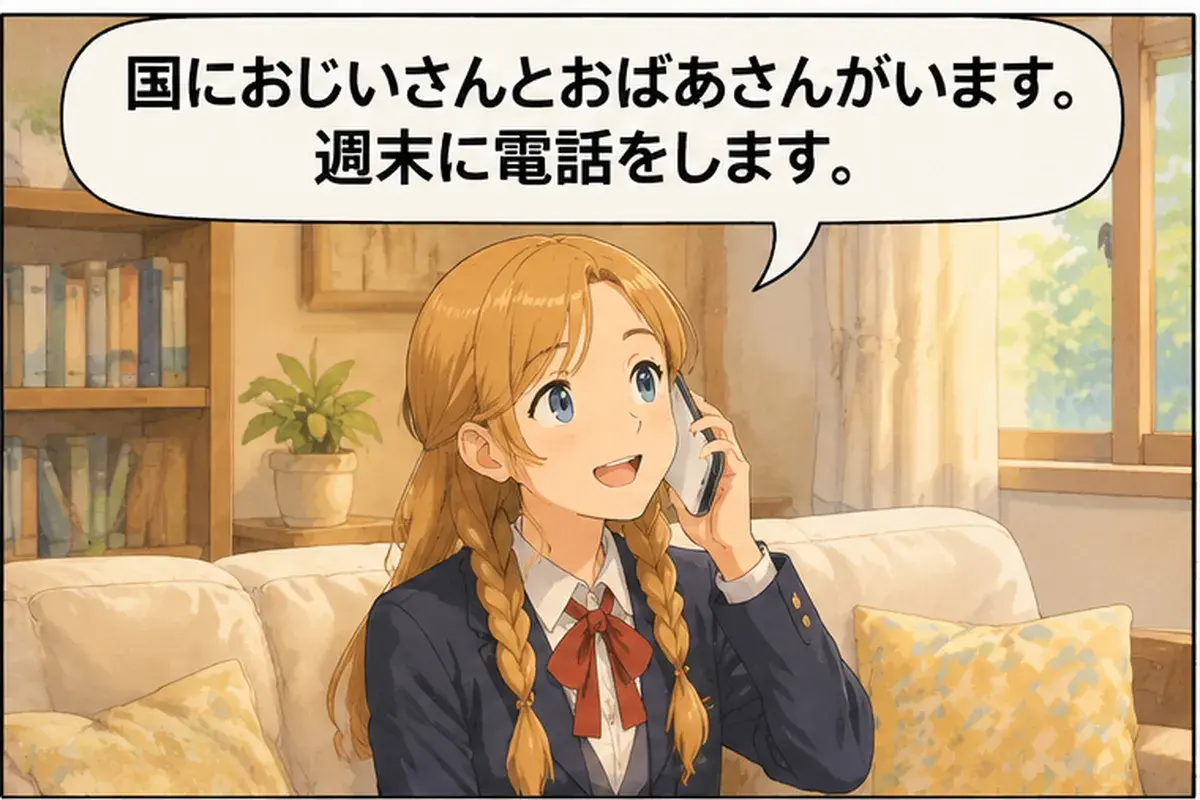
国におじいさんとおばあさんがいます。週末に電話をします。
My grandfather and grandmother are back in my home country. I call them on weekends.
- ソーニャ
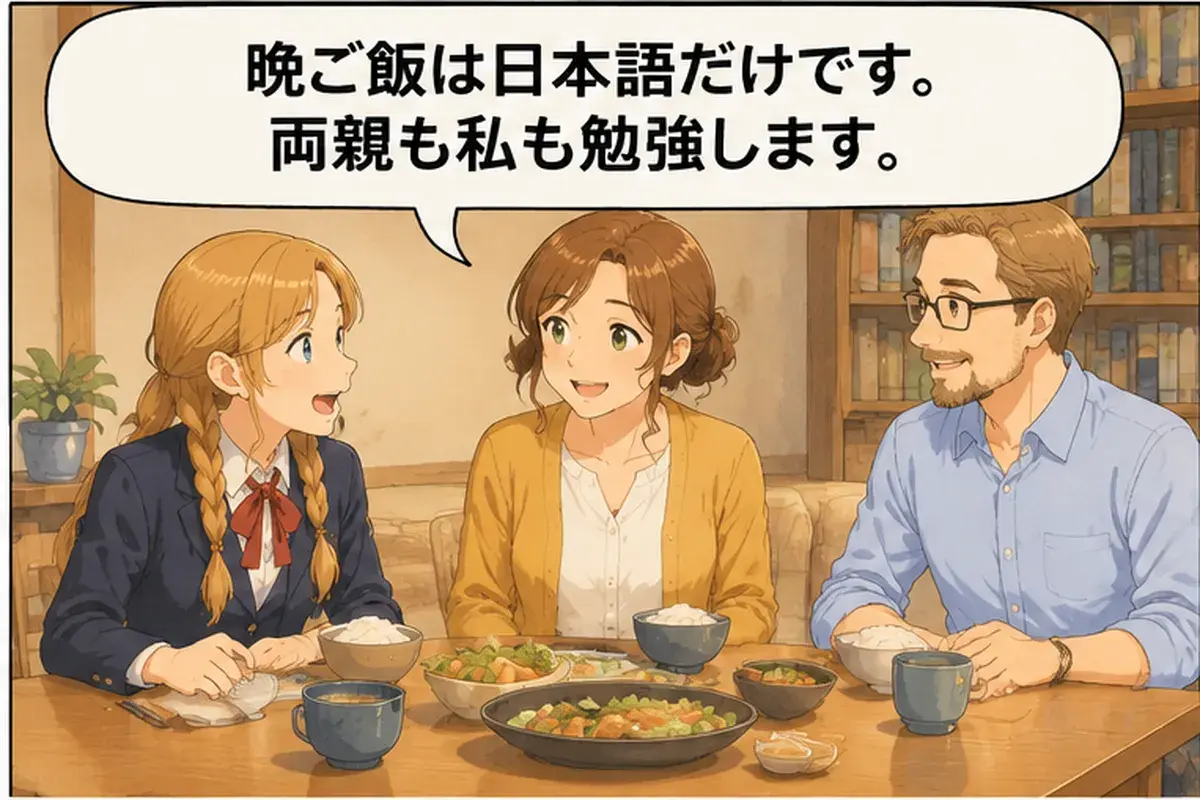
晩ご飯は日本語だけです。両親も私も勉強します。
At dinner, we speak only Japanese. My parents and I both study it.
- ソーニャ
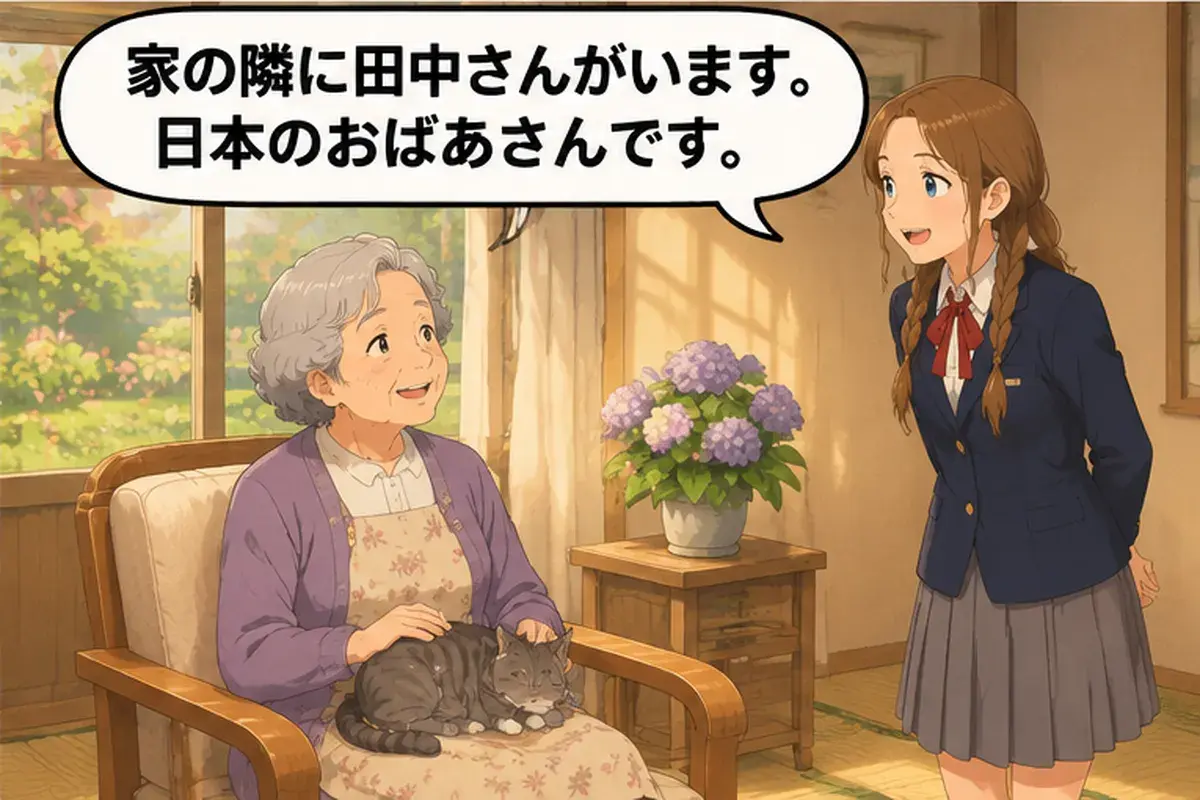
家の隣に田中さんがいます。日本のおばあさんです。
Next door to our house, there's Tanaka-san. She's our Japanese grandma.
- ソーニャ
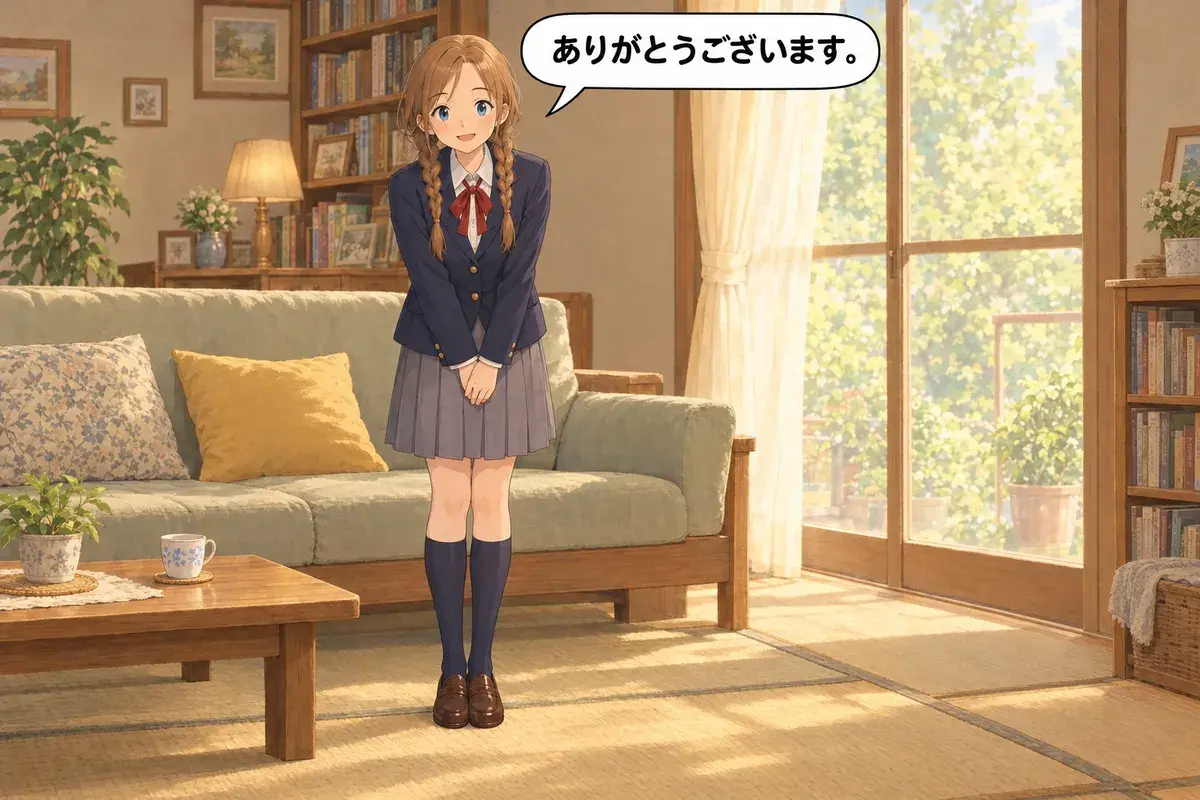
ありがとうございます。
Thank you.
Grammar for this text
こちら は 父 です — Sonya is talking to her class, that is, to people outside the family, so she says 父, not お父さん. The same goes for 母 は パン が 好き です. If she were calling her dad, she'd say お父さん.
家族 は 三人 です — people are counted with 人: 三人 is read さんにん. In 子供 は 私 一人 です, 一人 is read ひとり: "of the children, it's only me".
四十 一歳 です — age is the number plus 歳. The tens stand apart, and the last digit goes together with 歳: 四十 一歳, 十 四歳. To ask someone's age, say 何歳 (nansai).
兄 や 姉 は いません。 弟 や 妹 も いません — Japanese has a separate word for each: older brother 兄, older sister 姉, younger brother 弟, younger sister 妹. や lists them ("an older brother or an older sister"), and いません is the negative of います (Unit 9): "there isn't, I don't have".
晩ご飯 は 日本語 だけ です — だけ means "only": at dinner they speak nothing but Japanese.
国 に おじいさん と おばあさん が います — her grandparents stayed in their home country; が います means "are there, live".
日本 の おばあさん です — おばあさん isn't always your own grandmother: it's a polite word for any older woman. To Sonya, Tanaka-san is a "Japanese grandma".
Words and grammar of the unit: Talk about your family.
Learn the words from the texts with flashcards
In the app, you can tap any word in a text to see its translation, forms and examples, and new words stick with flashcards. 15 minutes a day.
Start for freeEverything is open for free. No card needed to sign up.