
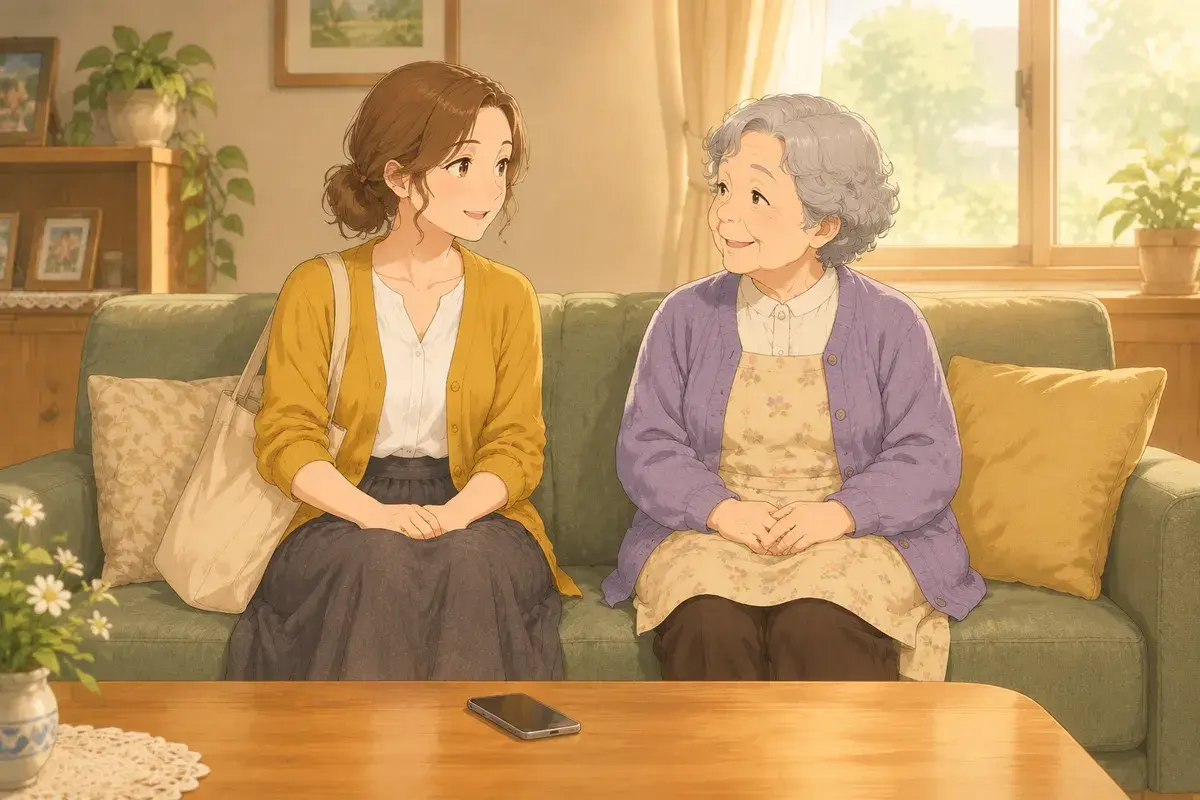
Japanese dialogue with translation · A1 · 14 lines
お母さん、元気ですか Mom, how are you?
Comic · 11 panels
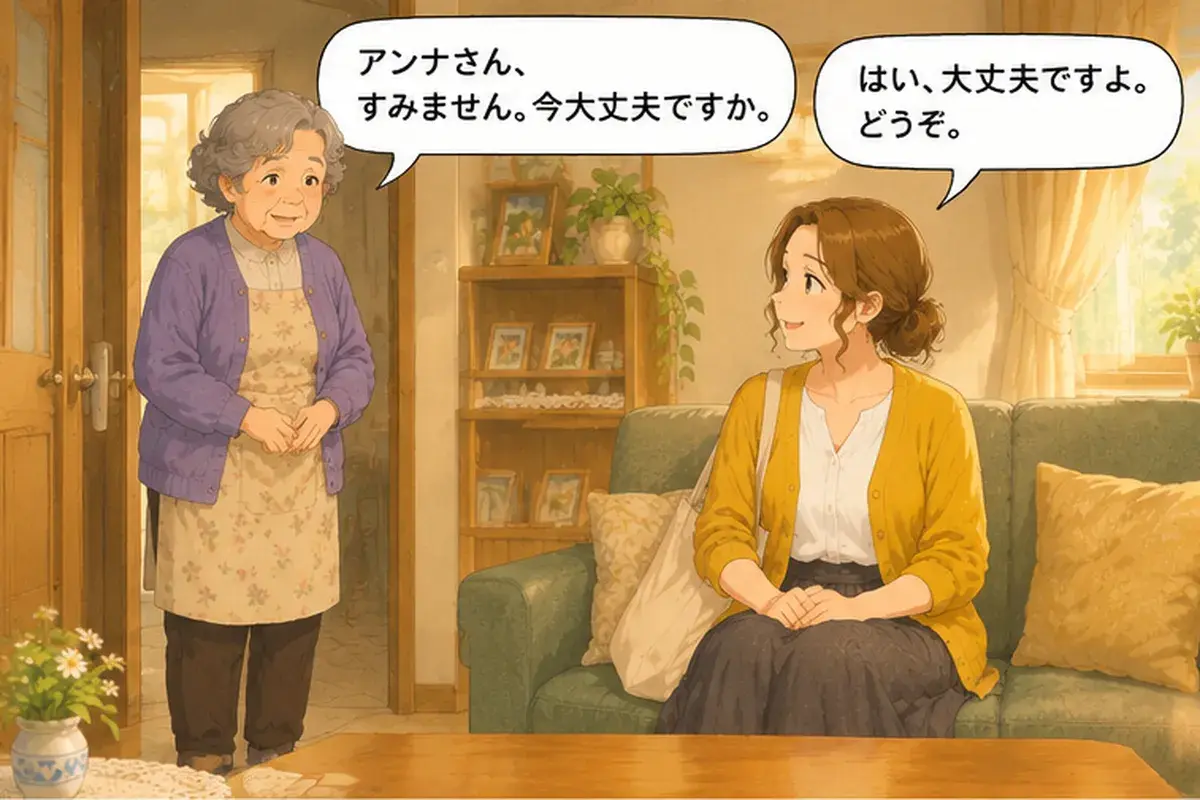
- 田中
アンナさん、すみません。今大丈夫ですか。
Anna-san, excuse me. Is now a good time?
- アンナ
はい、大丈夫ですよ。どうぞ。
Yes, it's fine. Come in.
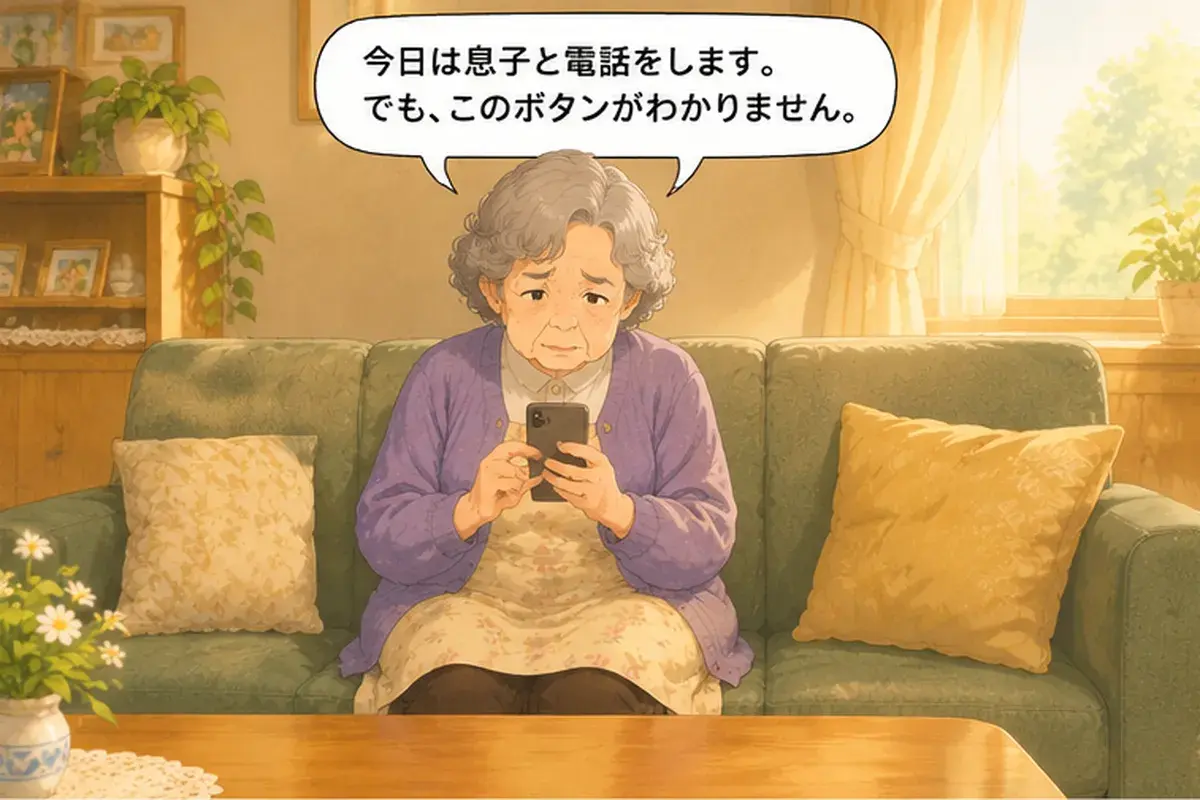
- 田中
今日は息子と電話をします。でも、このボタンがわかりません。
Today I'm going to talk to my son on the phone. But I don't understand this button.
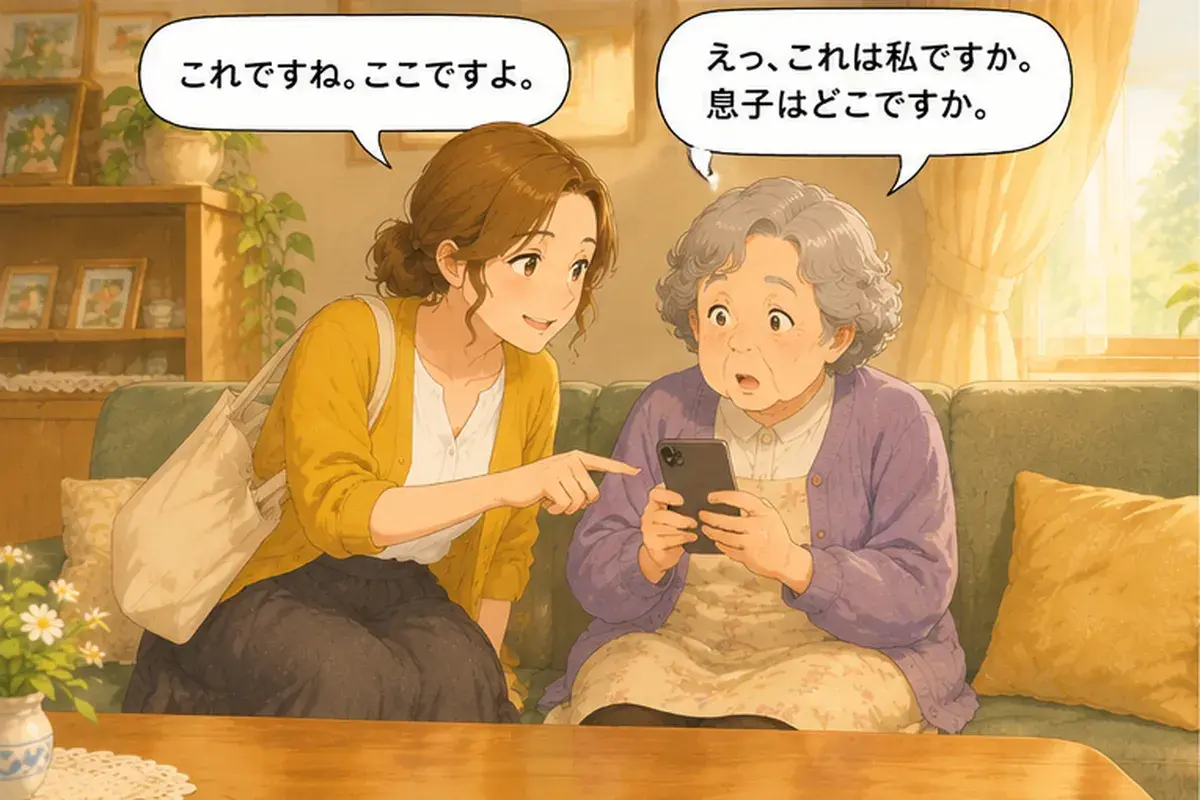
- アンナ
これですね。ここですよ。
This one, right? It's right here.
- 田中
えっ、これは私ですか。息子はどこですか。
What? Is this me? Where's my son?
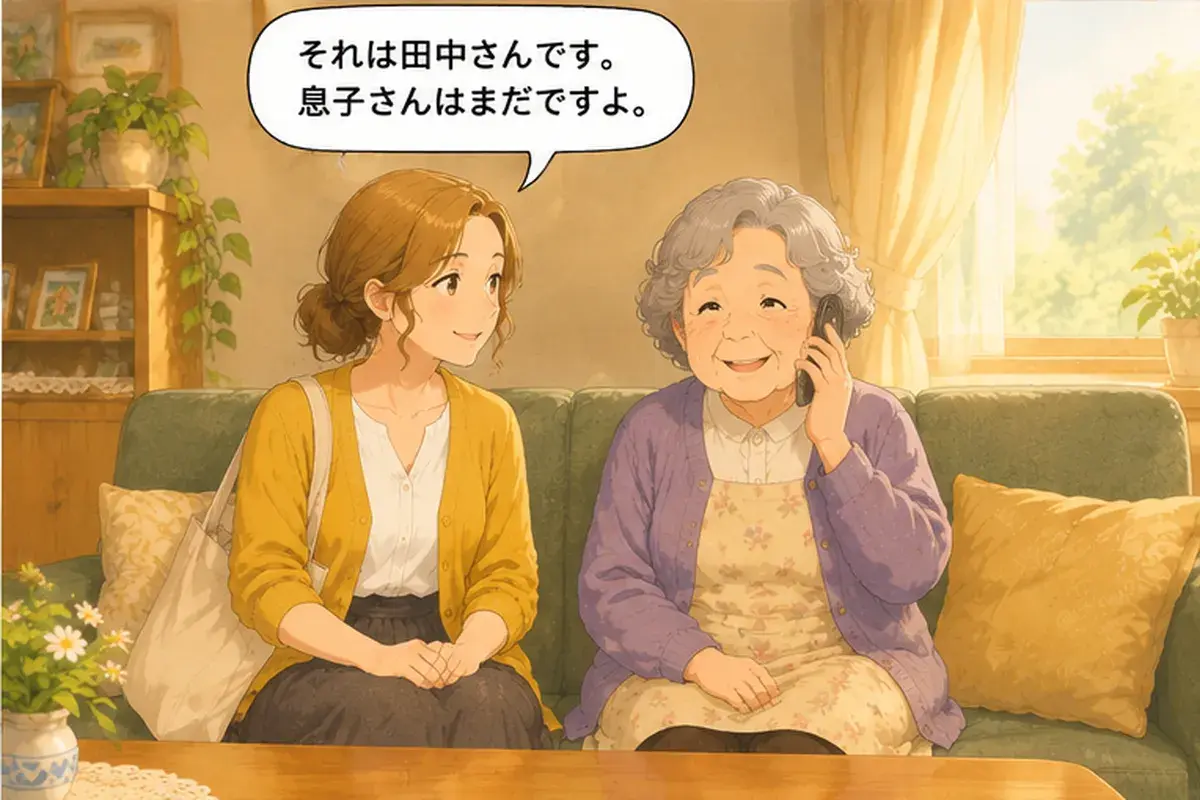
- アンナ
それは田中さんです。息子さんはまだですよ。
That's you, Tanaka-san. Your son isn't on yet.
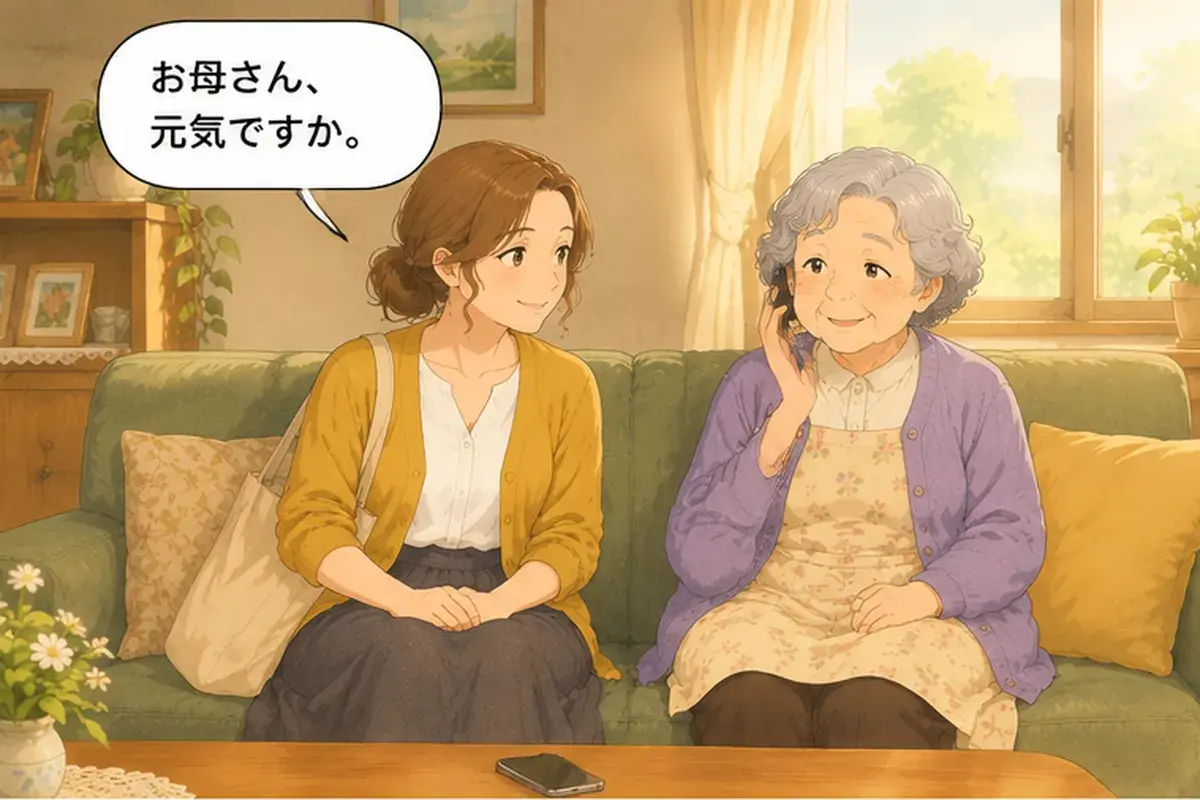
- 息子
お母さん、元気ですか。
Mom, how are you?
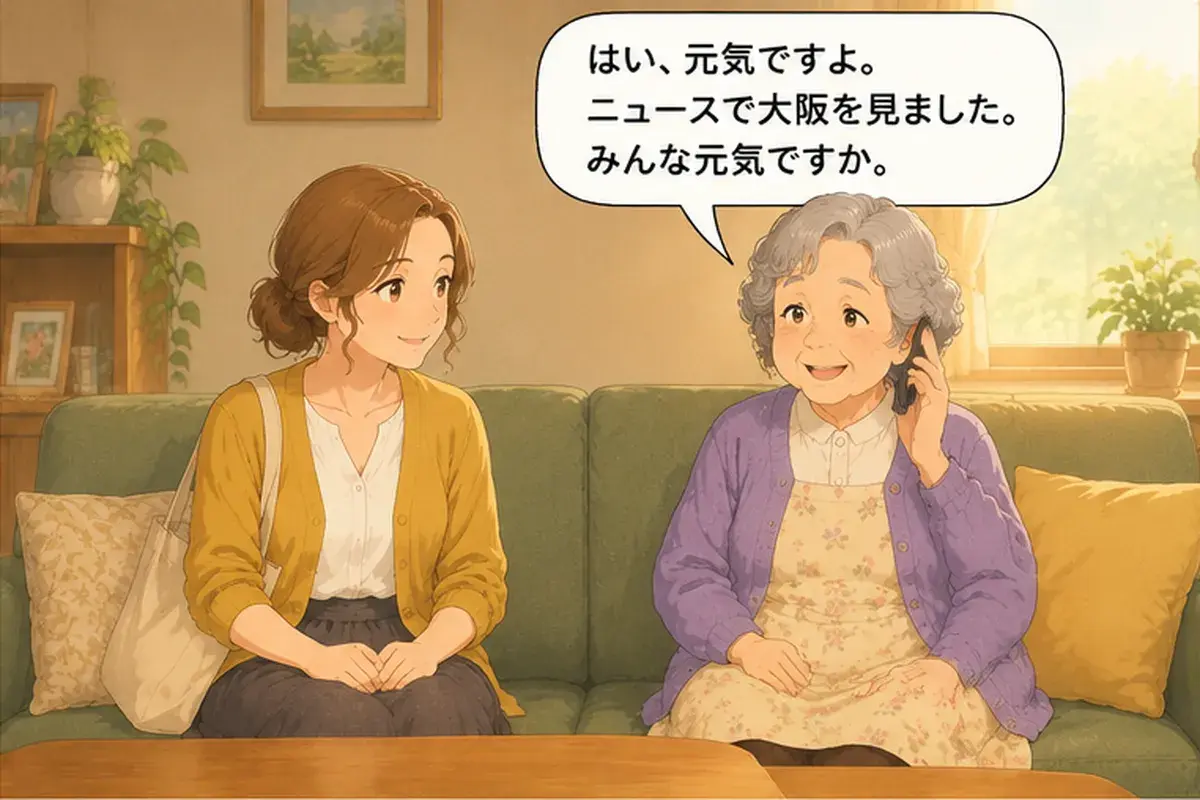
- 田中
はい、元気ですよ。ニュースで大阪を見ました。みんな元気ですか。
Yes, I'm fine. I saw Osaka on the news. Is everyone well?
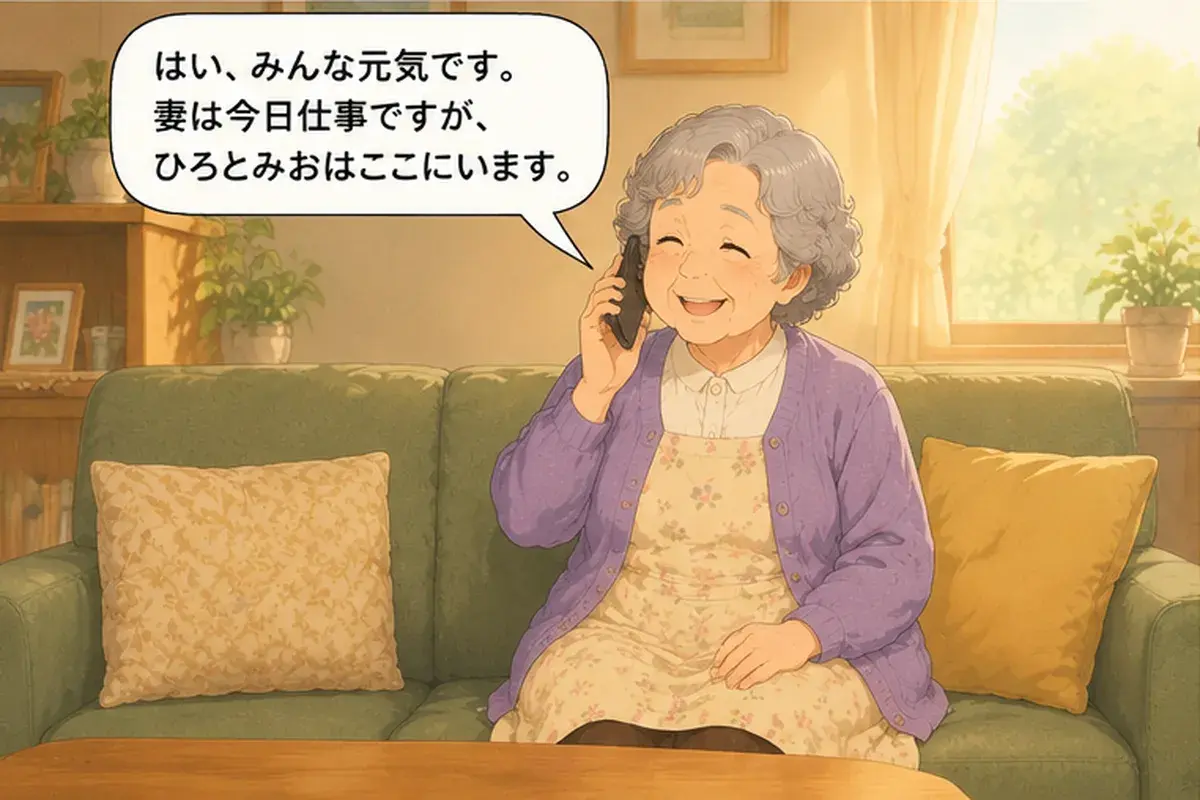
- 息子
はい、みんな元気です。妻は今日仕事ですが、ひろとみおはここにいます。
Yes, everyone's fine. My wife is at work today, but Hiro and Mio are here.
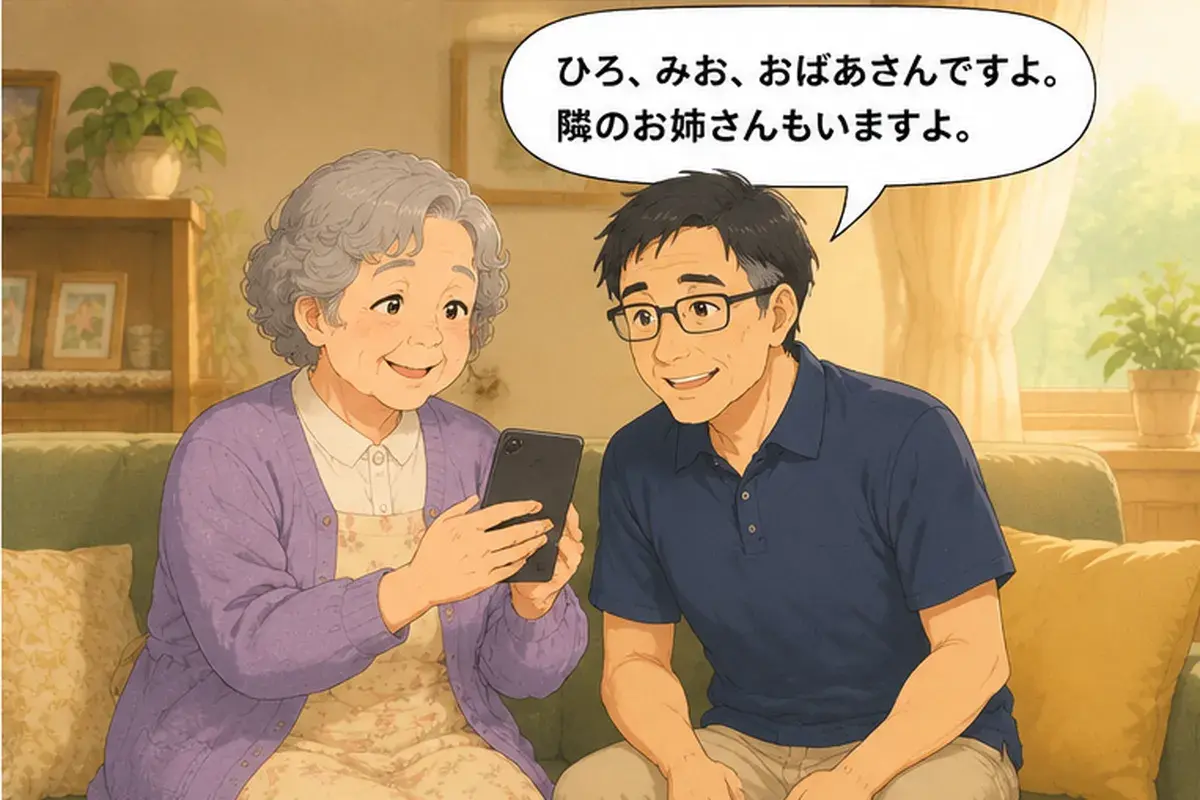
- 息子
ひろ、みお、おばあさんですよ。隣のお姉さんもいますよ。
Hiro, Mio, it's Grandma! The young woman next door is here too.
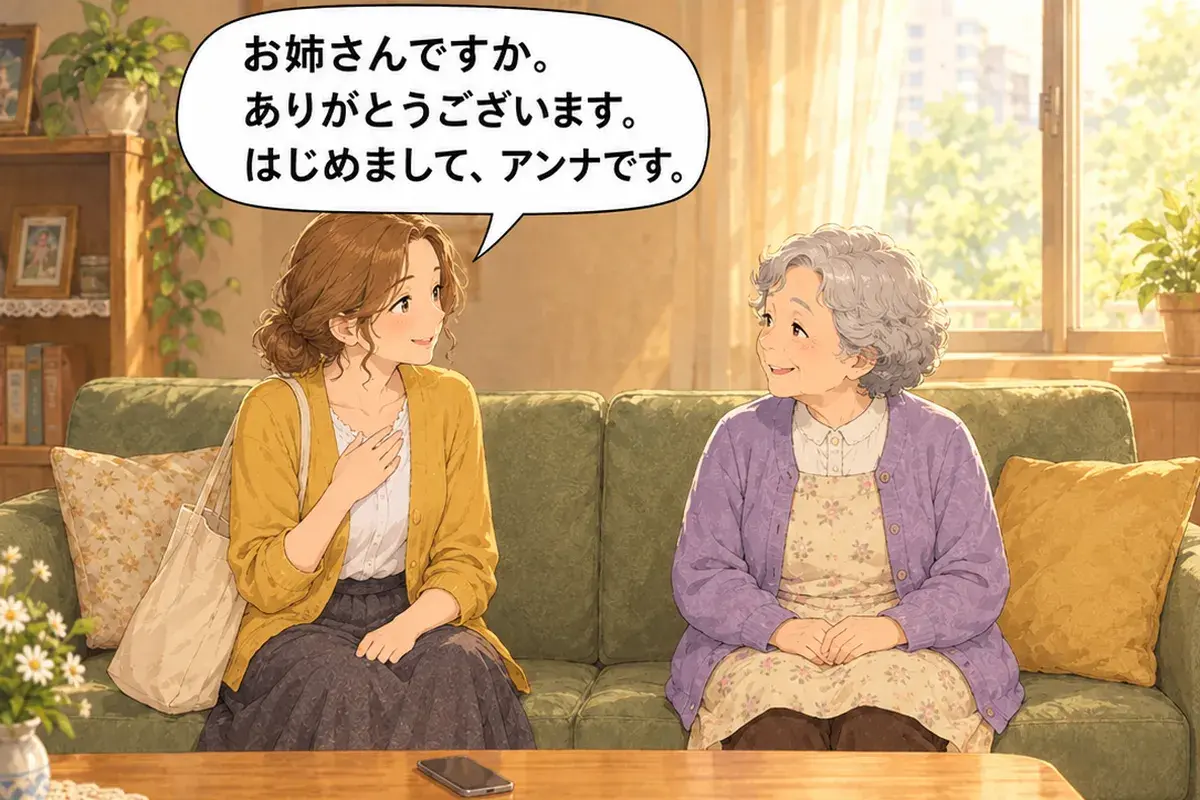
- アンナ
お姉さんですか。ありがとうございます。はじめまして、アンナです。
"Young woman"? Thank you. Nice to meet you, I'm Anna.
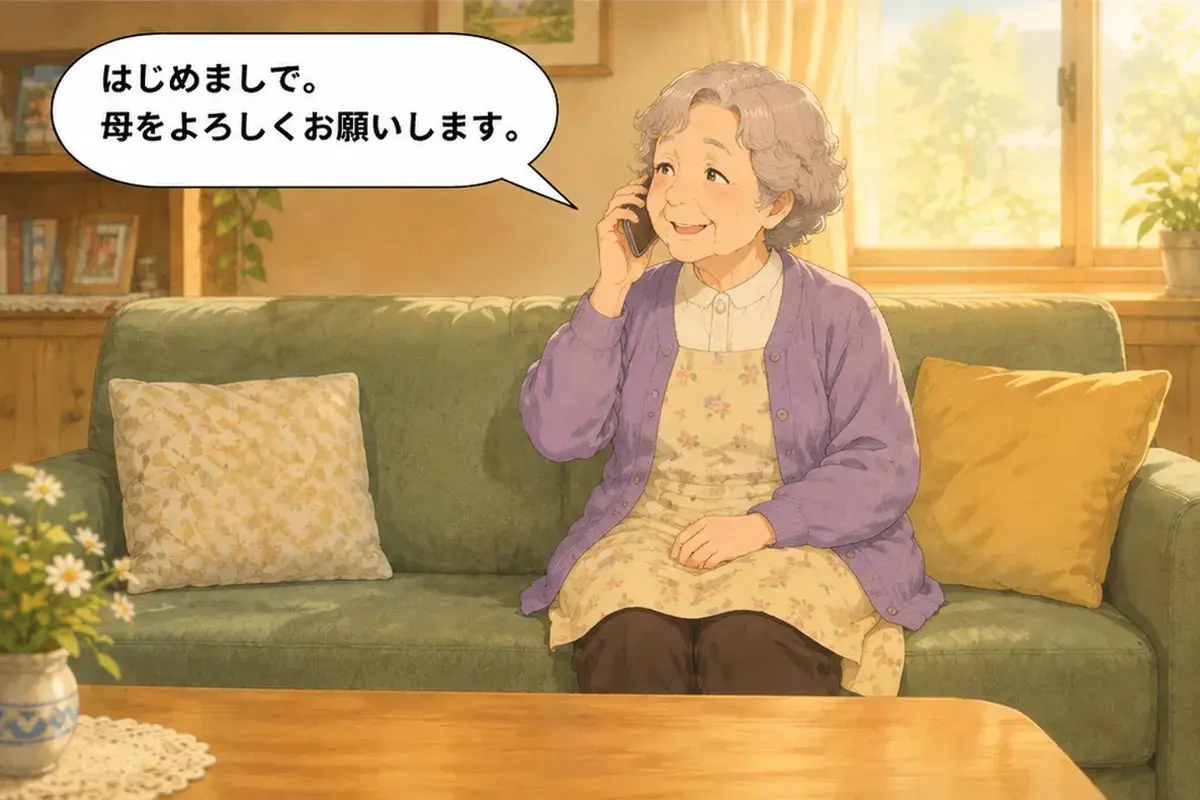
- 息子
はじめまして。母をよろしくお願いします。
Nice to meet you. Please look after my mother.
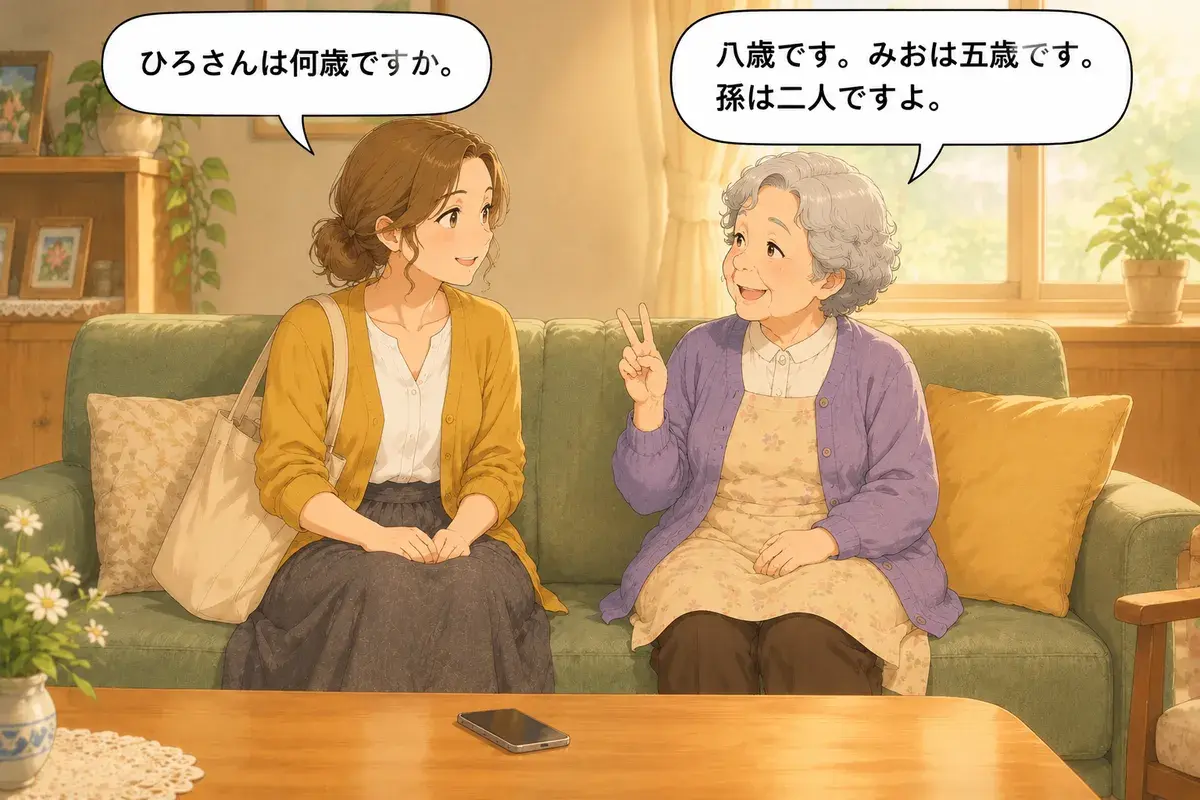
- アンナ
ひろさんは何歳ですか。
How old is Hiro-san?
- 田中
八歳です。みおは五歳です。孫は二人ですよ。
He's eight. Mio is five. I have two grandchildren.
Grammar for this text
お母さん、 元気 です か — the son is calling his own mother, so he says お母さん. But to Anna he says 母 を よろしく お願いします: when you talk about your own mother to someone outside the family, you say 母. One person, two words. The phrase means "please look after my mother".
ひろ、 みお、 おばあさん です よ — the son is talking to his kids, so he calls his mother what the kids call her: おばあさん, "Grandma". Japanese people often talk about family members from the point of view of the youngest person there.
隣 の お姉さん も います よ — お姉さん doesn't always mean "older sister": children use it for any young woman who isn't family. Anna is pleased, so she answers お姉さん です か.
えっ、 これ は 私 です か — えっ shows surprise: "what?". The camera shows Tanaka-san herself first.
息子 さん は まだ です よ — まだ means "not yet" (Unit 11): the son isn't on the screen yet. さん after 息子 makes the word polite: "your son".
八歳 です — "eight years old" is read はっさい; in 孫 は 二人 です, 二人 is read ふたり, "two (people)".
ニュース で 大阪 を 見ました — で here means "on": she saw Osaka on the news. 見ました is the past tense (Unit 11).
妻 は 今日 仕事 です が — 妻 is his own wife, and が here means "but".
この ボタン が わかりません — "I don't understand this button": the thing you don't understand takes が (Unit 10).
Words and grammar of the unit: Talk about your family.
Learn the words from the texts with flashcards
In the app, you can tap any word in a text to see its translation, forms and examples, and new words stick with flashcards. 15 minutes a day.
Start for freeEverything is open for free. No card needed to sign up.