

Japanese dialogue with translation · A1 · 12 lines
ゆいさんの漫画は家にあります Yui-san's manga is at home
Comic · 11 panels
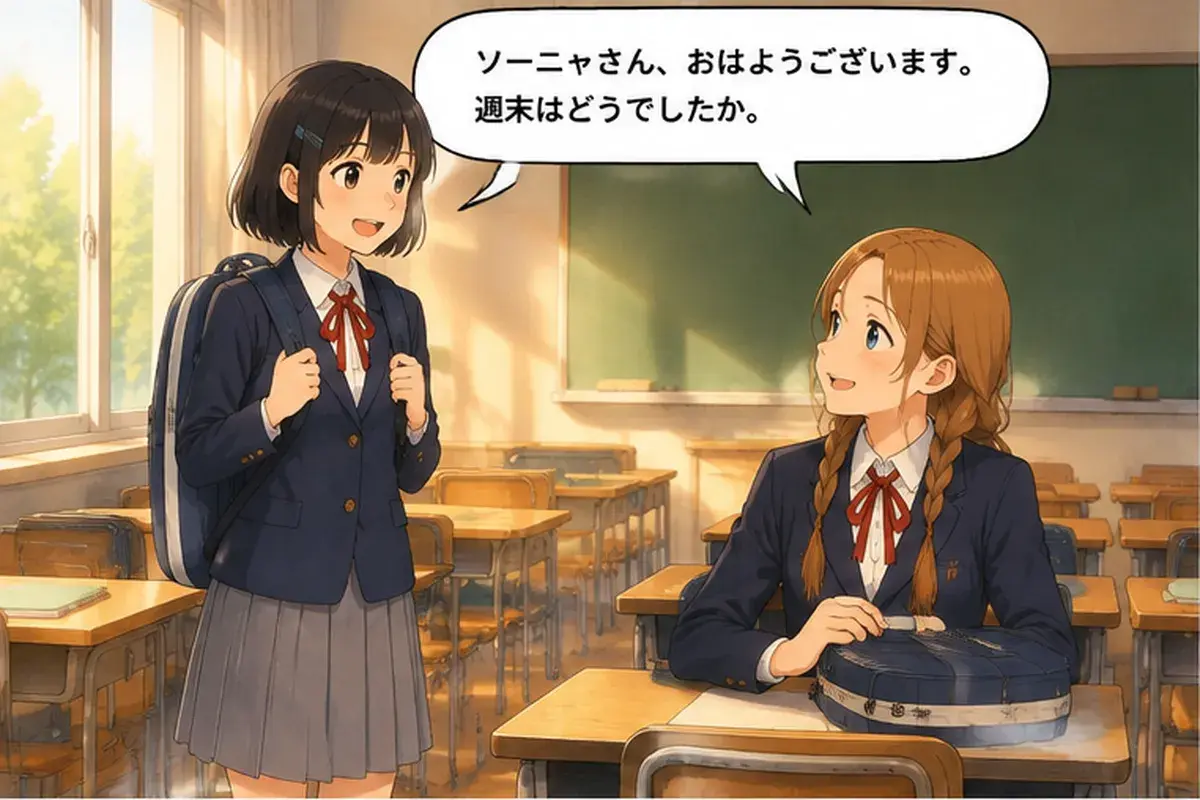
- ゆい
ソーニャさん、おはようございます。週末はどうでしたか。
Sonya-san, good morning. How was your weekend?
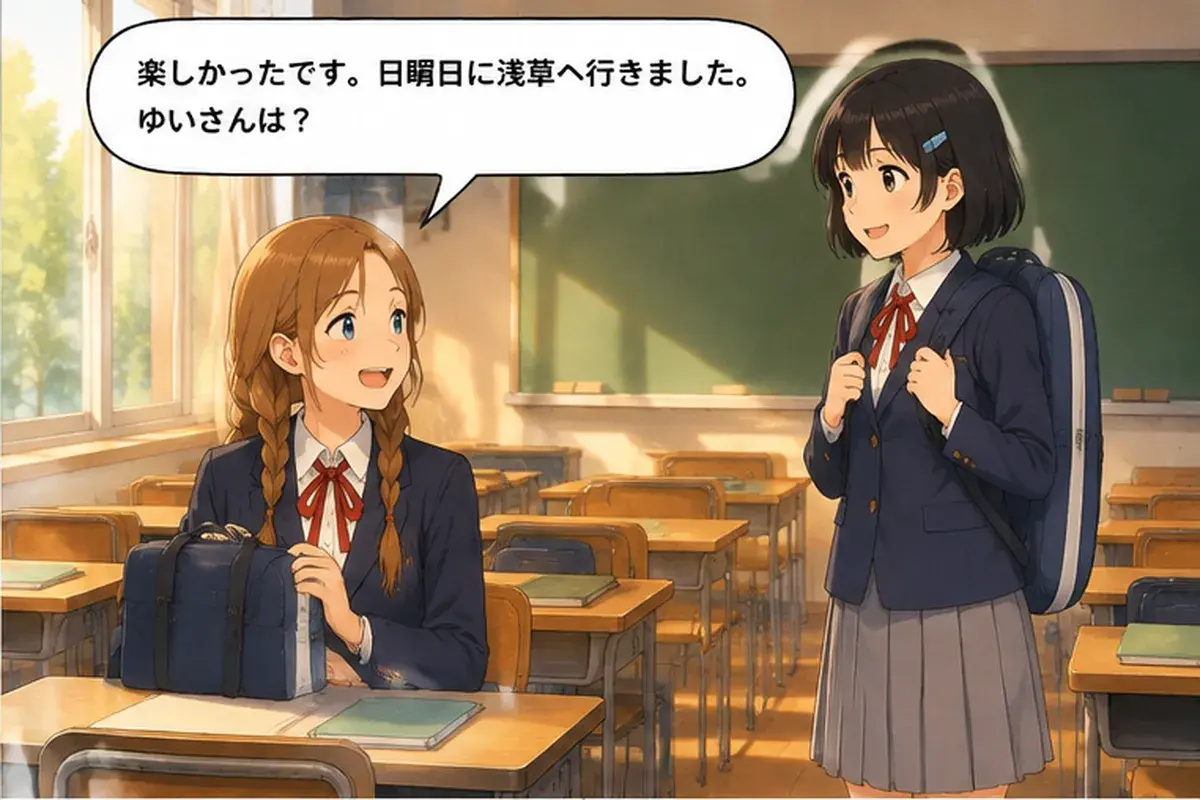
- ソーニャ
楽しかったです。日曜日に浅草へ行きました。ゆいさんは?
It was fun. On Sunday we went to Asakusa. How about you, Yui-san?
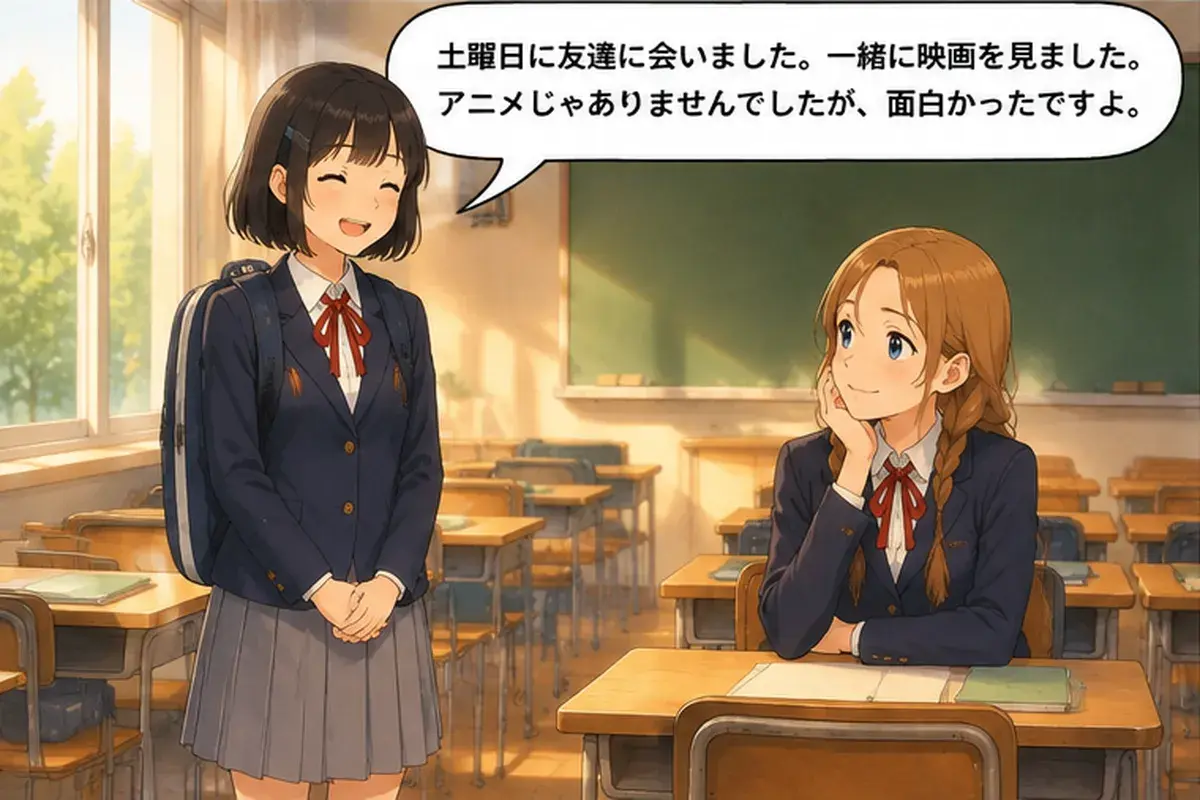
- ゆい
土曜日に友達に会いました。一緒に映画を見ました。アニメじゃありませんでしたが、面白かったですよ。
On Saturday I met a friend. We watched a movie together. It wasn't anime, but it was interesting.
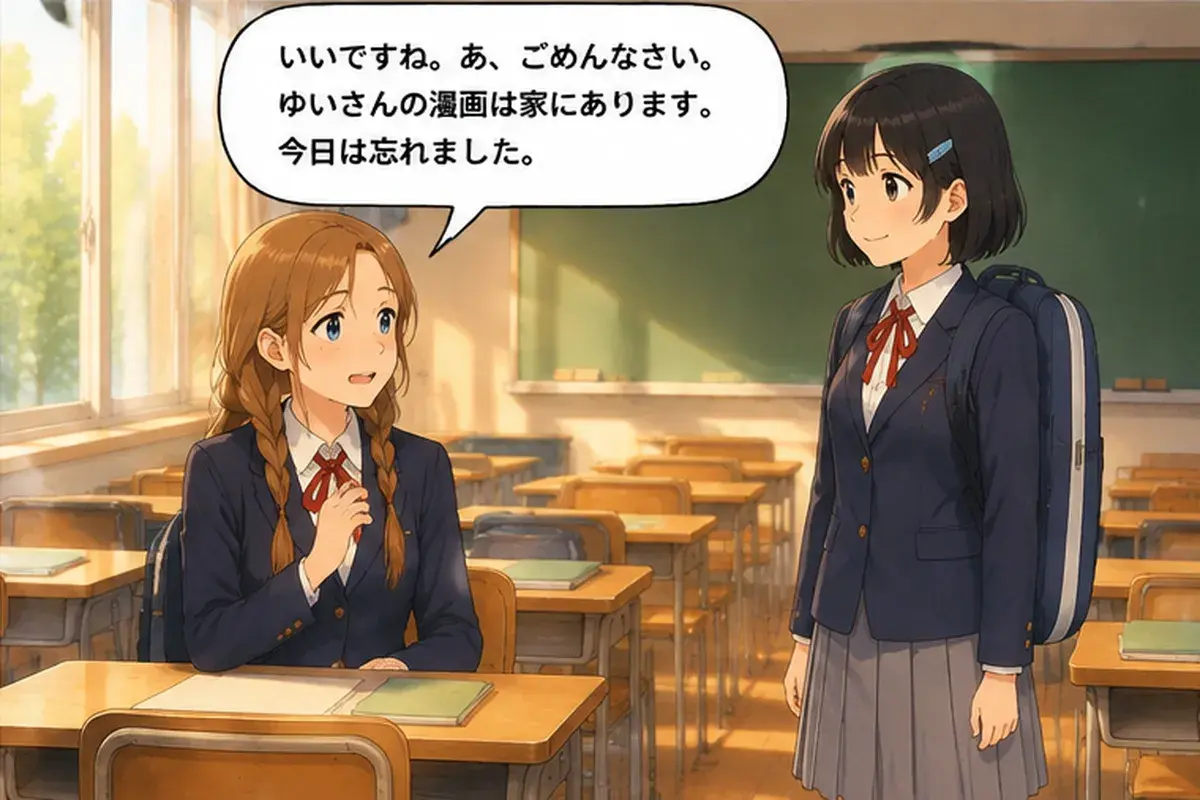
- ソーニャ
いいですね。あ、ごめんなさい。ゆいさんの漫画は家にあります。今日は忘れました。
That's nice. Oh, I'm sorry. Yui-san, your manga is at home. I forgot it today.
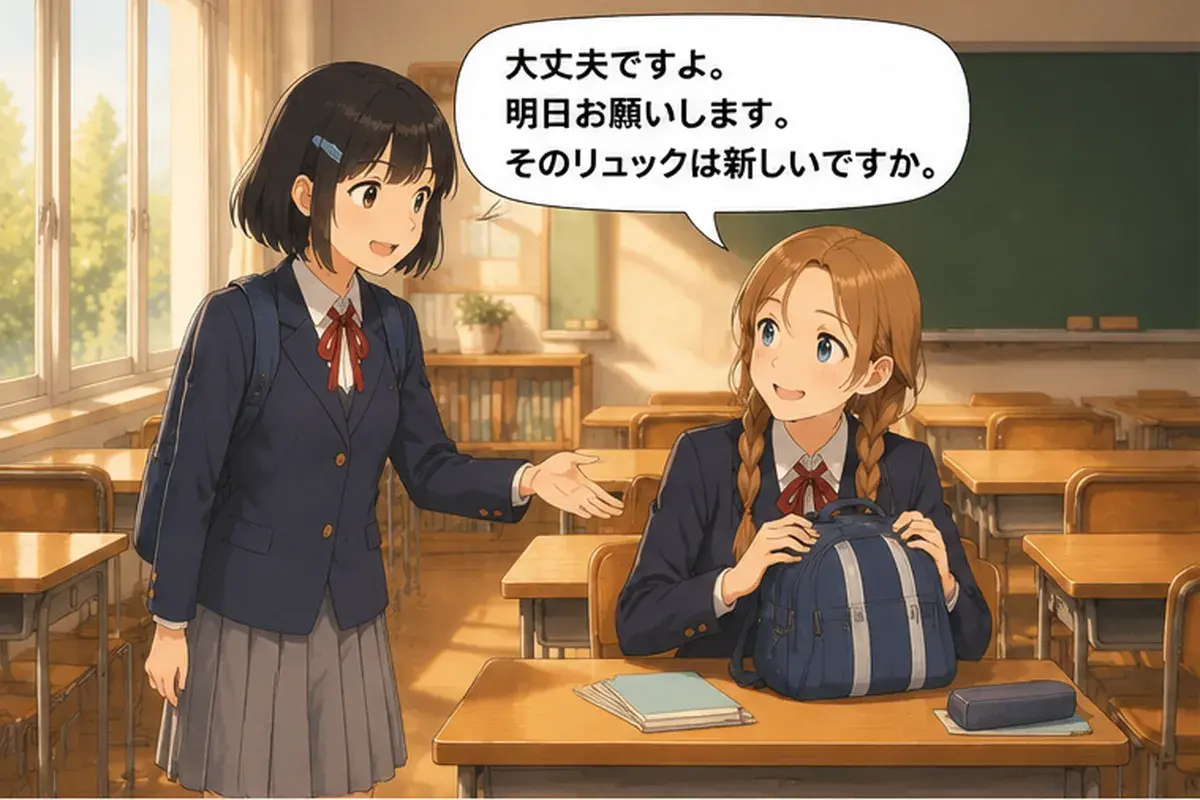
- ゆい
大丈夫ですよ。明日お願いします。そのリュックは新しいですか。
That's OK. Tomorrow, please. Is that backpack new?
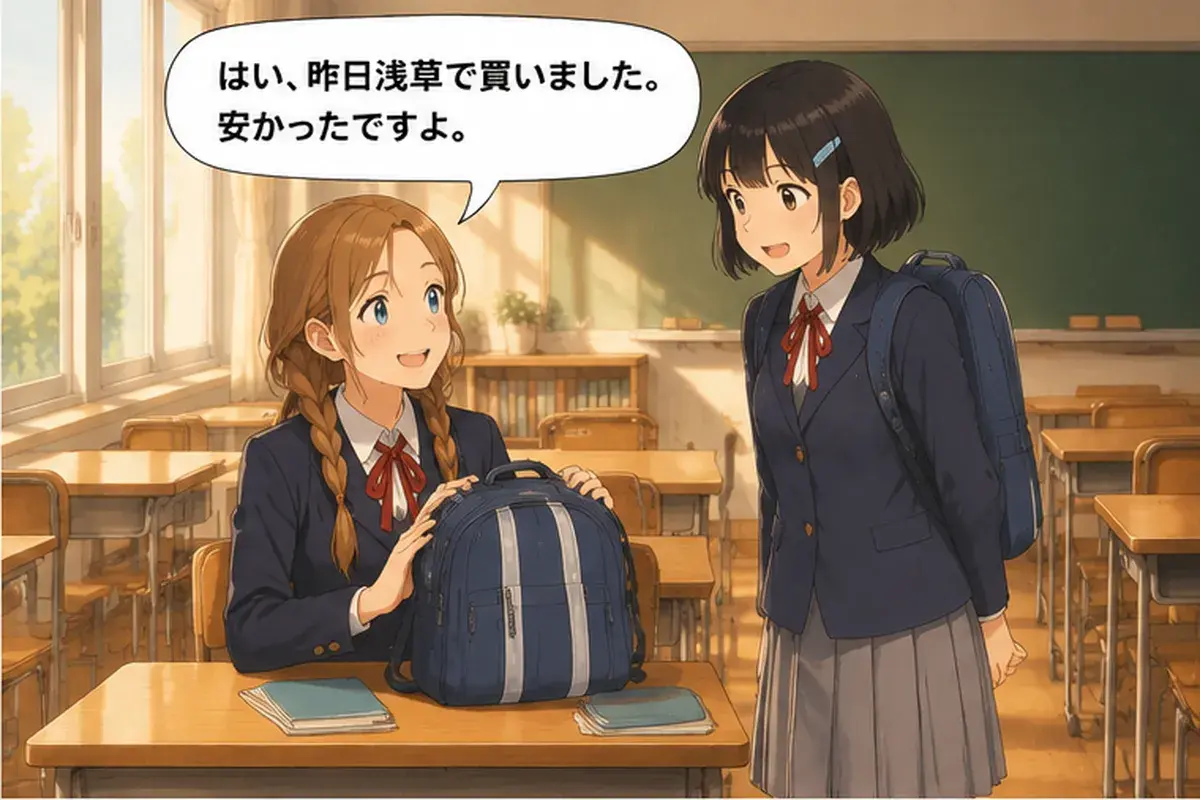
- ソーニャ
はい、昨日浅草で買いました。安かったですよ。
Yes, I bought it in Asakusa yesterday. It was cheap.
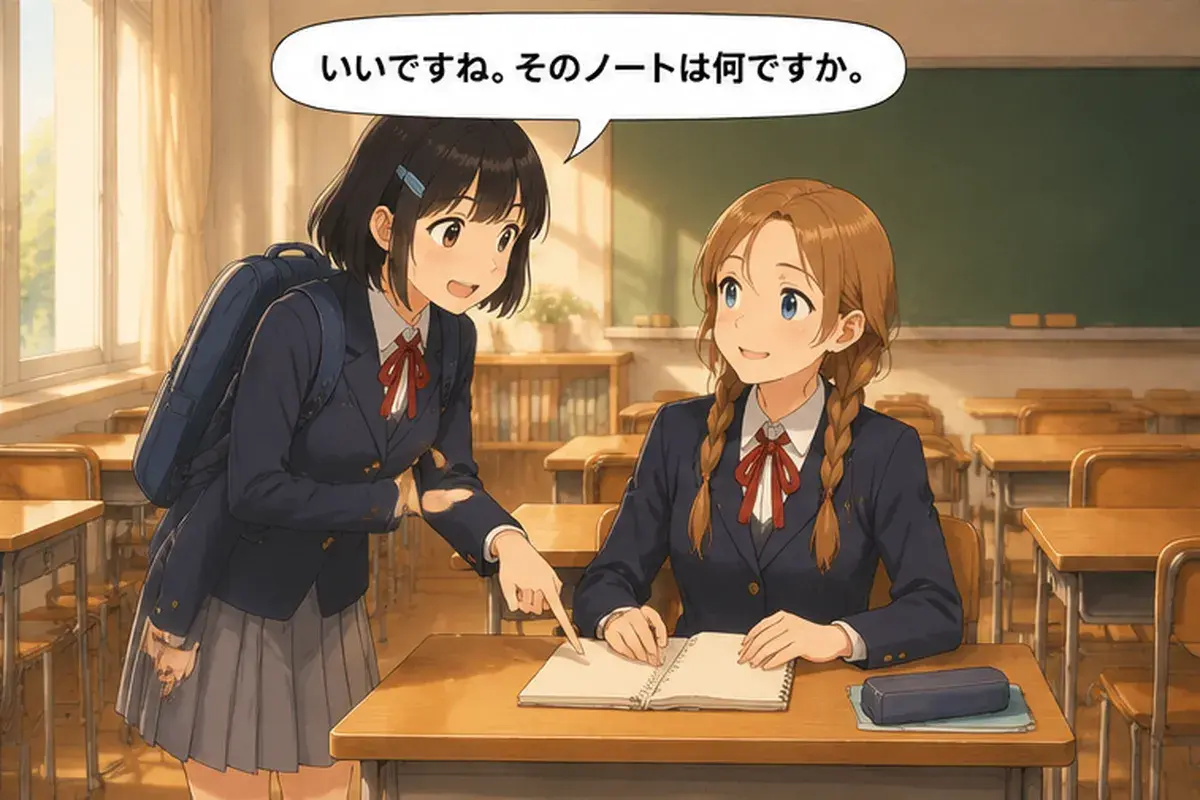
- ゆい
いいですね。そのノートは何ですか。
Nice. What's that notebook?
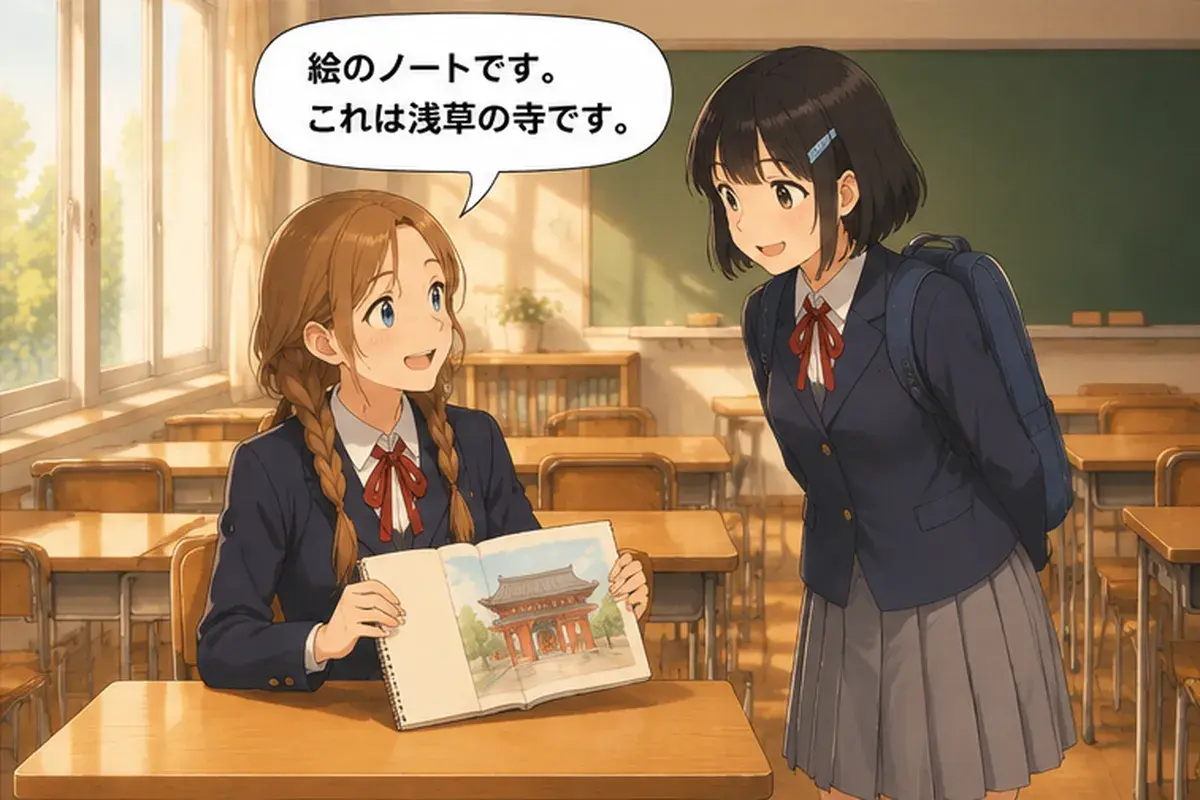
- ソーニャ
絵のノートです。これは浅草の寺です。
It's my drawing notebook. This is a temple in Asakusa.
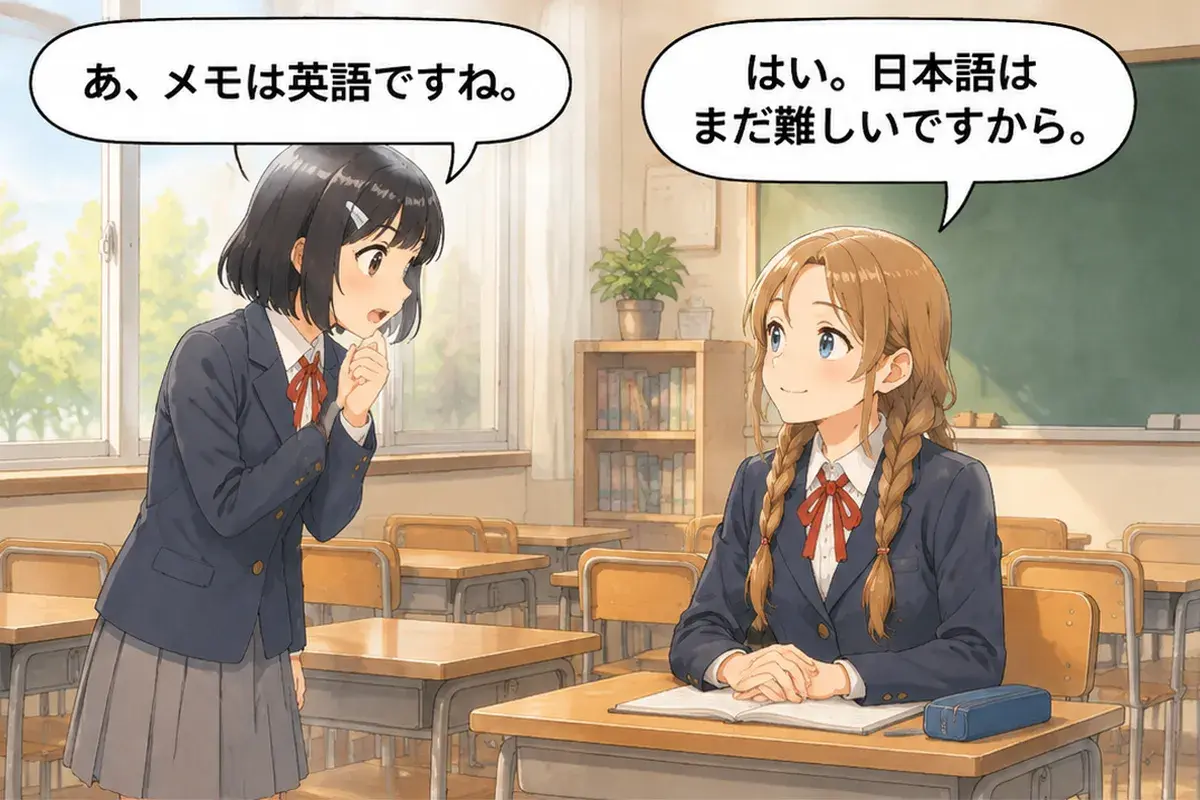
- ゆい
あ、メモは英語ですね。
Oh, your notes are in English.
- ソーニャ
はい。日本語はまだ難しいですから。
Yes. Because Japanese is still difficult.
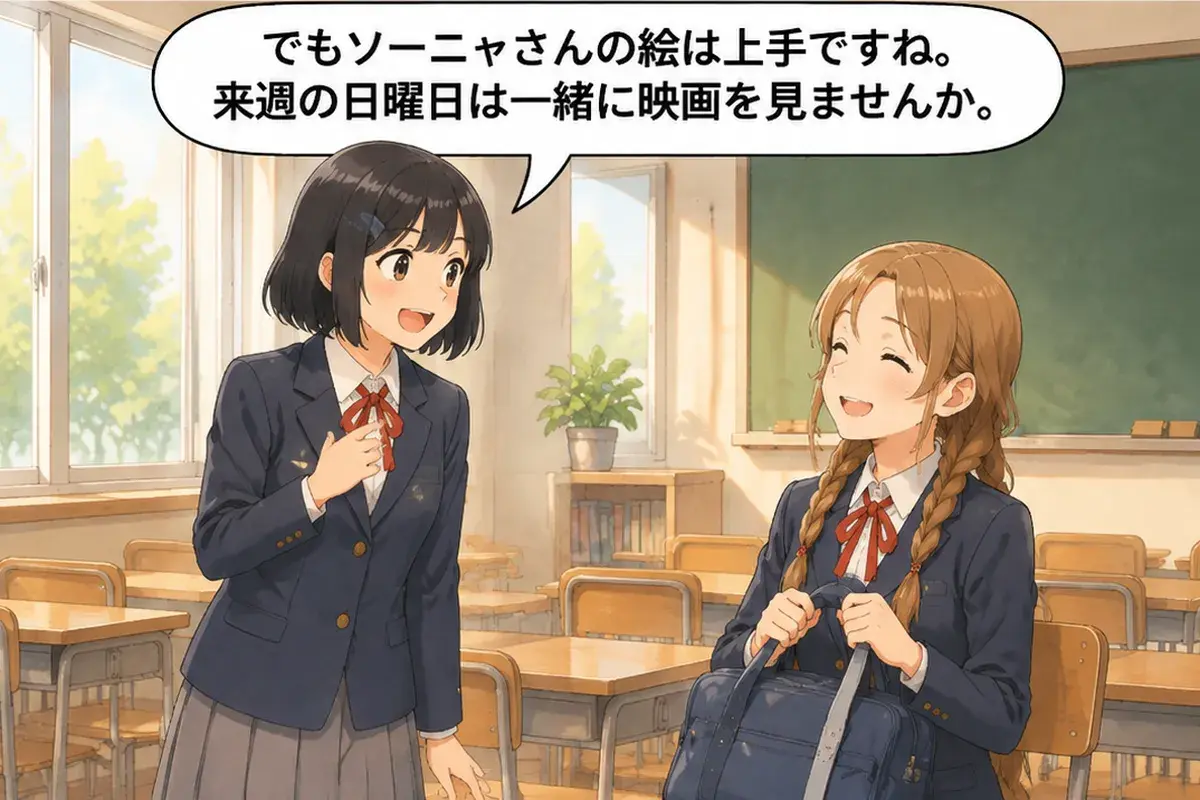
- ゆい
でもソーニャさんの絵は上手ですね。来週の日曜日は一緒に映画を見ませんか。
But Sonya-san, you're good at drawing. Would you like to watch a movie together next Sunday?
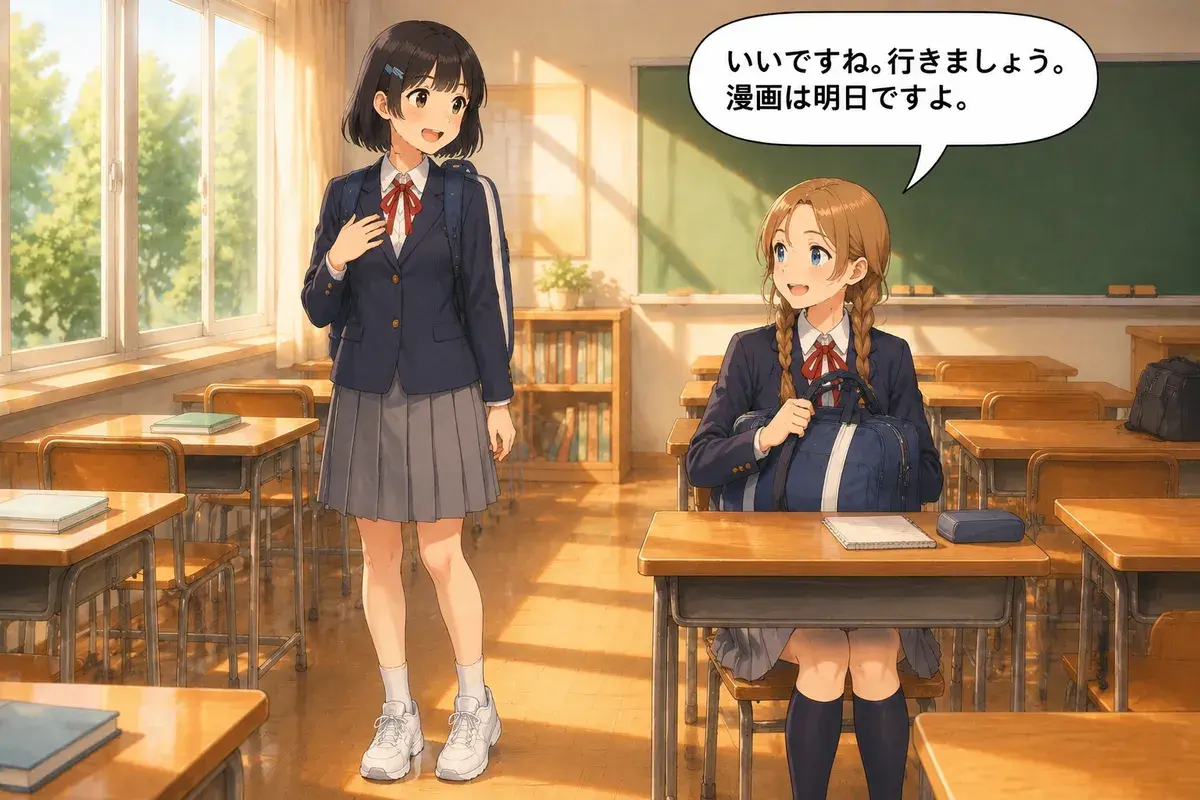
- ソーニャ
いいですね。行きましょう。漫画は明日ですよ。
Sounds good. Let's go. And the manga, tomorrow.
Grammar for this text
アニメ じゃ ありません でした — "it wasn't anime": じゃ ありません (isn't) + でした (was).
面白かった です よ — 面白い in the past: 面白かった です; よ adds "it was interesting, I'm telling you".
友達 に 会いました — with 会う, the person takes に, not を.
ゆい さん の 漫画 は 家 に あります — "your manga is at home". の shows whose it is; あります says where a thing is.
あ、ごめんなさい — あ is "oh!": Sonya suddenly remembers the manga. ごめんなさい — "sorry": this is how you apologize to people close to you; to a stranger you'd say すみません.
大丈夫 です よ。 明日 お願いします — "no problem, bring it tomorrow". お願いします here is a polite request, as in unit 4.
昨日 浅草 で 買いました — で shows where: "in Asakusa yesterday".
日本語 は まだ 難しい です から — まだ here means "still, for now"; から at the end means "because": Sonya explains why she writes her notes in English. Yui cheers her up: でも — "but" (on the other hand).
来週 の 日曜日 は 一緒に 映画 を 見ません か — 来週 の 日曜日 is "Sunday next week"; 〜ませんか is an invitation: "would you like to...?".
Words and grammar of the unit: Talk about what you did yesterday.
Learn the words from the texts with flashcards
In the app, you can tap any word in a text to see its translation, forms and examples, and new words stick with flashcards. 15 minutes a day.
Start for freeEverything is open for free. No card needed to sign up.