

Japanese dialogue with translation · A1 · 13 lines
週末は何をしましたか What did you do on the weekend?
Comic · 9 panels
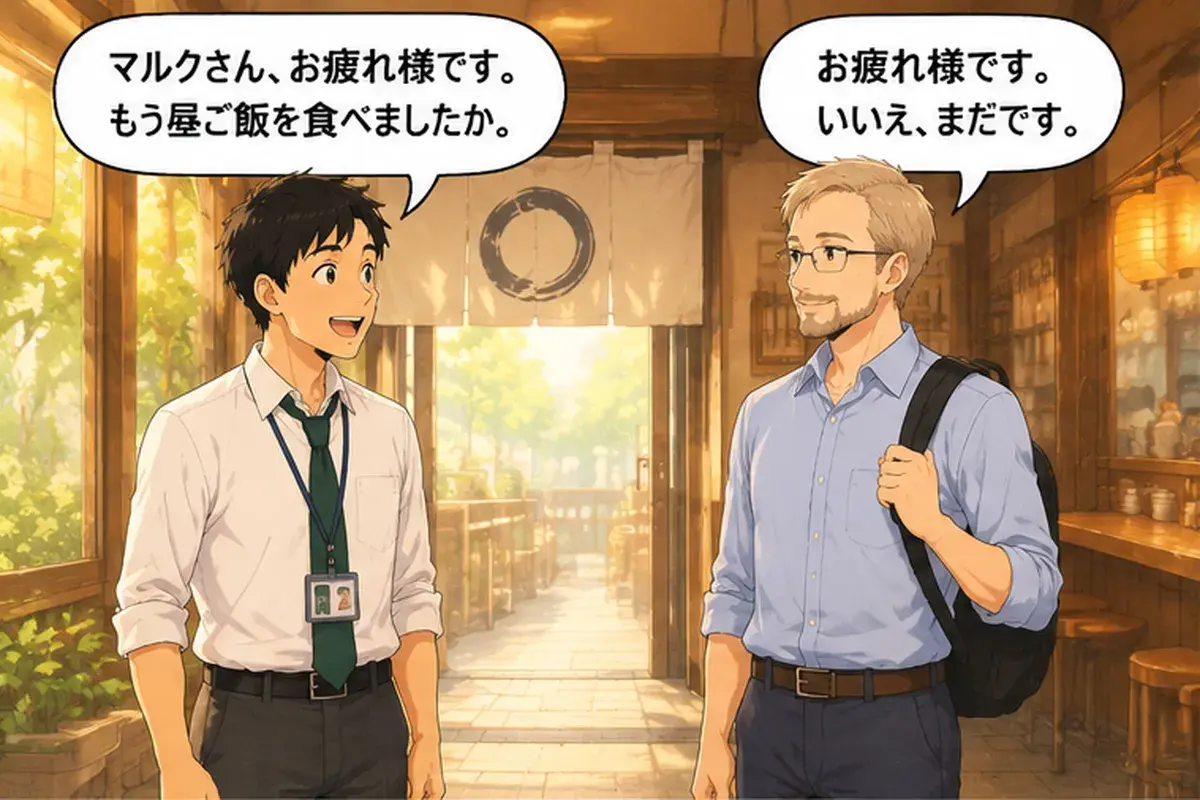
- けん
マルクさん、お疲れ様です。もう昼ご飯を食べましたか。
Mark-san, thanks for your hard work. Have you eaten lunch yet?
- マルク
お疲れ様です。いいえ、まだです。
Thanks for your hard work. No, not yet.
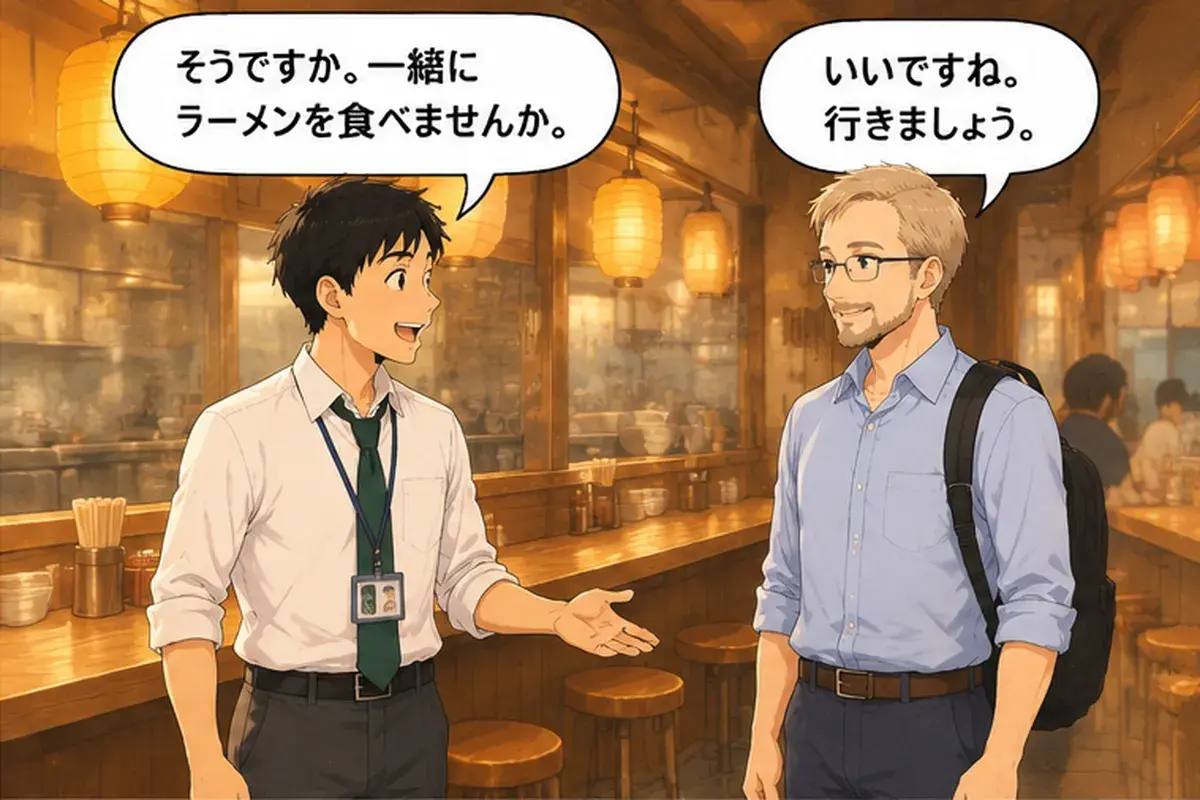
- けん
そうですか。一緒にラーメンを食べませんか。
I see. Would you like to eat ramen together?
- マルク
いいですね。行きましょう。
Sounds good. Let's go.
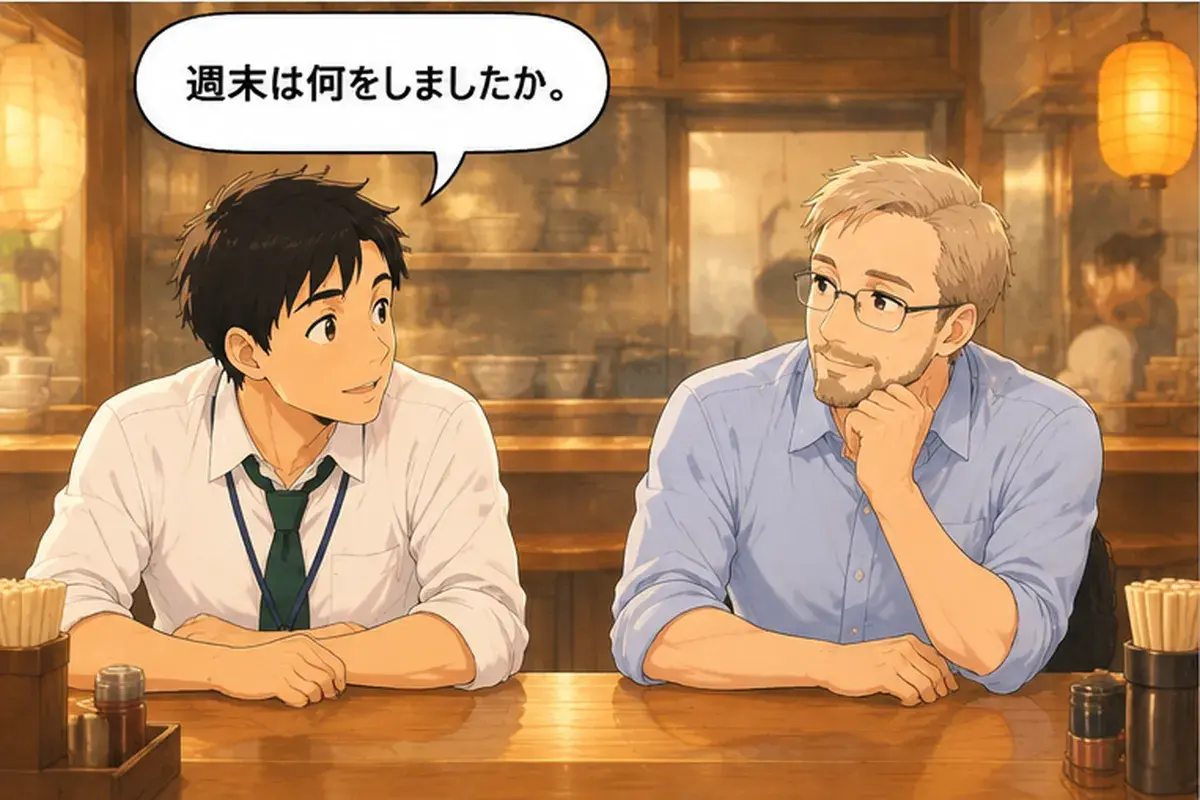
- けん
週末は何をしましたか。
What did you do on the weekend?
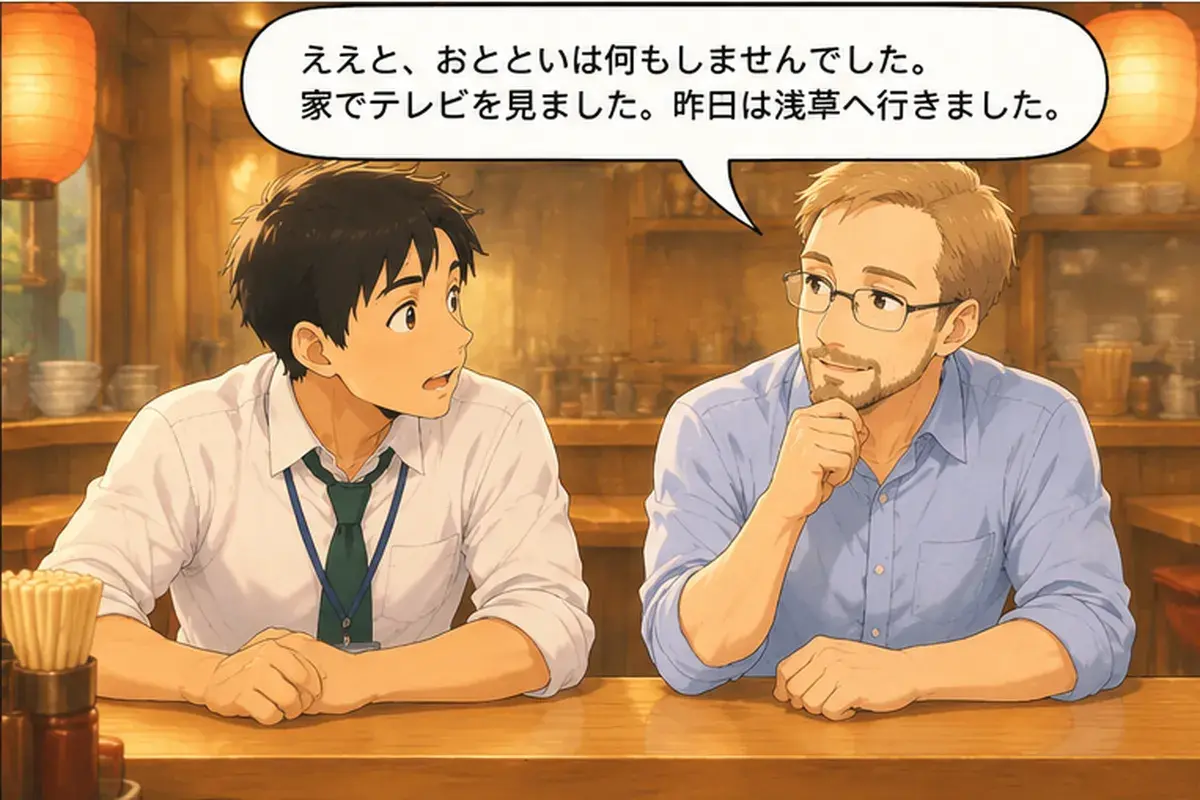
- マルク
ええと、おとといは何もしませんでした。家でテレビを見ました。昨日は浅草へ行きました。
Um, the day before yesterday I didn't do anything. I watched TV at home. Yesterday I went to Asakusa.
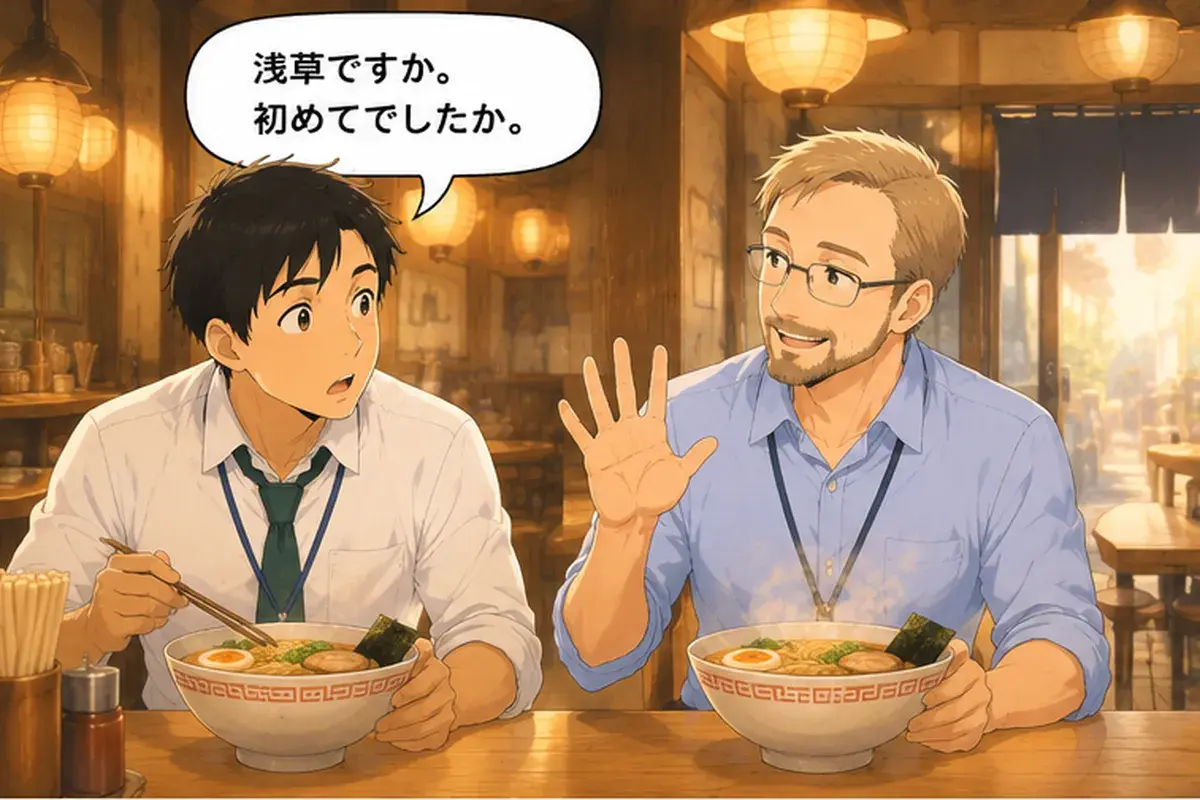
- けん
浅草ですか。初めてでしたか。
Asakusa? Was it your first time?
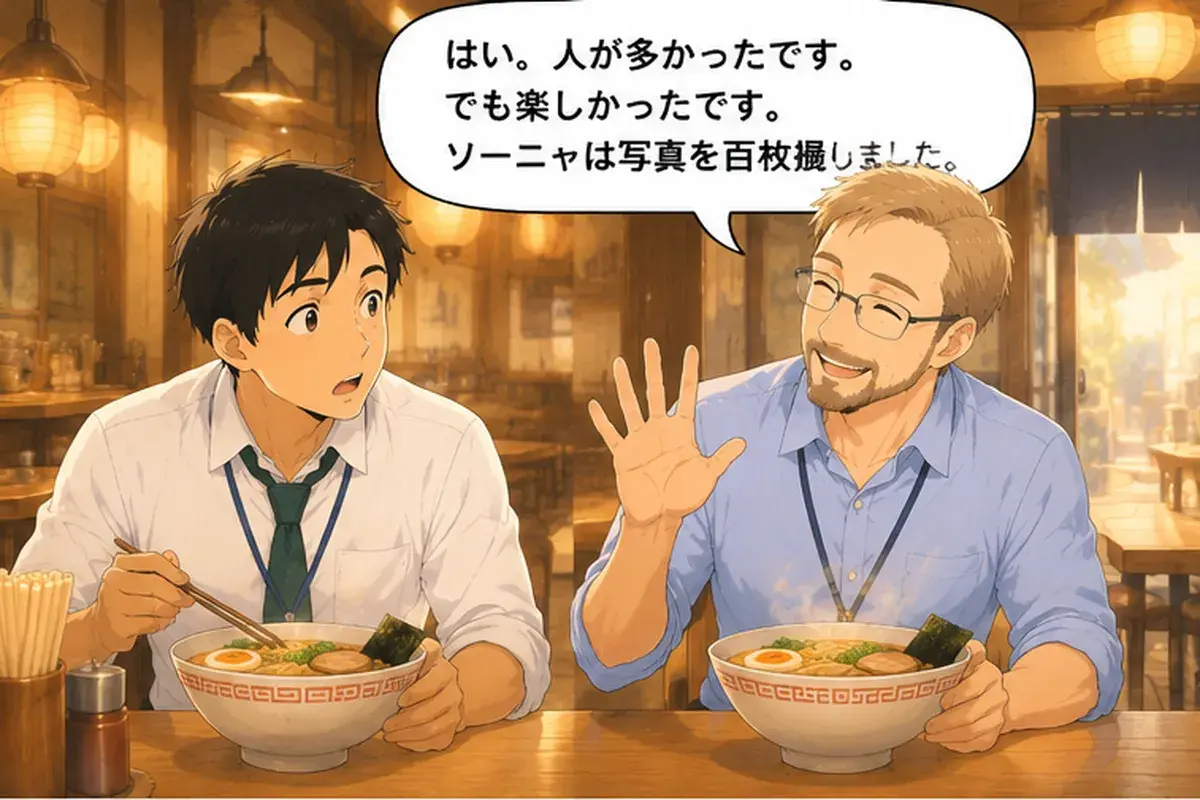
- マルク
はい。人が多かったです。でも楽しかったです。ソーニャは写真を百枚撮りました。
Yes. There were a lot of people. But it was fun. Sonya took 100 photos.
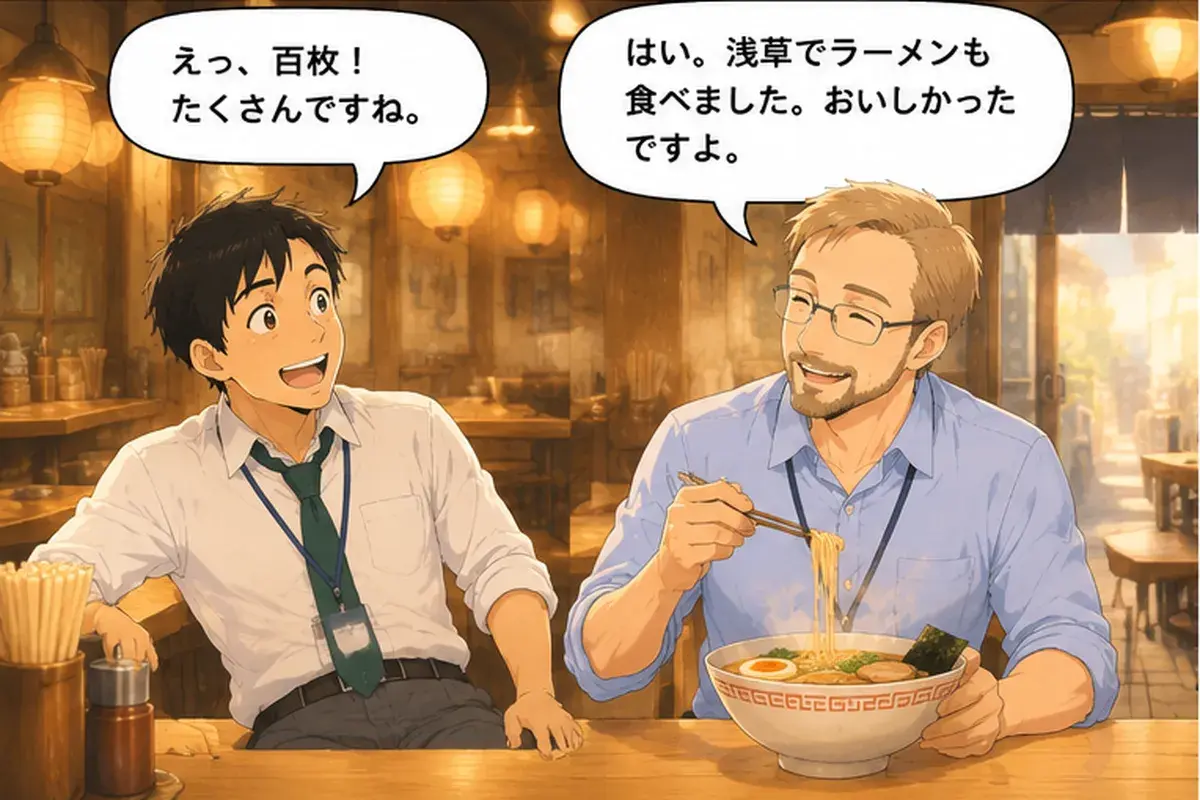
- けん
えっ、百枚!たくさんですね。
What? 100 photos! That's a lot.
- マルク
はい。浅草でラーメンも食べました。おいしかったですよ。
Yes. In Asakusa, we ate ramen too. It was delicious.
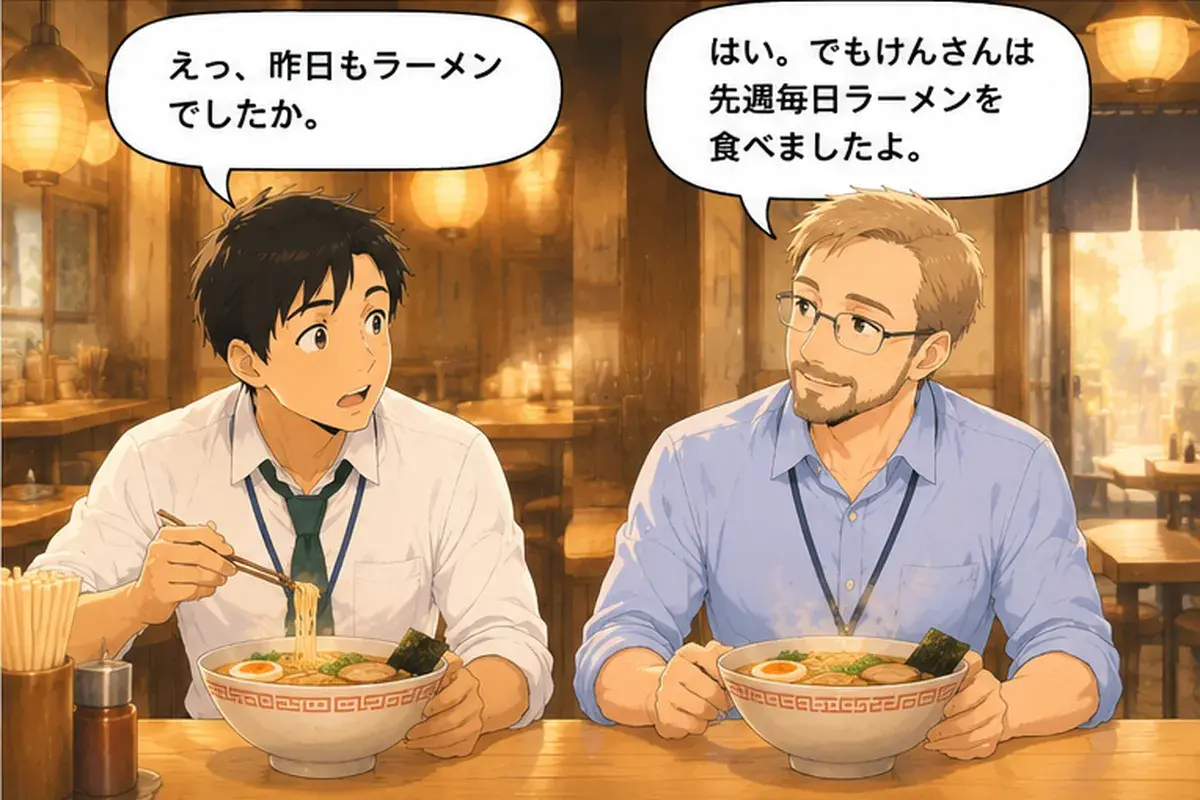
- けん
えっ、昨日もラーメンでしたか。
What? Was it ramen yesterday too?
- マルク
はい。でもけんさんは先週毎日ラーメンを食べましたよ。
Yes. But Ken-san, you ate ramen every day last week.

- けん
そうでしたね。ここです。この店のラーメンはおいしいですよ。
Oh, that's true, I did. This is the place. The ramen at this shop is delicious.
Grammar for this text
お疲れ様です — a greeting between coworkers (unit 6). People say it during the day and in the evening, and it isn't the question "are you tired?".
もう 昼ご飯 を 食べました か — もう with a past verb means "already". The answer "not yet" is いいえ、まだ です, not 食べませんでした.
一緒に ラーメン を 食べません か — this isn't a negative but an invitation: "would you like to eat...?" (unit 7).
ええと — "um...": Mark is trying to remember what he did on the weekend.
おととい は 何も しませんでした — 何も with a negative verb means "nothing". しませんでした means "didn't do" (from する).
人 が 多かった です。 でも 楽しかった です — the past of i-adjectives: 多い → 多かった です, 楽しい → 楽しかった です.
昨日 も ラーメン でした か — after a noun, the past is でした: "was it ramen again?". Ken is surprised: Mark eats ramen even on his days off.
そう でした ね — "oh, that's true": Ken remembers that he himself ate ramen every day. Here でした agrees about something that already happened.
えっ、百 枚! たくさん です ね — えっ shows surprise: "what?!". 枚 is the counter for flat things: photos, sheets. たくさん です ね — "wow, that's a lot".
Words and grammar of the unit: Talk about what you did yesterday.
Learn the words from the texts with flashcards
In the app, you can tap any word in a text to see its translation, forms and examples, and new words stick with flashcards. 15 minutes a day.
Start for freeEverything is open for free. No card needed to sign up.