
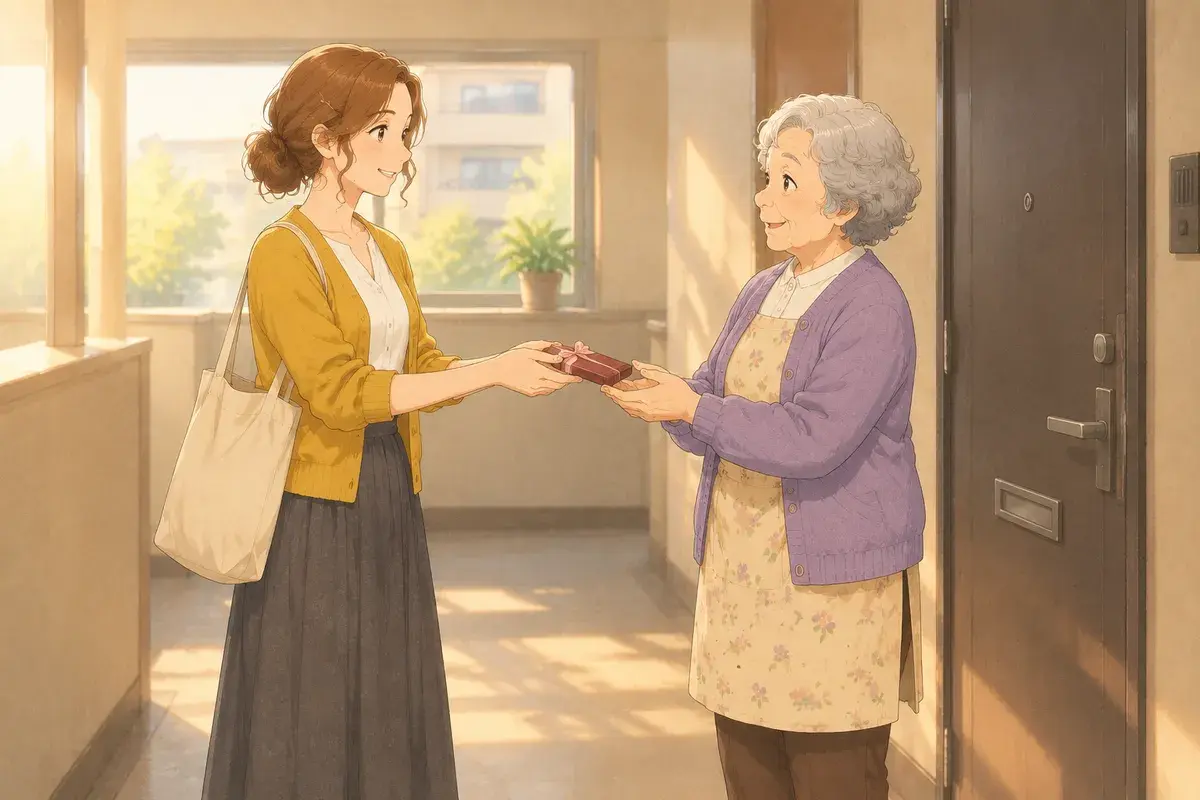
Japanese dialogue with translation · A1 · 12 lines
この本は田中さんのですか Tanaka-san, is this book yours?
Comic · 7 panels
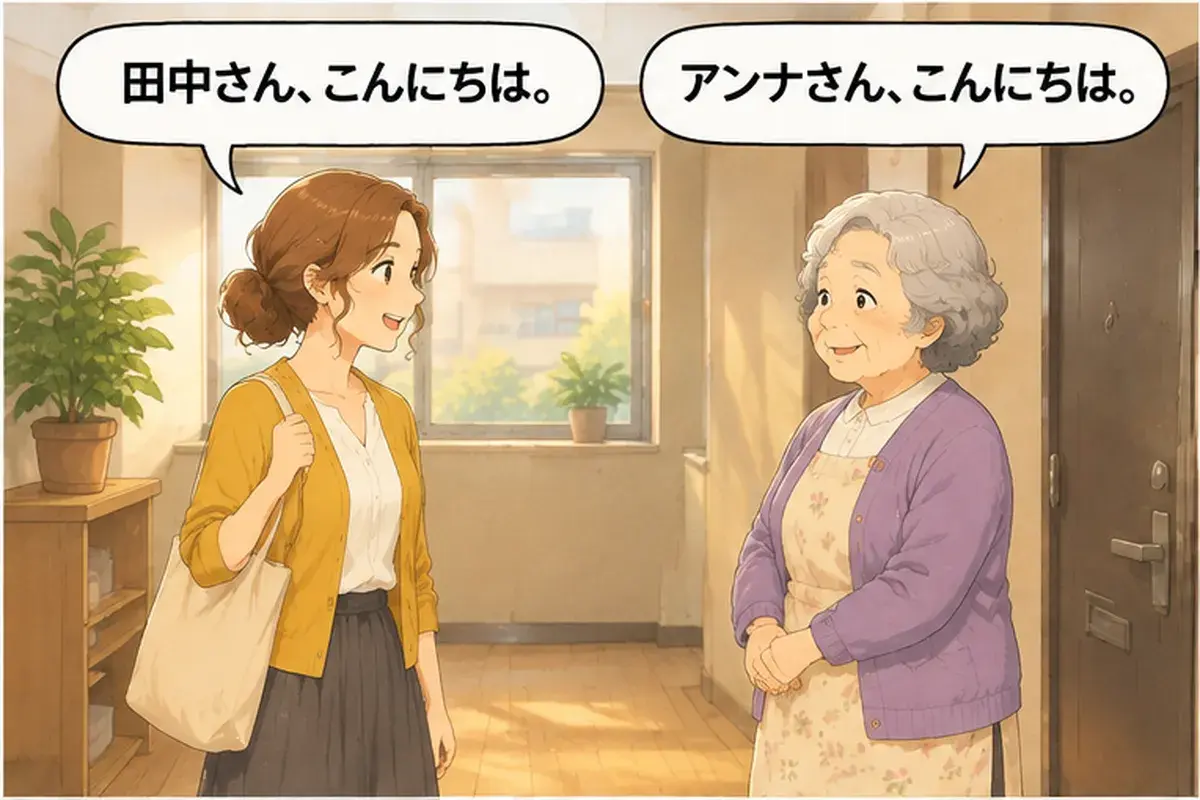
- アンナ
田中さん、こんにちは。
Hello, Tanaka-san.
- 田中
アンナさん、こんにちは。
Hello, Anna-san.
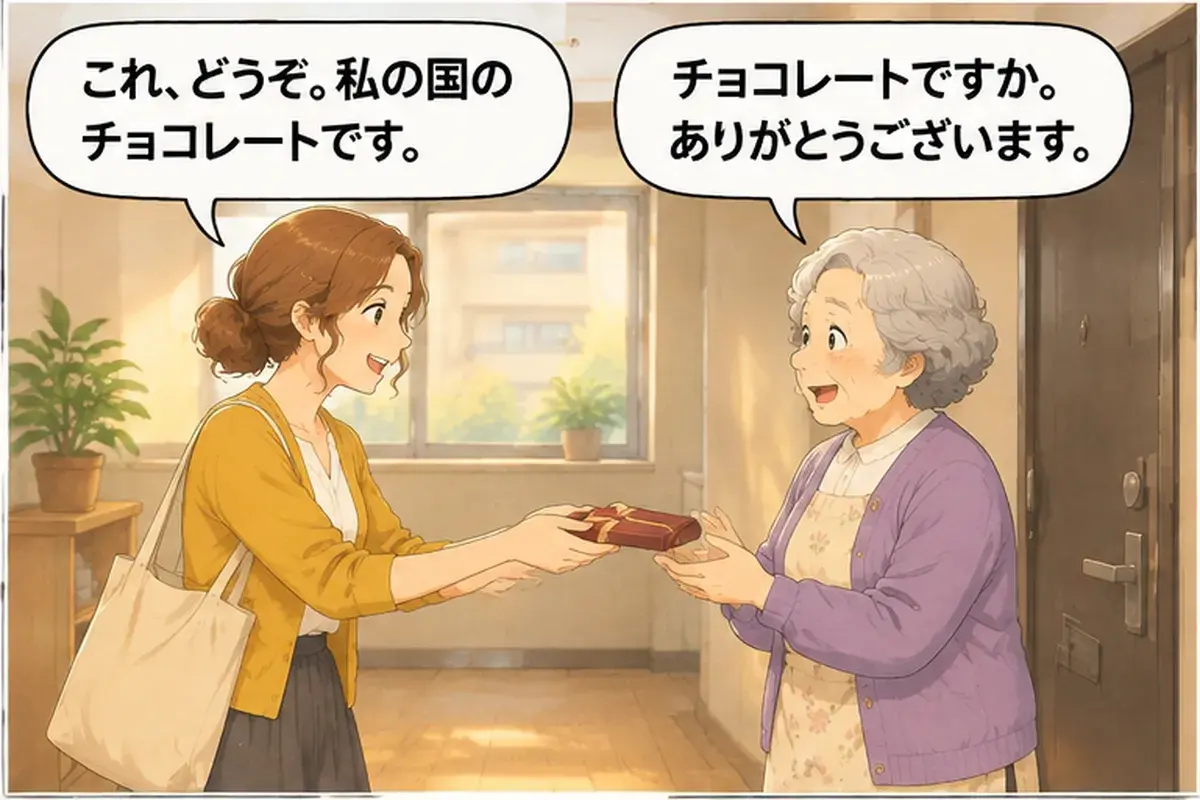
- アンナ
これ、どうぞ。私の国のチョコレートです。
Here, this is for you. It's chocolate from my country.
- 田中
チョコレートですか。ありがとうございます。
Chocolate? Thank you.
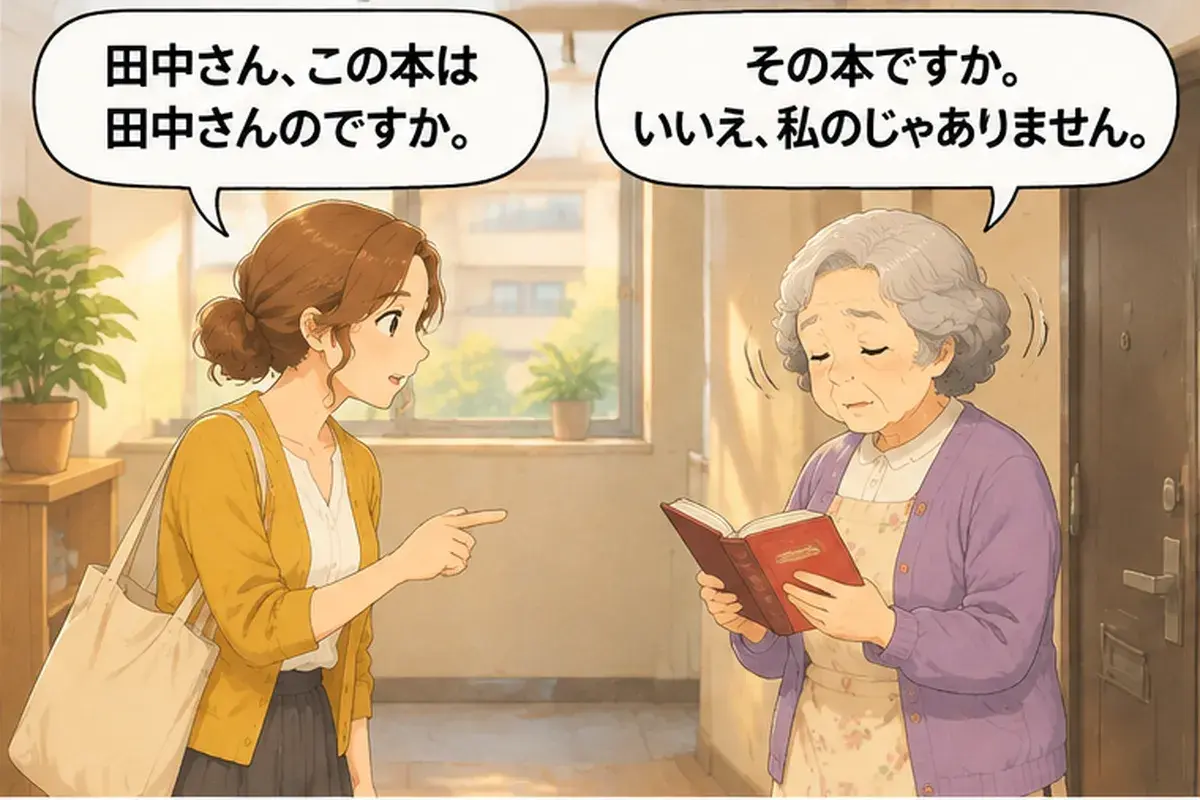
- アンナ
田中さん、この本は田中さんのですか。
Tanaka-san, is this book yours?
- 田中
その本ですか。いいえ、私のじゃありません。
That book? No, it isn't mine.
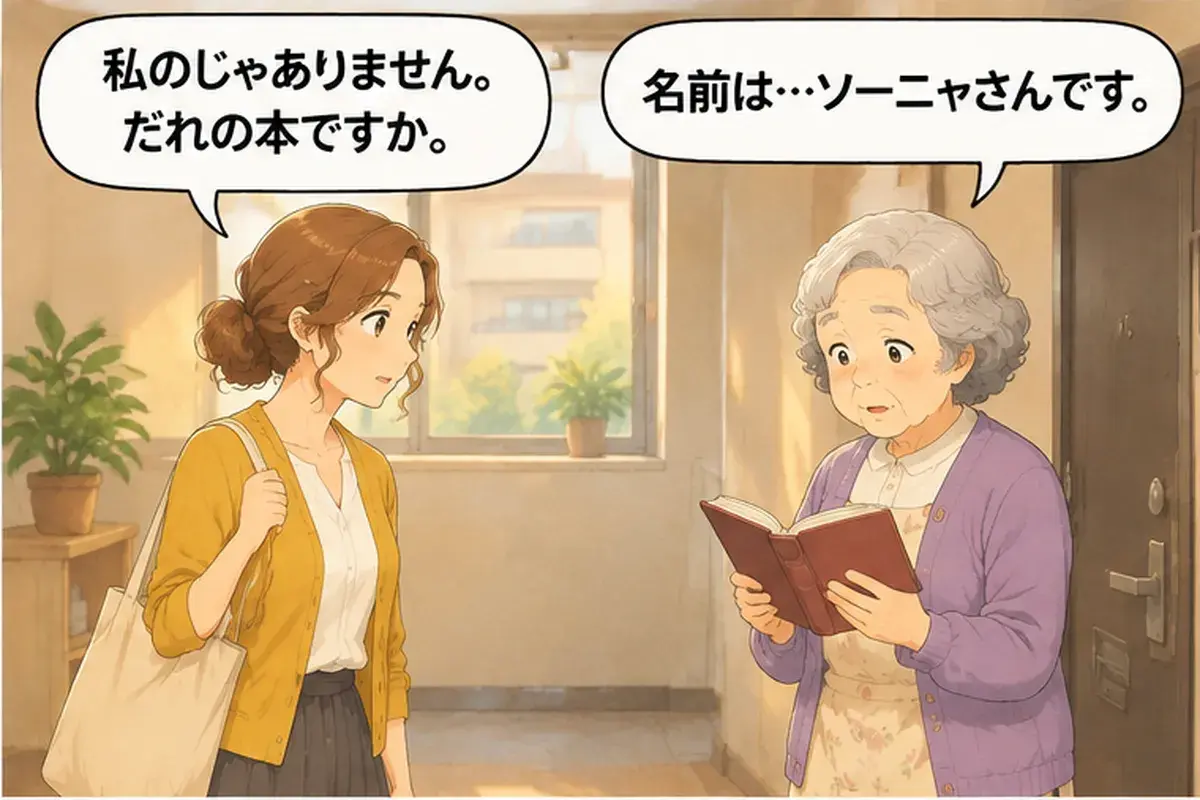
- アンナ
私のじゃありません。だれの本ですか。
It isn't mine. Whose book is it?
- 田中
名前は…ソーニャさんです。
The name is... Sonya-san.
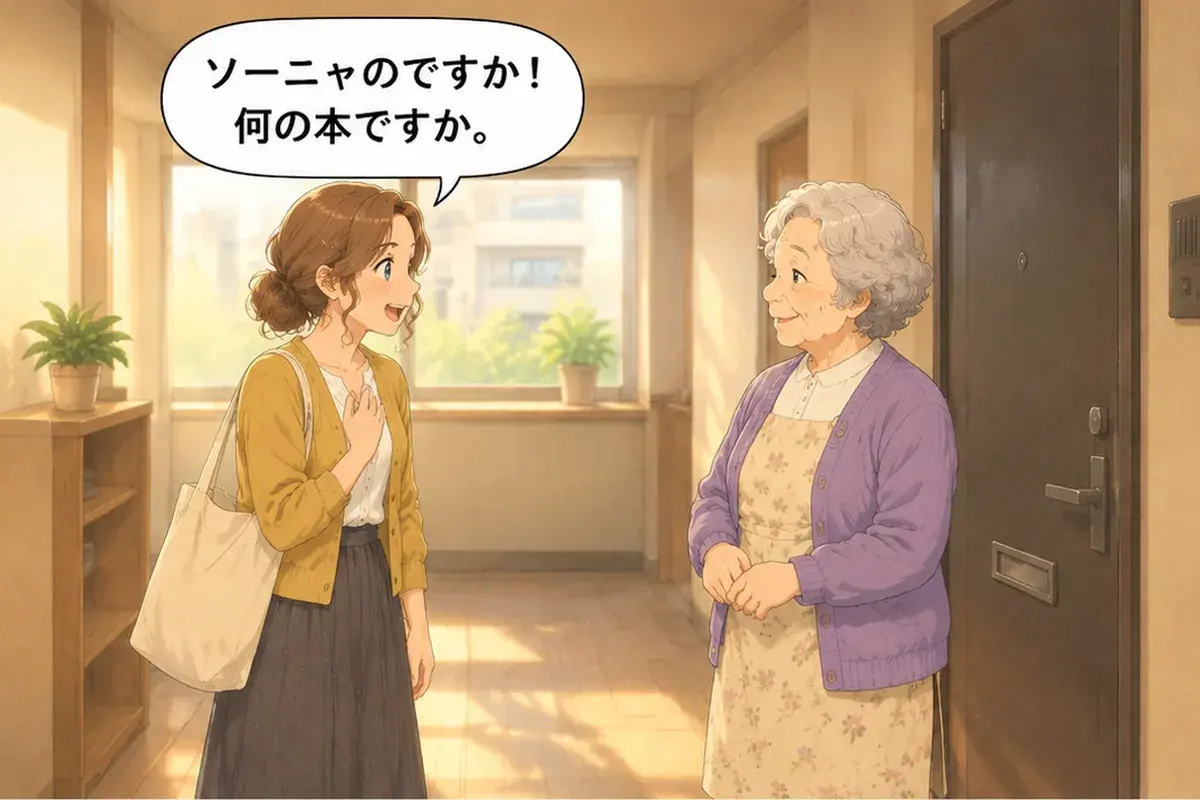
- アンナ
ソーニャのですか!何の本ですか。
It's Sonya's?! What's the book about?
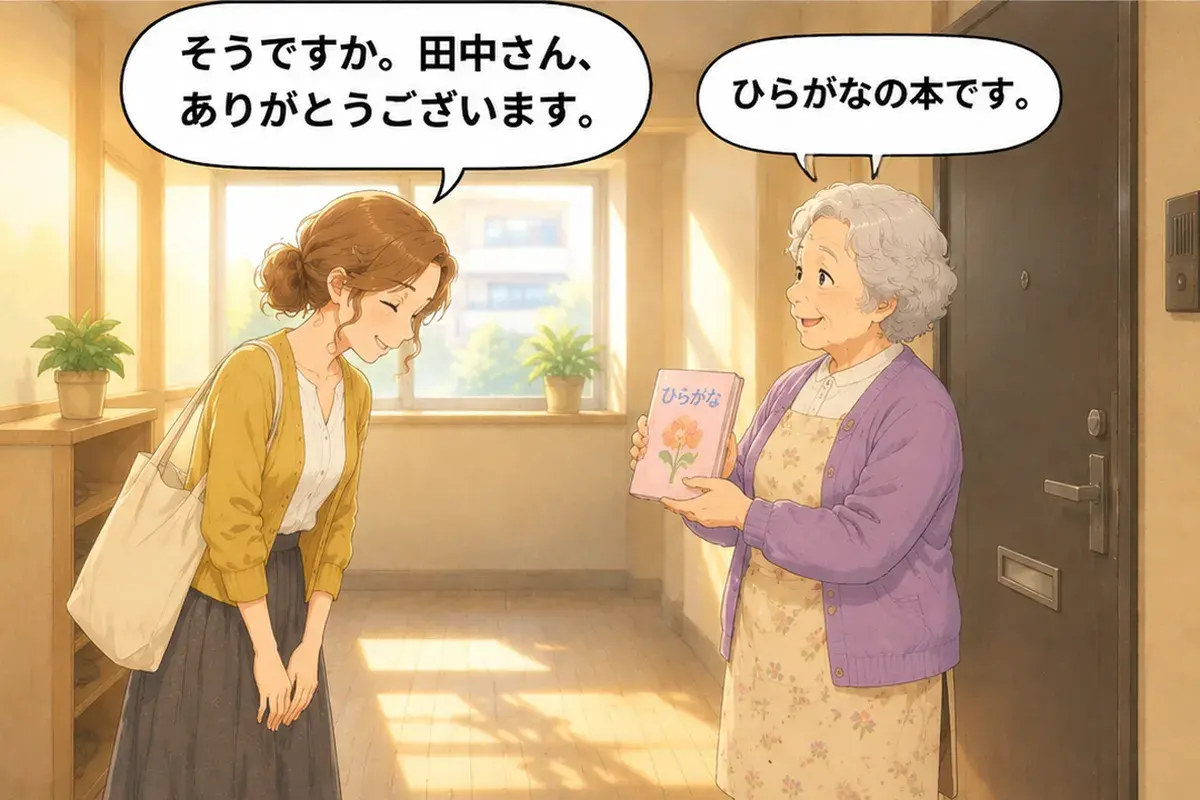
- 田中
ひらがなの本です。
It's a hiragana book.
- アンナ
そうですか。田中さん、ありがとうございます。
Oh, I see. Thank you, Tanaka-san.
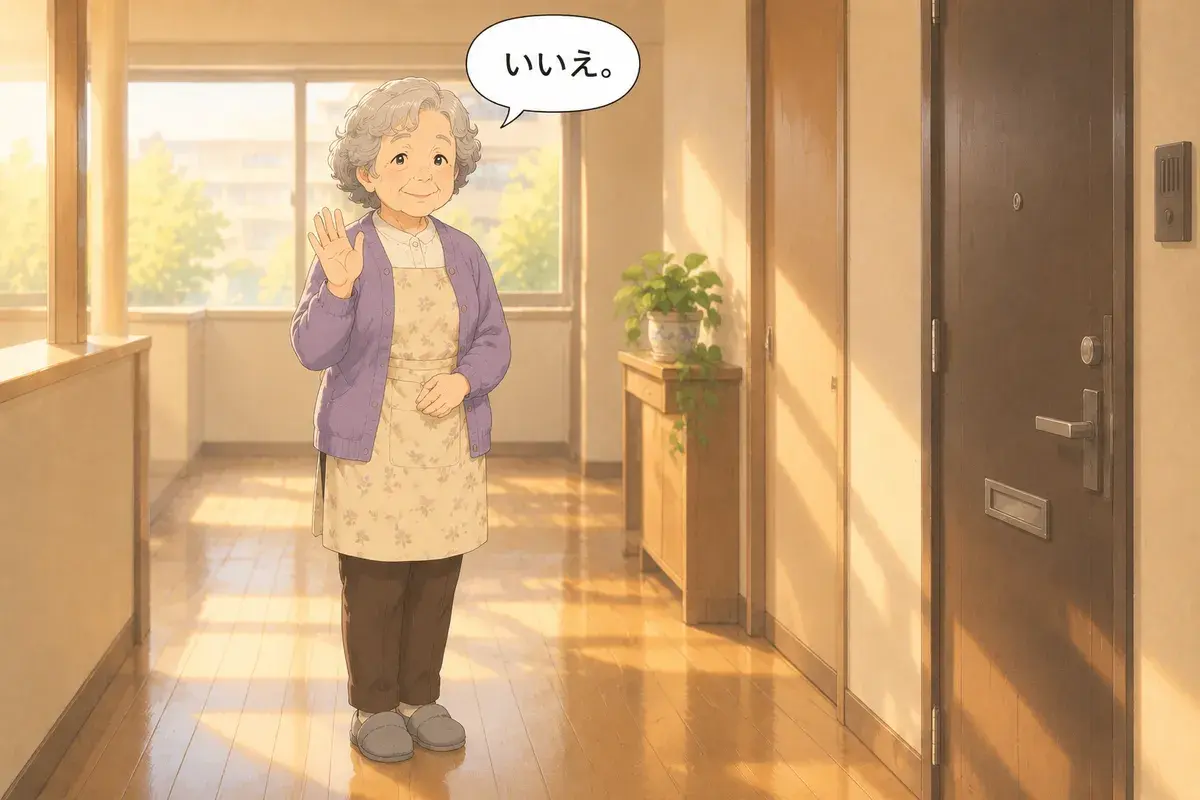
- 田中
いいえ。
No, not at all.
Grammar for this text
これ、どうぞ。 — you say どうぞ as you hand something over: "here, please take it". In Japan, people who move into a new home visit the neighbors with a small gift, like sweets or a towel. 私 の 国 の チョコレート — の links two nouns, and here it appears twice: 私 の 国 is "my country", 国 の チョコレート is "chocolate from the country". Together: "chocolate from my country".
この 本 は 田中 さん の です か。 — a book in a package was lying by the door: in Japan, deliveries are often left right at the door. Anna can't read the name on the package yet, so she asks her neighbor. の after a name answers "whose": 田中 さん の means "yours" here. In Japanese, "yours" is the name with さん and の, not あなた.
その 本 です か。 — the book is in Anna's hands, near the person Tanaka-san is talking to, so Tanaka-san says その, and Anna says この.
私 の じゃ ありません。 — じゃ ありません means "isn't": "it isn't mine". Anna says the same about herself, and then asks: だれ の 本 です か。 だれ is "who", だれ の is "whose".
名前 は…ソーニャ さん です。 — Tanaka-san reads the name on the package. Anna talks about her daughter without さん: ソーニャ の です か! You don't use さん for your own family.
何 の 本 です か。 — 何 の is read なん の: "a book about what, what kind of book". The answer ひらがな の 本 is "a hiragana book": Sonya ordered herself a kana textbook.
いいえ。 — this is how people answer "thank you": "no, not at all".
Words and grammar of the unit: Ask what things are and whose.
Learn the words from the texts with flashcards
In the app, you can tap any word in a text to see its translation, forms and examples, and new words stick with flashcards. 15 minutes a day.
Start for freeEverything is open for free. No card needed to sign up.