

Japanese dialogue with translation · A1 · 13 lines
こちらはソーニャさんです This is Sonya-san
Comic · 11 panels
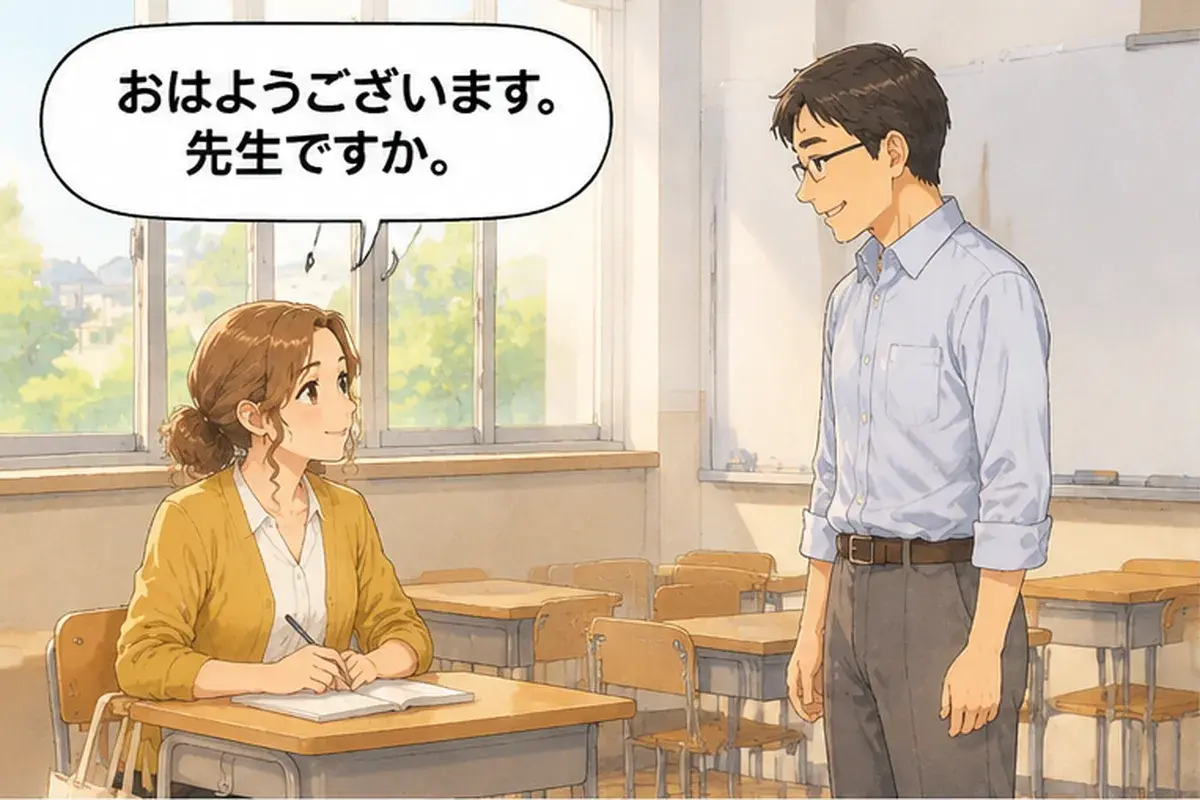
- アンナ
おはようございます。先生ですか。
Good morning. Are you the teacher?
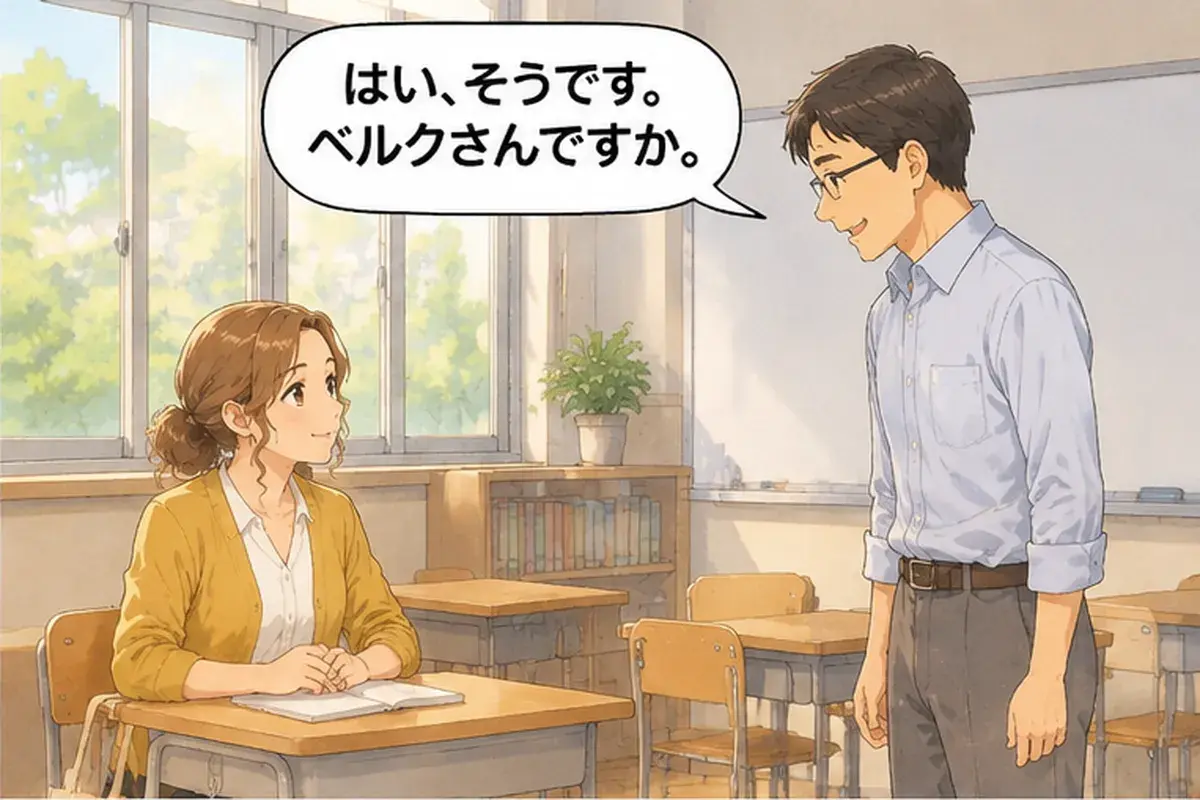
- 先生
はい、そうです。ベルクさんですか。
Yes, that's right. Are you Berg-san?
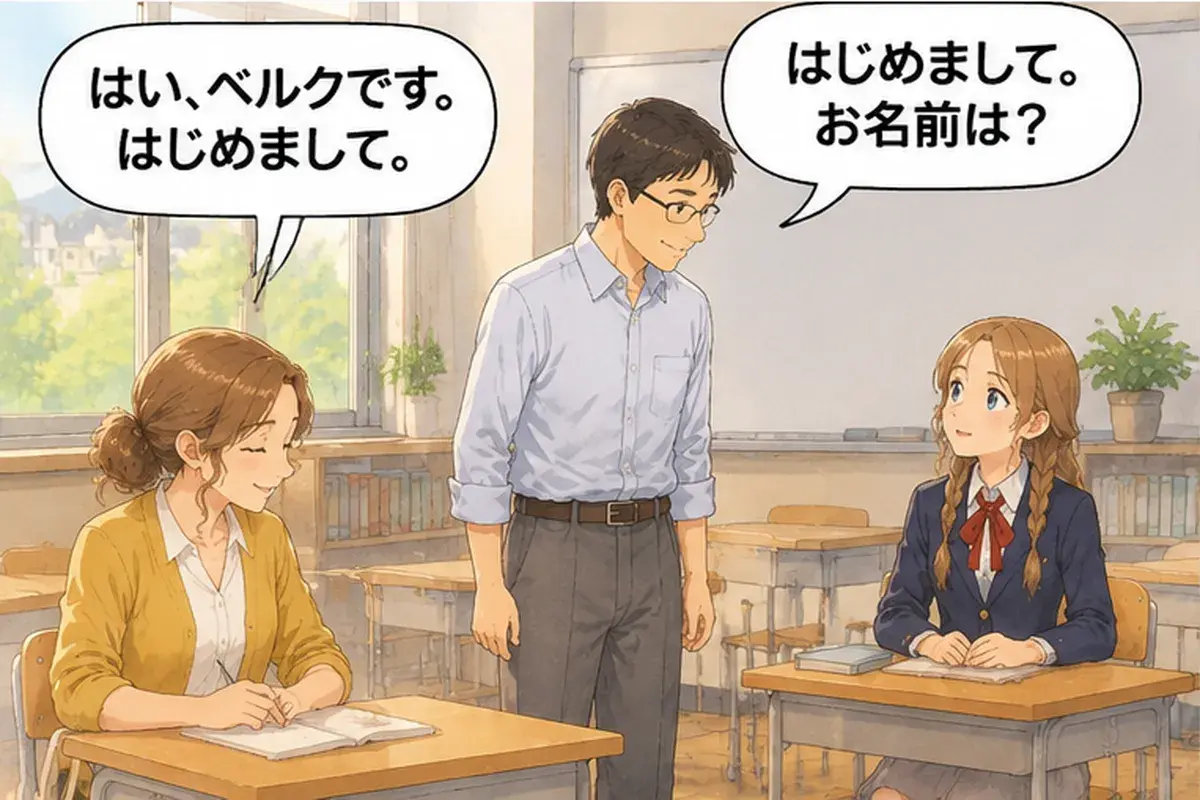
- アンナ
はい、ベルクです。はじめまして。
Yes, I'm Berg. Nice to meet you.
- 先生
はじめまして。お名前は?
Nice to meet you. What's your name?
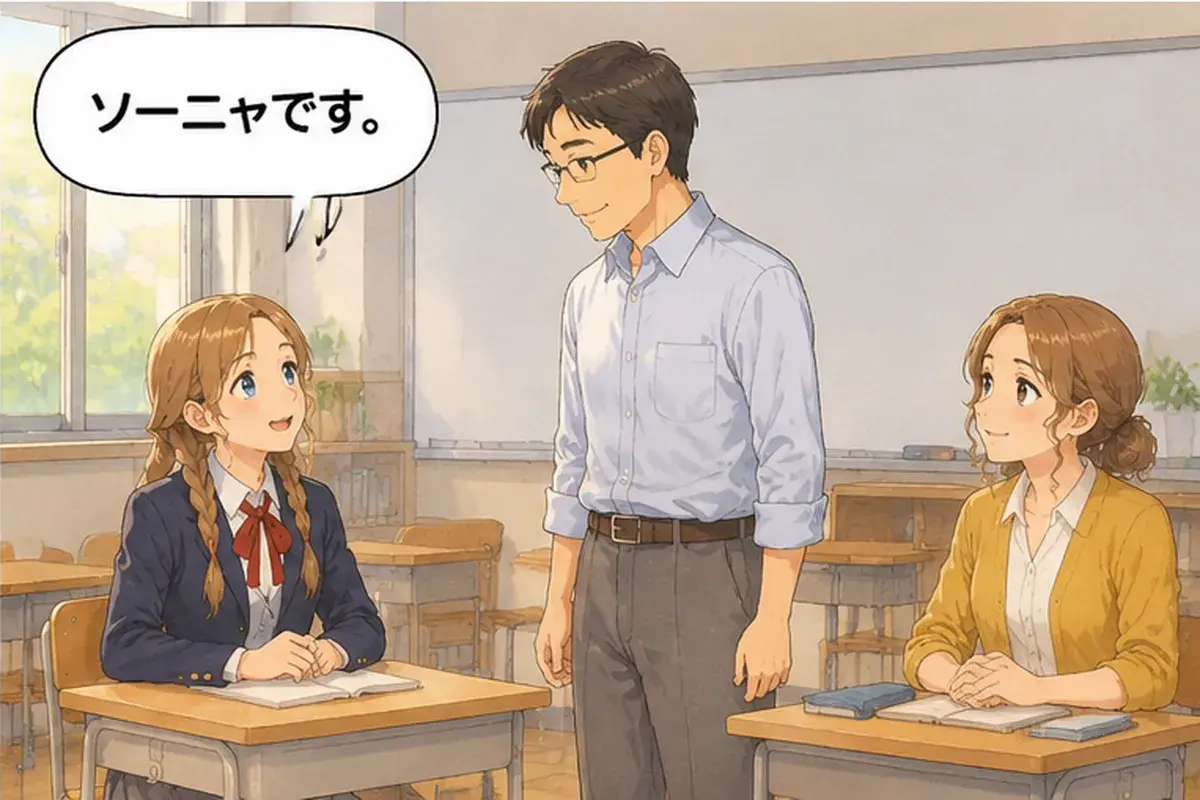
- ソーニャ
ソーニャです。
I'm Sonya.
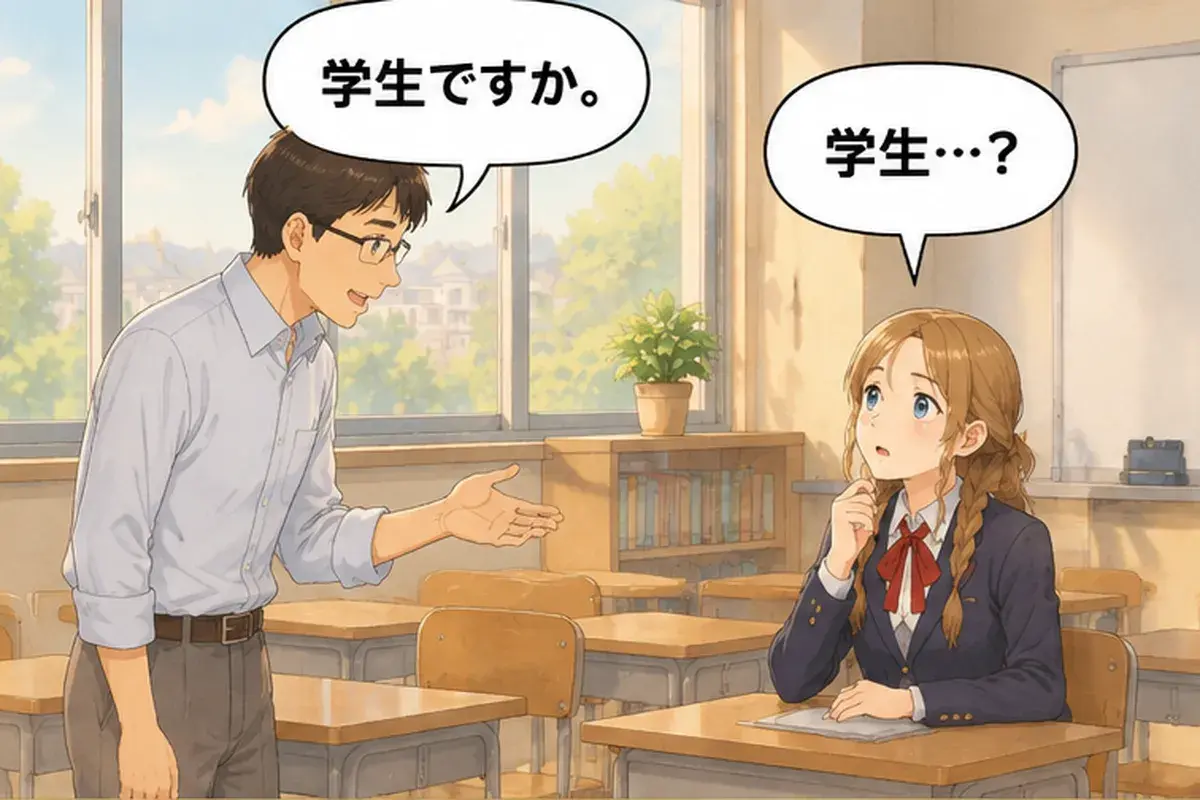
- 先生
学生ですか。
Are you a student?
- ソーニャ
学生…?
Student...?
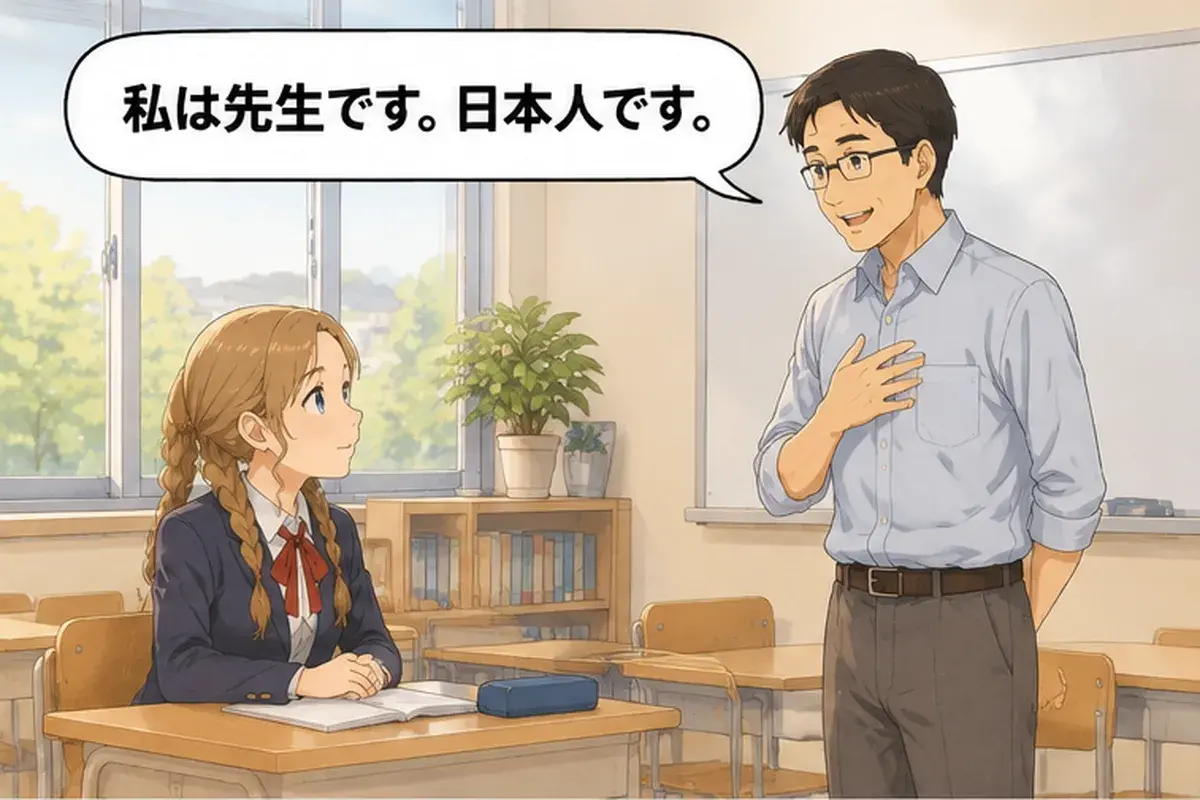
- 先生
私は先生です。日本人です。
I'm a teacher. I'm Japanese.
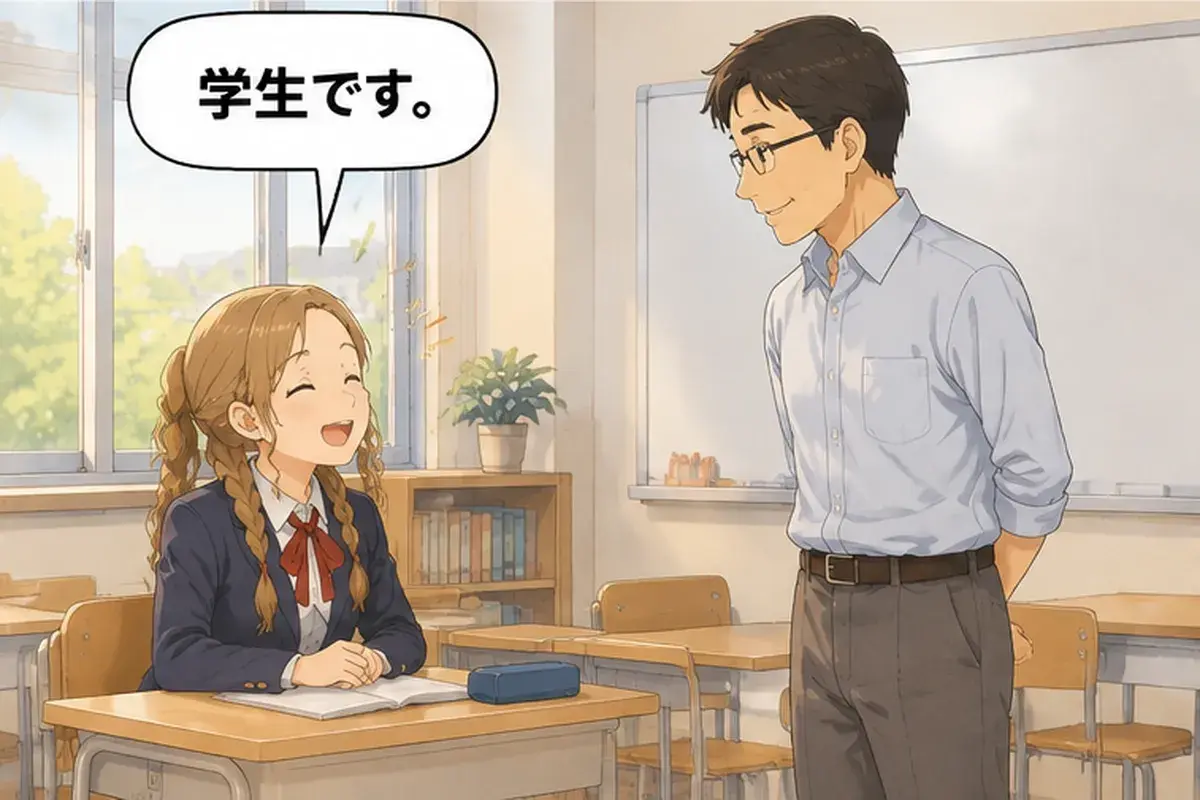
- ソーニャ
学生です。
I'm a student.
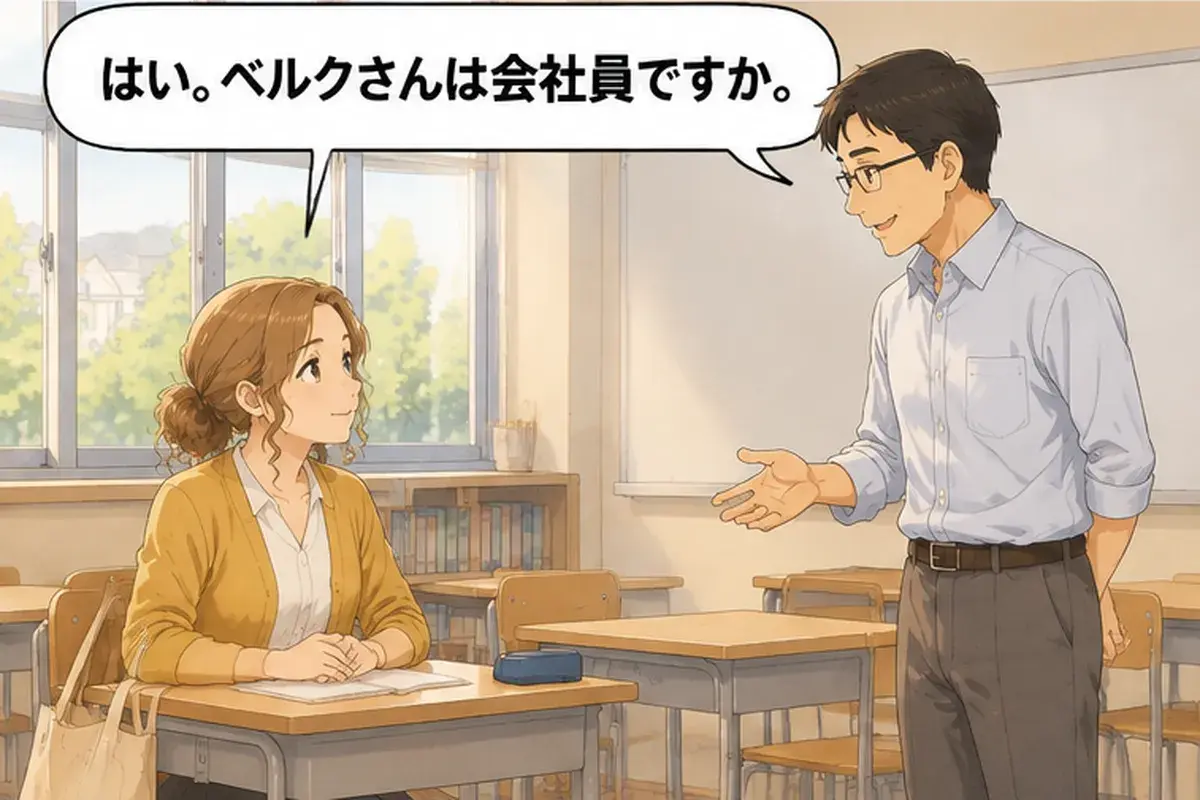
- 先生
はい。ベルクさんは会社員ですか。
OK. Berg-san, are you an office worker?
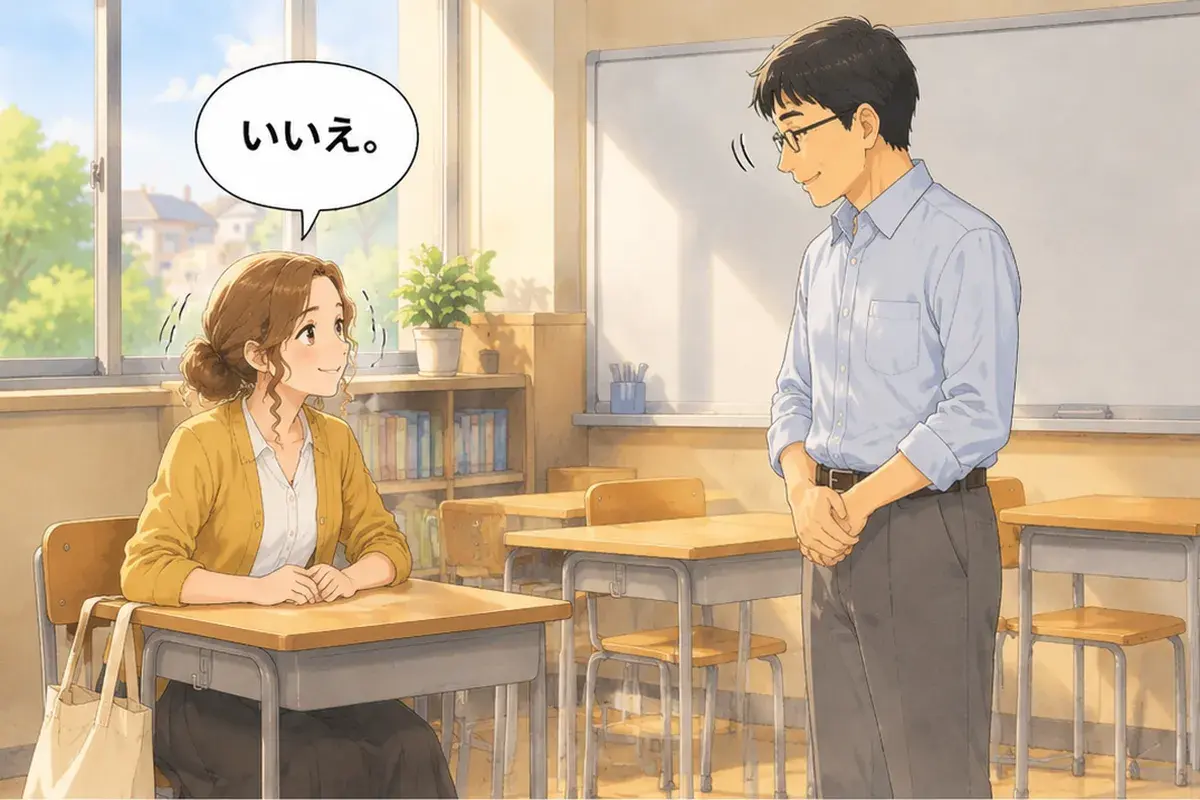
- アンナ
いいえ。
No.
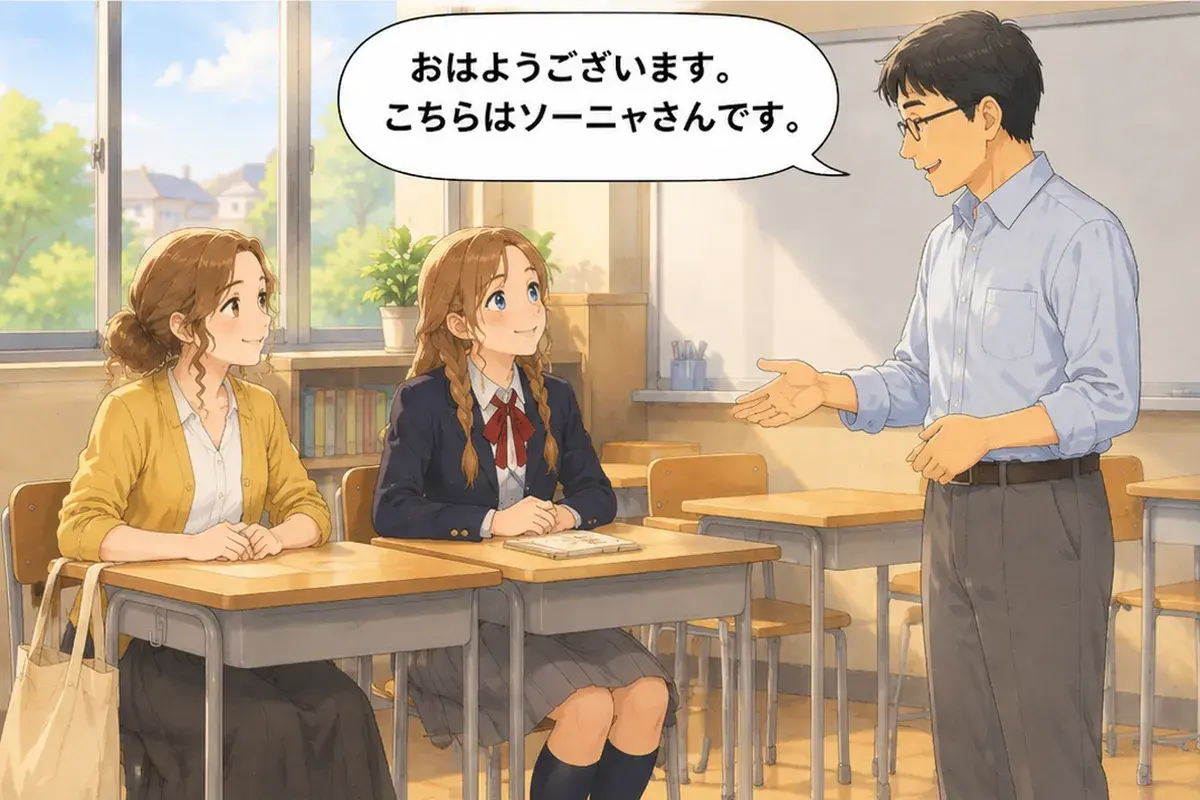
- 先生
おはようございます。こちらはソーニャさんです。
Good morning. This is Sonya-san.
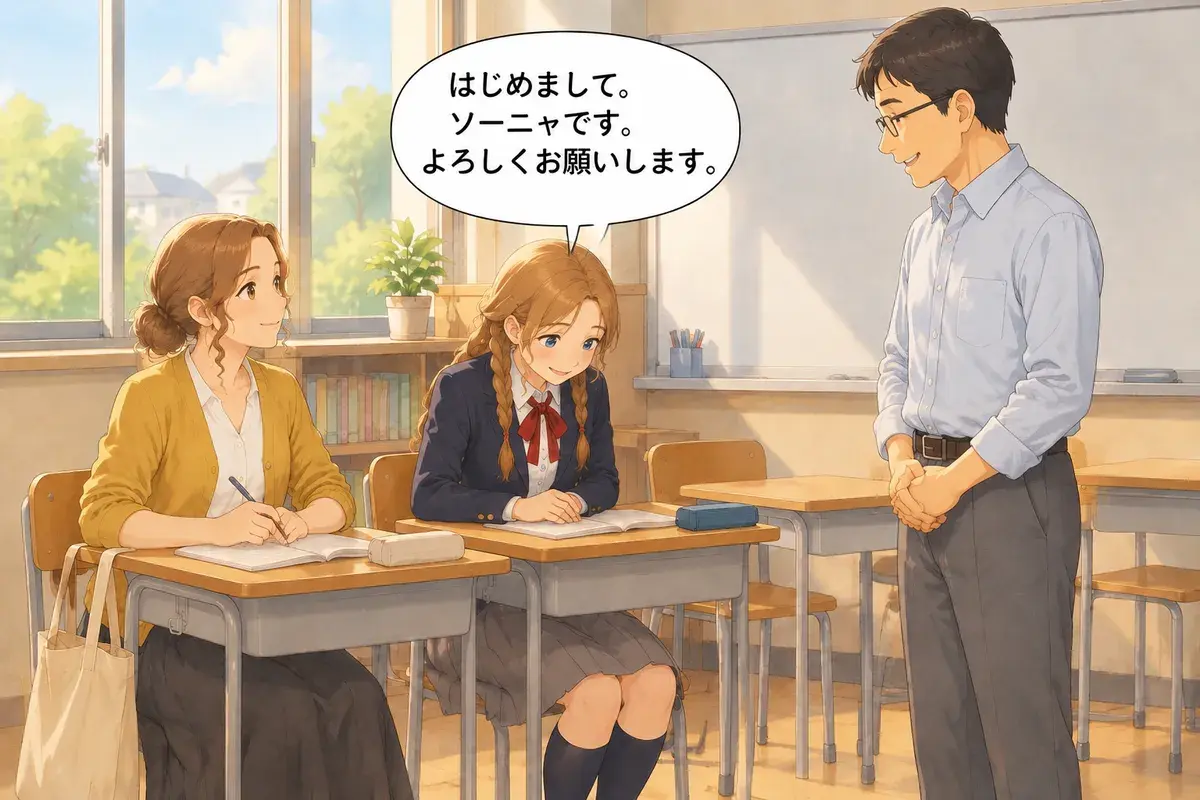
- ソーニャ
はじめまして。ソーニャです。よろしくお願いします。
Nice to meet you. I'm Sonya. I hope we get along.
Grammar for this text
先生 です か。 — a teacher is called 先生, without さん; that's also how you address a teacher. On the first day the homeroom teacher meets the new girl and her mom, and Anna checks that she's talking to the right person.
お名前 は? — お名前 is the polite way to talk about someone else's name (about your own you say 名前, without お). It's a question without か: just the topic and a rising voice; in writing, the mark ?. The teacher knows the girl's name but asks her directly to see how much Japanese she understands.
学生 です か。 — "Are you a student?" (学生 is a student at school or at college). The teacher doesn't say "you": it's clear who the question is for. Sonya doesn't know the word 学生 and asks back: 学生…?
私 は 先生 です。 日本人 です。 — the teacher explains with himself as the example: "I'm a teacher, I'm Japanese." 日本人 is 日本 ("Japan") + 人 ("person"). Sonya sees the pair 先生 and 学生 and answers: 学生 です。 — "I'm a student." The teacher is pleased: はい here means "good, I see".
ベルク さん は 会社員 です か。 — 会社員 means "office worker", without a job title: "I work for a company". The school wants to know if the mom works and can be reached during the day. Anna doesn't work, so a short いいえ is enough.
おはよう ございます。 こちら は ソーニャ さん です。 — now they're in the classroom: the teacher greets the students and introduces the new girl. Sonya answers the way people introduce themselves in class, in courses and at work: はじめまして。 ソーニャ です。 よろしく お願いします。
Words and grammar of the unit: Say hello and introduce yourself.
Learn the words from the texts with flashcards
In the app, you can tap any word in a text to see its translation, forms and examples, and new words stick with flashcards. 15 minutes a day.
Start for freeEverything is open for free. No card needed to sign up.