
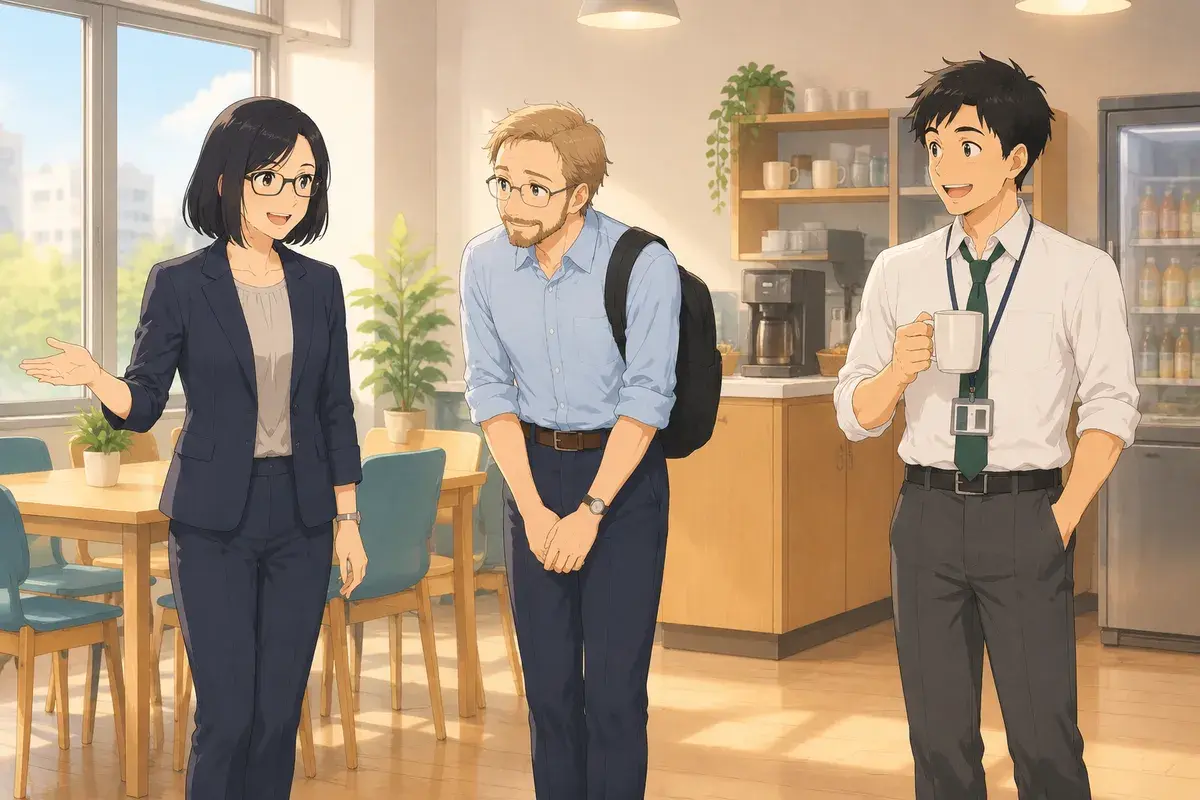
Japanese dialogue with translation · A1 · 11 lines
こちらはマルクさんです This is Mark-san
Comic · 11 panels
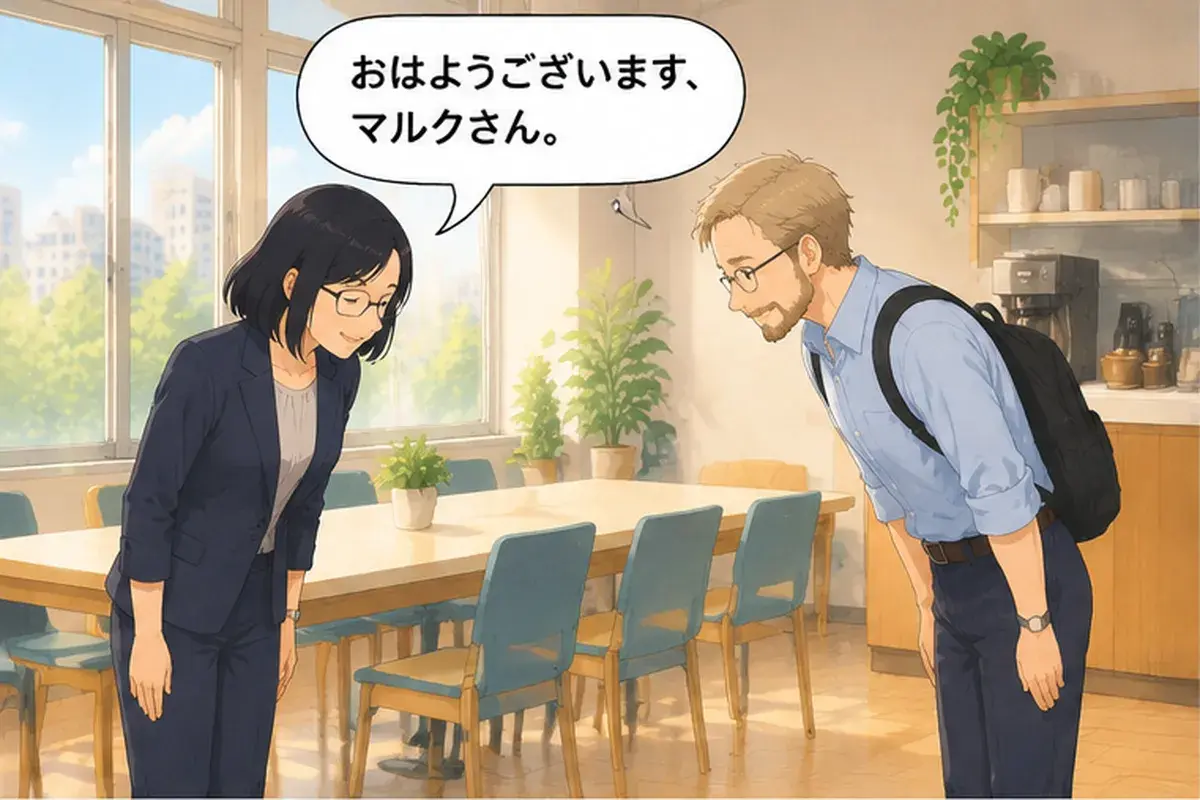
- 木村
おはようございます、マルクさん。
Good morning, Mark-san.
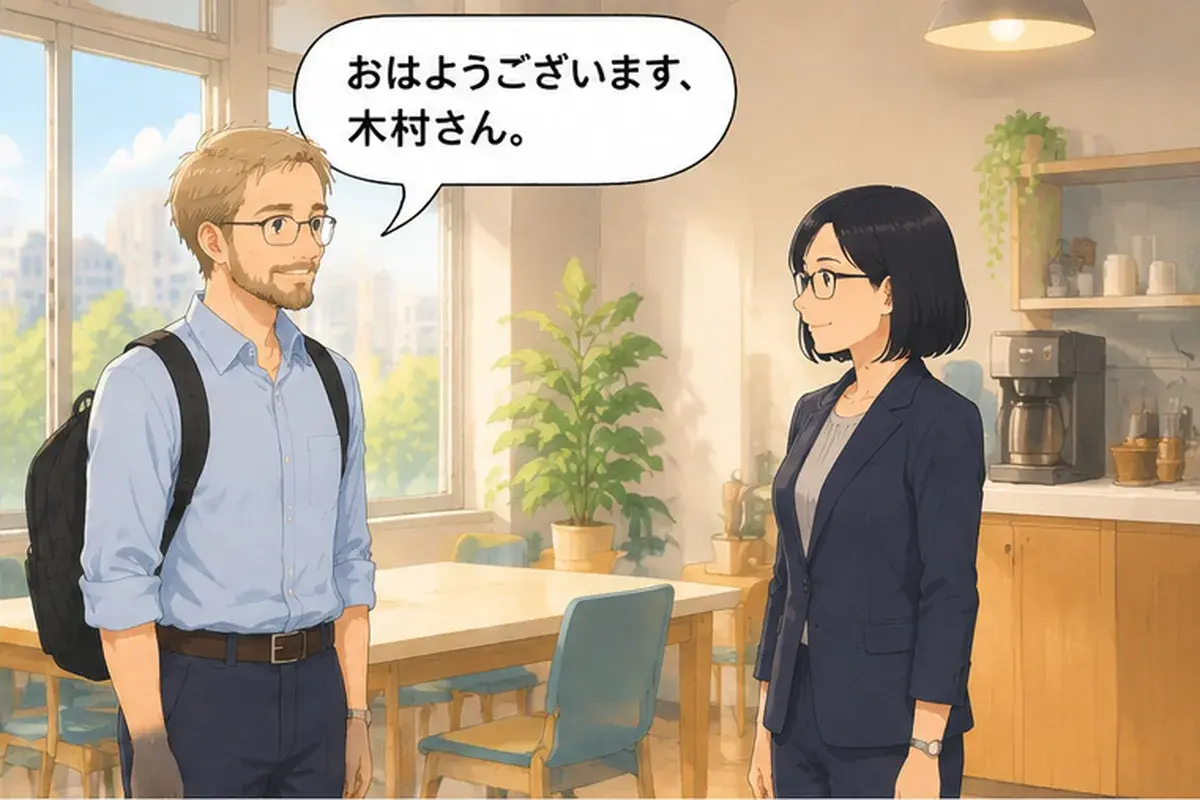
- マルク
おはようございます、木村さん。
Good morning, Kimura-san.
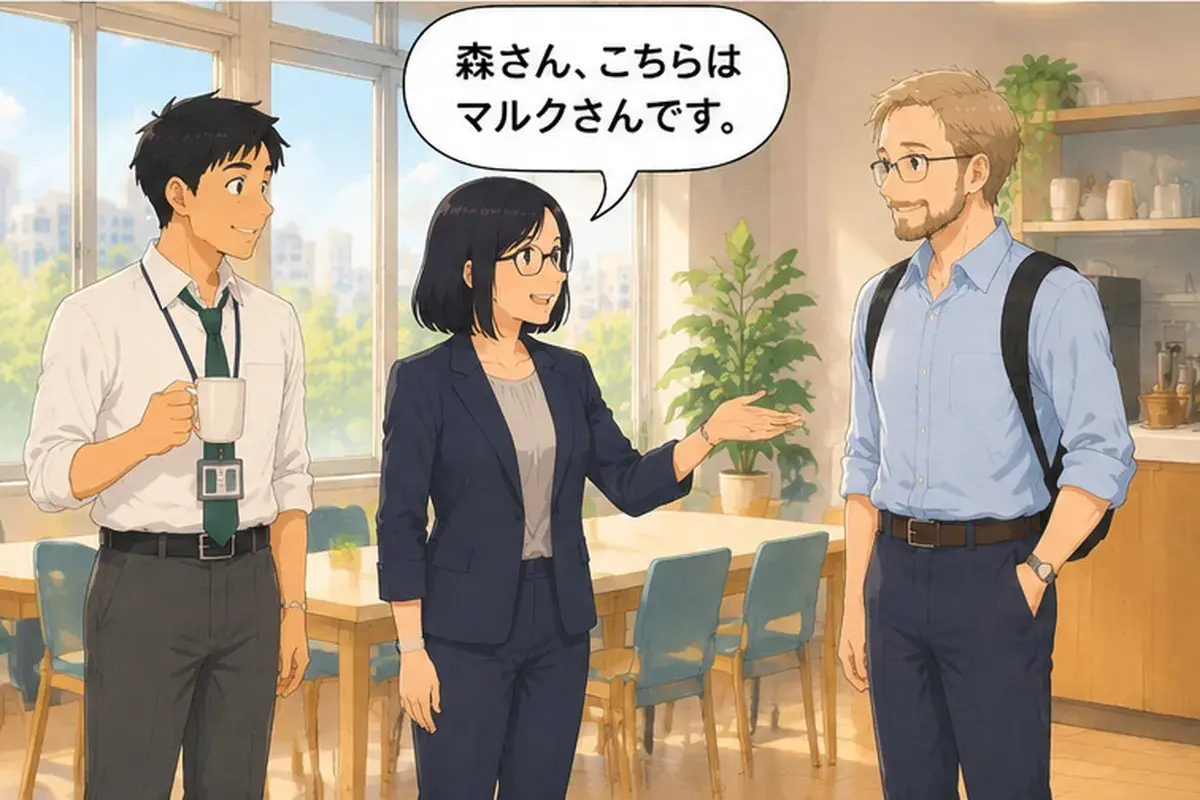
- 木村
森さん、こちらはマルクさんです。
Mori-san, this is Mark-san.
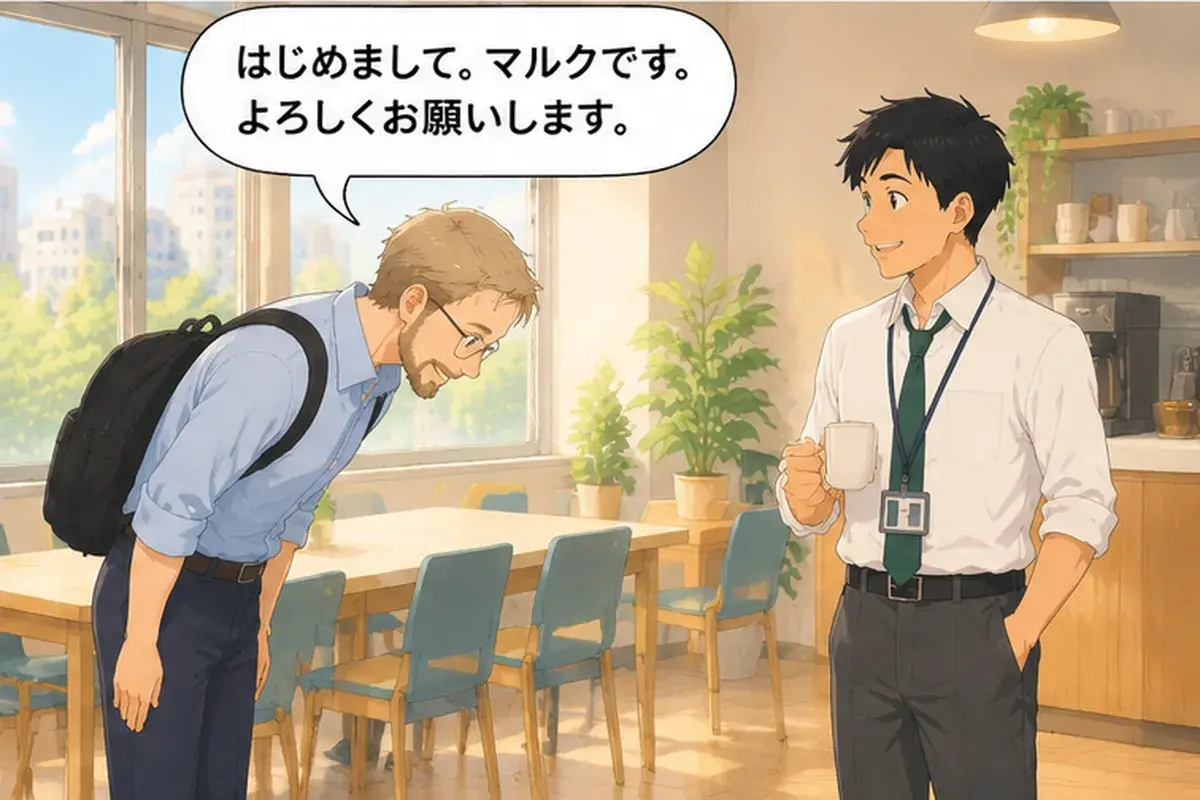
- マルク
はじめまして。マルクです。よろしくお願いします。
Nice to meet you. I'm Mark. I look forward to working with you.
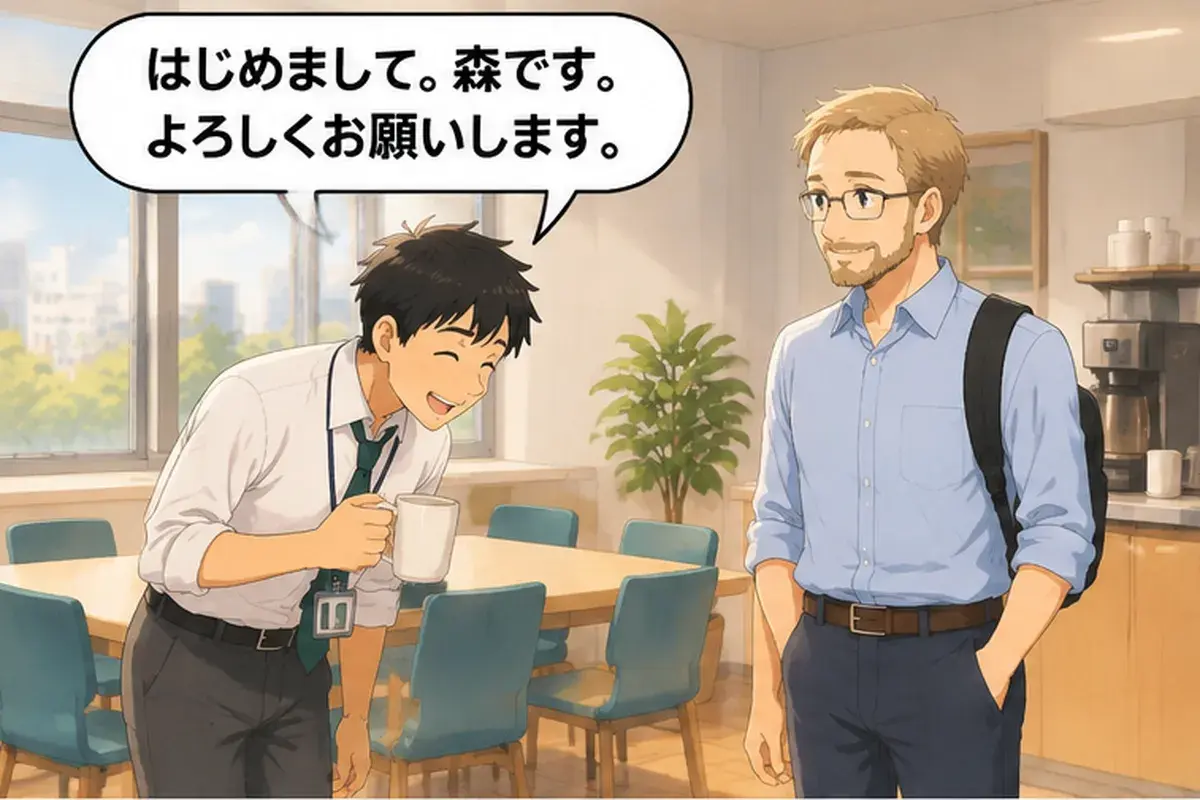
- けん
はじめまして。森です。よろしくお願いします。
Nice to meet you. I'm Mori. I look forward to working with you.
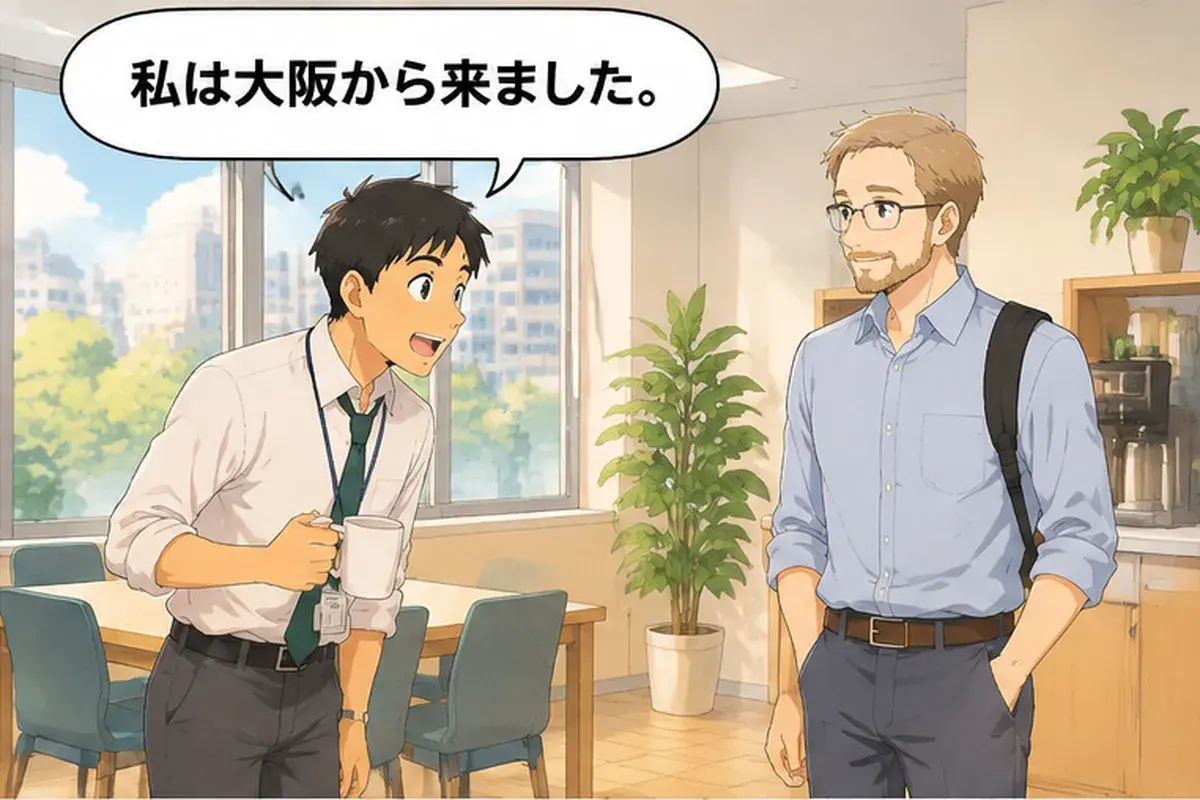
- けん
私は大阪から来ました。
I came from Osaka.
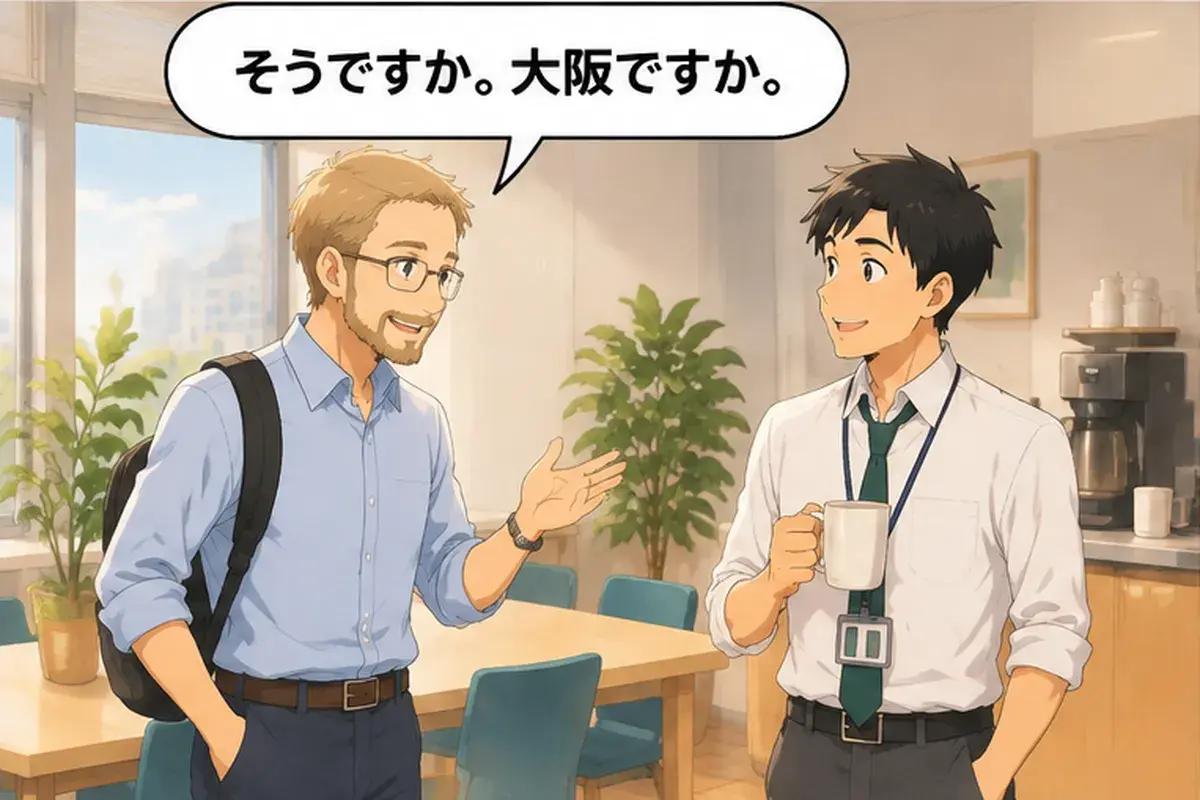
- マルク
そうですか。大阪ですか。
I see. Osaka?
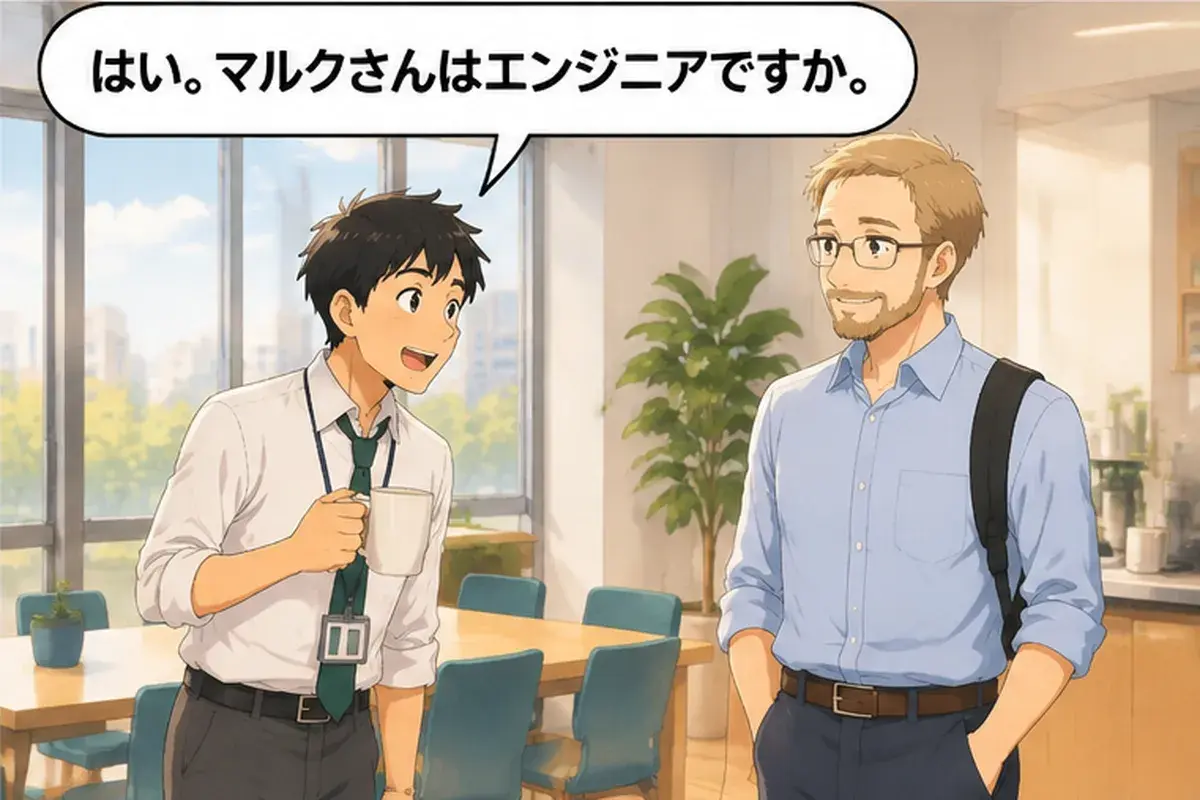
- けん
はい。マルクさんはエンジニアですか。
Yes. Mark-san, are you an engineer?
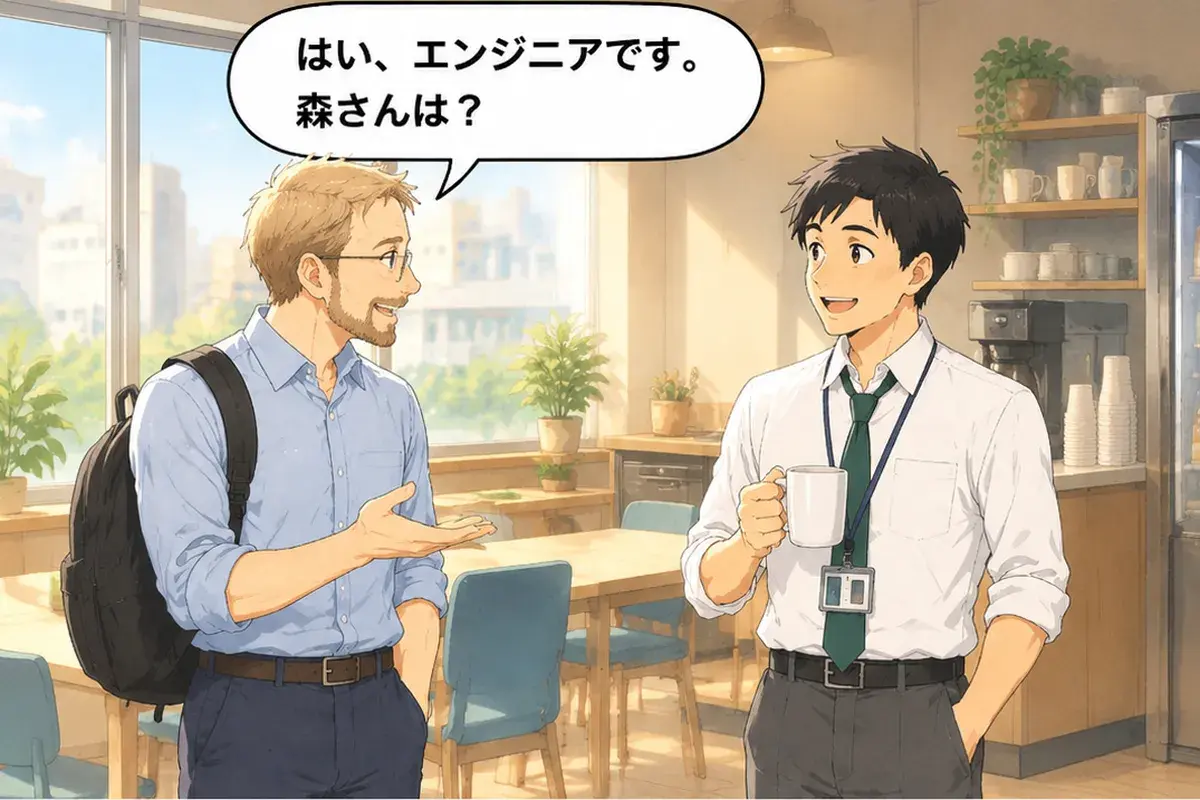
- マルク
はい、エンジニアです。森さんは?
Yes, I'm an engineer. And you, Mori-san?
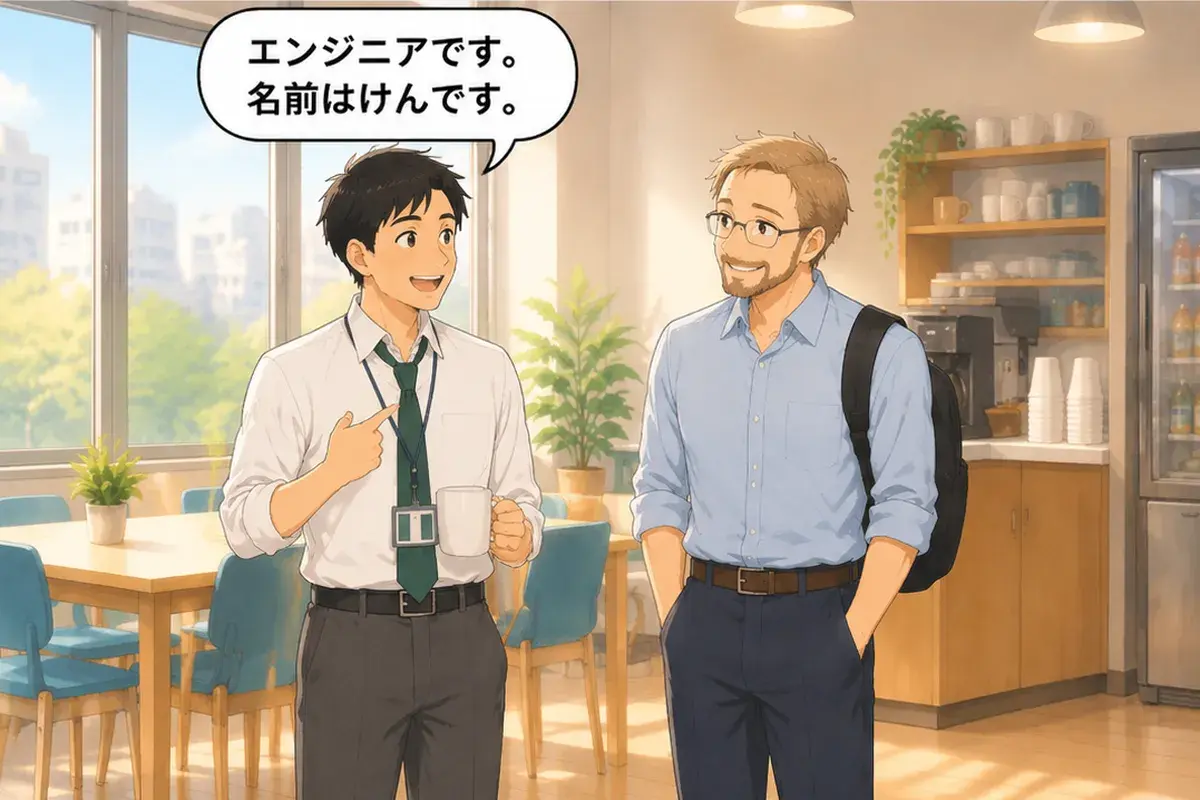
- けん
エンジニアです。名前はけんです。
I'm an engineer. My first name is Ken.
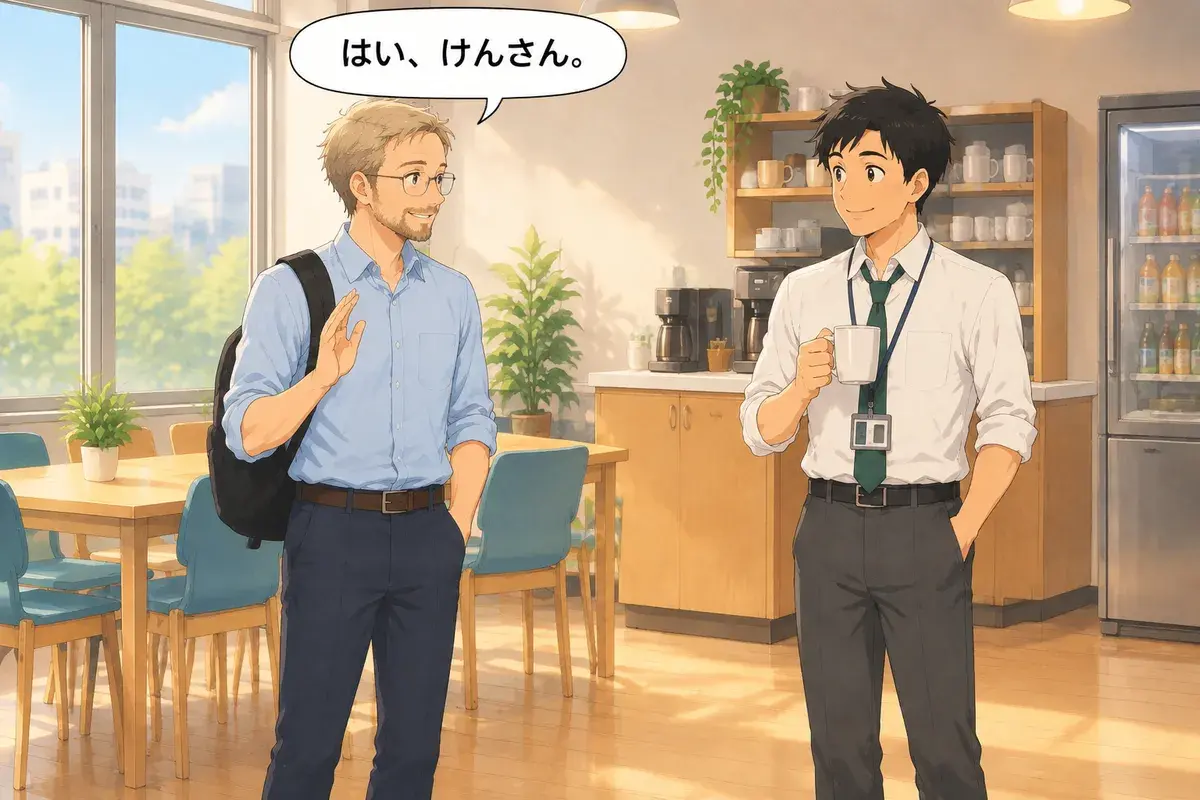
- マルク
はい、けんさん。
OK, Ken-san.
Grammar for this text
おはよう ございます — "good morning", the polite form; people say it until about 11 a.m. With friends and family it's shorter: おはよう. Later in the day the greeting is こんにちは.
森 さん、 こちら は マルク さん です。 — こちら is a polite "this person" (it also means "this way"): you use it to point to someone you're introducing. First you say the name of the person you're talking to, then you name the one you're introducing.
私 は 大阪 から 来ました。 — a set phrase: "I came from...". 来ました is a form of the verb 来る ("to come"); in this form the kanji 来 is read き: きました. The ending ました makes the verb polite and past ("came"). Polite verb forms come in unit 6 and the past tense in unit 11; for now, learn the whole phrase. Mark checks: 大阪 です か。 — "Osaka?"
マルク さん は エンジニア です か。 — Ken doesn't say "you": the word あなた sounds blunt, so people use the name with さん.
森 です。 — you don't use さん about yourself: it goes only after other people's names. Ken will ask about Mark's job next.
森 さん は? — a short question with は: "And you?" What's being asked is clear from the conversation, so エンジニア です か isn't repeated.
名前 は けん です。 — at the company people call Ken by his family name, 森 さん (that's what Kimura-san calls him). But he gives Mark his first name right away: that's an offer to call him by it. Mark gets it: はい、 けん さん。 さん also goes after first names, but never after your own name. Here はい isn't "yes" but "OK, got it".
よろしく お願いします — Mark and Ken say it to each other once, when they meet; they don't repeat it after that.
Words and grammar of the unit: Say hello and introduce yourself.
Learn the words from the texts with flashcards
In the app, you can tap any word in a text to see its translation, forms and examples, and new words stick with flashcards. 15 minutes a day.
Start for freeEverything is open for free. No card needed to sign up.