
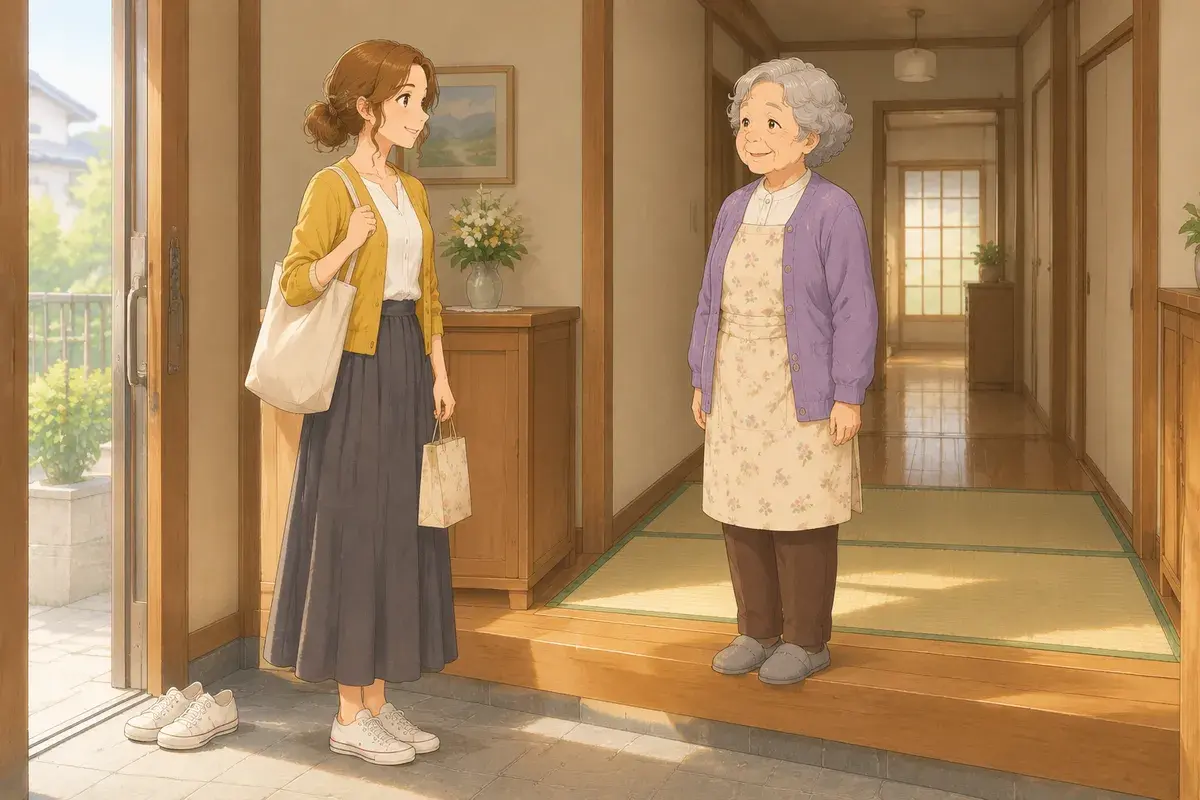
Japanese dialogue with translation · A1 · 8 lines
田中さんですか Are you Tanaka-san?
Comic · 4 panels
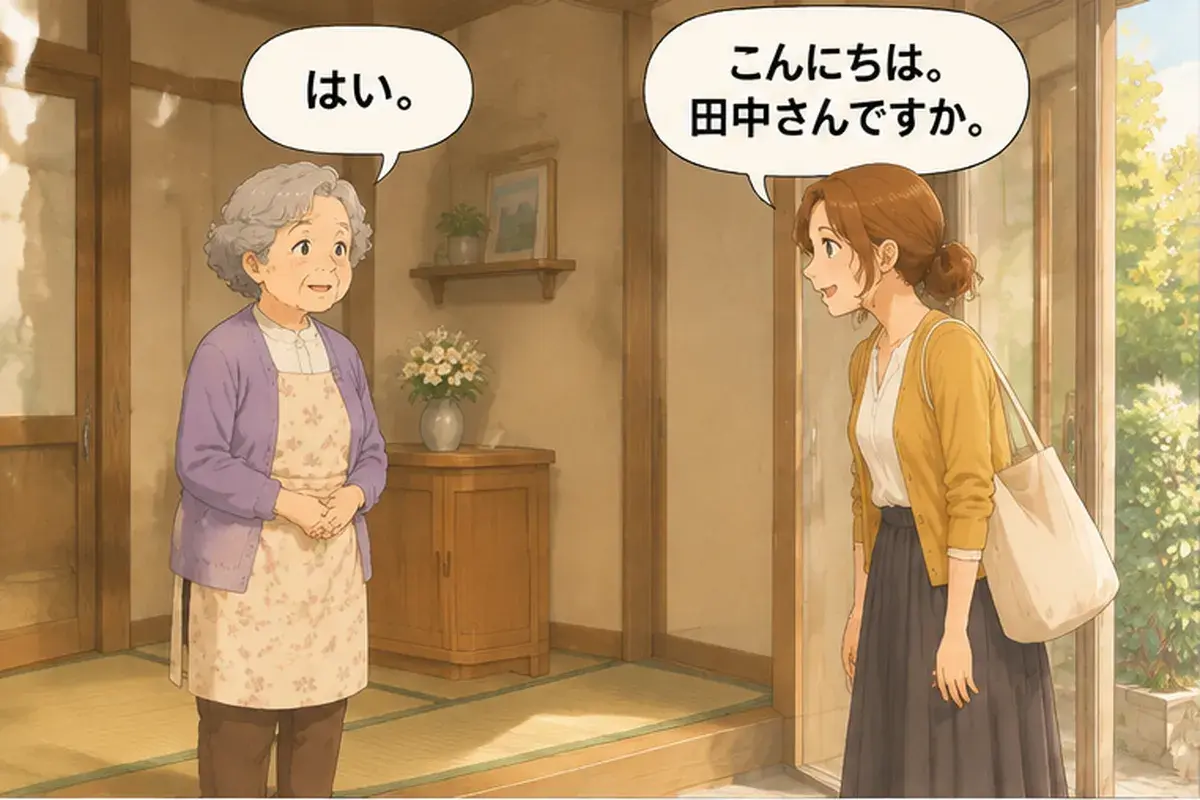
- 田中
はい。
Yes?
- アンナ
こんにちは。田中さんですか。
Hello. Are you Tanaka-san?
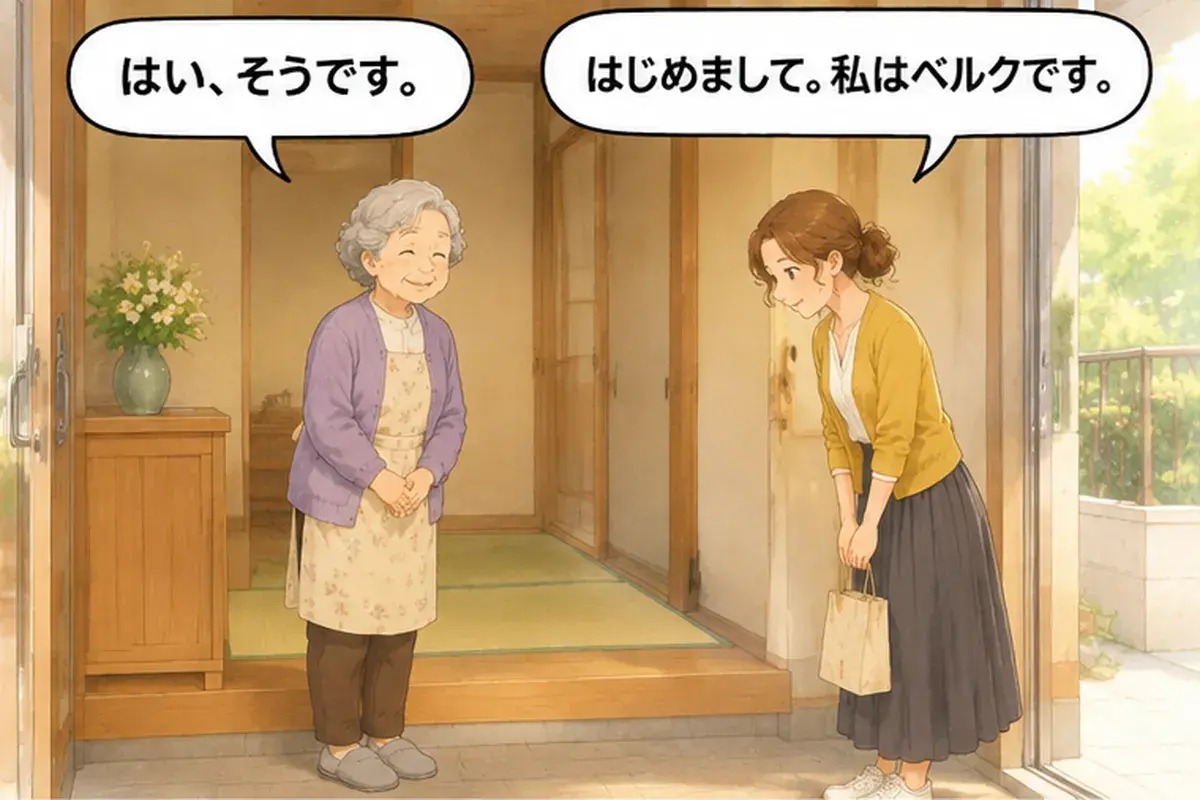
- 田中
はい、そうです。
Yes, that's right.
- アンナ
はじめまして。私はベルクです。
Nice to meet you. I'm Berg.
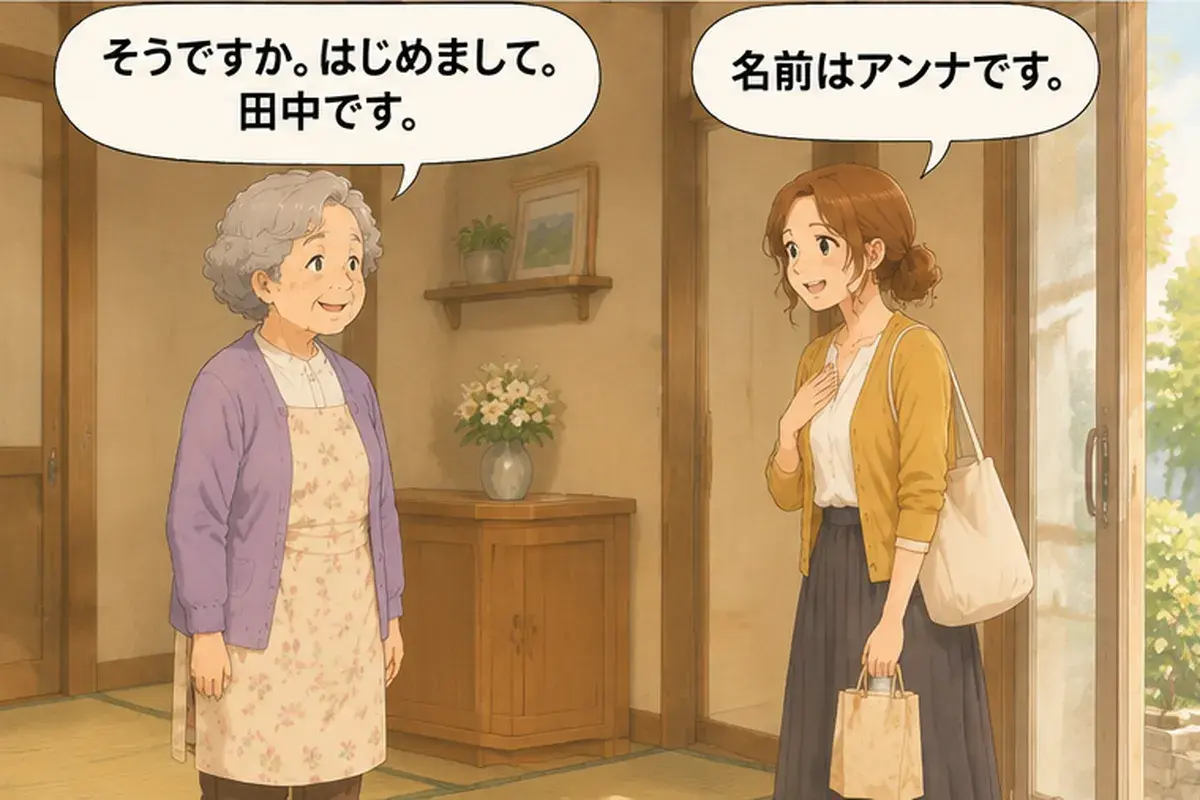
- 田中
そうですか。はじめまして。田中です。
I see. Nice to meet you. I'm Tanaka.
- アンナ
名前はアンナです。
My first name is Anna.
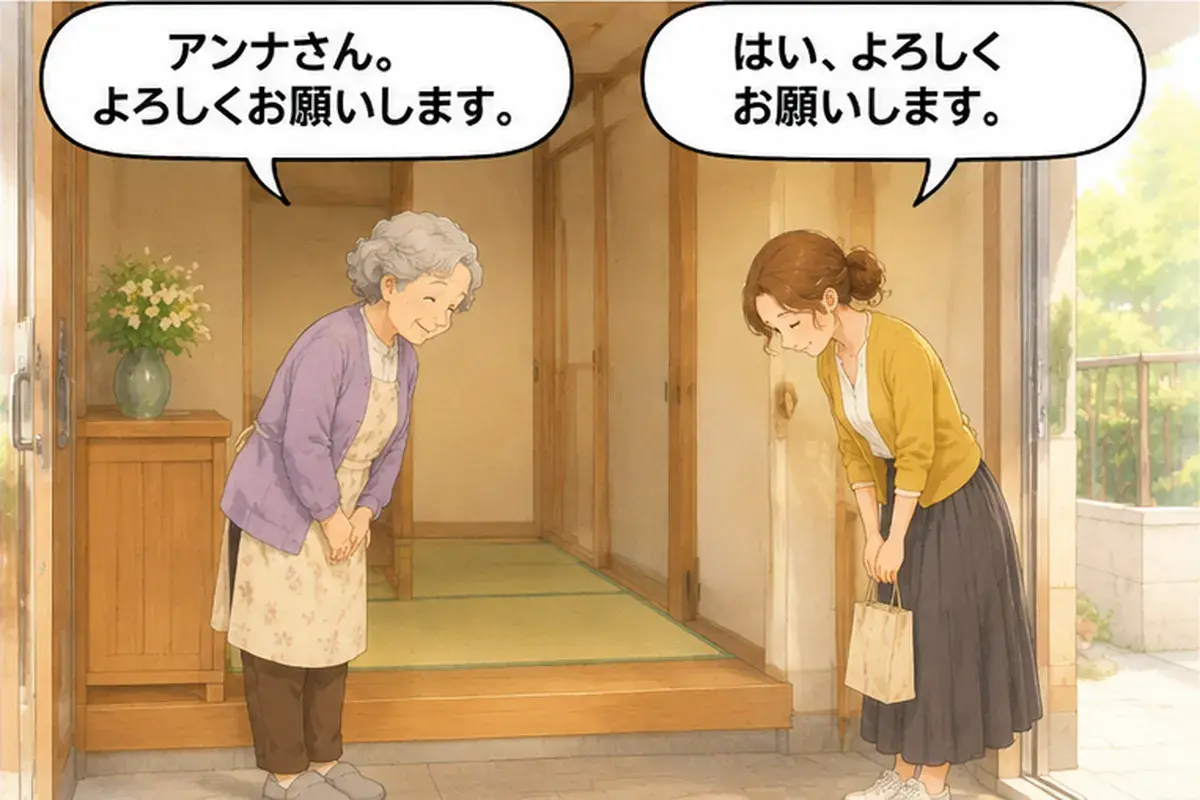
- 田中
アンナさん。よろしくお願いします。
Anna-san. I hope we get along.
- アンナ
はい、よろしくお願いします。
Yes, I hope we get along.
Grammar for this text
はい。 — here it doesn't mean "yes" but "yes?", "I'm listening": that's how people answer the doorbell or reply when someone calls their name.
私 は ベルク です。 — 私 means "I". When it's clear who you mean, it's left out: ベルク です means the same. Anna gives her neighbor her family name: that's how people in Japan introduce themselves to neighbors and at work.
そう です か。 — not a question but a reaction: "I see". You don't need a rising voice.
はじめまして。 田中 です。 — when people meet, both introduce themselves, even if they already know the other person's family name. You don't use さん about yourself: it goes only after other people's names.
名前 は アンナ です。 — literally "the name is Anna". Anna first gave her family name, as people usually do in Japan, and now she adds her first name: foreigners in Japan are often called by their first name. Tanaka-san repeats アンナ さん to remember it.
よろしく お願いします — closes the introduction; literally something like "I ask for your kindness". The other person answers with the same words, often with はい.
Words and grammar of the unit: Say hello and introduce yourself.
Learn the words from the texts with flashcards
In the app, you can tap any word in a text to see its translation, forms and examples, and new words stick with flashcards. 15 minutes a day.
Start for freeEverything is open for free. No card needed to sign up.