

Japanese dialogue with translation · A1 · 14 lines
それは何ですか What's that?
Comic · 7 panels
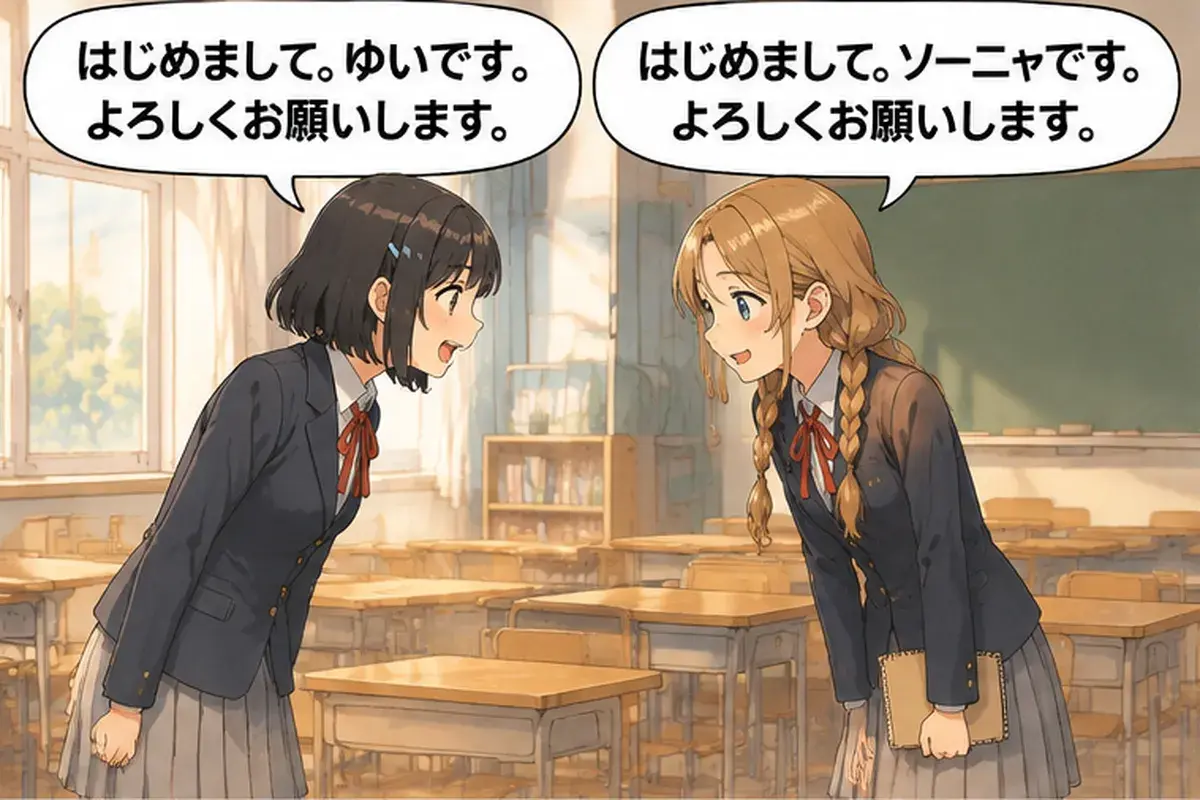
- ゆい
はじめまして。ゆいです。よろしくお願いします。
Nice to meet you. I'm Yui. I hope we get along.
- ソーニャ
はじめまして。ソーニャです。よろしくお願いします。
Nice to meet you. I'm Sonya. I hope we get along.
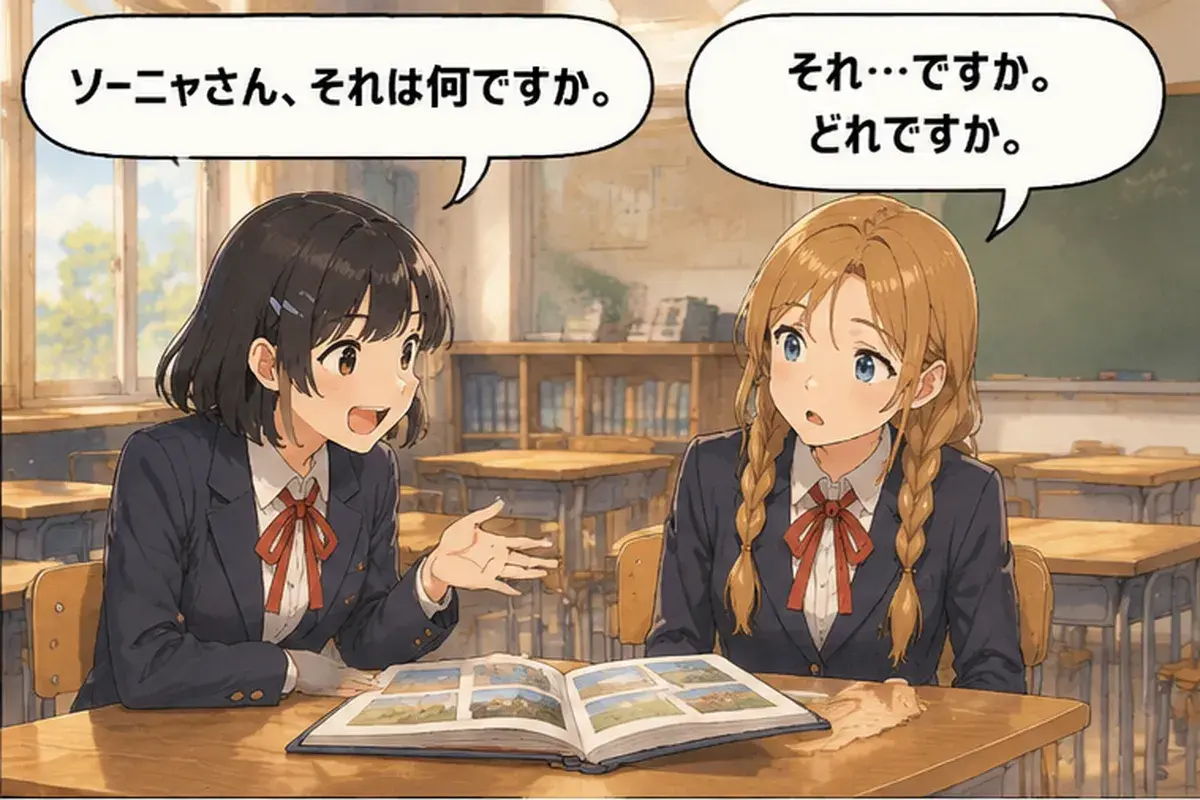
- ゆい
ソーニャさん、それは何ですか。
Sonya-san, what's that?
- ソーニャ
それ…ですか。どれですか。
That...? Which one?
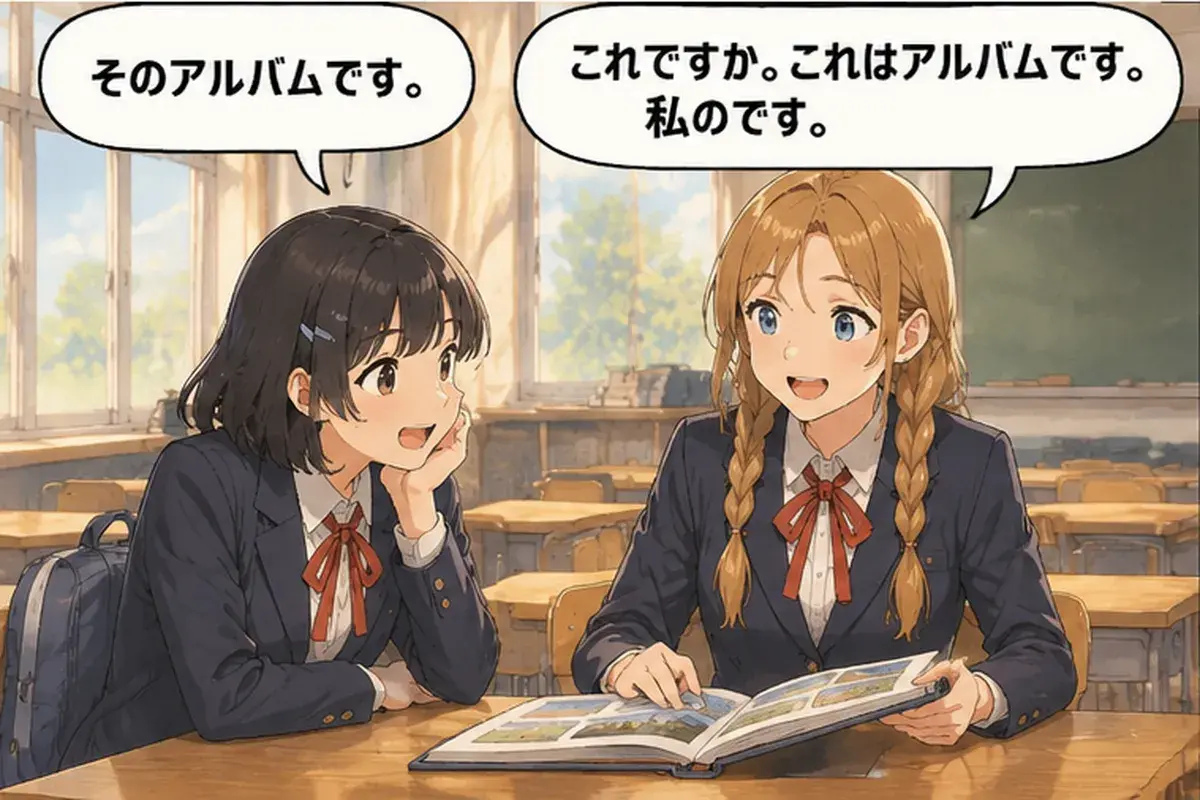
- ゆい
そのアルバムです。
That album.
- ソーニャ
これですか。これはアルバムです。私のです。
This? This is an album. It's mine.
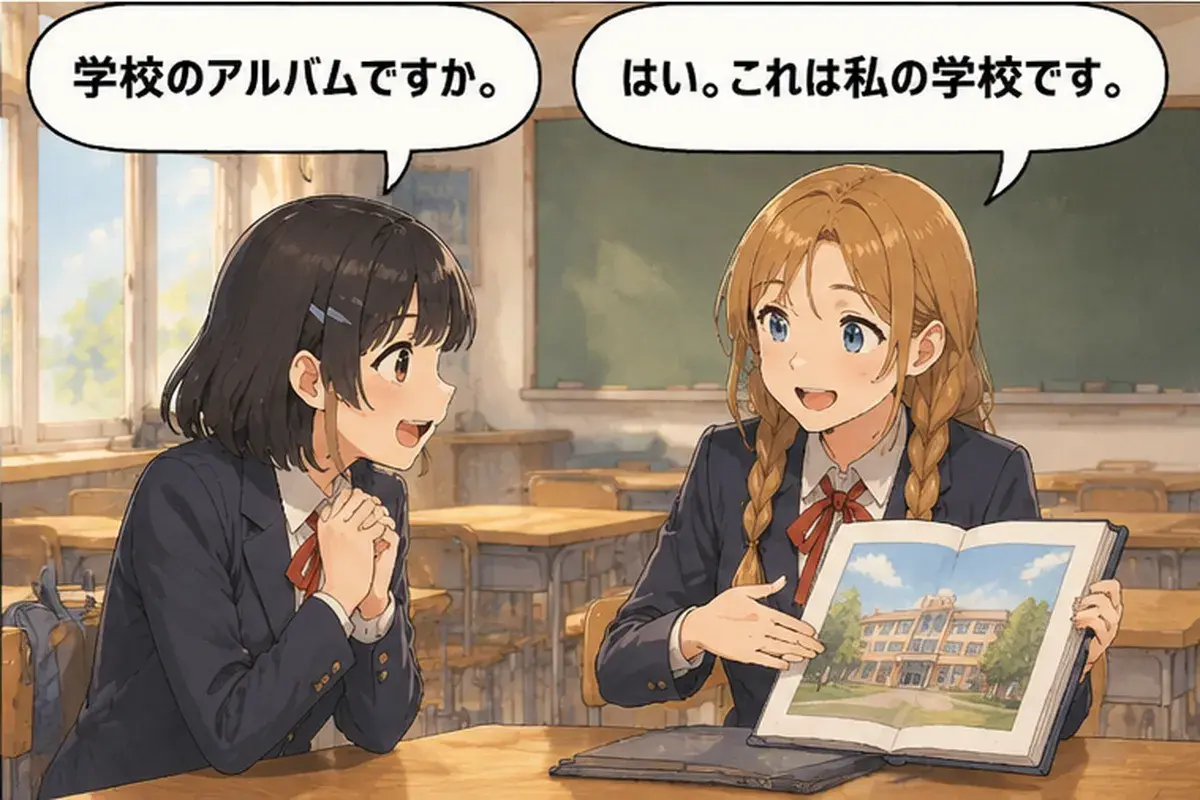
- ゆい
学校のアルバムですか。
Is it a school album?
- ソーニャ
はい。これは私の学校です。
Yes. This is my school.
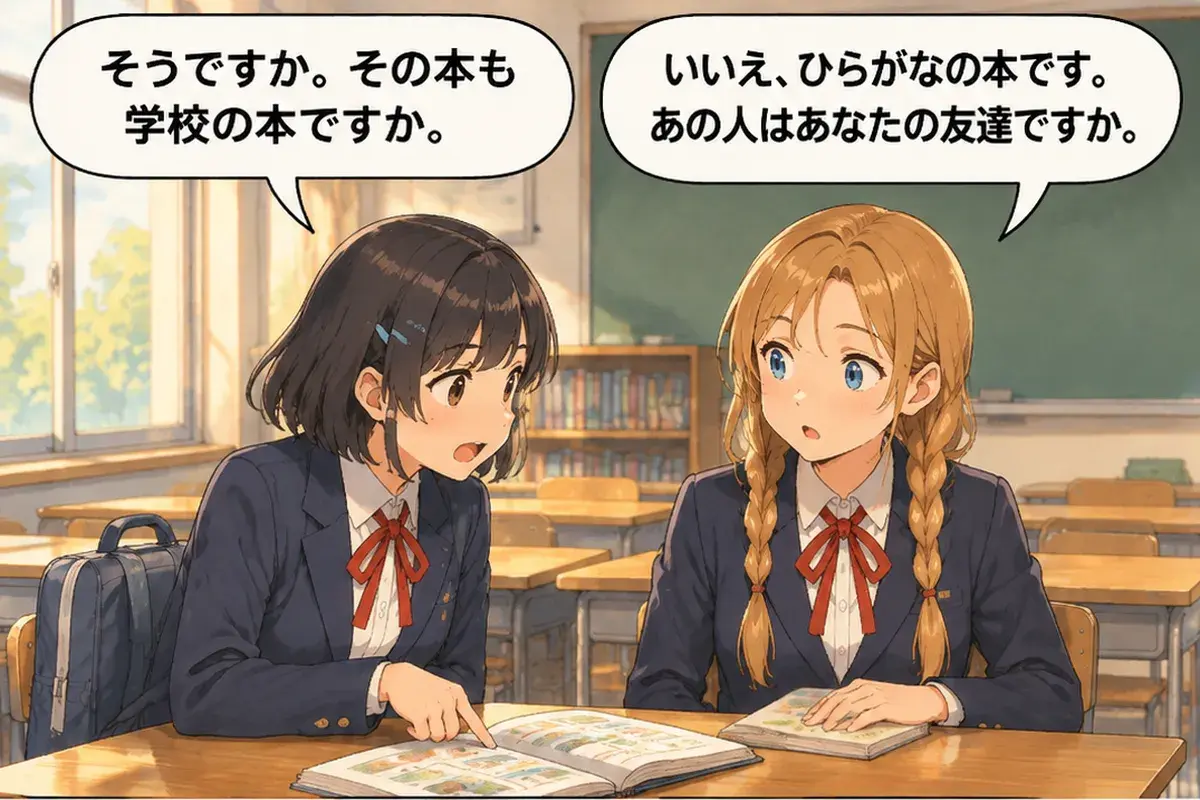
- ゆい
そうですか。その本も学校の本ですか。
Oh, I see. Is that book a school book too?
- ソーニャ
いいえ、ひらがなの本です。あの人はあなたの友達ですか。
No, it's a hiragana book. Is that person over there your friend?
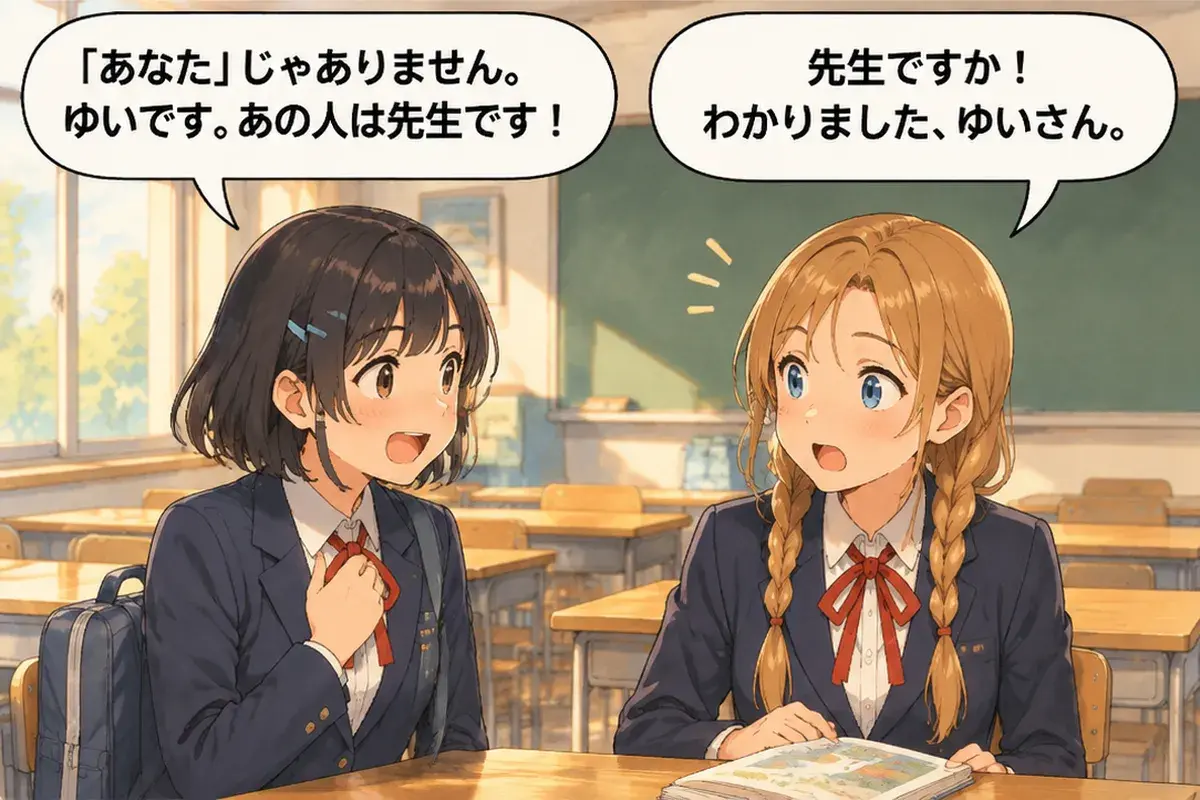
- ゆい
「あなた」じゃありません。ゆいです。あの人は先生です!
I'm not "you." I'm Yui. That person over there is a teacher!
- ソーニャ
先生ですか!わかりました、ゆいさん。
A teacher?! Got it, Yui-san.
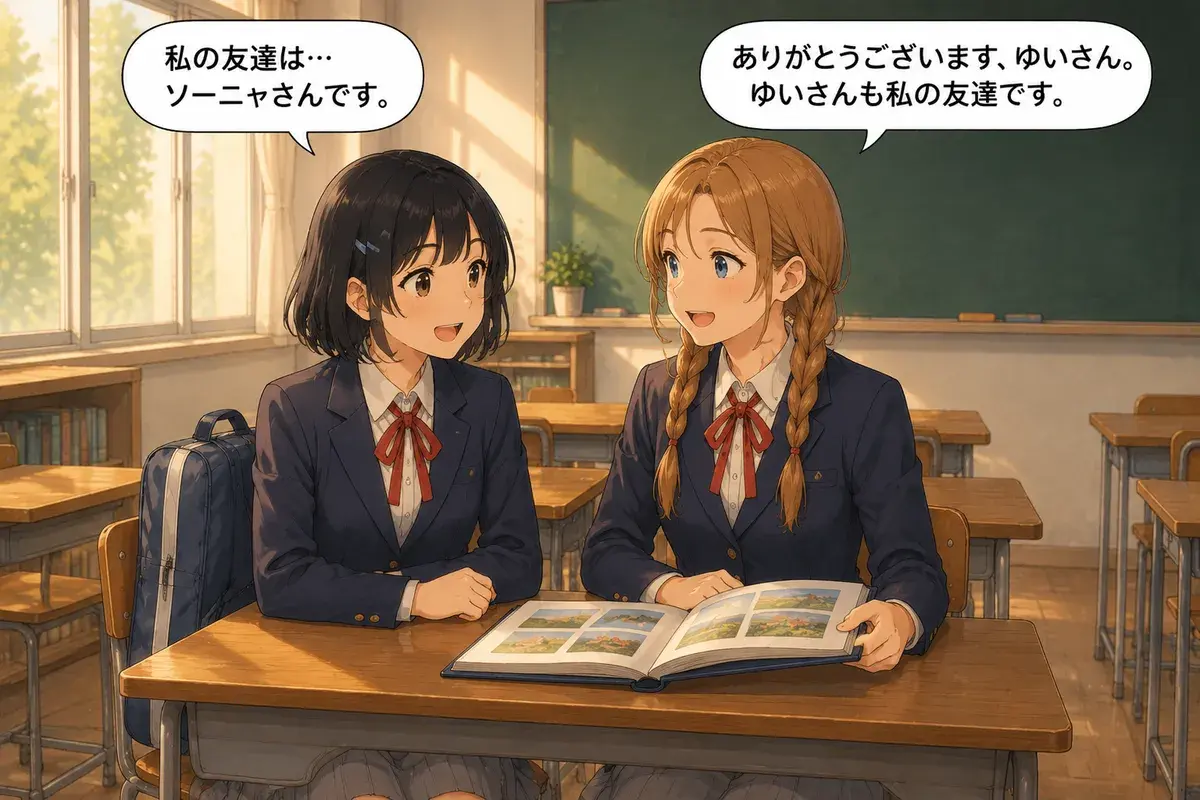
- ゆい
私の友達は…ソーニャさんです。
My friend is... Sonya-san.
- ソーニャ
ありがとうございます、ゆいさん。ゆいさんも私の友達です。
Thank you, Yui-san. Yui-san, you're my friend too.
Grammar for this text
それ は 何 です か — Yui asks about a thing near Sonya, so she says それ. Sonya answers about the same thing with これ: これ です か。 これ は アルバム です。 For Sonya the thing is near her; for Yui it's near the person she's talking to.
それ…です か。 どれ です か。 — Sonya doesn't understand which thing Yui means (there are several on the desk), so she asks どれ: "which one?". Yui makes it clear: その アルバム です。 その goes before a noun.
私 の です — の with no noun after it: "mine". The album has already been named, so there's no need to repeat it.
その 本 も 学校 の 本 です か — も is "too": the album is from school, and the book, too?
ひらがな の 本 — "a hiragana book": の links "hiragana" and "book".
「あなた」 じゃ ありません。 ゆい です。 — あなた means "you", but people rarely use it: you call someone you know by name with さん. Sonya spoke like a textbook, and Yui playfully corrects her: "I'm not 'you', I'm Yui." Notice that Yui says ゆい about herself, without さん.
あの 人 は あなた の 友達 です か。 — someone at the classroom door is calling Yui. 人 is read ひと, "person"; あの 人 is "that person over there" (far from both girls). 友達 is "friend". Sonya took a young teacher for a student, and Yui laughs: あの 人 は 先生 です!
私 の 友達 は…ソーニャ さん です。 — 私 の 友達 is "my friend". The pause is on purpose: Yui says it in a mock-solemn way. Sonya answers ゆい さん も 私 の 友達 です, with も "too": Yui is Sonya's friend, and Sonya is Yui's friend.
Words and grammar of the unit: Ask what things are and whose.
Learn the words from the texts with flashcards
In the app, you can tap any word in a text to see its translation, forms and examples, and new words stick with flashcards. 15 minutes a day.
Start for freeEverything is open for free. No card needed to sign up.