
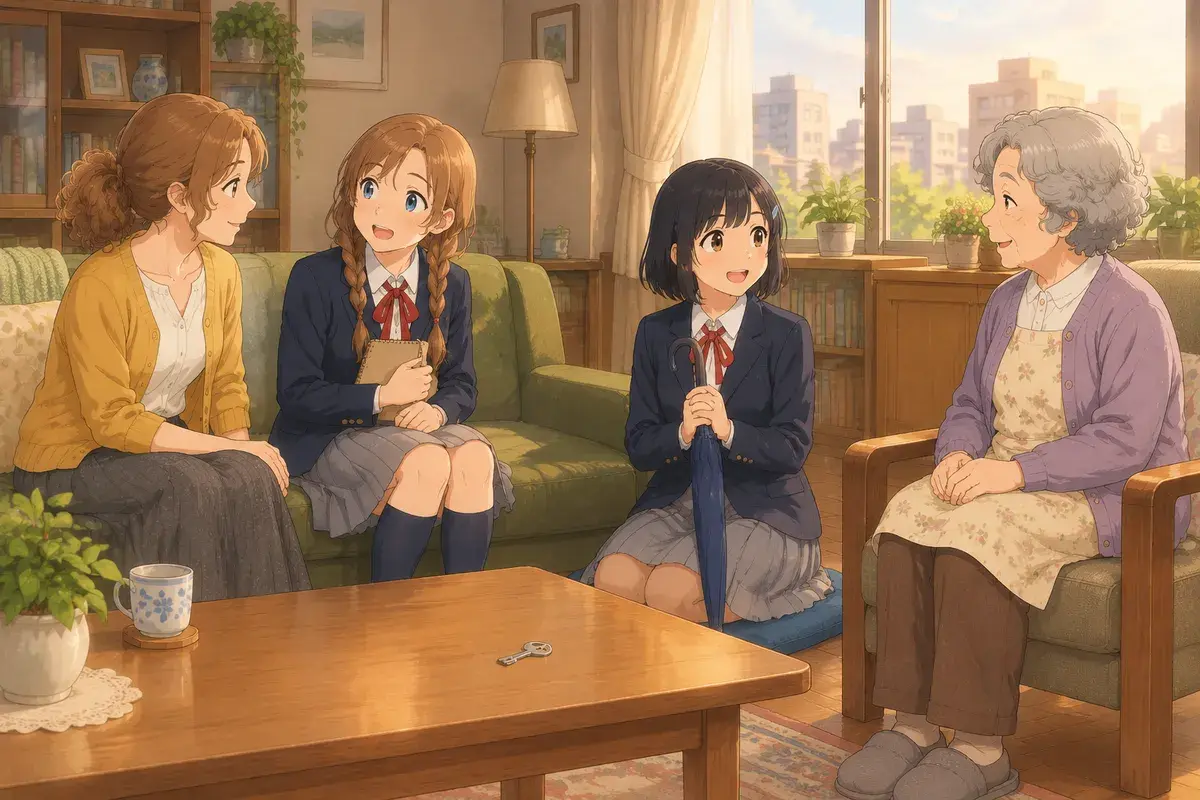
Japanese dialogue with translation · A1 · 10 lines
私の鍵です It's my key
Comic · 7 panels
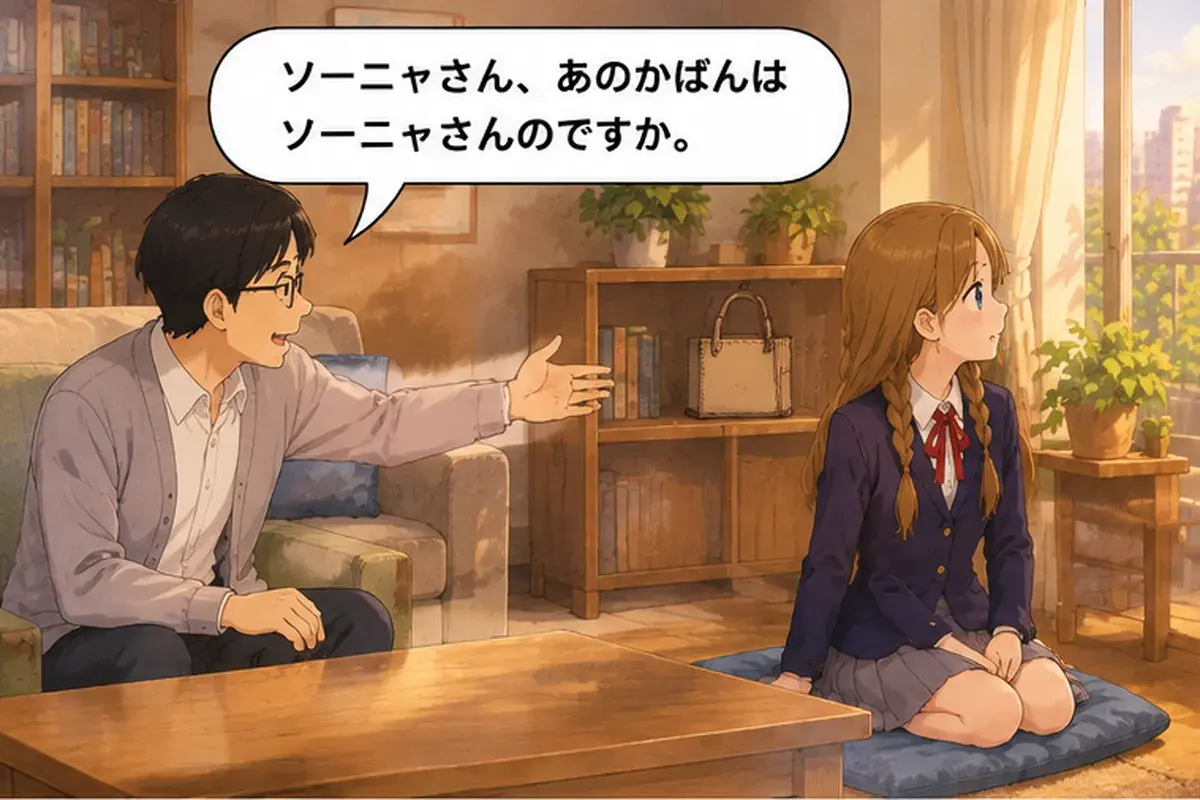
- 先生
ソーニャさん、あのかばんはソーニャさんのですか。
Sonya-san, is that bag over there yours?
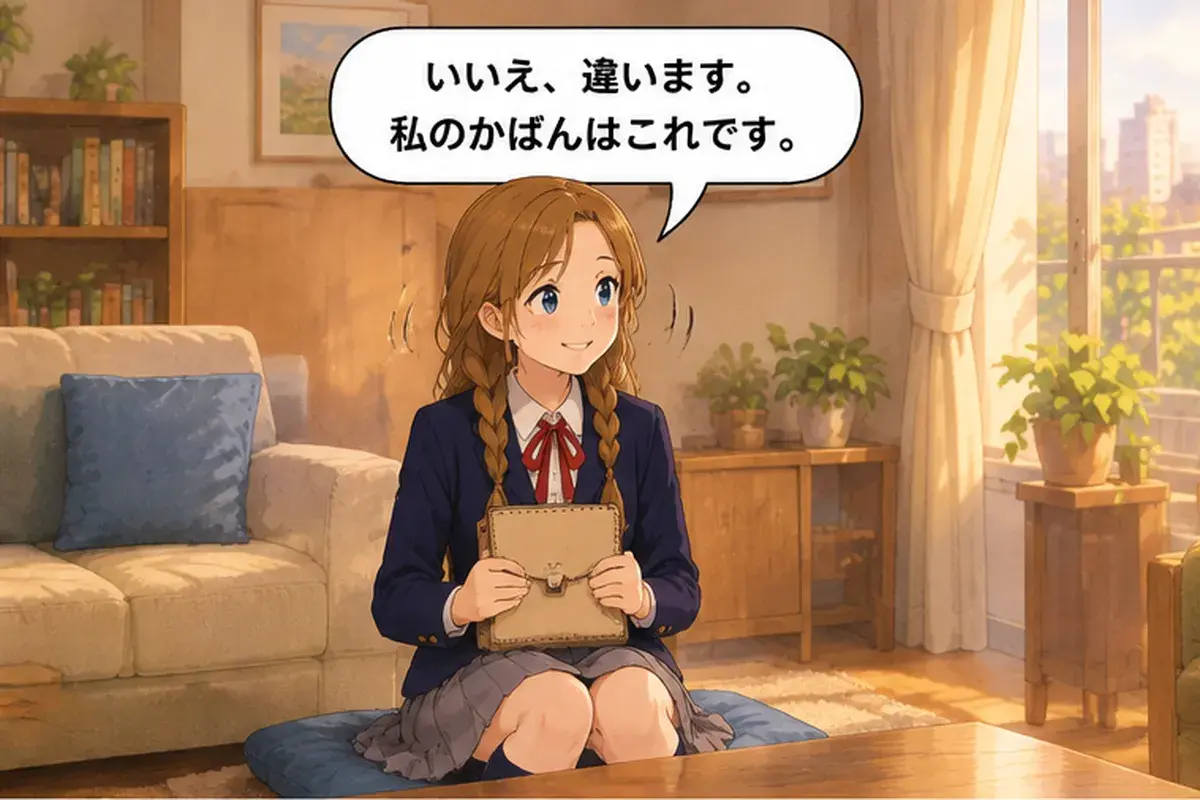
- ソーニャ
いいえ、違います。私のかばんはこれです。
No, it isn't. My bag is this one.
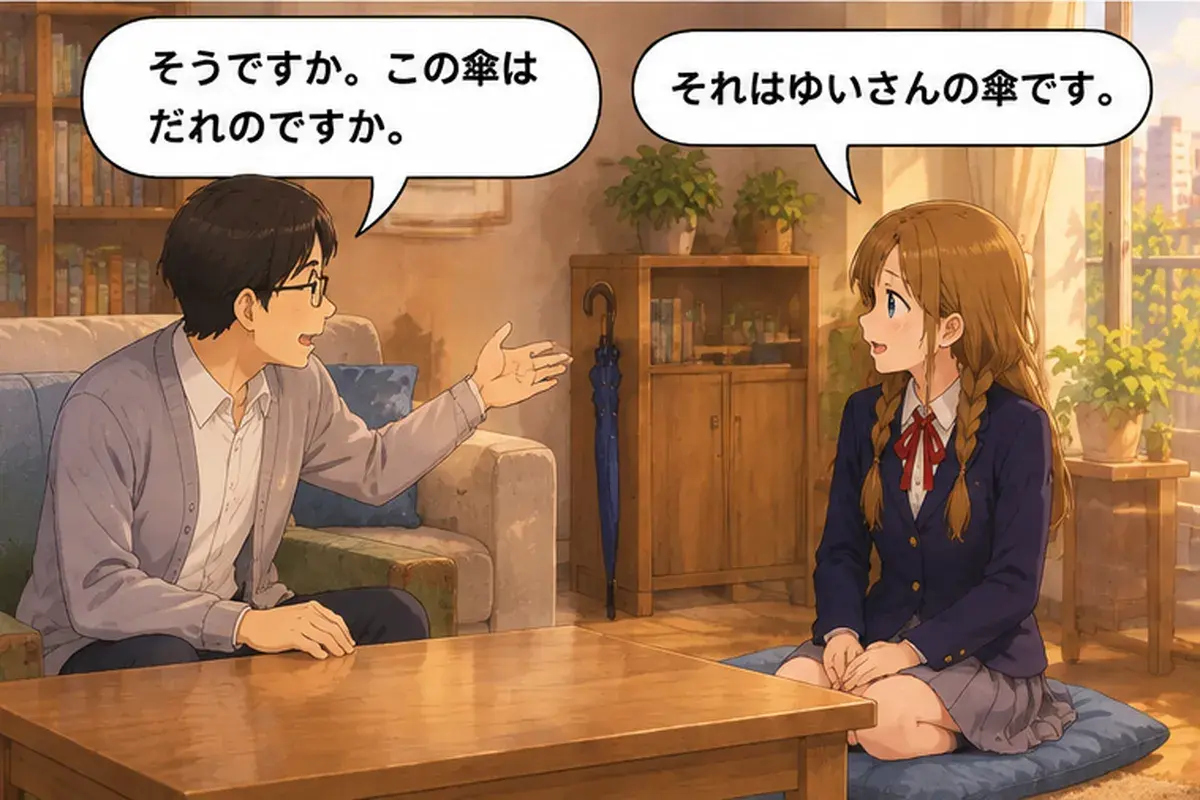
- 先生
そうですか。この傘はだれのですか。
Oh, I see. Whose is this umbrella?
- ソーニャ
それはゆいさんの傘です。
That's Yui-san's umbrella.
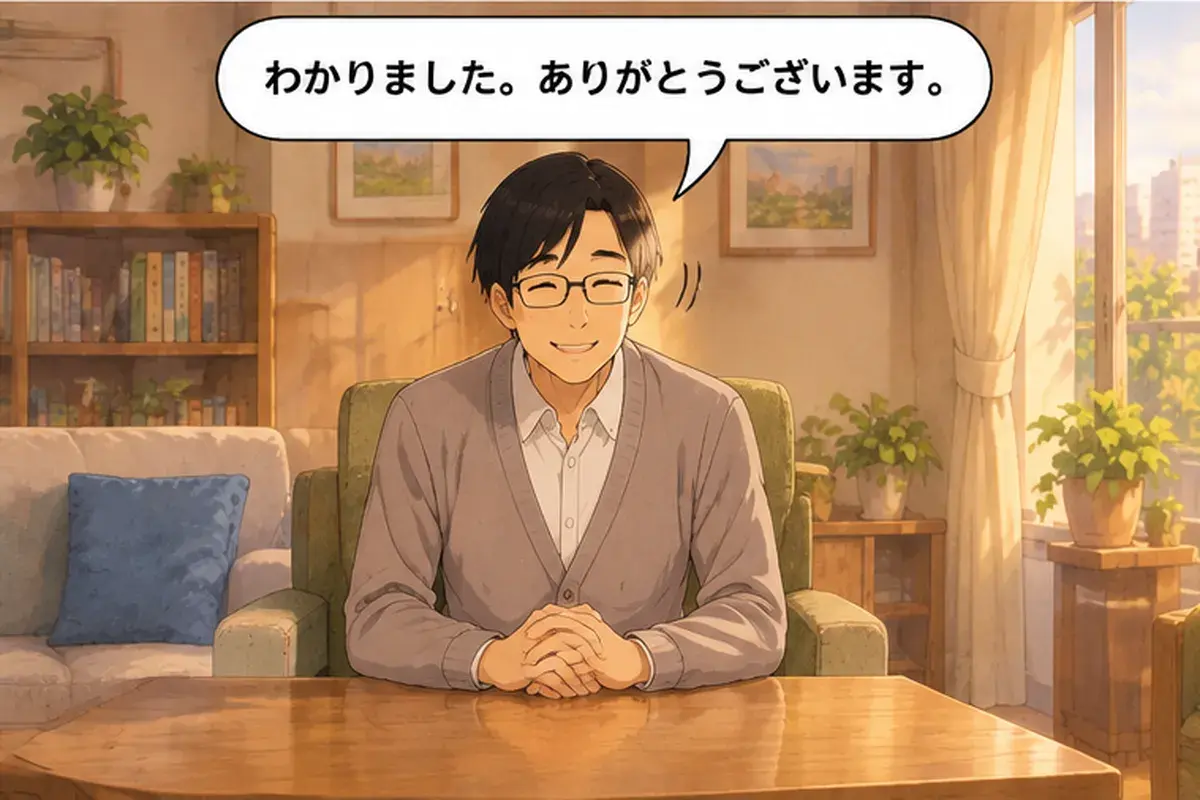
- 先生
わかりました。ありがとうございます。
Got it. Thank you.
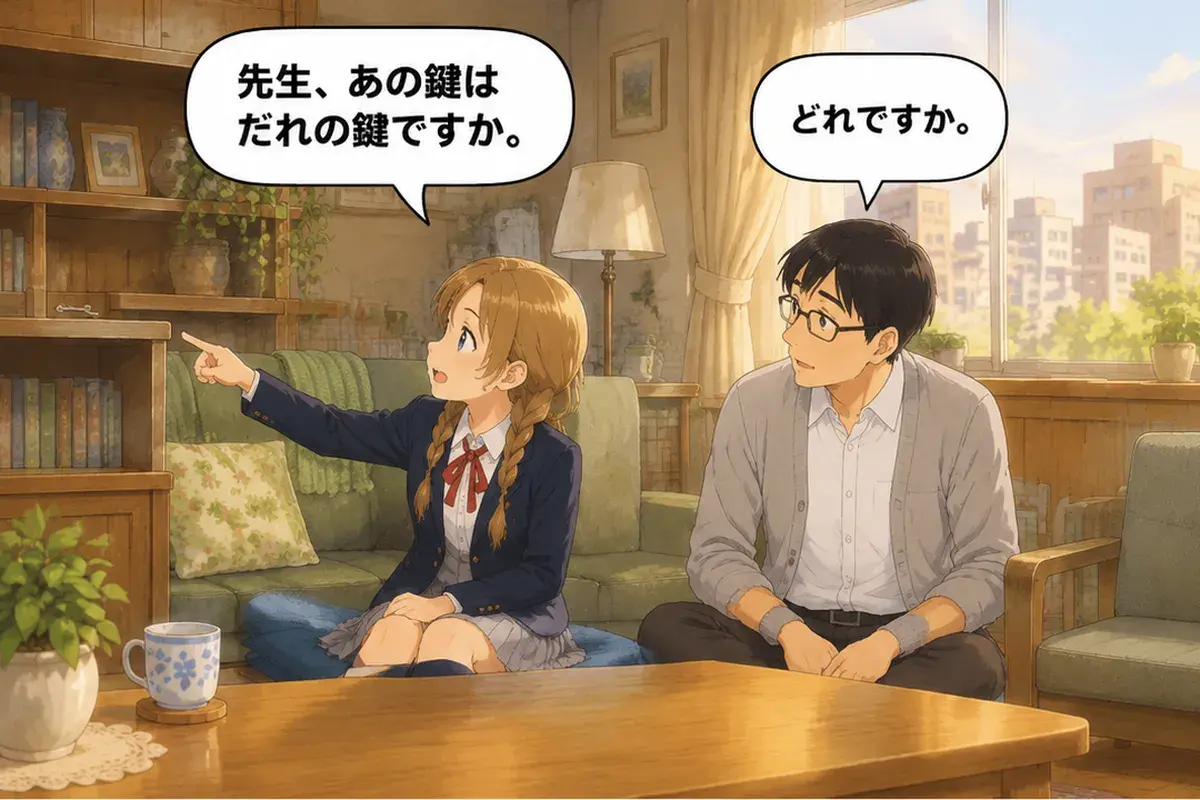
- ソーニャ
先生、あの鍵はだれの鍵ですか。
Sensei, whose key is that over there?
- 先生
どれですか。
Which one?
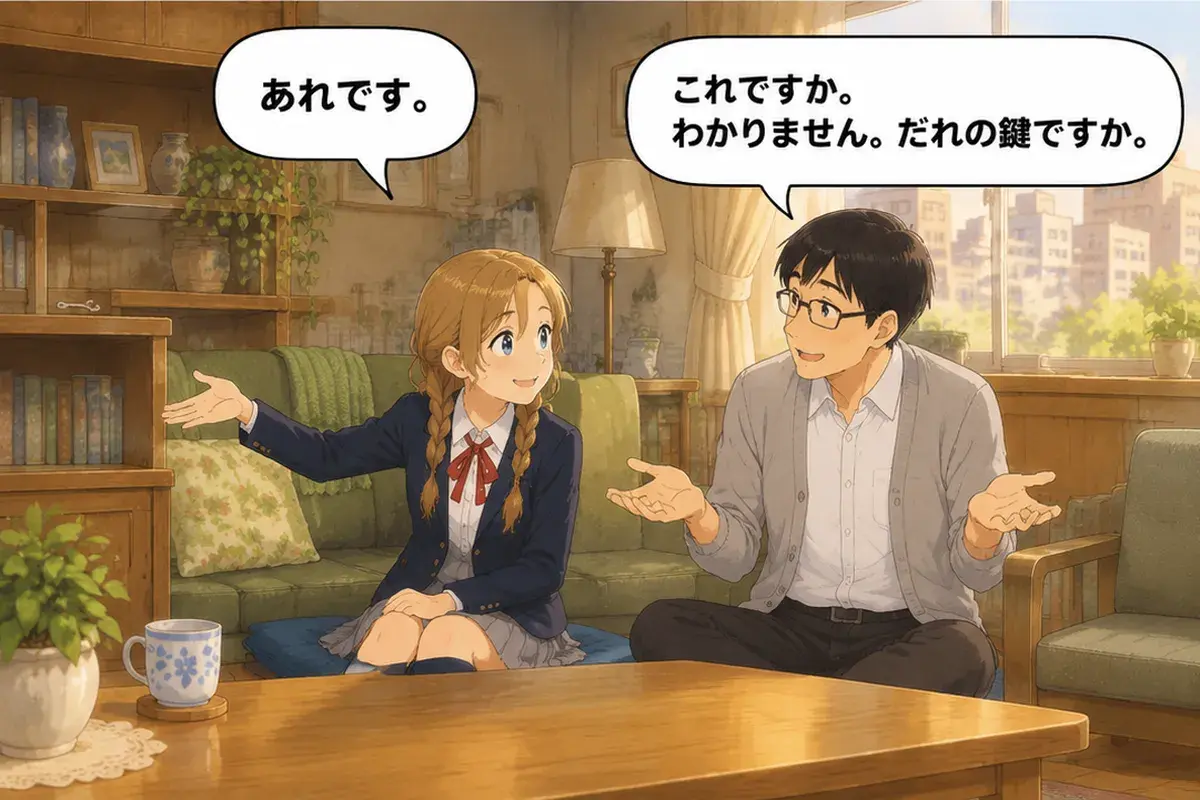
- ソーニャ
あれです。
That one over there.
- 先生
これですか。わかりません。だれの鍵ですか。
This one? I don't know. Whose key is it?
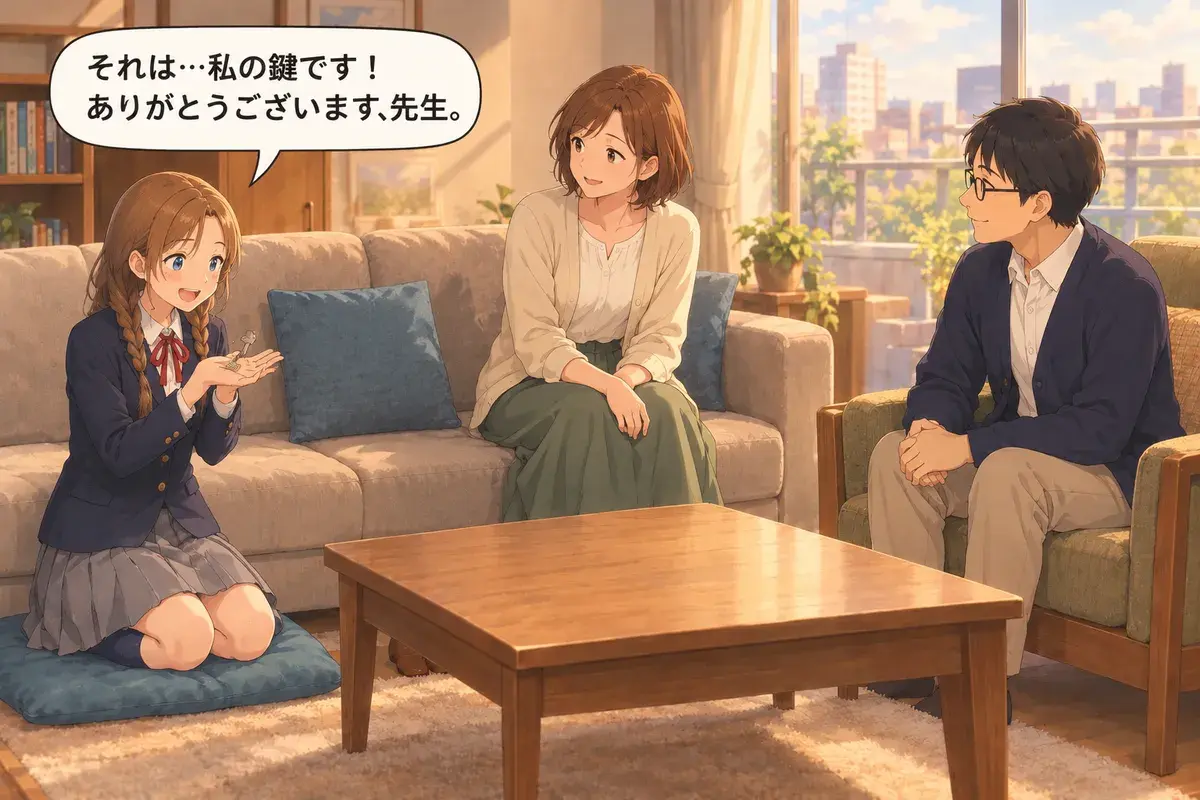
- ソーニャ
それは…私の鍵です!ありがとうございます、先生。
That's... my key! Thank you, Sensei.
Grammar for this text
あの かばん, この 傘, それ は ゆい さん の 傘 です — which word to use depends on where the thing is for the speaker. The bag is far from both of them: あの. The umbrella is in the teacher's hands, near him: この. But Sonya says それ about the same umbrella: for her it's near the teacher.
この 傘 は だれ の です か — だれ is "who", だれ の is "whose". The umbrella has already been named, so there's no noun after の: "whose (umbrella)?". You can also name the thing again, as Sonya does about the key: だれ の 鍵 です か.
どれ です か。 → あれ です。 → これ です か。 — a chain of words around the key. The teacher can't see which key she means and asks どれ. Sonya points: あれ, far from both of them. The teacher picks up the key: for him it's now これ, and Sonya, looking at the key in the teacher's hands, says それ. Same key, different word.
わかりません — a set phrase, "I don't know / I don't understand", from the verb わかる; here it means "I don't know whose it is".
それ は…私 の 鍵 です! — the pause: Sonya takes a closer look and recognizes the key.
先生、あの 鍵 は — you address a teacher as 先生, "Sensei". No name with さん is needed.
Words and grammar of the unit: Ask what things are and whose.
Learn the words from the texts with flashcards
In the app, you can tap any word in a text to see its translation, forms and examples, and new words stick with flashcards. 15 minutes a day.
Start for freeEverything is open for free. No card needed to sign up.