

Japanese dialogue with translation · A1 · 14 lines
それは悪くないですね That's not bad.
Comic · 9 panels

- 店員
いらっしゃいませ。
Welcome!
- ゆい
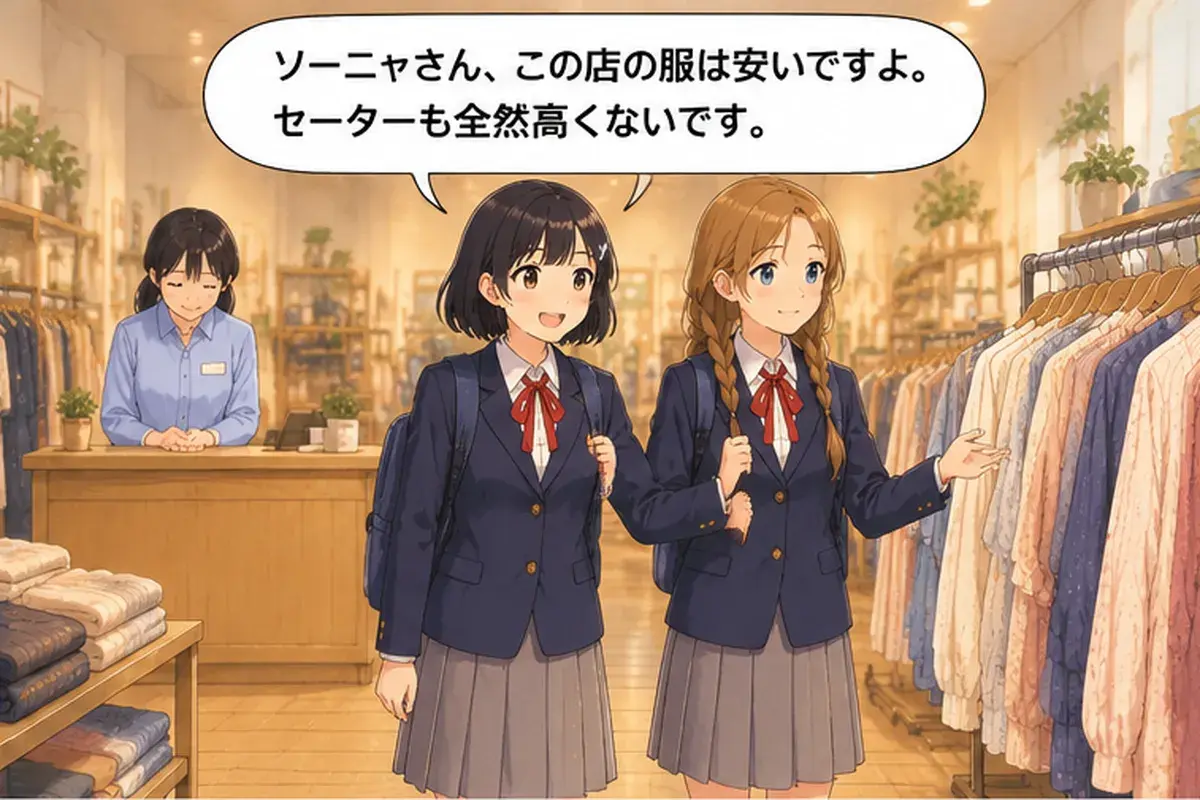
ソーニャさん、この店の服は安いですよ。セーターも全然高くないです。
Sonya-san, the clothes in this store are cheap. The sweaters aren't expensive at all either.
- ソーニャ
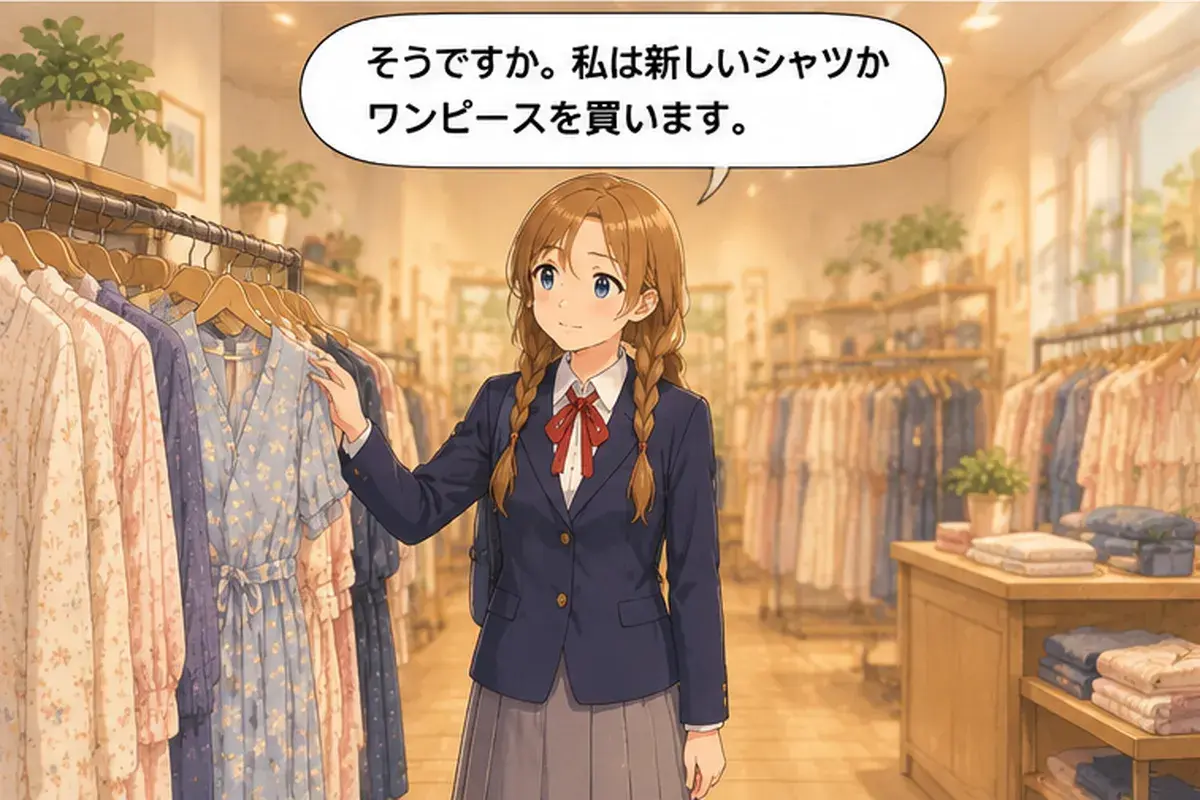
そうですか。私は新しいシャツかワンピースを買います。
I see. I'm going to buy a new shirt or a dress.
- ゆい
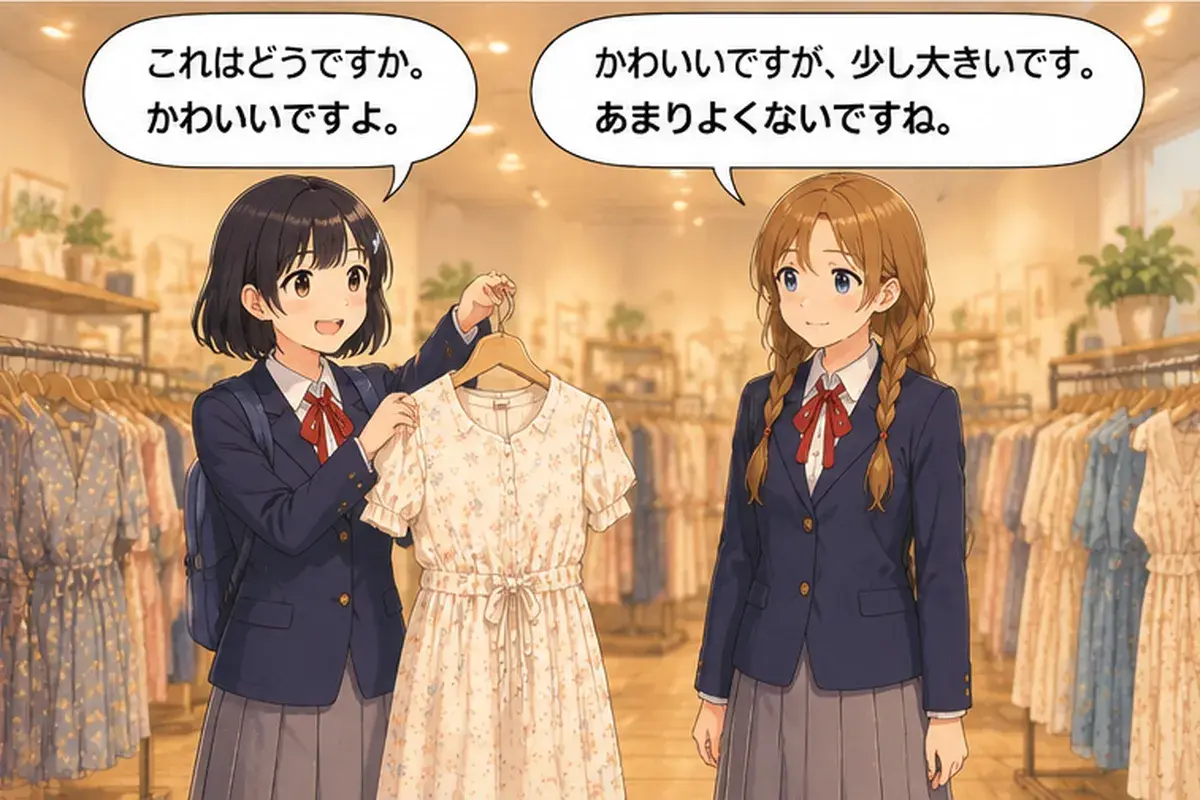
これはどうですか。かわいいですよ。
How about this one? It's cute.
- ソーニャ
かわいいですが、少し大きいです。あまりよくないですね。
It's cute, but it's a little big. It's not very good.
- ゆい
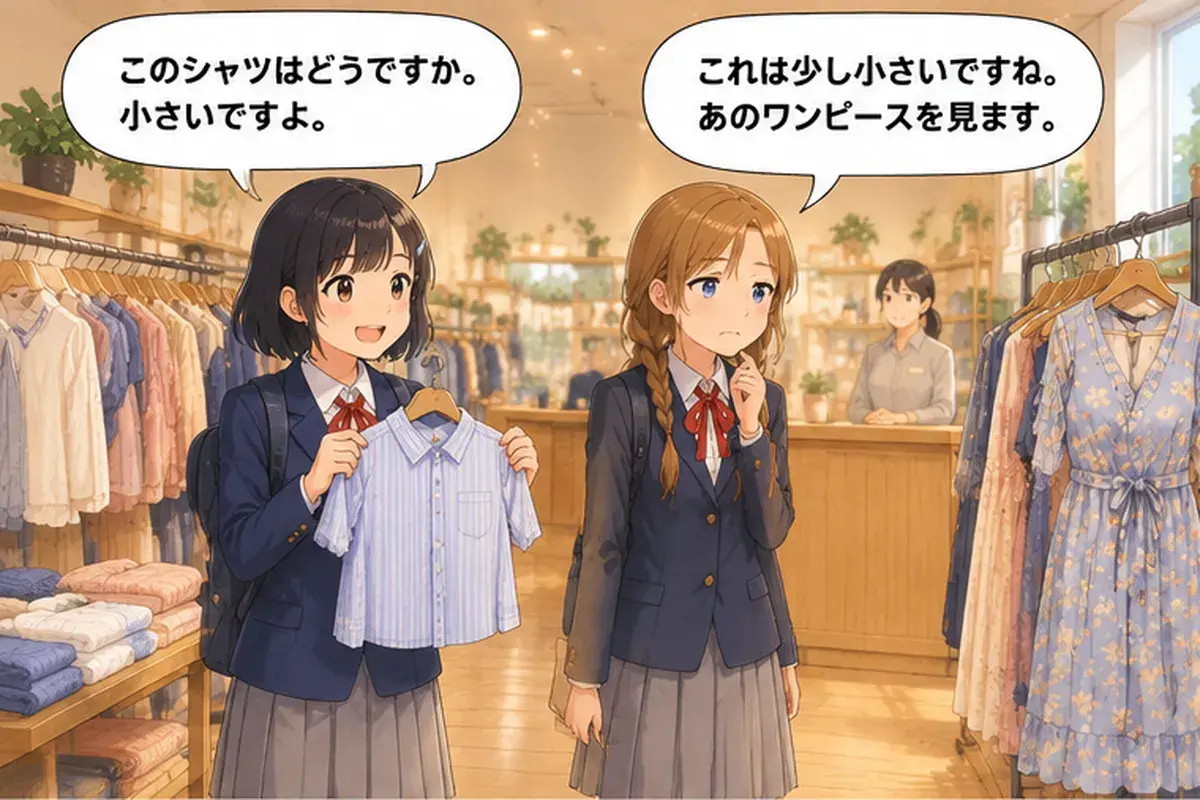
このシャツはどうですか。小さいですよ。
How about this shirt? It's small.
- ソーニャ
これは少し小さいですね。あのワンピースを見ます。
This one is a little small. I'll look at that dress over there.
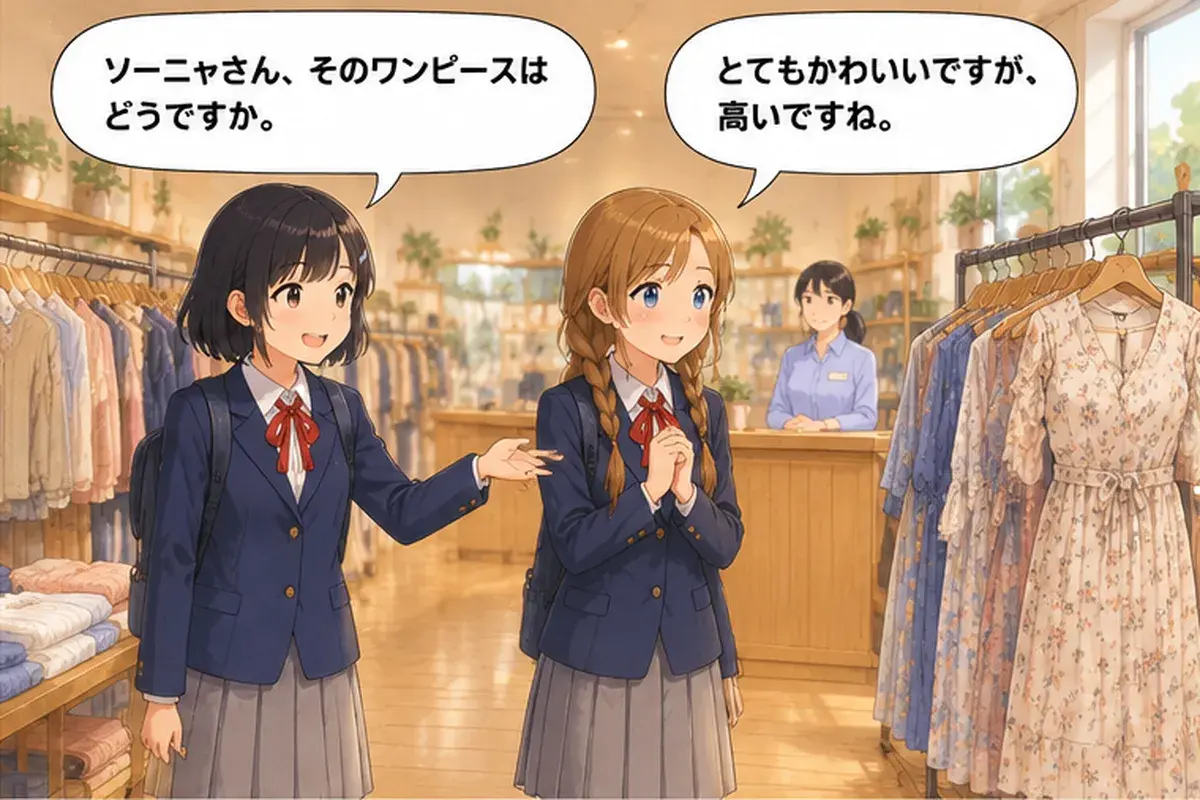
- ゆい
ソーニャさん、そのワンピースはどうですか。
Sonya-san, how do you like that dress?
- ソーニャ
とてもかわいいですが、高いですね。
It's very cute, but it's expensive, isn't it?
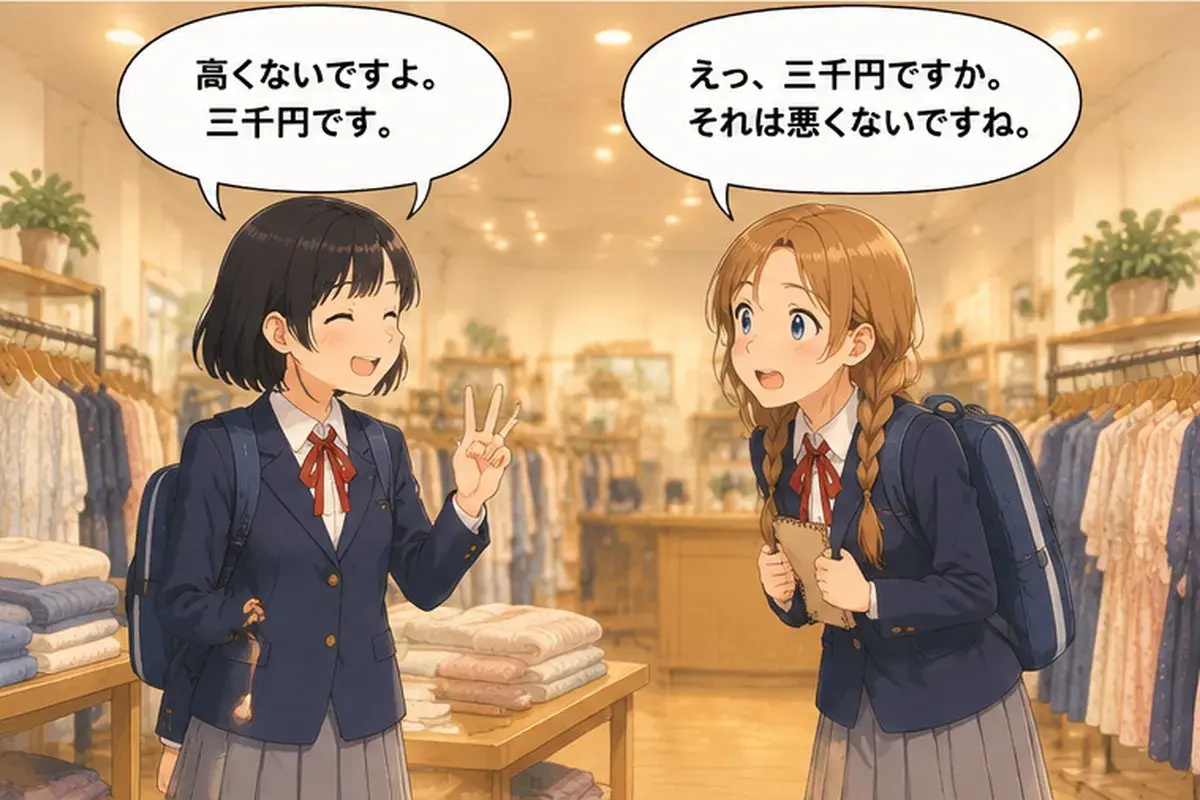
- ゆい
高くないですよ。三千円です。
It's not expensive. It's 3,000 yen.
- ソーニャ
えっ、三千円ですか。それは悪くないですね。
What? 3,000 yen? That's not bad.
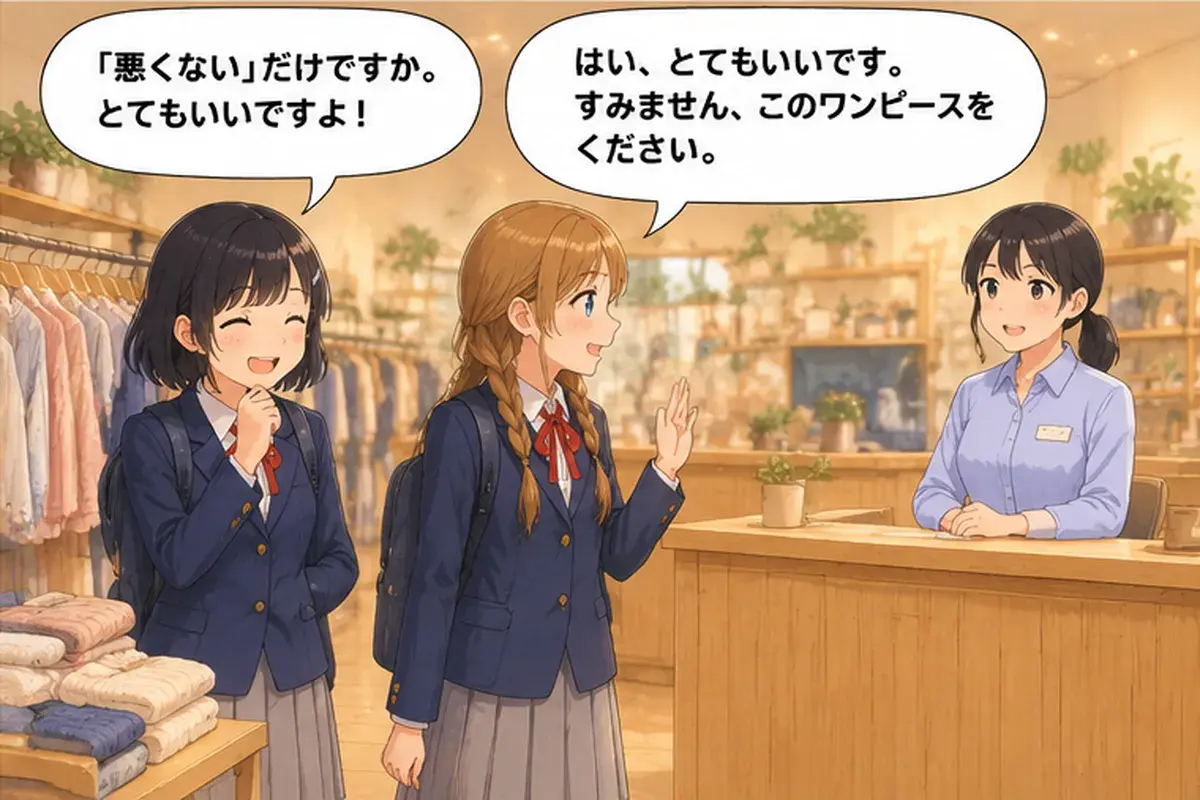
- ゆい
「悪くない」だけですか。とてもいいですよ!
Just "not bad"? It's very good!
- ソーニャ
はい、とてもいいです。すみません、このワンピースをください。
Yes, it's very good. Excuse me, this dress, please.

- 店員
はい、三千円です。ありがとうございます。
Yes, that's 3,000 yen. Thank you.
Grammar for this text
いらっしゃいませ。 — a shop clerk greets everyone who comes in with this word: "welcome". You don't need to answer: customers just walk in. It's the special polite speech of shop staff; you'll see how it works at A2, so for now learn the word as a whole.
あまり よくない です ね — in the negative, いい "good" goes back to its old form よい: よくない, not ✗ いくない. It's a special word, so remember it. Here it means "it's not quite right".
かわいい です が、少し 大きい です — が is "but"; 少し "a little, a bit" softens it: "a bit too big", not "huge".
高い です ね and 高くない です よ — Sonya thinks the pretty dress is expensive, and Yui corrects her: "it's not expensive". 高い → 高くない: in an i-adjective the い becomes くない. 三千 is three thousand (unit 4).
それ は 悪くない です ね — 悪い is "bad", and 悪くない is literally "not bad". Japanese people praise modestly, and this is real praise. Yui laughs: 「悪くない」 だけ です か — just "not bad"? (だけ means "only").
セーター も 全然 高くない です — 全然 is "not at all", only with a negative; も means "too, also".
新しい シャツ か ワンピース を 買います — か between two nouns means "or". 新しい goes right before the noun: an i-adjective adds nothing before a noun.
Words and grammar of the unit: Describe things and places.
Learn the words from the texts with flashcards
In the app, you can tap any word in a text to see its translation, forms and examples, and new words stick with flashcards. 15 minutes a day.
Start for freeEverything is open for free. No card needed to sign up.