

Japanese dialogue with translation · A1 · 14 lines
どんな店に行きますか What kind of stores do you go to?
Comic · 14 panels
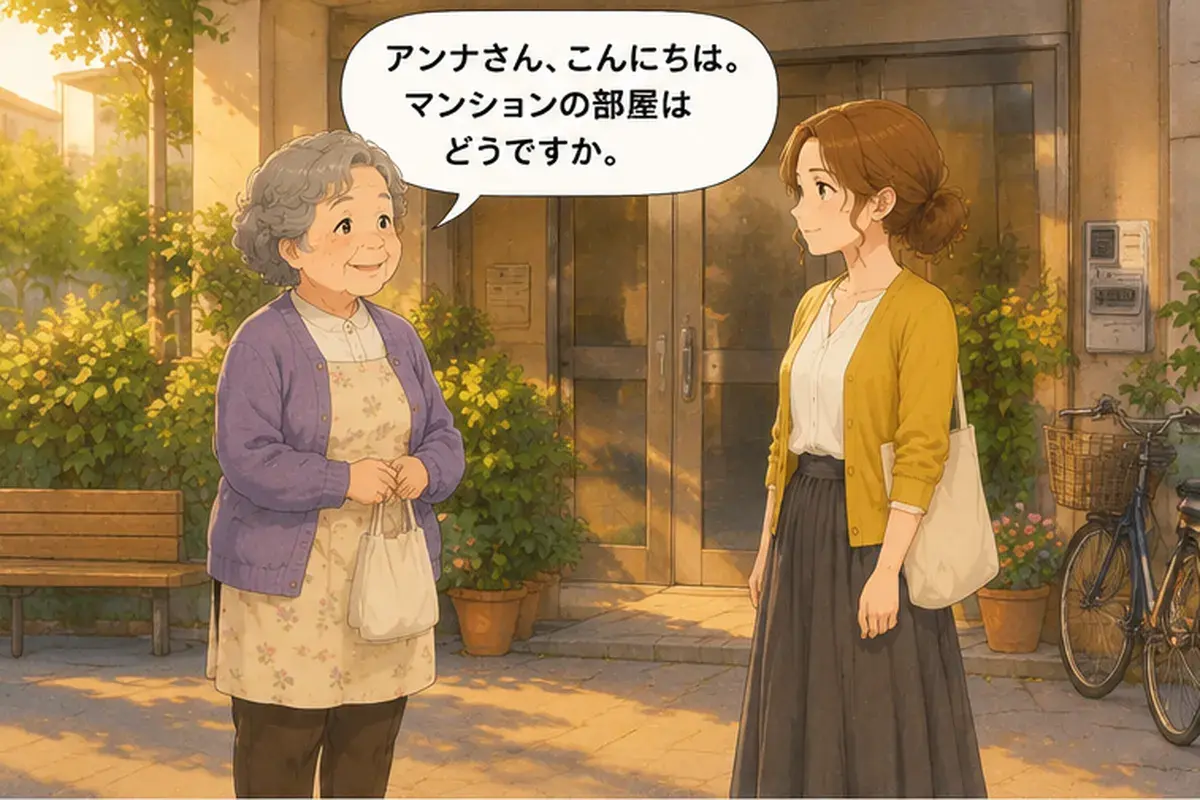
- 田中
アンナさん、こんにちは。マンションの部屋はどうですか。
Hello, Anna-san. How do you like the room in your apartment building?
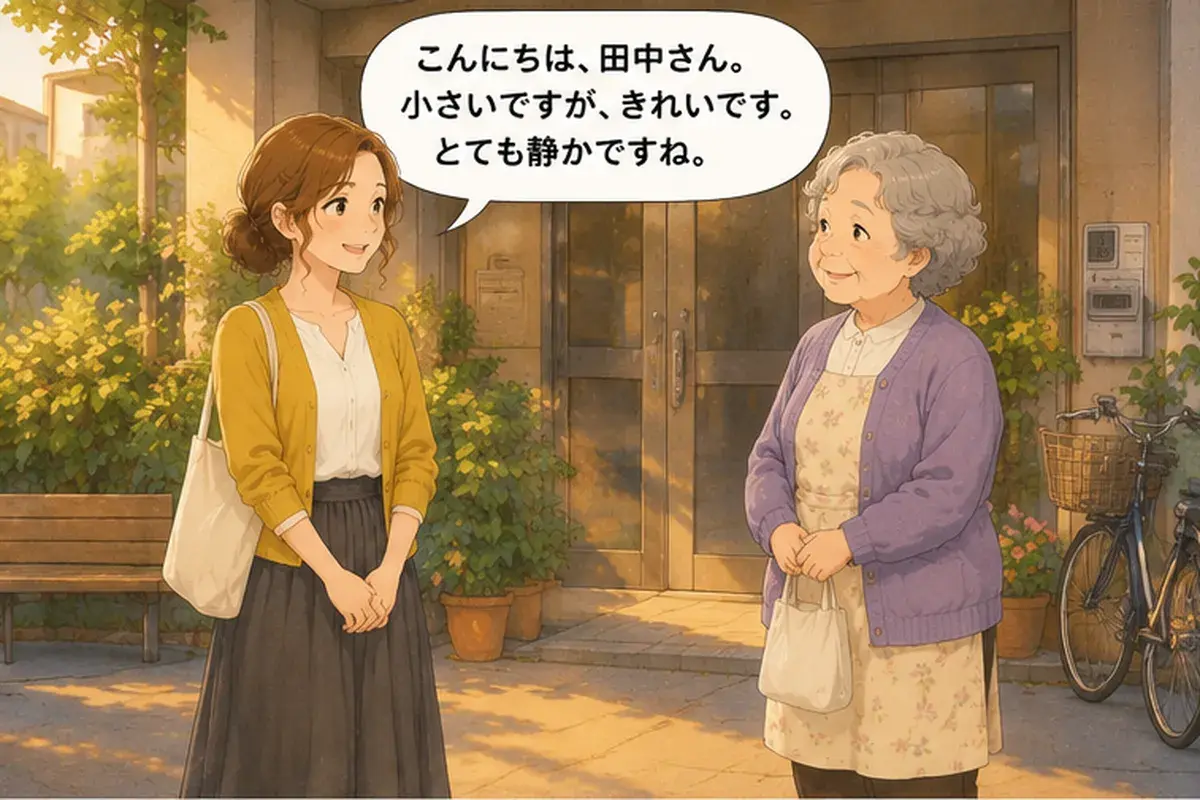
- アンナ
こんにちは、田中さん。小さいですが、きれいです。とても静かですね。
Hello, Tanaka-san. It's small, but it's clean. It's very quiet.
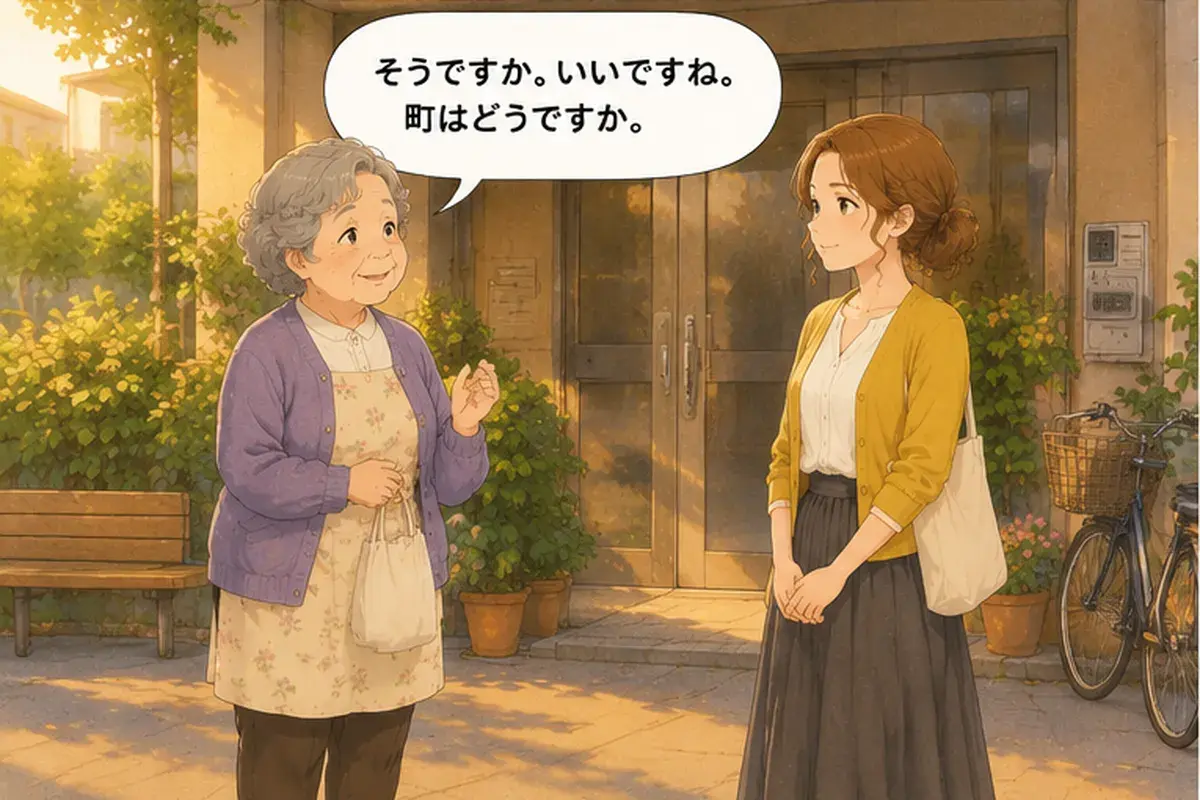
- 田中
そうですか。いいですね。町はどうですか。
I see. That's nice. How do you like the neighborhood?

- アンナ
あまり静かじゃありませんが、とても便利です。駅もコンビニも近いです。
It's not very quiet, but it's very convenient. The station and the convenience store are both close.

- 田中
そうですね。どんな店に行きますか。
That's true. What kind of stores do you go to?
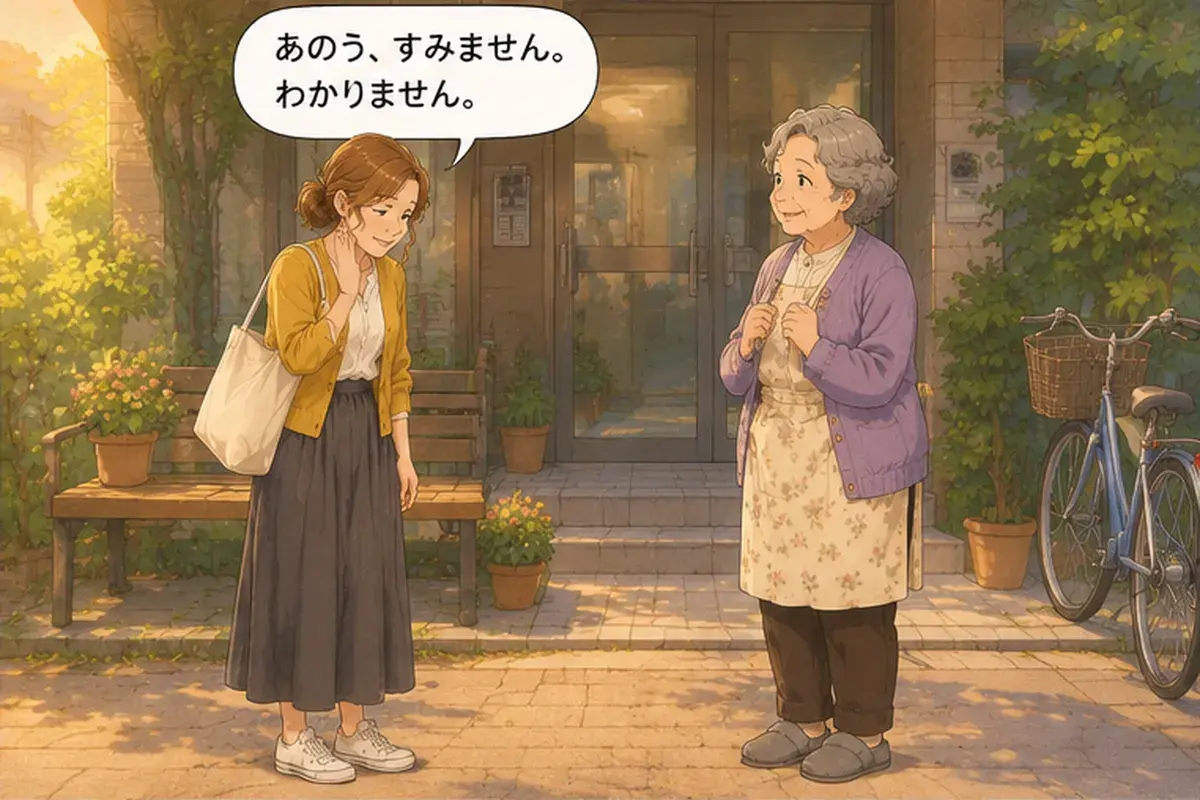
- アンナ
あのう、すみません。わかりません。
Um, I'm sorry. I don't understand.
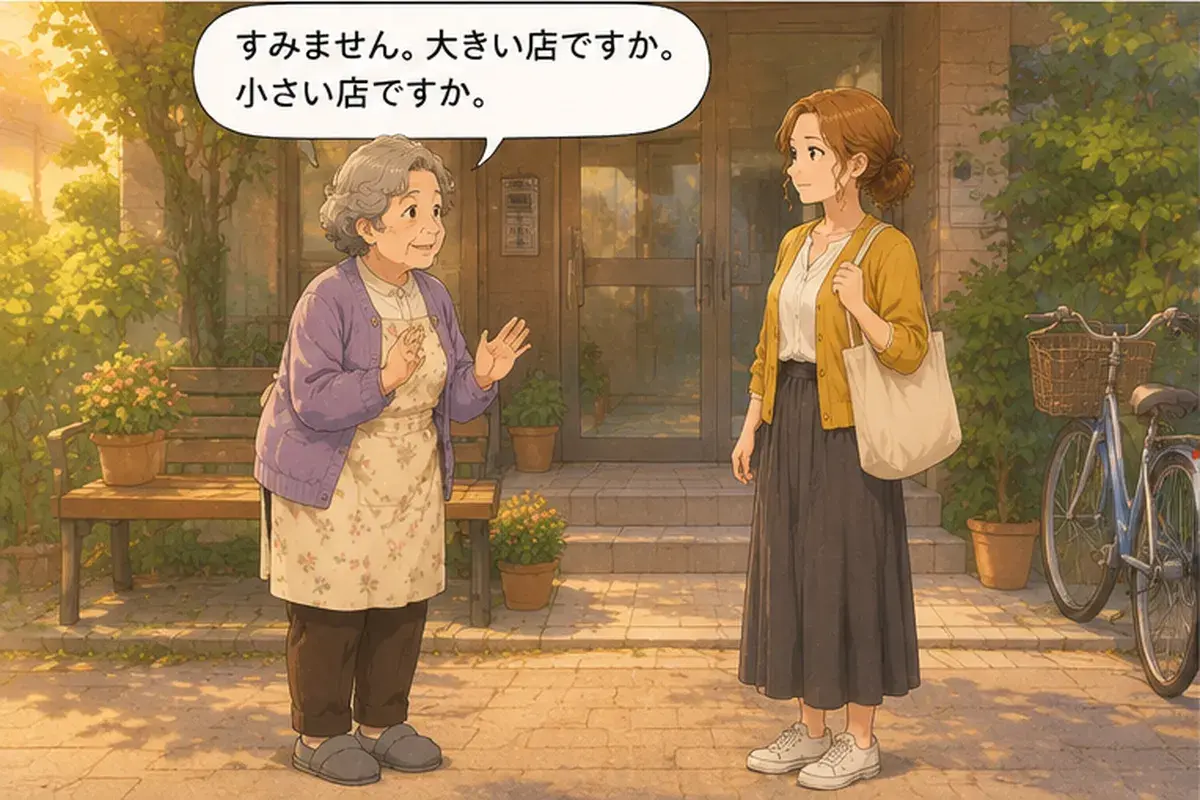
- 田中
すみません。大きい店ですか。小さい店ですか。
Sorry. Big stores? Small stores?
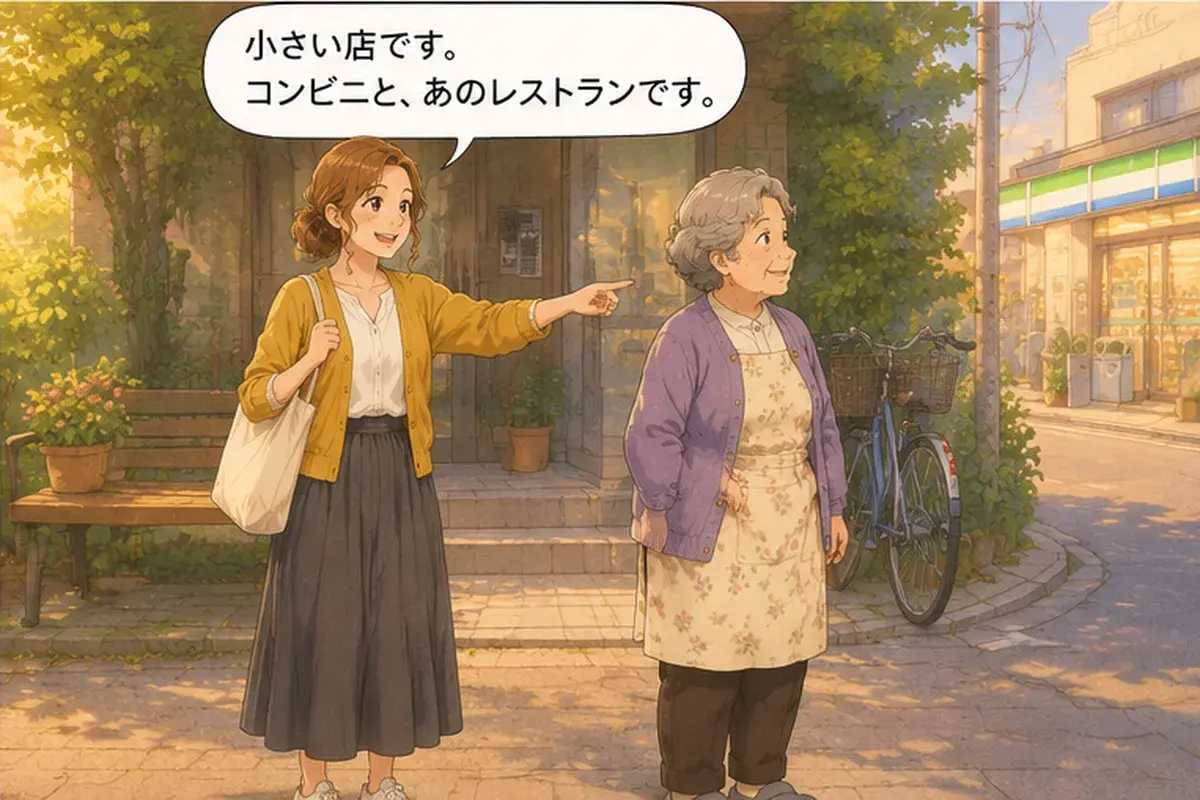
- アンナ
小さい店です。コンビニと、あのレストランです。
Small stores. The convenience store and that restaurant over there.
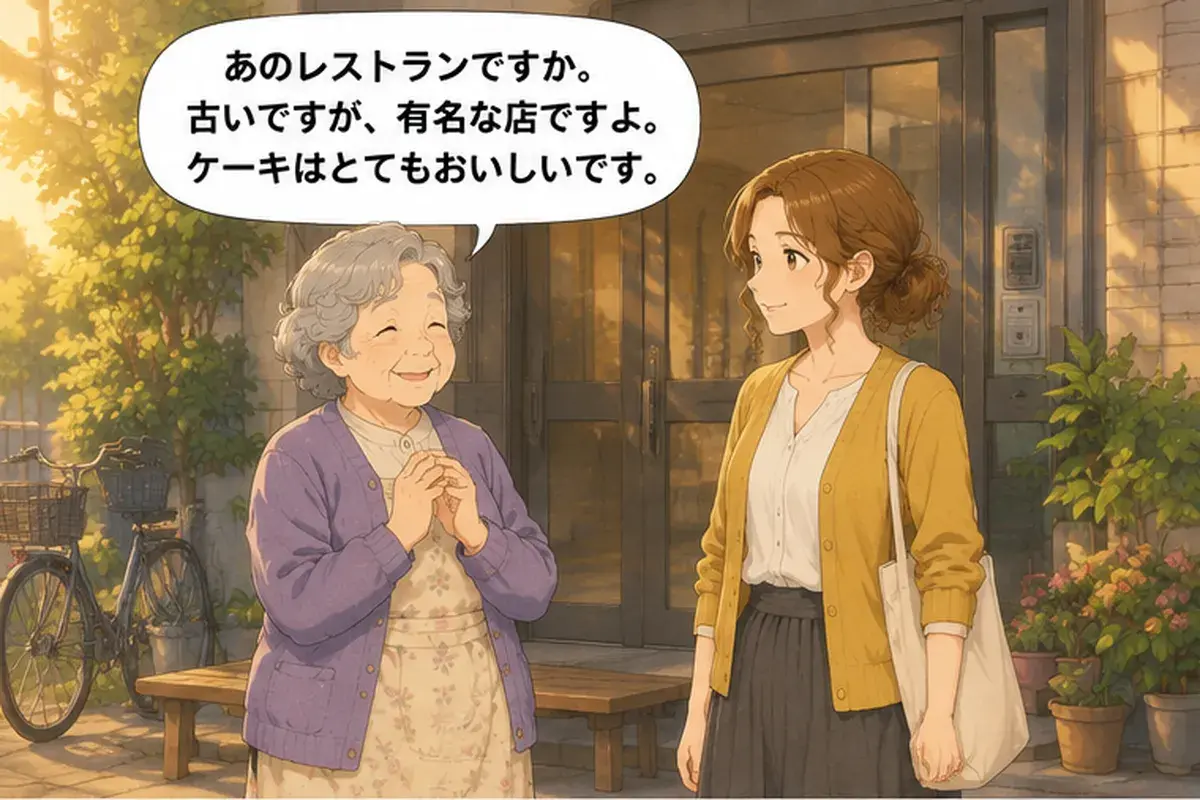
- 田中
あのレストランですか。古いですが、有名な店ですよ。ケーキはとてもおいしいです。
That restaurant over there? It's old, but it's a famous place. Their cake is very good.
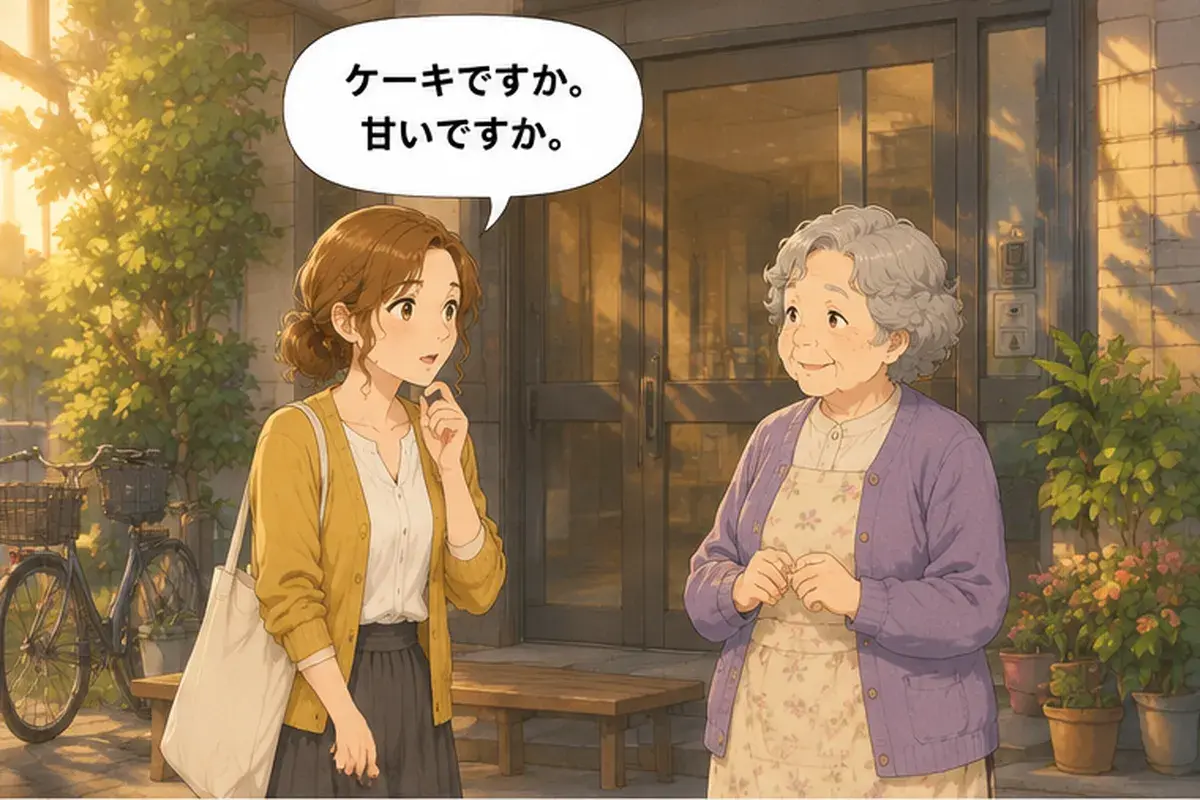
- アンナ
ケーキですか。甘いですか。
Cake? Is it sweet?
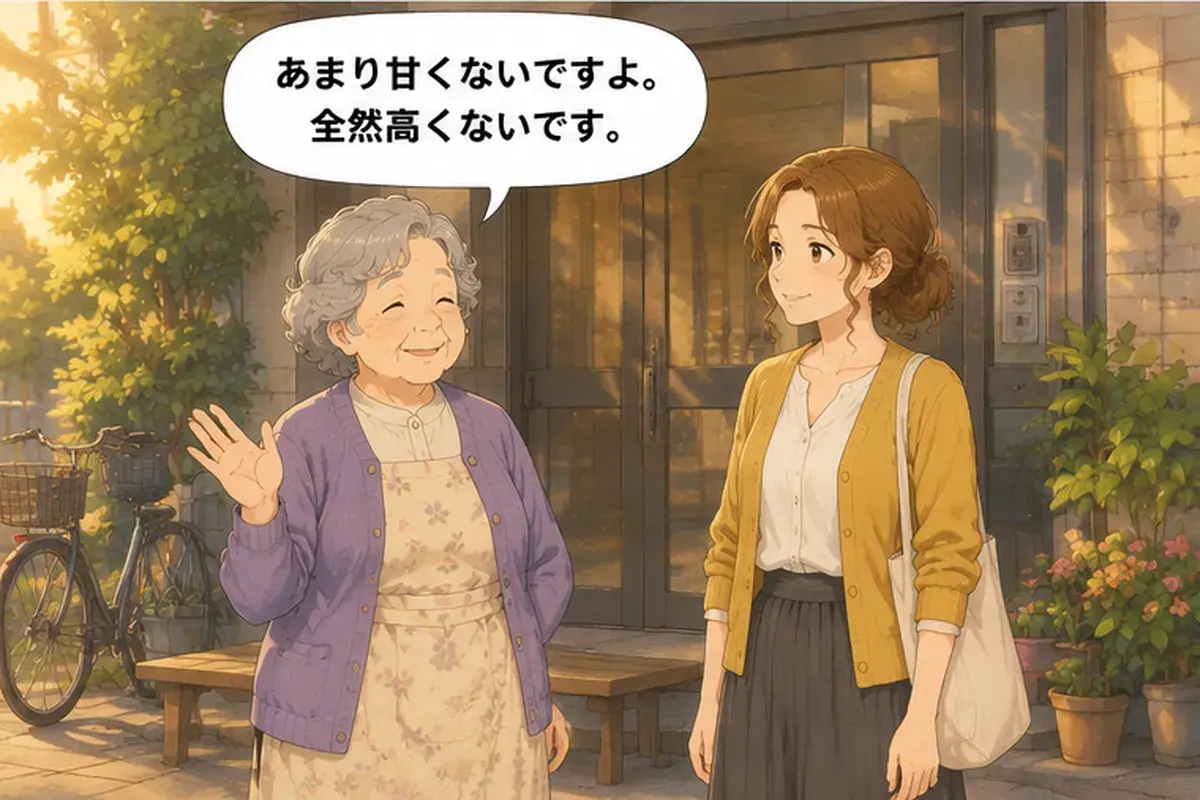
- 田中
あまり甘くないですよ。全然高くないです。
It's not very sweet. It's not expensive at all.
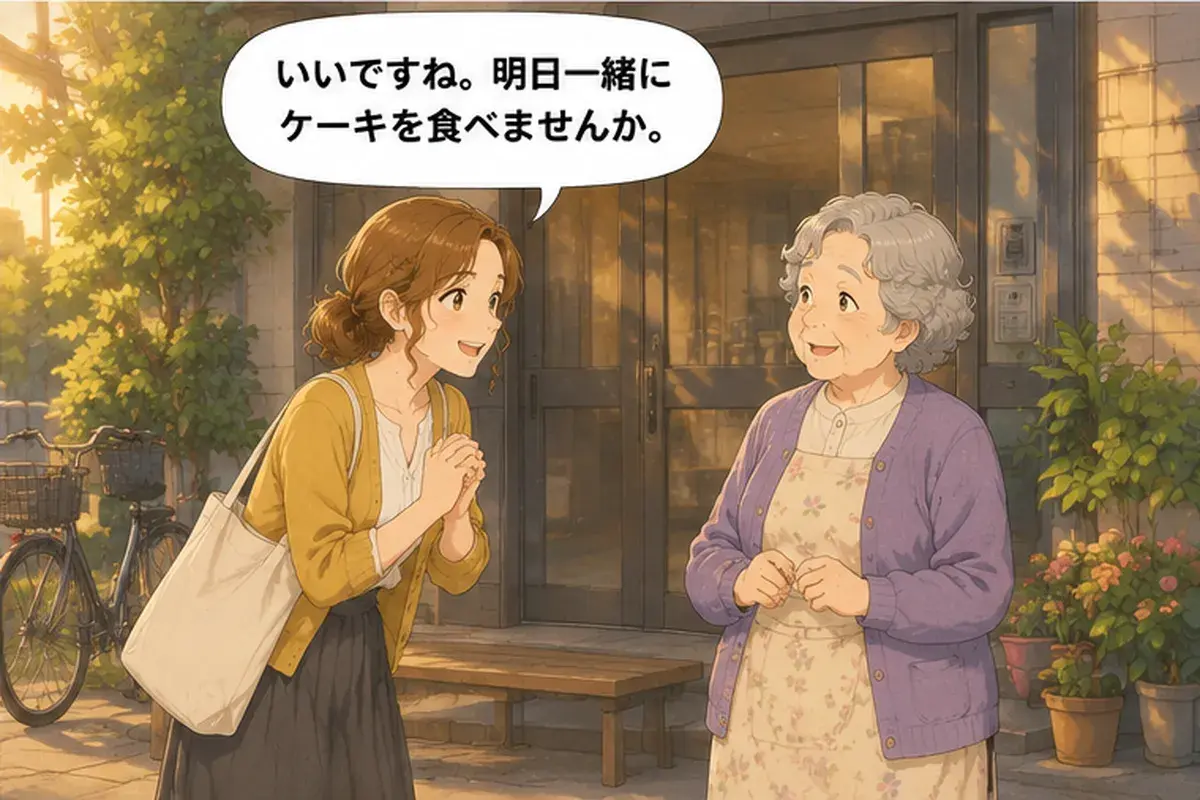
- アンナ
いいですね。明日一緒にケーキを食べませんか。
Sounds good. Would you like to have cake together tomorrow?
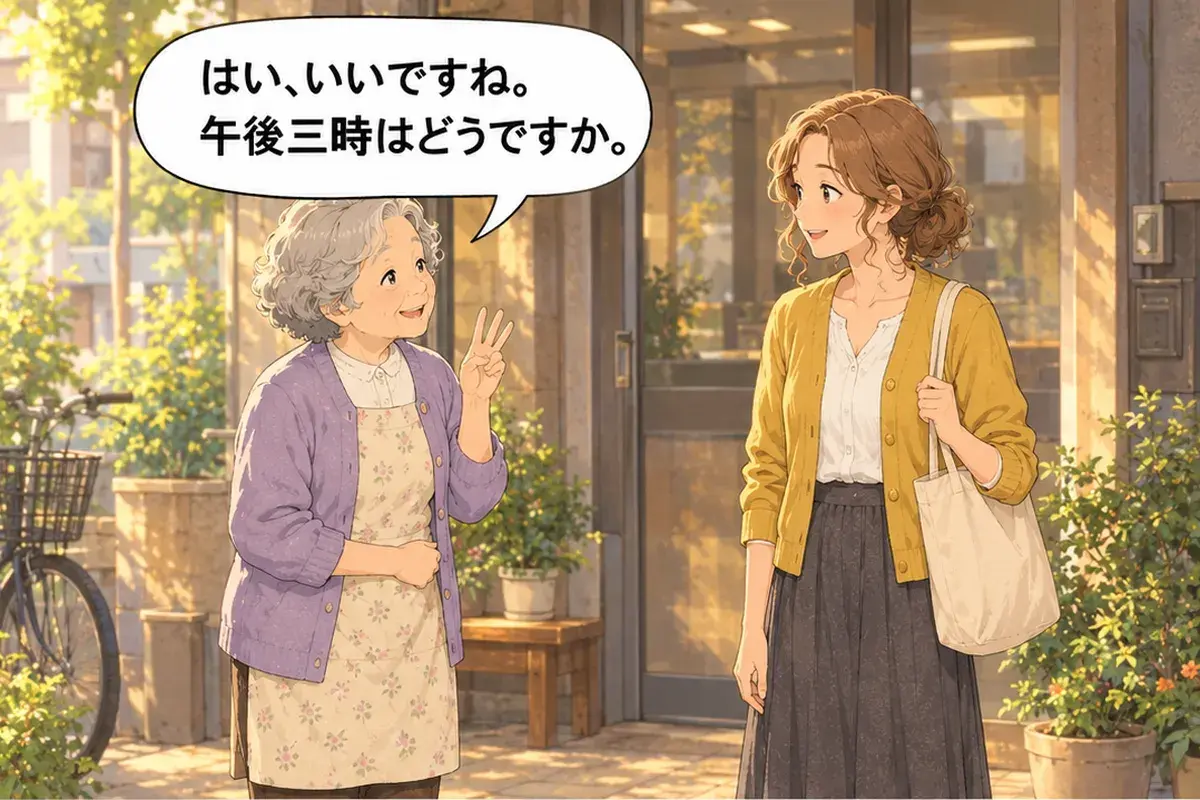
- 田中
はい、いいですね。午後三時はどうですか。
Yes, sounds good. How about 3 p.m.?
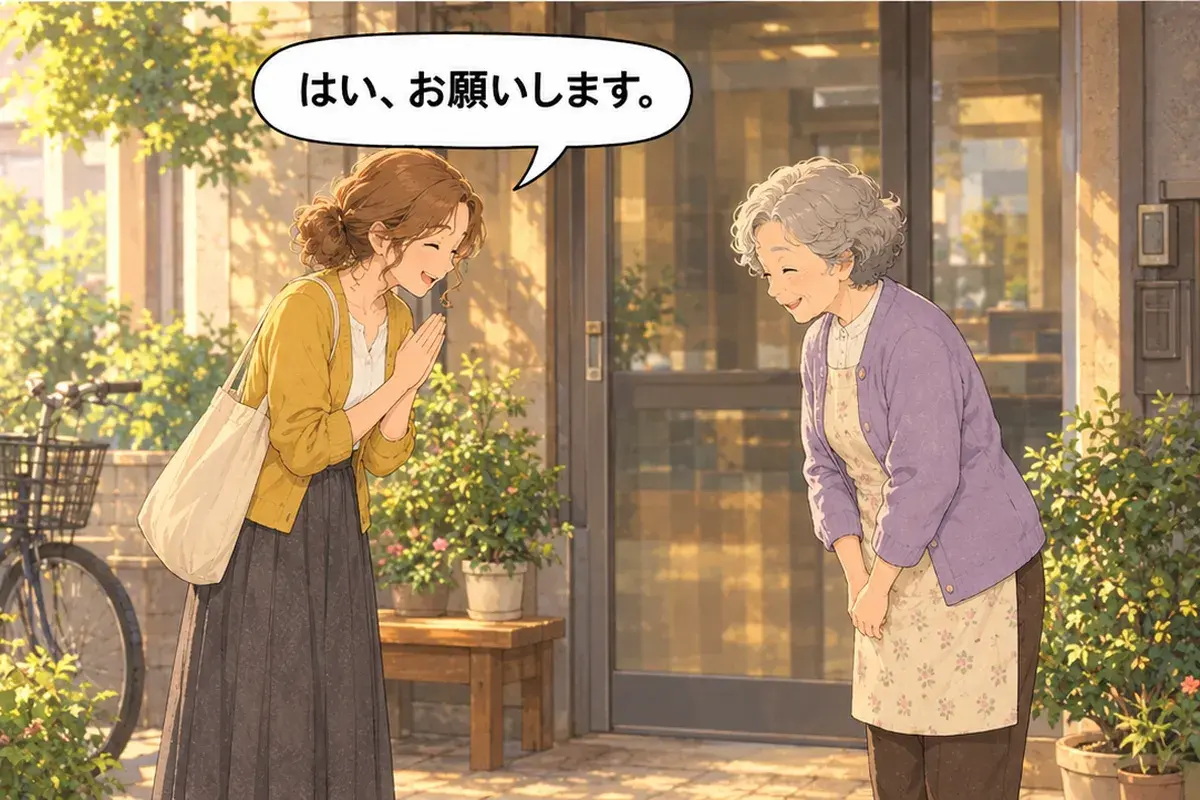
- アンナ
はい、お願いします。
Yes, please.
Grammar for this text
小さい です が、きれい です — が means "but" here. What matters most to the speaker comes after が: the room is small, but it's clean. Note that きれい ends in い, but it's a na-adjective (like 静か), so it never takes くない.
あまり 静か じゃ ありません が、とても 便利 です — the negative of 静か (a na-adjective) is じゃ ありません, as in unit 2. あまり "not very" goes only with a negative, and とても "very" with the normal form. This is how Anna softly says "no": not "it's noisy" but "it's not very quiet".
どんな 店 に 行きます か — どんな always comes before a noun and asks "what kind?", not "which one?". Anna doesn't know the word yet and honestly says わかりません. Tanaka-san explains with ready-made answers: 大きい 店 or 小さい 店. And どう (町 は どう です か) asks for an impression: "how do you like it?".
古い です が、有名 な 店 です よ — before a noun, 有名 (a na-adjective) always needs な. 古い (an i-adjective) stands at the end of the sentence with です.
あまり 甘くない です よ — the last い of 甘い became くない: "not sweet". The same in 全然 高くない です: 全然 means "not at all", stronger than あまり.
マンション の 部屋 — a マンション isn't a mansion but an apartment building. はい、お願いします isn't "please" in a request here but "yes, let's do that": agreeing to an offer.
Words and grammar of the unit: Describe things and places.
Learn the words from the texts with flashcards
In the app, you can tap any word in a text to see its translation, forms and examples, and new words stick with flashcards. 15 minutes a day.
Start for freeEverything is open for free. No card needed to sign up.