

Japanese dialogue with translation · A1 · 13 lines
冷蔵庫の中に鍵とスイカがあります The keys and the Suica are in the fridge
Comic · 13 panels
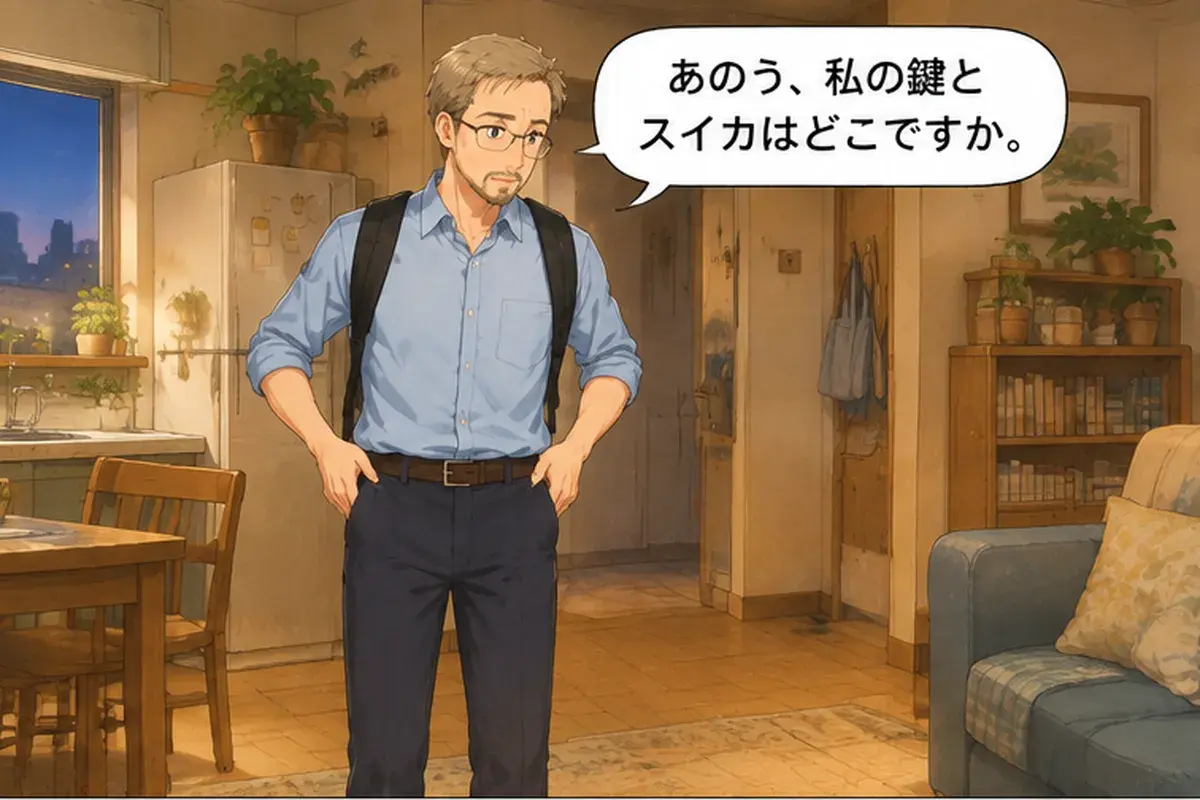
- マルク
あのう、私の鍵とスイカはどこですか。
Um, where are my keys and my Suica?
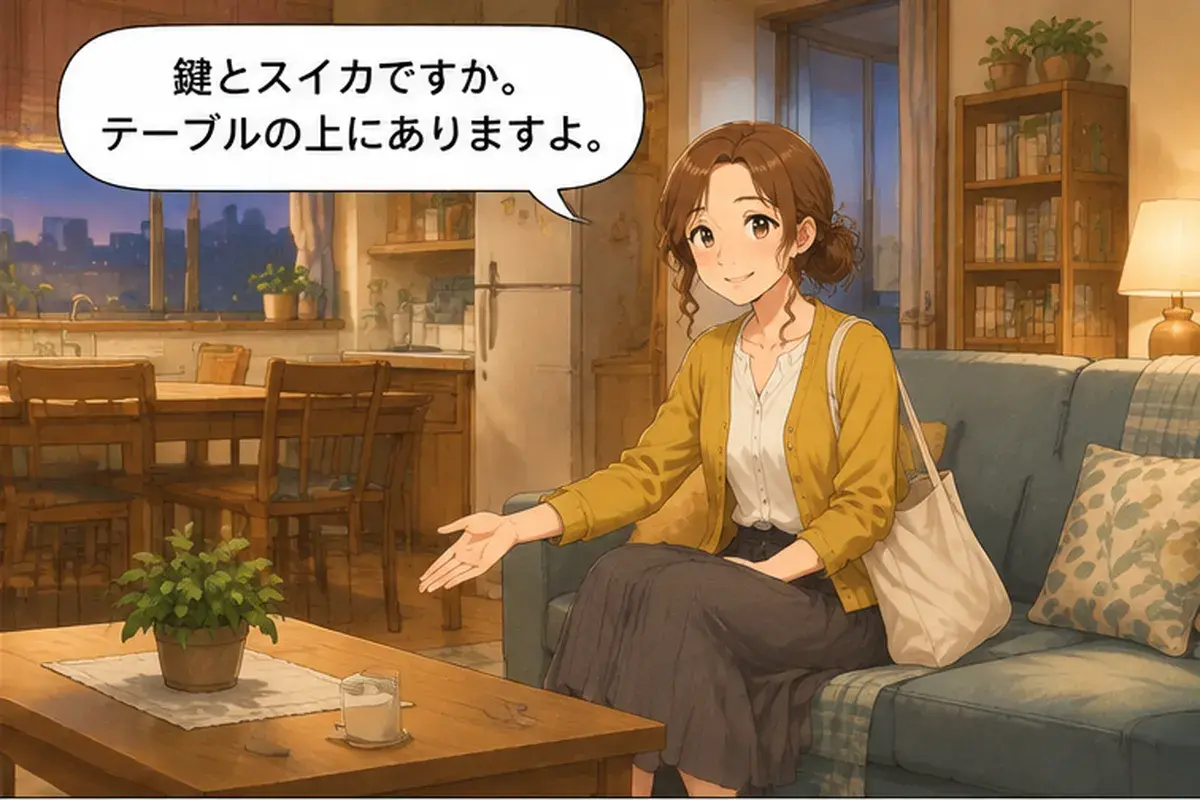
- アンナ
鍵とスイカですか。テーブルの上にありますよ。
Your keys and Suica? They're on the table.
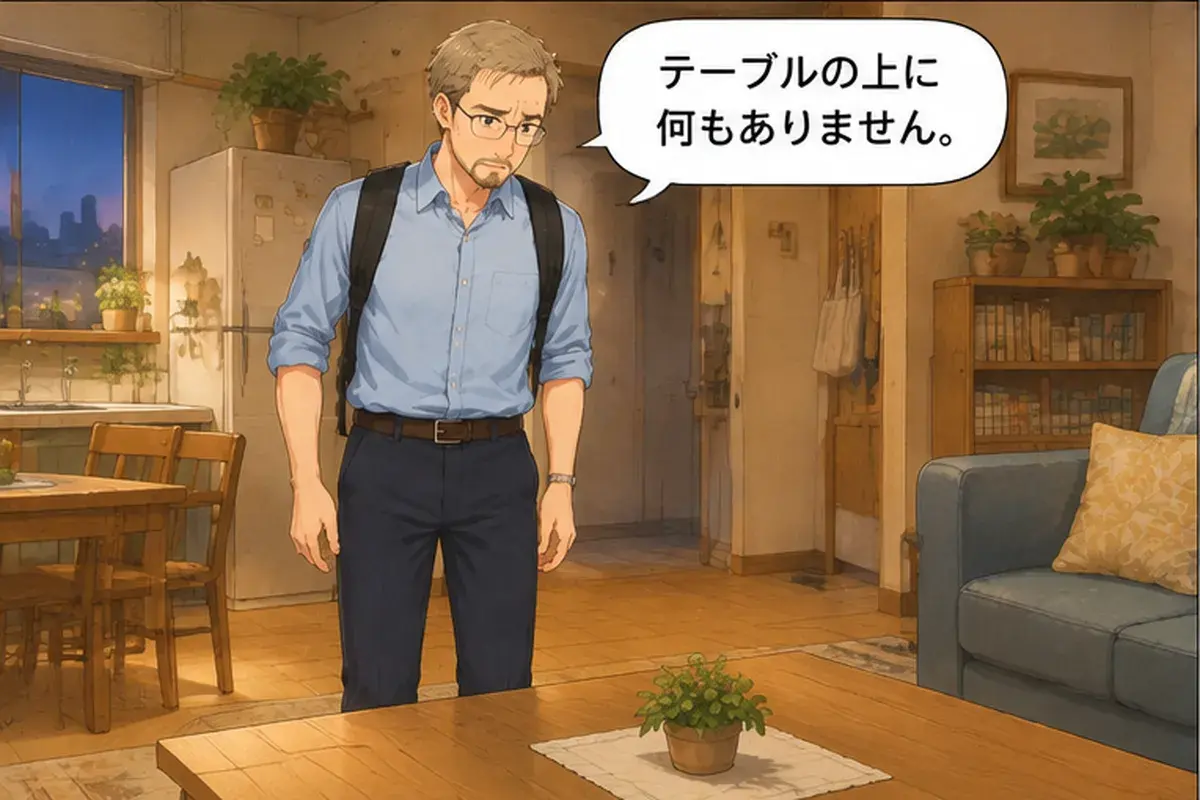
- マルク
テーブルの上に何もありません。
There's nothing on the table.
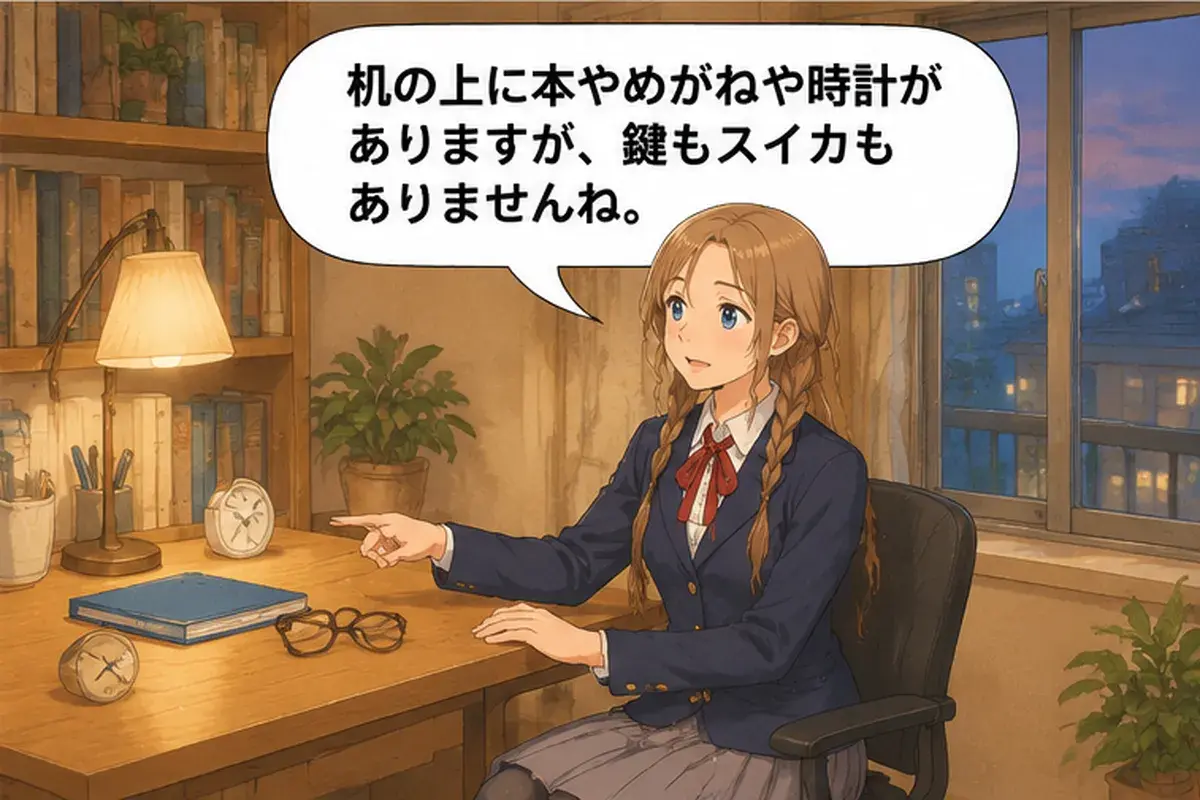
- ソーニャ
机の上に本やめがねや時計がありますが、鍵もスイカもありませんね。
There's a book, glasses, a watch and other things on the desk, but neither the keys nor the Suica.
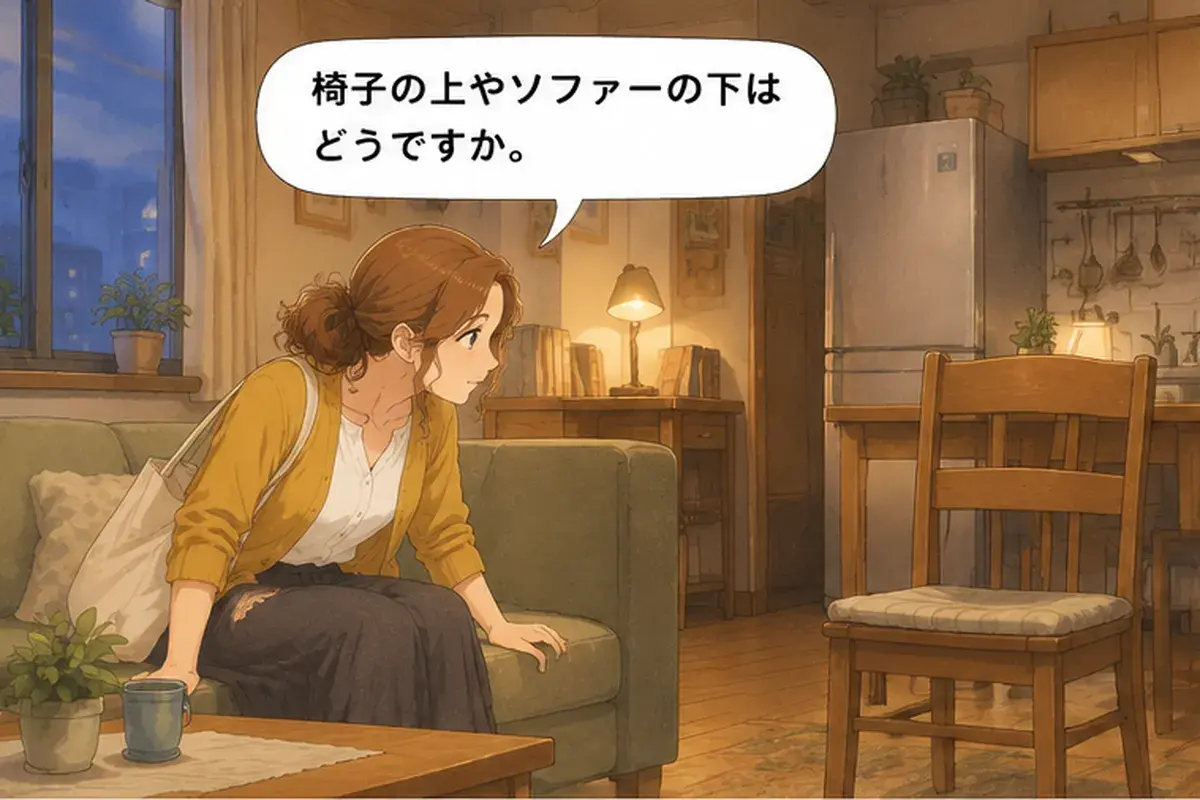
- アンナ
椅子の上やソファーの下はどうですか。
What about on the chair or under the sofa?
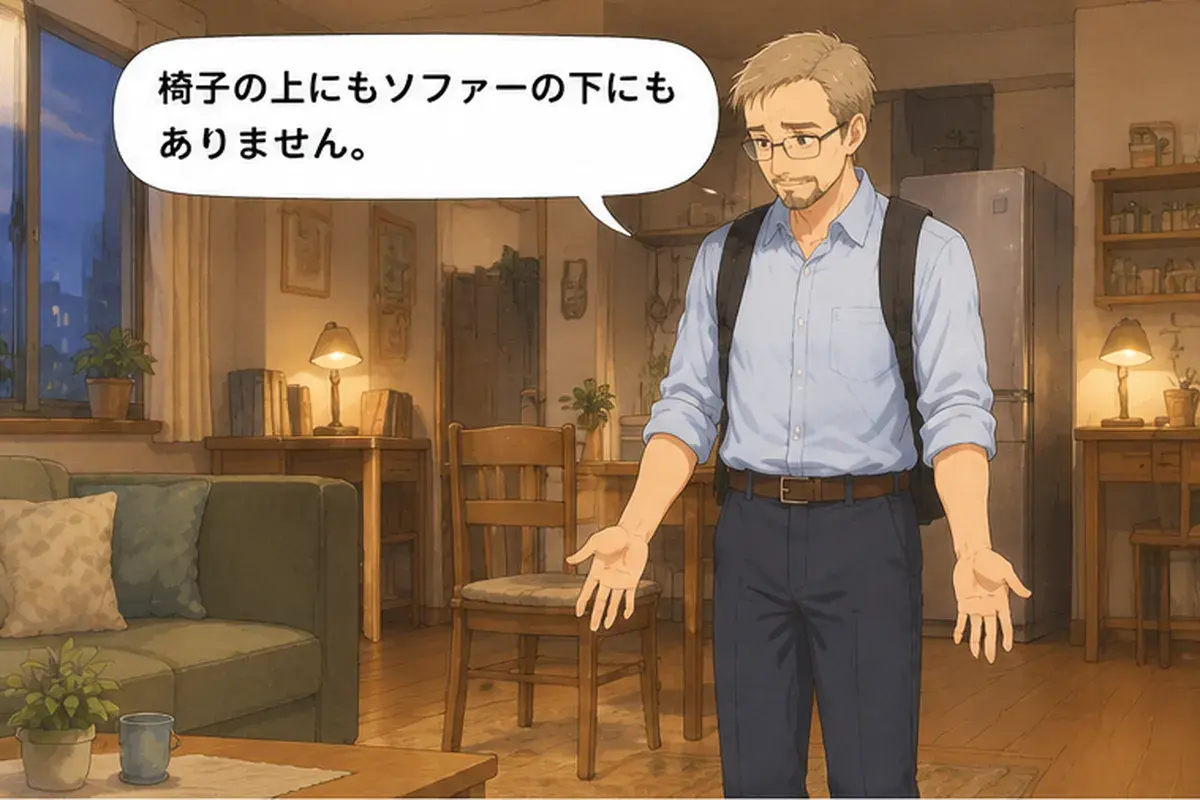
- マルク
椅子の上にもソファーの下にもありません。
They're not on the chair or under the sofa.
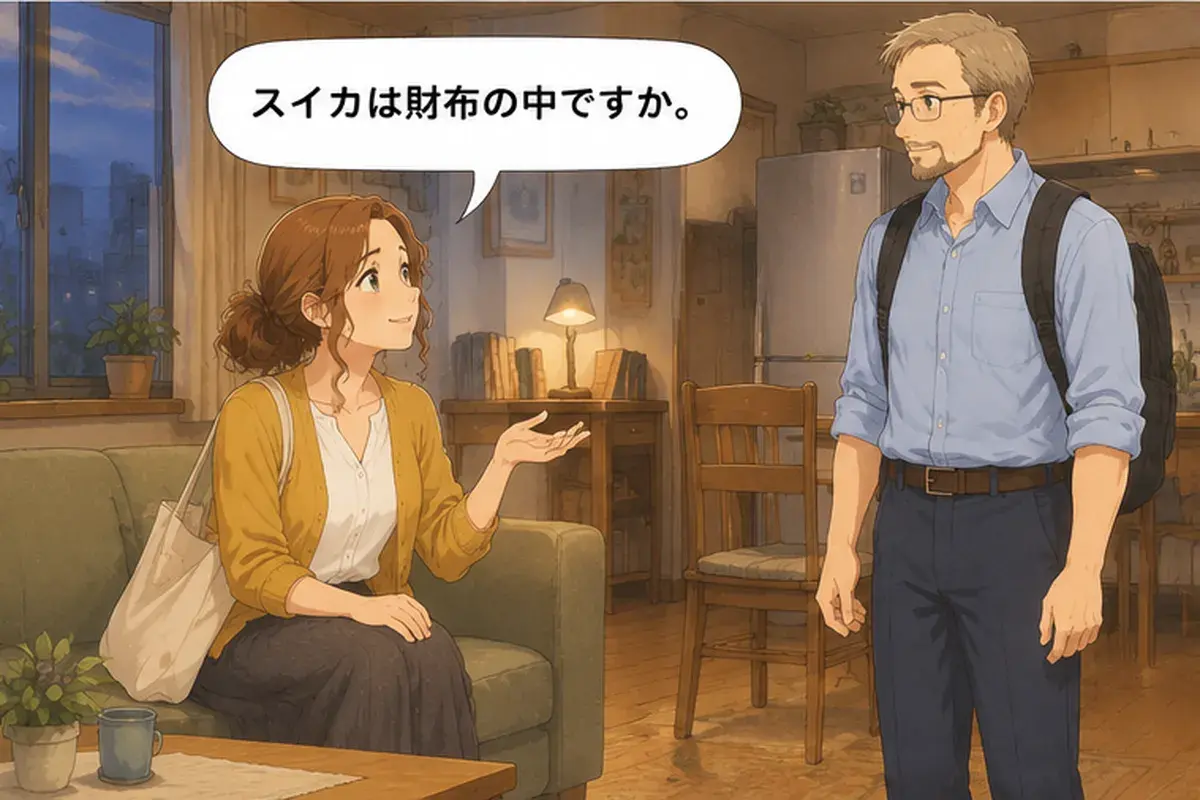
- アンナ
スイカは財布の中ですか。
Is the Suica in your wallet?
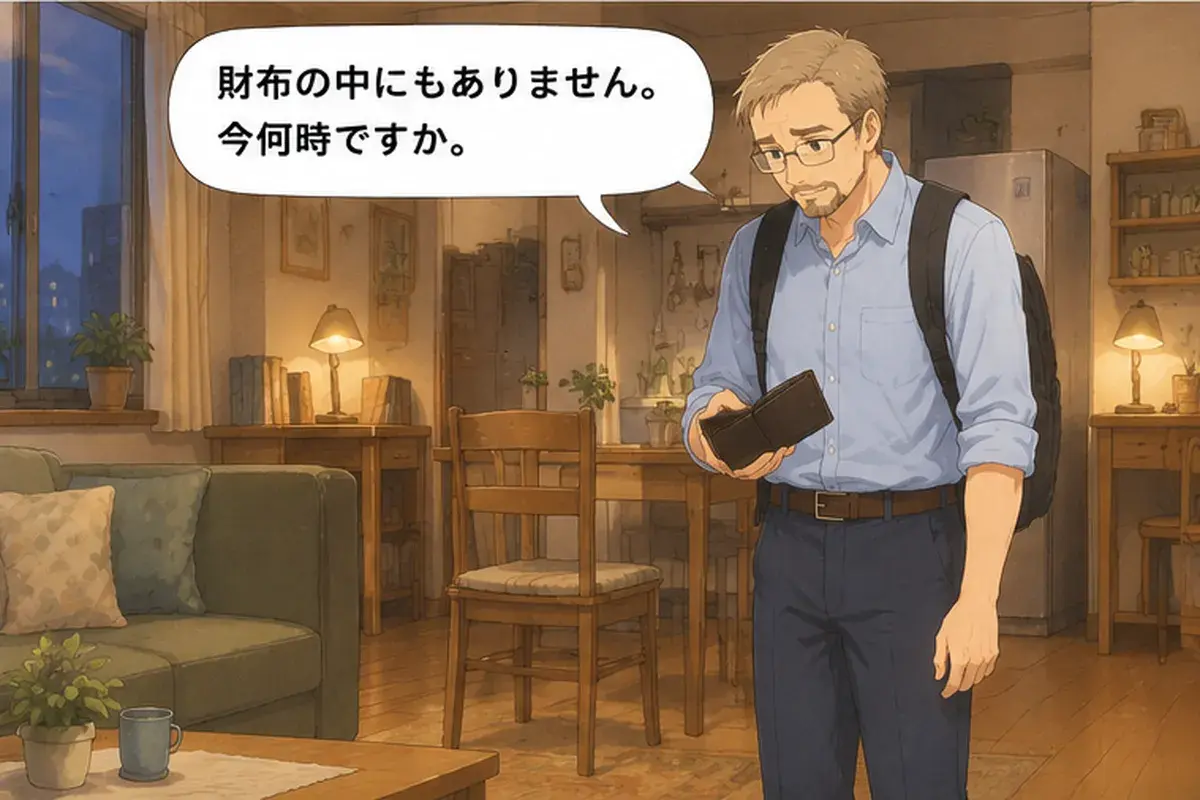
- マルク
財布の中にもありません。今何時ですか。
It's not in my wallet either. What time is it now?
- ソーニャ
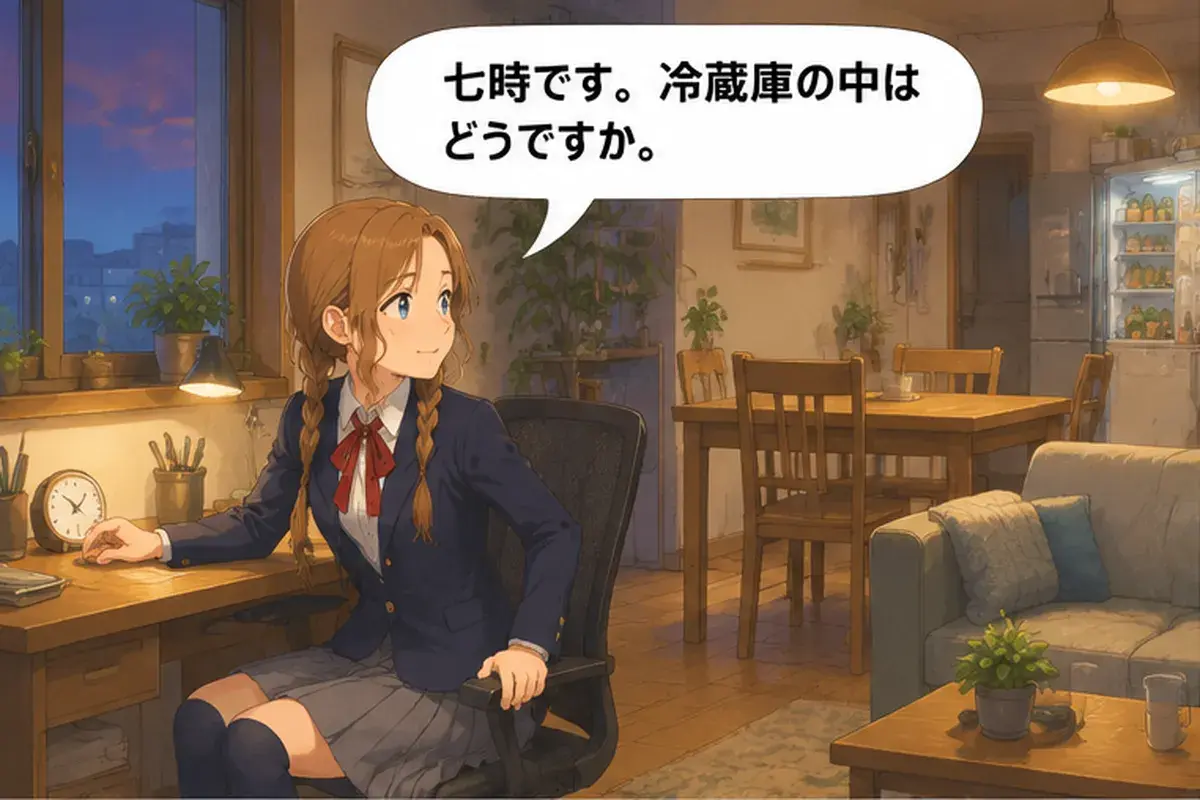
七時です。冷蔵庫の中はどうですか。
It's seven. What about in the fridge?
- マルク
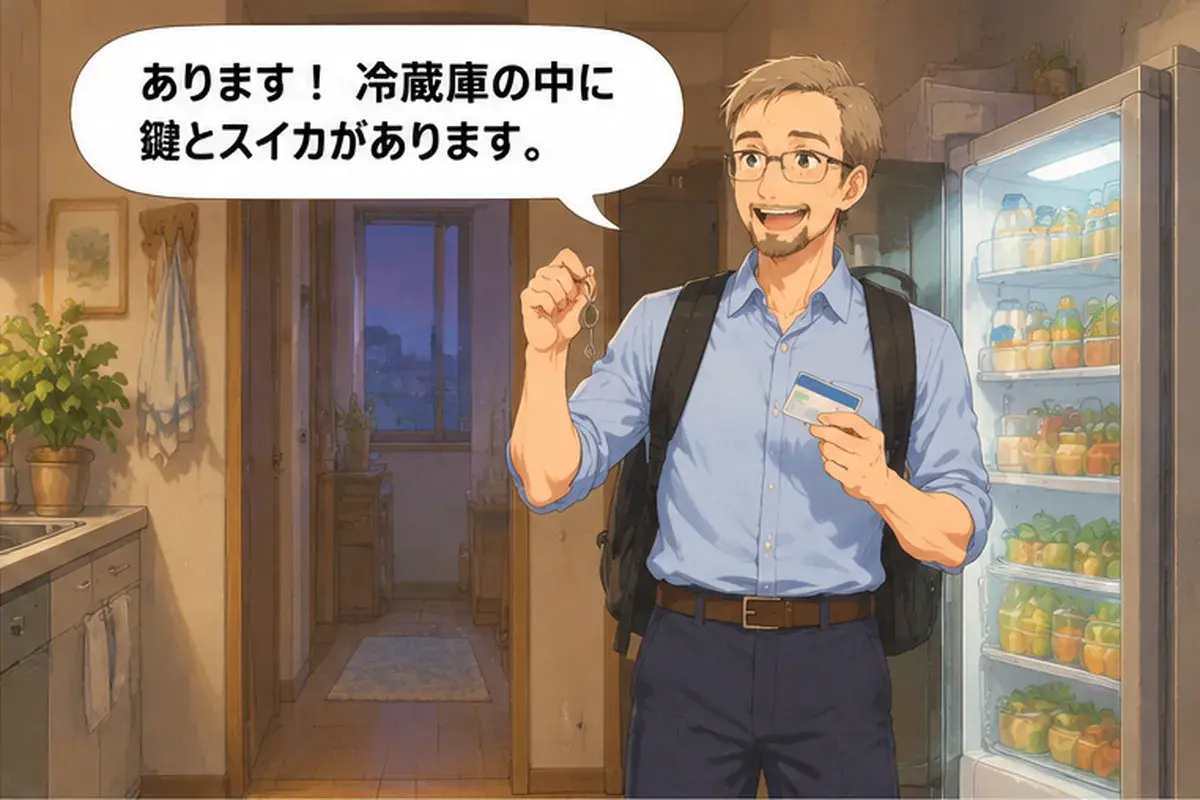
あります!冷蔵庫の中に鍵とスイカがあります。
They're here! The keys and the Suica are in the fridge.
- アンナ
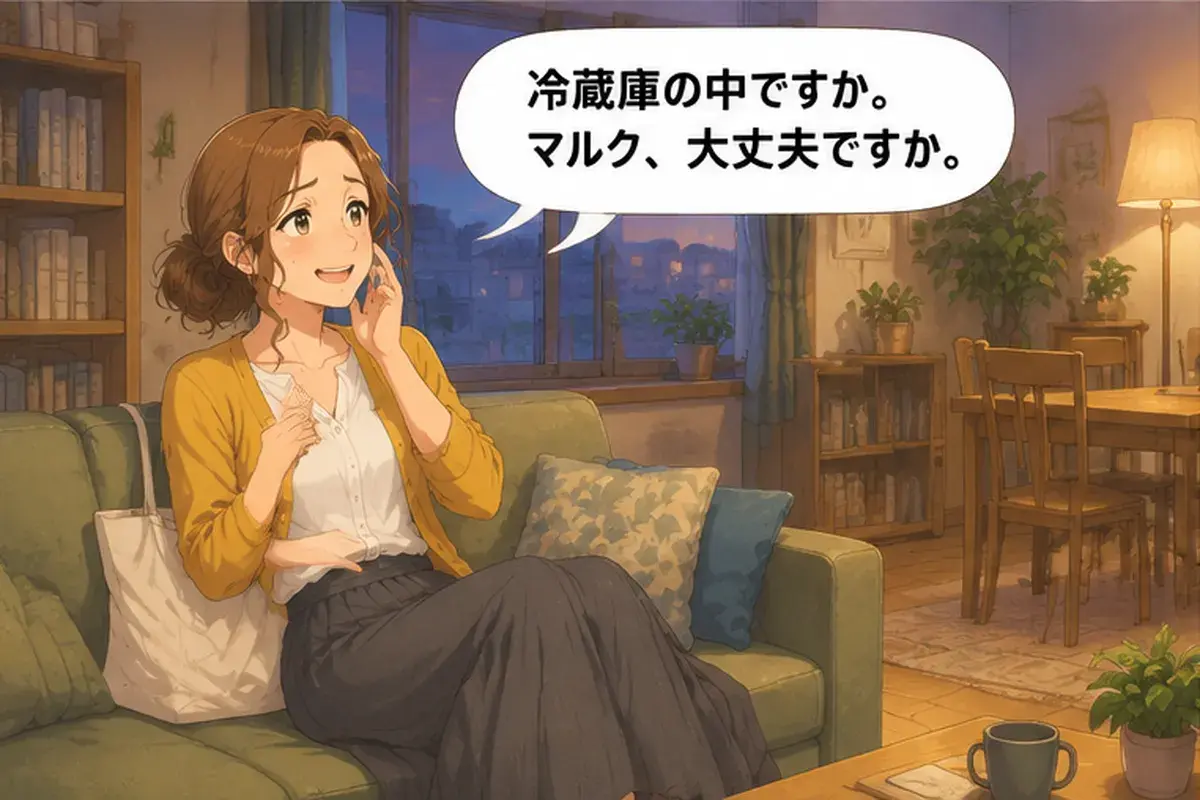
冷蔵庫の中ですか。マルク、大丈夫ですか。
In the fridge? Mark, are you OK?
- マルク
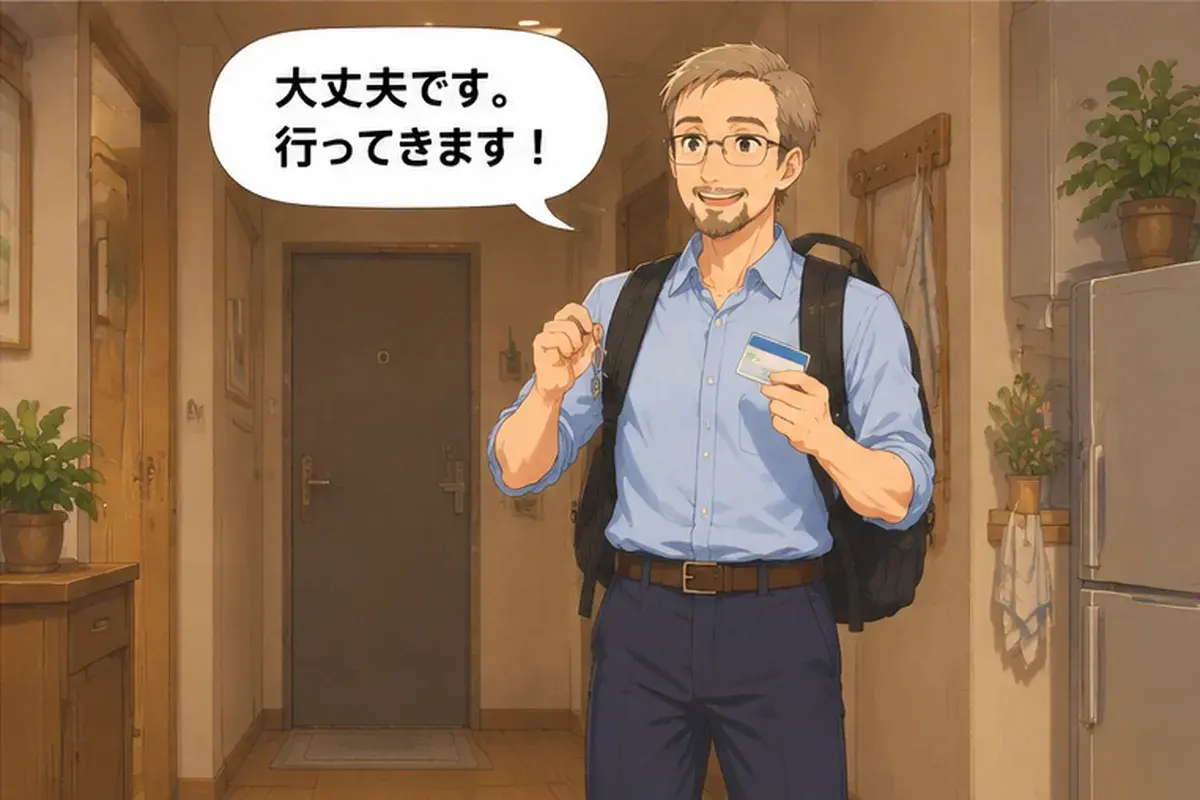
大丈夫です。行ってきます!
I'm fine. I'm off!
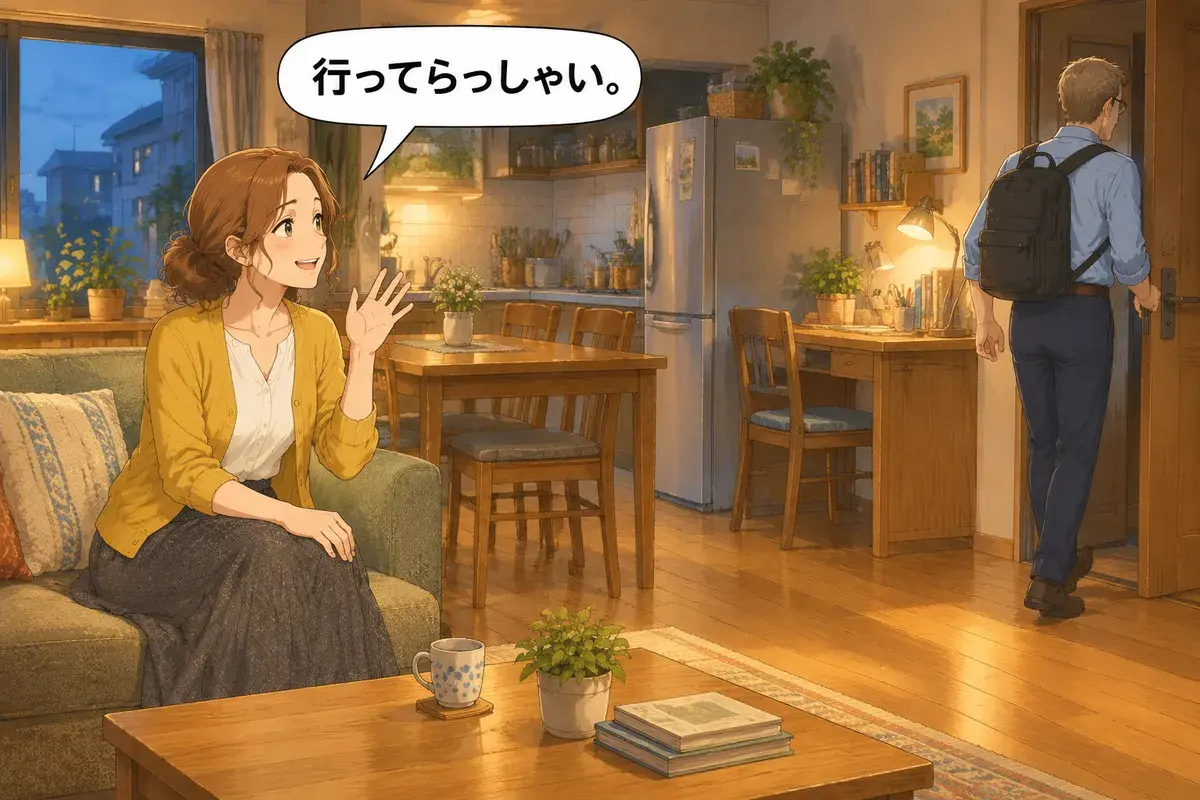
- アンナ
行ってらっしゃい。
Have a good day.
Grammar for this text
テーブル の 上 に あります よ— "on the table": table,の, the word for "top",に. Literally "the table's top-at". Theよat the end means "I'm telling you, that's where they are".何も ありません— "there's nothing".何もalways goes with a negative, and it needs noが.本 や めがね や 時計 が あります が、鍵 も スイカ も ありません ね—やdoesn't name everything: "a book, glasses, a watch and other things". The firstがmarks what is there (new information), the second one means "but".鍵 も スイカ も— "no keys and no Suica": the keys and the card have already come up, so it'sも, notが.椅子 の 上 に も ソファー の 下 に も ありません—もmeans "too"; with a negative,に も … に もmeans "not here and not there either".冷蔵庫 の 中 に 鍵 と スイカ が あります— the keys and the card are things, soあります. This is news, soが.とnames both items: the full list.マルク、大丈夫 です か— Anna is joking: "Are you OK?" At home Mark and Anna have a "Japanese hour", so she speaks politely even to her husband.行って きますand行って らっしゃい— a pair of set phrases. The person leaving says "I'll go (and come back)", the person staying answers "go (and come back)"; in English, something like "I'm off!" and "Have a good day!" Both come from行く(to go).行ってis a special verb form you'll learn in unit 13; for now remember the phrases whole. People say them every time someone leaves home: for work, for school, for the store.
Words and grammar of the unit: Say where things are.
Learn the words from the texts with flashcards
In the app, you can tap any word in a text to see its translation, forms and examples, and new words stick with flashcards. 15 minutes a day.
Start for freeEverything is open for free. No card needed to sign up.