

Japanese dialogue with translation · A1 · 12 lines
銀行は左ですよ The bank is on the left
Comic · 8 panels
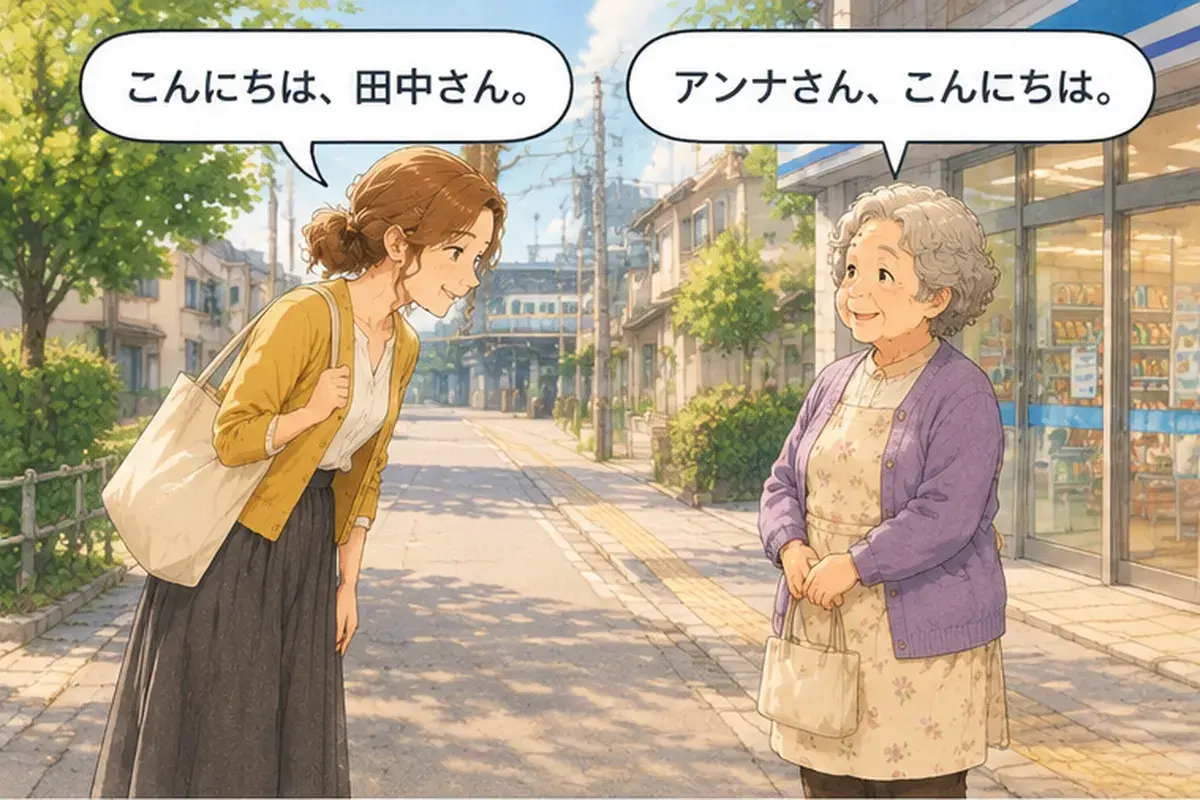
- アンナ
こんにちは、田中さん。
Hello, Tanaka-san.
- 田中
アンナさん、こんにちは。
Hello, Anna-san.
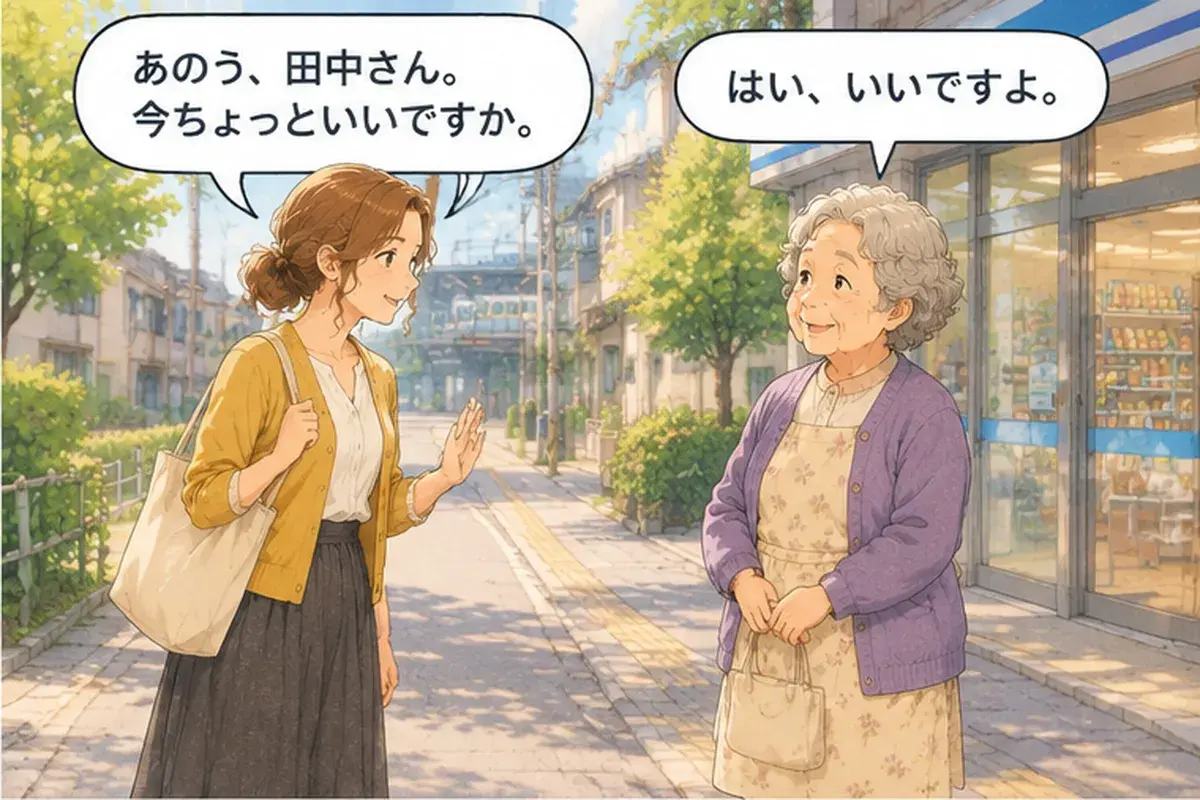
- アンナ
あのう、田中さん。今ちょっといいですか。
Um, Tanaka-san. Do you have a moment now?
- 田中
はい、いいですよ。
Yes, sure.
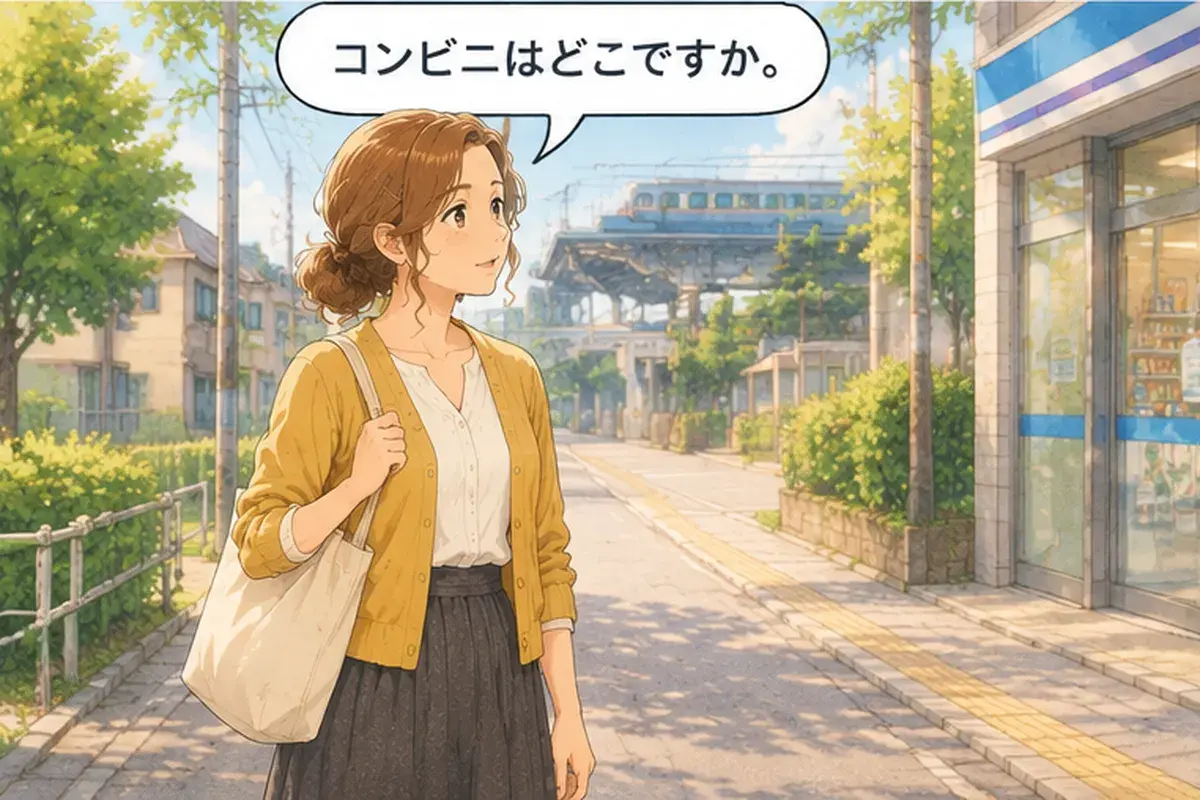
- アンナ
コンビニはどこですか。
Where's the convenience store?
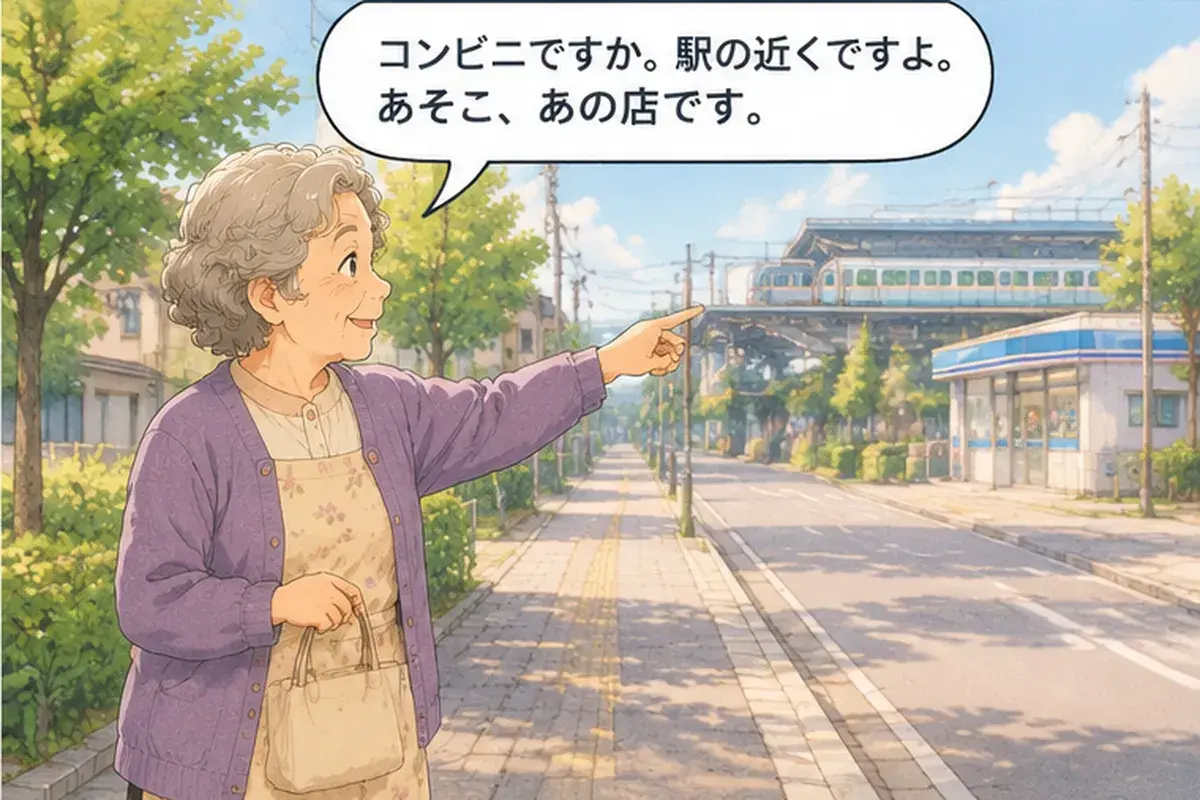
- 田中
コンビニですか。駅の近くですよ。あそこ、あの店です。
The convenience store? It's near the station. Over there, that store over there.
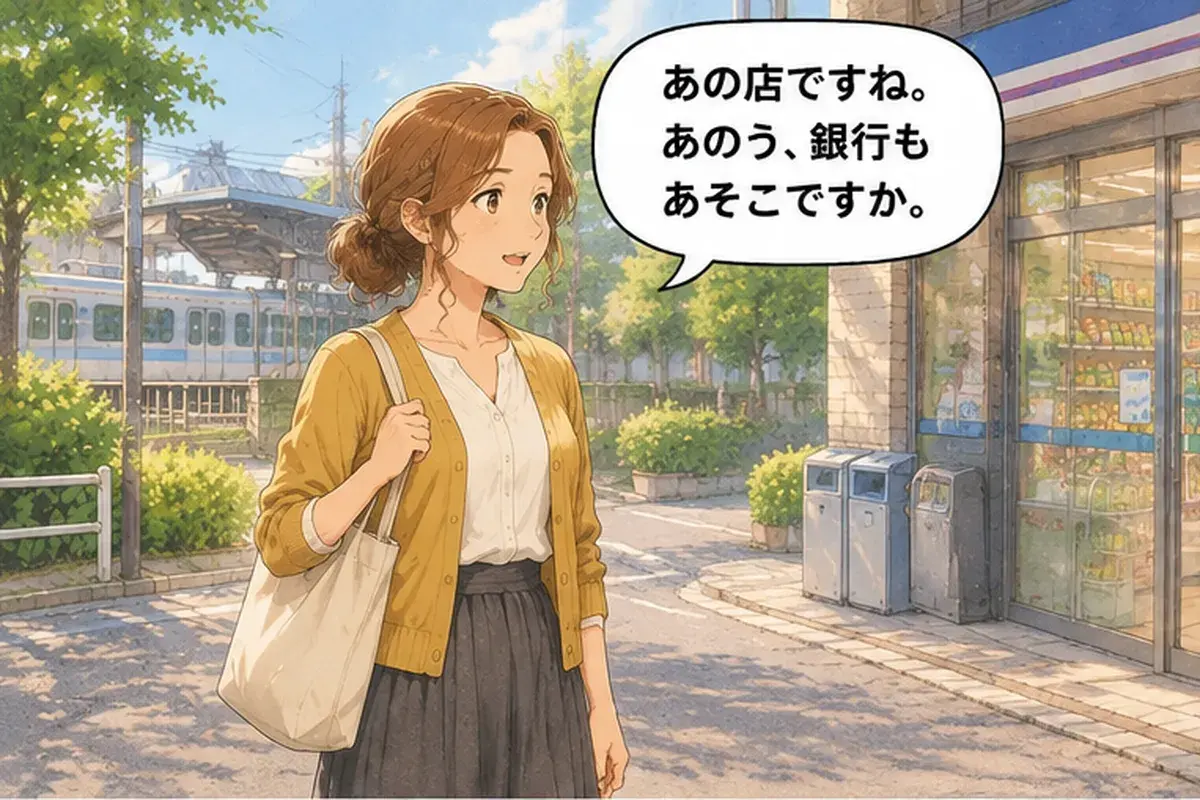
- アンナ
あの店ですね。あのう、銀行もあそこですか。
That store over there, right? Um, is the bank over there too?
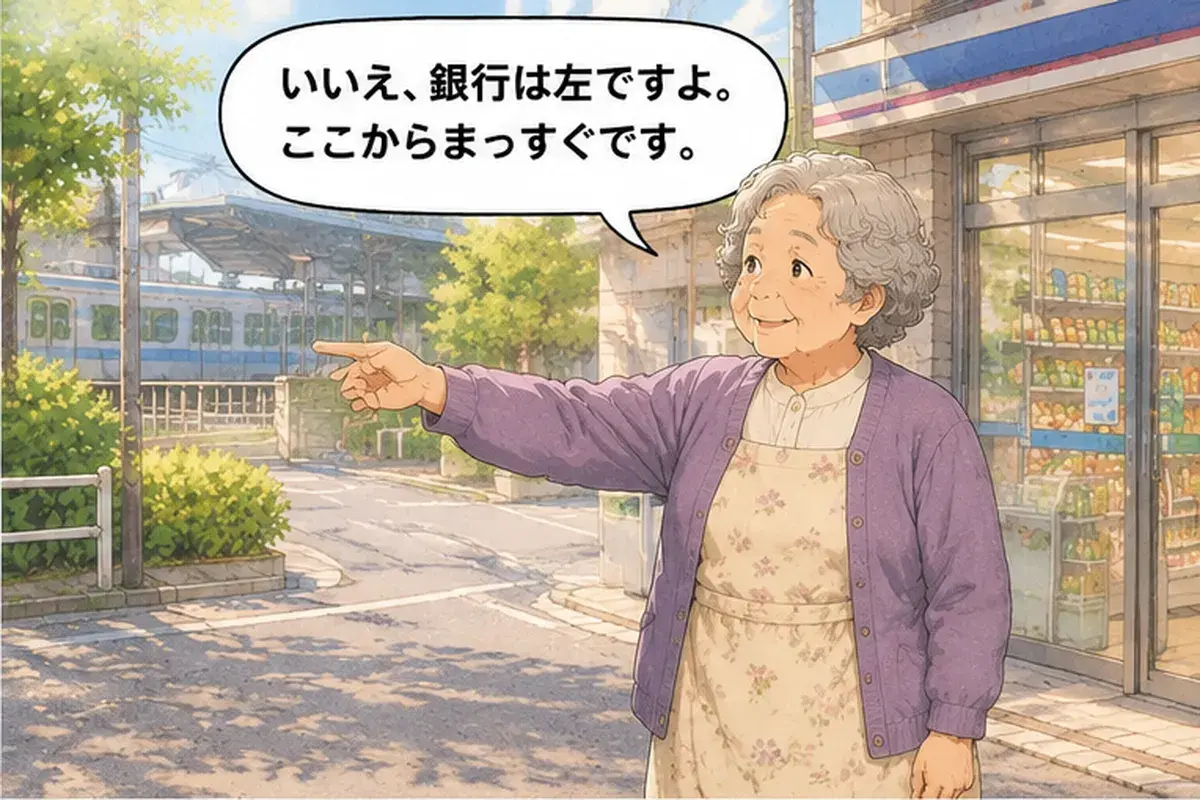
- 田中
いいえ、銀行は左ですよ。ここからまっすぐです。
No, the bank is on the left. It's straight ahead from here.
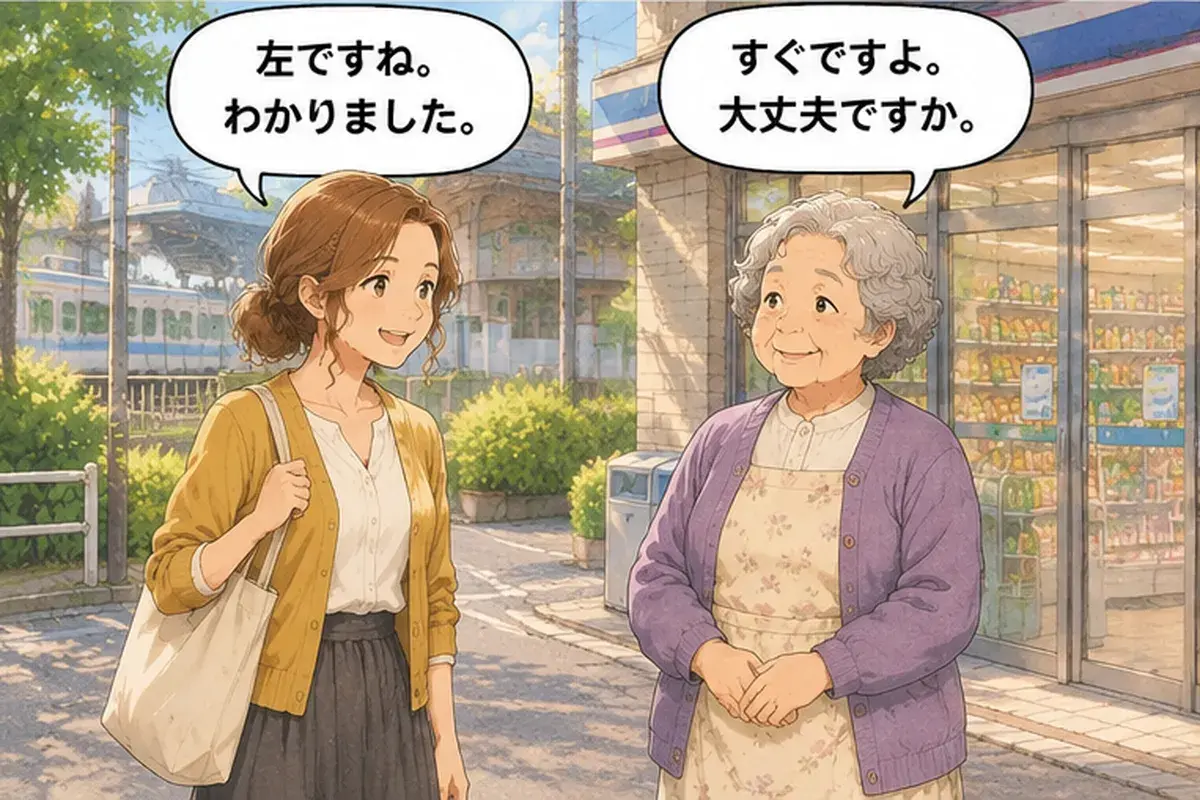
- アンナ
左ですね。わかりました。
On the left, right? Got it.
- 田中
すぐですよ。大丈夫ですか。
It's very close. Is everything OK?
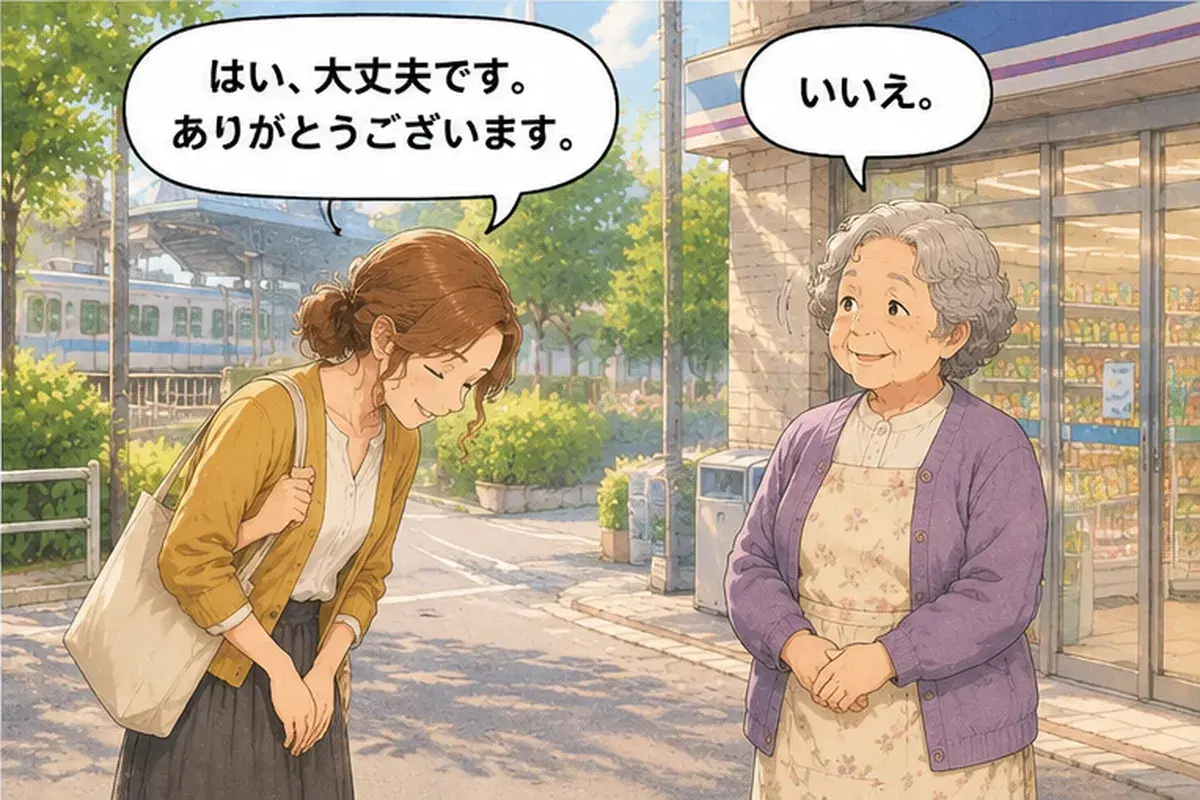
- アンナ
はい、大丈夫です。ありがとうございます。
Yes, everything's OK. Thank you.
- 田中
いいえ。
No, not at all.
Grammar for this text
あのう、田中 さん。今 ちょっと いい です か。 — "is now a good time?", that is, "do you have a minute?". It's a polite way to start a conversation. ちょっと means "a little" and softens the request. いい means "good", but for now just remember the set phrases いい です か and いい です よ ("may I?", "sure"). More in unit 8.
駅 の 近く です よ。 — 近く means "near, nearby". 駅 の 近く is "near the station" (literally "the station's vicinity"; の works as in unit 2). Don't confuse it with 近い ("close"): it comes in unit 8.
あそこ、あの 店 です。 — あの ("that... over there") comes before a noun: "that store over there". コンビニ is a special store that's open 24 hours; 店 is any store or place of business.
左 です ね。 — Anna repeats the answer with ね to check herself. Before that she asked whether the bank was over there too (銀行 も あそこ です か), and Tanaka-san corrected her (銀行 は 左 です よ). With よ you correct someone and give new information.
ここ から まっすぐ です。 — から here means "from": "straight ahead from here".
わかりました。 — a set phrase: "I see", "got it". It's the polite past form of わかる ("to understand"); verbs come in unit 6, and the past tense in unit 11. For now, learn it as a whole.
大丈夫 です か。 — "is everything OK?", here "is everything clear?". The answer はい、大丈夫 です。 means "yes, it's all clear".
Words and grammar of the unit: Ask where places are.
Learn the words from the texts with flashcards
In the app, you can tap any word in a text to see its translation, forms and examples, and new words stick with flashcards. 15 minutes a day.
Start for freeEverything is open for free. No card needed to sign up.