

Japanese dialogue with translation · A1 · 13 lines
三千円じゃありません It isn't 3,000 yen
Comic · 13 panels
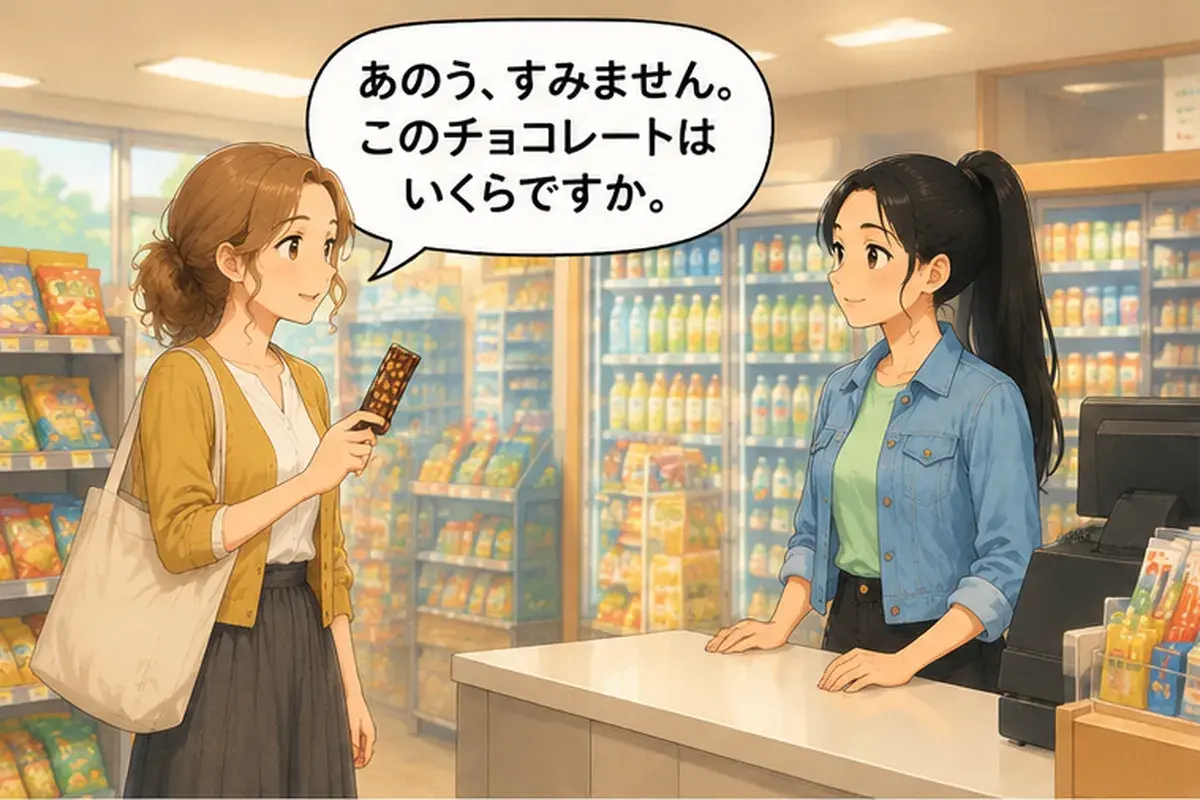
- アンナ
あのう、すみません。このチョコレートはいくらですか。
Um, excuse me. How much is this chocolate?
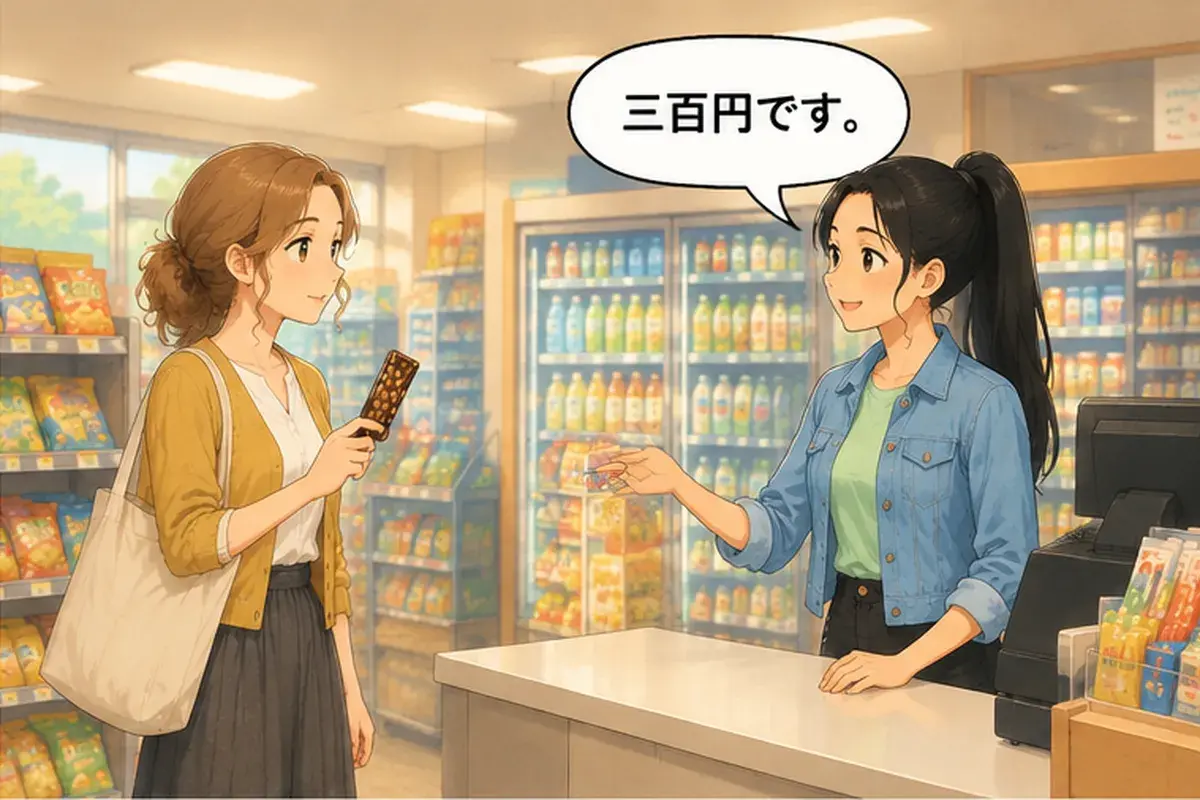
- リン
三百円です。
It's 300 yen.
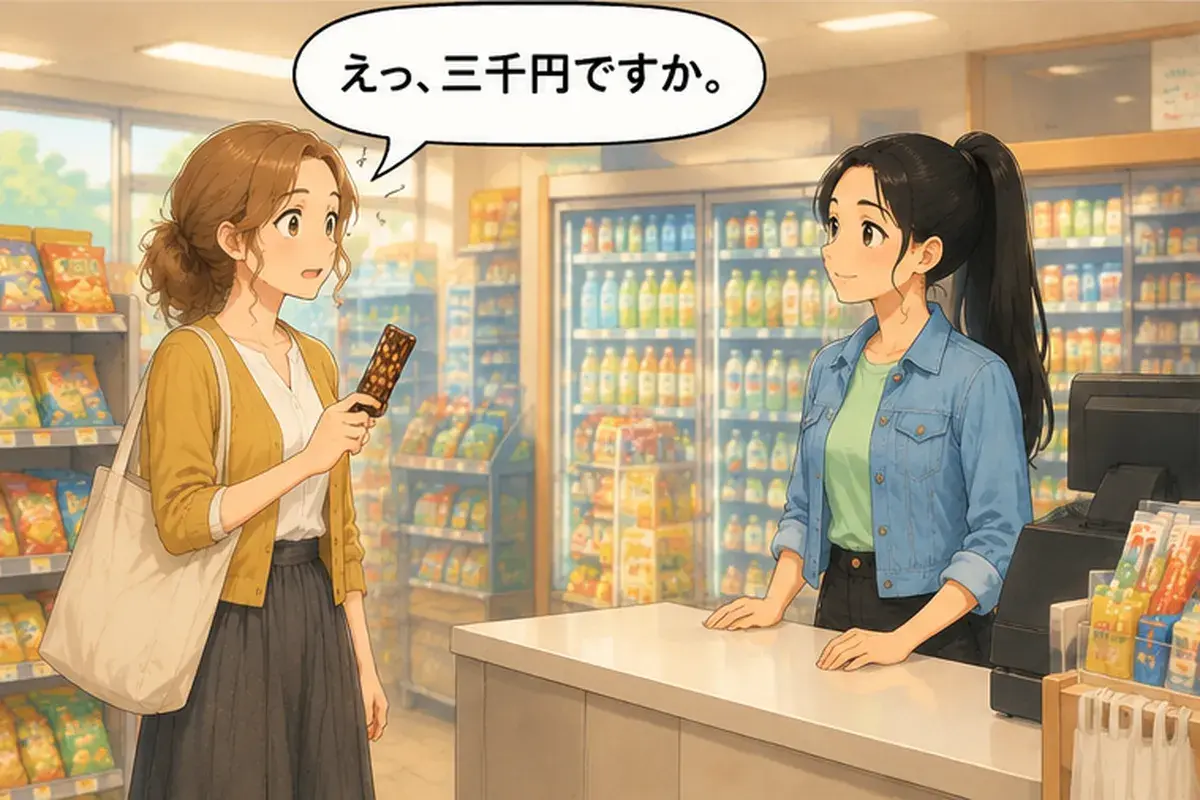
- アンナ
えっ、三千円ですか。
What? 3,000 yen?
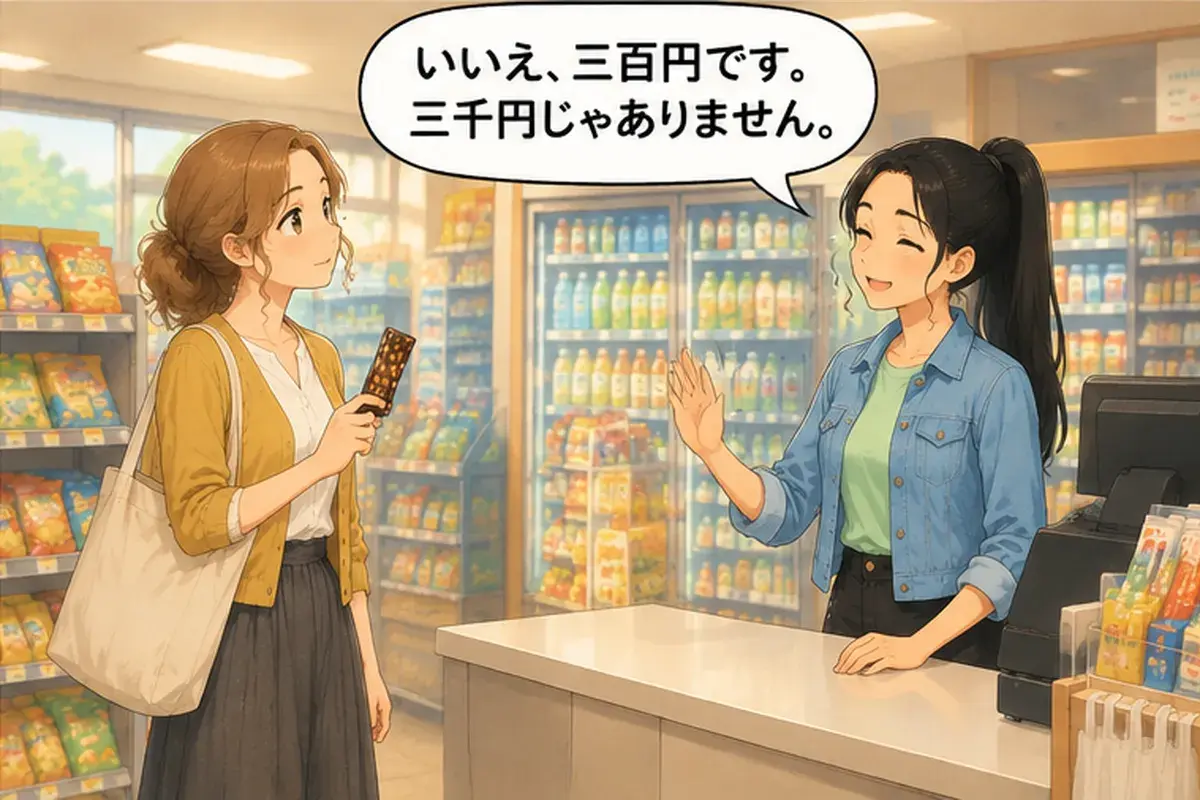
- リン
いいえ、三百円です。三千円じゃありません。
No, it's 300 yen. It isn't 3,000 yen.
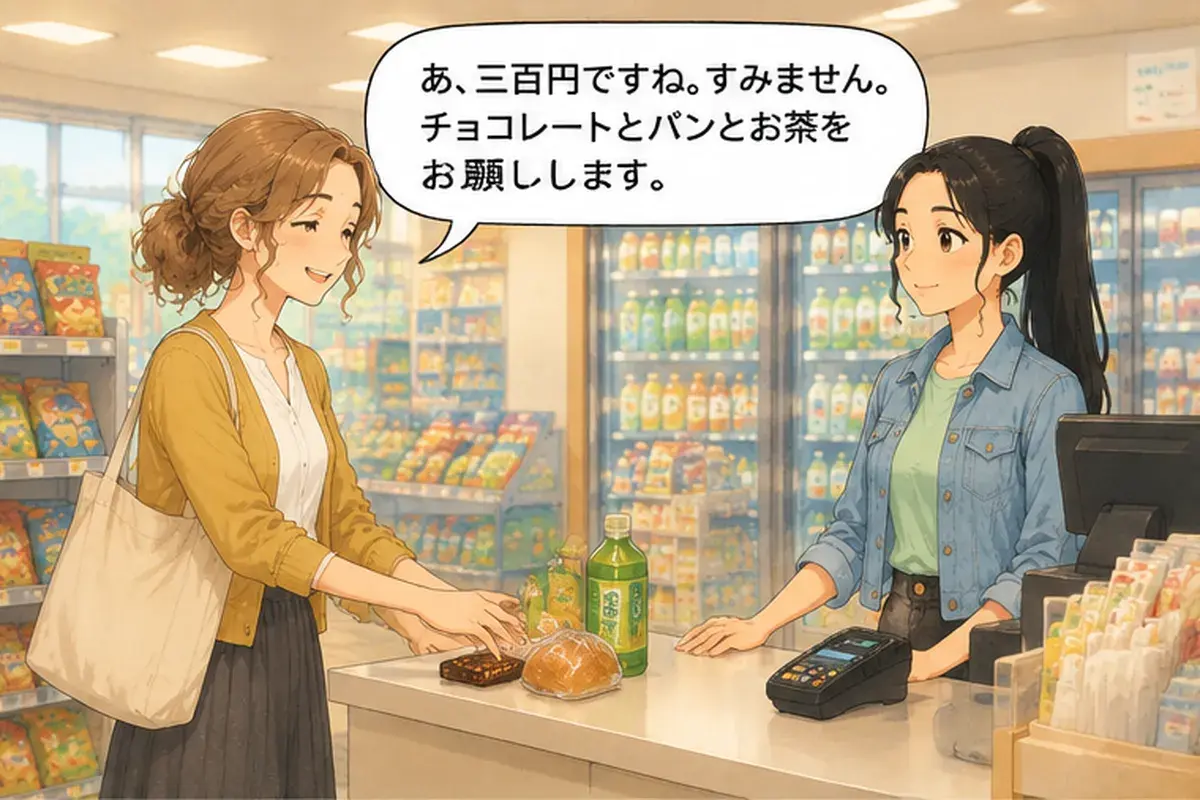
- アンナ
あ、三百円ですね。すみません。チョコレートとパンとお茶をお願いします。
Oh, it's 300 yen. I'm sorry. Chocolate, bread and tea, please.
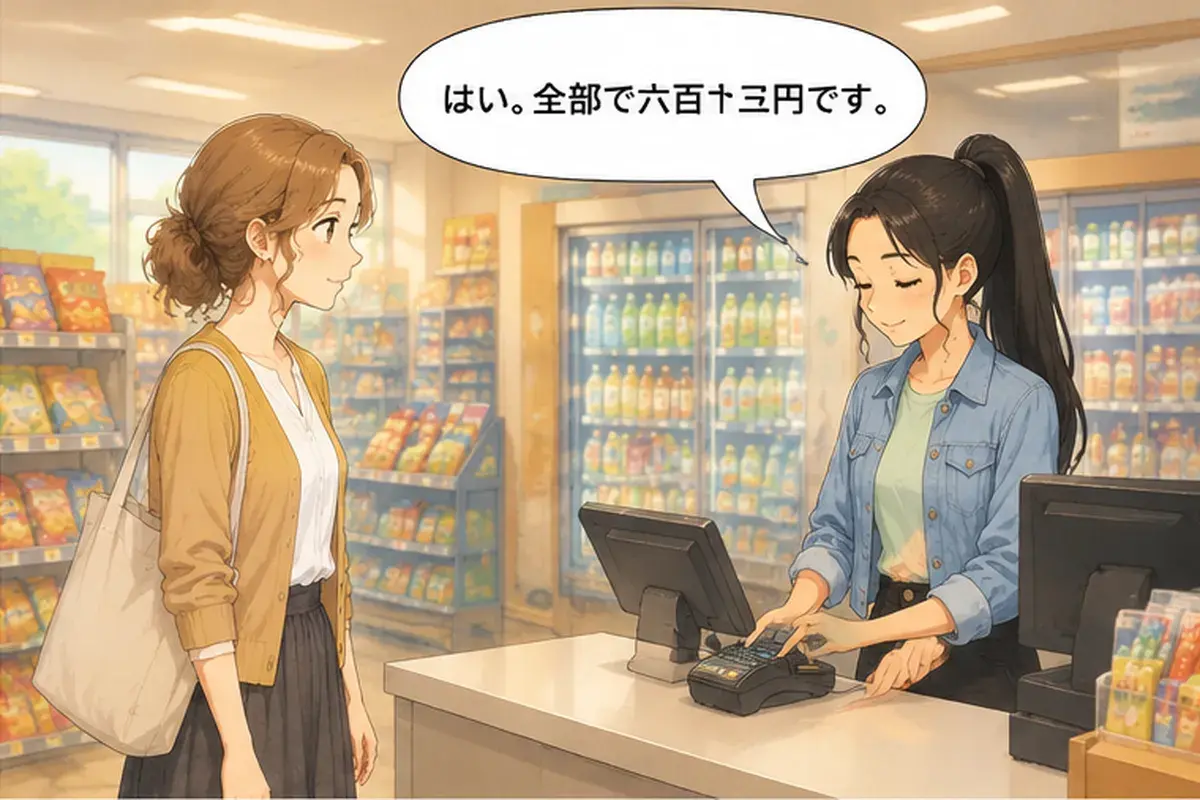
- リン
はい。全部で六百十三円です。
OK. That's 613 yen in total.
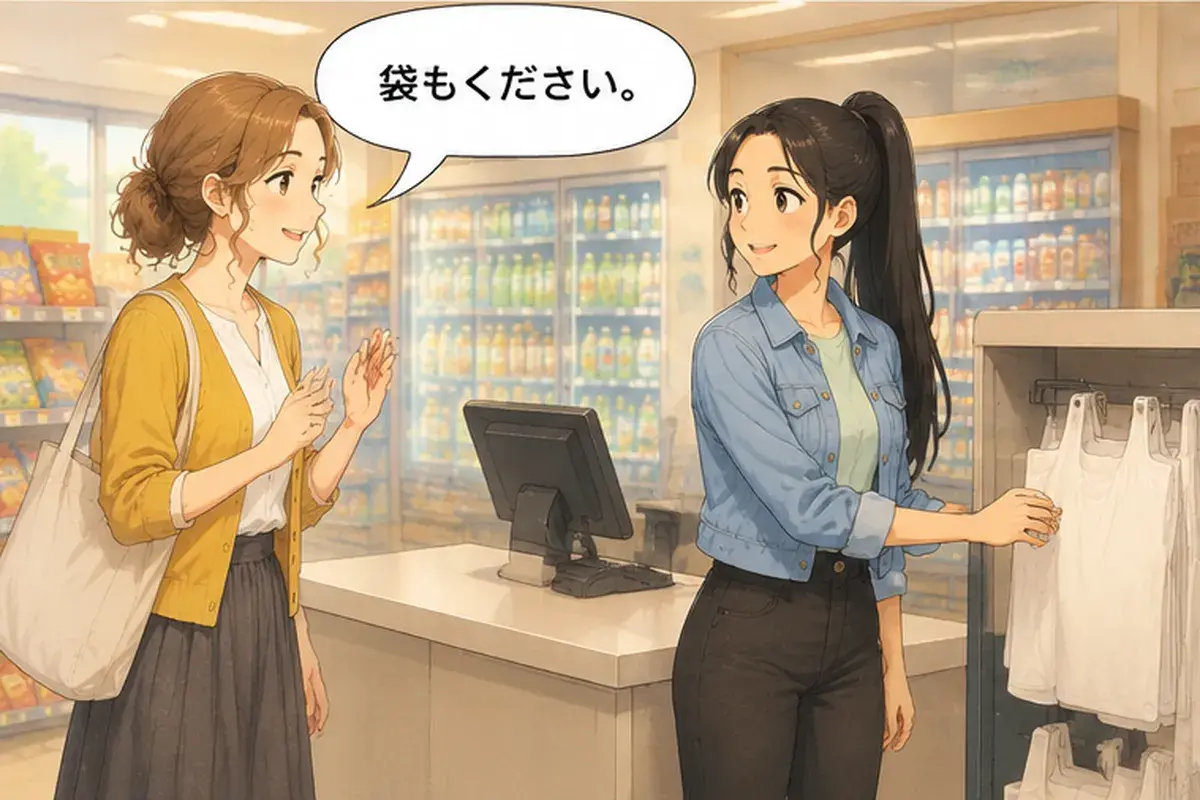
- アンナ
袋もください。
Please give me a plastic bag too.
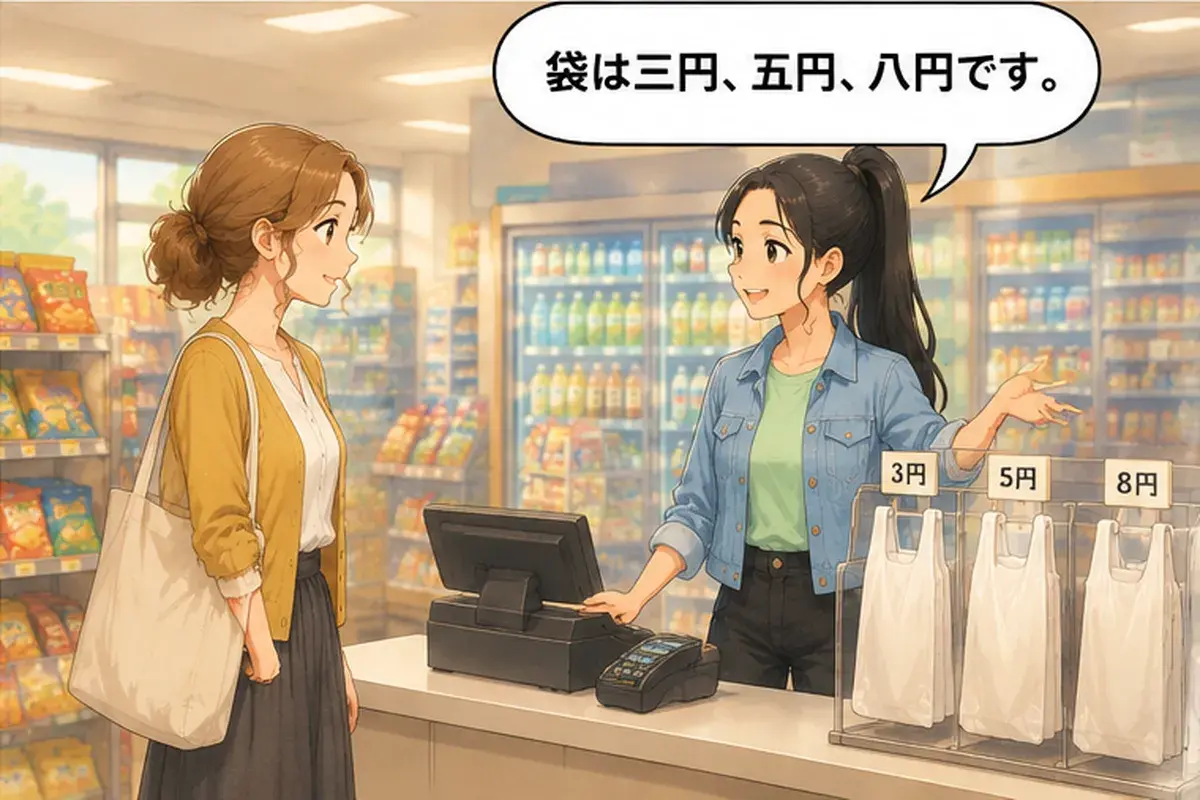
- リン
袋は三円、五円、八円です。
The plastic bags are 3 yen, 5 yen and 8 yen.
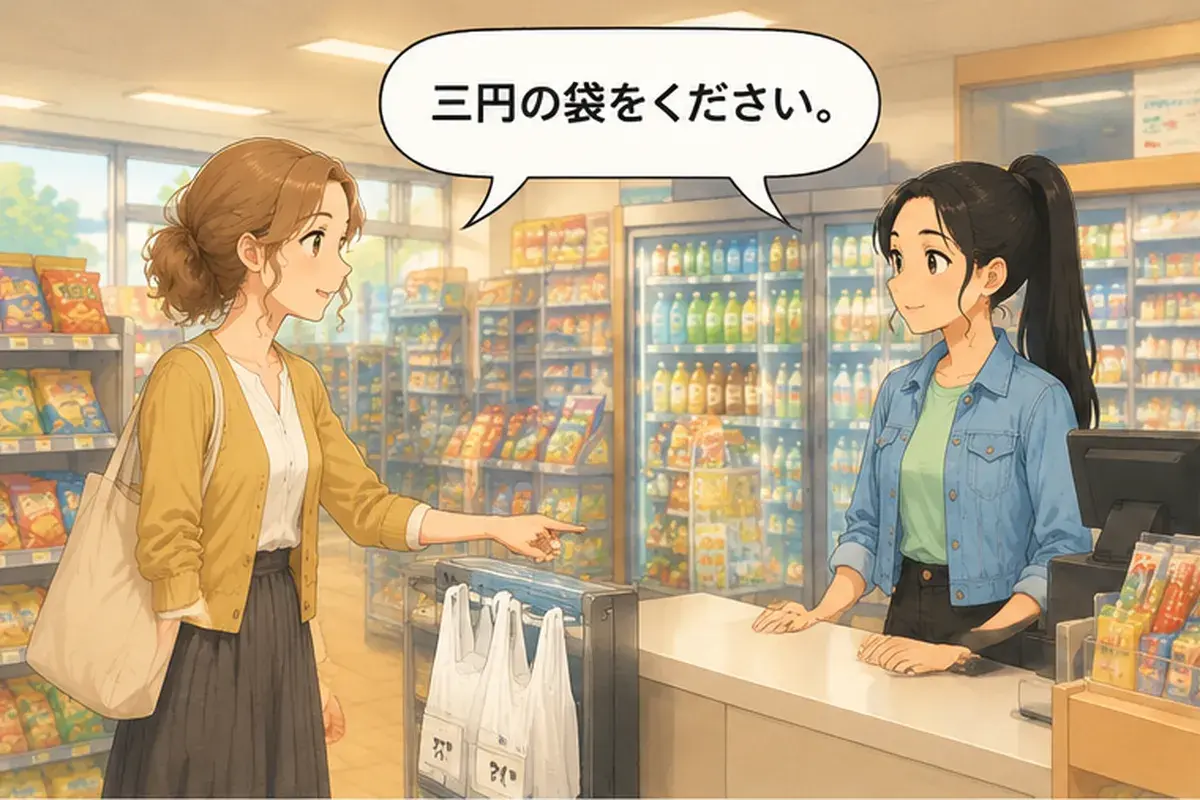
- アンナ
三円の袋をください。
Please give me a 3-yen plastic bag.
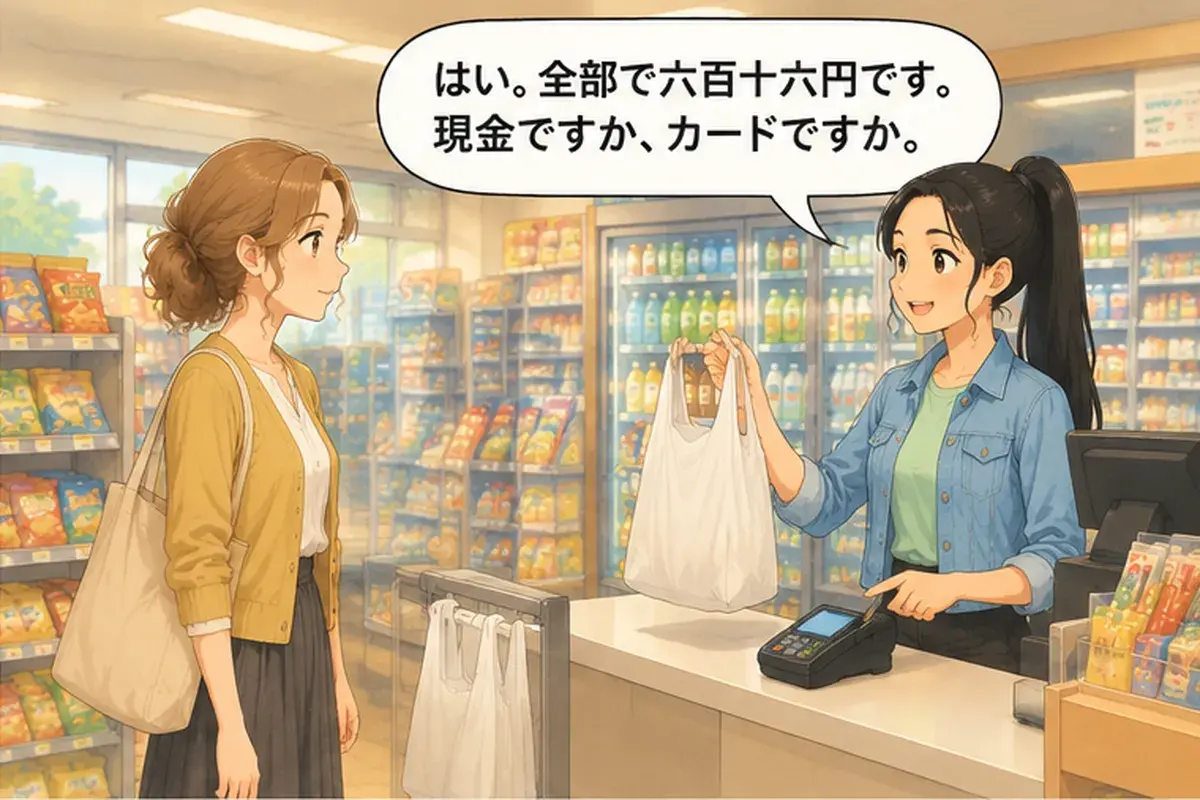
- リン
はい。全部で六百十六円です。現金ですか、カードですか。
OK. That's 616 yen in total. Cash or card?
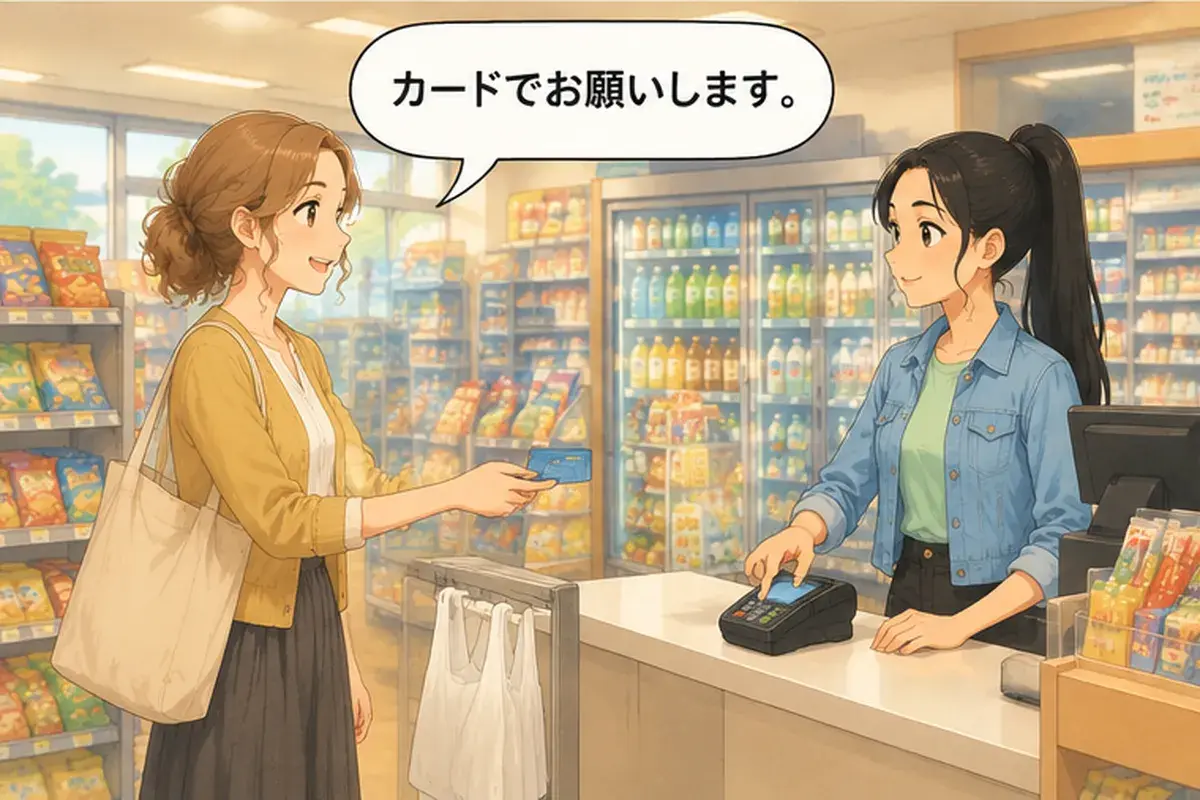
- アンナ
カードでお願いします。
By card, please.
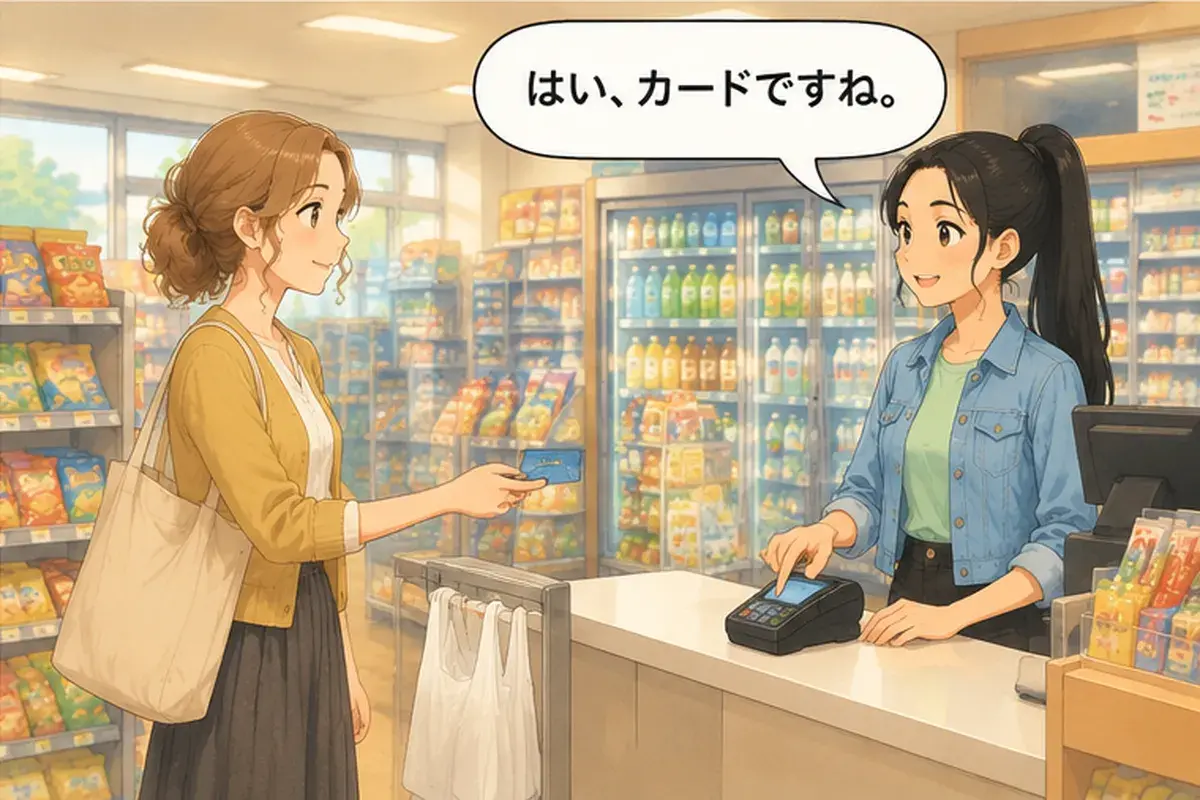
- リン
はい、カードですね。
OK, by card, right?
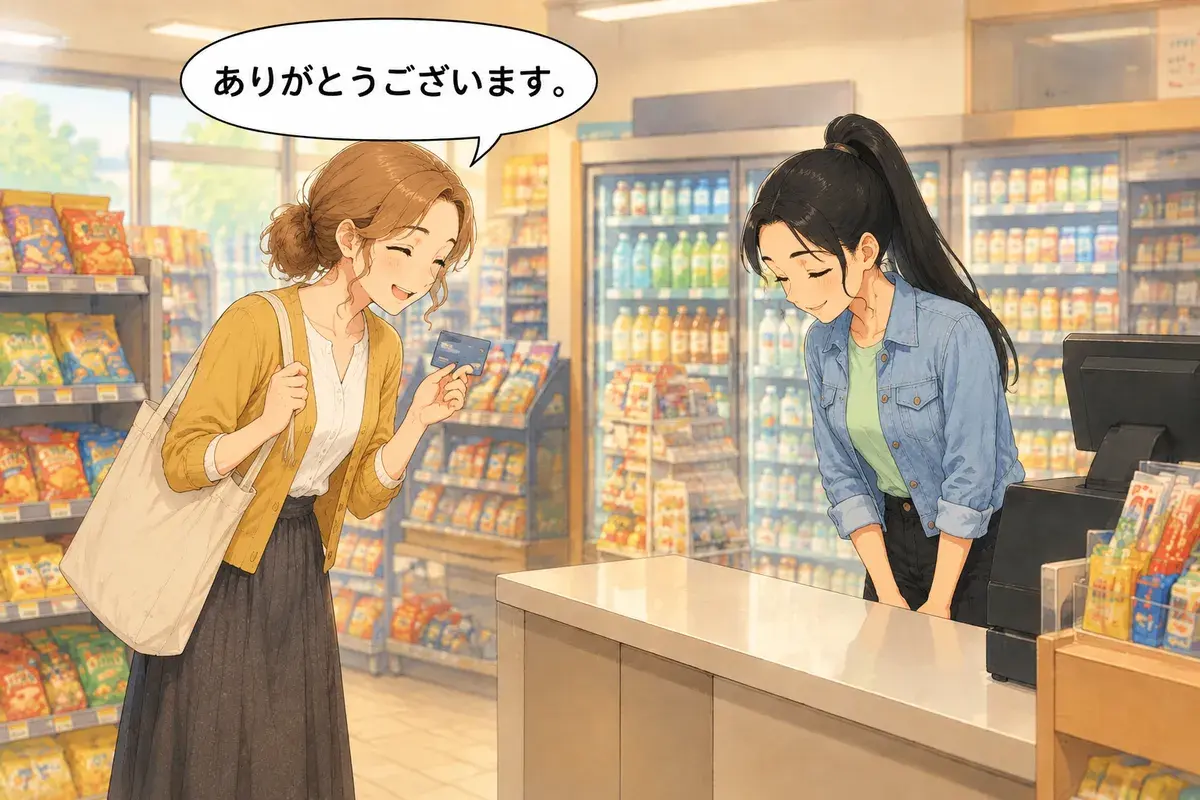
- アンナ
ありがとうございます。
Thank you.
Grammar for this text
あのう、 すみません — this is how you get a clerk's attention when you want to ask something: あのう is "um", すみません is "excuse me". Anna starts with it as soon as she comes up to the counter.
三千 円 じゃ ありません — 300 and 3,000 sound alike: 三百 is sanbyaku, 三千 is sanzen; only the part after san changes. Anna misheard, and Linh said it again: じゃ ありません ("isn't", unit 2) corrects a mistake. In えっ、 三千 円 です か, えっ is "what?!", surprise; in あ、 三百 円 です ね, あ is "oh, I get it".
全部 で 六百 十 三 円 です — the number is read from left to right: 六百 (600) + 十 (10) + 三 (3) = 613. 全部 で means "in total": that's how the cashier says the total. 六百 is read roppyaku.
袋 は 三 円、 五 円、 八 円 です — three prices without と, just with commas. In stores plastic bags cost money, and the price depends on the size: usually 3, 5 or 8 yen.
三 円 の 袋 を ください — の links the price and the thing: "a 3-yen plastic bag". And 袋 も ください means "a plastic bag too": も ("too") stands in place of を.
現金 です か、 カード です か — か after each of two questions: "cash or card?". The answer is short: カード で お願いします, with で (how you pay) and お願いします (please).
はい、 カード です ね — Linh repeats what Anna said so she doesn't make a mistake: "by card, right?". ね asks for agreement, as in the line あ、 三百 円 です ね. You don't have to answer: a nod is enough.
The cashier is Linh; Anna doesn't know her yet.
Words and grammar of the unit: Ask prices and pay.
Learn the words from the texts with flashcards
In the app, you can tap any word in a text to see its translation, forms and examples, and new words stick with flashcards. 15 minutes a day.
Start for freeEverything is open for free. No card needed to sign up.