

Japanese dialogue with translation · A1 · 11 lines
吉祥寺は次ですよ Kichijoji is the next one
Comic · 4 panels
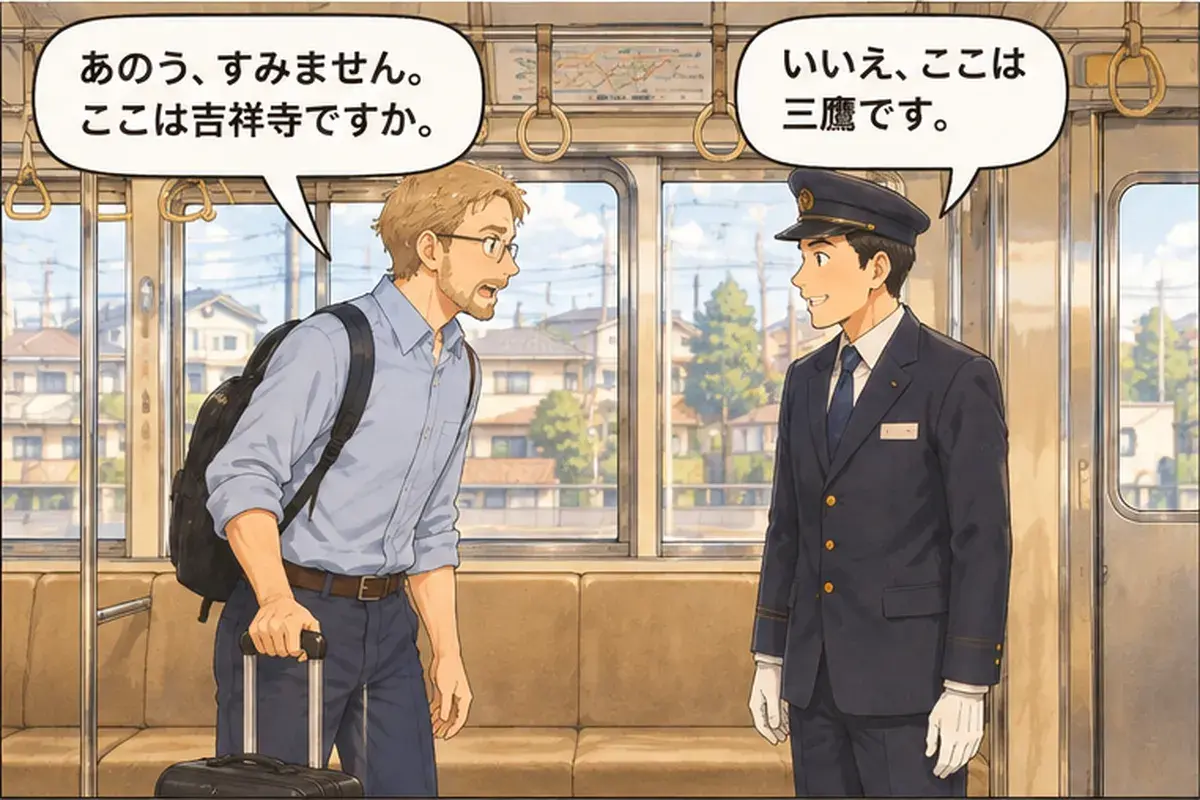
- マルク
あのう、すみません。ここは吉祥寺ですか。
Um, excuse me. Is this Kichijoji?
- 駅員
いいえ、ここは三鷹です。
No, this is Mitaka.
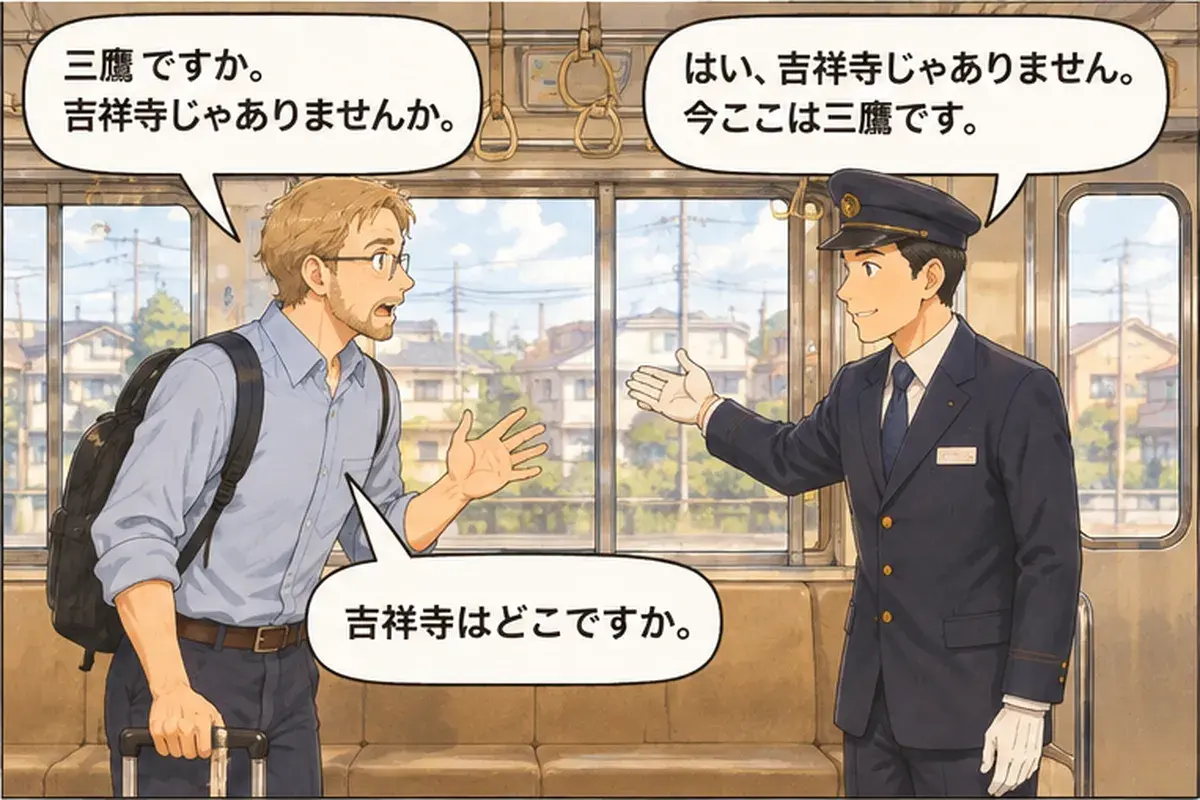
- マルク
三鷹ですか。吉祥寺じゃありませんか。
Mitaka? Isn't it Kichijoji?
- 駅員
はい、吉祥寺じゃありません。今ここは三鷹です。
That's right, it isn't Kichijoji. Right now this is Mitaka.
- マルク
吉祥寺はどこですか。
Where's Kichijoji?
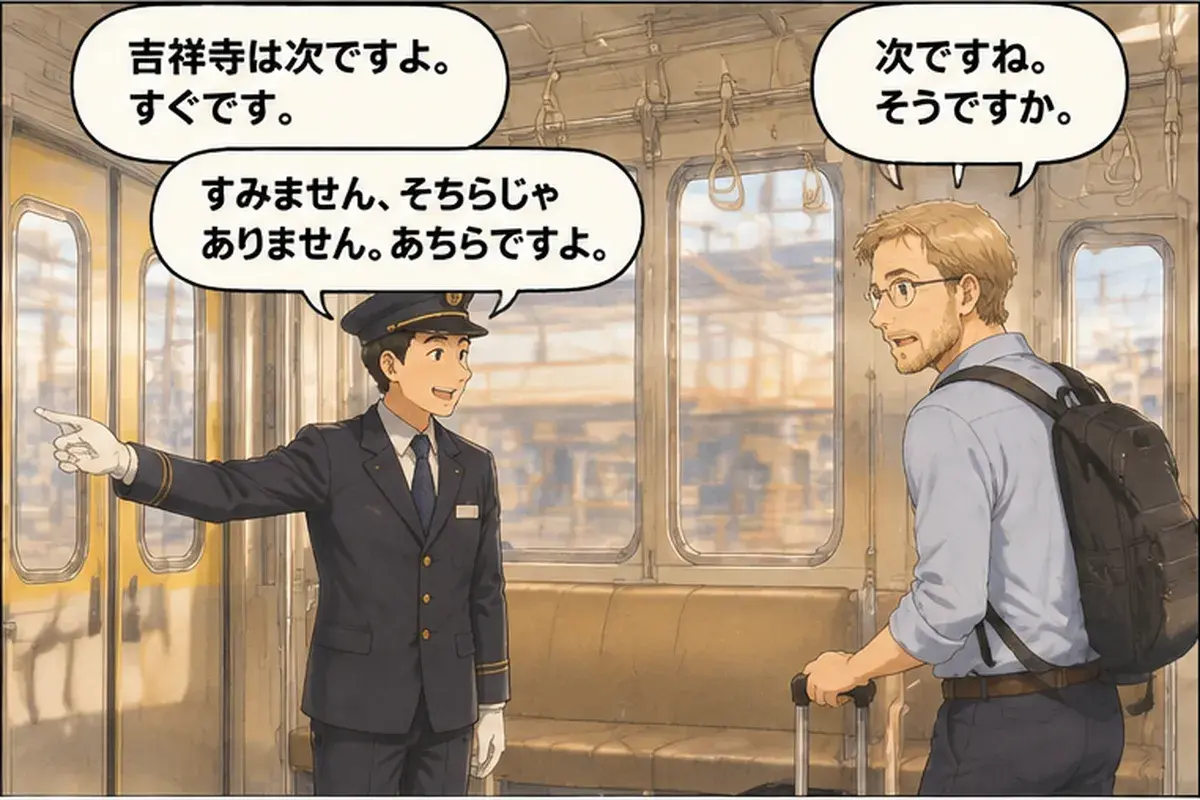
- 駅員
吉祥寺は次ですよ。すぐです。
Kichijoji is next. It's very close.
- マルク
次ですね。そうですか。
The next one, right? I see.
- 駅員
すみません、そちらじゃありません。あちらですよ。
Excuse me, it isn't that way. It's over that way.
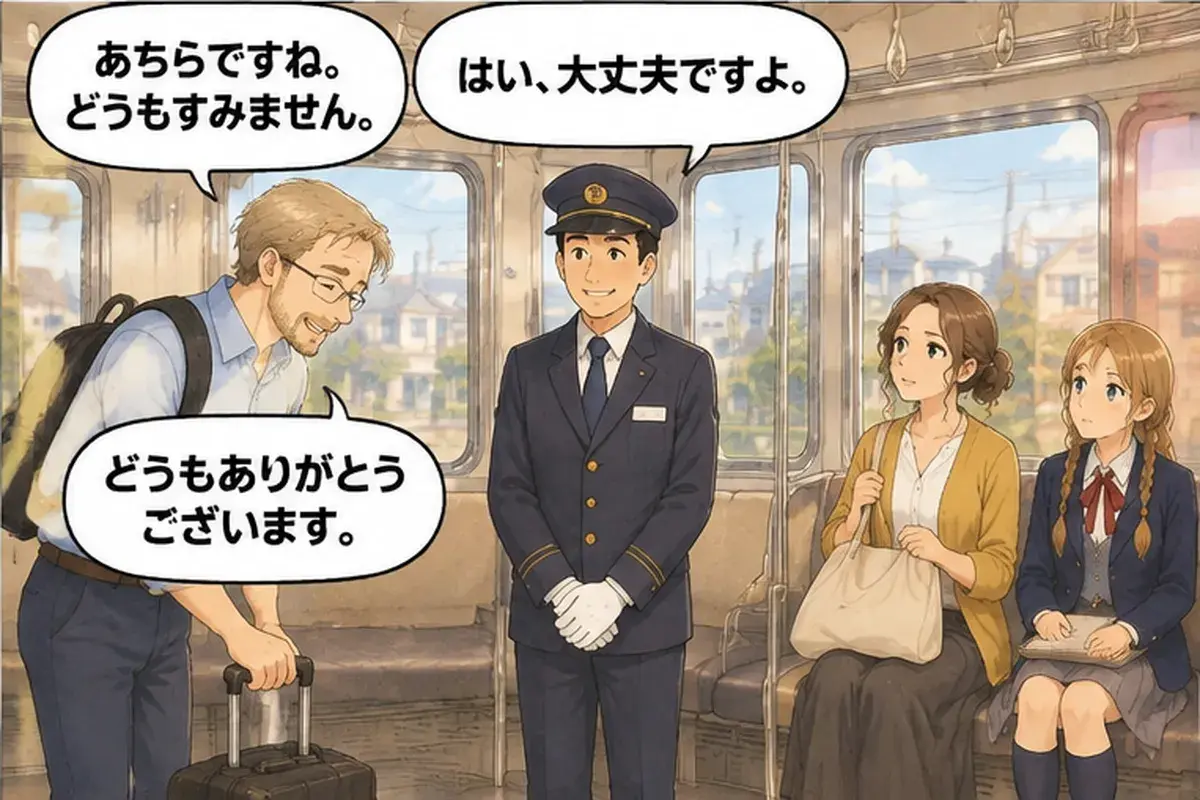
- マルク
あちらですね。どうもすみません。
Over that way, right? I'm very sorry.
- 駅員
はい、大丈夫ですよ。
Yes, it's OK.
- マルク
どうもありがとうございます。
Thank you very much.
Grammar for this text
三鷹 です か。吉祥寺 じゃ ありません か。 — a question with a negative: "isn't it Kichijoji?". The answer はい、吉祥寺 じゃ ありません。 starts with はい: it confirms what Mark said ("that's right, it isn't Kichijoji"). In English we'd say "No, it isn't". So don't translate はい as "yes" and いいえ as "no" mechanically: they mean "that's right" and "that's not right".
吉祥寺 は 次 です よ。 — 次 means "next". There's no word for "station": it's clear from the situation. よ means "you know, I'm telling you".
すぐ です。 — すぐ means "right away, very close". There's no verb: the word and です are enough.
今 ここ は 三鷹 です。 — 今 ("now") goes at the start of the sentence.
そう です か。 — "I see", "oh, really": the person accepts the news. It's not a question: the voice stays flat.
Station names: 吉祥寺, Kichijoji, is the station near the family's home, and 三鷹, Mitaka, is the station next to it. Mark is coming from the west, so Mitaka comes before Kichijoji.
すみません、そちら じゃ ありません。 あちら です よ。 — Mark went the wrong way, and the station attendant stops him. そちら is "that way, where you are", and あちら is "over that way": polite words instead of そこ and あそこ. Station and store staff talk like this.
どうも すみません。 どうも ありがとう ございます。 — どうも makes them stronger: "I'm very sorry", "thank you very much".
Words and grammar of the unit: Ask where places are.
Learn the words from the texts with flashcards
In the app, you can tap any word in a text to see its translation, forms and examples, and new words stick with flashcards. 15 minutes a day.
Start for freeEverything is open for free. No card needed to sign up.