
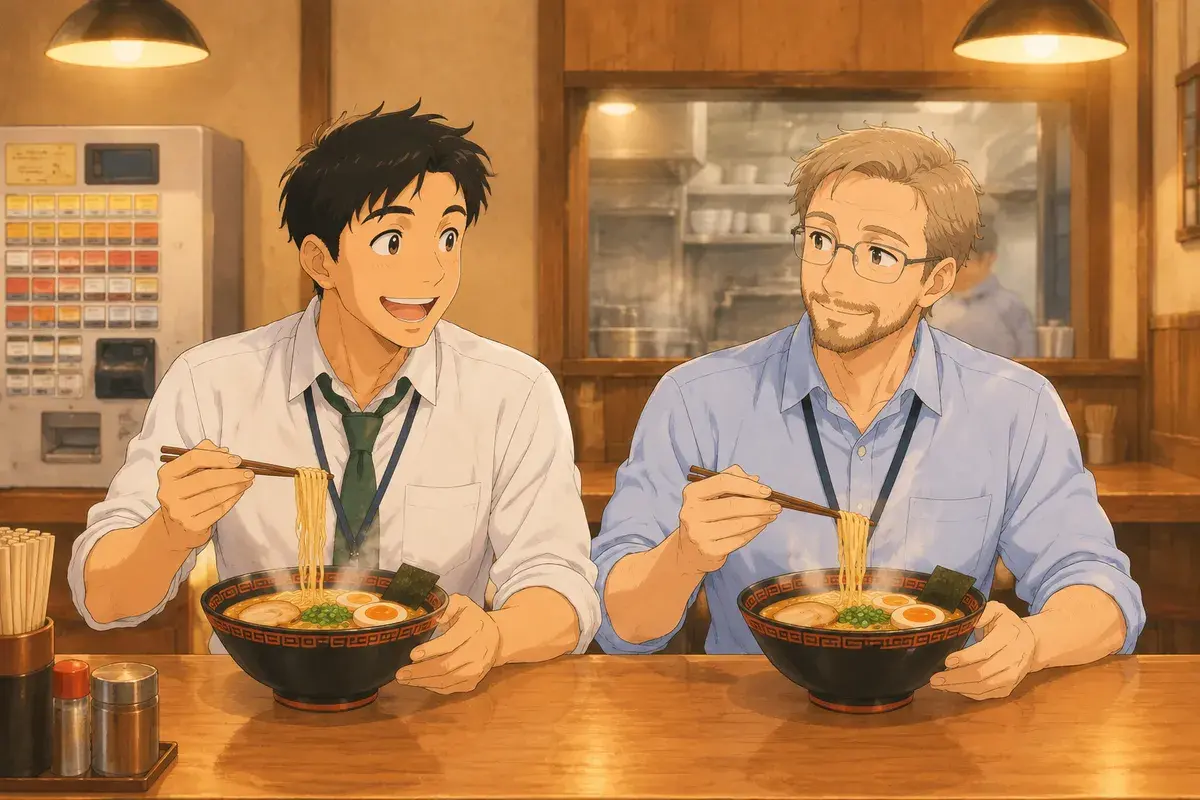
Japanese dialogue with translation · A1 · 14 lines
ラーメン二つですね Two ramen, right?
Comic · 9 panels
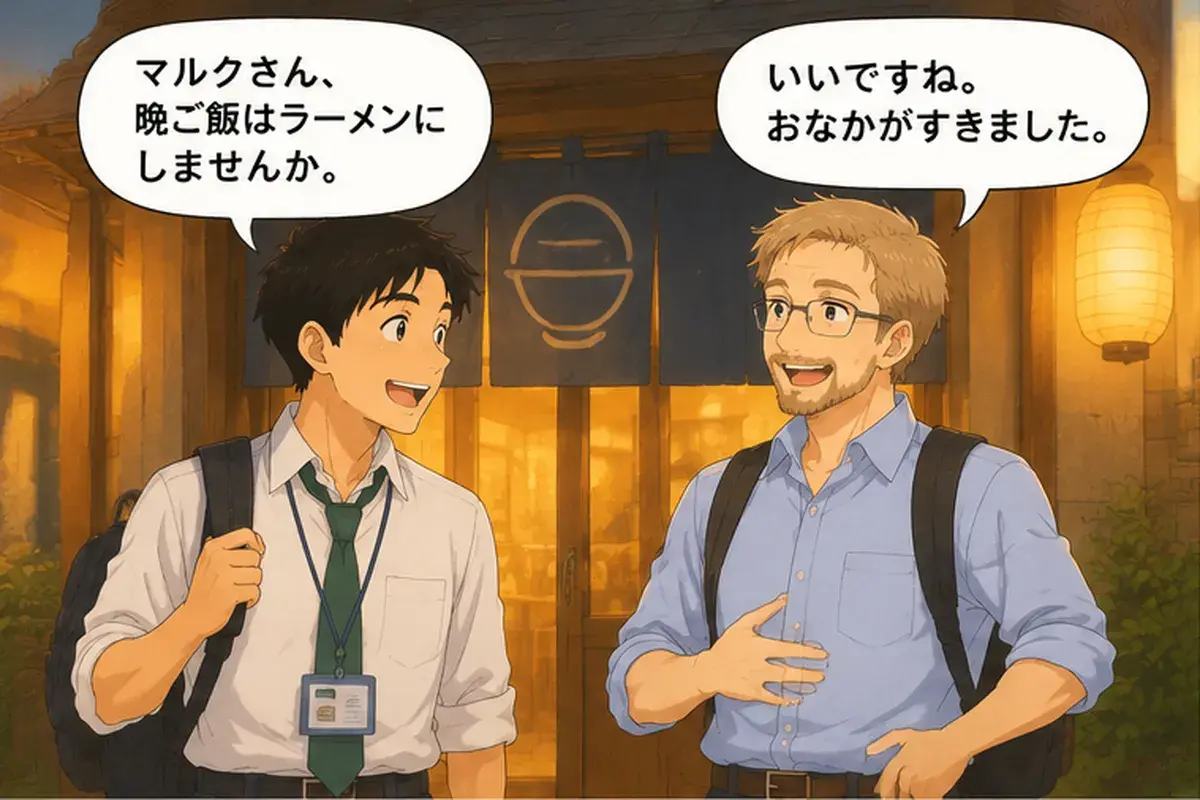
- けん
マルクさん、晩ご飯はラーメンにしませんか。
Mark-san, why don't we go with ramen for dinner?
- マルク
いいですね。おなかがすきました。
Sounds good. I'm hungry.
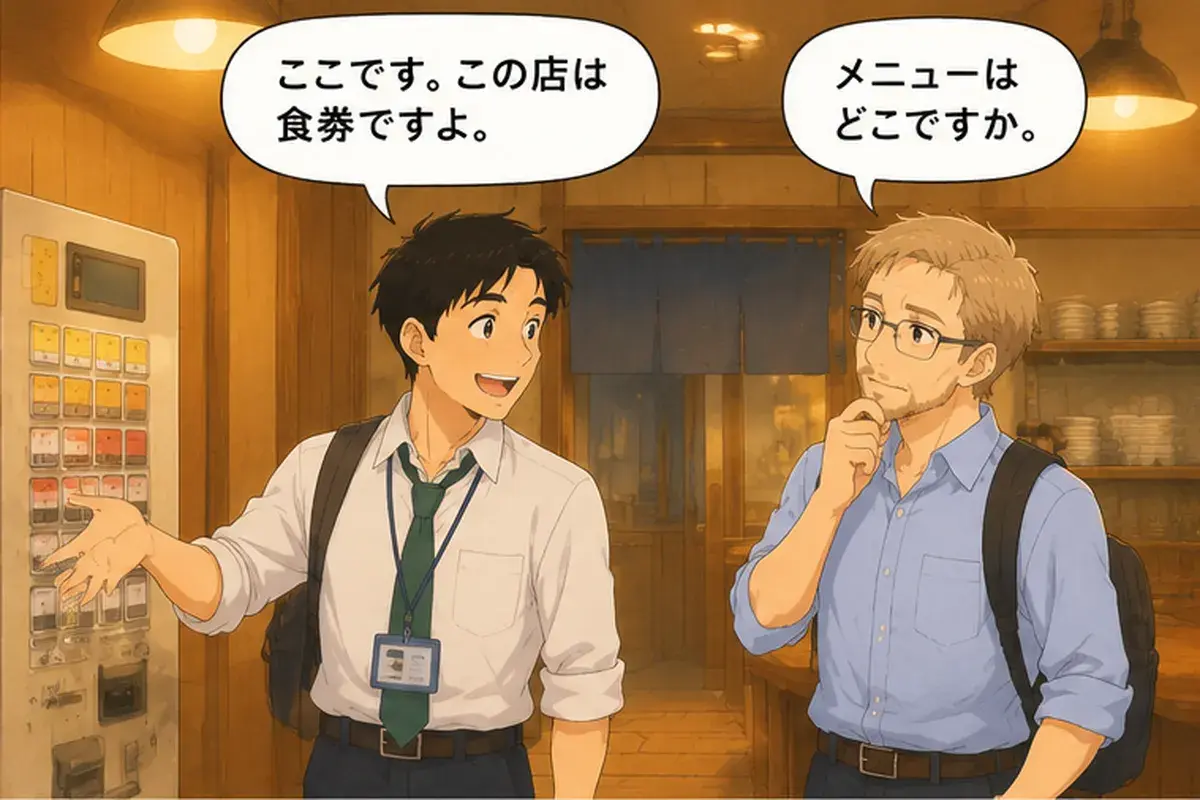
- けん
ここです。この店は食券ですよ。
Here it is. This place uses meal tickets.
- マルク
メニューはどこですか。
Where's the menu?
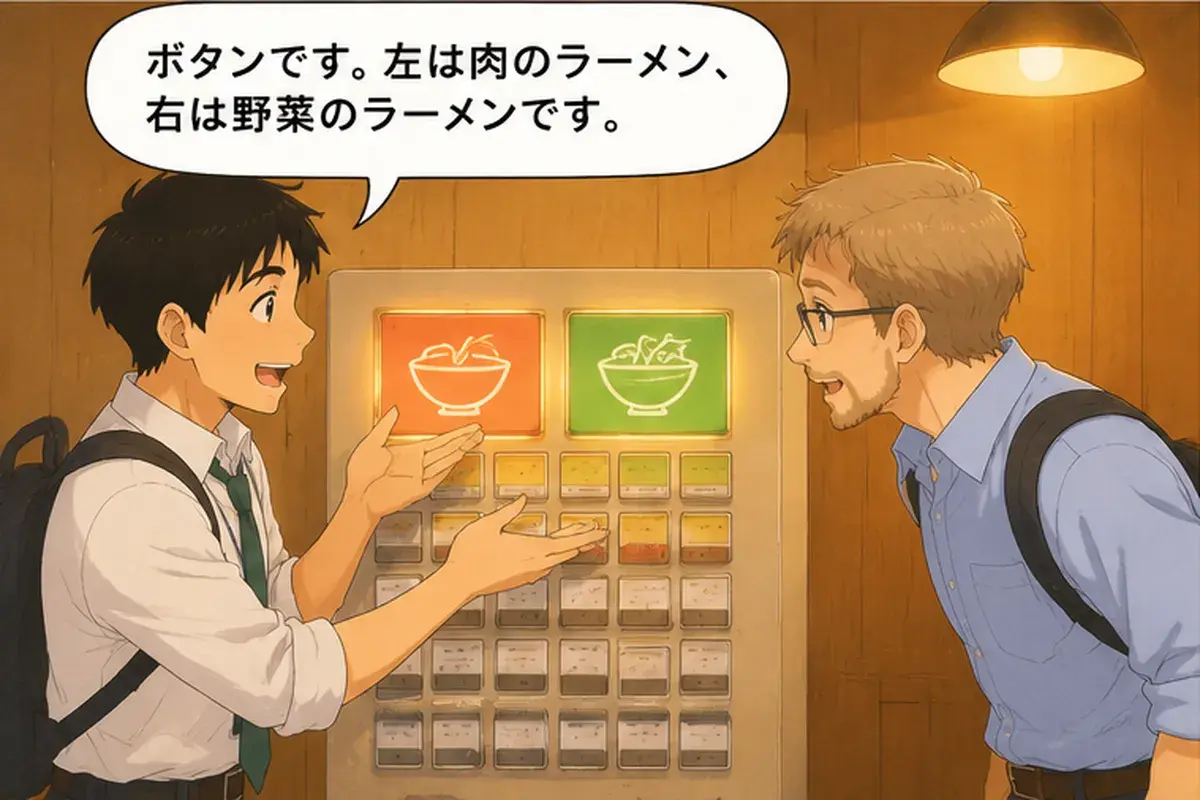
- けん
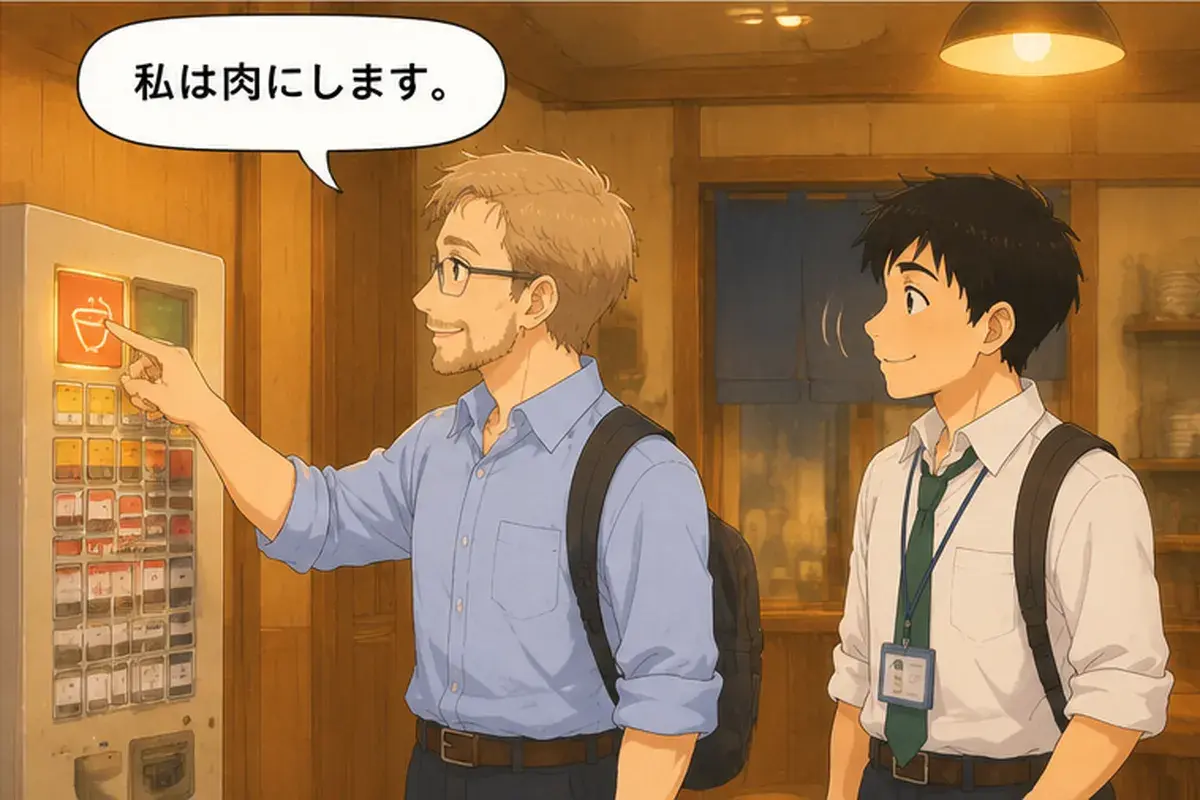
ボタンです。左は肉のラーメン、右は野菜のラーメンです。
It's the buttons. On the left is meat ramen, and on the right is vegetable ramen.
- マルク
私は肉にします。
I'll have the meat.
- けん
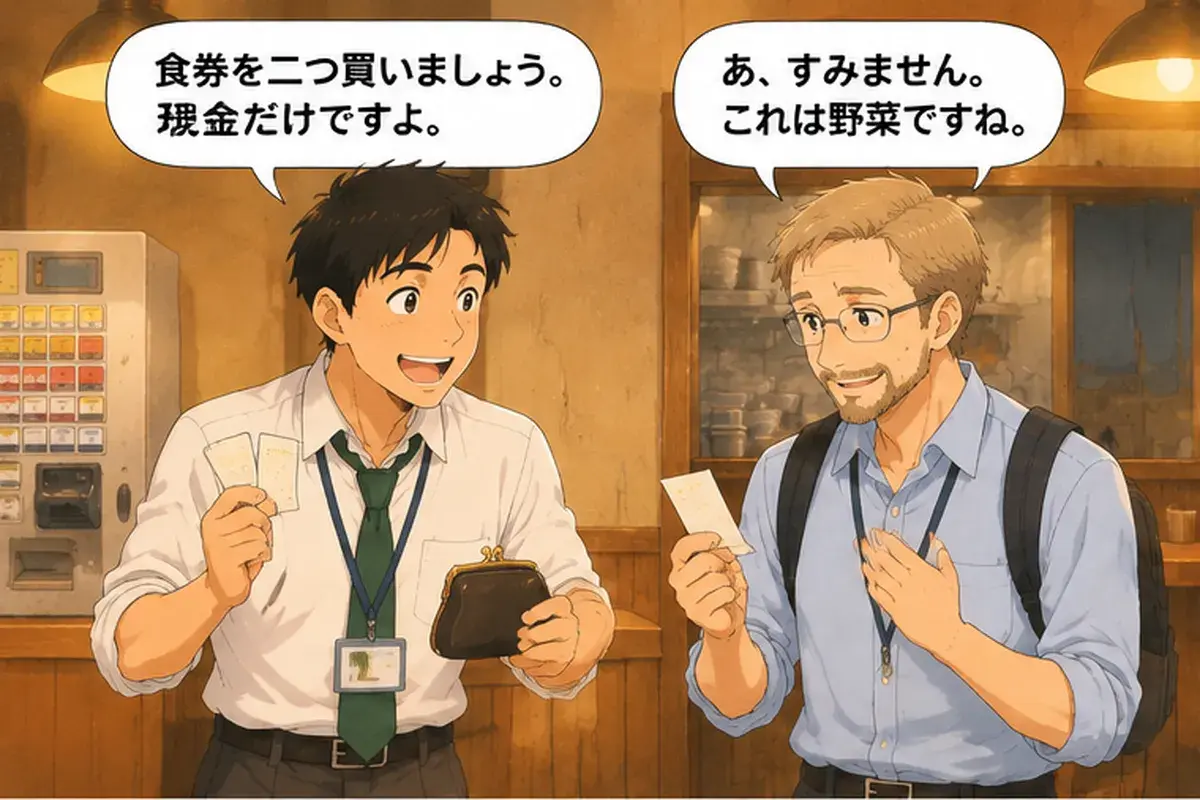
食券を二つ買いましょう。現金だけですよ。
Let's buy two meal tickets. It's cash only.
- マルク
あ、すみません。これは野菜ですね。
Oh, sorry. This is the vegetable one, isn't it?
- けん
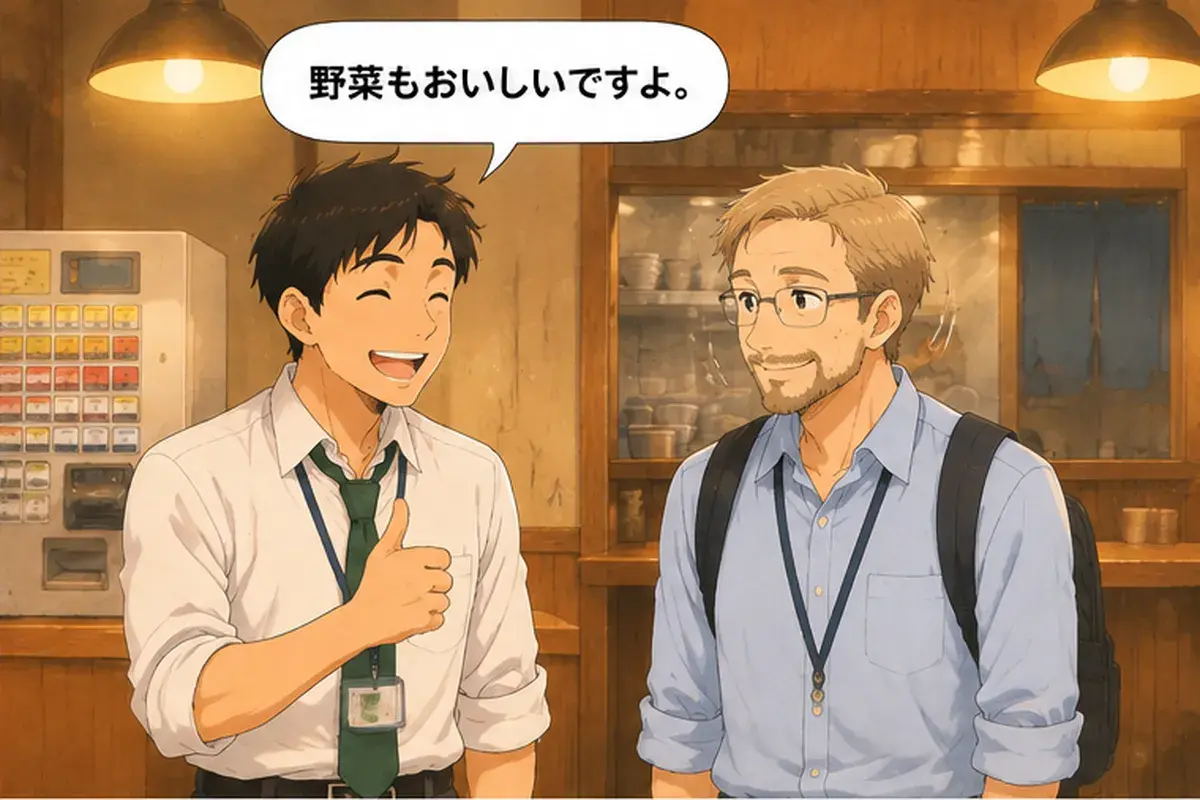
野菜もおいしいですよ。
The vegetable one is delicious too.
- 店員
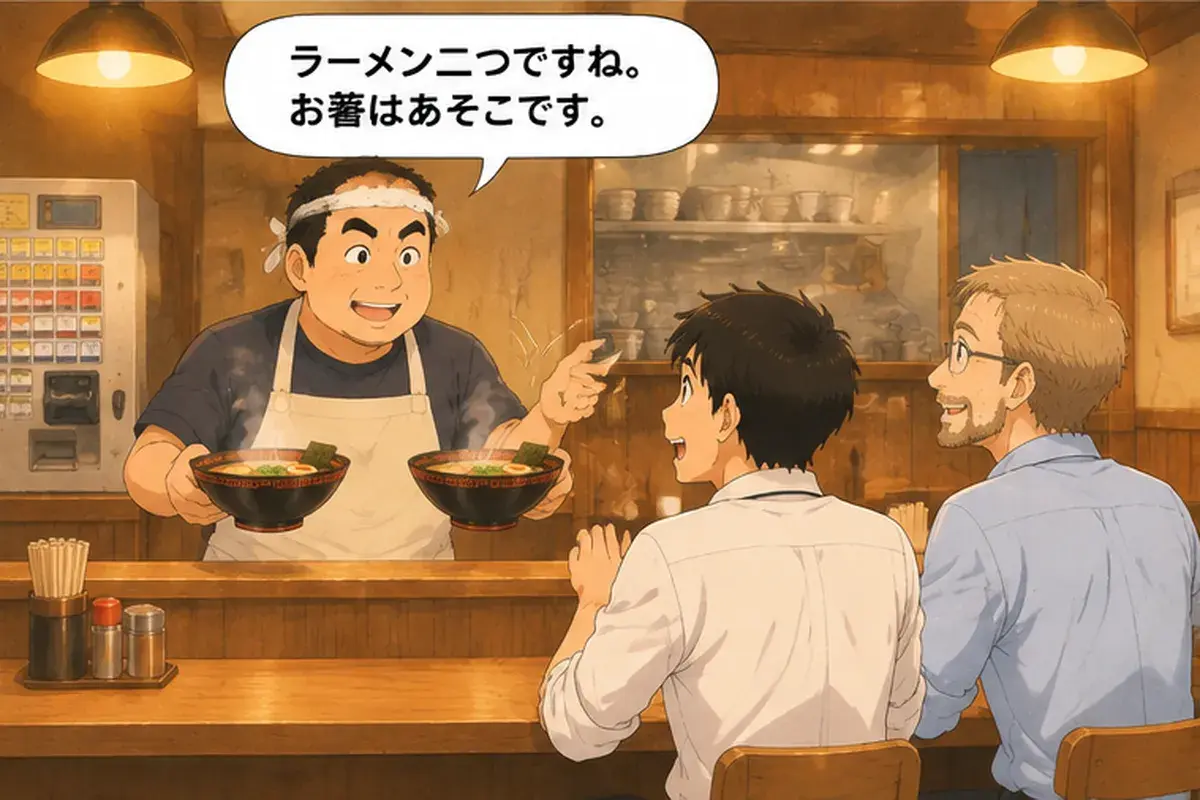
ラーメン二つですね。お箸はあそこです。
Two ramen, right? The chopsticks are over there.
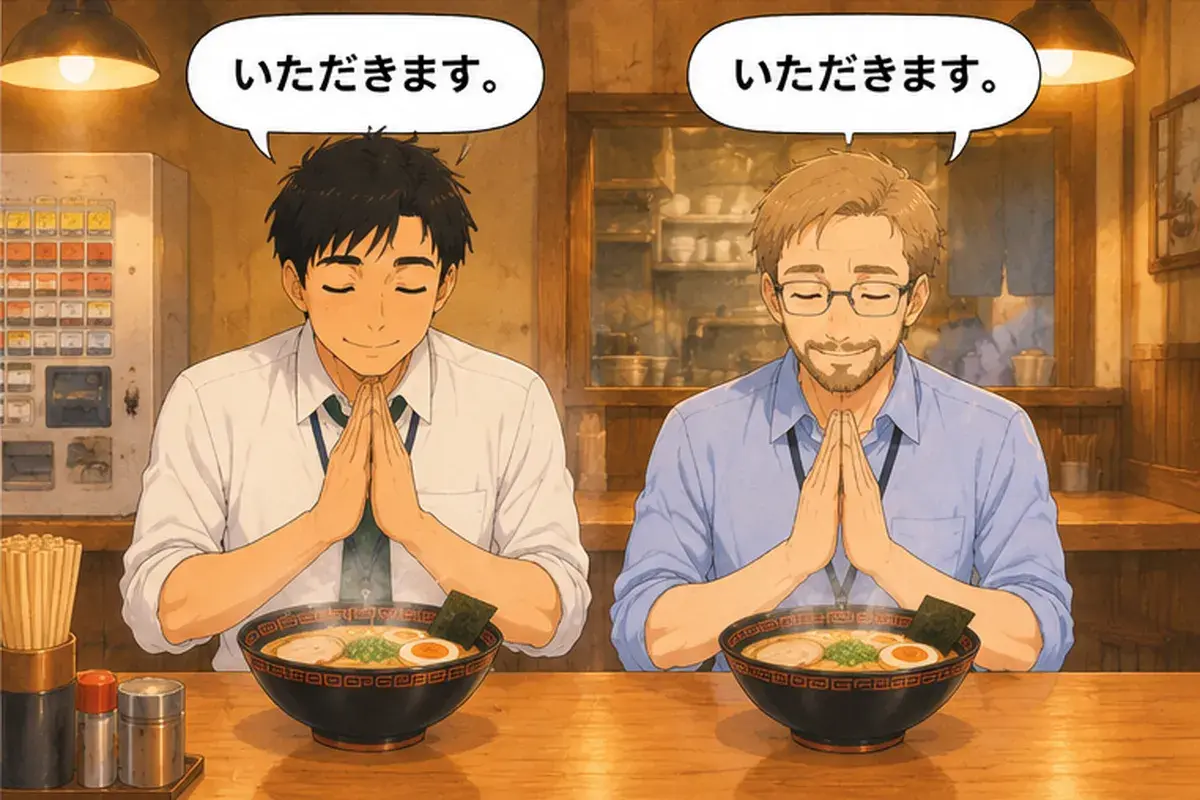
- けん
いただきます。
Let's eat!
- マルク
いただきます。
Let's eat!
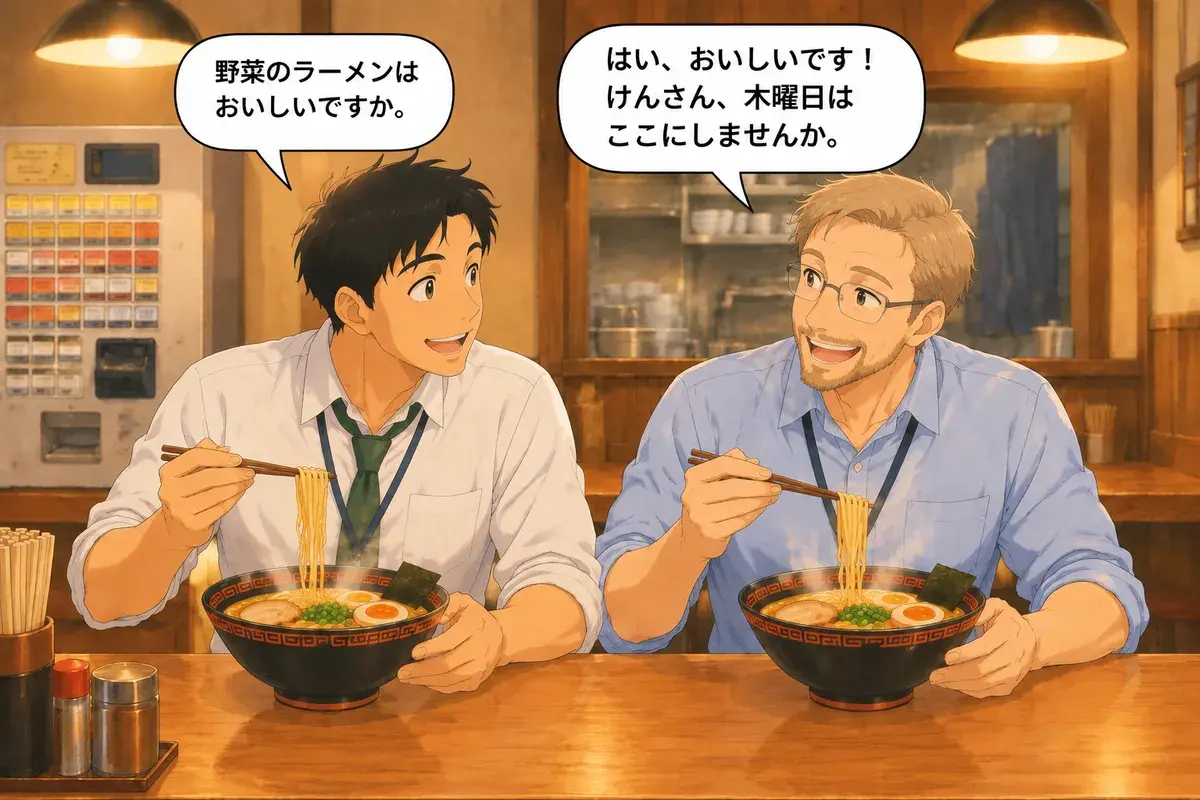
- けん
野菜のラーメンはおいしいですか。
Is the vegetable ramen delicious?
- マルク
はい、おいしいです!けんさん、木曜日はここにしませんか。
Yes, it's delicious! Ken-san, why don't we pick this place on Thursdays?
Grammar for this text
晩ご飯 は ラーメン に しません か — 〜ませんか is a soft invitation, "would you like to...?", and ラーメン に します means "let's go with ramen". Both patterns are explained in the unit grammar.
おなか が すきました — a set phrase, "I'm hungry". It's the past form of the verb すく ("to become empty"): literally "my stomach has become empty". You'll learn how the past tense is built in unit 11; for now, learn the phrase as a whole.
この 店 は 食券 です よ — at noodle shops like this, you pay a machine, not the cook: you press a button, put in money, get a ticket (食券) and hand it over. よ at the end means "you know": Ken is telling Mark something new.
左 は 肉 の ラーメン、右 は 野菜 の ラーメン です — の between two nouns: "ramen of meat", that is, meat ramen. English just puts the two nouns side by side; Japanese puts の between them.
食券 を 二つ 買いましょう — the number goes after the noun and the particle; 買いましょう means "let's buy".
現金 だけ です よ — だけ means "only": the machine doesn't take cards.
あ、すみません。これ は 野菜 です ね。 — here すみません isn't a request but "oops, sorry": Mark realizes he pressed the wrong button.
ラーメン 二つ です ね — the server isn't asking but checking: ね means "right?". People hand over the tickets without a word.
いただきます — people say it before eating; literally "I humbly receive". Ken and Mark say it together before they pick up their chopsticks.
けん さん、 木曜日 は ここ に しません か。 — Mark liked the vegetable ramen, and now he invites Ken himself. It's the same 〜に します as in the first line, only this time they're choosing a place: "how about here on Thursdays?". 木曜日 は means "as for Thursdays".
Words and grammar of the unit: Order food.
Learn the words from the texts with flashcards
In the app, you can tap any word in a text to see its translation, forms and examples, and new words stick with flashcards. 15 minutes a day.
Start for freeEverything is open for free. No card needed to sign up.