

Japanese dialogue with translation · A1 · 14 lines
それは私のかばんです That's my bag
Comic · 10 panels
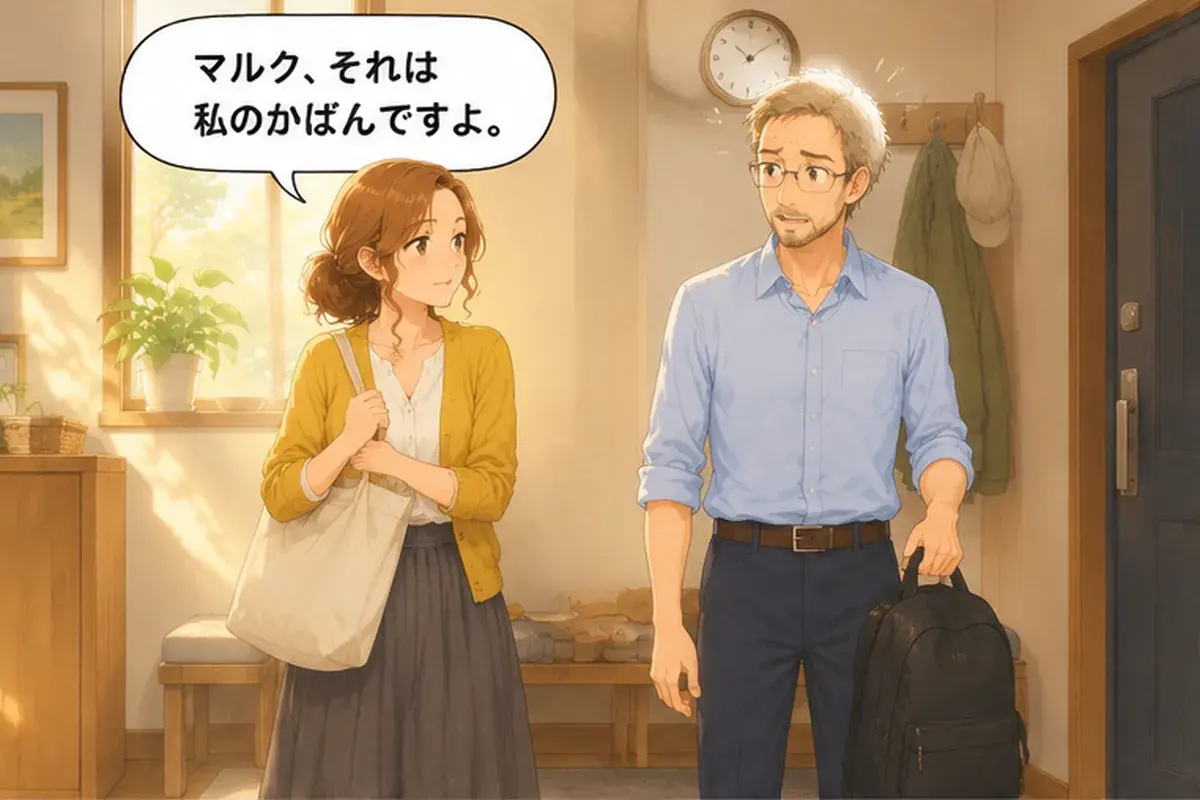
- アンナ
マルク、それは私のかばんですよ。
Mark, that's my bag, you know.
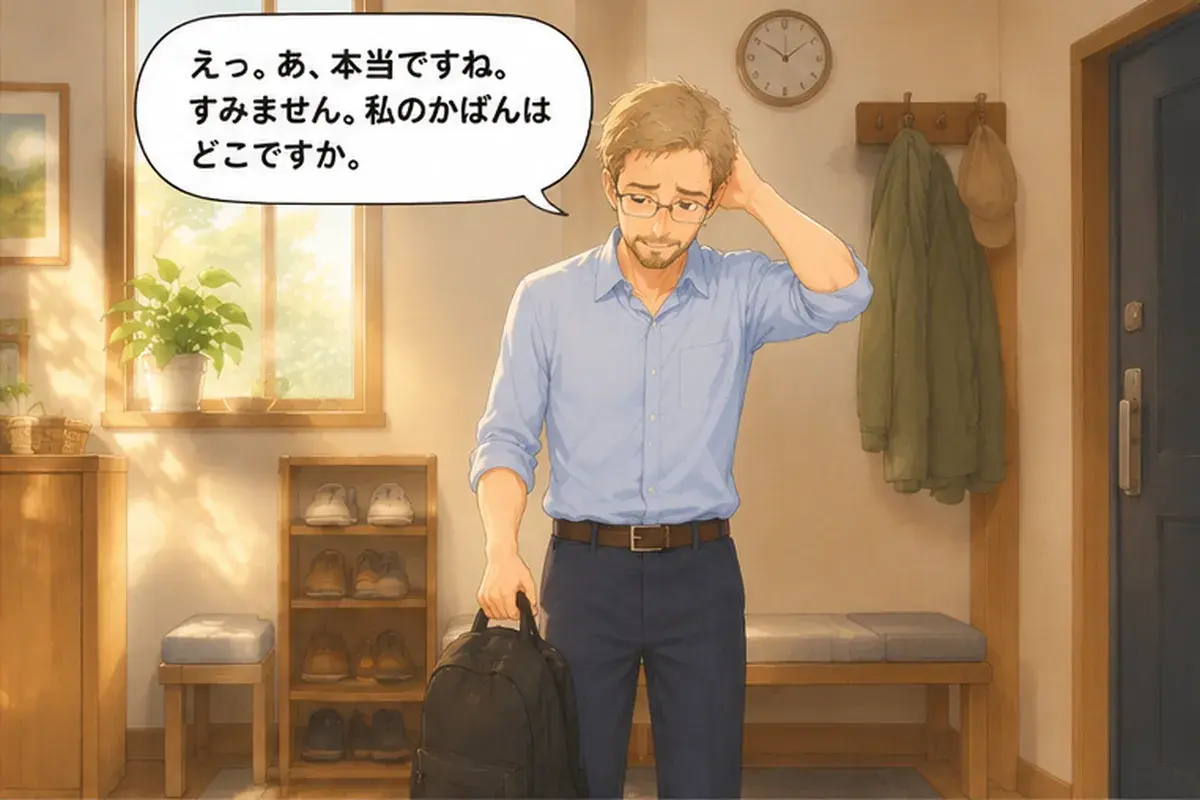
- マルク
えっ。あ、本当ですね。すみません。私のかばんはどこですか。
Huh? Oh, it really is. I'm sorry. Where's my bag?
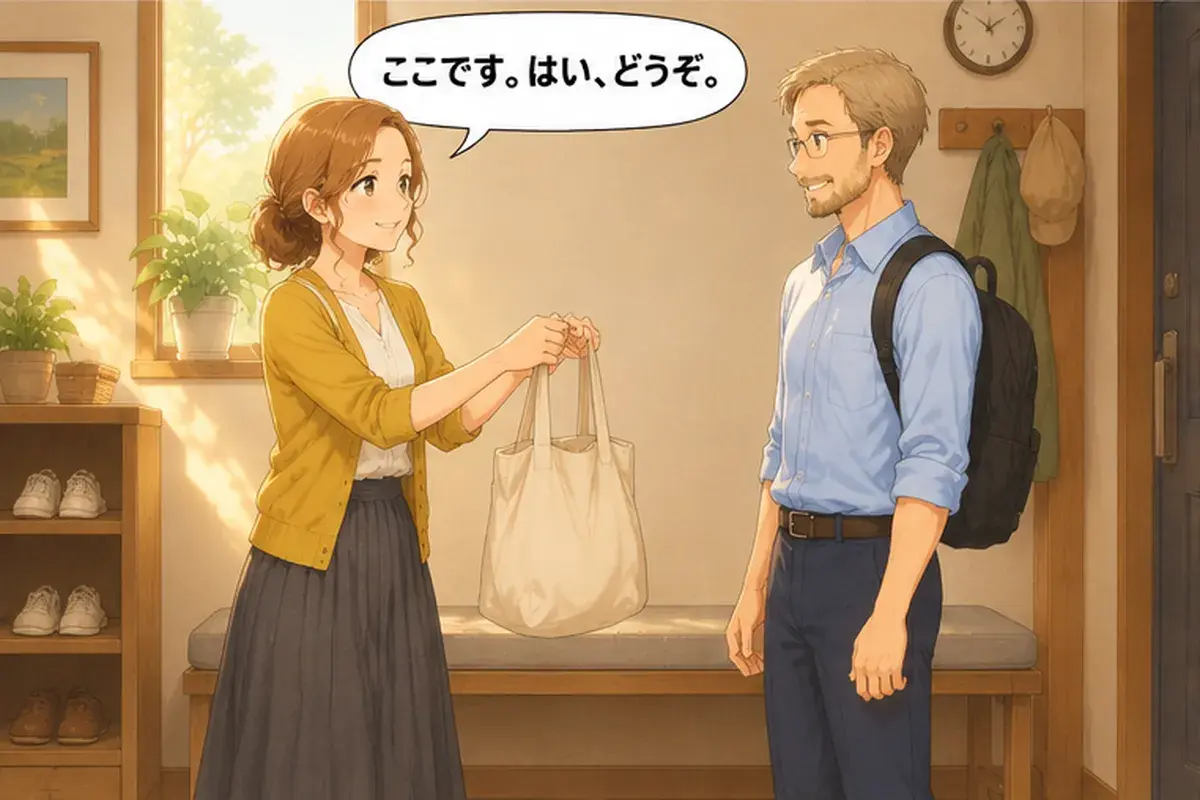
- アンナ
ここです。はい、どうぞ。
It's here. Here you go.
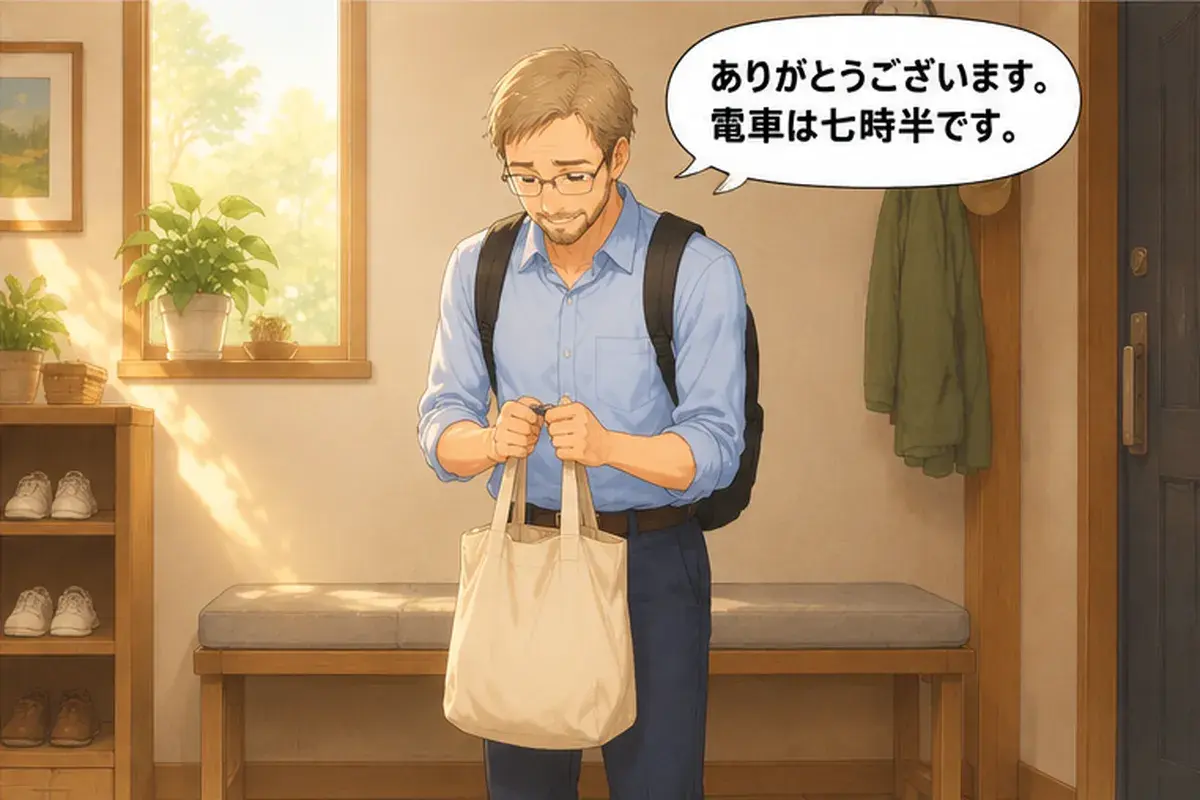
- マルク
ありがとうございます。電車は七時半です。
Thank you. The train is at seven thirty.
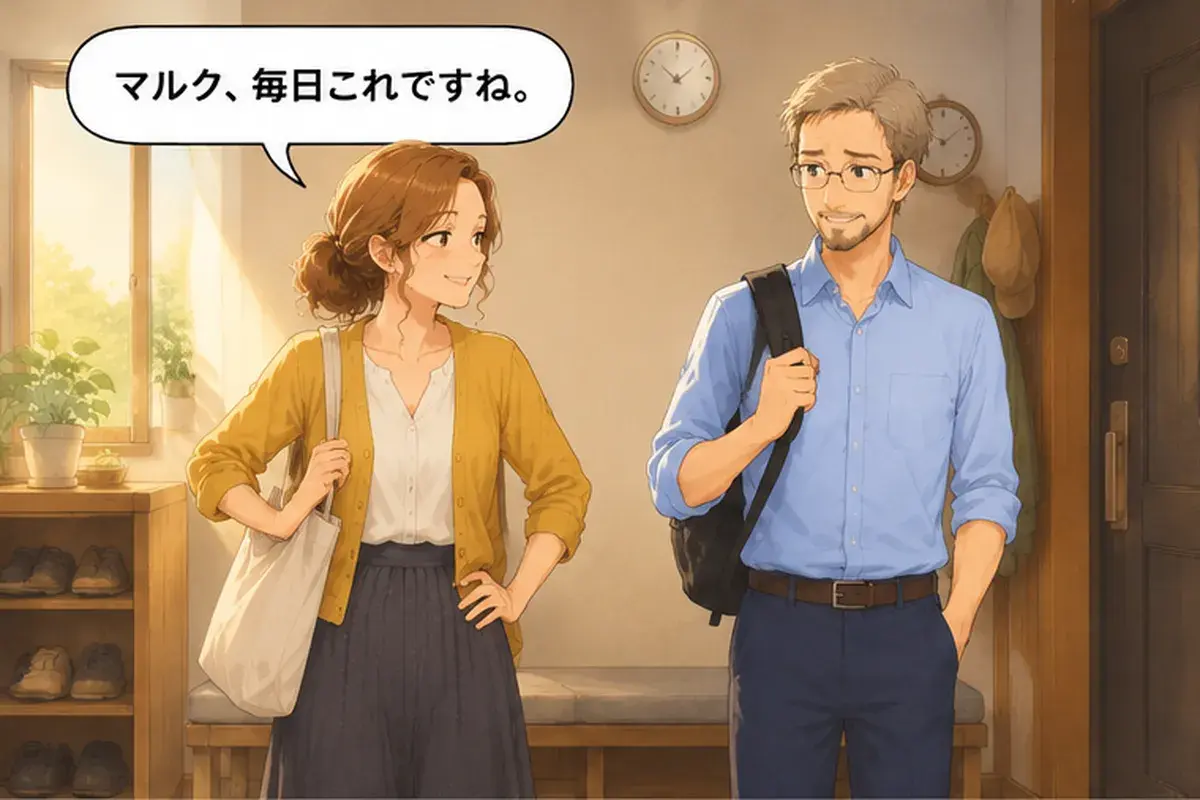
- アンナ
マルク、毎日これですね。
Mark, it's this every day, isn't it?
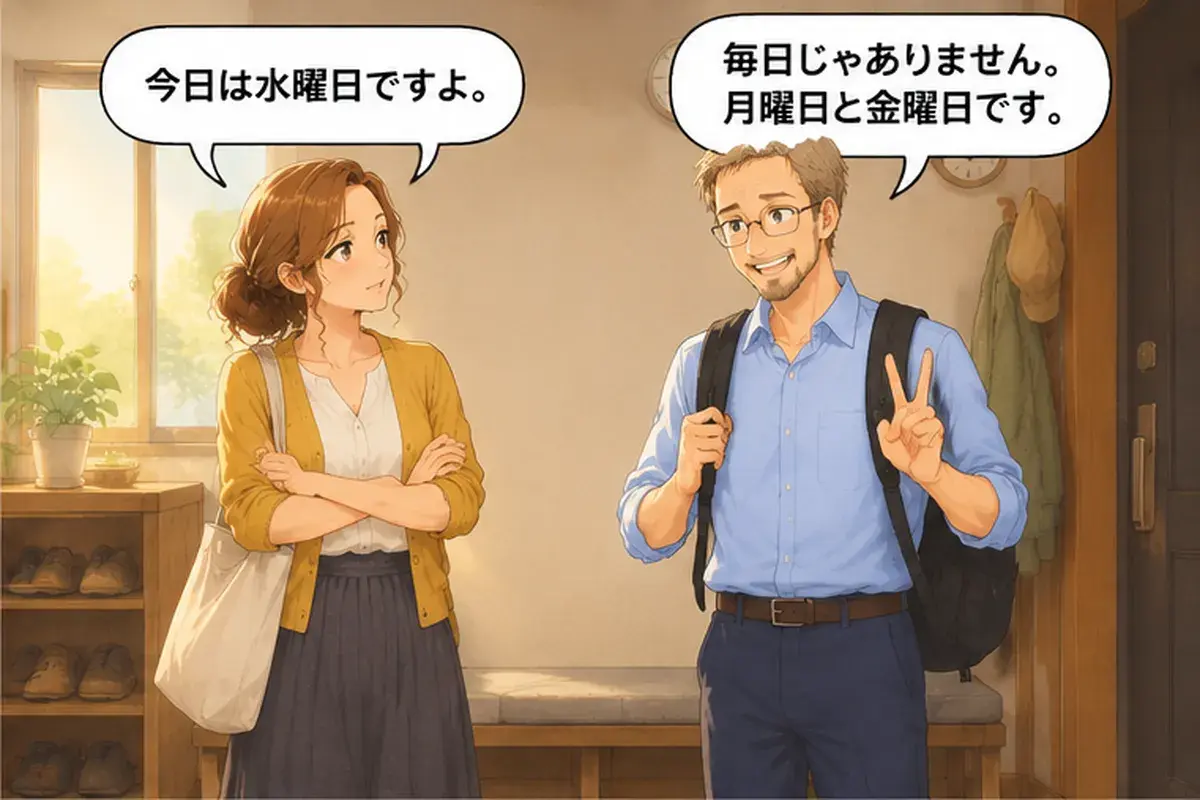
- マルク
毎日じゃありません。月曜日と金曜日です。
Not every day. Mondays and Fridays.
- アンナ
今日は水曜日ですよ。
Today is Wednesday, you know.
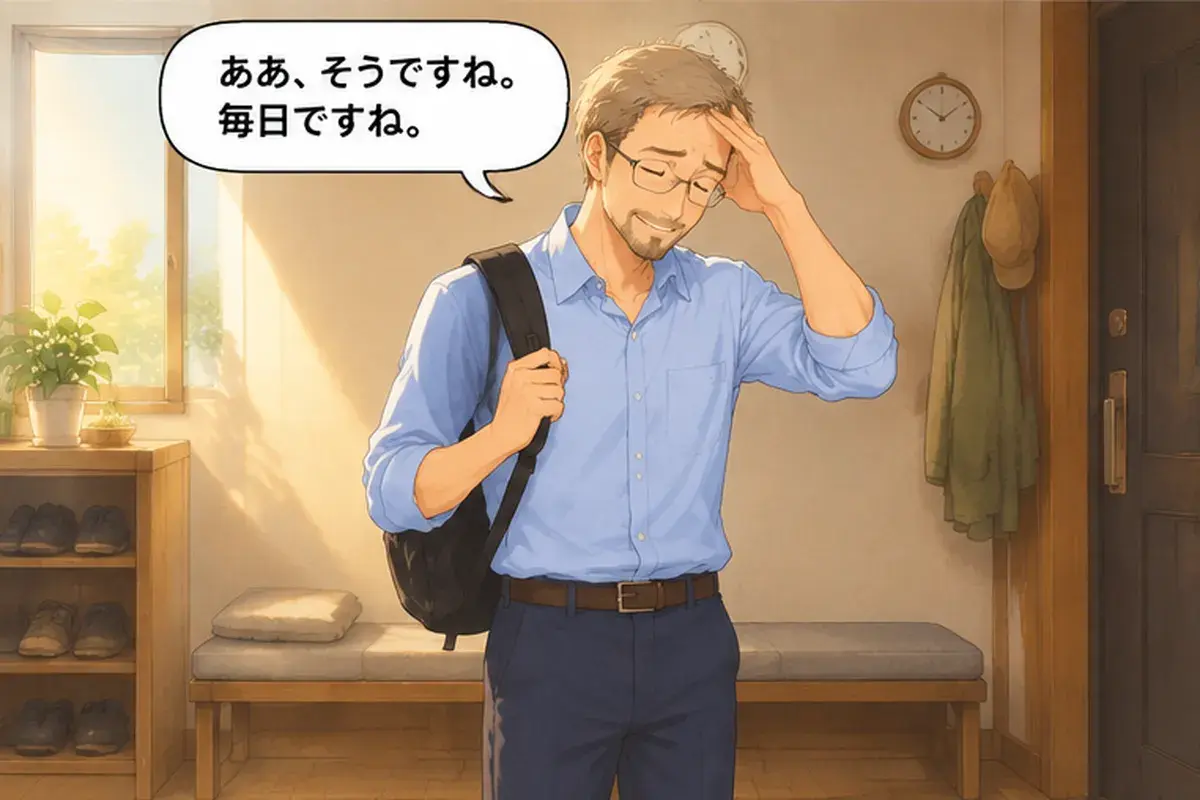
- マルク
ああ、そうですね。毎日ですね。
Ah, that's right. So it is every day.
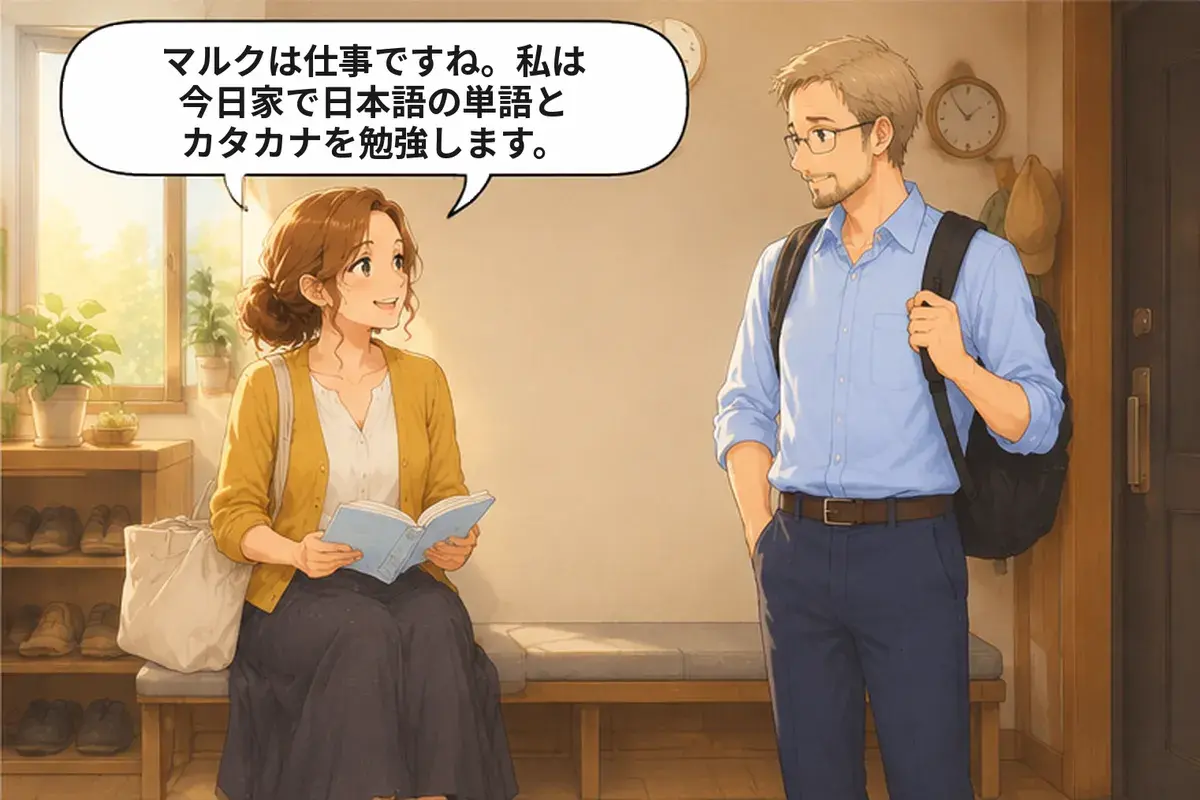
- アンナ
マルクは仕事ですね。私は今日家で日本語の単語とカタカナを勉強します。
Mark, you have work, right? Today I'll study Japanese words and katakana at home.
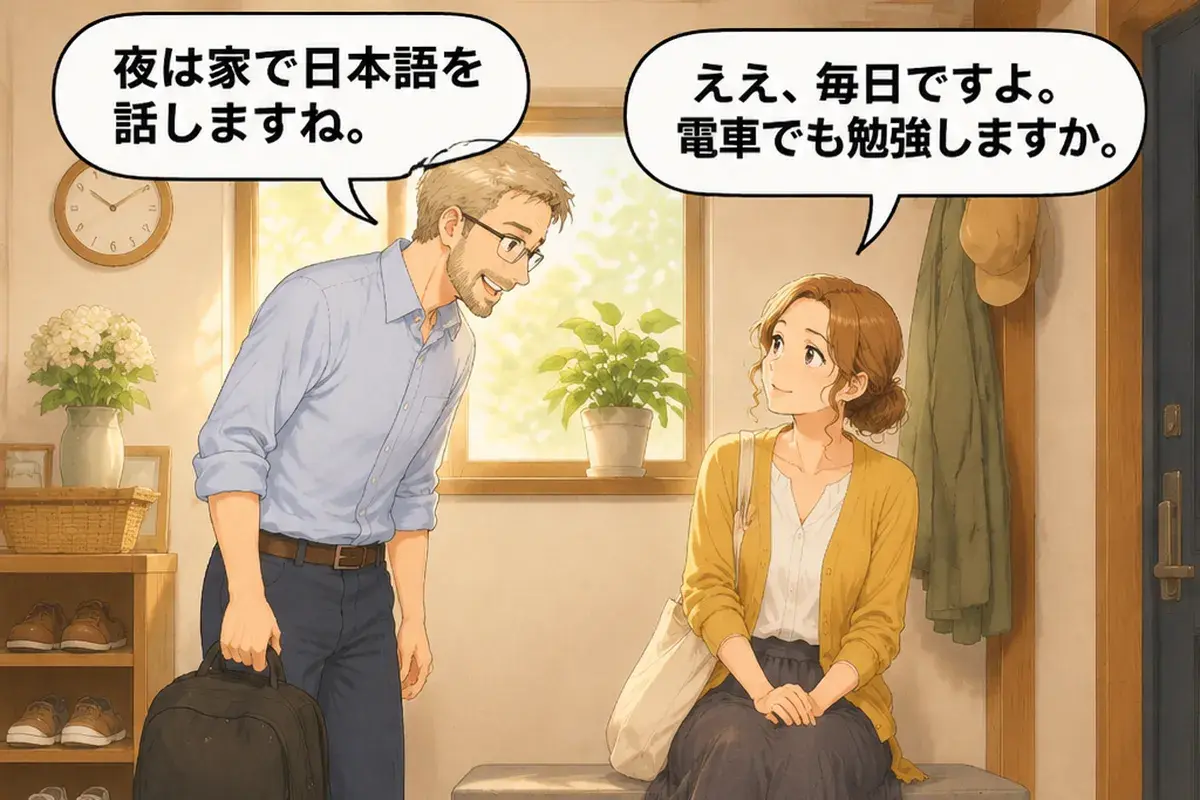
- マルク
夜は家で日本語を話しますね。
In the evening we speak Japanese at home, right?
- アンナ
ええ、毎日ですよ。電車でも勉強しますか。
Yeah, every day. Do you study on the train too?
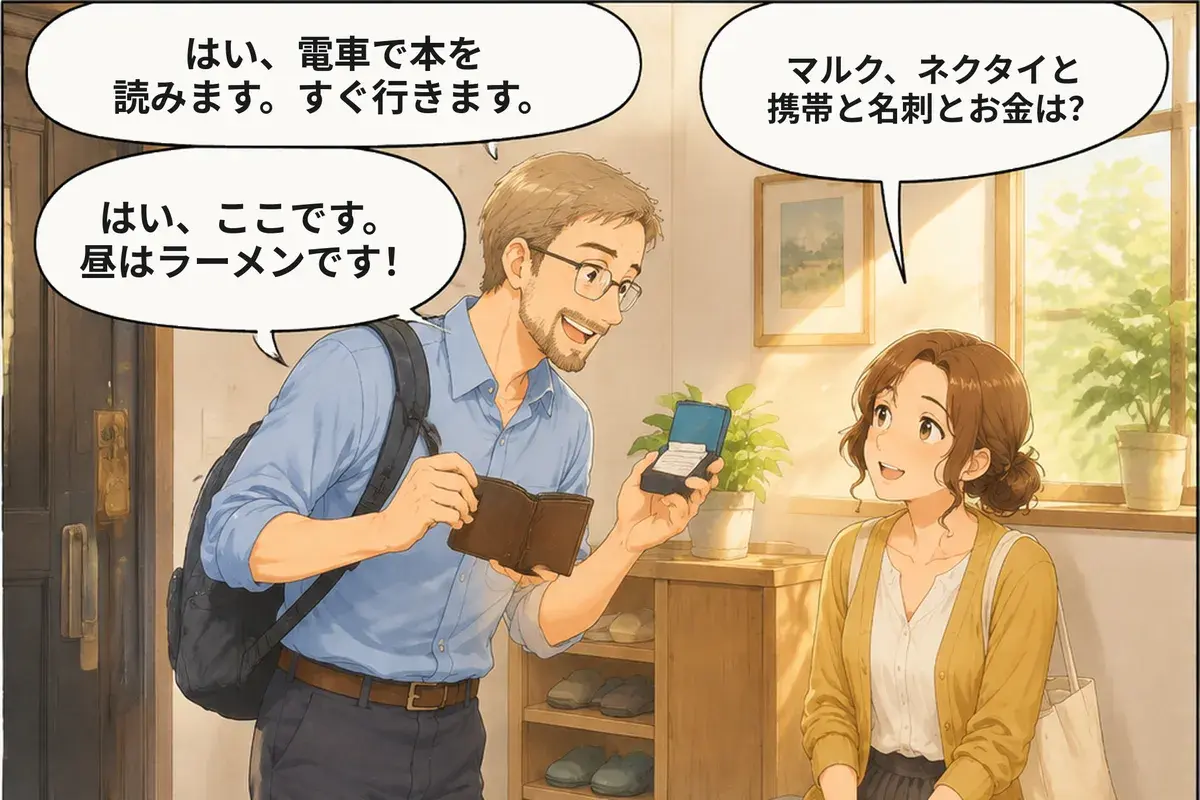
- マルク
はい、電車で本を読みます。すぐ行きます。
Yes, I read a book on the train. I'll go right away.
- アンナ
マルク、ネクタイと携帯と名刺とお金は?
Mark, what about your tie, phone, business cards and money?
- マルク
はい、ここです。昼はラーメンです!
Yes, they're here. For lunch, it's ramen!
Grammar for this text
それ は 私 の かばん です よ。—それis the thing near the person you're talking to: the bag is in Mark's hands.私 の かばんmeans "my bag" (unit 2).よis like "you know": Anna gently corrects her husband.毎日 じゃ ありません。—じゃ ありませんmeans "isn't": "it isn't every day" (unit 2).マルク、 毎日 これ です ね。— literally "every day, it's this": Anna sighs, because it's not the first time Mark has taken the wrong bag.今日 は 水曜日 です よ。— Anna's joke: Mark said "Mondays and Fridays", but today is Wednesday.ああ、 そう です ね。 毎日 です ね。—ああmeans "ah, I see": Mark remembers that it's Wednesday and gives up: so it really is "every day".そう です ねandねat the end show agreement: "yeah, that's true".マルク は 仕事 です ね。—仕事is "work" as an activity: "you have work". The company itself, the place, is会社.私 は 今日 家 で 日本語 の 単語 と カタカナ を 勉強します。—今日means "today" and takes no particle.家 でshows where, and日本語 の 単語 と カタカナ をshows what I study: "Japanese words and katakana" (とmeans "and").勉強しますmeans "I study".夜 は 家 で 日本語 を 話します ね。— in the evenings Mark and Anna have a "Japanese hour" at home: they speak only Japanese.話しますmeans "I speak" (from話す), andねmeans "right?".電車 で も 勉強します か。—で もhere means "on the train too":でshows where,もmeans "too". Anna asks if Mark studies on the way.すぐ 行きます。—すぐmeans "right away, soon". Here行きますmeans "I'm going now".マルク、 ネクタイ と 携帯 と 名刺 と お金 は?—〜は?with no verb is a short question: "what about...?"
Words and grammar of the unit: Talk about your day.
Learn the words from the texts with flashcards
In the app, you can tap any word in a text to see its translation, forms and examples, and new words stick with flashcards. 15 minutes a day.
Start for freeEverything is open for free. No card needed to sign up.