

Japanese dialogue with translation · A1 · 13 lines
ケーキにします I'll have the cake
Comic · 11 panels
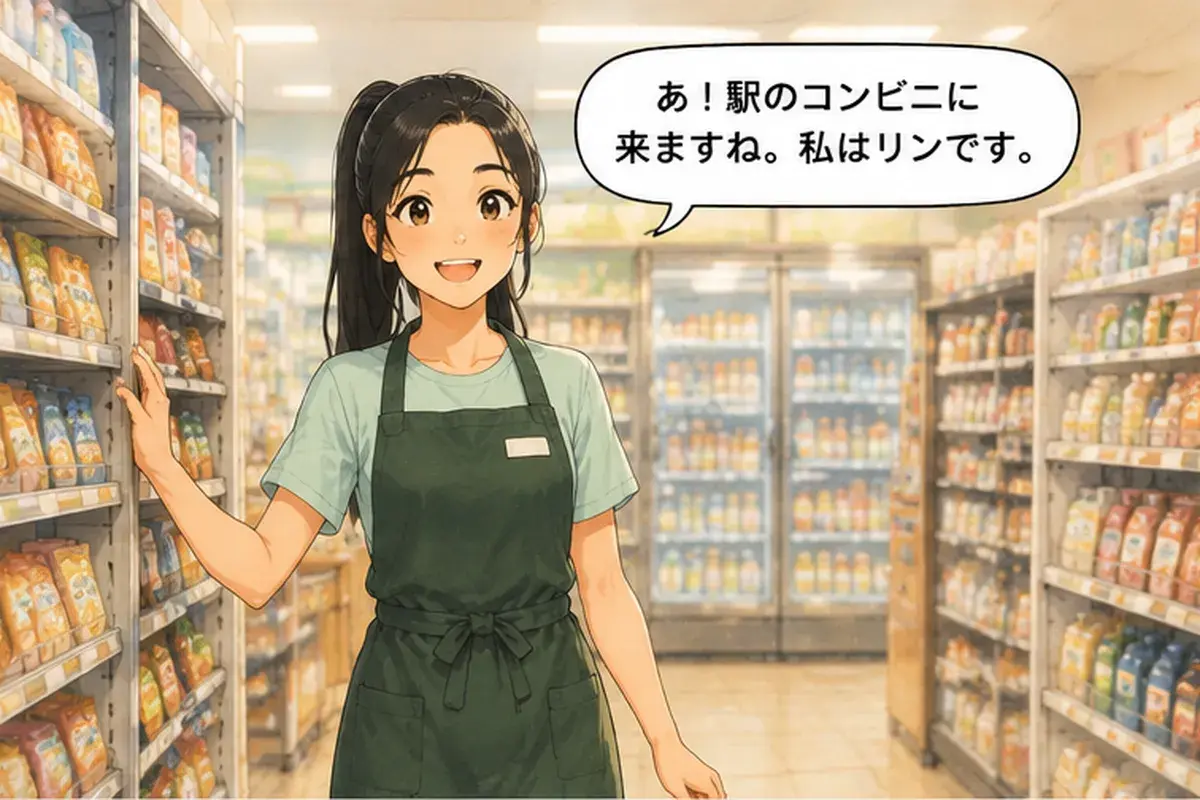
- リン
あ!駅のコンビニに来ますね。私はリンです。
Oh! You come to the convenience store by the station, don't you? I'm Linh.
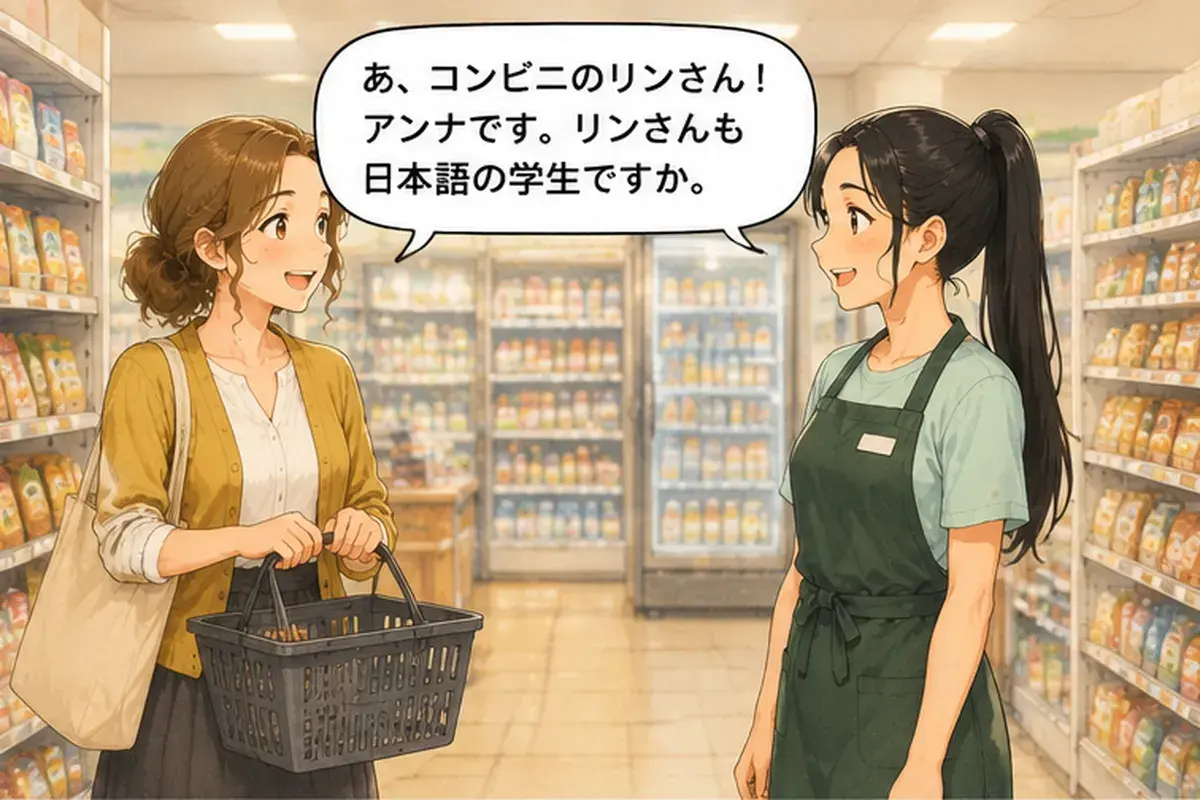
- アンナ
あ、コンビニのリンさん!アンナです。リンさんも日本語の学生ですか。
Oh, Linh-san from the convenience store! I'm Anna. Linh-san, are you a student of Japanese too?
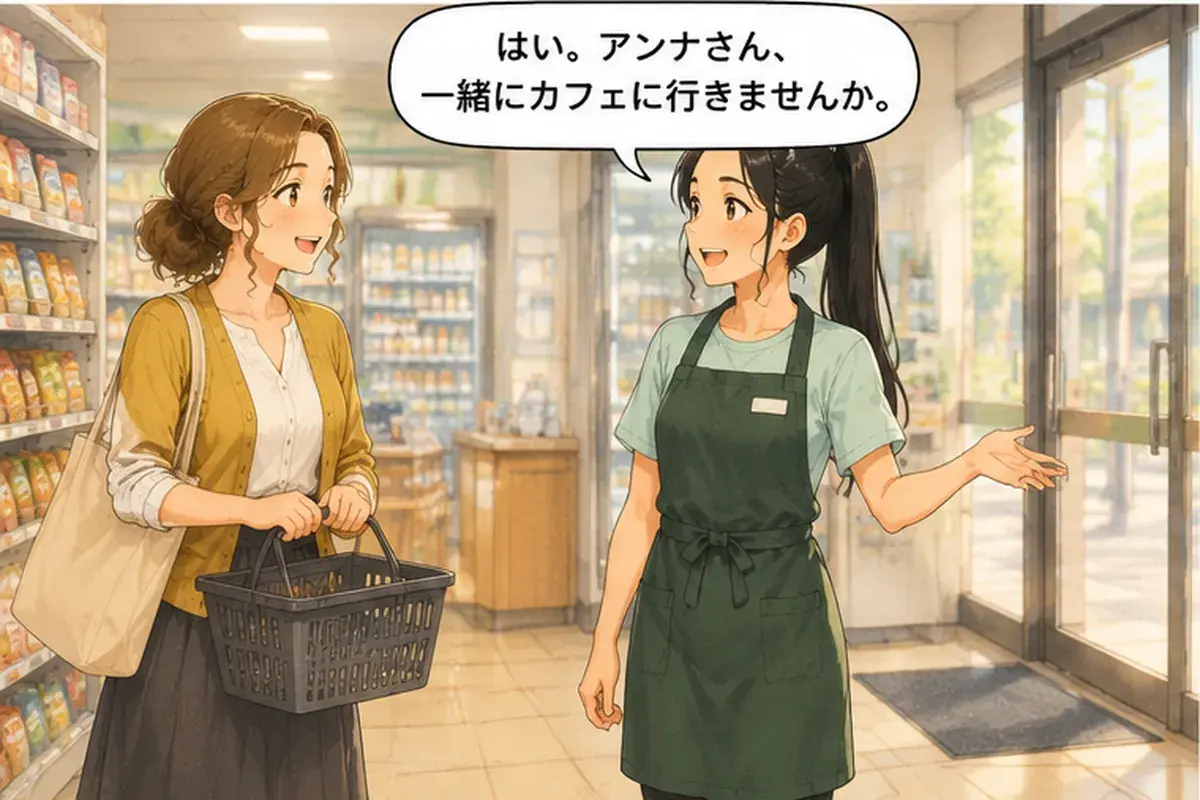
- リン
はい。アンナさん、一緒にカフェに行きませんか。
Yes. Anna-san, would you like to go to a café together?
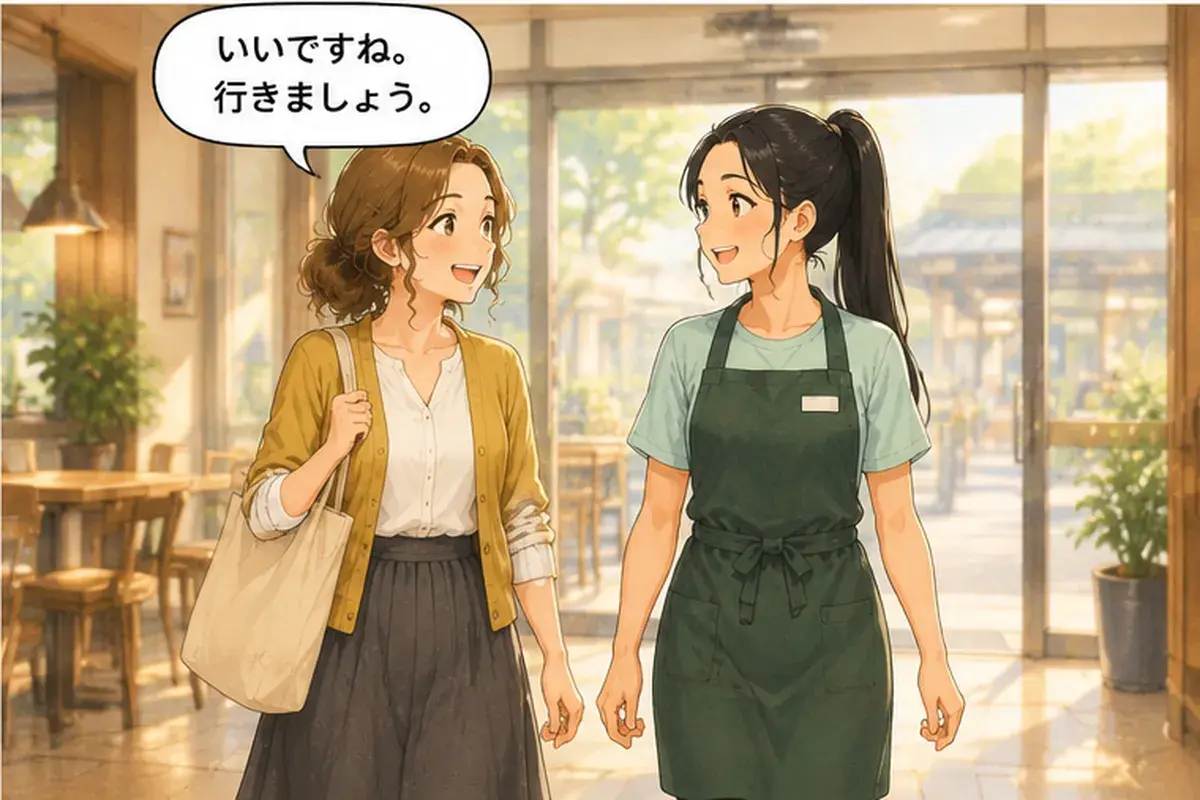
- アンナ
いいですね。行きましょう。
Sounds good. Let's go.
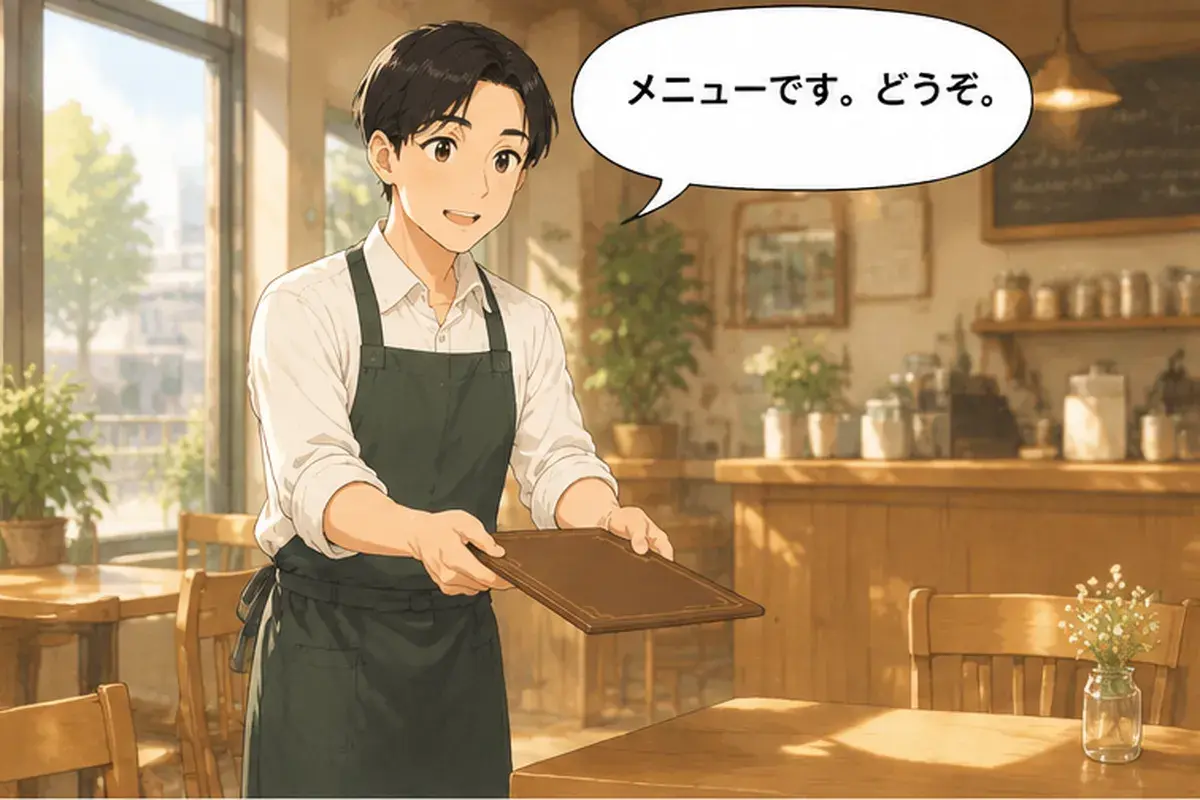
- 店員
メニューです。どうぞ。
Here's the menu. Here you go.
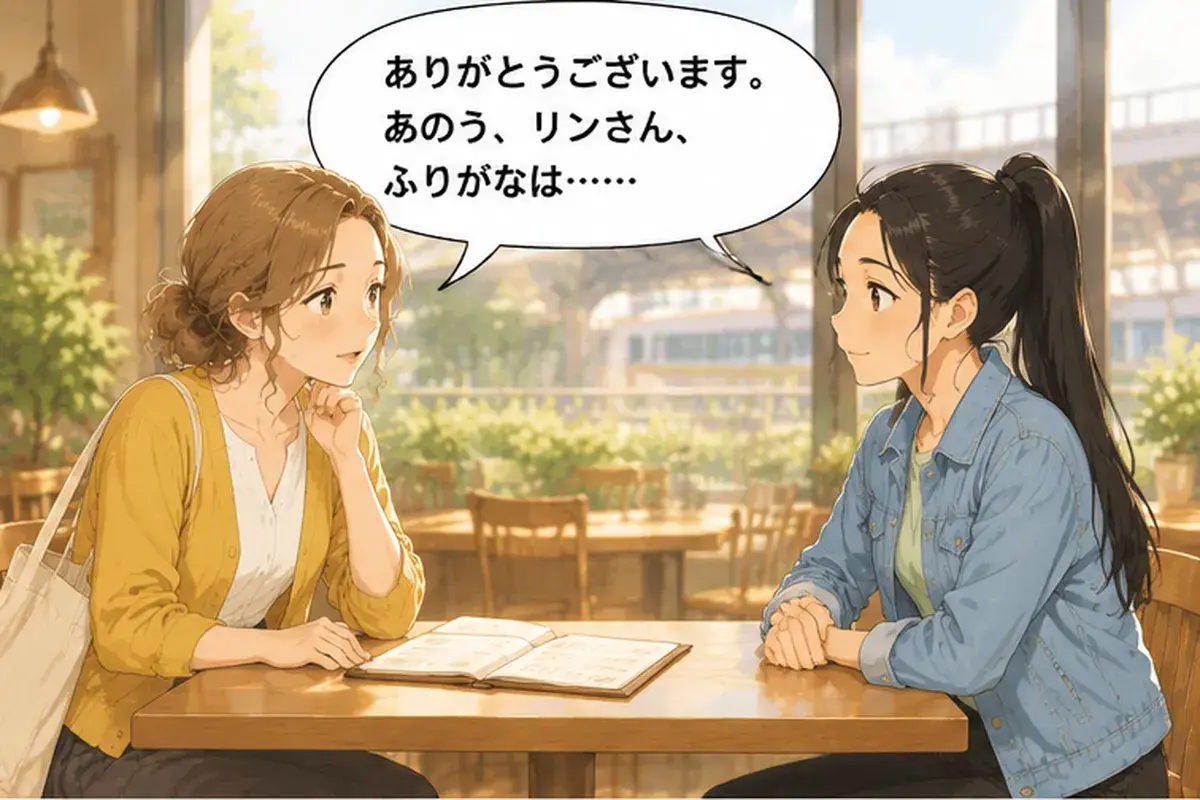
- アンナ
ありがとうございます。あのう、リンさん、ふりがなは……
Thank you. Um, Linh-san, what about the furigana...
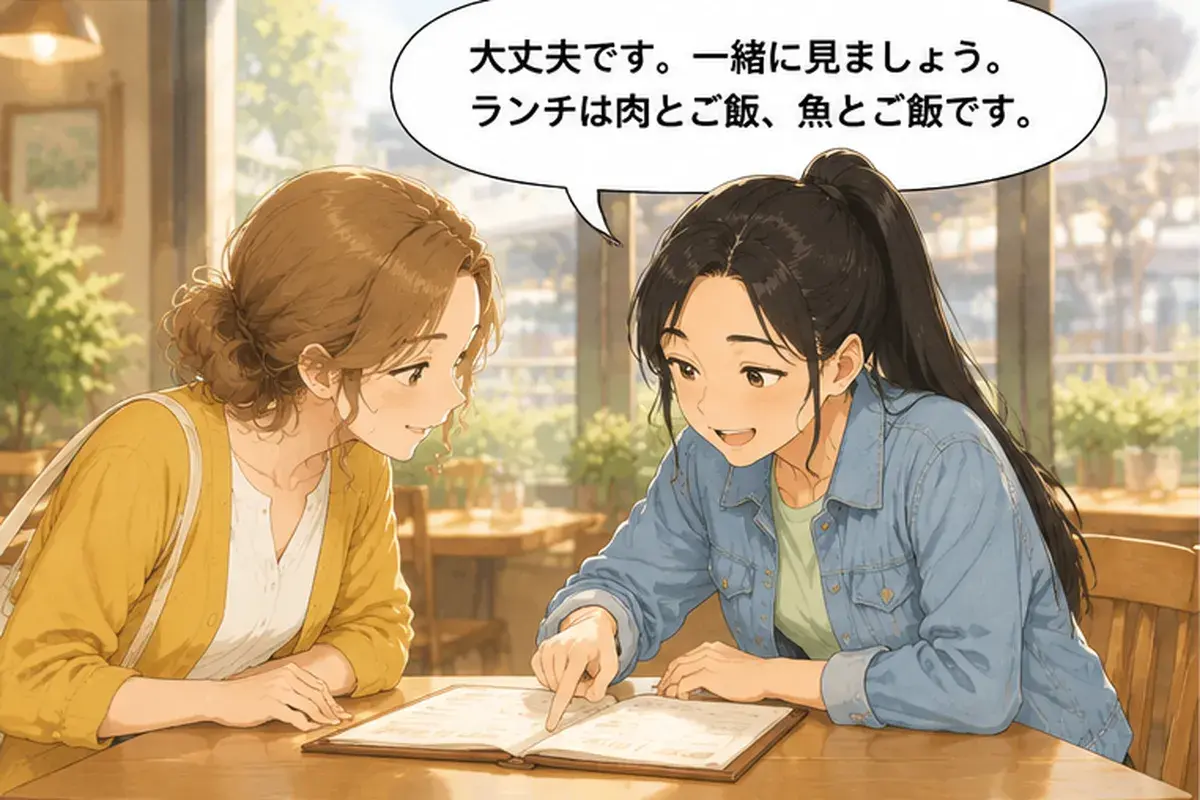
- リン
大丈夫です。一緒に見ましょう。ランチは肉とご飯、魚とご飯です。
It's OK. Let's look at it together. The lunch specials are meat and rice, and fish and rice.
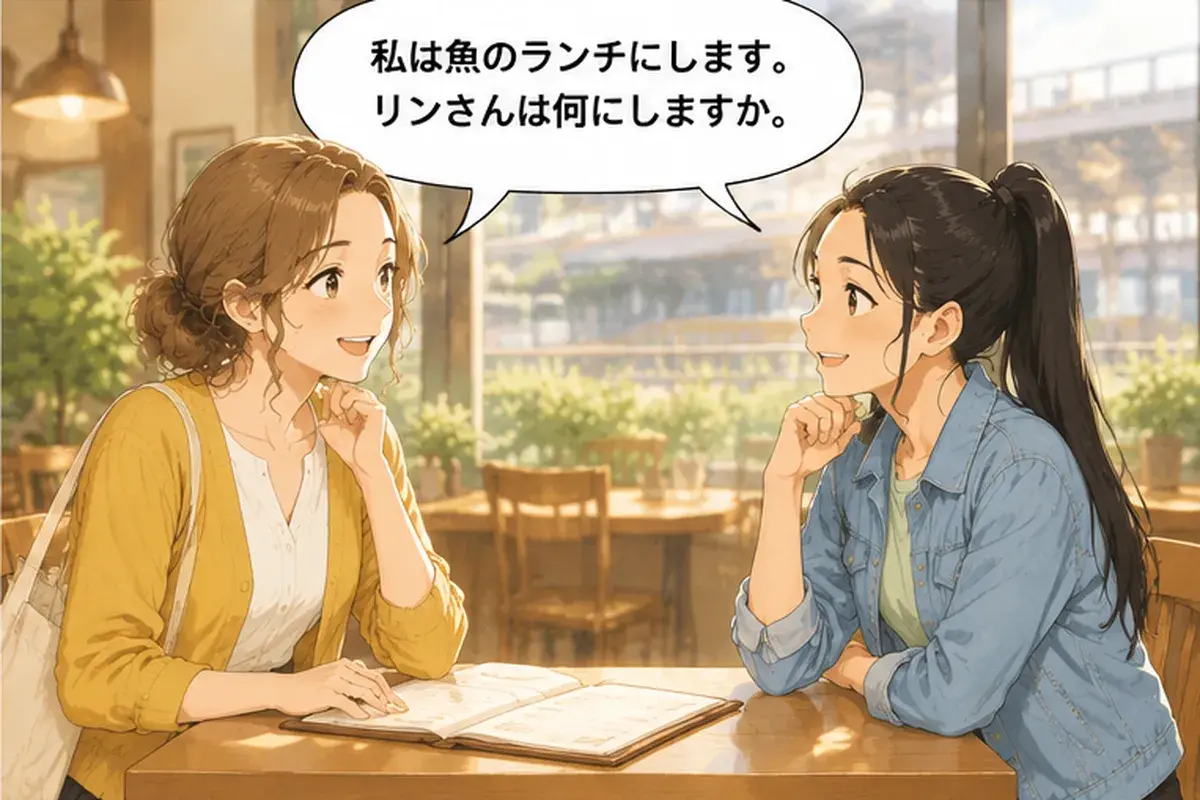
- アンナ
私は魚のランチにします。リンさんは何にしますか。
I'll have the fish lunch. What will you have, Linh-san?
- リン
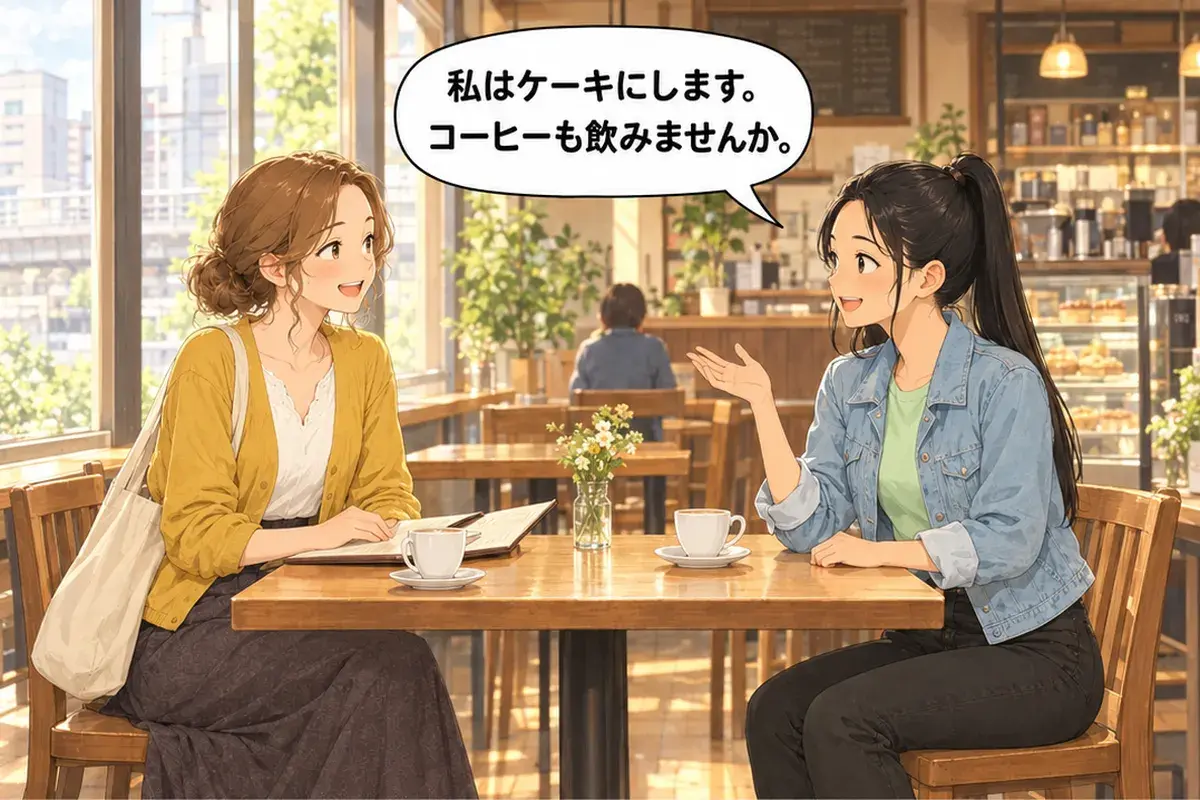
私はケーキにします。コーヒーも飲みませんか。
I'll have the cake. Would you like to drink coffee too?
- アンナ
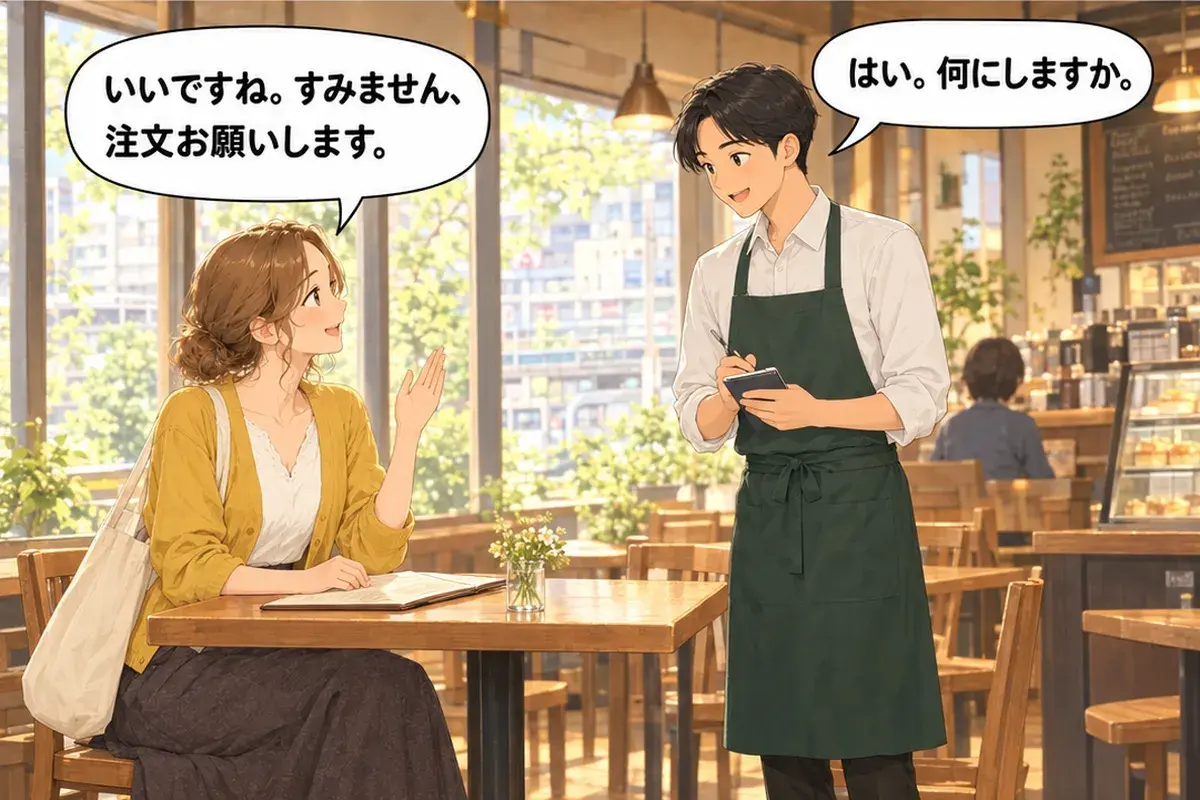
いいですね。すみません、注文お願いします。
Sounds good. Excuse me, we'd like to order, please.
- 店員
はい。何にしますか。
Sure. What will you have?
- アンナ
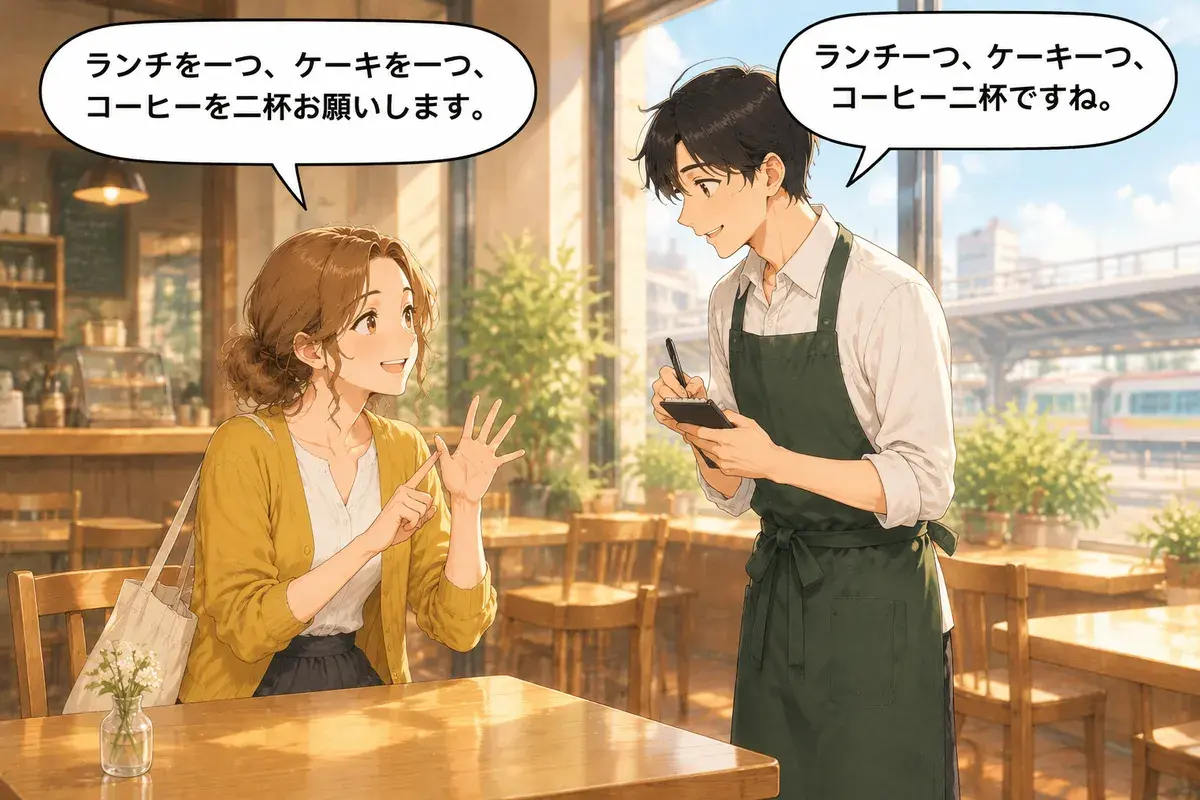
ランチを一つ、ケーキを一つ、コーヒーを二杯お願いします。
One lunch special, one cake and two cups of coffee, please.
- 店員
ランチ一つ、ケーキ一つ、コーヒー二杯ですね。
One lunch special, one cake and two cups of coffee, right?
Grammar for this text
駅 の コンビニ に 来ます ね — の links two nouns: "the convenience store by the station". 来ます means "you come" (from 来る): Linh works there, so for her the customers "come" rather than "go" (行きます). ね means "don't you?": Linh checks that she's right, because she recognized Anna from the store.
あのう、 リン さん、 ふりがな は…… — ふりがな is the small hiragana over a kanji that shows how to read it. Menus usually don't have it, so Anna can't read the dish names. は…… with a pause is an unfinished question, "what about...?": Japanese people often leave a sentence like this unfinished, and the other person understands anyway.
大丈夫 です。 一緒に 見ましょう。 — 大丈夫 です means "it's OK, no problem" (unit 3). 見ましょう means "let's look", from 見る: Linh has lived in Japan for two years and reads the menu herself.
私 は 魚 の ランチ に します。 リン さん は 何 に します か。 — 〜に します means "I'll have, I'll choose"; 何 に します か means "what will you have?". 魚 の ランチ is "the fish lunch": の here, as in 肉 の ラーメン, turns the name of a food into a kind of lunch. On the menu, 肉 と ご飯 and 魚 と ご飯 are two sets to choose from.
コーヒー も 飲みません か — 〜ませんか is an invitation; も means "too".
コーヒー を 二杯 — cups are counted with 杯, and 二杯 is read にはい. The lunch special and the cake are counted as items, so it's ランチ を 一つ, ケーキ を 一つ. The server repeats the order in the same order: what, then how many.
注文 お願いします — 注文 means "an order"; this is how you call the server when you're ready to order.
Words and grammar of the unit: Order food.
Learn the words from the texts with flashcards
In the app, you can tap any word in a text to see its translation, forms and examples, and new words stick with flashcards. 15 minutes a day.
Start for freeEverything is open for free. No card needed to sign up.