

Italian dialogue with translation · B1 · 18 lines
Ogni famiglia del Sud aveva qualcuno a Torino Every family from the South had someone in Turin
Comic · 18 panels
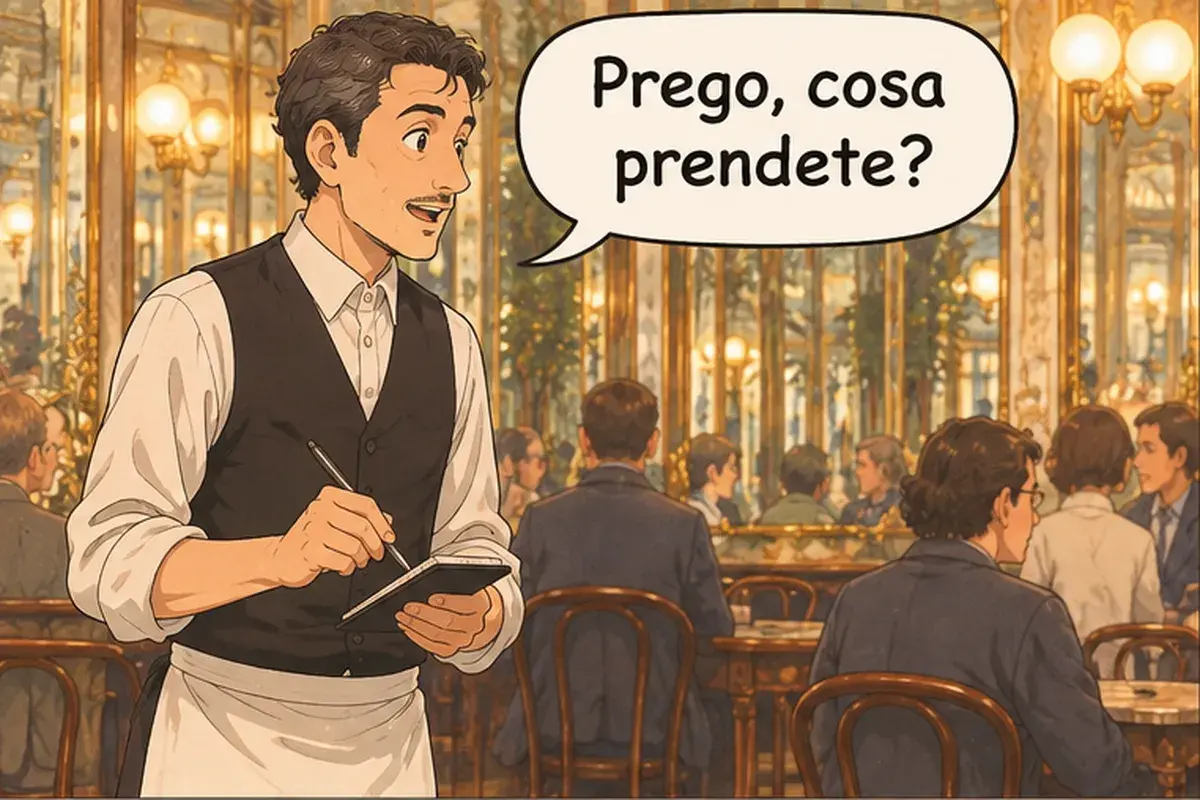
- Cameriere
Prego, cosa prendete?
Go ahead, what are you having? (to several people)
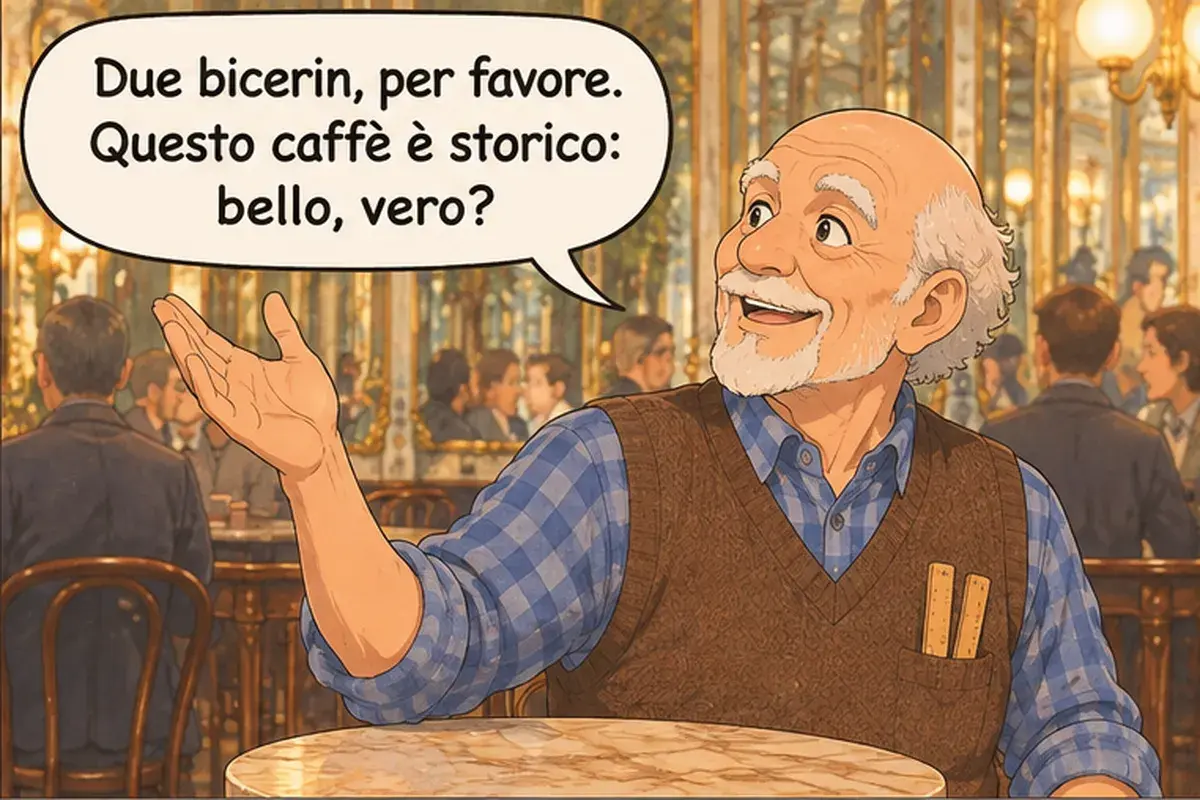
- Gianni
Due bicerin, per favore. Questo caffè è storico: bello, vero?
Two bicerin, please. This café is historic: beautiful, isn't it?
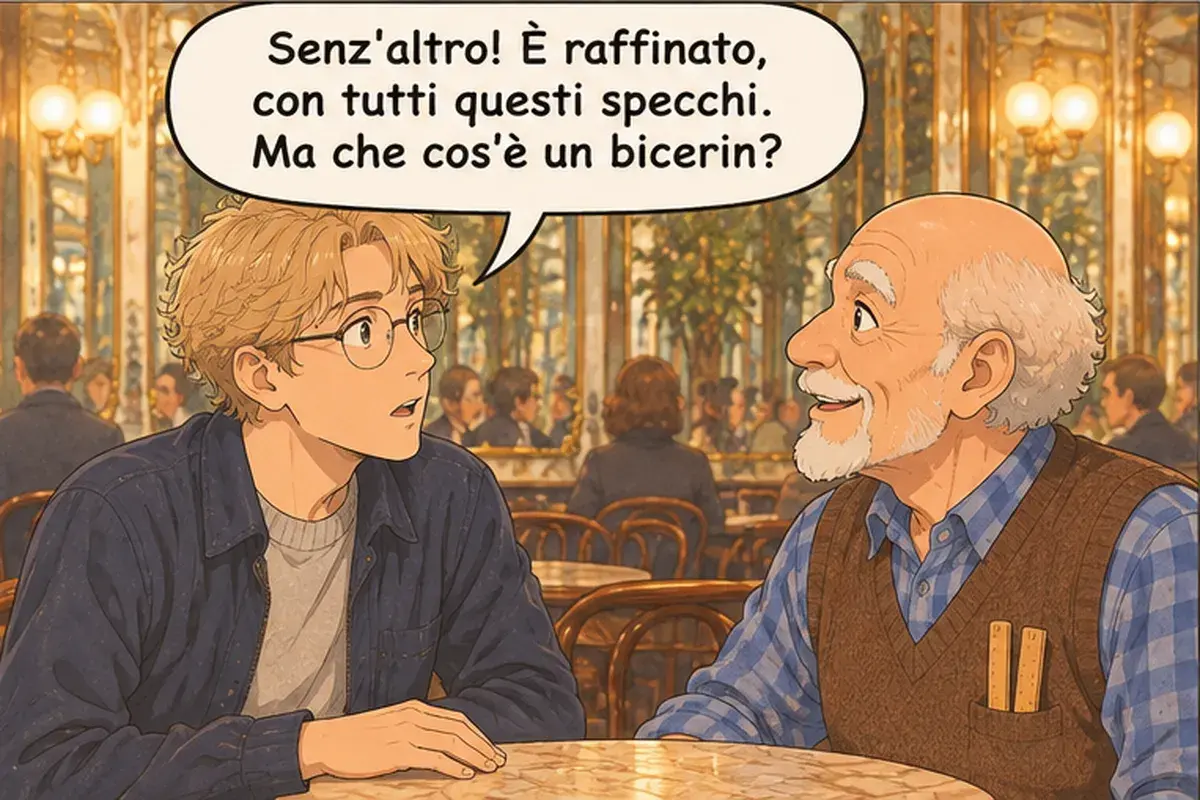
- Misha
Senz'altro! È raffinato, con tutti questi specchi. Ma che cos'è un bicerin?
Definitely! It's refined, with all these mirrors. But what is a bicerin?
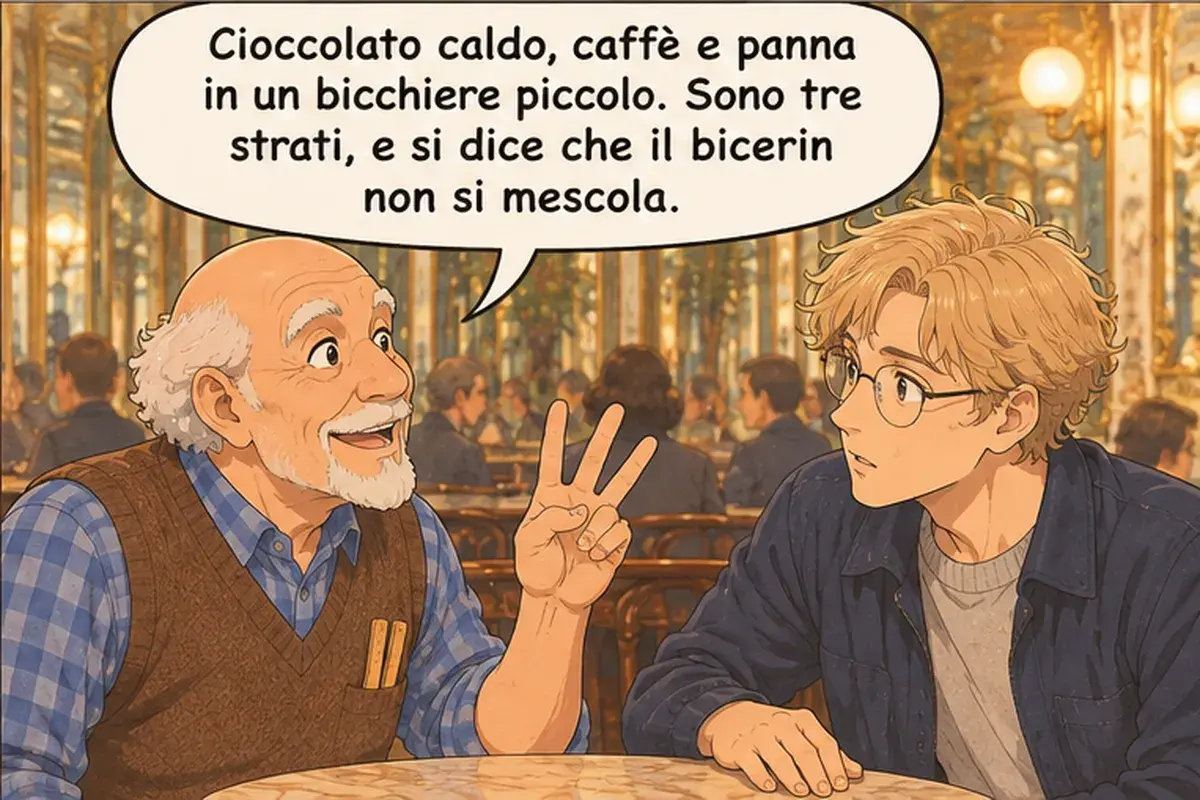
- Gianni
Cioccolato caldo, caffè e panna in un bicchiere piccolo. Sono tre strati, e si dice che il bicerin non si mescola.
Hot chocolate, coffee and cream in a small glass. It's three layers, and they say you don't stir a bicerin.
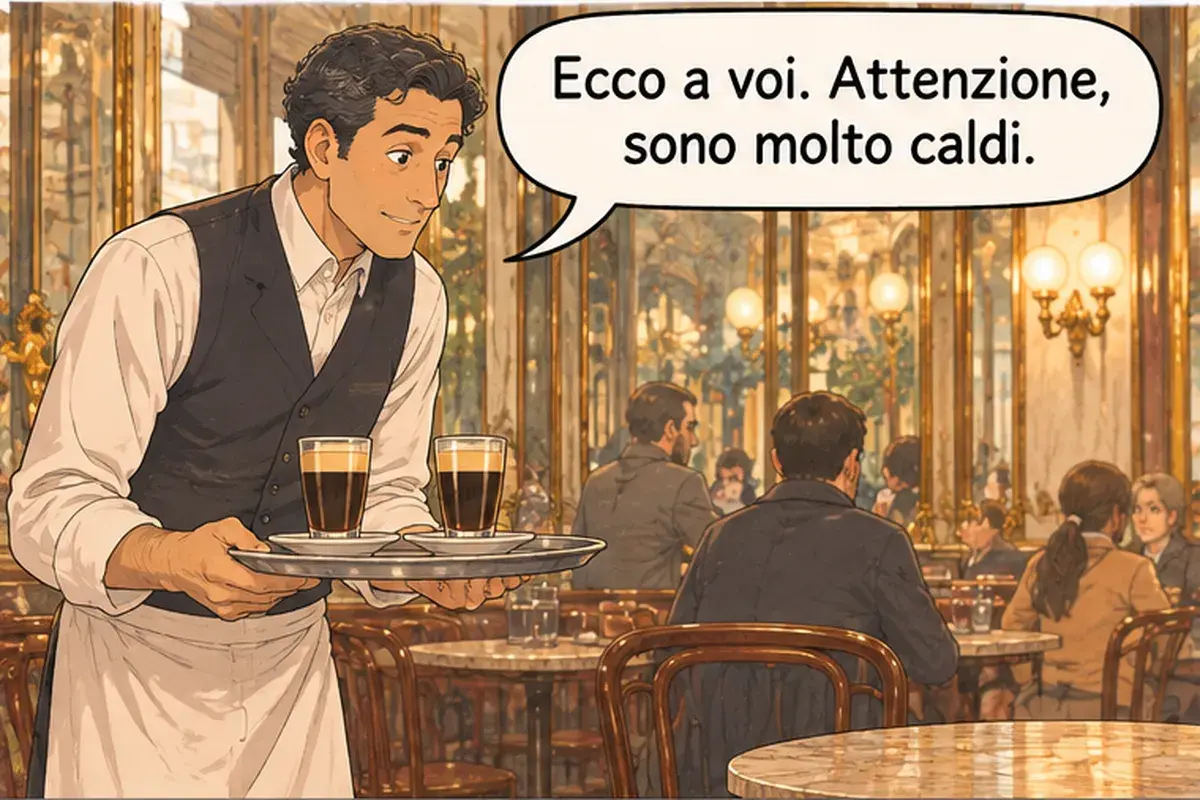
- Cameriere
Ecco a voi. Attenzione, sono molto caldi.
Here you go (to several people). Careful, they're very hot.

- Misha
Ottimo, ma è un po' amaro: metto lo zucchero e mescolo.
Excellent, but it's a bit bitter: I'll add sugar and stir.
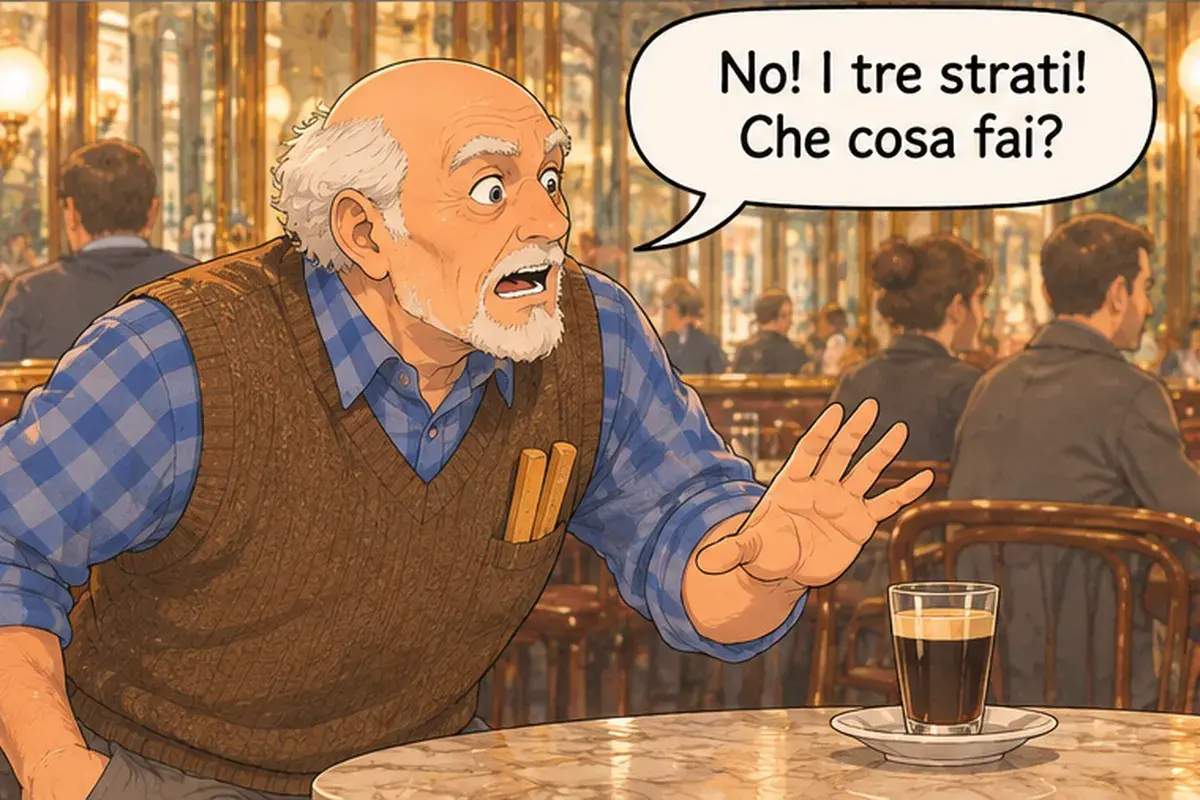
- Gianni
No! I tre strati! Che cosa fai?
No! The three layers! What are you doing?
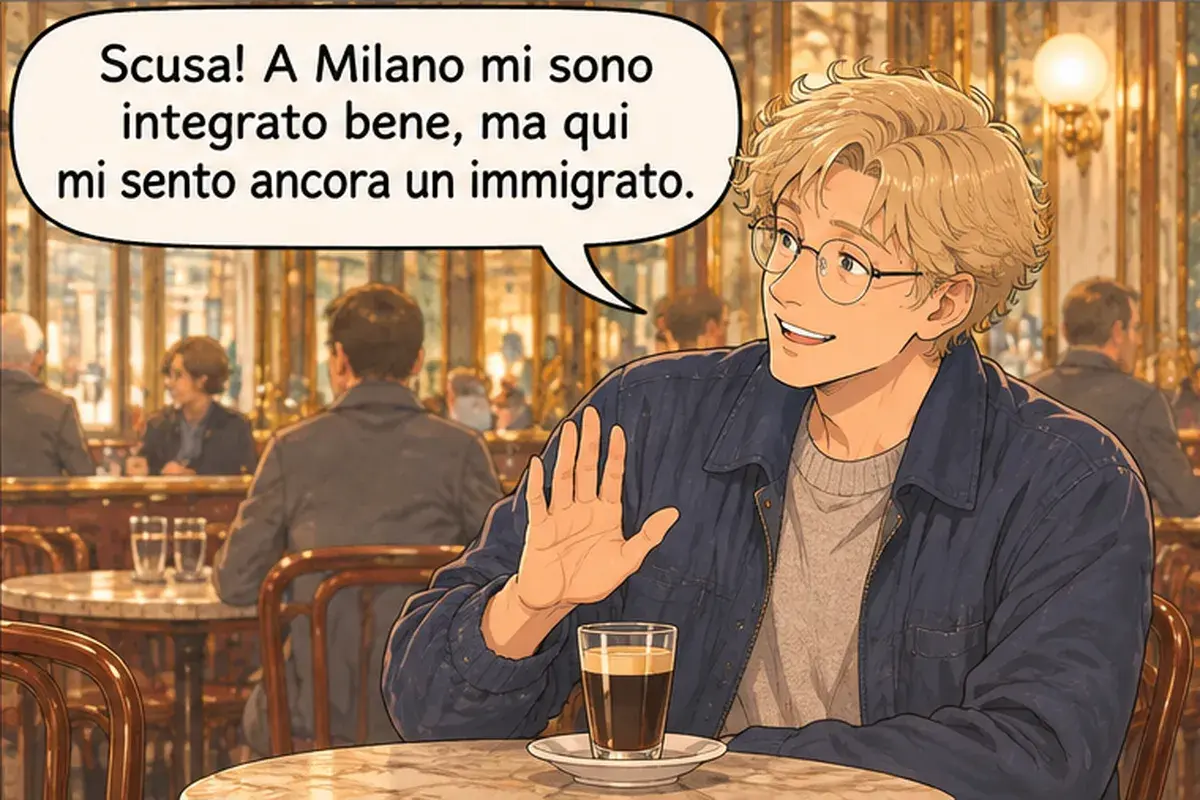
- Misha
Scusa! A Milano mi sono integrato bene, ma qui mi sento ancora un immigrato.
Sorry! In Milan I've fit in well, but here I still feel like an immigrant (man speaking).
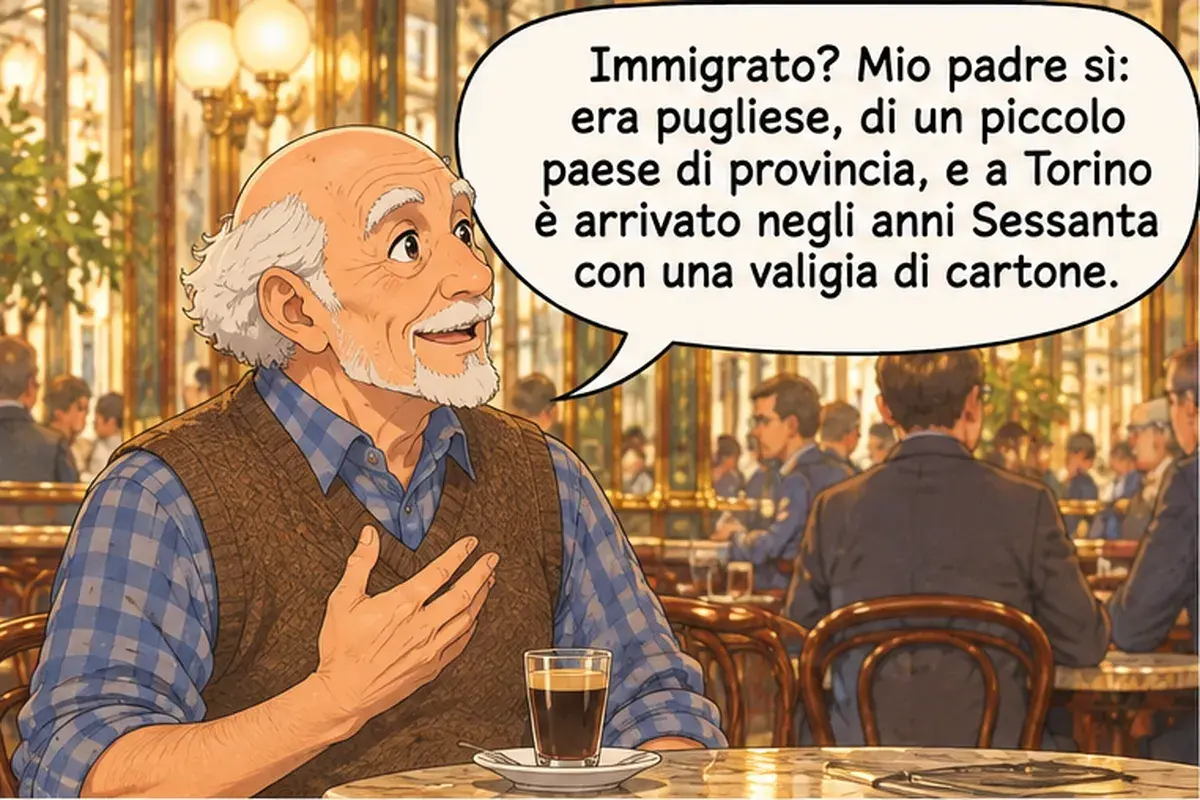
- Gianni
Immigrato? Mio padre sì: era pugliese, di un piccolo paese di provincia, e a Torino è arrivato negli anni Sessanta con una valigia di cartone.
An immigrant? My father, yes: he was from Puglia, from a small town in the province, and he came to Turin in the 1960s with a cardboard suitcase.
- Misha
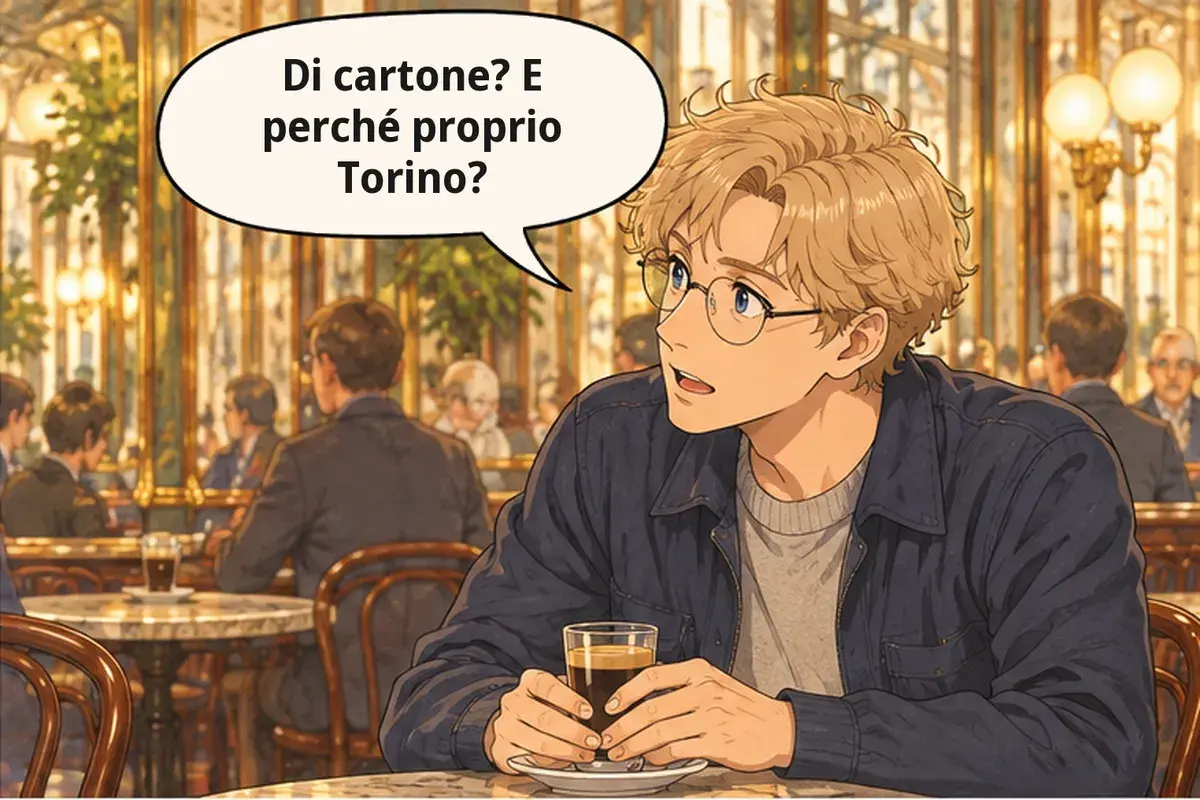
Di cartone? E perché proprio Torino?
Cardboard? And why Turin, of all places?
- Gianni
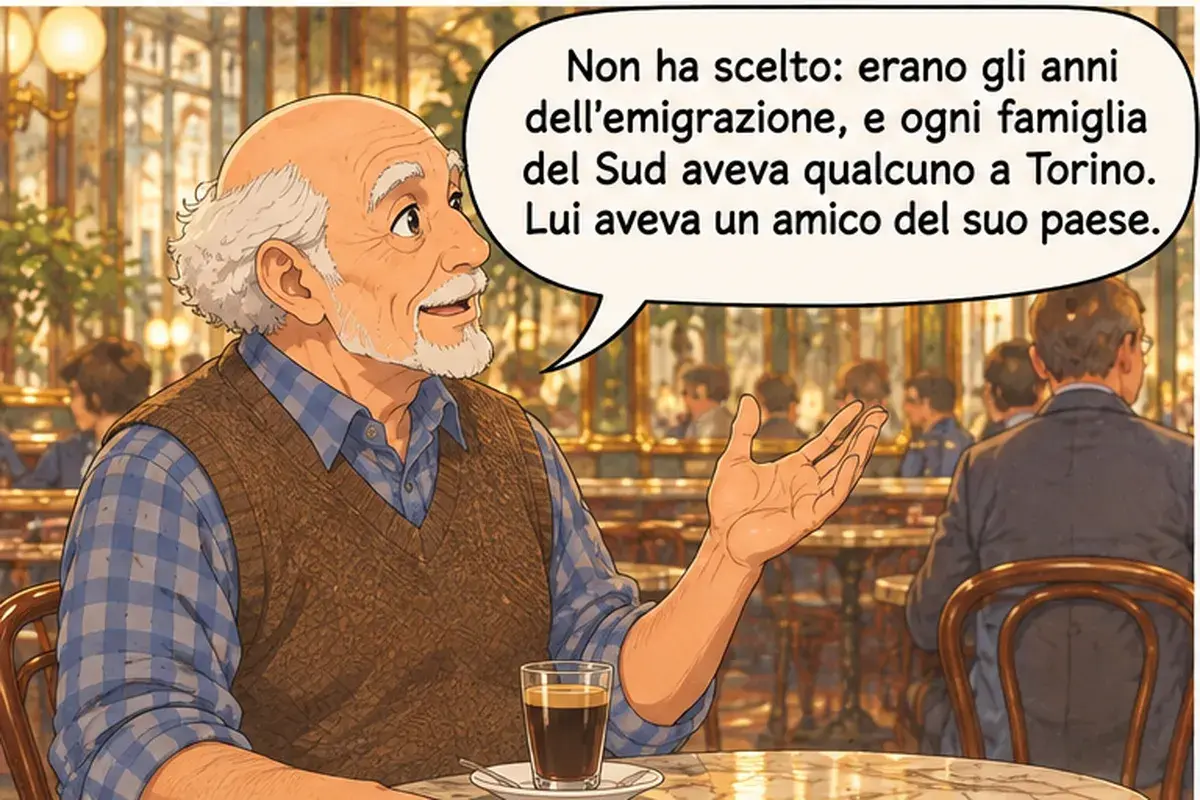
Non ha scelto: erano gli anni dell'emigrazione, e ogni famiglia del Sud aveva qualcuno a Torino. Lui aveva un amico del suo paese.
He didn't choose: those were the years of emigration, and every family from the South had someone in Turin. He had a friend from his hometown.
- Misha
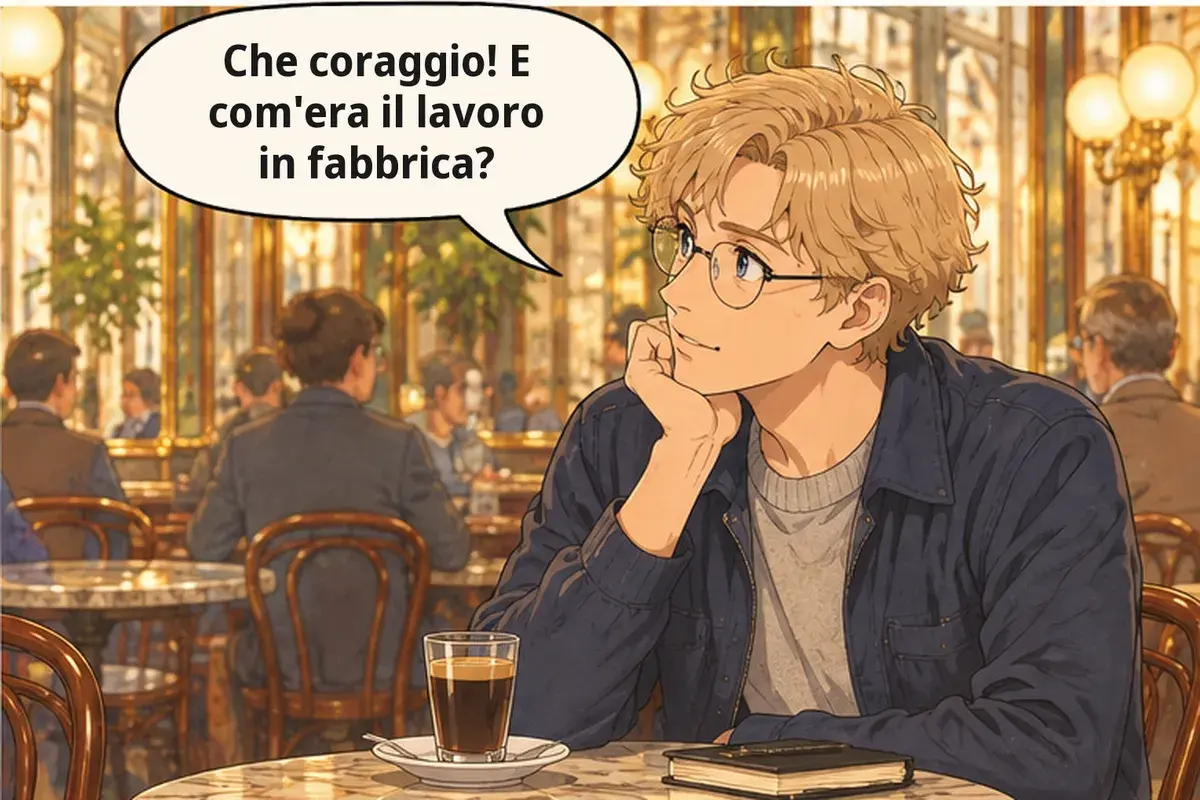
Che coraggio! E com'era il lavoro in fabbrica?
What courage! And what was factory work like?
- Gianni
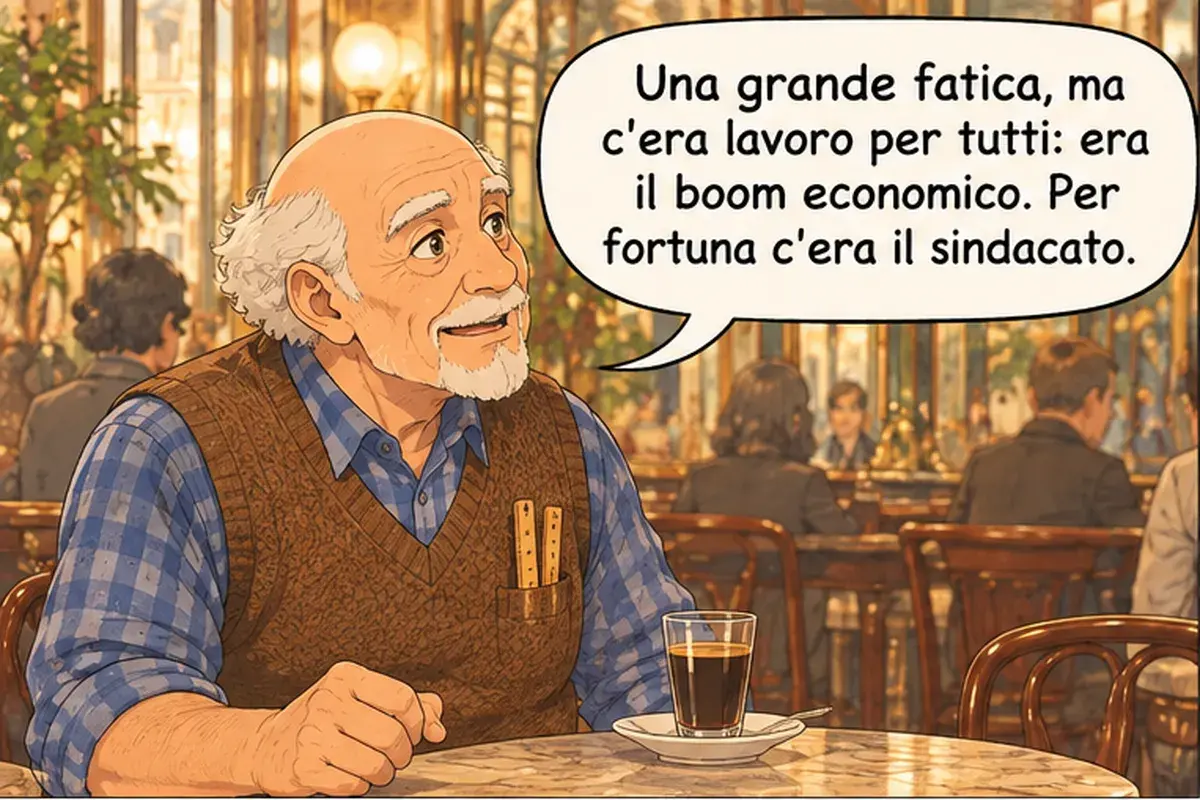
Una grande fatica, ma c'era lavoro per tutti: era il boom economico. Per fortuna c'era il sindacato.
Hard work, but there was work for everyone: it was the economic boom. Luckily there was the union.
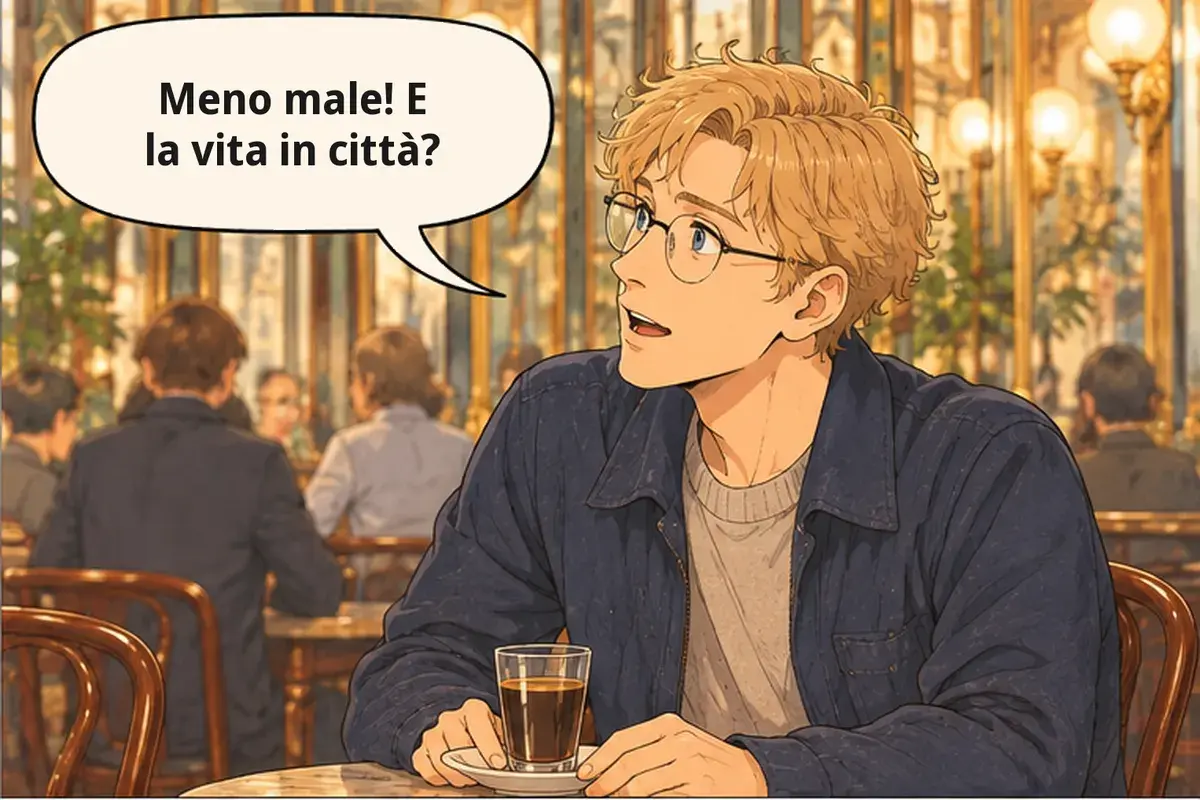
- Misha
Meno male! E la vita in città?
Thank goodness! And life in the city?
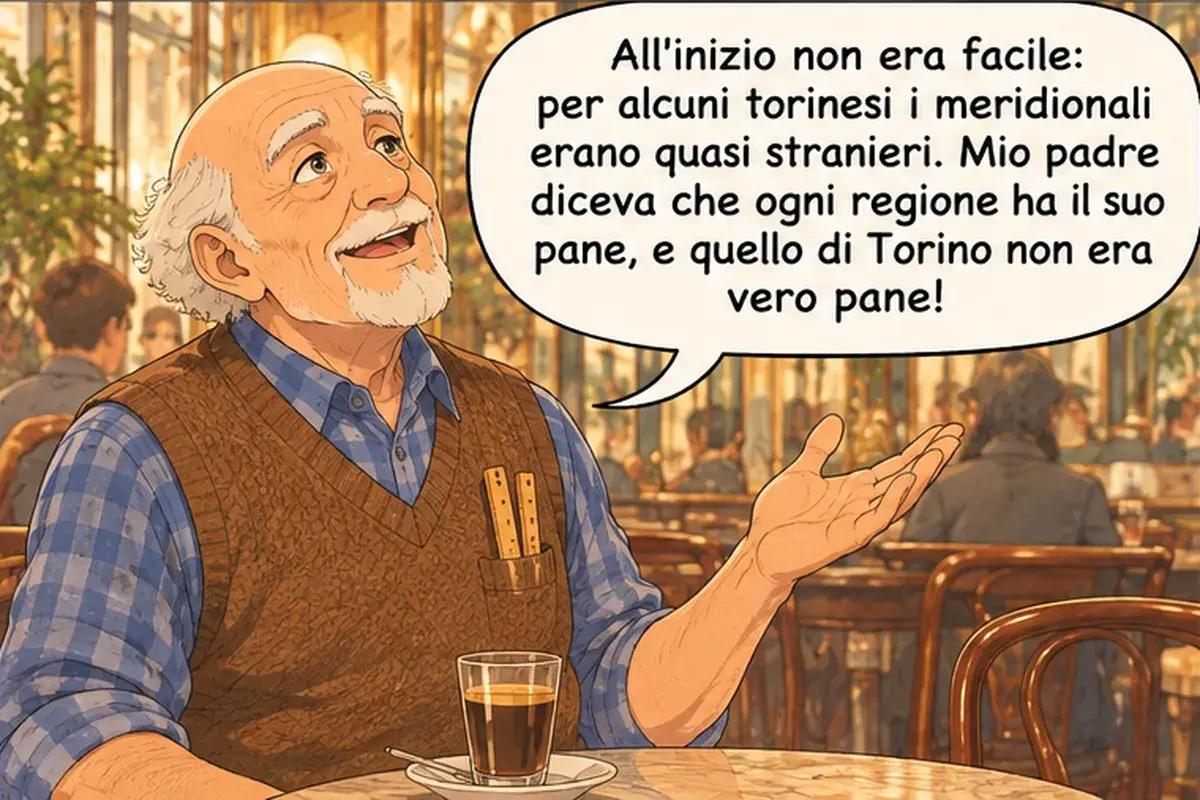
- Gianni
All'inizio non era facile: per alcuni torinesi i meridionali erano quasi stranieri. Mio padre diceva che ogni regione ha il suo pane, e quello di Torino non era vero pane!
At first it wasn't easy: for some people from Turin, southerners were almost foreigners. My father used to say that every region has its own bread, and Turin's wasn't real bread!
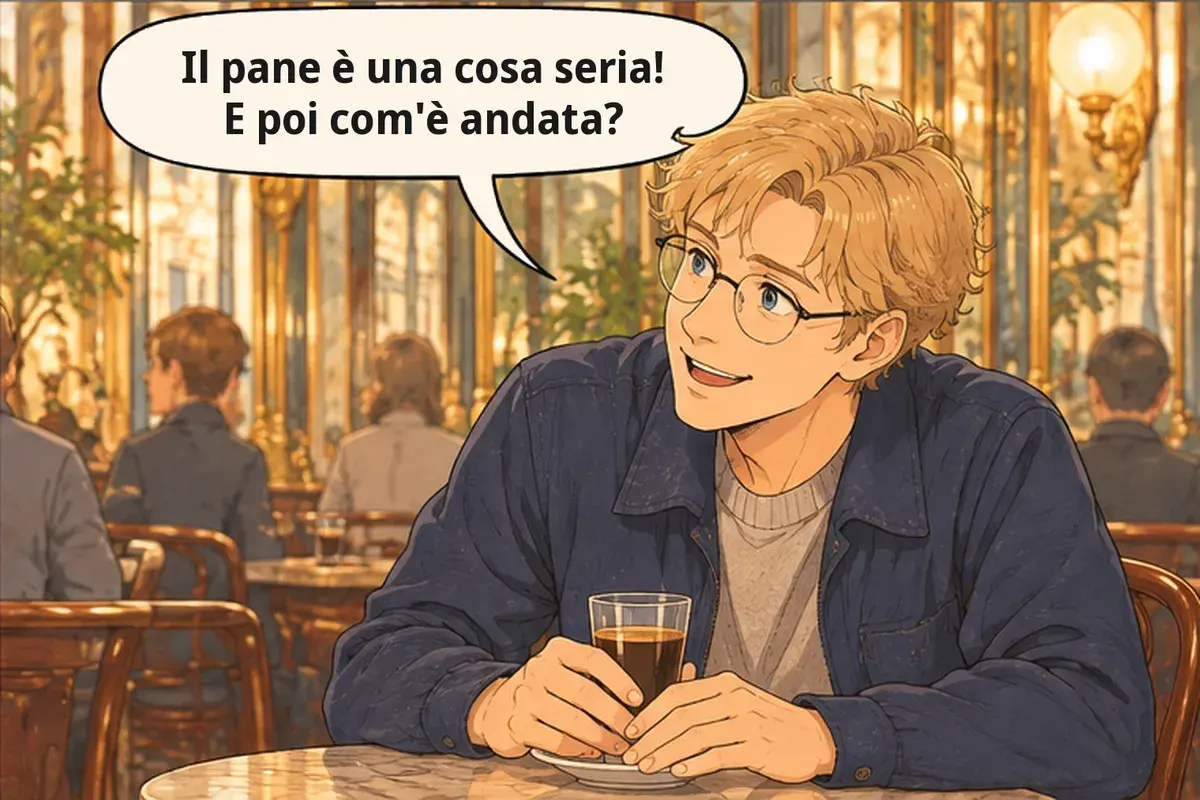
- Misha
Il pane è una cosa seria! E poi com'è andata?
Bread is serious business! And then how did it go?
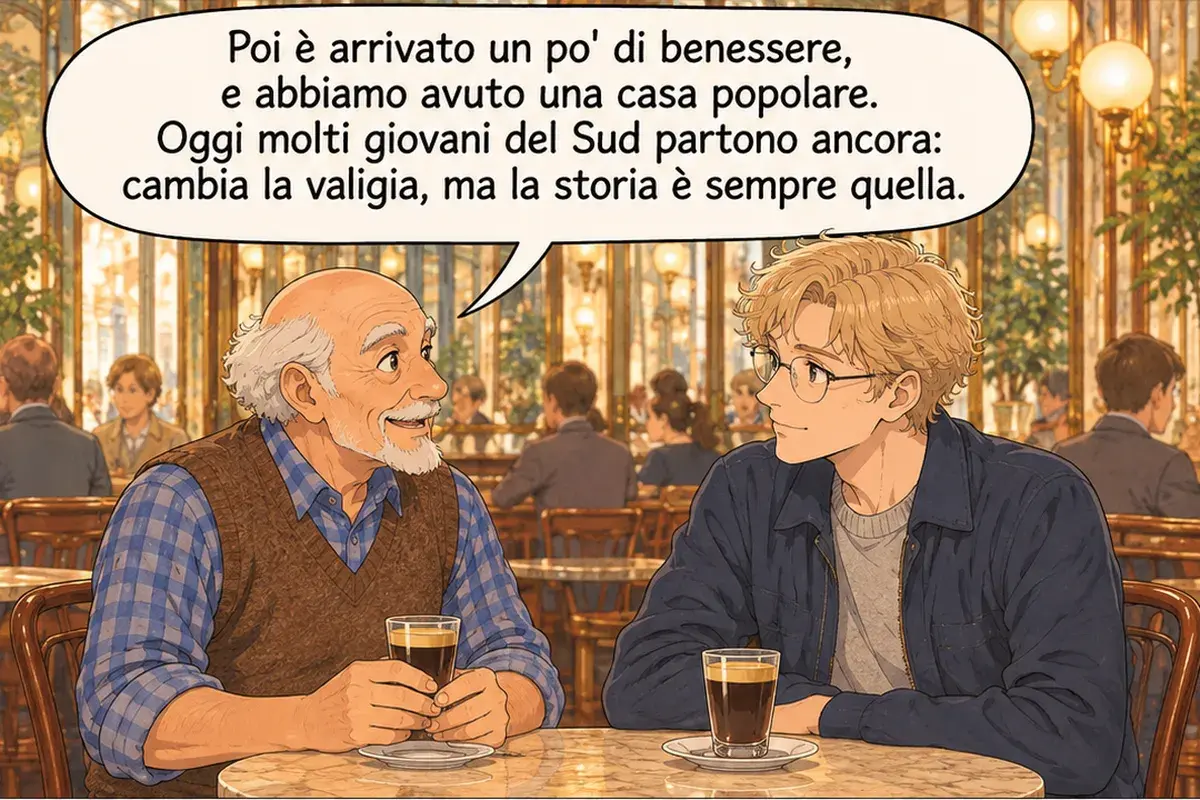
- Gianni
Poi è arrivato un po' di benessere, e abbiamo avuto una casa popolare. Oggi molti giovani del Sud partono ancora: cambia la valigia, ma la storia è sempre quella.
Then some prosperity arrived, and we got public housing. Today many young people from the South still leave: the suitcase changes, but the story is always the same.

- Misha
Allora ci siamo presi un bicerin e anche una lezione di storia!
So we had a bicerin and a history lesson too!
Grammar for this text
- si dice che il bicerin non si mescola — two
si:si dicemeans "they say", andnon si mescolameans "you don't stir it" (this is how Italians talk about rules and customs). More in unit 5. - Ecco a voi. — the waiter is talking to two guests, so he says
voi("to you both"). To one person he would use the formal Lei or the informal tu instead ofvoi. - A Milano mi sono integrato bene —
integrarsi("to fit in") is reflexive: in the past it isessere+ past participle, and the masculine form isintegrato. - Immigrato? Mio padre sì — a short answer: "An immigrant? My father, yes." The word
sìcomes after the subject to stress it. - Ogni famiglia del Sud aveva qualcuno a Torino —
ognialways goes with a singular noun (ogni famiglia), andqualcunomeans "someone".Sudhas a capital letter: the South as part of Italy.Una valigia di cartonemeans "a cardboard suitcase" (di+ material). - ogni regione ha il suo pane —
il suo panemeans "its own bread", with the article before the possessive.meridionalimeans "southerners": back then the word often sounded rude. - ci siamo presi un bicerin —
cimeans "for ourselves", like inmi bevo un caffè. See block 2. The participlepresiagrees with the subject "we".
Words and grammar of the unit: Tell the story of a city.
Learn the words from the texts with flashcards
In the app, you can tap any word in a text to see its translation, forms and examples, and new words stick with flashcards. 15 minutes a day.
Start for freeEverything is open for free. No card needed to sign up.