

Italian dialogue with translation · B1 · 18 lines
Dunque, che fare? So, what should we do?
Comic · 18 panels

- Giulia
Benvenuti a Senza cartoline! Oggi parliamo di partire o restare, con Antonella da Lecce e Misha da Milano.
Welcome to Senza cartoline! (to several people) Today we're talking about leaving or staying, with Antonella from Lecce and Misha from Milan.
- Giulia
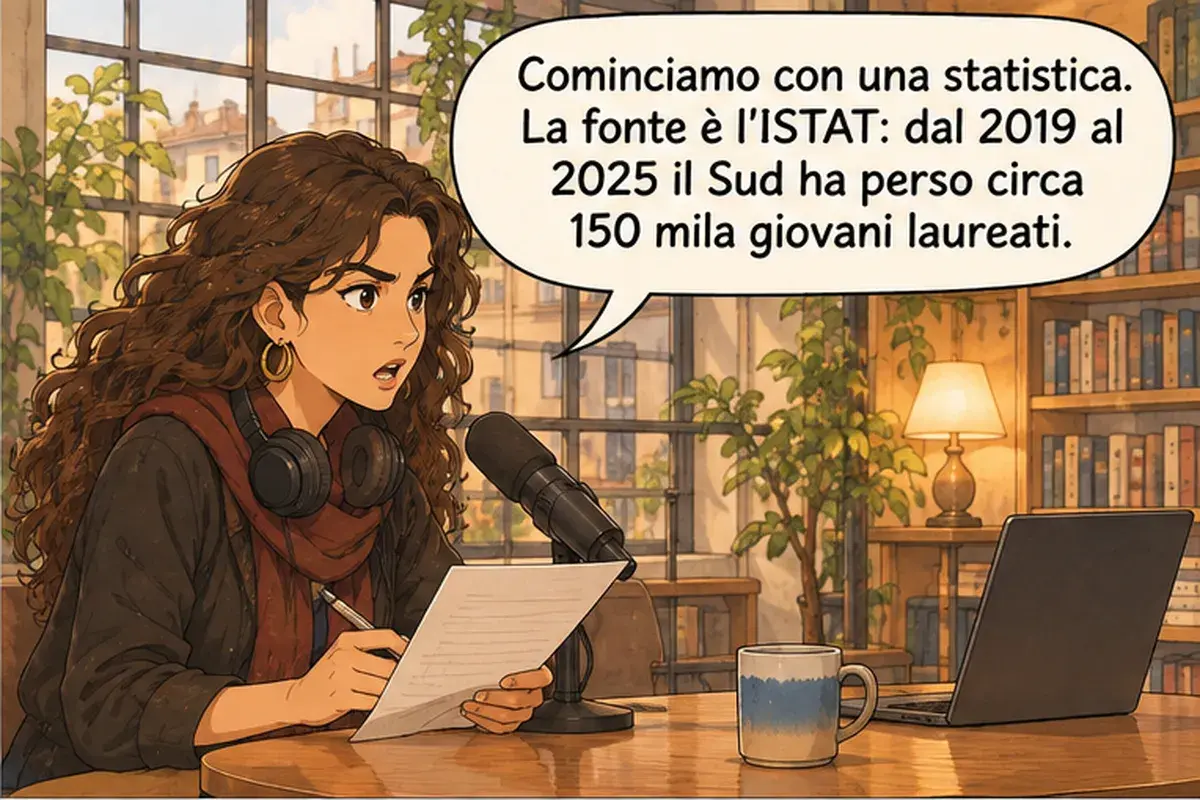
Cominciamo con una statistica. La fonte è l'ISTAT: dal 2019 al 2025 il Sud ha perso circa 150 mila giovani laureati.
Let's start with a statistic. The source is ISTAT: from 2019 to 2025, the South lost about 150,000 young graduates.

- Antonella
Un calo enorme! La fuga dei cervelli ha a che fare con il lavoro.
A huge drop! The brain drain has to do with work.

- Giulia
Solo con il lavoro?
Only with work?

- Antonella
No. Non solo gli stipendi, ma anche i servizi: treni, ospedali, internet veloce.
No. Not only salaries, but also services: trains, hospitals, fast internet.

- Giulia
Misha, tu vieni da lontano! Qual è la tua prospettiva?
Misha, you come from far away! What's your perspective?

- Misha
Vedo la questione da fuori. A Milano il lavoro c'è, ma il costo della vita è molto alto: una stanza costa quasi metà dello stipendio.
I see the issue from the outside. In Milan there's work, but the cost of living is very high: a room costs almost half a salary.

- Antonella
Per questo faccio south working: due settimane a Lecce e due a Milano. Guadagno come a Milano e spendo come a Lecce.
That's why I do south working: two weeks in Lecce and two in Milan. I earn like in Milan and spend like in Lecce.
- Giulia
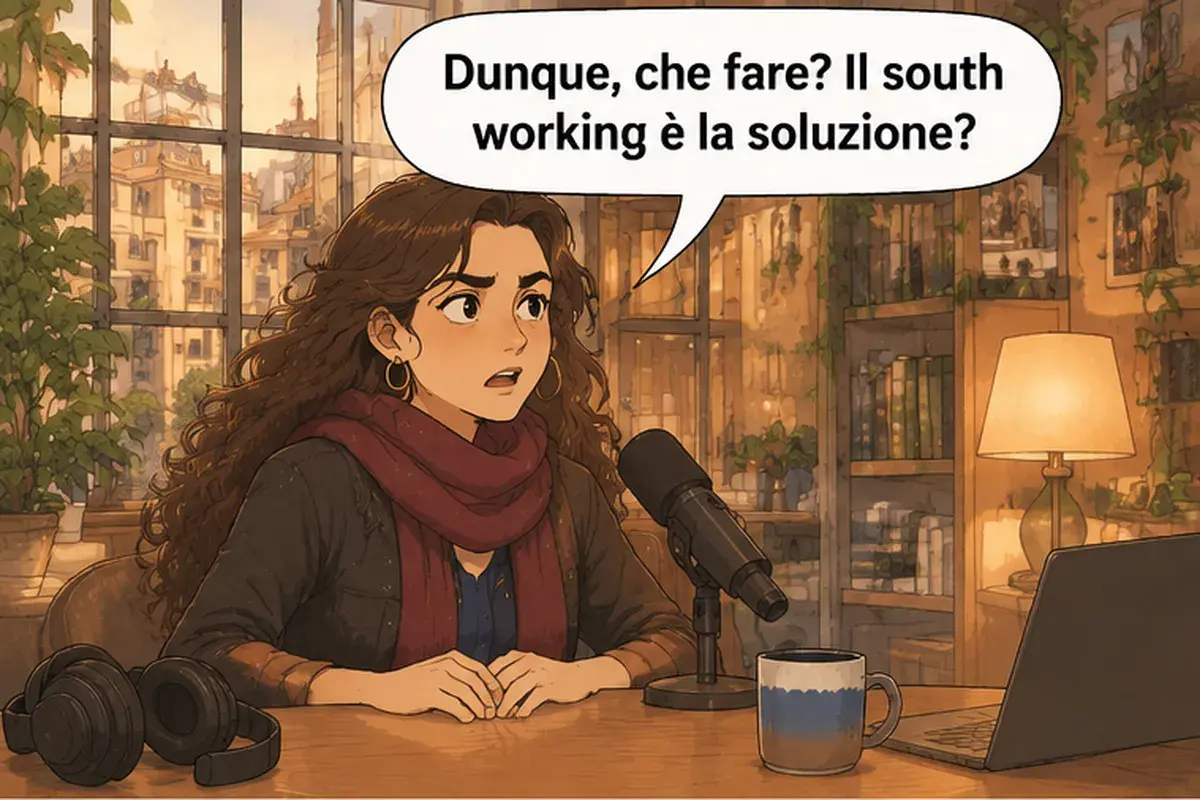
Dunque, che fare? Il south working è la soluzione?
So, what should we do? Is south working the solution?
- Antonella
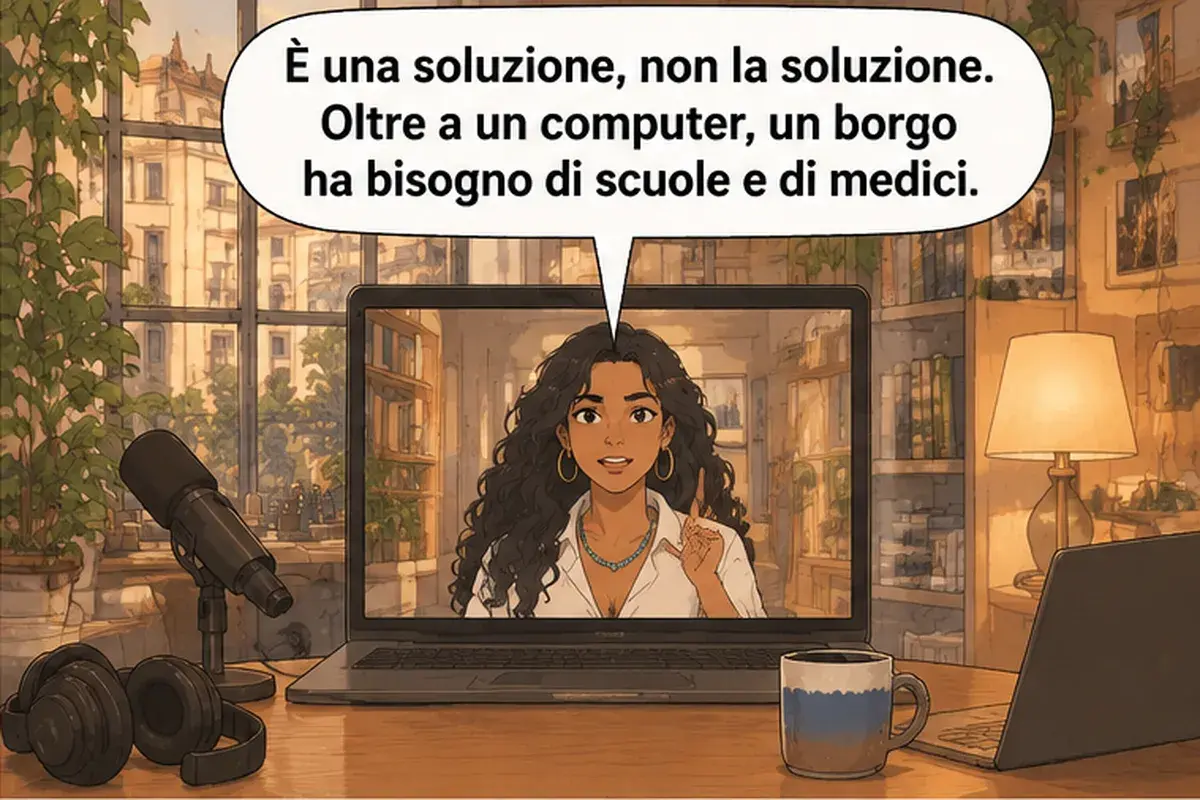
È una soluzione, non la soluzione. Oltre a un computer, un borgo ha bisogno di scuole e di medici.
It's a solution, not the solution. Besides a computer, a village needs schools and doctors.
- Misha
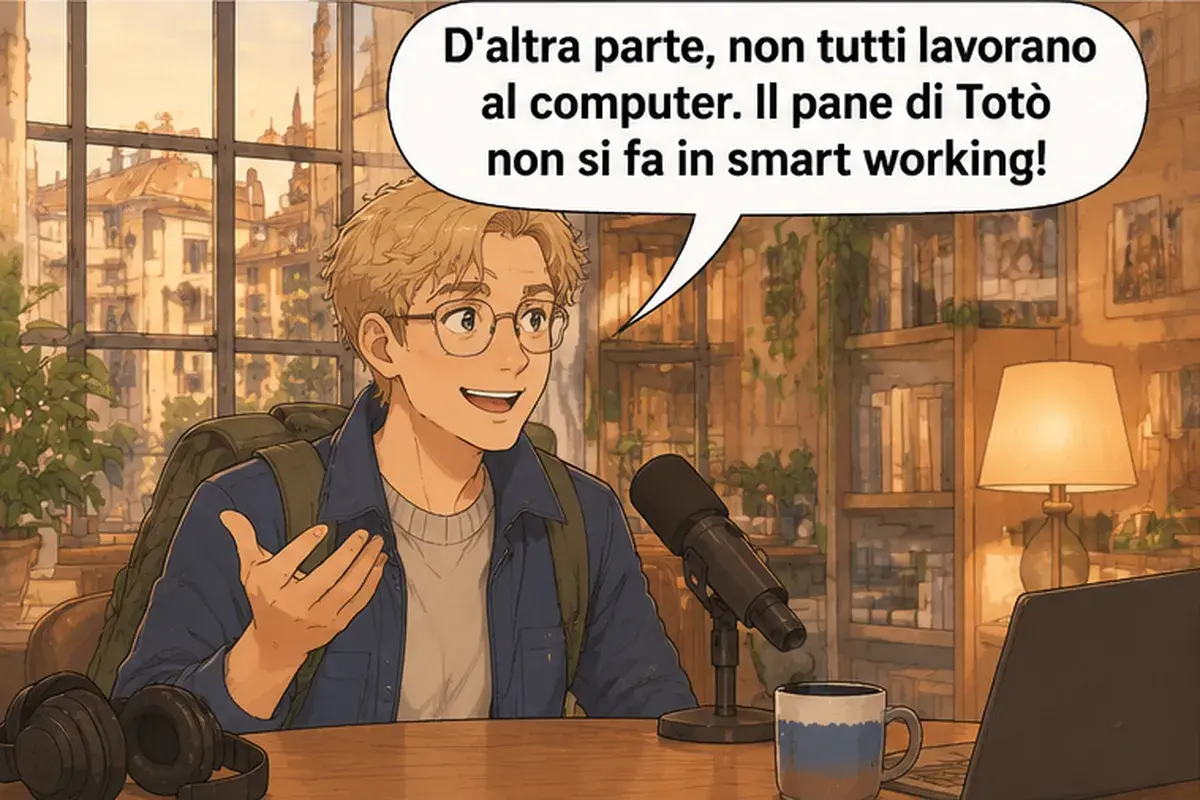
D'altra parte, non tutti lavorano al computer. Il pane di Totò non si fa in smart working!
On the other hand, not everyone works at a computer. You can't make Totò's bread by working remotely!
- Giulia
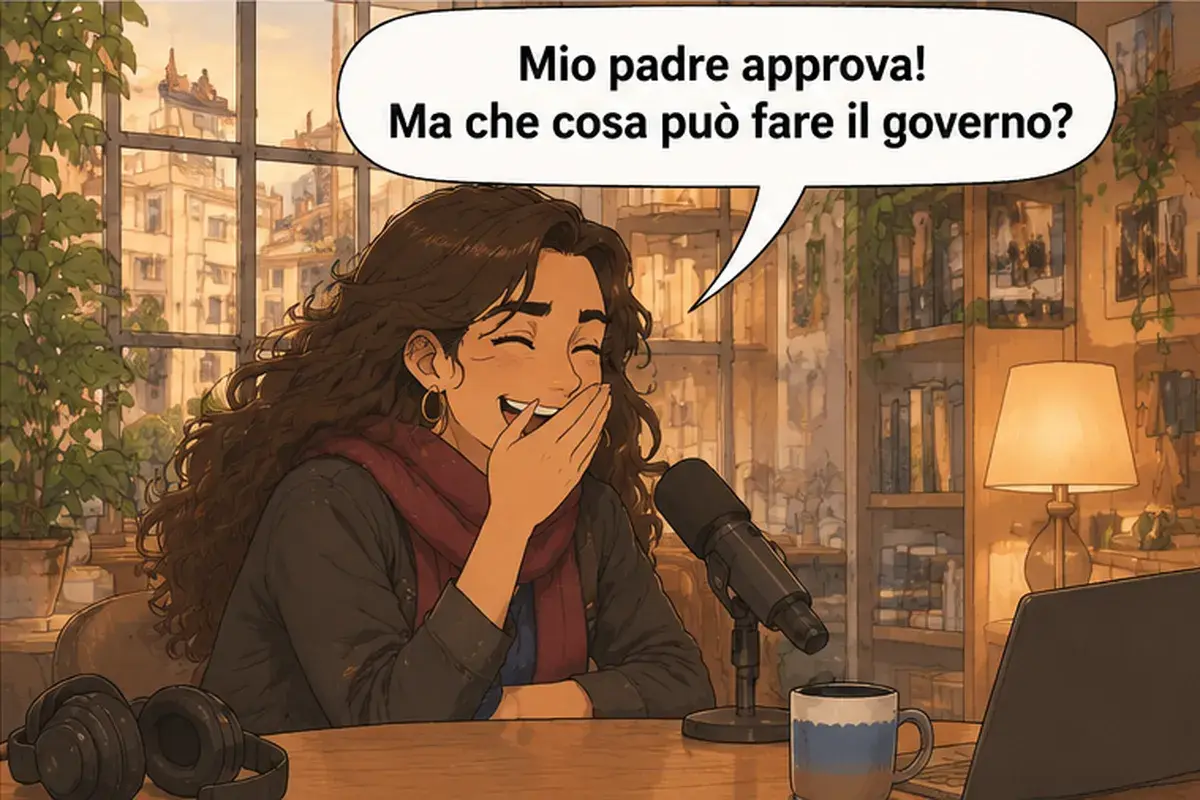
Mio padre approva! Ma che cosa può fare il governo?
My dad approves! But what can the government do?

- Antonella
Può cominciare dai servizi. Inoltre ogni borgo è diverso, perciò non basta una politica uguale per tutti.
It can start with services. Besides, every village is different, so the same policy for everyone isn't enough.
- Giulia
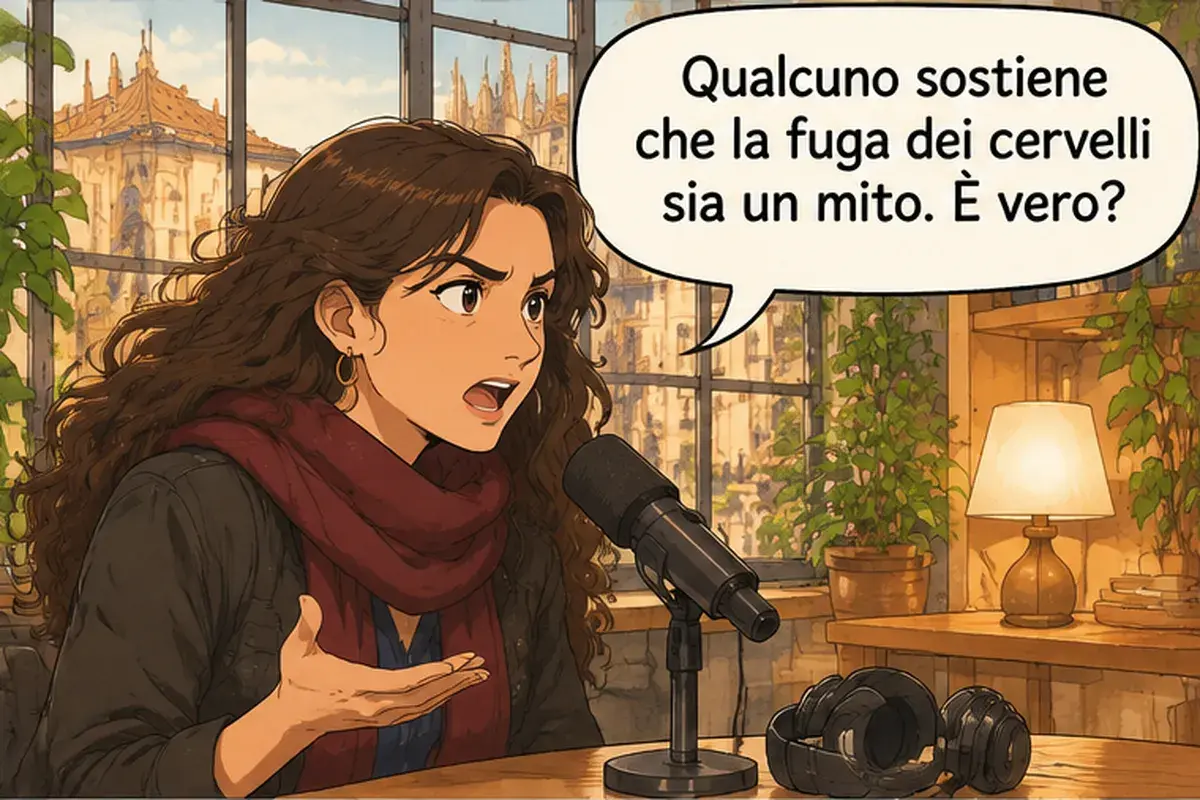
Qualcuno sostiene che la fuga dei cervelli sia un mito. È vero?
Someone claims that the brain drain is a myth. Is that true?

- Antonella
Il fenomeno c'è, ma il nome è discutibile: in un'inchiesta ho letto che chi parte non è sempre laureato.
The phenomenon exists, but the name is questionable: in an investigative report I read that the ones who leave aren't always college graduates.

- Misha
In generale, nessuno nega il divario tra Nord e Sud. Ma si parte anche dal Nord: Tommaso, un mio collega di Monza, ora lavora a Rotterdam.
In general, nobody denies the gap between North and South. But people leave the North too: Tommaso, a colleague of mine from Monza, now works in Rotterdam.
- Giulia
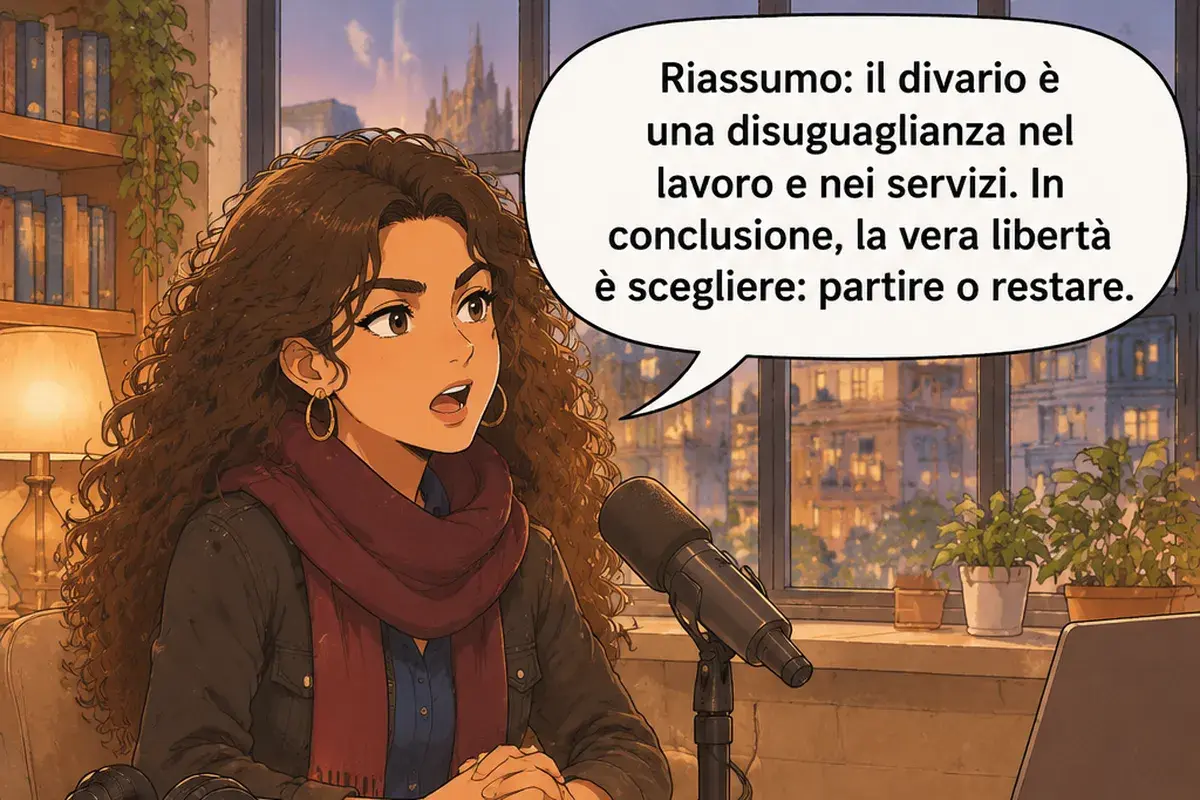
Riassumo: il divario è una disuguaglianza nel lavoro e nei servizi. In conclusione, la vera libertà è scegliere: partire o restare.
I'll sum up: the gap is an inequality in work and services. In conclusion, real freedom is choosing: leaving or staying.

- Giulia
Grazie per essere venuti, e alla prossima puntata!
Thanks for coming (to several people), and see you at the next episode!
Grammar for this text
- Grazie per essere venuti — a set phrase: "thanks for coming" (to several people).
essere venutiis the past infinitive (infinito passato) ofvenire:essere+ a past participle.venutiis masculine plural: the guests, Antonella and Misha, are a mixed group. The rule comes in B2, so for now learn the whole phrase. - Non solo gli stipendi, ma anche i servizi — a pair of linking words, "not only… but also":
non sologoes before the first part,ma anchebefore the second. - Dunque, che fare? —
dunquemeans "so";che fare?means "what should we do?": the infinitive alone asks the question, so you don't needdobbiamo. - ogni borgo è diverso, perciò non basta una politica uguale per tutti —
perciòmeans "so, that's why" (the result), and the accent ò is required in writing;perchémeans "because" (the reason). - D'altra parte, non tutti lavorano al computer — "on the other hand": a point that pushes back against what was said (
d'isdi). Butinoltreandoltre aadd a point, for example Oltre a un computer — besides a computer. - nessuno nega il divario —
negacomes fromnegare("to deny").nessunobefore a verb takes nonon:nessuno negameans "nobody denies". - La fuga dei cervelli ha a che fare con il lavoro —
fuga dei cervellimeans "brain drain";avere a che fare conmeans "to have to do with".
Words and grammar of the unit: Argue a point on a podcast.
Learn the words from the texts with flashcards
In the app, you can tap any word in a text to see its translation, forms and examples, and new words stick with flashcards. 15 minutes a day.
Start for freeEverything is open for free. No card needed to sign up.