
Italian story with translation · B1 · 17 lines
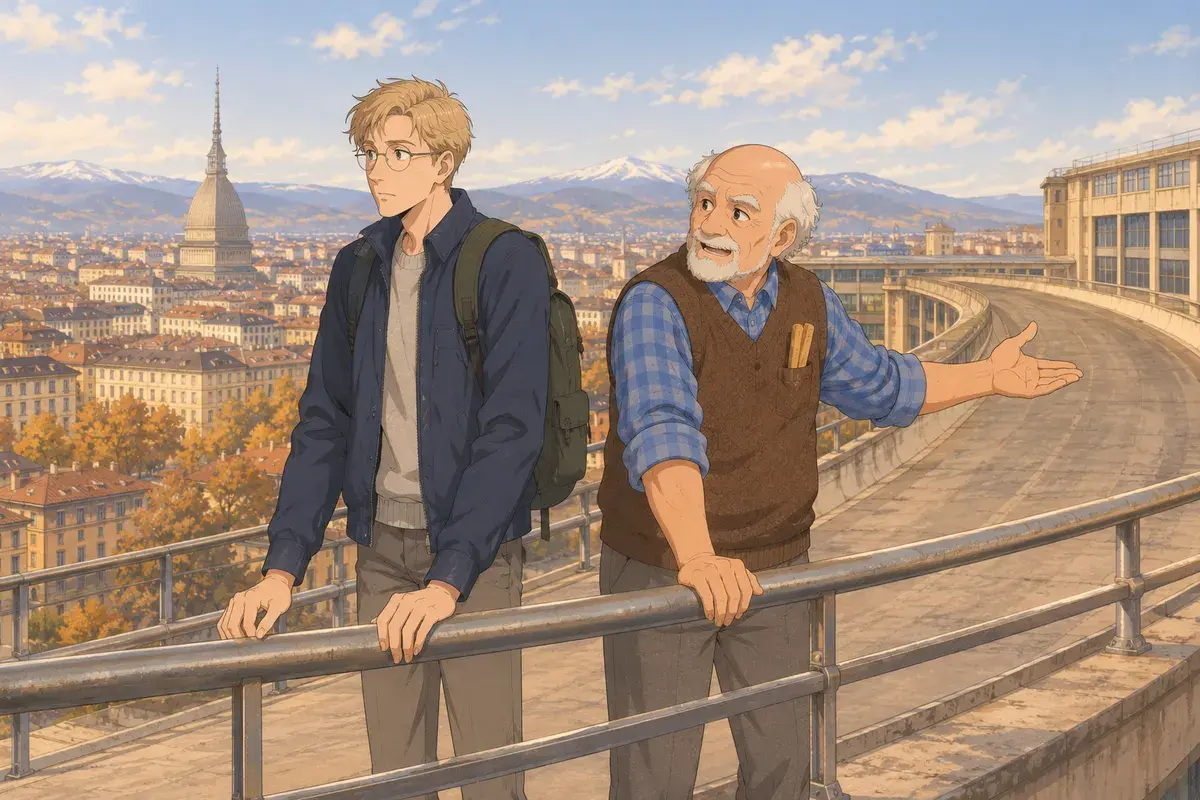
Le macchine correvano sul tetto Cars used to race on the roof
Comic · 17 panels
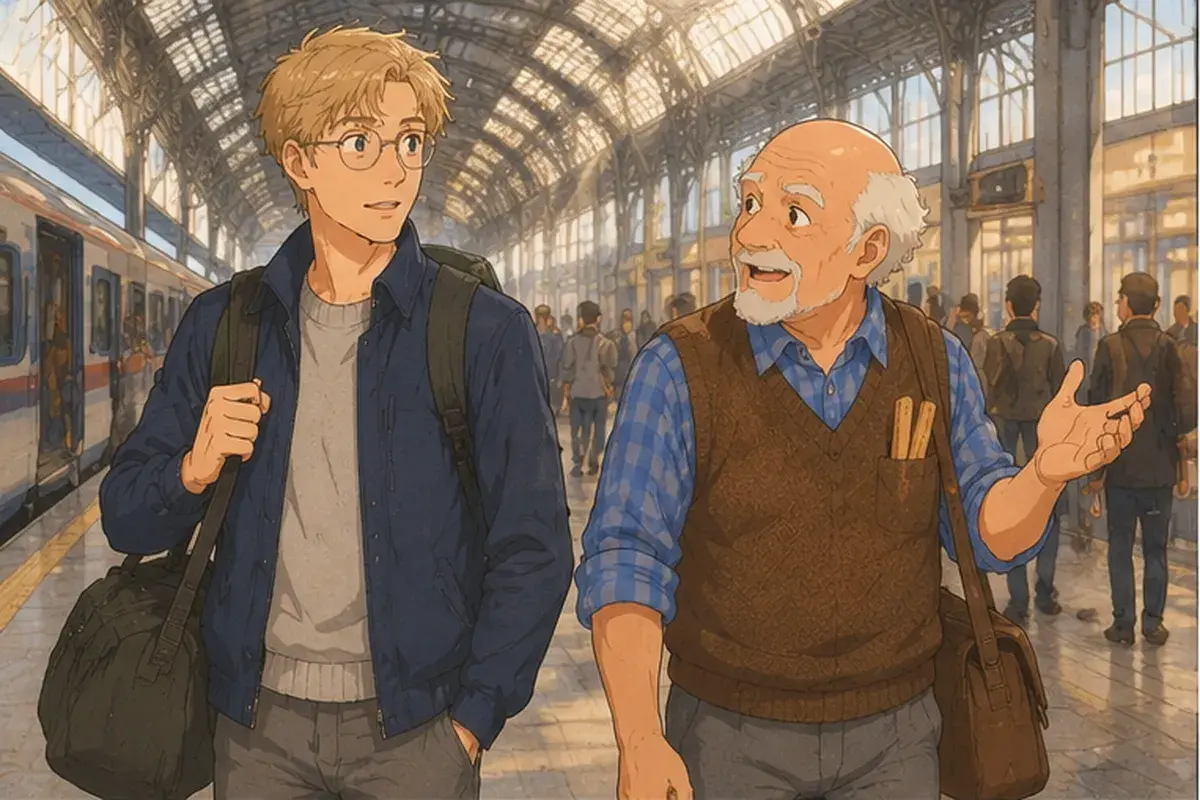
Oggi, martedì, sono a Torino con Gianni. Sembra una gita, ma è una trasferta: stasera torniamo a Milano.
Today, Tuesday, I'm in Turin with Gianni. It feels like a day trip, but it's a business trip: tonight we go back to Milan.
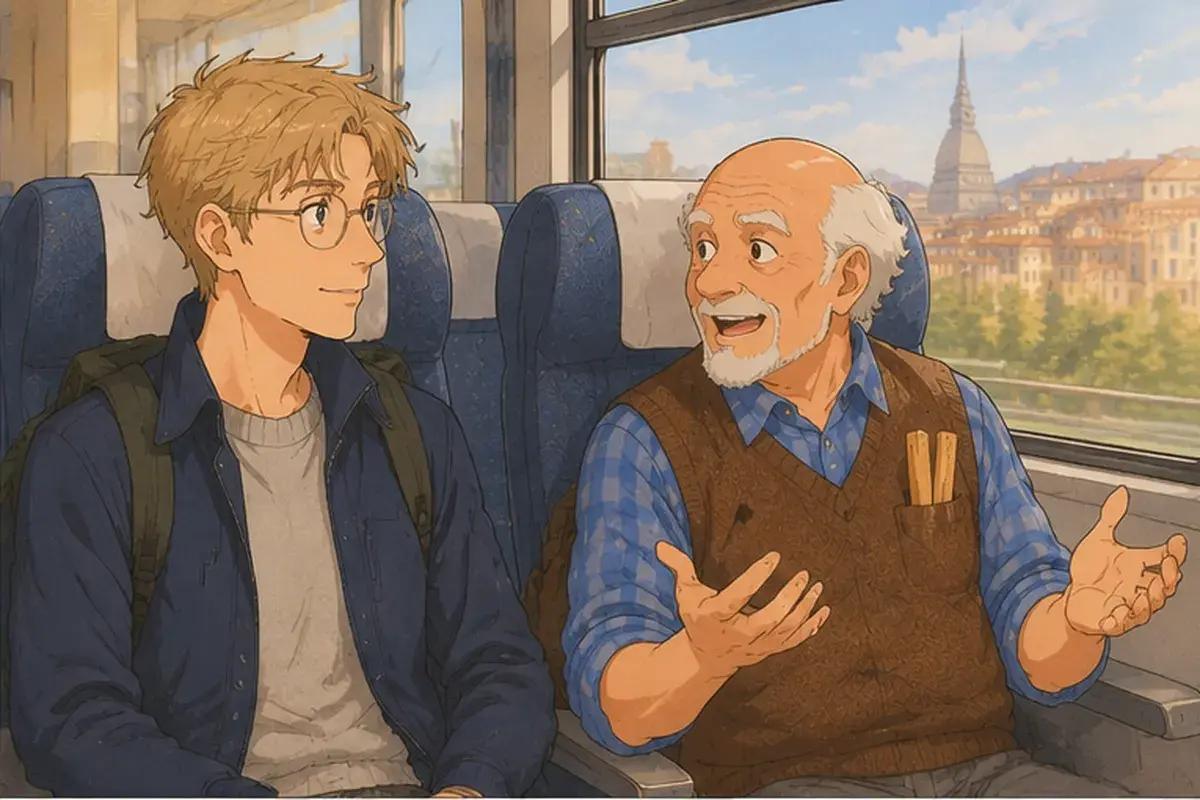
Il treno veloce da Milano ci mette circa un'ora. Gianni è torinese, è nato qui e per tutto il viaggio mi racconta qualche curiosità sulla città.
The fast train from Milan takes about an hour. Gianni is from Turin, he was born here, and the whole way he tells me a few interesting facts about the city.
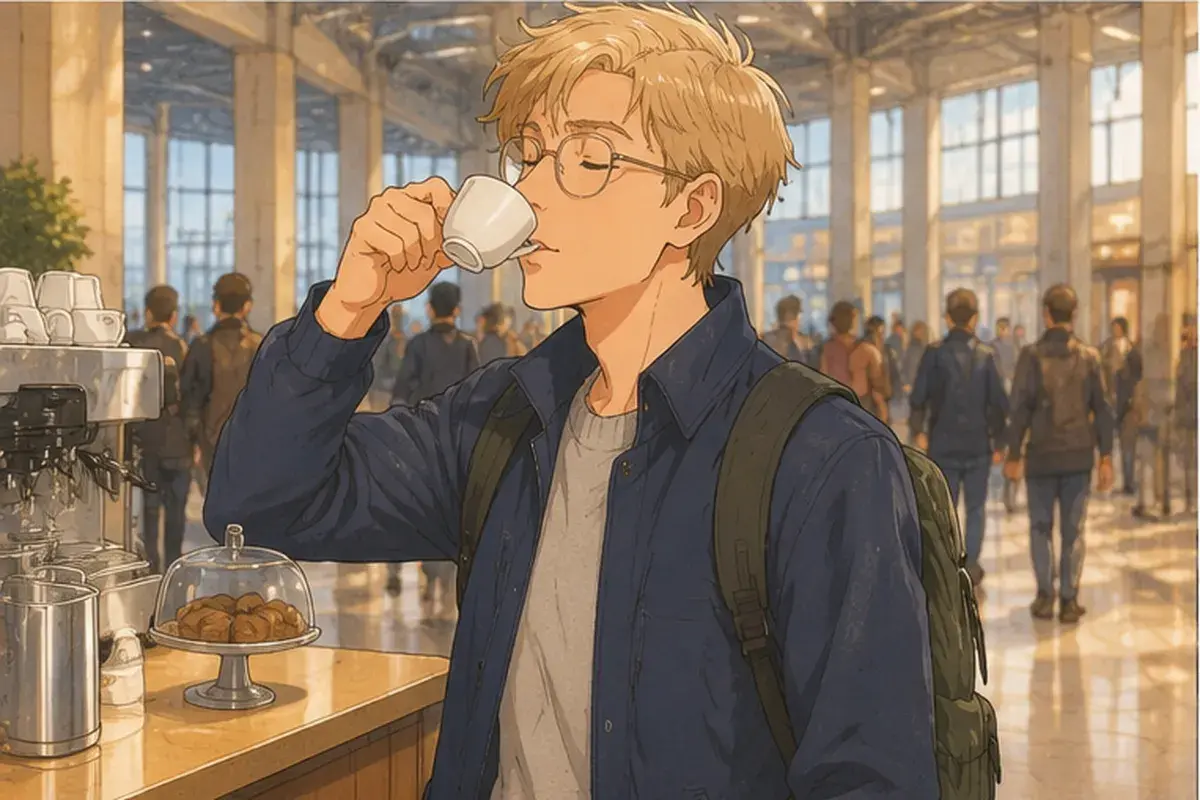
Alla stazione mi bevo un caffè in piedi, poi raggiungiamo il Lingotto, una vecchia fabbrica di macchine.
At the station I have a coffee standing up, then we reach the Lingotto, an old car factory.
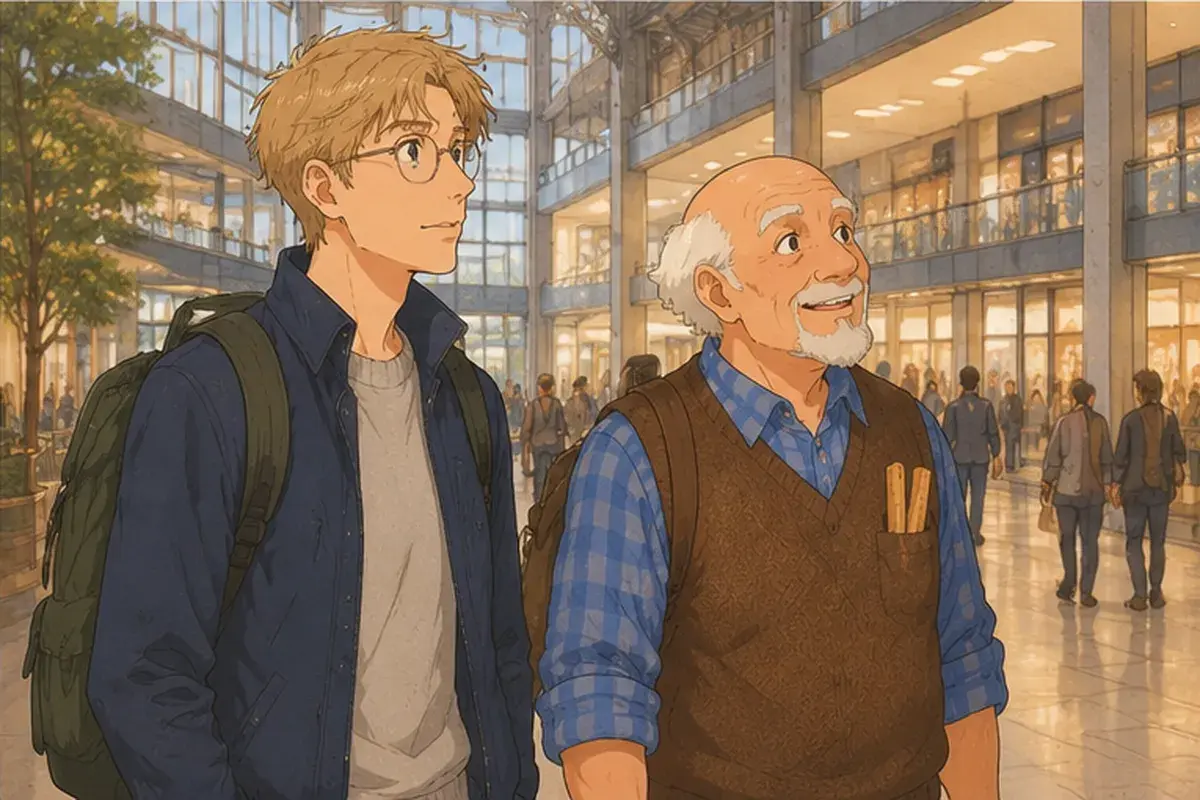
Oggi è un centro commerciale, con negozi e spazi per le fiere.
Today it's a shopping mall, with stores and spaces for trade fairs.
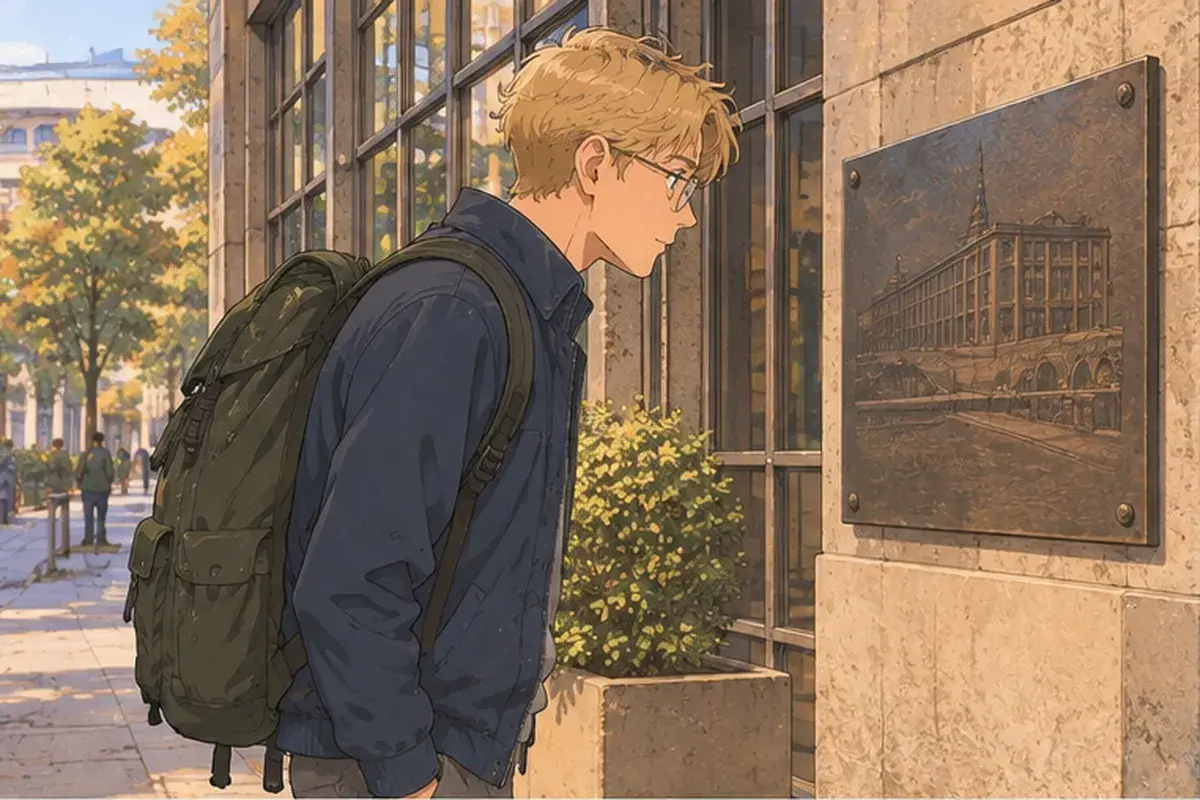
All'ingresso c'è una targa. Leggo: «La fabbrica fu inaugurata negli anni Venti.»
There's a plaque at the entrance. I read: "The factory was opened in the 1920s."
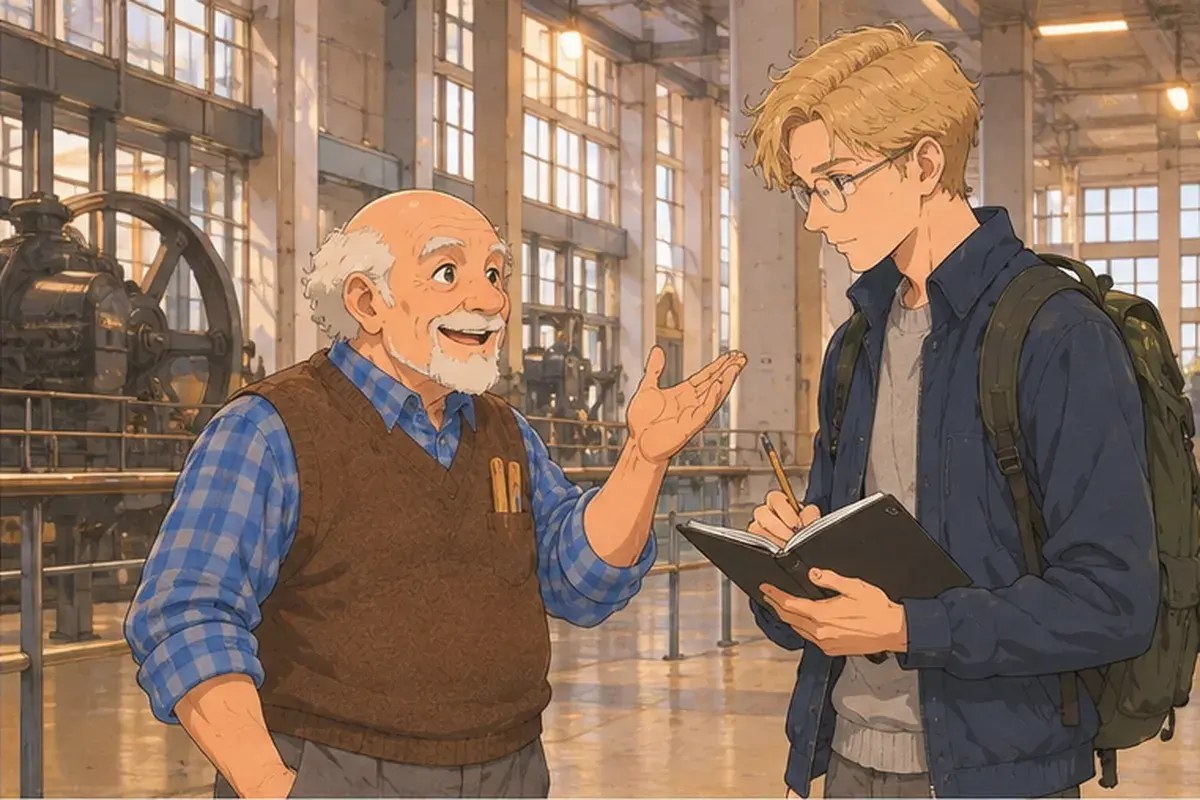
Gianni mi spiega che qui nascevano le macchine: alcuni operai facevano i motori, altri le ruote.
Gianni explains to me that cars were made here: some workers made the engines, others the wheels.
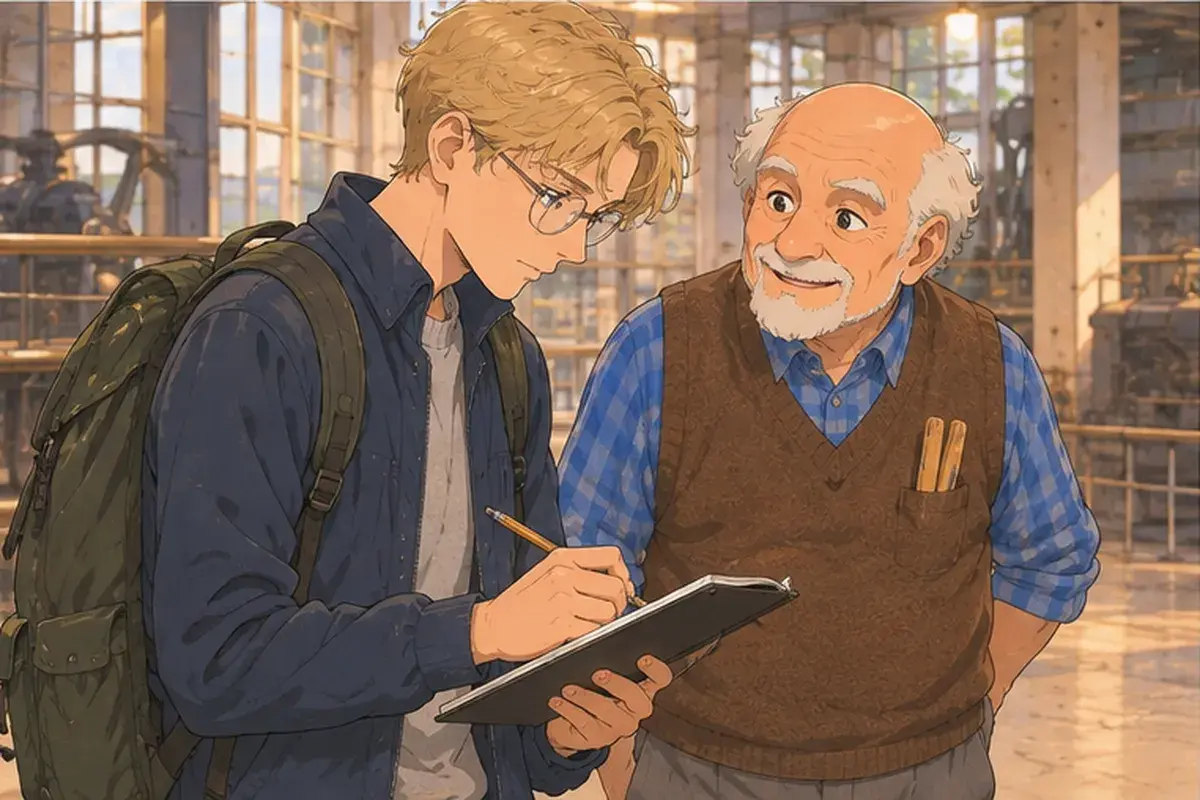
Ognuno aveva il suo compito, come in una squadra di calcio: così tante famiglie tiravano avanti e hanno messo radici a Torino.
Everyone had their own job, like on a soccer team: that's how so many families got by and put down roots in Turin.
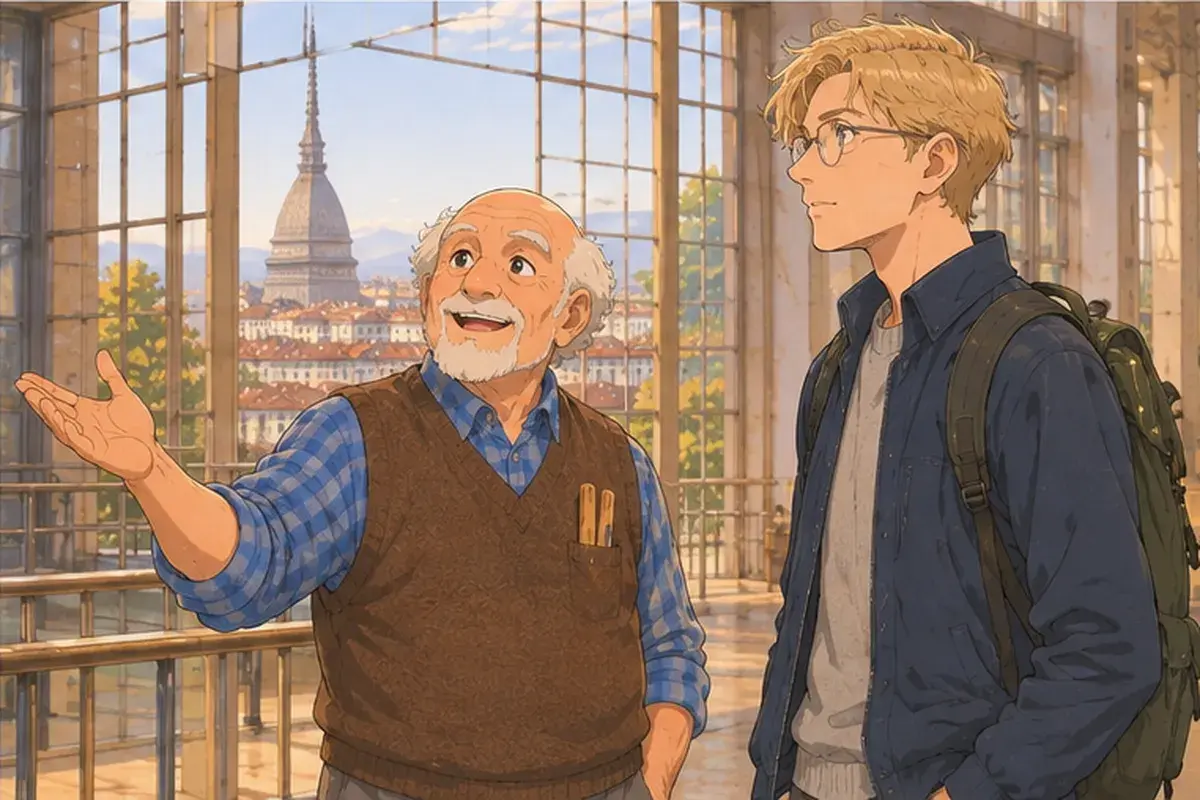
Gianni dice che l'industria ha dato lavoro a tanta gente: è la ragione per cui la crescita della città era incredibile.
Gianni says that industry gave jobs to a lot of people: that's the reason the city's growth was incredible.
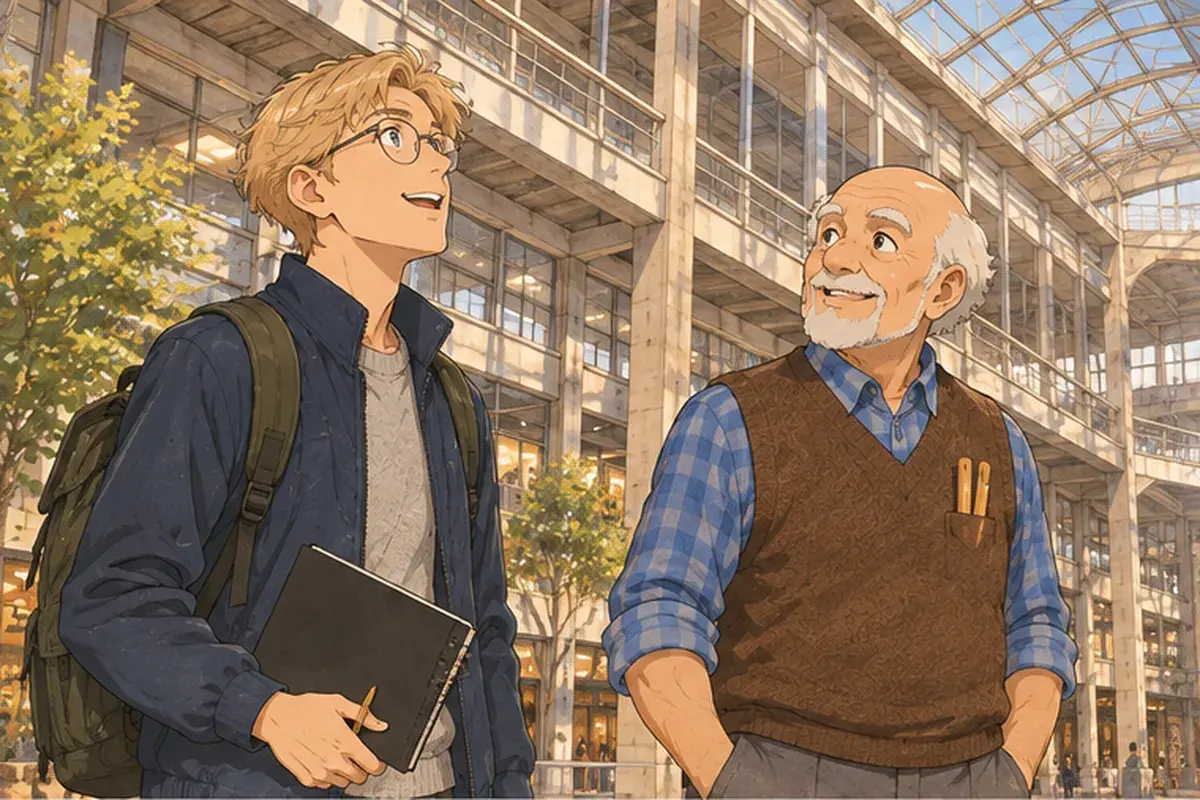
Poi la fabbrica ha chiuso e qualcuno voleva buttare giù tutto, ma il Lingotto è rinato. Penso che per un architetto questa trasformazione sia una grande ispirazione.
Then the factory closed and someone wanted to tear it all down, but the Lingotto was reborn. I think this transformation is a great inspiration for an architect.
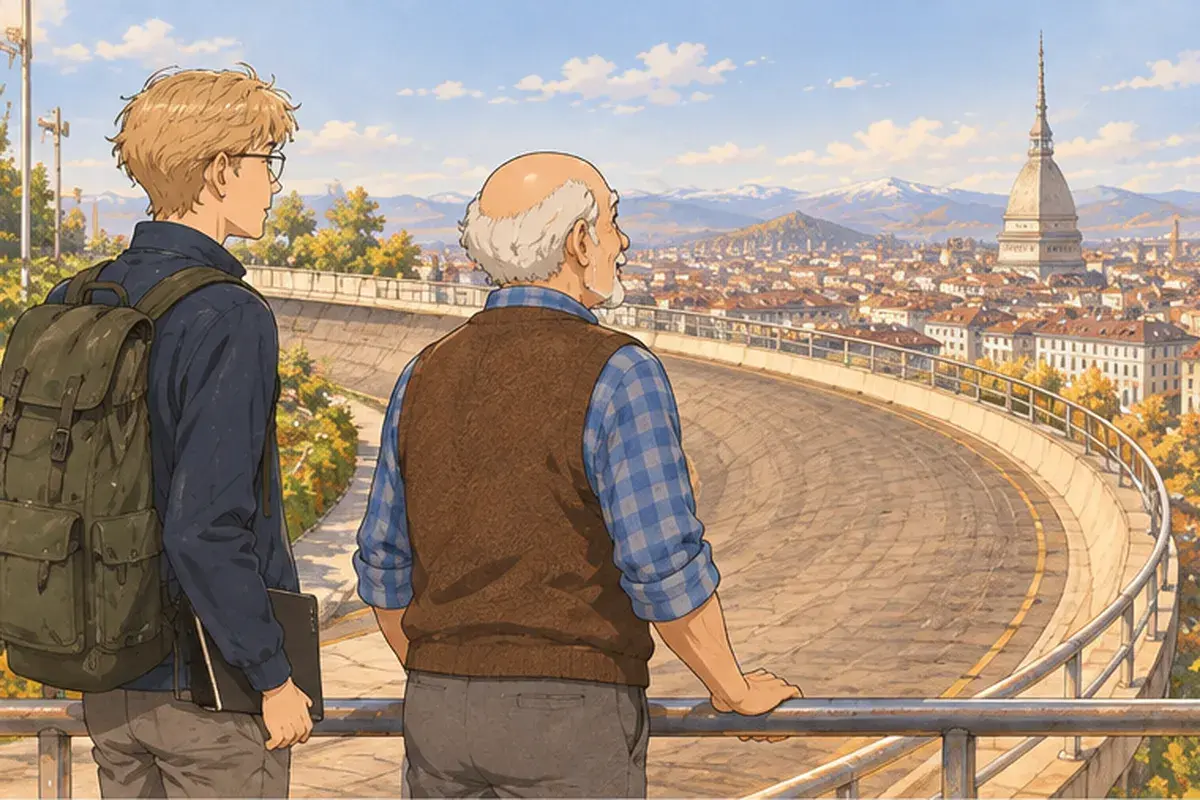
Saliamo sul tetto: c'è ancora la vecchia pista.
We go up to the roof: the old track is still there.
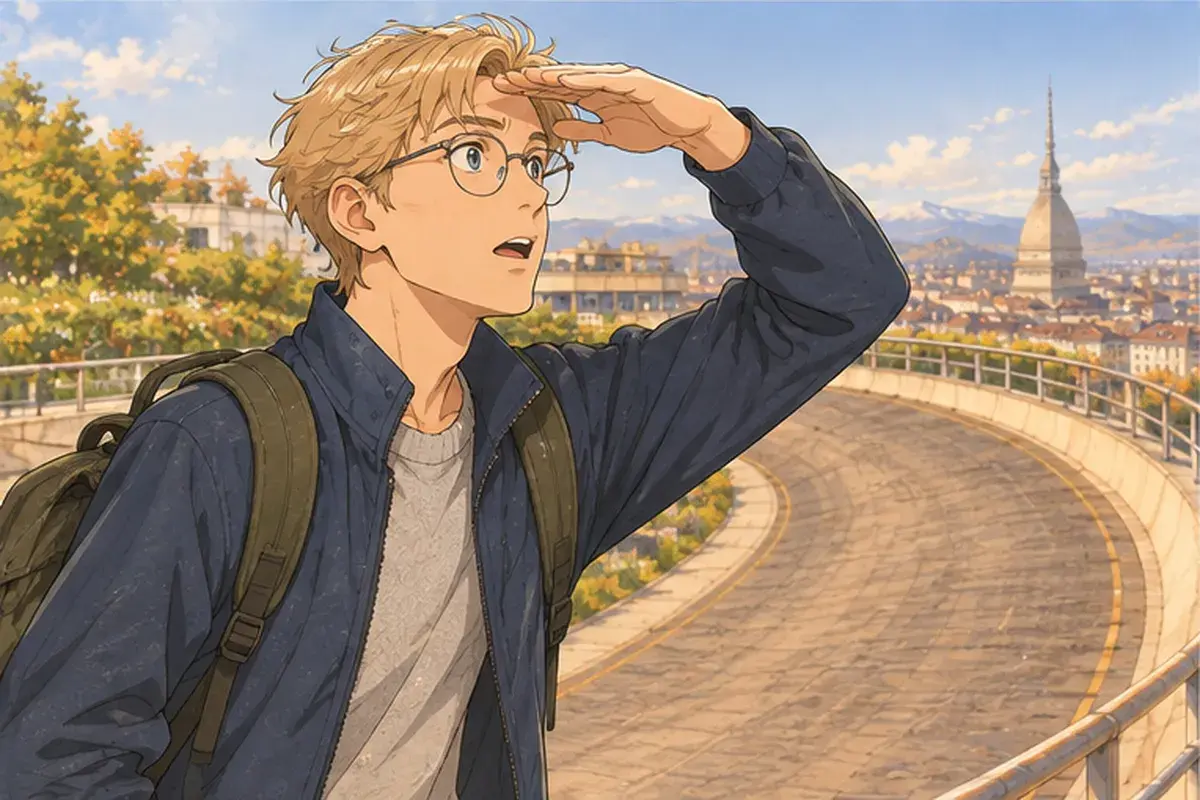
Incredibile: le macchine correvano sul tetto! Oggi qui c'è un giardino.
Incredible: cars used to race on the roof! Today there's a garden here.
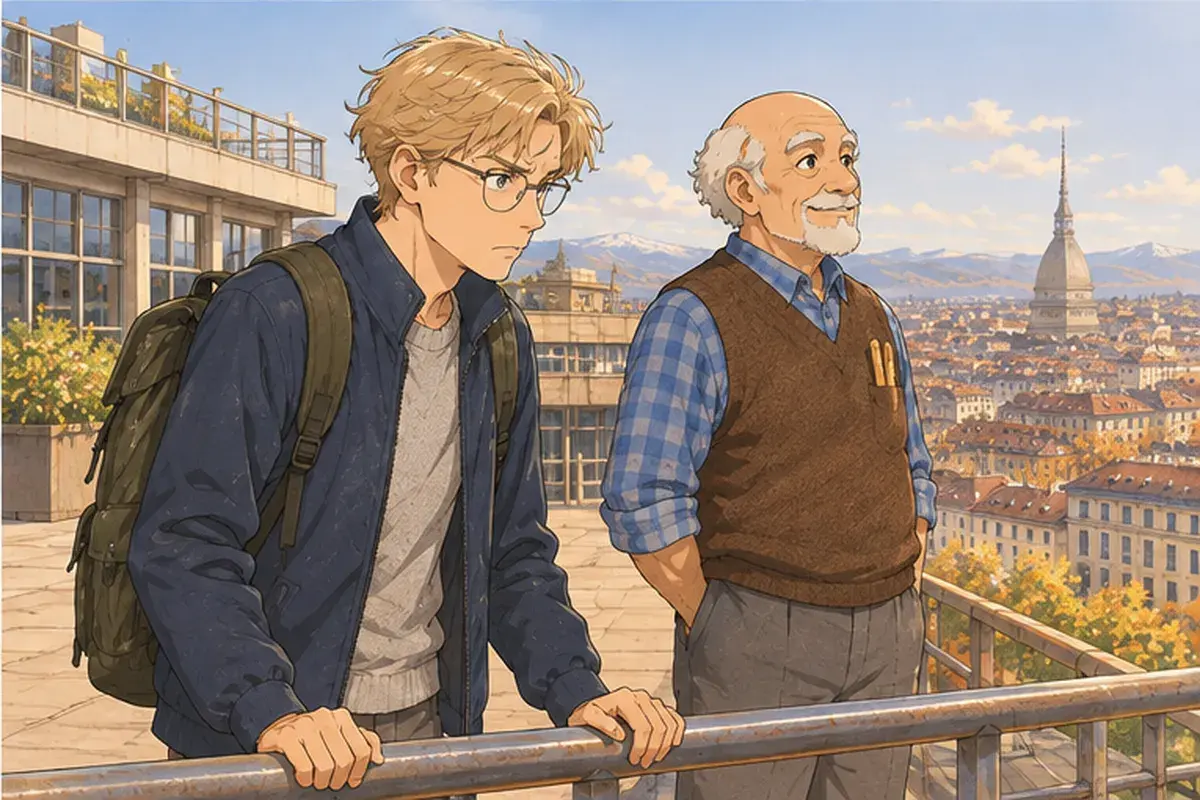
Da qui si vede tutta la città: io non guardo giù, ma è un posto davvero suggestivo.
From here you can see the whole city: I don't look down, but it's a really atmospheric place.
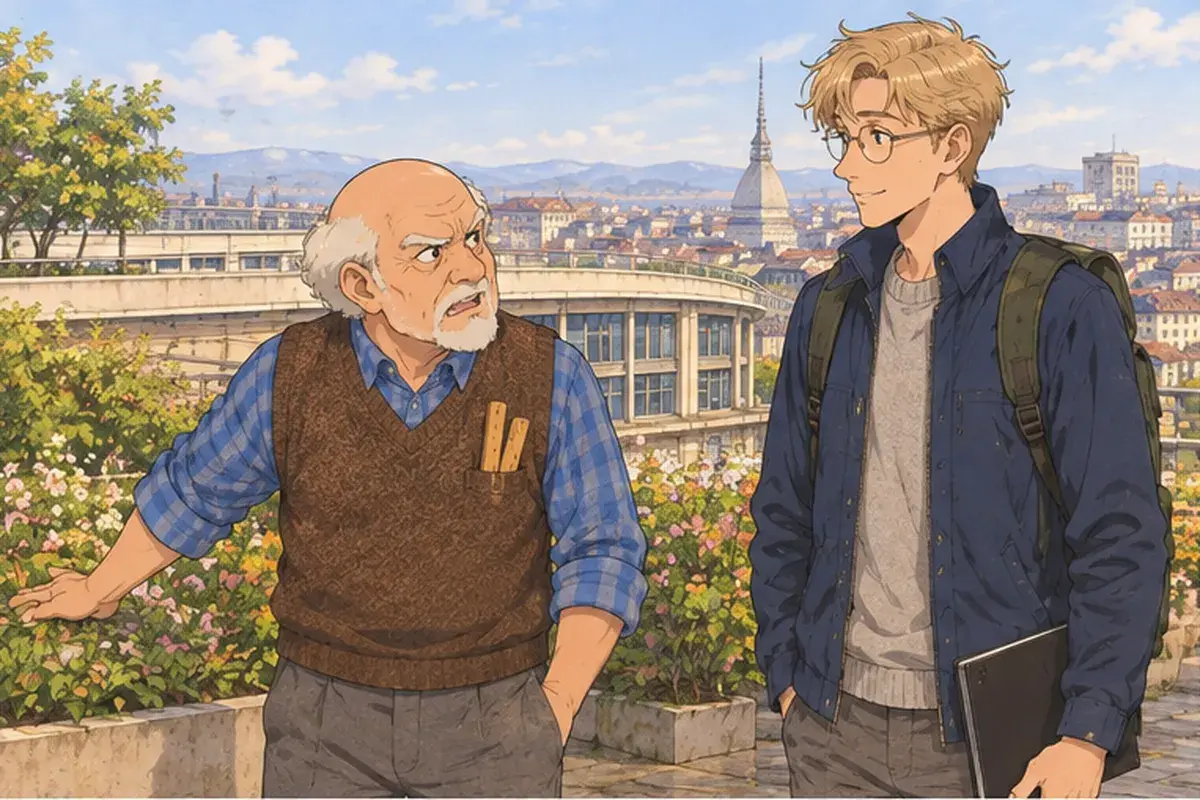
Gianni però brontola: «Hanno tolto le macchine e hanno messo i fiori!»
But Gianni grumbles: "They took away the cars and put in flowers!"
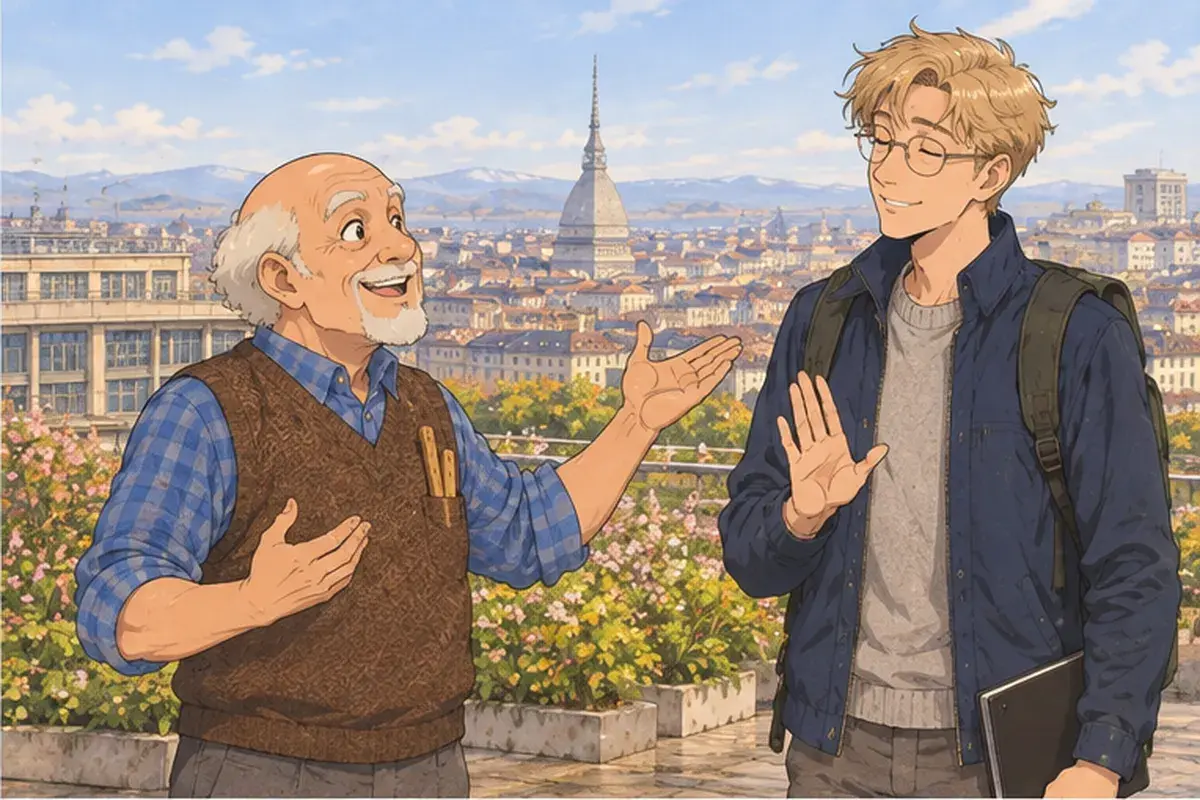
Poi mi propone di vedere le mummie del museo Egizio. Anche se mi piacerebbe, oggi non abbiamo tempo. Le mummie possono aspettare: sono abituate.
Then he suggests we see the mummies at the Egyptian Museum. Even though I'd love to, we don't have time today. The mummies can wait: they're used to it.
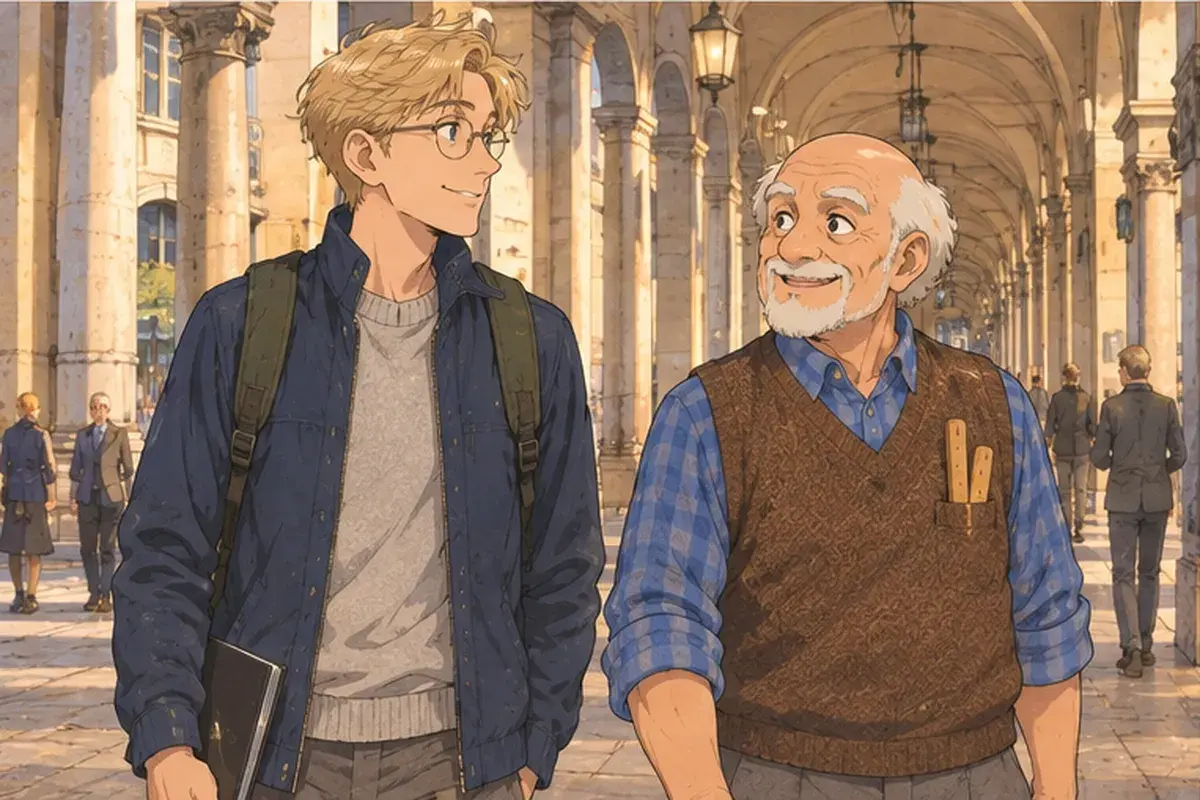
Camminiamo sotto i portici: è una passeggiata piacevole.
We walk under the porticoes: it's a pleasant walk.
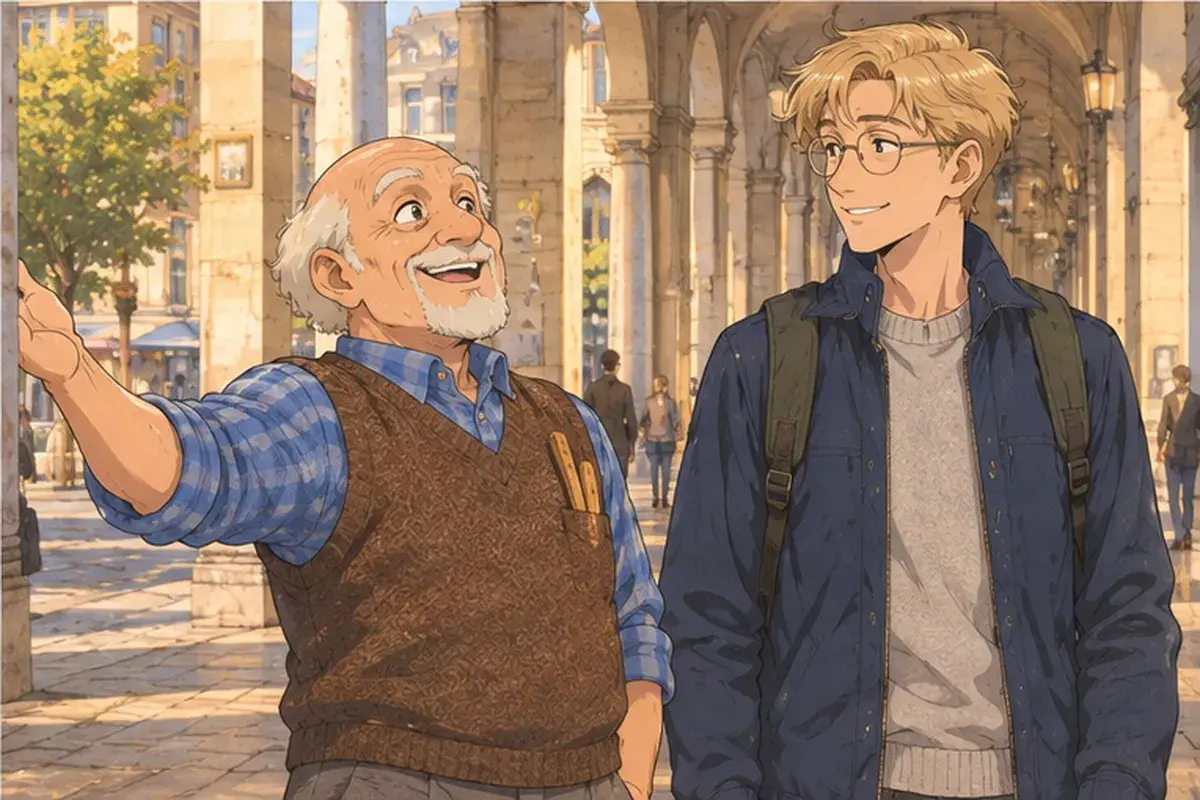
A Torino ci sono chilometri di portici, come a Bologna. Gianni giura che sono più eleganti: non lo dico a Luca!
In Turin there are kilometers of porticoes, like in Bologna. Gianni swears they're more elegant: I won't tell Luca!
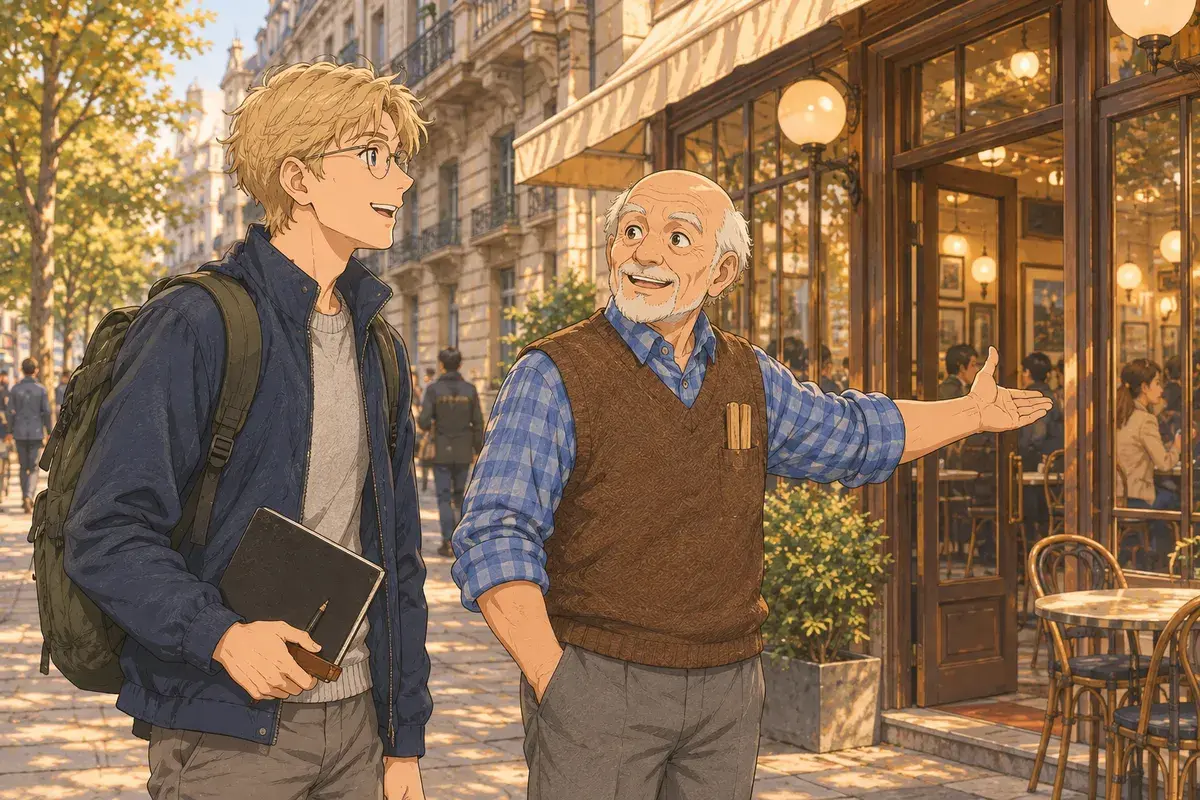
Dopo tanta strada ci prendiamo una pausa: Gianni mi porta in un vecchio caffè di cui mi parla da stamattina, in fondo a un viale.
After coming such a long way, we take a break: Gianni takes me to an old café he's been telling me about since this morning, at the end of a boulevard.
Grammar for this text
- La fabbrica fu inaugurata negli anni Venti. — the text on the plaque.
fu inaugurataisfu(a form ofessere) plus a past participle: "was opened". It is the passato remoto (literary past), written on plaques and in history books; in conversation Italians sayè stata inaugurata. The full rules come at B2, so read it as a ready-made phrase.negli=in+gli, andanni Ventimeans "the 1920s". - mi bevo un caffè — here
midoesn't mean "myself" but "for myself": a small treat. See block 2. - ci prendiamo una pausa —
cimeans "for ourselves" again: we take a break. - qualche curiosità —
qualchemeans "a few", but the noun after it is singular. See block 1.curiositàmeans both "curiosity" and "interesting fact". - alcuni operai facevano i motori, altri le ruote —
alcuni … altrimeans "some … others"; the verb is left out in the second part. - Ognuno aveva il suo compito. —
ognunomeans "everyone" and takes a singular verb. - ci mette circa un'ora —
mettercihere means "to take (time)": the train takes about an hour. - Sembra una gita, ma è una trasferta —
gitais a day trip for fun,trasfertais a business trip. - la ragione per cui —
per cuimeans "why, for which" (unit 11). - Penso che … sia —
siais the congiuntivo presente: an opinion, not a fact (unit 8). - di cui mi parla —
parlare dibecomesdi cui: "which he talks to me about". - Anche se mi piacerebbe —
anche semeans "even though" (unit 12). - il Lingotto è rinato —
rinascere("to be reborn") takesesserein the past. - Le macchine correvano —
correvanois the imperfetto: it describes how things used to be.
Words and grammar of the unit: Tell the story of a city.
Learn the words from the texts with flashcards
In the app, you can tap any word in a text to see its translation, forms and examples, and new words stick with flashcards. 15 minutes a day.
Start for freeEverything is open for free. No card needed to sign up.