
Italian story with translation · B1 · 18 lines
Finalmente qualcuno l'ha usata Finally, someone's used it
Comic · 18 panels
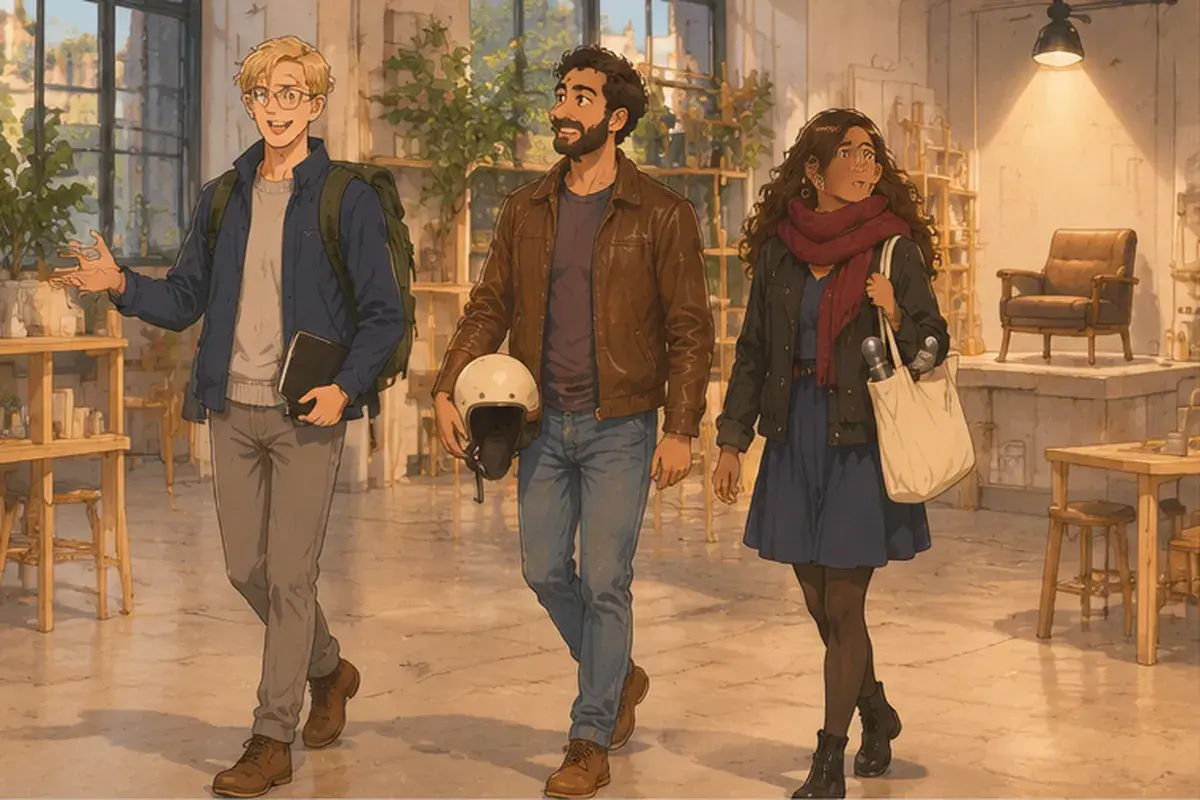
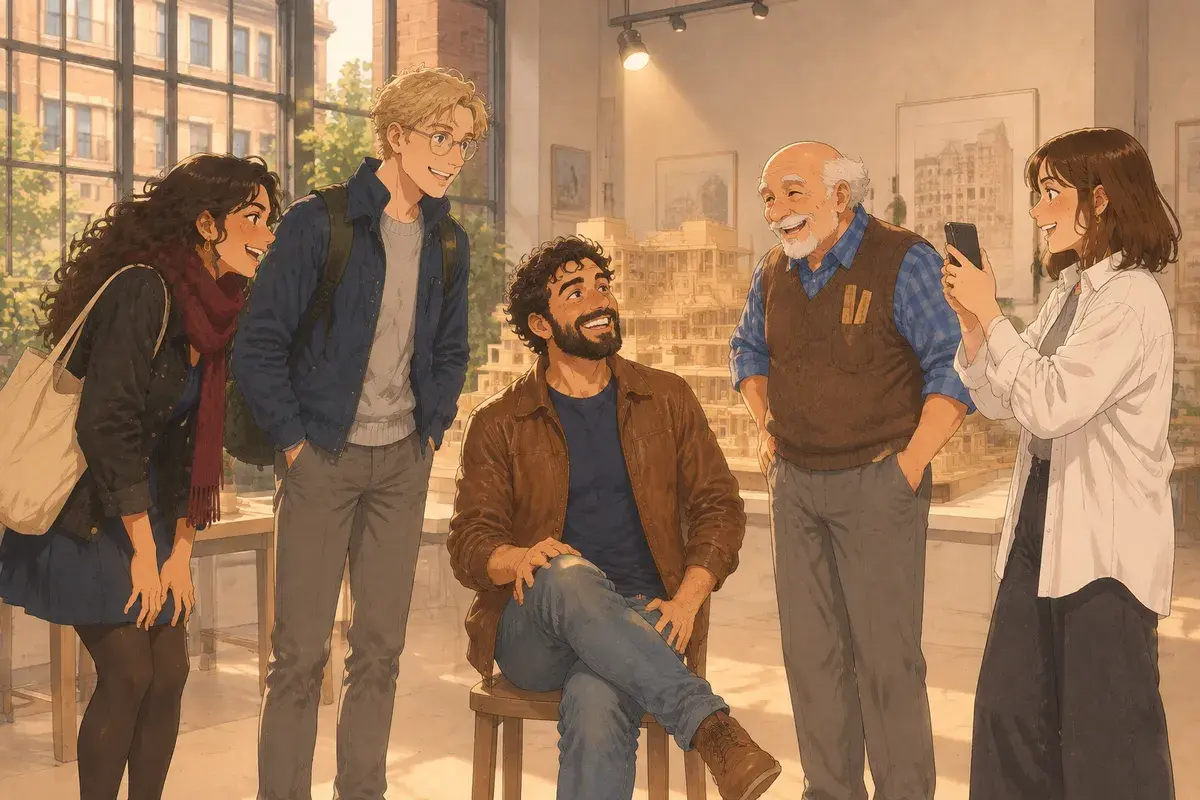
Il giorno dopo porto Luca e Giulia in Isola: il nostro studio espone il plastico della tipografia e i mobili.
The next day I take Luca and Giulia to Isola: our studio is exhibiting the model of the print shop and the furniture.
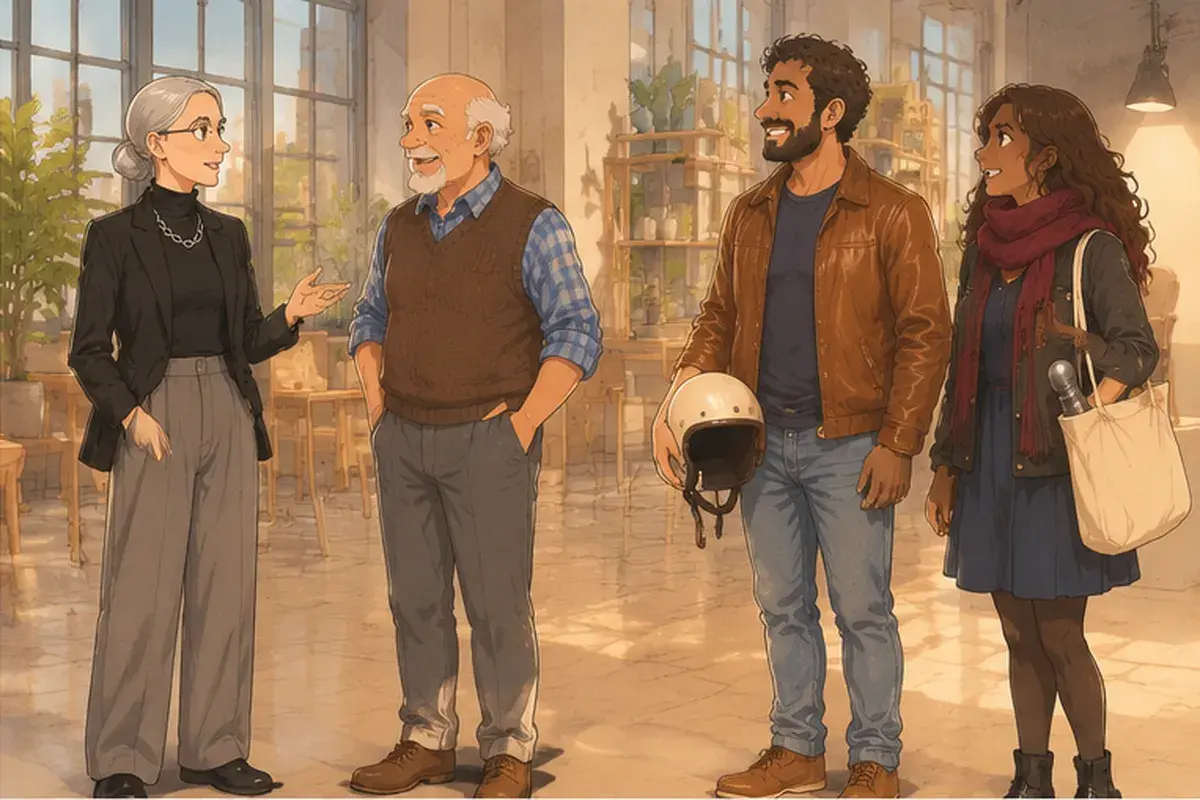
All'ingresso Ludovica presenta Gianni a Luca e Giulia: «È un mio vecchio amico: lavoriamo insieme da tanti anni!»
At the entrance Ludovica introduces Gianni to Luca and Giulia: "He's an old friend of mine: we've worked together for many years!"
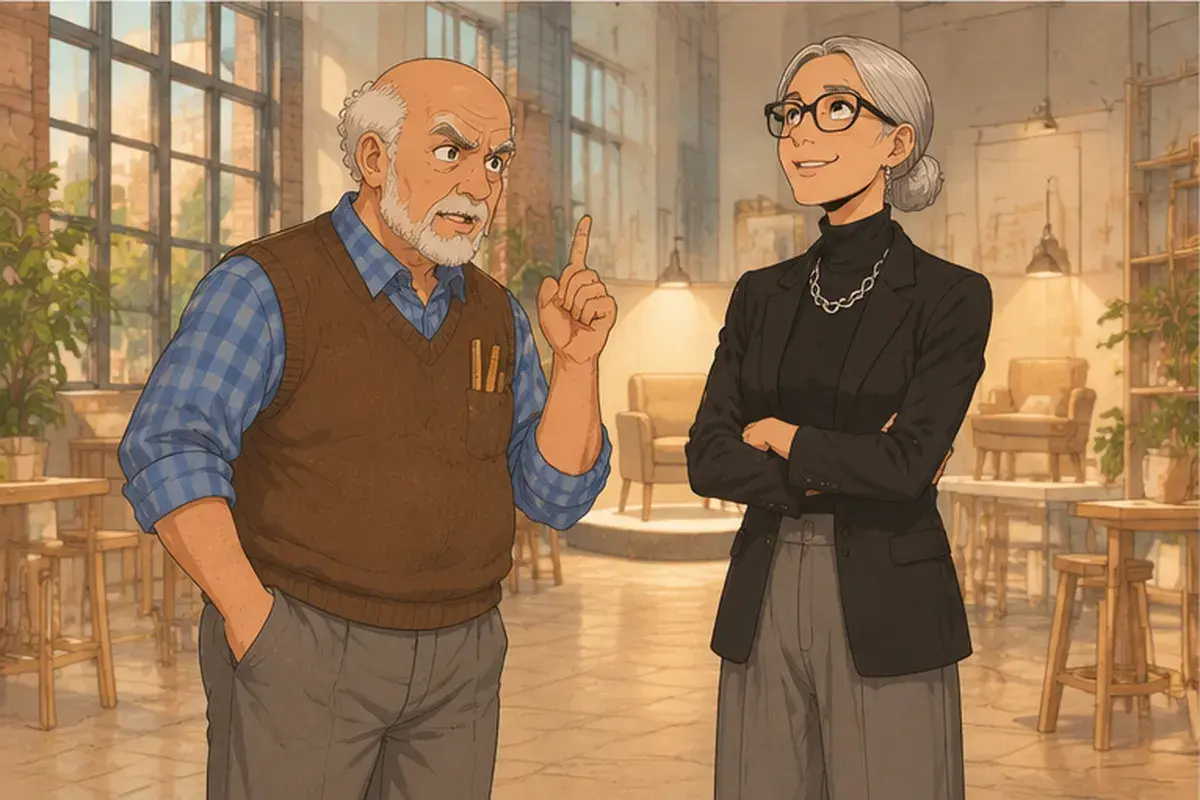
Gianni brontola: «Un vecchio amico va bene. Un amico vecchio no!»
Gianni grumbles: "An old friend is fine. An elderly friend, no!"

I mobili sono di una giovane designer. Ha realizzato tutto con il legno vecchio della tipografia in cui avevamo fatto il sopralluogo.
The furniture is by a young designer. She made everything with the old wood from the print shop where we had done the site visit.
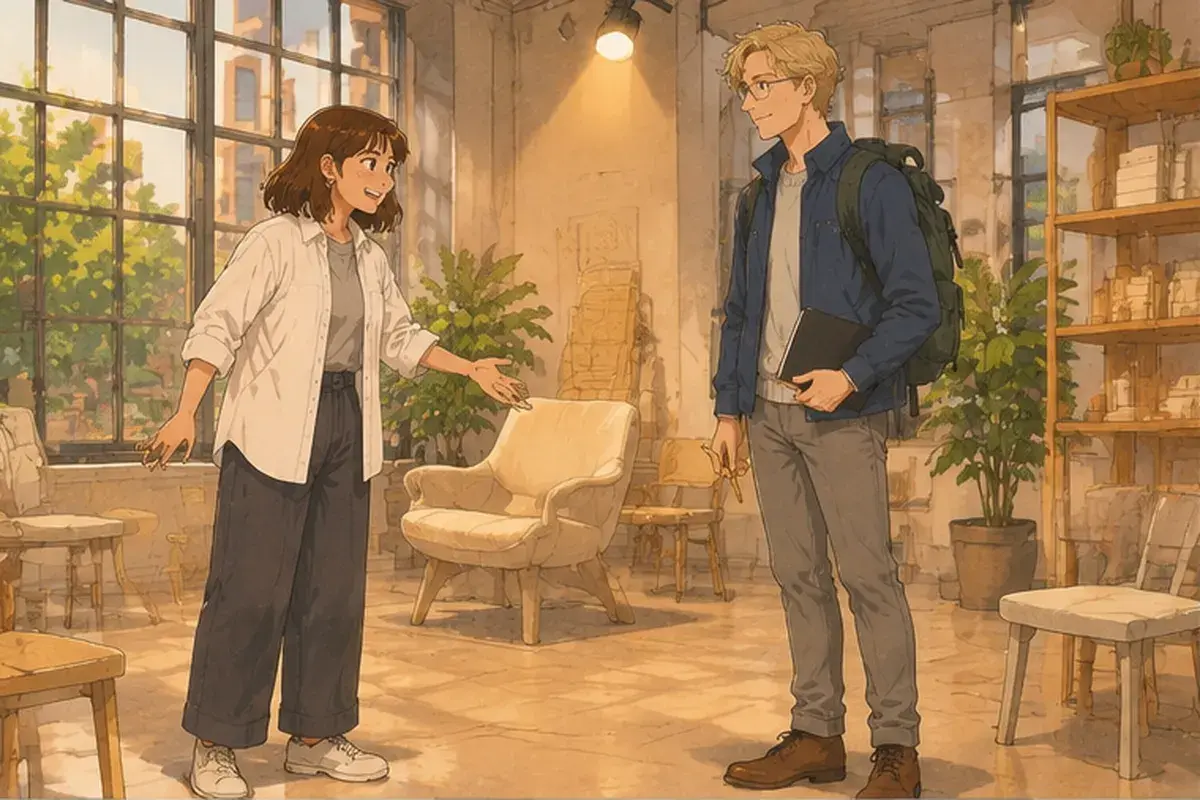
Si è laureata l'anno scorso, e Ludovica pensa che abbia molto talento: questa è la sua prima mostra.
She graduated last year, and Ludovica thinks she has a lot of talent: this is her first exhibition.
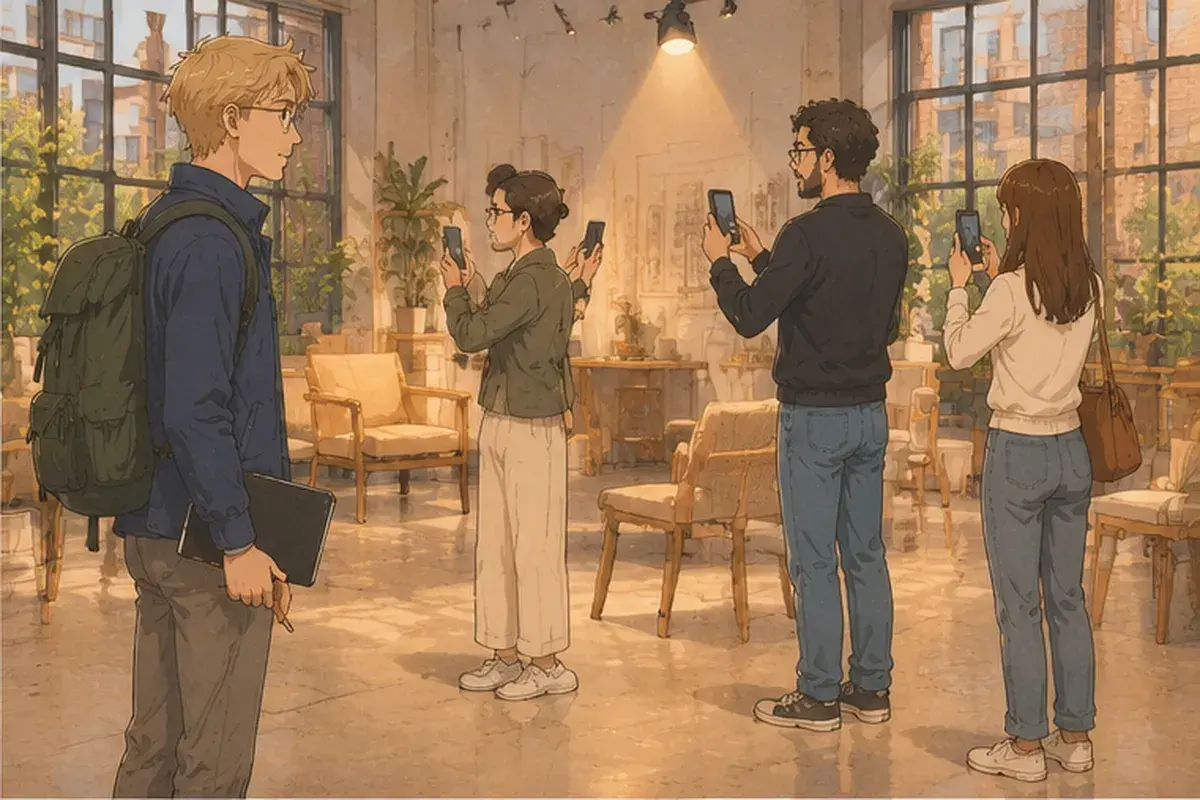
In sala arrivano sempre più visitatori. Fotografano ogni mobile, ma nessuno si siede.
More and more visitors are coming into the room. They photograph every piece of furniture, but nobody sits down.
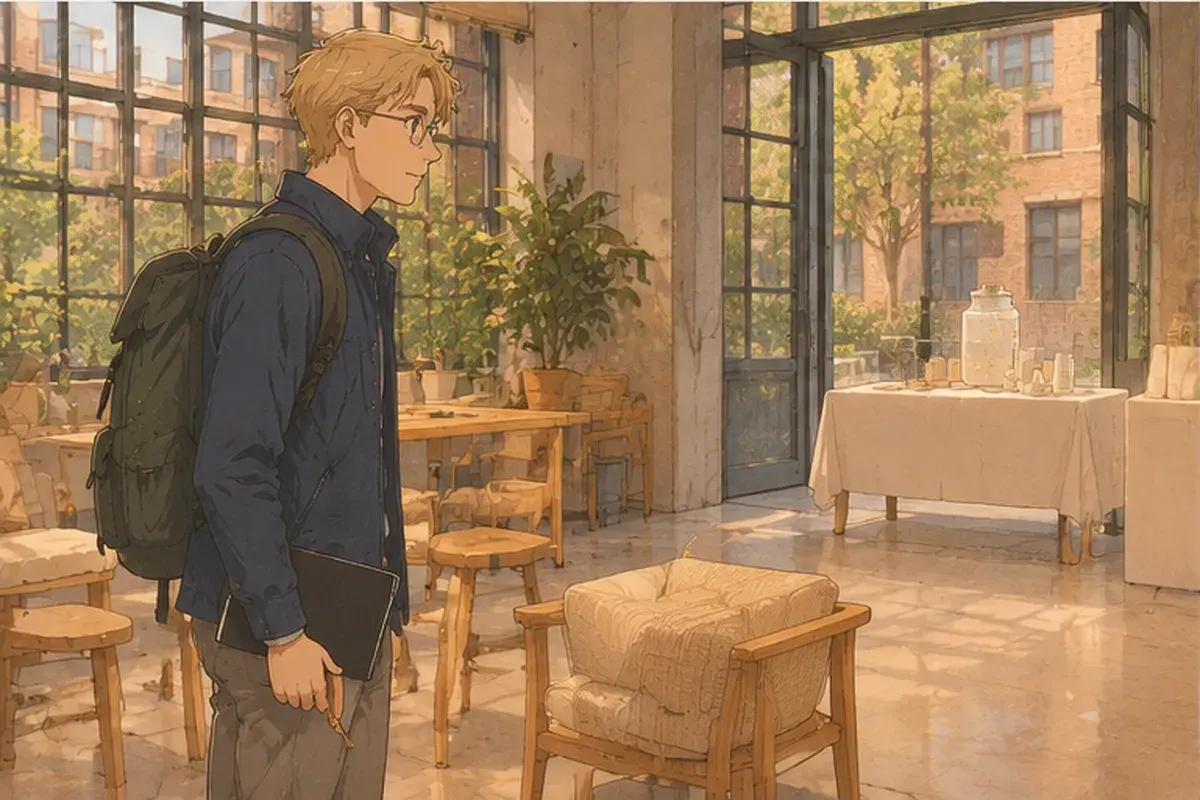
Gli sgabelli, gli scaffali e le poltrone sembrano fragili. Nel cortile c'è anche un rinfresco, ma tutti restano in sala.
The stools, shelves and armchairs look fragile. There are also refreshments in the courtyard, but everyone stays in the room.
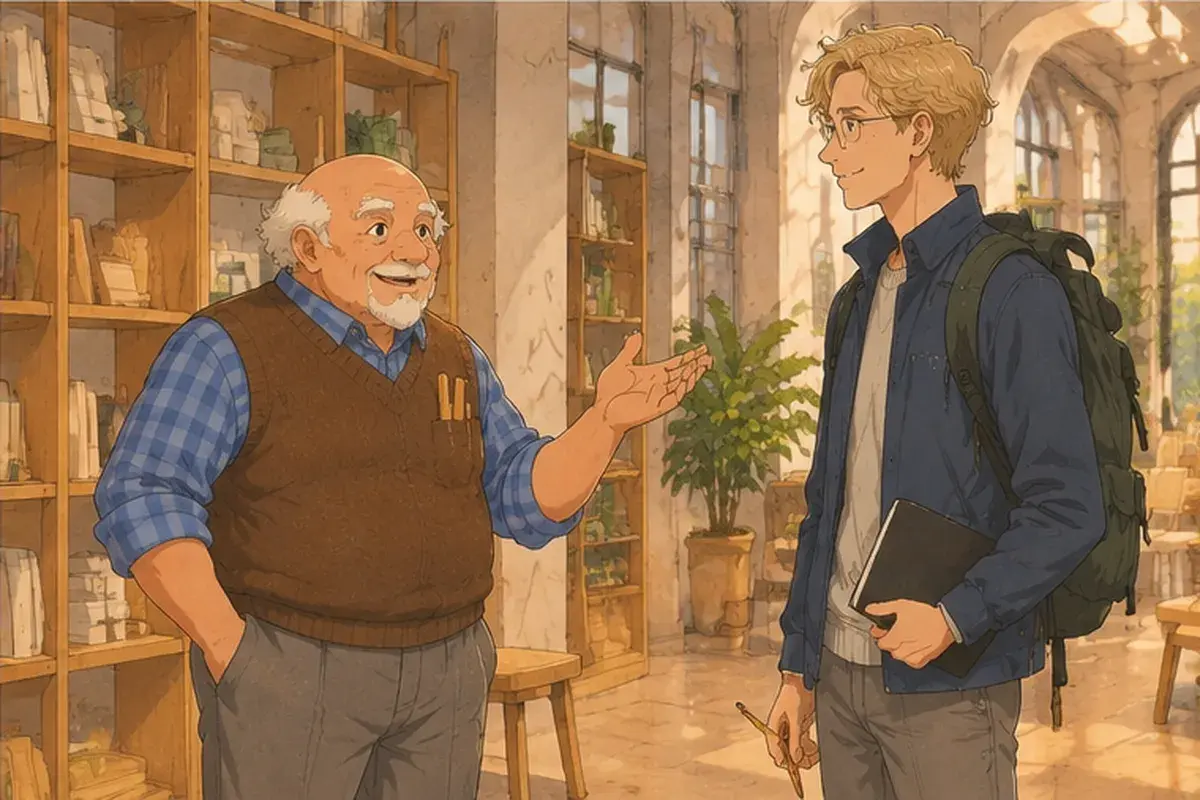
«Io non capisco il gusto di oggi», dice Gianni, «ma la tendenza è il legno vecchio. Il passato è di moda, e domani passerà di moda anche questo.»
"I don't understand today's taste," says Gianni, "but the trend is old wood. The past is in fashion, and tomorrow this will go out of fashion too."
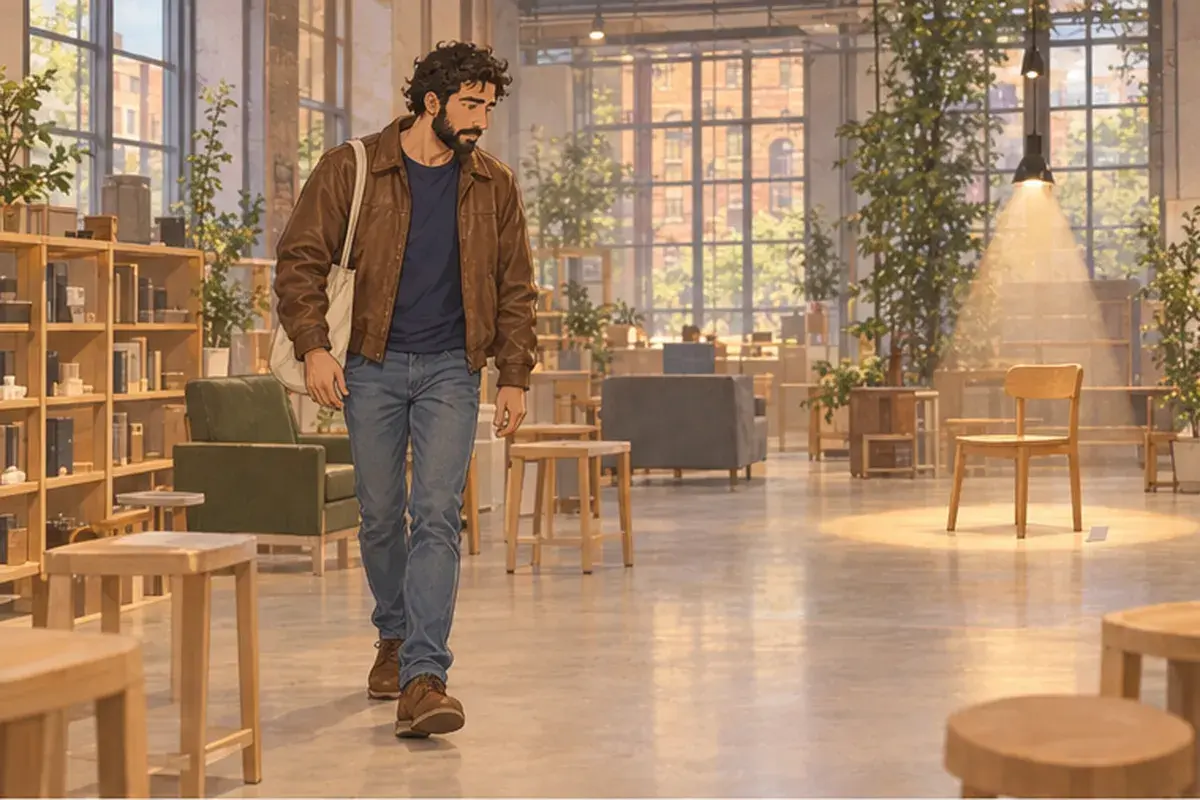
Siccome ha camminato tutto il giorno, Luca ha i piedi stanchi e cerca un posto per sedersi.
Since he's been walking all day, Luca's feet are tired and he's looking for a place to sit.
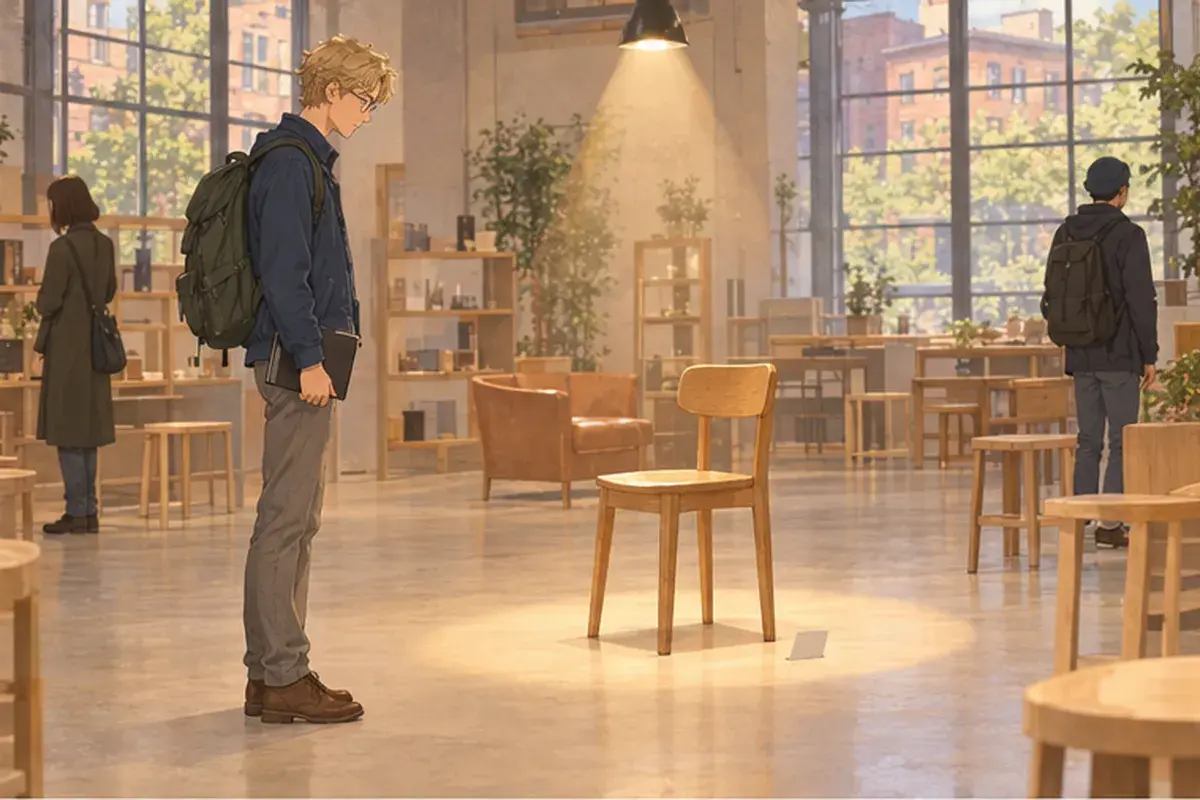
In mezzo alla sala c'è una sedia sola, sotto una luce. Per terra c'è un piccolo cartello: «Opera d'arte».
In the middle of the room there's a single chair, under a light. On the floor there's a small sign: "Work of art."
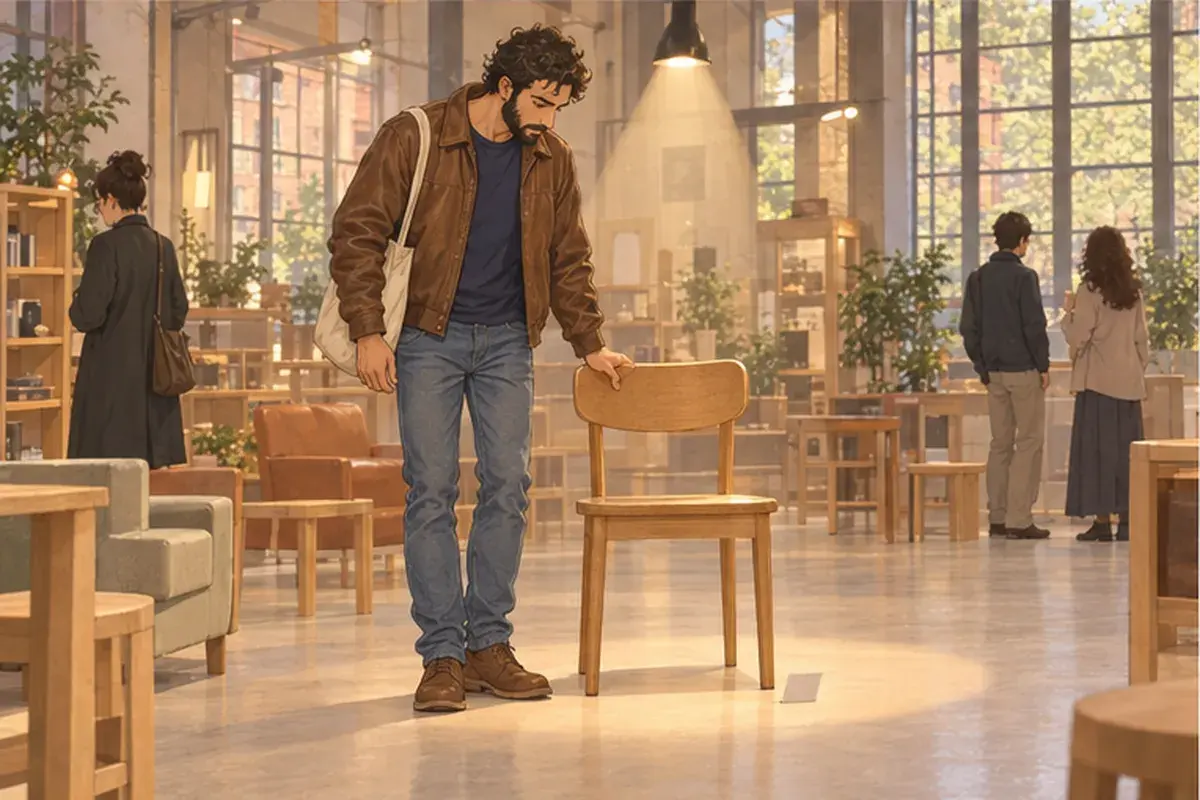
Luca non vede il cartello. Guarda la sedia, guarda i suoi piedi e si siede.
Luca doesn't see the sign. He looks at the chair, looks at his feet and sits down.
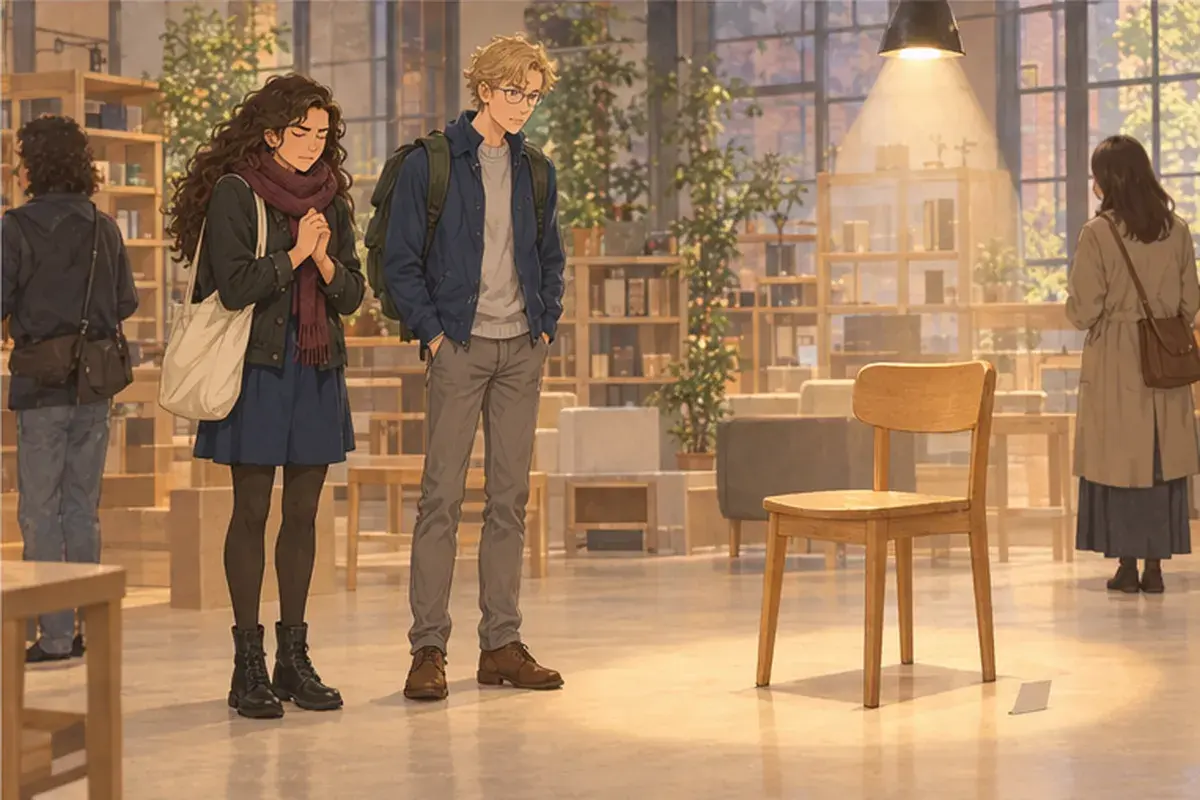
Tutti si fermano. Giulia chiude gli occhi. Io penso: «Reggerà?»
Everyone freezes. Giulia closes her eyes. I think: "Will it hold?"
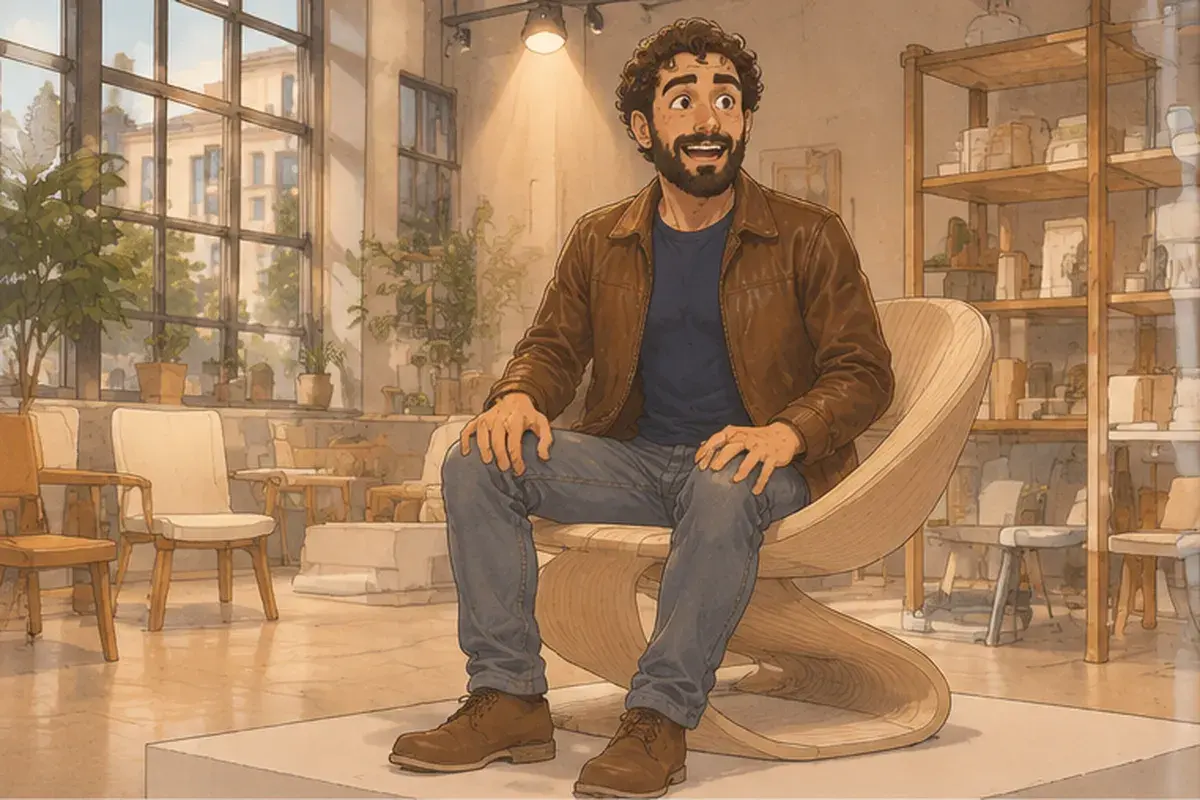
La sedia fa un piccolo rumore, poi niente. Regge!
The chair makes a small noise, then nothing. It holds!
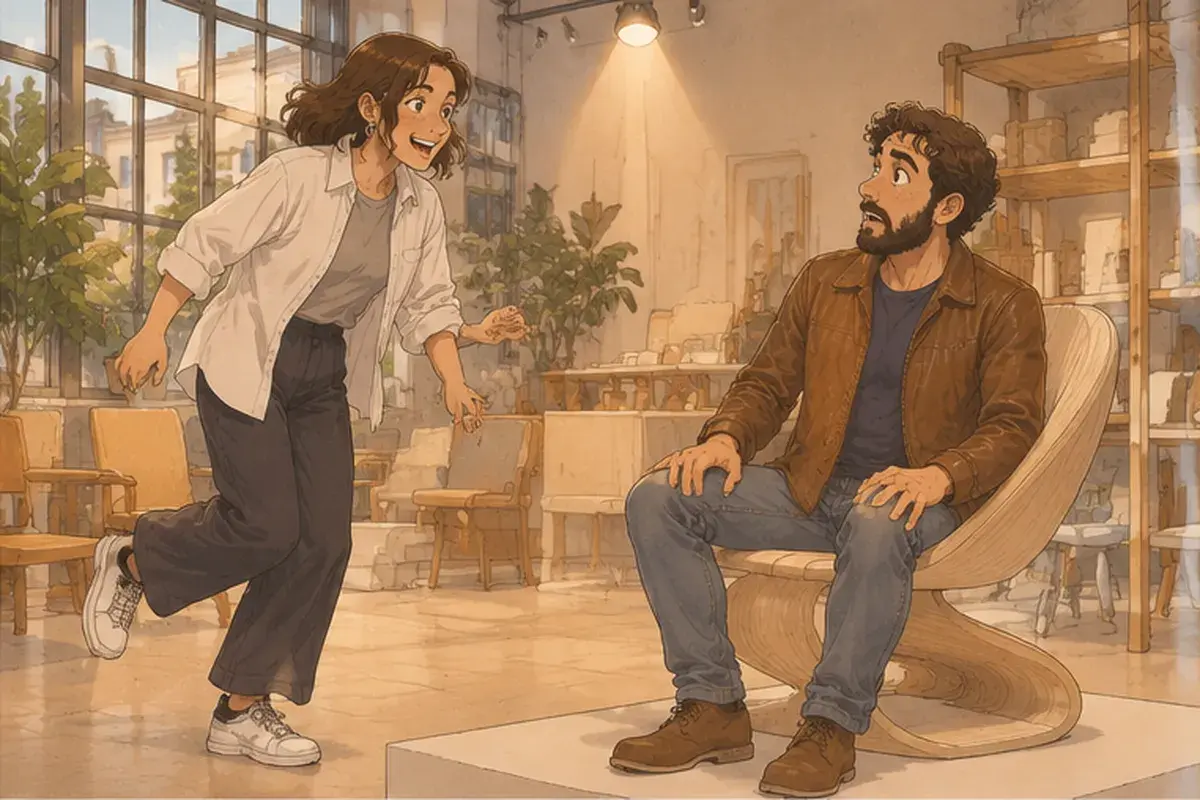
Una ragazza arriva di corsa. Io penso: «Adesso grida!» Invece sorride.
A girl comes running. I think: "Now she'll scream!" But she smiles.
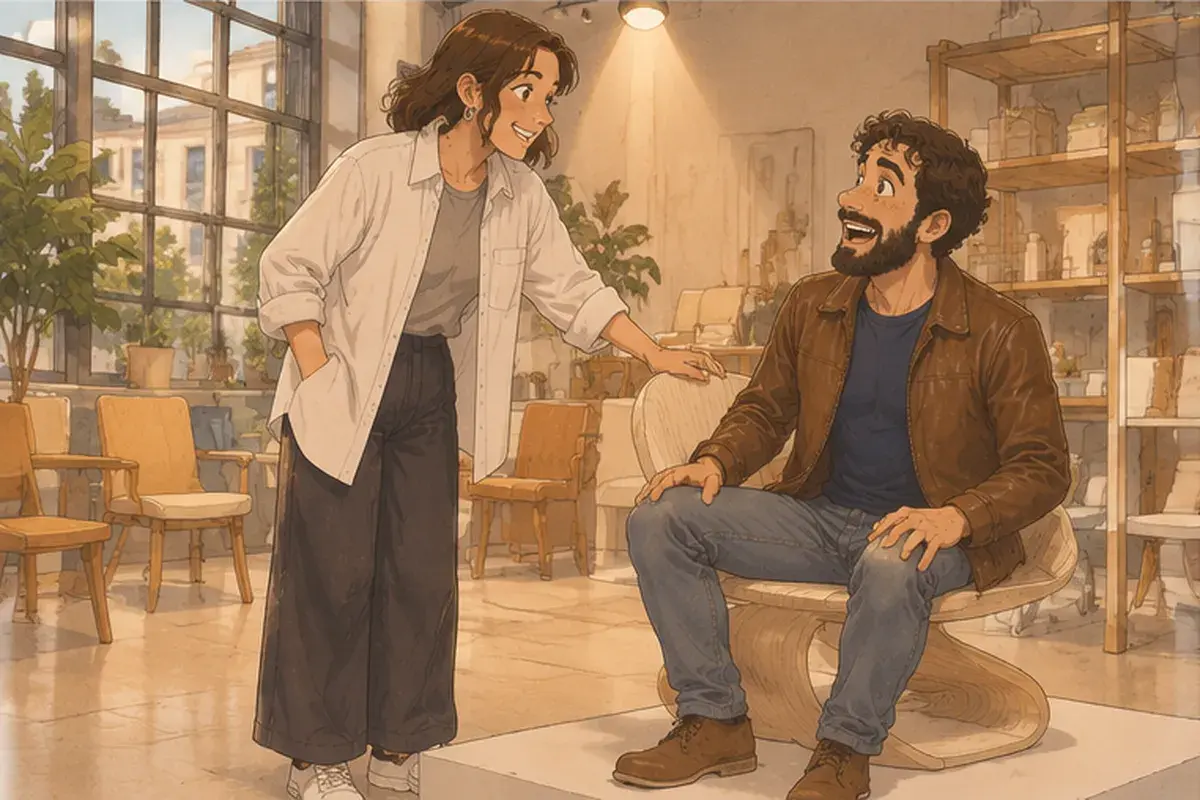
«Finalmente qualcuno l'ha usata!» dice la designer. «Una sedia serve per sedersi.»
"Finally someone's used it!" says the designer. "A chair is for sitting."
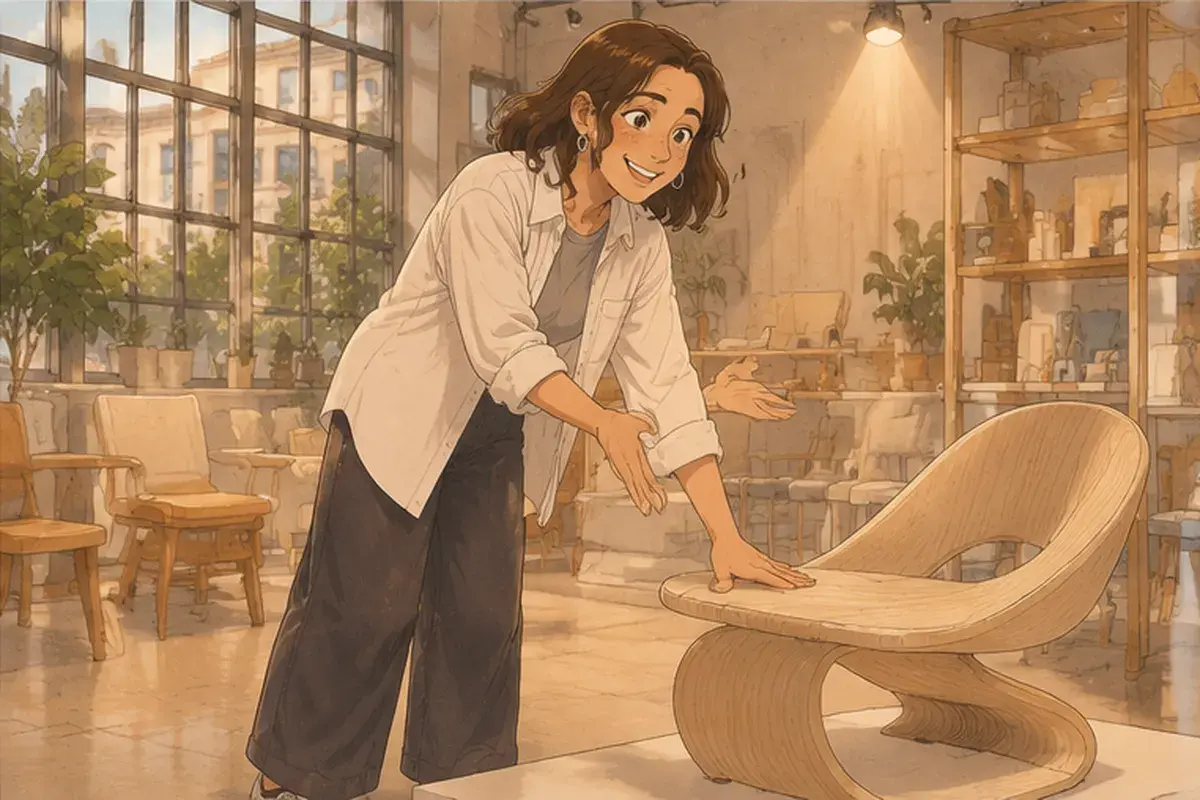
«È piccola e sembra fragile, ma è resistente. La sedia è stata costruita con il legno della vecchia tipografia.»
"It's small and looks fragile, but it's sturdy. The chair was built with wood from the old print shop."

Luca, ancora seduto, legge il cartello. «Posso alzarmi o sono diventato un'opera d'arte anch'io?»
Luca, still seated, reads the sign. "Can I get up, or have I become a work of art too?" (man speaking)
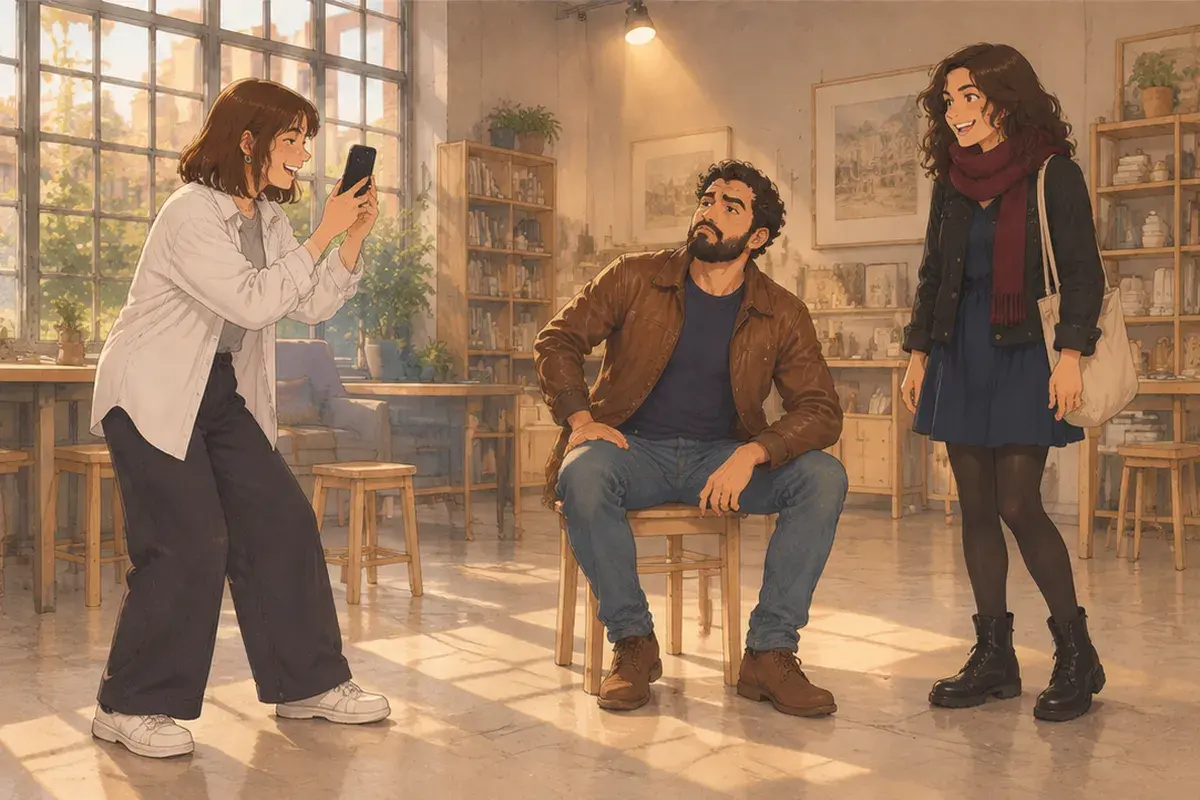
«Resta pure!» ride lei. «Ti fotografo: voglio più visitatori come te.»
"Feel free to stay!" she laughs. "I'll take your picture: I want more visitors like you."
Grammar for this text
- La sedia è stata costruita con il legno… — the passive:
essere+ past participle, "the chair was built with wood from…" It doesn't say who built it. For now, just learn it as a set form for signs and captions. - Finalmente qualcuno l'ha usata! —
l'isla("it", the chair,la sedia) beforeha. The participleusatais feminine because it agrees withla. - È un mio vecchio amico — before the noun,
vecchio amicomeans "old (long-time) friend." - Un amico vecchio no! — after the noun,
amico vecchiomeans "elderly friend." Gianni pretends to be offended. The rule is in the adjective position block of the grammar. - Il passato è di moda —
il passatois "the past": a past participle working as a noun (see the block on participles as nouns).di modameans "in fashion." - Reggerà? —
reggeràis the futuro semplice (future tense) ofreggere("to hold"): a guess, "will it hold?" - in cui avevamo fatto il sopralluogo —
in cuimeans "in which," andavevamo fattois the trapassato prossimo (past perfect): "we had done." - Siccome ha camminato —
siccomemeans "since" and comes at the start of the sentence. - Si è laureata —
laurearsi("to graduate") is reflexive and usesessere: for a woman,si è laureata. - la sua prima mostra — here
mostrais a noun meaning "exhibition." - un'opera d'arte — feminine (
l'opera): "a work of art." - anch'io —
anche+io: "me too."Isolawith a capital letter is a neighborhood of Milan, not an island.
Words and grammar of the unit: Compare things at a design fair.
Learn the words from the texts with flashcards
In the app, you can tap any word in a text to see its translation, forms and examples, and new words stick with flashcards. 15 minutes a day.
Start for freeEverything is open for free. No card needed to sign up.