
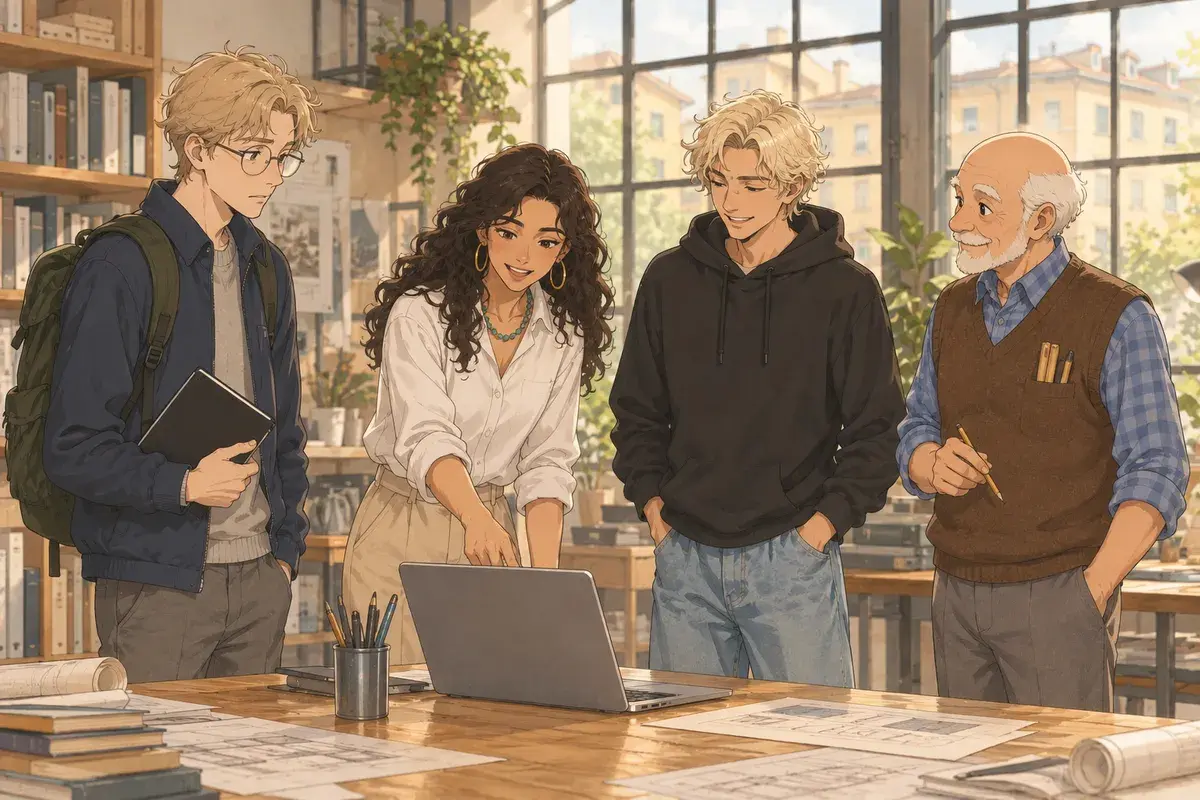
Italian dialogue with translation · B1 · 18 lines
Alle call si accende la telecamera On calls, the camera is turned on
Comic · 18 panels
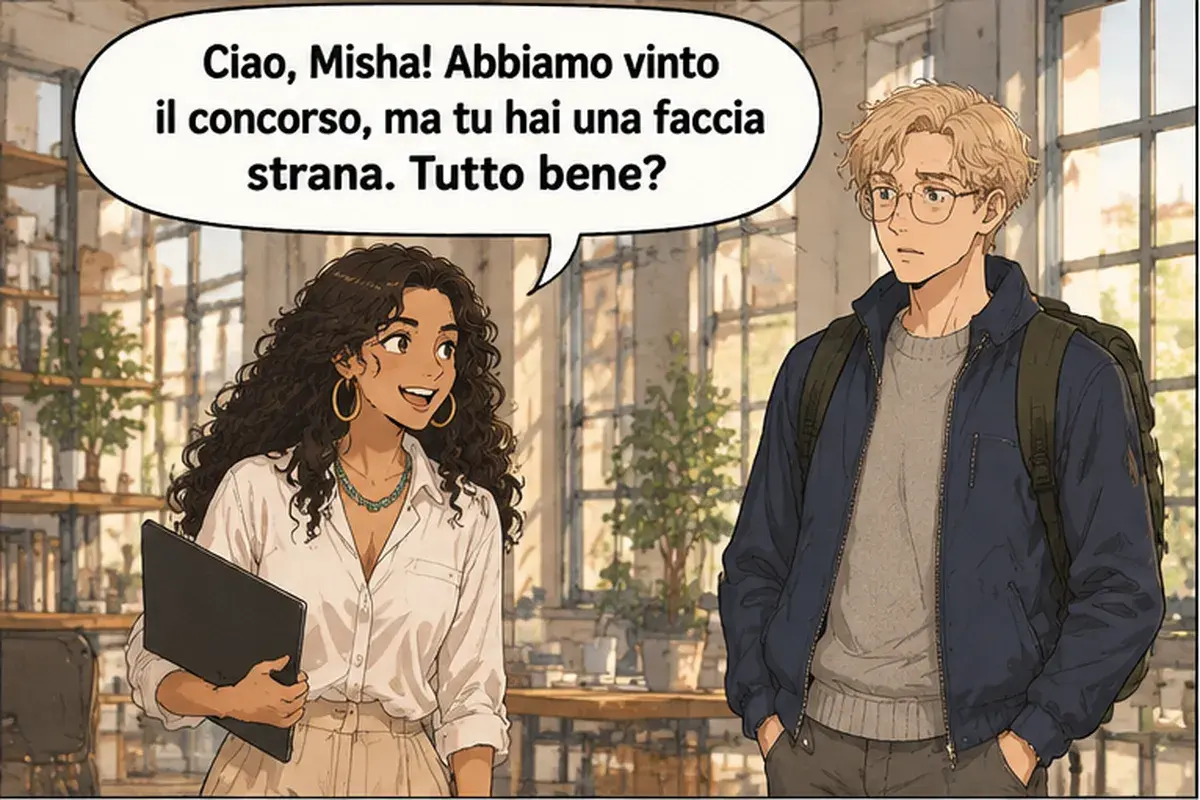
- Antonella
Ciao, Misha! Abbiamo vinto il concorso, ma tu hai una faccia strana. Tutto bene?
Hi, Misha! We won the competition, but you've got a strange look on your face. Everything OK?
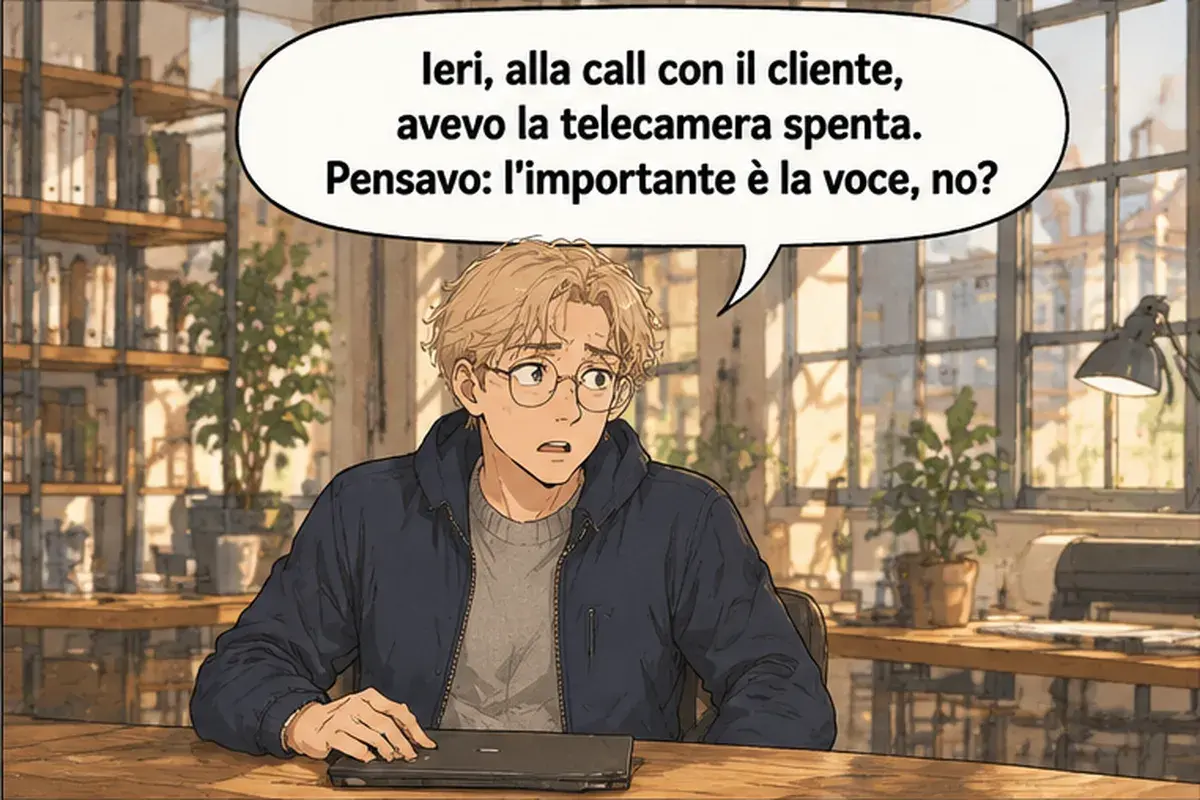
- Misha
Ieri, alla call con il cliente, avevo la telecamera spenta. Pensavo: l'importante è la voce, no?
Yesterday, on the call with the client, I had my camera off. I thought: what matters is the voice, right?
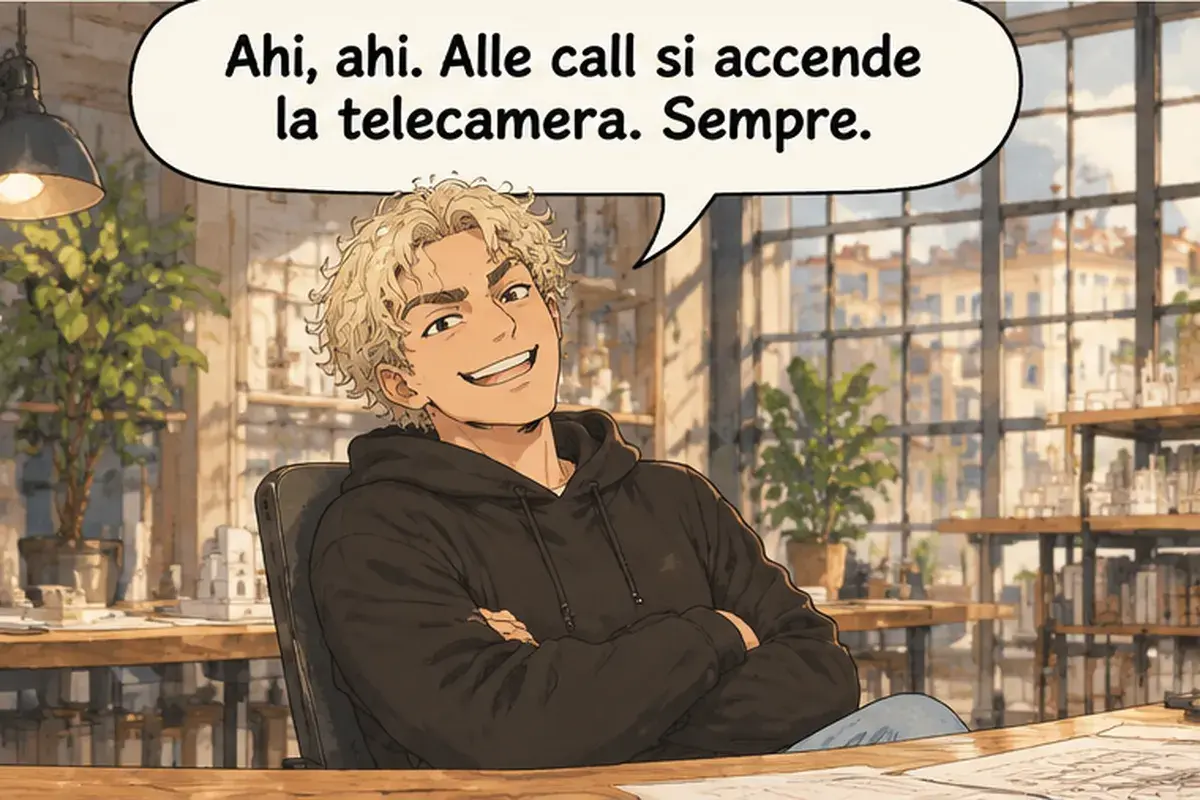
- Tommaso
Ahi, ahi. Alle call si accende la telecamera. Sempre.
Ouch. On calls, the camera is turned on. Always.
- Misha
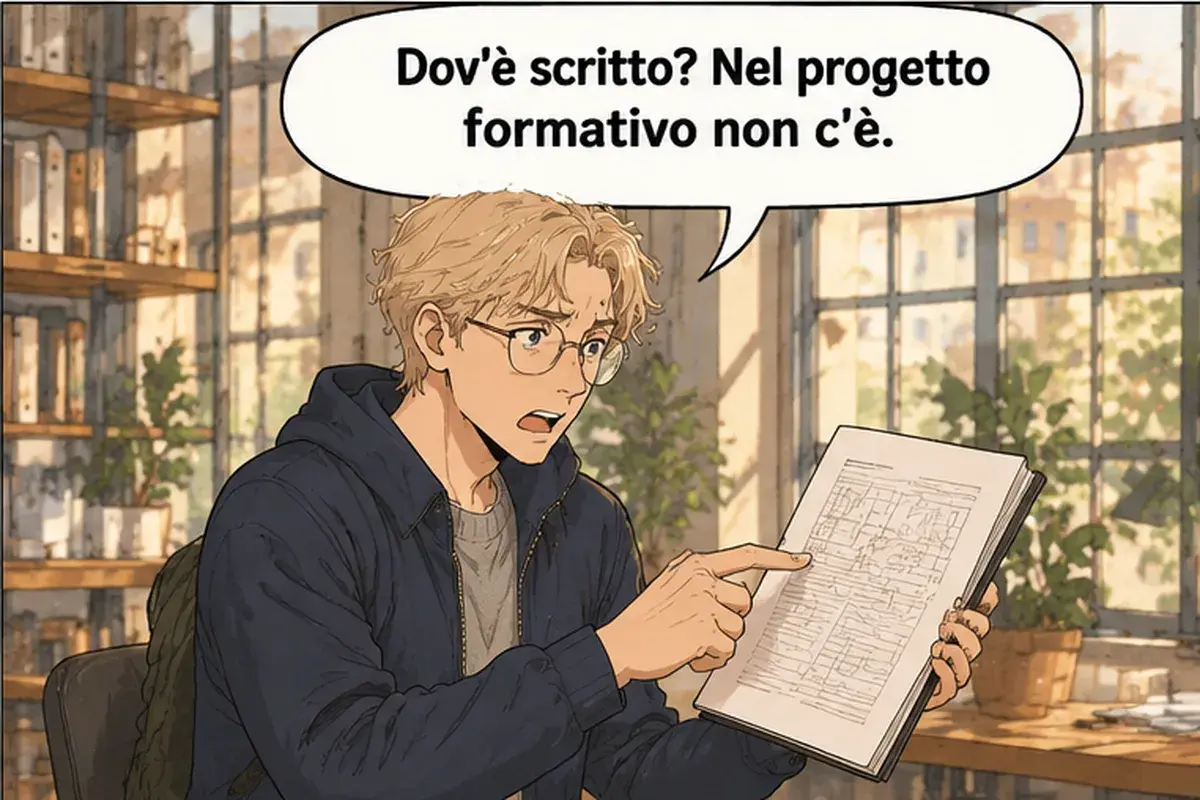
Dov'è scritto? Nel progetto formativo non c'è.
Where is that written? It's not in the training plan.
- Antonella
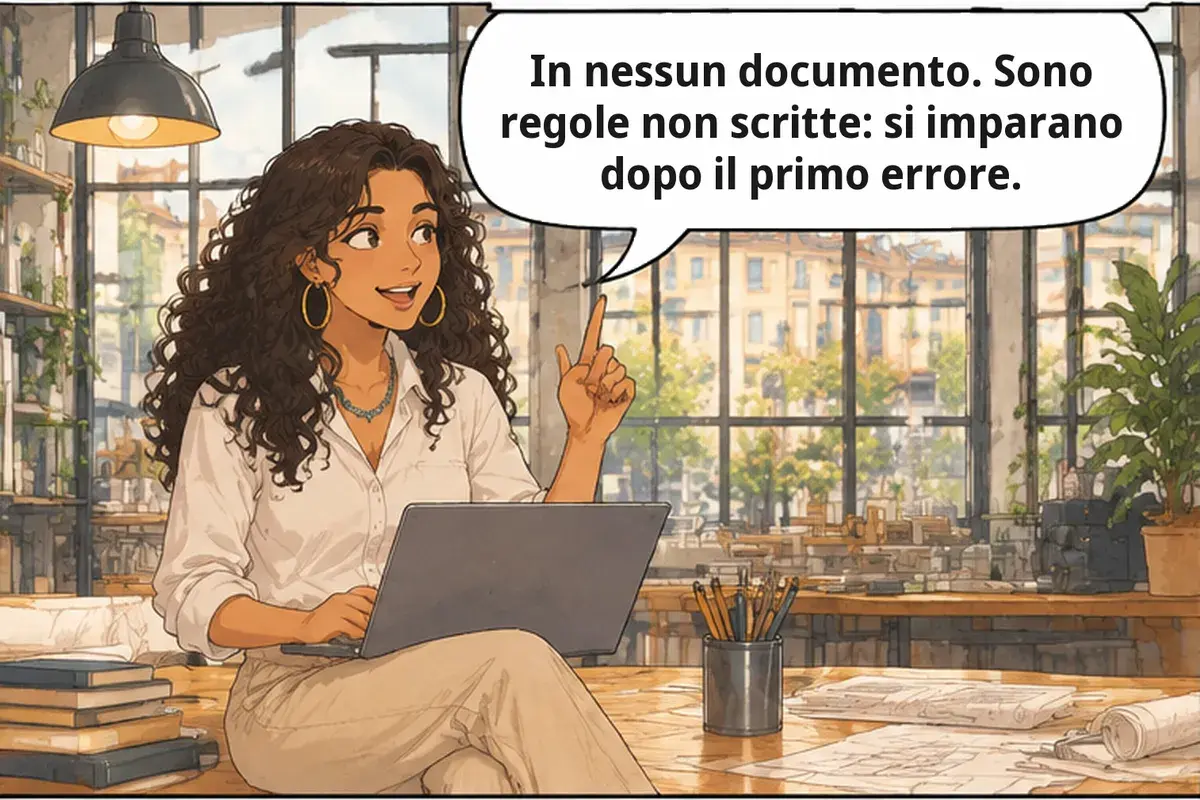
In nessun documento. Sono regole non scritte: si imparano dopo il primo errore.
Not in any document. They're unwritten rules: they're learned after the first mistake.
- Misha
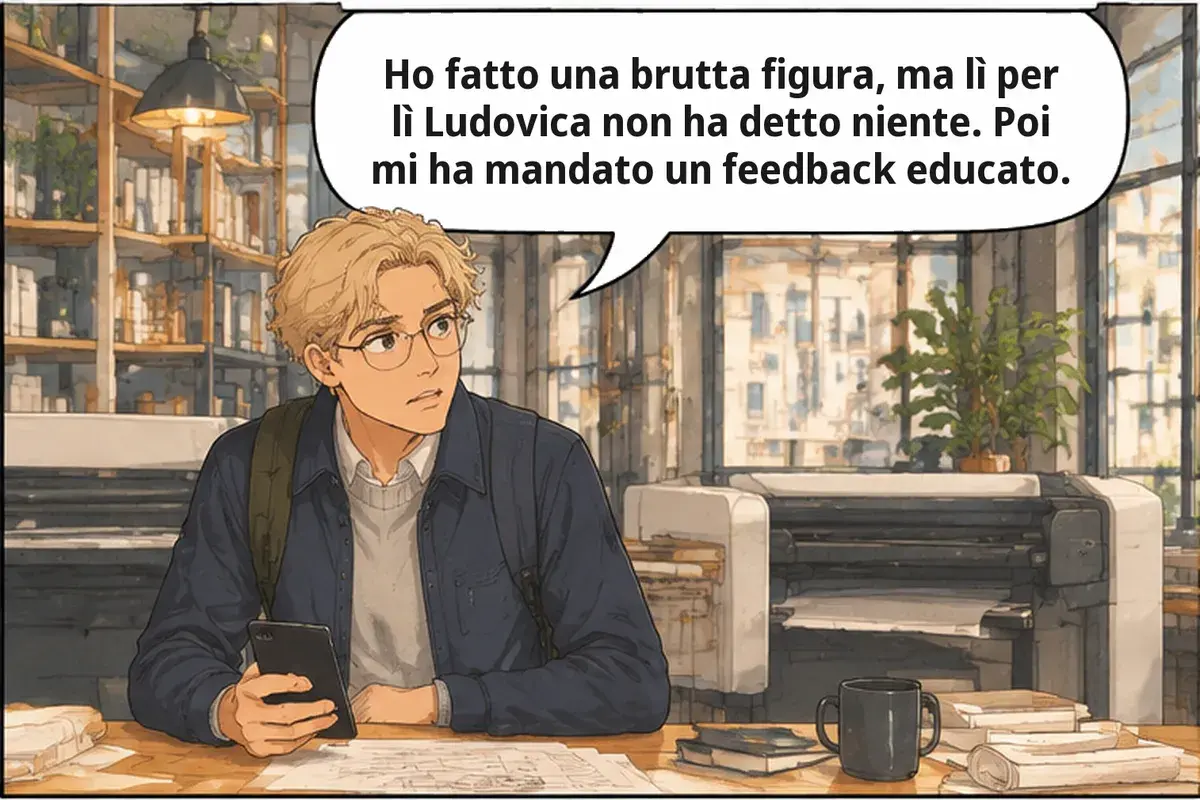
Ho fatto una brutta figura, ma lì per lì Ludovica non ha detto niente. Poi mi ha mandato un feedback educato.
I made a bad impression, but at the time Ludovica didn't say anything. Then she sent me some polite feedback.
- Antonella
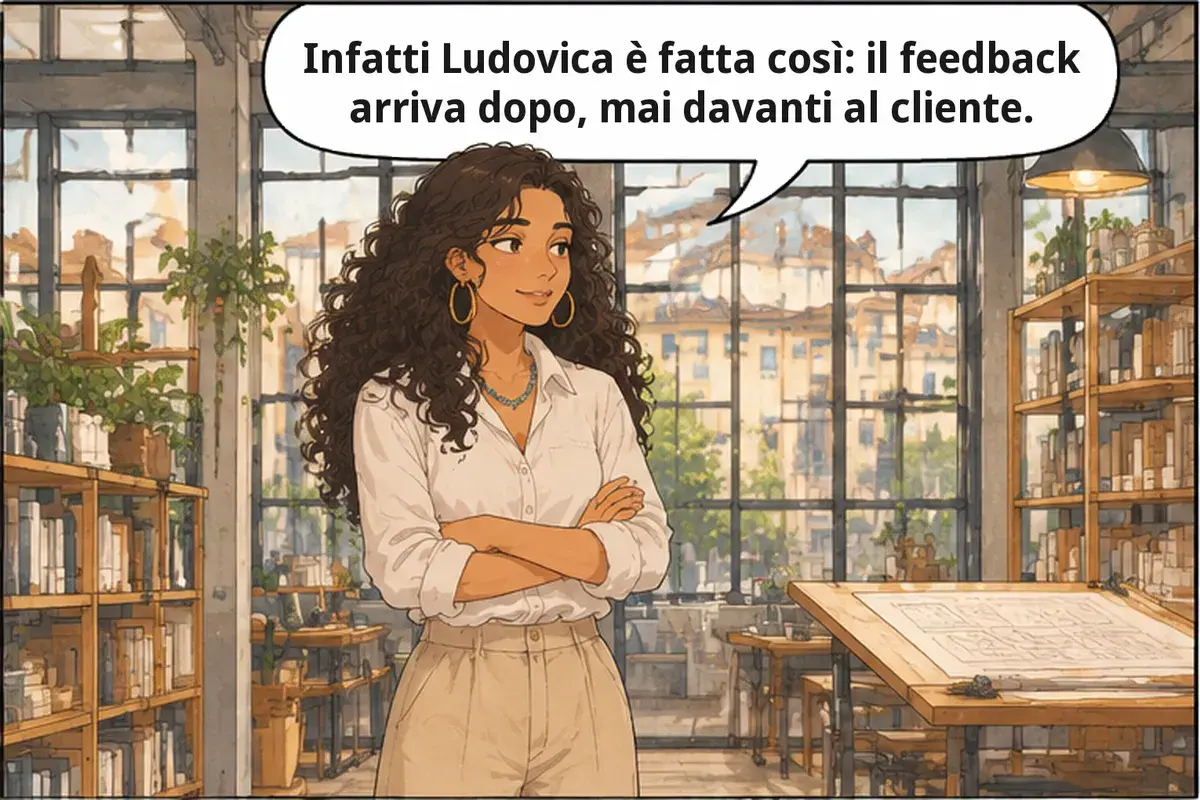
Infatti Ludovica è fatta così: il feedback arriva dopo, mai davanti al cliente.
That's right, that's how Ludovica is: the feedback comes later, never in front of the client.
- Tommaso
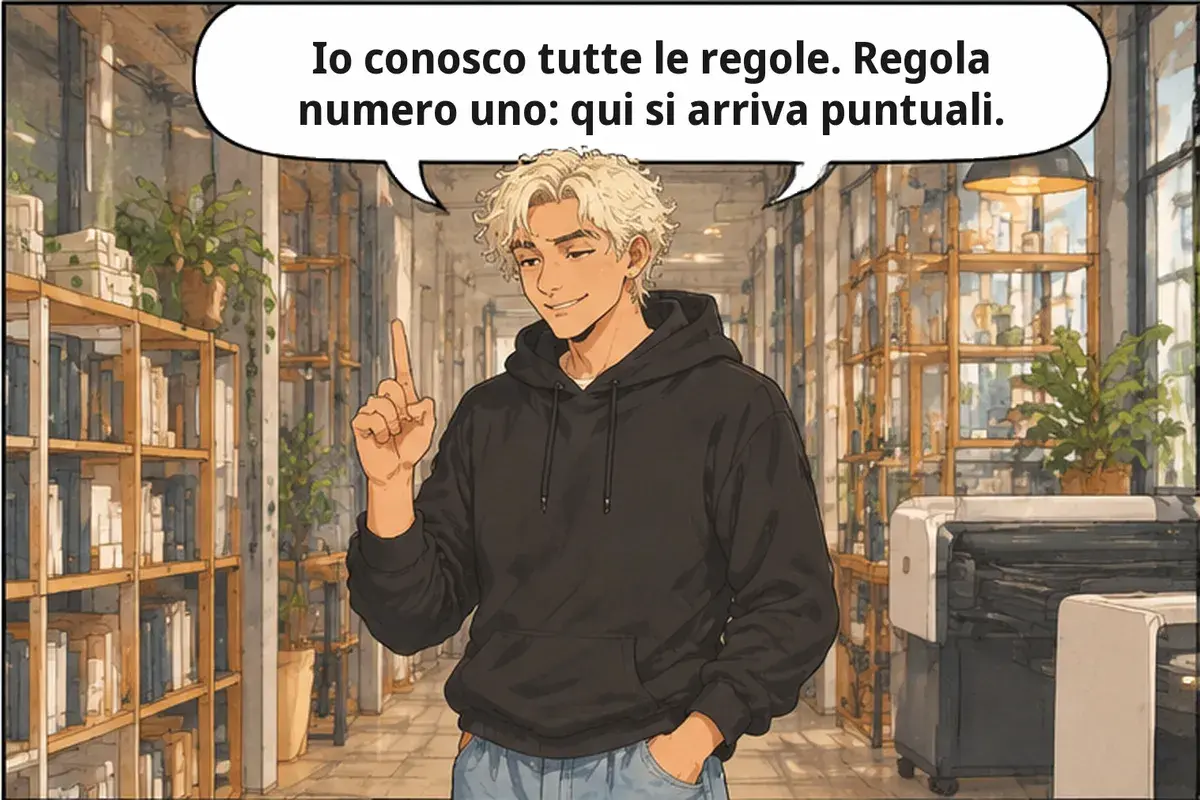
Io conosco tutte le regole. Regola numero uno: qui si arriva puntuali.
I know all the rules. Rule number one: people arrive on time here.
- Misha
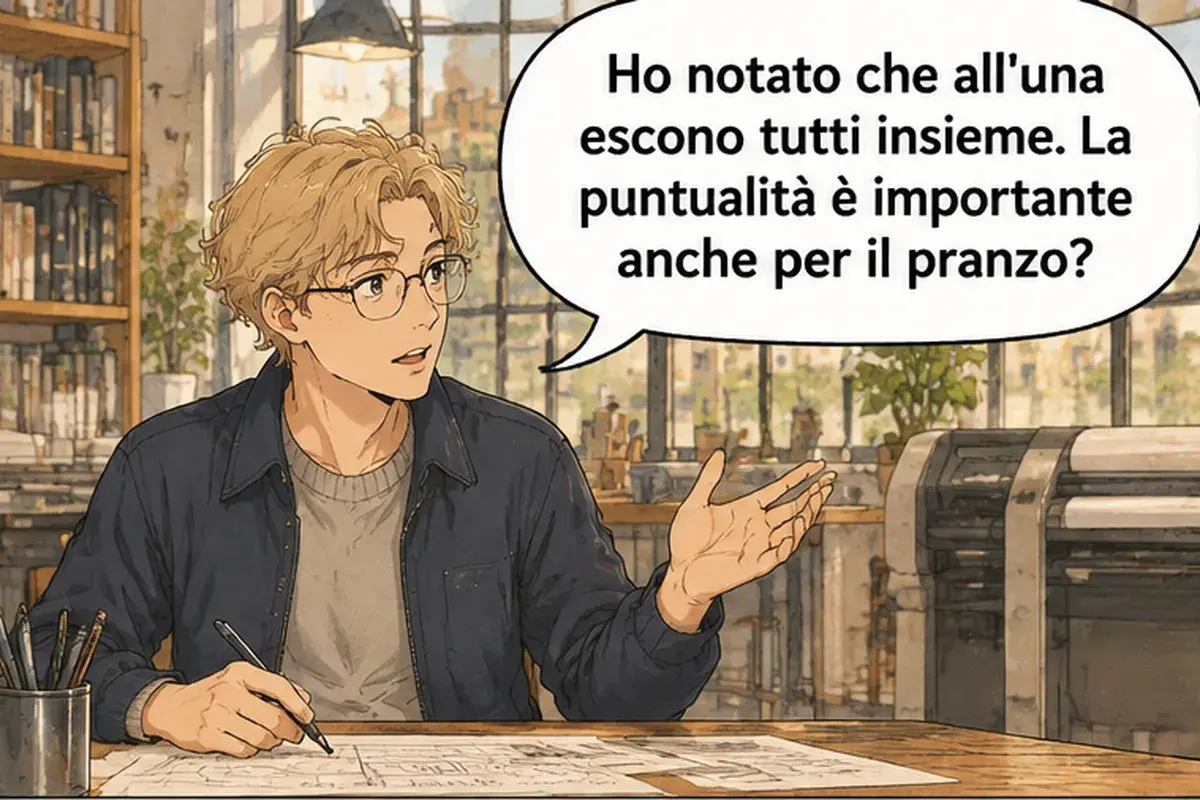
Ho notato che all'una escono tutti insieme. La puntualità è importante anche per il pranzo?
I noticed that at one everyone goes out together. Is punctuality important for lunch too?
- Antonella
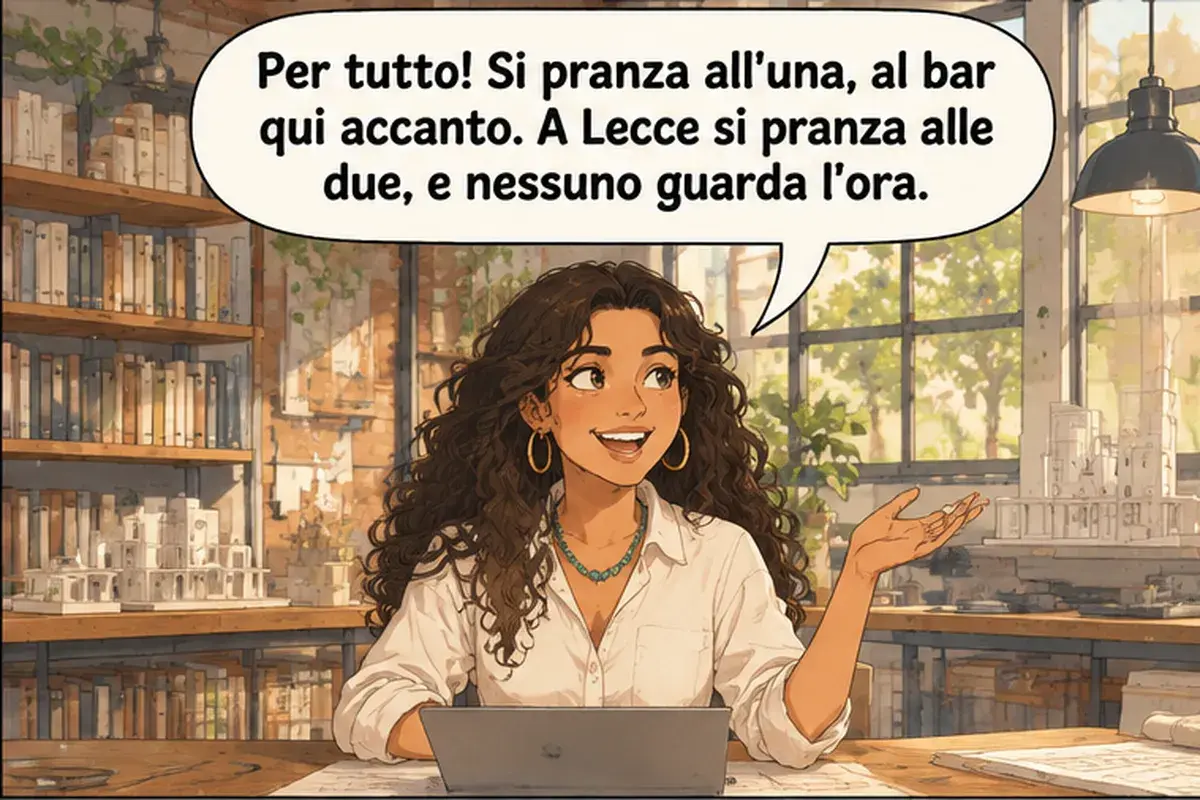
Per tutto! Si pranza all'una, al bar qui accanto. A Lecce si pranza alle due, e nessuno guarda l'ora.
For everything! People have lunch at one, at the bar next door. In Lecce people have lunch at two, and nobody looks at the clock.
- Tommaso
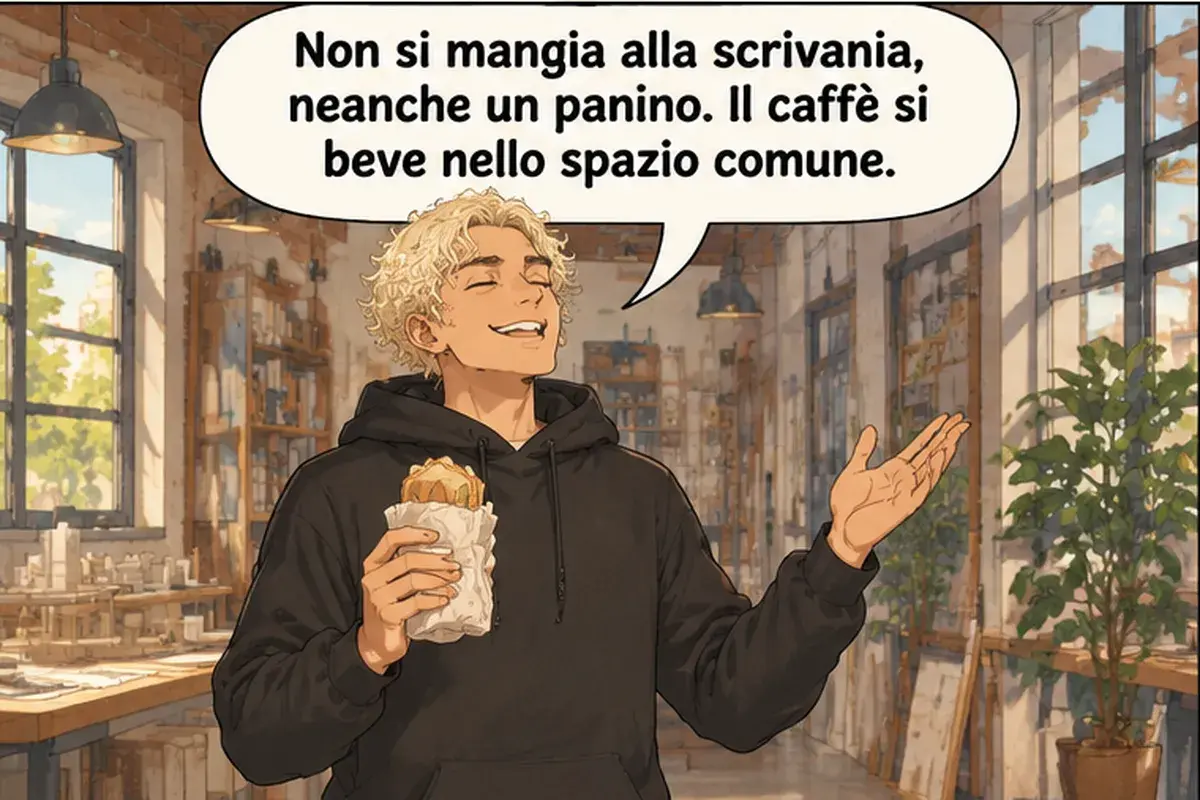
Non si mangia alla scrivania, neanche un panino. Il caffè si beve nello spazio comune.
People don't eat at their desks, not even a sandwich. Coffee is drunk in the common area.
- Antonella
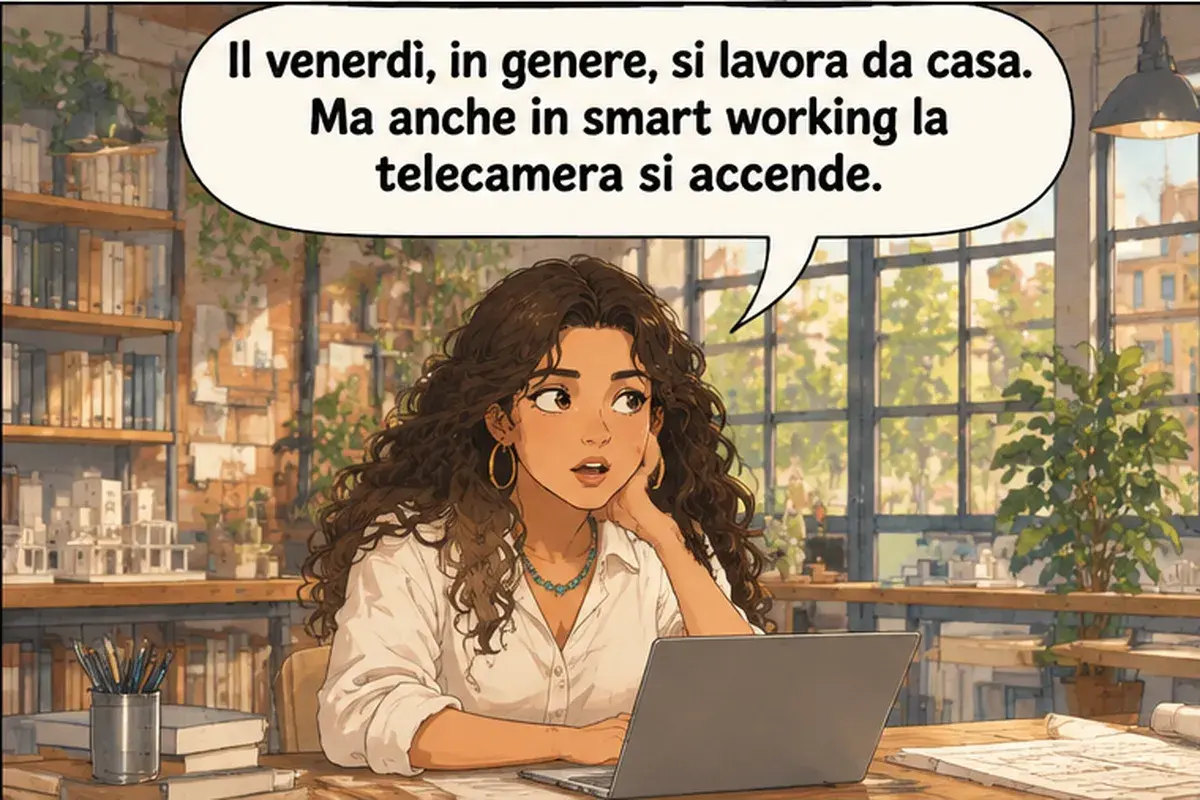
Il venerdì, in genere, si lavora da casa. Ma anche in smart working la telecamera si accende.
On Fridays people generally work from home. But even when working remotely, the camera is turned on.
- Misha
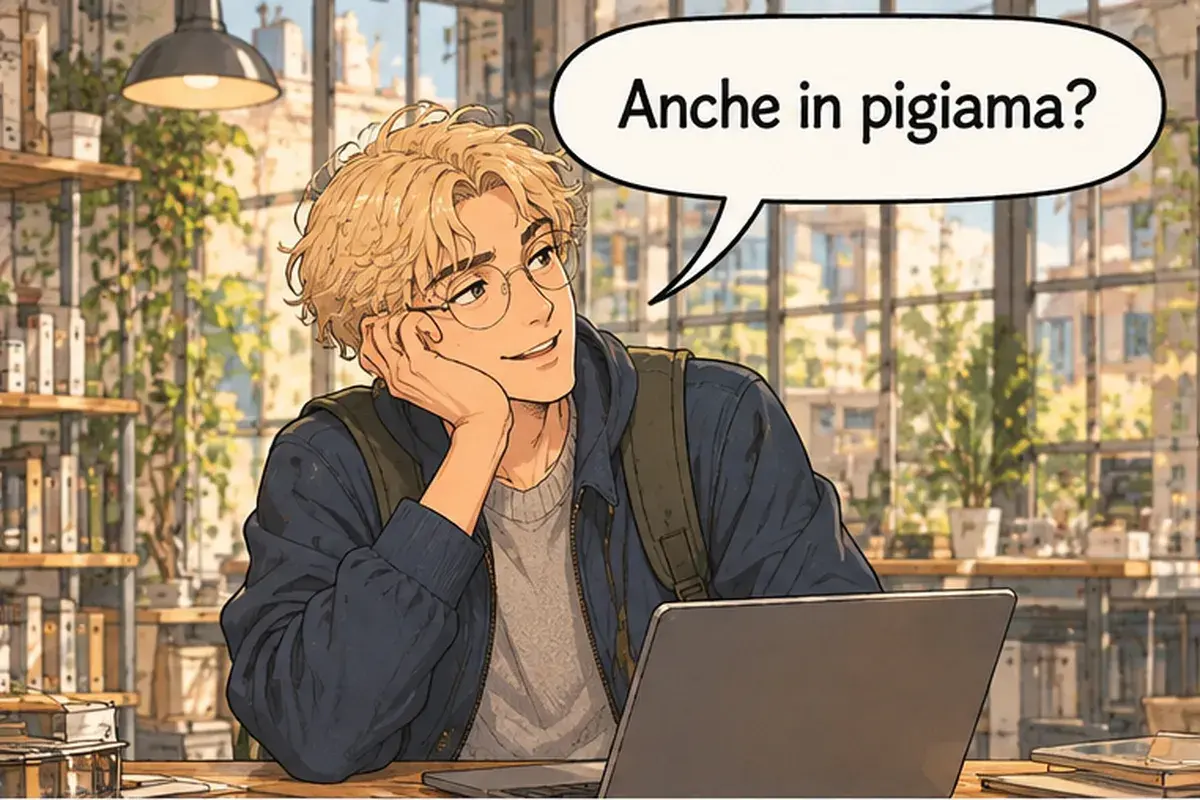
Anche in pigiama?
Even in pajamas?
- Antonella
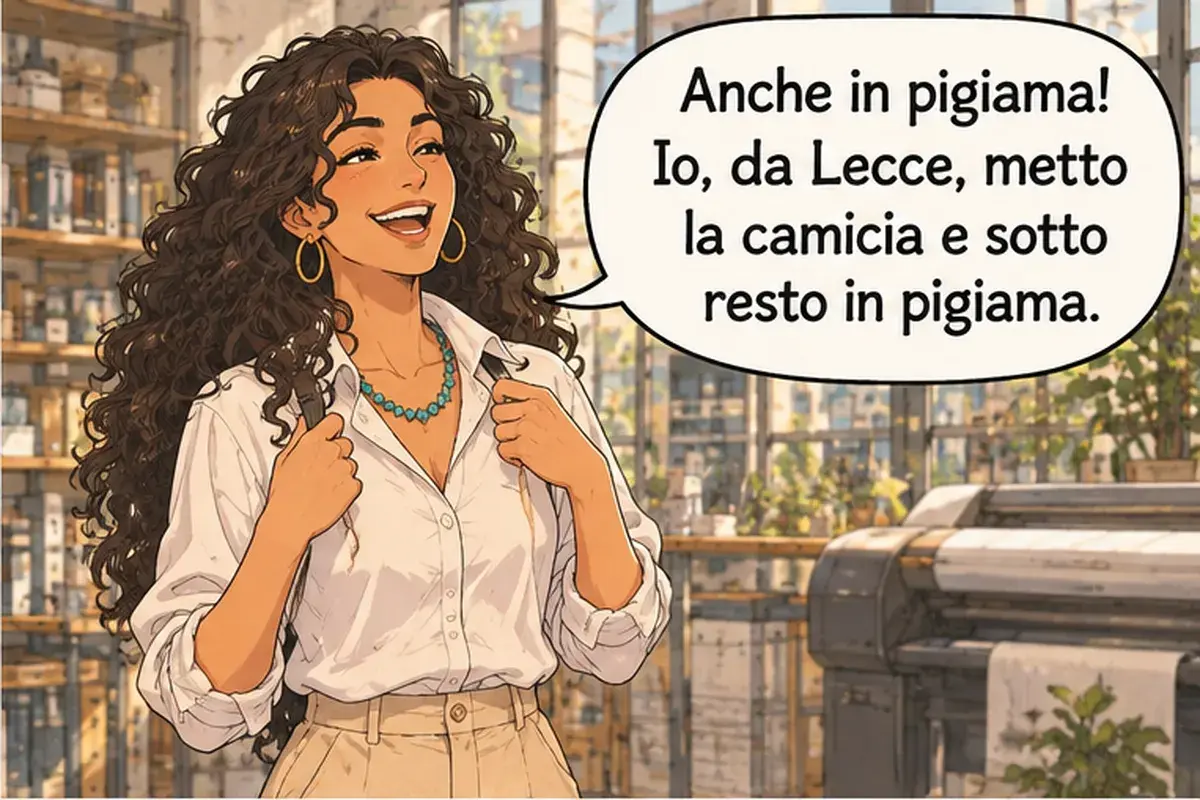
Anche in pigiama! Io, da Lecce, metto la camicia e sotto resto in pigiama.
Even in pajamas! When I work from Lecce, I put on a shirt and stay in pajamas from the waist down.
- Gianni
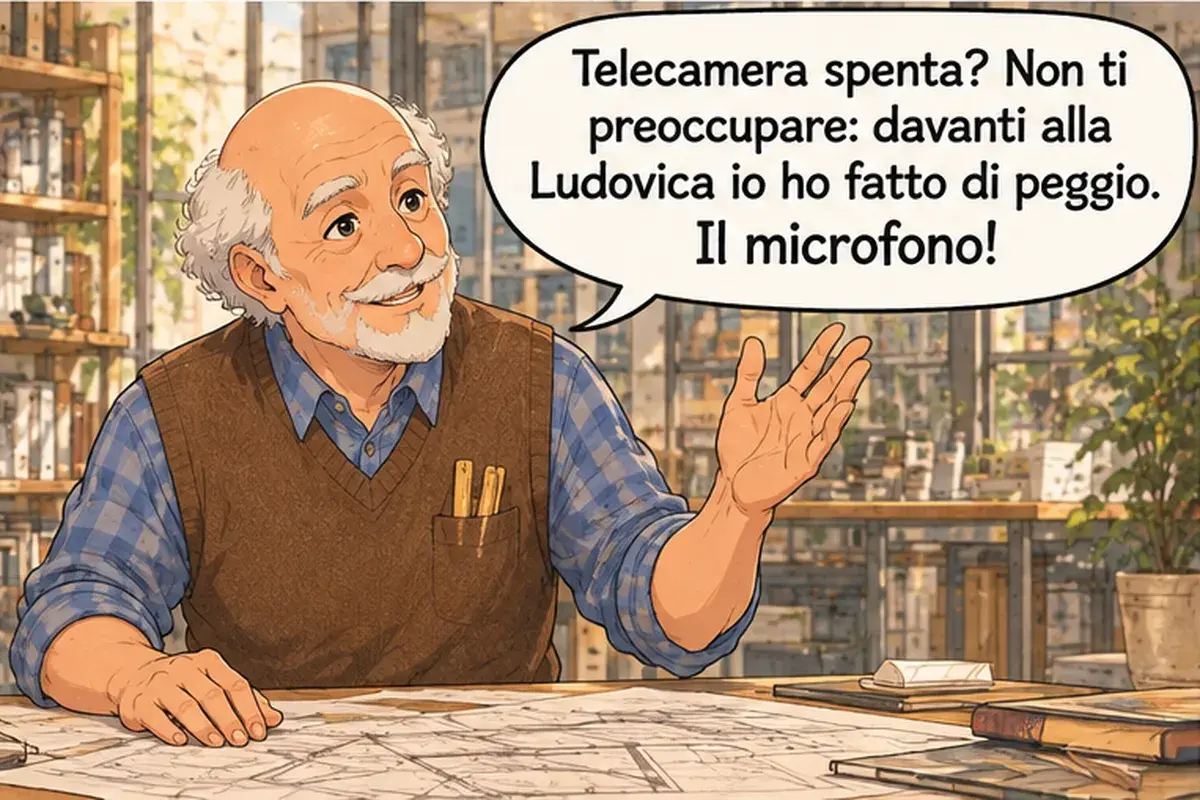
Telecamera spenta? Non ti preoccupare: davanti alla Ludovica io ho fatto di peggio. Il microfono!
Camera off? Don't worry: I've done worse in front of Ludovica. The microphone!
- Misha
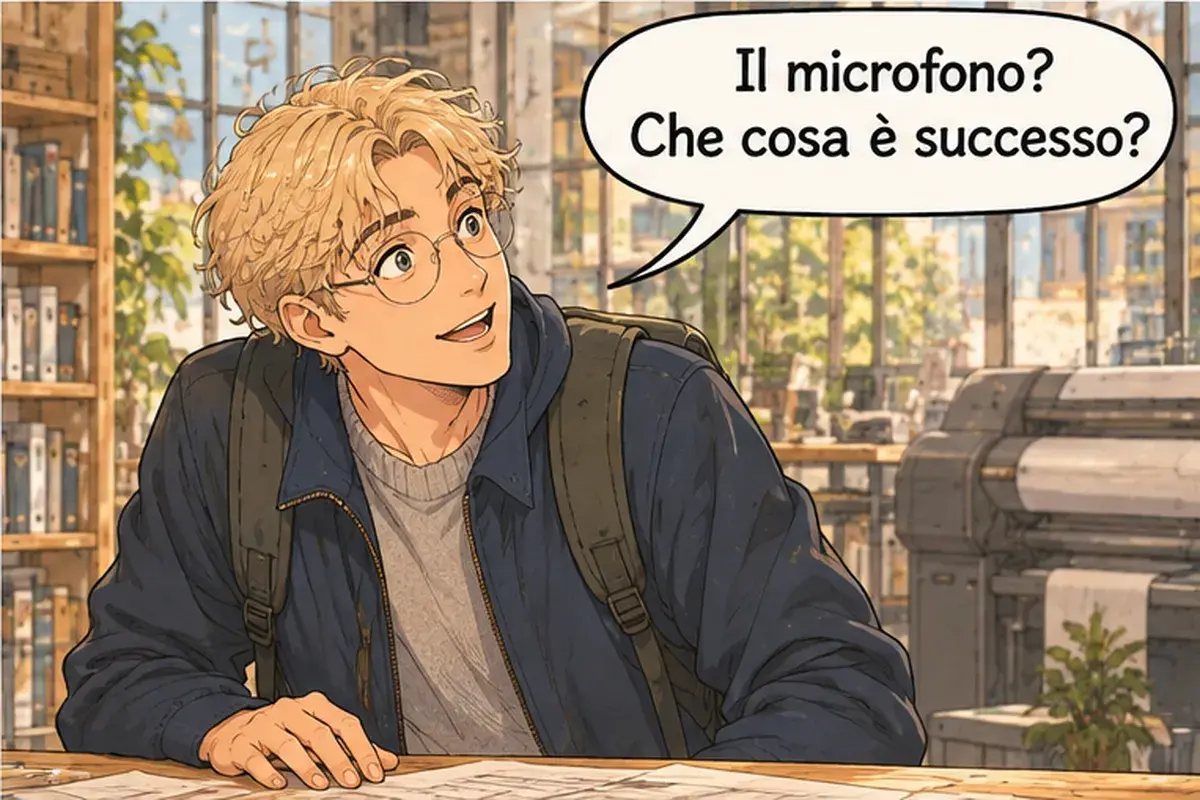
Il microfono? Che cosa è successo?
The microphone? What happened?
- Gianni
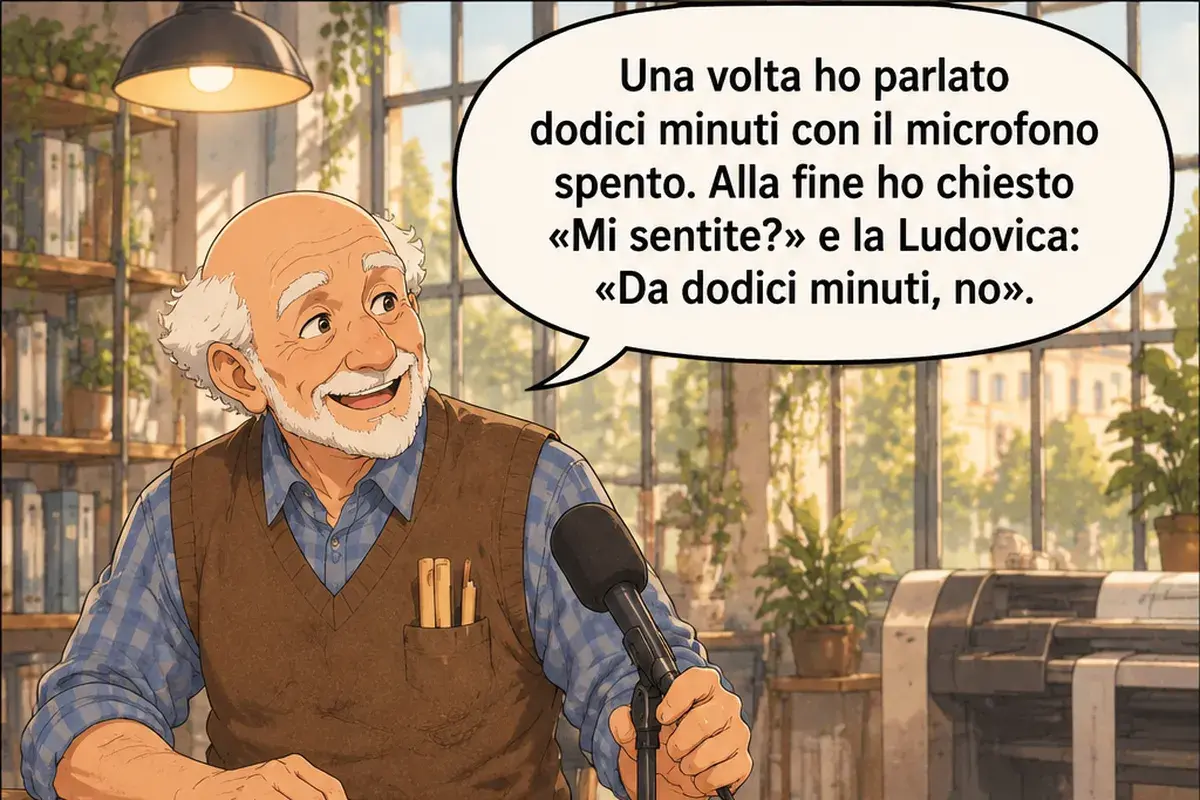
Una volta ho parlato dodici minuti con il microfono spento. Alla fine ho chiesto «Mi sentite?» e la Ludovica: «Da dodici minuti, no».
Once I talked for twelve minutes with my microphone off. At the end I asked, "Can you hear me?" (to several people), and Ludovica said, "No, not for twelve minutes now."
- Tommaso
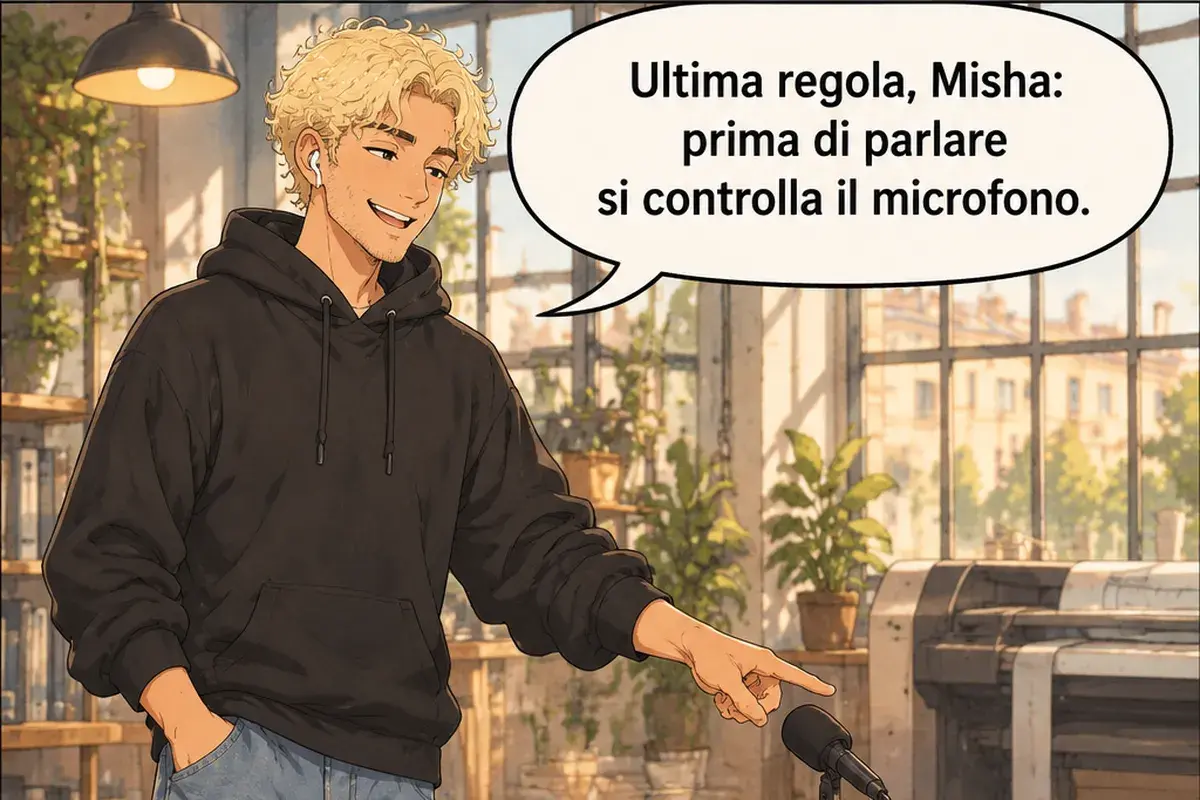
Ultima regola, Misha: prima di parlare si controlla il microfono.
Last rule, Misha: before speaking, the microphone is checked.
Grammar for this text
- Alle call si accende la telecamera — passive si: "the camera is turned on". The verb is in the lui / lei form (accende) because there's one thing: la telecamera. call is feminine (la call) and doesn't change in the plural: alle call = a + le + call.
- qui si arriva puntuali — impersonal si: "people arrive on time here", with no subject. The verb is in the lui / lei form (arriva), the adjective is plural (puntuali). The same in Si pranza all'una and Non si mangia alla scrivania.
- si imparano — passive si again, but the verb is plural: the rules (regole) are learned.
- la Ludovica — an article before a first name. That's how people talk in the North, in Milan (Gianni, Ludovica, Signora Pina). Misha, Antonella and Tommaso just say Ludovica; you don't need to say it either.
- telecamera spenta, microfono spento — spenta, spento are past participles of spegnere (to turn off); they take the gender of the noun: "camera off", "microphone off".
- ho fatto di peggio — "I've done worse": di peggio — something worse. Da dodici minuti, no — da + a length of time means "for … now": "no, not for twelve minutes now".
- nessuno guarda l'ora — l'ora here is the time on the clock: "nobody looks at the clock".
Words and grammar of the unit: Understand the unwritten office rules.
Learn the words from the texts with flashcards
In the app, you can tap any word in a text to see its translation, forms and examples, and new words stick with flashcards. 15 minutes a day.
Start for freeEverything is open for free. No card needed to sign up.