

Italian dialogue with translation · B1 · 18 lines
A Milano si cammina veloce In Milan people walk fast
Comic · 18 panels
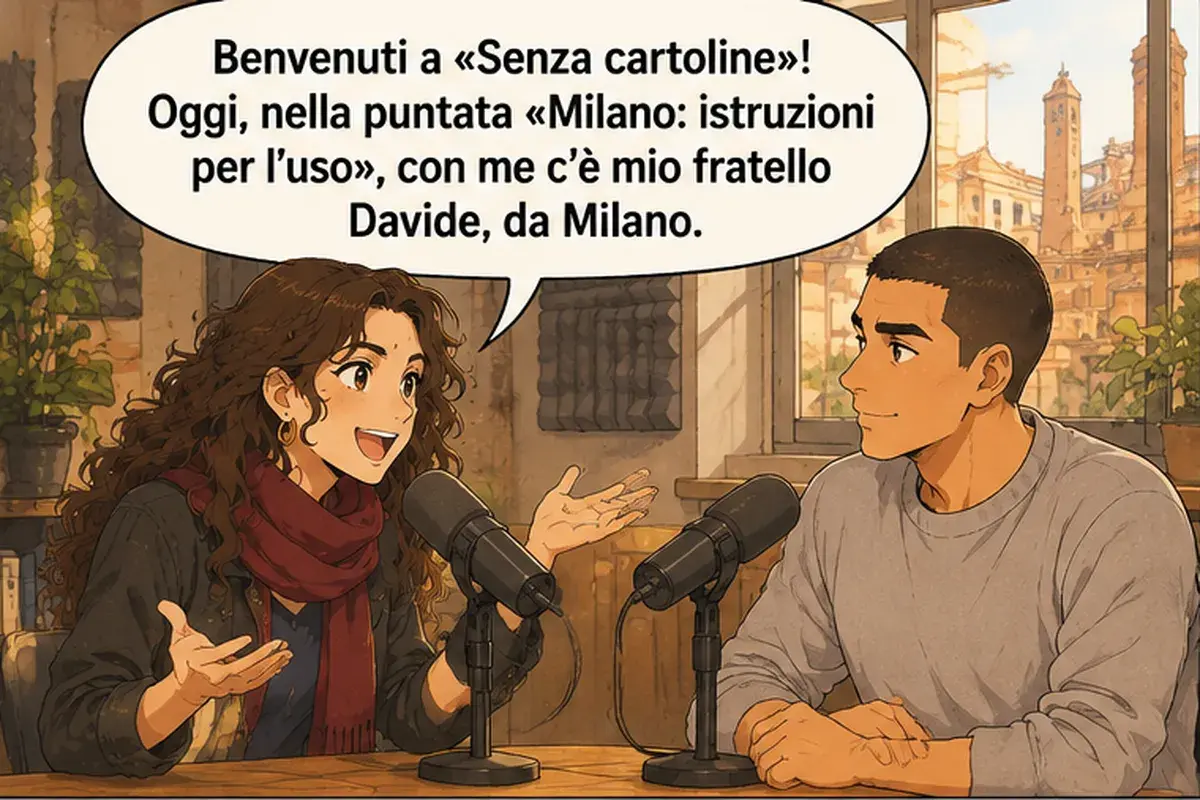
- Giulia
Benvenuti a «Senza cartoline»! Oggi, nella puntata «Milano: istruzioni per l'uso», con me c'è mio fratello Davide, da Milano.
Welcome to "Senza cartoline"! (to several people) Today, in the episode "Milan: Instructions for Use", I'm here with my brother Davide, from Milan.

- Davide
Ciao.
Hi.
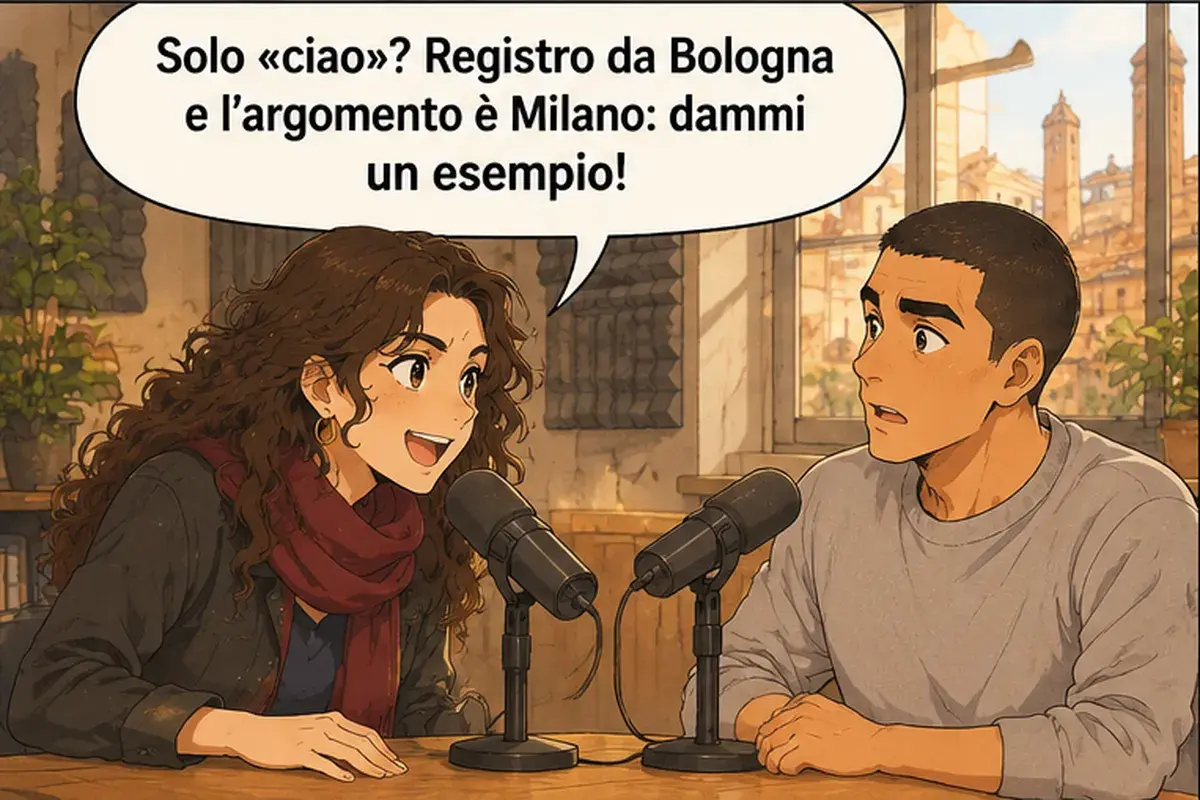
- Giulia
Solo «ciao»? Registro da Bologna e l'argomento è Milano: dammi un esempio!
Just "hi"? I'm recording from Bologna and the topic is Milan: give me an example!
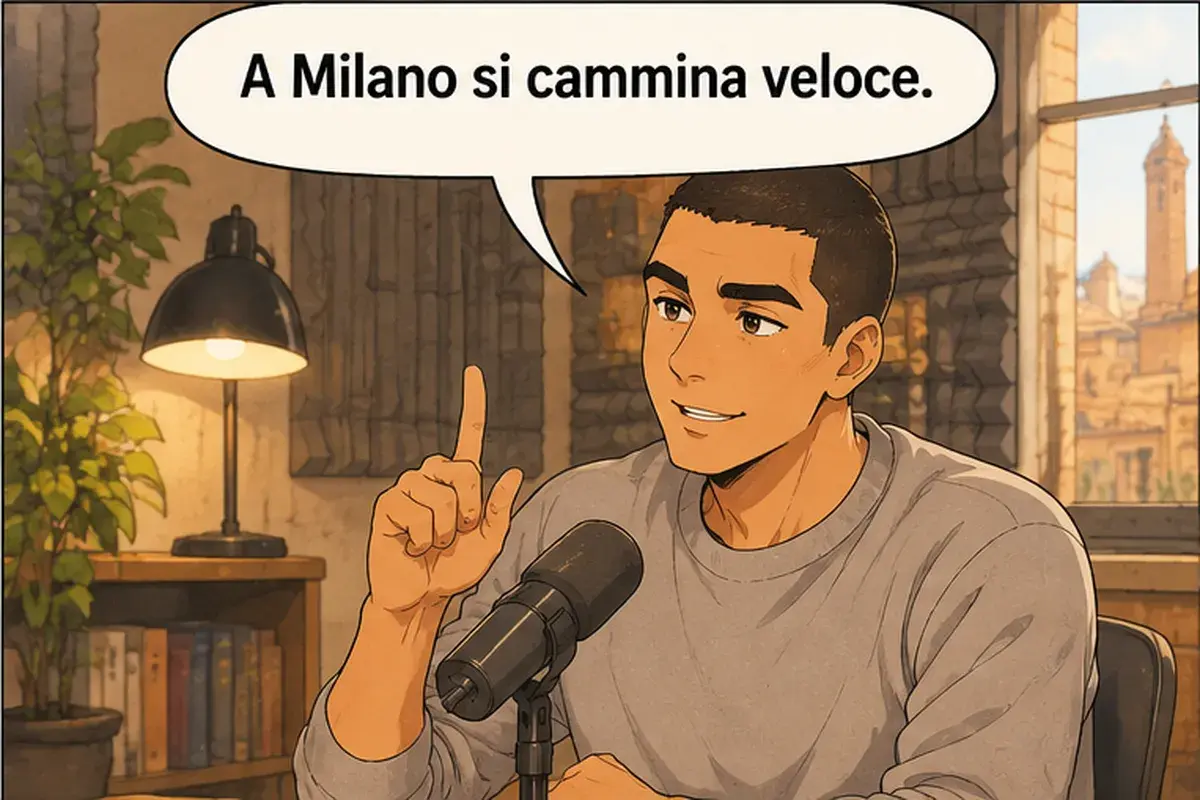
- Davide
A Milano si cammina veloce.
In Milan people walk fast.
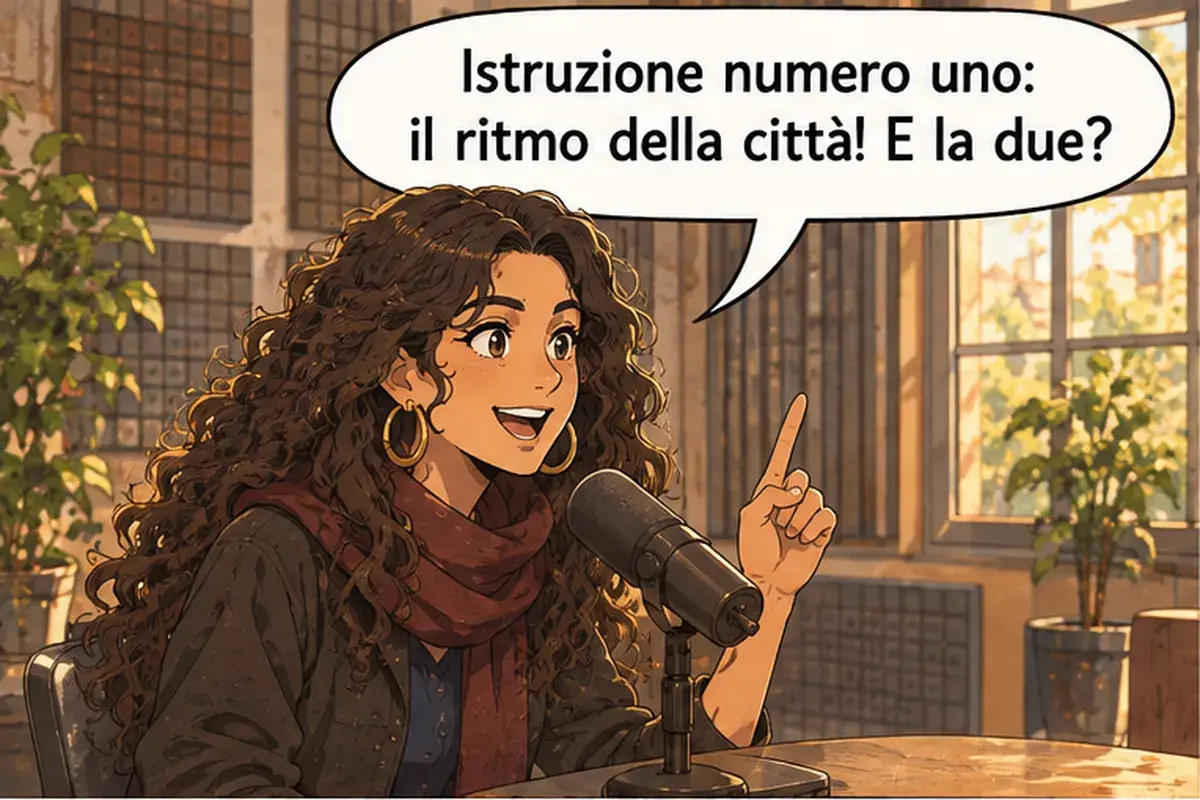
- Giulia
Istruzione numero uno: il ritmo della città! E la due?
Instruction number one: the pace of the city! And number two?
- Davide
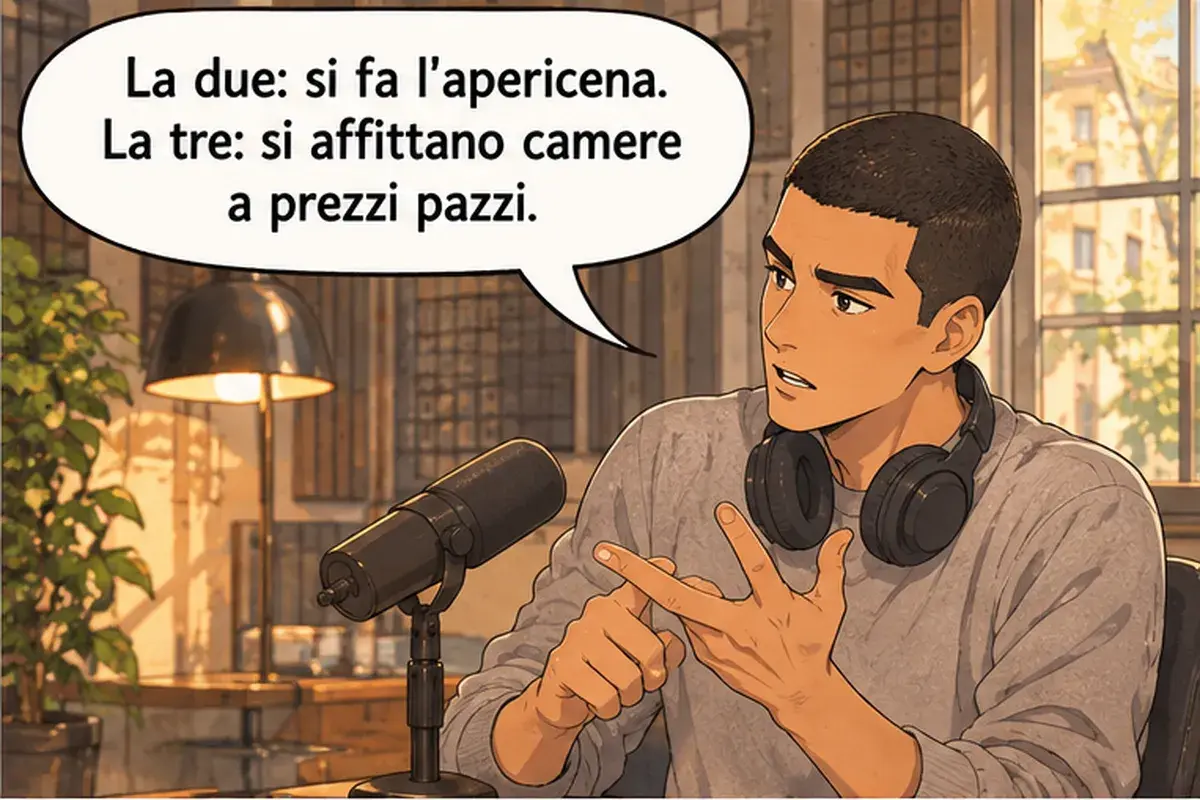
La due: si fa l'apericena. La tre: si affittano camere a prezzi pazzi.
Number two: people have apericena. Number three: rooms are rented out at crazy prices.
- Giulia
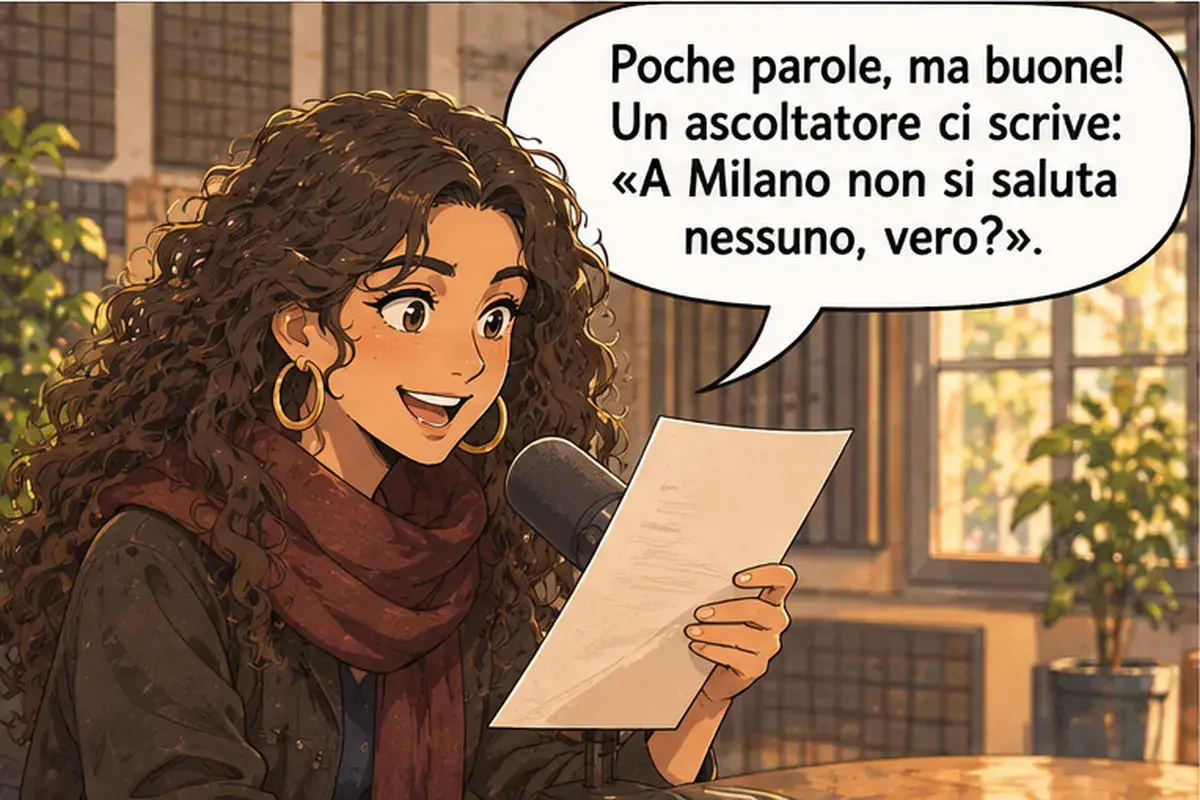
Poche parole, ma buone! Un ascoltatore ci scrive: «A Milano non si saluta nessuno, vero?»
Few words, but good ones! A listener writes to us: "In Milan people don't say hi to anyone, right?"
- Davide
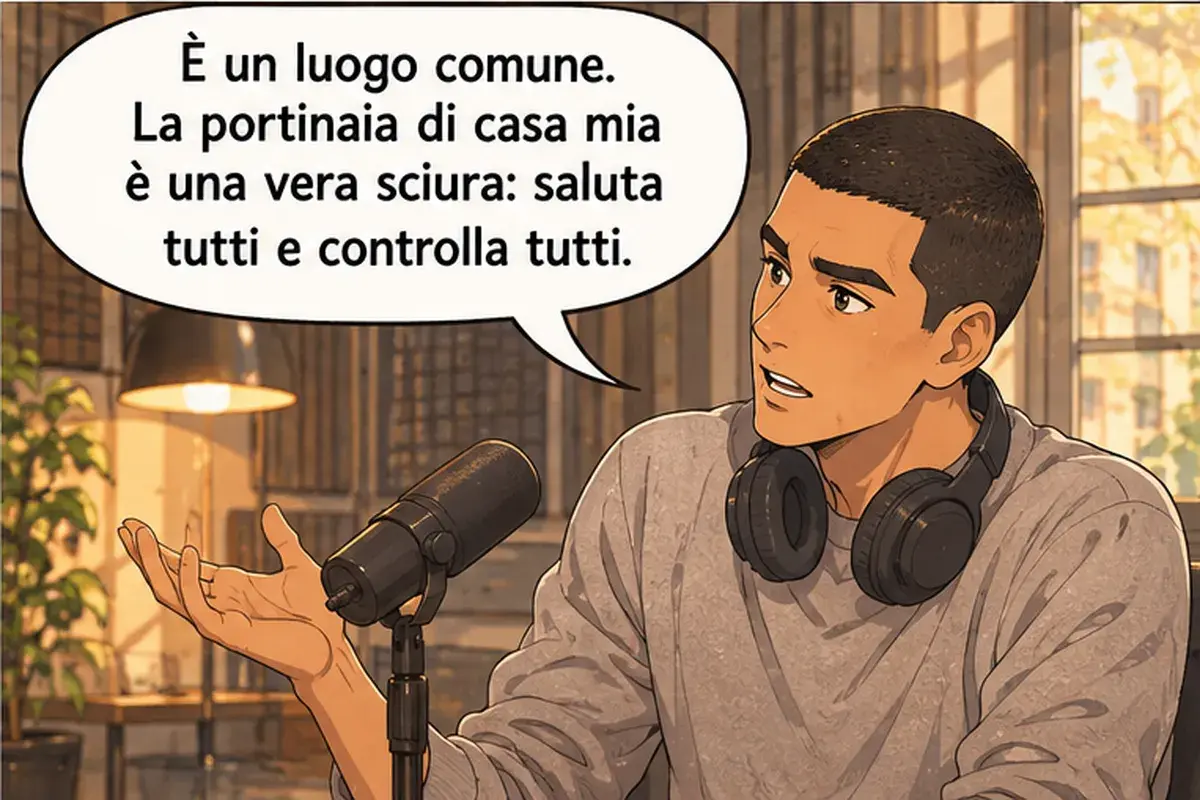
È un luogo comune. La portinaia di casa mia è una vera sciura: saluta tutti e controlla tutti.
That's a cliché. The concierge in my building is a real sciura: she says hi to everyone and keeps an eye on everyone.
- Giulia
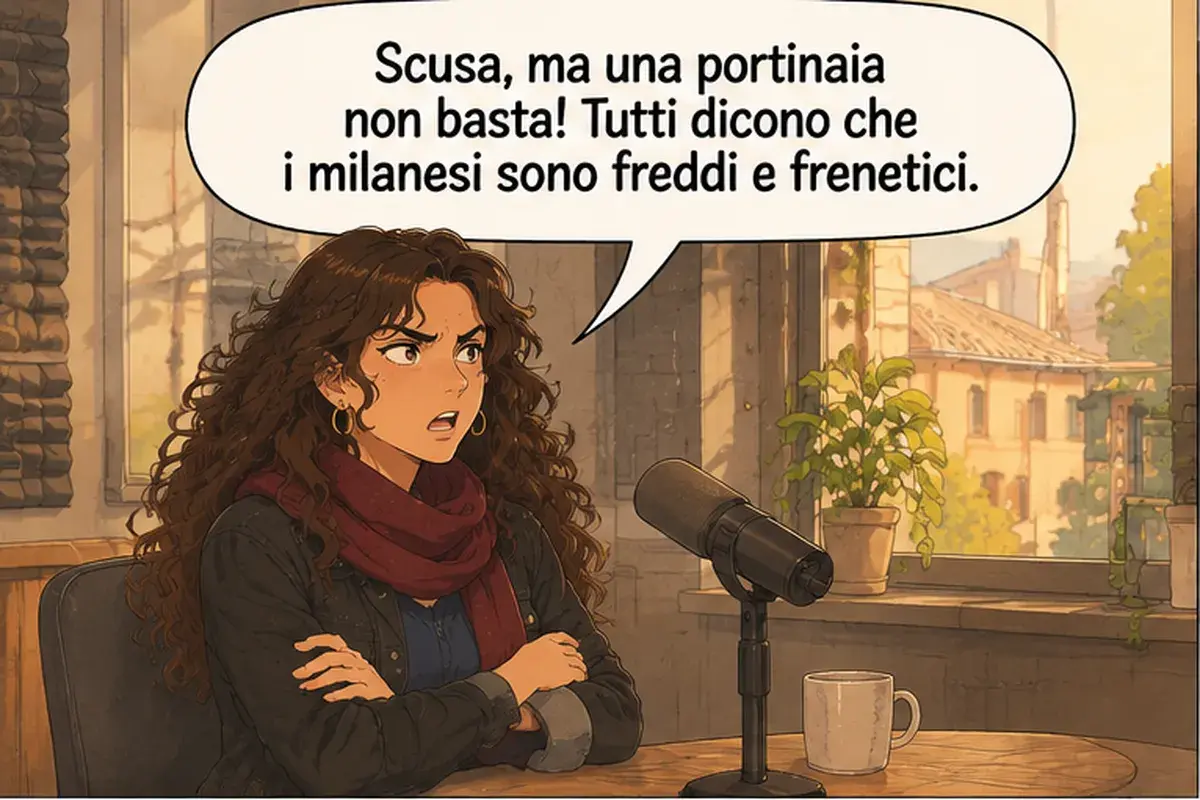
Scusa, ma una portinaia non basta! Tutti dicono che i milanesi sono freddi e frenetici.
Sorry, but one concierge isn't enough! Everyone says the Milanese are cold and hectic.
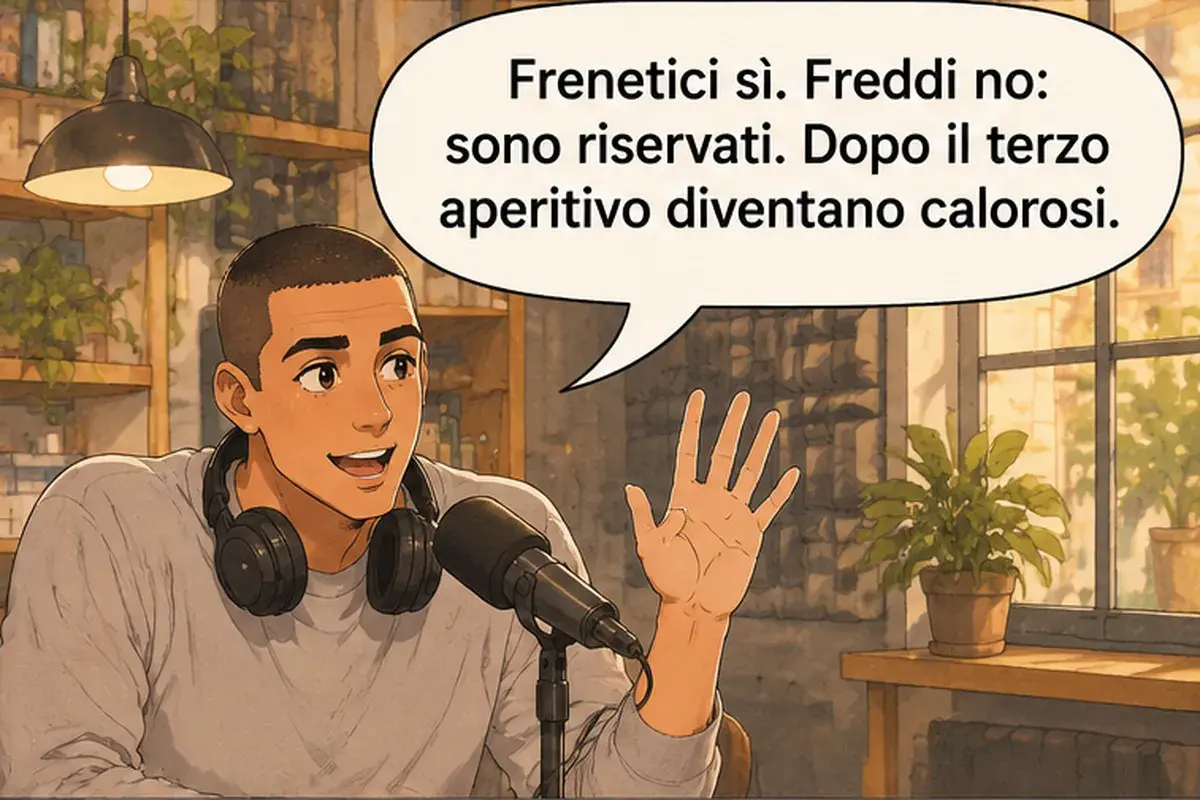
- Davide
Frenetici sì. Freddi no: sono riservati. Dopo il terzo aperitivo diventano calorosi.
Hectic, yes. Cold, no: they're reserved. After the third aperitivo they get warm.
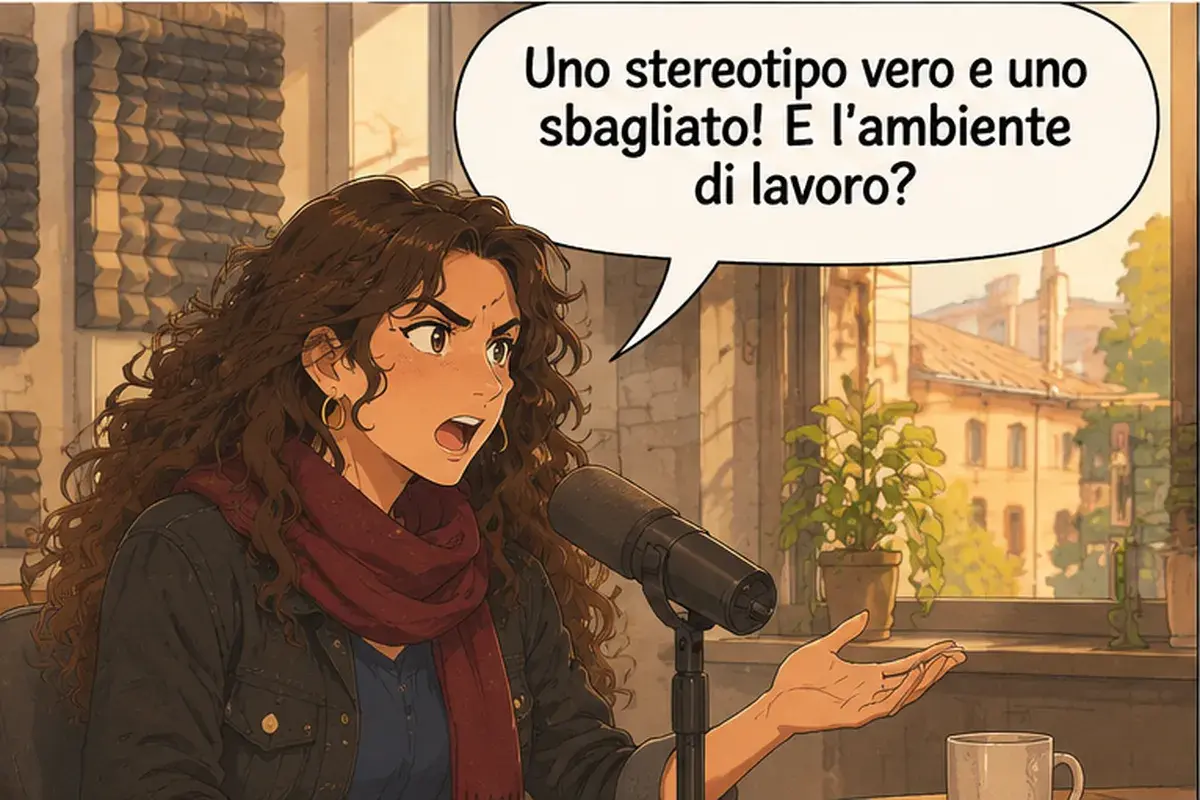
- Giulia
Uno stereotipo vero e uno sbagliato! E l'ambiente di lavoro?
One true stereotype and one wrong one! And the work environment?
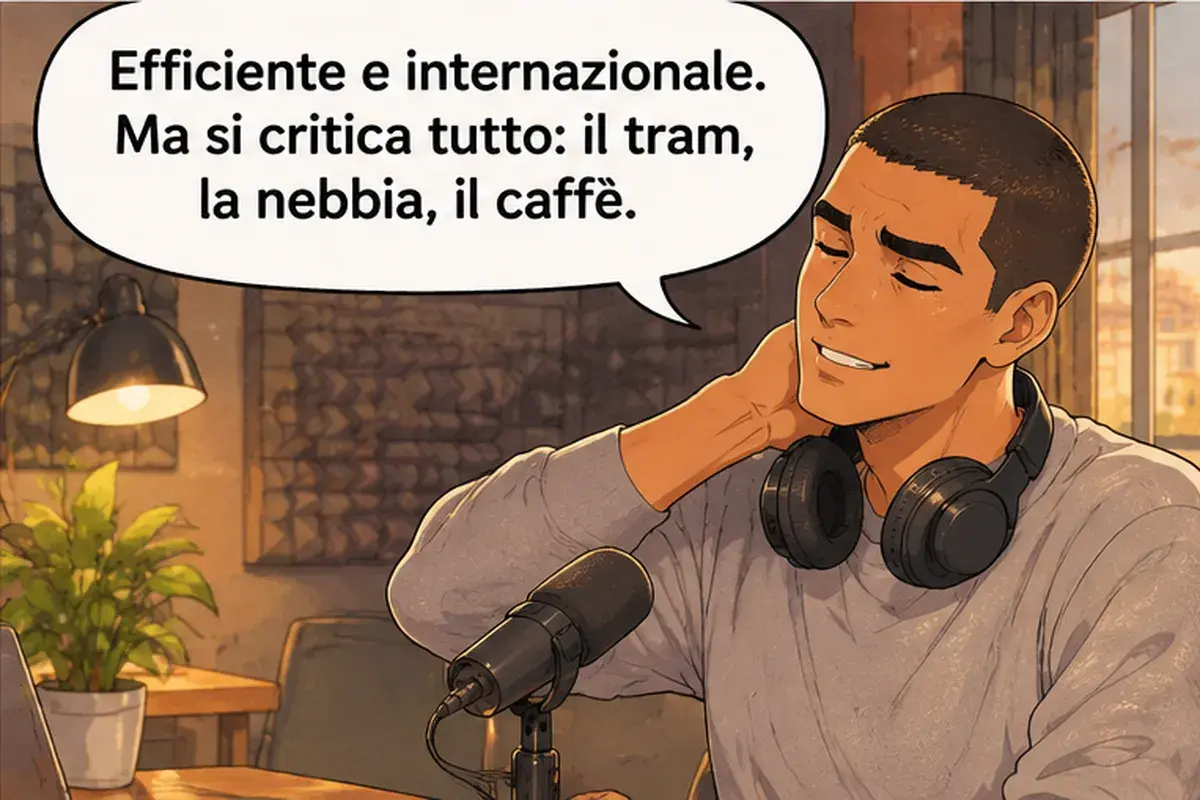
- Davide
Efficiente e internazionale. Ma si critica tutto: il tram, la nebbia, il caffè.
Efficient and international. But people criticize everything: the tram, the fog, the coffee.
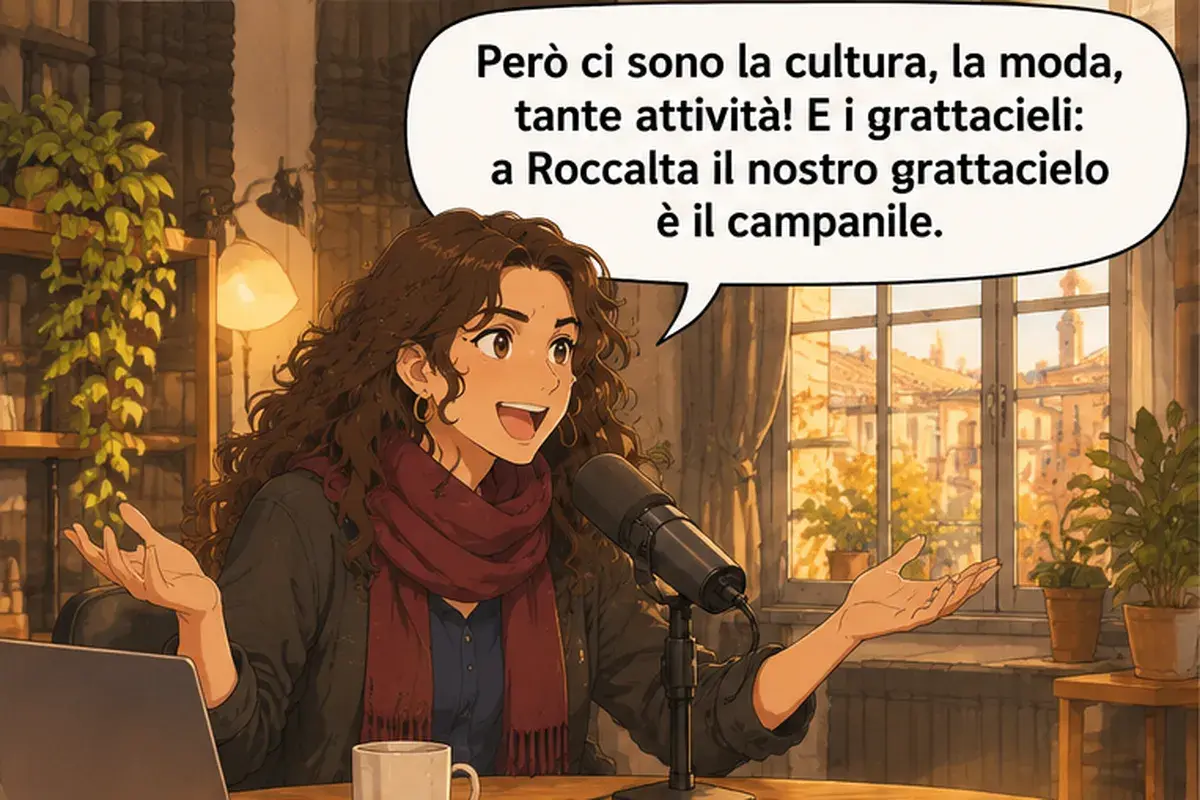
- Giulia
Però ci sono la cultura, la moda, tante attività! E i grattacieli: a Roccalta il nostro grattacielo è il campanile.
But there's culture, fashion, lots of activities! And the skyscrapers: in Roccalta our skyscraper is the bell tower.
- Davide
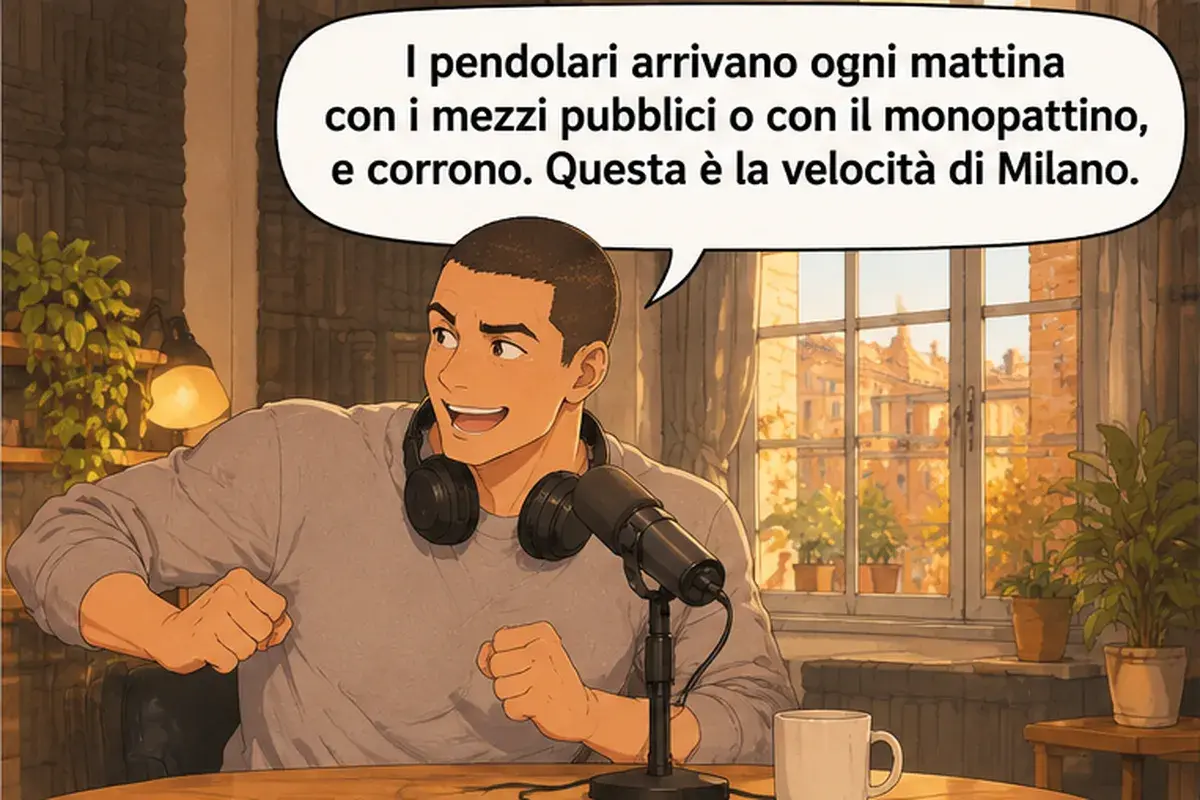
I pendolari arrivano ogni mattina con i mezzi pubblici o con il monopattino, e corrono. Questa è la velocità di Milano.
Commuters arrive every morning by public transportation or by scooter, and they run. That's the speed of Milan.
- Giulia
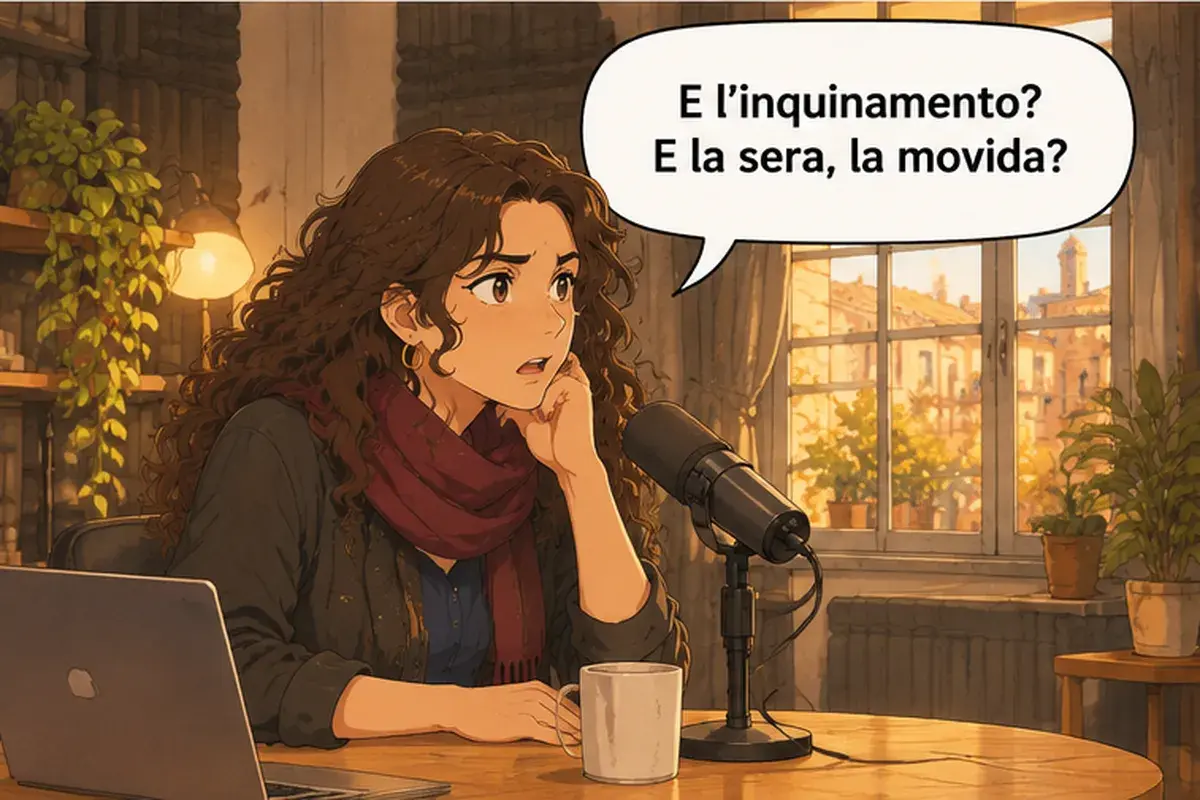
E l'inquinamento? E la sera, la movida?
And the pollution? And in the evening, the nightlife?
- Davide
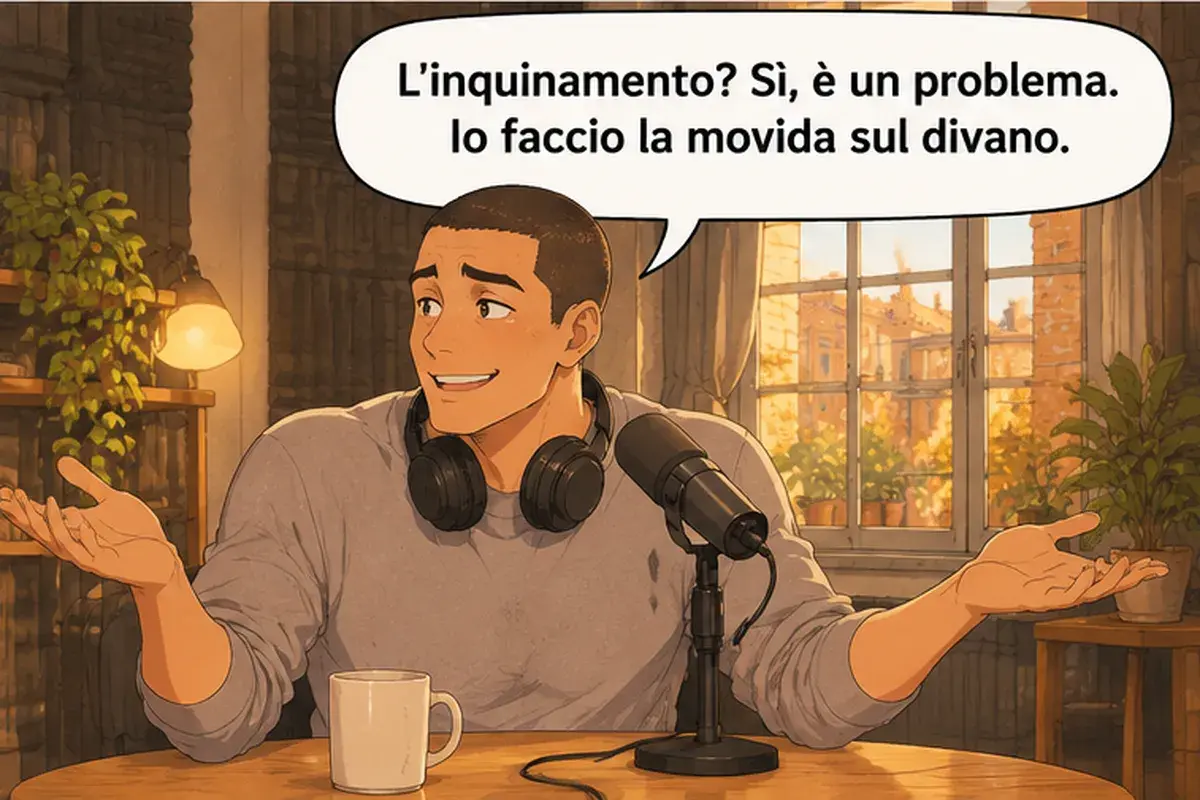
L'inquinamento? Sì, è un problema. Io faccio la movida sul divano.
The pollution? Yes, it's a problem. I have my nightlife on the couch.
- Giulia
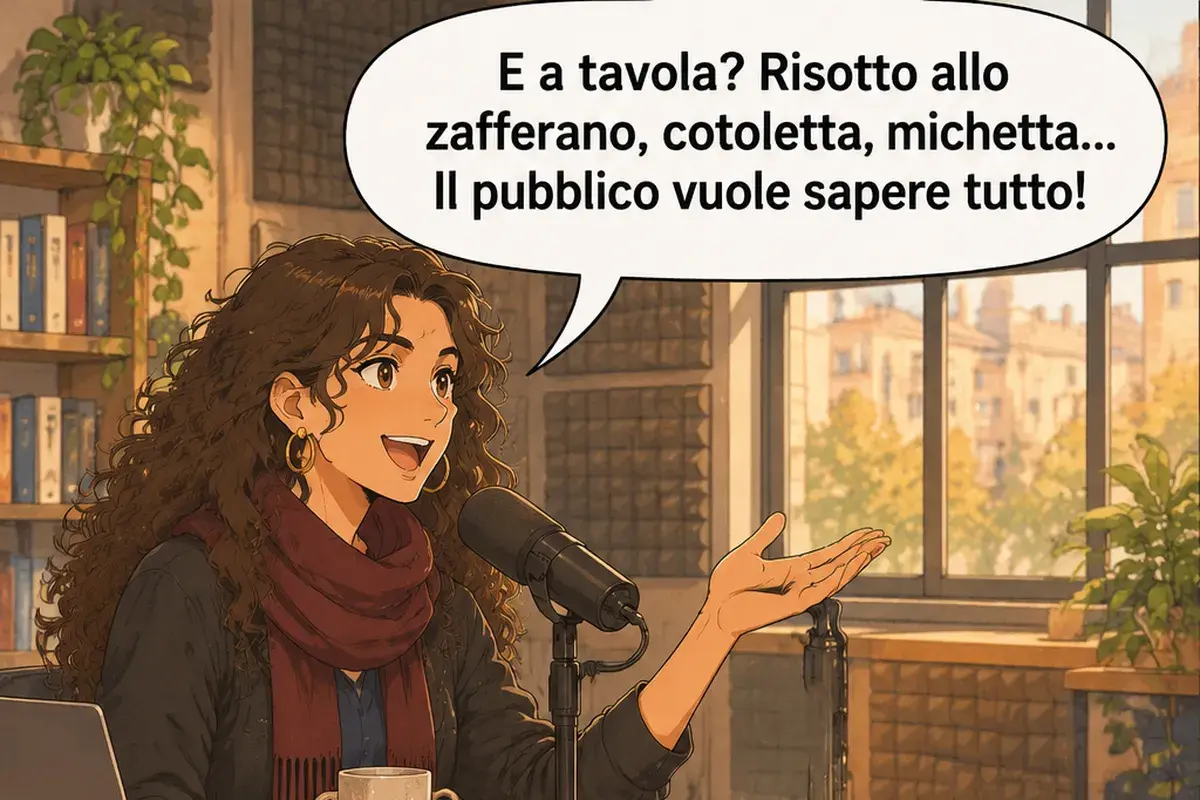
E a tavola? Risotto allo zafferano, cotoletta, michetta... Il pubblico vuole sapere tutto!
And at the table? Saffron risotto, breaded cutlet, michetta... The audience wants to know everything!
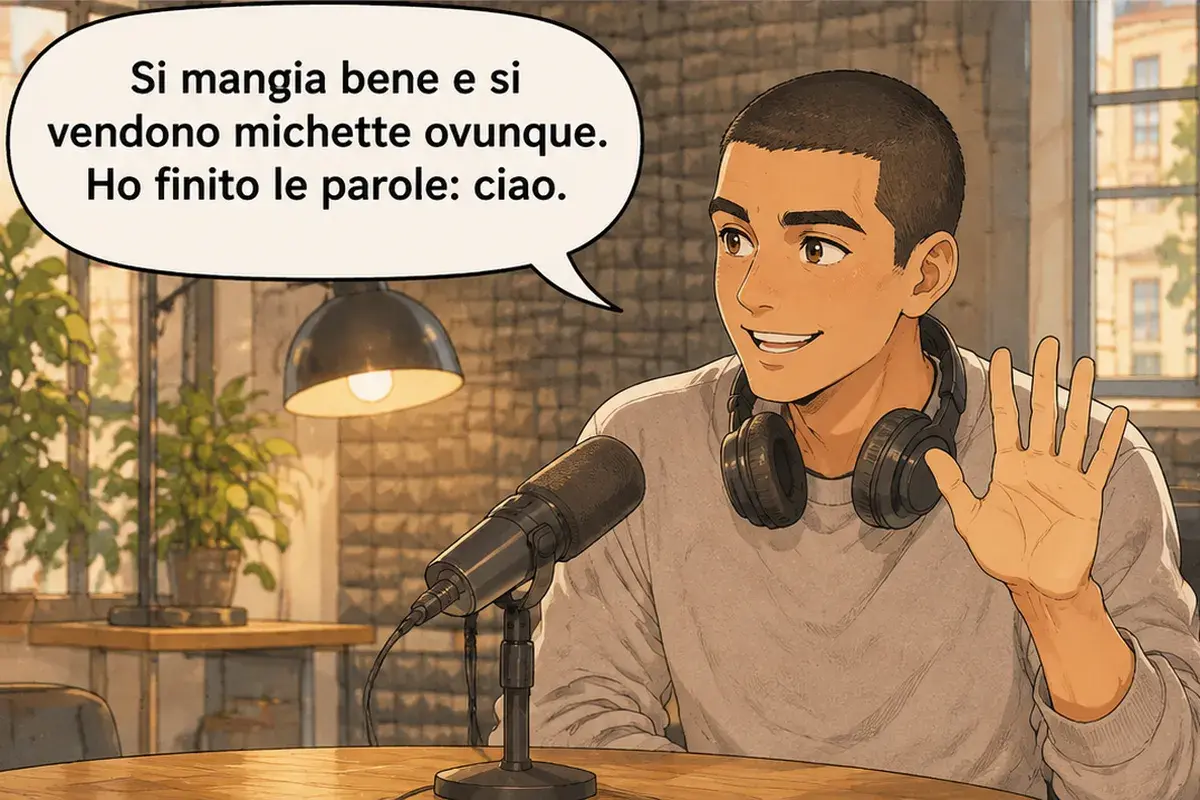
- Davide
Si mangia bene e si vendono michette ovunque. Ho finito le parole: ciao.
The food is good, and michette are sold everywhere. I've run out of words: bye.
Grammar for this text
- si affittano camere a prezzi pazzi — passive si: "rooms are rented out". The verb is plural because camere is plural (for one room it would be singular: affitta). The same in si vendono michette. More in the block "Passive si".
- A Milano si cammina veloce — si cammina is impersonal: "people walk". veloce is used here instead of "quickly": an adjective working as an adverb.
- non si saluta nessuno — "people don't say hi to anyone": non goes before si, and nessuno after the verb. Italian uses a double negative here, unlike English.
- una vera sciura, michette — Milanese words: sciura — an older, well-off Milanese lady; michetta — a round bread roll (michette — several). People say them in Milan and in the North; in other cities it's signora, and in Rome the roll is a rosetta.
- istruzioni per l'uso — a set phrase, "instructions for use". uso — use, from the same root as usare.
- dammi un esempio! — dammi = "give me": the tu imperative of dare + mi, a ready-made form from A2. The rule is in unit 14.
- Io faccio la movida sul divano — a joke: movida is nightlife in bars and on the streets; Davide does it at home, on the couch.
Words and grammar of the unit: Understand the unwritten office rules.
Learn the words from the texts with flashcards
In the app, you can tap any word in a text to see its translation, forms and examples, and new words stick with flashcards. 15 minutes a day.
Start for freeEverything is open for free. No card needed to sign up.