

Italian dialogue with translation · B1 · 9 lines
Non ho sentito la sveglia I didn't hear the alarm
Comic · 9 panels
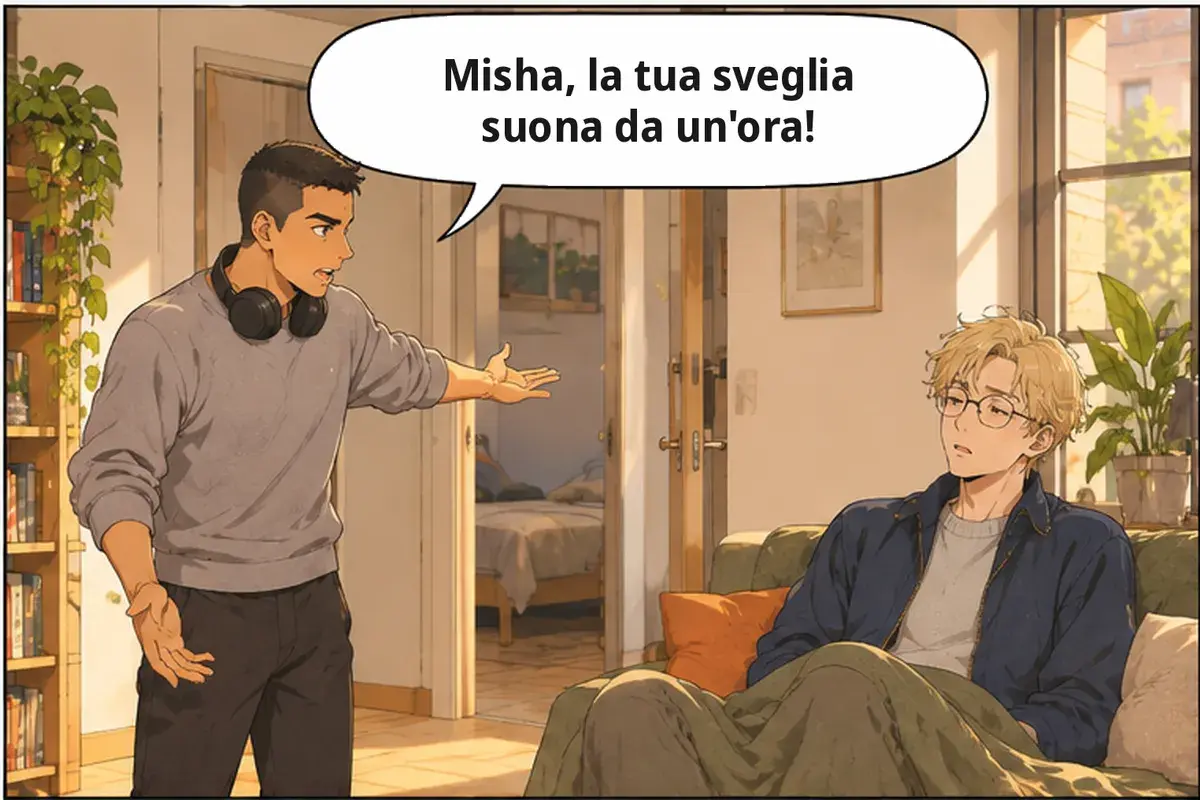
- Davide
Misha, la tua sveglia suona da un'ora!
Misha, your alarm has been going off for an hour!
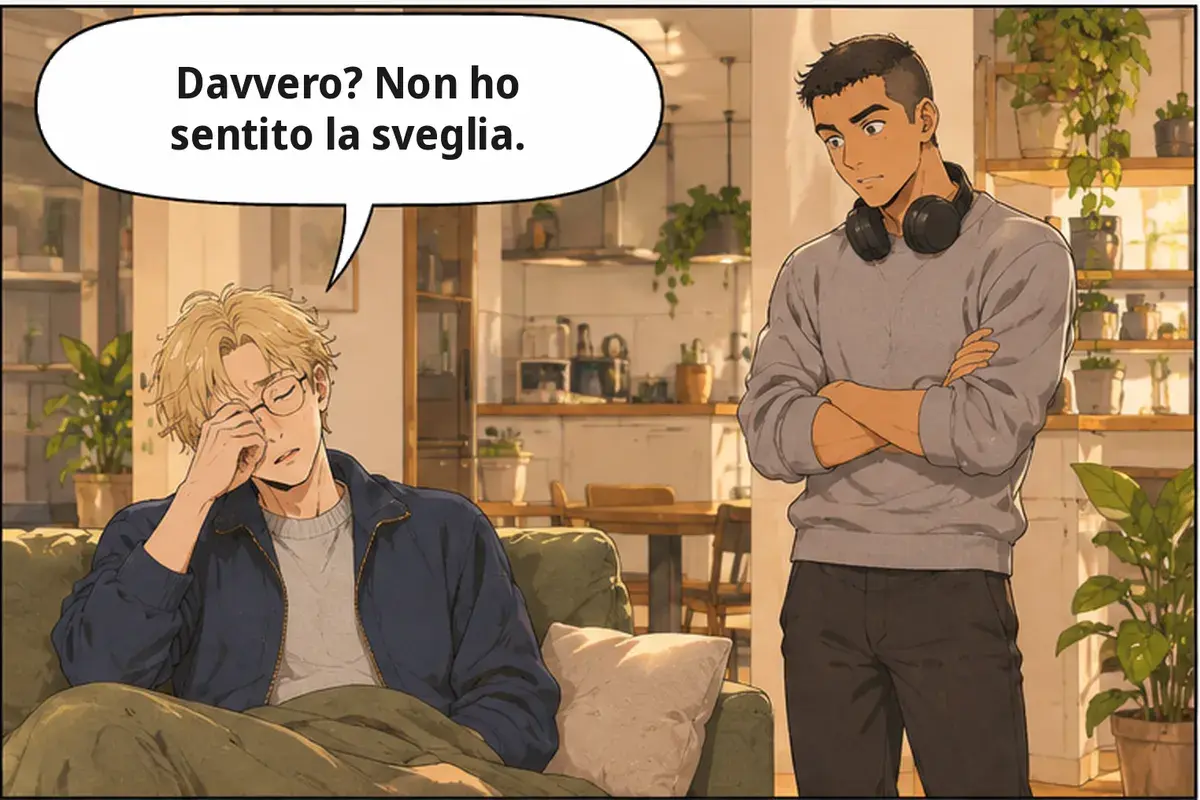
- Misha
Davvero? Non ho sentito la sveglia.
Really? I didn't hear the alarm.
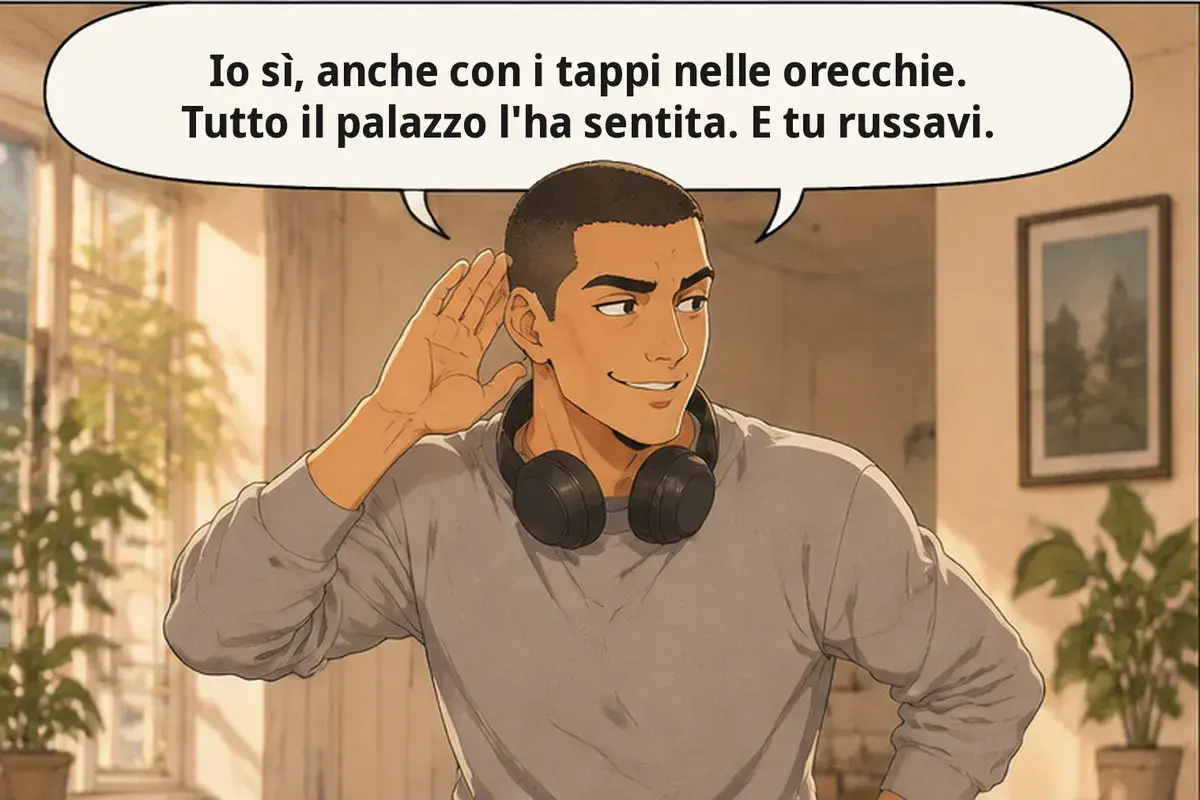
- Davide
Io sì, anche con i tappi nelle orecchie. Tutto il palazzo l'ha sentita. E tu russavi.
I did, even with earplugs in. The whole building heard it. And you were snoring.
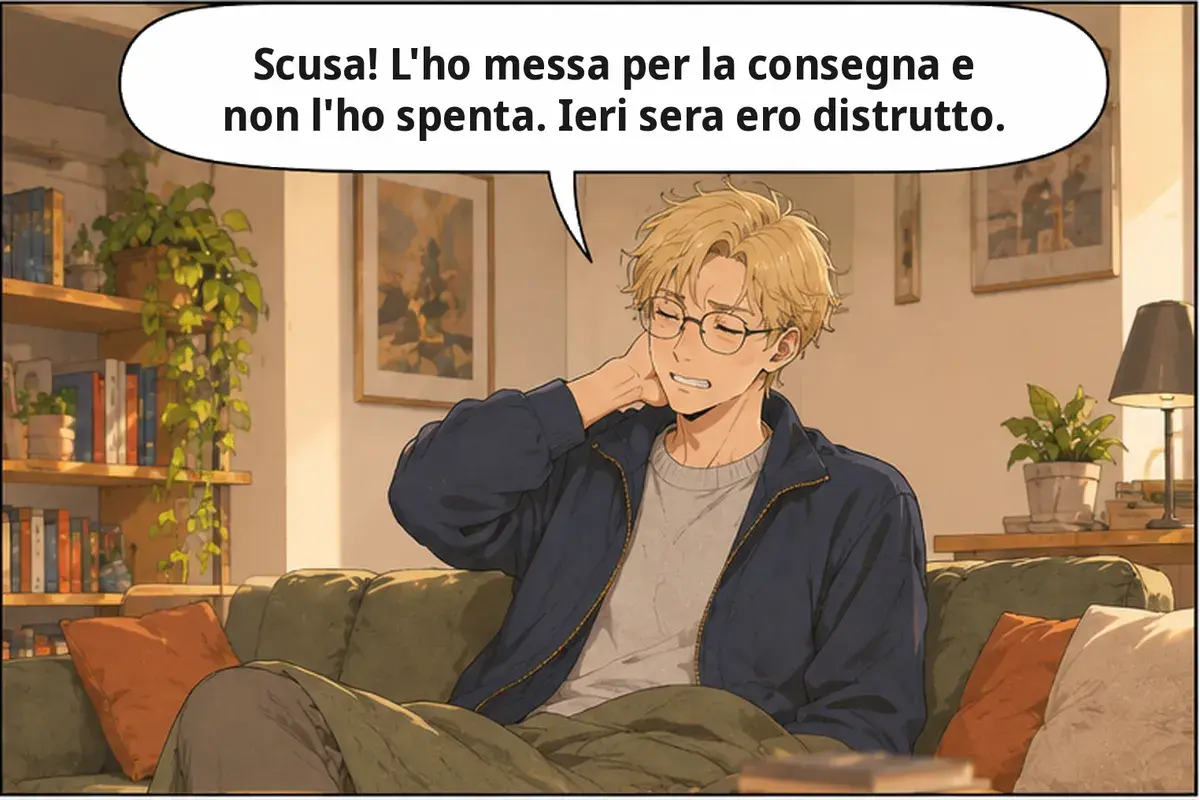
- Misha
Scusa! L'ho messa per la consegna e non l'ho spenta. Ieri sera ero distrutto.
Sorry! I set it for the submission and didn't turn it off. Last night I was wiped out (man speaking).
- Davide
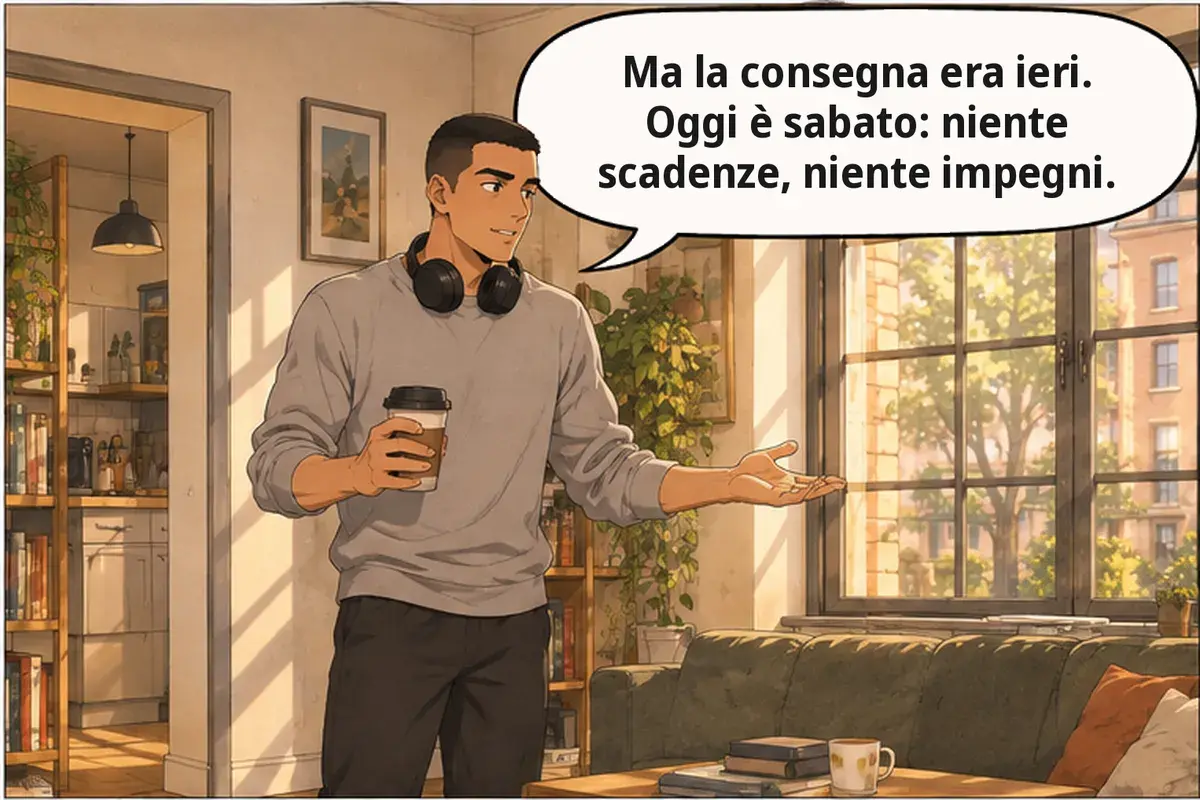
Ma la consegna era ieri. Oggi è sabato: niente scadenze, niente impegni.
But the submission was yesterday. Today is Saturday: no deadlines, no commitments.
- Misha
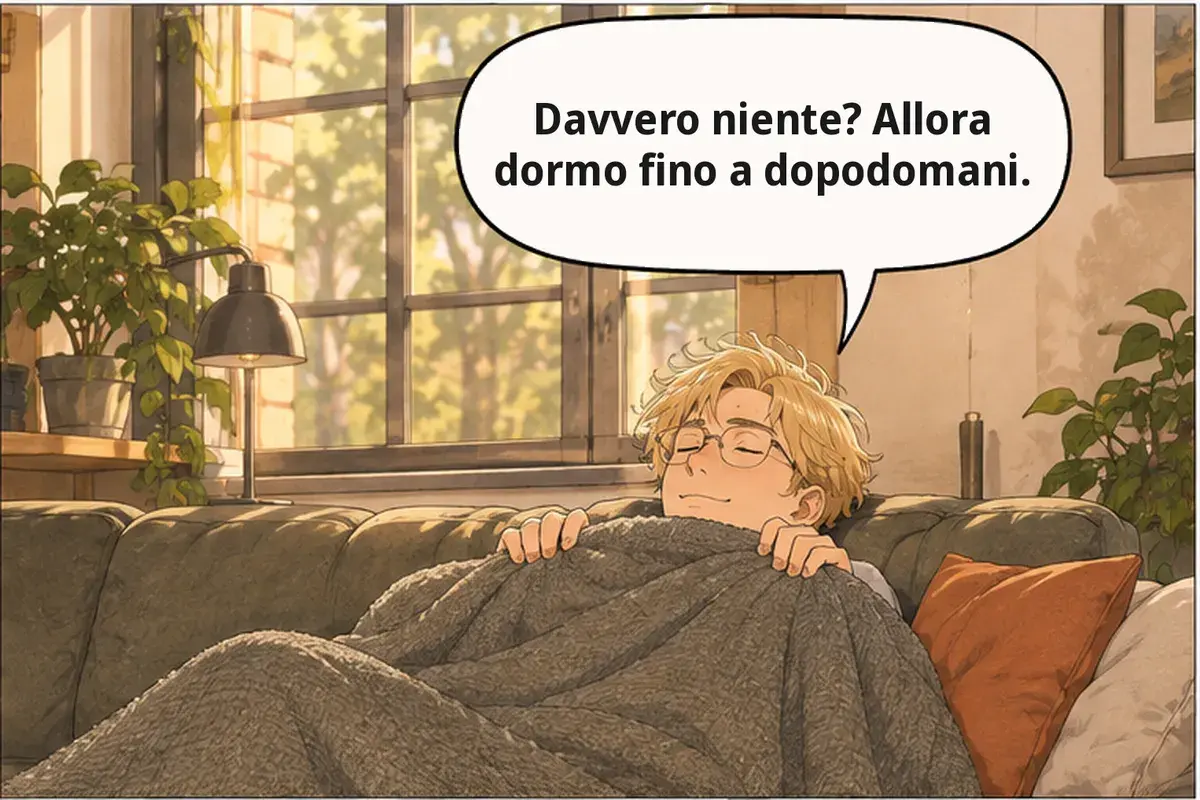
Davvero niente? Allora dormo fino a dopodomani.
Really nothing? Then I'm sleeping until the day after tomorrow.
- Davide
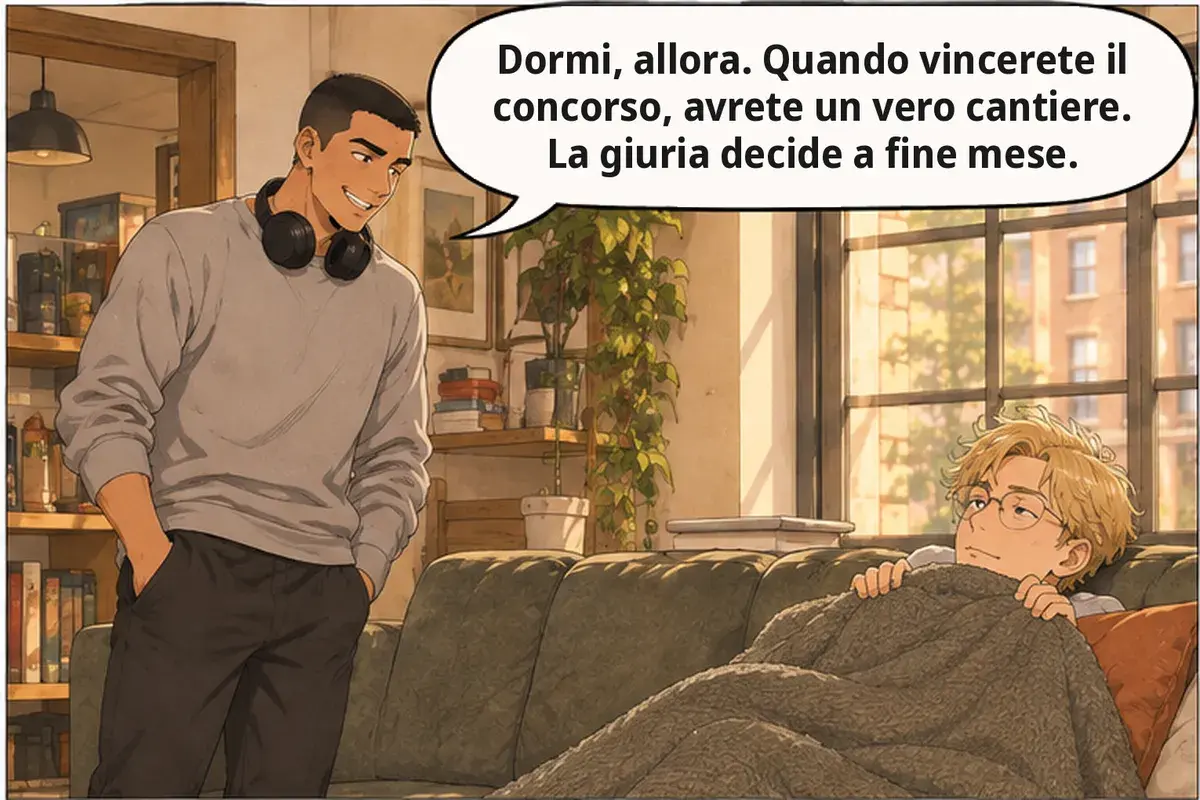
Dormi, allora. Quando vincerete il concorso, avrete un vero cantiere. La giuria decide a fine mese.
Sleep, then. When you win the competition, you'll have a real construction site (to several people). The jury decides at the end of the month.
- Misha
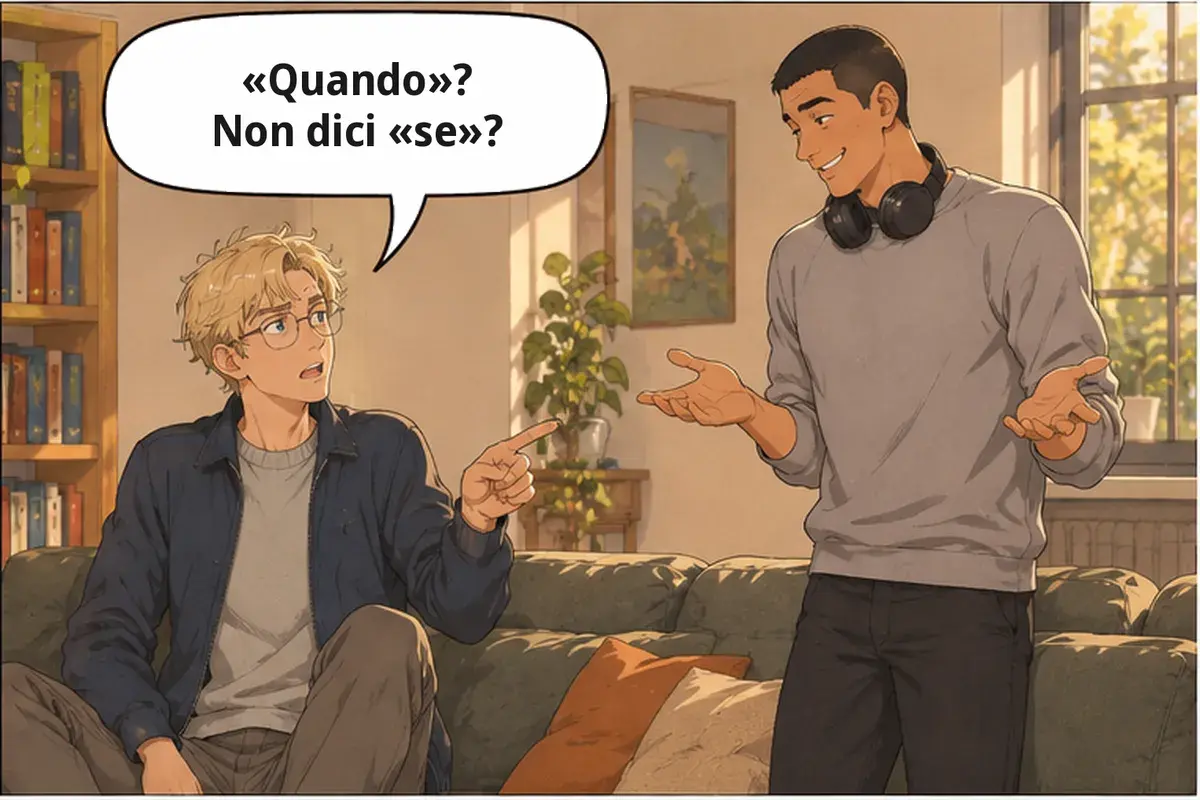
«Quando»? Non dici «se»?
"When"? You don't say "if"?
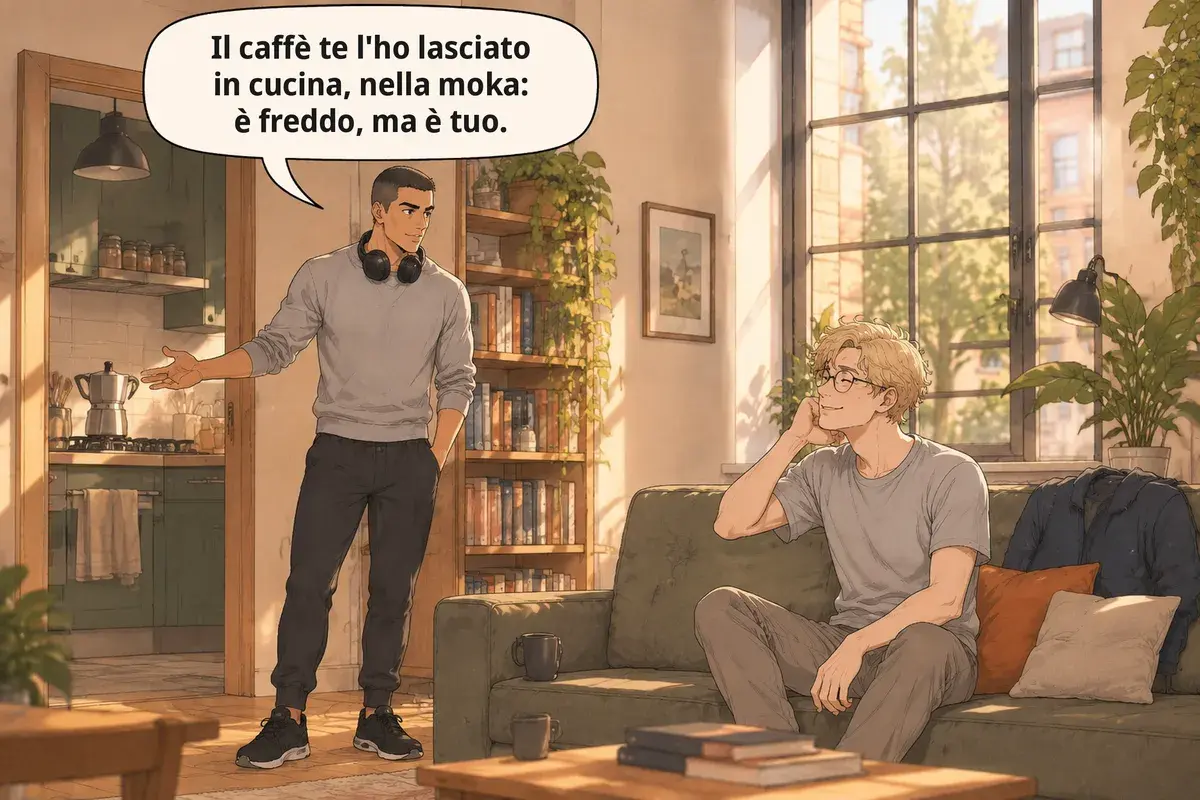
- Davide
Il caffè te l'ho lasciato in cucina, nella moka: è freddo, ma è tuo.
I left you the coffee in the kitchen, in the moka pot: it's cold, but it's yours.
Grammar for this text
- Non ho sentito la sveglia — sveglia is an alarm clock (not sveglio, awake); ho sentito — I heard.
- Tutto il palazzo l'ha sentita — here l' is la (the alarm clock), so the participle sentita is feminine.
- L'ho messa per la consegna e non l'ho spenta — messa and spenta are past participles of the irregular verbs mettere and spegnere; feminine because l' is la.
- Quando vincerete il concorso, avrete un vero cantiere — after quando, Italian uses the future, while English says "when you win" (unit 1). vincerete, avrete — the voi form (Misha and his studio).
- Il caffè te l'ho lasciato in cucina — te l'ho = te lo + ho: here l' is lo (the coffee), so lasciato.
- dormo fino a dopodomani — dopodomani — the day after tomorrow: counting from Saturday, that's Monday.
- ero distrutto — distrutto (the past participle of distruggere, to destroy) in everyday speech means "wiped out, exhausted". E tu russavi — the imperfetto of russare: you were snoring the whole time the alarm was ringing.
Words and grammar of the unit: Split up tasks before a deadline.
Learn the words from the texts with flashcards
In the app, you can tap any word in a text to see its translation, forms and examples, and new words stick with flashcards. 15 minutes a day.
Start for freeEverything is open for free. No card needed to sign up.