

Italian dialogue with translation · A2 · 16 lines
Tre pizze per Misha… Ma sei tu! Three pizzas for Misha… But it's you!
Comic · 16 panels
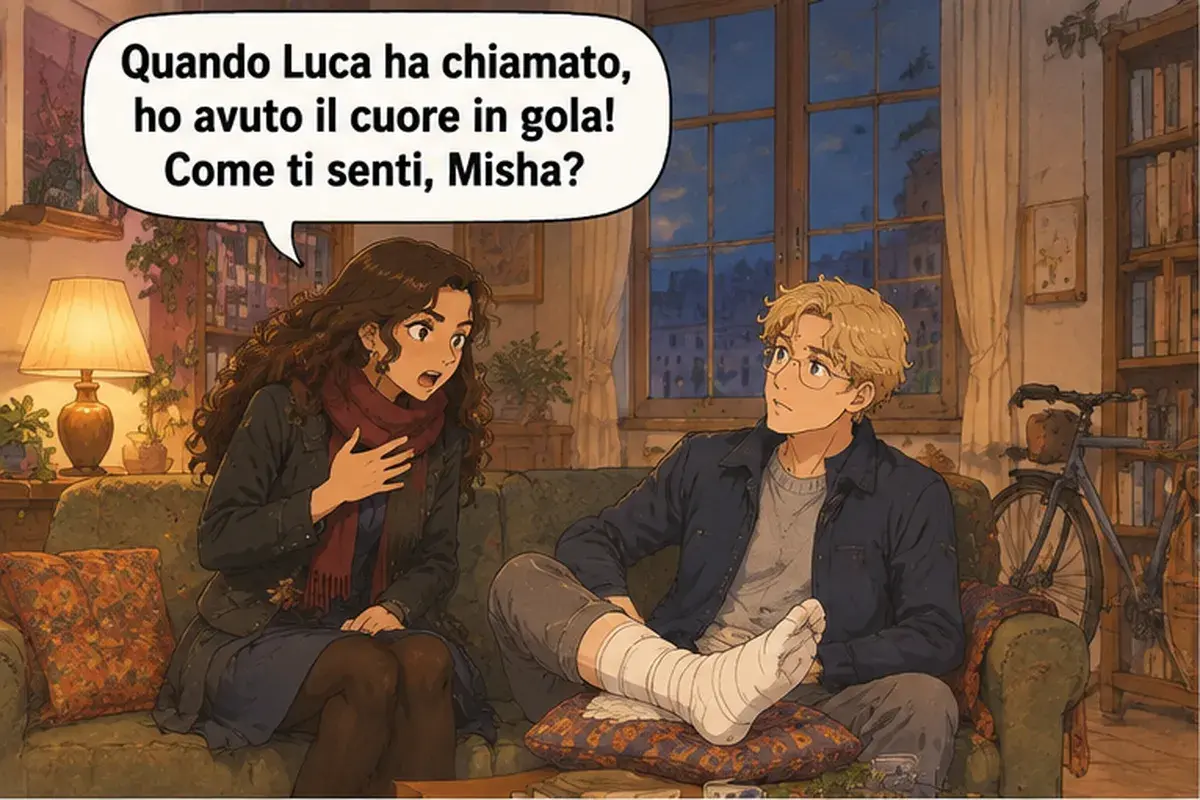
- Giulia
Quando Luca ha chiamato, ho avuto il cuore in gola! Come ti senti, Misha?
When Luca called, my heart jumped into my throat! How are you feeling, Misha?
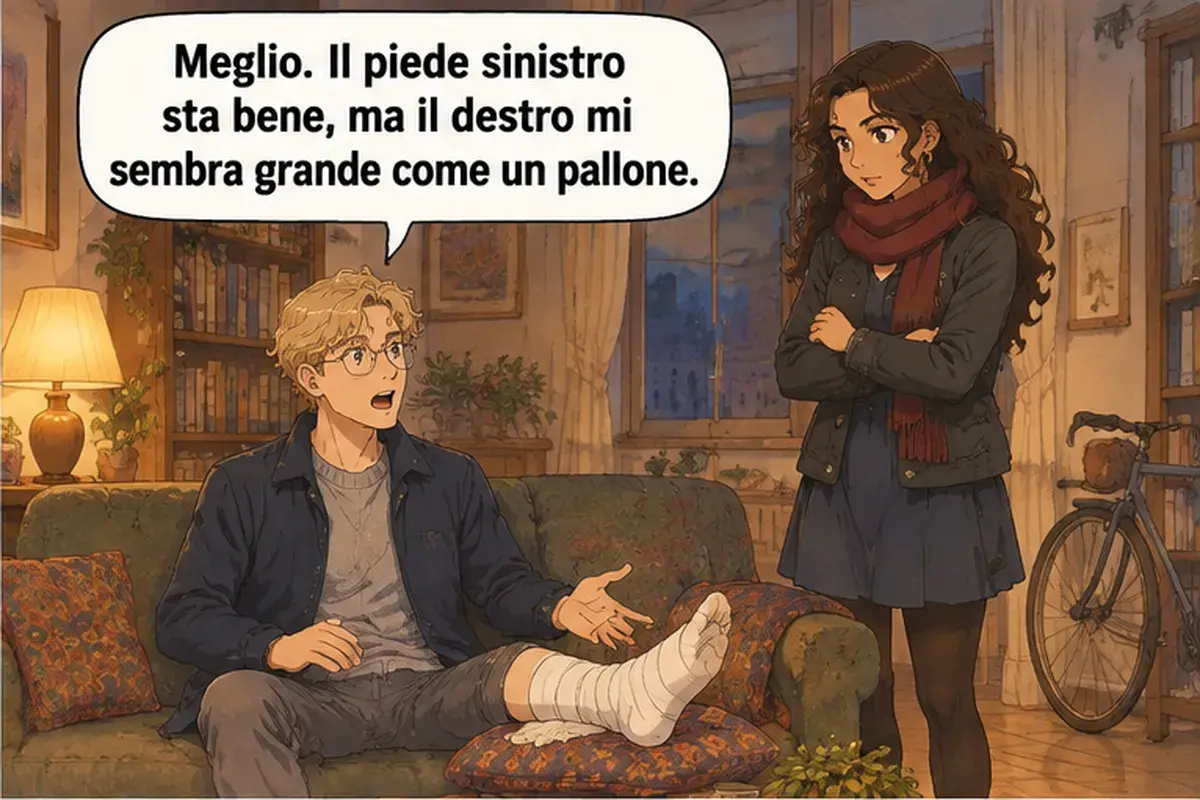
- Misha
Meglio. Il piede sinistro sta bene, ma il destro mi sembra grande come un pallone.
Better. The left foot is fine, but the right one looks as big as a ball to me.
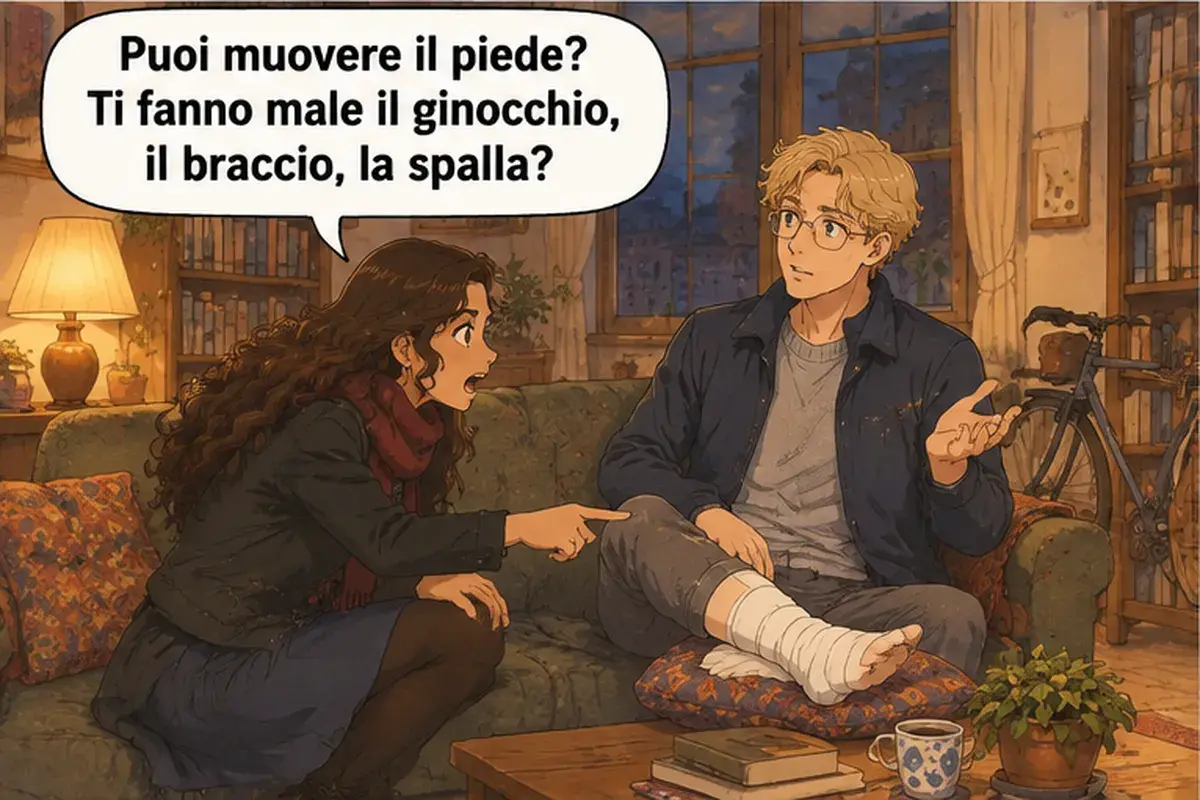
- Giulia
Puoi muovere il piede? Ti fanno male il ginocchio, il braccio, la spalla?
Can you move your foot? Do your knee, your arm, your shoulder hurt?
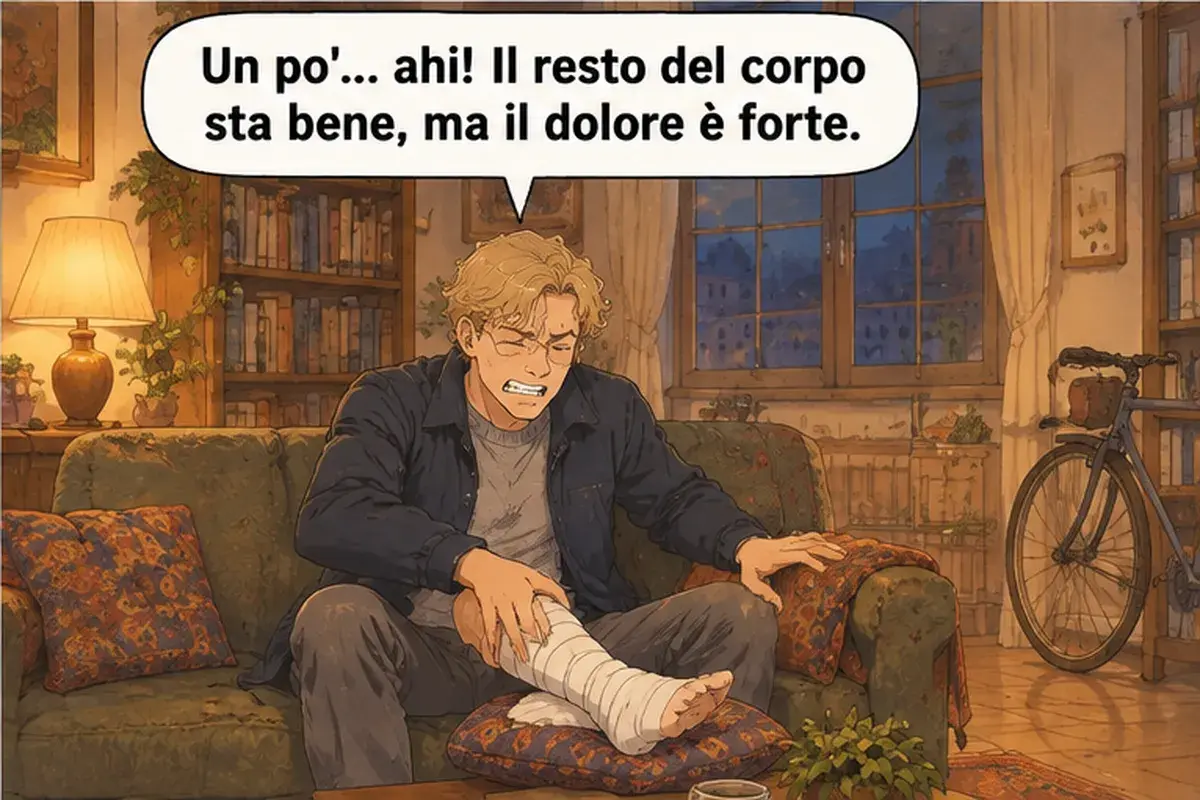
- Misha
Un po'... ahi! Il resto del corpo sta bene, ma il dolore è forte.
A little... ouch! The rest of my body is fine, but the pain is bad.
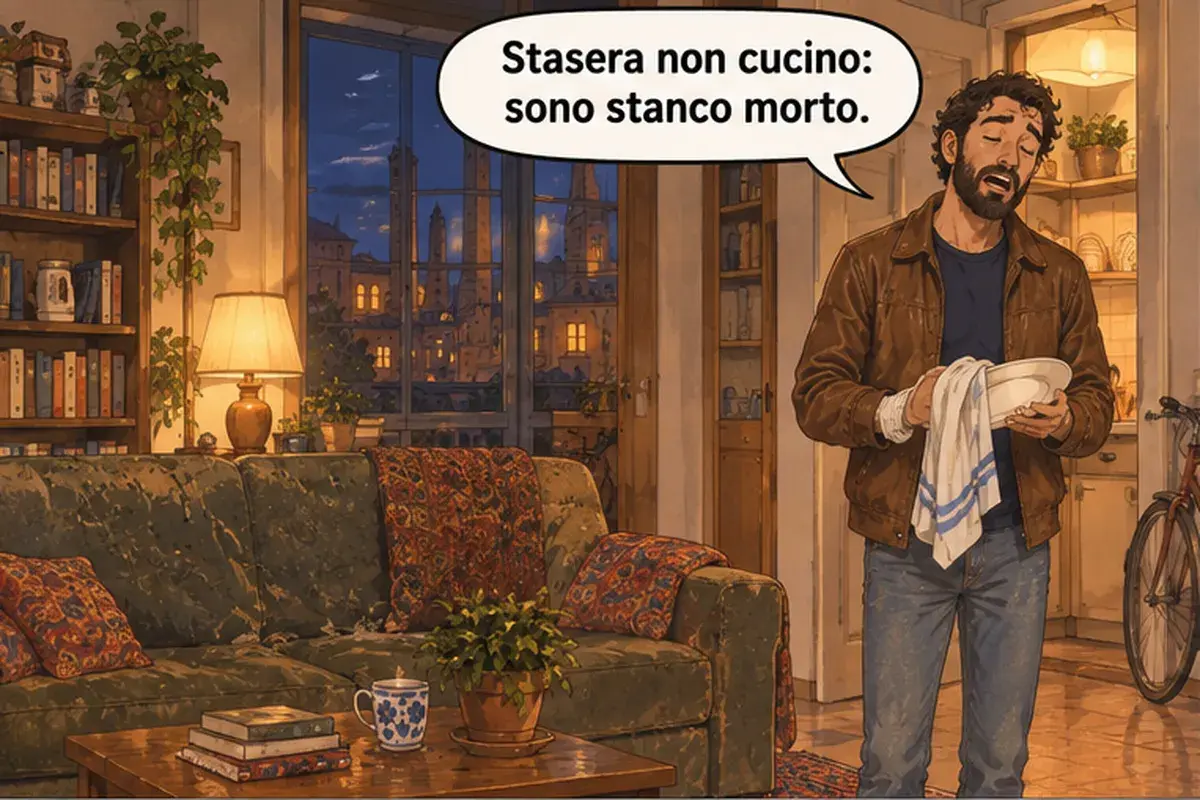
- Luca
Stasera non cucino: sono stanco morto.
I'm not cooking tonight: I'm dead tired (man speaking).
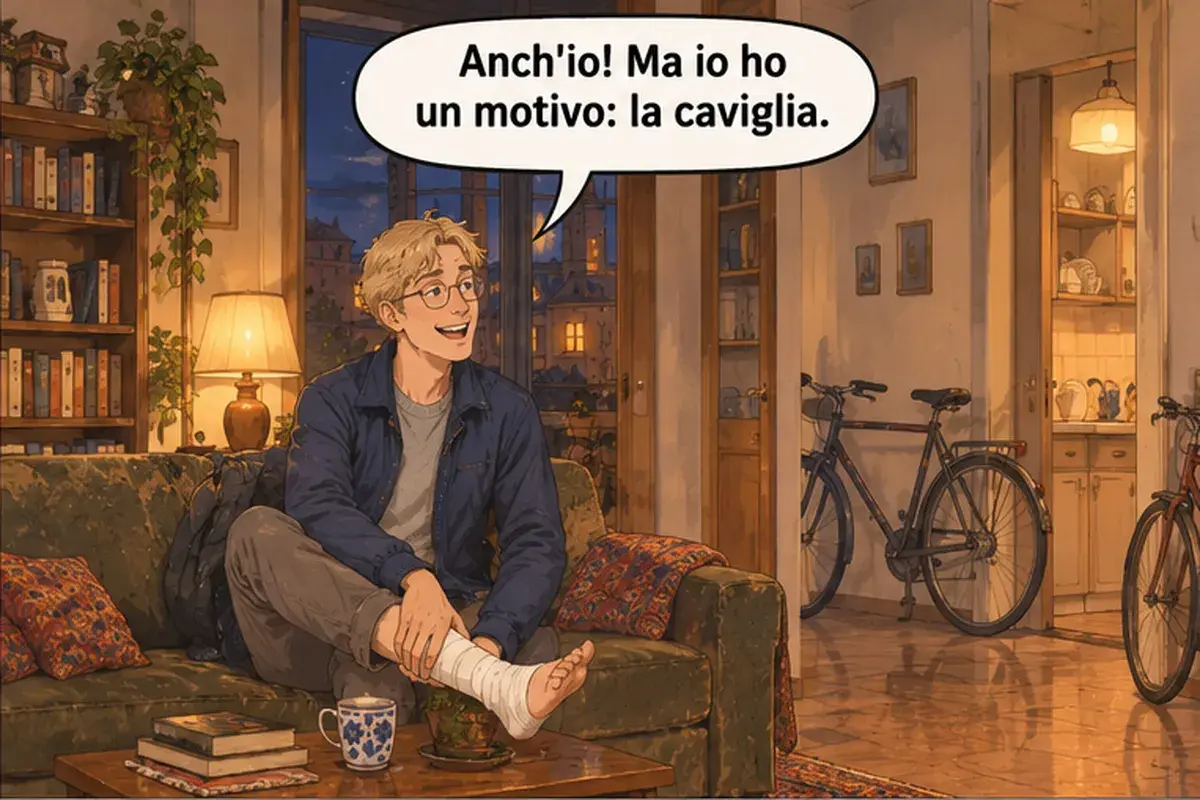
- Misha
Anch'io! Ma io ho un motivo: la caviglia.
Me too! But I have a reason: my ankle.

- Giulia
Luca non cucina? Stai male anche tu?
Luca isn't cooking? Do you feel sick too?
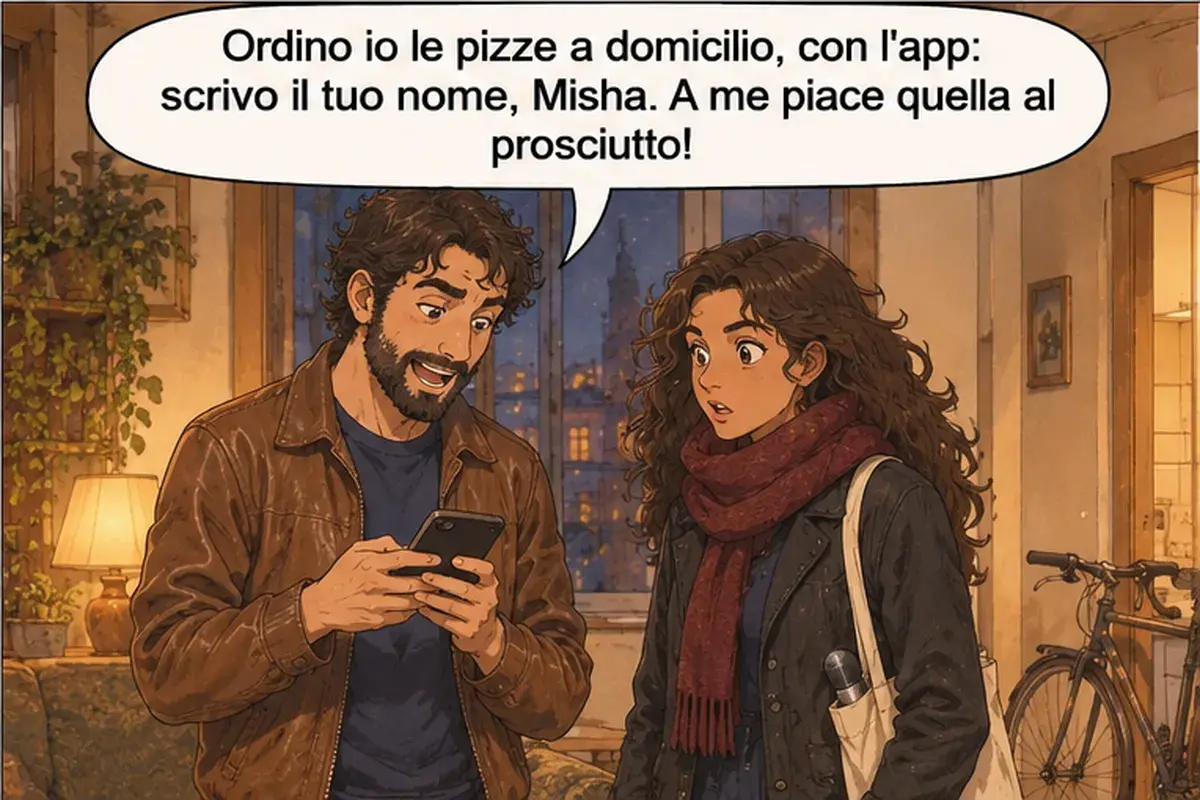
- Luca
Ordino io le pizze a domicilio, con l'app: scrivo il tuo nome, Misha. A me piace quella al prosciutto!
I'll order the pizzas for delivery myself, on the app: I'll put in your name, Misha. As for me, I like the prosciutto one!

- Misha
Anche a me!
Me too!
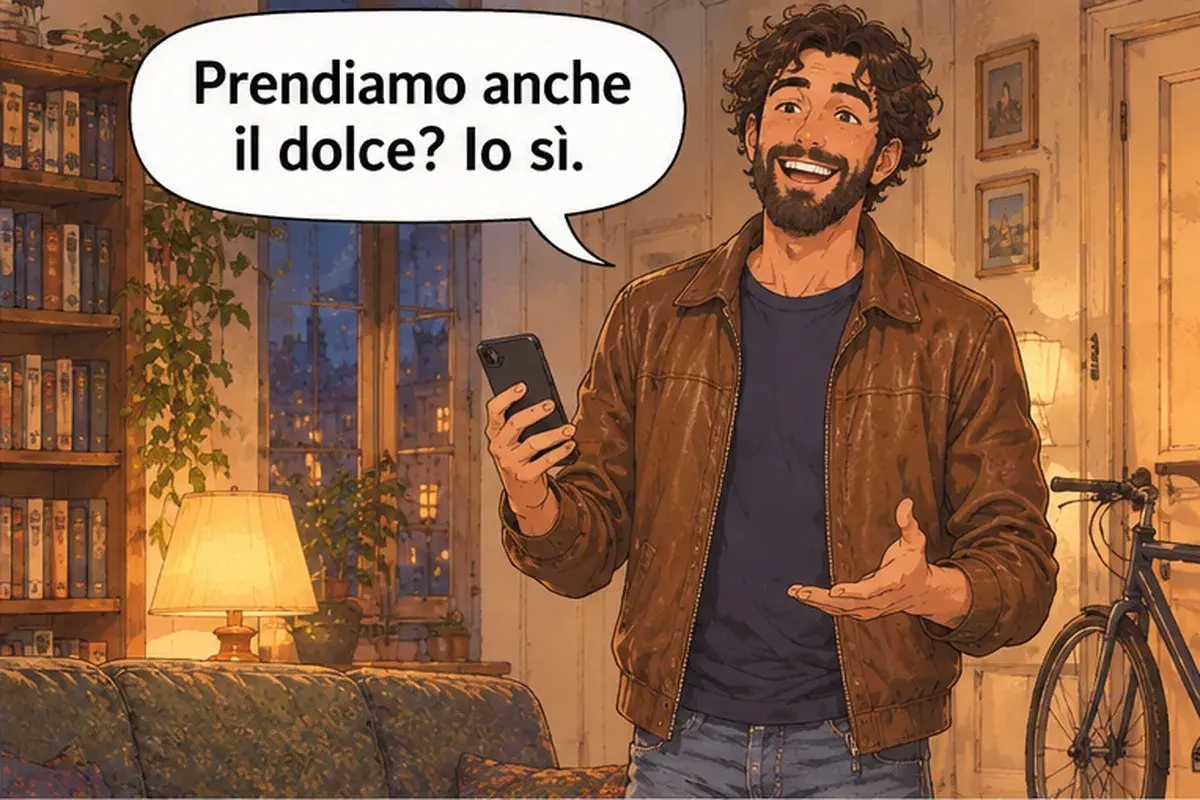
- Luca
Prendiamo anche il dolce? Io sì.
Are we getting dessert too? I am.

- Giulia
A me no, grazie.
Not for me, thanks.

- Misha
Neanche a me.
Not for me either.

- Giulia
Suona il citofono! Già?
The intercom is ringing! Already?
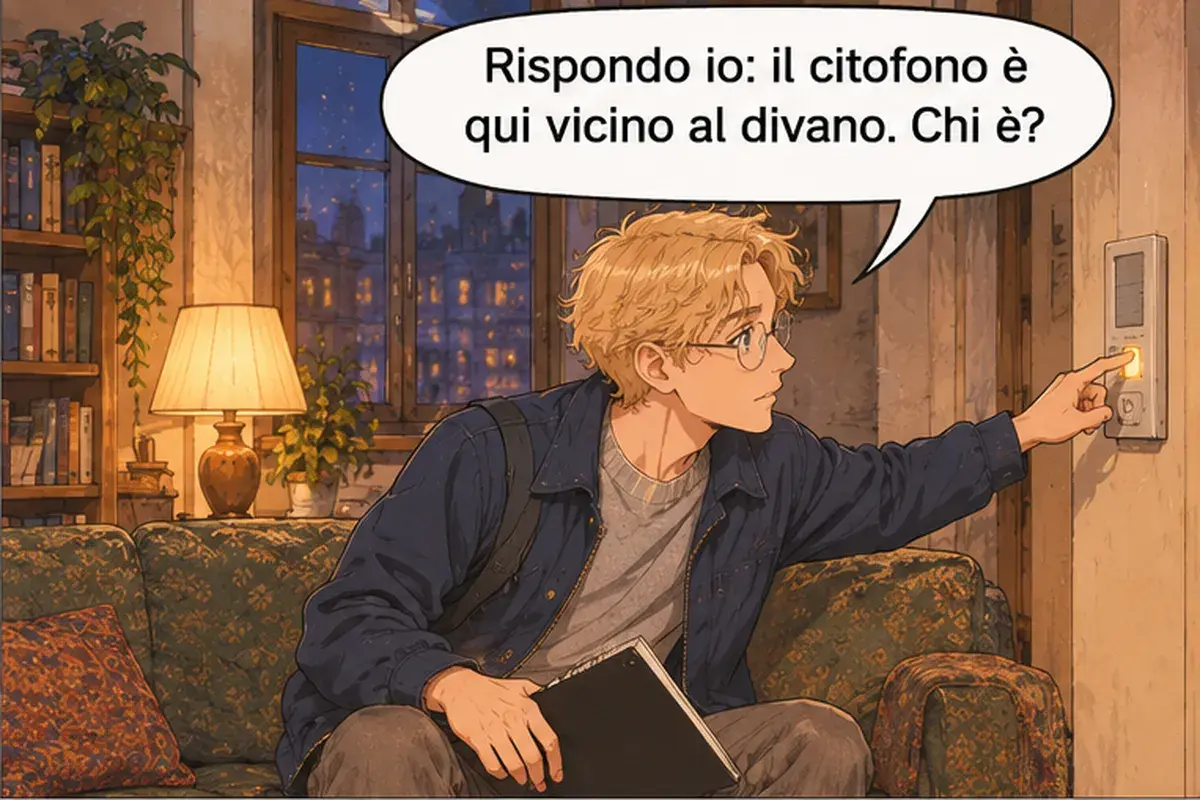
- Misha
Rispondo io: il citofono è qui vicino al divano. Chi è?
I'll answer: the intercom is right here, next to the couch. Who is it?
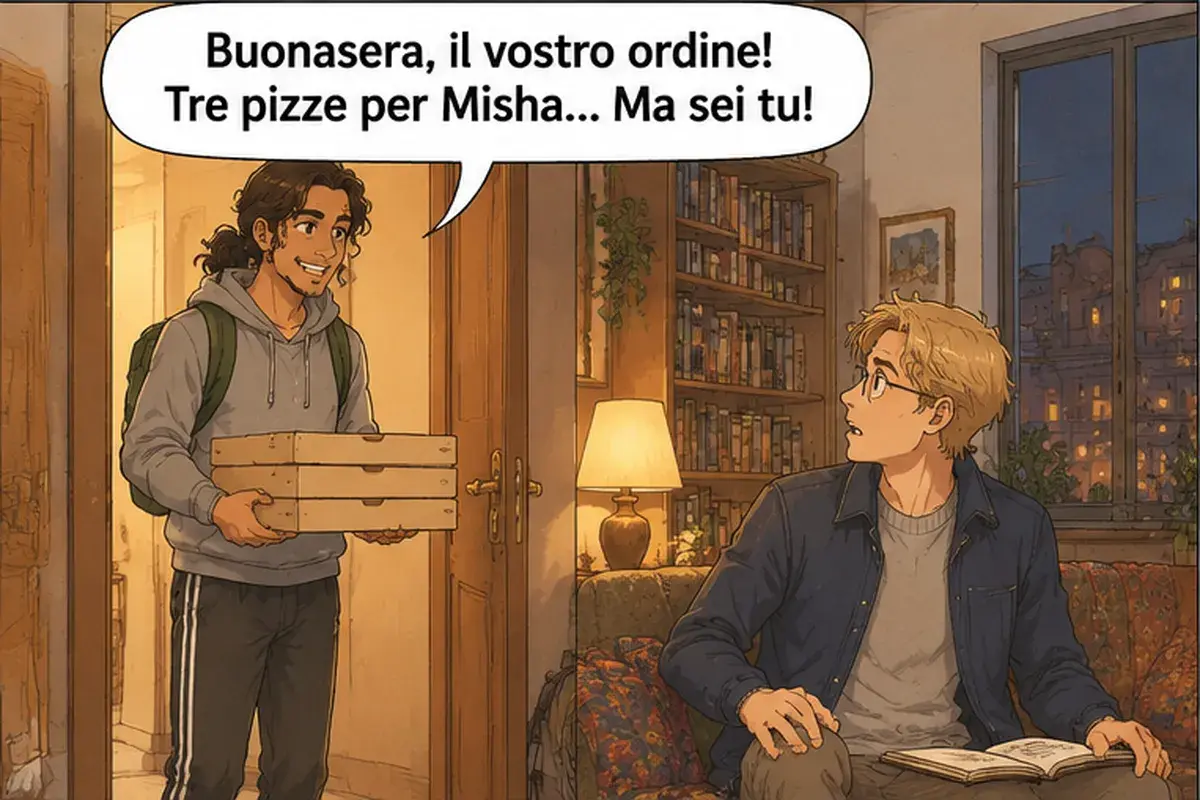
- Diego
Buonasera, il vostro ordine! Tre pizze per Misha… Ma sei tu!
Good evening, your order (to several people)! Three pizzas for Misha… But it's you!
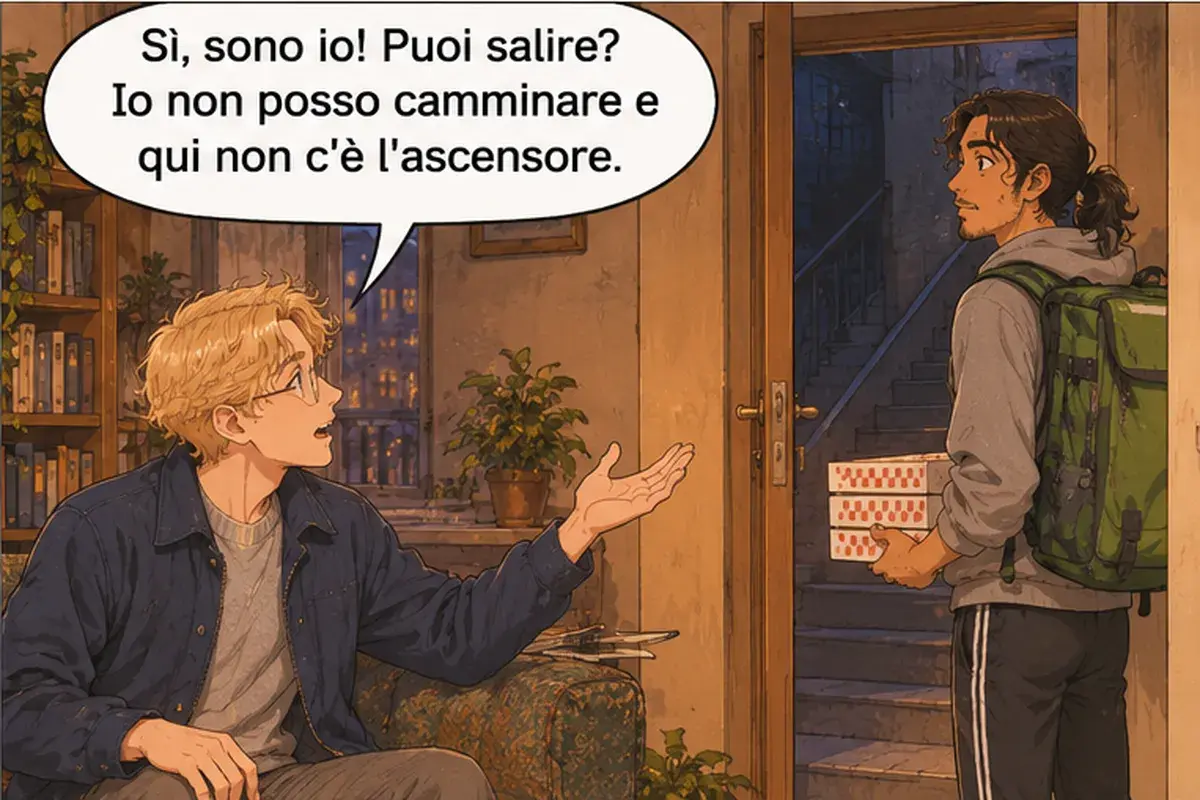
- Misha
Sì, sono io! Puoi salire? Io non posso camminare e qui non c'è l'ascensore.
Yes, it's me! Can you come up? I can't walk, and there's no elevator here.
Grammar for this text
- Quando Luca ha chiamato, ho avuto il cuore in gola! — avere il cuore in gola — "to have your heart in your throat" (from fright), just like in English. ho avuto and ha chiamato are the passato prossimo (everyday past) with avere (A1, units 15–16).
- Il piede sinistro sta bene, ma il destro mi sembra grande come un pallone. — il destro — "the right one": the word piede is left out so it isn't repeated. Mi sembra — "it seems to me", works like mi piace (block 1). grande come un pallone — "as big as a ball": a comparison with come (unit 3).
- Ti fanno male il ginocchio, il braccio, la spalla? — there are several things, so it's fanno, not fa.
- Il resto del corpo sta bene — il resto — "the rest"; the same form resto also means "I stay" (restare).
- Luca non cucina? Stai male anche tu? — cucina here is the verb "cooks", not the noun "kitchen". Stai male — "do you feel sick?": Luca always cooks, so Giulia is joking.
- Anche a me! — "me too" after mi piace; Anch'io! — "me too" after sono stanco; A me no — "not me"; Neanche a me — "me neither". More in grammar block 3.
- Suona il citofono! Già? — il citofono — the intercom; già — "already": the pizza came fast. Il vostro ordine — here ordine means "order" (from ordinare, to order).
Words and grammar of the unit: Explain to a doctor what happened.
Learn the words from the texts with flashcards
In the app, you can tap any word in a text to see its translation, forms and examples, and new words stick with flashcards. 15 minutes a day.
Start for freeEverything is open for free. No card needed to sign up.