
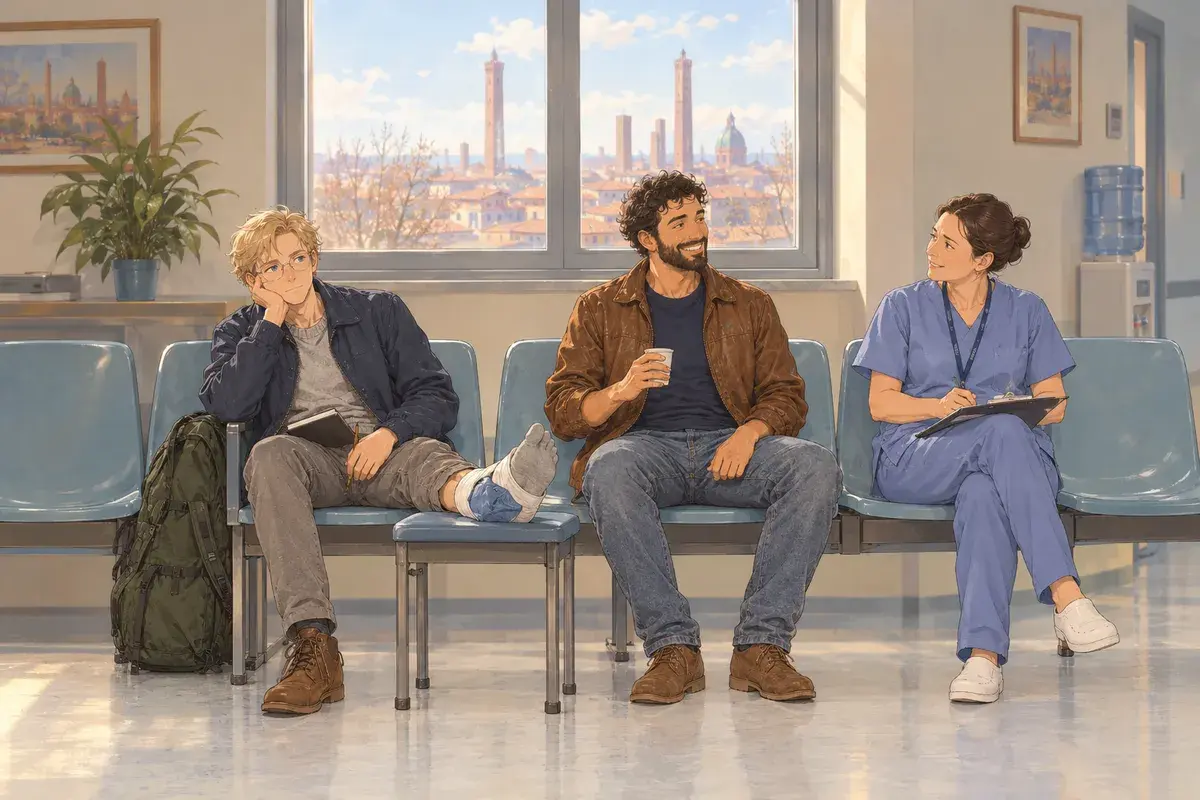
Italian dialogue with translation · A2 · 16 lines
Mi fa male la caviglia destra My right ankle hurts
Comic · 16 panels
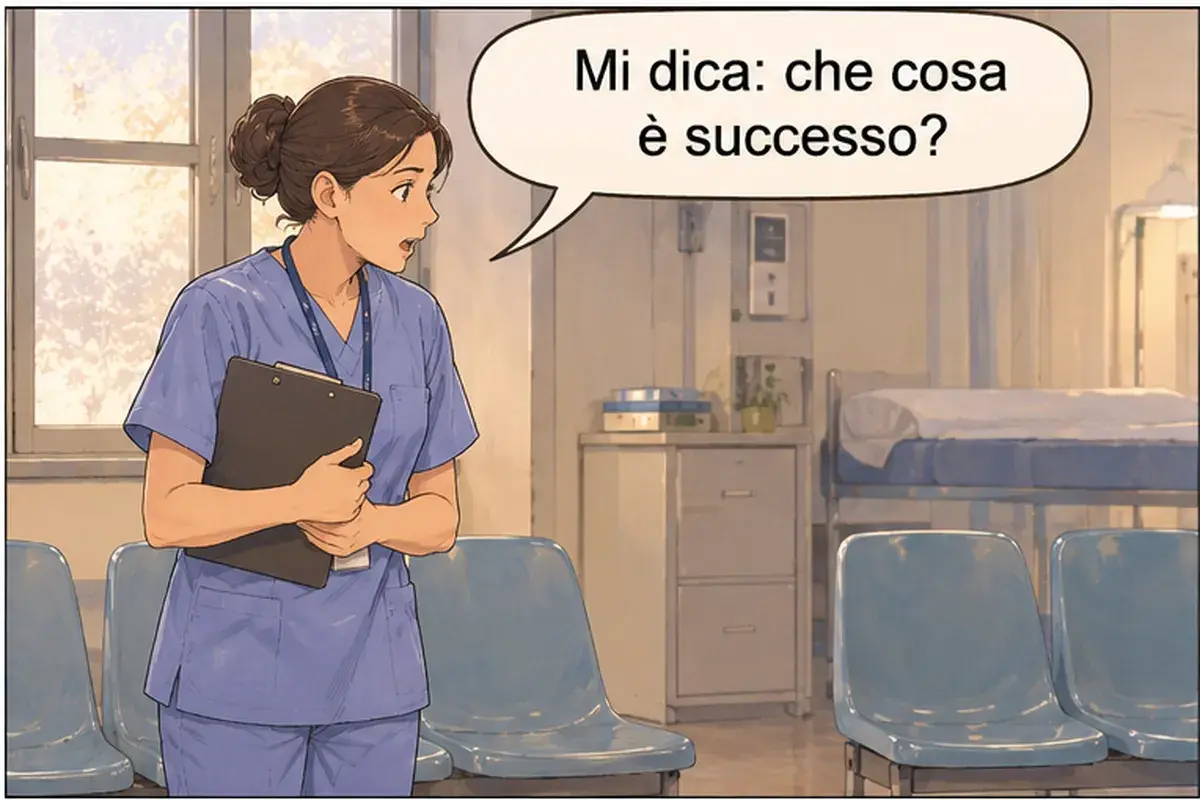
- Infermiera
Mi dica: che cosa è successo?
How can I help you? What happened? (formal)
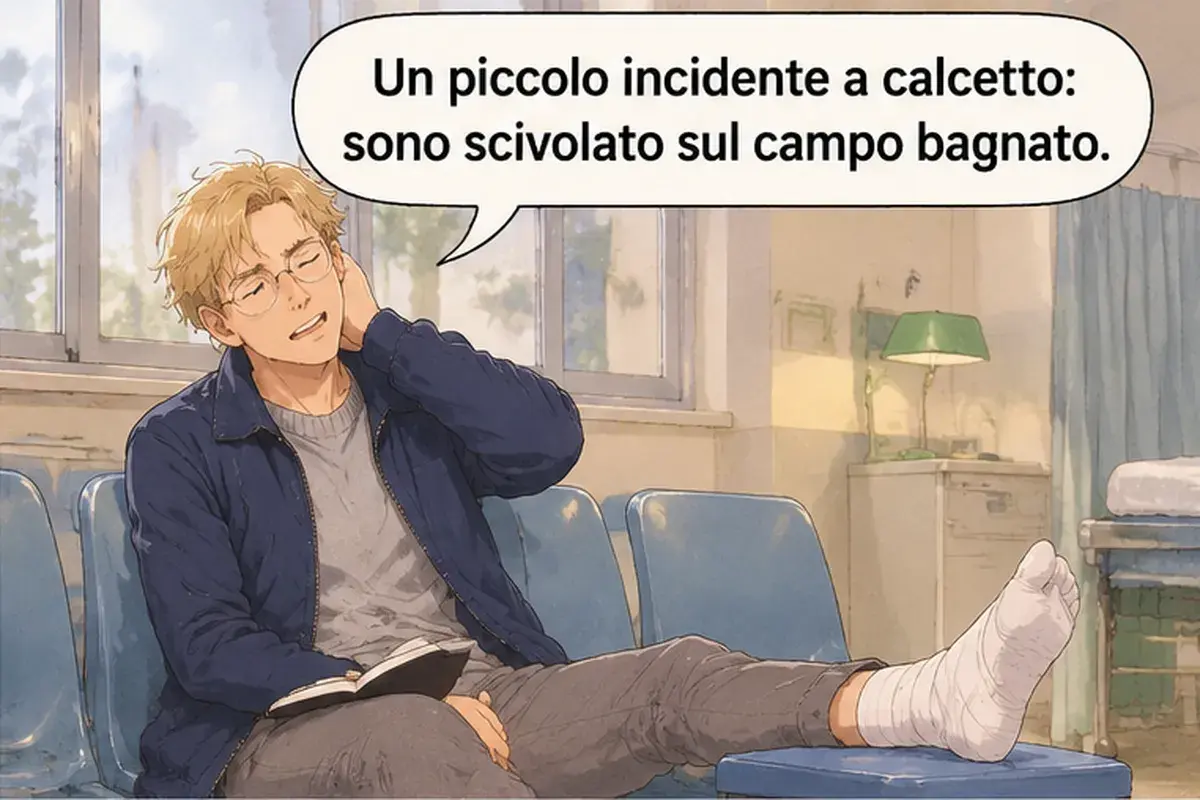
- Misha
Un piccolo incidente a calcetto: sono scivolato sul campo bagnato.
A little accident playing five-a-side soccer: I slipped on the wet field (man speaking).
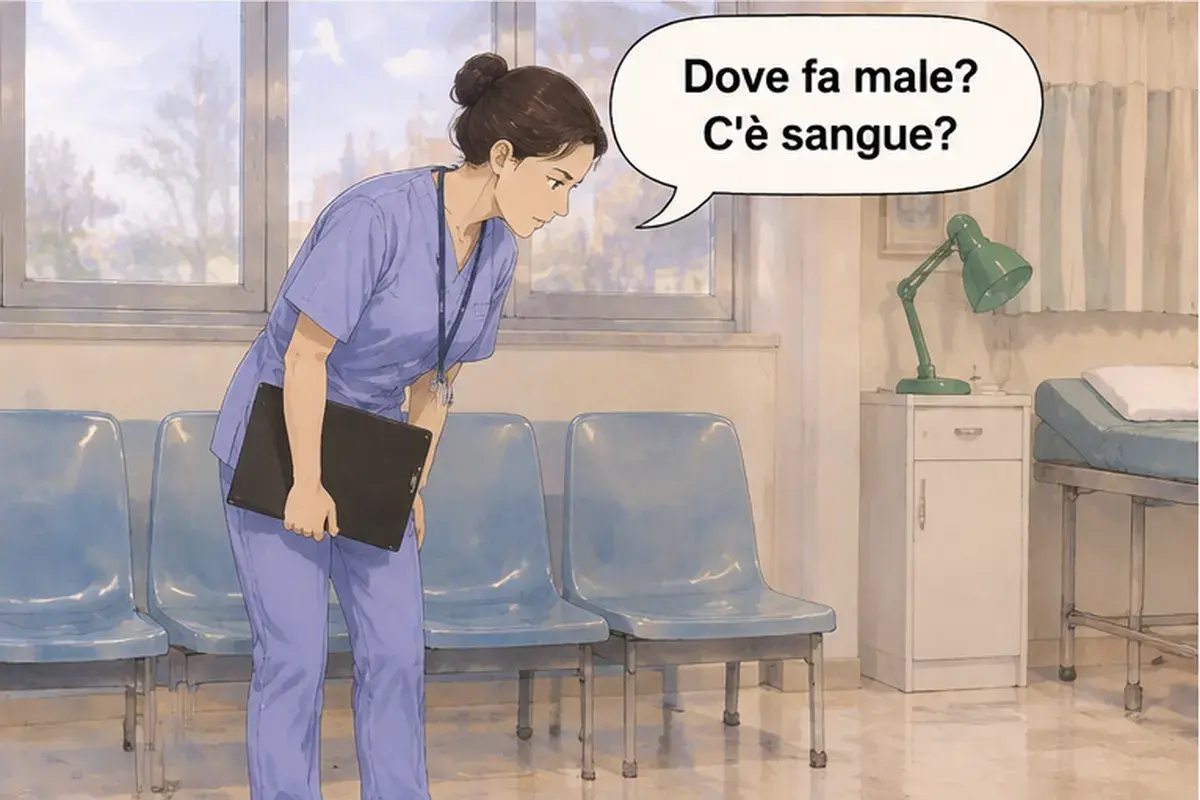
- Infermiera
Dove fa male? C'è sangue?
Where does it hurt? Is there any blood?
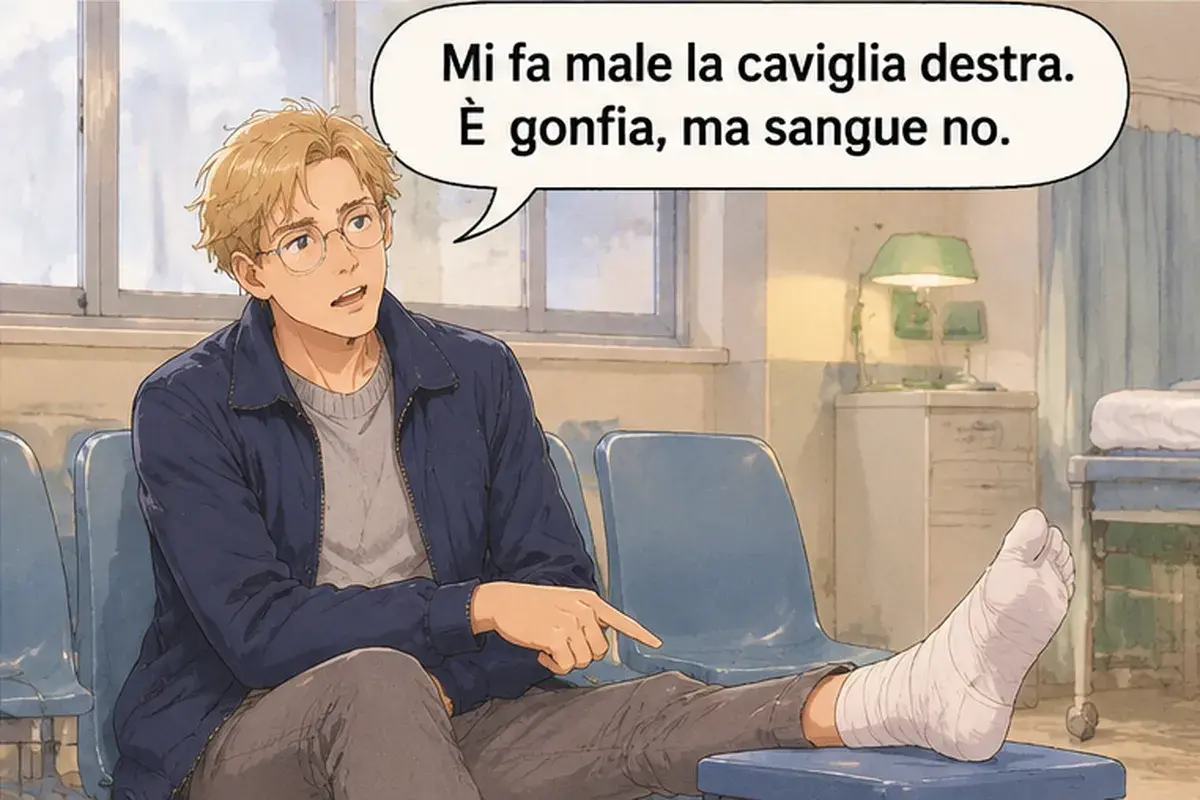
- Misha
Mi fa male la caviglia destra. È gonfia, ma sangue no.
My right ankle hurts. It's swollen, but no blood.
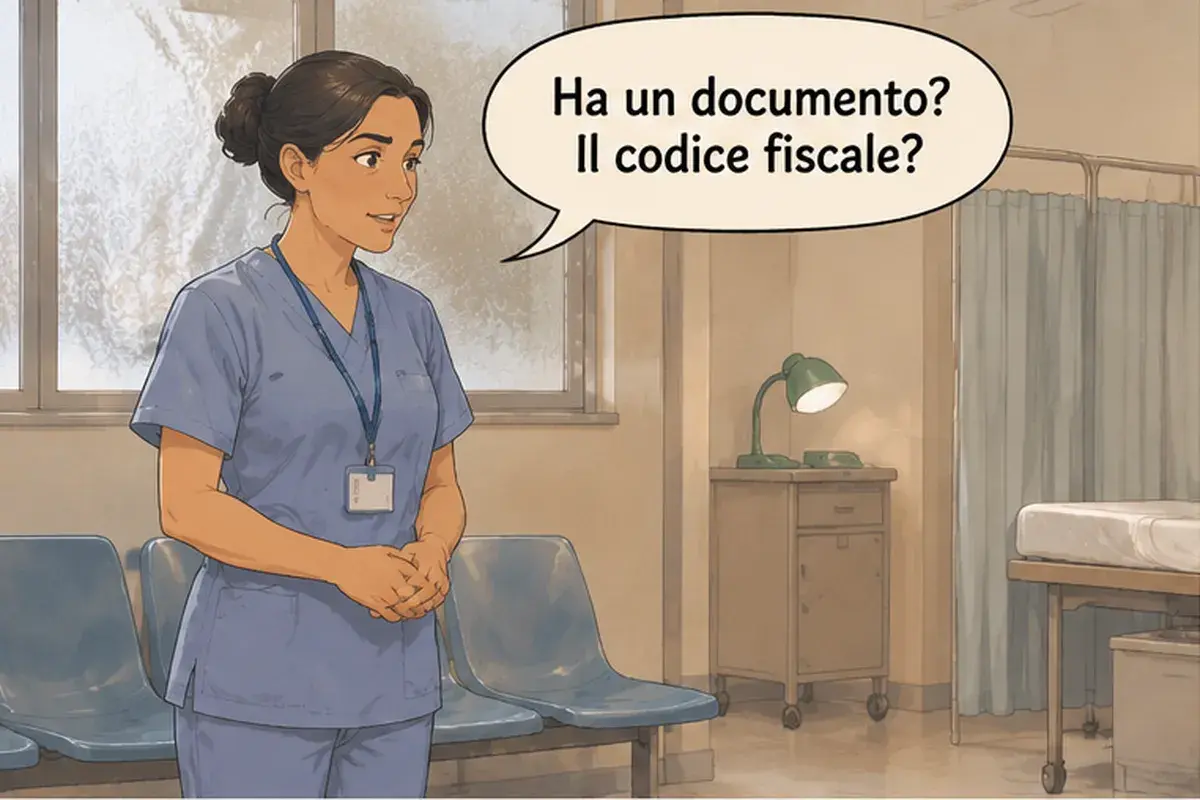
- Infermiera
Ha un documento? Il codice fiscale?
Do you have ID? Your codice fiscale (tax code)? (formal)
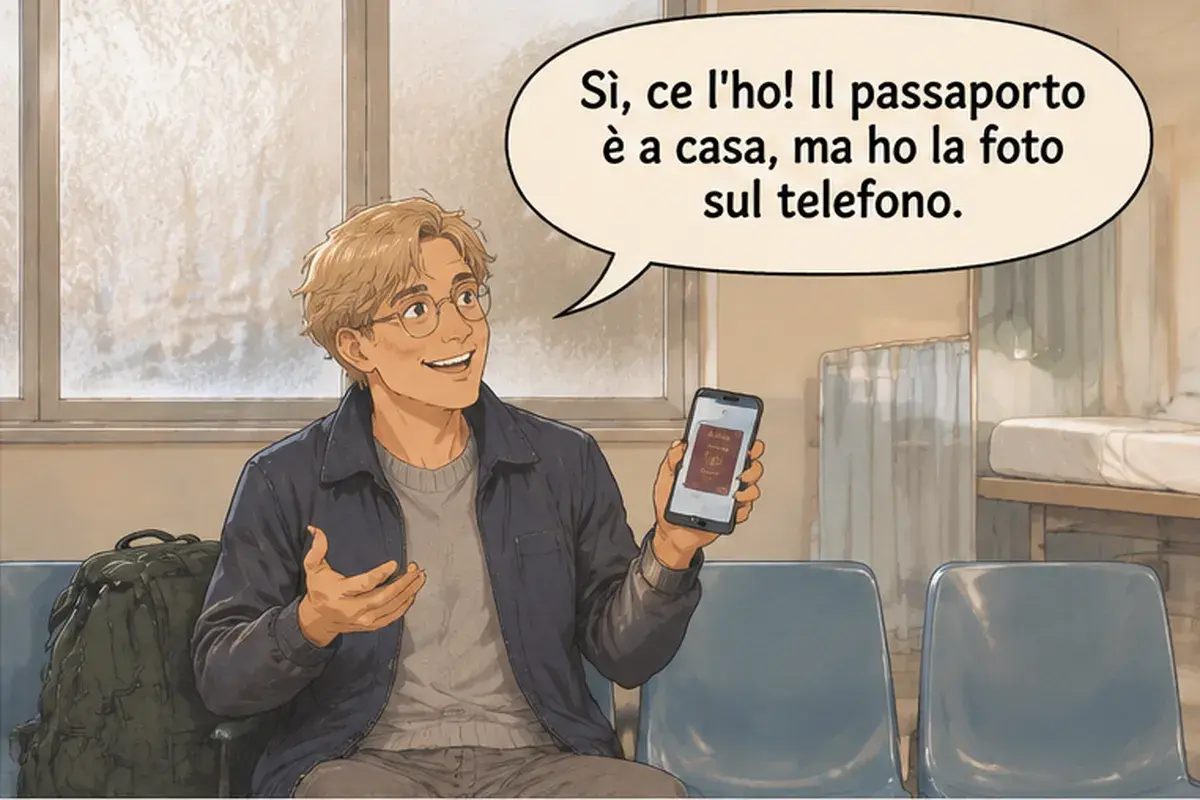
- Misha
Sì, ce l'ho! Il passaporto è a casa, ma ho la foto sul telefono.
Yes, I have it! My passport is at home, but I have the photo on my phone.
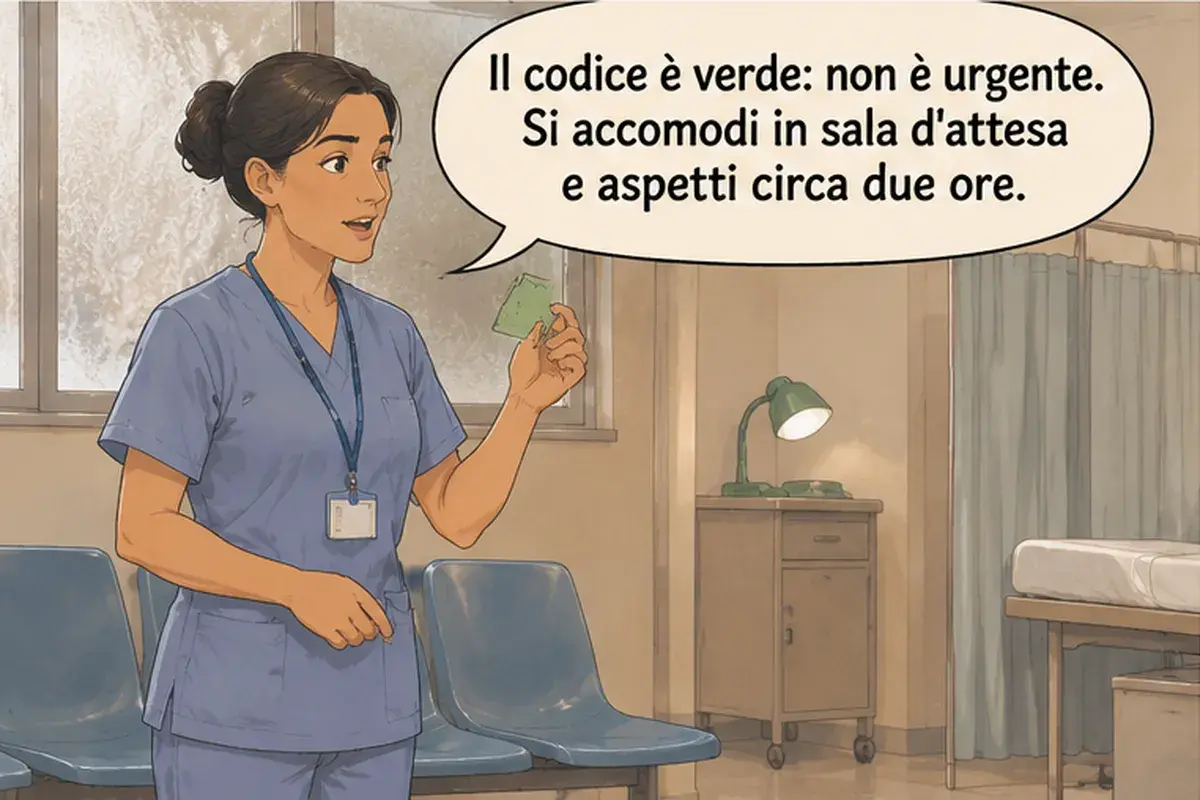
- Infermiera
Il codice è verde: non è urgente. Si accomodi in sala d'attesa e aspetti circa due ore.
The code is green: it's not urgent. Have a seat in the waiting room and wait about two hours (formal).
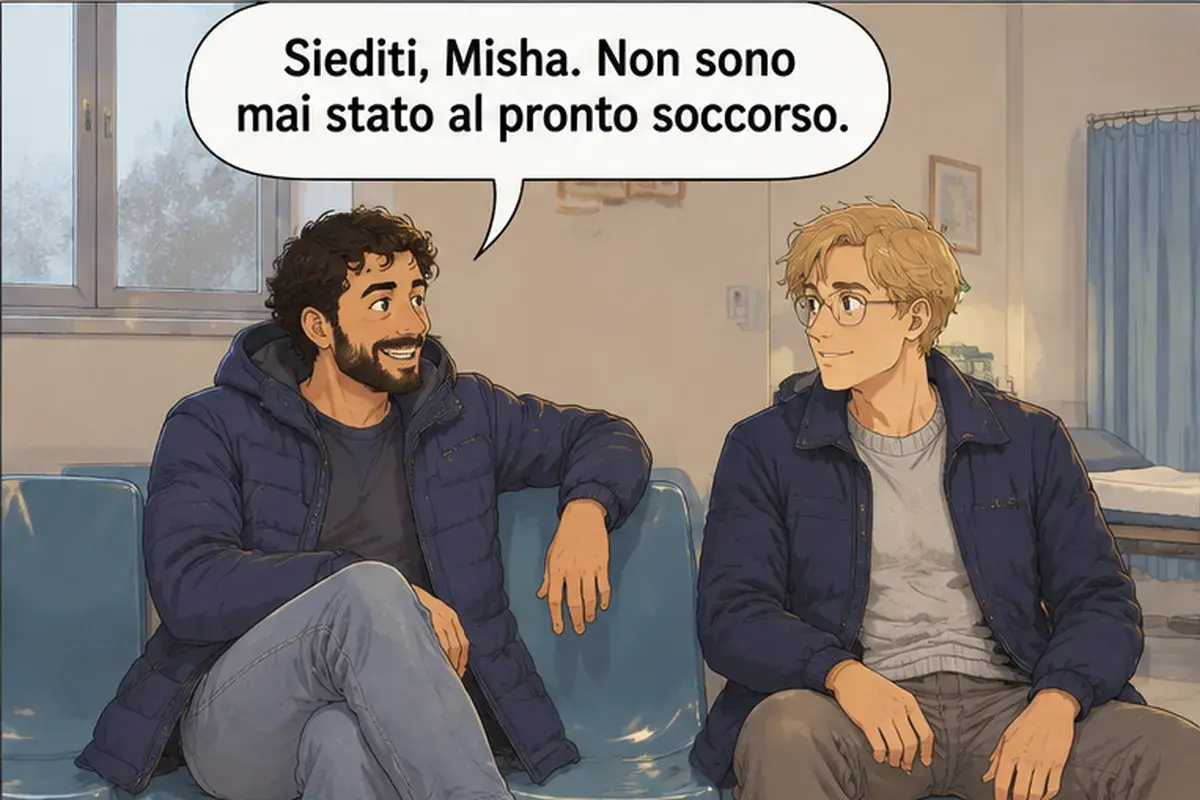
- Luca
Siediti, Misha. Non sono mai stato al pronto soccorso.
Sit down, Misha. I've never been to the emergency room (man speaking).
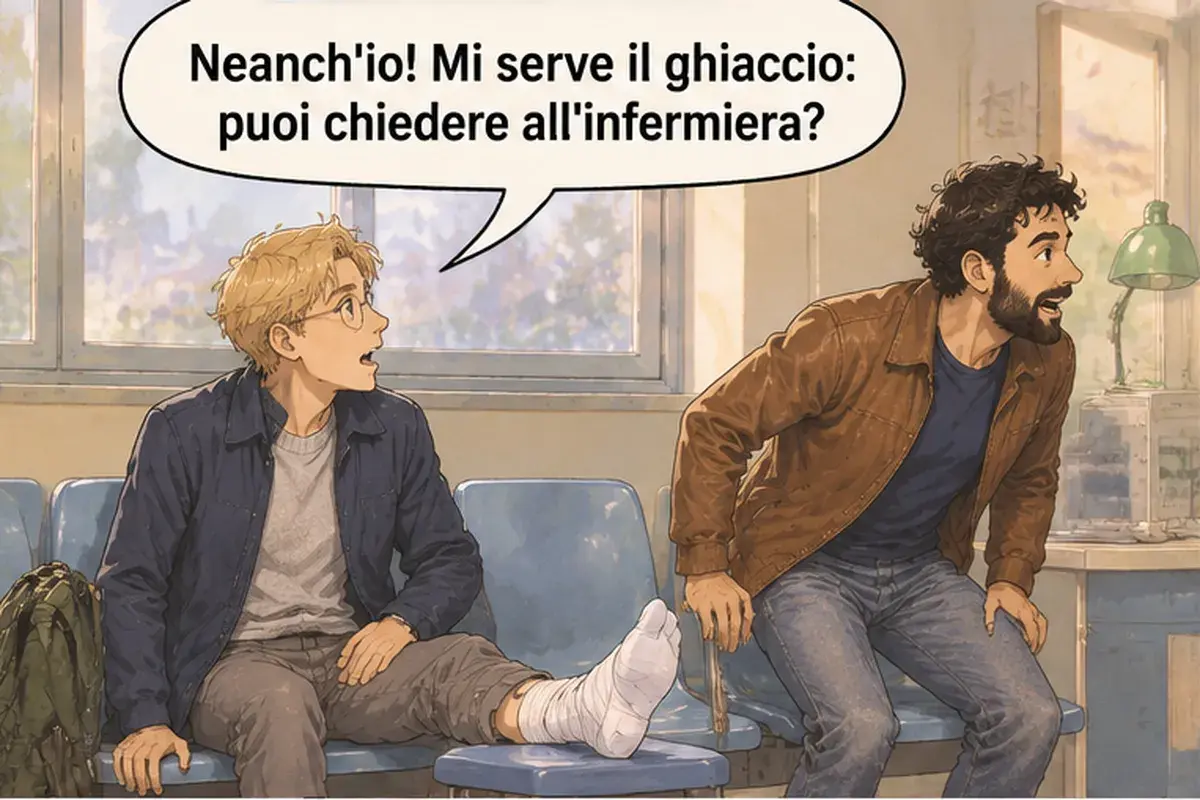
- Misha
Neanch'io! Mi serve il ghiaccio: puoi chiedere all'infermiera?
Me neither! I need ice: can you ask the nurse?
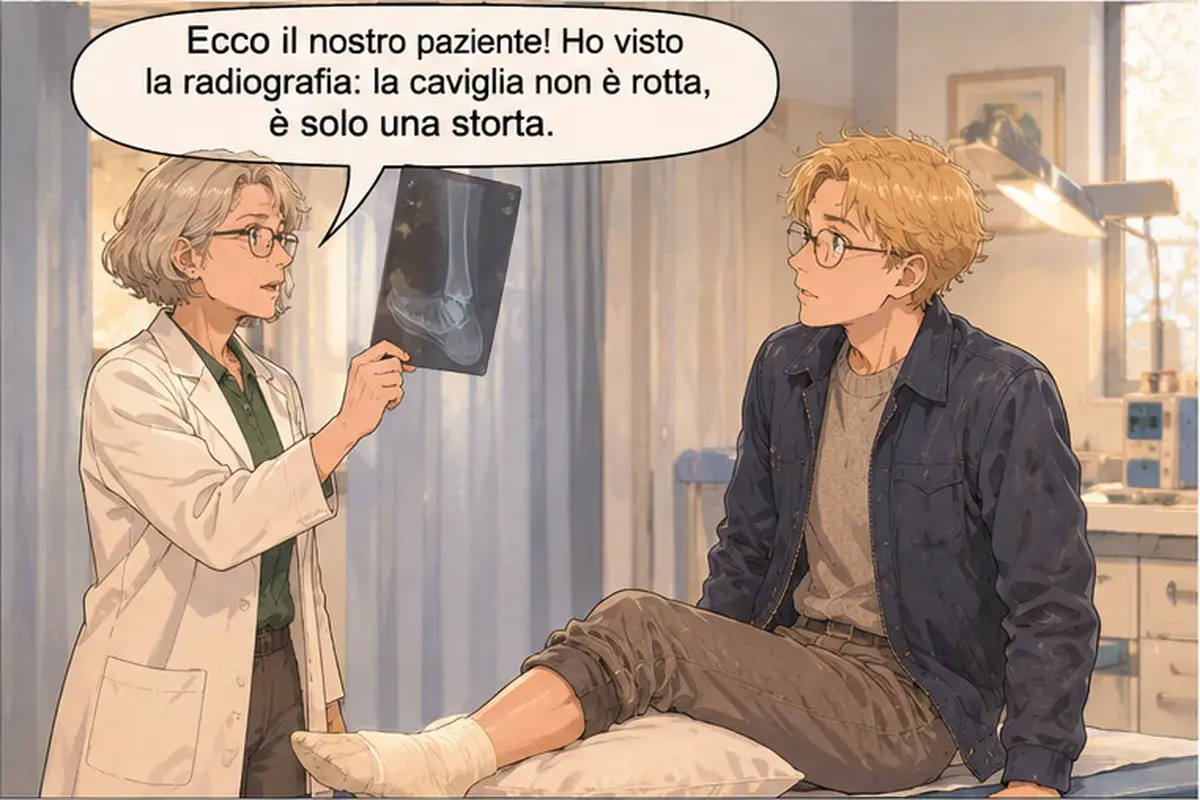
- Dottoressa
Ecco il nostro paziente! Ho visto la radiografia: la caviglia non è rotta, è solo una storta.
Here's our patient! I've seen the X-ray: the ankle isn't broken, it's just a sprain.
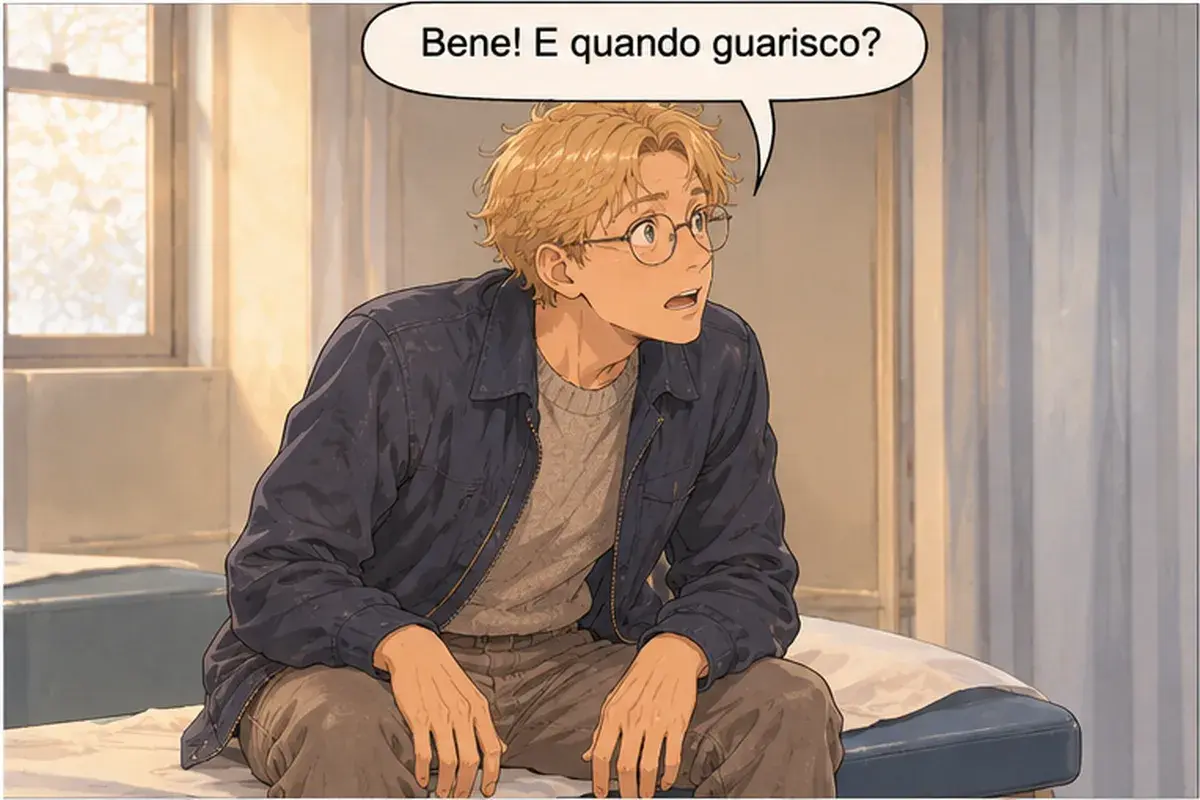
- Misha
Bene! E quando guarisco?
Good! And when will I get better?
- Dottoressa
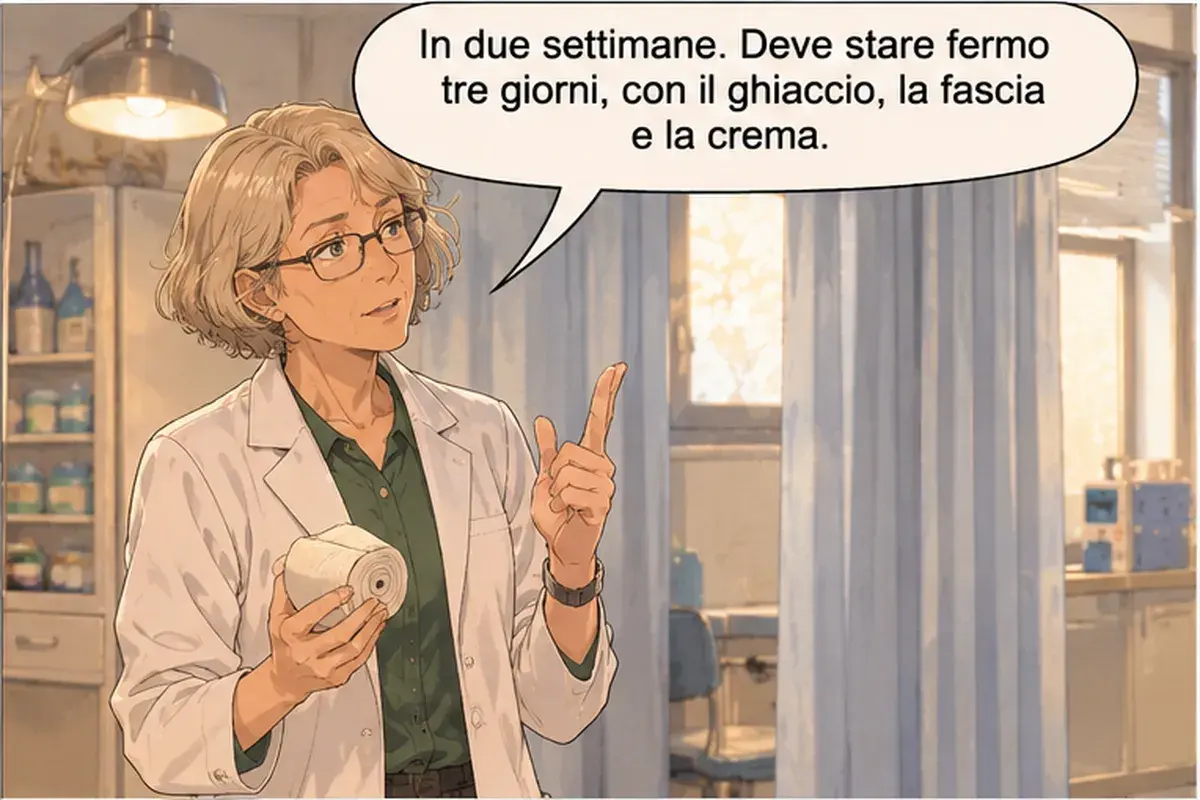
In due settimane. Deve stare fermo tre giorni, con il ghiaccio, la fascia e la crema.
In two weeks. You need to stay still for three days, with ice, a bandage and cream (to a man, formal).
- Infermiera
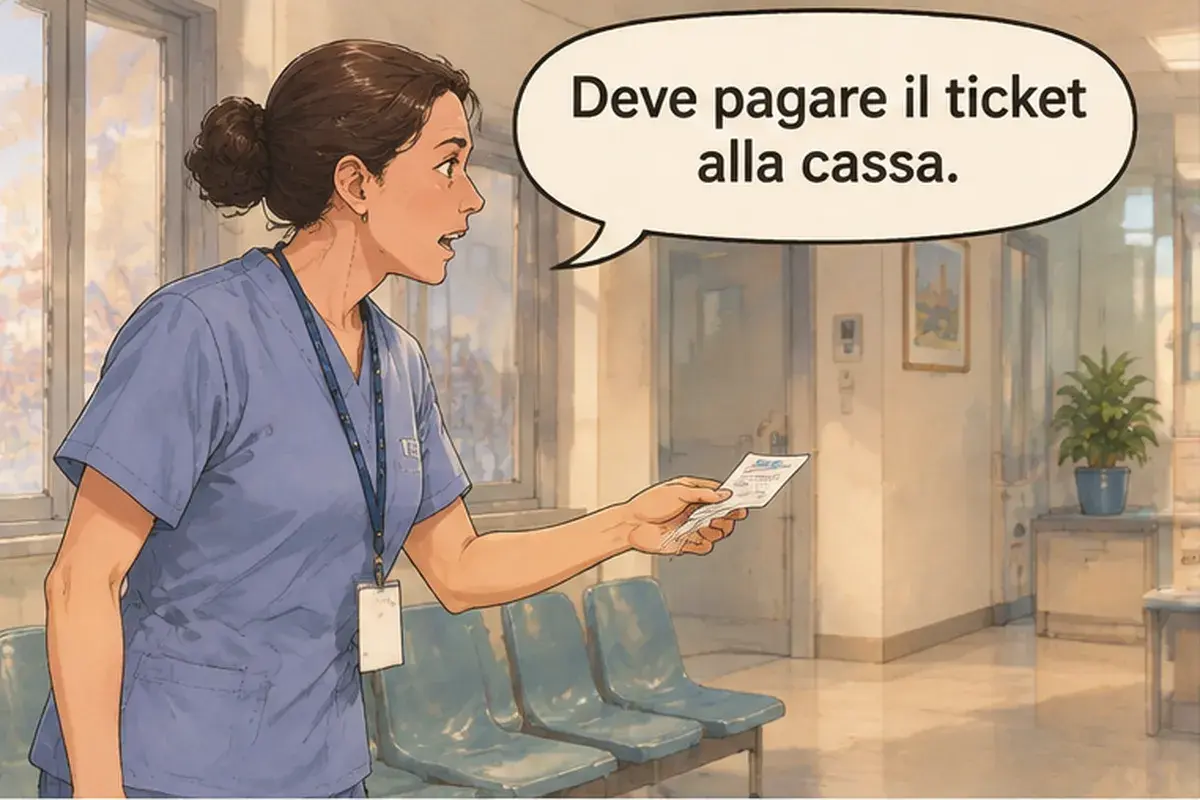
Deve pagare il ticket alla cassa.
You have to pay the co-pay at the cashier's desk (formal).
- Misha
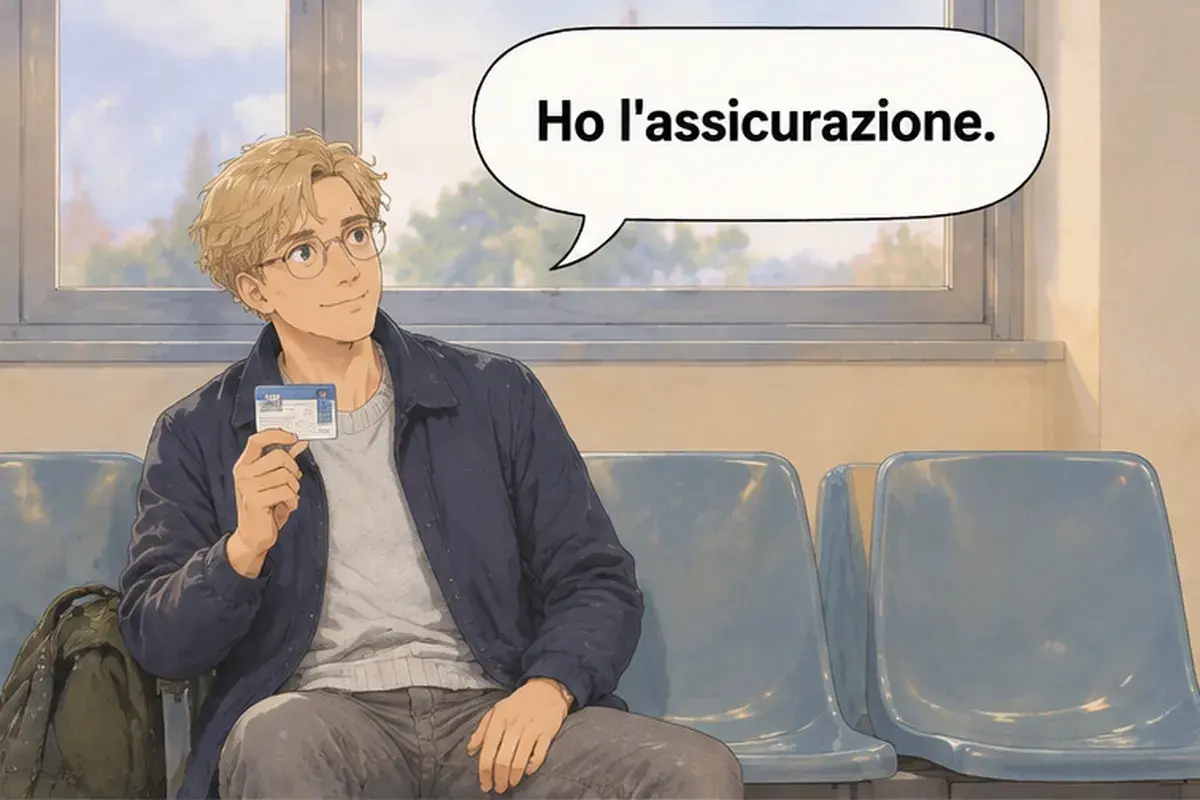
Ho l'assicurazione.
I have insurance.
- Luca
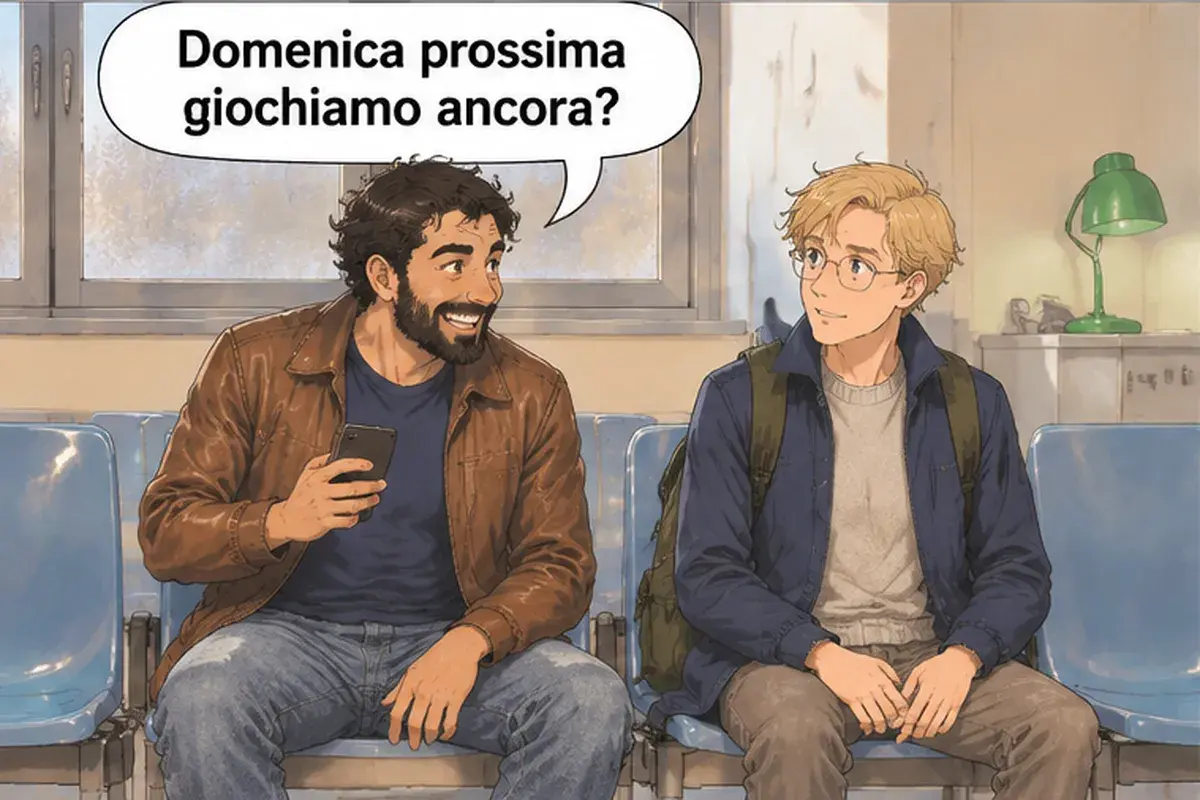
Domenica prossima giochiamo ancora?
Are we playing again next Sunday?
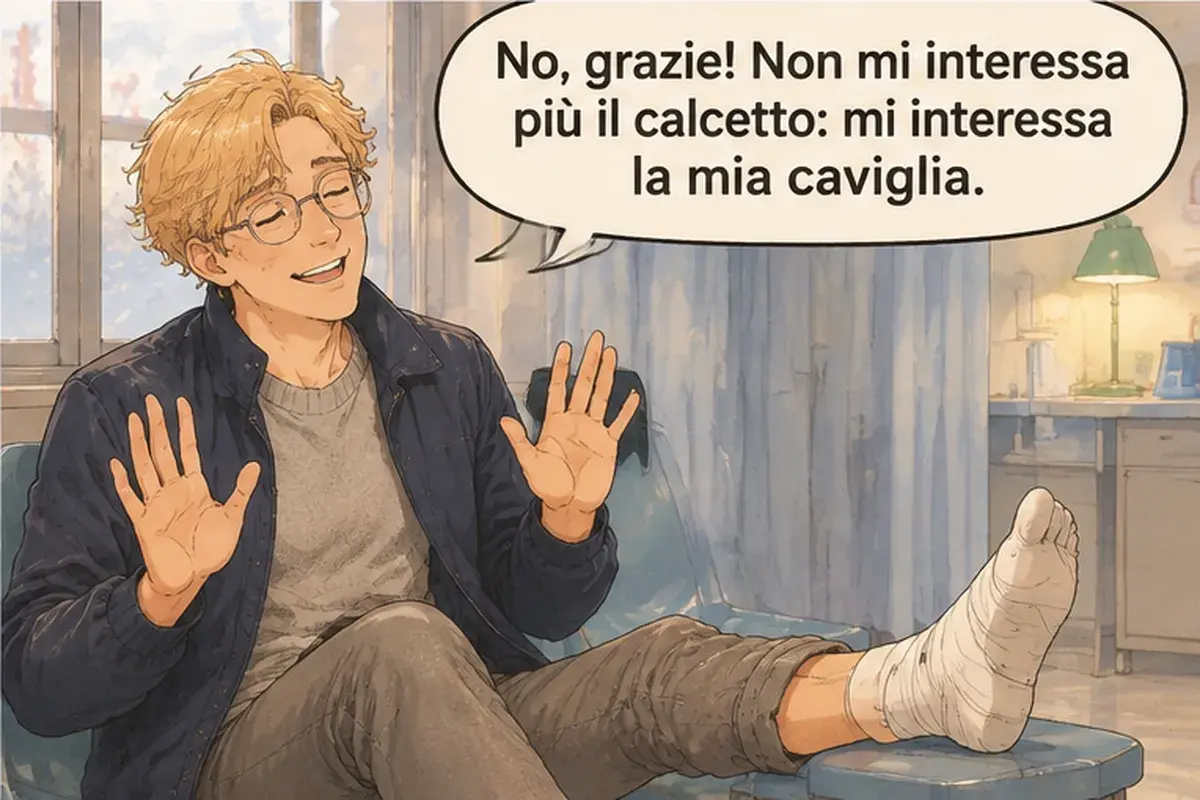
- Misha
No, grazie! Non mi interessa più il calcetto: mi interessa la mia caviglia.
No, thanks! I'm not interested in five-a-side soccer anymore: I'm interested in my ankle.
Grammar for this text
- Mi fa male la caviglia destra. — fa male means "hurts": what hurts comes after the verb (one ankle — fa). The body part takes the article la, not "my". More in grammar block 1.
- Sì, ce l'ho! — a set phrase: "yes, I have it". ce l'ho = ci + lo + ho (from avere). Why it's glued together like this is a B1 topic; for now learn it whole.
- Mi dica: che cosa è successo? — with an adult you don't know, you use Lei, and the verb takes the he / she form. Mi dica — "how can I help you?", a form of dire: a polite set phrase, the rule comes at B1. è successo — "happened": successo is the irregular past participle of succedere (unit 1).
- Si accomodi in sala d'attesa e aspetti circa due ore. — Lei again: si accomodi — "have a seat", aspetti — "wait" (from aspettare). Set forms; the rule comes at B1.
- Siediti, Misha. — "sit down": the tu command of sedersi (irregular: mi siedo, ti siedi); -ti — "yourself", stuck on at the end. The rule is in unit 13; for now it's a set form.
- la caviglia non è rotta, è solo una storta — rotta is the feminine of the irregular participle rotto (rompere, unit 1); una storta — a sprain, when you twist your ankle.
- Deve pagare il ticket alla cassa. — ticket isn't a ticket: it's the co-pay for a visit (the word comes from English); alla = a + la.
Words and grammar of the unit: Explain to a doctor what happened.
Learn the words from the texts with flashcards
In the app, you can tap any word in a text to see its translation, forms and examples, and new words stick with flashcards. 15 minutes a day.
Start for freeEverything is open for free. No card needed to sign up.