

Italian story with translation · A2 · 14 lines
Non sono mai stato in un pronto soccorso I've never been to an emergency room
Comic · 14 panels
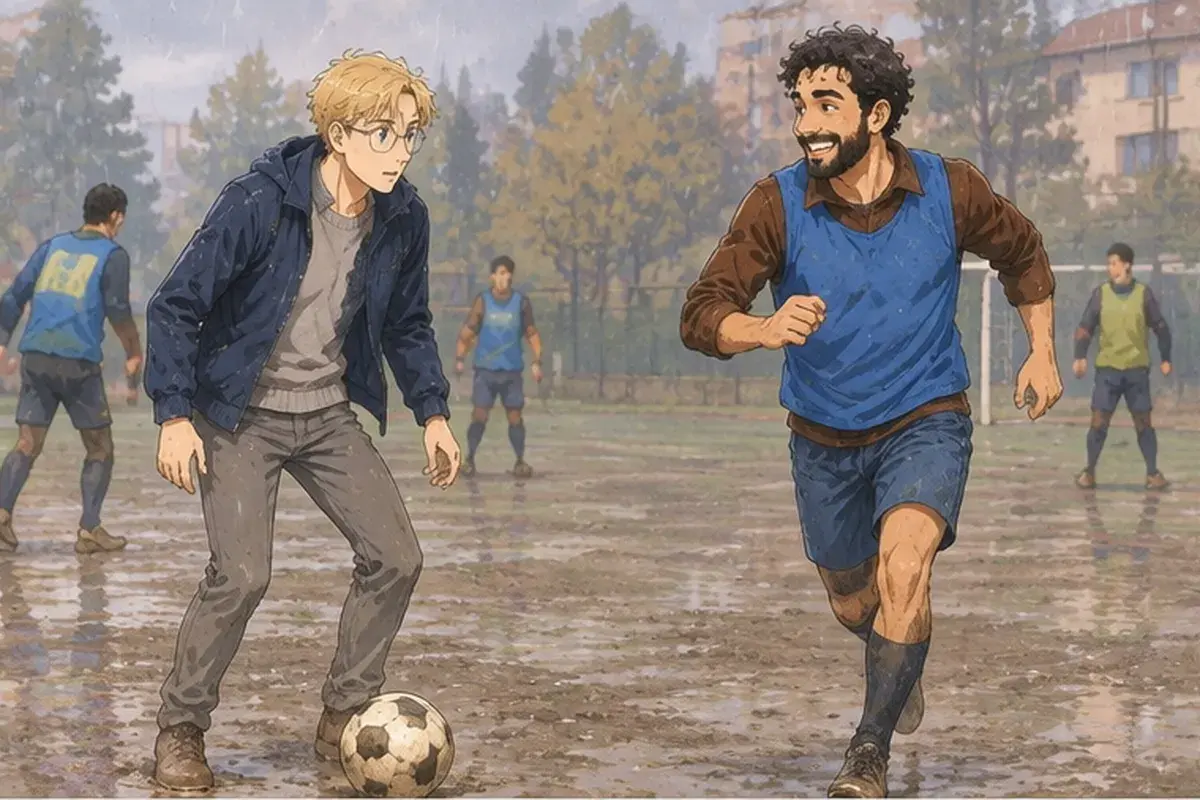
Domenica scorsa ho giocato a calcetto con i colleghi di Luca. Purtroppo non sono bravo.
Last Sunday I played five-a-side soccer with Luca's coworkers. Unfortunately, I'm not good at it (man speaking).

Faceva freddo e il campo era bagnato, perché pioveva sempre.
It was cold, and the field was wet because it was raining all the time.
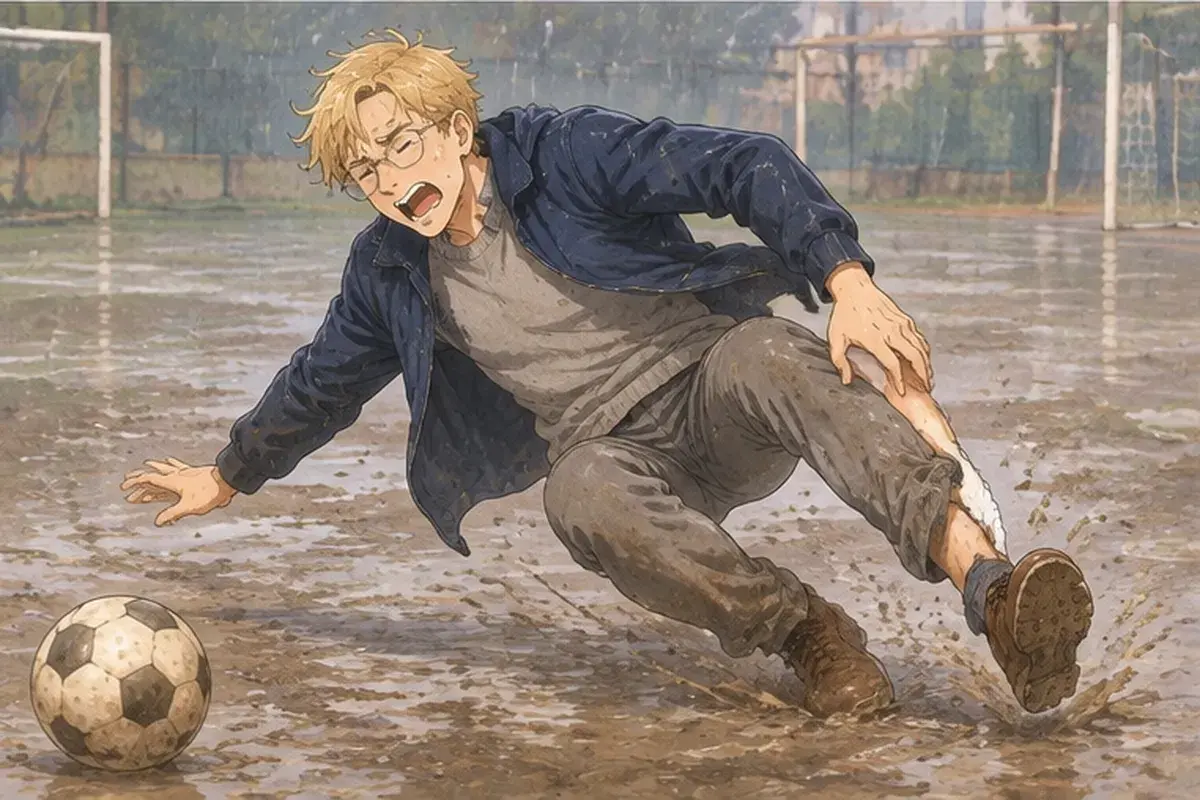
Correvo dietro al pallone. Poi sono scivolato e ho sentito un forte dolore alla caviglia destra.
I was running after the ball. Then I slipped and felt a bad pain in my right ankle (man speaking).
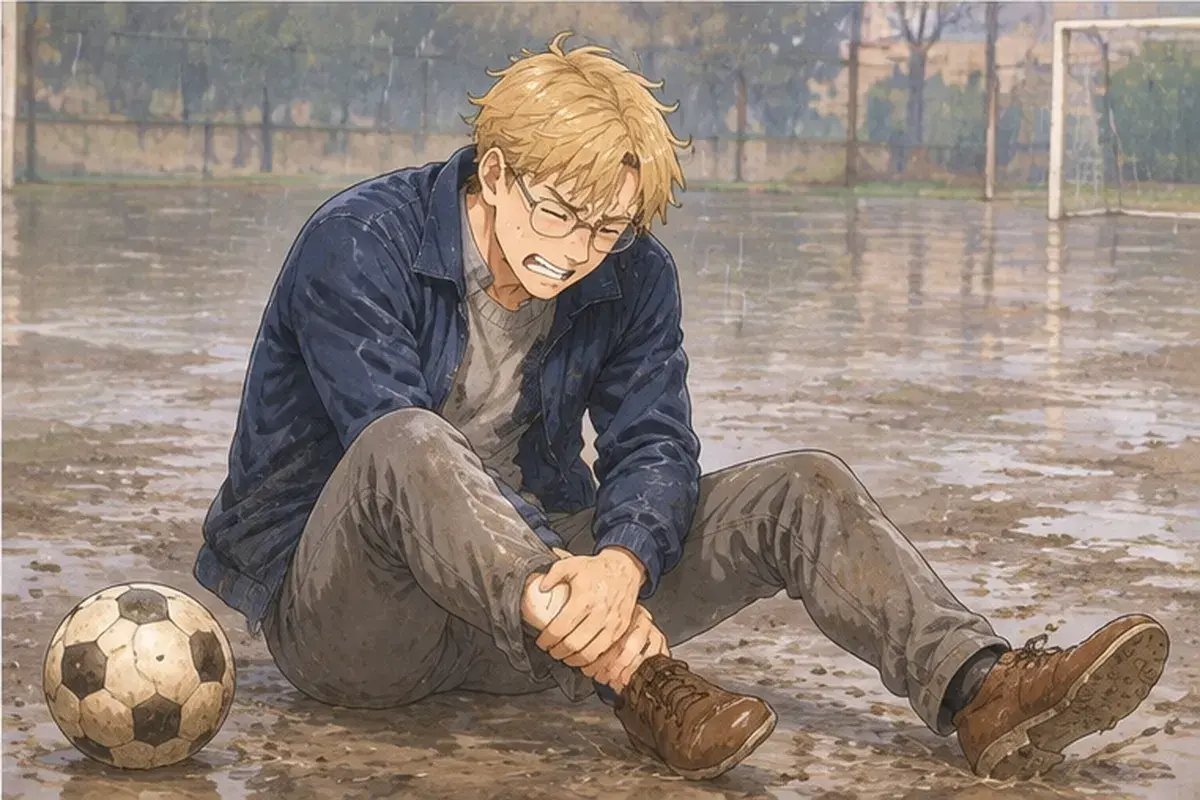
Il piede era gonfio e mi faceva molto male, e mi faceva male anche il collo: non potevo camminare.
My foot was swollen and hurt a lot, and my neck hurt too: I couldn't walk.
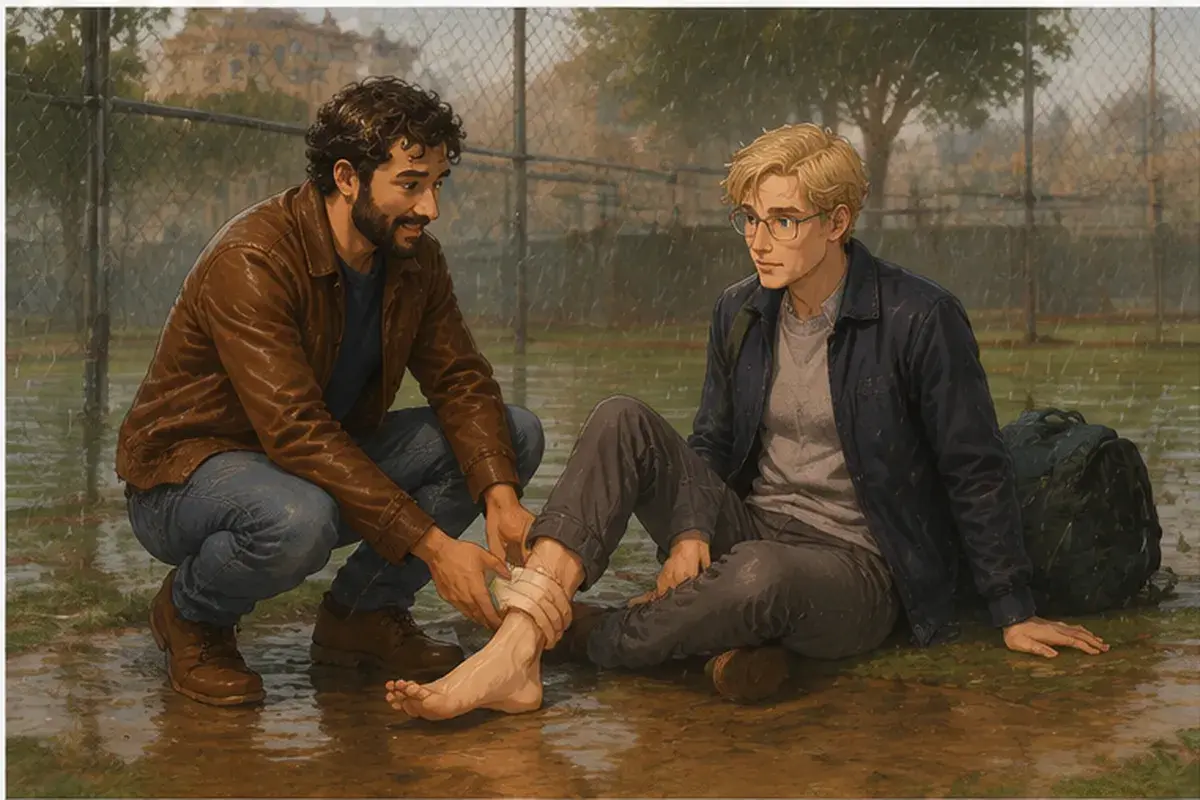
Luca ha guardato la caviglia e ha detto: «Andiamo subito al pronto soccorso!»
Luca looked at my ankle and said: "Let's go to the emergency room right now!"
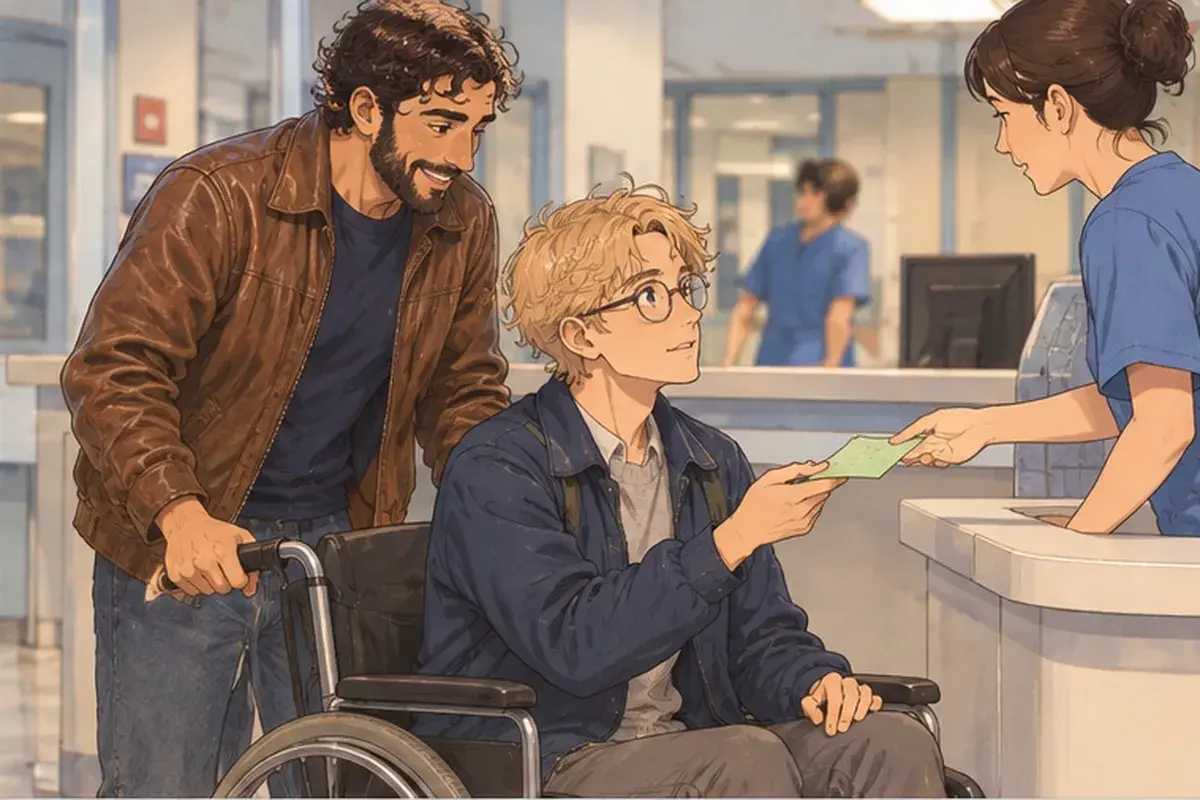
All'ingresso l'infermiera mi ha dato un codice verde. Il mio caso non era urgente: non era una malattia, solo una caviglia.
At the entrance, the nurse gave me a green code. My case wasn't urgent: it wasn't an illness, just an ankle.

Dovevo aspettare due ore, e il tempo non passava mai. Mi sembrava una giornata molto lunga.
I had to wait two hours, and time just wouldn't pass. It seemed like a very long day to me.
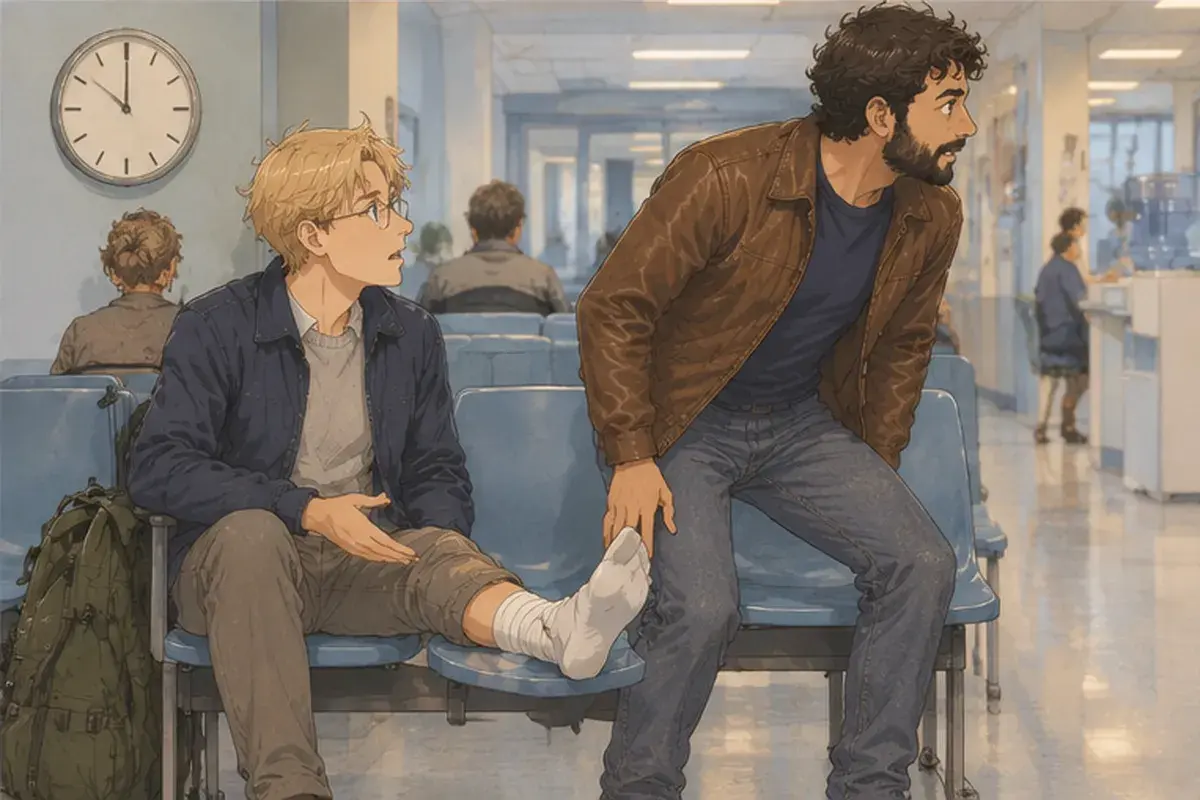
«Mi serve il ghiaccio», ho detto a Luca. Lui è andato subito dall'infermiera.
"I need ice," I said to Luca. He went straight to the nurse.

«Non sono mai stato in un pronto soccorso», ha detto Luca. «Neanch'io», ho risposto, «ma una volta basta.»
"I've never been to an emergency room," Luca said. "Me neither," I answered, "but once is enough."
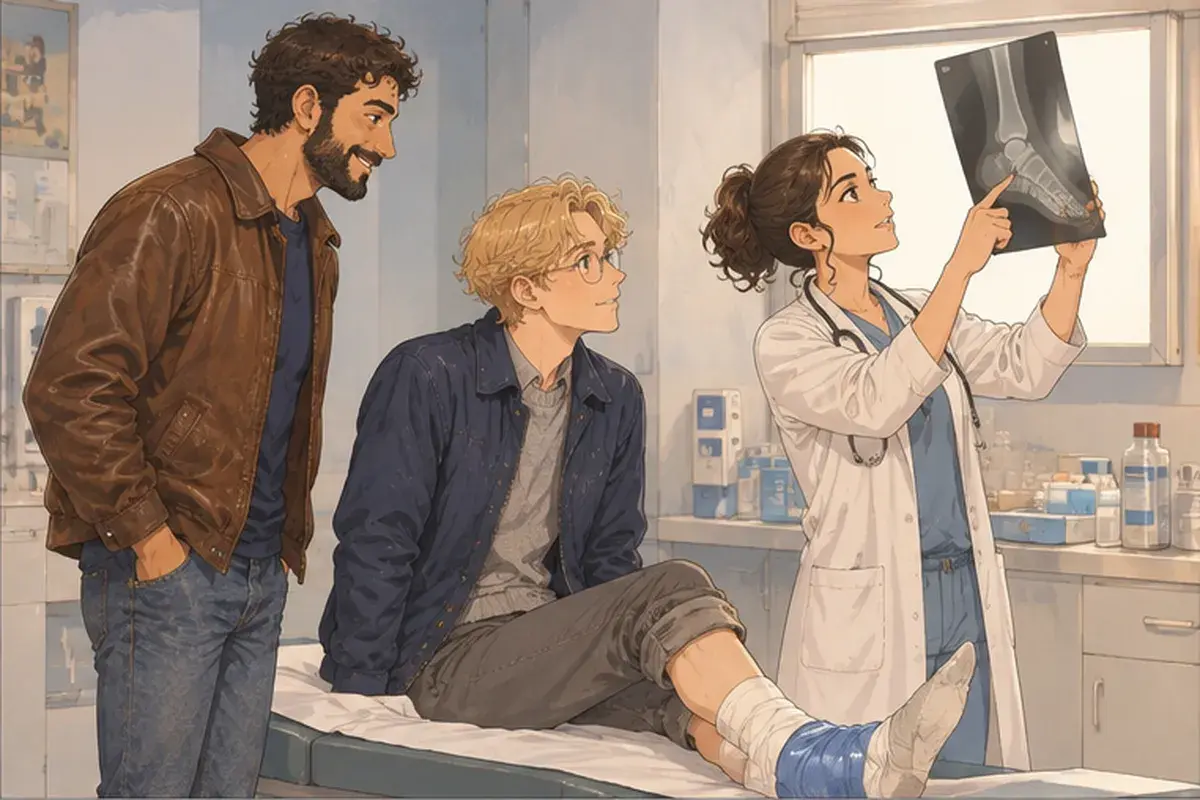
La dottoressa ha visto la radiografia: «Non è rotta, è solo una storta: niente gesso. Deve stare fermo tre giorni, con il ghiaccio e la fascia.»
The doctor saw the X-ray: "It isn't broken, it's just a sprain: no cast. You need to stay still for three days, with ice and a bandage." (to a man, formal)

Alla cassa ho pagato il ticket. Per fortuna ho l'assicurazione. Poi Luca mi ha comprato in farmacia un antidolorifico e due stampelle.
At the cashier's desk I paid the co-pay. Luckily, I have insurance. Then Luca bought me a painkiller and two crutches at the pharmacy.

La sera Giulia è venuta da noi. Luca ha ordinato tre pizze a domicilio.
In the evening Giulia came over to our place. Luca ordered three pizzas for delivery.

Adesso so che al pronto soccorso devo portare un libro.
Now I know that I have to bring a book to the emergency room.

A me il calcetto interessa ancora, ma è più sano guardarlo dal divano.
As for me, I'm still interested in five-a-side soccer, but it's healthier to watch it from the couch.
Grammar for this text
- Correvo dietro al pallone. Poi sono scivolato — correvo is the imperfetto (past of habits and descriptions): the background, what was going on. sono scivolato, ho sentito are the passato prossimo (everyday past): what suddenly happened.
- il campo era bagnato, perché pioveva sempre — perché in the middle of a sentence means "because", and the reason follows. Faceva freddo, pioveva — the weather, described in the imperfetto (unit 5).
- Il piede era gonfio e mi faceva molto male — mi faceva male — "it hurt": fare male from grammar block 1, but in the imperfetto (a description). non potevo — "I couldn't".
- Dovevo aspettare due ore, e il tempo non passava mai. — dovevo — "I had to"; non… mai — "never", here "just wouldn't". Mi sembrava una giornata molto lunga — mi sembrava — "it seemed to me", works like mi piace (block 1).
- «Mi serve il ghiaccio», ho detto a Luca. — mi serve — "I need" (block 1). Lui è andato subito dall'infermiera — da + a person — "to someone" (unit 10); dall' = da + l'.
- «Neanch'io», ho risposto, «ma una volta basta.» — Neanch'io — "me neither": the answer when the other sentence has "I" as the subject (block 3); risposto is the irregular past participle of rispondere (unit 1).
- La sera Giulia è venuta da noi. — da noi — "to our place" (block 2). A me il calcetto interessa ancora — a me goes first to stress "me" (block 2). In guardarlo, lo is il calcetto (unit 10), joined to the end of the infinitive.
- niente gesso — niente + a noun with no article: "no cast", so a cast isn't needed. mi ha comprato — mi — "me": "bought me".
Words and grammar of the unit: Explain to a doctor what happened.
Learn the words from the texts with flashcards
In the app, you can tap any word in a text to see its translation, forms and examples, and new words stick with flashcards. 15 minutes a day.
Start for freeEverything is open for free. No card needed to sign up.