
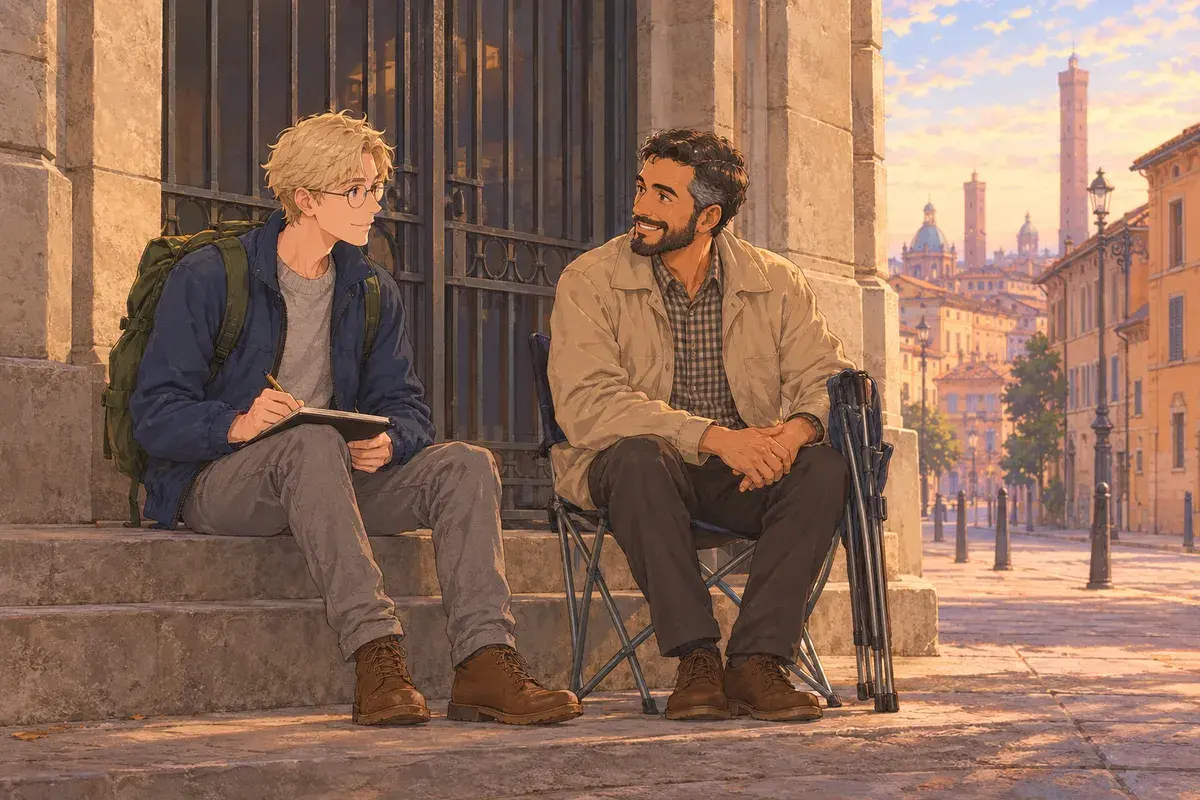
Italian dialogue with translation · A2 · 15 lines
Come mai è qui così presto? How come you're here so early? (formal)
Comic · 15 panels
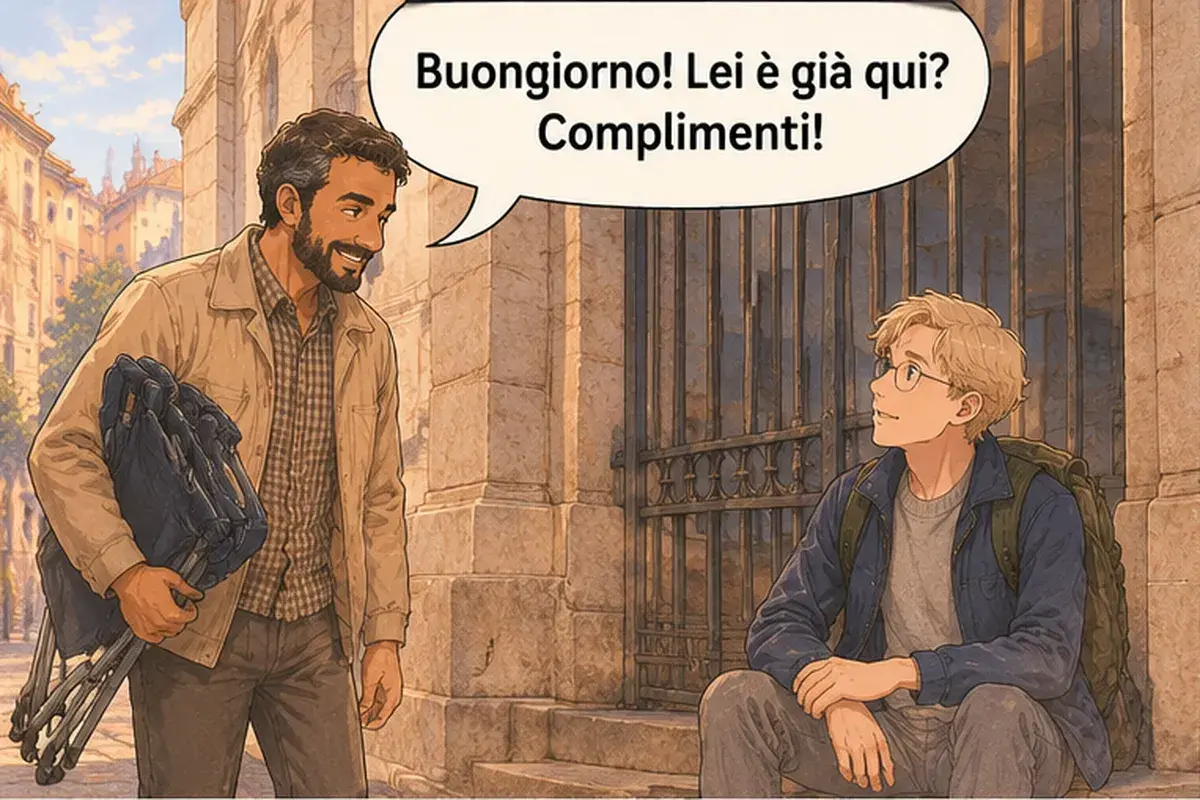
- Signore
Buongiorno! Lei è già qui? Complimenti!
Good morning! You're already here? (formal) Well done!
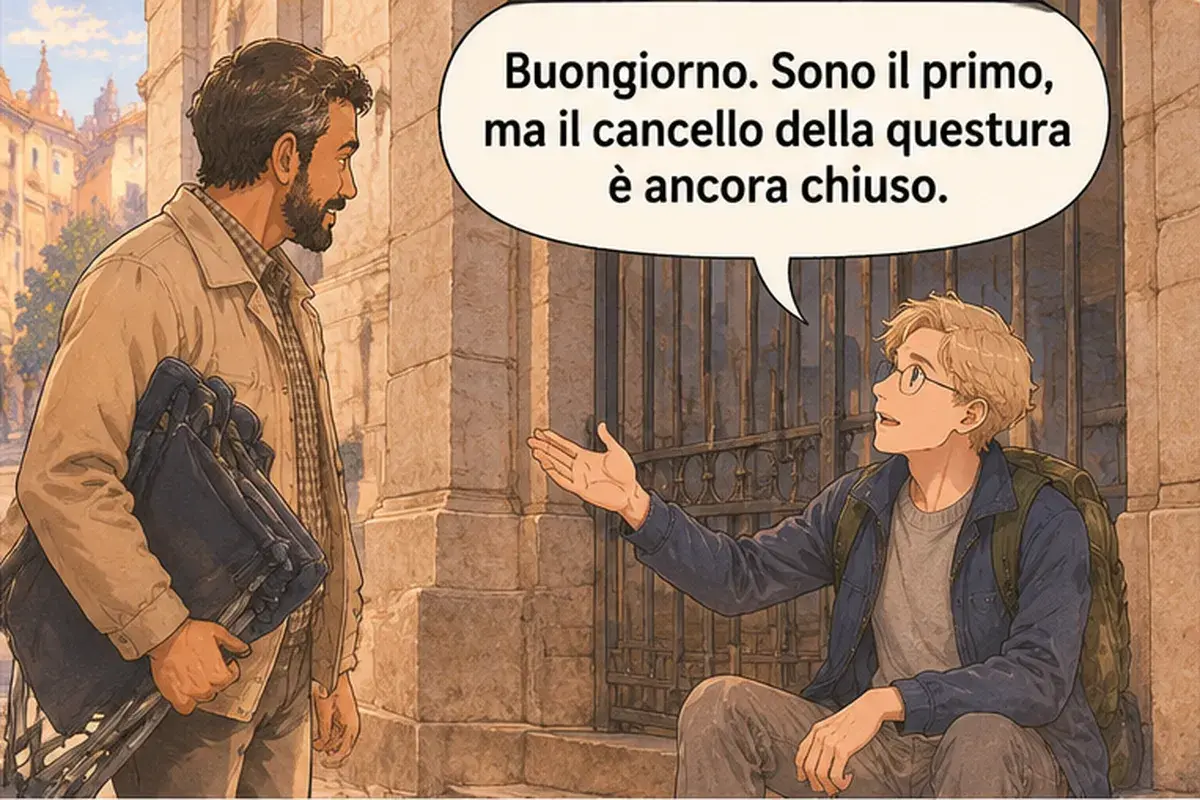
- Misha
Buongiorno. Sono il primo, ma il cancello della questura è ancora chiuso.
Good morning. I'm the first one (man speaking), but the gate of the Questura is still closed.
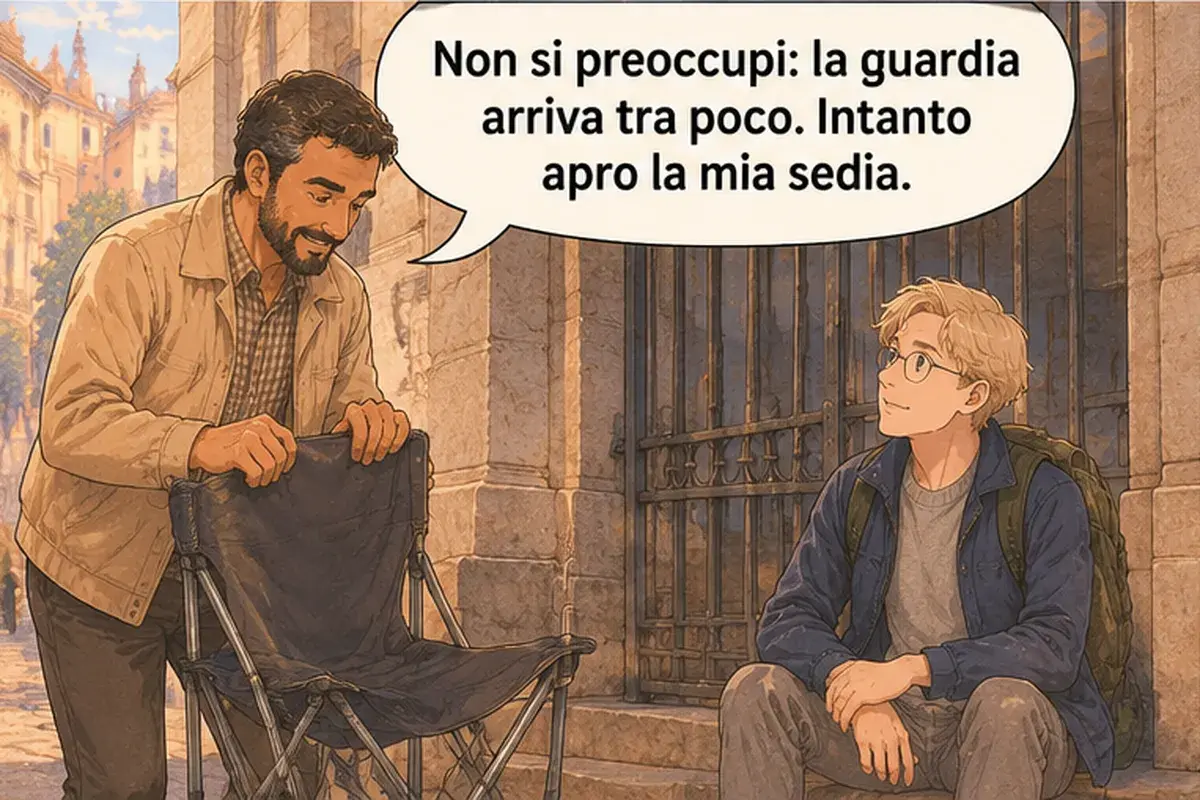
- Signore
Non si preoccupi: la guardia arriva tra poco. Intanto apro la mia sedia.
Don't worry, the guard is coming soon (formal). Meanwhile, I'll open my chair.
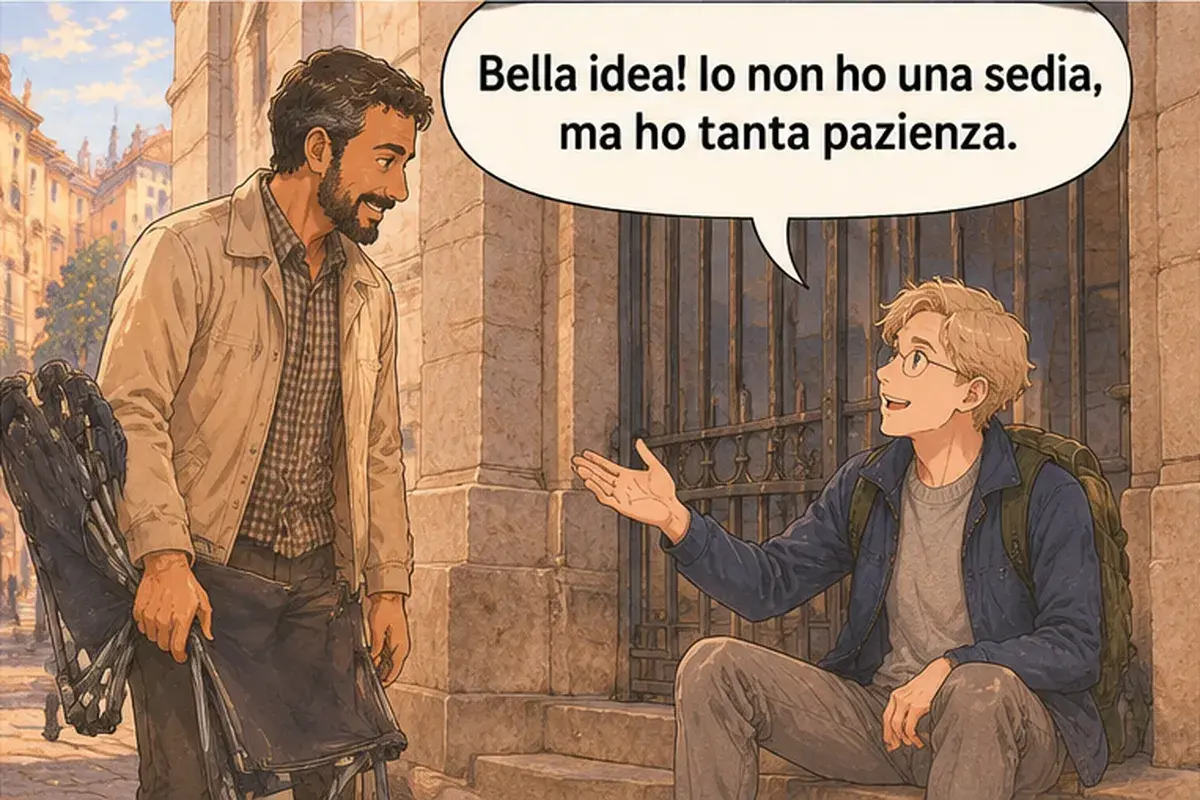
- Misha
Bella idea! Io non ho una sedia, ma ho tanta pazienza.
Good idea! I don't have a chair, but I have lots of patience.
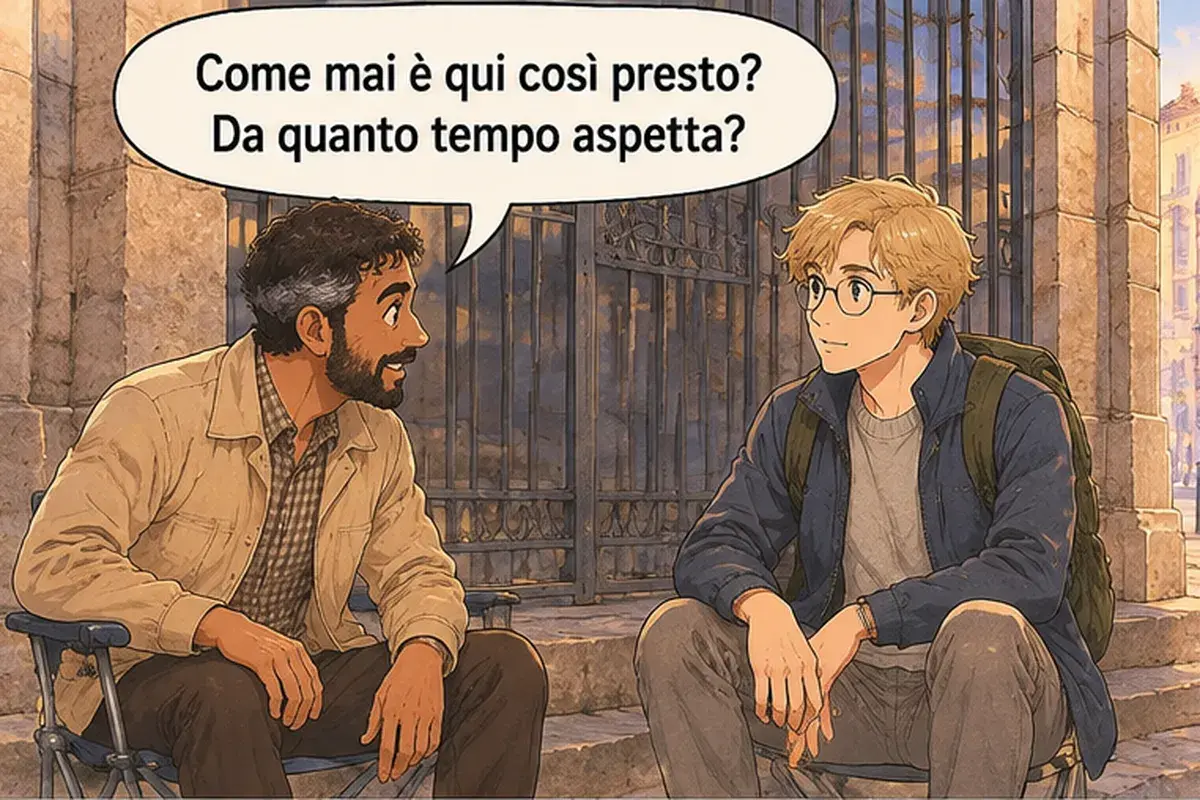
- Signore
Come mai è qui così presto? Da quanto tempo aspetta?
How come you're here so early? How long have you been waiting? (formal)
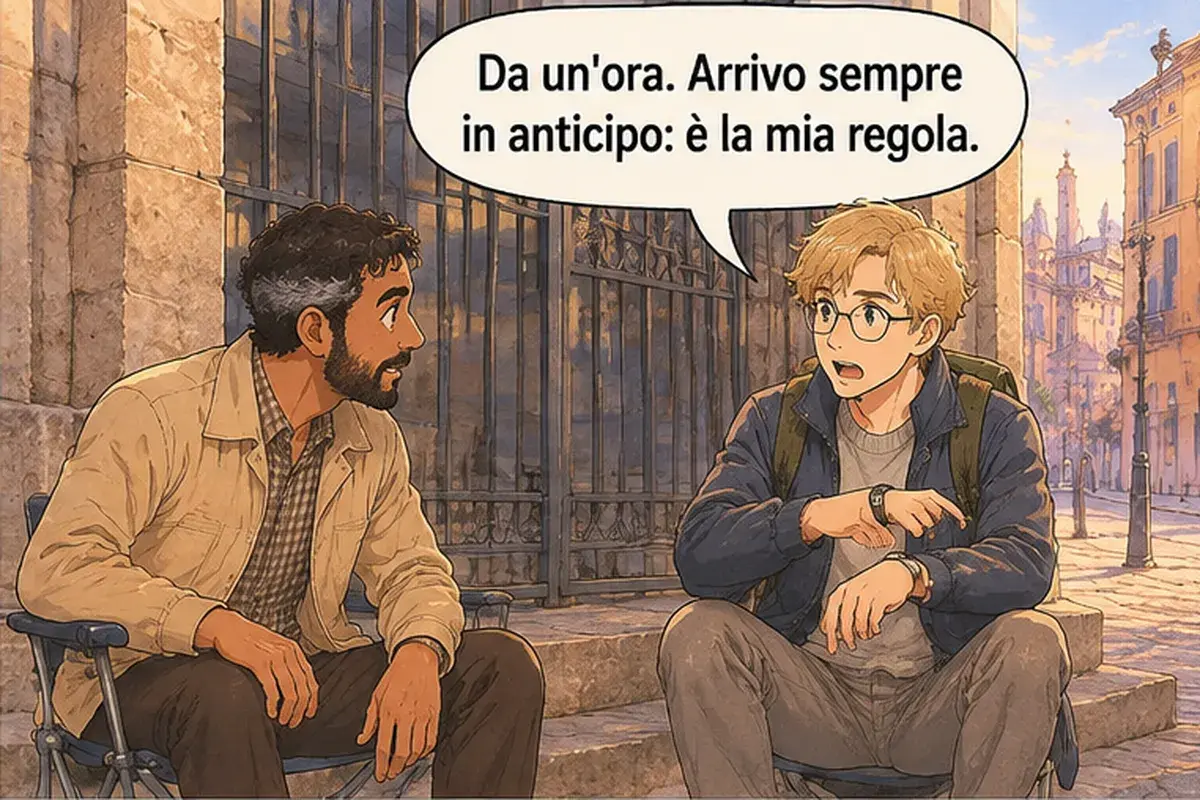
- Misha
Da un'ora. Arrivo sempre in anticipo: è la mia regola.
For an hour. I always arrive early: it's my rule.
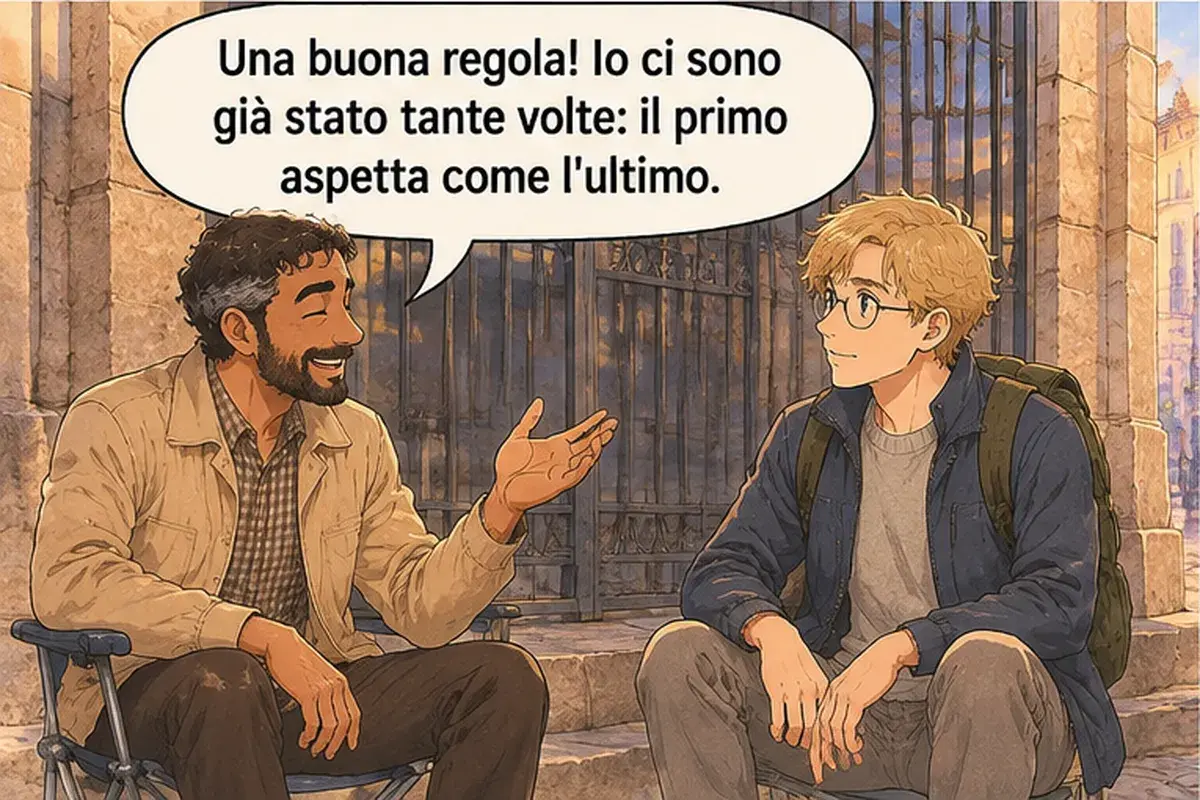
- Signore
Una buona regola! Io ci sono già stato tante volte: il primo aspetta come l'ultimo.
A good rule! I've already been here many times (man speaking): the first one waits just like the last one.
- Misha
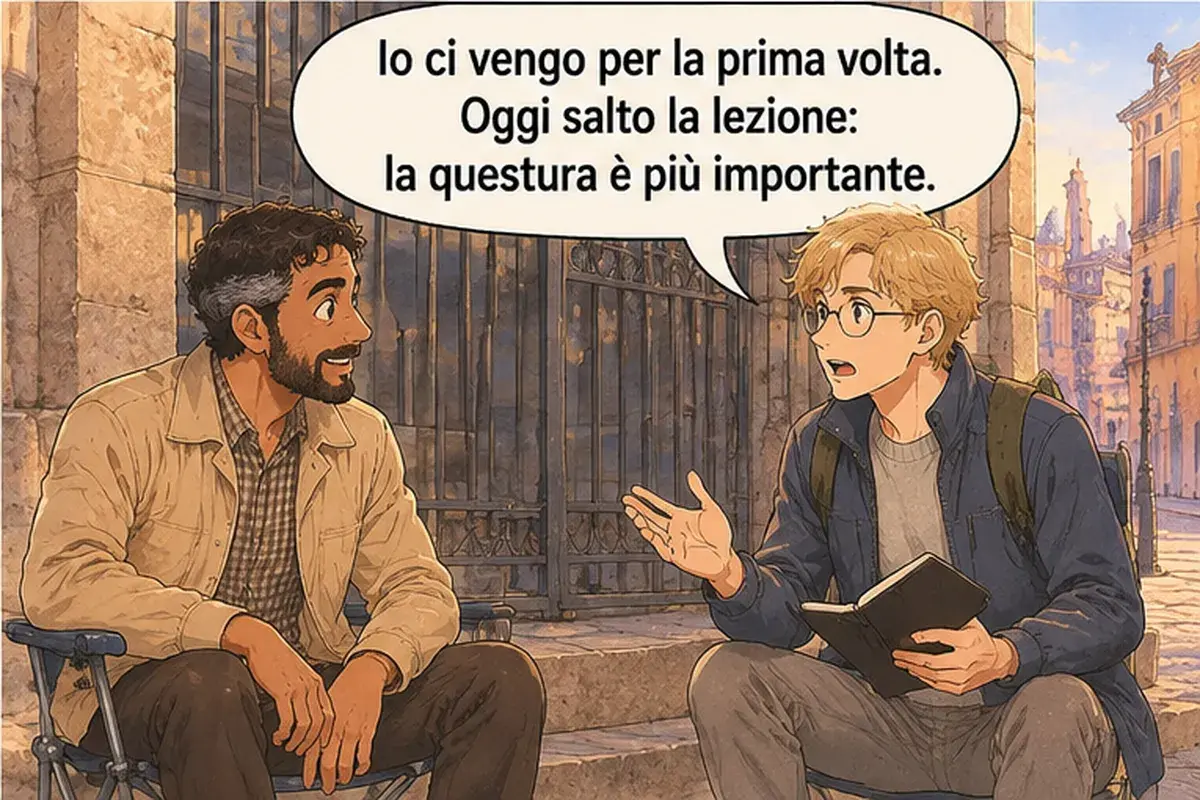
Io ci vengo per la prima volta. Oggi salto la lezione: la questura è più importante.
I'm coming here for the first time. Today I'm skipping class: the Questura is more important.
- Signore
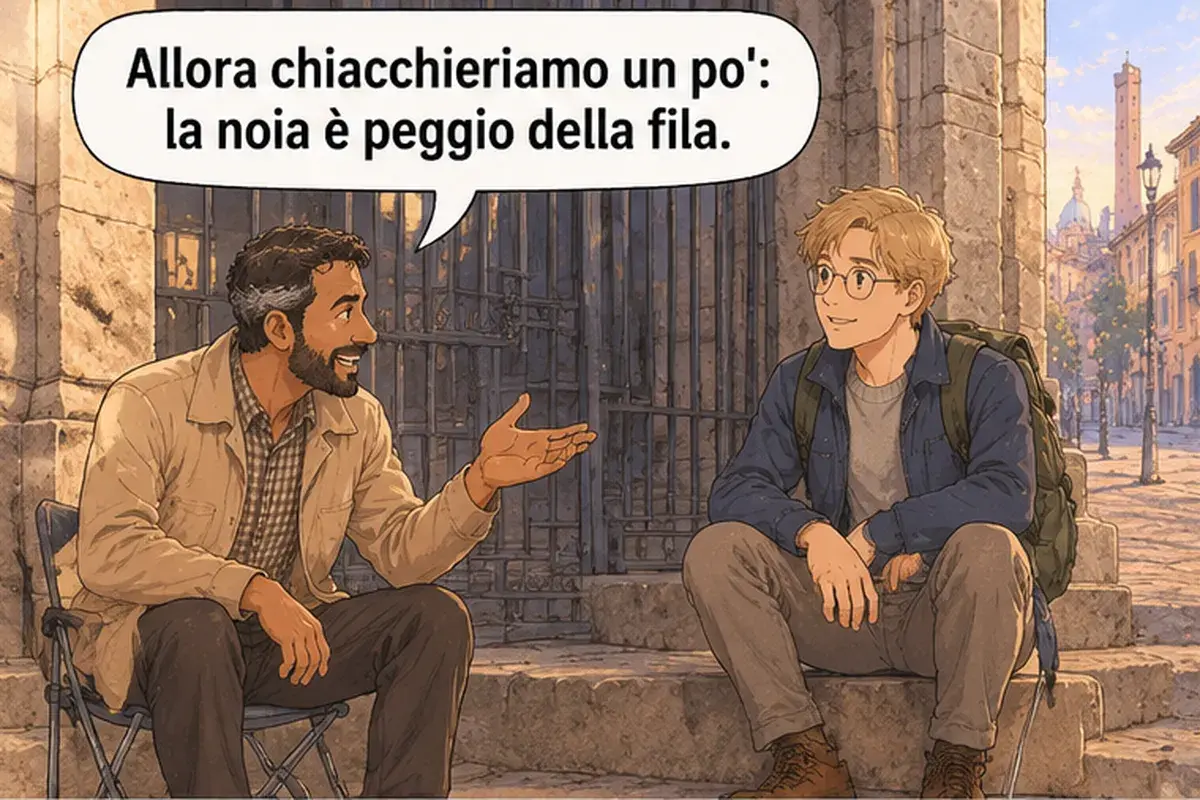
Allora chiacchieriamo un po': la noia è peggio della fila.
Then let's chat a bit: boredom is worse than the line.
- Misha
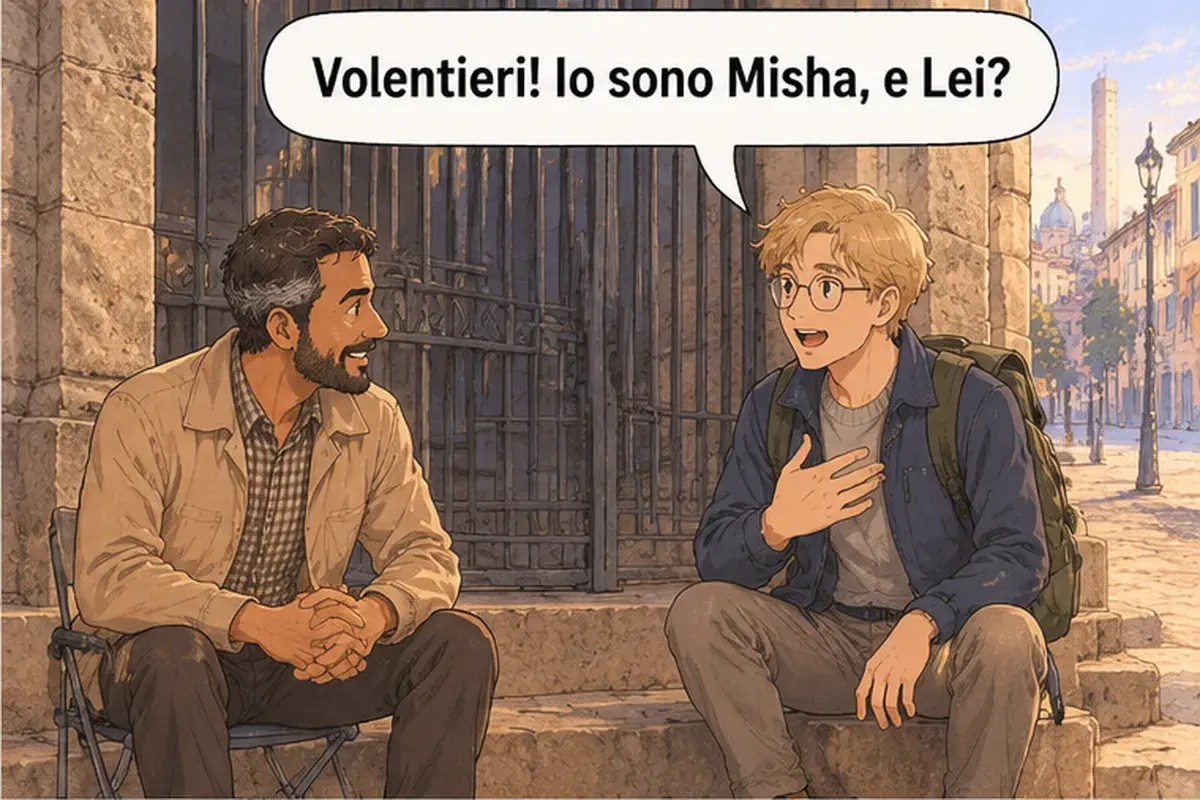
Volentieri! Io sono Misha, e Lei?
Gladly! I'm Misha, and you? (formal)
- Signore
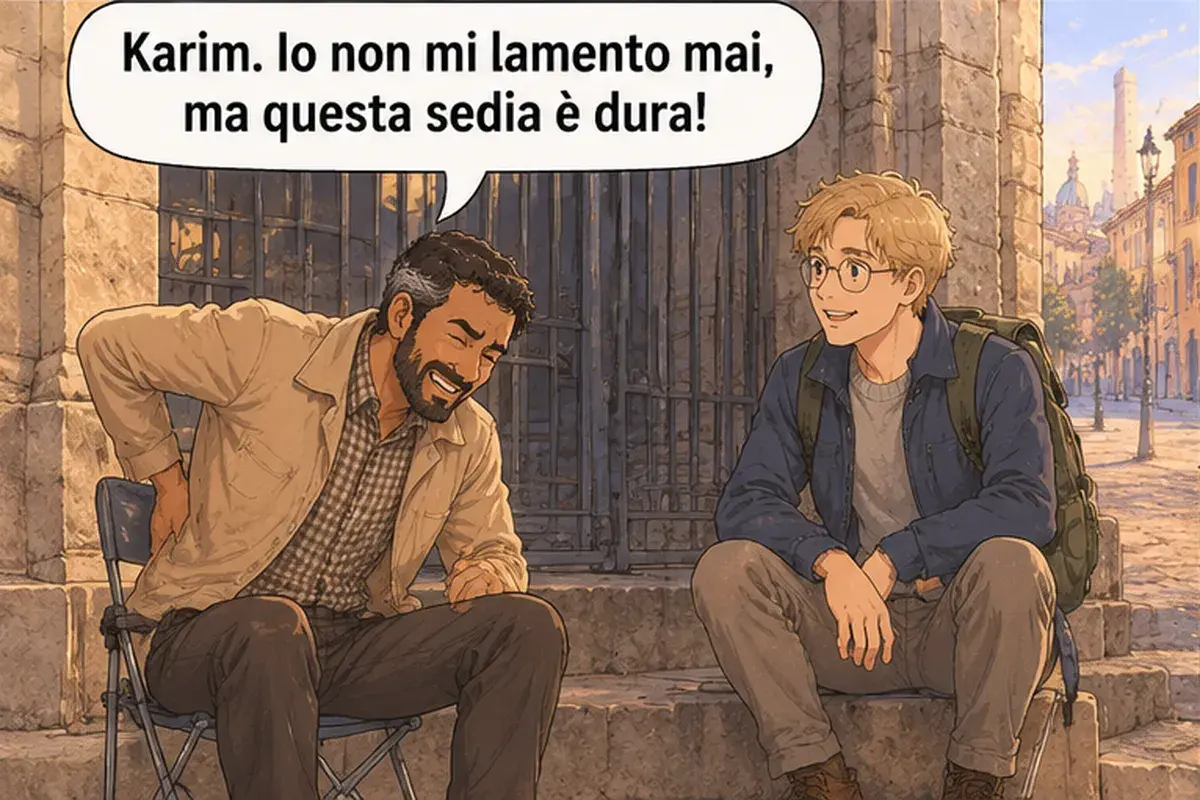
Karim. Io non mi lamento mai, ma questa sedia è dura!
Karim. I never complain, but this chair is hard!
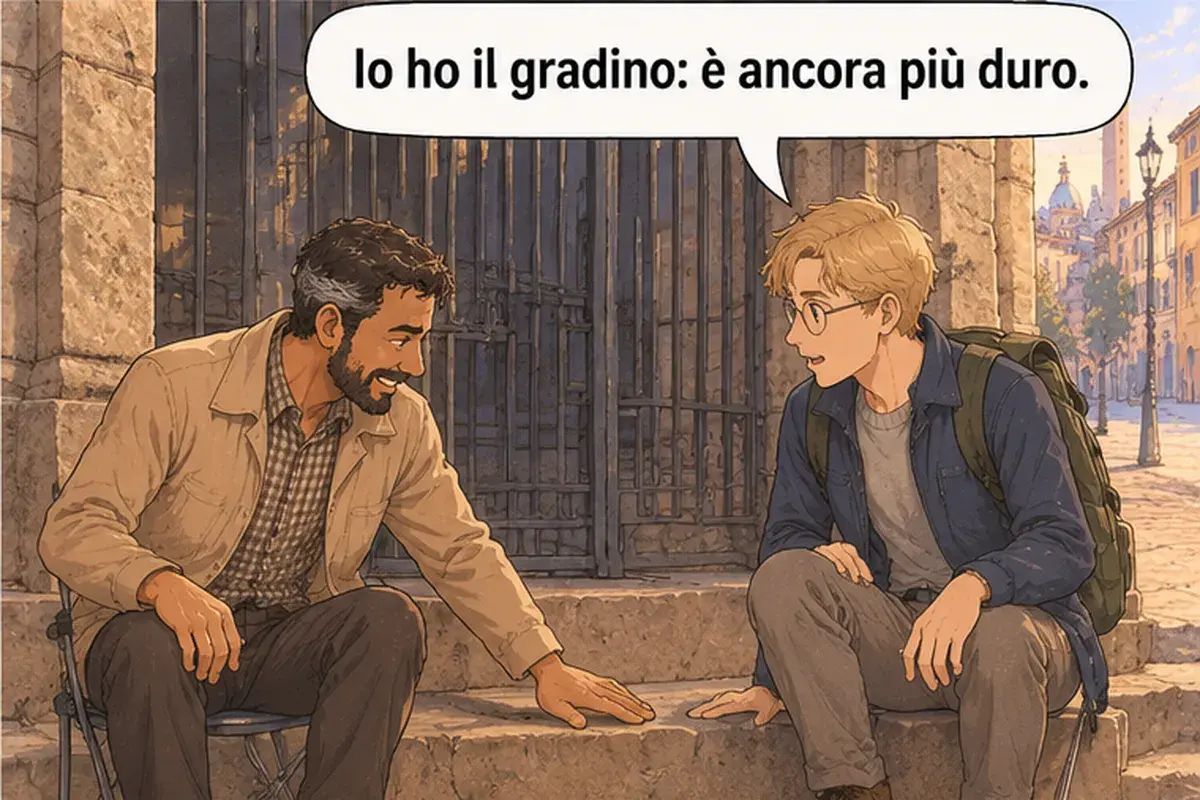
- Misha
Io ho il gradino: è ancora più duro.
I've got the step: it's even harder.
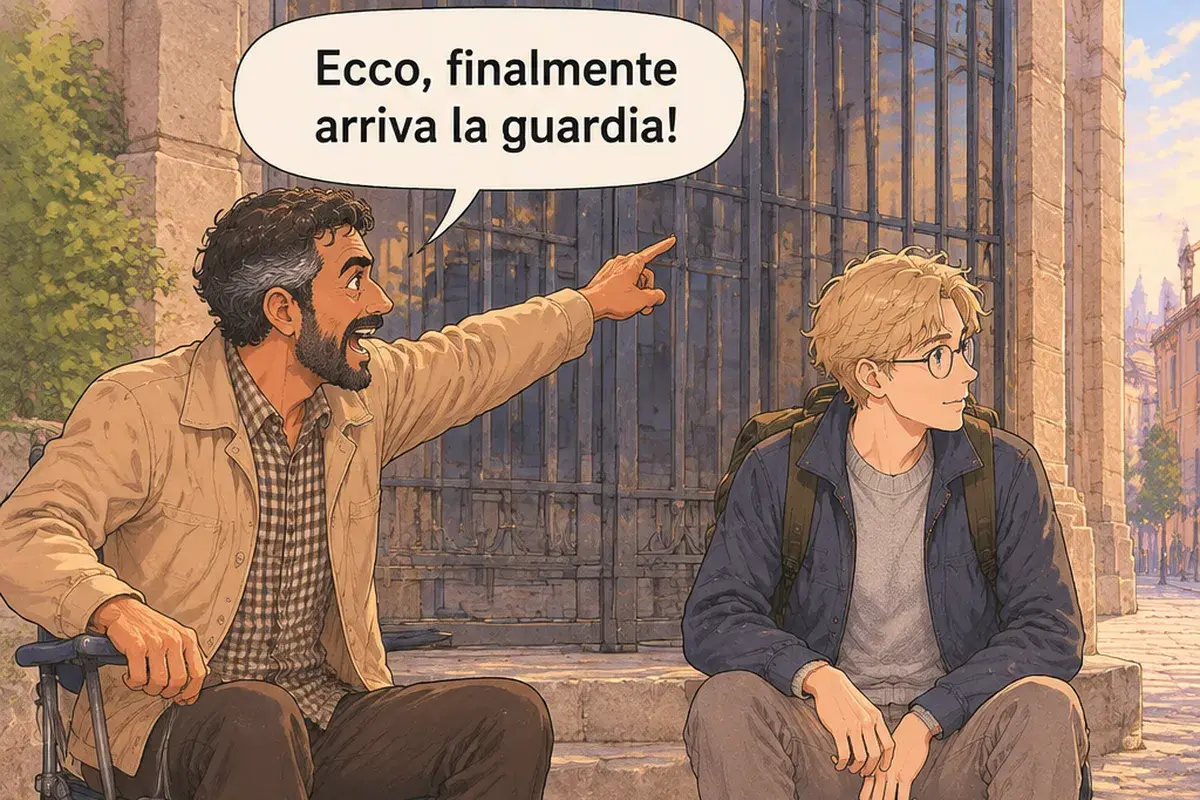
- Signore
Ecco, finalmente arriva la guardia!
There, the guard is finally coming!
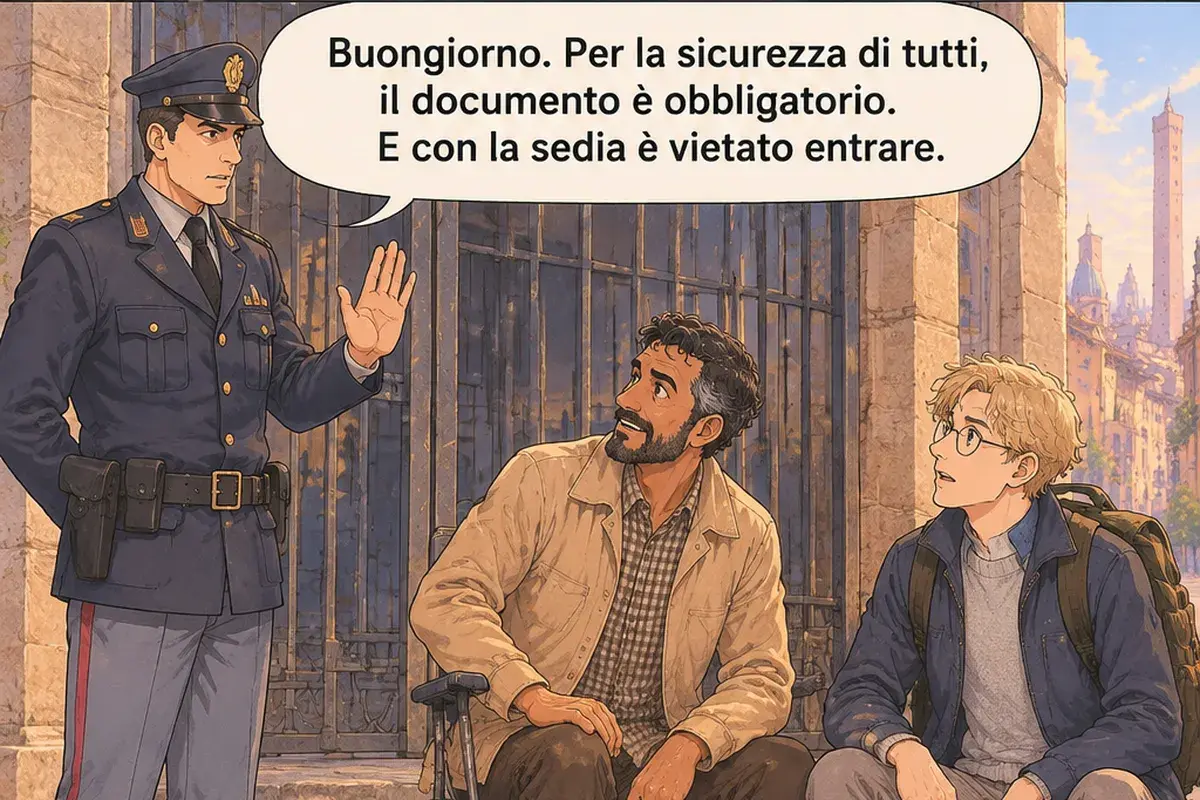
- Poliziotto
Buongiorno. Per la sicurezza di tutti, il documento è obbligatorio. E con la sedia è vietato entrare.
Good morning. For everyone's safety, ID is mandatory. And it's forbidden to come in with a chair.
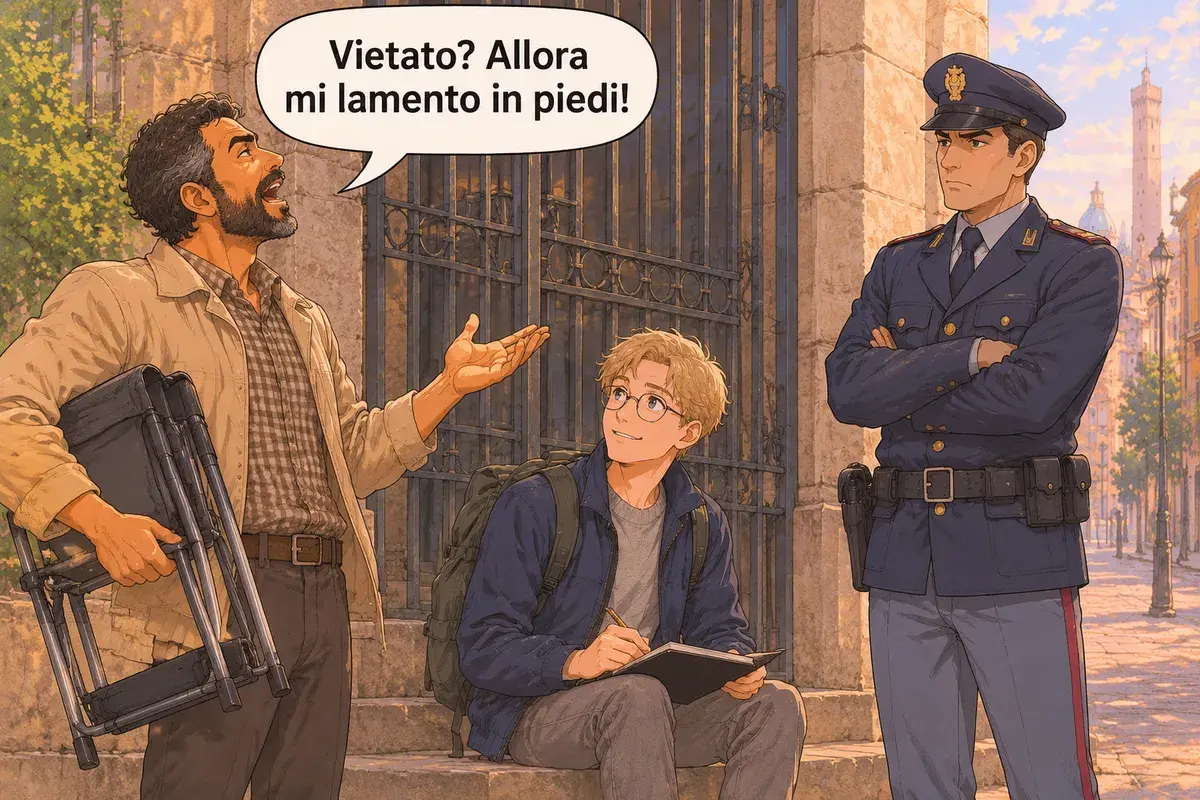
- Signore
Vietato? Allora mi lamento in piedi!
Forbidden? Then I'll complain standing up!
Grammar for this text
- Io ci sono già stato tante volte — here ci means "there": the place you've already talked about (in unit 2 ci meant "us, to us"). sono stato — "I've been": stato is the past participle of essere.
- Io ci vengo per la prima volta — ci vengo — "I come here"; ci goes before the verb. la prima volta — "the first time": prima here means "first", not "before".
- Come mai è qui così presto? Da quanto tempo aspetta? — come mai — "how come" (softer than perché). The question starts with a preposition:
da quanto tempo— "how long". The verb is in the present: Da un'ora — "for an hour", where English says "I've been waiting for an hour". - Non si preoccupi — a polite "don't worry" to an adult you don't know: the Lei form of preoccuparsi; learn it whole for now. That's also why it's Lei è già qui: with Lei the verb is the same as for "he / she".
- Io non mi lamento mai — lamentarsi (to complain) is reflexive: mi lamento — "I complain"; non… mai — "never".
- E con la sedia è vietato entrare — like on a sign: è vietato + infinitive, "it's forbidden to go in". The rule is B2; for now learn it as a set phrase.
- questa sedia è dura — dura here means "hard" (from duro), not "lasts" (durare).
Words and grammar of the unit: Understand what they tell you at the window.
Learn the words from the texts with flashcards
In the app, you can tap any word in a text to see its translation, forms and examples, and new words stick with flashcards. 15 minutes a day.
Start for freeEverything is open for free. No card needed to sign up.