
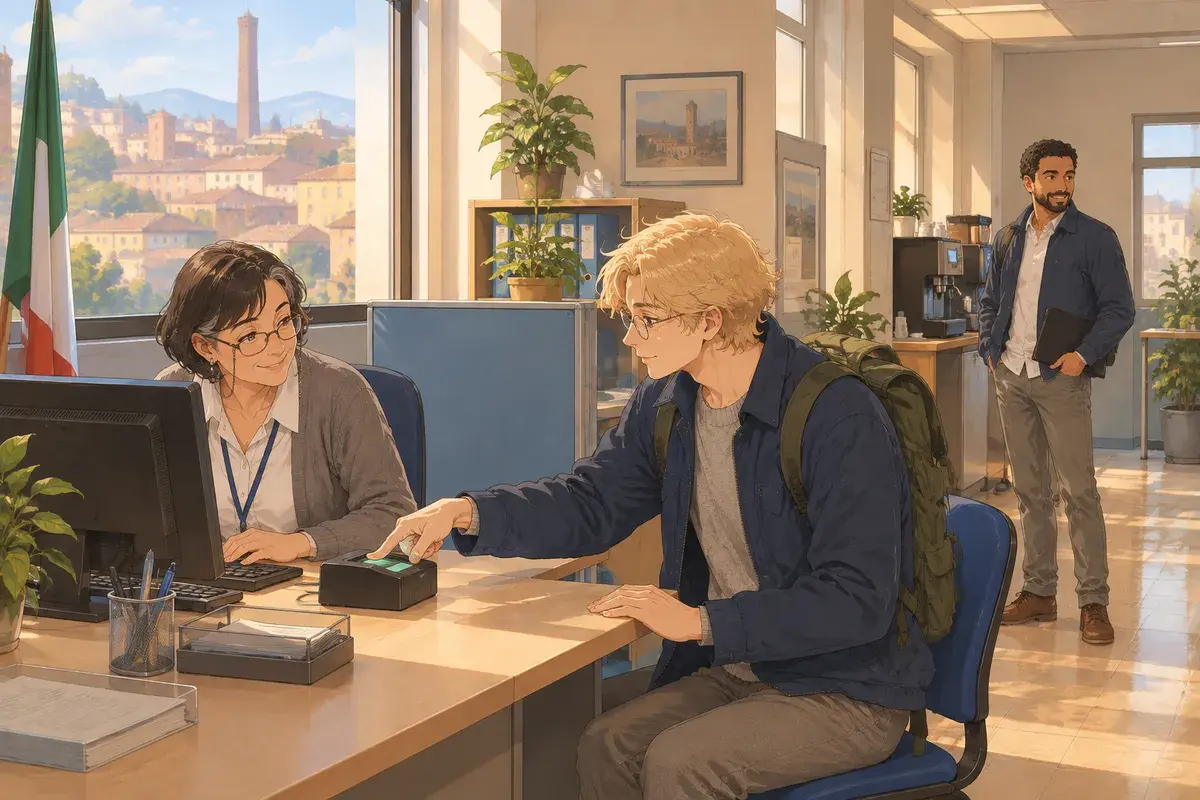
Italian dialogue with translation · A2 · 16 lines
Le posso offrire un caffè? Can I treat you to a coffee? (formal)
Comic · 16 panels
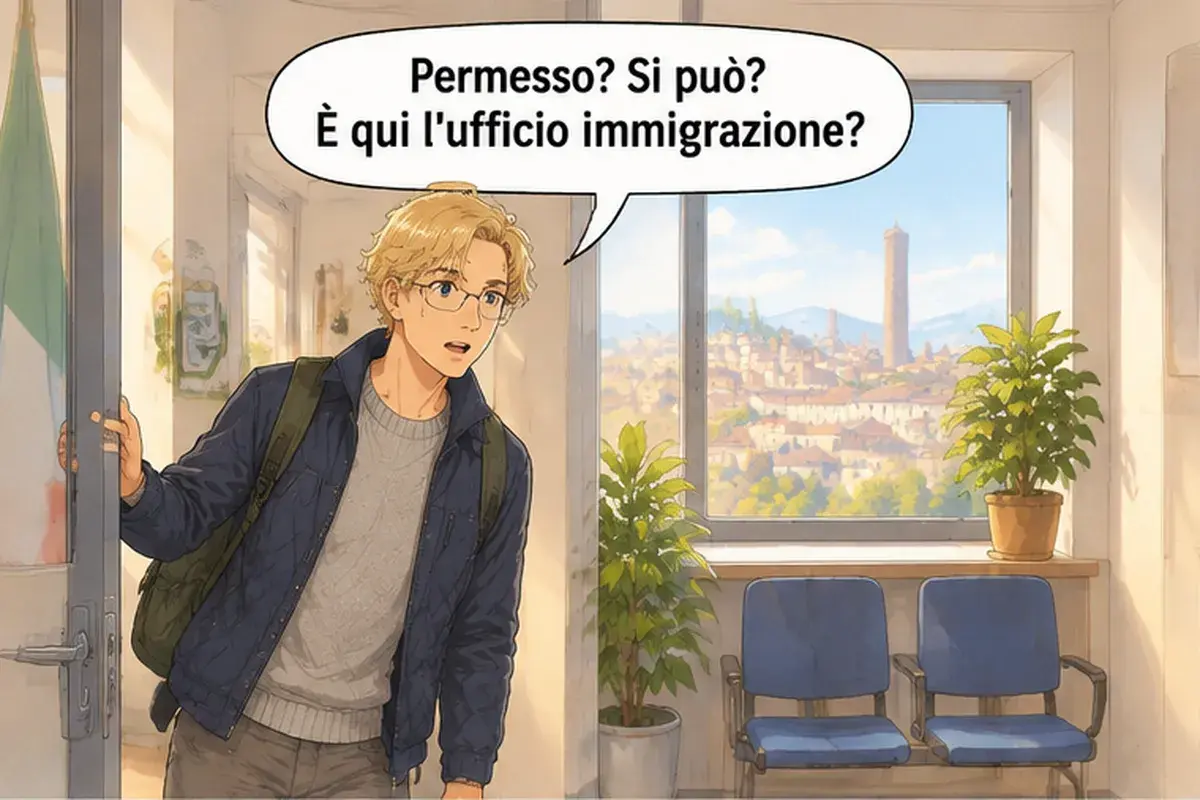
- Misha
Permesso? Si può? È qui l'ufficio immigrazione?
Excuse me? Is it OK to come in? Is the immigration office here?
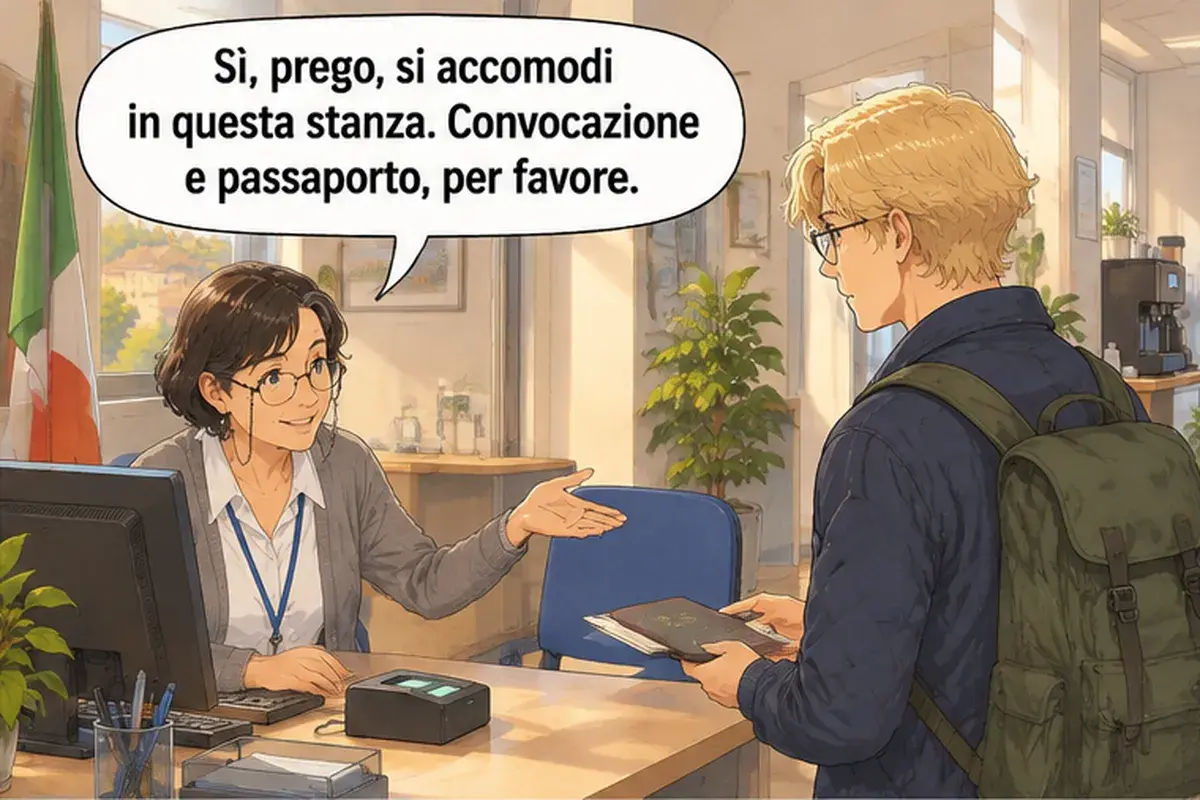
- Impiegata
Sì, prego, si accomodi in questa stanza. Convocazione e passaporto, per favore.
Yes, please step into this room (formal). Appointment letter and passport, please.
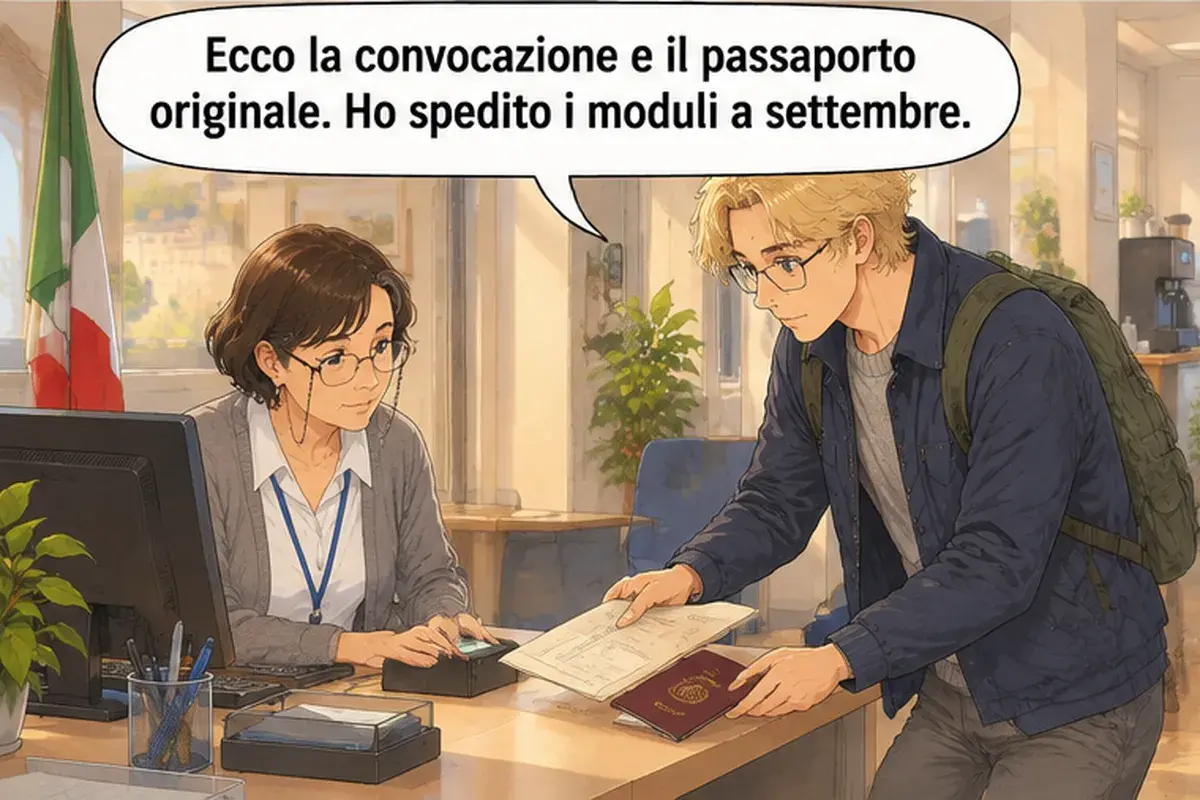
- Misha
Ecco la convocazione e il passaporto originale. Ho spedito i moduli a settembre.
Here's the appointment letter and the original passport. I sent the forms in September.
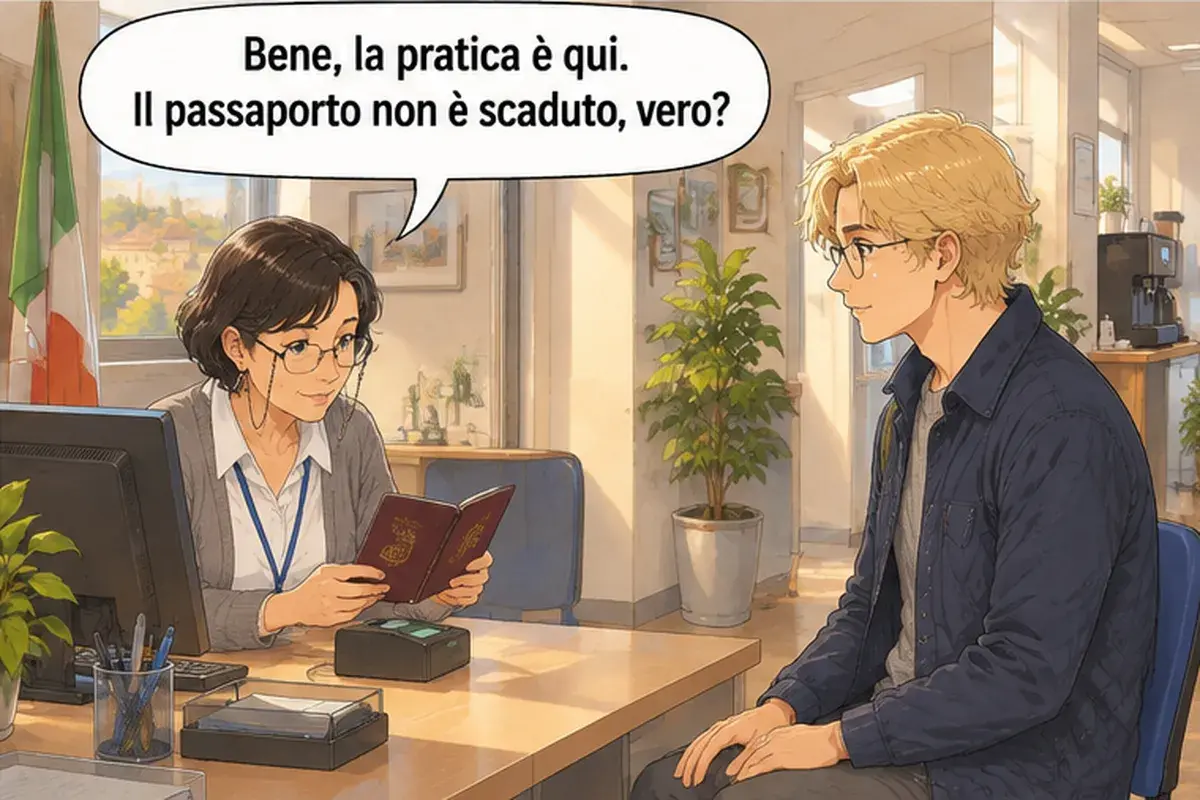
- Impiegata
Bene, la pratica è qui. Il passaporto non è scaduto, vero?
Good, the file is here. The passport isn't expired, is it?
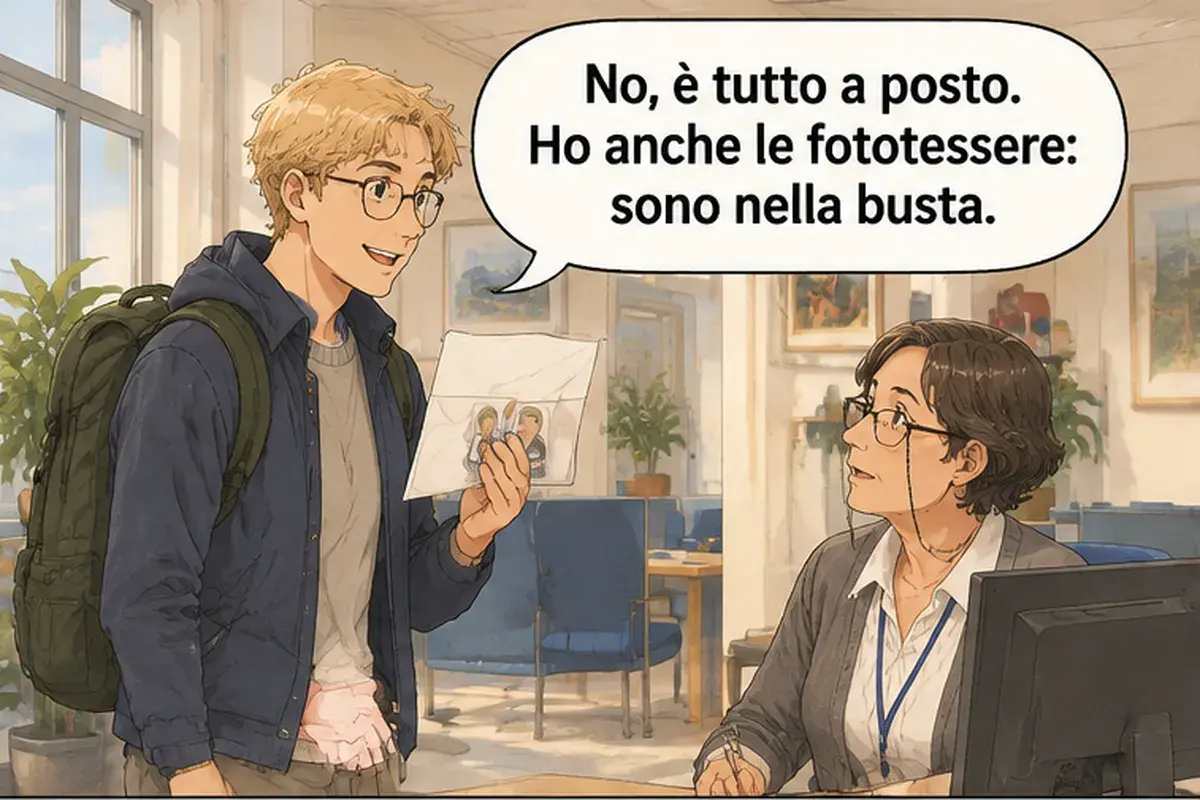
- Misha
No, è tutto a posto. Ho anche le fototessere: sono nella busta.
No, everything's in order. I also have the passport photos: they're in the envelope.
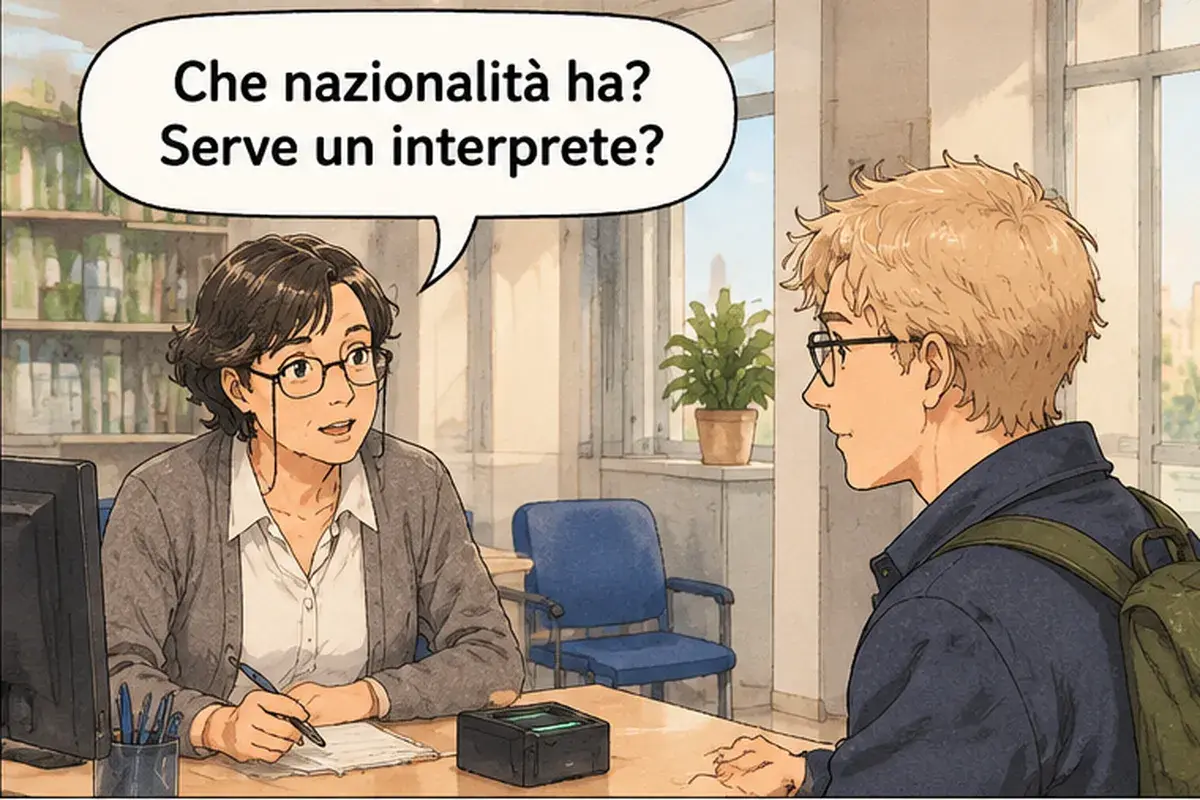
- Impiegata
Che nazionalità ha? Serve un interprete?
What nationality are you? (formal) Need an interpreter?
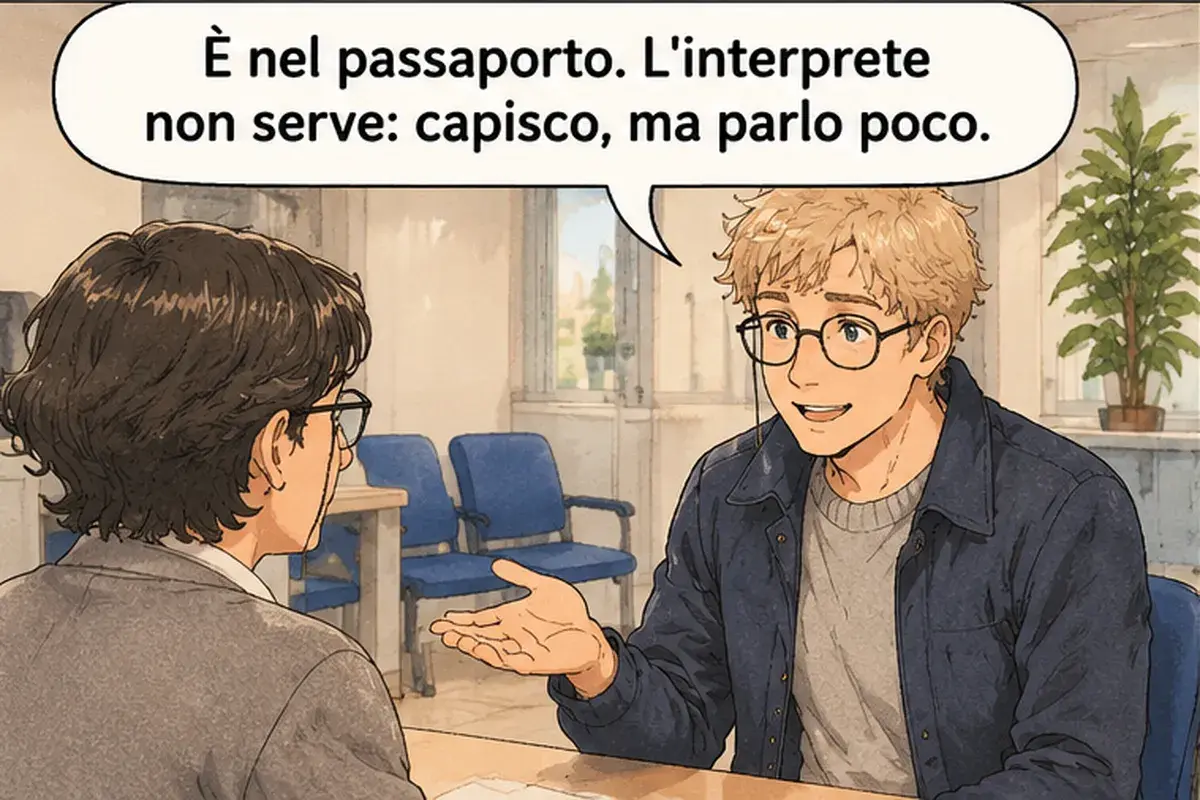
- Misha
È nel passaporto. L'interprete non serve: capisco, ma parlo poco.
It's in the passport. There's no need for an interpreter: I understand, but I don't speak much.
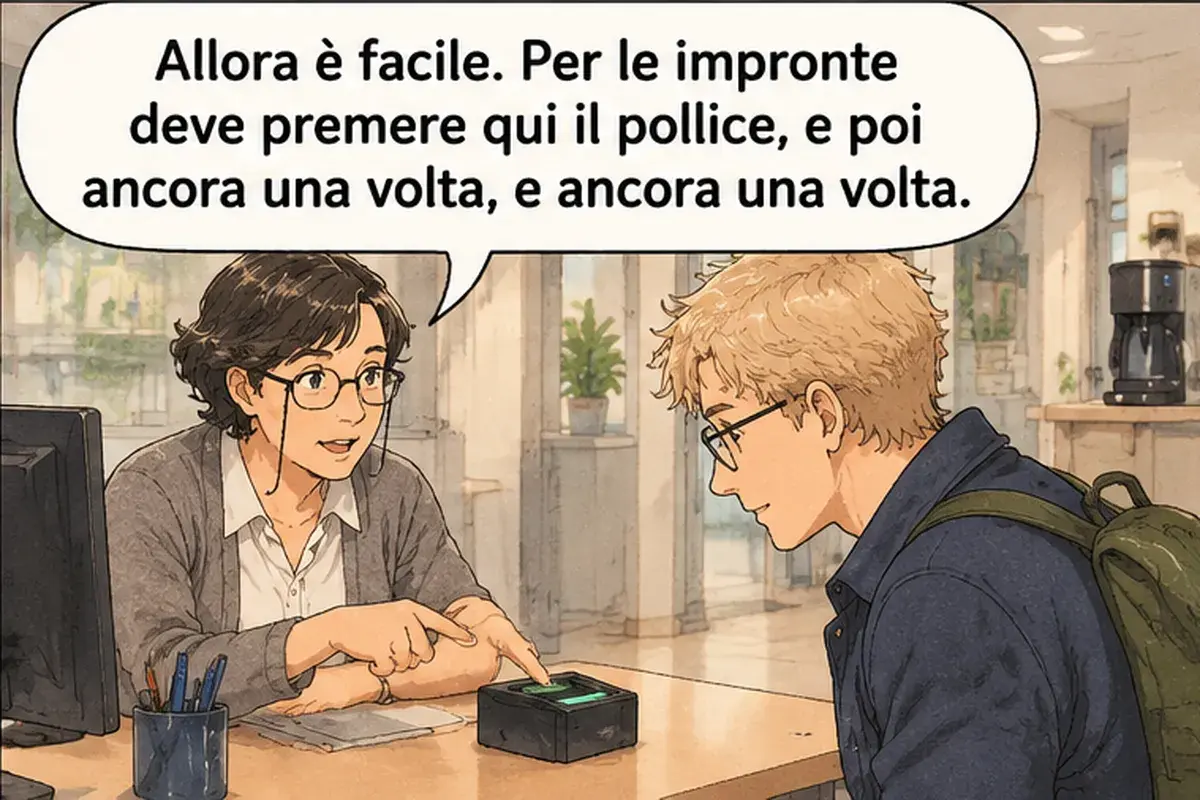
- Impiegata
Allora è facile. Per le impronte deve premere qui il pollice, e poi ancora una volta, e ancora una volta.
Then it's easy. For the fingerprints you have to press your thumb here (formal), and then once more, and once more.
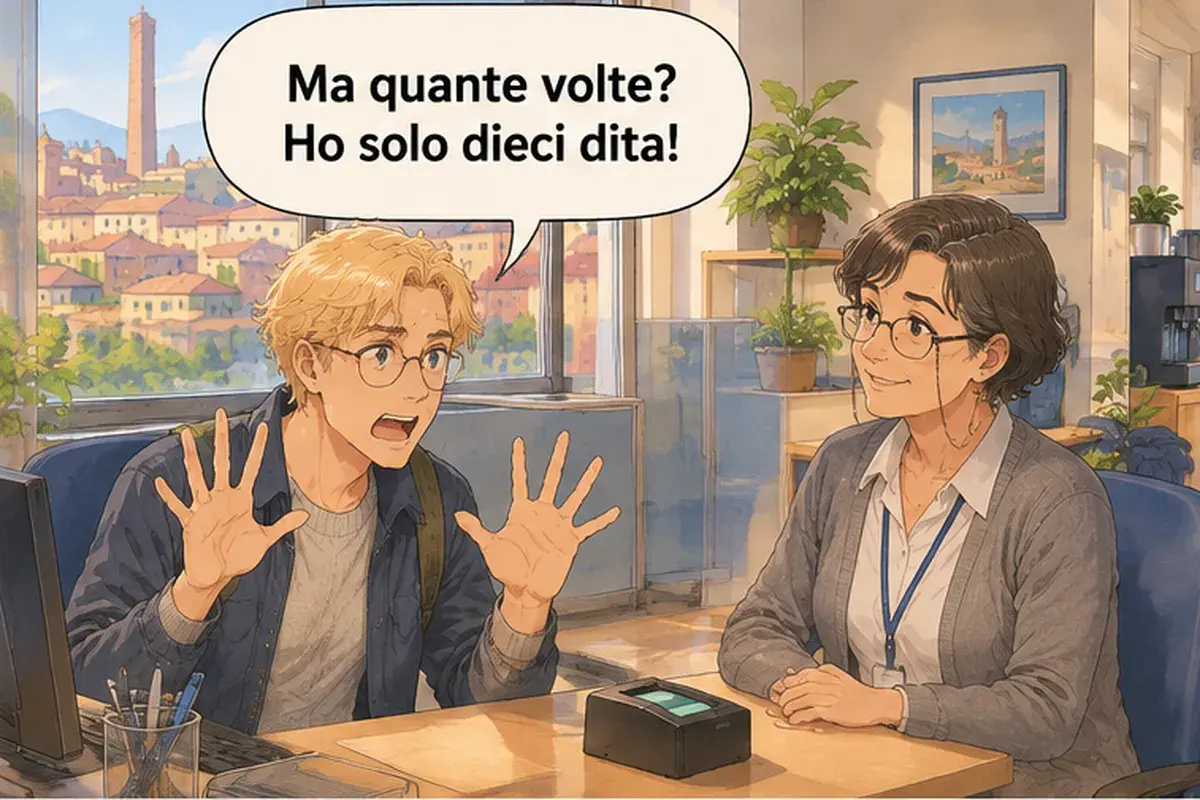
- Misha
Ma quante volte? Ho solo dieci dita!
But how many times? I only have ten fingers!
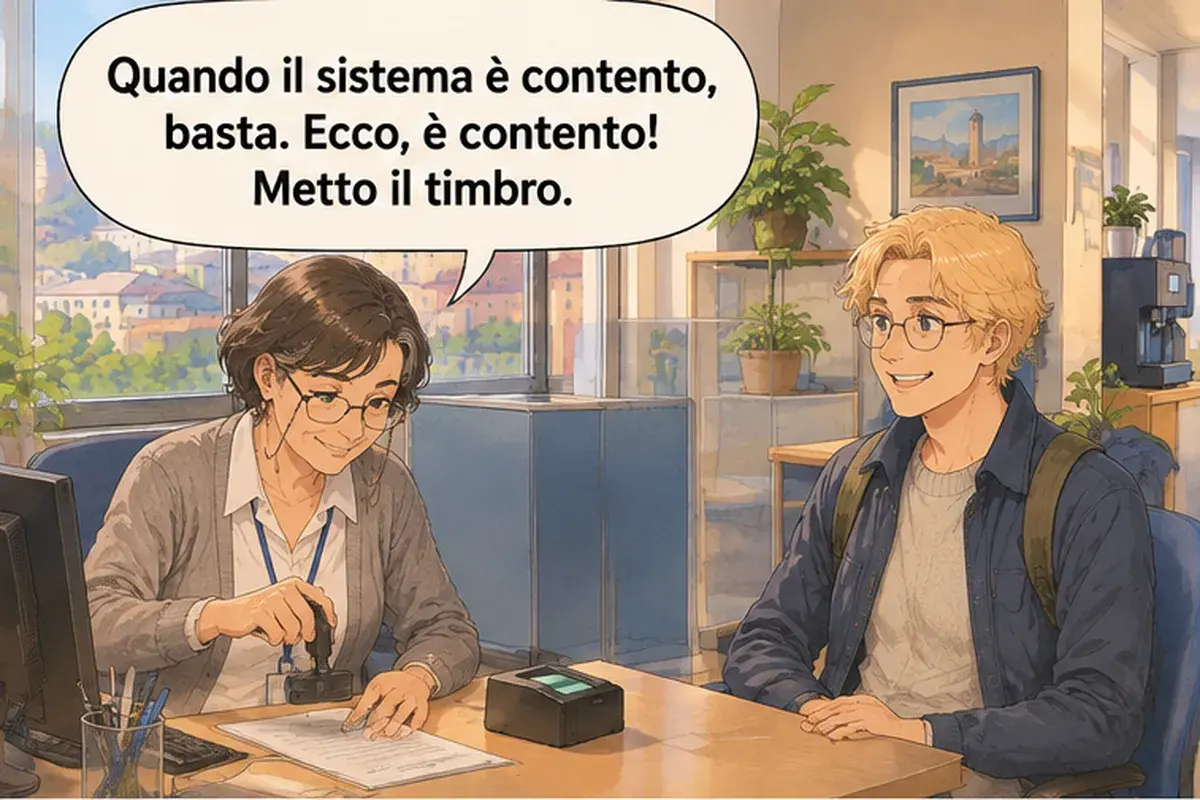
- Impiegata
Quando il sistema è contento, basta. Ecco, è contento! Metto il timbro.
When the system is happy, that's enough. There, it's happy! I'll put the stamp on.
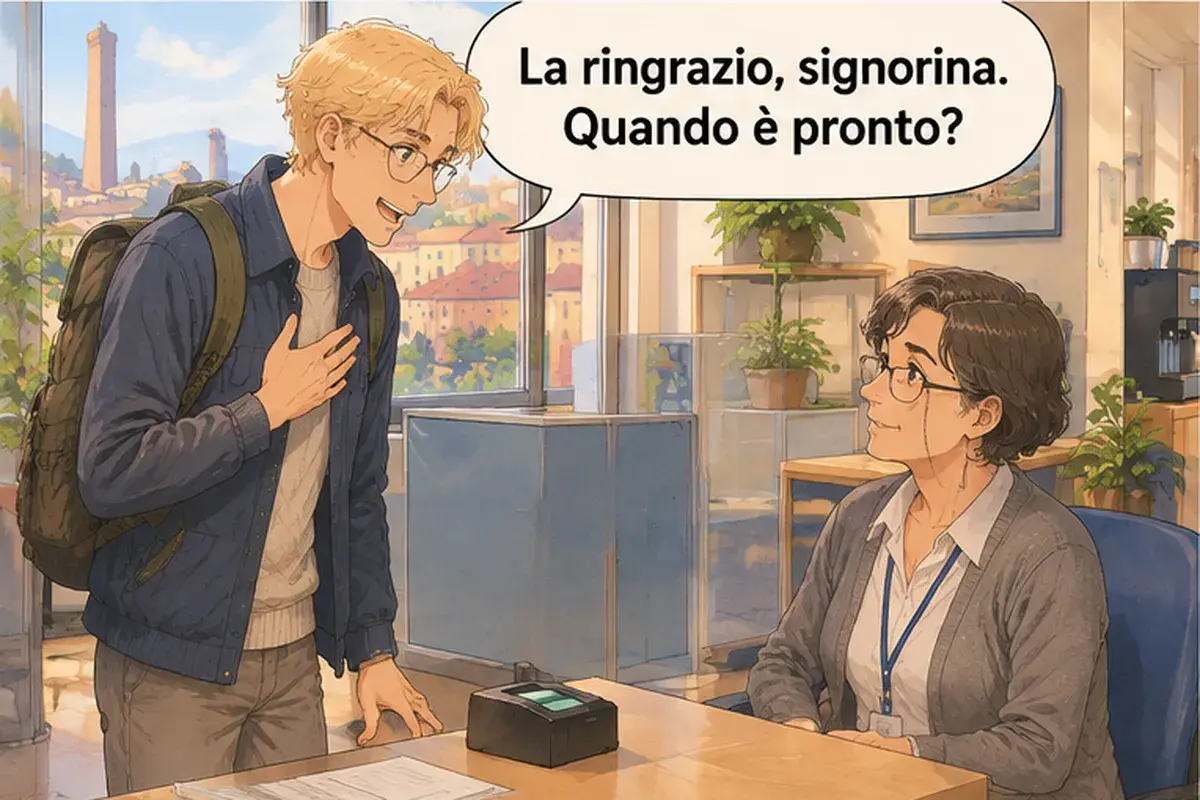
- Misha
La ringrazio, signorina. Quando è pronto?
Thank you, miss (formal). When will it be ready?
- Impiegata
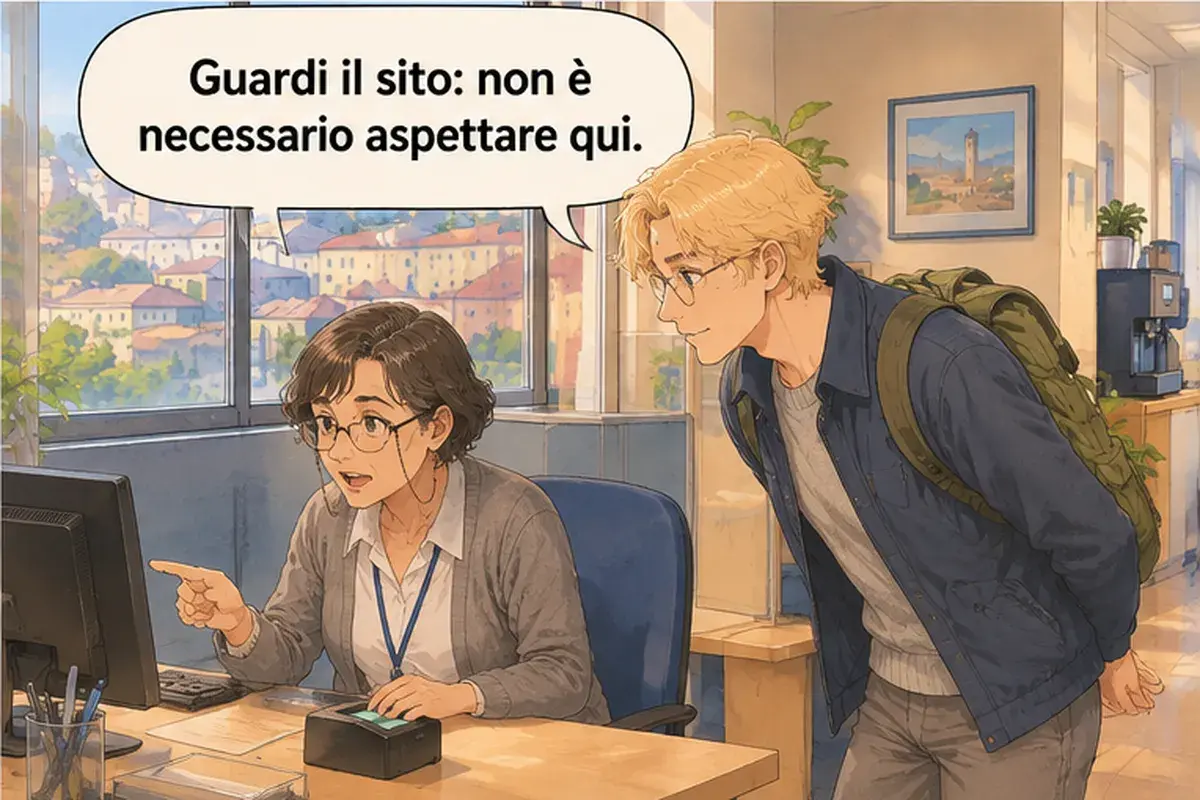
Guardi il sito: non è necessario aspettare qui.
Look at the website (formal): it's not necessary to wait here.
- Misha
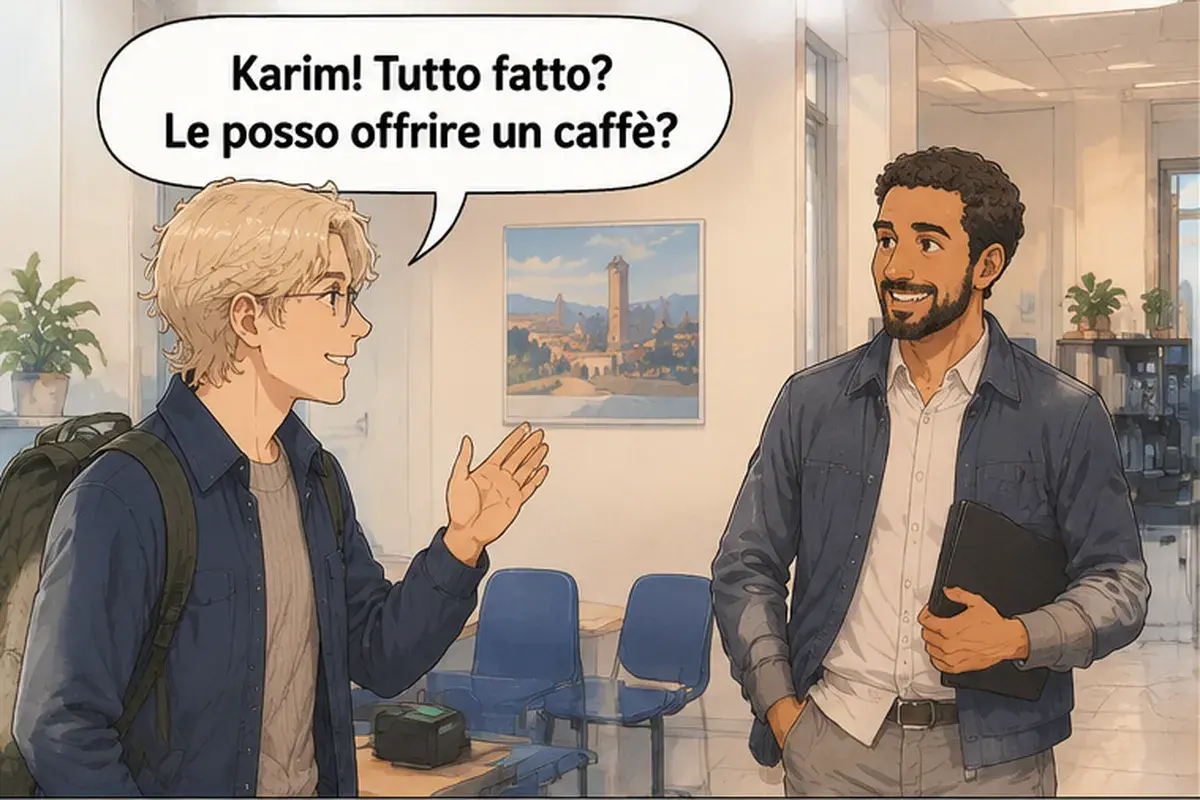
Karim! Tutto fatto? Le posso offrire un caffè?
Karim! All done? Can I treat you to a coffee? (formal)
- Signore
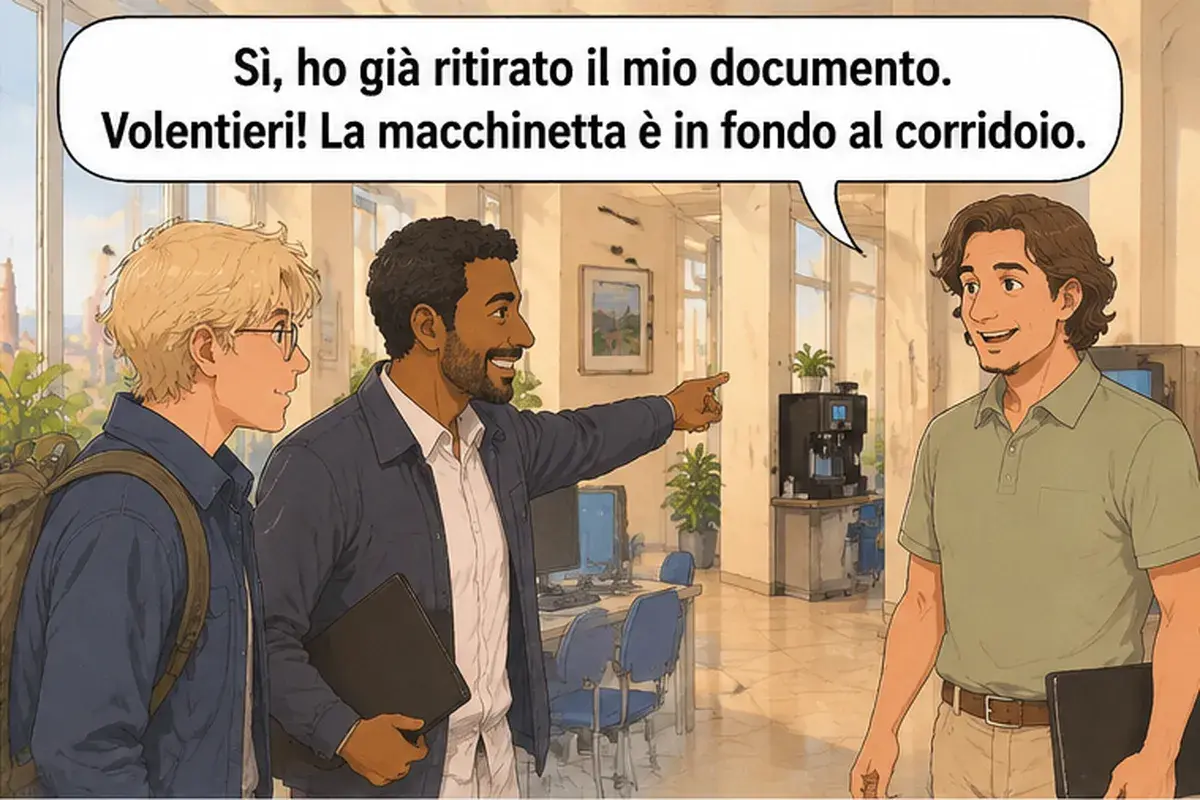
Sì, ho già ritirato il mio documento. Volentieri! La macchinetta è in fondo al corridoio.
Yes, I've already picked up my document. Gladly! The coffee machine is at the end of the hallway.
- Misha
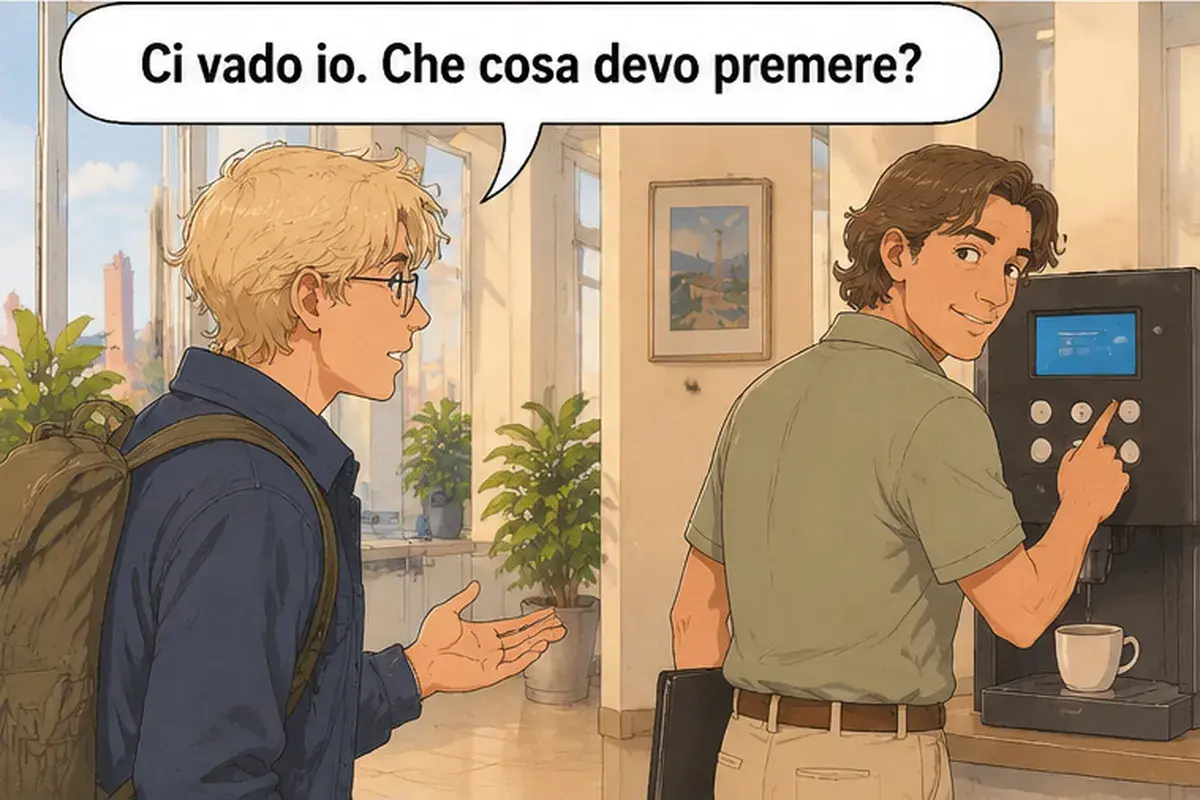
Ci vado io. Che cosa devo premere?
I'll go there. What do I have to press?
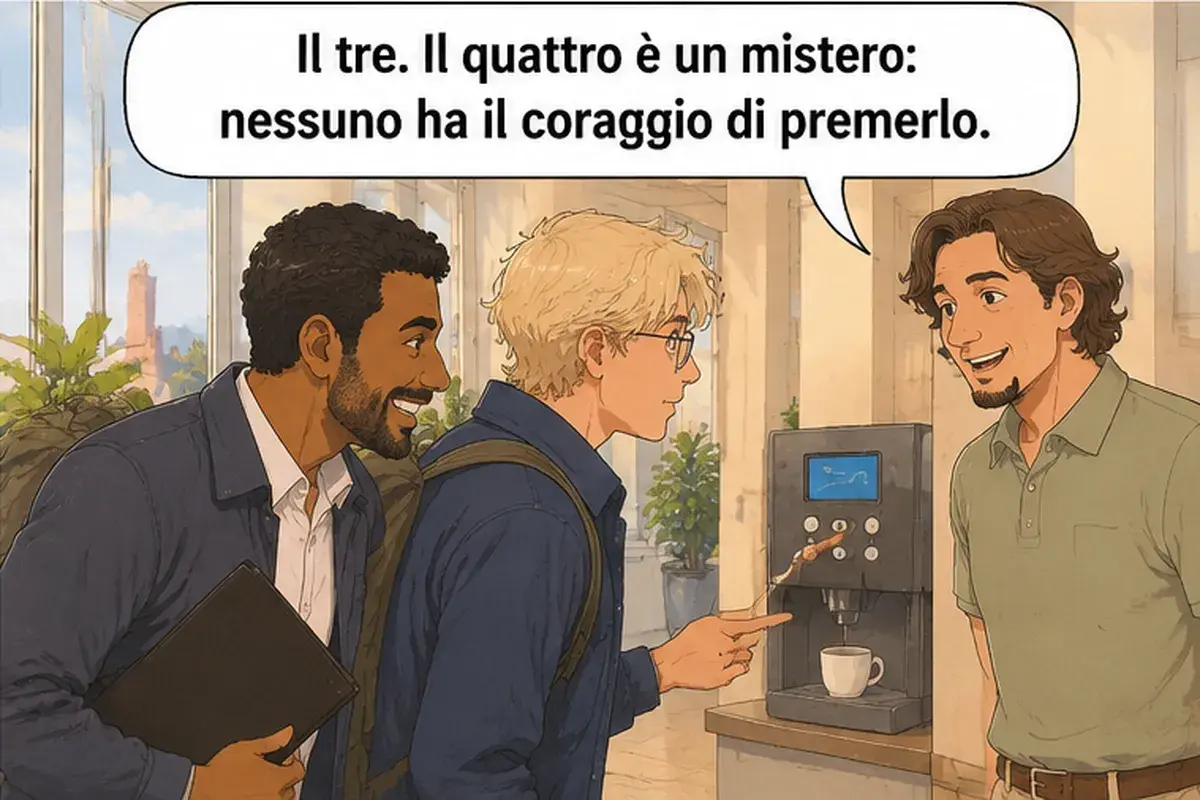
- Signore
Il tre. Il quattro è un mistero: nessuno ha il coraggio di premerlo.
Number three. Number four is a mystery: nobody has the courage to press it.
Grammar for this text
- Permesso? Si può? — "Excuse me? Is it OK?": what you ask at a door. si può is a set phrase: può — "he / she can" from potere, and si makes the question impersonal ("is it allowed?"). The rule is B1.
- si accomodi and Guardi il sito — polite requests to someone you call Lei: accomodarsi (to come in, to make yourself comfortable), guardare (to look). The form itself is a B1 topic; for now learn these as set words.
- La ringrazio — "thank you (formal)": La — "you" (formal, with a capital L), ringrazio — "I thank". Le posso offrire un caffè? — Le — "to you" (formal), word for word "can I offer you a coffee?". The rule is B1.
- La macchinetta è in fondo al corridoio — macchinetta — "coffee machine": a little macchina (machine); that's what Italians call a coffee vending machine. Ci vado io — ci — "there" (to the machine), and io at the end: "I'll go" (the subject at the end, as in unit 15).
- nessuno ha il coraggio di premerlo — premerlo = premere + lo: "it" joins the end of the infinitive (unit 10).
- Ho solo dieci dita — dita is the plural of dito (finger); in the plural the word is feminine. Learn it as a ready form (the rule is B1).
Words and grammar of the unit: Understand what they tell you at the window.
Learn the words from the texts with flashcards
In the app, you can tap any word in a text to see its translation, forms and examples, and new words stick with flashcards. 15 minutes a day.
Start for freeEverything is open for free. No card needed to sign up.