
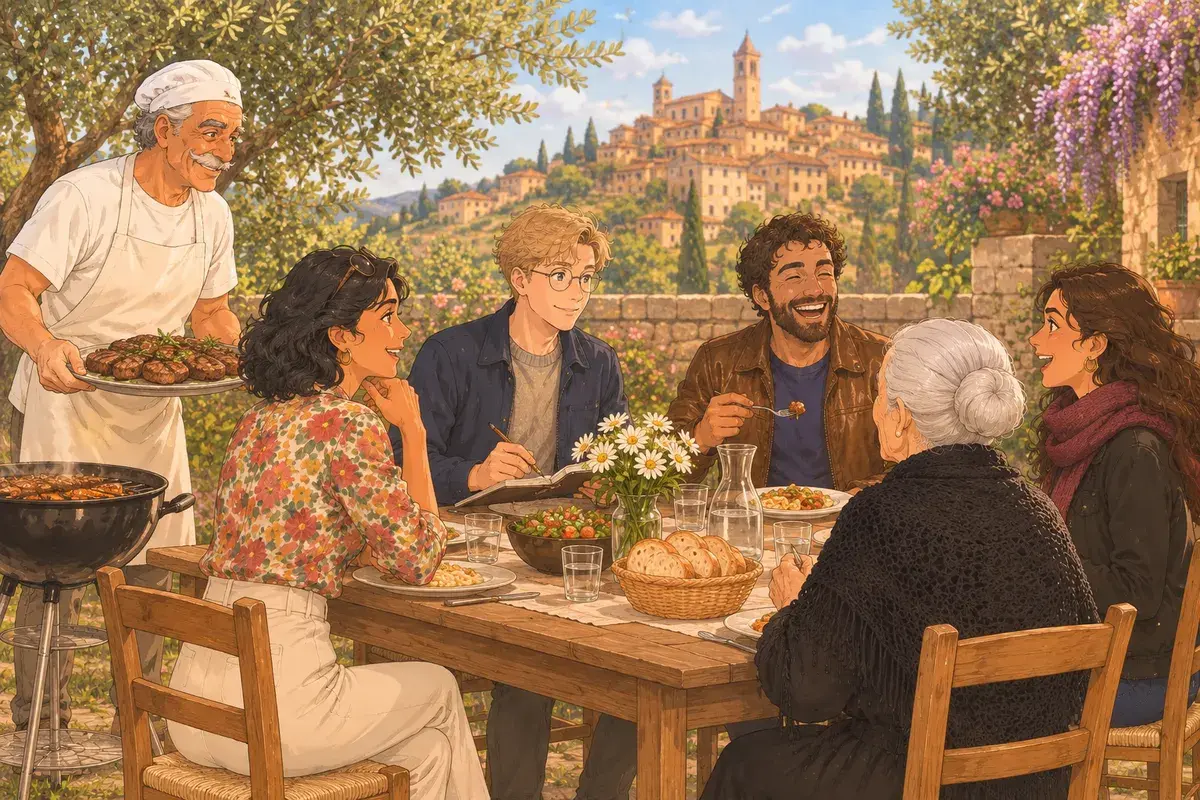
Italian dialogue with translation · A2 · 9 lines
La casa non scappa The house won't run away
Comic · 9 panels
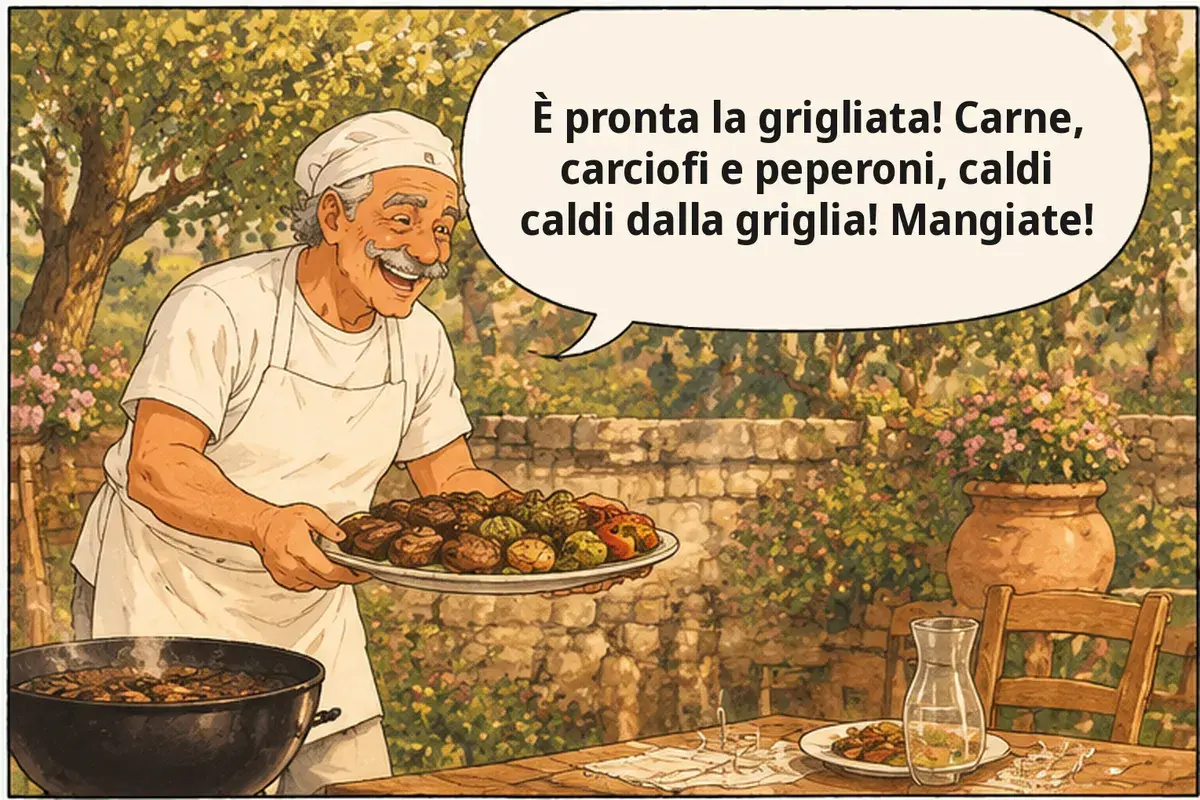
- Totò
È pronta la grigliata! Carne, carciofi e peperoni, caldi caldi dalla griglia! Mangiate!
The barbecue is ready! Meat, artichokes and peppers, piping hot off the grill! Eat! (to several people)
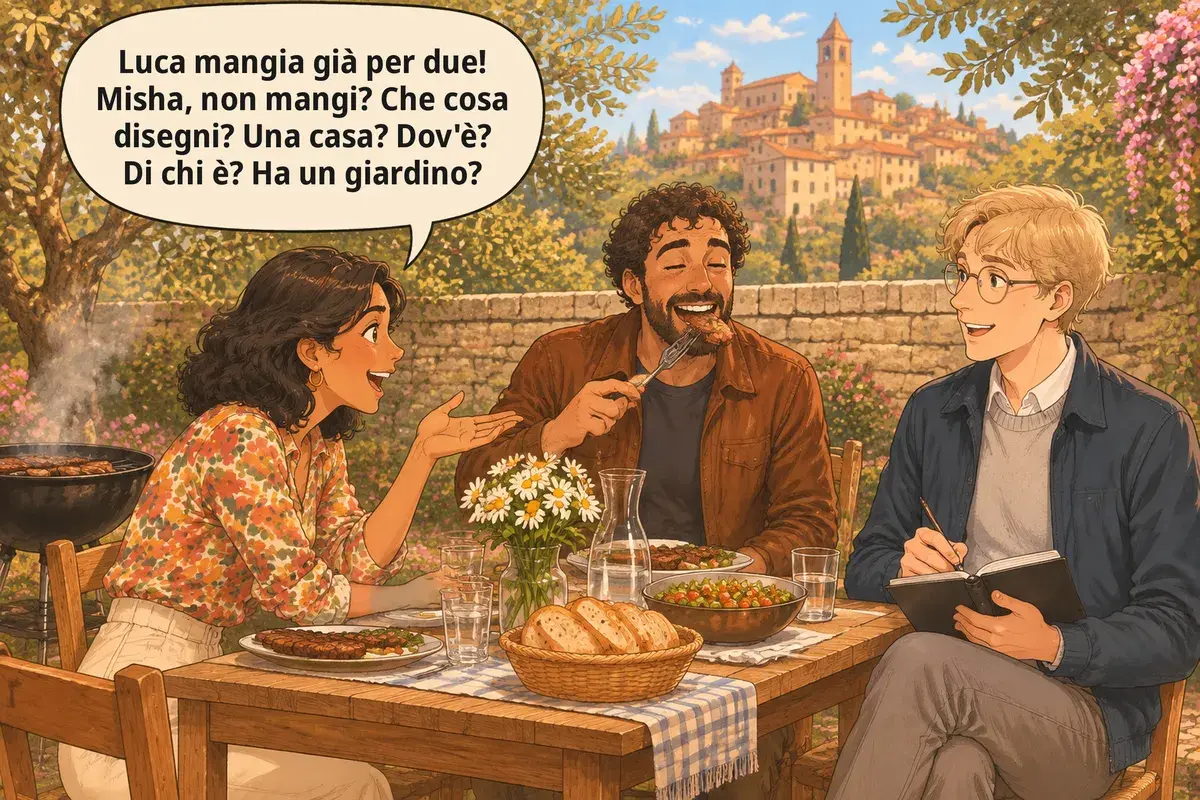
- Rosalia
Luca mangia già per due! Misha, non mangi? Che cosa disegni? Una casa? Dov'è? Di chi è? Ha un giardino?
Luca's already eating for two! Misha, aren't you eating? What are you drawing? A house? Where is it? Whose is it? Does it have a garden?
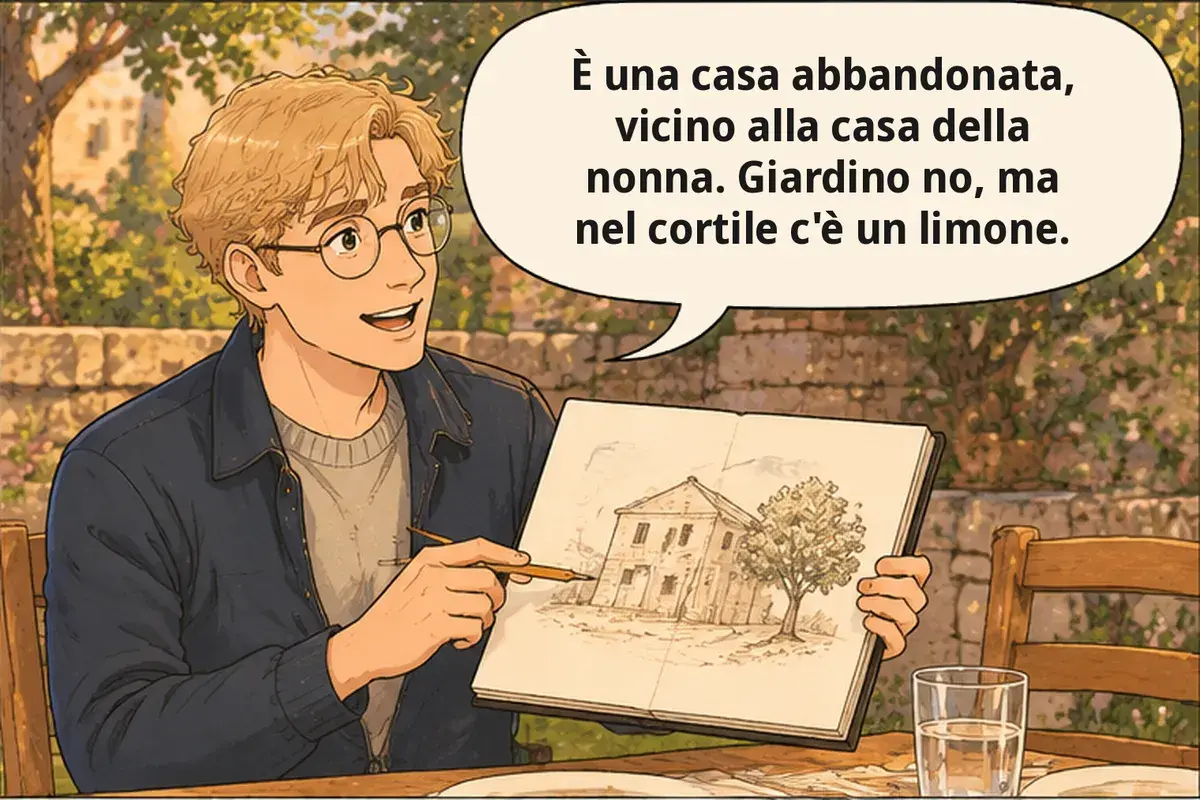
- Misha
È una casa abbandonata, vicino alla casa della nonna. Giardino no, ma nel cortile c'è un limone.
It's an abandoned house near Grandma's house. No garden, but there's a lemon tree in the courtyard.
- Rosalia
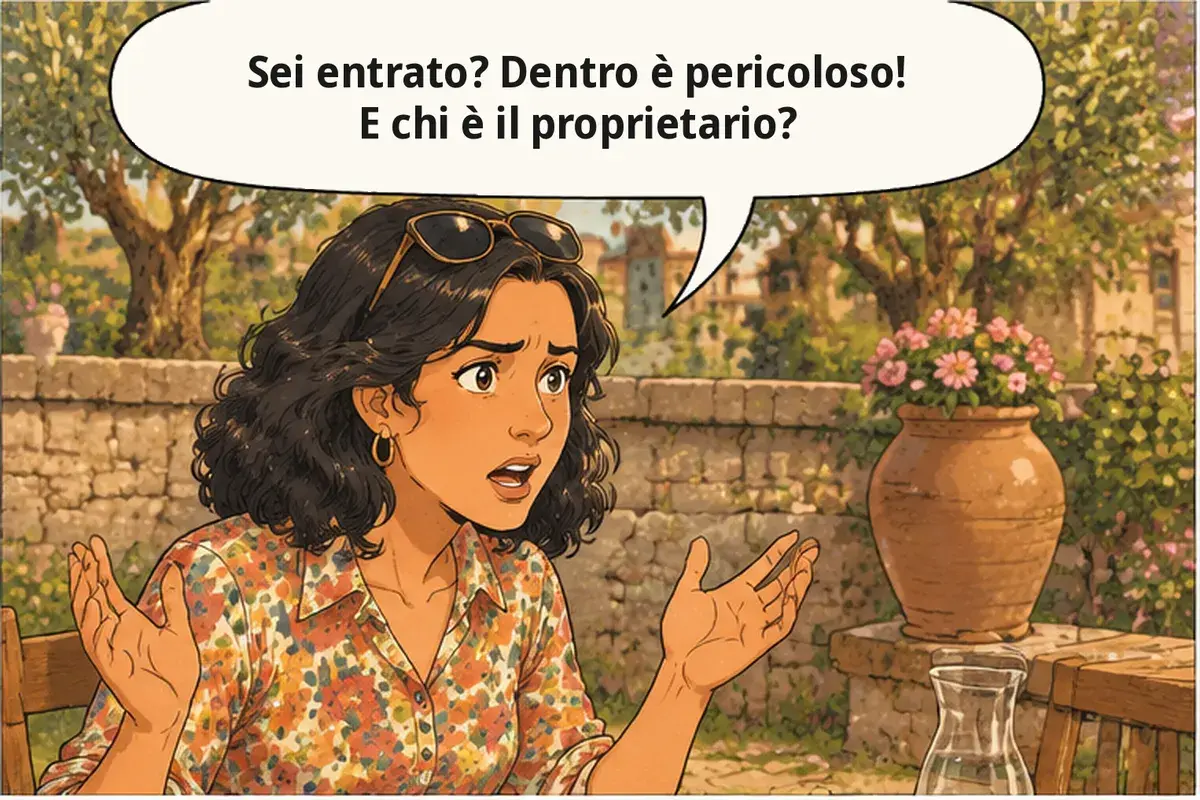
Sei entrato? Dentro è pericoloso! E chi è il proprietario?
Did you go in? (to a man) It's dangerous inside! And who's the owner?
- Misha
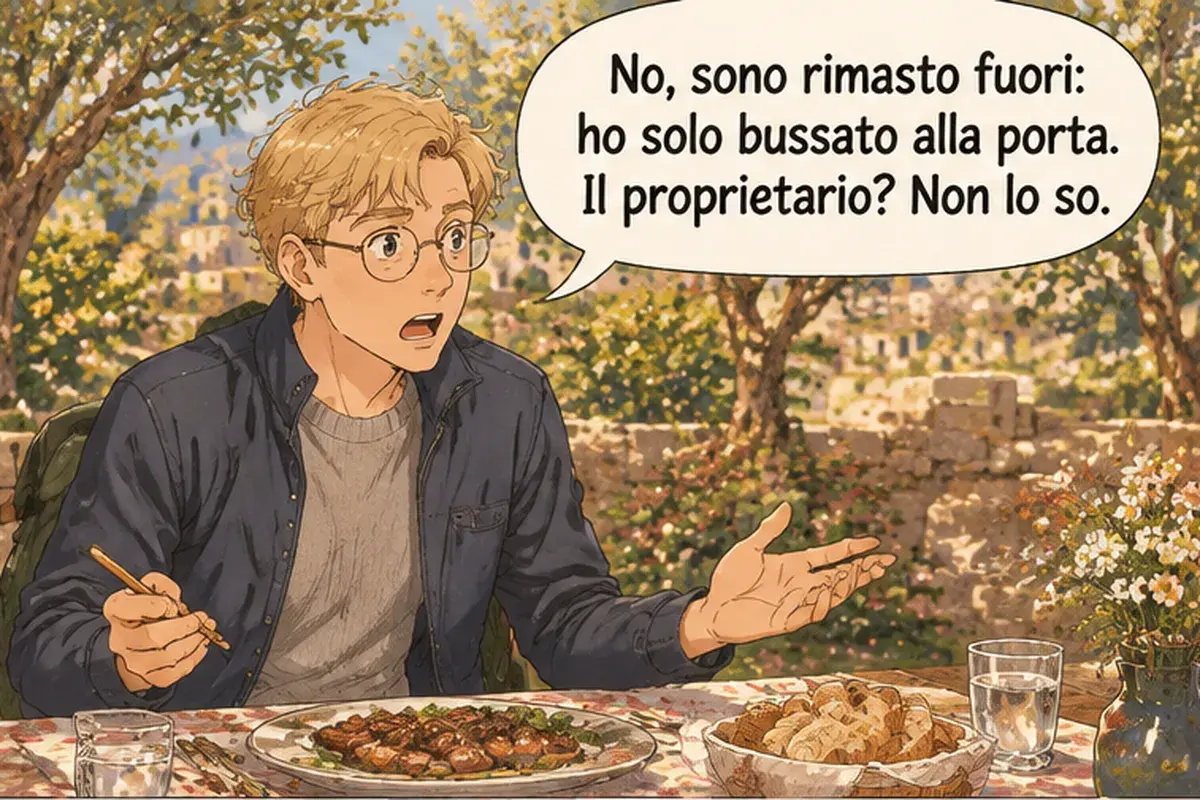
No, sono rimasto fuori: ho solo bussato alla porta. Il proprietario? Non lo so.
No, I stayed outside: I only knocked on the door (man speaking). The owner? I don't know.
- Rosalia
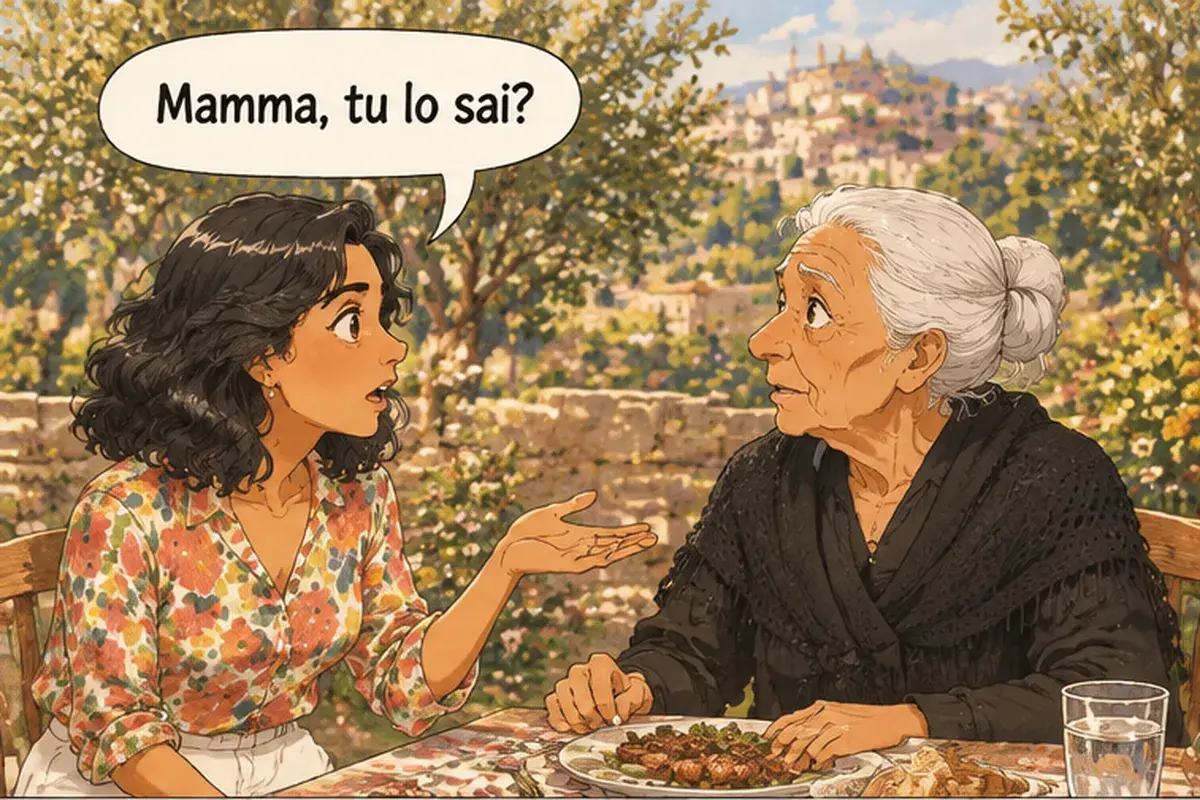
Mamma, tu lo sai?
Mom, do you know?
- Nonna Concetta
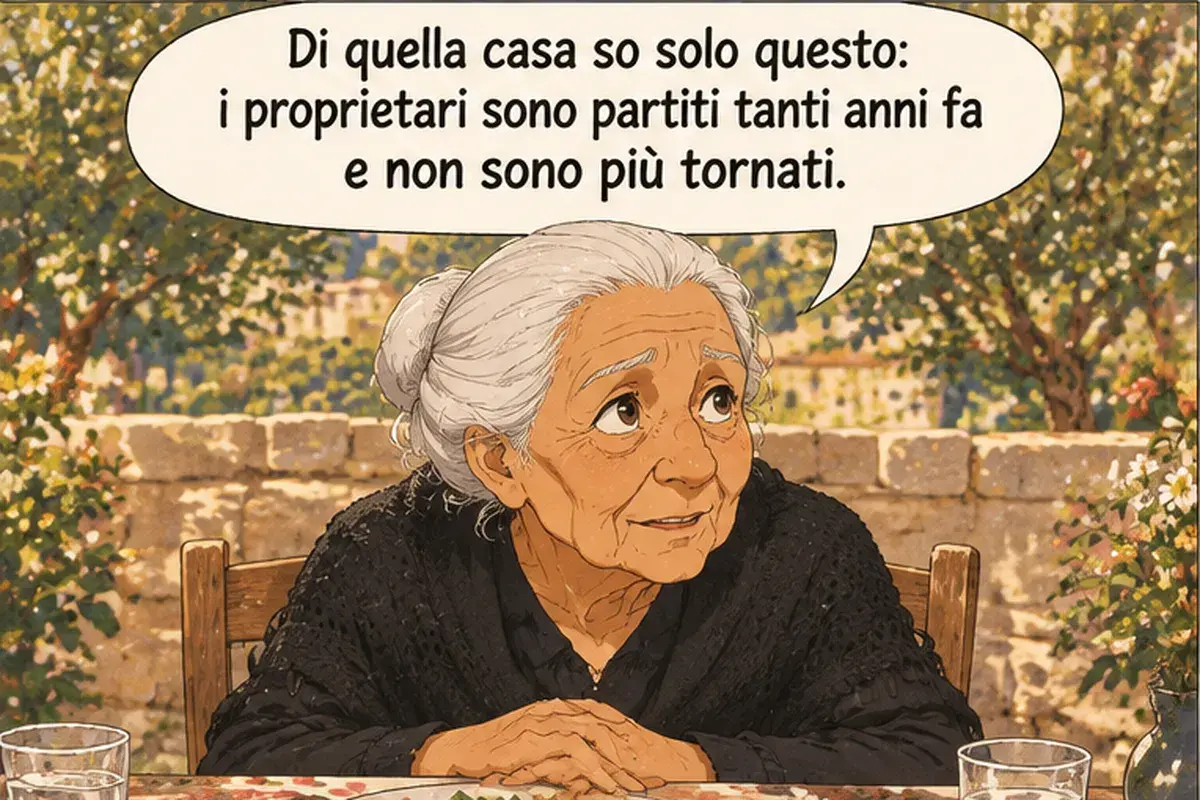
Di quella casa so solo questo: i proprietari sono partiti tanti anni fa e non sono più tornati.
About that house I only know this: the owners left many years ago and didn't come back again.
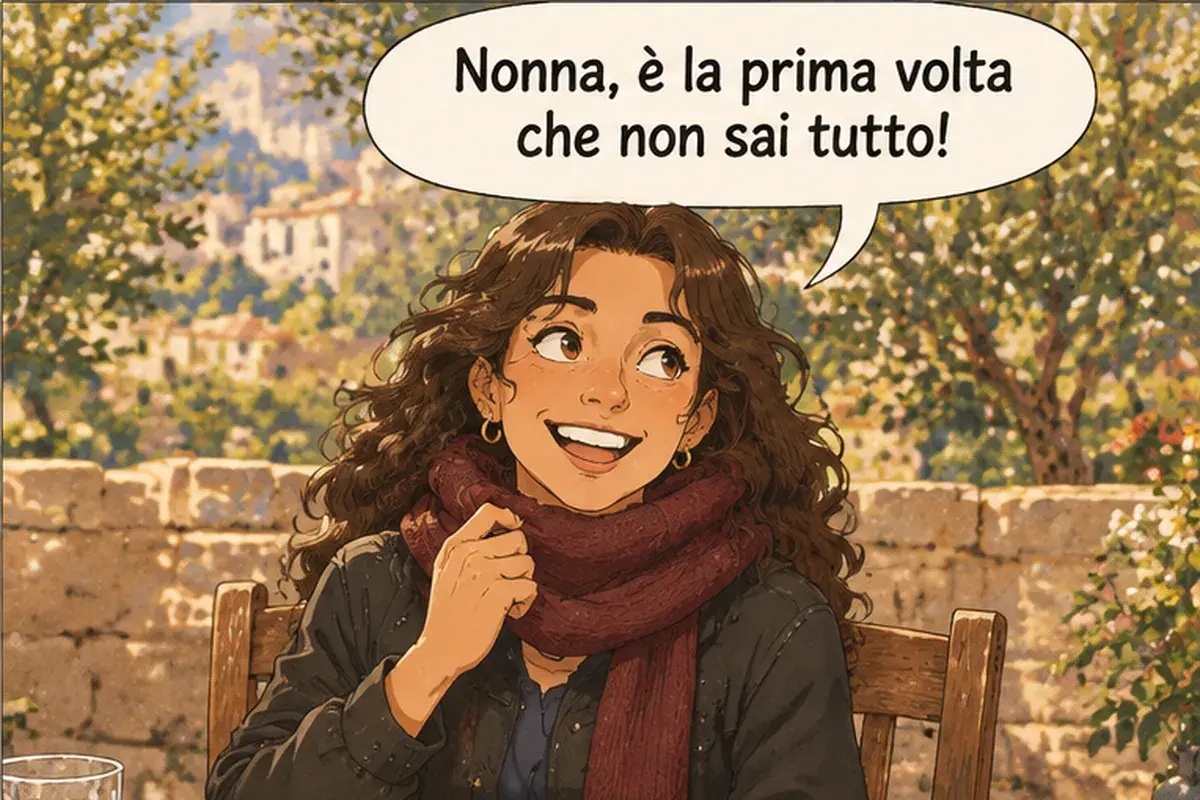
- Giulia
Nonna, è la prima volta che non sai tutto!
Grandma, it's the first time you don't know everything!
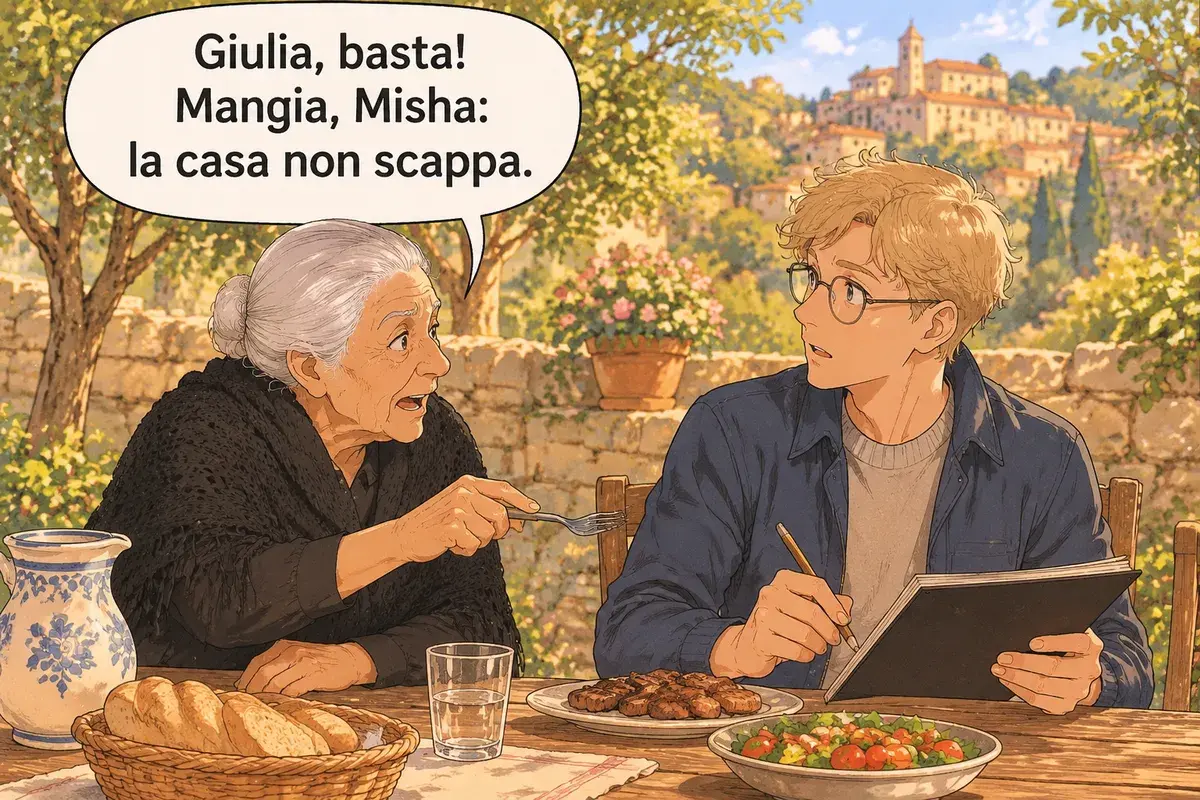
- Nonna Concetta
Giulia, basta! Mangia, Misha: la casa non scappa.
Giulia, that's enough! Eat, Misha: the house won't run away.
Grammar for this text
- È pronta la grigliata! — the subject la grigliata comes last: the news goes at the end (third block). grigliata — meat on the grill: on Easter Monday people go out of town and grill meat.
- Dov'è? Di chi è? — dov'è = dove + è; di chi è — "whose is it?". nel cortile — nel = in + il.
- Sei entrato? — entrare takes essere, so entrato. sono rimasto fuori — rimasto is the irregular past participle of rimanere ("to stay", unit 1). bussato alla porta — bussare a; alla = a + la.
- tu lo sai? — sai — "you know", from sapere; lo stands for the whole idea (unit 10). Non lo so — a set phrase from A1.
- sono partiti tanti anni fa — fa after a length of time means "ago" (unit 9); partiti is plural, like i proprietari. non sono più tornati — non… più (unit 6).
- la prima volta che non sai tutto — prima volta — "the first time" (here prima doesn't mean "before"); che here means "when".
- la casa non scappa — a joke: "the house won't run away" (scappare).
- caldi caldi — an adjective said twice makes it stronger: "really hot, piping hot". dalla griglia — dalla = da + la.
Words and grammar of the unit: Tell a story in order.
Learn the words from the texts with flashcards
In the app, you can tap any word in a text to see its translation, forms and examples, and new words stick with flashcards. 15 minutes a day.
Start for freeEverything is open for free. No card needed to sign up.