
Italian dialogue with translation · A2 · 16 lines
Quanti ne vuole? How many do you want? (formal)
Comic · 16 panels
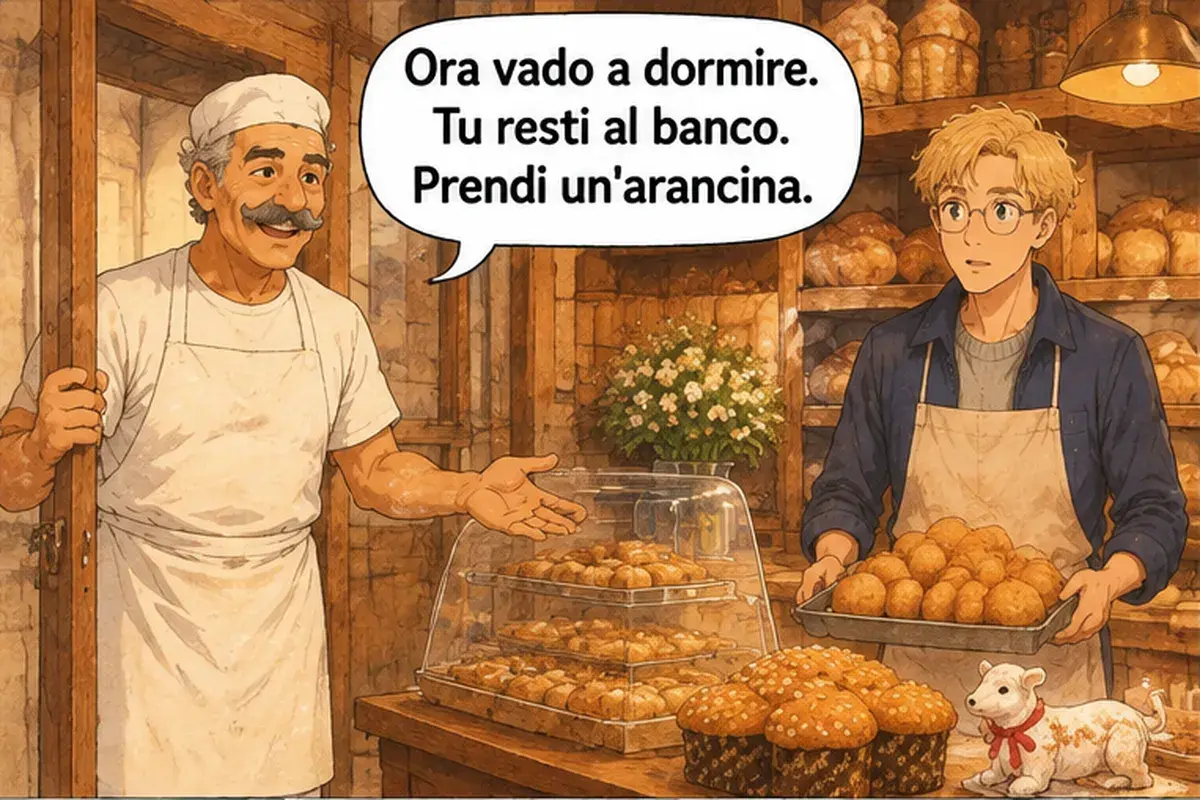
- Totò
Ora vado a dormire. Tu resti al banco. Prendi un'arancina.
I'm going to bed now. You're staying at the counter. Take an arancina.
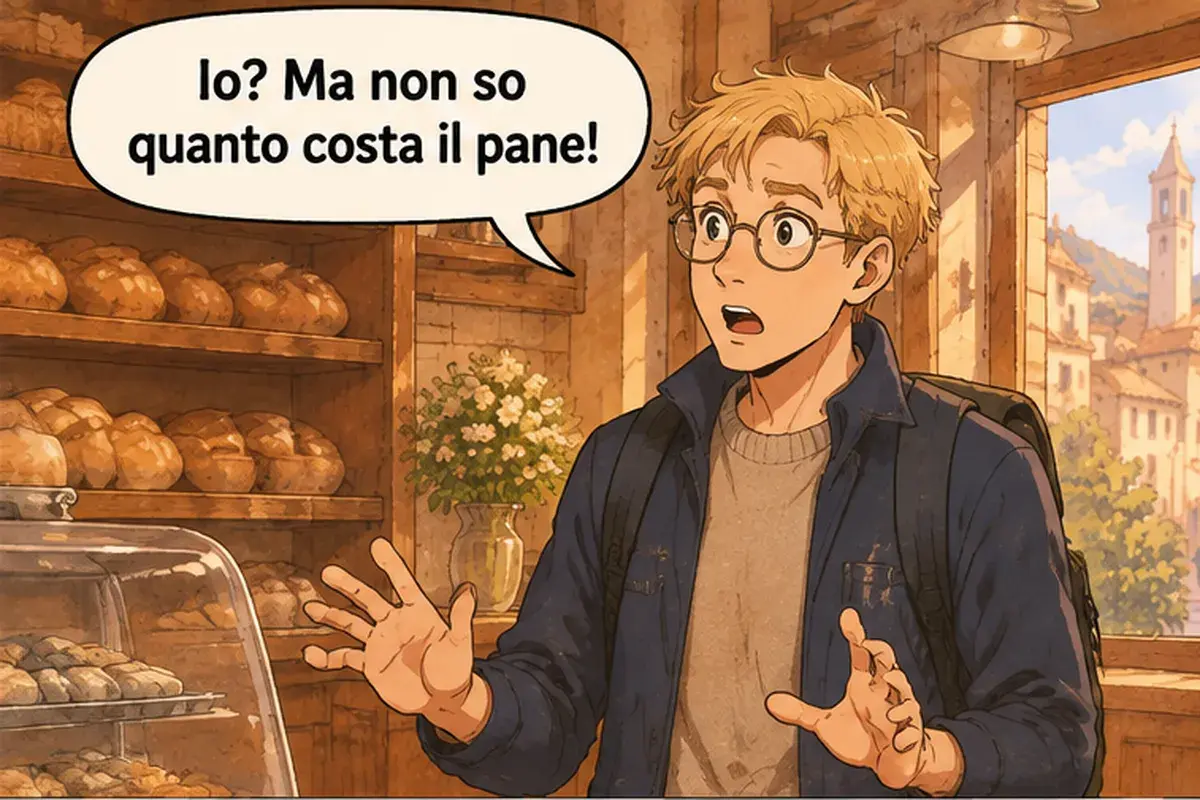
- Misha
Io? Ma non so quanto costa il pane!
Me? But I don't know how much the bread costs!
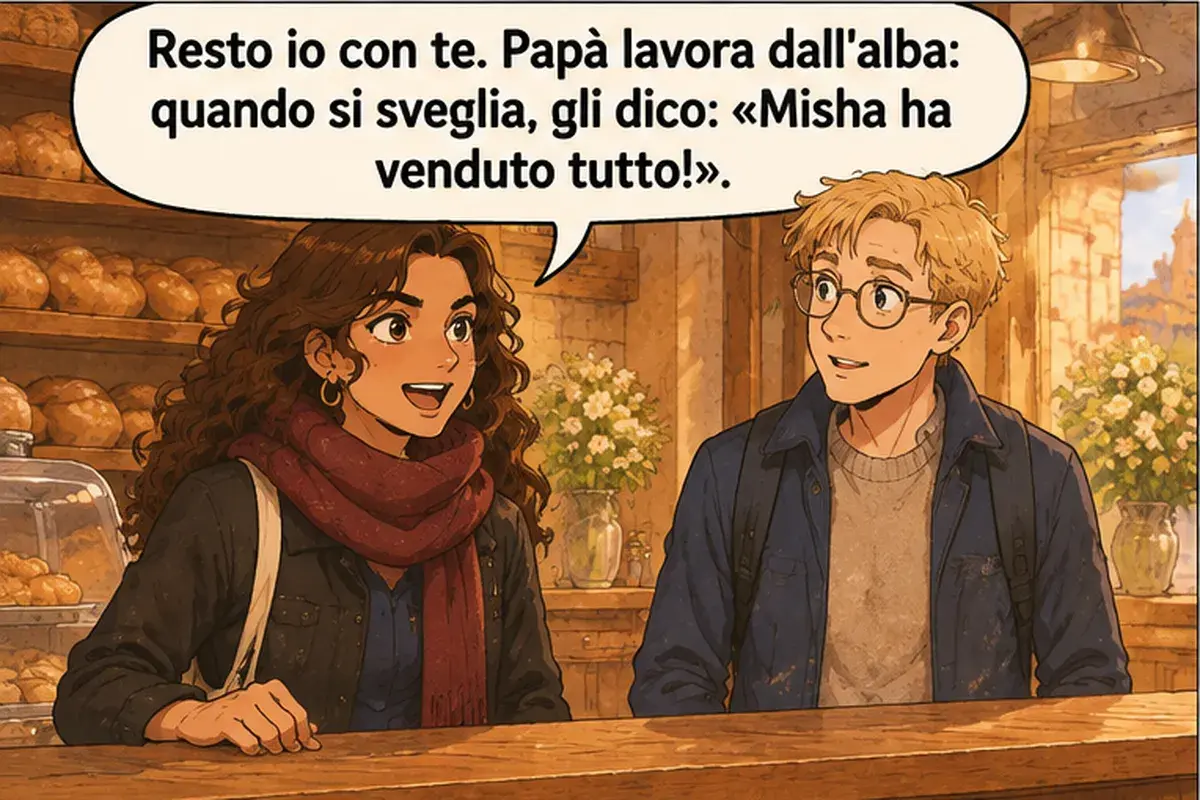
- Giulia
Resto io con te. Papà lavora dall'alba: quando si sveglia, gli dico: «Misha ha venduto tutto!»
I'll stay with you. Dad has been working since dawn: when he wakes up, I'll tell him: "Misha sold everything!"
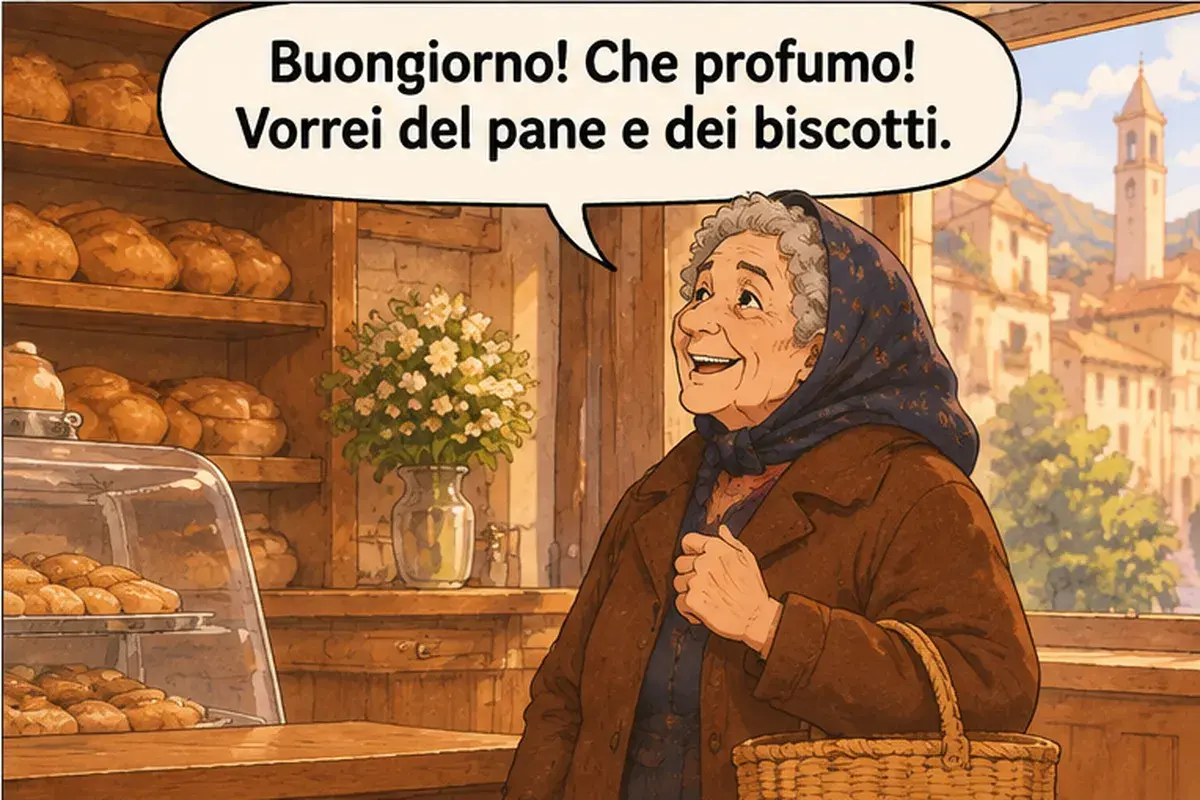
- Signora
Buongiorno! Che profumo! Vorrei del pane e dei biscotti.
Good morning! What a lovely smell! I'd like some bread and some cookies.
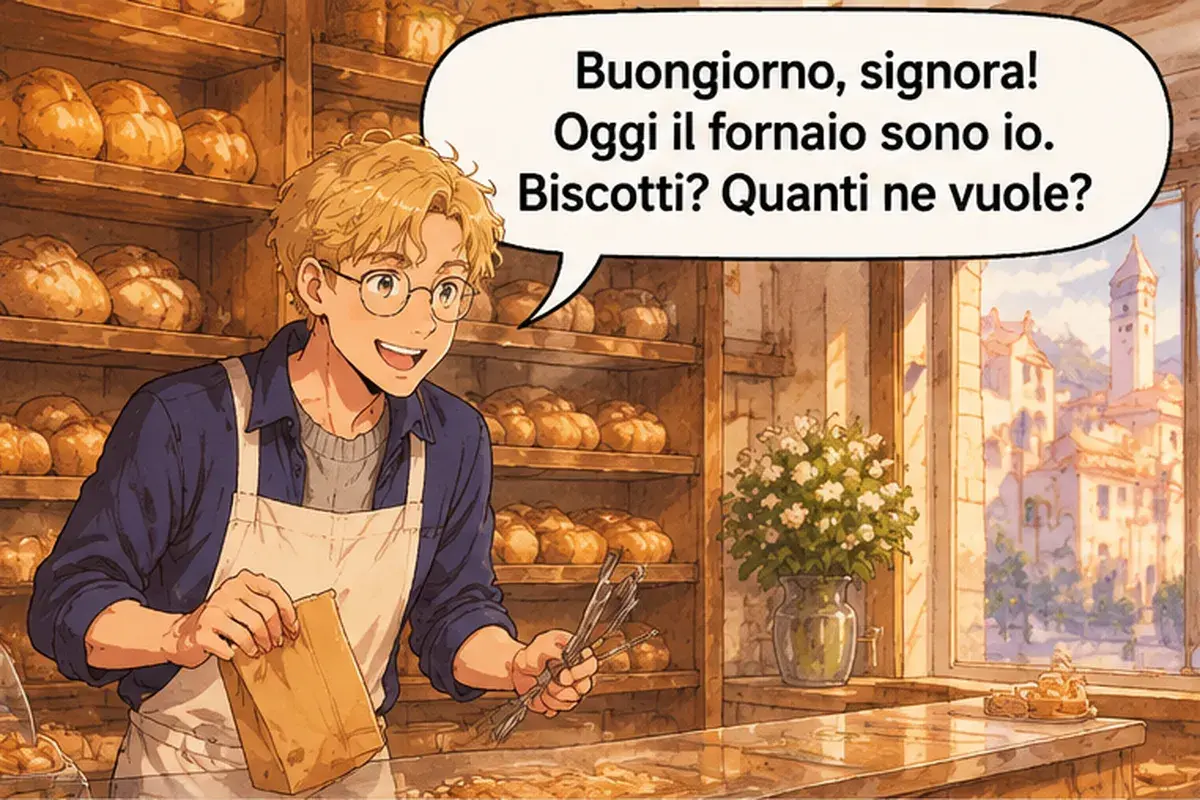
- Misha
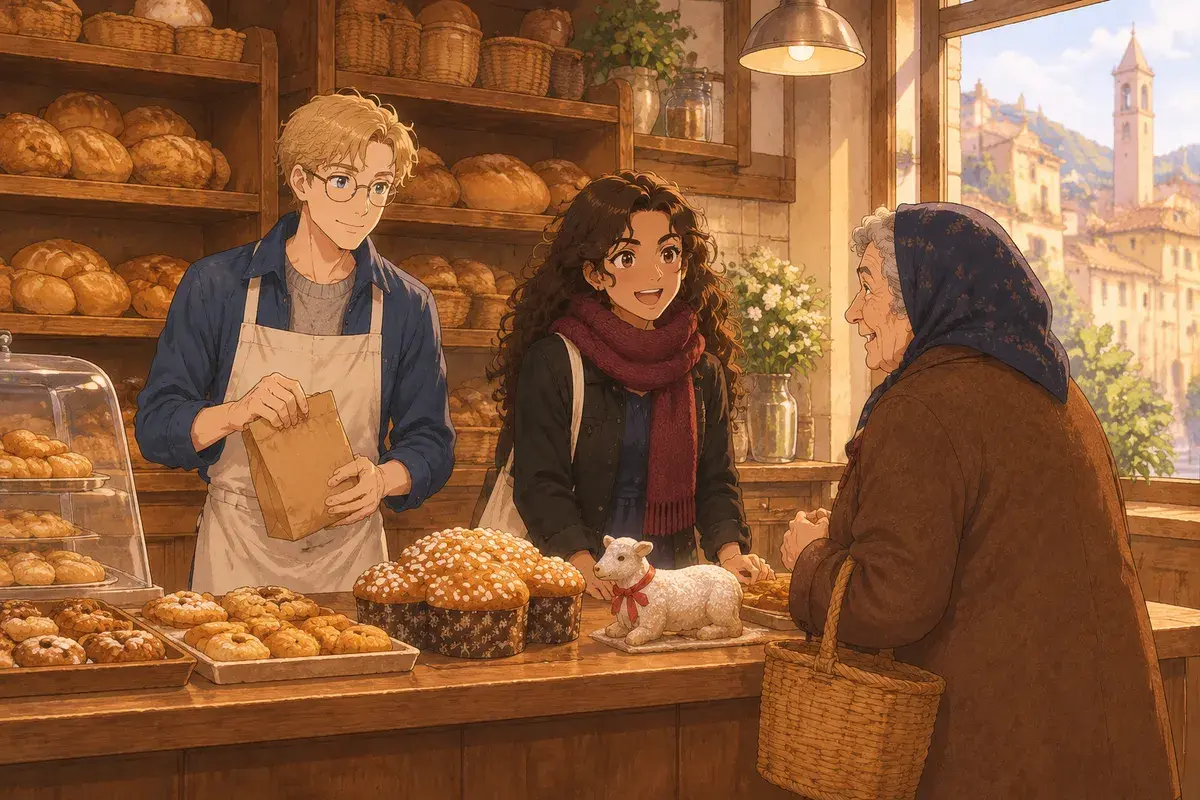
Buongiorno, signora! Oggi il fornaio sono io. Biscotti? Quanti ne vuole?
Good morning, ma'am! Today I'm the baker. Cookies? How many do you want? (formal)
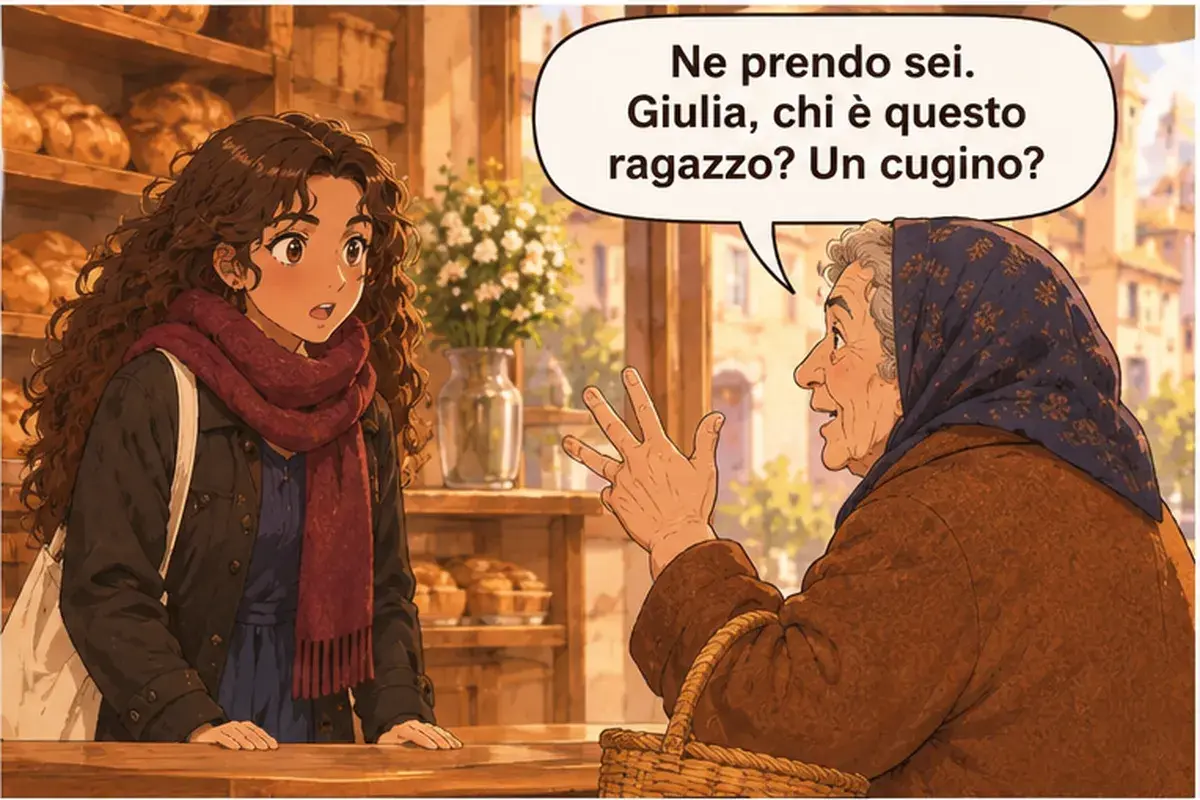
- Signora
Ne prendo sei. Giulia, chi è questo ragazzo? Un cugino?
I'll take six. Giulia, who's this young man? A cousin?
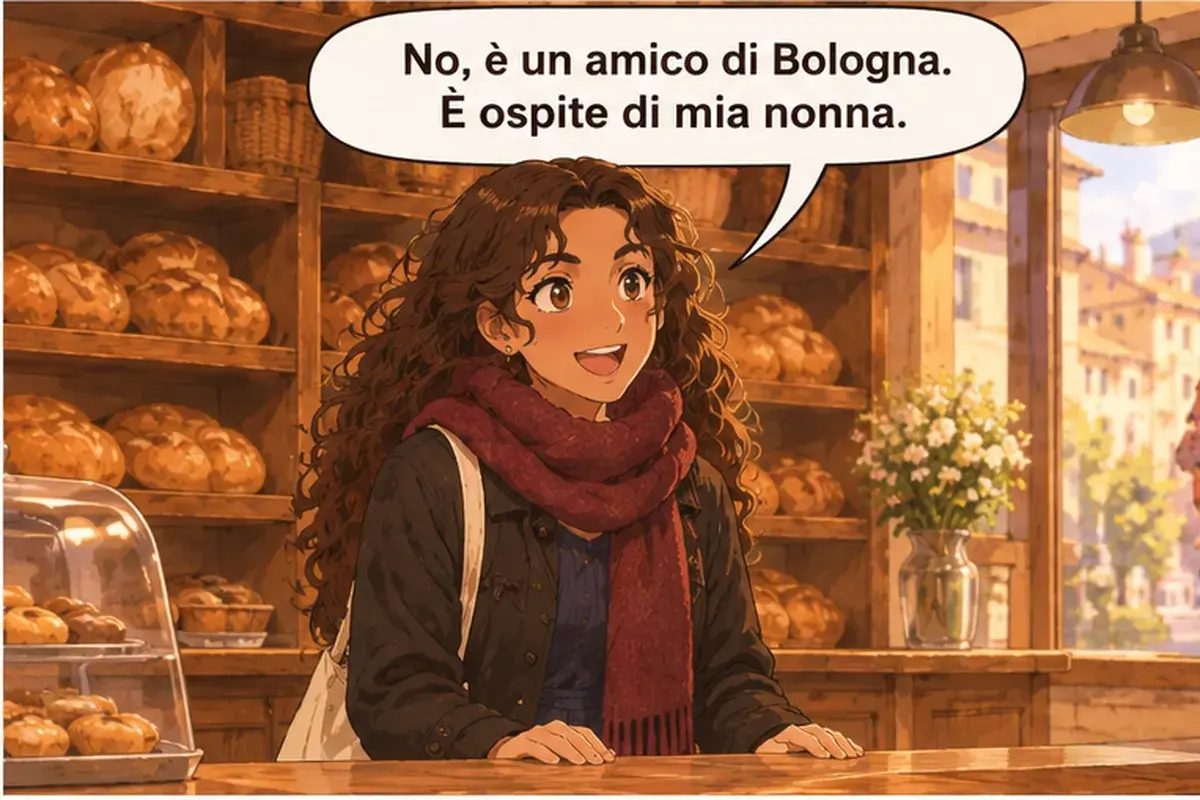
- Giulia
No, è un amico di Bologna. È ospite di mia nonna.
No, he's a friend from Bologna. He's my grandma's guest.
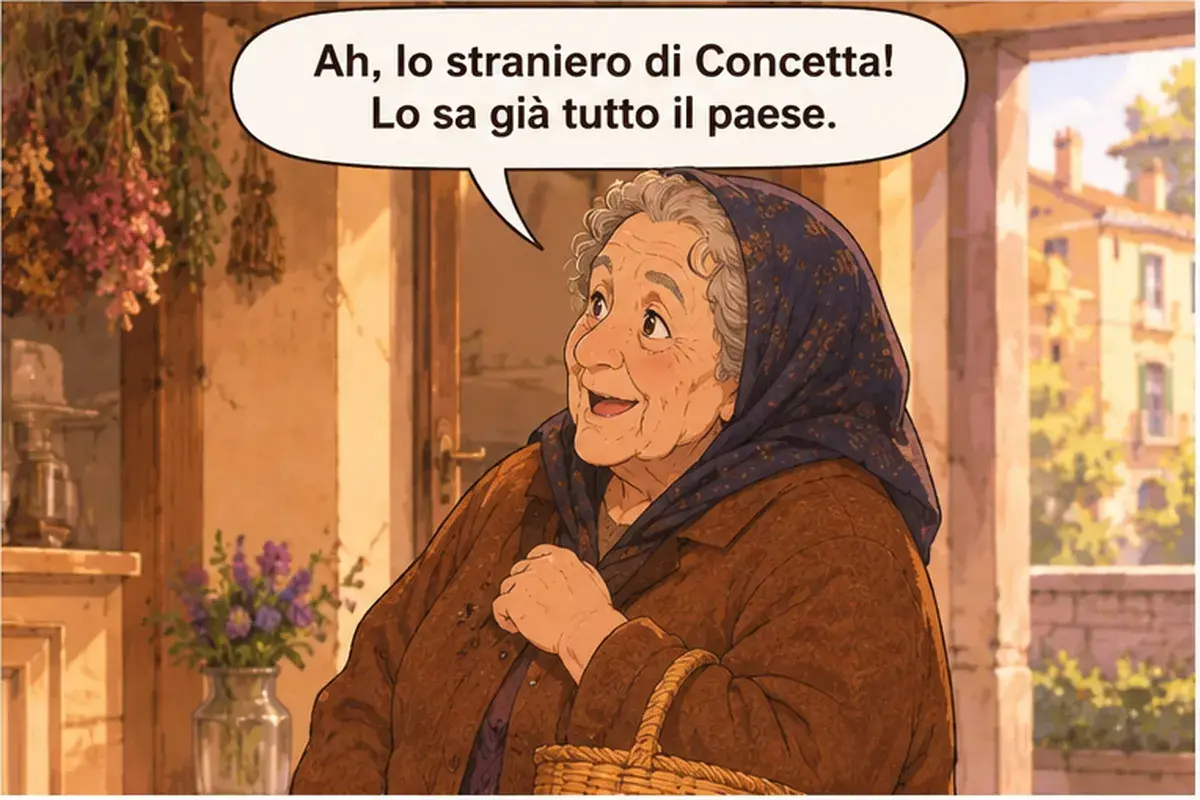
- Signora
Ah, lo straniero di Concetta! Lo sa già tutto il paese.
Ah, Concetta's foreigner! The whole town already knows.
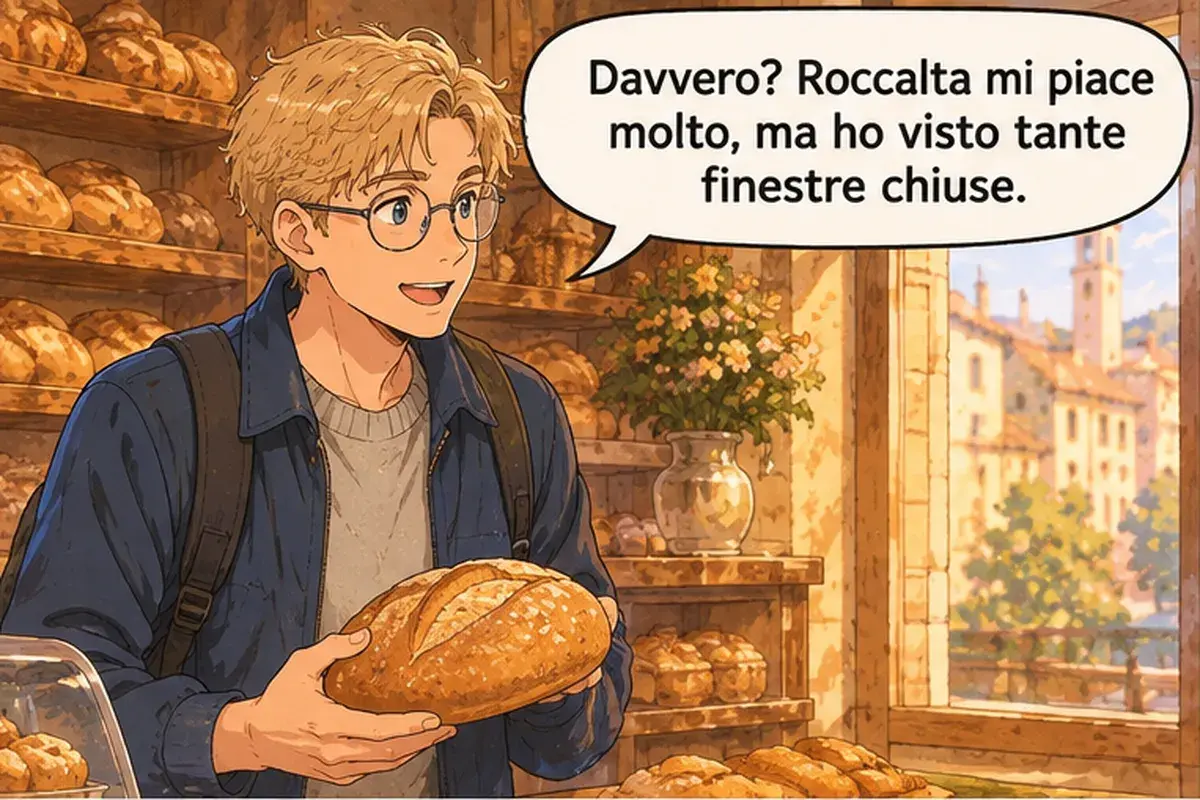
- Misha
Davvero? Roccalta mi piace molto, ma ho visto tante finestre chiuse.
Really? I really like Roccalta, but I saw a lot of closed windows.
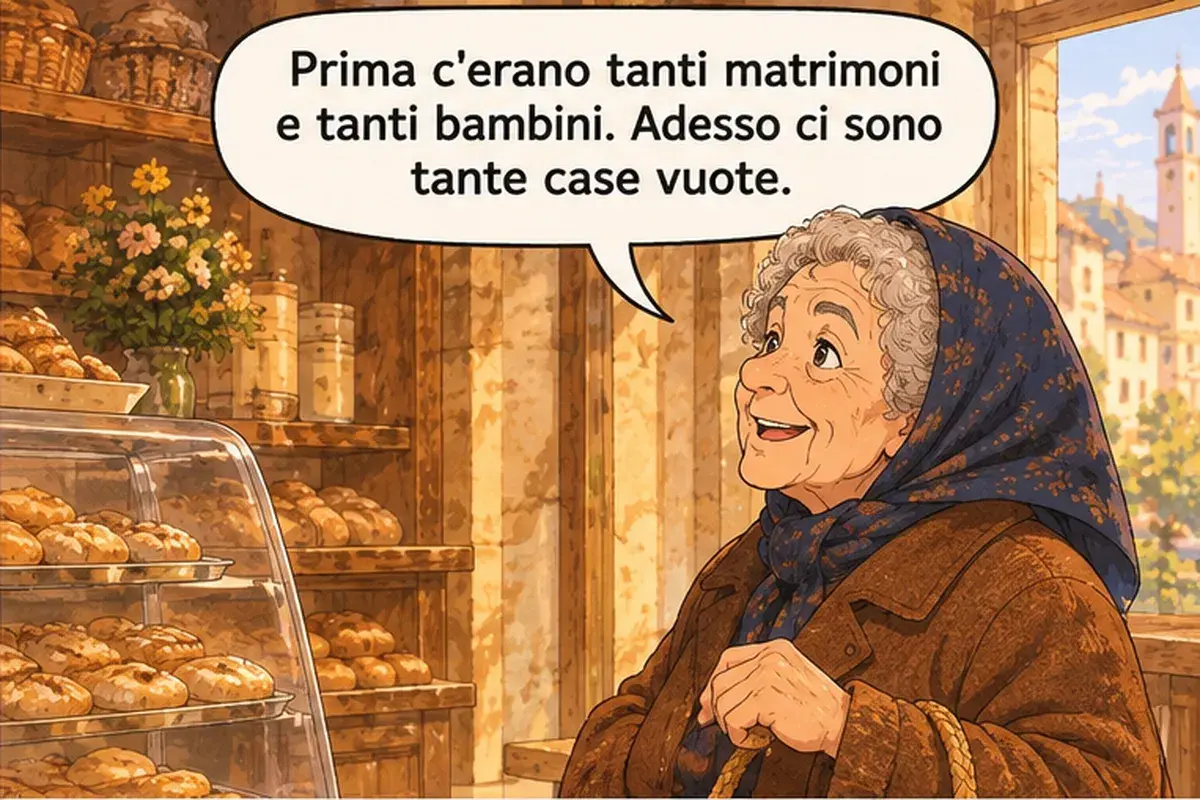
- Signora
Prima c'erano tanti matrimoni e tanti bambini. Adesso ci sono tante case vuote.
There used to be lots of weddings and lots of children. Now there are lots of empty houses.
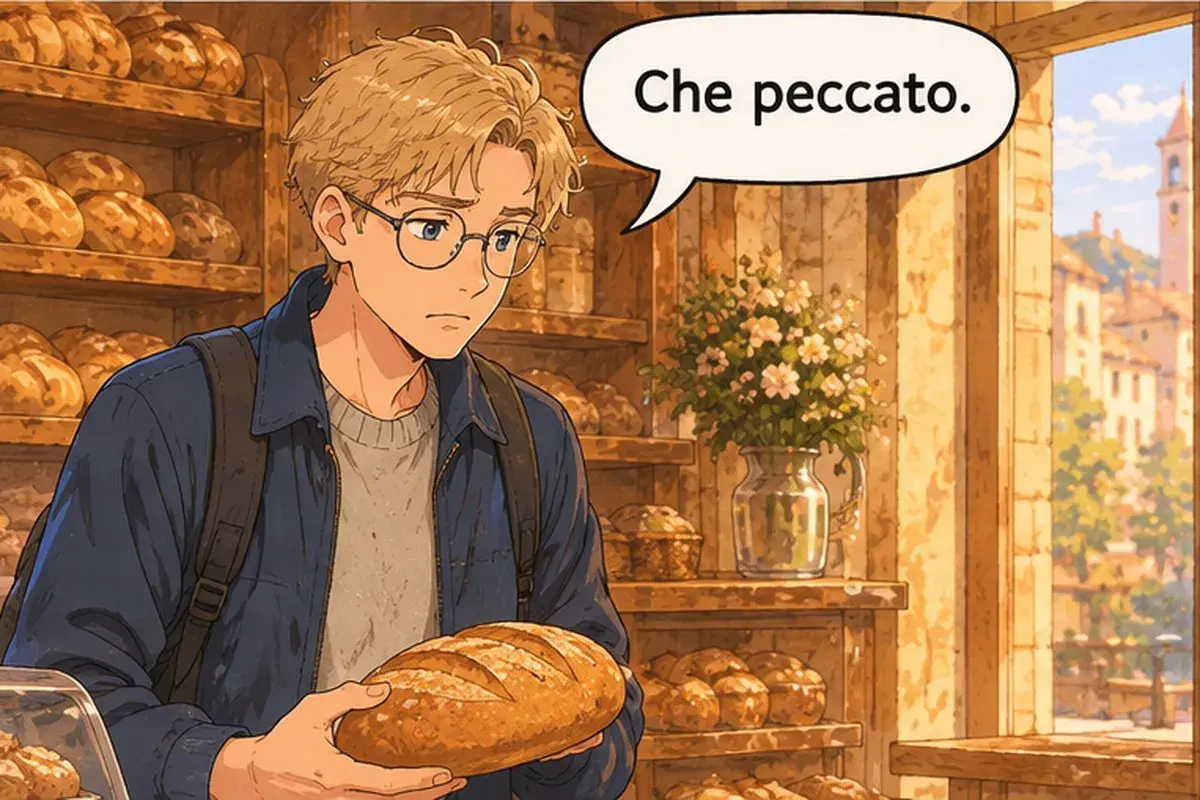
- Misha
Che peccato.
What a shame.
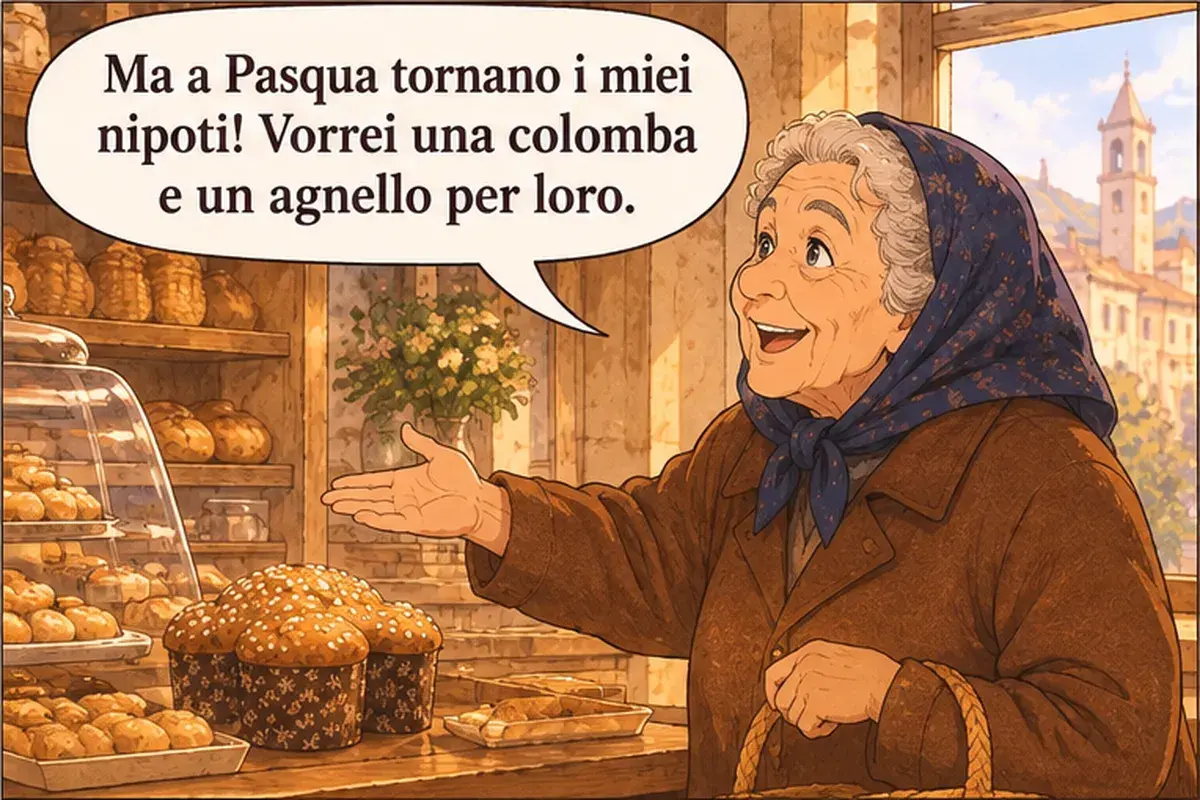
- Signora
Ma a Pasqua tornano i miei nipoti! Vorrei una colomba e un agnello per loro.
But at Easter my grandchildren are coming back! I'd like a colomba and a lamb for them.
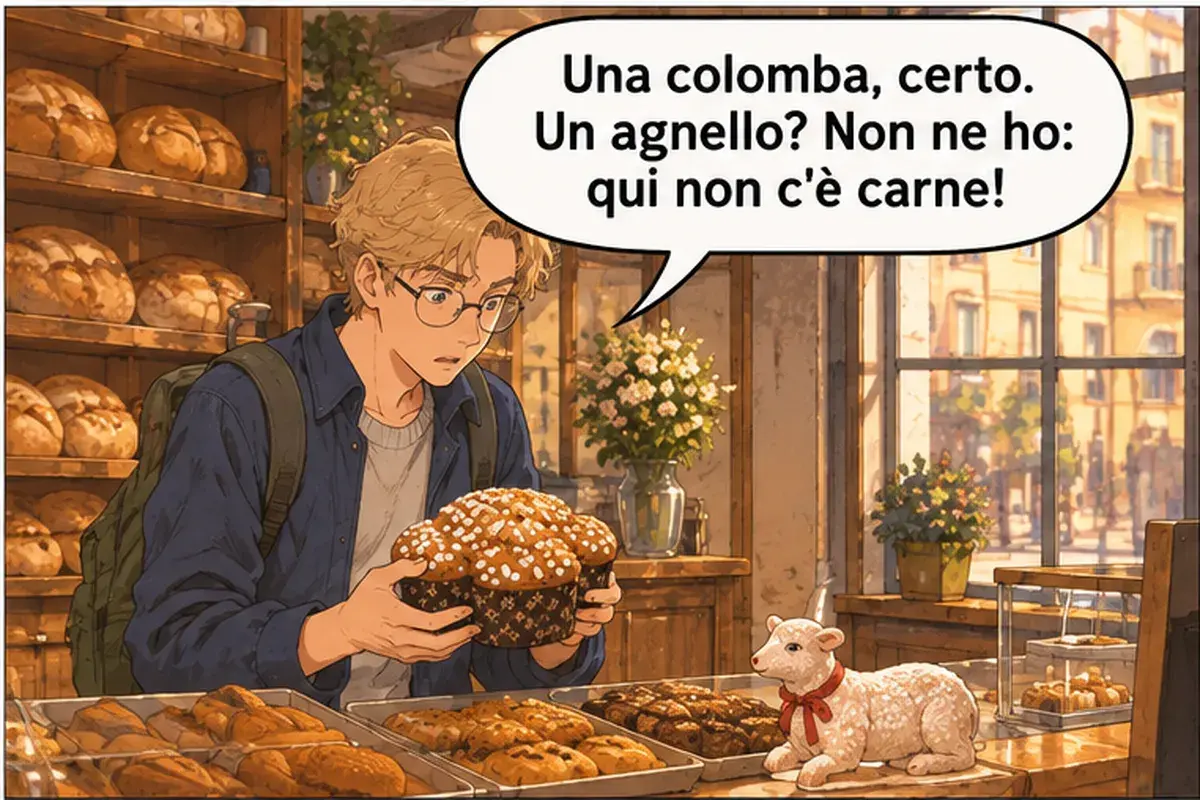
- Misha
Una colomba, certo. Un agnello? Non ne ho: qui non c'è carne!
A colomba, of course. A lamb? I don't have any: there's no meat here!
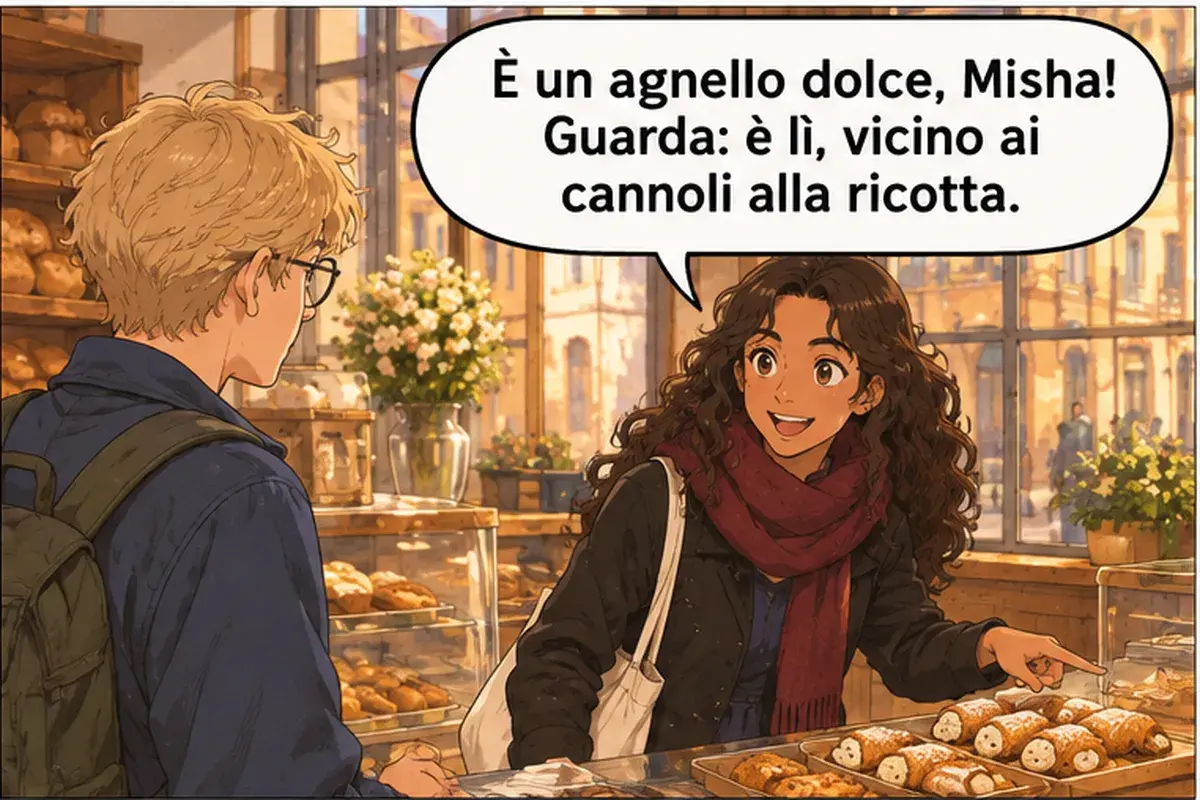
- Giulia
È un agnello dolce, Misha! Guarda: è lì, vicino ai cannoli alla ricotta.
It's a sweet lamb, Misha! Look: it's there, next to the ricotta cannoli.
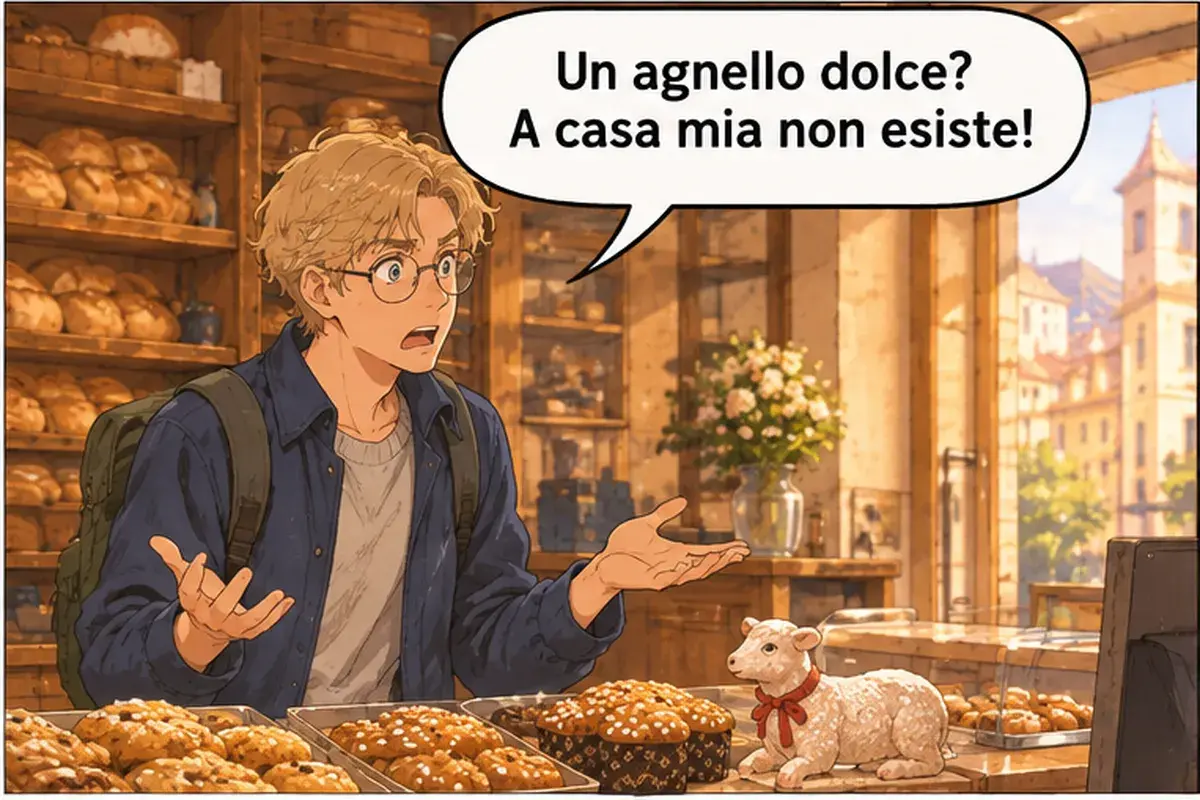
- Misha
Un agnello dolce? A casa mia non esiste!
A sweet lamb? Back home that doesn't exist!
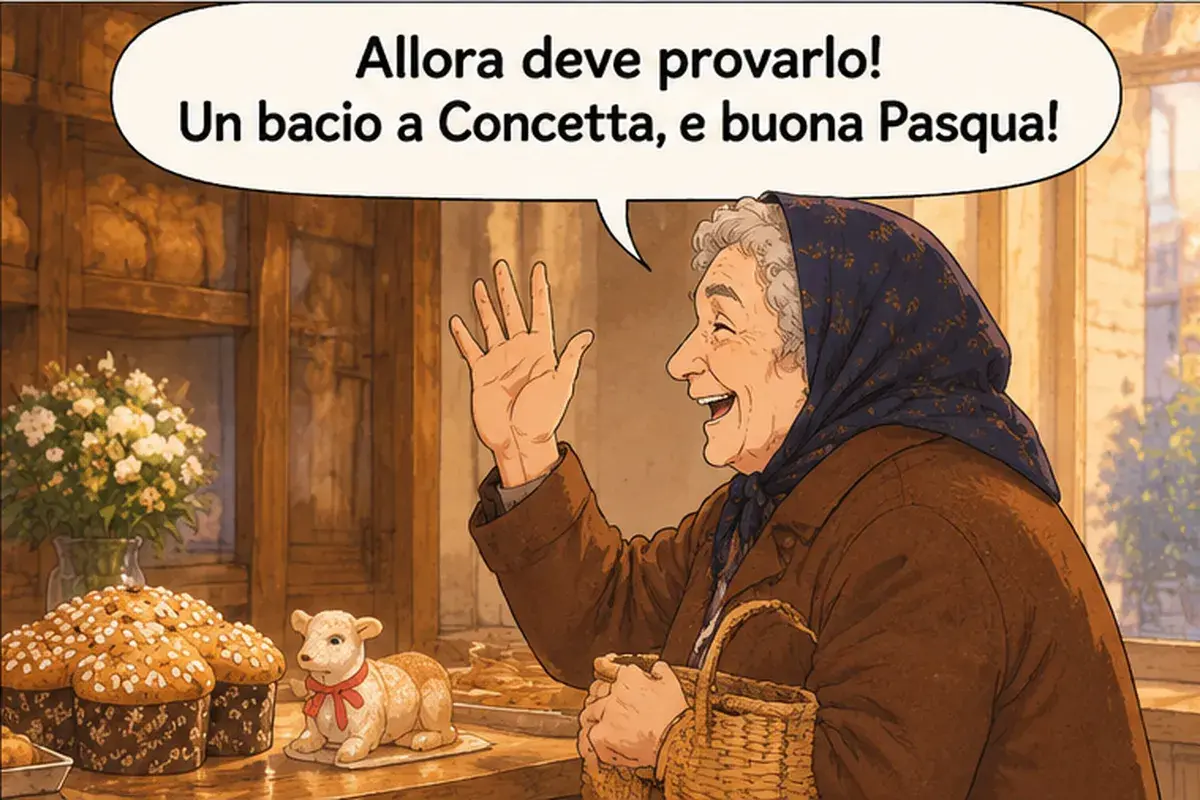
- Signora
Allora deve provarlo! Un bacio a Concetta, e buona Pasqua!
Then you have to try it (formal)! A kiss to Concetta, and happy Easter!
Grammar for this text
- Quanti ne vuole? and Ne prendo sei — ne means "of them" (here, of the cookies): we already know what she's buying, so the word isn't repeated. English often just drops it: "I'll take six." In non ne ho it means "I don't have any". For now ne comes only in shops, about quantity; the rule comes at B1. Misha uses Lei with the customer: the verb is the same as for "she".
- Oggi il fornaio sono io — "today I'm the baker": io at the end of the sentence stresses who. The same in Lo sa già tutto il paese: lo means "it" (not an article), and the subject tutto il paese comes at the end. paese here means a small town.
- Vorrei del pane e dei biscotti — del pane, dei biscotti — some bread, some cookies: the partitive article (unit grammar). vorrei is the polite "I'd like" (A1).
- gli dico — "I'll tell him" (gli means "to him"; a ready-made phrase, the rule comes at B1). Italian uses the present tense here, English says "I'll tell".
- Prima c'erano tanti matrimoni — prima means "before, in the past" (unit 7), c'erano — there were (unit 5). In i miei nipoti (my grandchildren) family words in the plural take the article (unit grammar); nipote is a grandchild and also a nephew or niece.
- È un agnello dolce — in Sicily at Easter people make a sweet lamb out of marzipan: Misha thinks it's meat, and that's the joke.
- Prendi un'arancina — the tu imperative of prendere (unit 13); un' before a feminine word is short for una.
Words and grammar of the unit: Meet a friend's family.
Learn the words from the texts with flashcards
In the app, you can tap any word in a text to see its translation, forms and examples, and new words stick with flashcards. 15 minutes a day.
Start for freeEverything is open for free. No card needed to sign up.