
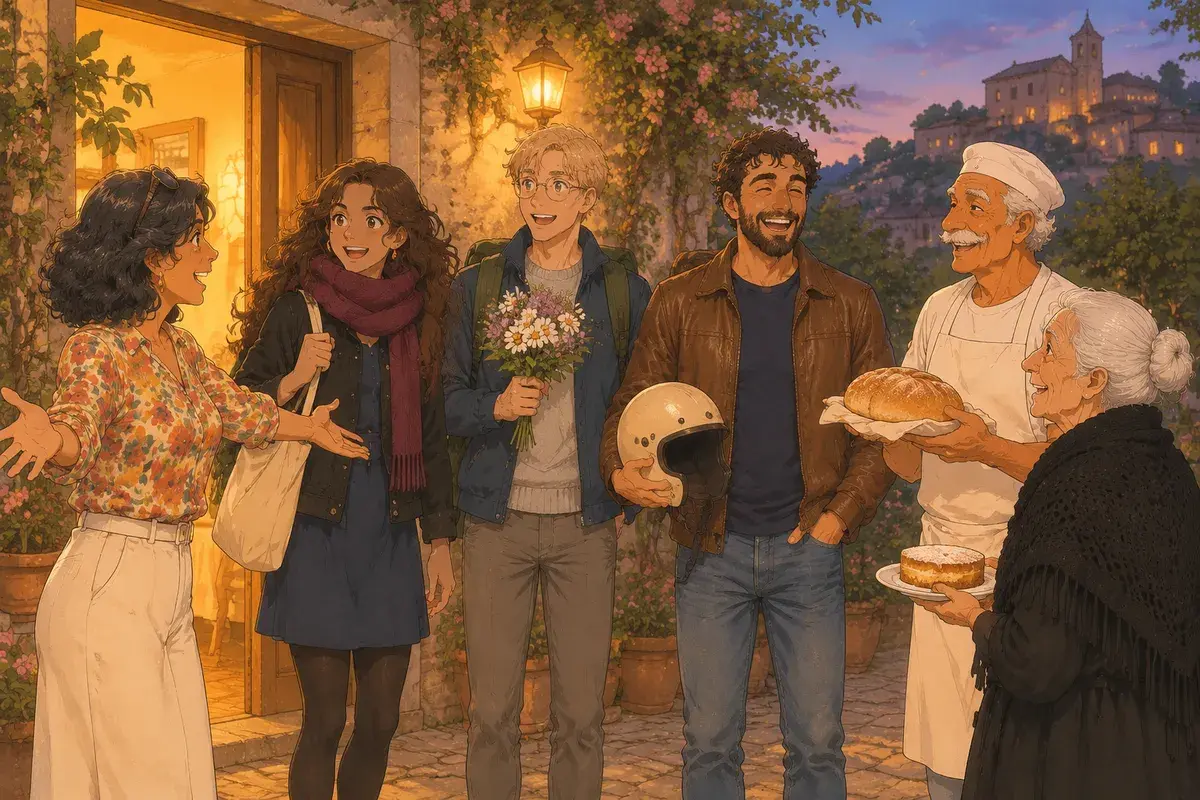
Italian dialogue with translation · A2 · 15 lines
Sei troppo magro! You're too thin!
Comic · 15 panels
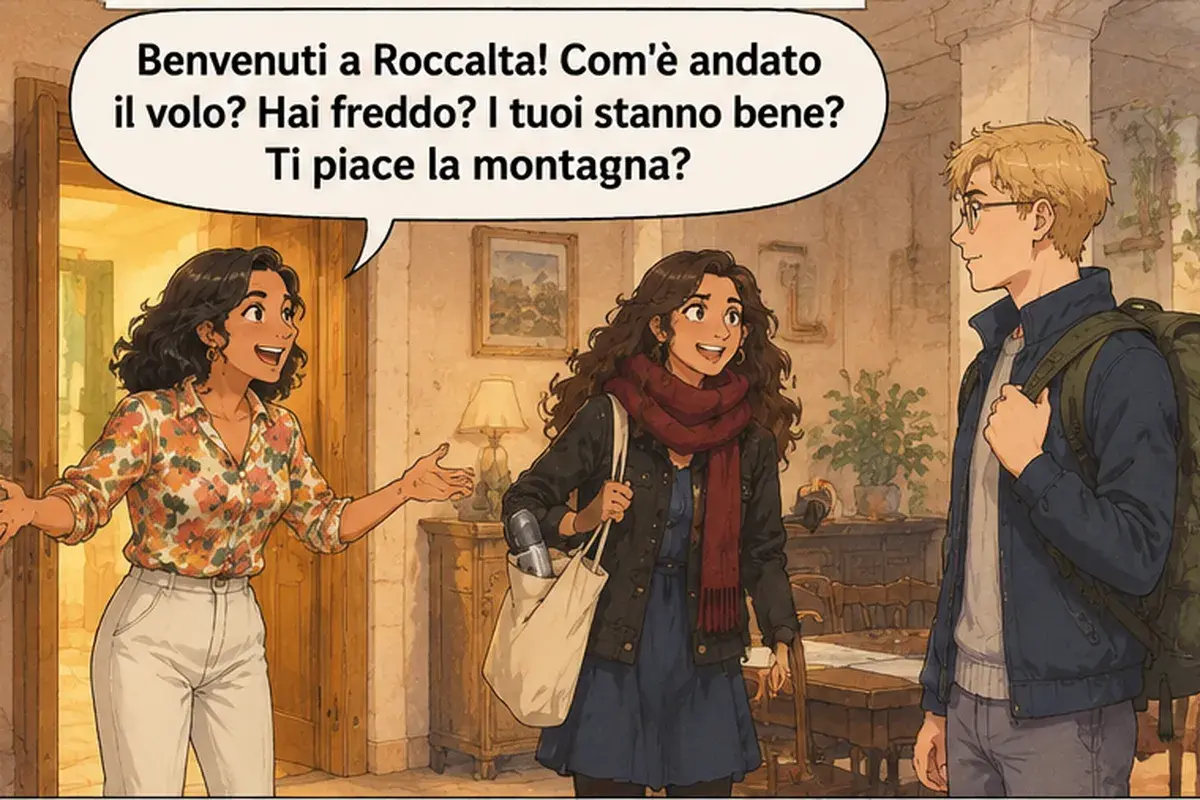
- Rosalia
Benvenuti a Roccalta! Com'è andato il volo? Hai freddo? I tuoi stanno bene? Ti piace la montagna?
Welcome to Roccalta (to several people)! How was the flight? Are you cold? Are your parents well? Do you like the mountains?
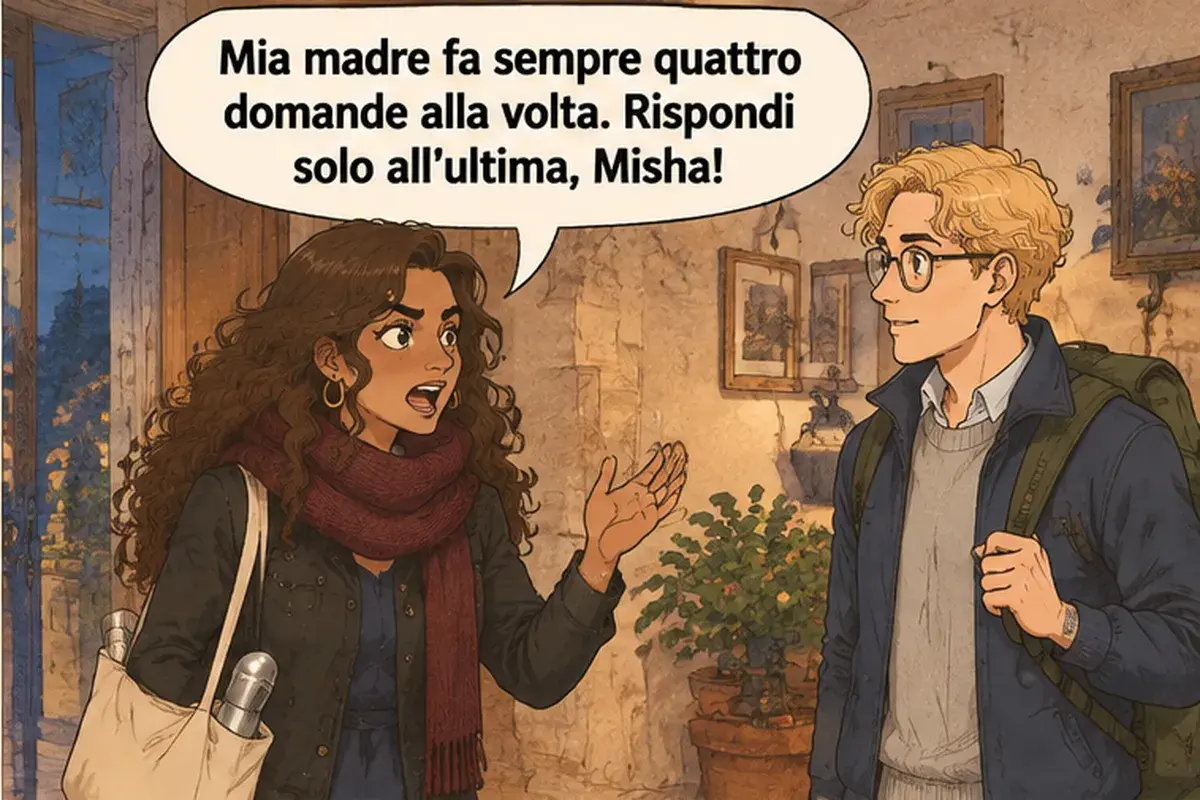
- Giulia
Mia madre fa sempre quattro domande alla volta. Rispondi solo all'ultima, Misha!
My mother always asks four questions at a time. Only answer the last one, Misha!
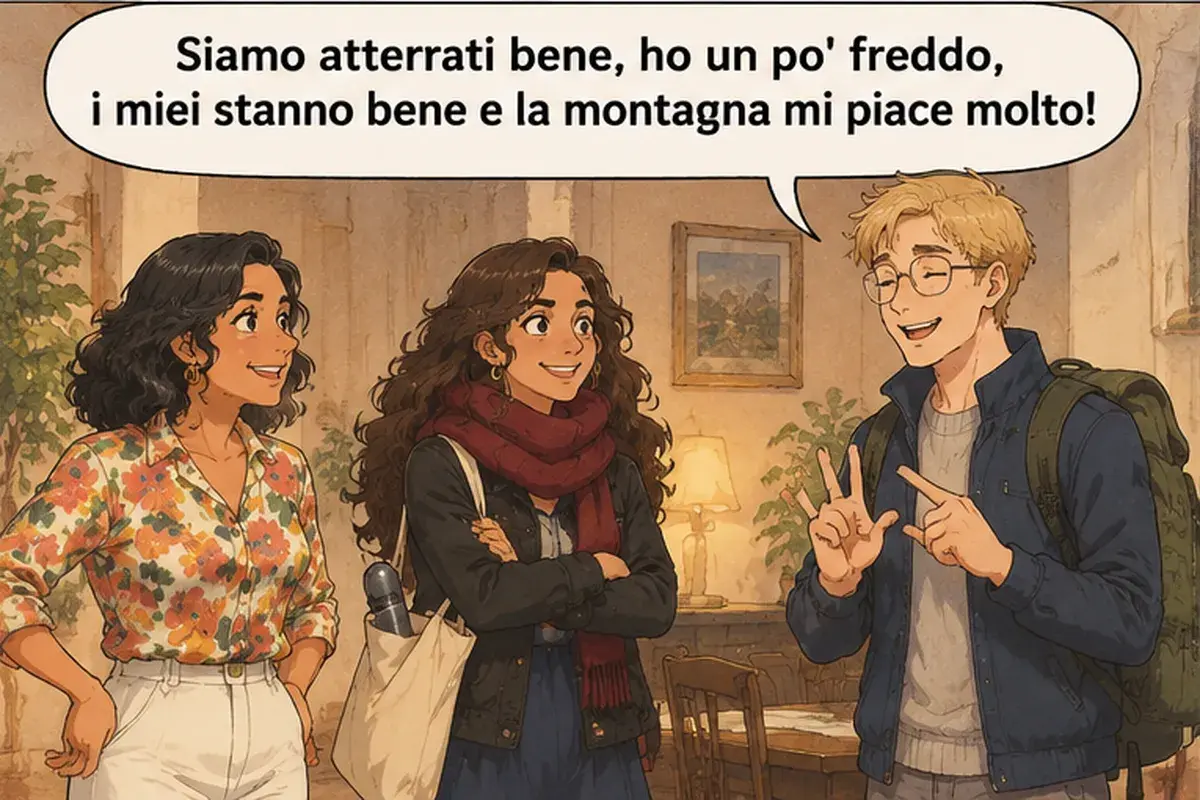
- Misha
Siamo atterrati bene, ho un po' freddo, i miei stanno bene e la montagna mi piace molto!
We landed fine, I'm a bit cold, my parents are well, and I really like the mountains!
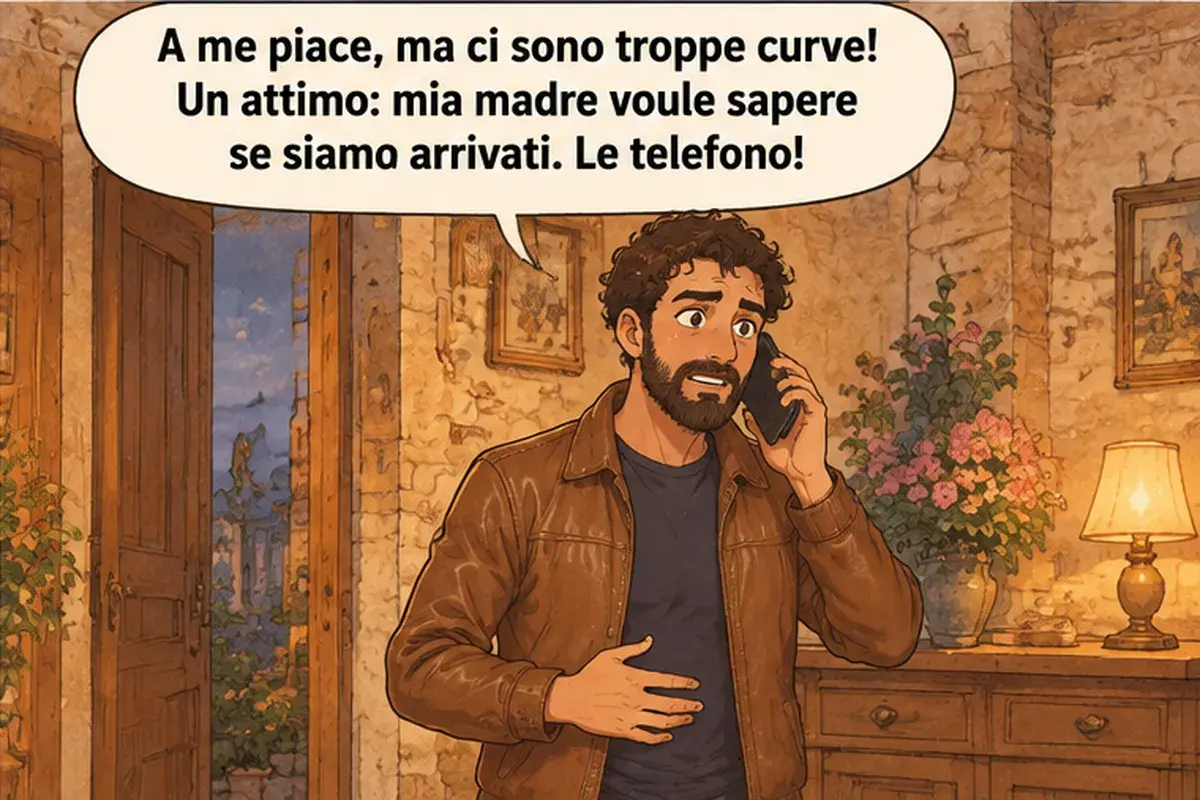
- Luca
A me piace, ma ci sono troppe curve! Un attimo: mia madre vuole sapere se siamo arrivati. Le telefono!
I like it, but there are too many curves! Just a moment: my mother wants to know if we've arrived. I'll phone her!
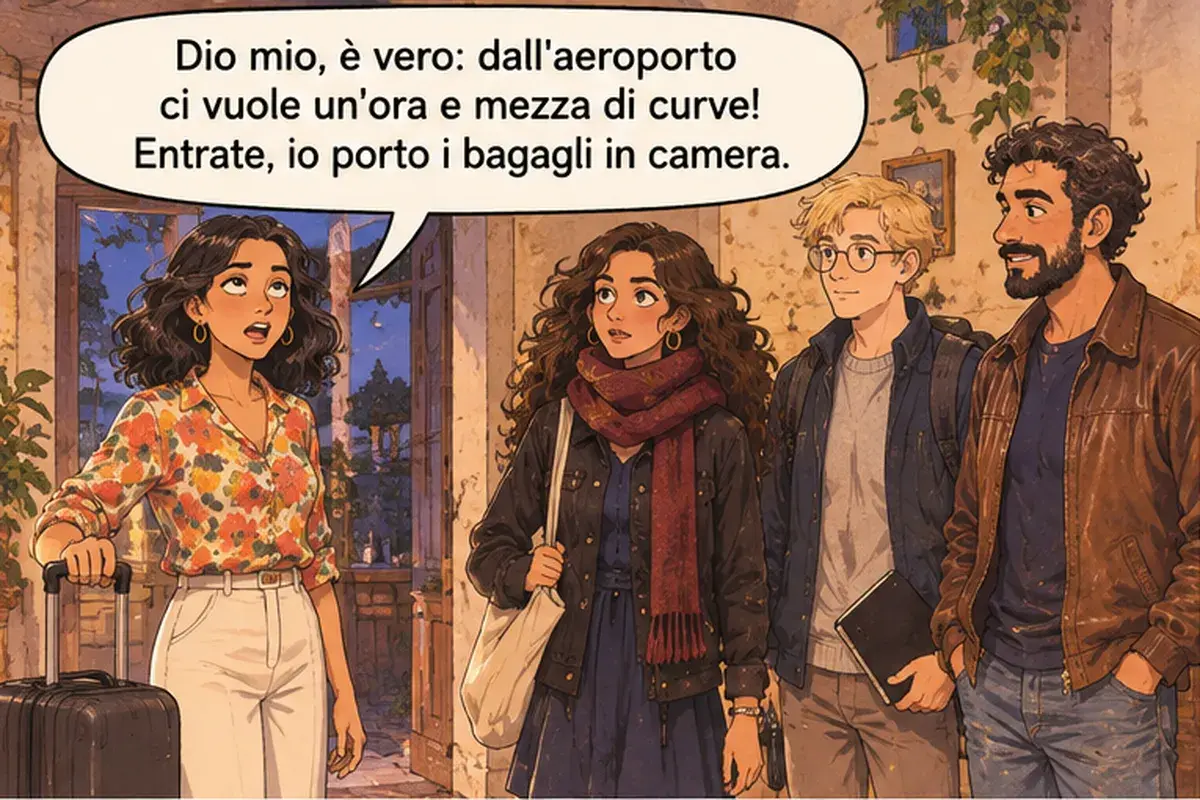
- Rosalia
Dio mio, è vero: dall'aeroporto ci vuole un'ora e mezza di curve! Entrate, io porto i bagagli in camera.
My God, it's true: from the airport it takes an hour and a half of curves! Come in (to several people), I'll take the luggage to the bedroom.
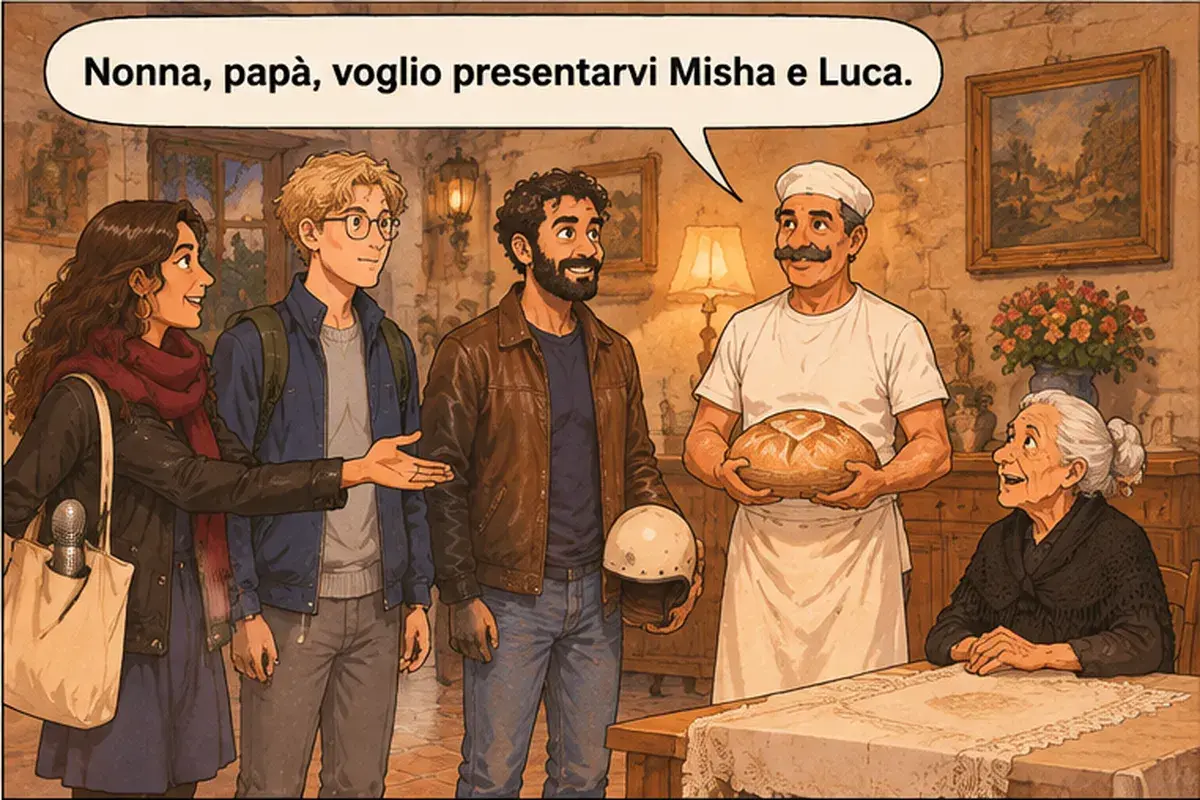
- Giulia
Nonna, papà, voglio presentarvi Misha e Luca.
Grandma, Dad, I want to introduce Misha and Luca to you.
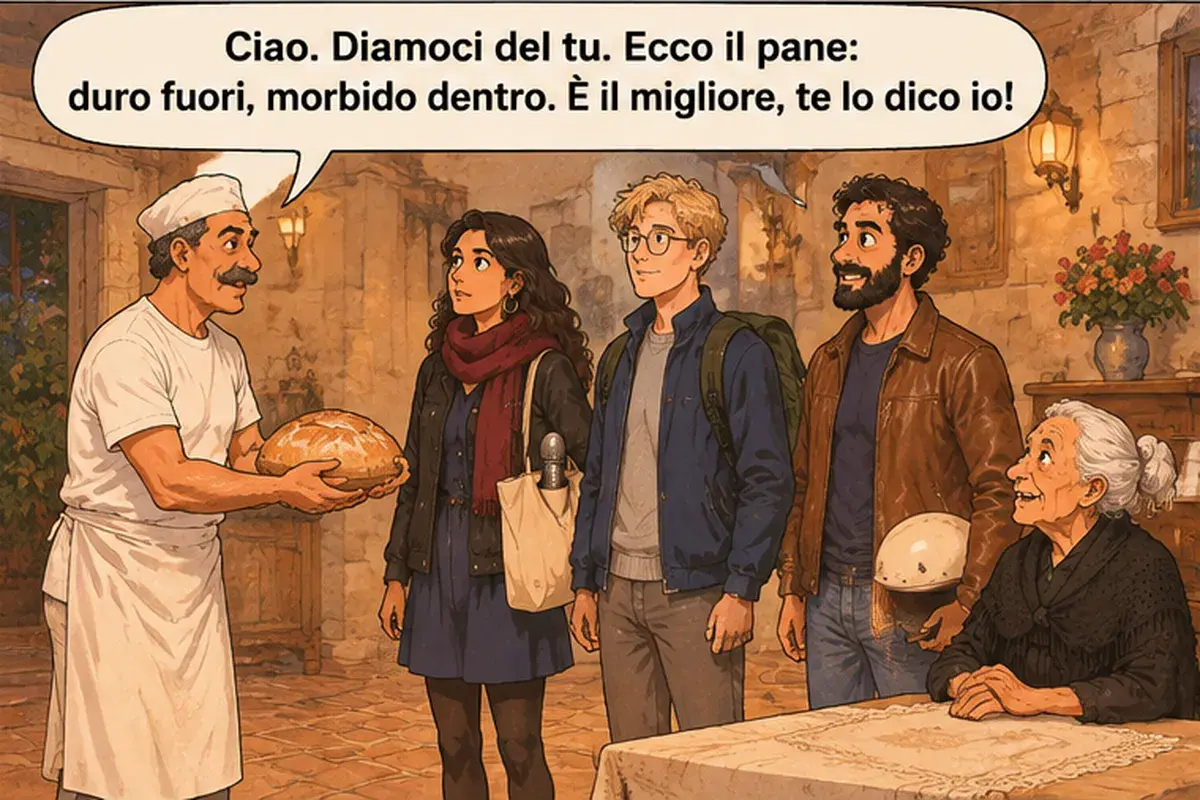
- Totò
Ciao. Diamoci del tu. Ecco il pane: duro fuori, morbido dentro. È il migliore, te lo dico io!
Hi. Let's use tu with each other. Here's the bread: hard on the outside, soft on the inside. It's the best, I'm telling you!
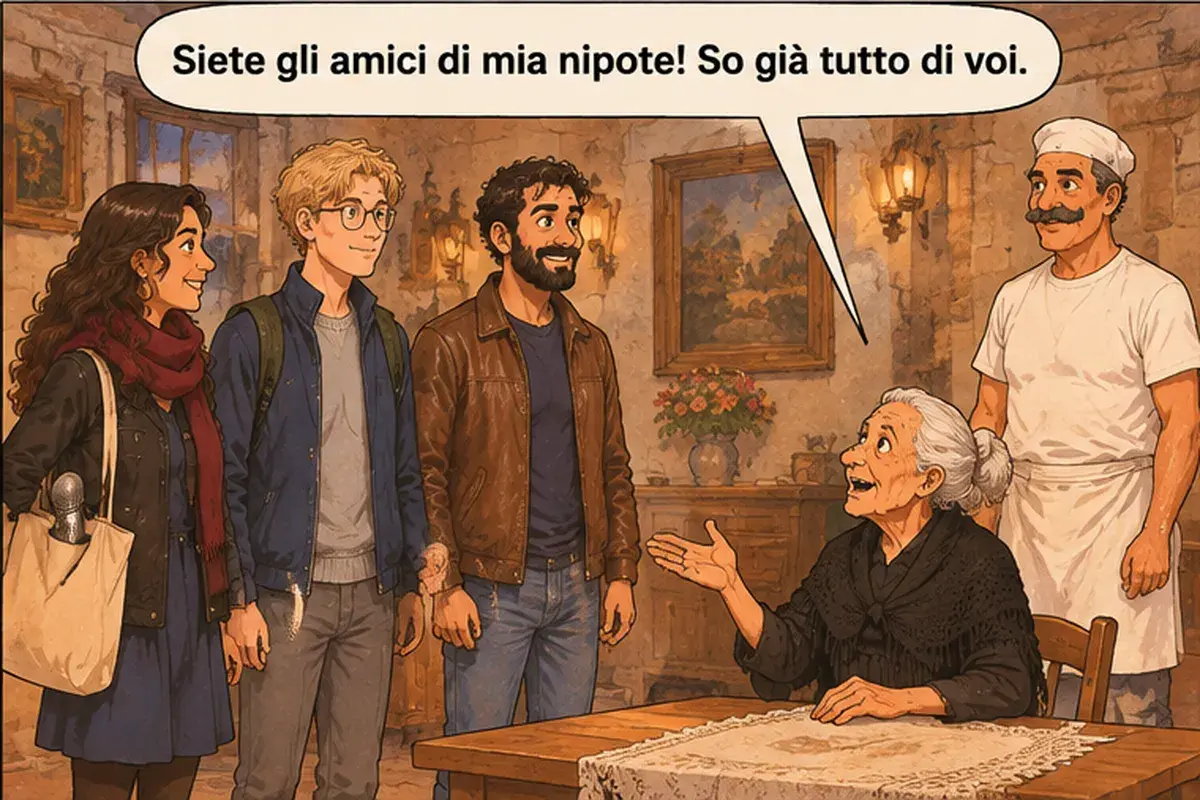
- Nonna Concetta
Siete gli amici di mia nipote! So già tutto di voi.
You're my granddaughter's friends! I already know all about you.
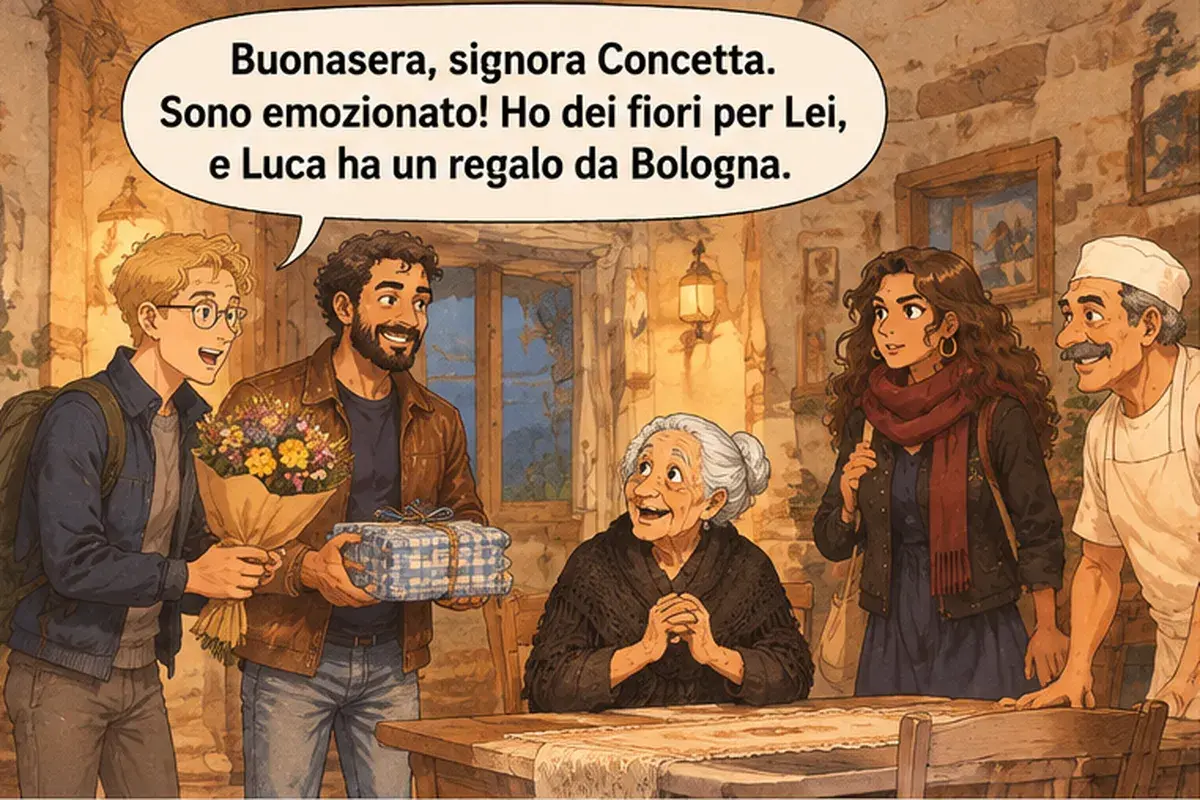
- Misha
Buonasera, signora Concetta. Sono emozionato! Ho dei fiori per Lei, e Luca ha un regalo da Bologna.
Good evening, Signora Concetta. I'm excited (man speaking)! I have some flowers for you (formal), and Luca has a present from Bologna.
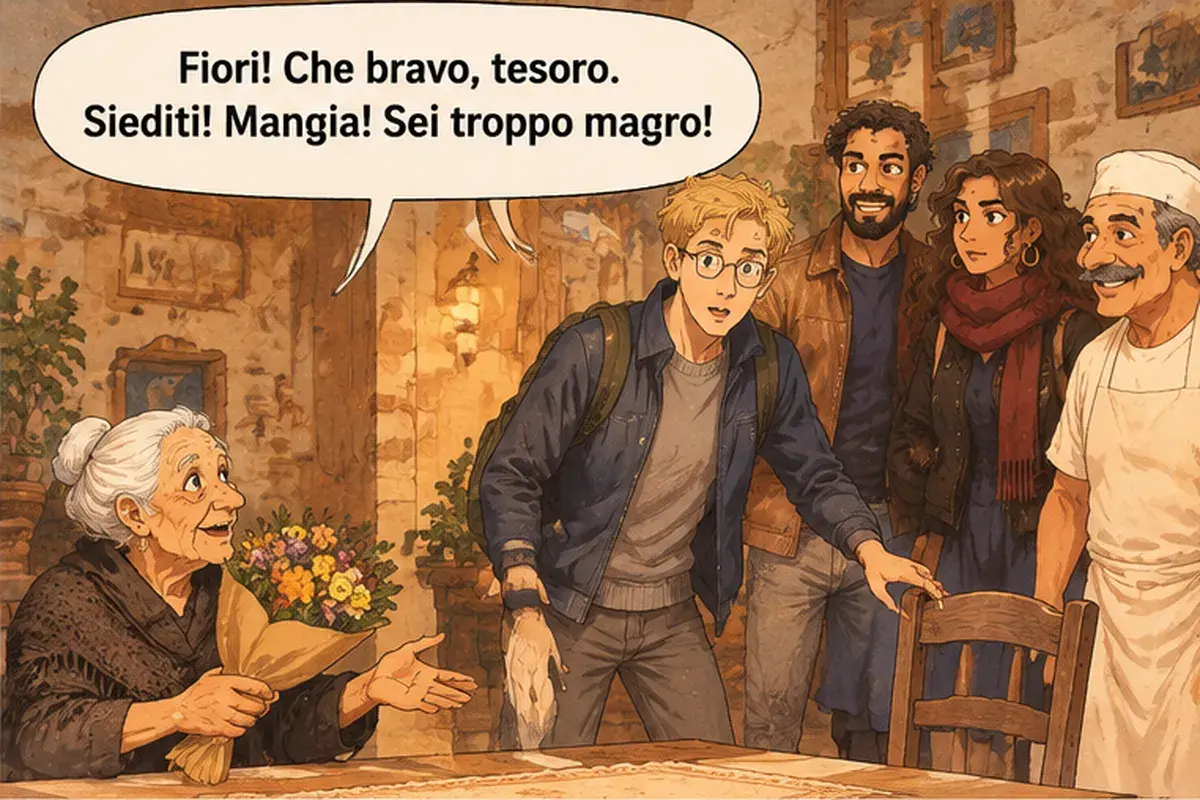
- Nonna Concetta
Fiori! Che bravo, tesoro. Siediti! Mangia! Sei troppo magro!
Flowers! Well done, sweetheart. Sit down! Eat! You're too thin! (to a man)
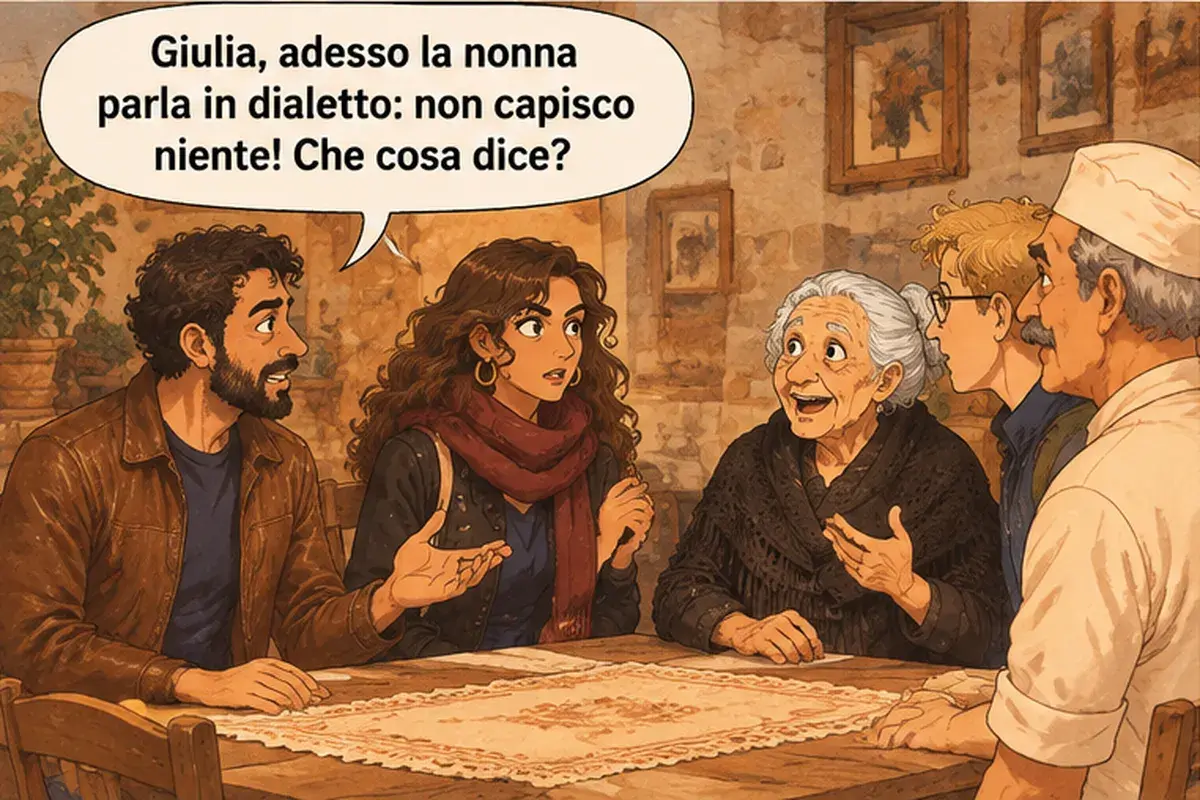
- Luca
Giulia, adesso la nonna parla in dialetto: non capisco niente! Che cosa dice?
Giulia, now Grandma is speaking dialect: I don't understand anything! What is she saying?
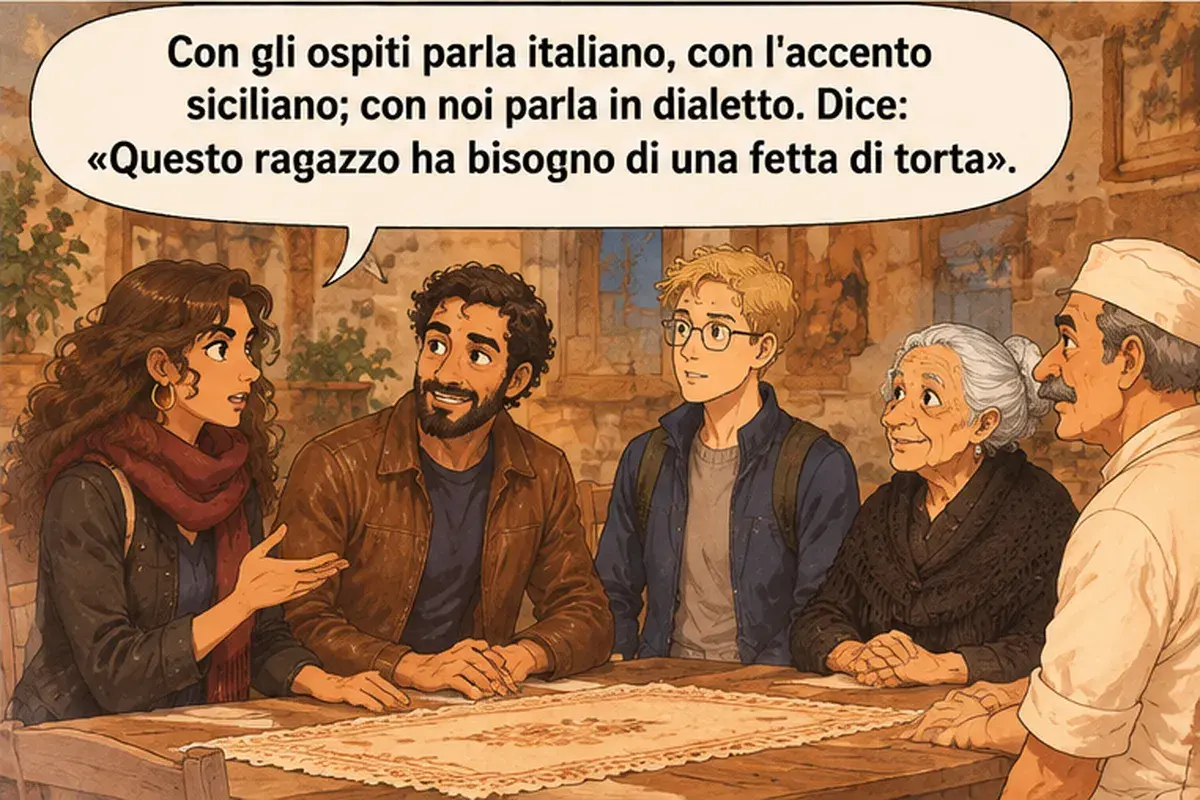
- Giulia
Con gli ospiti parla italiano, con l'accento siciliano; con noi parla in dialetto. Dice: «Questo ragazzo ha bisogno di una fetta di torta».
With guests she speaks Italian, with a Sicilian accent; with us she speaks dialect. She's saying: "This boy needs a slice of cake."
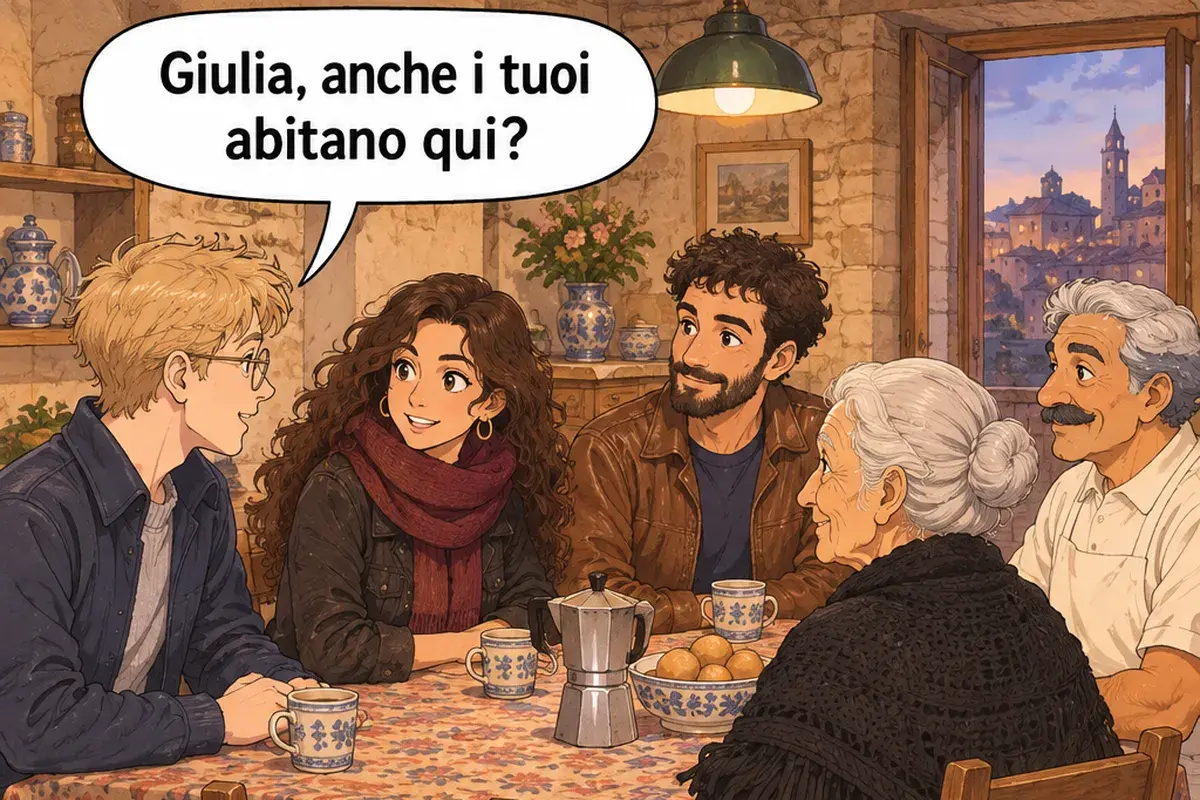
- Misha
Giulia, anche i tuoi abitano qui?
Giulia, do your parents live here too?
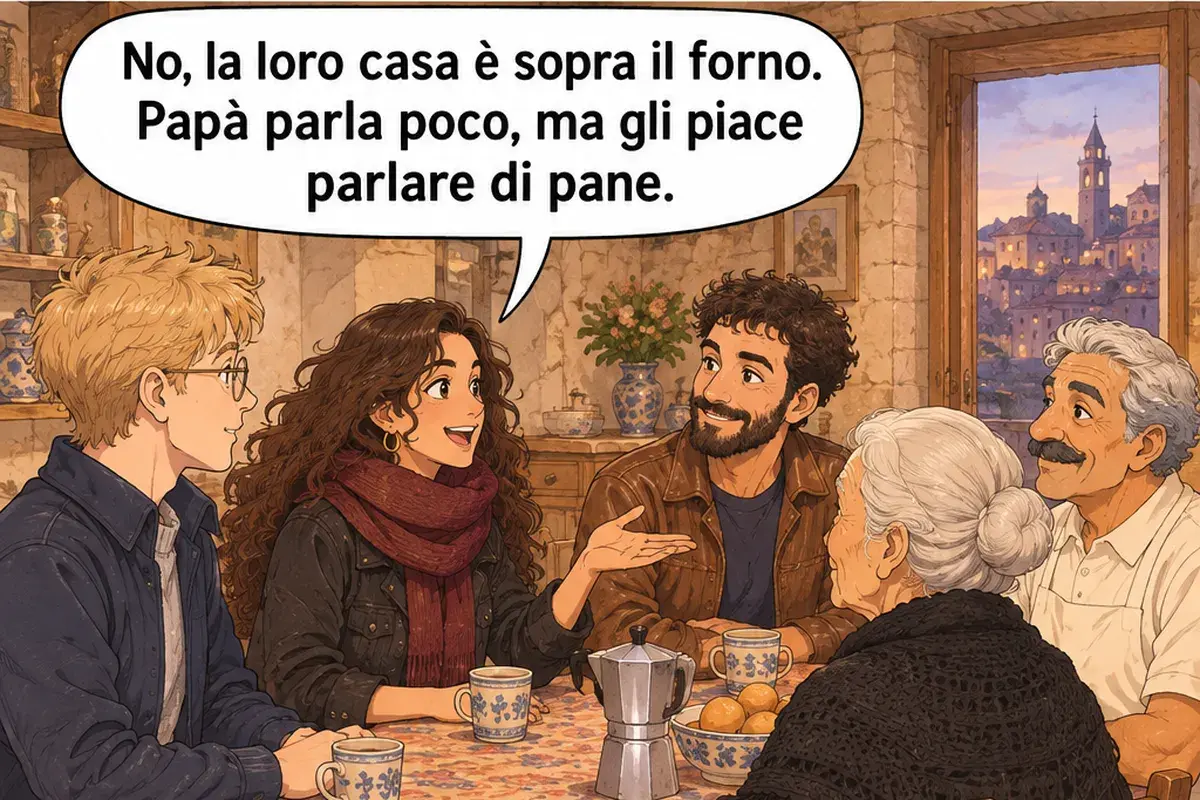
- Giulia
No, la loro casa è sopra il forno. Papà parla poco, ma gli piace parlare di pane.
No, their house is above the bakery. Dad doesn't talk much, but he likes talking about bread.
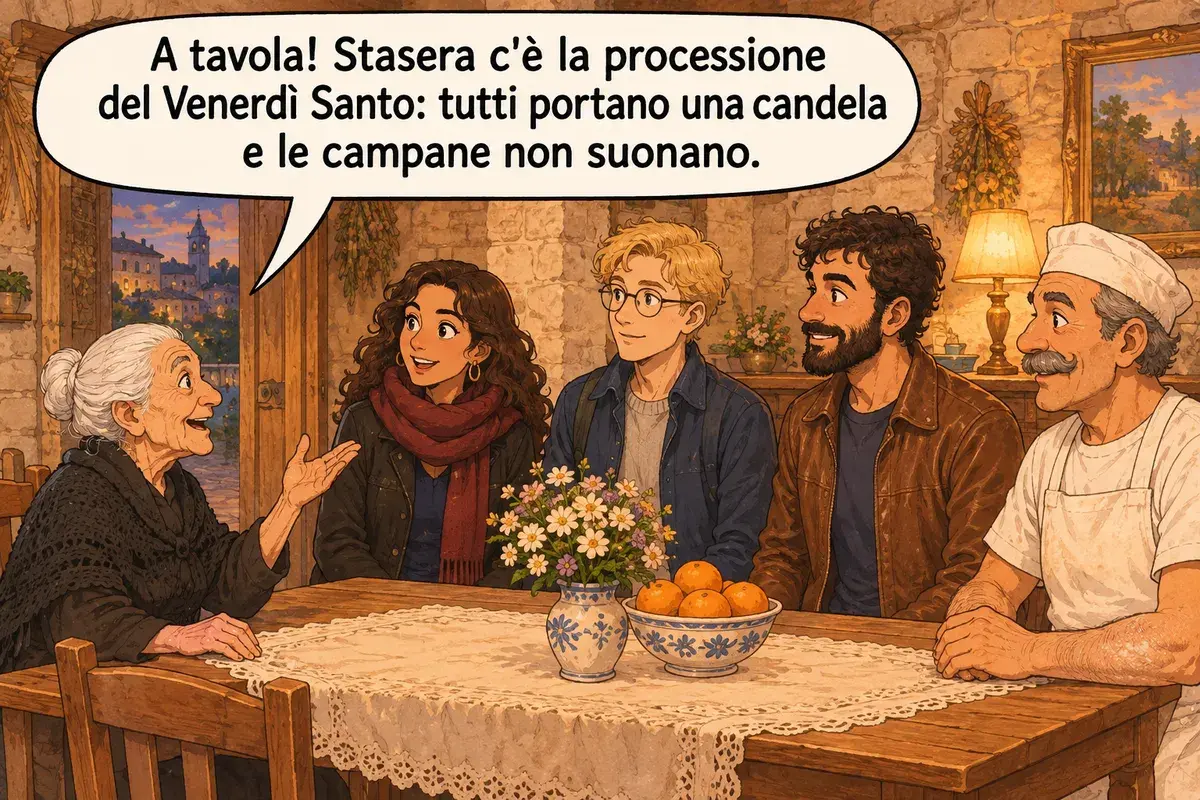
- Nonna Concetta
A tavola! Stasera c'è la processione del Venerdì Santo: tutti portano una candela e le campane non suonano.
Come and eat! Tonight there's the Good Friday procession: everyone carries a candle and the bells don't ring.
Grammar for this text
- Diamoci del tu — "let's use tu with each other": diamoci is the noi form of dare (to give) + ci (each other). You met it in unit 13; Rosalia already uses tu with the guests, and now Totò switches to tu too.
- Siediti! Mangia! — the tu imperative, "sit down! eat!": siediti comes from sedersi (to sit down) with -ti (yourself) on the end; mangia comes from mangiare. The same goes for rispondi (answer) and entrate (come in, to several people). The rule is in unit 13.
- Ho dei fiori per Lei — dei fiori means "some flowers": the partitive article (unit grammar). Lei is the formal "you": Misha uses Lei with Grandma, and she uses tu with him.
- la loro casa and i tuoi — loro means "their" and always takes the article; i tuoi means "your parents", like i miei in Misha's answer (unit grammar).
- Le telefono! and gli piace parlare di pane — le means "to her" (Luca's mother), gli means "to him" (Totò). Ready-made phrases; the rule comes at B1.
- È il migliore, te lo dico io! — "I'm telling you": te lo is two pronouns together (to you + it); the rule comes at B1. migliore — better, il migliore — the best (unit 3).
- Dall'aeroporto ci vuole un'ora e mezza — ci vuole means "it takes" (about time, unit 7); mezza means "half".
Words and grammar of the unit: Meet a friend's family.
Learn the words from the texts with flashcards
In the app, you can tap any word in a text to see its translation, forms and examples, and new words stick with flashcards. 15 minutes a day.
Start for freeEverything is open for free. No card needed to sign up.