

Italian dialogue with translation · A2 · 15 lines
Davide! Hai mangiato? Quando torni? Davide! Have you eaten? When are you coming back?
Comic · 15 panels

- Giulia
Silenzio, tutti! Chiama Davide!
Quiet, everyone! Davide's calling!
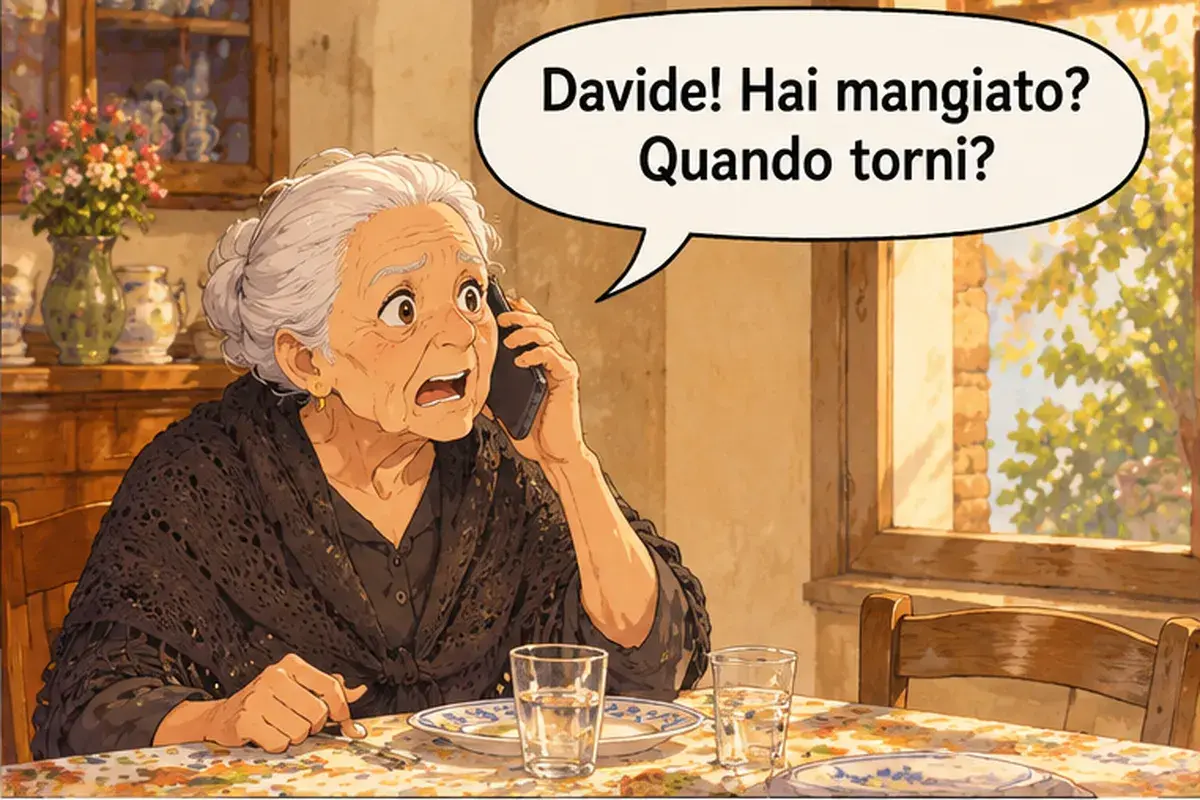
- Nonna Concetta
Davide! Hai mangiato? Quando torni?
Davide! Have you eaten? When are you coming back?
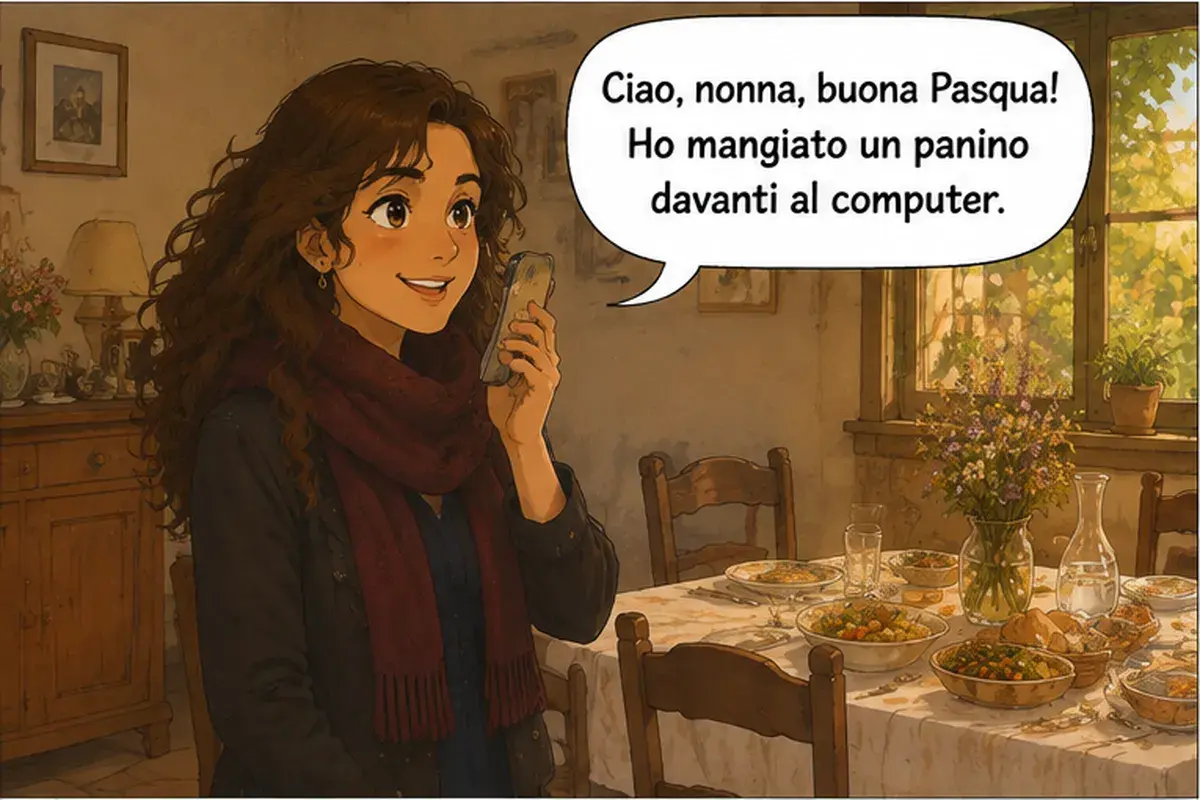
- Davide
Ciao, nonna, buona Pasqua! Ho mangiato un panino davanti al computer.
Hi, Grandma, happy Easter! I ate a sandwich in front of the computer.
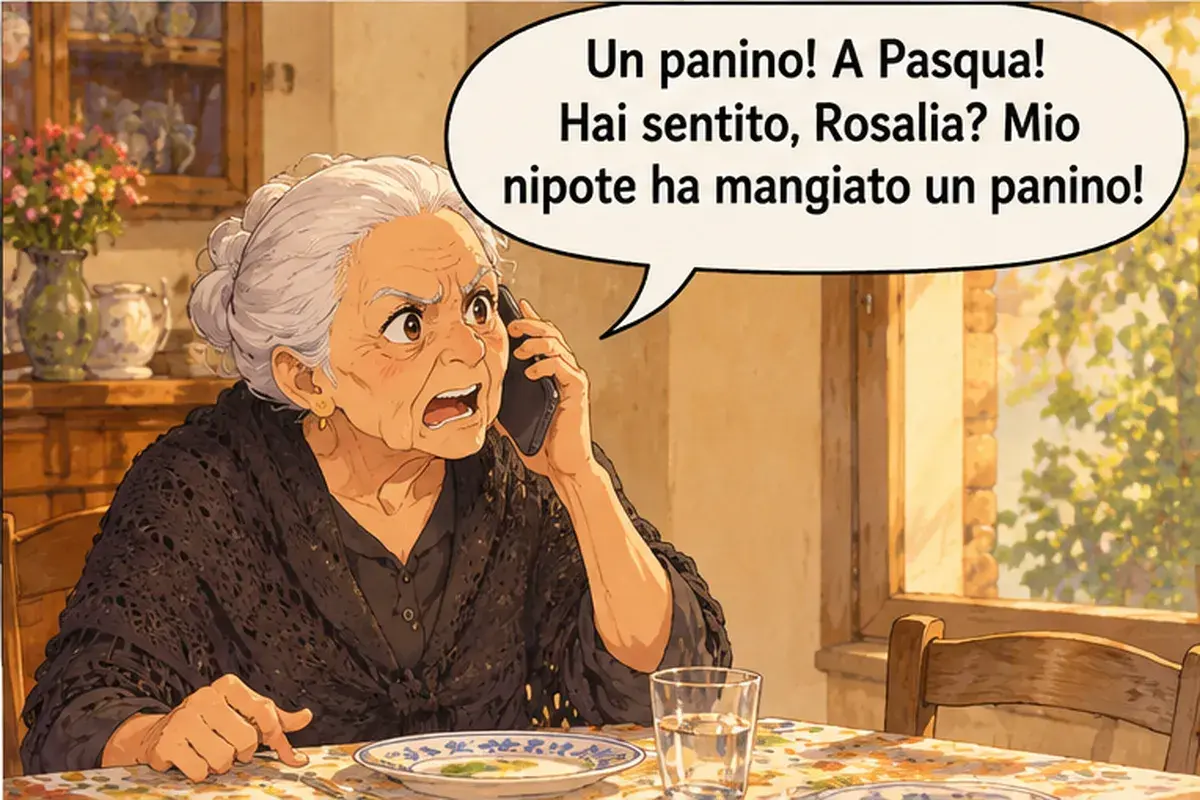
- Nonna Concetta
Un panino! A Pasqua! Hai sentito, Rosalia? Mio nipote ha mangiato un panino!
A sandwich! On Easter! Did you hear that, Rosalia? My grandson ate a sandwich!
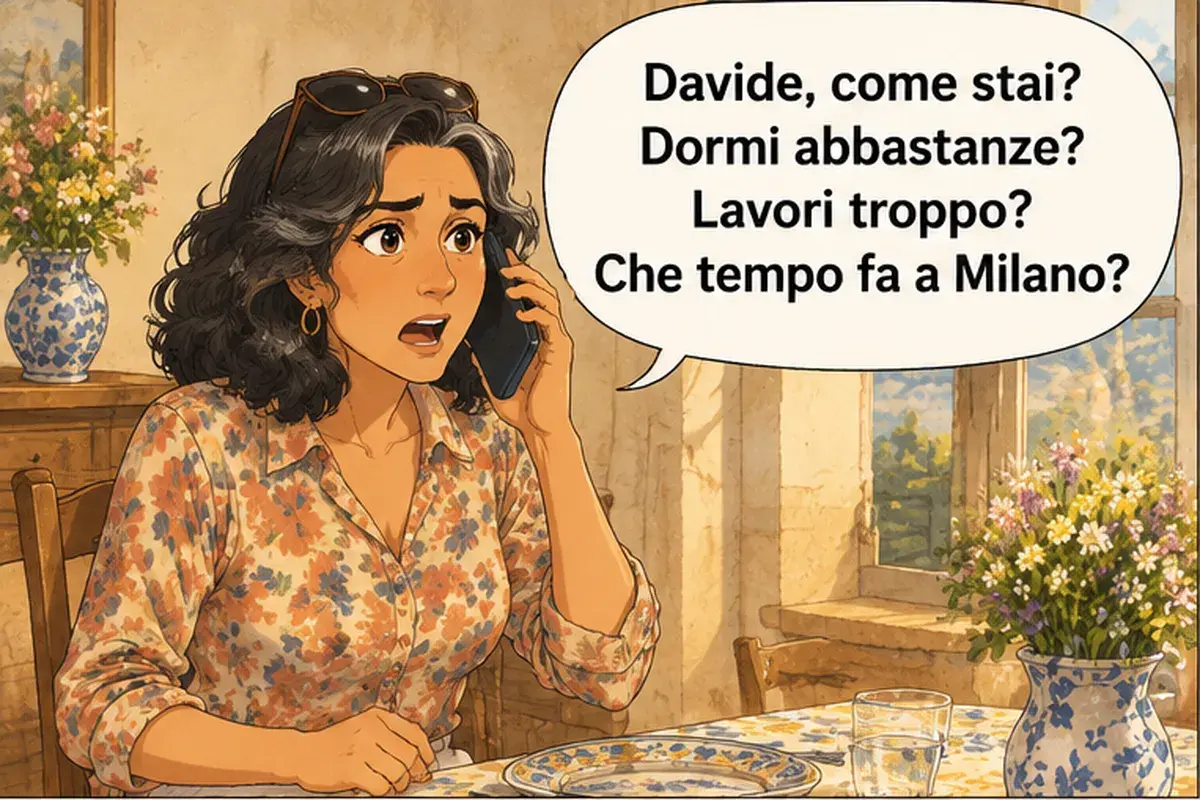
- Rosalia
Davide, come stai? Dormi abbastanza? Lavori troppo? Che tempo fa a Milano?
Davide, how are you? Are you sleeping enough? Are you working too much? What's the weather like in Milan?
- Davide
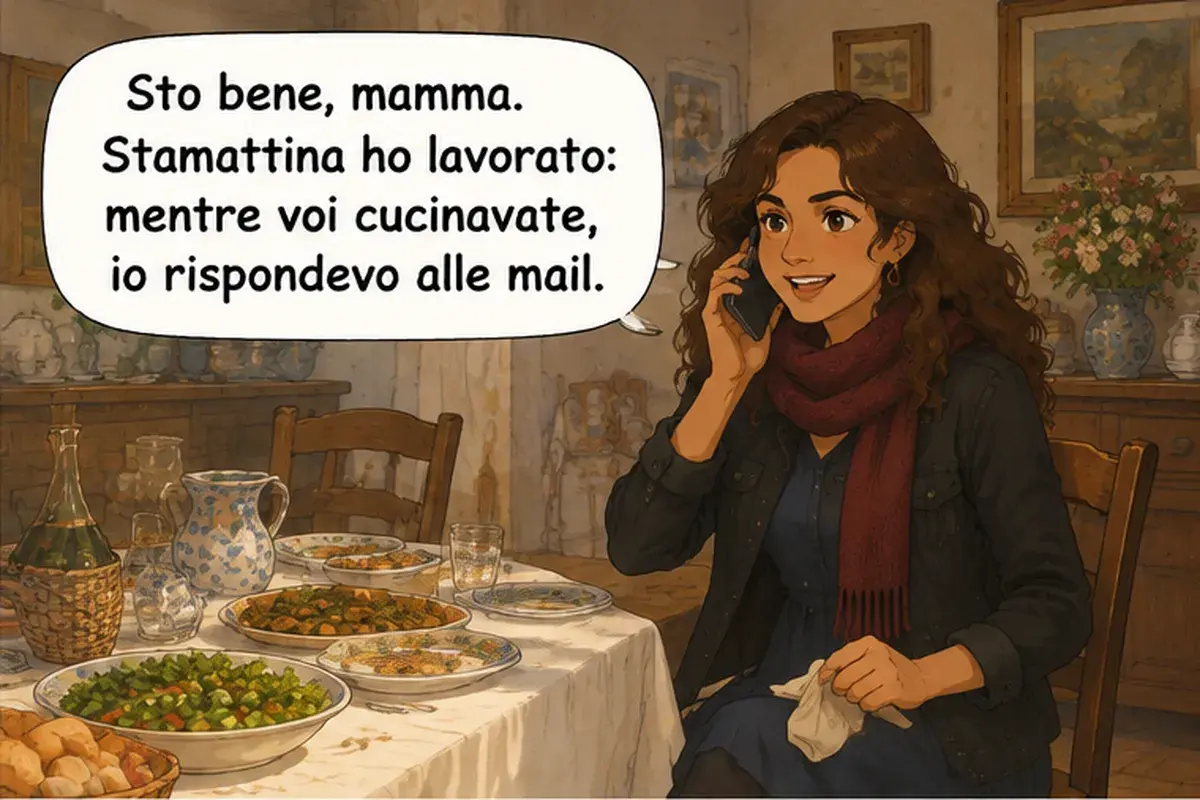
Sto bene, mamma. Stamattina ho lavorato: mentre voi cucinavate, io rispondevo alle mail.
I'm fine, Mom. I worked this morning: while you were cooking, I was answering emails (to several people).
- Nonna Concetta
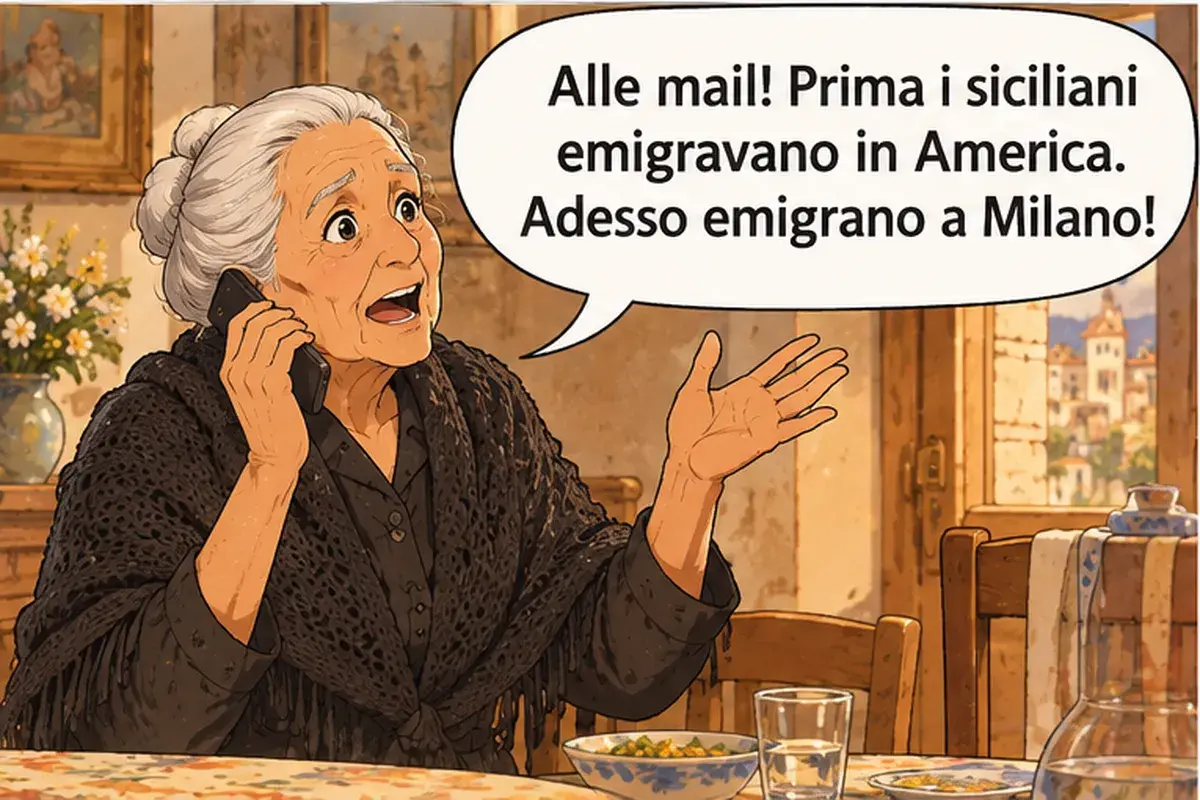
Alle mail! Prima i siciliani emigravano in America. Adesso emigrano a Milano!
Emails! In the past, Sicilians used to emigrate to America. Now they emigrate to Milan!

- Davide
Nonna, Milano è in Italia.
Grandma, Milan is in Italy.
- Nonna Concetta
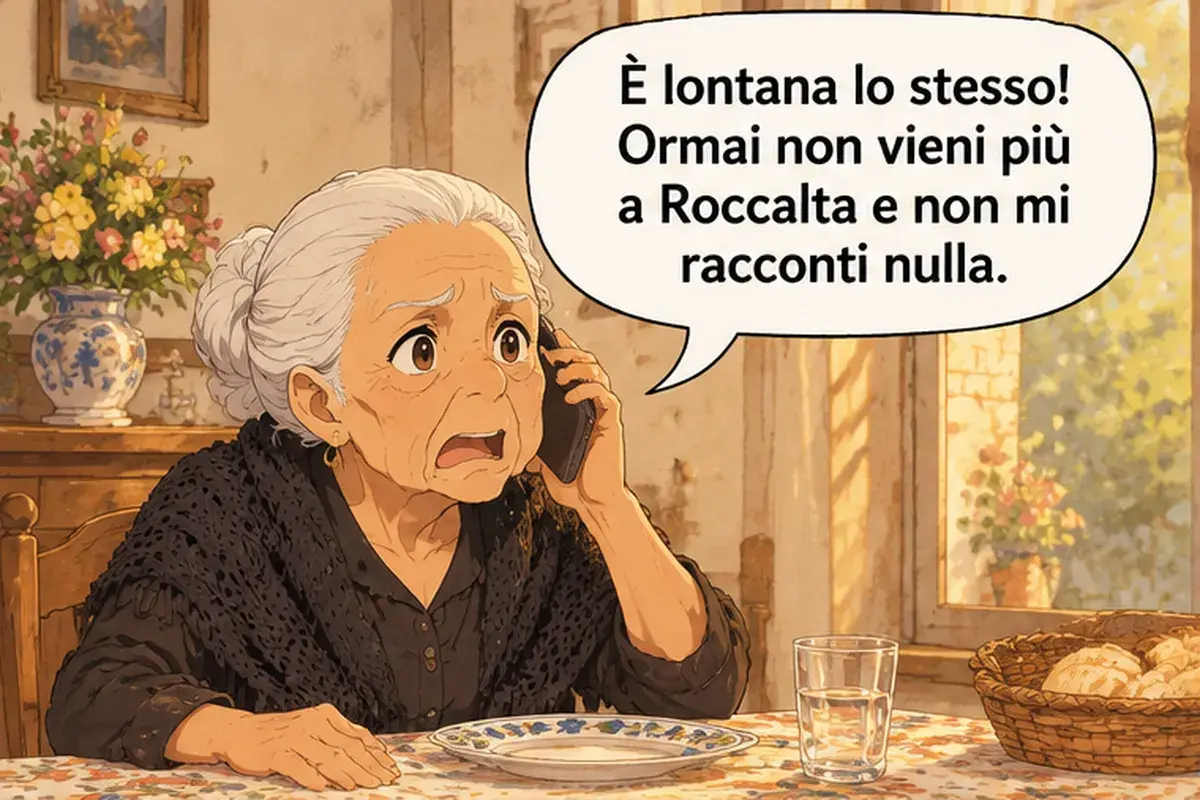
È lontana lo stesso! Ormai non vieni più a Roccalta e non mi racconti nulla.
It's far all the same! By now you don't come to Roccalta anymore, and you don't tell me anything.
- Davide
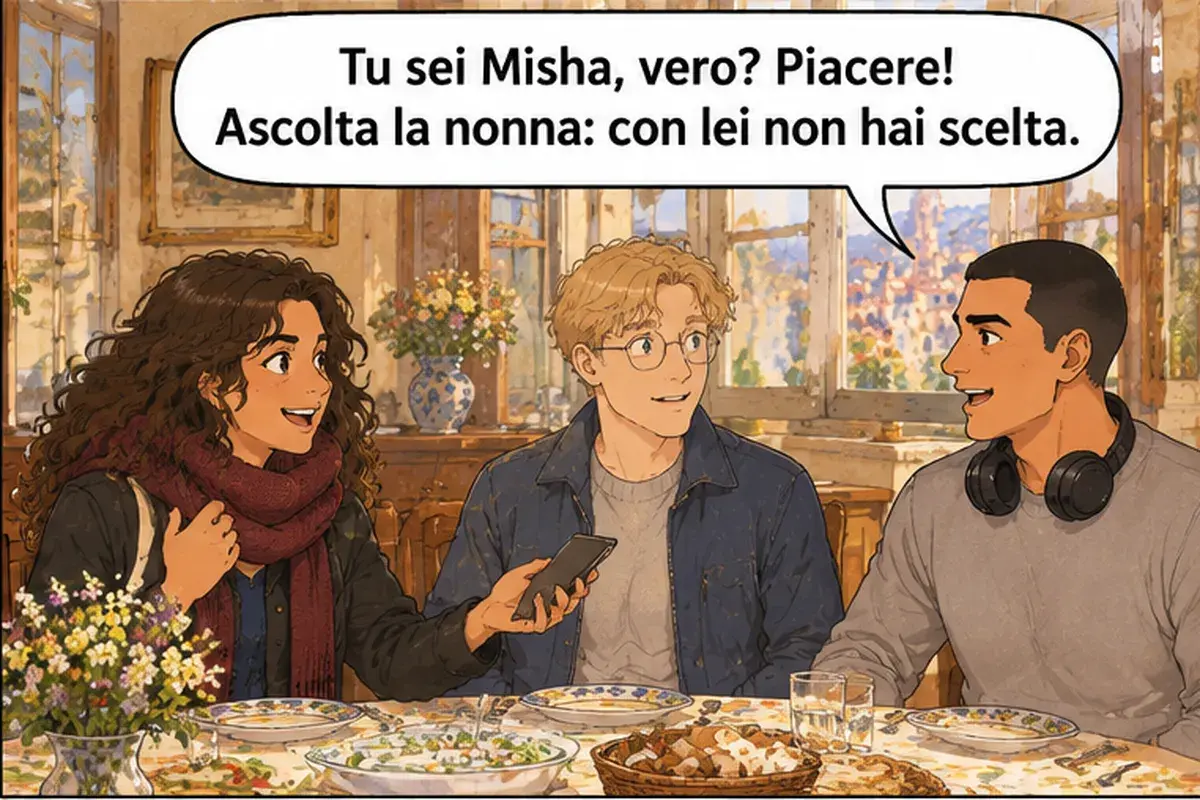
Tu sei Misha, vero? Piacere! Ascolta la nonna: con lei non hai scelta.
You're Misha, right? Nice to meet you! Listen to Grandma: with her you have no choice.

- Misha
Piacere, Davide! Lo so: ho già mangiato tre volte.
Nice to meet you, Davide! I know: I've already eaten three times.
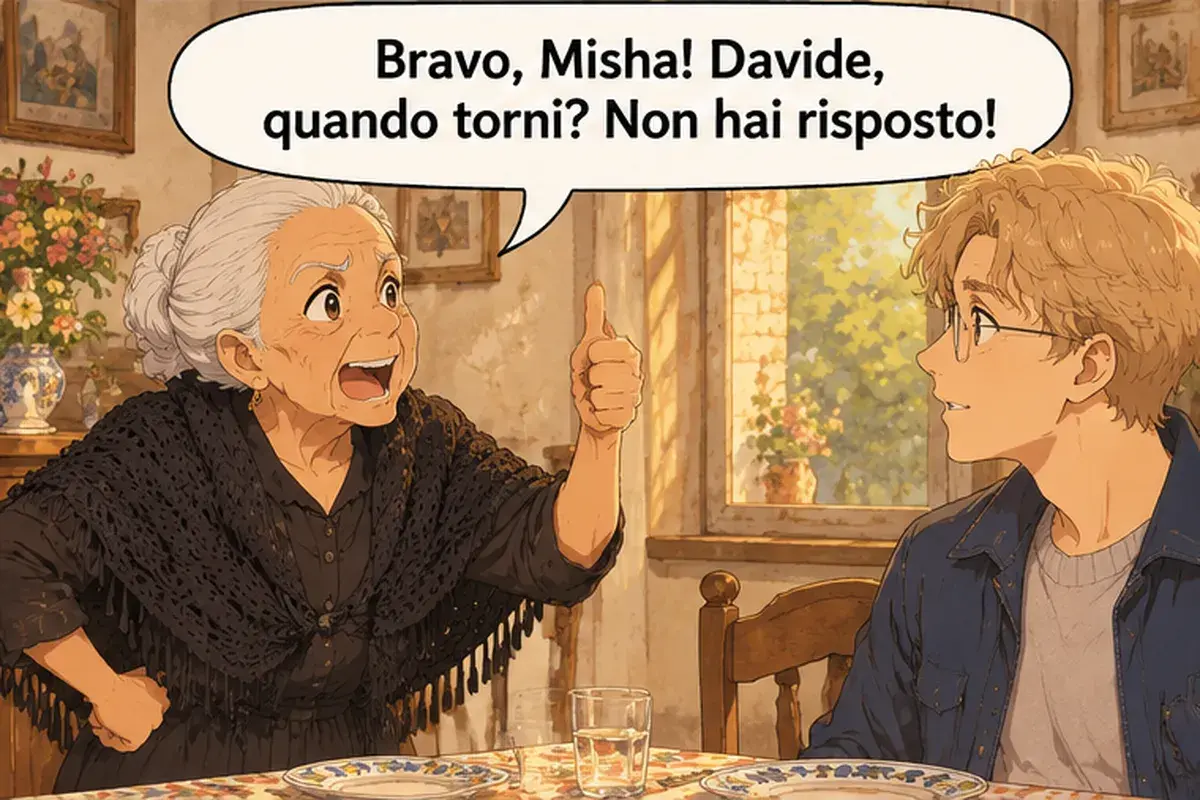
- Nonna Concetta
Bravo, Misha! Davide, quando torni? Non hai risposto!
Well done, Misha! Davide, when are you coming back? You didn't answer!
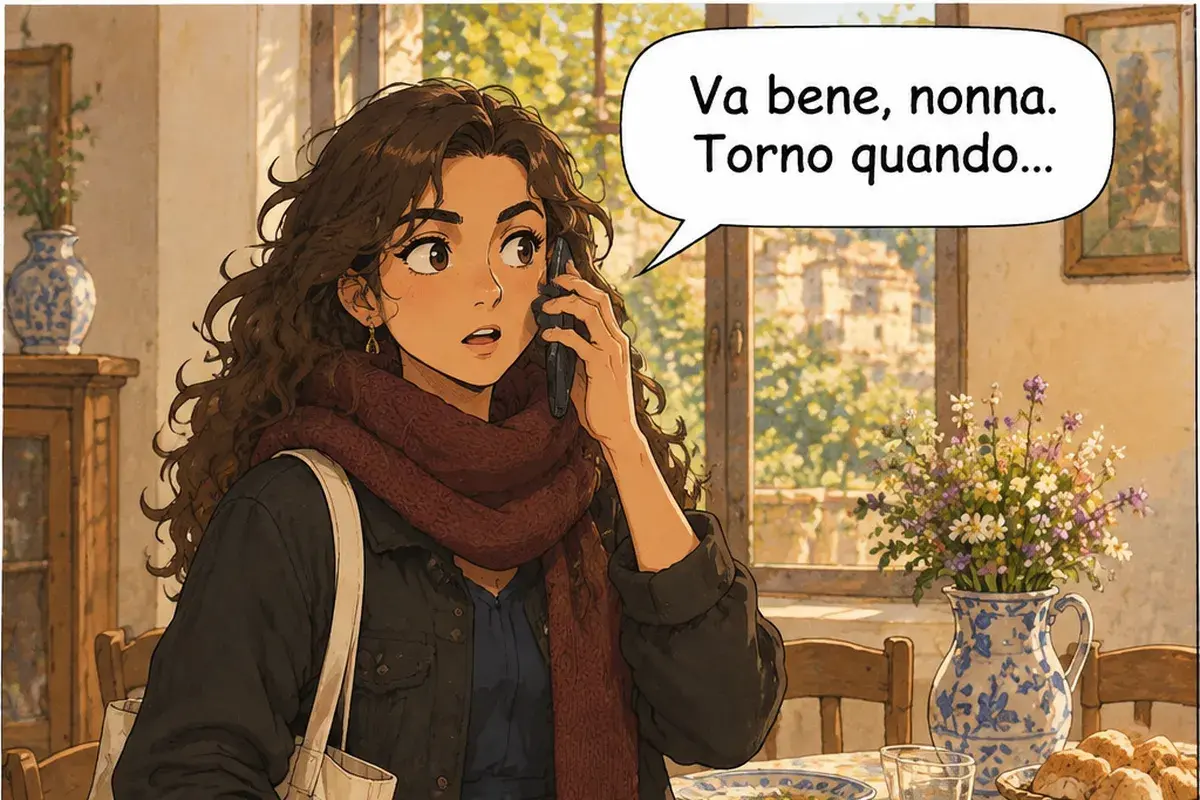
- Davide
Va bene, nonna. Torno quando...
OK, Grandma. I'm coming back when...
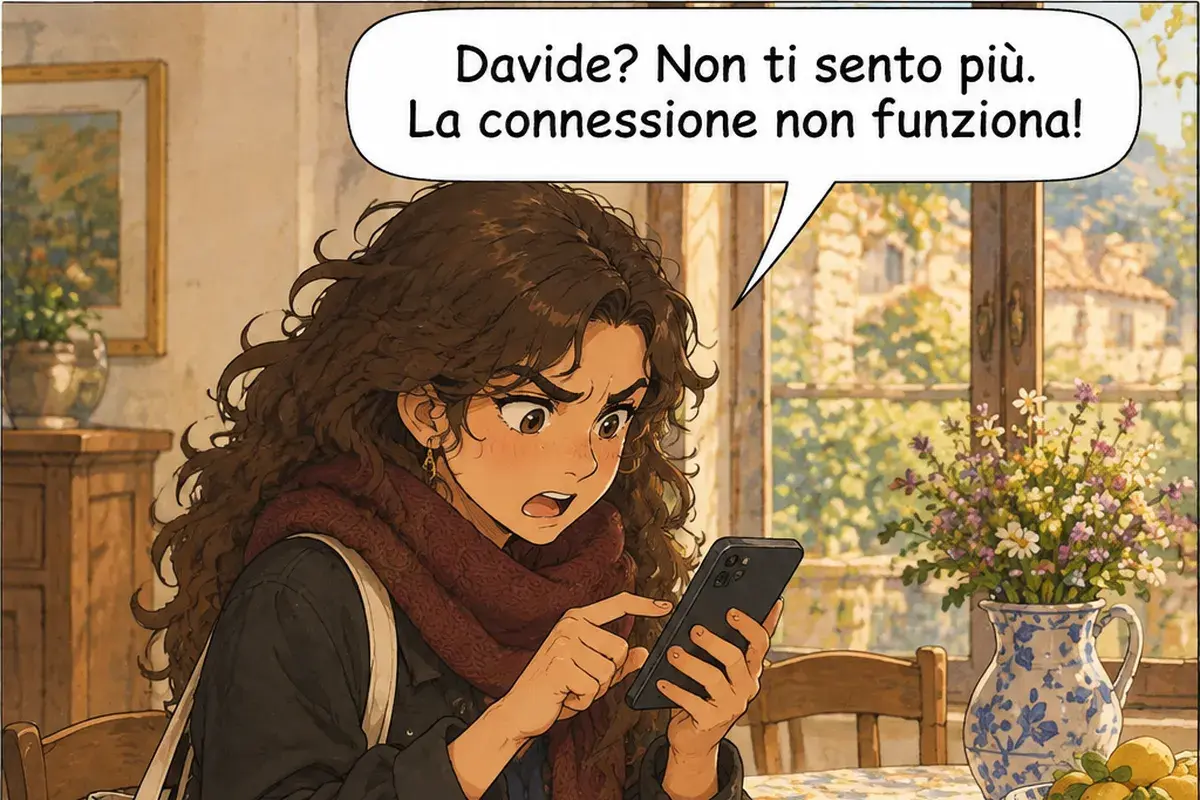
- Giulia
Davide? Non ti sento più. La connessione non funziona!
Davide? I can't hear you anymore. The connection isn't working!
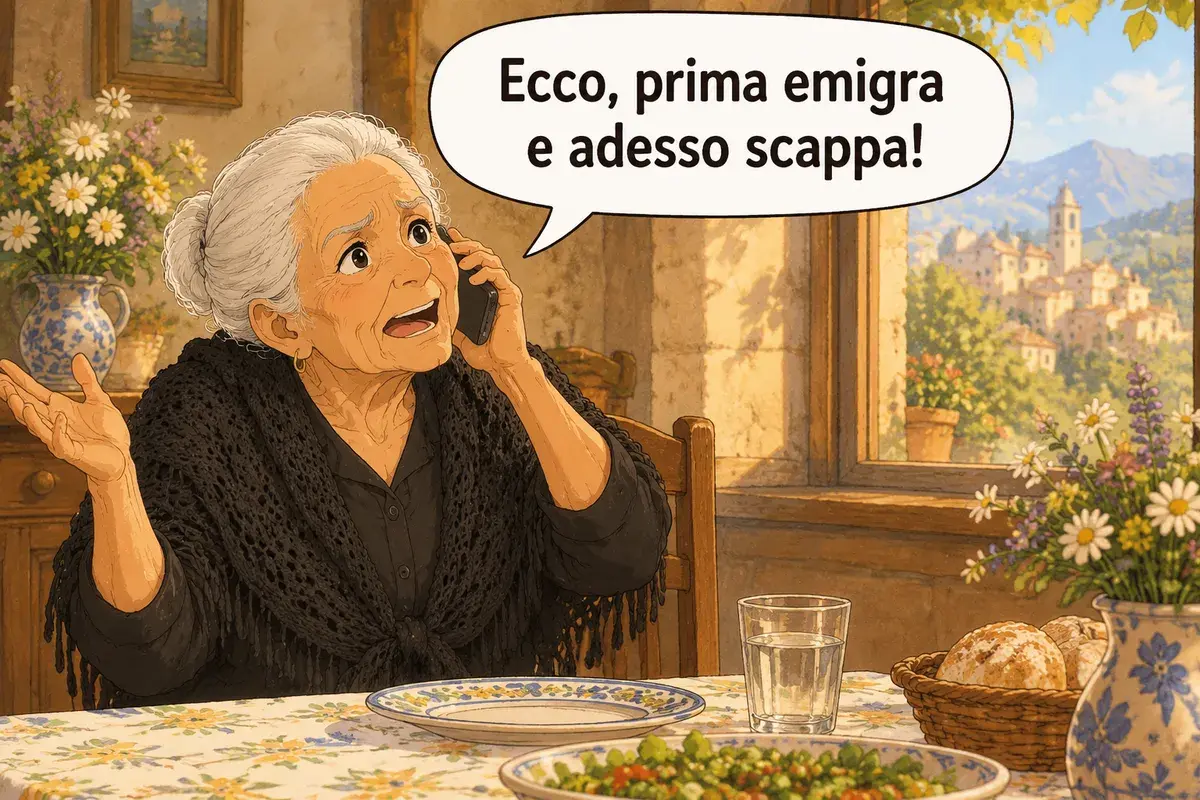
- Nonna Concetta
Ecco, prima emigra e adesso scappa!
There you go: first he emigrates, and now he runs away!
Grammar for this text
- Chiama Davide! — here chiama means "he's calling" (chiamare, the lui form), not "call!". The subject Davide comes last: the news goes at the end of the sentence (third grammar block).
- Hai mangiato? Quando torni? — hai mangiato — "have you eaten": a ready-made form from A1 (unit 5); the past tense rule is in A1, units 15–17. torni is the present tense: Italians often use it for near plans, like English "When are you coming back?". The future tense comes in unit 20.
- mentre voi cucinavate, io rispondevo alle mail — mentre — "while"; both verbs are in the imperfetto ("was doing"): cucinavate — the voi form of cucinare, rispondevo — the io form of rispondere. But ho lavorato — "I worked", a finished result (first block). alle = a + le.
- Prima i siciliani emigravano in America. — emigravano is the imperfetto, the loro form of emigrare: it happened many times, "used to". prima — "before, in the past" (unit 7).
- Ormai non vieni più a Roccalta — ormai — "by now"; non… più — "not anymore" (unit 6). È lontana lo stesso — "it's far all the same".
- Mio nipote — nipote — "grandson" (and "nephew"); no article, like mio fratello. Ascolta la nonna: con lei non hai scelta — ascolta is the tu command of ascoltare ("listen", unit 13); scelta is a noun, "choice".
- Lo so — lo stands for the whole idea (unit 10); English just says "I know".
Words and grammar of the unit: Tell a story in order.
Learn the words from the texts with flashcards
In the app, you can tap any word in a text to see its translation, forms and examples, and new words stick with flashcards. 15 minutes a day.
Start for freeEverything is open for free. No card needed to sign up.