
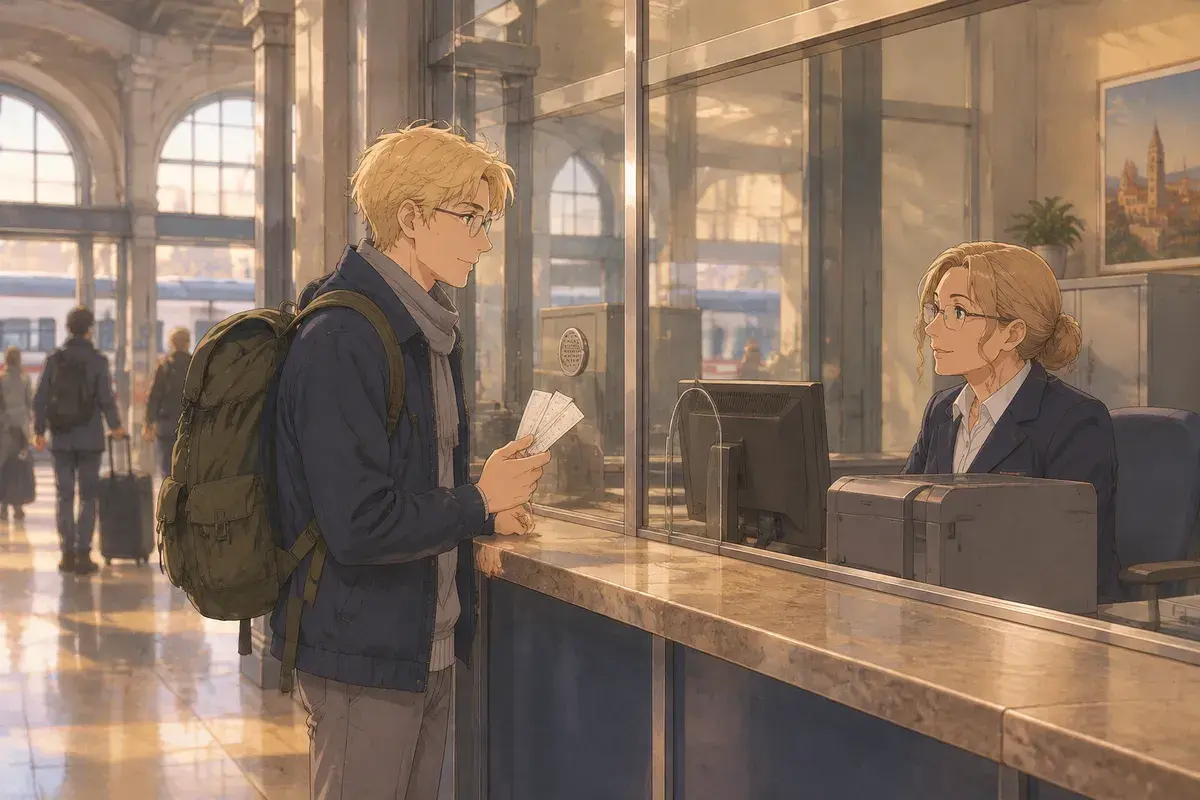
Italian dialogue with translation · A1 · 14 lines
Vorrei tre biglietti per Ravenna I'd like three tickets to Ravenna
Comic · 14 panels
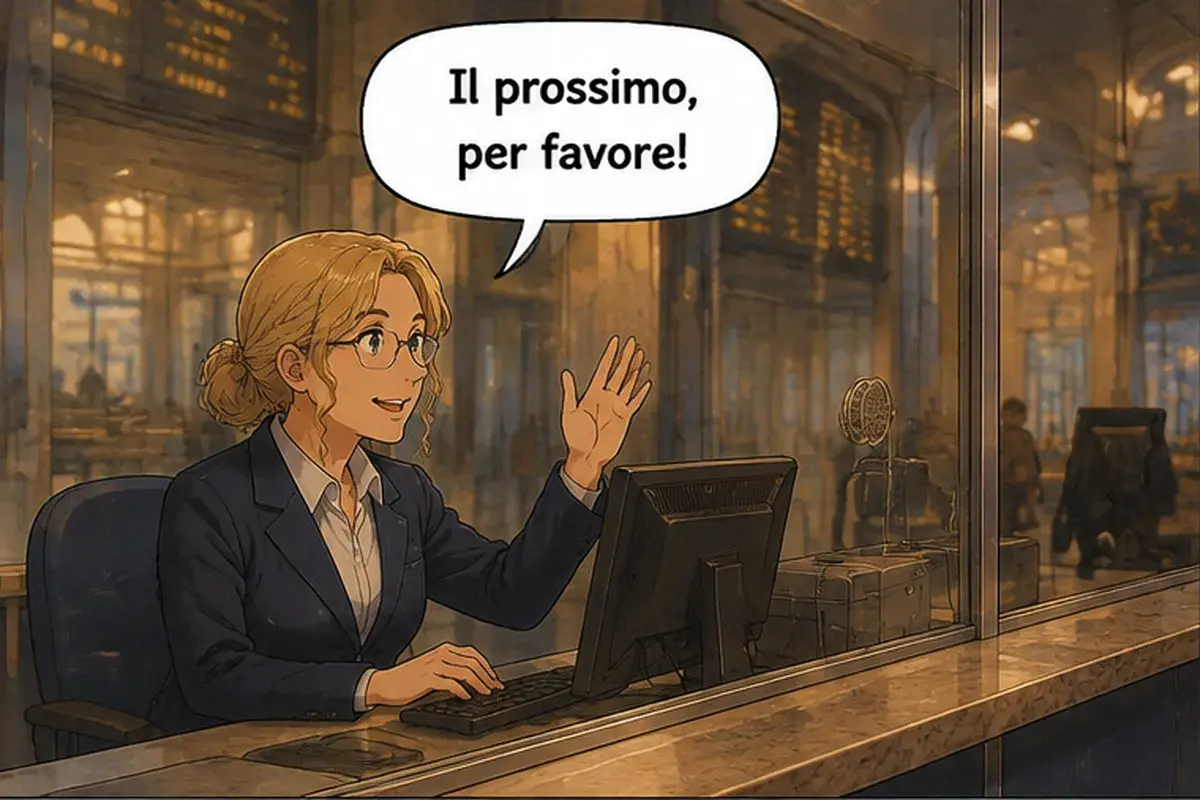
- Impiegata
Il prossimo, per favore!
Next, please!
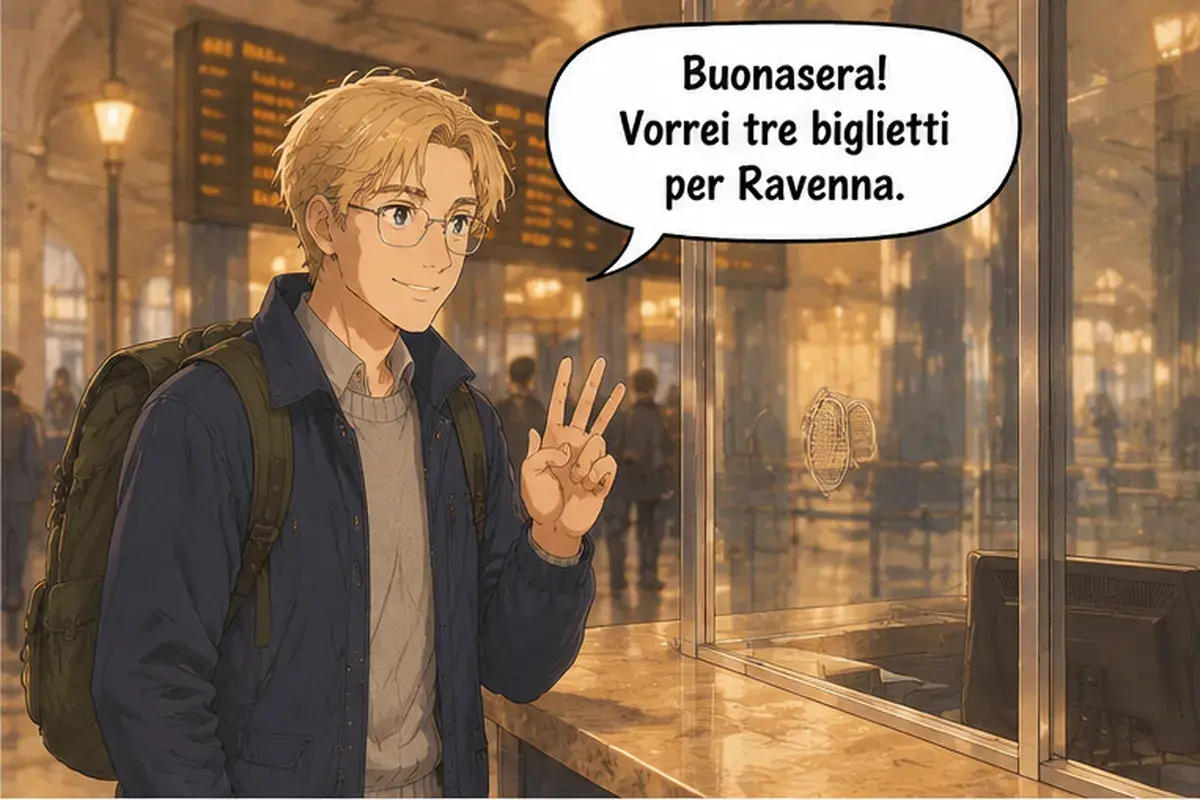
- Misha
Buonasera! Vorrei tre biglietti per Ravenna.
Good evening! I'd like three tickets to Ravenna.
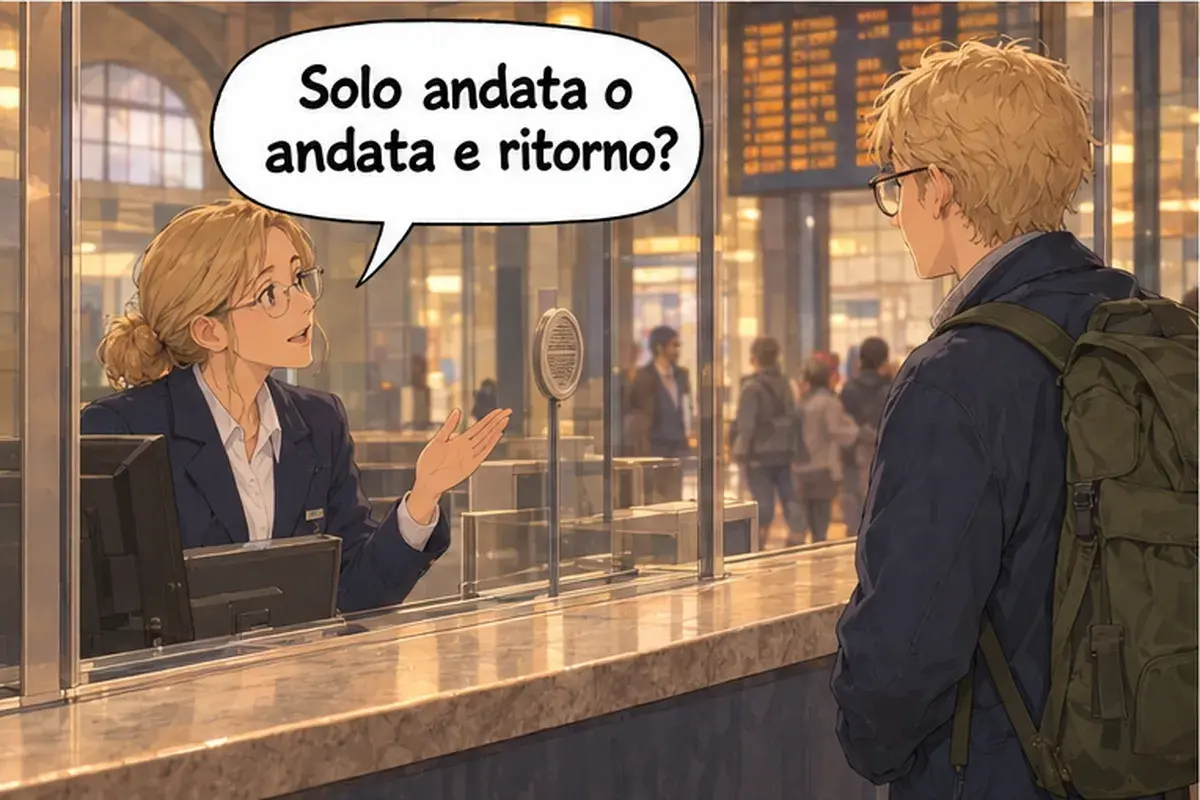
- Impiegata
Solo andata o andata e ritorno?
One way or round trip?
- Misha
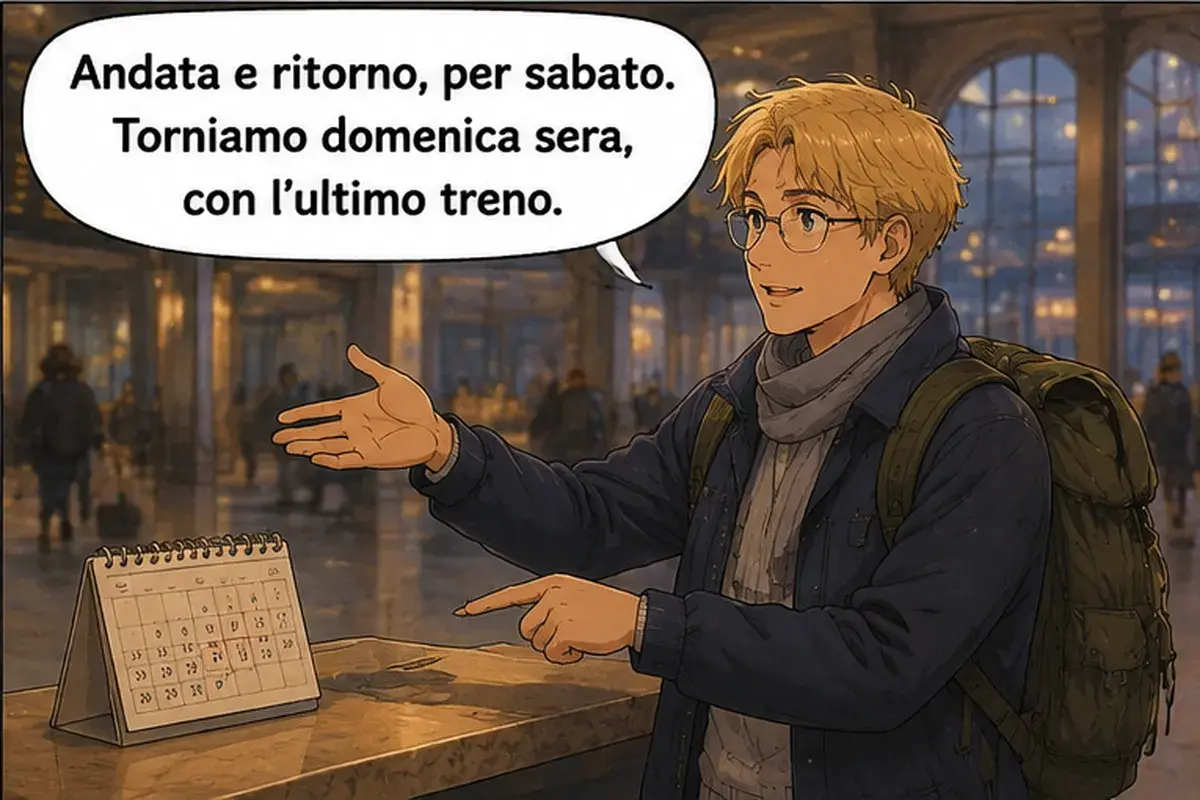
Andata e ritorno, per sabato. Torniamo domenica sera, con l'ultimo treno.
Round trip, for Saturday. We're coming back Sunday evening, on the last train.
- Impiegata
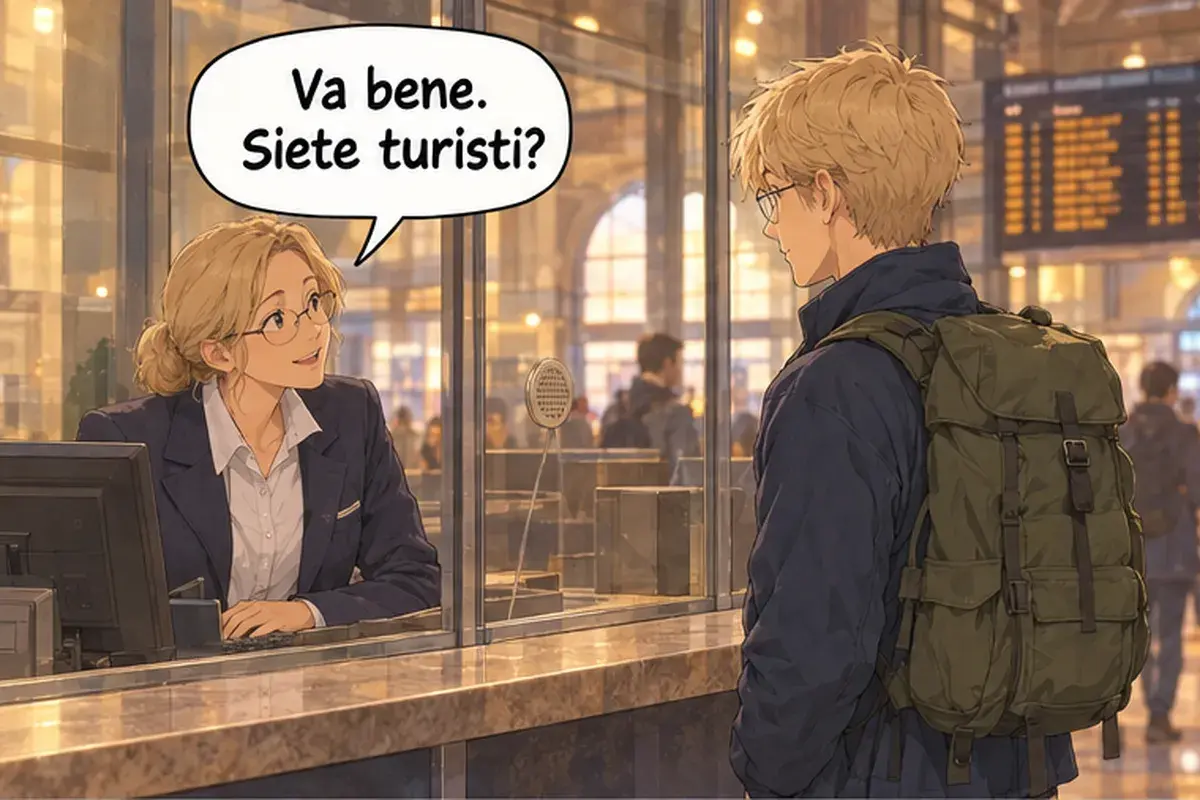
Va bene. Siete turisti?
OK. Are you tourists? (to several people)

- Misha
Un po'! Andiamo a vedere i mosaici.
A little! We're going to see the mosaics.
- Impiegata
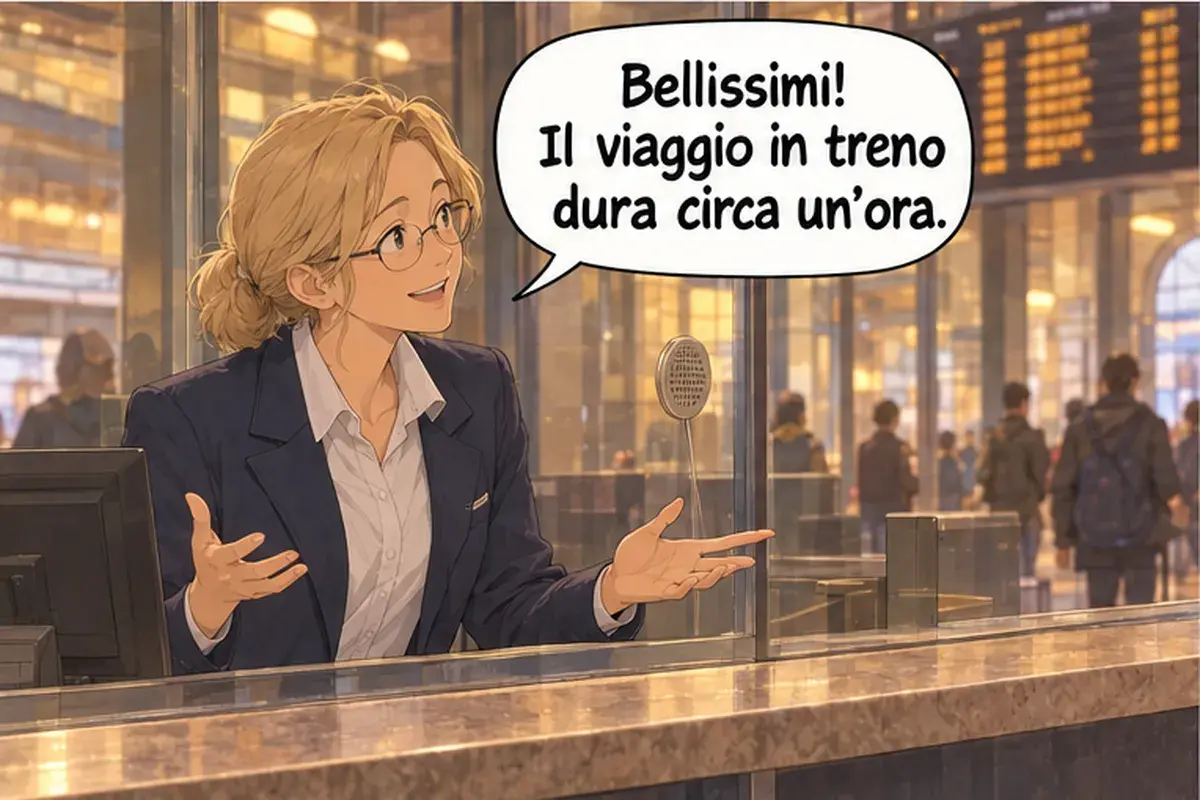
Bellissimi! Il viaggio in treno dura circa un'ora.
They're beautiful! The train trip takes about an hour.
- Misha
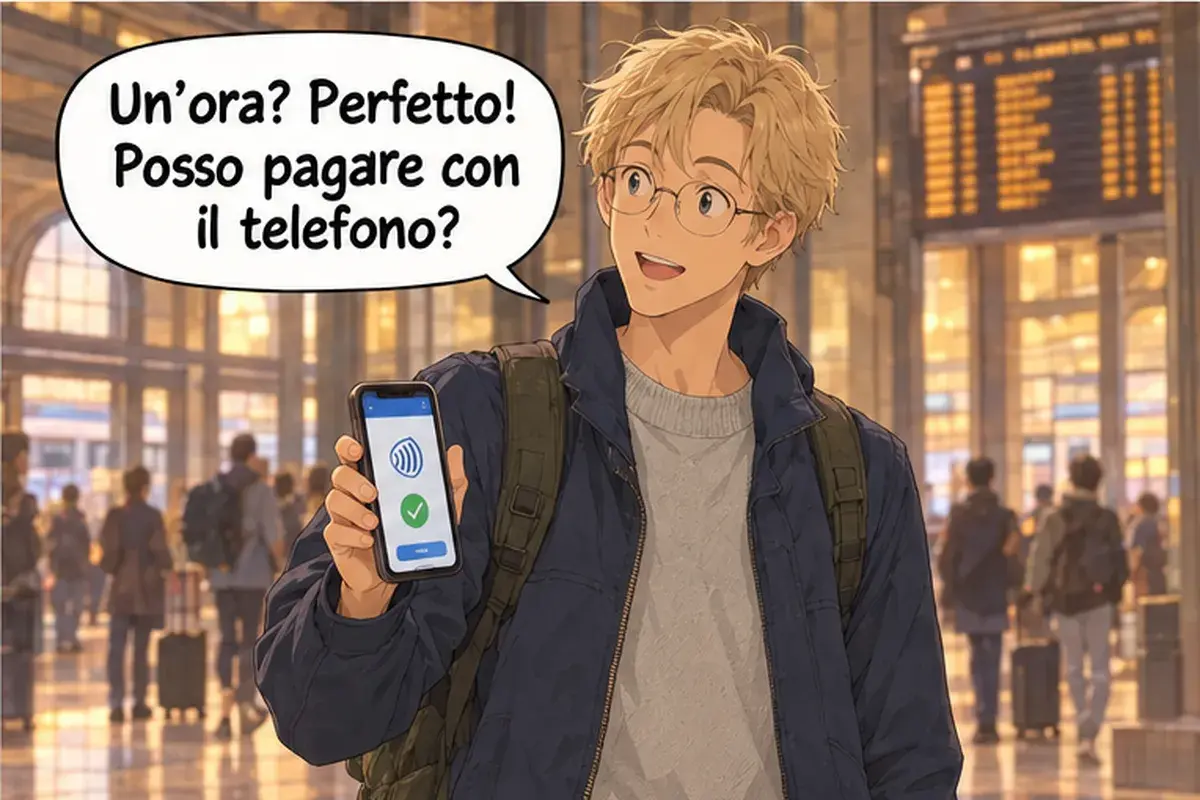
Un'ora? Perfetto! Posso pagare con il telefono?
An hour? Perfect! Can I pay with my phone?
- Impiegata
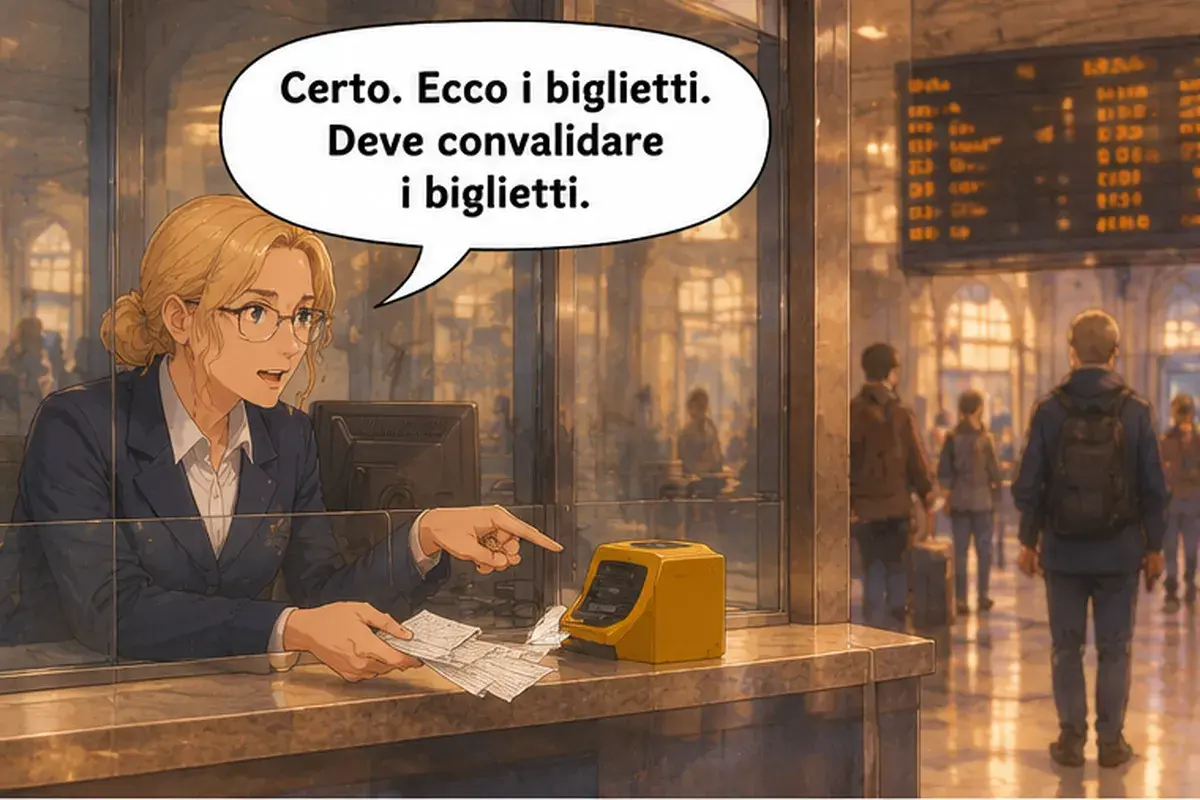
Certo. Ecco i biglietti. Deve convalidare i biglietti.
Sure. Here are the tickets. You have to validate the tickets (formal).
- Misha
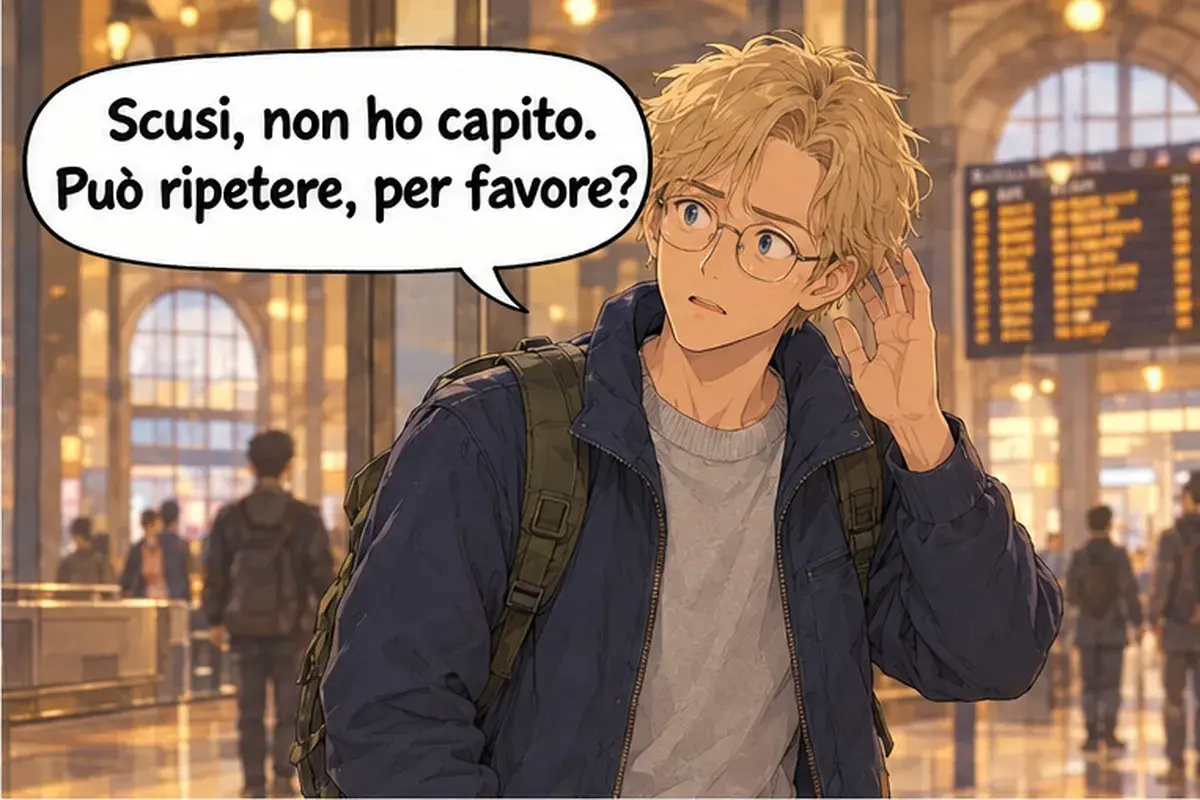
Scusi, non ho capito. Può ripetere, per favore?
Excuse me, I didn't understand. Could you say that again, please? (formal)
- Impiegata
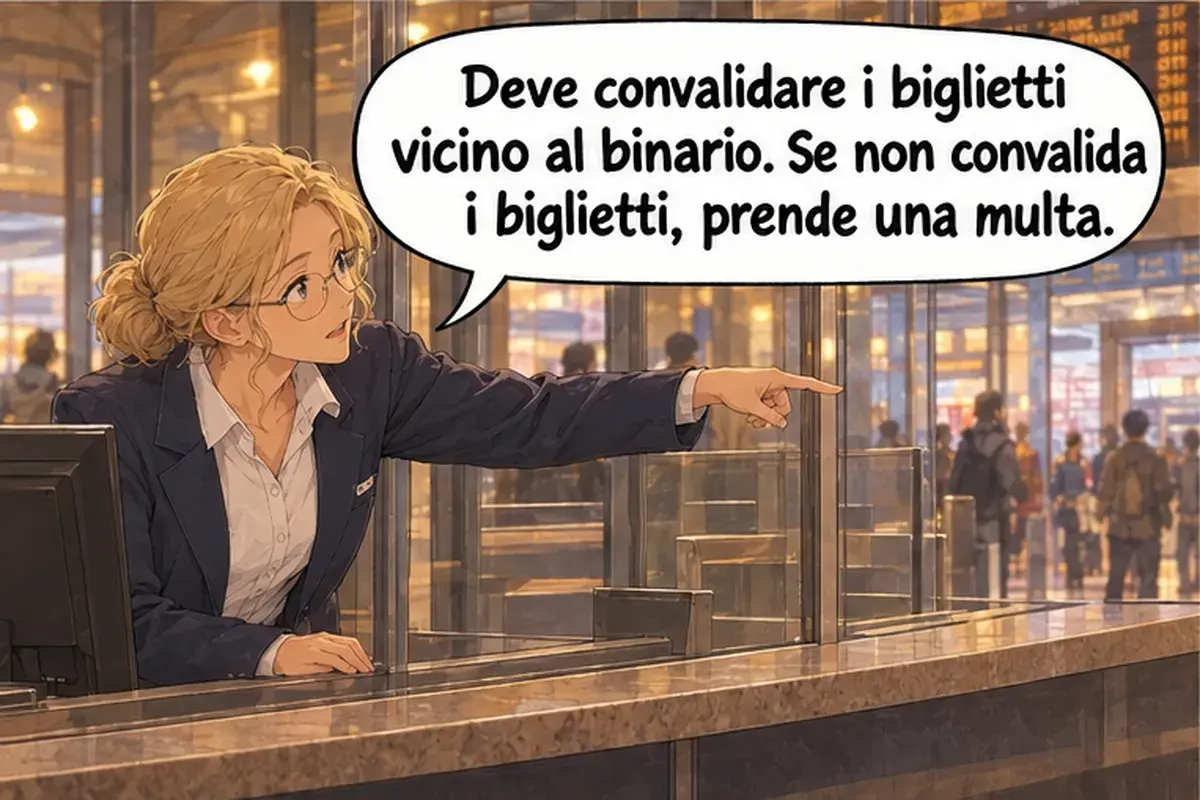
Deve convalidare i biglietti vicino al binario. Se non convalida i biglietti, prende una multa.
You have to validate the tickets near the track. If you don't validate the tickets, you'll get a fine (formal).
- Misha
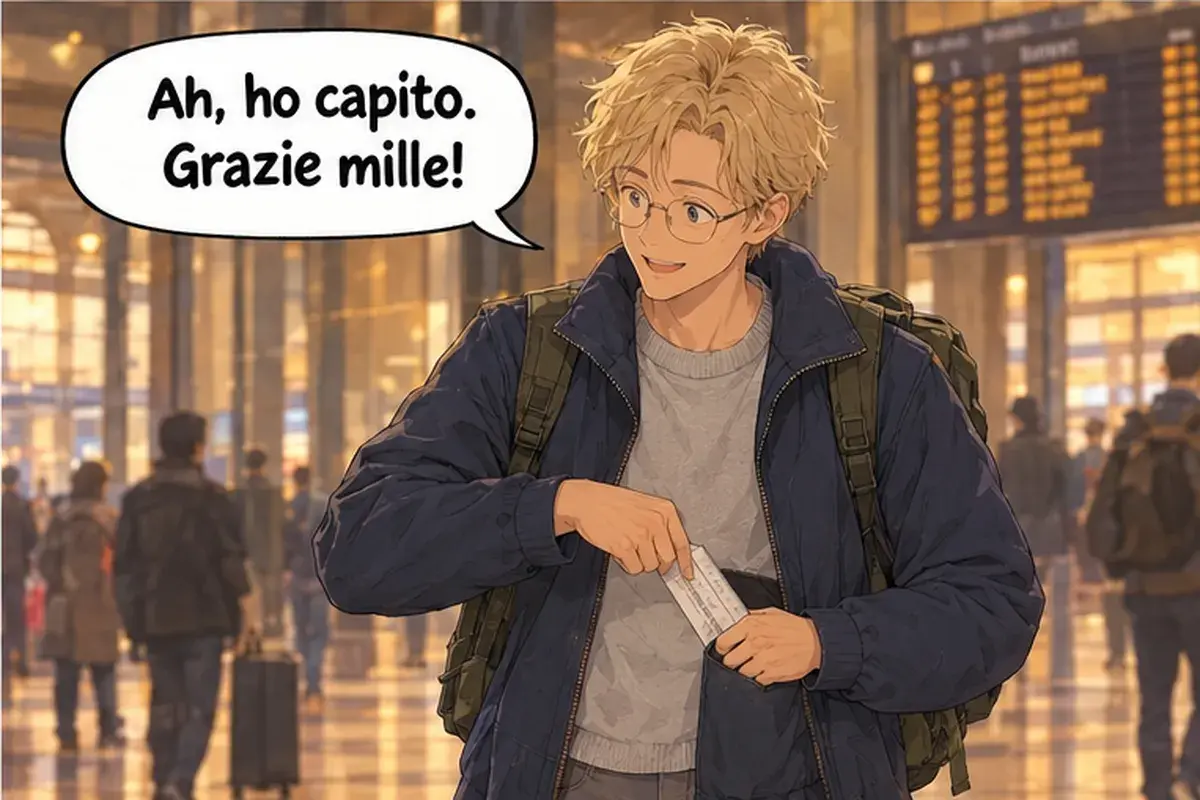
Ah, ho capito. Grazie mille!
Ah, I see. Thanks a lot!
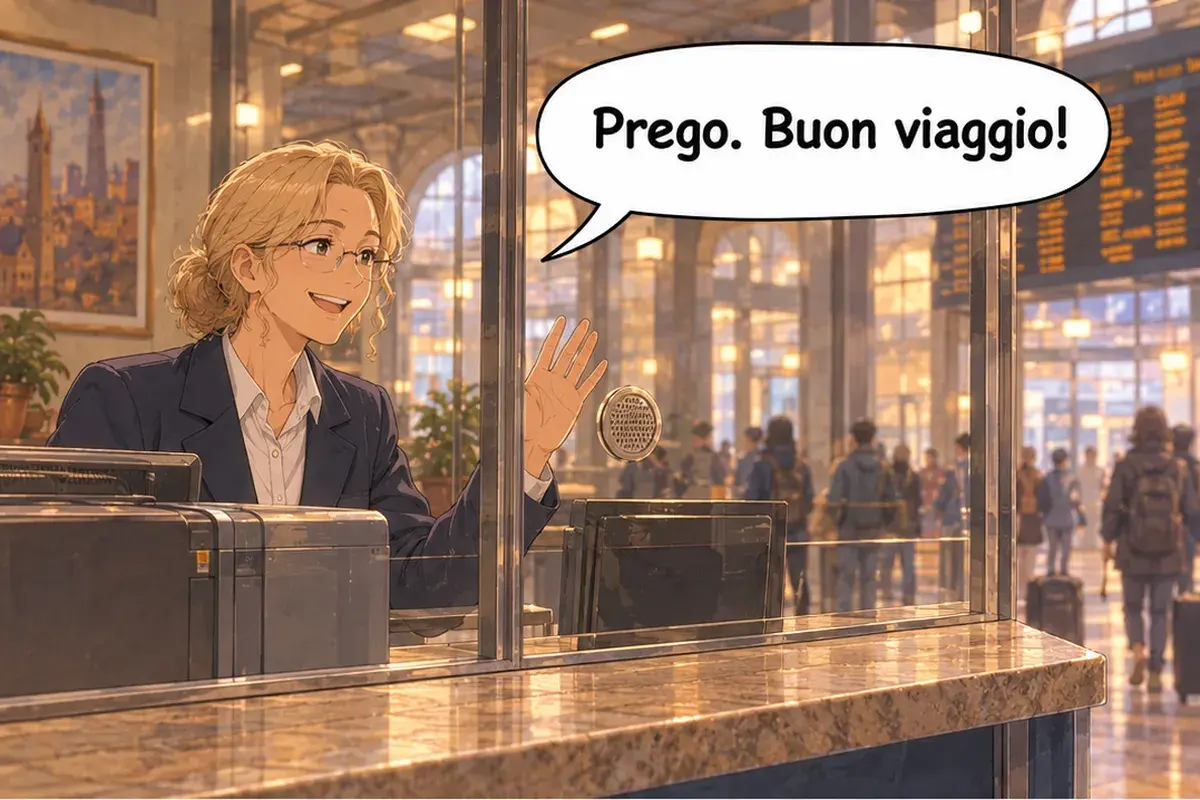
- Impiegata
Prego. Buon viaggio!
You're welcome. Have a good trip!

- Misha
Arrivederci!
Goodbye!
Grammar for this text
- Deve convalidare i biglietti. — the clerk speaks to Misha with Lei (formal you), so the verb takes the he/she form: deve — you have to (formal), from dovere (unit 11). convalidare — to validate: a paper ticket has to be validated, or you get a fine (multa).
- Se non convalida i biglietti, prende una multa. — "if you don't validate the tickets, you'll get a fine": Italian uses the present in both parts, English says "you'll get". prendere una multa — to get a fine (literally "to take a fine").
- Scusi, non ho capito. Può ripetere, per favore? — polite Lei forms: scusi (excuse me), può ripetere? (could you say that again?). Learn them as whole phrases.
- Solo andata o andata e ritorno? — andata is the trip there, ritorno the trip back.
- Il viaggio in treno dura circa un'ora. — dura is the lui/lei form of durare (to last, to take). circa — about; it goes before a number. un'ora — an hour.
- Torniamo domenica sera, con l'ultimo treno. — a plan in the present tense: "we're coming back Sunday evening". There's no future tense here.
- Buon viaggio! — have a good trip!: buon is a short form of buono. For now, learn it as a set wish.
Words and grammar of the unit: Buy a train ticket.
Learn the words from the texts with flashcards
In the app, you can tap any word in a text to see its translation, forms and examples, and new words stick with flashcards. 15 minutes a day.
Start for freeEverything is open for free. No card needed to sign up.