

Italian dialogue with translation · A1 · 10 lines
Io sto peggio: ho mal di pancia I feel worse: I have a stomachache
Comic · 10 panels
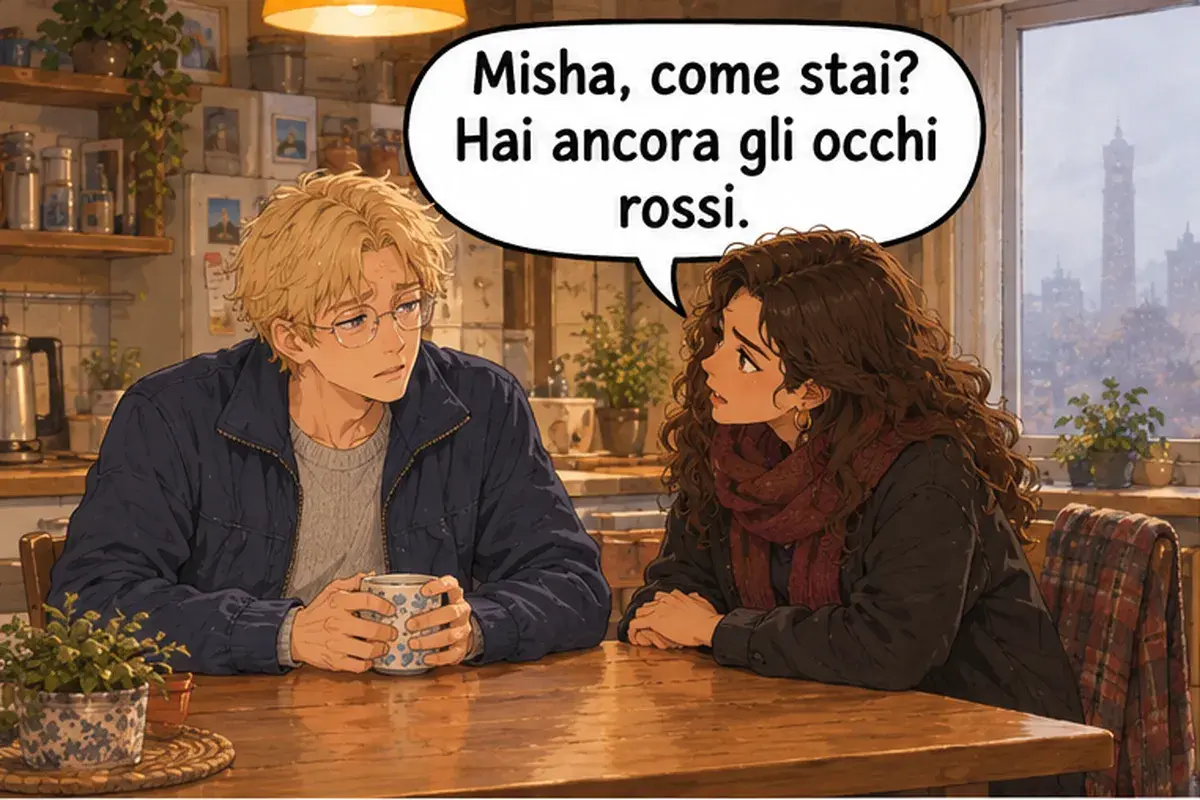
- Giulia
Misha, come stai? Hai ancora gli occhi rossi.
Misha, how are you? You still have red eyes.
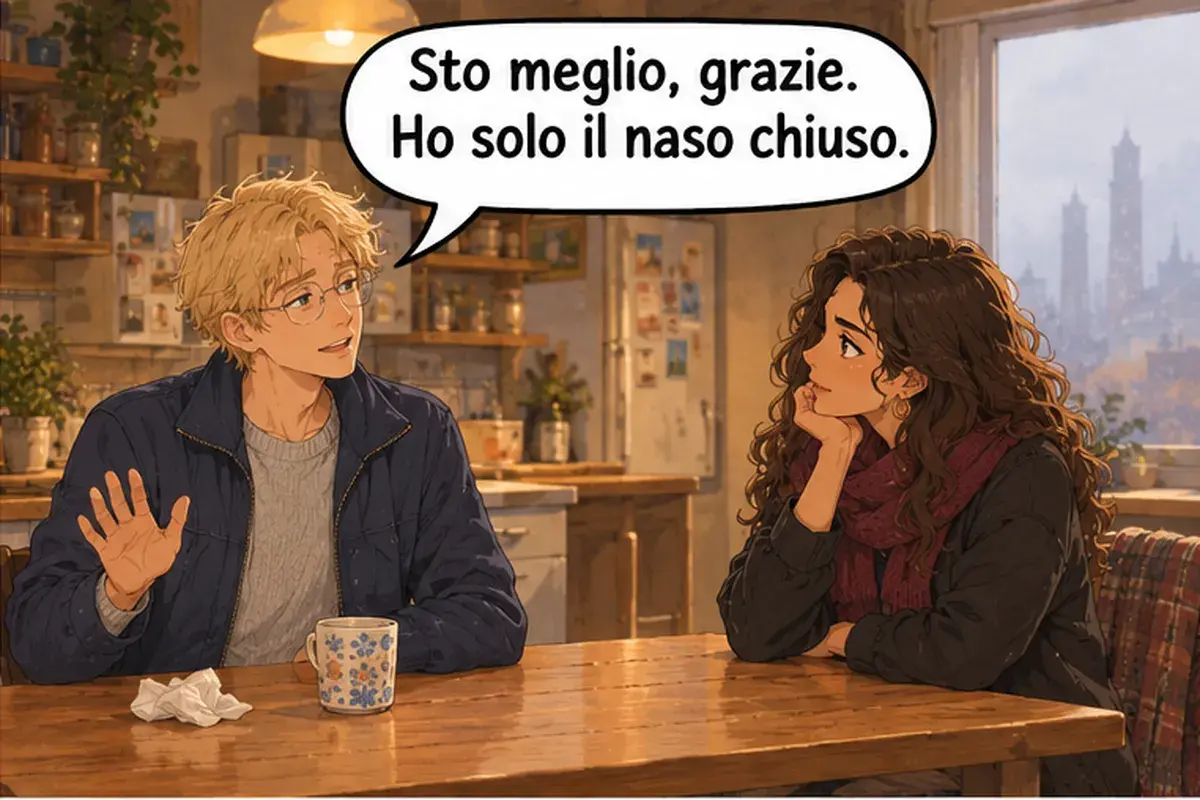
- Misha
Sto meglio, grazie. Ho solo il naso chiuso.
I feel better, thanks. I just have a stuffy nose.
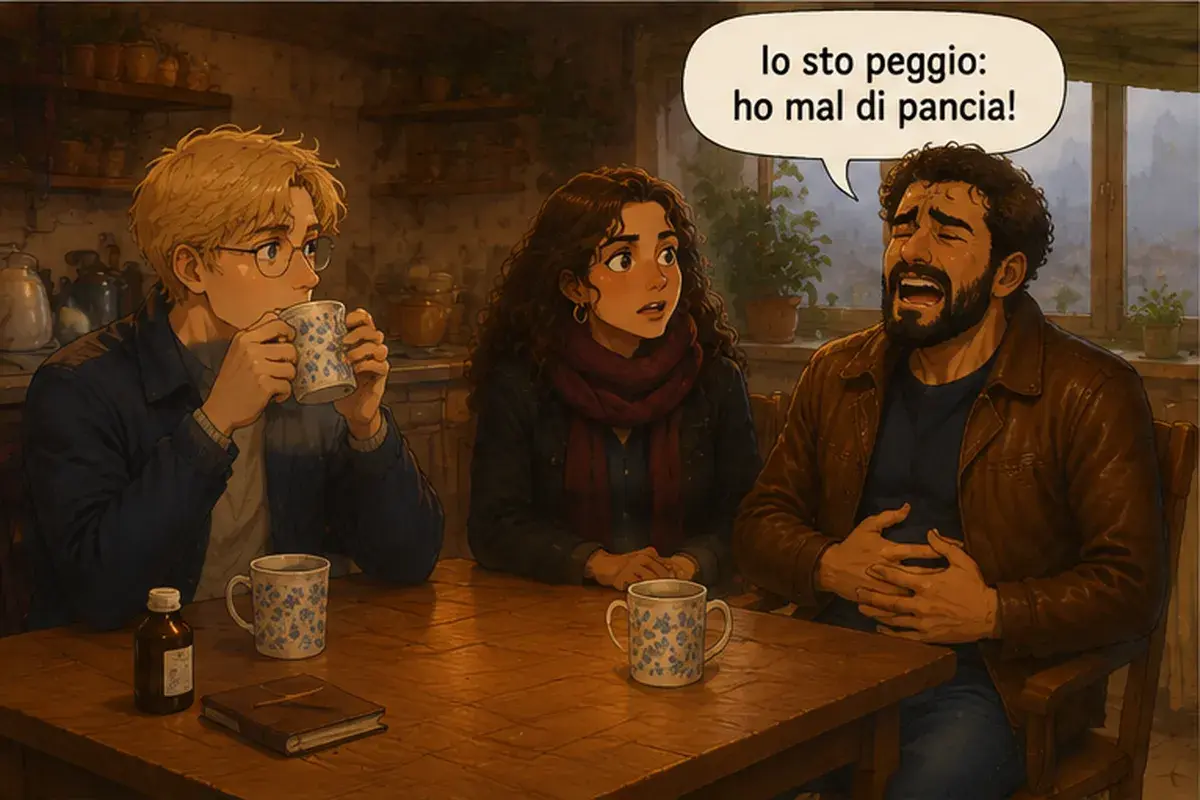
- Luca
Io sto peggio: ho mal di pancia!
I feel worse: I have a stomachache!
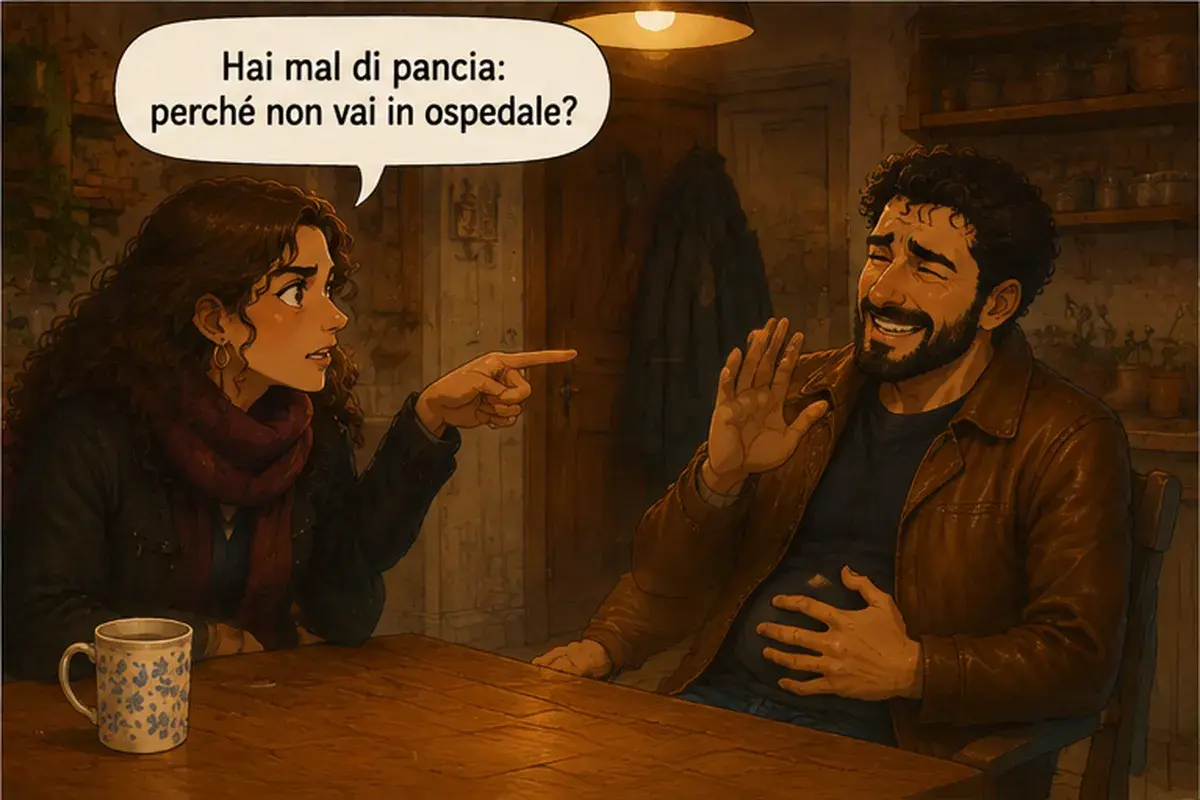
- Giulia
Hai mal di pancia: perché non vai in ospedale?
You have a stomachache: why don't you go to the hospital?
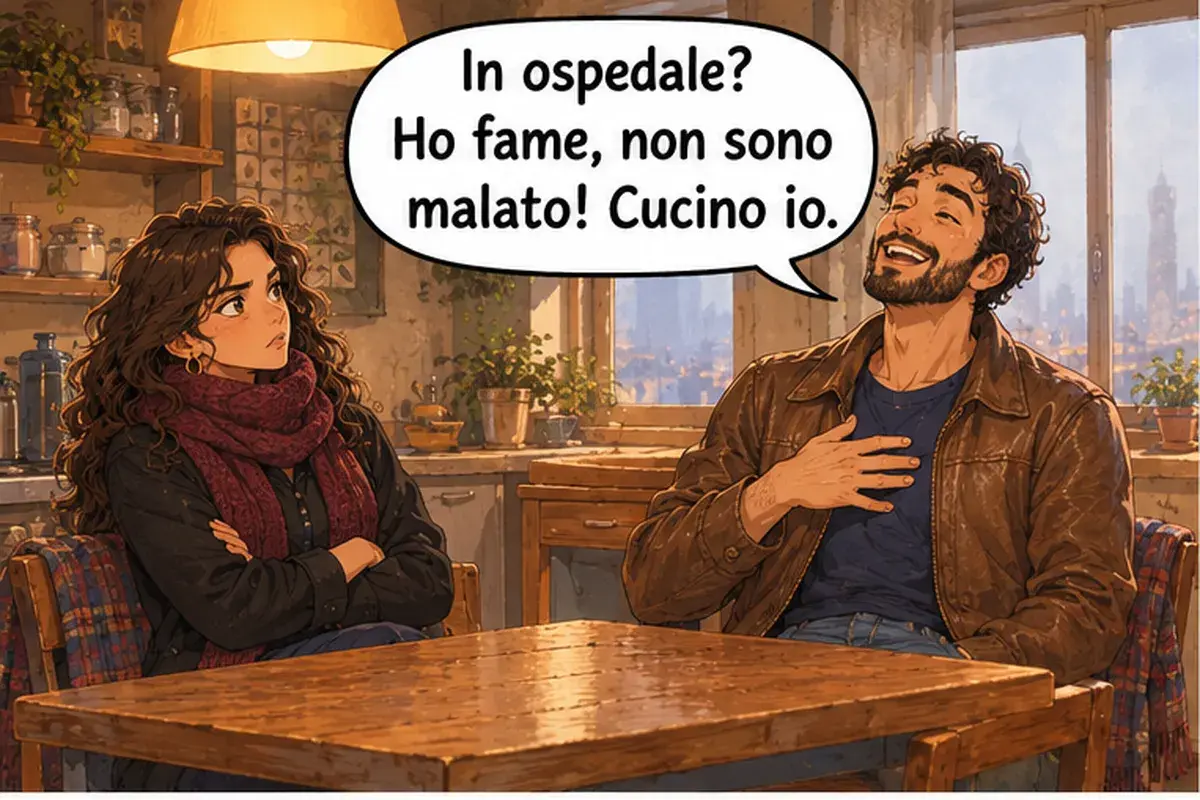
- Luca
In ospedale? Ho fame, non sono malato! Cucino io.
To the hospital? I'm hungry, I'm not sick! I'll cook (man speaking).
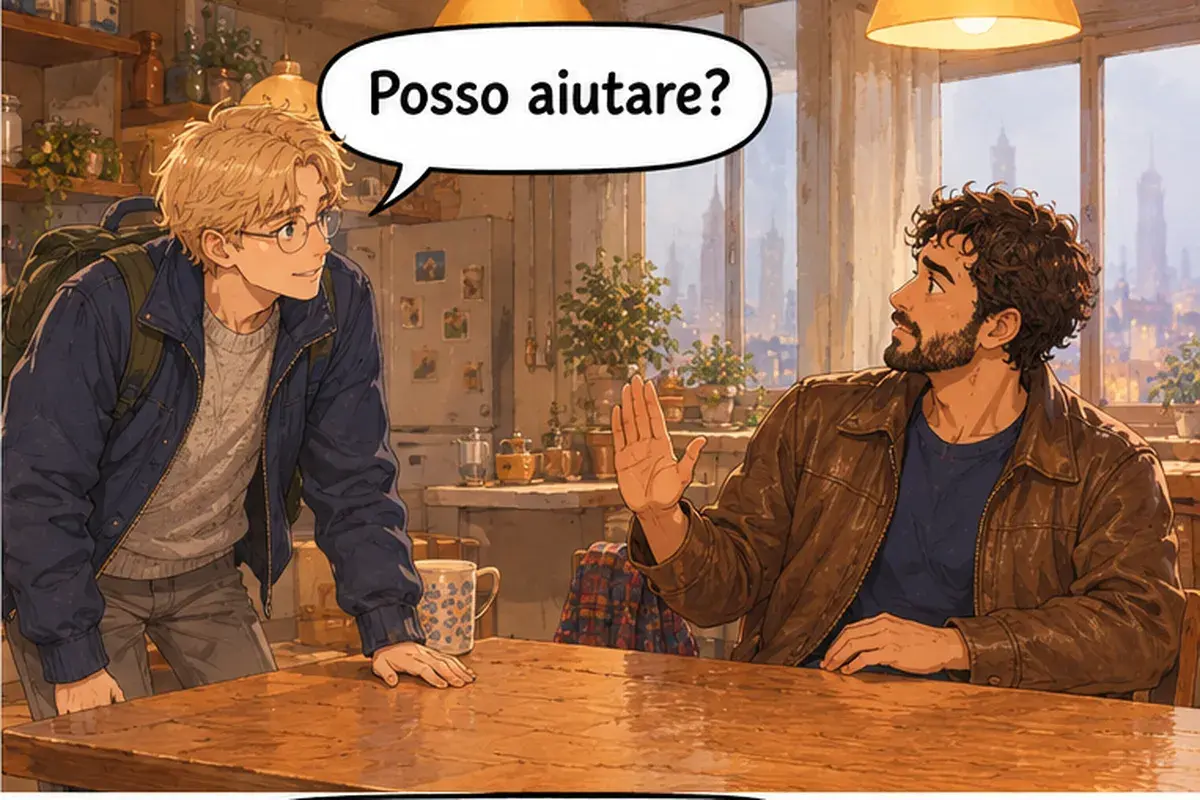
- Misha
Posso aiutare?
Can I help?
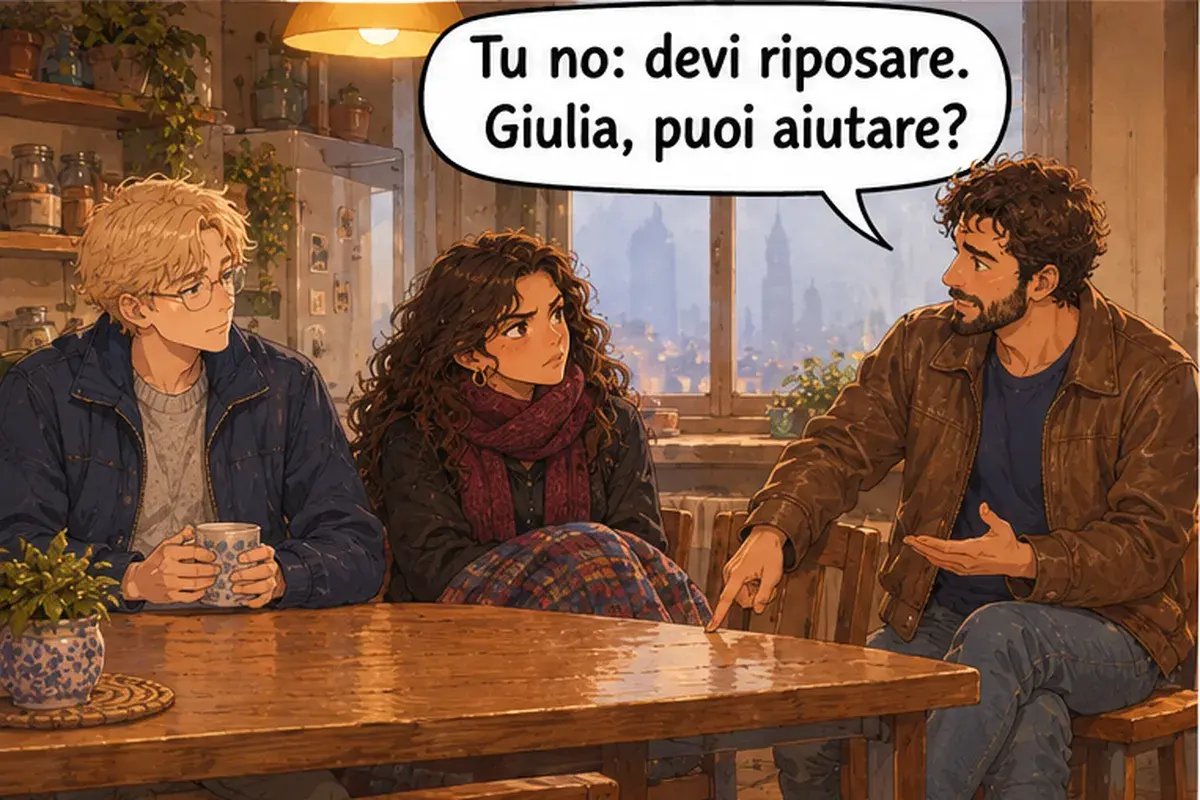
- Luca
Tu no: devi riposare. Giulia, puoi aiutare?
Not you: you need to rest. Giulia, can you help?
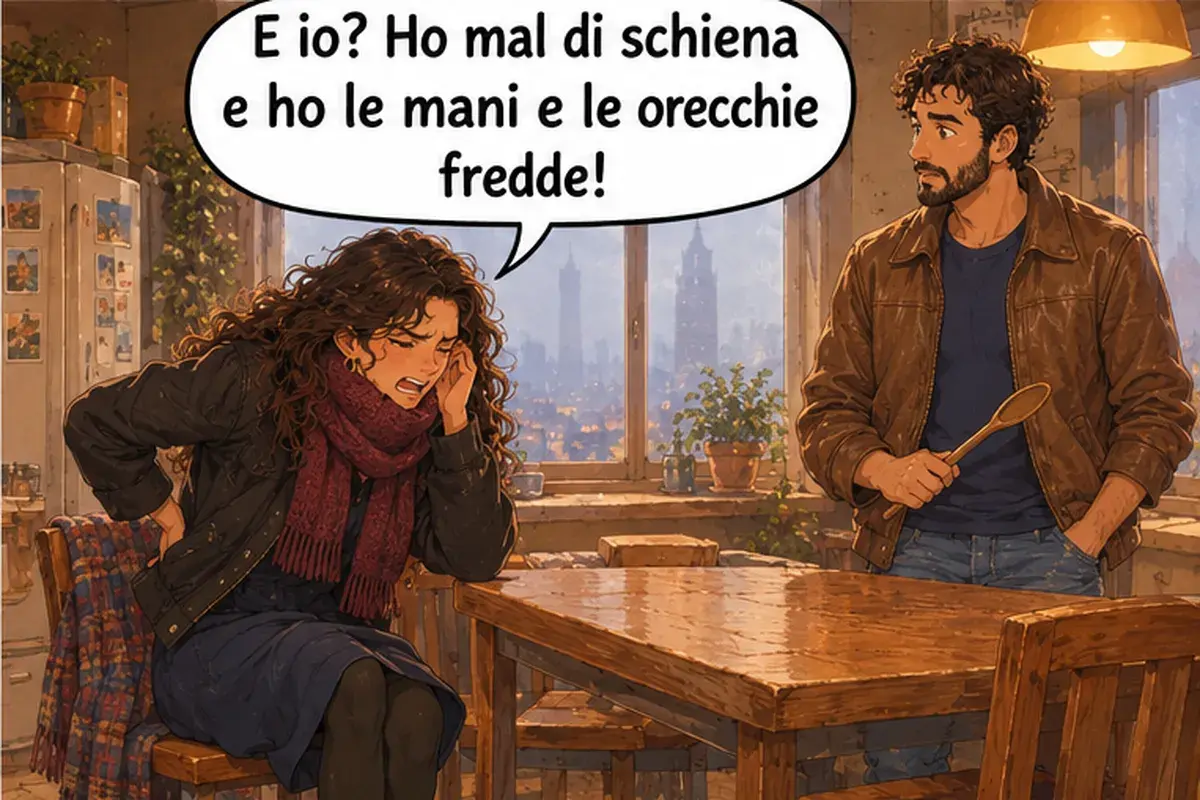
- Giulia
E io? Ho mal di schiena e ho le mani e le orecchie fredde!
What about me? I have a backache, and my hands and ears are cold!
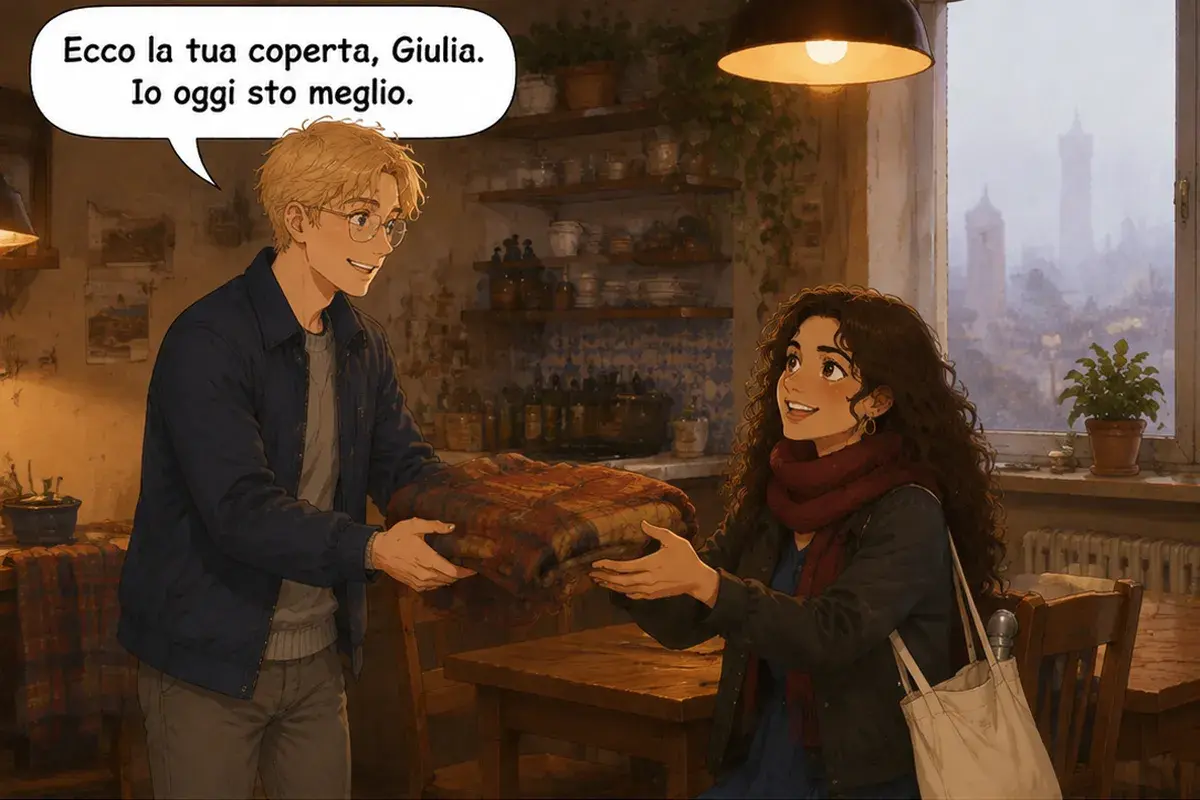
- Misha
Ecco la tua coperta, Giulia. Io oggi sto meglio.
Here's your blanket, Giulia. I feel better today.
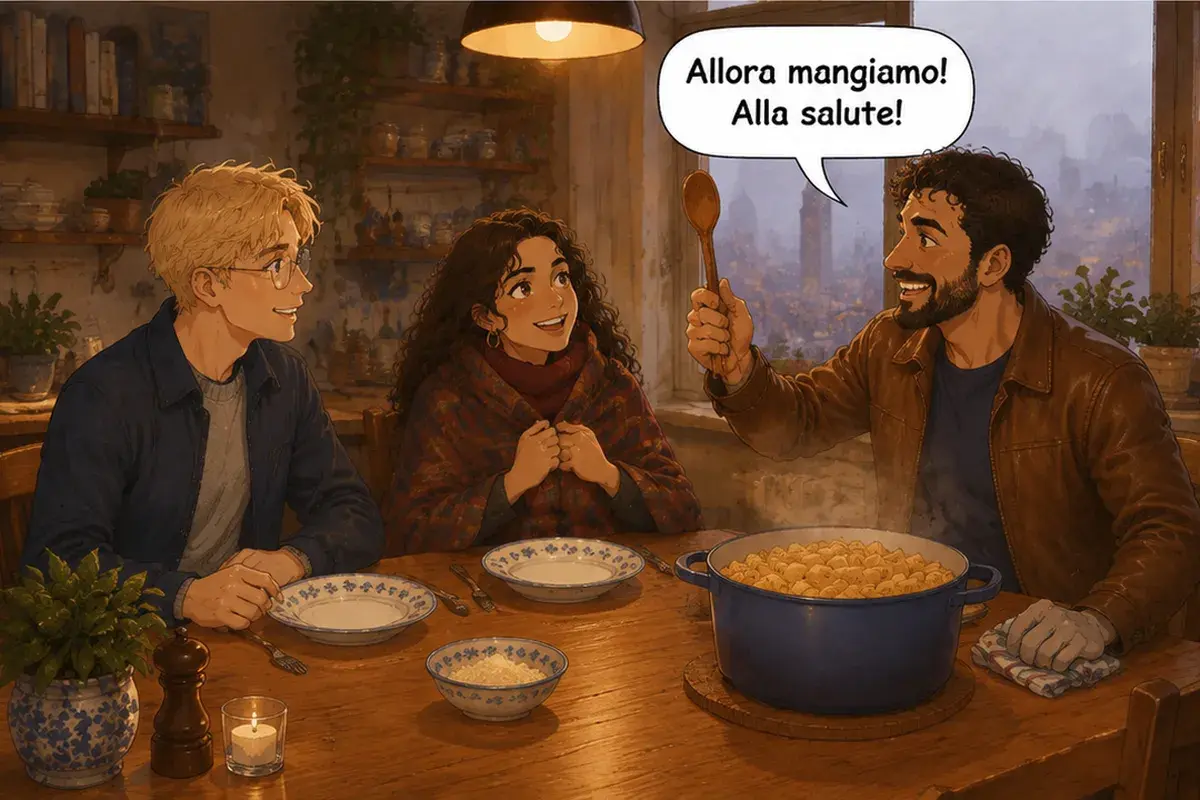
- Luca
Allora mangiamo! Alla salute!
Then let's eat! To your health!
Grammar for this text
- Io sto peggio: ho mal di pancia! — sto is the io form of stare (unit 6): sto peggio — I feel worse, sto meglio — I feel better; no "than…" yet. ho mal di pancia — word for word "I have pain of stomach".
- Hai mal di pancia: perché non vai in ospedale? — vai — you go, from andare (unit 7). Where to: in ospedale, like in farmacia, with no article.
- In ospedale? Ho fame, non sono malato! Cucino io. — ho fame — I'm hungry (word for word "I have hunger"); sono malato — I'm sick, but "I feel sick" is sto male. cucino io — I'll cook: the subject at the end stresses "me, not you".
- Tu no: devi riposare. — devi — you need to, from dovere, followed by an infinitive with no preposition: advice to a friend. Tu no — not you.
- Posso aiutare? — posso — I can, from potere (unit 10). No "you" is needed: just "can I help?".
- E io? Ho mal di schiena e ho le mani e le orecchie fredde! — body parts take the article: le mani, le orecchie, where English says "my hands", "my ears". la mano is feminine even though it ends in -o; l'orecchio is masculine, but the plural is le orecchie.
- Alla salute! — the toast "to your health!": alla = a + la.
Words and grammar of the unit: Say what hurts at the pharmacy.
Learn the words from the texts with flashcards
In the app, you can tap any word in a text to see its translation, forms and examples, and new words stick with flashcards. 15 minutes a day.
Start for freeEverything is open for free. No card needed to sign up.