
Italian dialogue with translation · A1 · 16 lines
Scusa, ma io sono qui: il treno no! Sorry, but I'm here: the train isn't!
Comic · 16 panels

- Luca
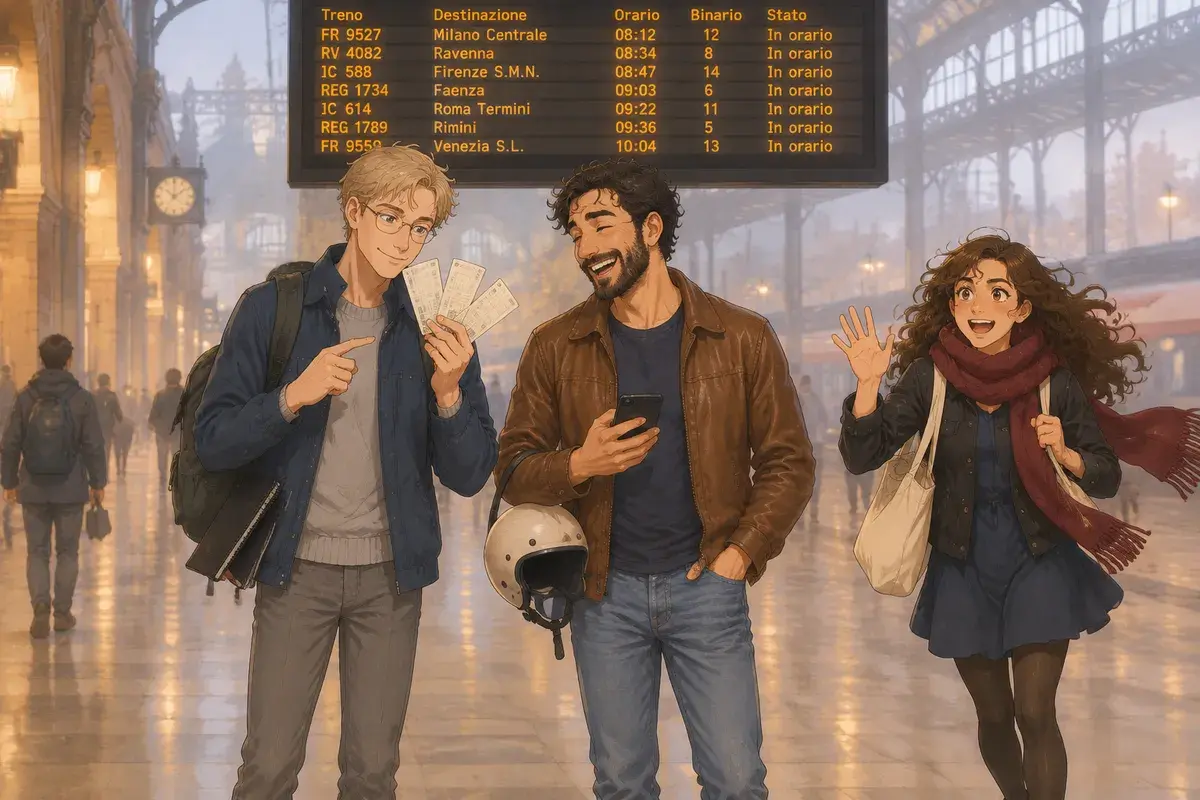
Ciao, Misha! Hai i biglietti?
Hi, Misha! Do you have the tickets?

- Misha
Sì, tre biglietti, andata e ritorno. Guarda!
Yes, three tickets, round trip. Look!
- Luca
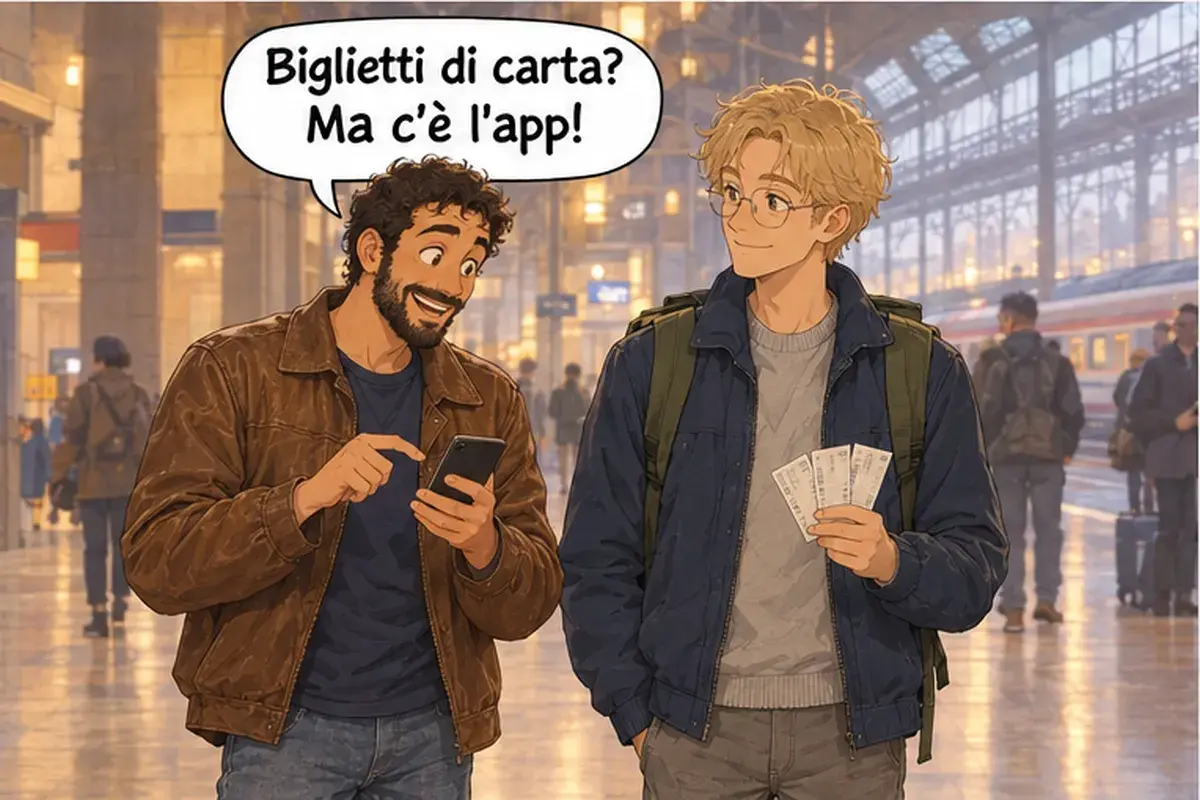
Biglietti di carta? Ma c'è l'app!
Paper tickets? But there's the app!
- Misha
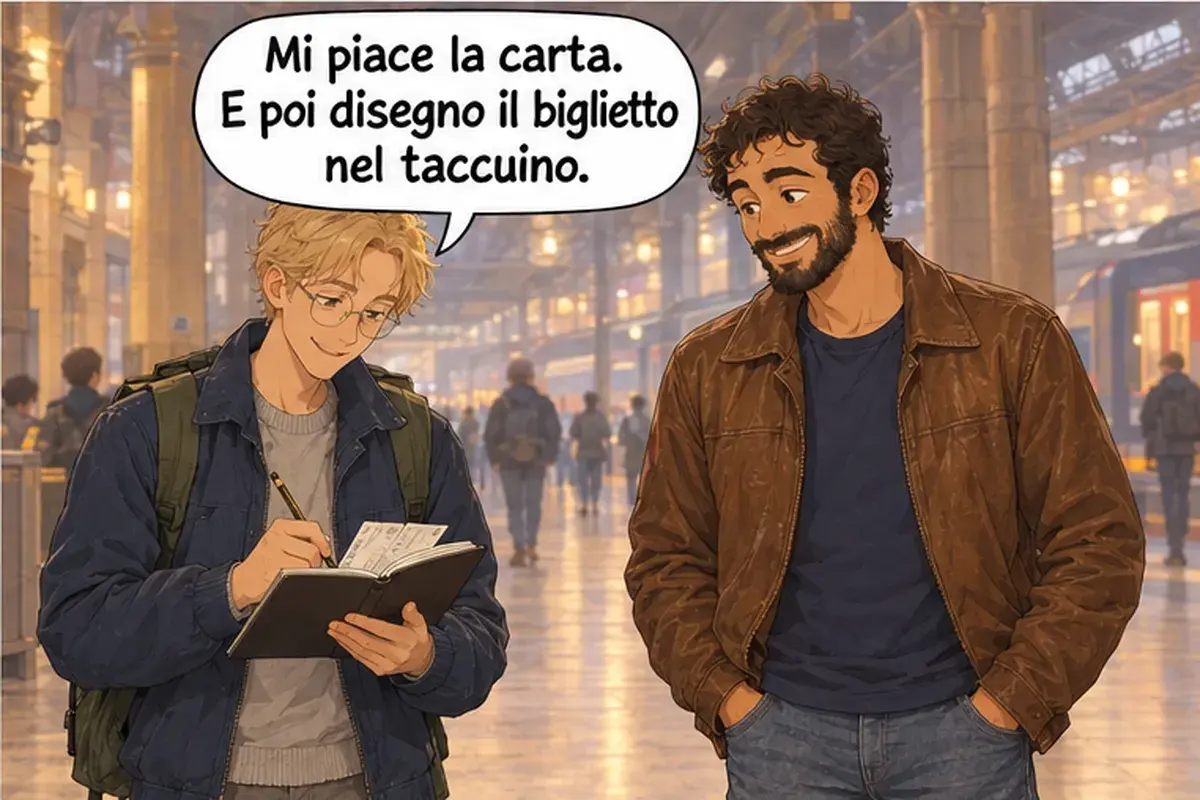
Mi piace la carta. E poi disegno il biglietto nel taccuino.
I like paper. And besides, I draw the ticket in my notebook.
- Luca
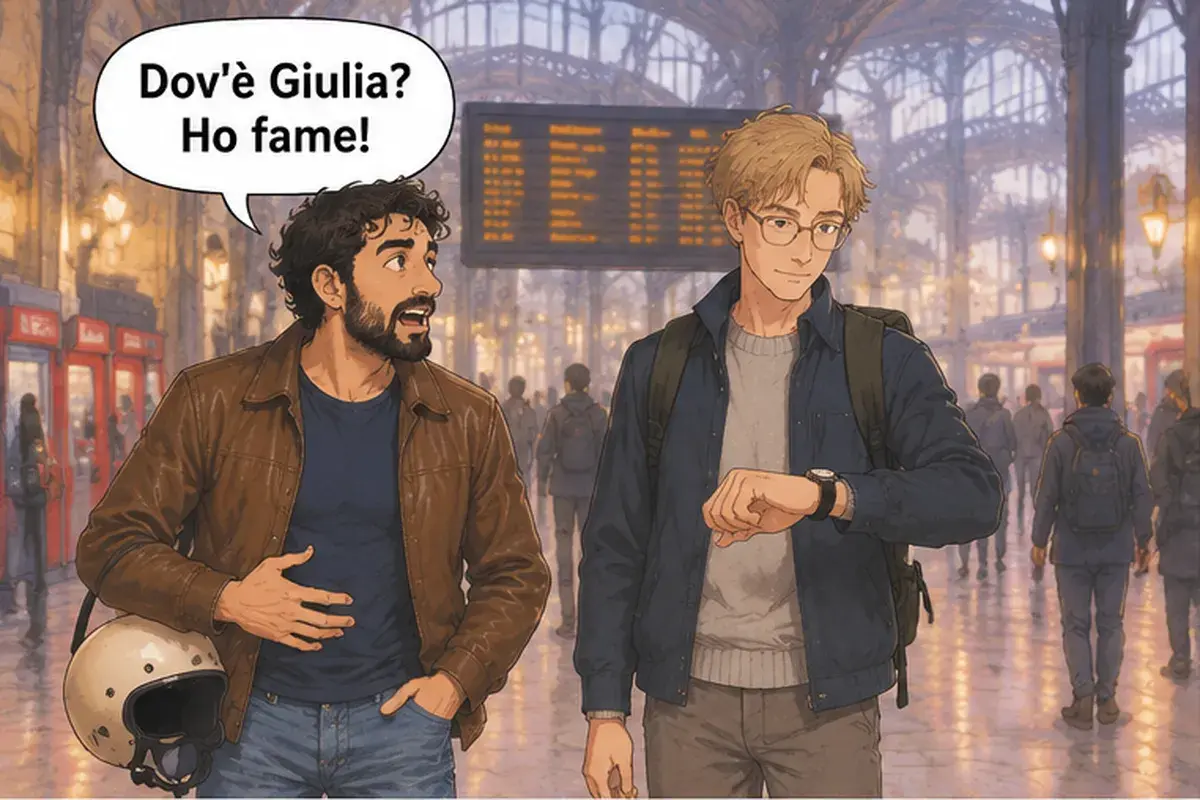
Dov'è Giulia? Ho fame!
Where's Giulia? I'm hungry!
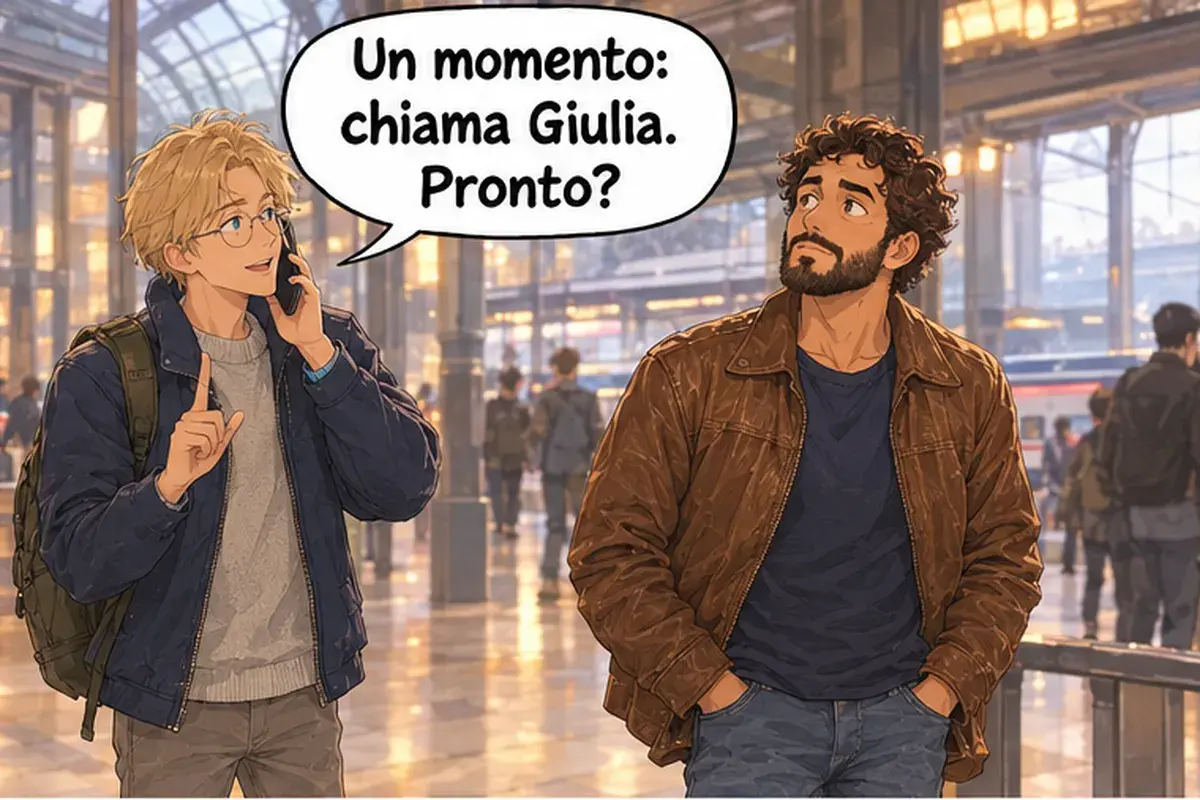
- Misha
Un momento: chiama Giulia. Pronto?
One moment: Giulia's calling. Hello?
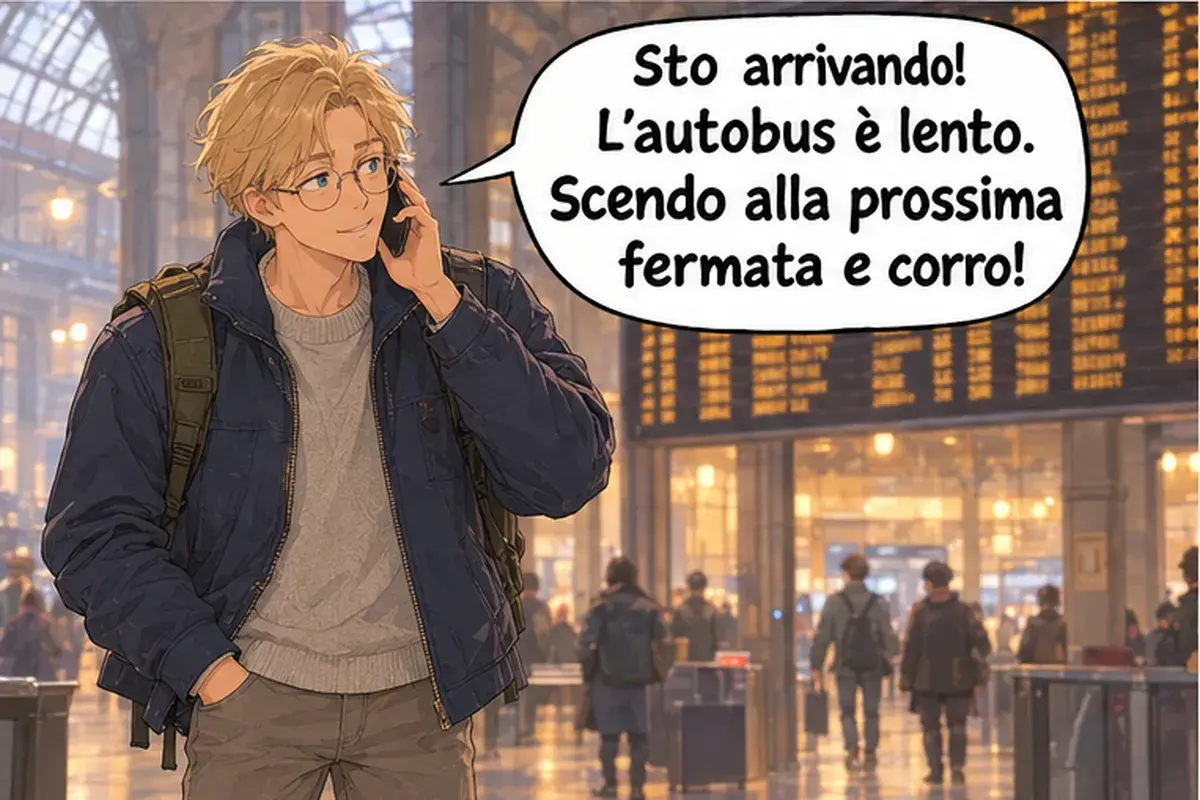
- Giulia
Sto arrivando! L'autobus è lento. Scendo alla prossima fermata e corro!
I'm on my way! The bus is slow. I'm getting off at the next stop and running!
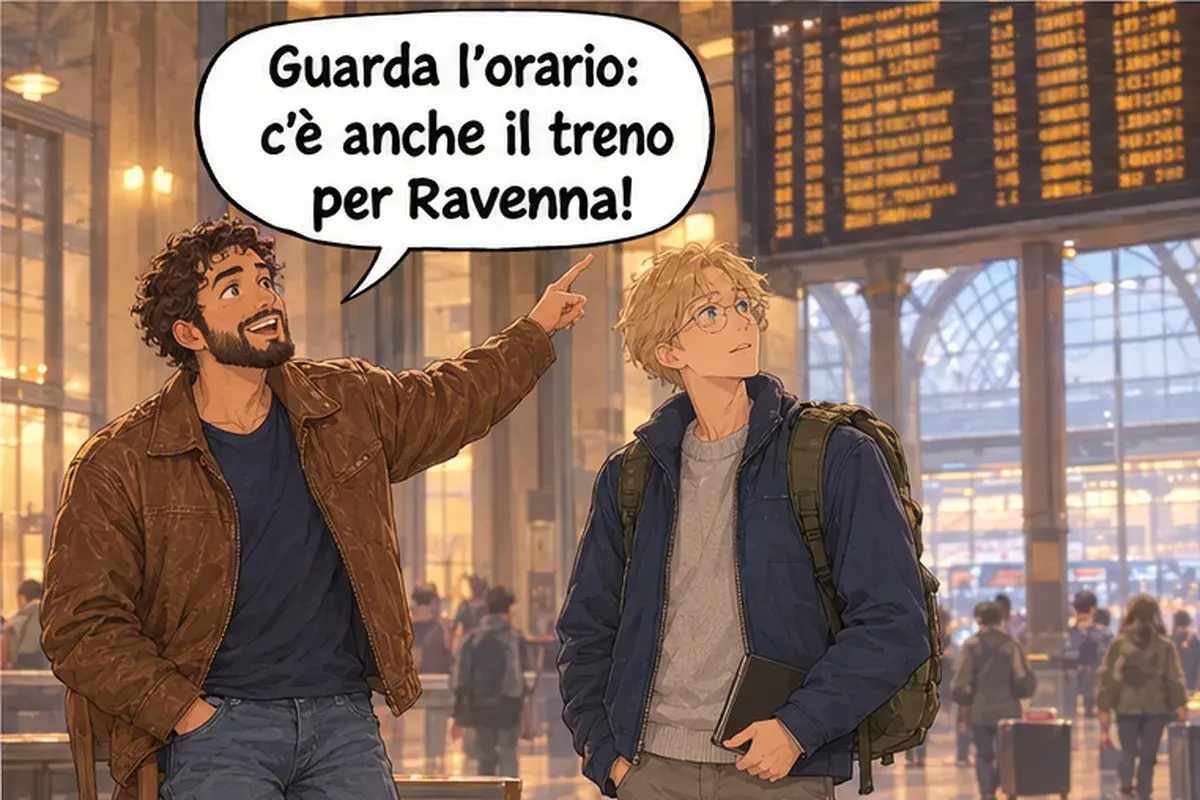
- Luca
Guarda l'orario: c'è anche il treno per Ravenna!
Look at the schedule: there's the train to Ravenna too!
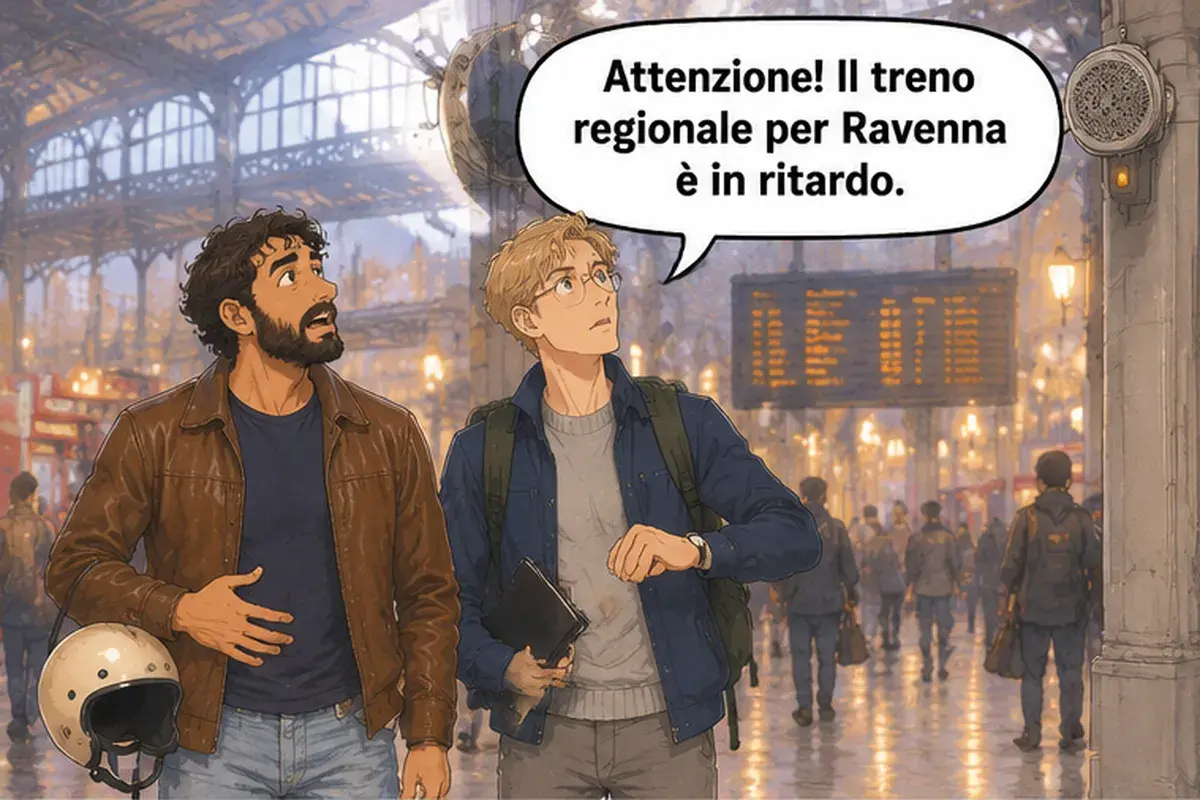
- Annuncio
Attenzione! Il treno regionale per Ravenna è in ritardo.
Attention! The regional train to Ravenna is late.
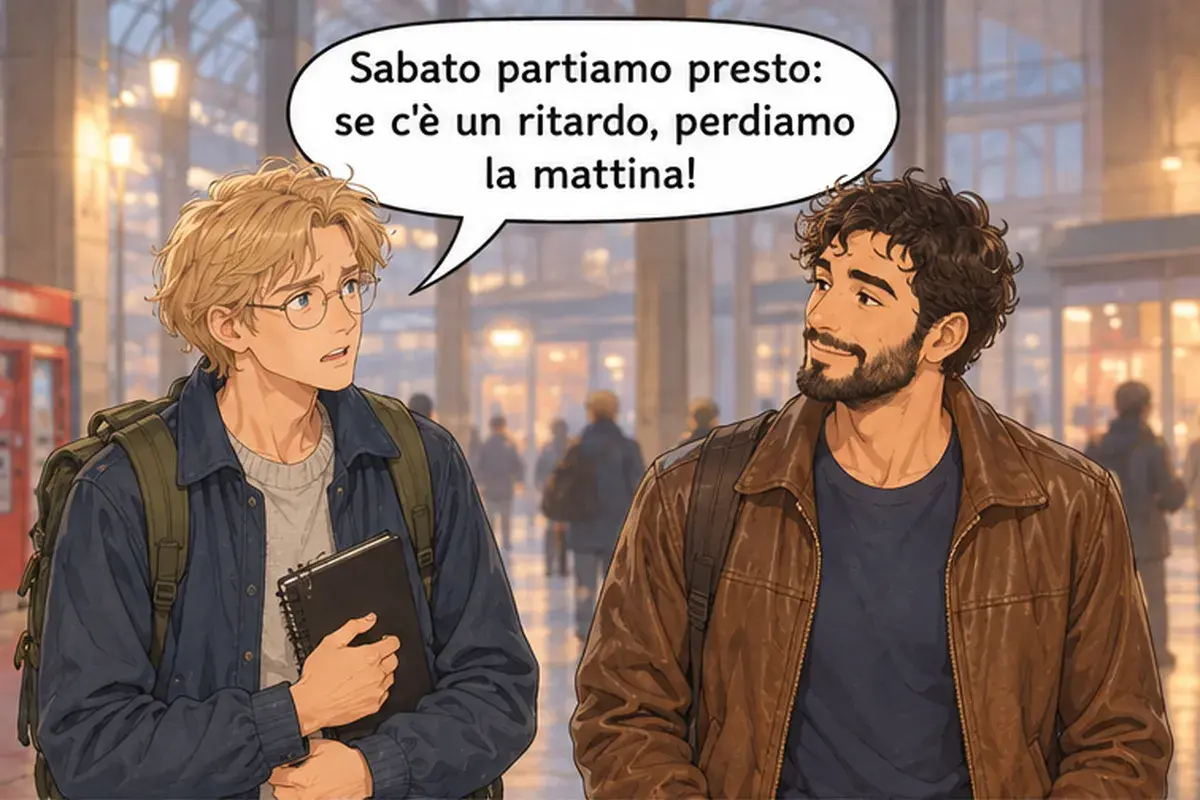
- Misha
Sabato partiamo presto: se c'è un ritardo, perdiamo la mattina!
On Saturday we're leaving early: if there's a delay, we'll lose the morning!
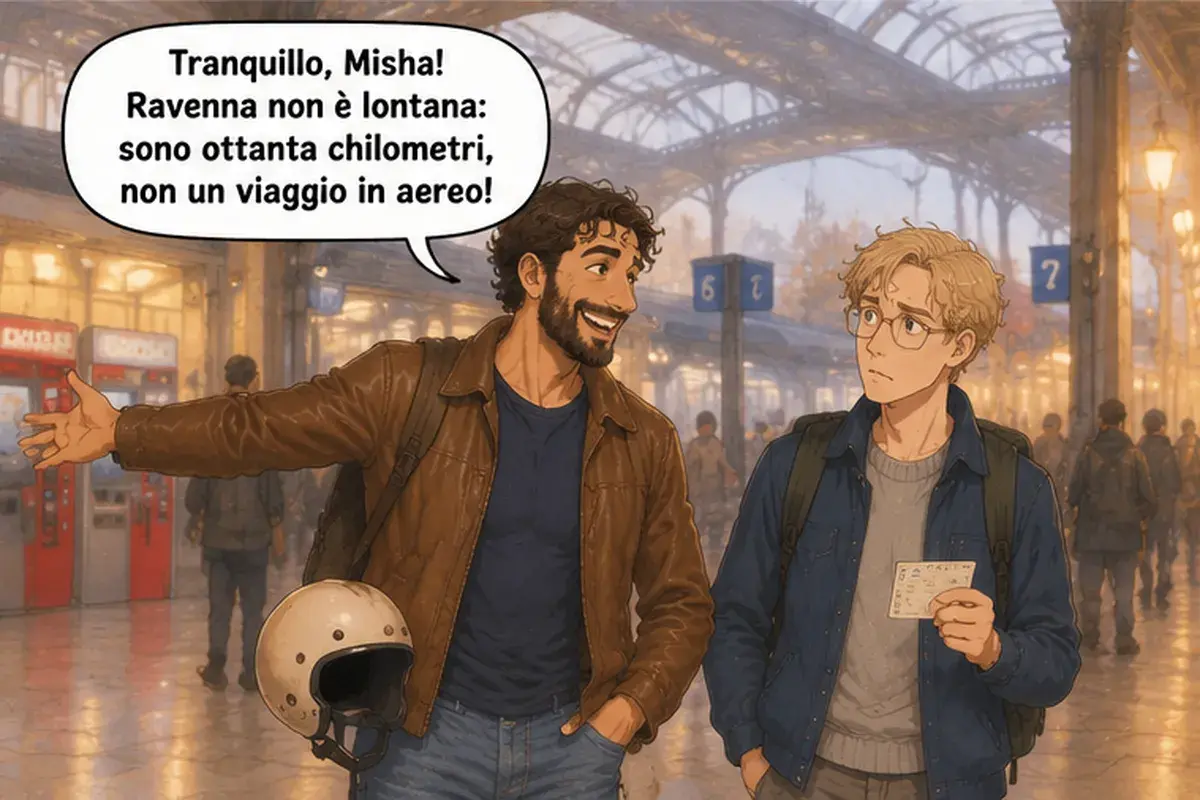
- Luca
Tranquillo, Misha! Ravenna non è lontana: sono ottanta chilometri, non un viaggio in aereo!
Relax, Misha! Ravenna isn't far: it's eighty kilometers, not a plane trip!
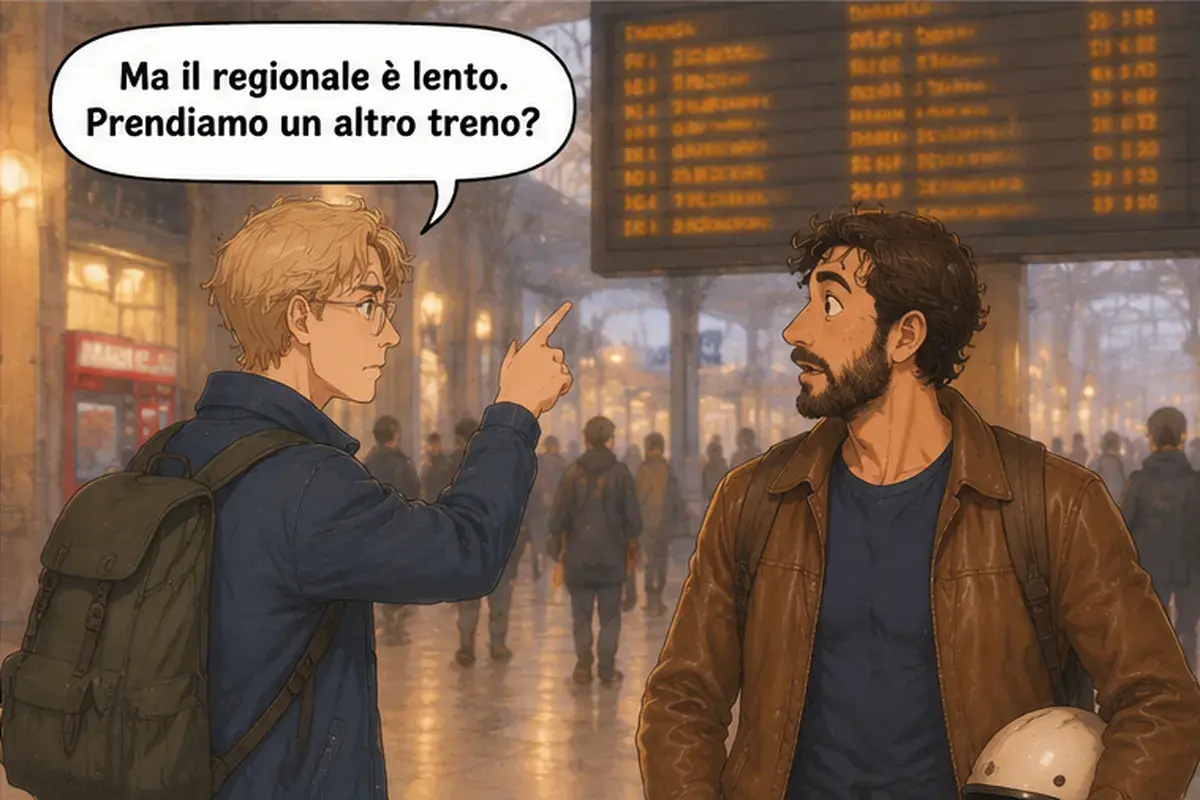
- Misha
Ma il regionale è lento. Prendiamo un altro treno?
But the regional train is slow. Should we take another train?
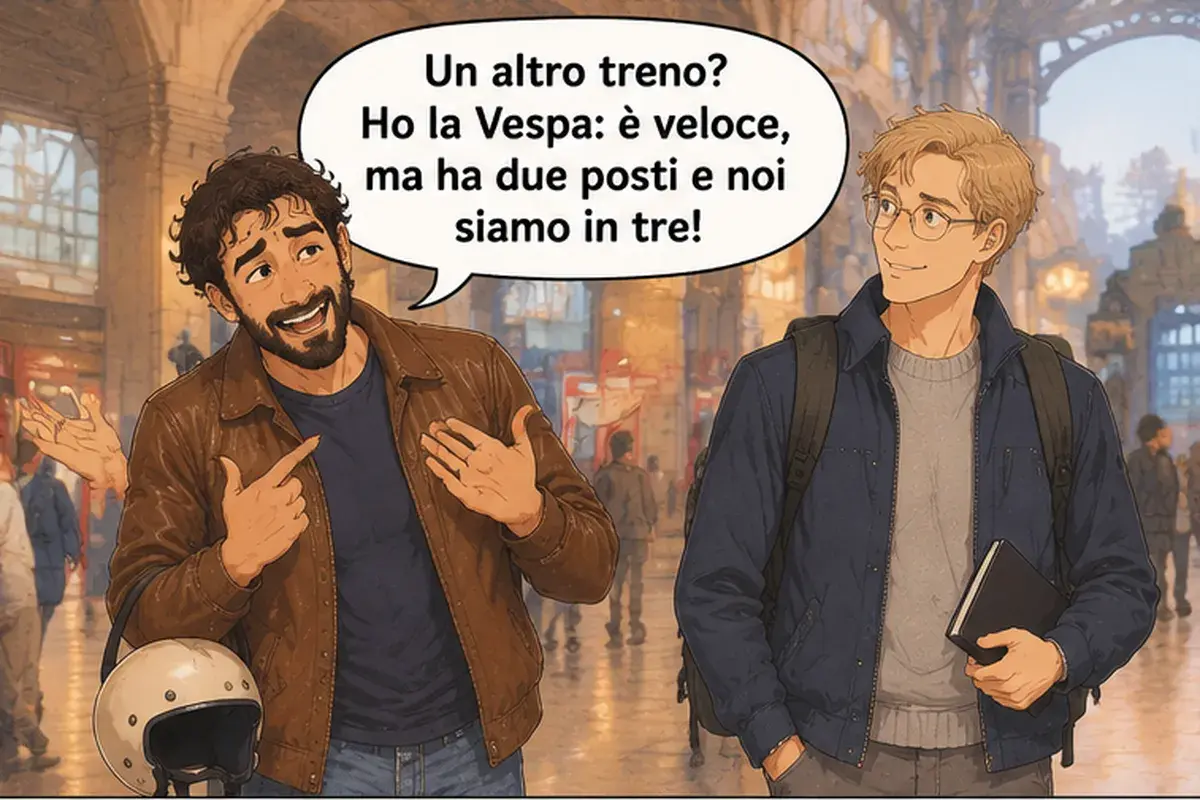
- Luca
Un altro treno? Ho la Vespa: è veloce, ma ha due posti e noi siamo in tre!
Another train? I have the Vespa: it's fast, but it has two seats and there are three of us!

- Misha
Ecco Giulia!
Here's Giulia!
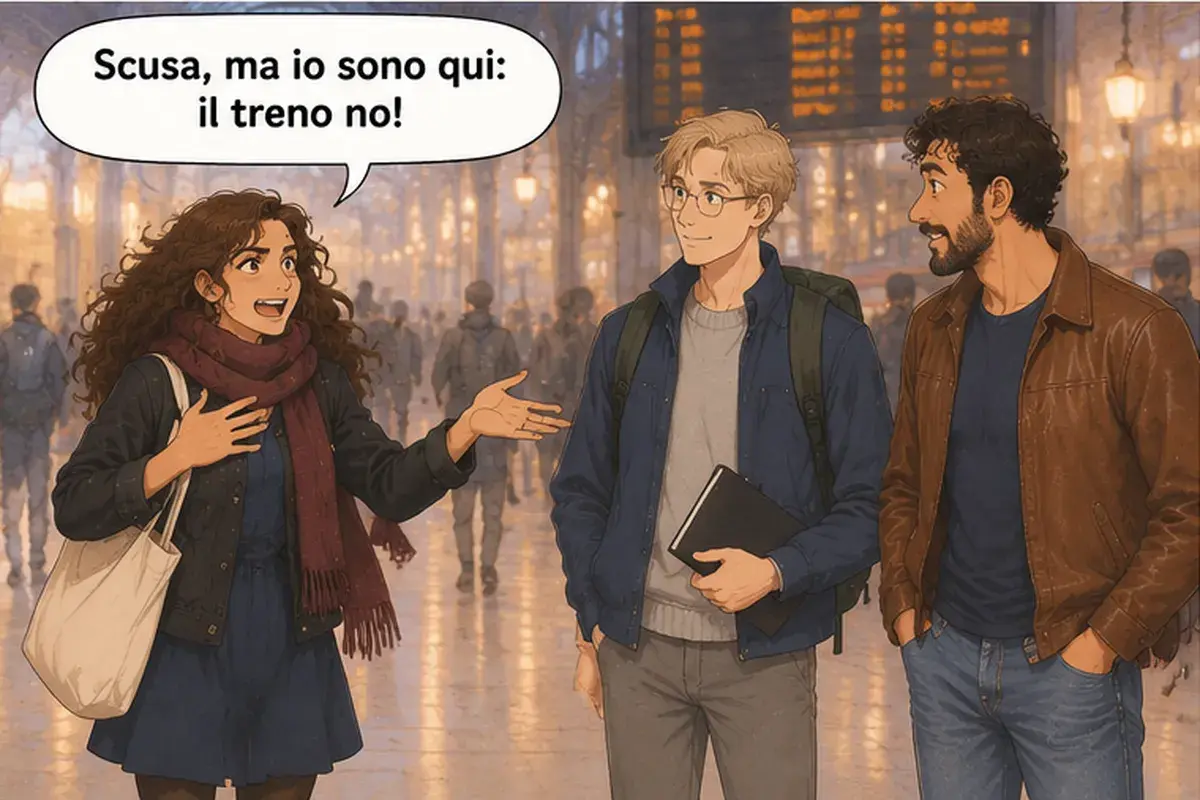
- Giulia
Scusa, ma io sono qui: il treno no!
Sorry, but I'm here: the train isn't!
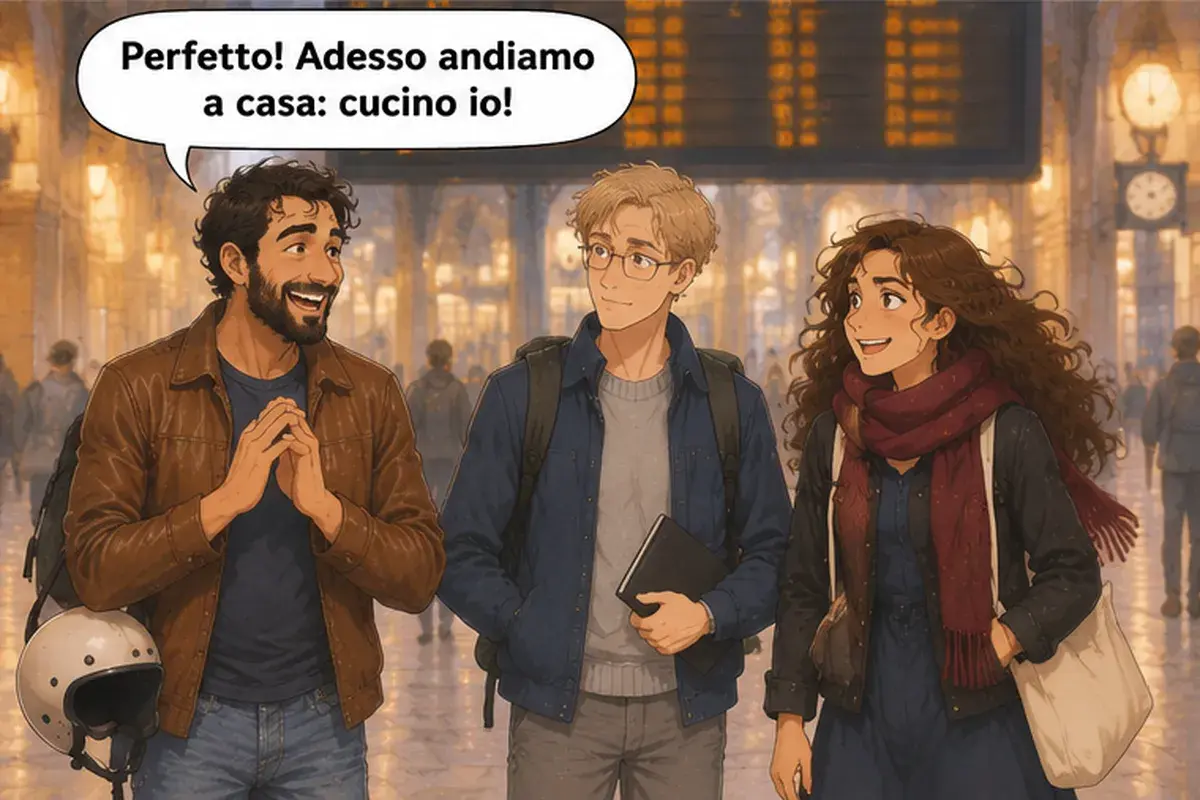
- Luca
Perfetto! Adesso andiamo a casa: cucino io!
Perfect! Now let's go home: I'll cook!
Grammar for this text
- Sto arrivando! — literally "I'm arriving": sto is the io form of stare, arrivando is the -ando form. It means "I'm on my way, I'm almost there". How it works comes at A2; for now learn it as a set phrase.
- Scendo alla prossima fermata e corro! — scendo is from scendere: that's the verb for getting off a bus or a train (uscire is to go out of a place). corro — the io form of correre (to run). alla = a + la.
- Un momento: chiama Giulia. Pronto? — chiama here means "is calling" (chiamare is both to call someone and to phone). The subject comes after the verb when you announce something new. Pronto? — what you say when you answer the phone: hello?
- c'è anche il treno per Ravenna — c'è — there is; anche (too, also) goes right before the word it's about: "the train to Ravenna too". l'orario — the schedule; at the station the departure board is called that too.
- Sabato partiamo presto — a plan in the present tense, and no preposition before sabato: "on Saturday we're leaving early". perdiamo la mattina — we'll lose the morning.
- Guarda l'orario — guarda — look!, the tu form of guardare; you say it to a friend. The rule comes at A2; for now it's a ready-made word.
- Ho la Vespa: è veloce, ma ha due posti e noi siamo in tre! — ha due posti — it has two seats; in tre — the three of us.
Words and grammar of the unit: Buy a train ticket.
Learn the words from the texts with flashcards
In the app, you can tap any word in a text to see its translation, forms and examples, and new words stick with flashcards. 15 minutes a day.
Start for freeEverything is open for free. No card needed to sign up.