

Italian dialogue with translation · A1 · 16 lines
Che lavoro fai? What do you do for a living?
Comic · 16 panels
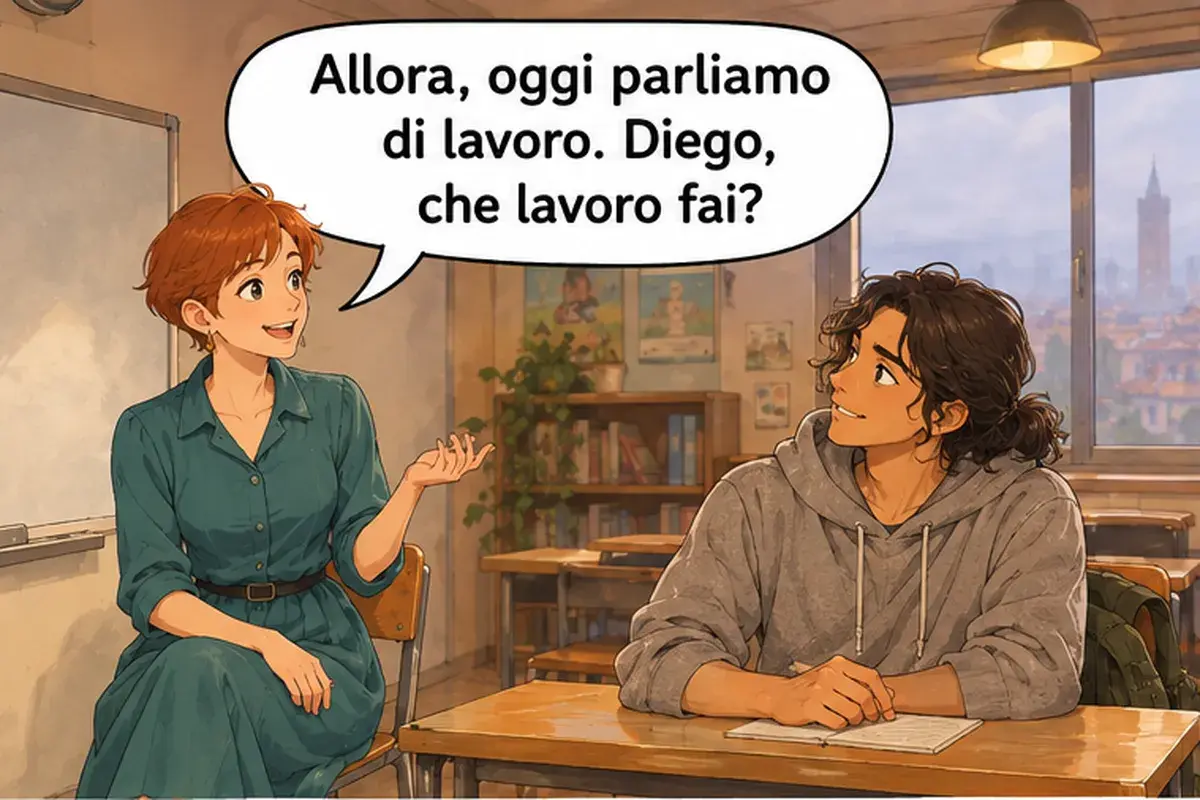
- Chiara
Allora, oggi parliamo di lavoro. Diego, che lavoro fai?
So, today we're talking about work. Diego, what do you do for a living?
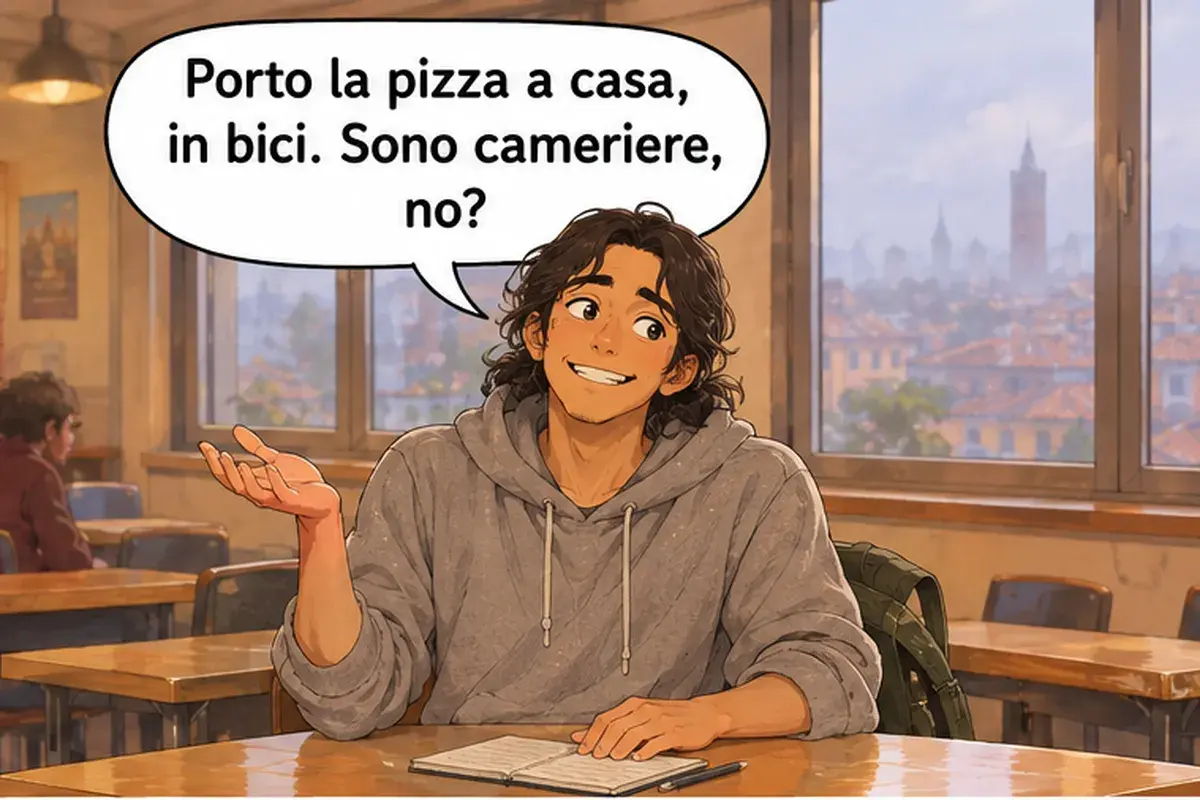
- Diego
Porto la pizza a casa, in bici. Sono cameriere, no?
I take pizza to people's homes, by bike. I'm a waiter, right?
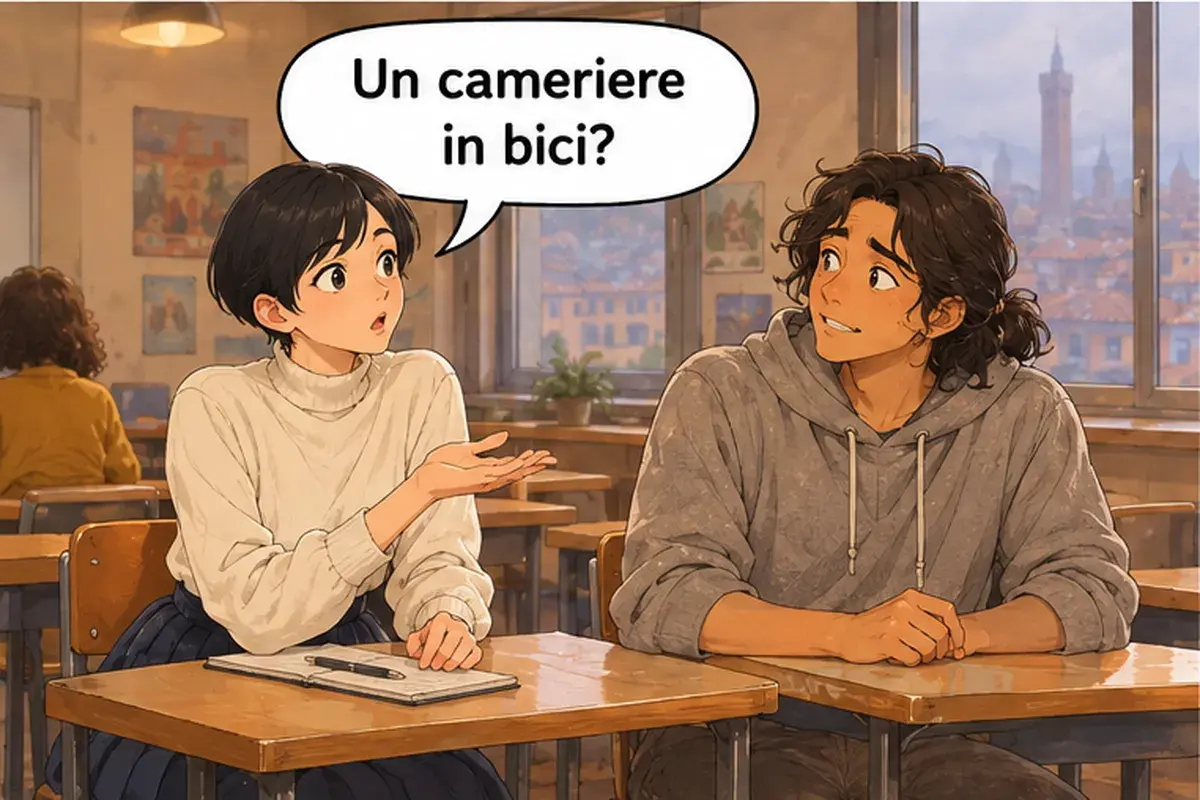
- Mei
Un cameriere in bici?
A waiter on a bike?
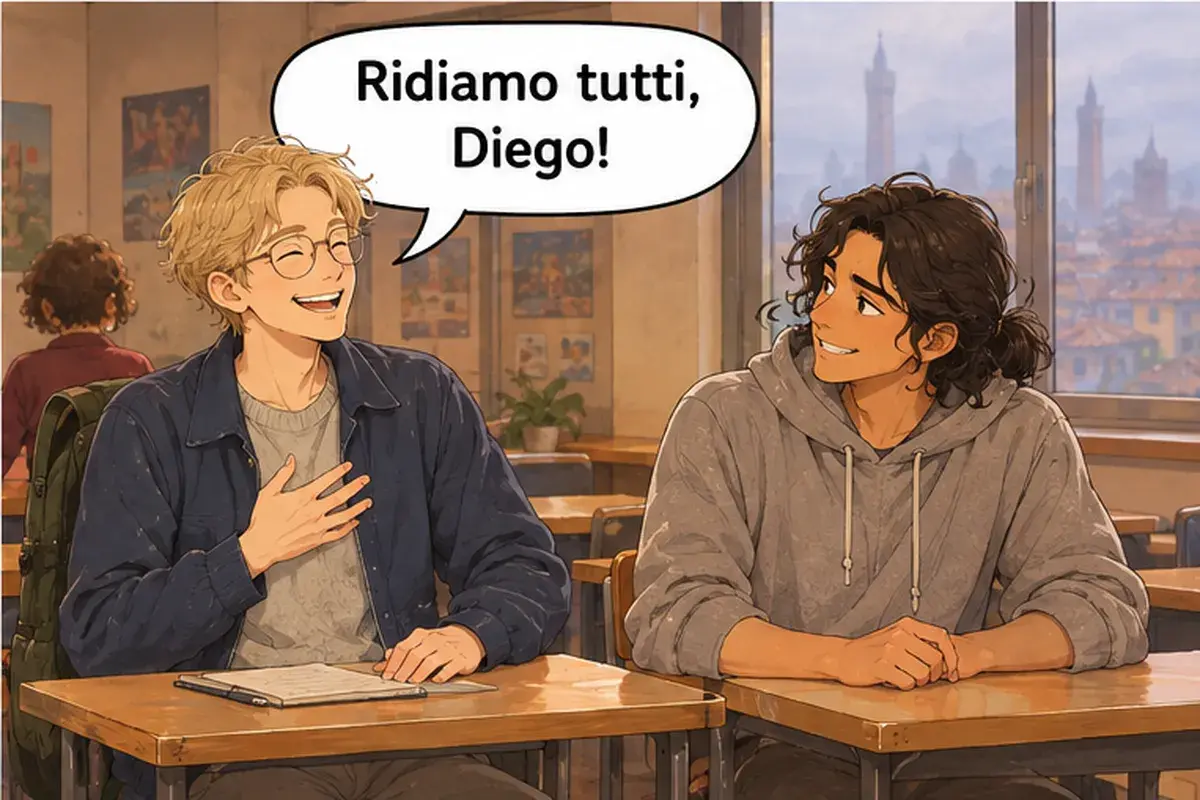
- Misha
Ridiamo tutti, Diego!
We're all laughing, Diego!
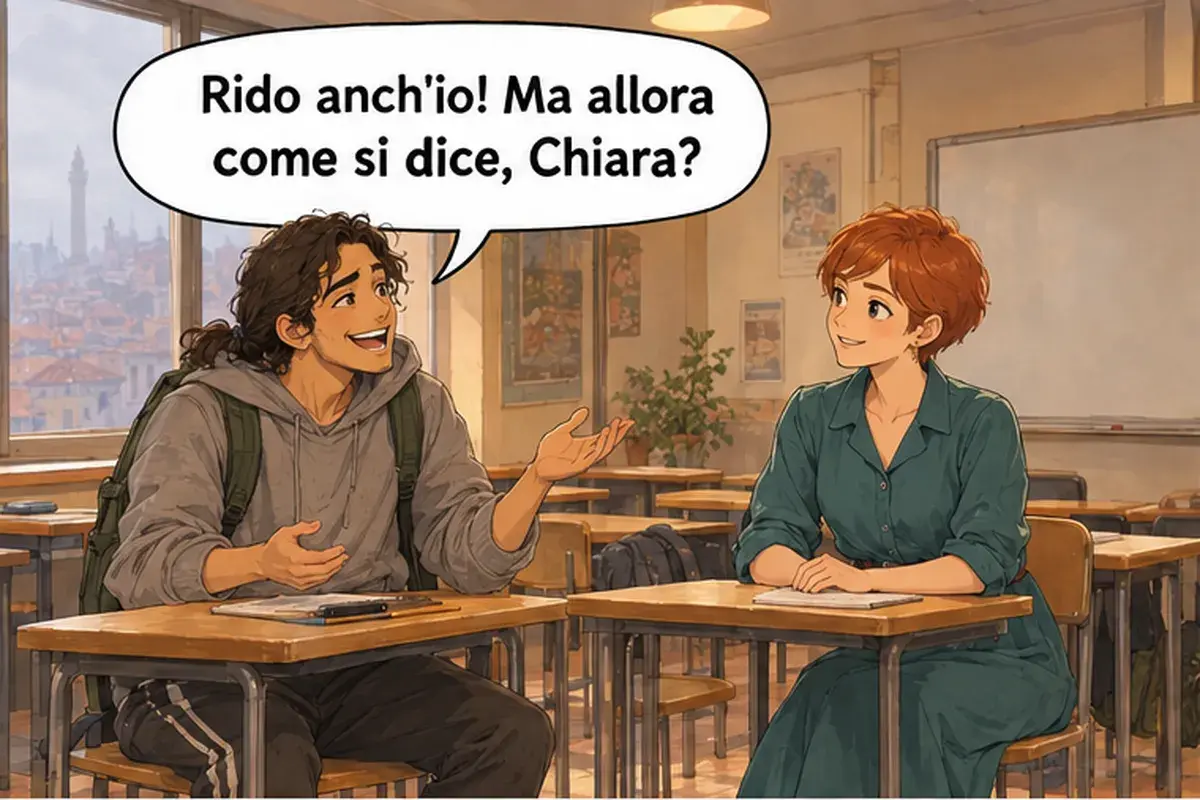
- Diego
Rido anch'io! Ma allora come si dice, Chiara?
I'm laughing too! But then how do you say it, Chiara?
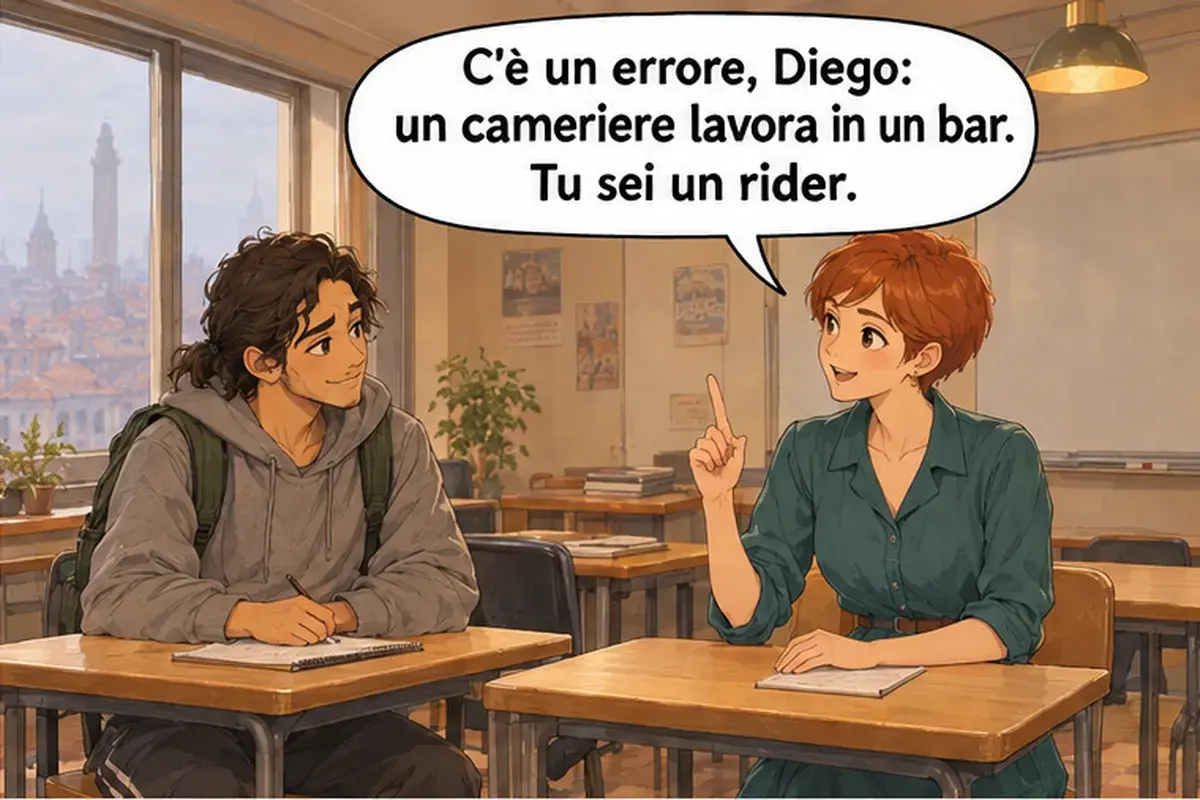
- Chiara
C'è un errore, Diego: un cameriere lavora in un bar. Tu sei un rider.
There's a mistake, Diego: a waiter works in a bar. You're a rider.
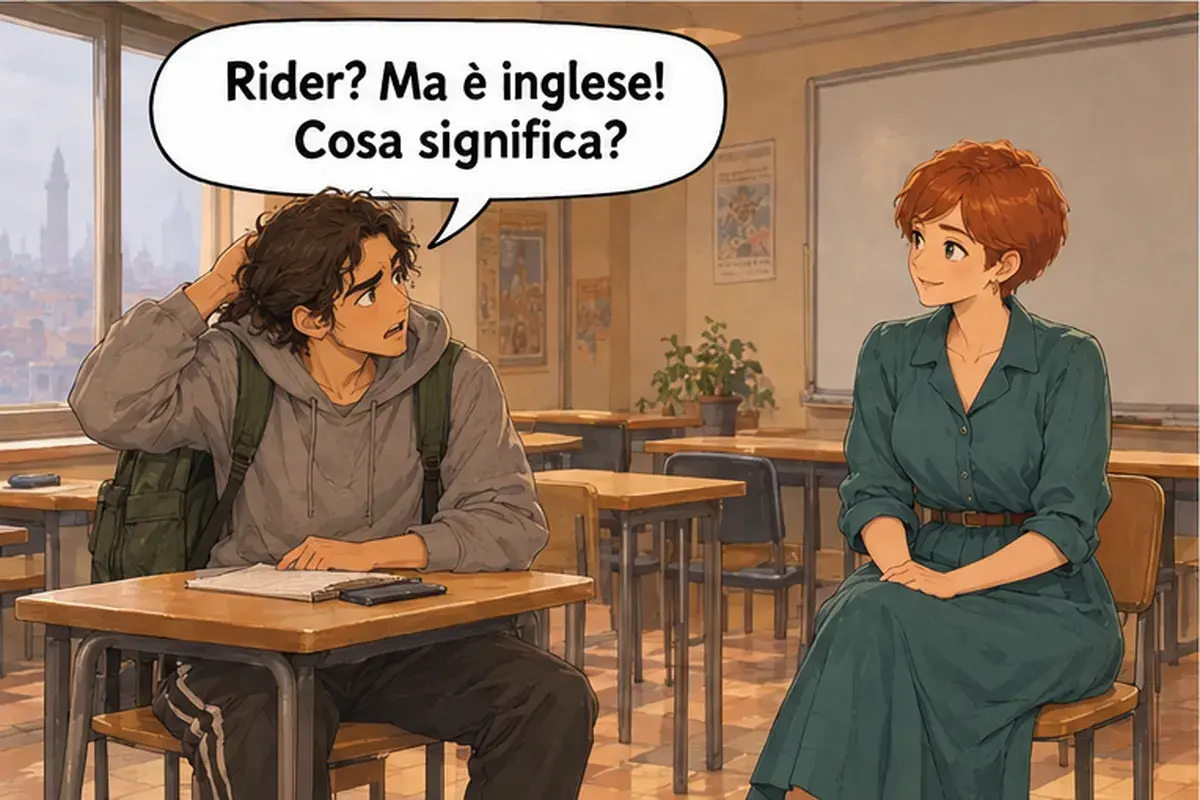
- Diego
Rider? Ma è inglese! Cosa significa?
Rider? But that's English! What does it mean?
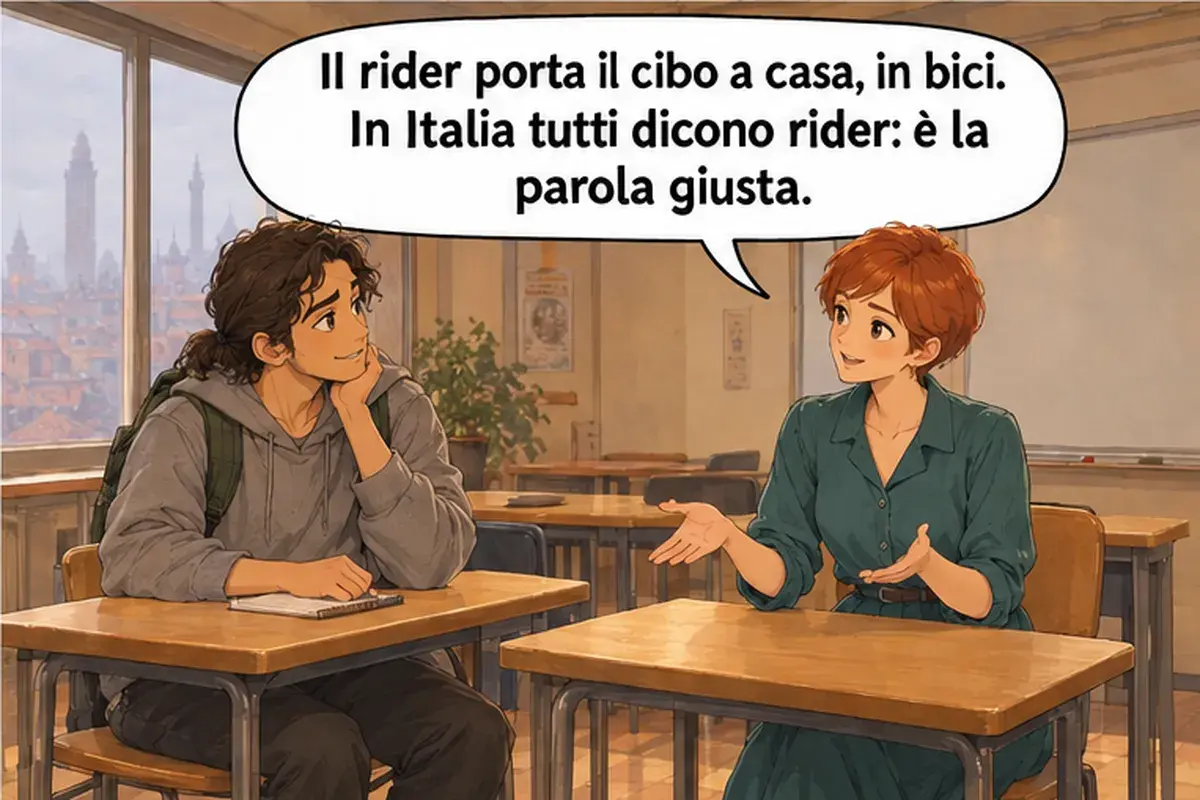
- Chiara
Il rider porta il cibo a casa, in bici. In Italia tutti dicono rider: è la parola giusta.
A rider brings food to people's homes, by bike. In Italy everyone says "rider": it's the right word.
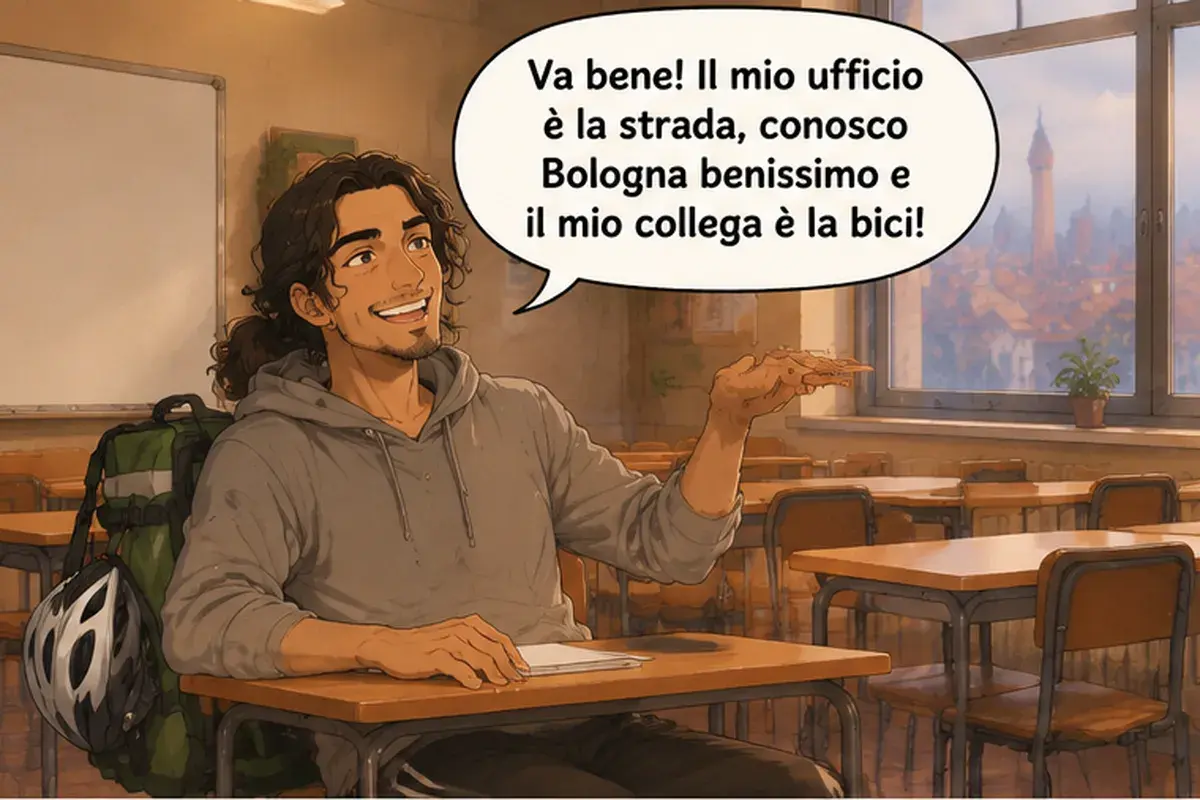
- Diego
Va bene! Il mio ufficio è la strada, conosco Bologna benissimo e il mio collega è la bici!
OK! My office is the street, I know Bologna really well, and my colleague is the bike!
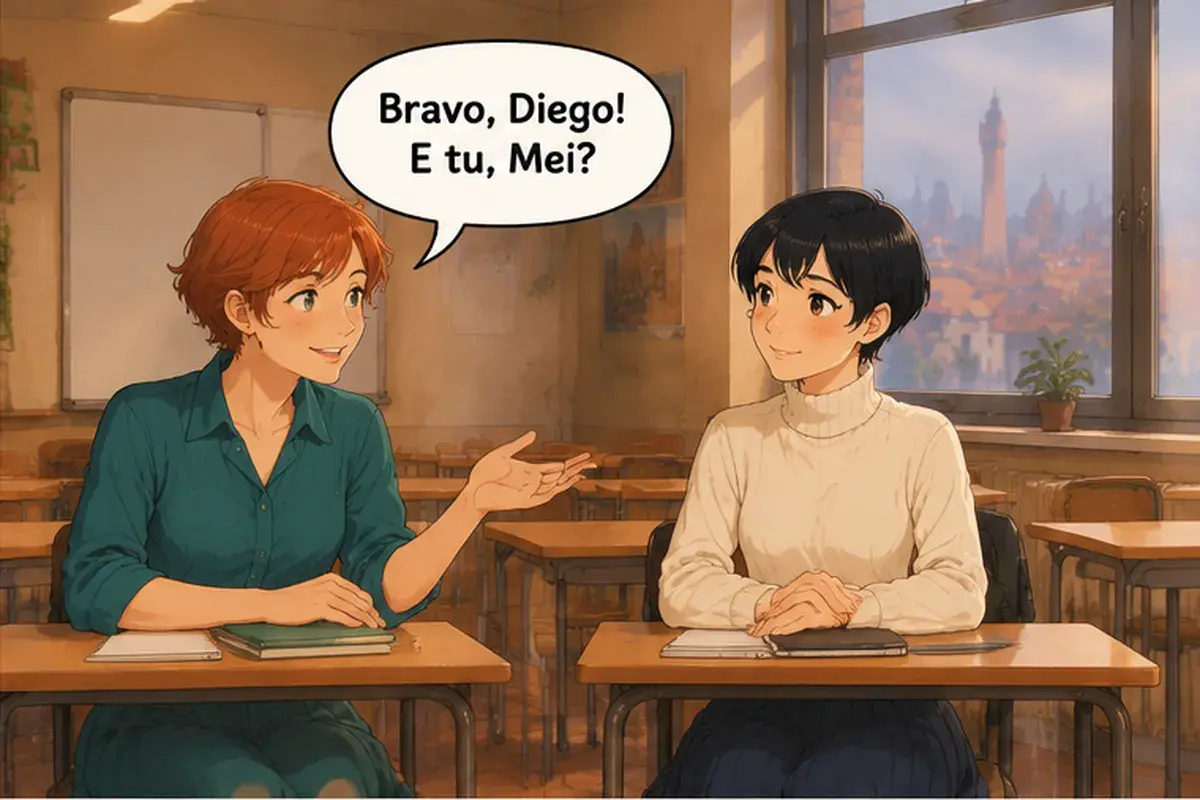
- Chiara
Bravo, Diego! E tu, Mei?
Well done, Diego! And you, Mei?
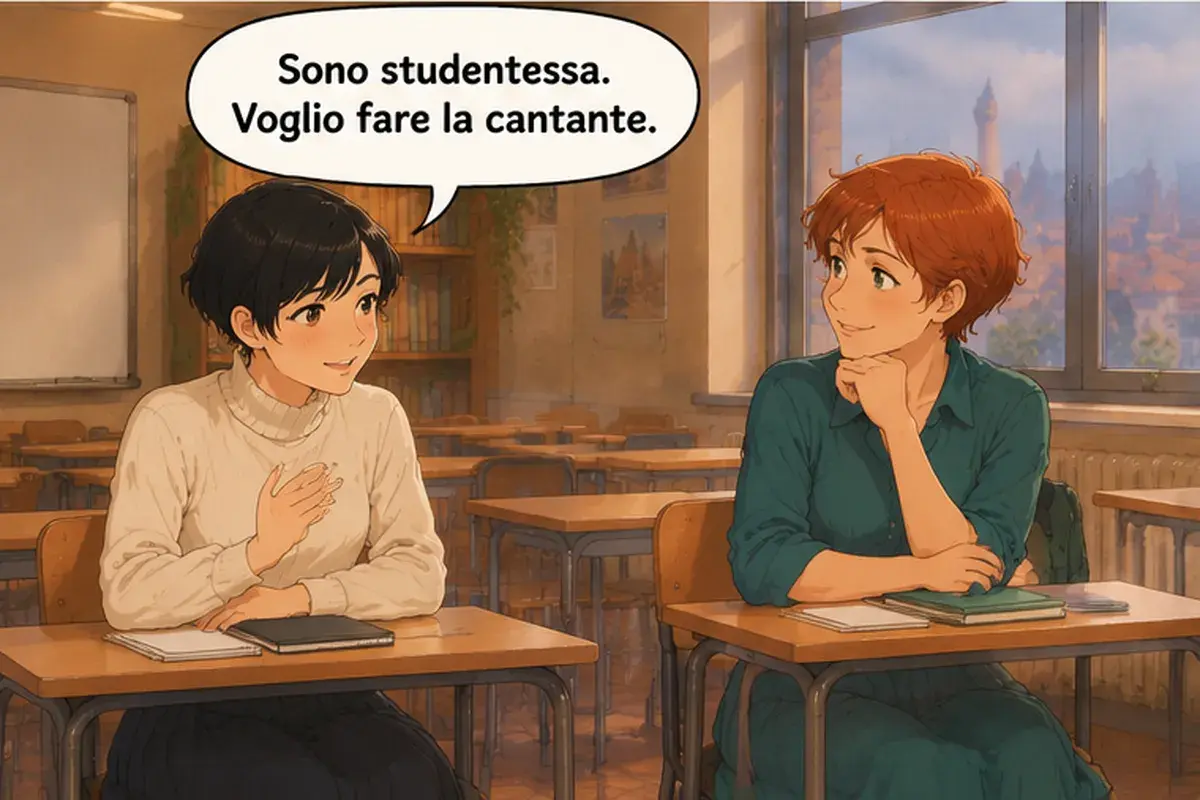
- Mei
Sono studentessa. Voglio fare la cantante.
I'm a student. I want to be a singer (woman speaking).
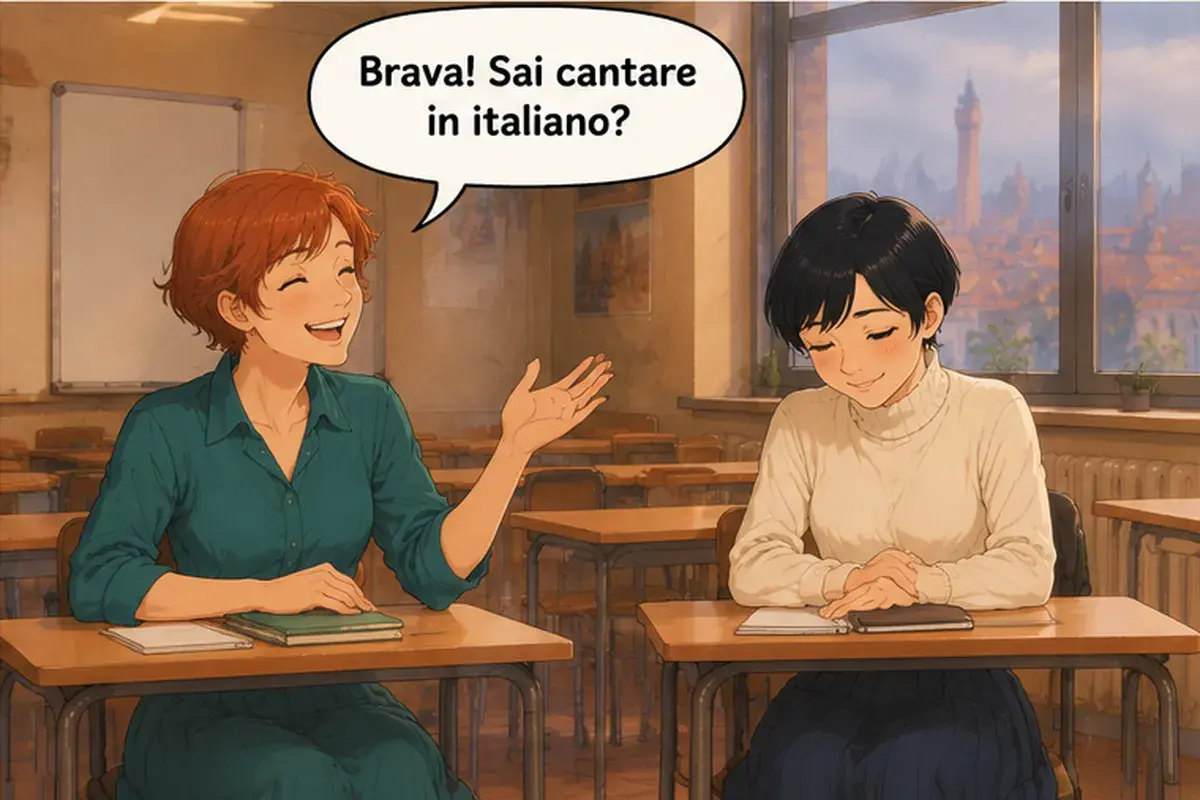
- Chiara
Brava! Sai cantare in italiano?
Good for you! Can you sing in Italian? (to a woman)
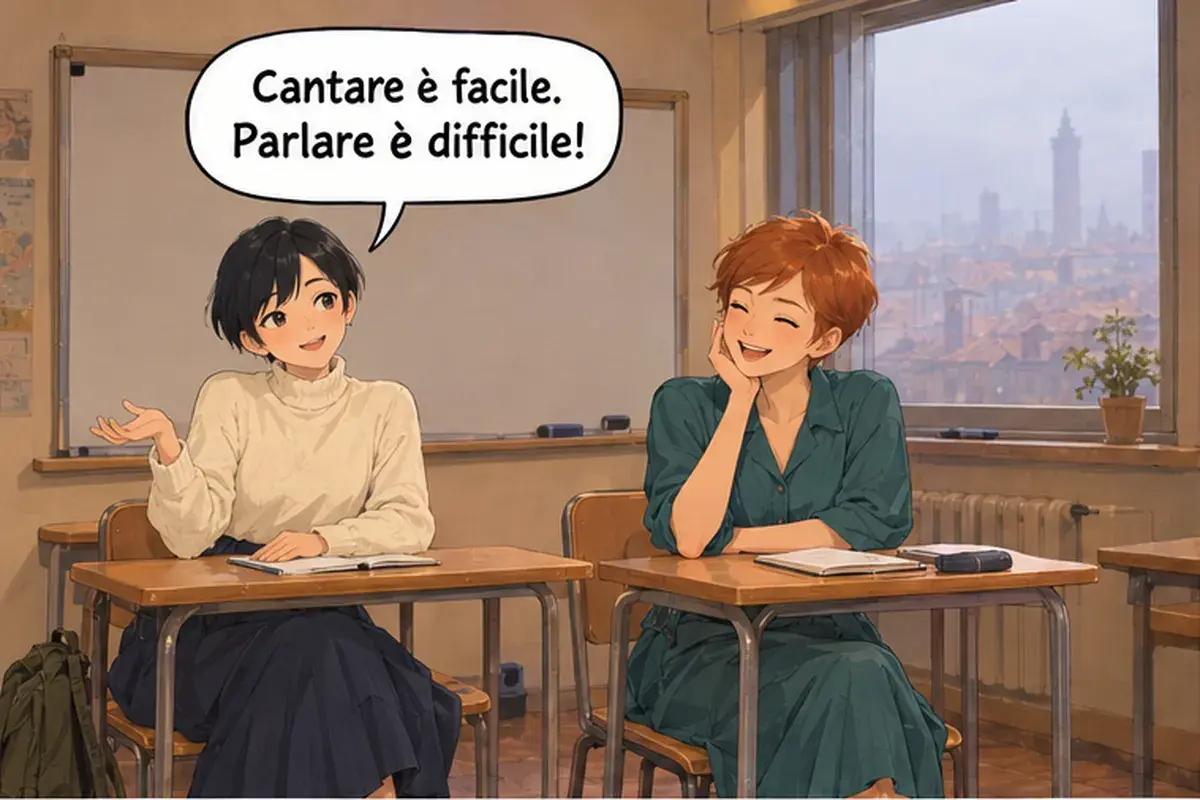
- Mei
Cantare è facile. Parlare è difficile!
Singing is easy. Speaking is hard!
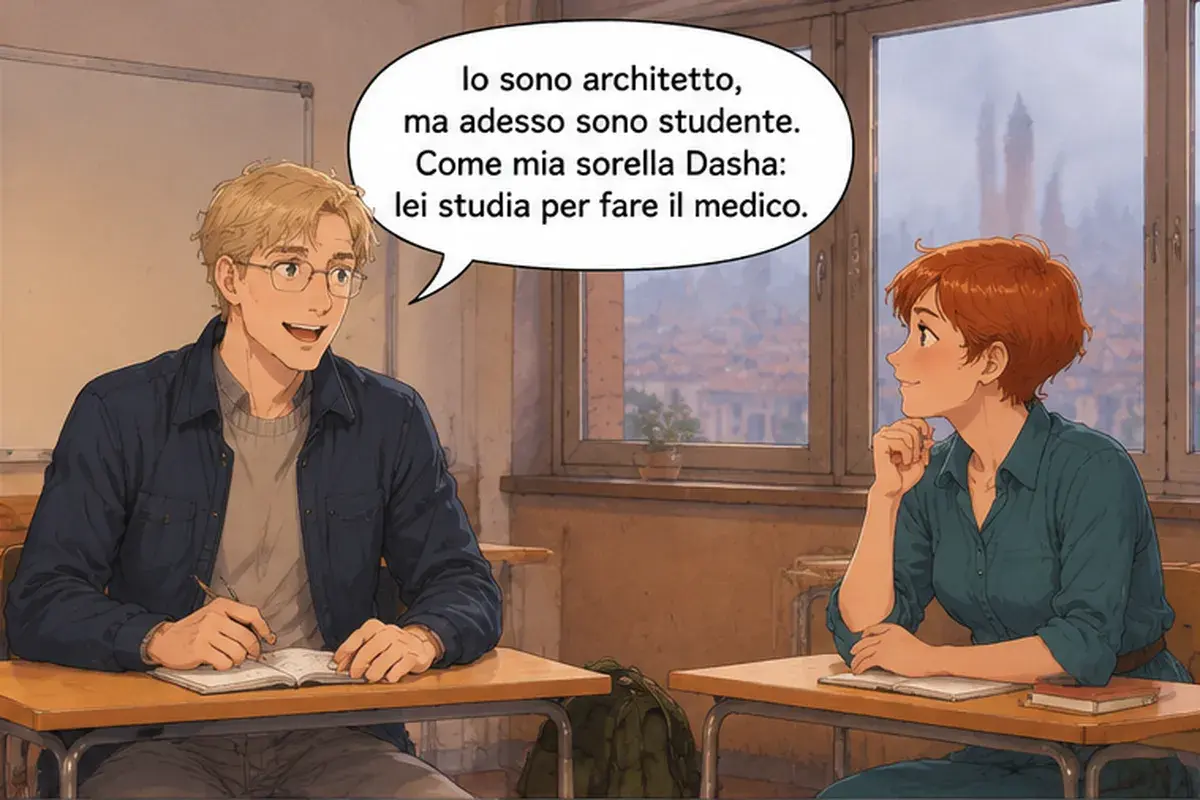
- Misha
Io sono architetto, ma adesso sono studente. Come mia sorella Dasha: lei studia per fare il medico.
I'm an architect, but right now I'm a student (man speaking). Like my sister Dasha: she's studying to become a doctor.
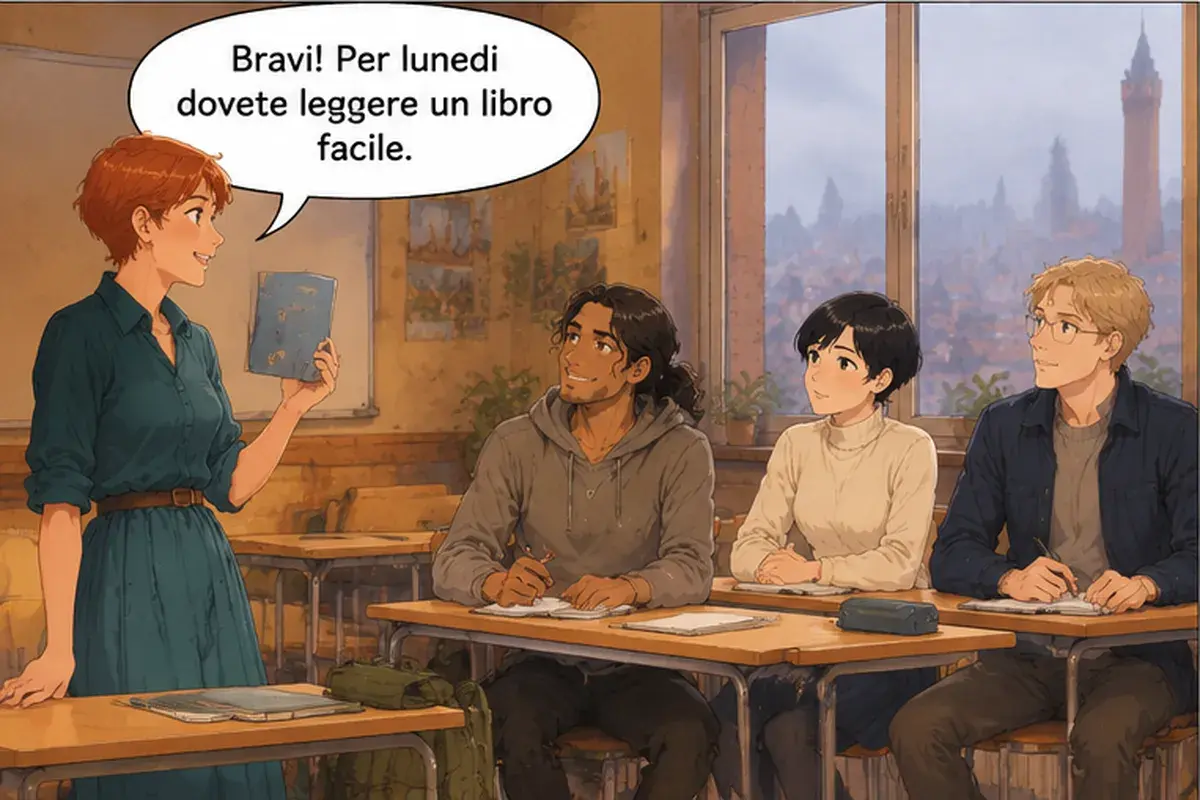
- Chiara
Bravi! Per lunedì dovete leggere un libro facile.
Well done, all of you! By Monday you have to read an easy book.
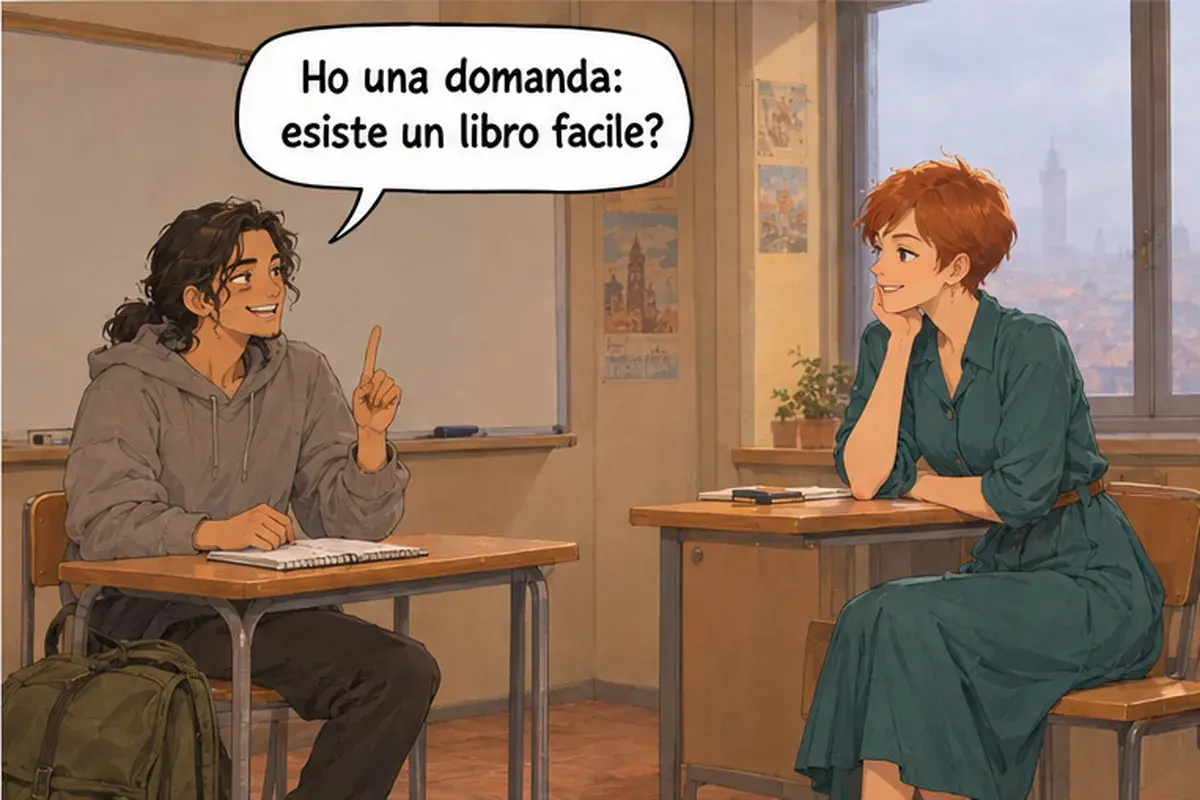
- Diego
Ho una domanda: esiste un libro facile?
I have a question: does an easy book exist?
Grammar for this text
- Voglio fare la cantante. — voglio means "I want", the io form of volere (unit 5). A job is often named with fare il / la: "to be a singer". lei studia per fare il medico — per + infinitive means "to, in order to": "she's studying to become a doctor".
- conosco Bologna benissimo and Sai cantare in italiano? — two different kinds of "know". conosco (I know) comes from conoscere: to know a place or a person. sai (you can, you know how to) comes from sapere: to know a fact or to know how to do something.
- Cosa significa? — what does it mean?; significa — it means. come si dice — literally "how is it said": a ready-made phrase. The rule (si) comes at B1; for now learn it whole.
- Sono cameriere — after sono a job usually goes without an article, though English needs "a". The article is also fine when you call someone by what they do: Tu sei un rider. Here sei means "you are", a form of essere (unit 1), not the number six.
- Rido anch'io! — rido — I laugh, from ridere; anch'io = anche + io, "me too".
- dovete leggere — dovete — you have to (plural), a form of dovere; an infinitive follows: "you have to read".
Words and grammar of the unit: Talk about your job and studies.
Learn the words from the texts with flashcards
In the app, you can tap any word in a text to see its translation, forms and examples, and new words stick with flashcards. 15 minutes a day.
Start for freeEverything is open for free. No card needed to sign up.