

Italian story with translation · A1 · 14 lines
Ho la mappa, ma non ho la sciarpa I have the map, but I don't have the scarf
Comic · 14 panels

Oggi è domenica. Non sono freddoloso, ma ho freddo.
Today is Sunday. I don't get cold easily, but I'm cold (man speaking).
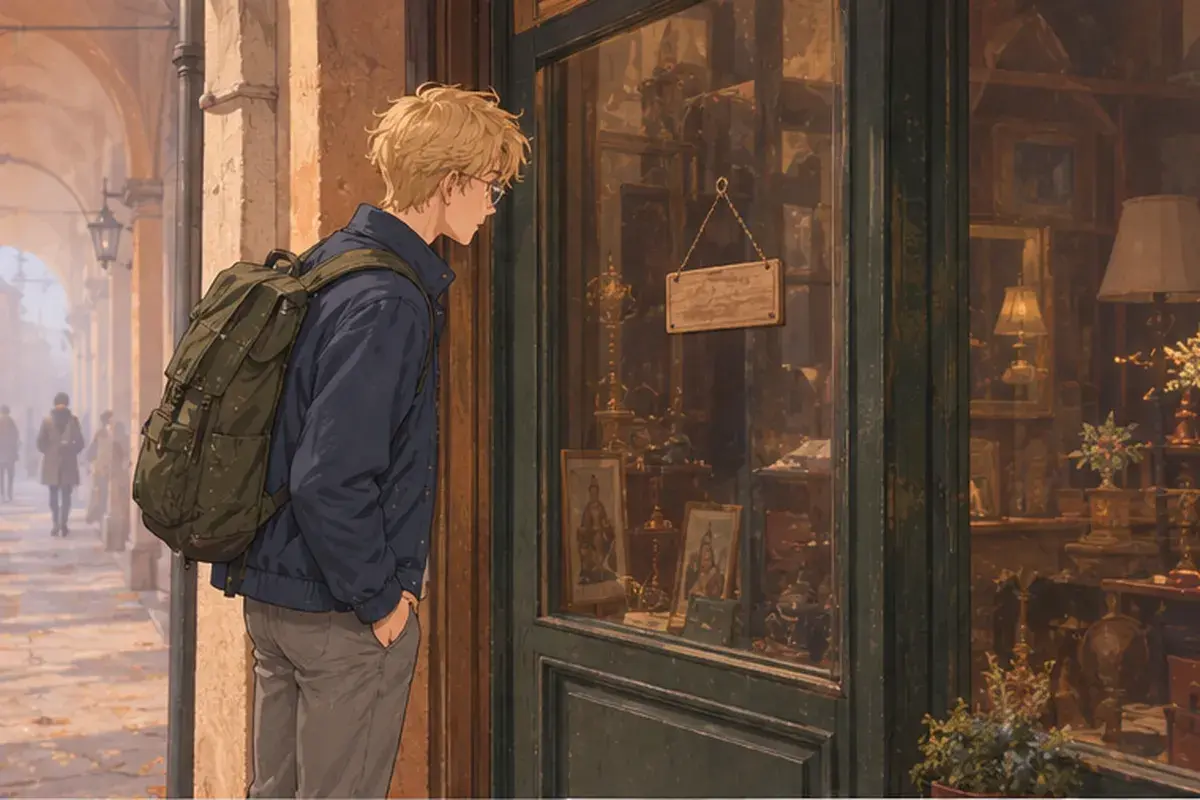
Cerco una sciarpa grigia, ma il negozio vicino a casa è chiuso.
I'm looking for a gray scarf, but the store near my place is closed.

Allora vado al mercato: è aperto la domenica.
So I go to the market: it's open on Sundays.

Ci sono vestiti, camicie, jeans e scarpe. È tutto vecchio, ma economico.
There are clothes, shirts, jeans and shoes. It's all old, but inexpensive.

Vedo un maglione verde, una maglietta gialla e un paio di pantaloni bianchi. Che colori!
I see a green sweater, a yellow T-shirt and a pair of white pants. What colors!

Ecco una scarpa nera. Una sola: dov'è l'altra?
Here's a black shoe. Just one: where's the other one?
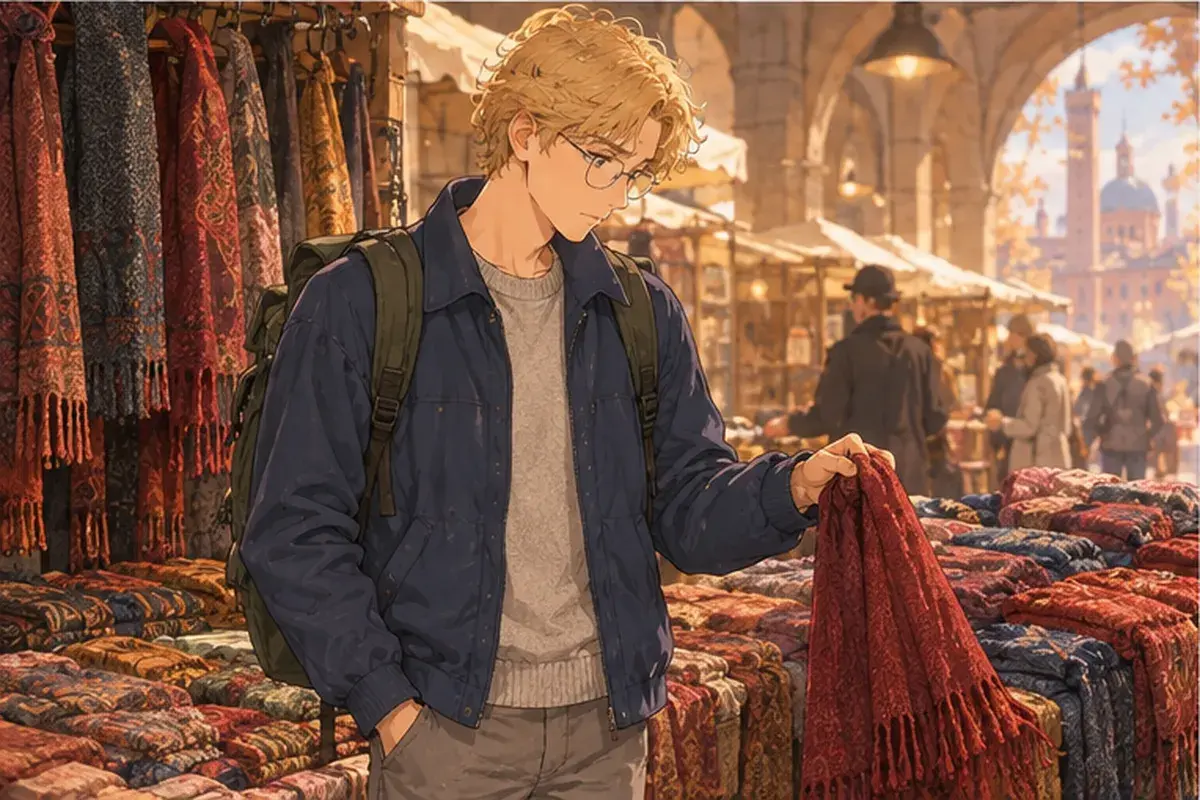
Vedo anche una sciarpa rossa. È bella, ma io cerco quella grigia.
I also see a red scarf. It's nice, but I'm looking for the gray one.

Poi vedo una mappa di Bologna: è vecchia e ci sono i portici e le torri!
Then I see a map of Bologna: it's old, and the porticoes and the towers are on it!
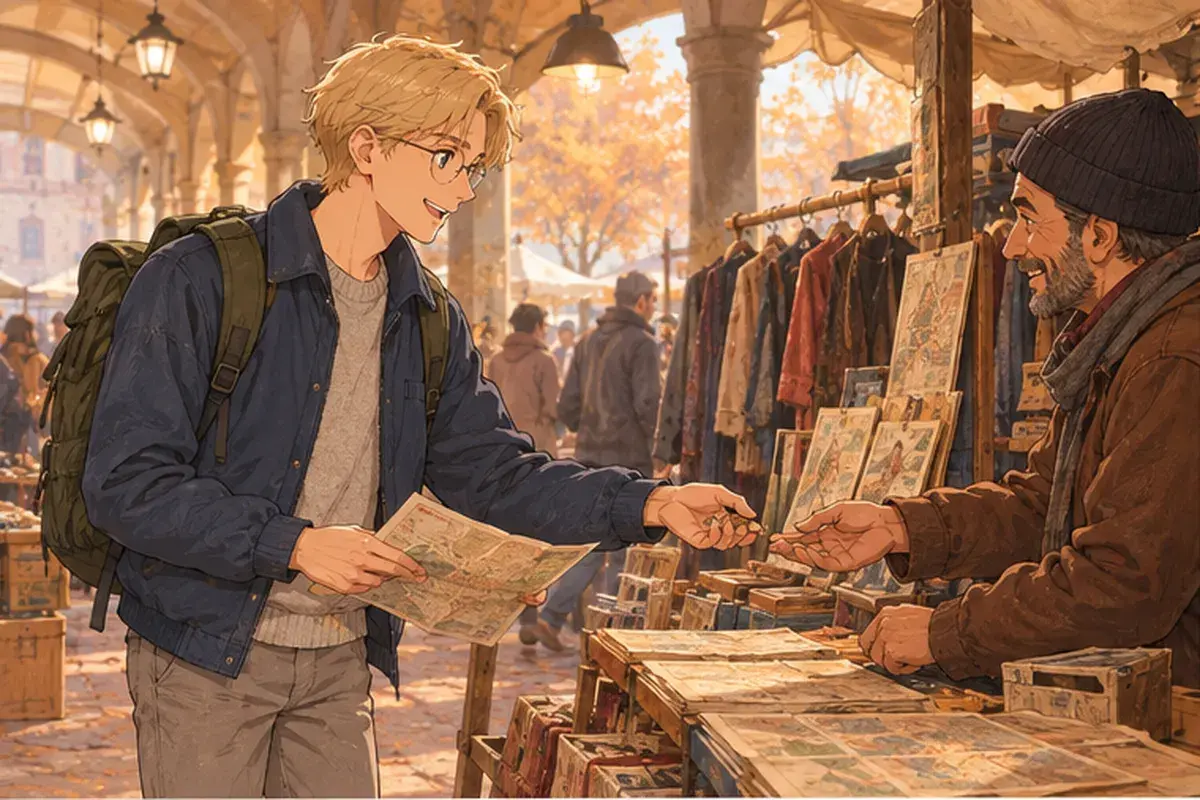
Sono architetto: la mappa è bellissima. Il prezzo è giusto, la prendo!
I'm an architect: the map is beautiful. The price is fair, I'll take it!

A casa Giulia guarda la mappa.
At home, Giulia looks at the map.

«Una mappa? Sul telefono hai tutte le mappe!»
"A map? You have all the maps on your phone!"

È vero, ma sul telefono i portici sono troppo piccoli.
That's true, but on the phone the porticoes are too small.

Ho la mappa, ma non ho la sciarpa. Ho ancora freddo.
I have the map, but I don't have the scarf. I'm still cold.

Giulia ha una sciarpa grigia: «Hai freddo? Ecco, per te.»
Giulia has a gray scarf: "Are you cold? Here, for you."
Grammar for this text
- Non sono freddoloso, ma ho freddo. — freddoloso is someone who always feels cold; ho freddo means "I'm cold right now", word for word "I have cold" (ho is from avere, unit 2). Misha is a man, so the ending is -o.
- vicino a casa — vicino a means "near", and a casa means "at home" or "home", with no article.
- Ci sono vestiti, camicie, jeans e scarpe. — ci sono — there are (unit 3); i vestiti in the plural means clothes in general. Pants and jeans are always plural in Italian, as in English: un paio di pantaloni bianchi — a pair of white pants.
- Che colori! — what colors! che + a noun makes an exclamation.
- Una sola: dov'è l'altra? — scarpa is one shoe; people usually talk about a pair (le scarpe). dov'è = dove + è, l'altra = la + altra (the other one, feminine); sola — only one.
- Il prezzo è giusto, la prendo! — la prendo — I'll take it: la stands for la mappa (feminine). A ready-made phrase for shoppers, as in the first text (there it was about the down jacket).
- Giulia ha una sciarpa grigia: «Hai freddo? Ecco, per te.» — per te — for you: after per you say te, not tu.
Words and grammar of the unit: Buy clothes and ask for your size.
Learn the words from the texts with flashcards
In the app, you can tap any word in a text to see its translation, forms and examples, and new words stick with flashcards. 15 minutes a day.
Start for freeEverything is open for free. No card needed to sign up.