
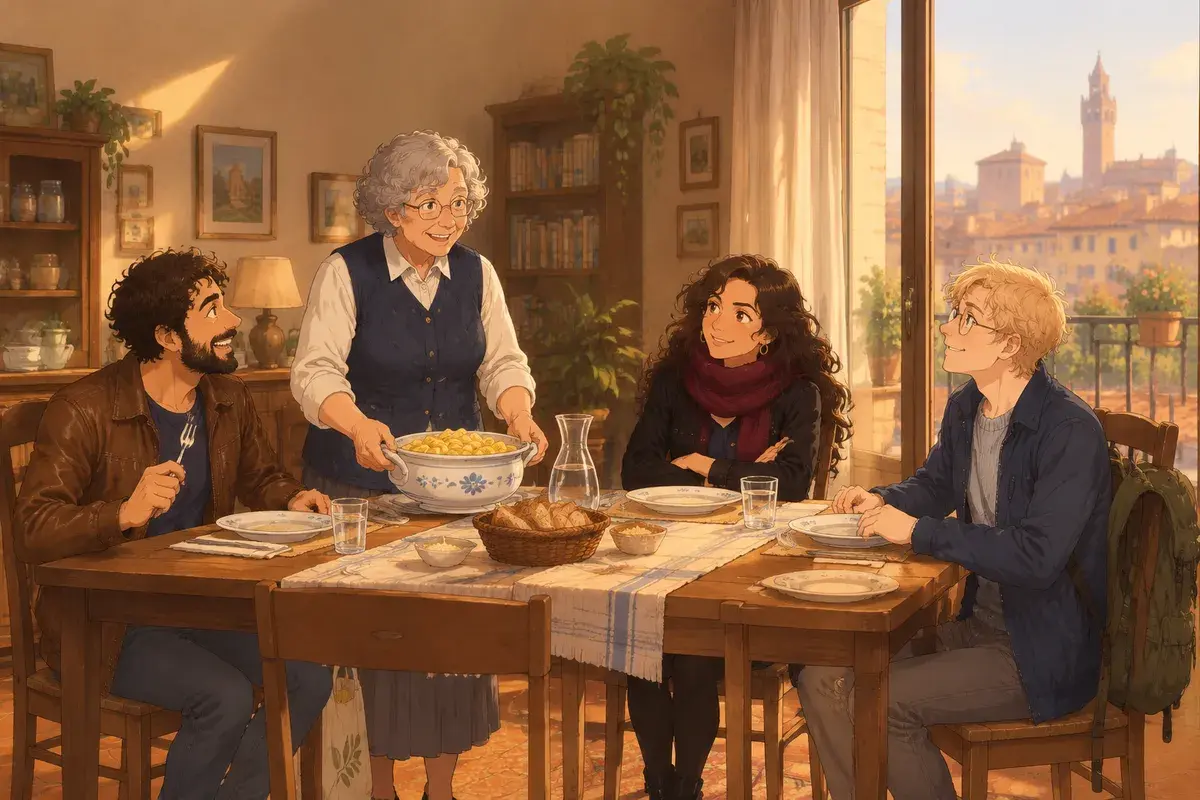
Italian dialogue with translation · A1 · 14 lines
E Lei, Michele, ha mangiato? And you, Michele, have you eaten? (formal)
Comic · 14 panels
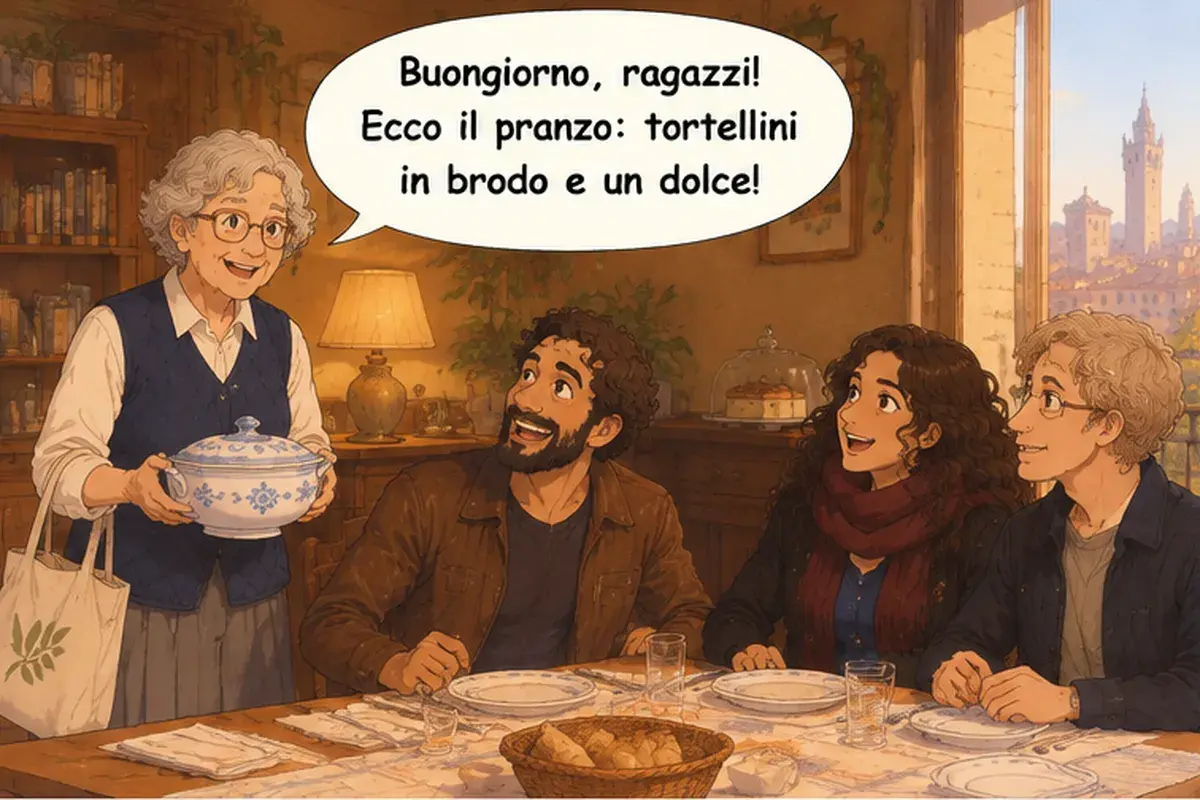
- Signora Paola
Buongiorno, ragazzi! Ecco il pranzo: tortellini in brodo e un dolce!
Hello, kids! Here's lunch: tortellini in broth and a dessert!
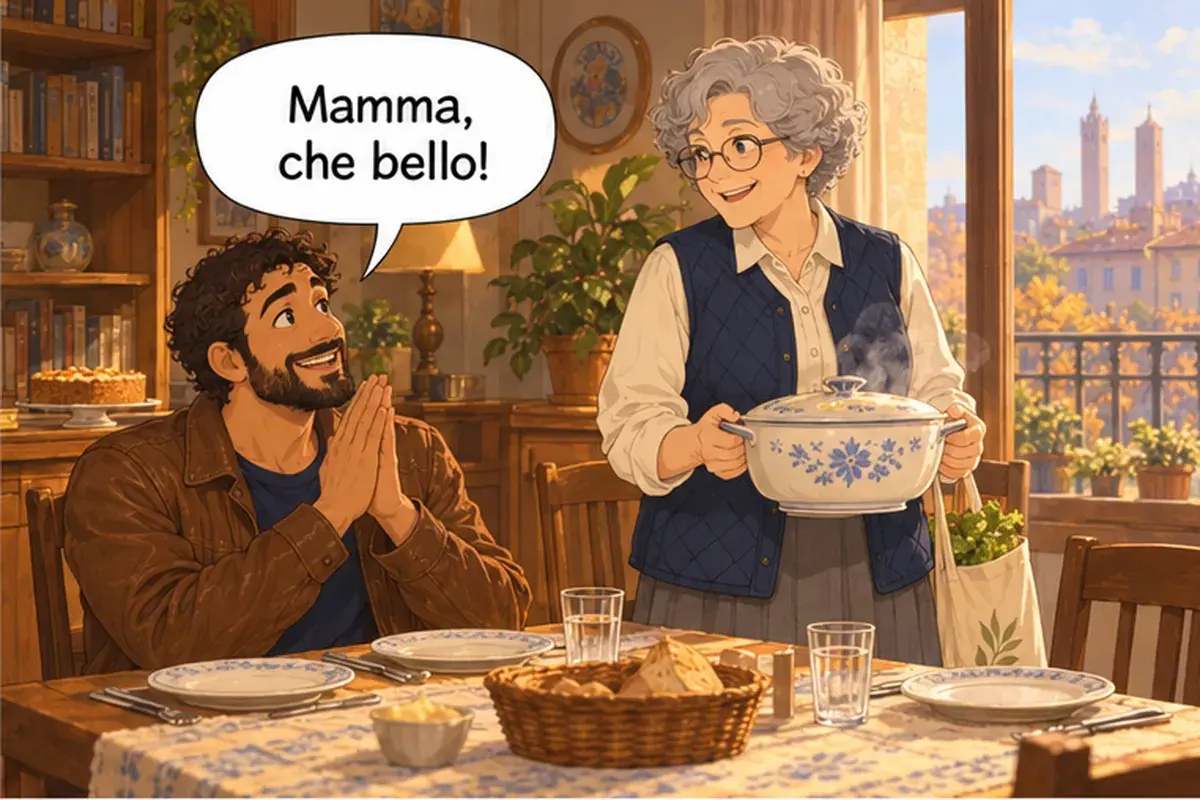
- Luca
Mamma, che bello!
Mom, how nice!
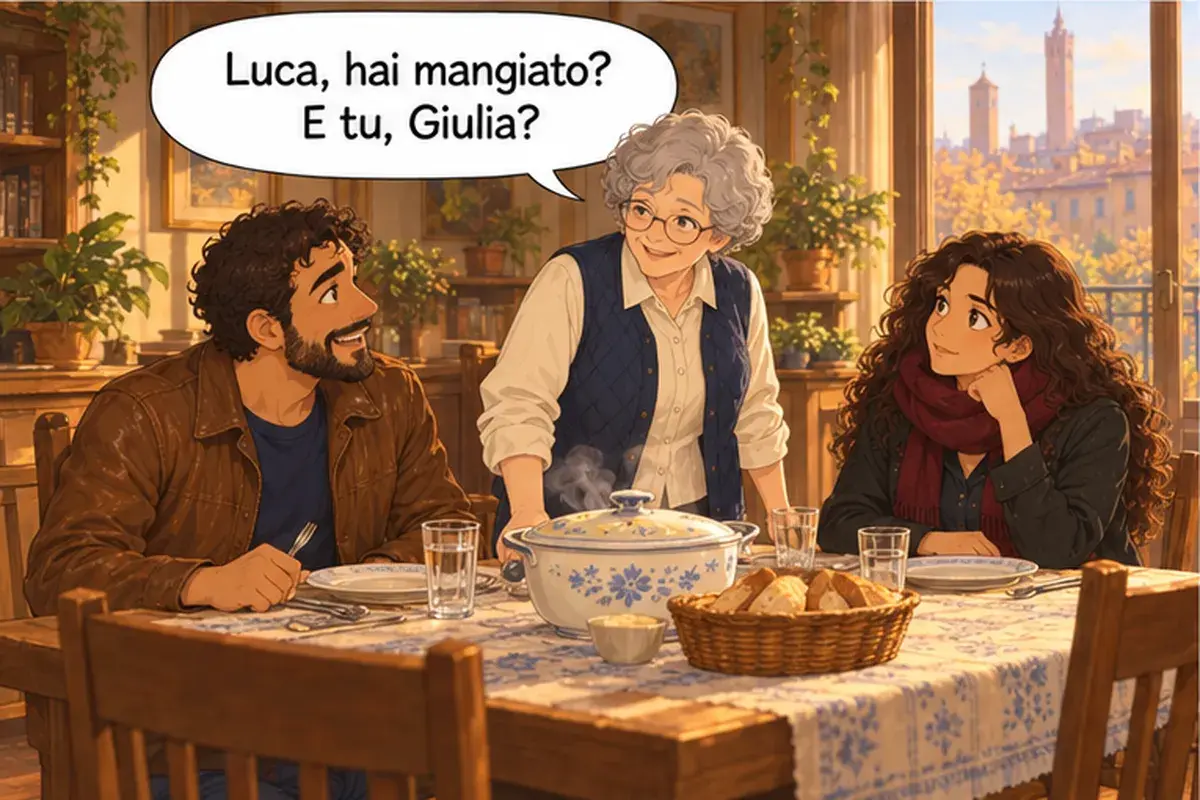
- Signora Paola
Luca, hai mangiato? E tu, Giulia?
Luca, have you eaten? And you, Giulia?
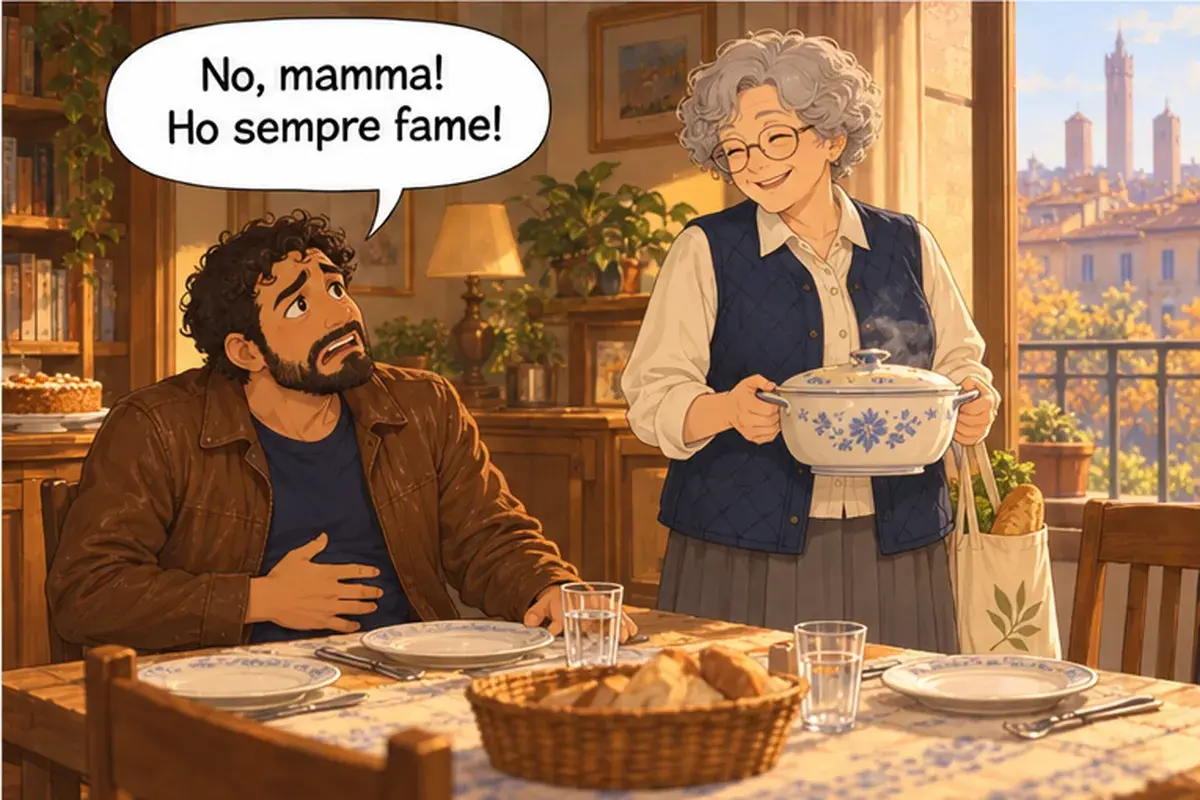
- Luca
No, mamma! Ho sempre fame!
No, Mom! I'm always hungry!
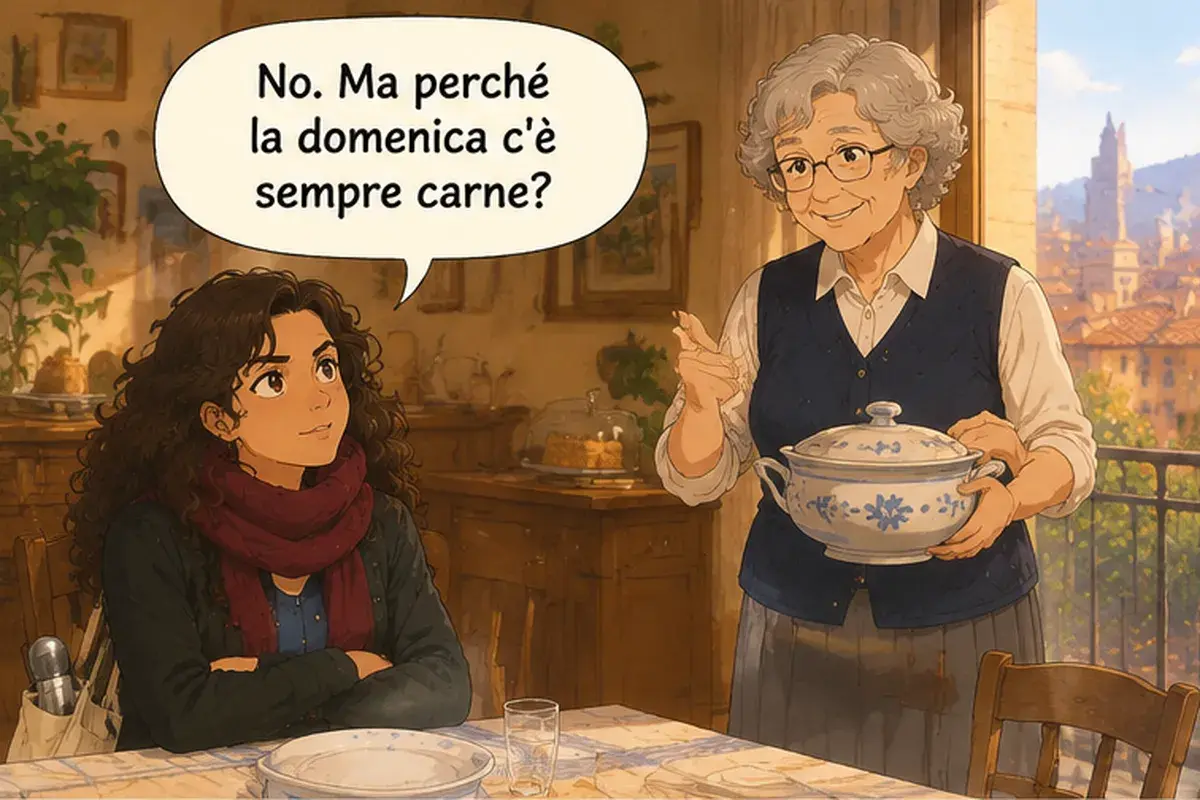
- Giulia
No. Ma perché la domenica c'è sempre carne?
No. But why is there always meat on Sundays?
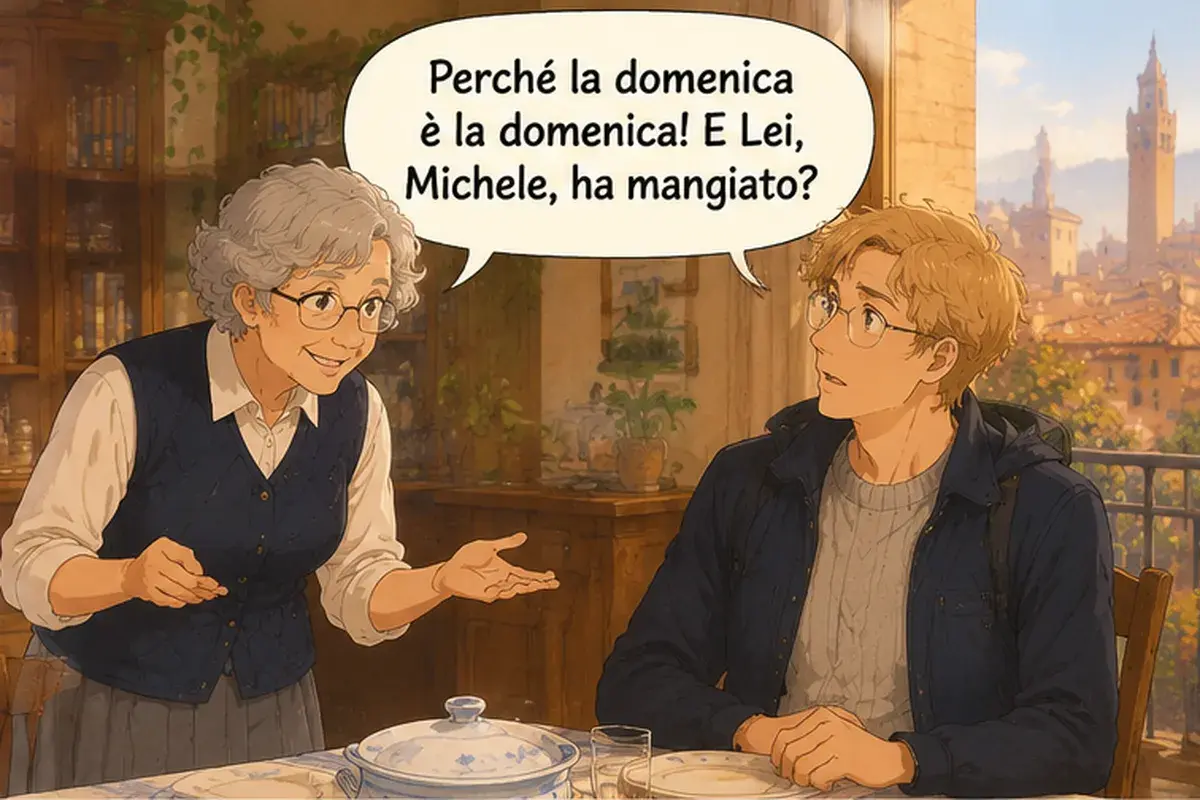
- Signora Paola
Perché la domenica è la domenica! E Lei, Michele, ha mangiato?
Because Sunday is Sunday! And you, Michele, have you eaten? (formal)
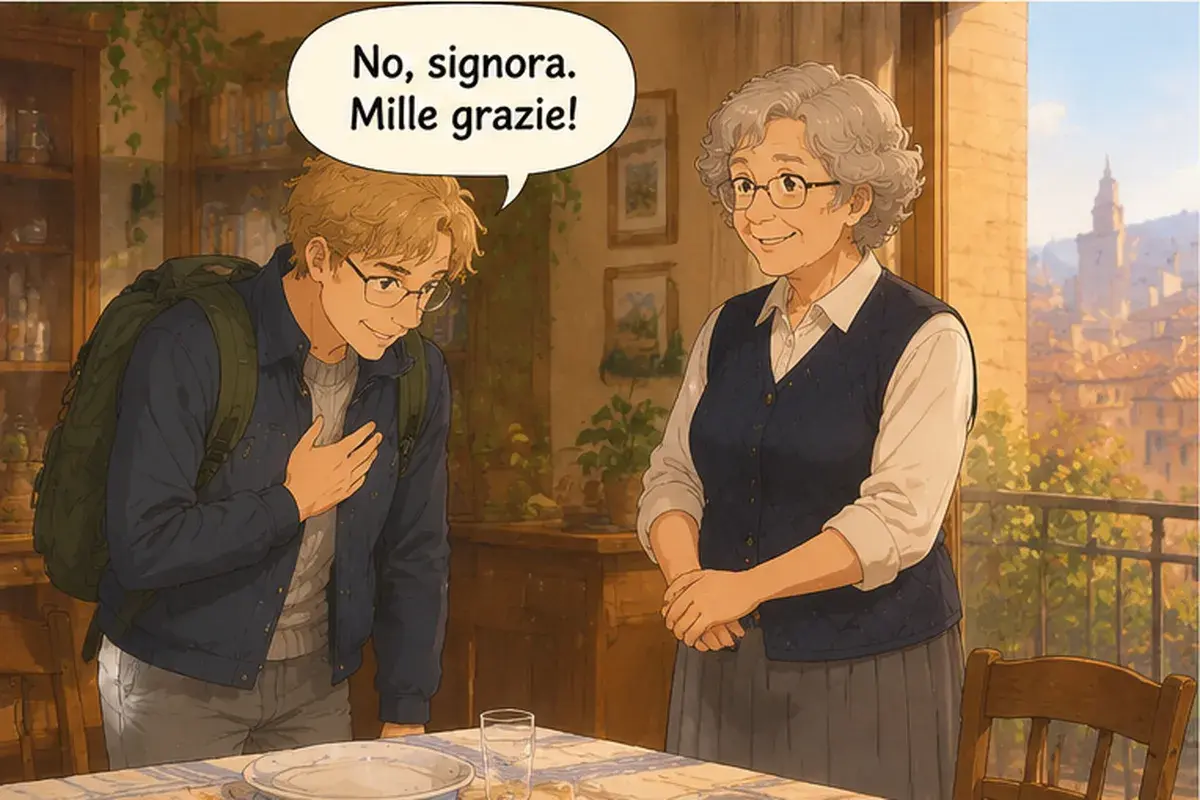
- Misha
No, signora. Mille grazie!
No, ma'am. Thank you so much!
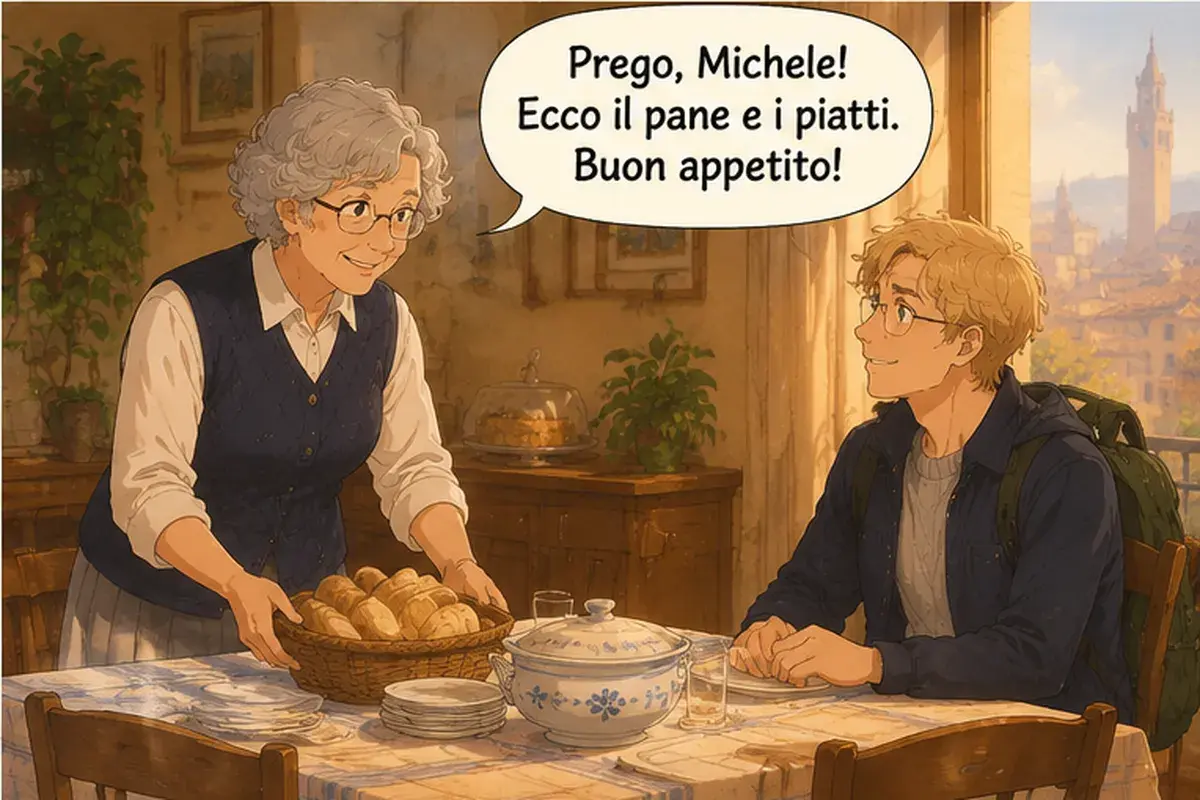
- Signora Paola
Prego, Michele! Ecco il pane e i piatti. Buon appetito!
You're welcome, Michele! Here's the bread and the plates. Enjoy your meal!
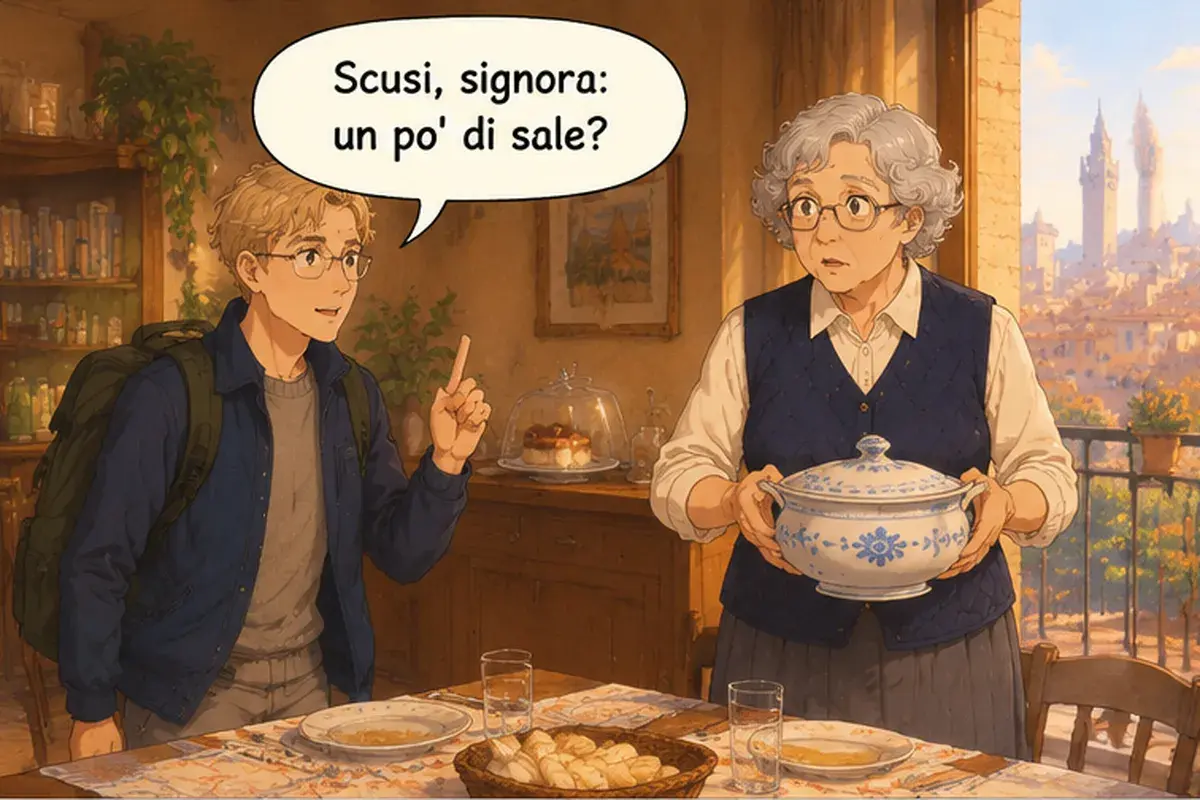
- Misha
Scusi, signora: un po' di sale?
Excuse me, ma'am: a little salt? (formal)
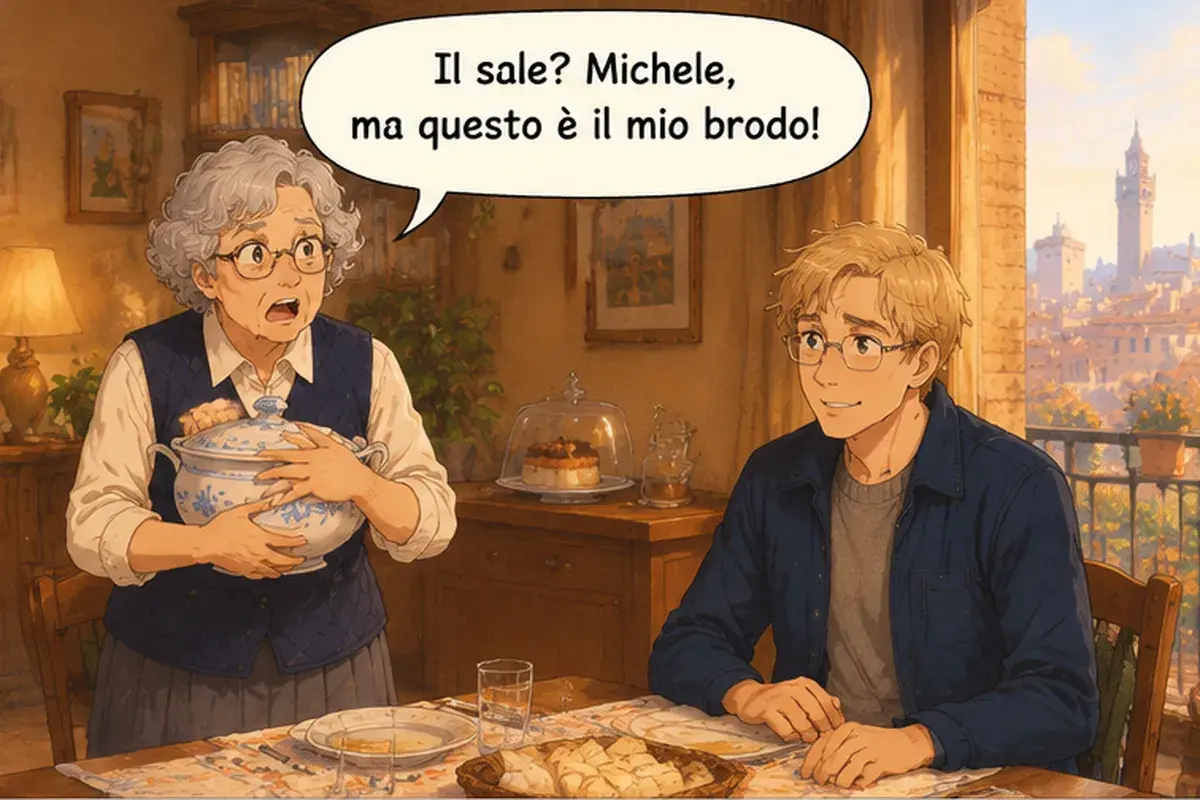
- Signora Paola
Il sale? Michele, ma questo è il mio brodo!
Salt? Michele, but this is my broth!
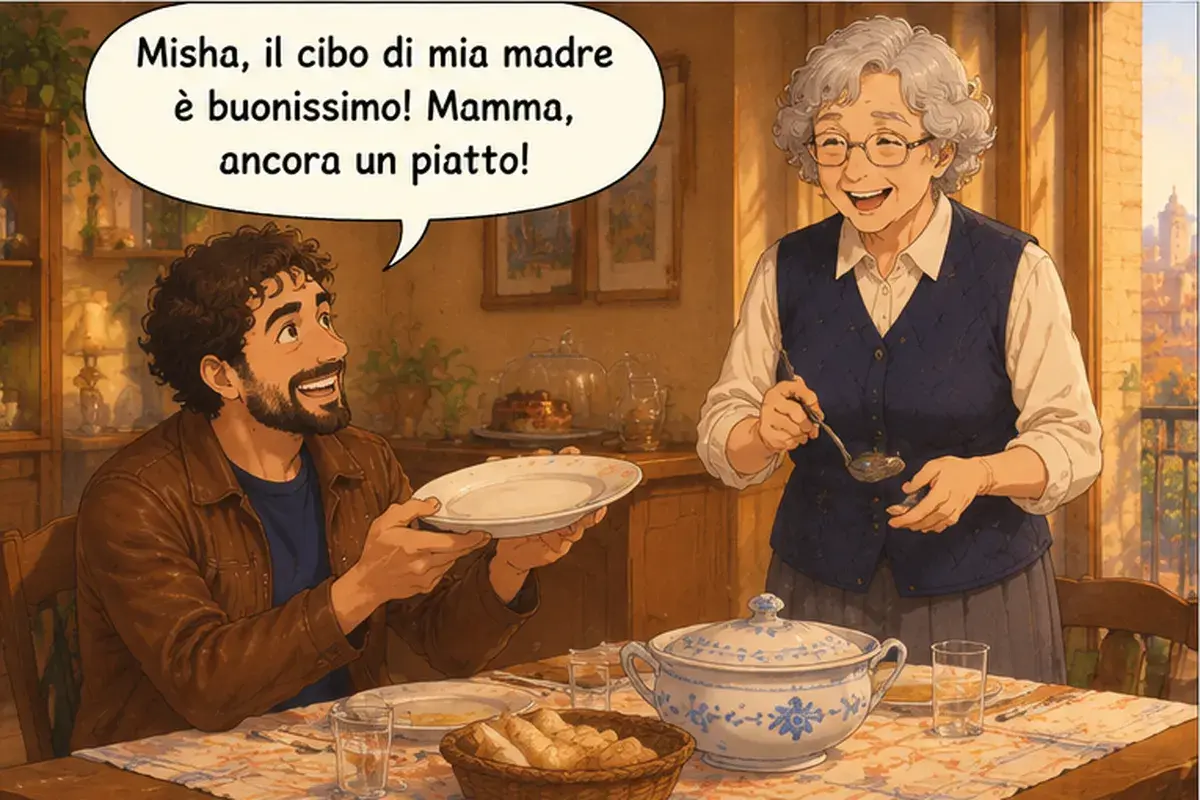
- Luca
Misha, il cibo di mia madre è buonissimo! Mamma, ancora un piatto!
Misha, my mother's food is delicious! Mom, one more plate!
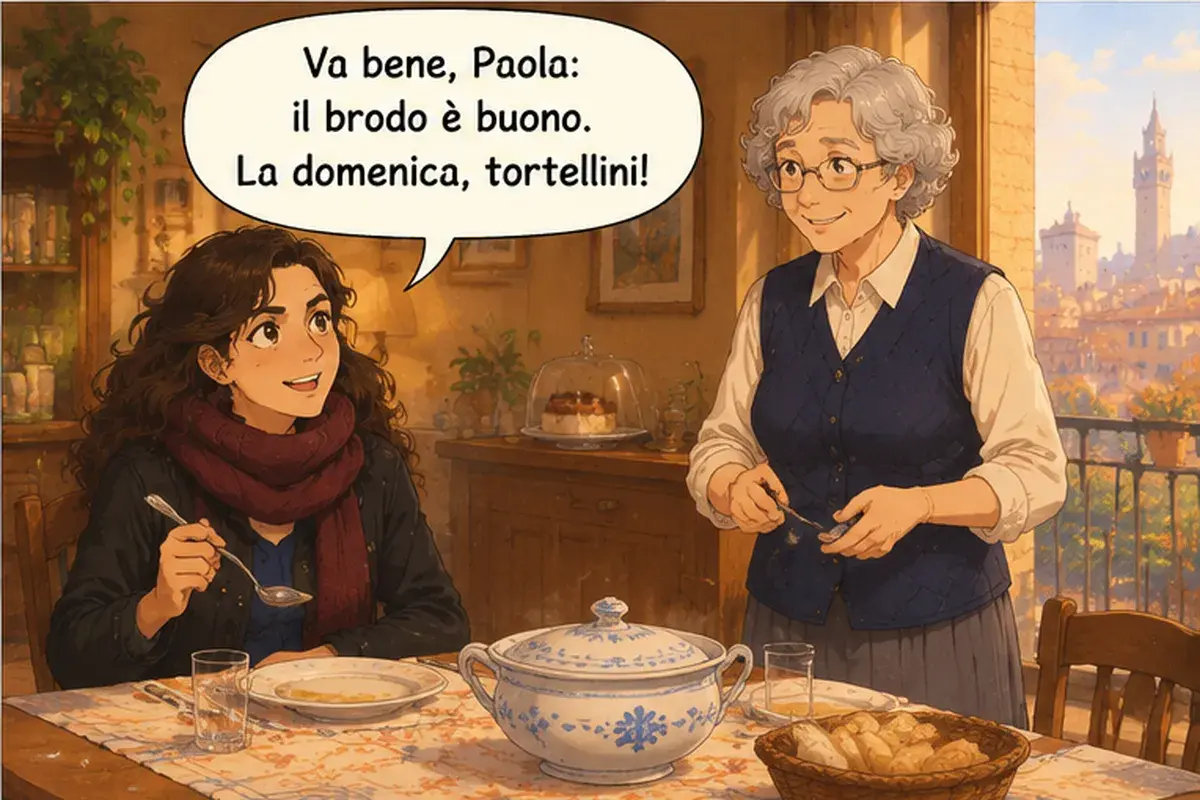
- Giulia
Va bene, Paola: il brodo è buono. La domenica, tortellini!
OK, Paola: the broth is good. On Sundays, tortellini!
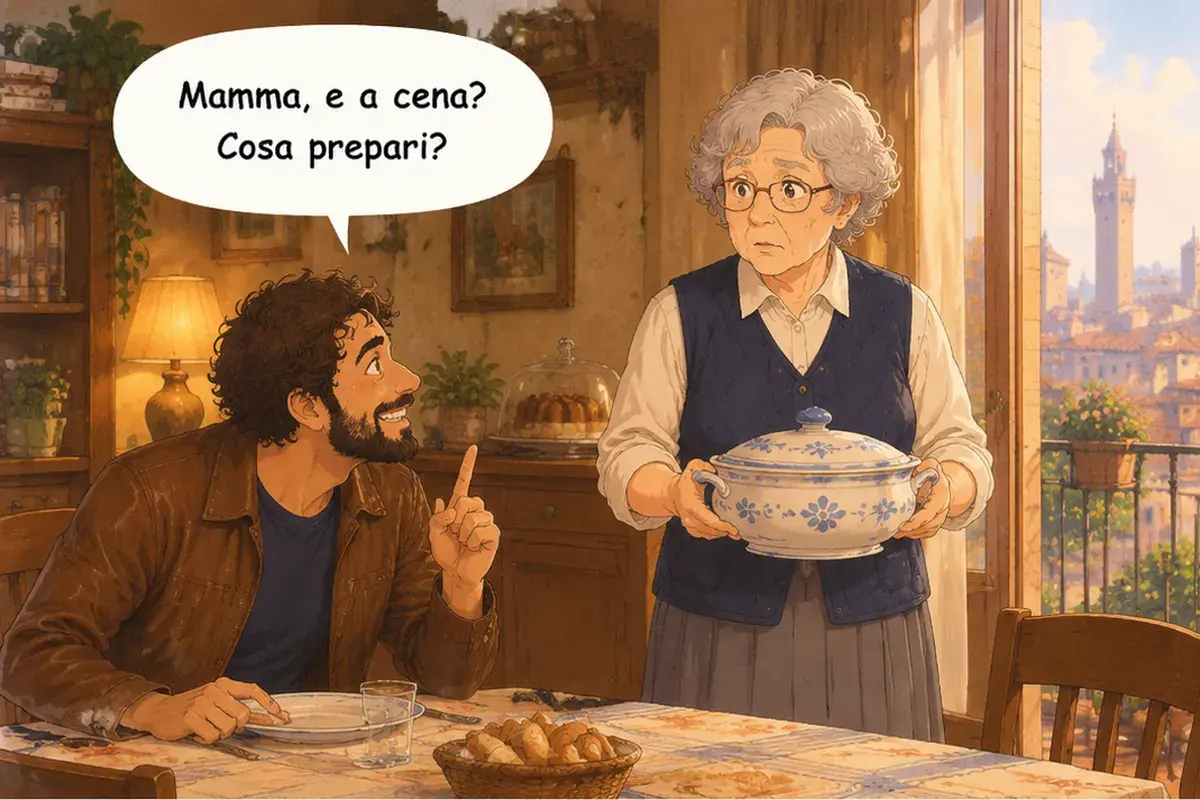
- Luca
Mamma, e a cena? Cosa prepari?
Mom, and for dinner? What are you preparing?
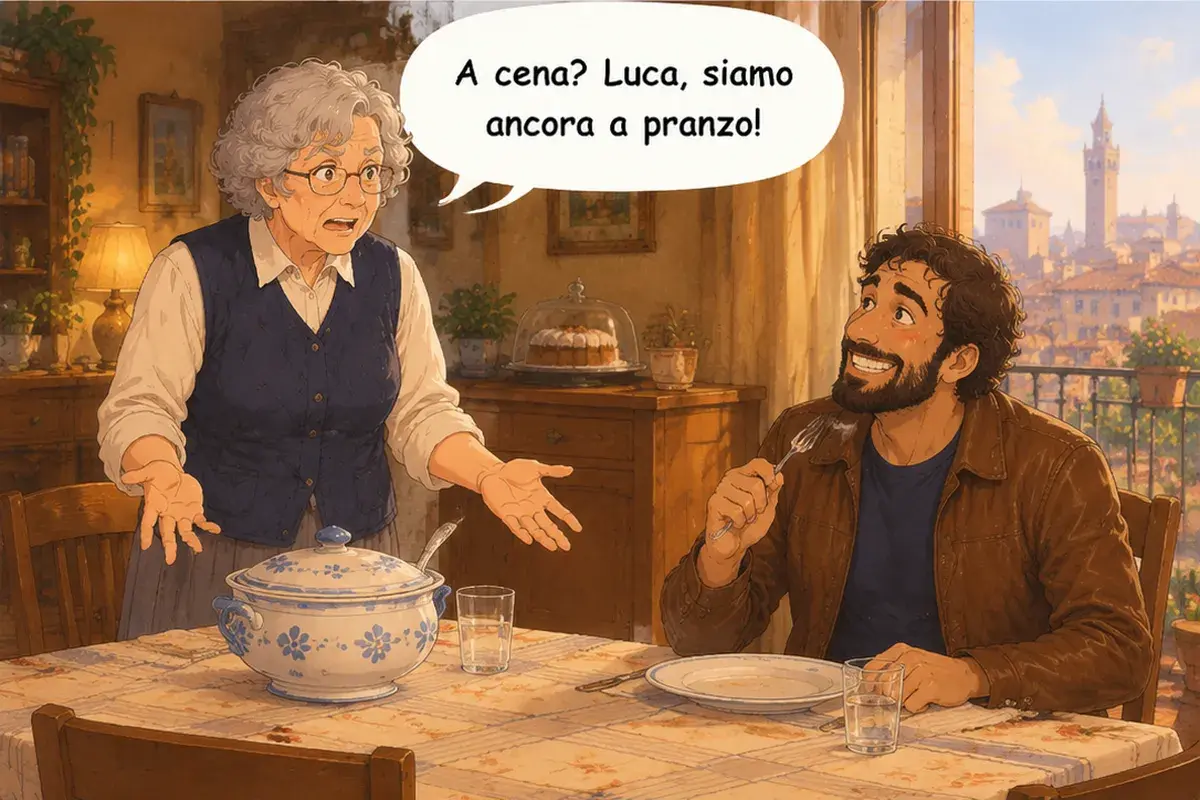
- Signora Paola
A cena? Luca, siamo ancora a pranzo!
For dinner? Luca, we're still at lunch!
Grammar for this text
- E Lei, Michele, ha mangiato? — Lei with a capital L is the formal "you": that's how Signora Paola talks to Misha, and the verb takes the he/she form. Michele is what she calls Misha. ha mangiato — "have you eaten": ha is a form of avere (unit 2), mangiato — "eaten," the past form of mangiare (to eat). This is the past tense (passato prossimo); the rule is in units 15–17, for now learn the whole phrase. To a friend: Luca, hai mangiato? — have you eaten? (hai — the tu form of avere).
- Scusi, signora: un po' di sale? — scusi — the formal "excuse me" (to a friend: scusa); how this form is made comes later (level B1), for now learn it whole. un po' di sale — "a little salt"; po' is short for poco.
- Perché la domenica è la domenica! — perché means both "why" and "because." la domenica with the article — "on Sundays," like every Sunday.
- Ecco il pranzo: tortellini in brodo e un dolce! — ecco — "here is, here's"; in brodo — "in broth," with no article: that's the name of the dish; un dolce — "a dessert."
- Michele, ma questo è il mio brodo! — questo — "this" (unit 4); il mio brodo — "my broth"; ma shows she's offended here: "but this is my…!"
- A cena? Luca, siamo ancora a pranzo! — a cena, a pranzo — no article: "for dinner," "at lunch." ancora — "still," siamo — the noi form of essere. Cosa prepari? — prepari — "you're preparing," from preparare: the present tense also works for this evening.
Words and grammar of the unit: Decide what to cook for dinner.
Learn the words from the texts with flashcards
In the app, you can tap any word in a text to see its translation, forms and examples, and new words stick with flashcards. 15 minutes a day.
Start for freeEverything is open for free. No card needed to sign up.