

Italian dialogue with translation · A1 · 14 lines
Stasera? No: domenica! Tonight? No, on Sunday!
Comic · 14 panels
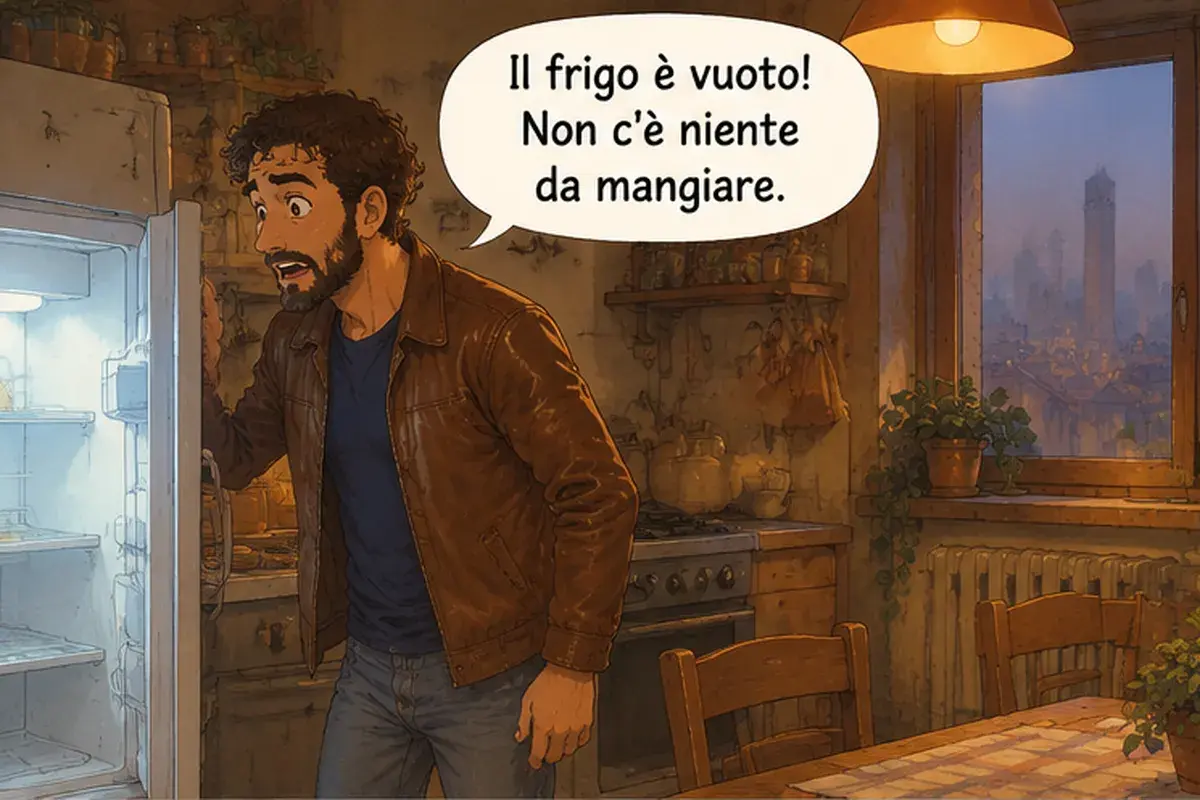
- Luca
Il frigo è vuoto! Non c'è niente da mangiare.
The fridge is empty! There's nothing to eat.
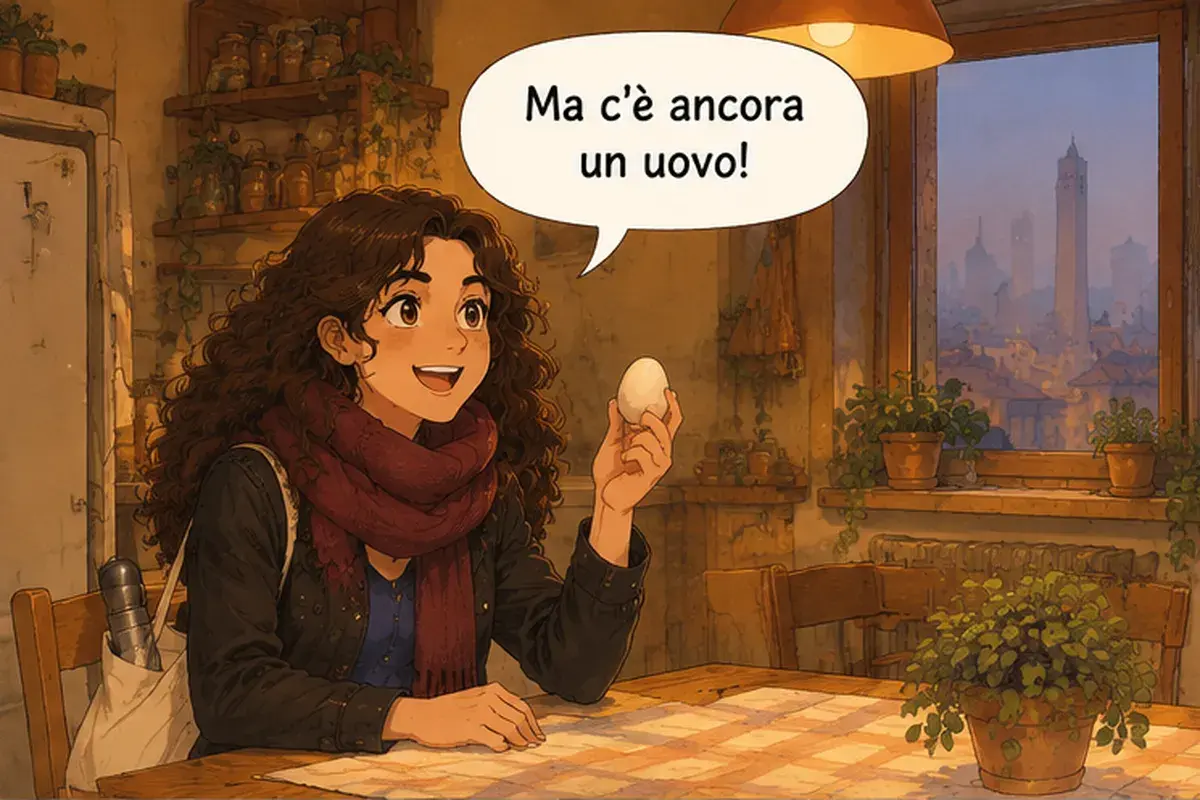
- Giulia
Ma c'è ancora un uovo!
But there's still an egg!
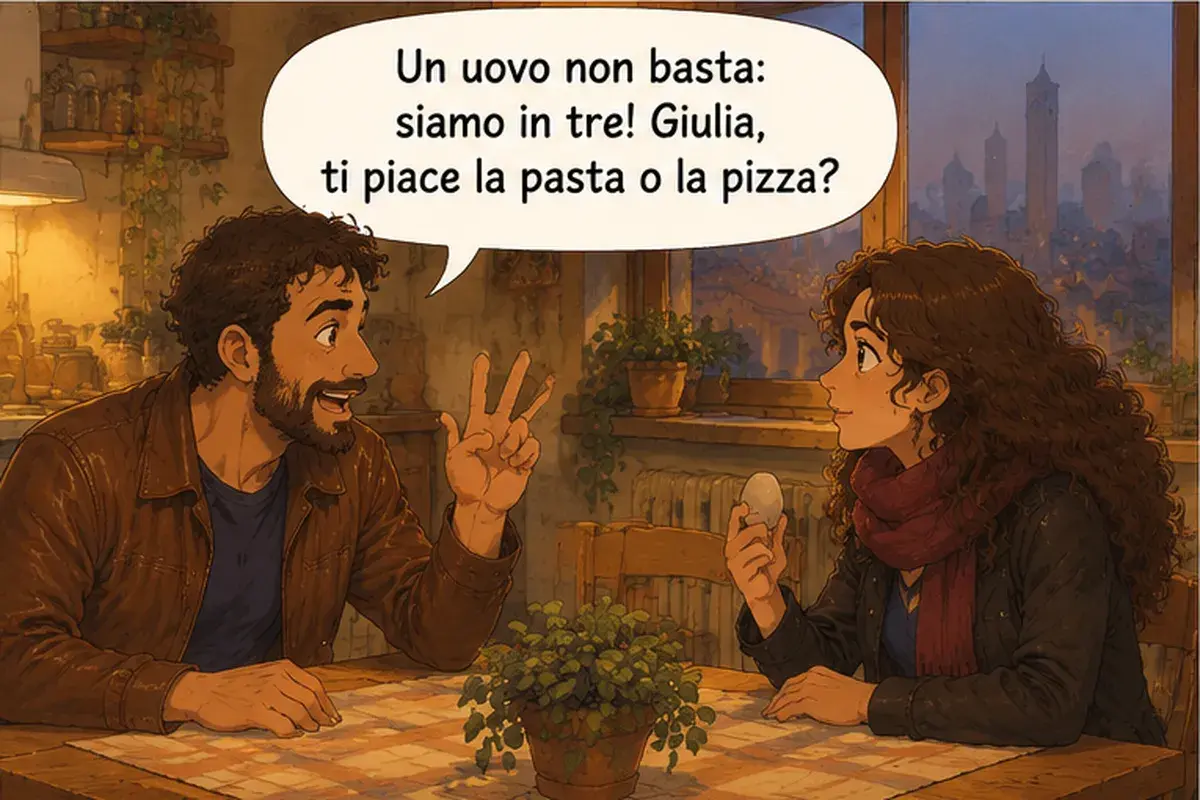
- Luca
Un uovo non basta: siamo in tre! Giulia, ti piace la pasta o la pizza?
One egg isn't enough: there are three of us! Giulia, do you like pasta or pizza?
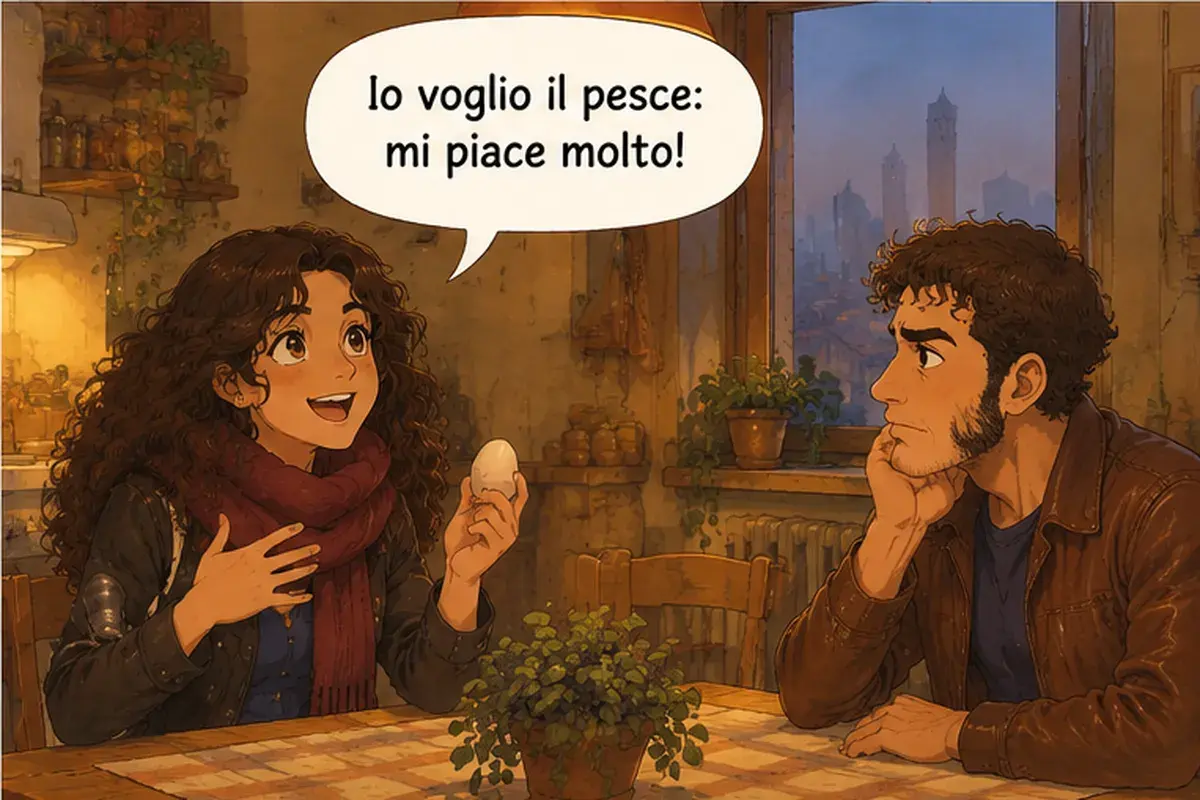
- Giulia
Io voglio il pesce: mi piace molto!
I want fish: I like it a lot!
- Luca
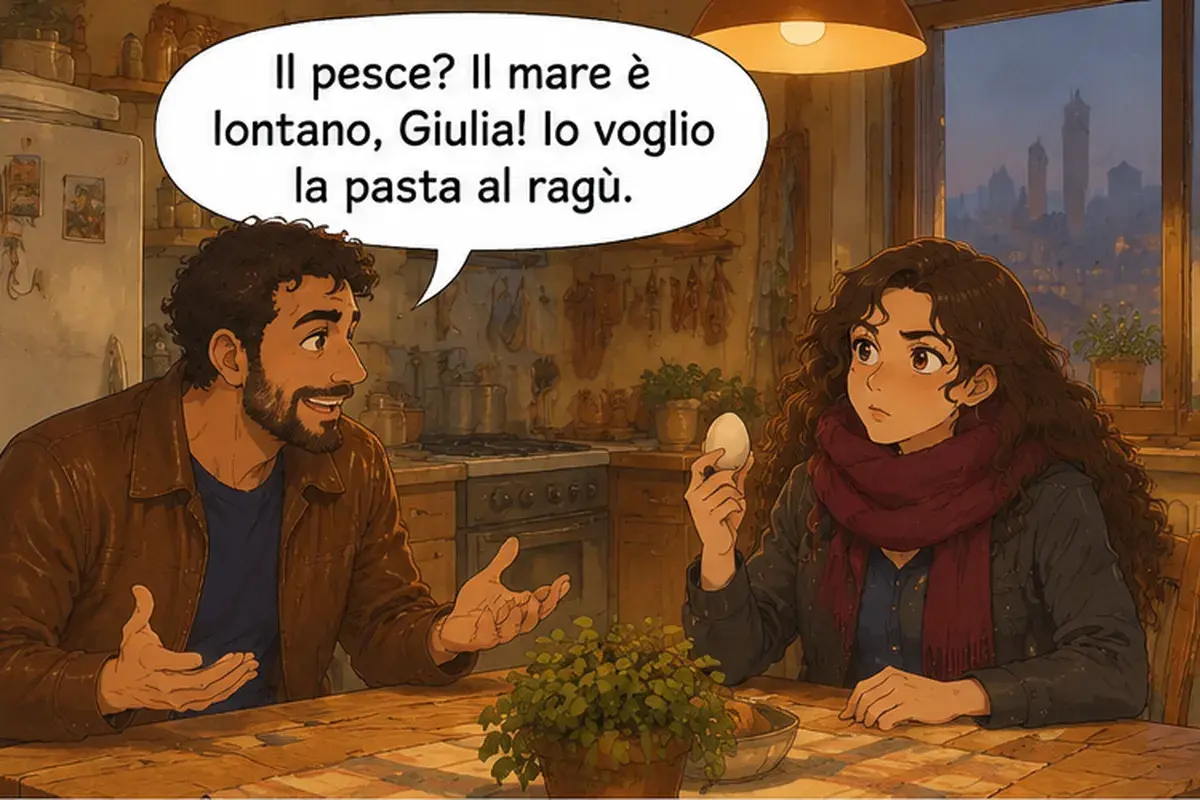
Il pesce? Il mare è lontano, Giulia! Io voglio la pasta al ragù.
Fish? The sea is far away, Giulia! I want pasta with ragù.
- Misha
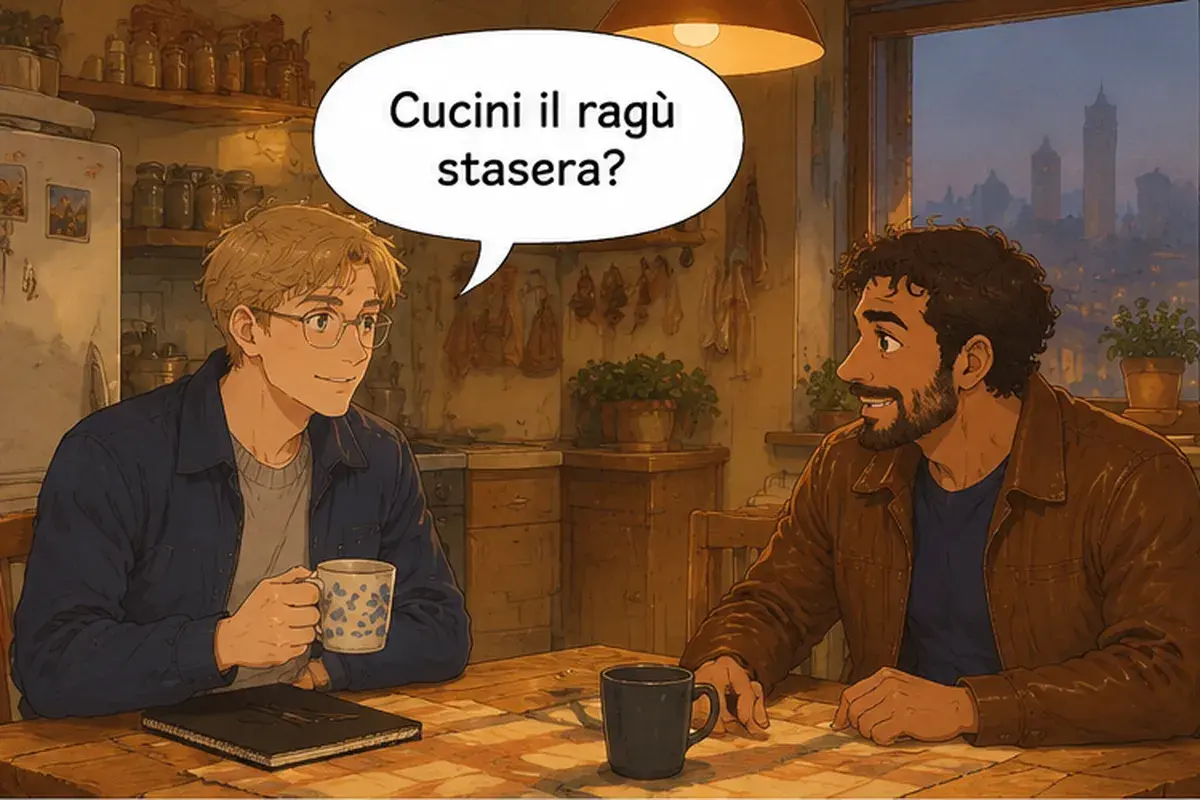
Cucini il ragù stasera?
Are you cooking the ragù tonight?
- Luca
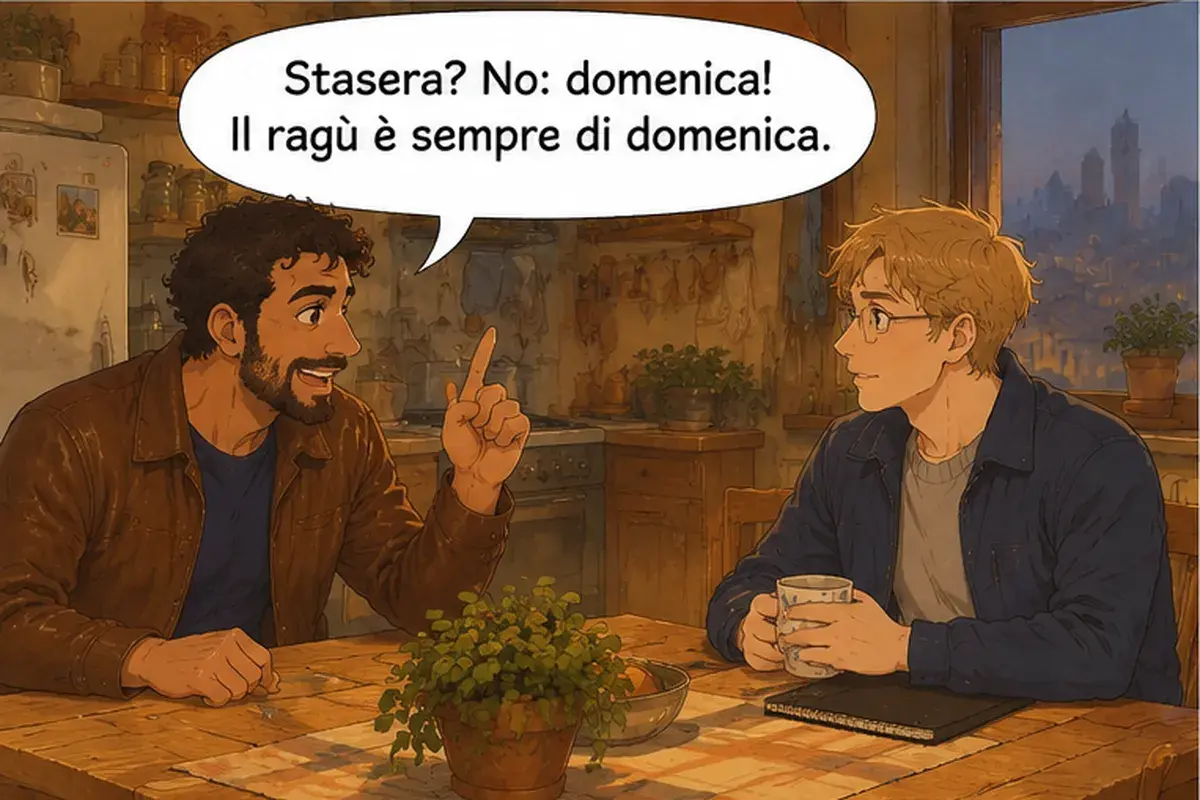
Stasera? No: domenica! Il ragù è sempre di domenica.
Tonight? No, on Sunday! Ragù is always on Sundays.
- Giulia
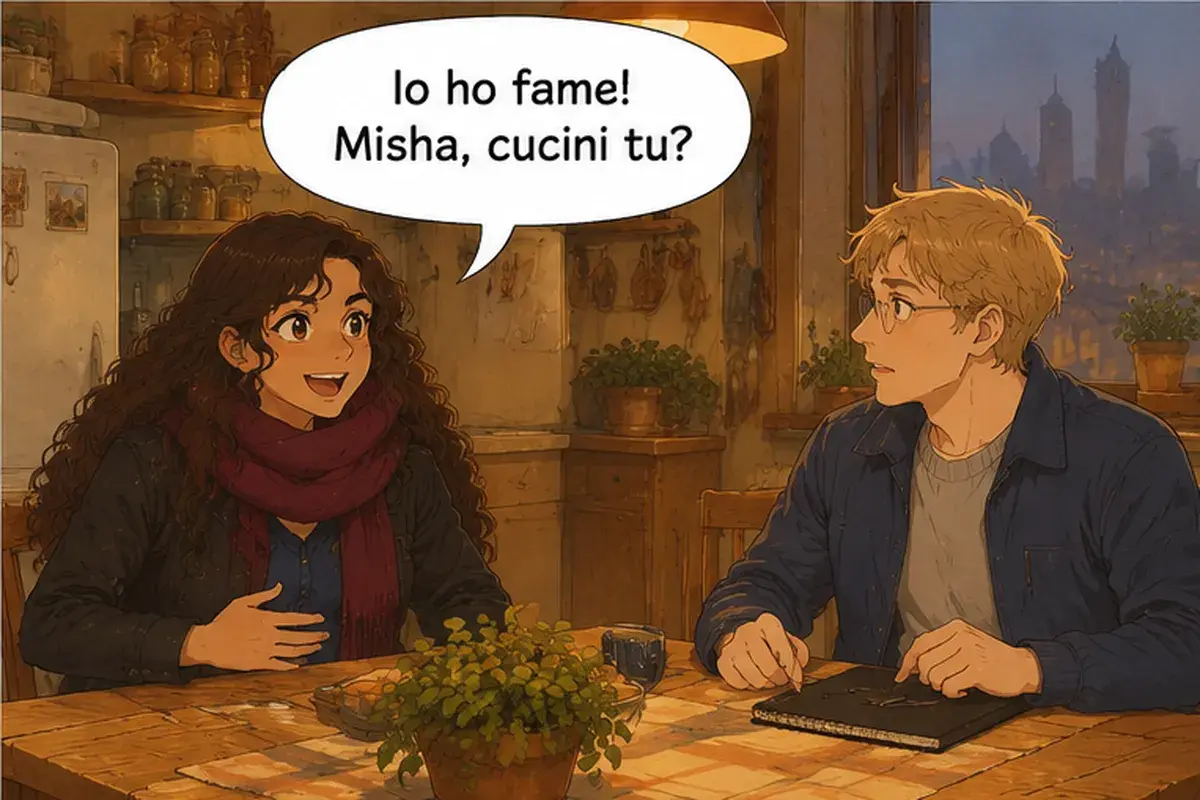
Io ho fame! Misha, cucini tu?
I'm hungry! Misha, are you cooking?
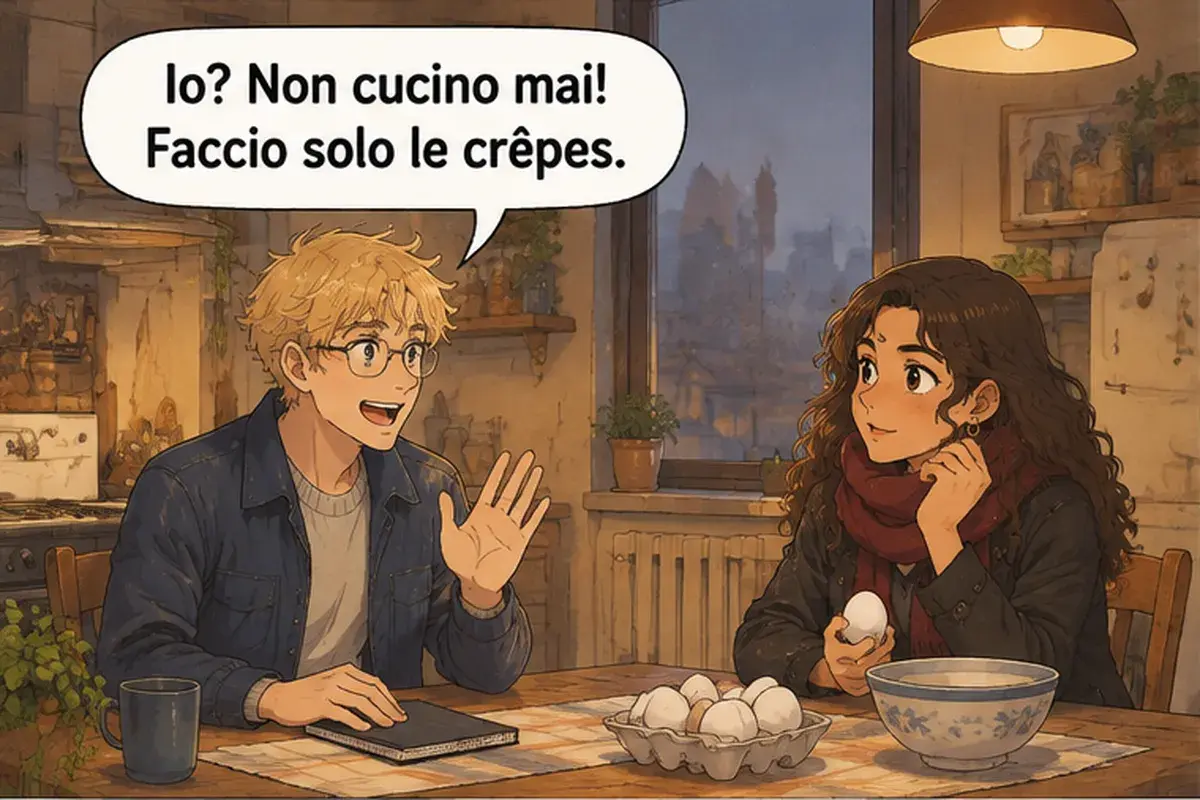
- Misha
Io? Non cucino mai! Faccio solo le crêpes.
Me? I never cook! I only make crêpes.
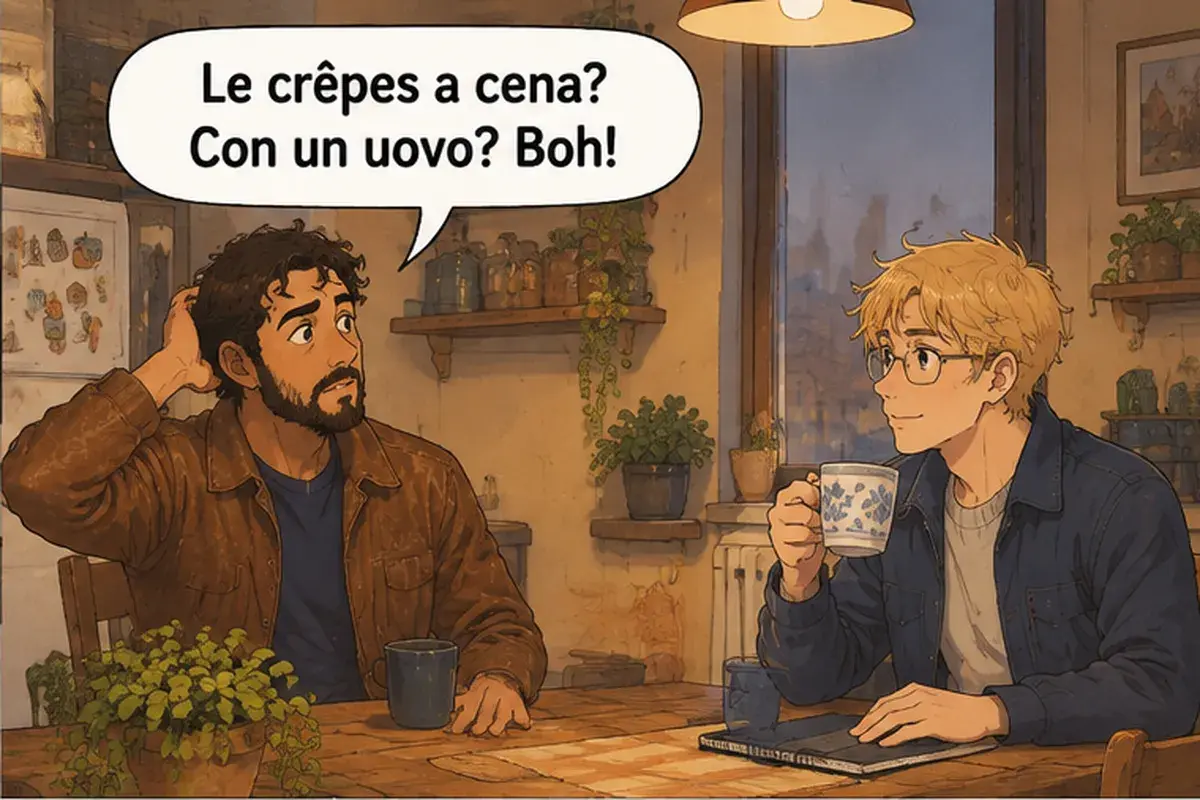
- Luca
Le crêpes a cena? Con un uovo? Boh!
Crêpes for dinner? With one egg? Dunno!
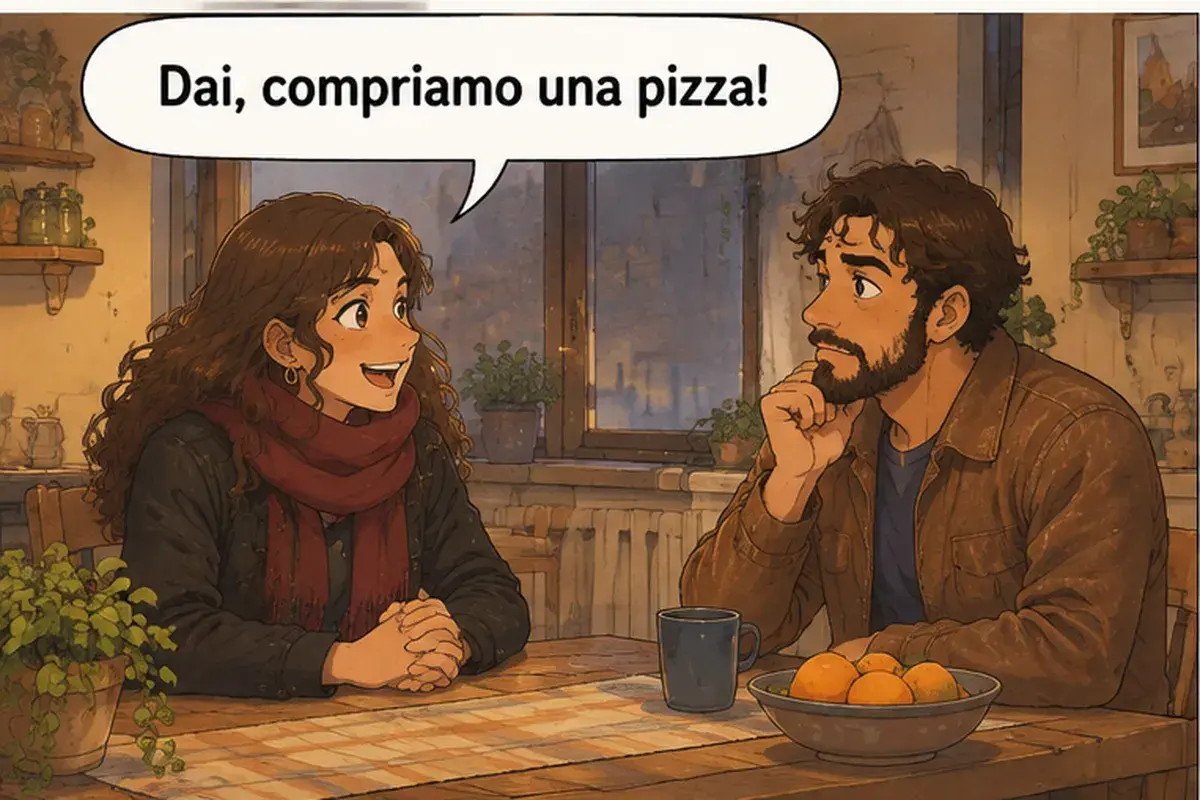
- Giulia
Dai, compriamo una pizza!
Come on, let's buy a pizza!
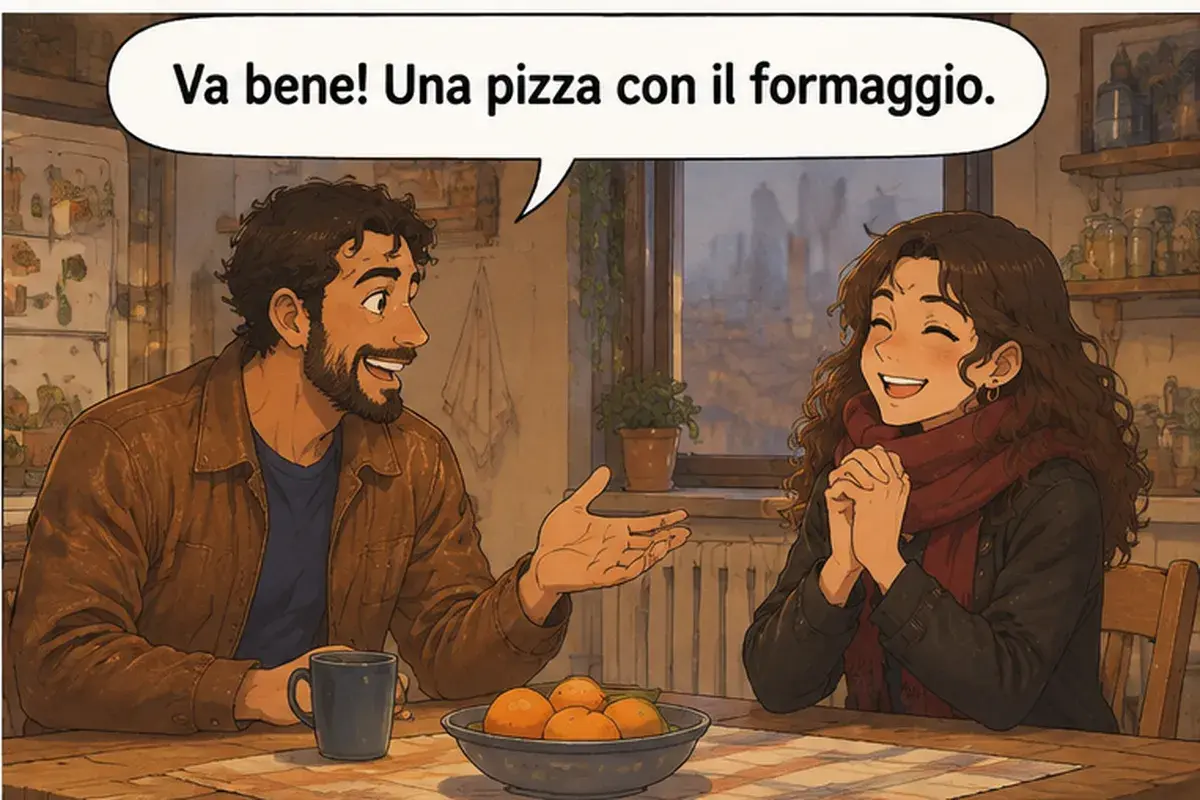
- Luca
Va bene! Una pizza con il formaggio.
OK! A pizza with cheese.
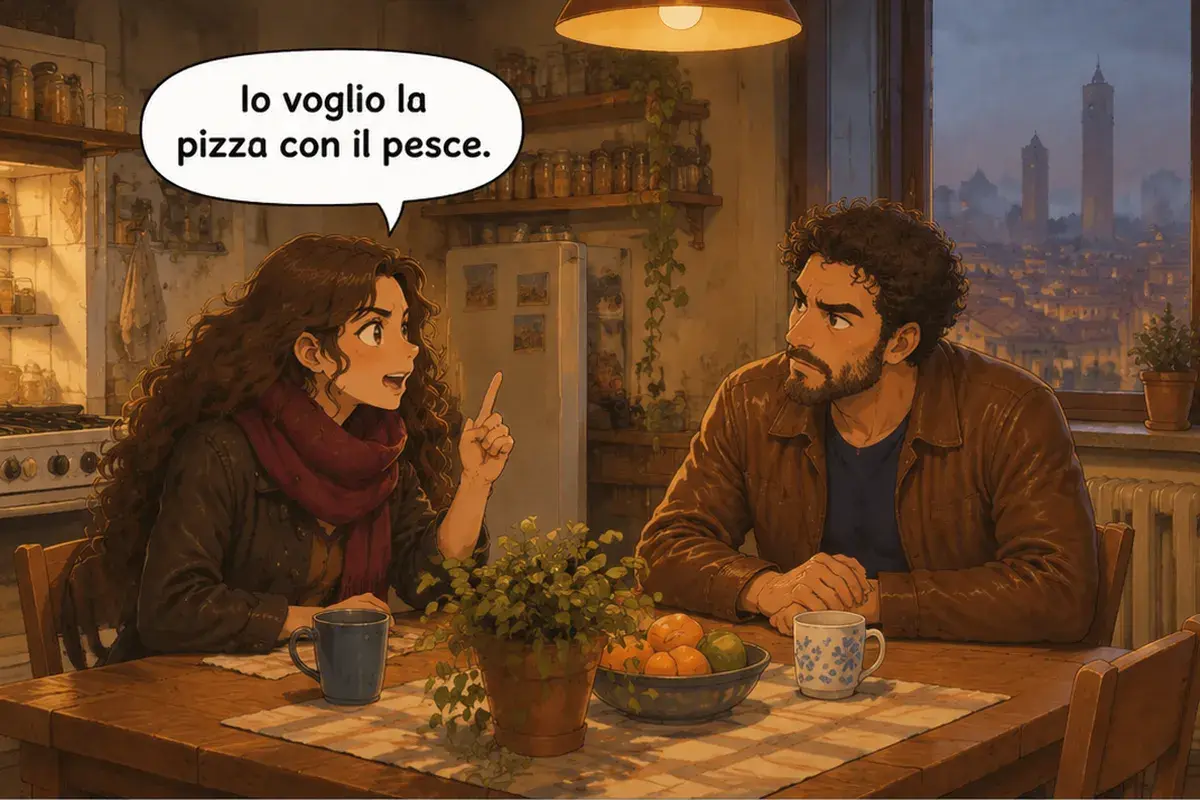
- Giulia
Io voglio la pizza con il pesce.
I want pizza with fish.
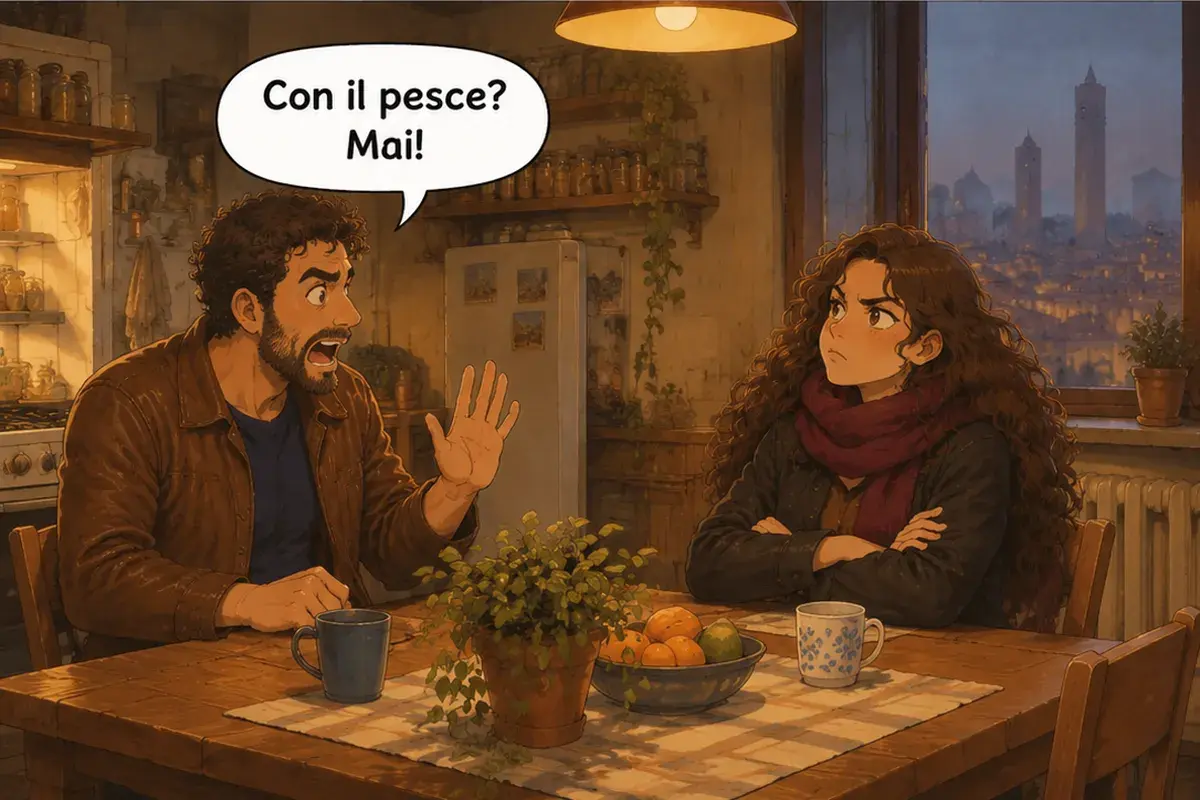
- Luca
Con il pesce? Mai!
With fish? Never!
Grammar for this text
- Non c'è niente da mangiare. — non… niente — "nothing": Italian needs both words, non before the verb and niente after it. c'è — there is (unit 3), da mangiare — to eat; together "there's nothing to eat."
- Un uovo non basta: siamo in tre! — basta — "is enough" (the verb bastare): what is enough here is one egg, so it's the he/she form; non basta — isn't enough. siamo — the noi form of essere (unit 1); in tre — "the three of us."
- Giulia, ti piace la pasta o la pizza? — ti piace — "do you like": the pasta is what's liked, and ti means "to you." More in the unit grammar.
- Io voglio il pesce: mi piace molto! — voglio — "I want": the io form of the irregular verb volere; all its forms are on its word card, the rule is in unit 11.
- Stasera? No: domenica! — domenica with no article — "on Sunday." And di domenica — "on Sundays."
- Faccio solo le crêpes. — faccio — "I make, I do": the io form of the irregular verb fare (unit 11). le crêpes — a French word: it doesn't change in the plural and takes the article le.
- Dai, compriamo una pizza! — dai — "come on!", and boh — "dunno": say them only to friends.
Words and grammar of the unit: Decide what to cook for dinner.
Learn the words from the texts with flashcards
In the app, you can tap any word in a text to see its translation, forms and examples, and new words stick with flashcards. 15 minutes a day.
Start for freeEverything is open for free. No card needed to sign up.