
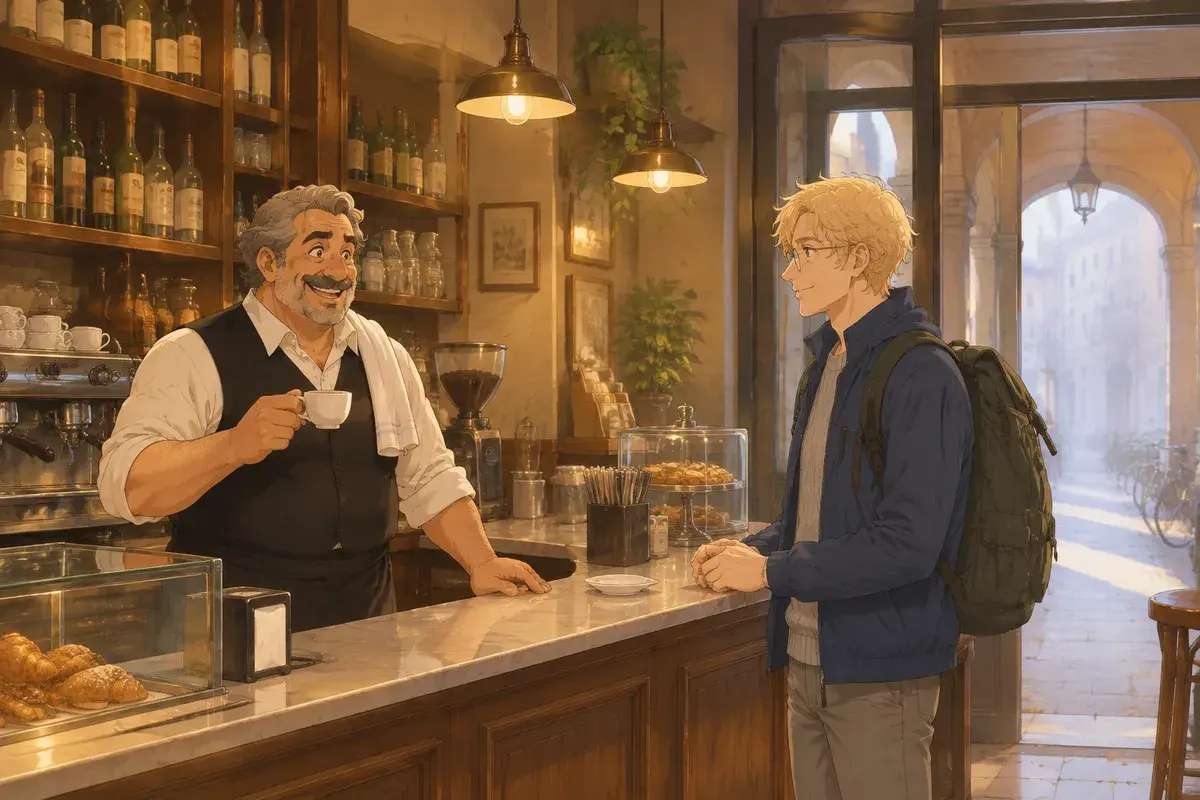
Italian dialogue with translation · A1 · 14 lines
Tè? Stai male? Tea? Are you sick?
Comic · 11 panels
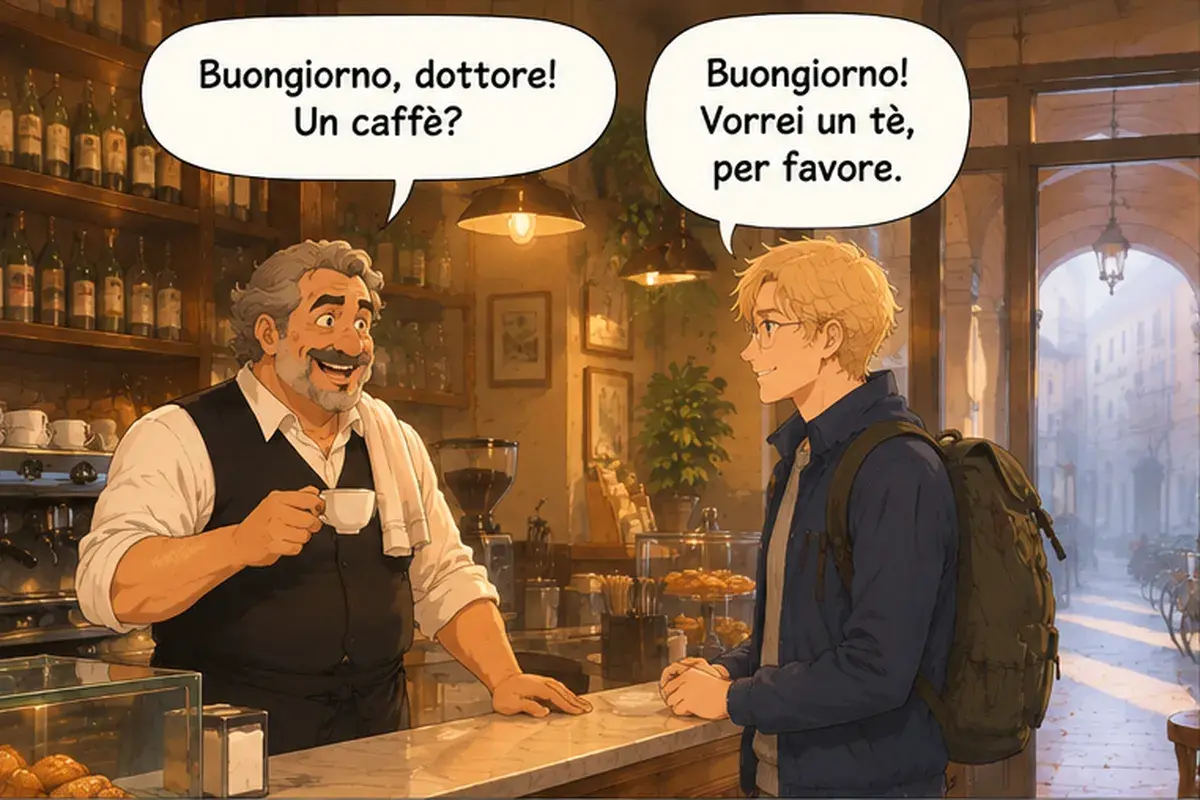
- Enzo
Buongiorno, dottore! Un caffè?
Good morning, dottore! A coffee?
- Misha
Buongiorno! Vorrei un tè, per favore.
Good morning! I'd like a tea, please.
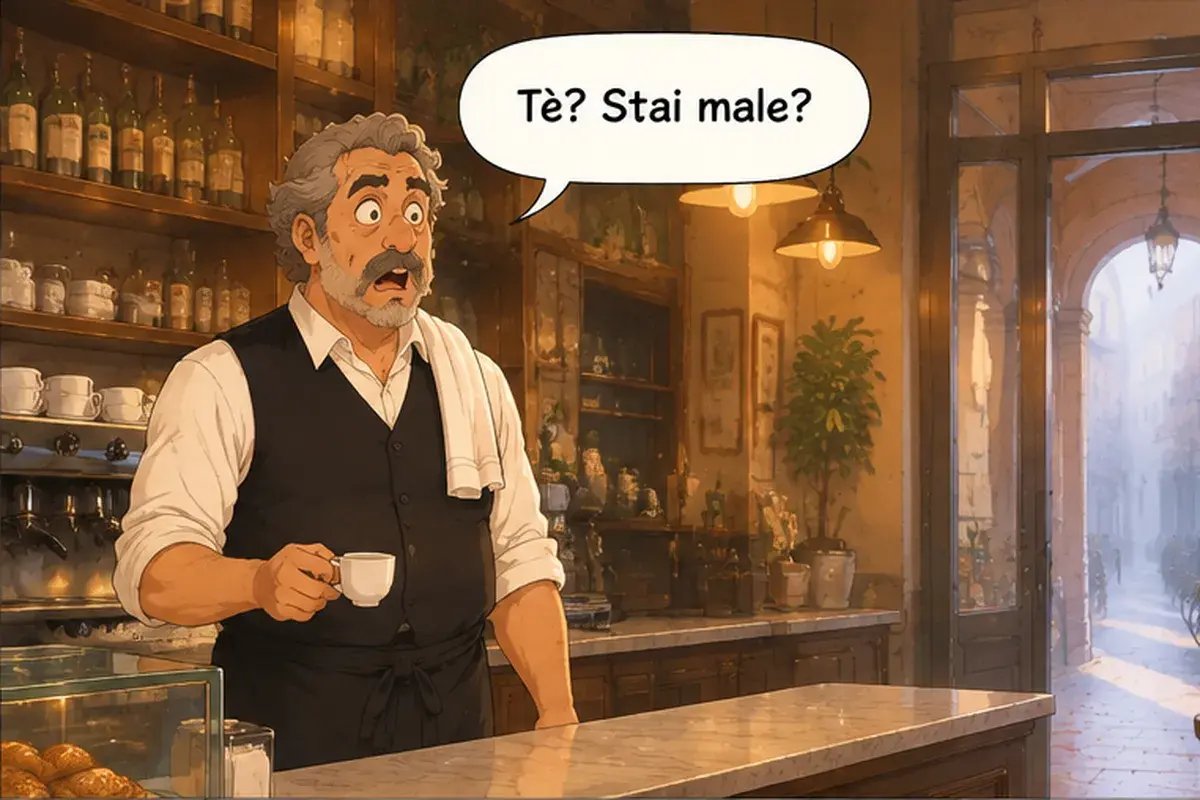
- Enzo
Tè? Stai male?
Tea? Are you sick?
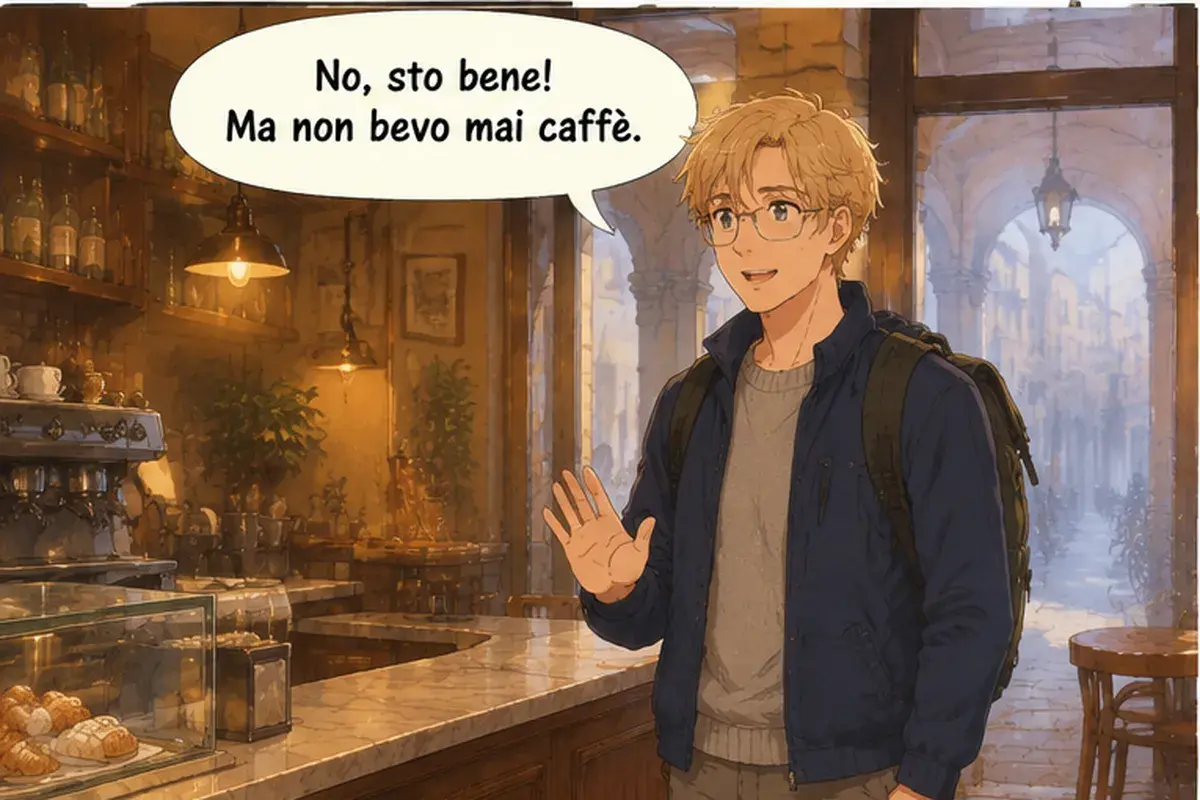
- Misha
No, sto bene! Ma non bevo mai caffè.
No, I'm fine! But I never drink coffee.
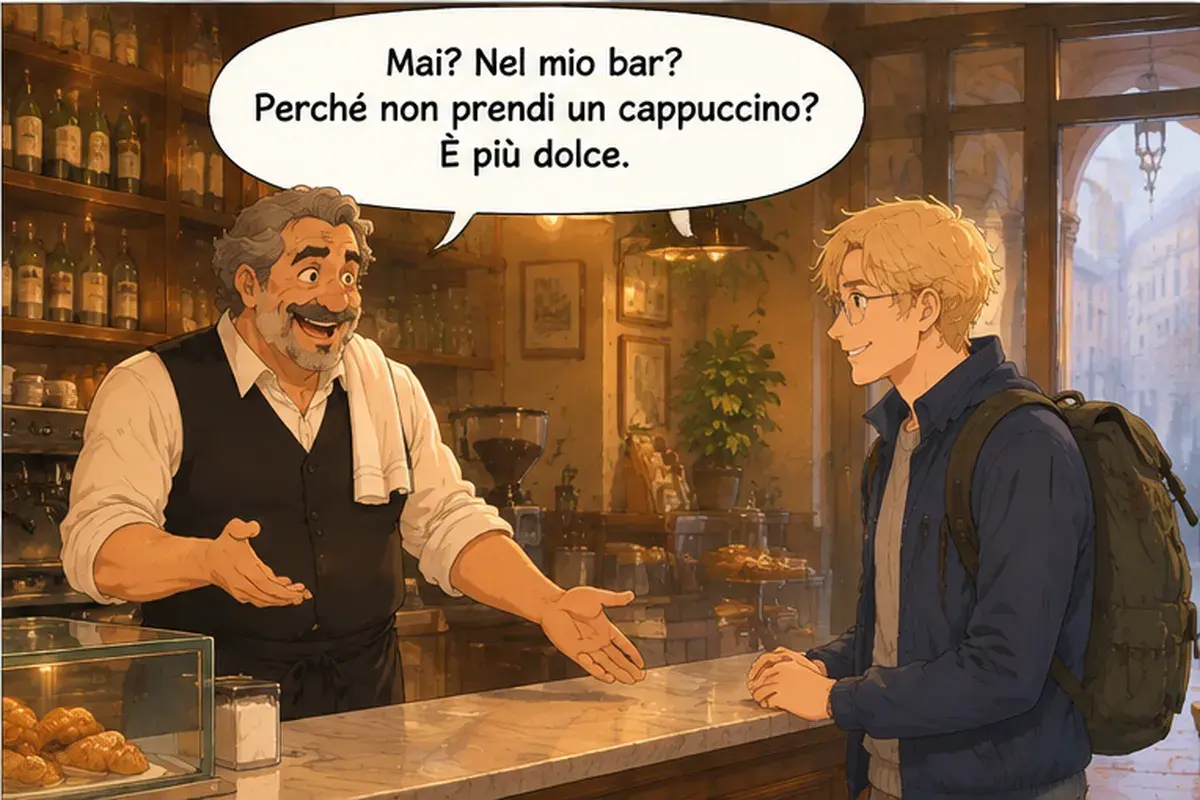
- Enzo
Mai? Nel mio bar? Perché non prendi un cappuccino? È più dolce.
Never? In my bar? Why don't you have a cappuccino? It's sweeter.
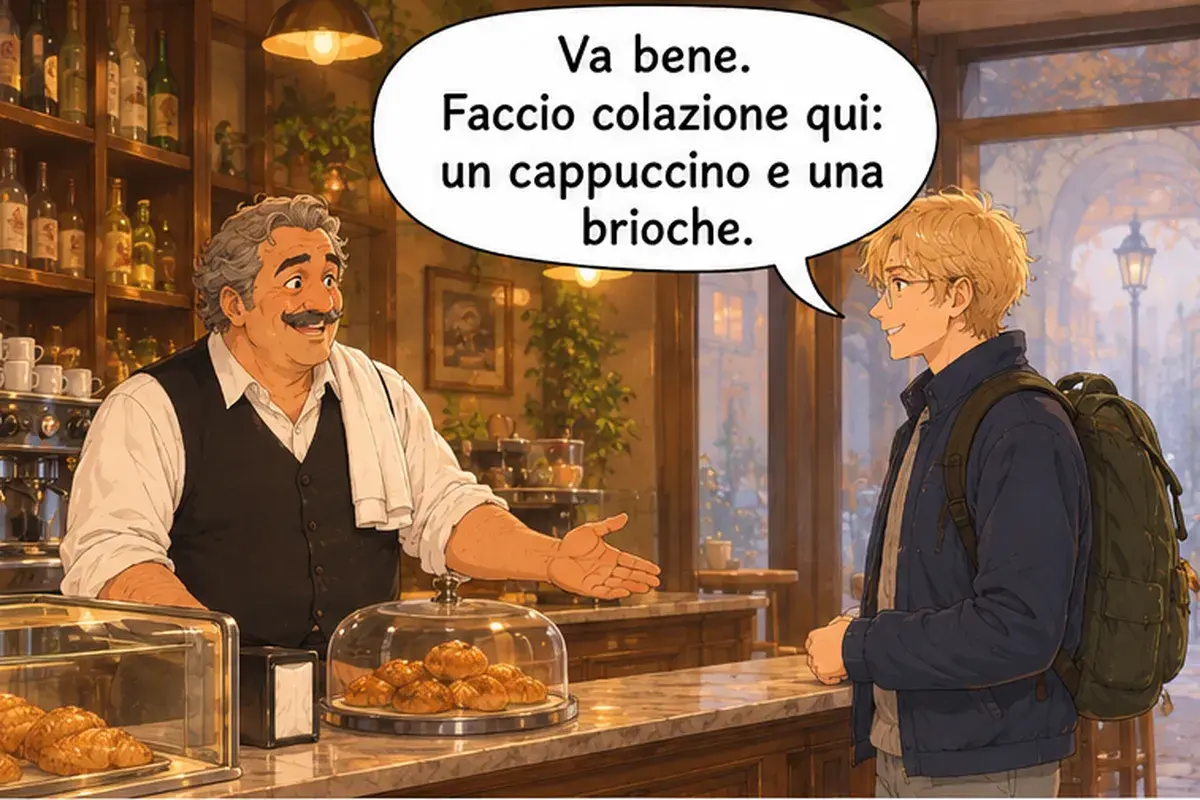
- Misha
Va bene. Faccio colazione qui: un cappuccino e una brioche.
OK. I'll have breakfast here: a cappuccino and a croissant.
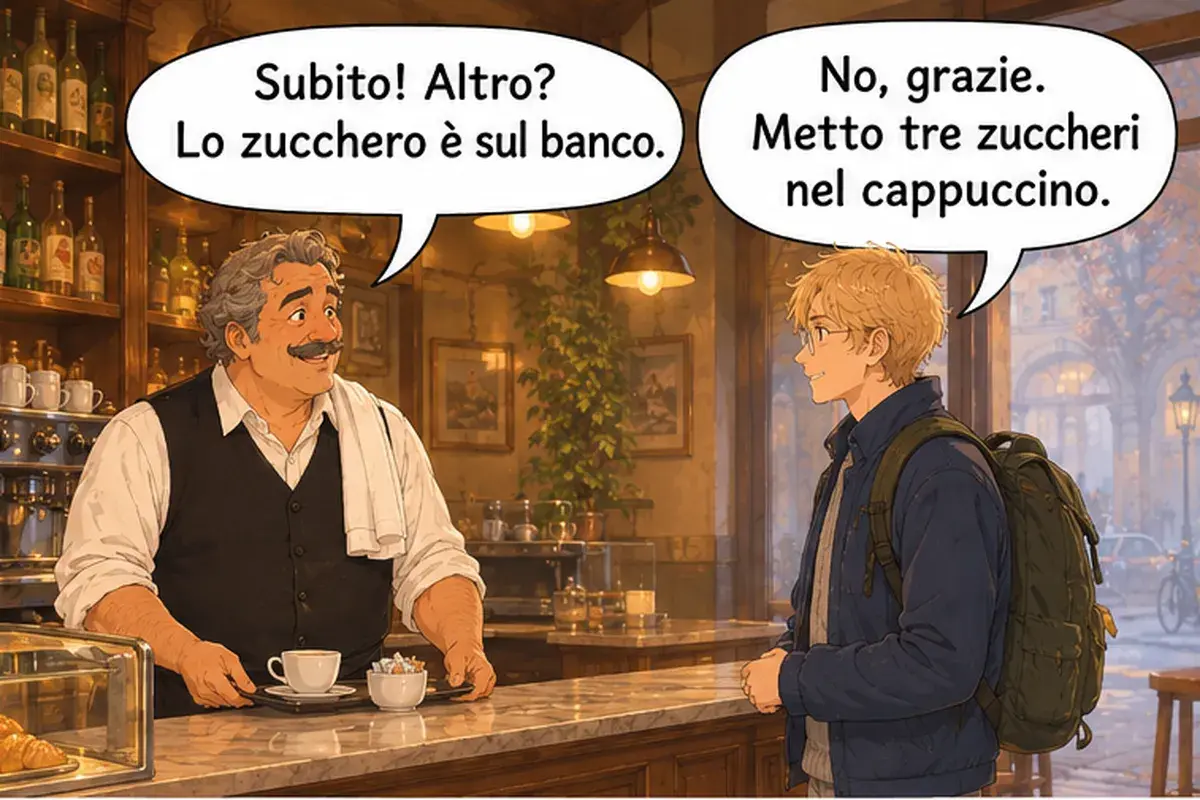
- Enzo
Subito! Altro? Lo zucchero è sul banco.
Right away! Anything else? The sugar's on the counter.
- Misha
No, grazie. Metto tre zuccheri nel cappuccino.
No, thanks. I'll put three sugars in the cappuccino.
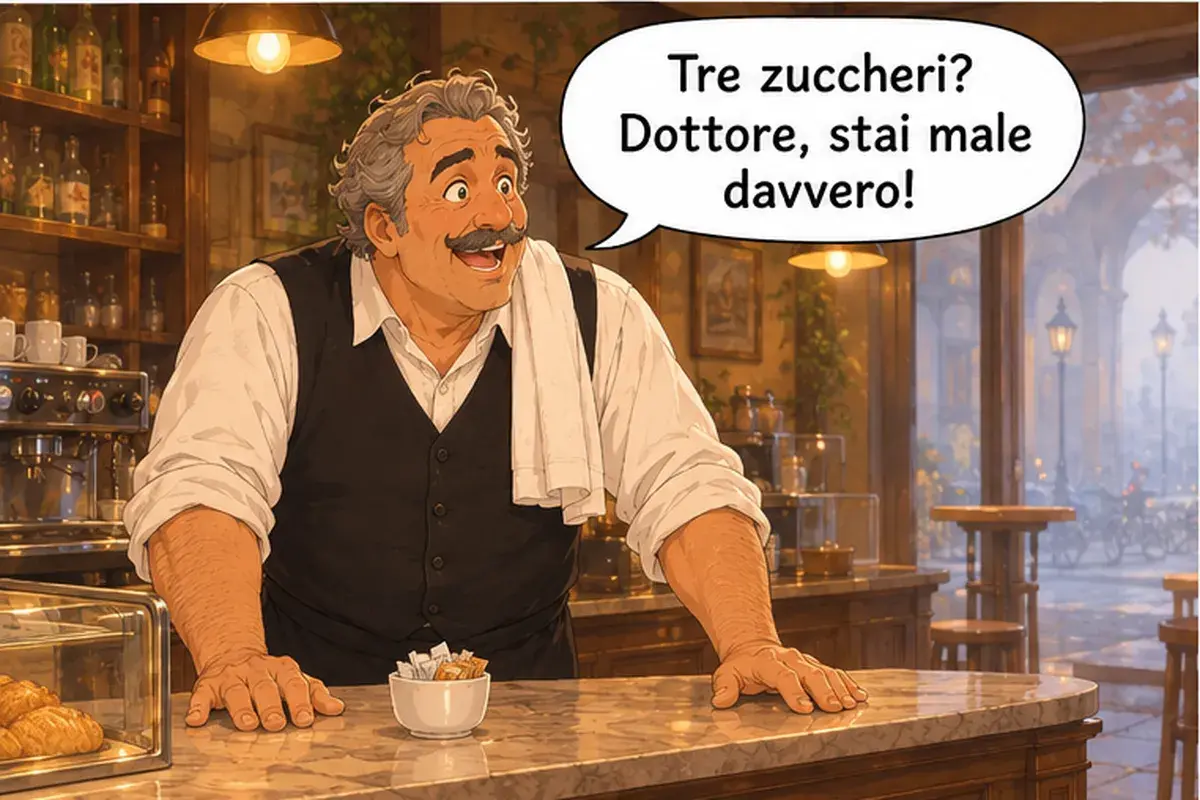
- Enzo
Tre zuccheri? Dottore, stai male davvero!
Three sugars? Dottore, you really are sick!
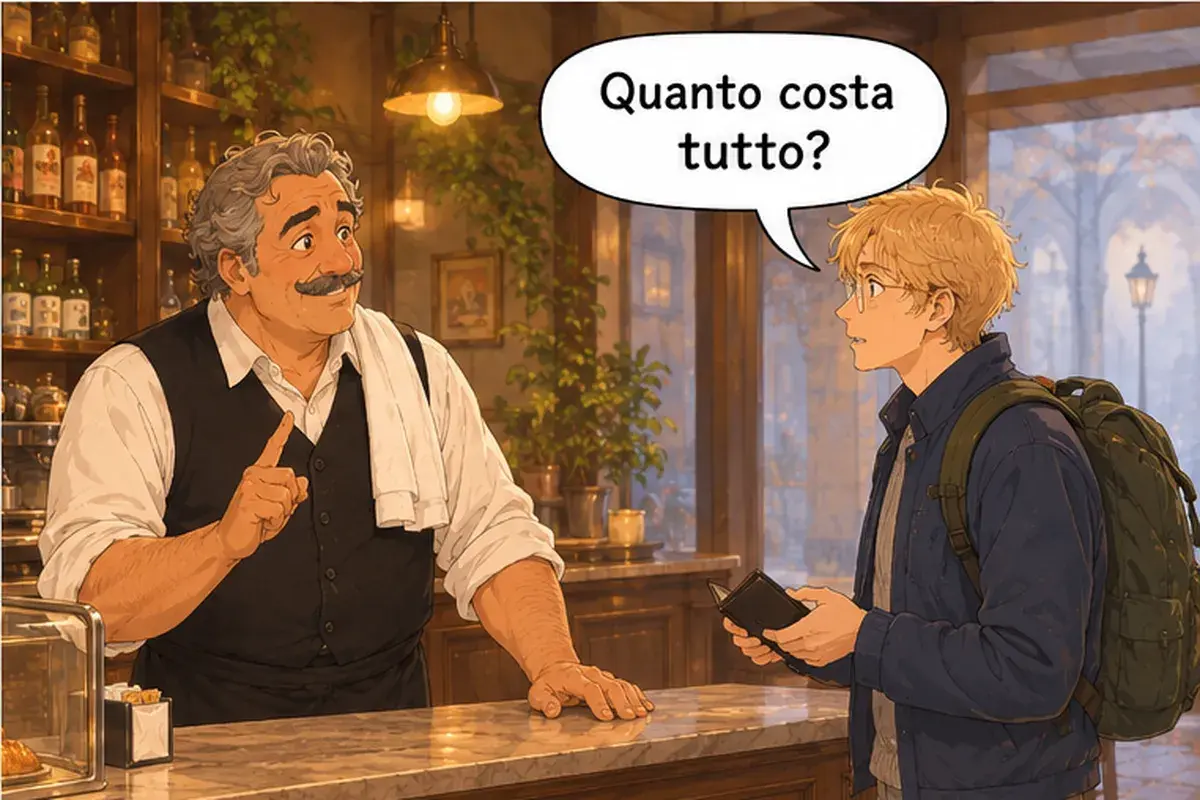
- Misha
Quanto costa tutto?
How much is everything?
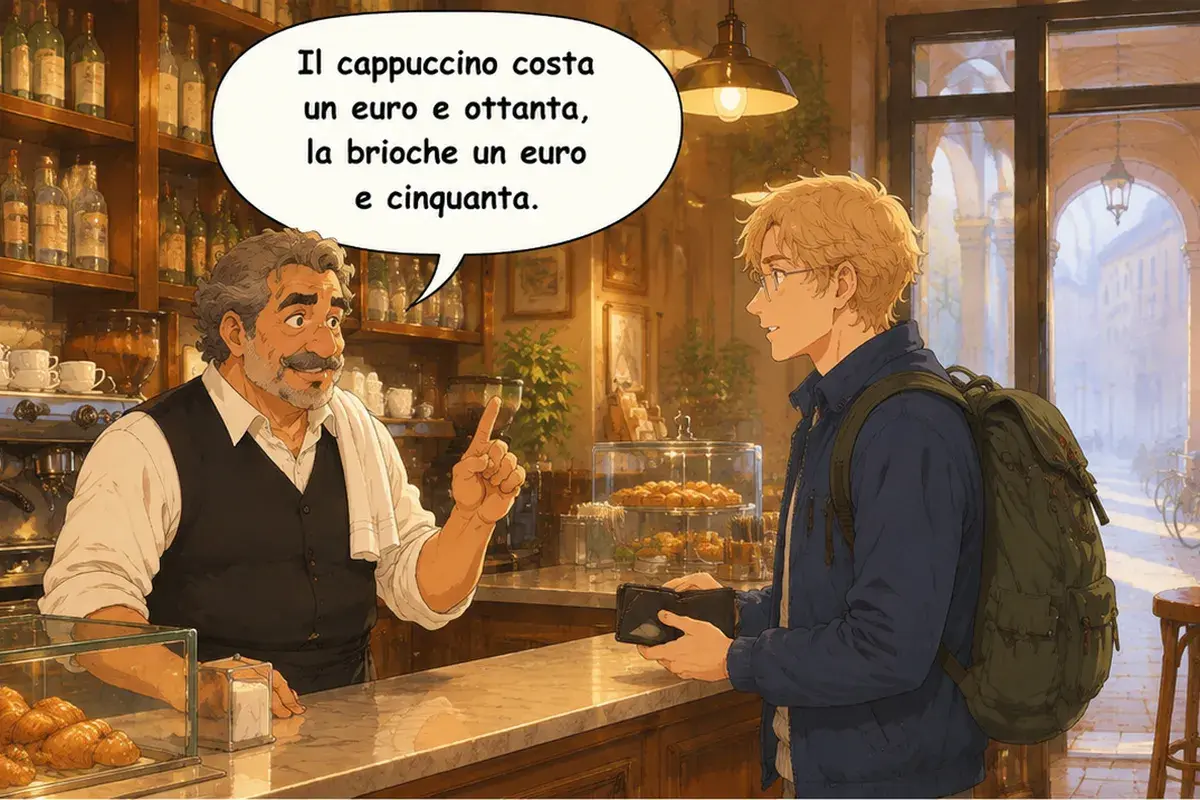
- Enzo
Il cappuccino costa un euro e ottanta, la brioche un euro e cinquanta.
The cappuccino costs one euro eighty, the croissant one euro fifty.
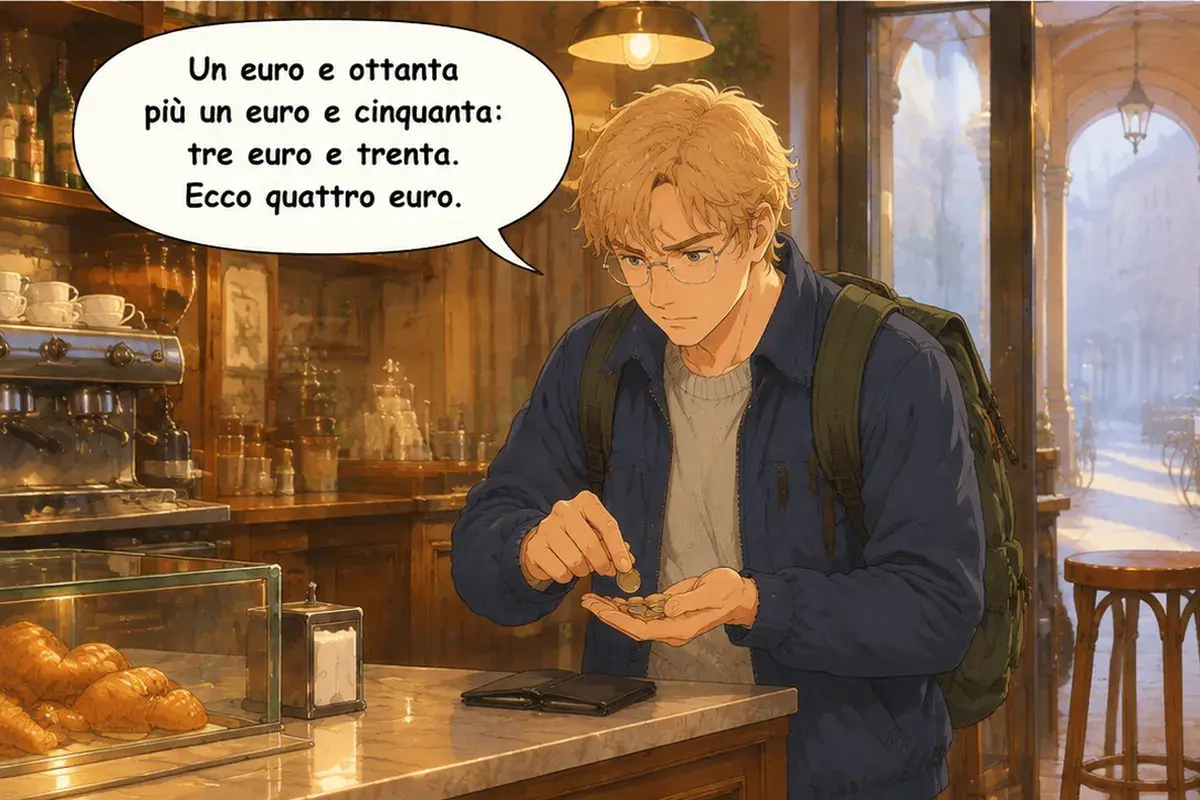
- Misha
Un euro e ottanta più un euro e cinquanta: tre euro e trenta. Ecco quattro euro.
One euro eighty plus one euro fifty: three euros thirty. Here's four euros.
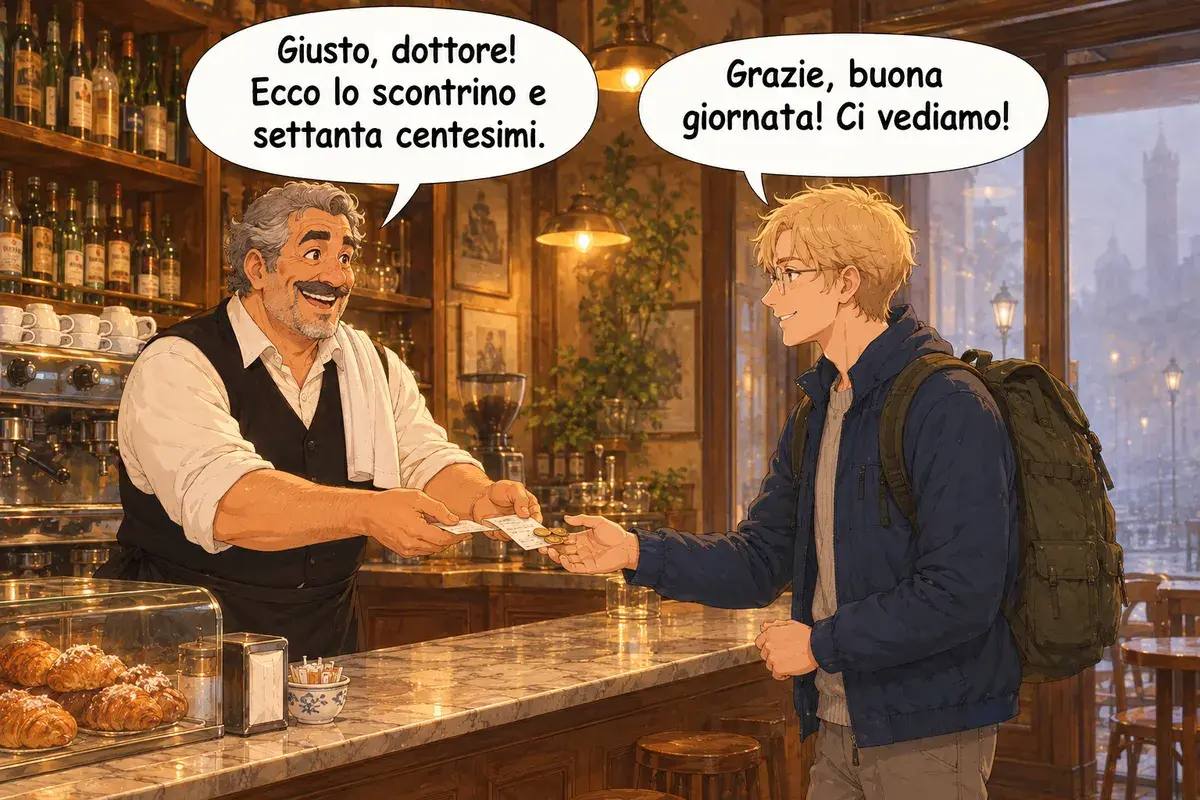
- Enzo
Giusto, dottore! Ecco lo scontrino e settanta centesimi.
That's right, dottore! Here's the receipt and seventy cents.
- Misha
Grazie, buona giornata! Ci vediamo!
Thanks, have a nice day! See you!
Grammar for this text
- Vorrei un tè, per favore. — vorrei means "I'd like": the polite form of volere (to want, unit 5). This is how you ask at a bar; voglio (I want) would sound like a demand. How the form is built comes at level B1; for now, learn it as a whole.
- Stai male? — stai is the tu form of stare (in Misha's answer, sto is the io form). stare male — to feel sick. In Italy people drink tea when they're ill, and that's why Enzo jokes. More in unit 13.
- Ma non bevo mai caffè. — bevo is the io form of bere (to drink): the stem becomes bev- (see the unit grammar). non… mai — never: Italian uses two negative words, English only one.
- Perché non prendi un cappuccino? È più dolce. — perché non…? — why don't you…?, a soft suggestion. più dolce — sweeter; the second half of a comparison ("than…") isn't taught at A1.
- Faccio colazione qui: un cappuccino e una brioche. — fare colazione — to have breakfast (literally "to make breakfast"): faccio is the io form of fare. After the colon comes the order itself, with no verb.
- Un euro e ottanta più un euro e cinquanta: tre euro e trenta. — a price is read as "euros, e, the number of cents"; the word centesimi is left out. euro doesn't change (due euro), and più here means "plus".
- Ci vediamo! — "see you", from vedere (to see): literally "we see each other". The rule comes at B1; for now it's a set phrase.
Words and grammar of the unit: Order coffee and ask for the check.
Learn the words from the texts with flashcards
In the app, you can tap any word in a text to see its translation, forms and examples, and new words stick with flashcards. 15 minutes a day.
Start for freeEverything is open for free. No card needed to sign up.