

French story with translation · B2 · 17 lines
Tant de monde pour un lumignon So many people for one candle
Comic · 17 panels

Le 8 décembre est tombé un mardi. La semaine dernière, Aïcha m'avait prévenu : « Ce soir-là, tout Lyon sort ses bougies. Rentre tôt, et mets un lumignon sur chaque rebord de fenêtre. »
December 8 fell on a Tuesday. Last week, Aïcha had warned me: "That night, all of Lyon brings out its candles. Come home early, and put a small candle on every windowsill."

Thomas, lui, riait : « Dans ton jeu, le capitaine mène une armée de mille soldats à la dernière bataille. Ce soir, les Lyonnais sont dix fois plus nombreux, et ils n'ont que des bougies. »
Thomas, though, was laughing: "In your game, the captain leads an army of a thousand soldiers into the last battle. Tonight, the people of Lyon outnumber them ten to one, and all they have is candles."

Madame Lefèvre elle-même m'a laissé partir à seize heures : « C'est la tradition, Pacha. Allez-y, et prenez des lumignons pour vos fenêtres ! »
Madame Lefèvre herself let me leave at four p.m.: "It's tradition, Pacha. Go ahead, and take some candles for your windows! (formal)"

Il avait plu toute la matinée. J'ai acheté vingt lumignons au supermarché, puis j'ai pris le métro : mauvaise idée, c'était déjà la bousculade, et j'ai reçu un sac sur la tête. J'ai vu trente-six chandelles !
It had rained all morning. I bought twenty small candles at the supermarket, then took the metro: bad idea, it was already a crush, and a bag hit me on the head. I saw stars!

Chez moi, j'ai posé six lumignons sur mes rebords et j'ai mis un verre autour de chaque flamme. Pour la première fois de ma vie, j'avais des lumières à mes propres fenêtres !
At home, I put six candles on my windowsills and set a glass around each flame. For the first time in my life, I had lights in my very own windows!
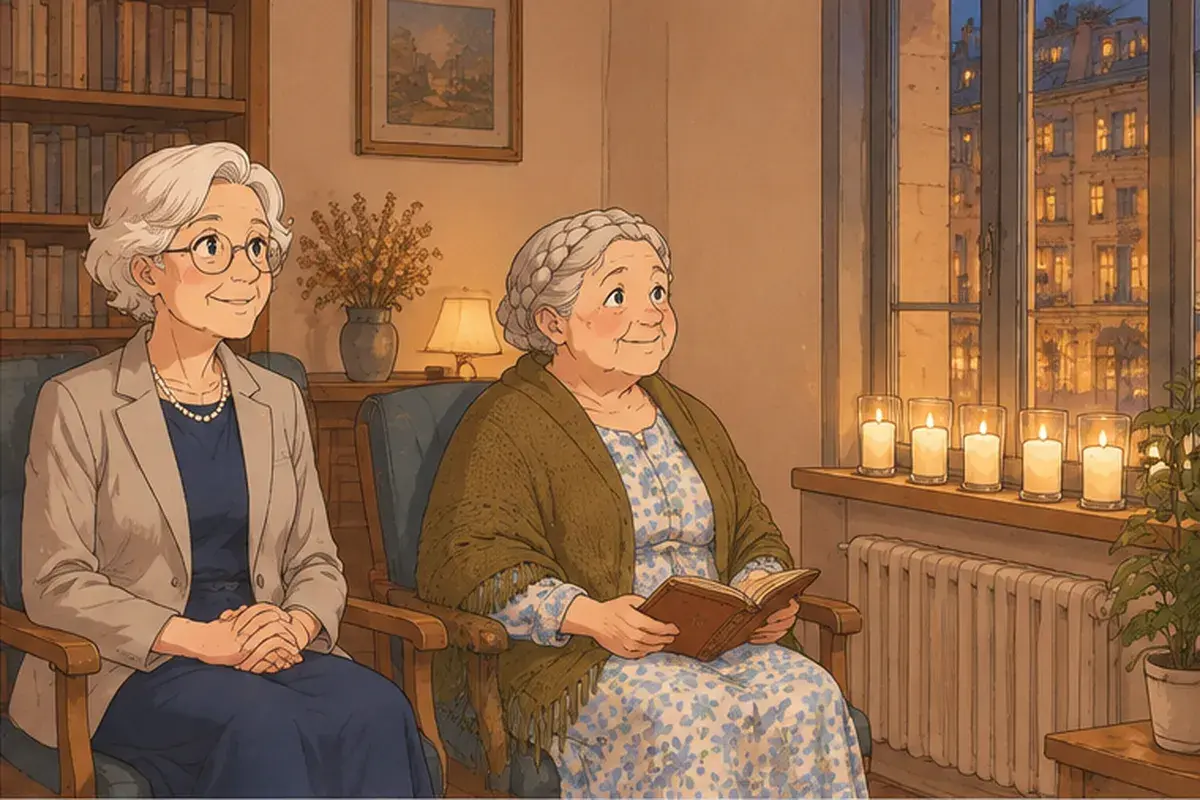
Madame Morel et sa sœur Jeanne ne sortent plus le soir dans la foule. Elles sont montées chez moi à dix-sept heures trente, avec un vieux livre, parce que de mon salon on voit la colline de Fourvière.
Madame Morel and her sister Jeanne no longer go out in the crowd at night. They came up to my place at five thirty p.m., with an old book, because from my living room you can see the hill of Fourvière.
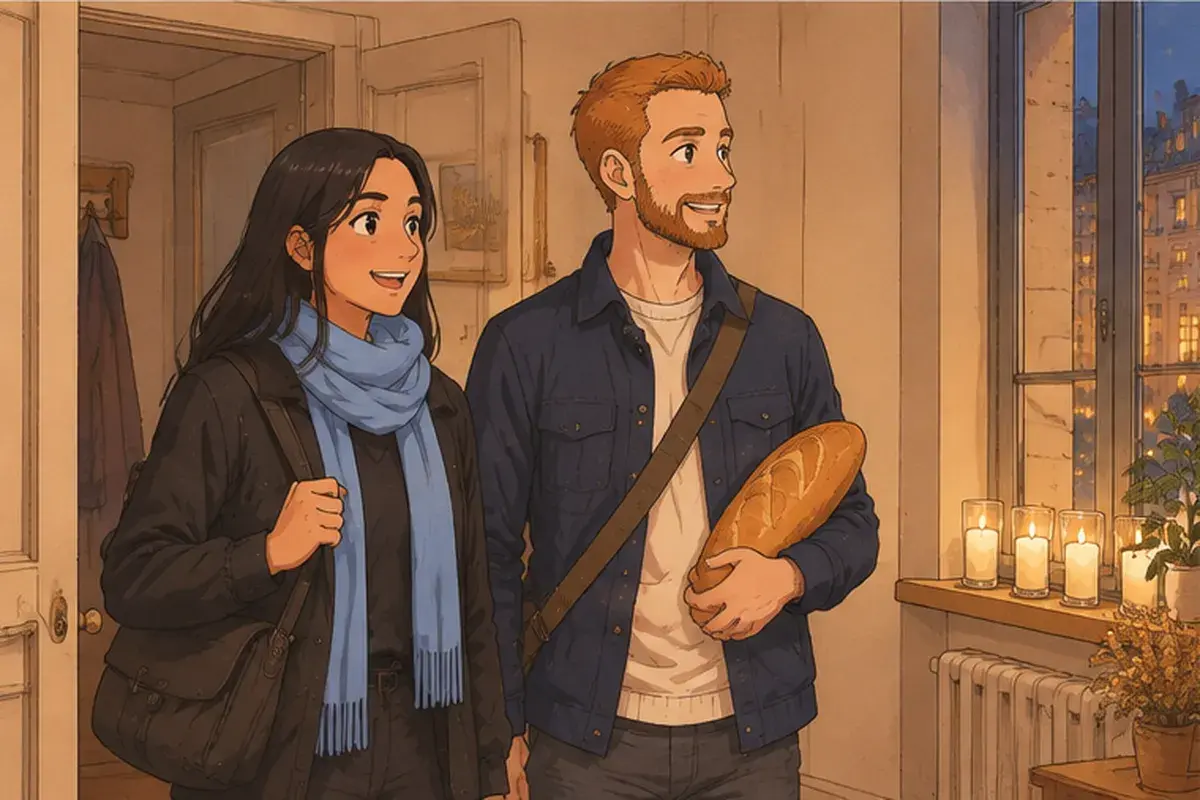
Inès est arrivée de Paris par le train de quinze heures, et Hugo est venu de son travail, avec du pain sous le bras. « Deux heures de train pour une bougie ! a dit Inès. Et je ne regrette rien. »
Inès arrived from Paris on the three o'clock train, and Hugo came from work, with bread under his arm. "Two hours on a train for one candle!" Inès said. "And I don't regret a thing."

Nous avons laissé les deux sœurs à ma fenêtre et nous sommes descendus vers le centre. Il y avait tant de monde dans les rues que nous marchions au pas des autres, comme dans une armée de touristes.
We left the two sisters at my window and went down toward the center. There were so many people in the streets that we walked in step with everyone else, like in an army of tourists.

Hugo, qui se lève à quatre heures, regardait l'heure sur son téléphone toutes les cinq minutes. « Tant de monde pour un lumignon ! Quel sacré spectacle, mais demain j'ai du pain à faire : à vingt et une heures, je dors. »
Hugo, who gets up at four, was checking the time on his phone every five minutes. "So many people for one candle! That's one heck of a show, but tomorrow I have bread to make: at nine p.m., I'm asleep."
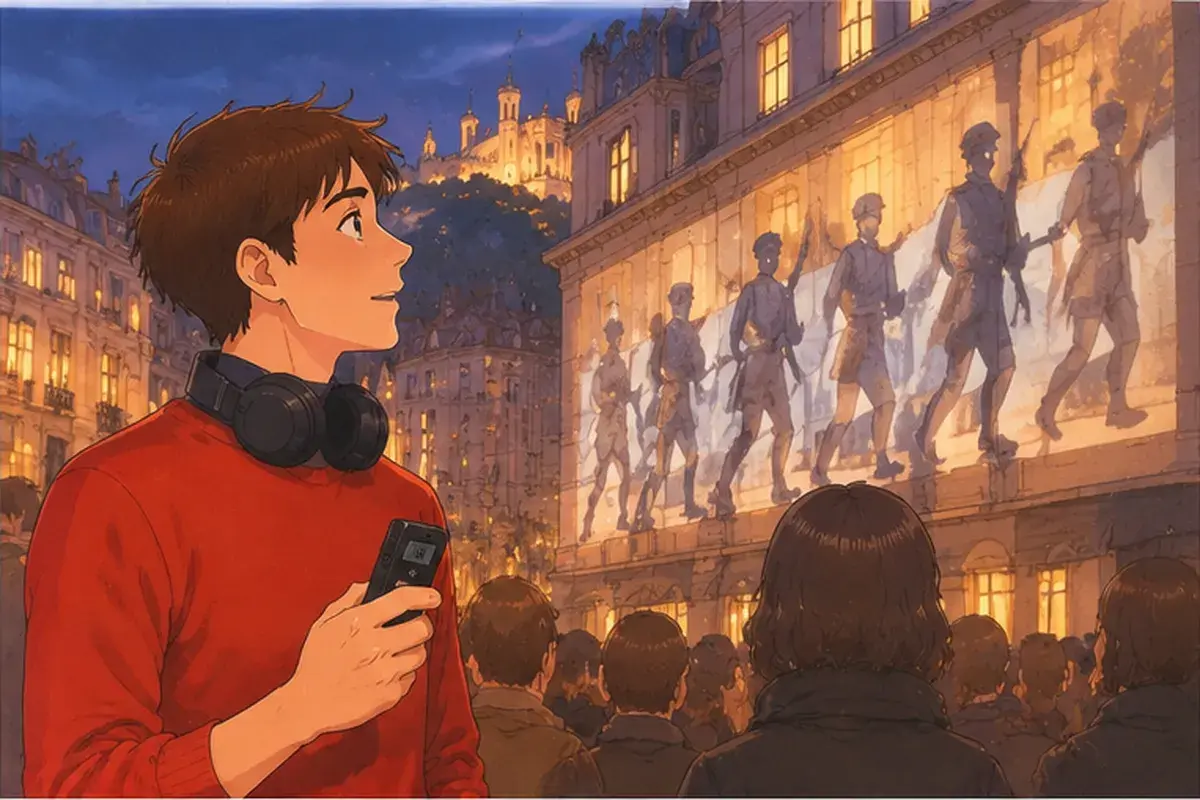
Sur la façade d'un grand bâtiment, une projection racontait un conte : il était une fois un prince et son capitaine, qui menaient leurs soldats à travers la nuit. Les soldats marchaient sur le mur, mais leurs pas sonnaient faux, et mon oreille d'ingénieur du son l'a tout de suite entendu.
On the front of a big building, a projection was telling a tale: once upon a time there was a prince and his captain, who led their soldiers through the night. The soldiers marched on the wall, but their steps sounded off, and my sound engineer's ear caught it right away.
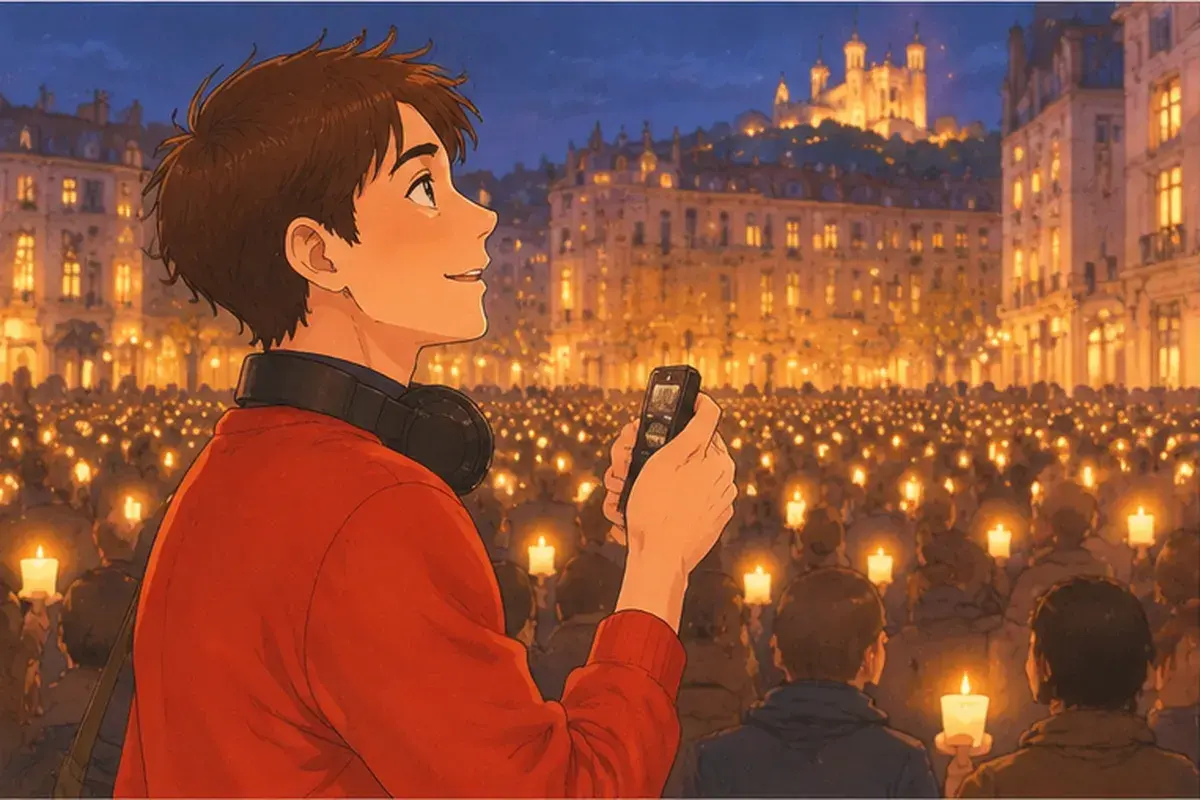
Quand la musique s'est arrêtée, la foule immense est devenue incroyablement silencieuse. Des milliers de visages, une petite lueur sur chacun, et pas un bruit : j'ai levé mon dictaphone pour garder ce silence.
When the music stopped, the huge crowd became incredibly quiet. Thousands of faces, a little glow on each one, and not a sound: I raised my voice recorder to keep this silence.
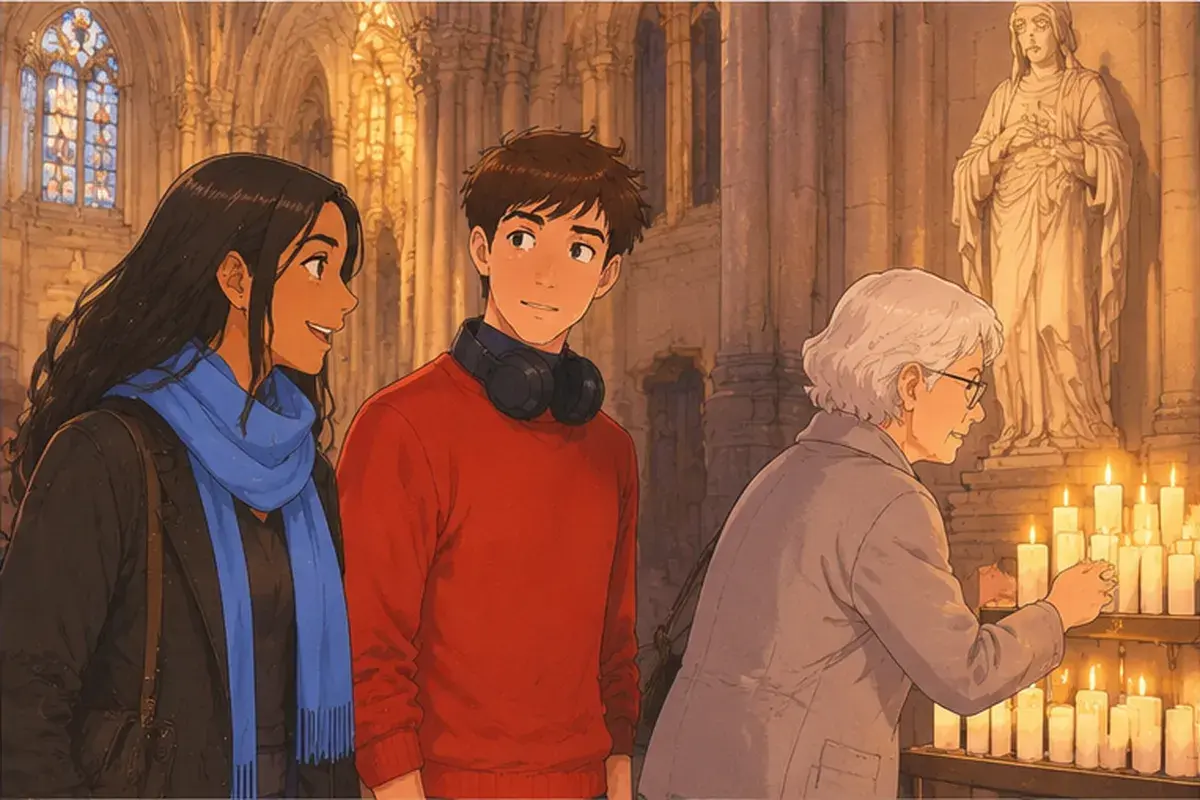
Après avoir traversé la Saône, nous sommes entrés dans la cathédrale : une vieille femme a allumé un cierge devant la statue d'un saint et a dit une prière en silence. Dehors, la fête battait son plein ; ici, la religion avait repris ses droits. « Si j'avais su qu'il y aurait autant de monde, je serais venue la veille ! » a dit doucement Inès.
After crossing the Saône, we went into the cathedral: an old woman lit a candle in front of the statue of a saint and said a prayer in silence. Outside, the festival was in full swing; in here, religion had reclaimed its place. "If I'd known there would be this many people, I would have come the day before! (woman speaking)" Inès said softly.

Sur la colline, la statue dorée de la Vierge scintillait, mystérieuse, dans l'obscurité. « Chez nous, la Bonne Mère voit la mer, a dit Inès. Elle, elle ne voit que des toits. »
On the hill, the golden statue of the Virgin glittered, mysterious, in the darkness. "Back home, the Bonne Mère sees the sea," Inès said. "This one only sees rooftops."

Par miracle, la pluie du matin n'était plus qu'un souvenir : les lampes de la rue éclairaient à peine, mais les façades illuminées avaient l'air de décors, et les lumières de la ville dansaient dans l'eau.
By some miracle, the morning rain was only a memory: the streetlights barely gave any light, but the lit-up facades looked like stage sets, and the city's lights danced in the water.

Devant le métro, l'attente était éternelle, alors nous sommes rentrés à pied. Dans ma rue, pas une âme dehors, mais pas une seule fenêtre sans flamme.
In front of the metro, the wait was endless, so we walked home. On my street, not a soul outside, but not a single window without a flame.

Chez moi, le vent avait éteint trois lumignons, mais Madame Morel et Jeanne avaient tout allumé de nouveau. Le vieux livre attendait sur la table, entre les tasses.
At my place, the wind had blown out three candles, but Madame Morel and Jeanne had lit everything again. The old book was waiting on the table, between the cups.

« Asseyez-vous tous, a dit madame Morel. Un 8 décembre sans la légende, c'est comme un lumignon sans flamme. »
"Sit down, everyone (to several people)," Madame Morel said. "A December 8 without the legend is like a candle without a flame."
Grammar for this text
- tout Lyon sort ses bougies —
Lyonhere means "everyone in Lyon." Rentre tôt — friendly advice from a coworker, using the tu form. Aïcha m'avait prévenu —avait prévenumeans "had warned me ahead of time" (past perfect, B1). - une armée de mille soldats, comme dans une armée de touristes —
une armée de…figuratively means "a whole crowd"; in Pacha's game it's a real army, on the sidewalk it's a joke. - un lumignon — a small candle in a little glass; on December 8, people in Lyon put one on every windowsill (
rebord). The Festival of Lights lasts several evenings, and December 8 is the main one. - j'ai vu trente-six chandelles — a set phrase: "I saw stars" after a blow. Word for word: "I saw thirty-six candles."
- Tant de monde pour un lumignon ! —
tant demeans "so many" (in 16-2 Hugo uses the casual tellement de pain). Quel sacré spectacle — before a noun,sacrémeans "one heck of a." - il était une fois un prince — the start of a fairy tale: "once upon a time." la foule immense est devenue incroyablement silencieuse —
immenseafter the noun just means "huge";incroyablementstrengthens the adjective. - la fête battait son plein —
battre son pleinmeans "to be in full swing" (for a festival, an evening):la fête bat son plein,battait son plein.Son pleindoesn't change; with a plural subject it'sleur plein. - Si j'avais su qu'il y aurait autant de monde, je serais venue la veille — "if I had known":
si+j'avais su(past perfect), thenje serais venue(past conditional;venirtakesêtre, andvenueshows a woman is speaking).Il y auraitmeans "there would be" in a story told in the past. - la Bonne Mère — the nickname of the basilica and the statue of the Virgin Mary above Marseille: for Inès, it's "her own" Virgin.
Words and grammar of the unit: Tell the story of a festival.
Learn the words from the texts with flashcards
In the app, you can tap any word in a text to see its translation, forms and examples, and new words stick with flashcards. 15 minutes a day.
Start for freeEverything is open for free. No card needed to sign up.