
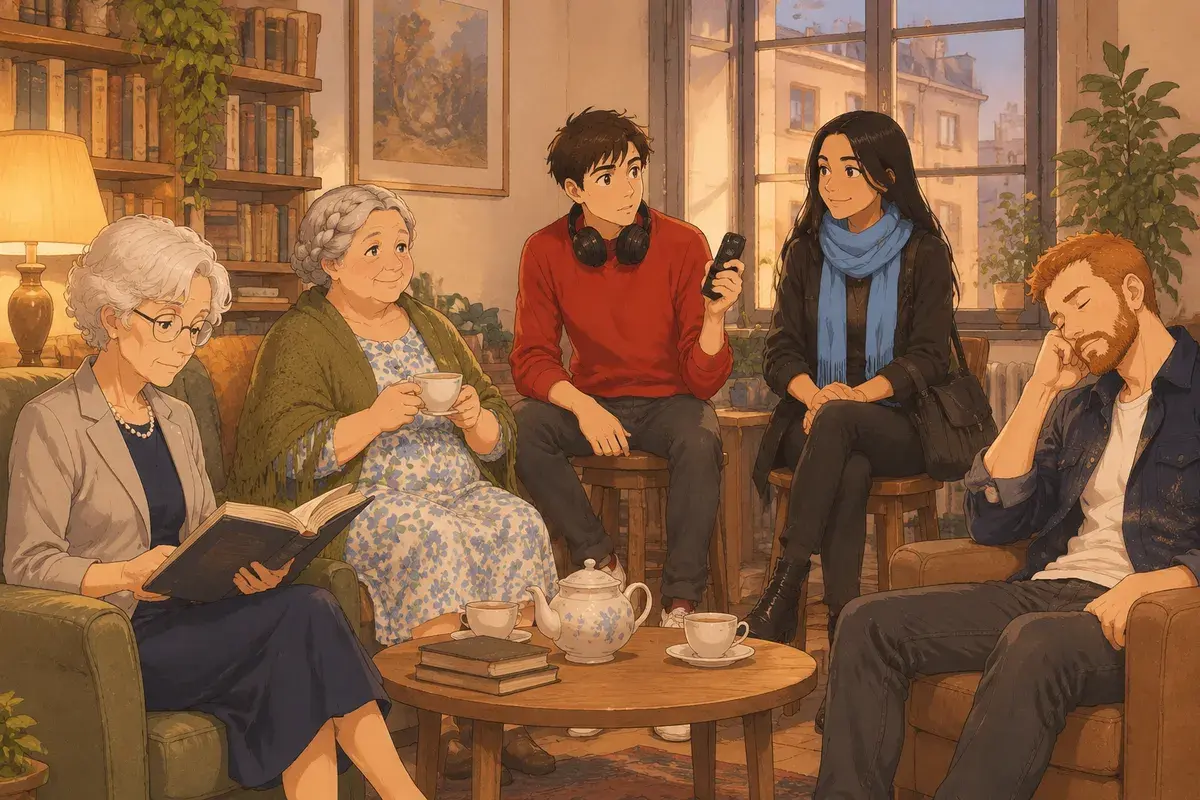
French dialogue with translation · B2 · 19 lines
Ce n'est pas un conte, c'est un récit It's not a tale, it's an account
Comic · 19 panels
- Pacha
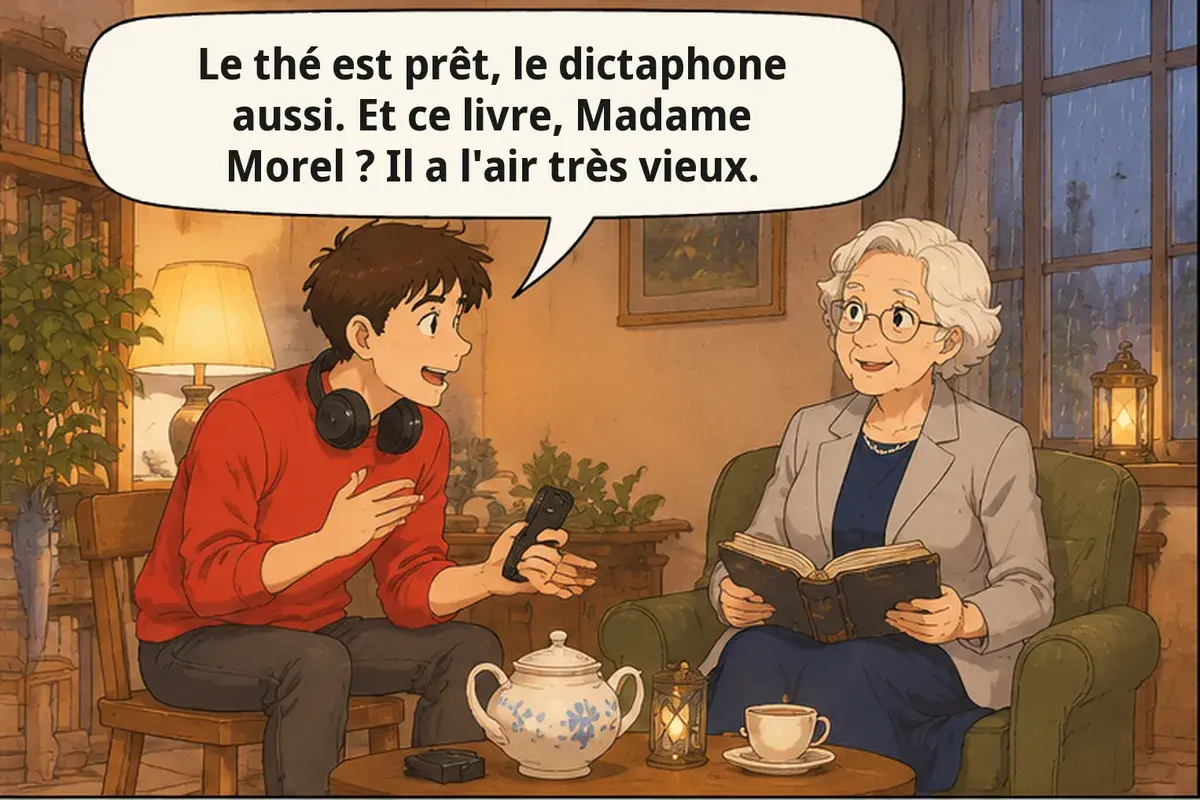
Le thé est prêt, le dictaphone aussi. Et ce livre, Madame Morel ? Il a l'air très vieux.
The tea is ready, and so is the recorder. And this book, Madame Morel? It looks very old.
- Madame Morel
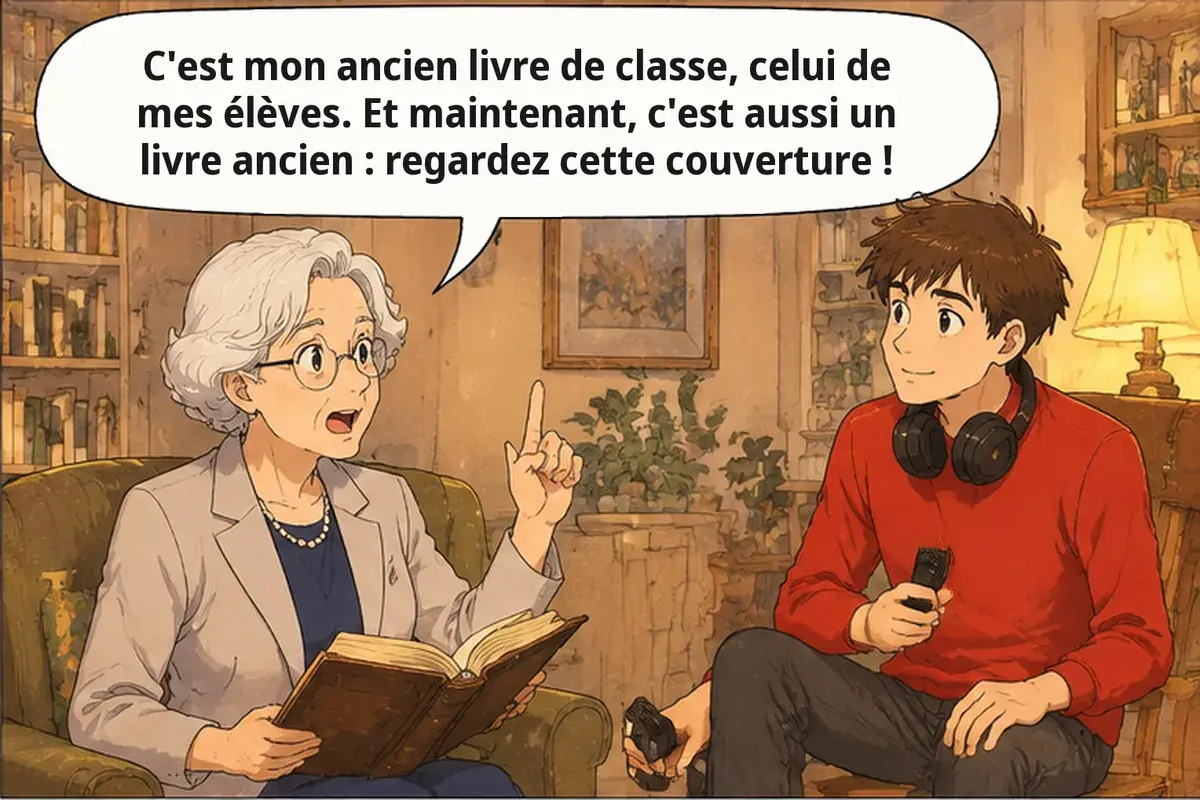
C'est mon ancien livre de classe, celui de mes élèves. Et maintenant, c'est aussi un livre ancien : regardez cette couverture !
It's my former school textbook, the one my students used. And now it's also an antique book: look at this cover! (formal)
- Jeanne
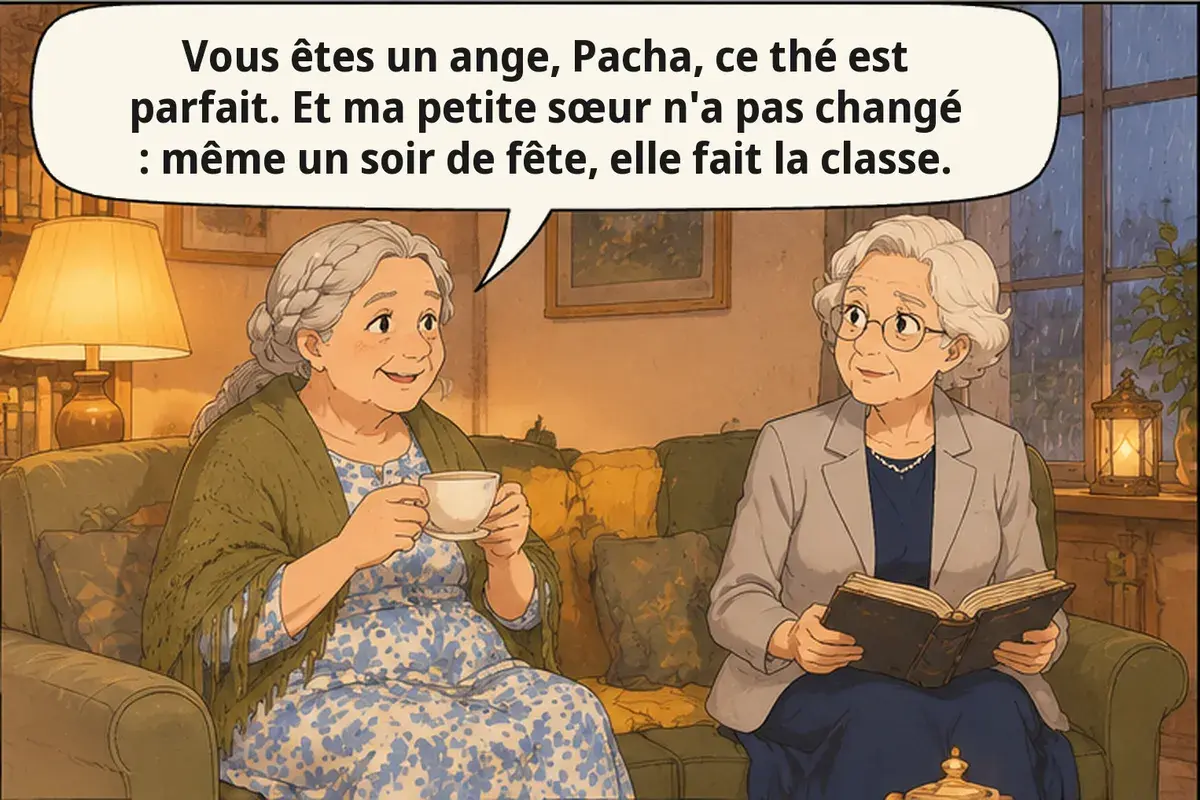
Vous êtes un ange, Pacha, ce thé est parfait. Et ma petite sœur n'a pas changé : même un soir de fête, elle fait la classe.
You're an angel, Pacha, this tea is perfect (formal). And my little sister hasn't changed: even on a festival night, she's teaching a class.
- Hugo
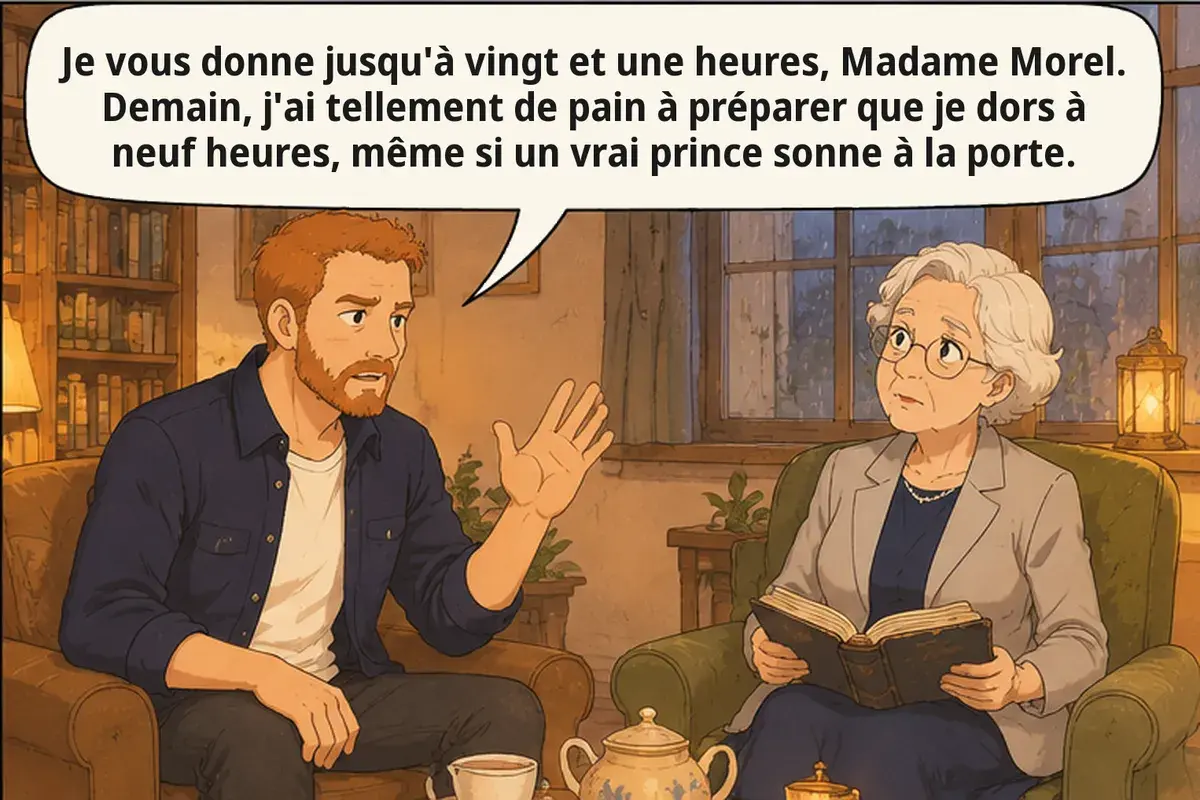
Je vous donne jusqu'à vingt et une heures, Madame Morel. Demain, j'ai tellement de pain à préparer que je dors à neuf heures, même si un vrai prince sonne à la porte.
I'll give you until nine p.m., Madame Morel. Tomorrow I have so much bread to make that I'm asleep at nine, even if a real prince rings at the door. (formal)
- Madame Morel
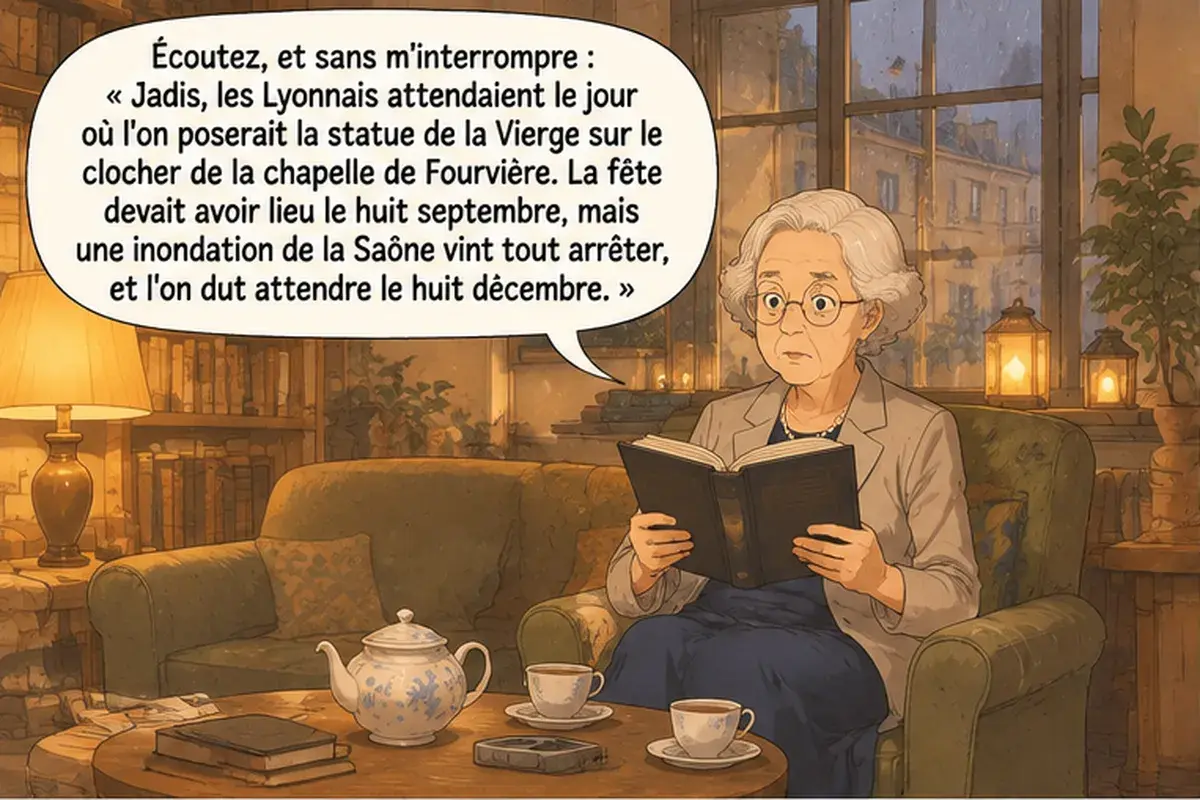
Écoutez, et sans m'interrompre : « Jadis, les Lyonnais attendaient le jour où l'on poserait la statue de la Vierge sur le clocher de la chapelle de Fourvière. La fête devait avoir lieu le huit septembre, mais une inondation de la Saône vint tout arrêter, et l'on dut attendre le huit décembre. »
Listen, and don't interrupt me (to several people): "Long ago, the people of Lyon were waiting for the day when they would put the statue of the Virgin on the bell tower of the Fourvière chapel. The festival was supposed to take place on September 8, but a flood of the Saône came and stopped everything, and they had to wait until December 8."
- Inès
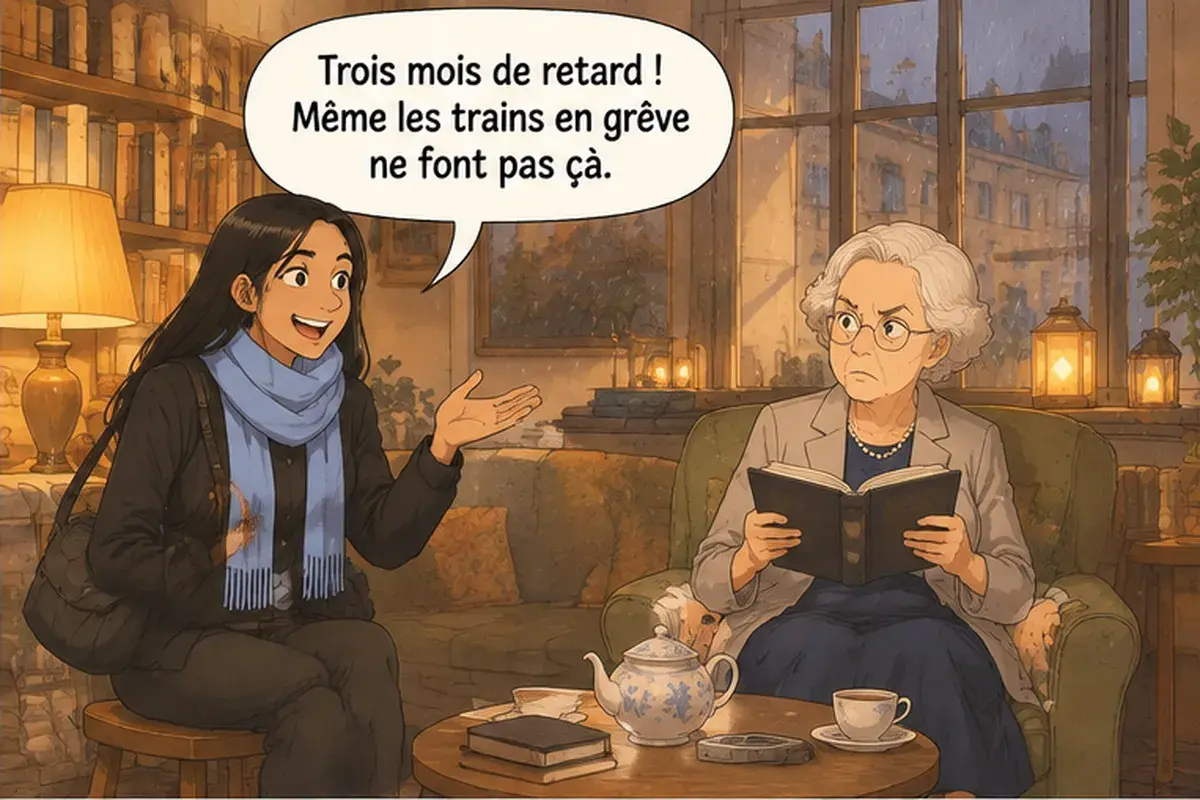
Trois mois de retard ! Même les trains en grève ne font pas ça.
Three months late! Even trains on strike don't do that.
- Madame Morel
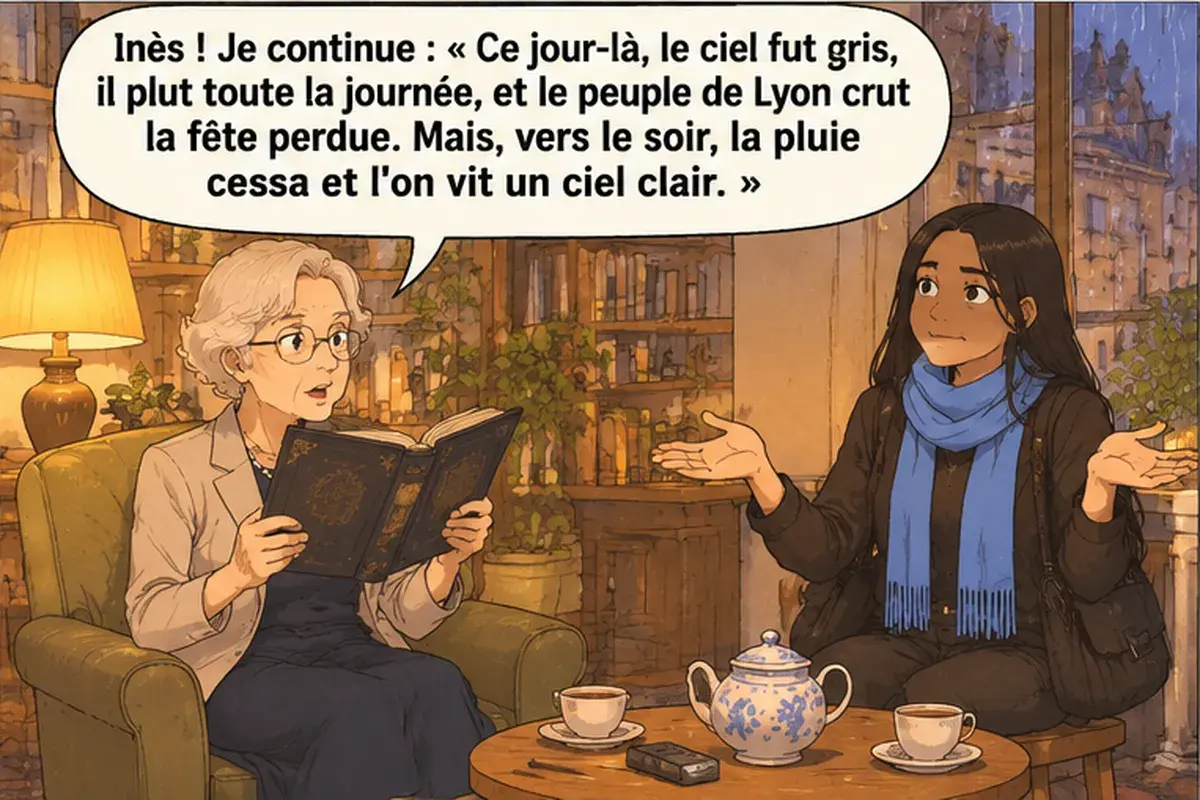
Inès ! Je continue : « Ce jour-là, le ciel fut gris, il plut toute la journée, et le peuple de Lyon crut la fête perdue. Mais, vers le soir, la pluie cessa et l'on vit un ciel clair. »
Inès! I'll go on: "That day, the sky was gray, it rained all day, and the people of Lyon thought the festival was lost. But toward evening, the rain stopped and they saw a clear sky."
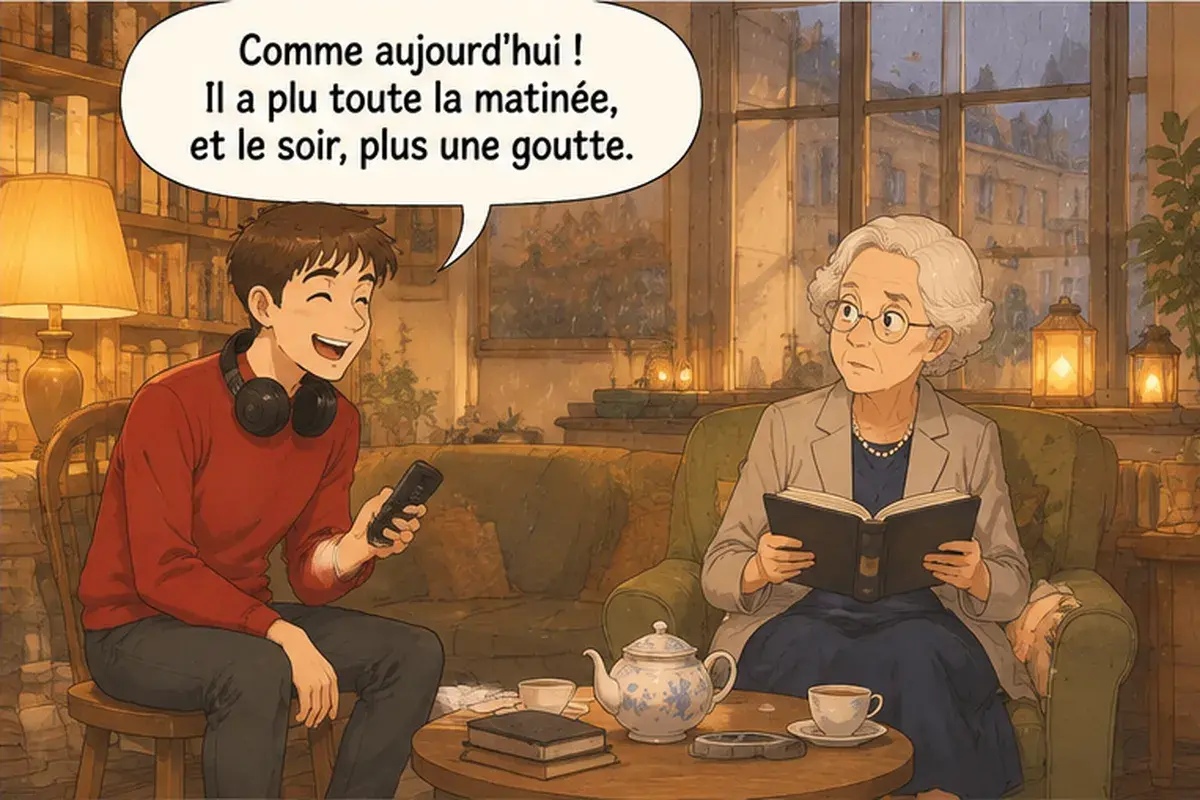
- Pacha
Comme aujourd'hui ! Il a plu toute la matinée, et le soir, plus une goutte.
Just like today! It rained all morning, and by evening, not a drop.
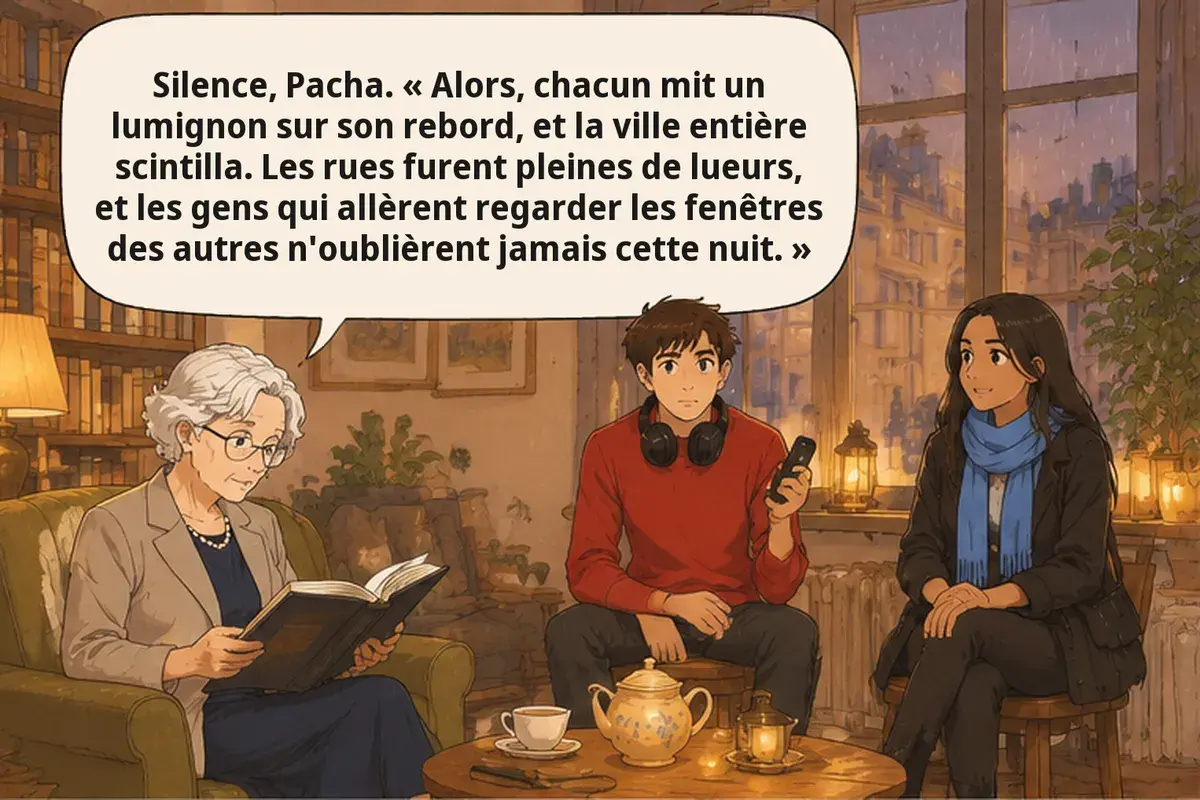
- Madame Morel
Silence, Pacha. « Alors, chacun mit un lumignon sur son rebord, et la ville entière scintilla. Les rues furent pleines de lueurs, et les gens qui allèrent regarder les fenêtres des autres n'oublièrent jamais cette nuit. »
Quiet, Pacha. "Then everyone put a candle on their windowsill, and the whole city sparkled. The streets were full of glimmers, and the people who went to look at other people's windows never forgot that night."
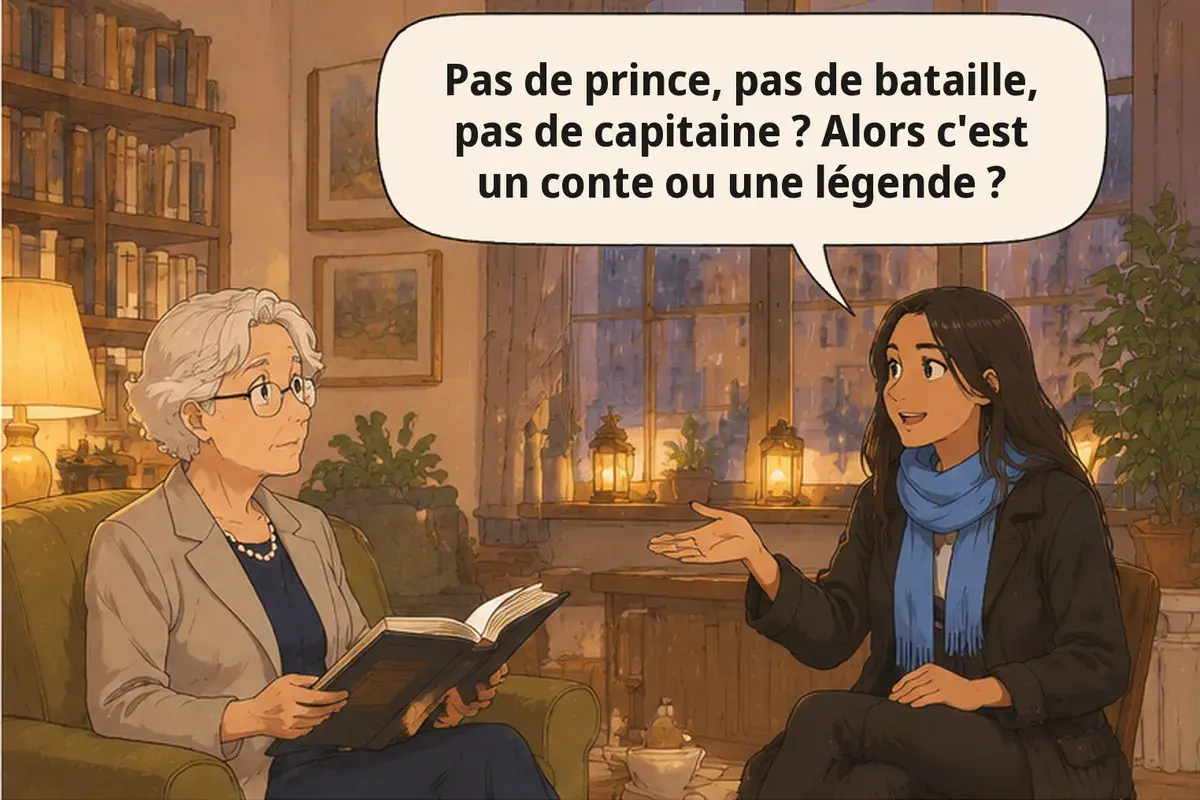
- Inès
Pas de prince, pas de bataille, pas de capitaine ? Alors c'est un conte ou une légende ?
No prince, no battle, no captain? So is it a tale or a legend?
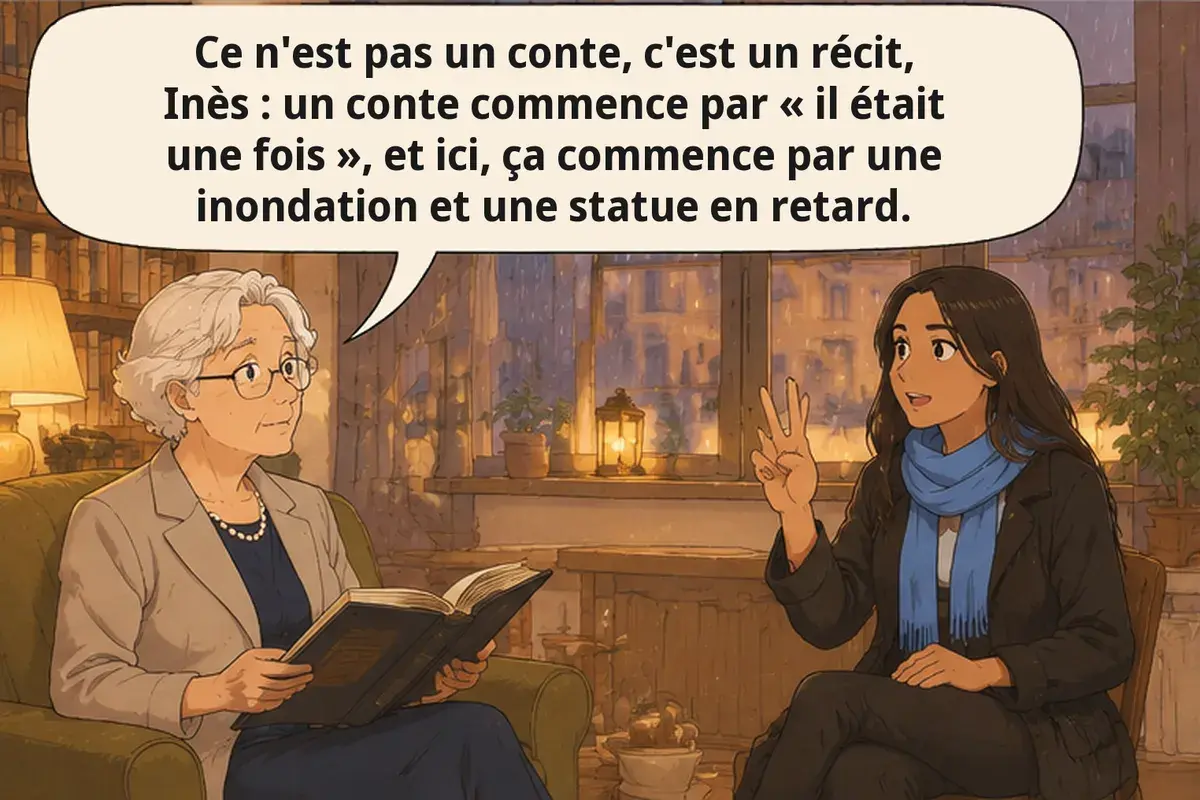
- Madame Morel
Ce n'est pas un conte, c'est un récit, Inès : un conte commence par « il était une fois », et ici, ça commence par une inondation et une statue en retard.
It's not a tale, it's an account, Inès: a tale begins with "once upon a time," and here, it begins with a flood and a late statue.
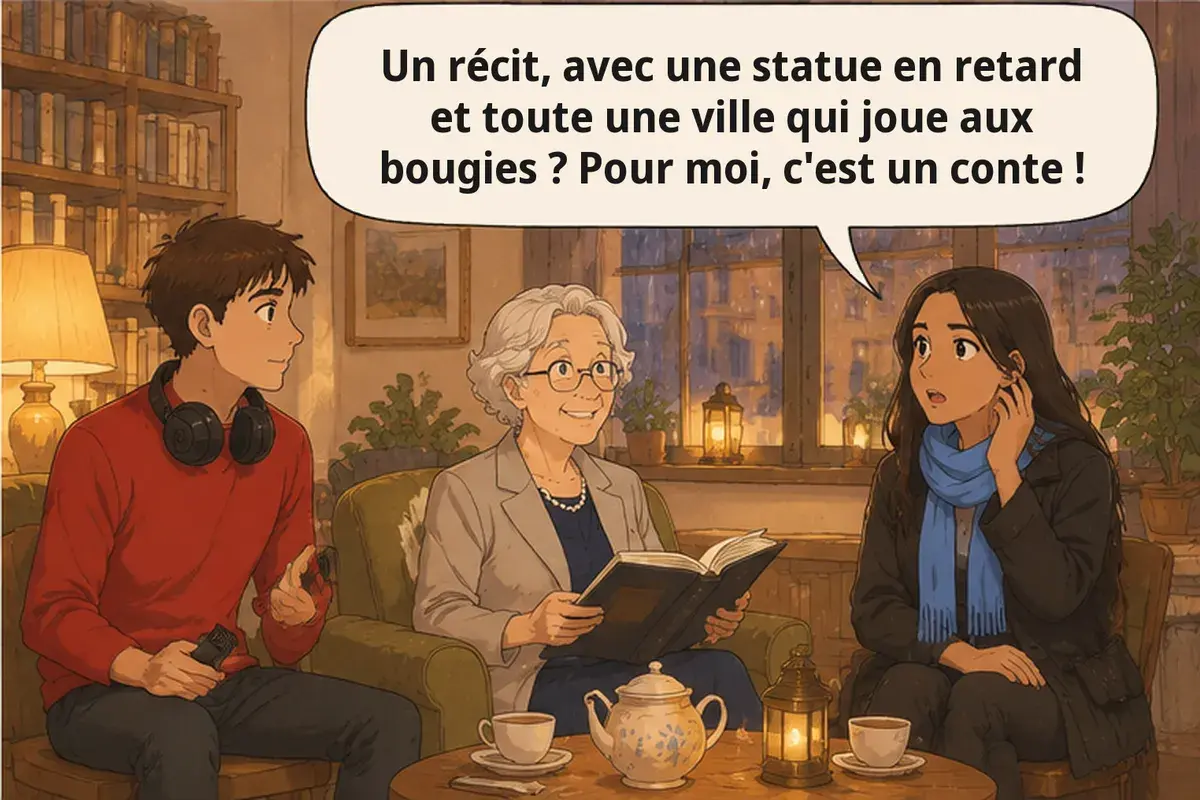
- Inès
Un récit, avec une statue en retard et toute une ville qui joue aux bougies ? Pour moi, c'est un conte !
An account, with a late statue and a whole city playing with candles? To me, it's a tale!
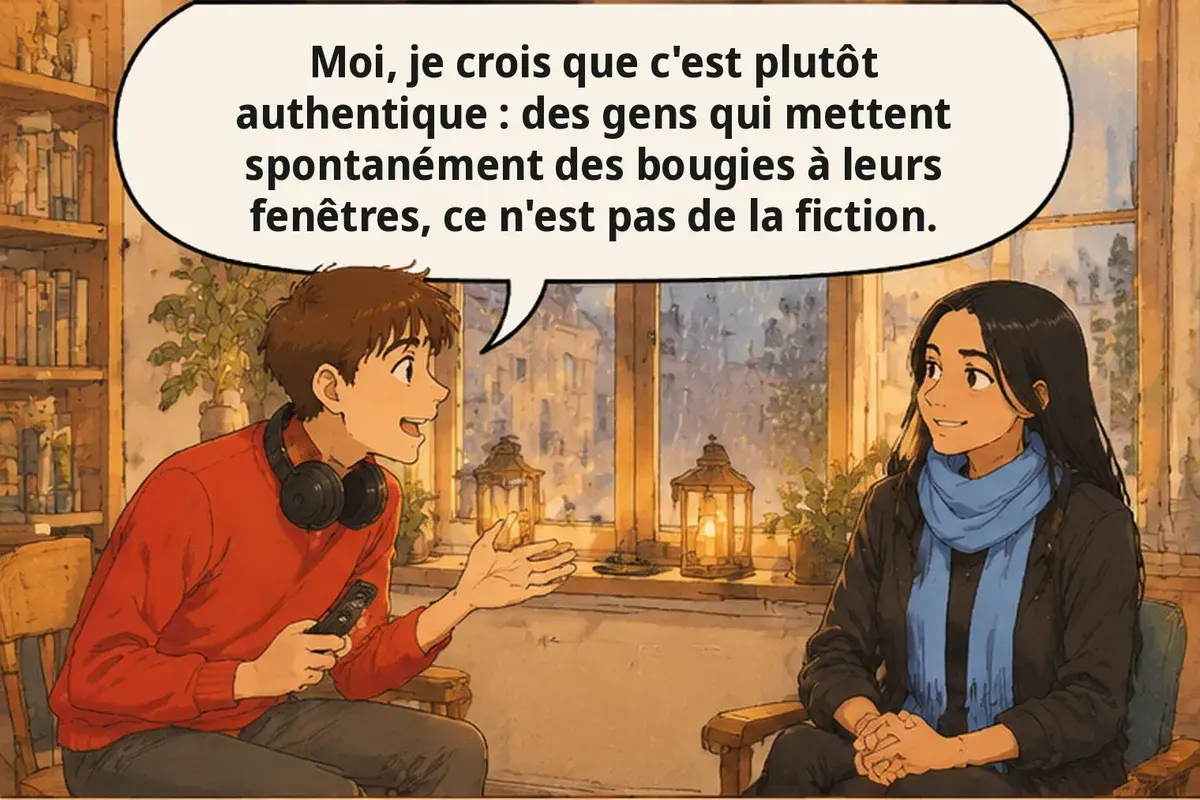
- Pacha
Moi, je crois que c'est plutôt authentique : des gens qui mettent spontanément des bougies à leurs fenêtres, ce n'est pas de la fiction.
Me, I think it's rather authentic: people spontaneously putting candles in their windows, that's not fiction.
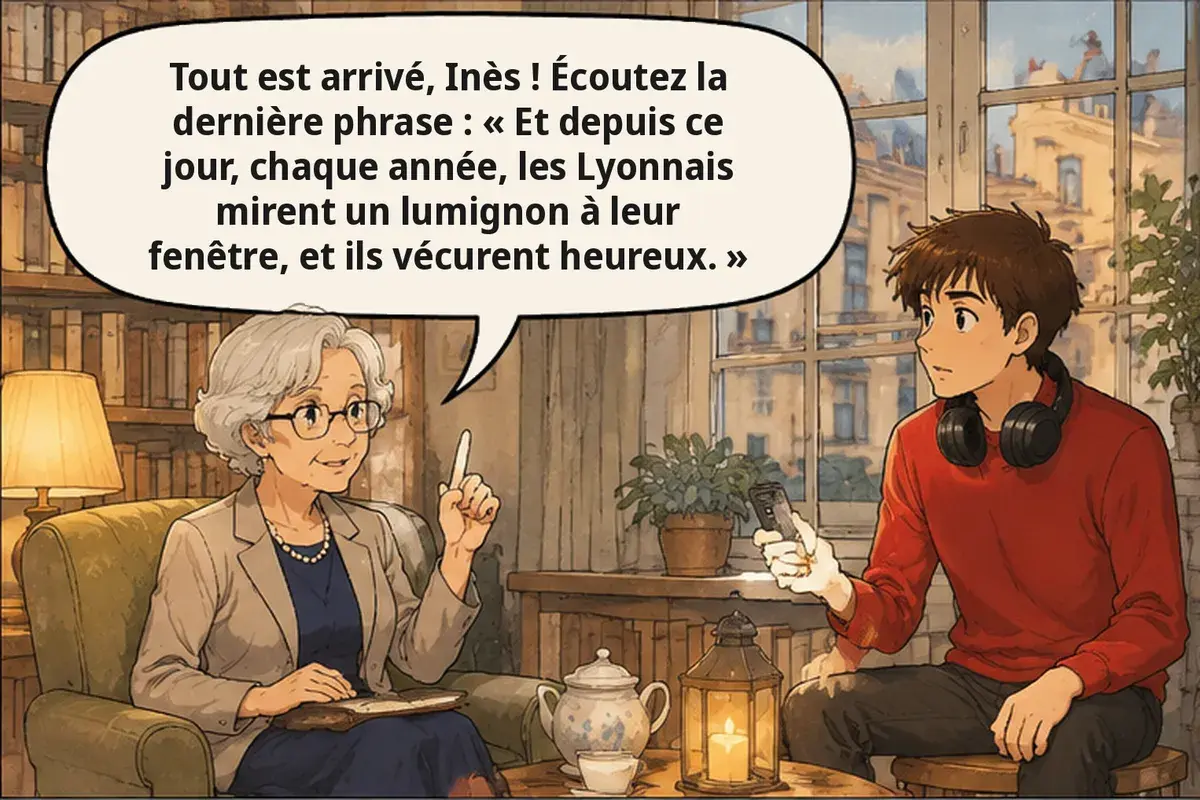
- Madame Morel
Tout est arrivé, Inès ! Écoutez la dernière phrase : « Et depuis ce jour, chaque année, les Lyonnais mirent un lumignon à leur fenêtre, et ils vécurent heureux. »
It all happened, Inès! Listen to the last sentence (formal): "And from that day on, every year, the people of Lyon put a candle in their window, and they lived happily ever after."
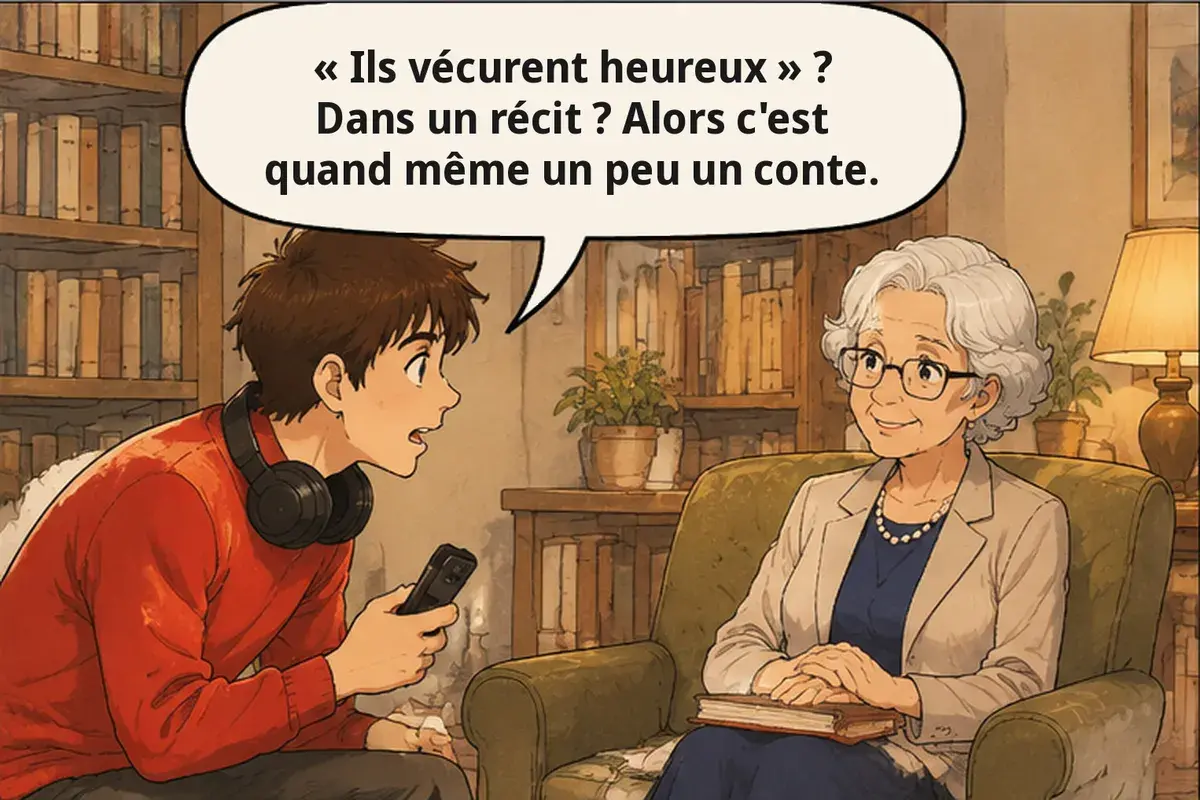
- Pacha
« Ils vécurent heureux » ? Dans un récit ? Alors c'est quand même un peu un conte.
"They lived happily ever after"? In an account? So it's still a bit of a tale.
- Madame Morel
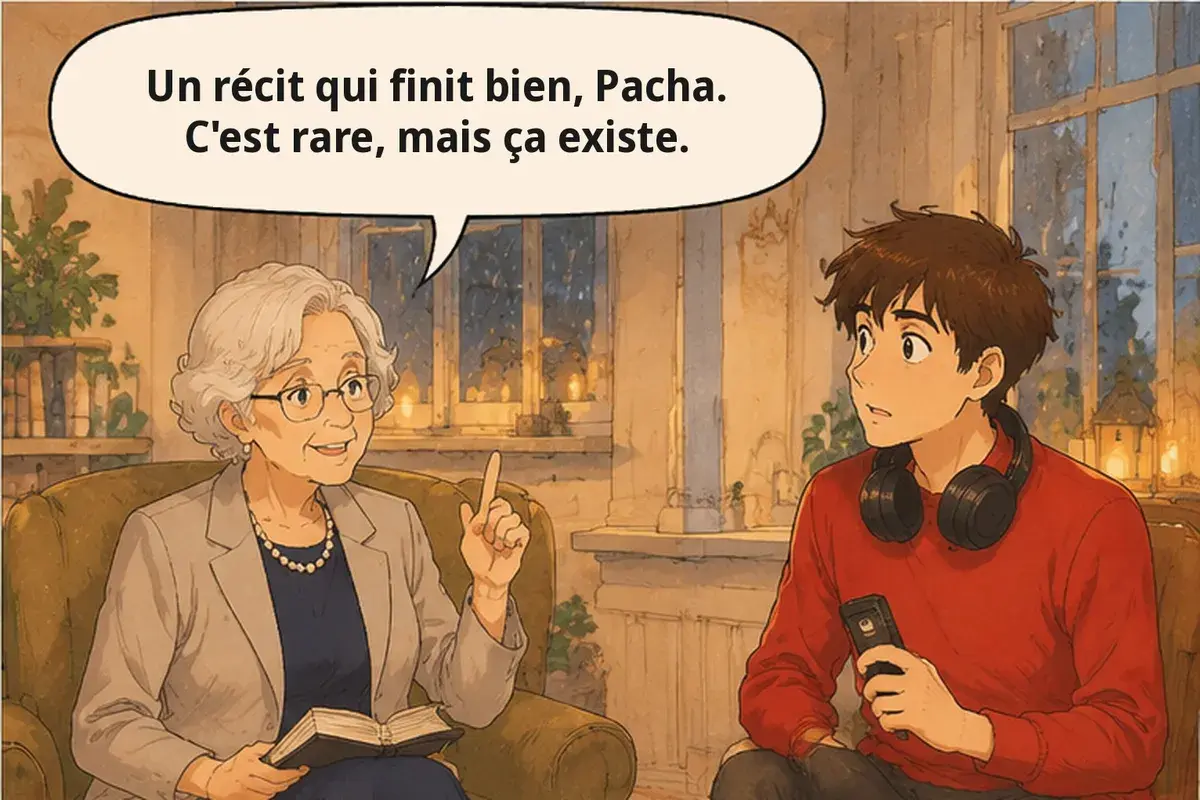
Un récit qui finit bien, Pacha. C'est rare, mais ça existe.
An account that ends well, Pacha. It's rare, but it exists.
- Hugo
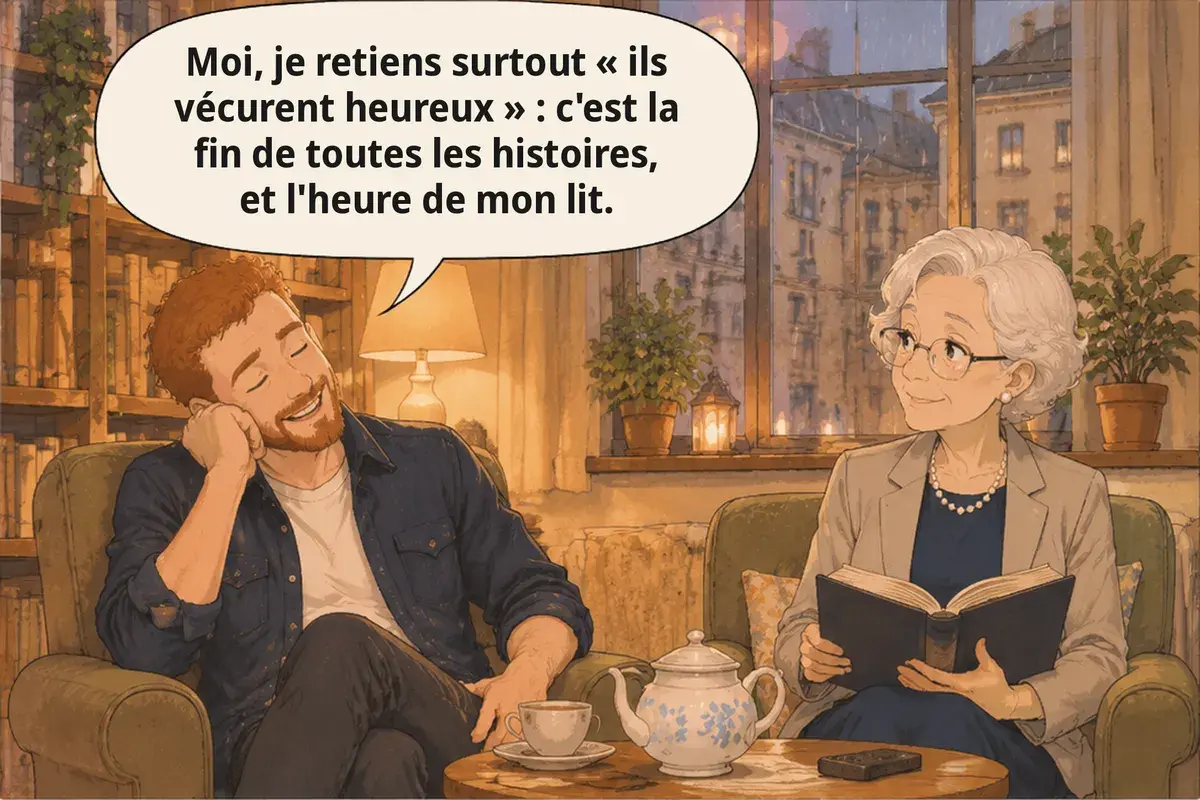
Moi, je retiens surtout « ils vécurent heureux » : c'est la fin de toutes les histoires, et l'heure de mon lit.
Me, I mostly remember "they lived happily ever after": it's the end of every story, and my bedtime.
- Jeanne
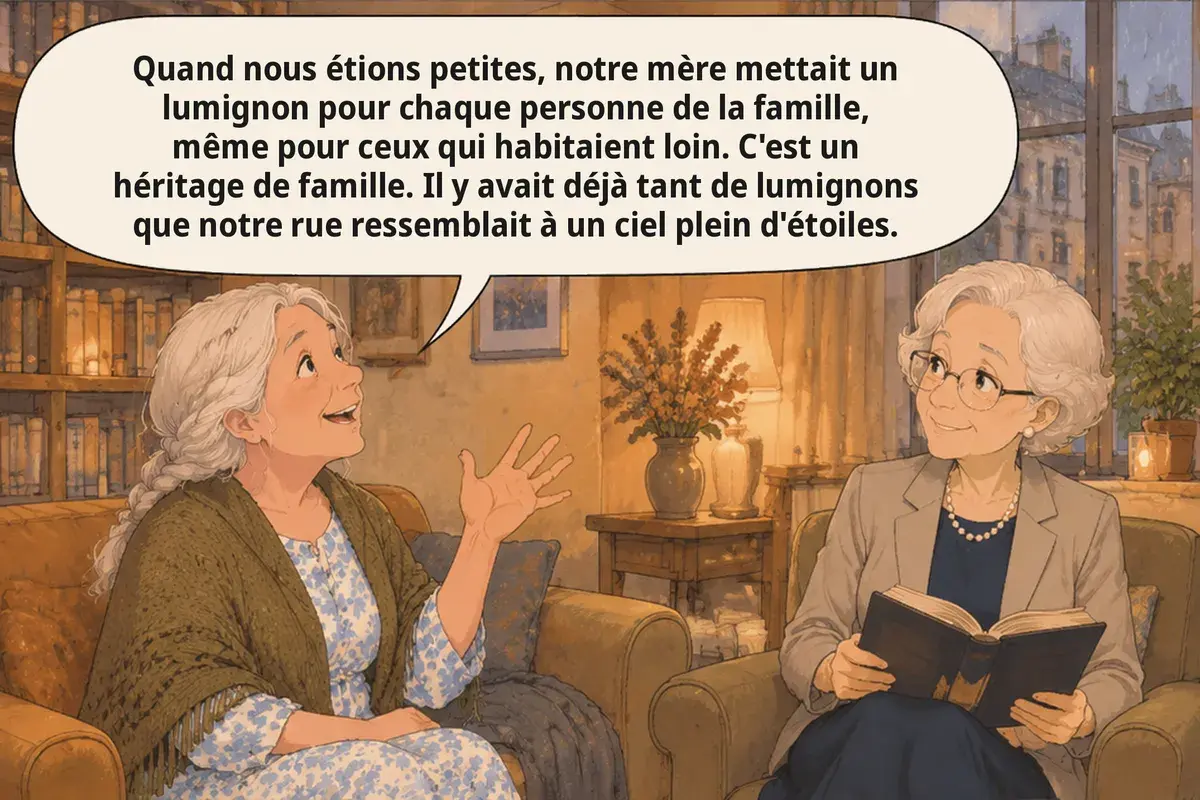
Quand nous étions petites, notre mère mettait un lumignon pour chaque personne de la famille, même pour ceux qui habitaient loin. C'est un héritage de famille. Il y avait déjà tant de lumignons que notre rue ressemblait à un ciel plein d'étoiles.
When we were little (women speaking), our mother would set out a small candle for each person in the family, even for those who lived far away. It's a family heritage. There were already so many small candles that our street looked like a sky full of stars.
- Pacha
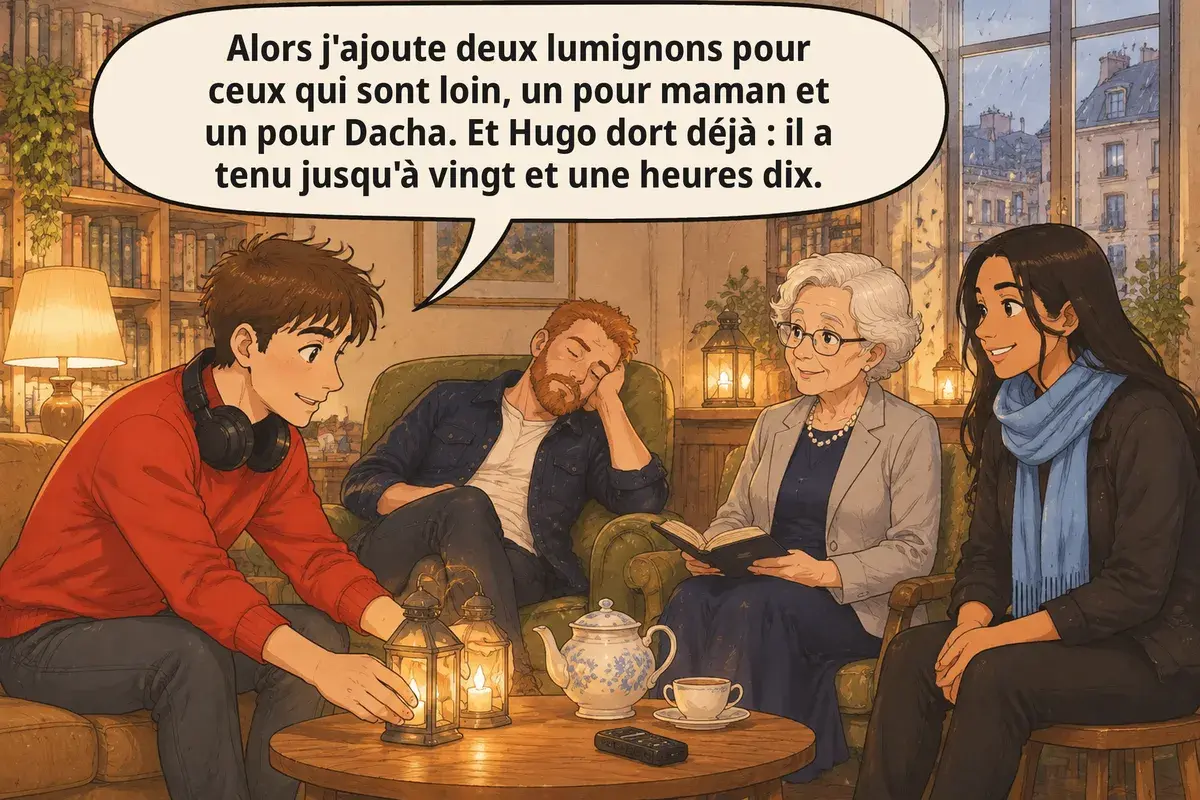
Alors j'ajoute deux lumignons pour ceux qui sont loin, un pour maman et un pour Dacha. Et Hugo dort déjà : il a tenu jusqu'à vingt et une heures dix.
Then I'm adding two candles for those who are far away, one for Mom and one for Dacha. And Hugo is already asleep: he held out until nine ten p.m.
Grammar for this text
- mon ancien livre de classe, un livre ancien —
ancienbefore the noun means "former" (a textbook her students used to study from); after the noun it means "antique." More in the grammar block. - même si un vrai prince sonne à la porte —
même si+ present (B1): "even if." tellement de pain — casual "so much bread." - où l'on poserait la statue —
l'on=on(withl'it sounds softer, more bookish);poseraitmeans "were going to put," as in reported speech in the past (B2, unit 7). - vint, dut, cessa, scintilla — the literary past:
il vint(venir),il dut(devoir),la pluie cessa. In speech:est venue,a dû,a cessé. - le ciel fut gris, il plut toute la journée, le peuple de Lyon crut… l'on vit un ciel clair —
fut(être),plut(pleuvoir),crut(croire),vit(voir): "was," "it rained," "thought," "saw." In conversation, people useil a été,il a plu,il a cru,il a vuinstead: we recognize these forms when reading, but we don't speak them. - Les rues furent pleines de lueurs, qui allèrent, n'oublièrent — the ils / elles form of the literary past:
furent(être),allèrent(aller),oublièrent(oublier). ils vécurent heureux — the end of a fairy tale, fromvivre. - Un conte, ça commence par « il était une fois » —
un conteis a tale (made up, starts with "once upon a time"),un récitis an account of what really happened,une légendeis a story that time has changed. Pacha and Inès argue about what to call the story; Madame Morel says it's arécit, and Pacha laughs at the endingils vécurent heureux. - tant de lumignons que notre rue ressemblait… —
tant de+ a result. - c'est plutôt authentique : des gens qui mettent spontanément des bougies à leurs fenêtres, ce n'est pas de la fiction —
authentiquemeans "genuine, not made up,"spontanémentmeans "on their own, without being told" (in 1852 the people of Lyon put candles in their windows of their own free will),la fictionmeans "something invented."
Words and grammar of the unit: Tell the story of a festival.
Learn the words from the texts with flashcards
In the app, you can tap any word in a text to see its translation, forms and examples, and new words stick with flashcards. 15 minutes a day.
Start for freeEverything is open for free. No card needed to sign up.