

French dialogue with translation · B2 · 18 lines
Merci de ne pas encombrer la cour Please don't block the courtyard
Comic · 18 panels
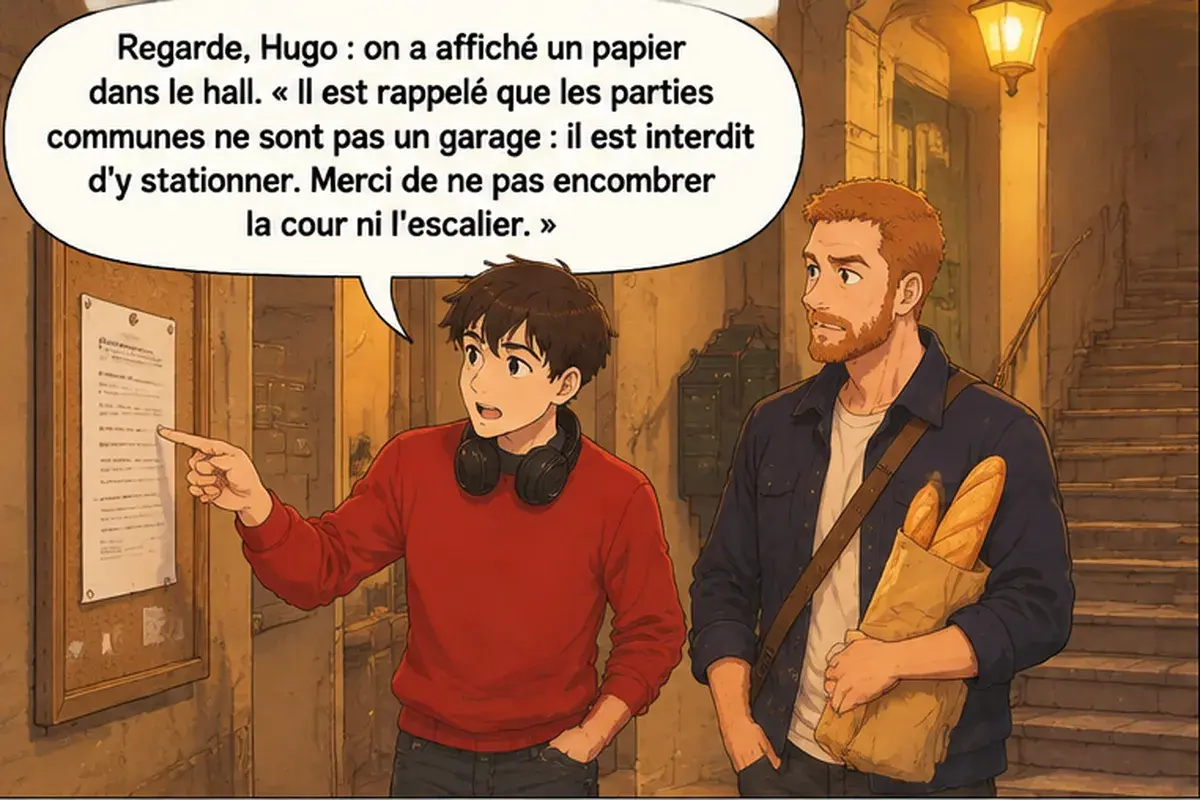
- Pacha
Regarde, Hugo : on a affiché un papier dans le hall. « Il est rappelé que les parties communes ne sont pas un garage : il est interdit d'y stationner. Merci de ne pas encombrer la cour ni l'escalier. »
Look, Hugo: someone put up a notice in the lobby. "Please remember that the common areas aren't a garage: parking there is forbidden. Please don't block the courtyard or the stairs."
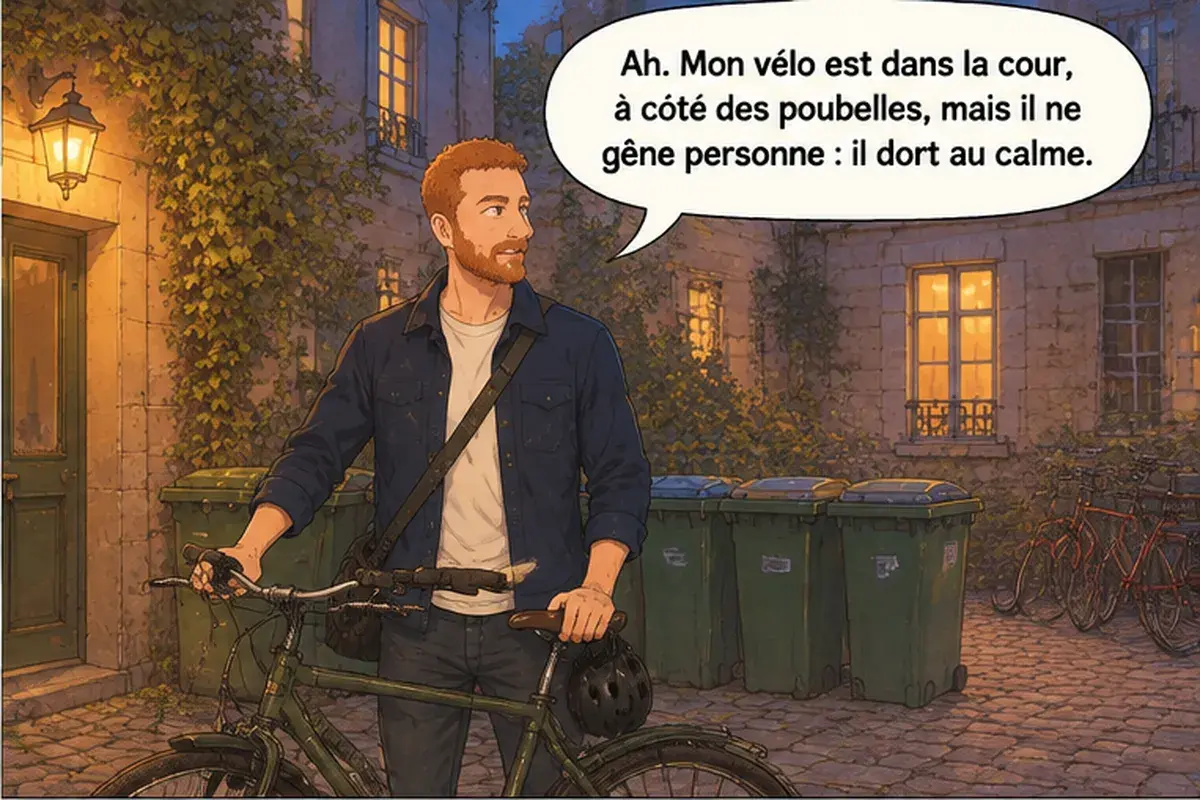
- Hugo
Ah. Mon vélo est dans la cour, à côté des poubelles, mais il ne gêne personne : il dort au calme.
Ah. My bike is in the courtyard, next to the trash cans, but it doesn't bother anyone: it's resting peacefully.
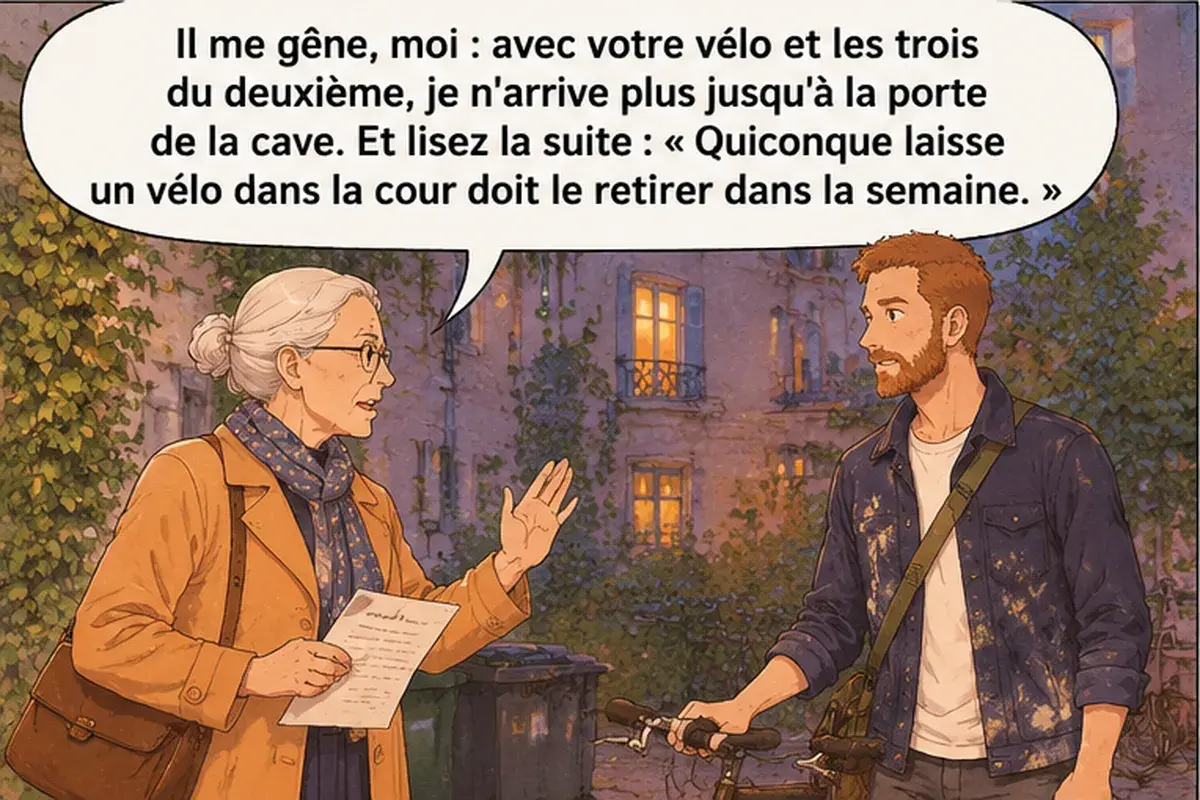
- Madame Fabre
Il me gêne, moi : avec votre vélo et les trois du deuxième, je n'arrive plus jusqu'à la porte de la cave. Et lisez la suite : « Quiconque laisse un vélo dans la cour doit le retirer dans la semaine. »
It bothers me, though: with your bike and the three from the second floor, I can't get to the basement door anymore. And read the rest (formal): "Anyone who leaves a bike in the courtyard must remove it within a week."
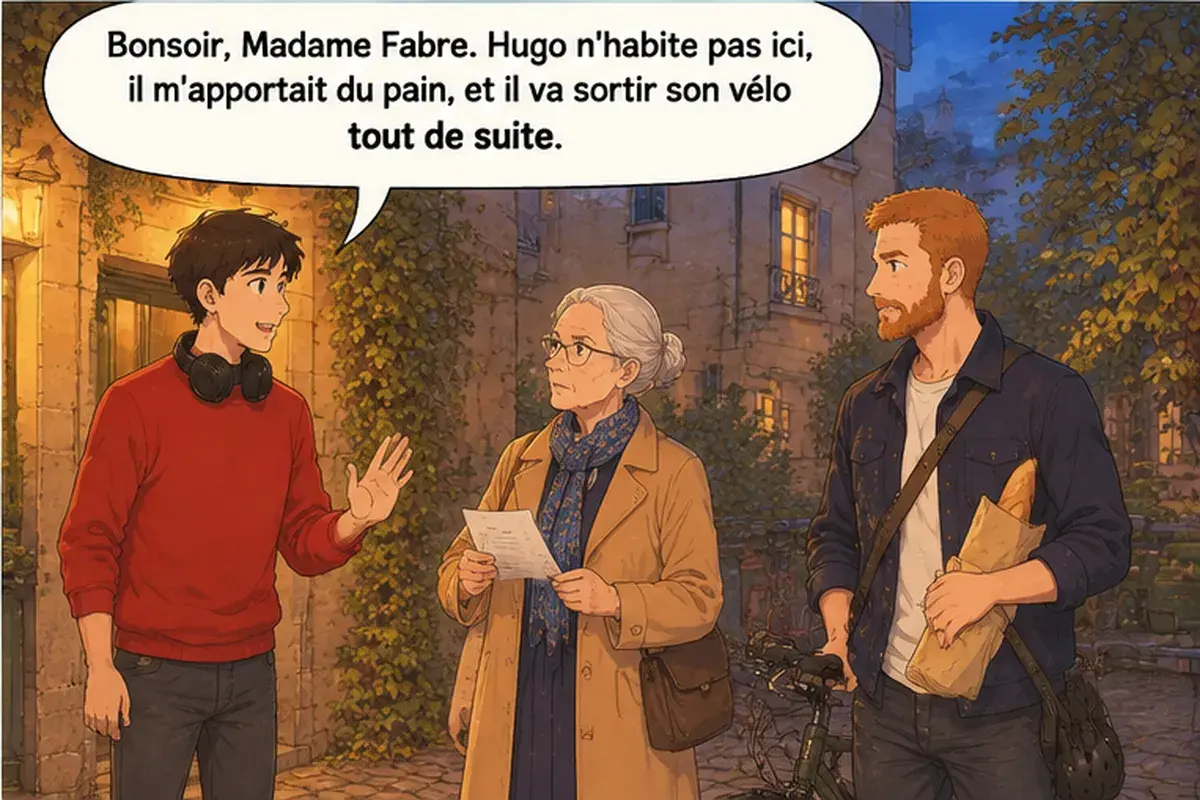
- Pacha
Bonsoir, Madame Fabre. Hugo n'habite pas ici, il m'apportait du pain, et il va sortir son vélo tout de suite.
Good evening, Madame Fabre. Hugo doesn't live here, he was bringing me bread, and he's going to take his bike out right away.
- Hugo
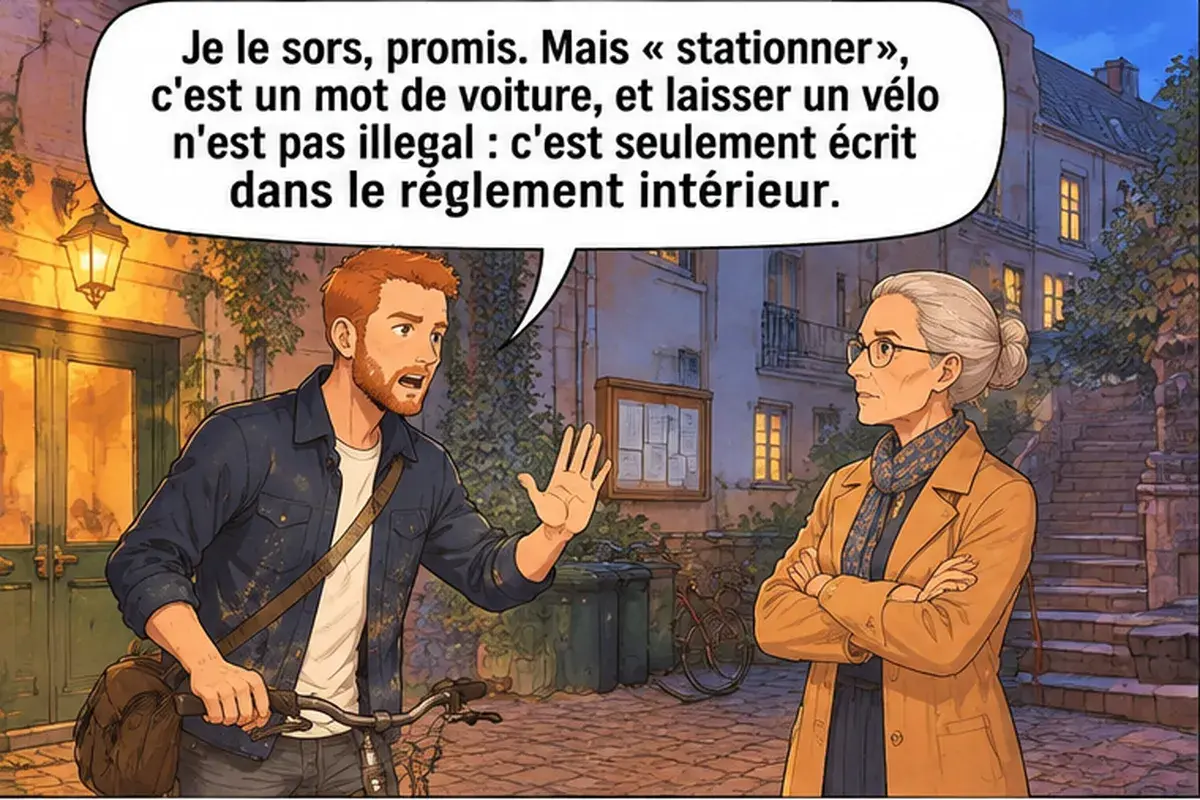
Je le sors, promis. Mais « stationner », c'est un mot de voiture, et laisser un vélo n'est pas illégal : c'est seulement écrit dans le règlement intérieur.
I'm taking it out, I promise. But "to park" is a word for cars, and leaving a bike isn't illegal: it's only written in the house rules.
- Madame Fabre
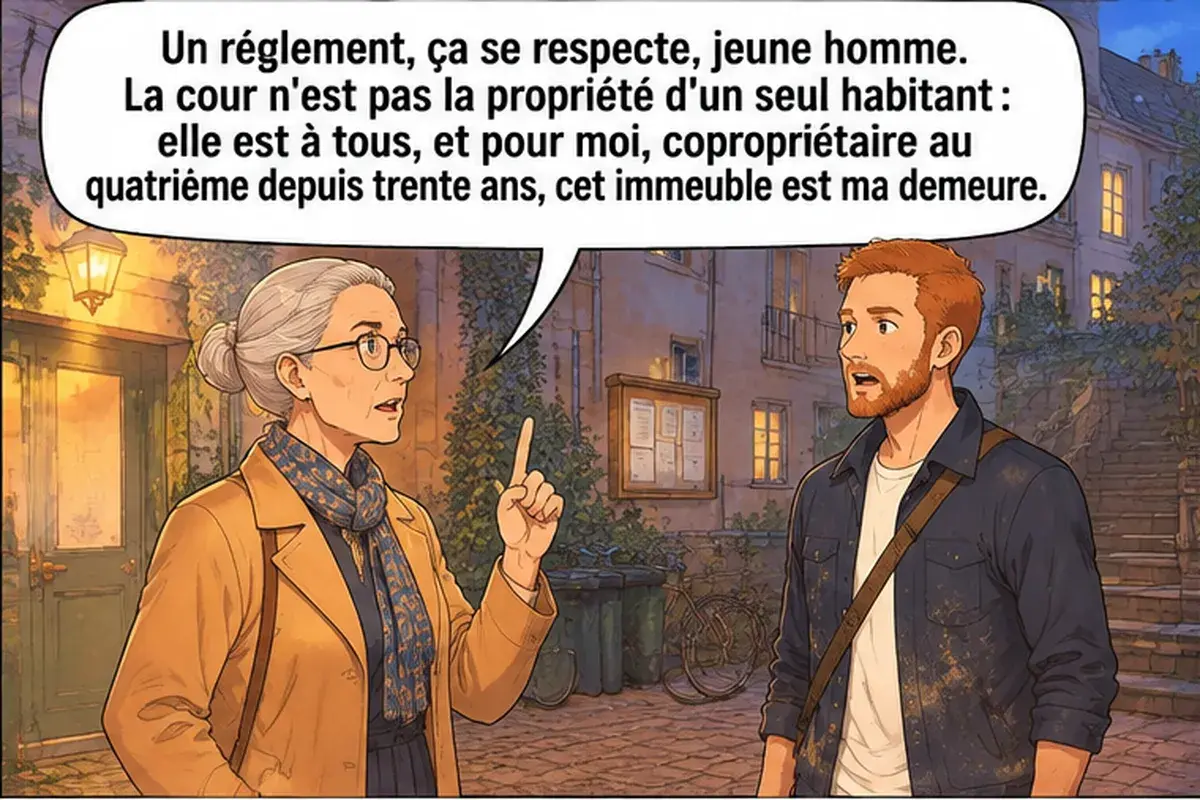
Un règlement, ça se respecte, jeune homme. La cour n'est pas la propriété d'un seul habitant : elle est à tous, et pour moi, copropriétaire au quatrième depuis trente ans, cet immeuble est ma demeure.
Rules are there to be followed, young man. The courtyard isn't the property of one resident: it belongs to everyone, and for me, a co-owner on the fourth floor for thirty years, this building is my home.
- Pacha
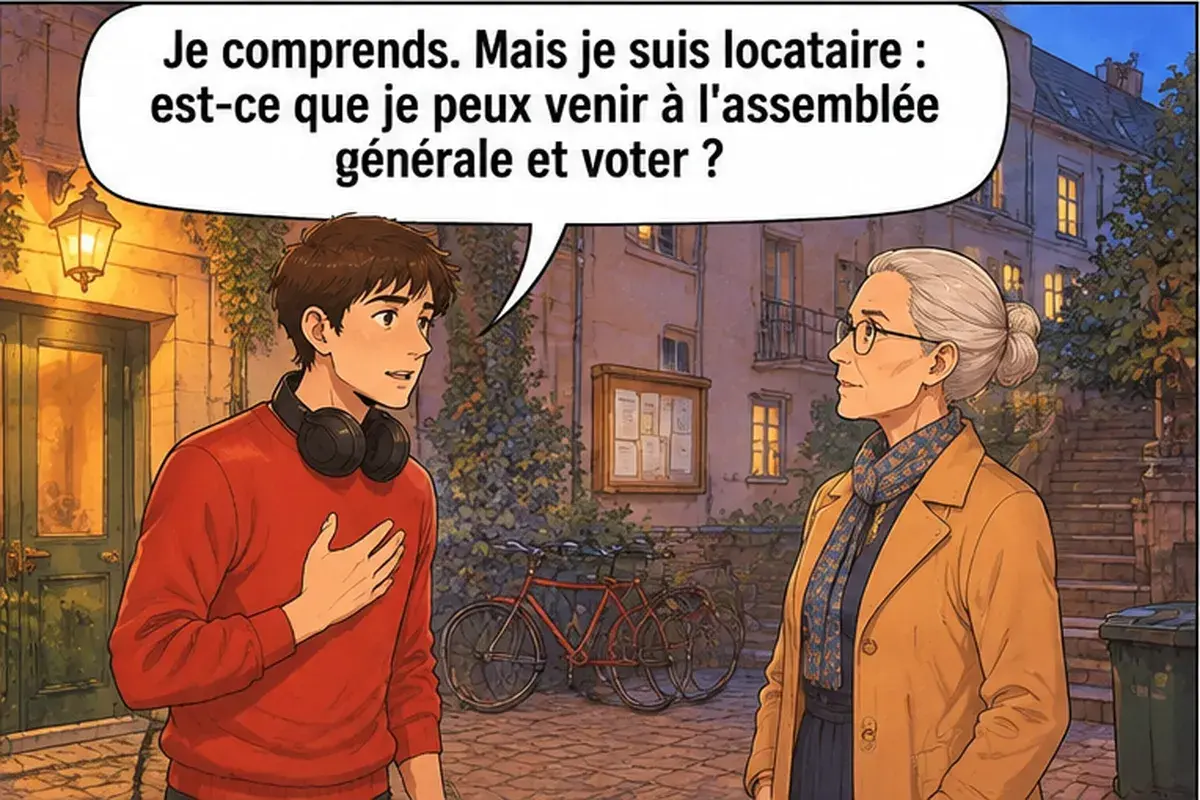
Je comprends. Mais je suis locataire : est-ce que je peux venir à l'assemblée générale et voter ?
I understand. But I'm a tenant: can I come to the general meeting and vote?
- Madame Fabre
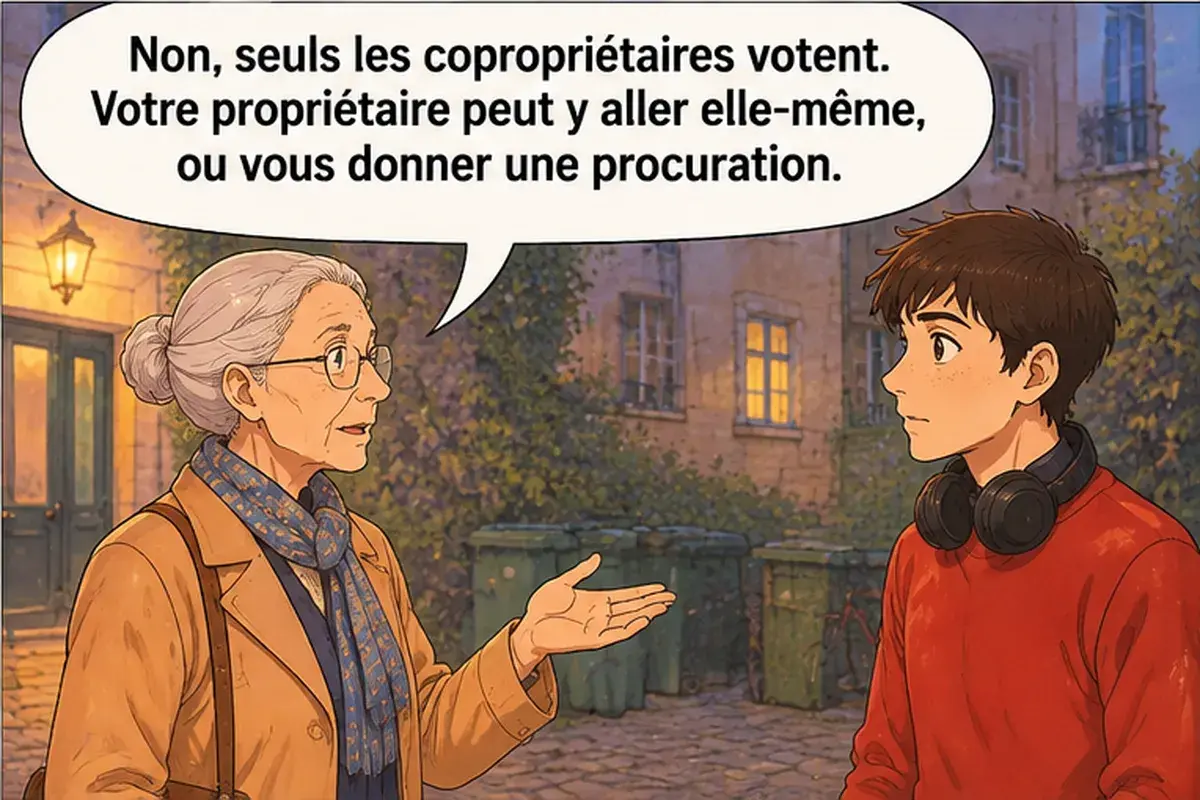
Non, seuls les copropriétaires votent. Votre propriétaire peut y aller elle-même, ou vous donner une procuration.
No, only the co-owners vote. Your landlord can go herself, or give you a proxy (formal).
- Hugo
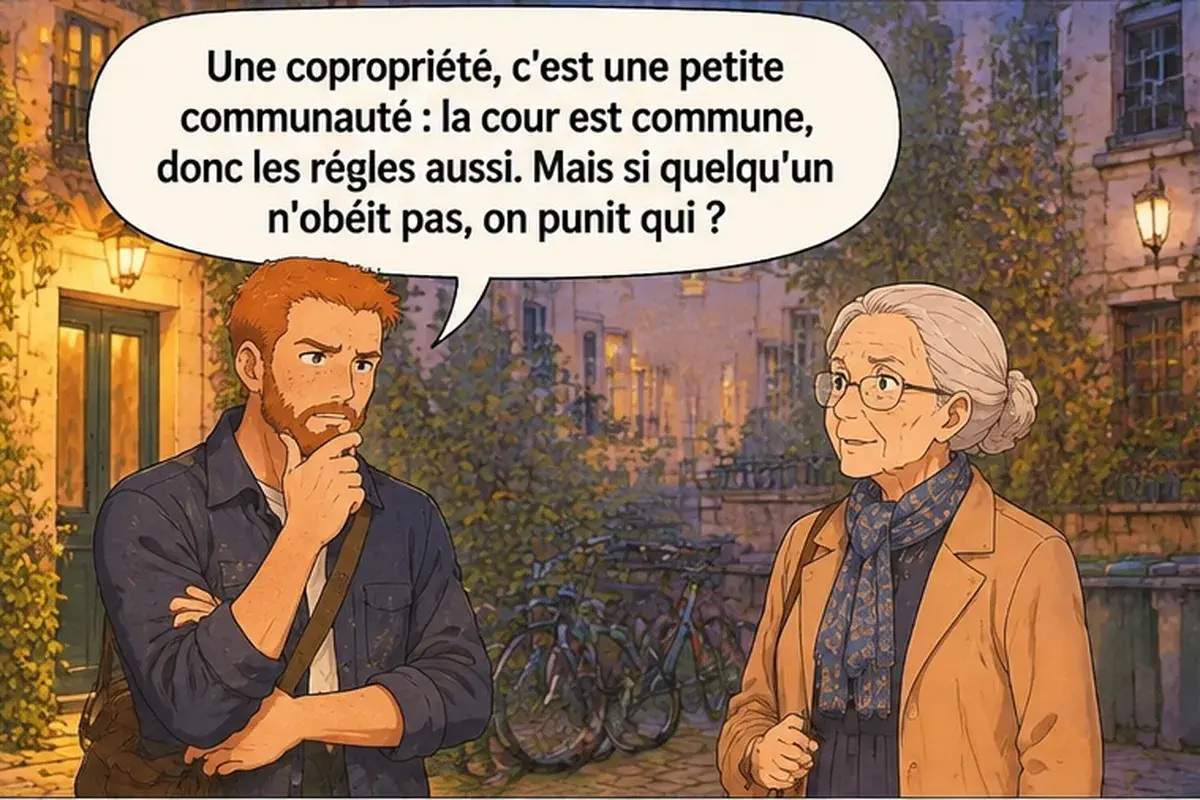
Une copropriété, c'est une petite communauté : la cour est commune, donc les règles aussi. Mais si quelqu'un n'obéit pas, on punit qui ?
A co-ownership is a small community: the courtyard is shared, so the rules are too. But if someone doesn't obey, who gets punished?
- Madame Fabre
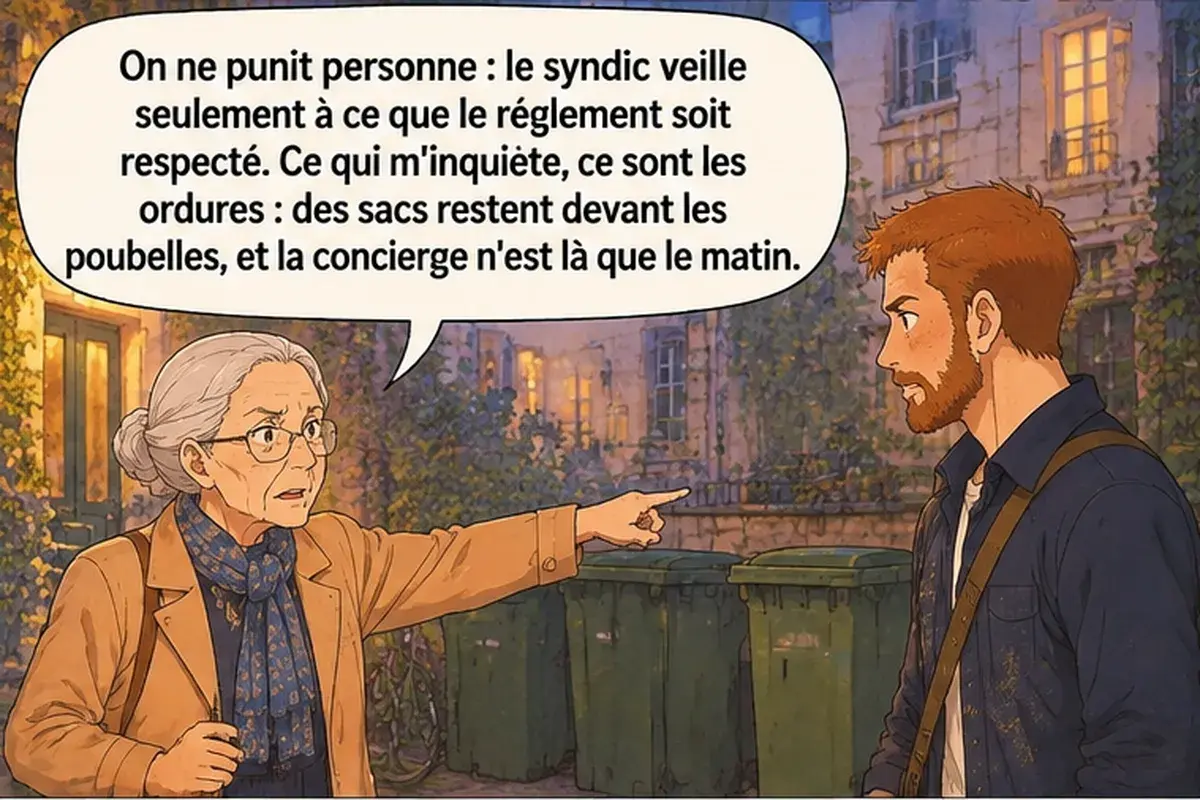
On ne punit personne : le syndic veille seulement à ce que le règlement soit respecté. Ce qui m'inquiète, ce sont les ordures : des sacs restent devant les poubelles, et la concierge n'est là que le matin.
No one gets punished: the property management company only makes sure the rules are followed. What worries me is the trash: bags stay in front of the trash cans, and the concierge is only here in the morning.
- Hugo
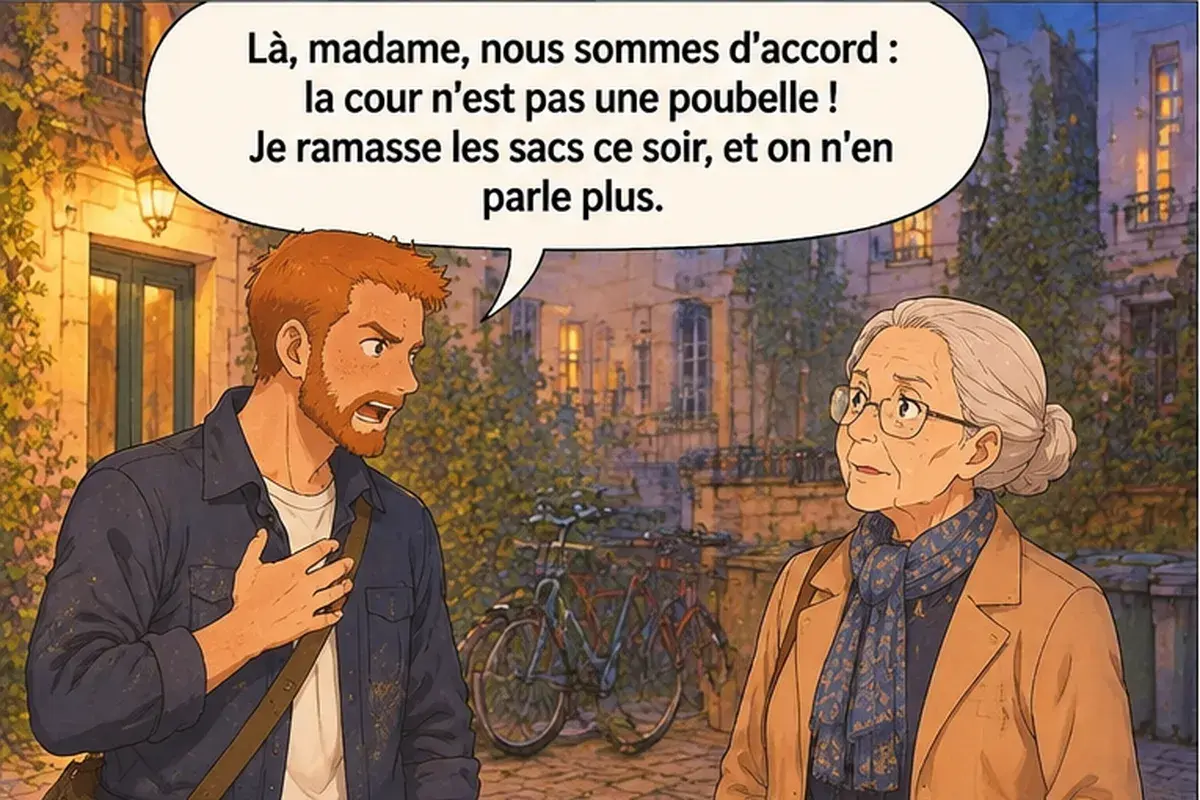
Là, madame, nous sommes d'accord : la cour n'est pas une poubelle ! Je ramasse les sacs ce soir, et on n'en parle plus.
On that, ma'am, we agree: the courtyard isn't a trash can! I'll pick up the bags tonight, and we won't talk about it anymore.
- Madame Fabre
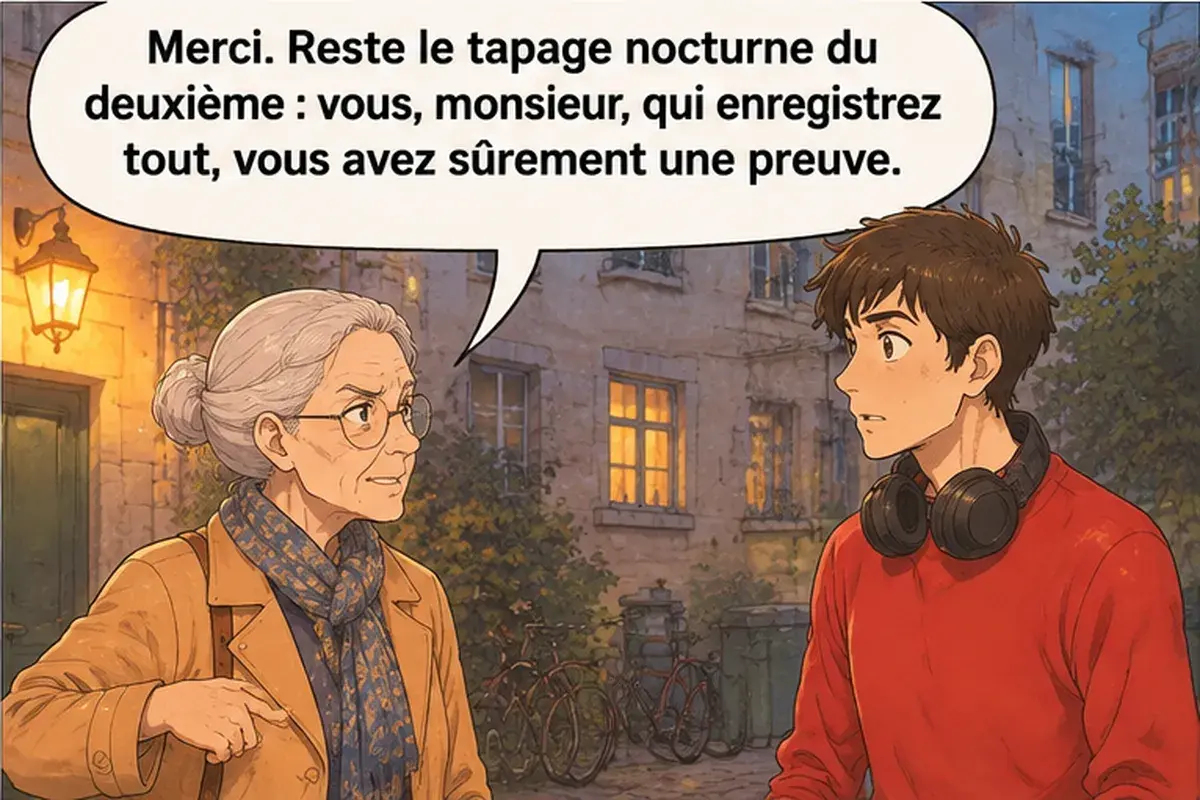
Merci. Reste le tapage nocturne du deuxième : vous, monsieur, qui enregistrez tout, vous avez sûrement une preuve.
Thanks. That leaves the late-night noise from the second floor: you, sir, who record everything, surely have proof (formal).
- Pacha
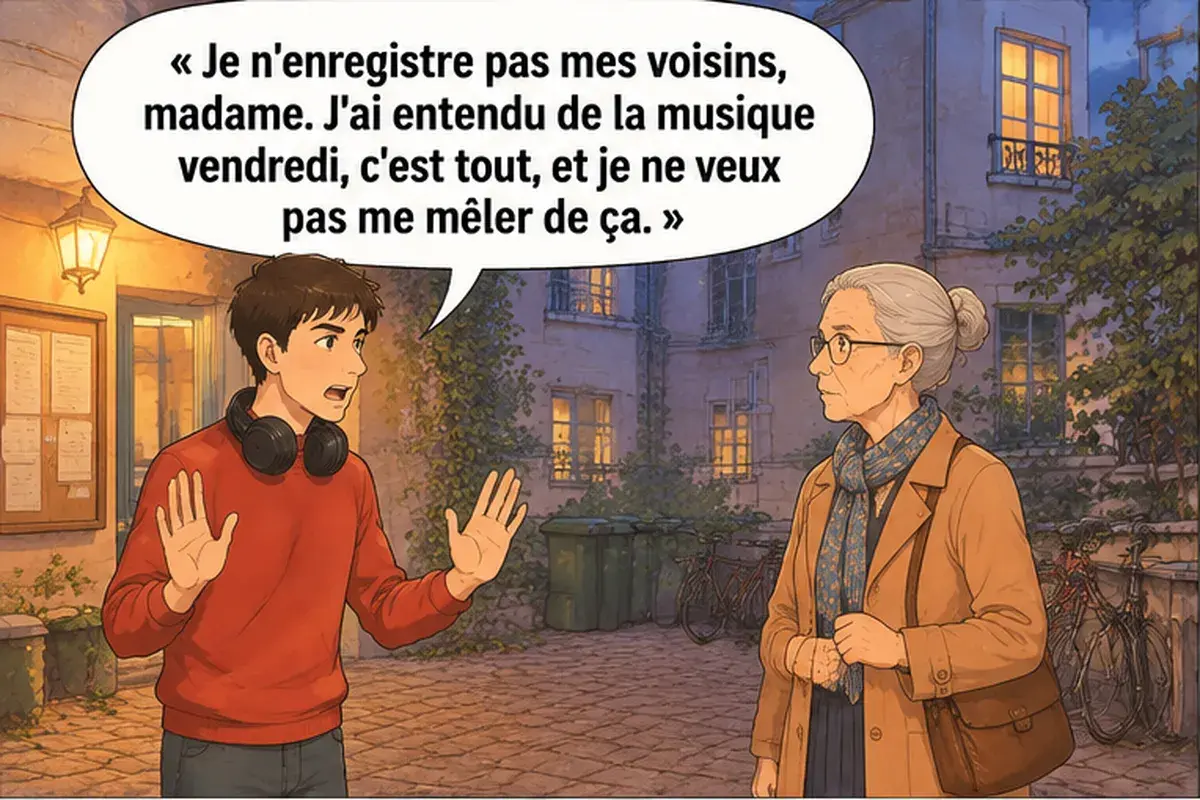
Je n'enregistre pas mes voisins, madame. J'ai entendu de la musique vendredi, c'est tout, et je ne veux pas me mêler de ça.
I don't record my neighbors, ma'am. I heard music on Friday, that's all, and I don't want to get involved in that.
- Madame Fabre
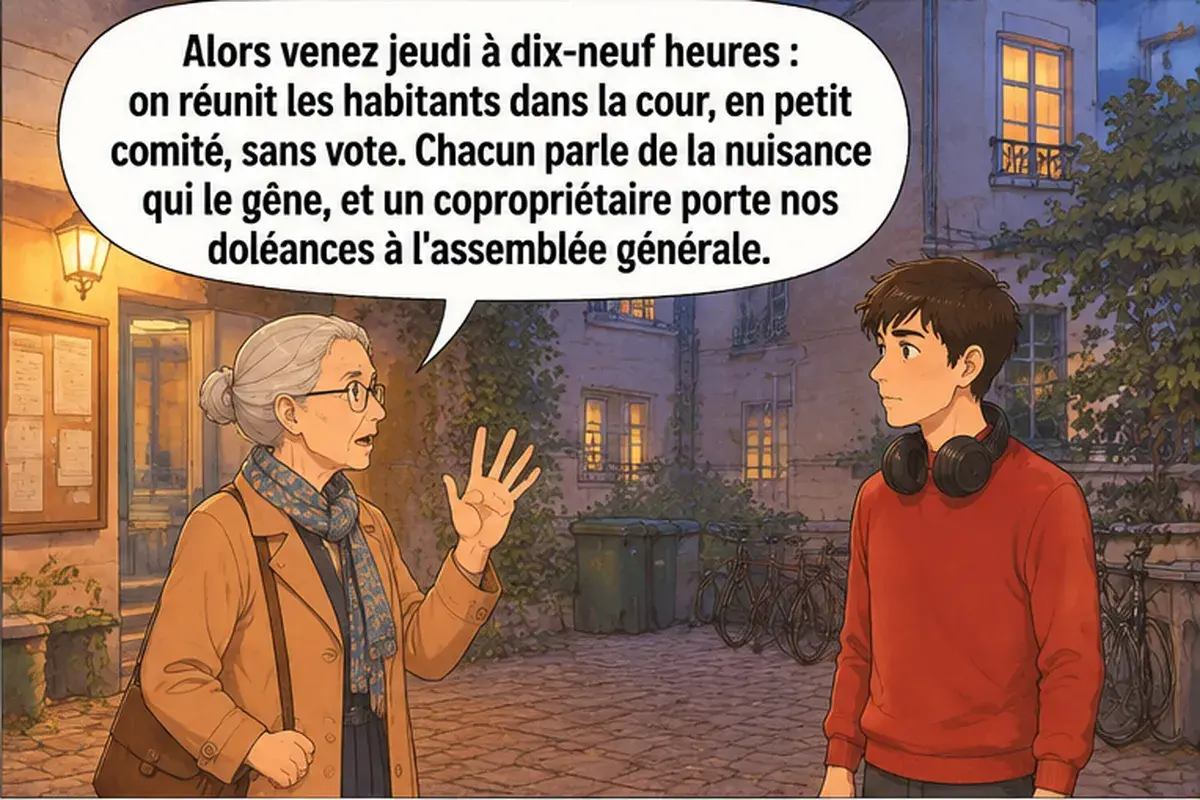
Alors venez jeudi à dix-neuf heures : on réunit les habitants dans la cour, en petit comité, sans vote. Chacun parle de la nuisance qui le gêne, et un copropriétaire porte nos doléances à l'assemblée générale.
Then come Thursday at seven in the evening (formal): we're getting the residents together in the courtyard, as a small committee, with no vote. Each person talks about the nuisance that bothers them, and a co-owner takes our complaints to the general meeting.
- Pacha
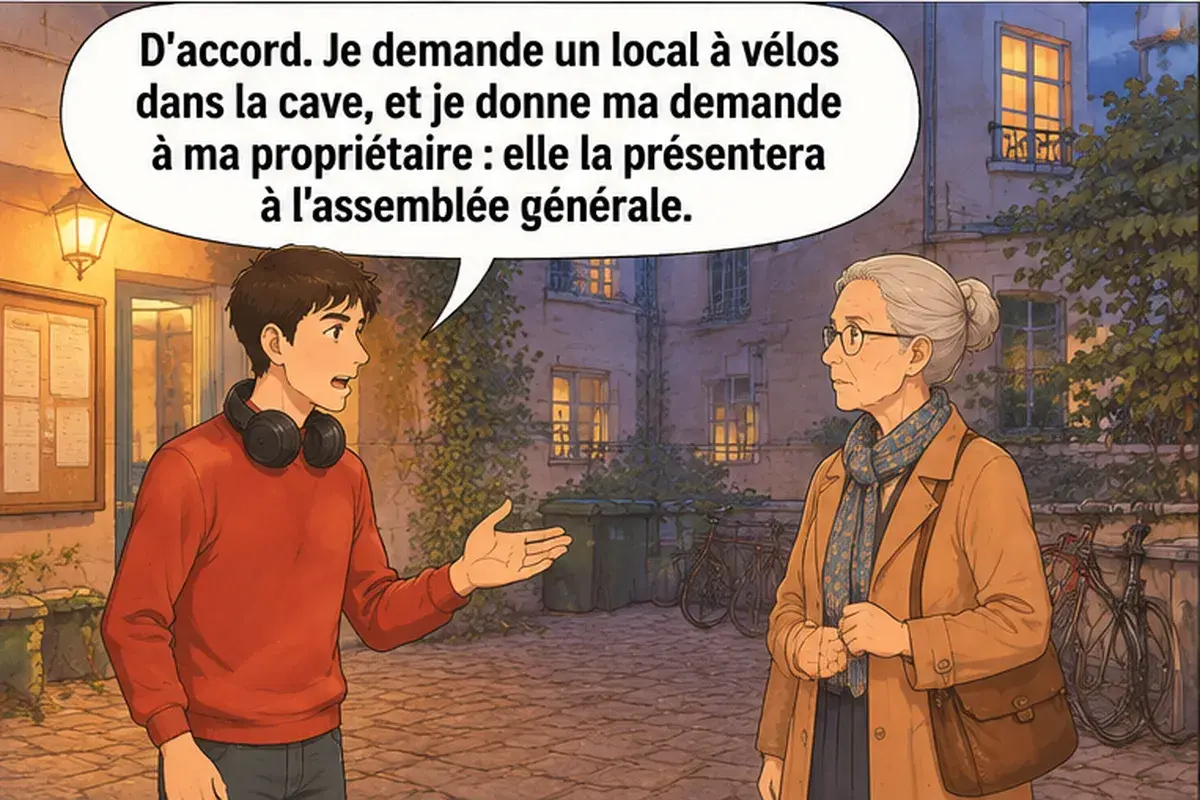
D'accord. Je demande un local à vélos dans la cave, et je donne ma demande à ma propriétaire : elle la présentera à l'assemblée générale.
OK. I'm asking for a bike room in the basement, and I'm giving my request to my landlord: she'll present it at the general meeting.
- Madame Fabre
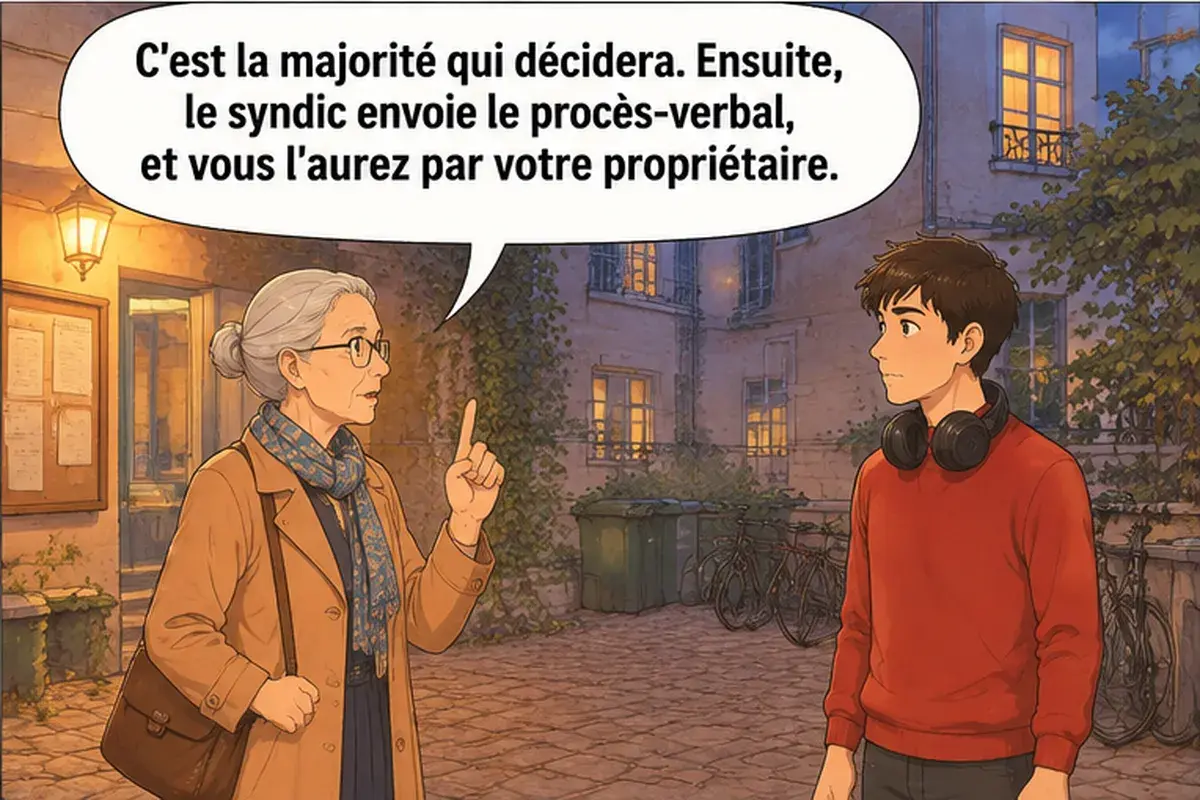
C'est la majorité qui décidera. Ensuite, le syndic envoie le procès-verbal, et vous l'aurez par votre propriétaire.
The majority will decide. Then the property management company sends the minutes, and you'll get them through your landlord (formal).
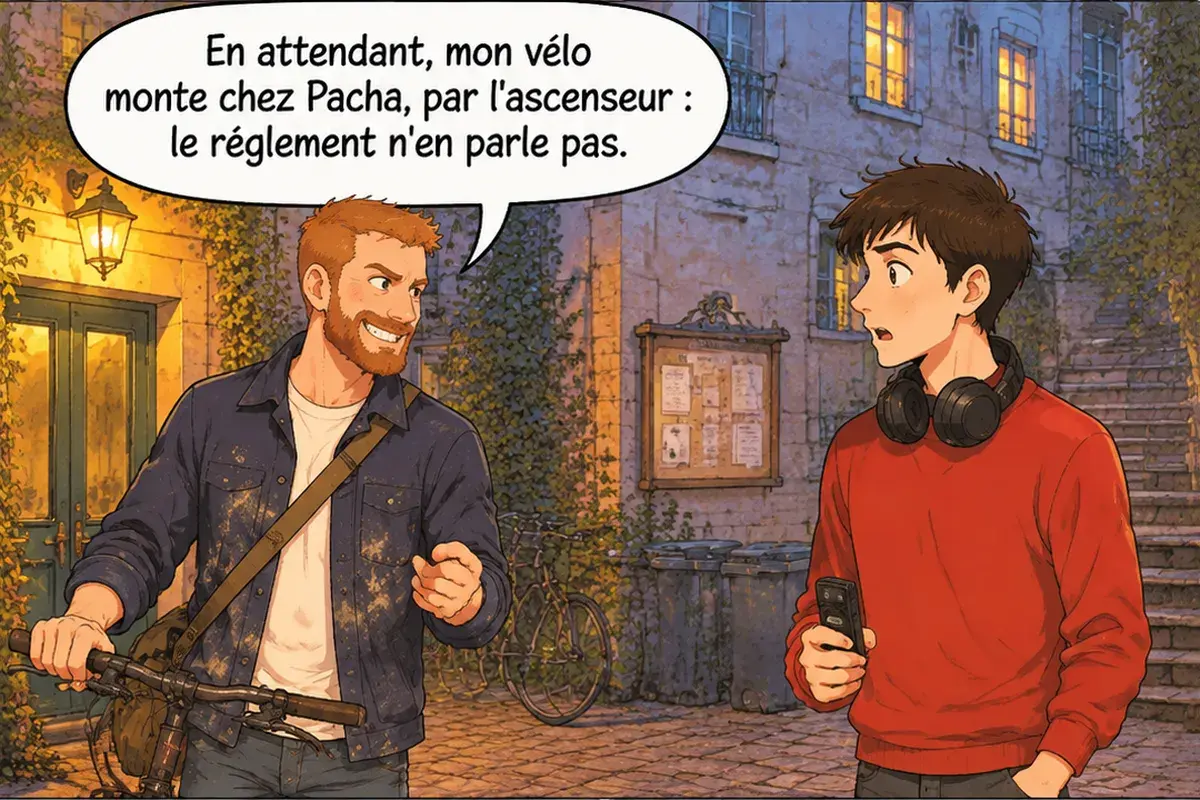
- Hugo
En attendant, mon vélo monte chez Pacha, par l'ascenseur : le règlement n'en parle pas.
In the meantime, my bike is going up to Pacha's, in the elevator: the rules don't say anything about it.
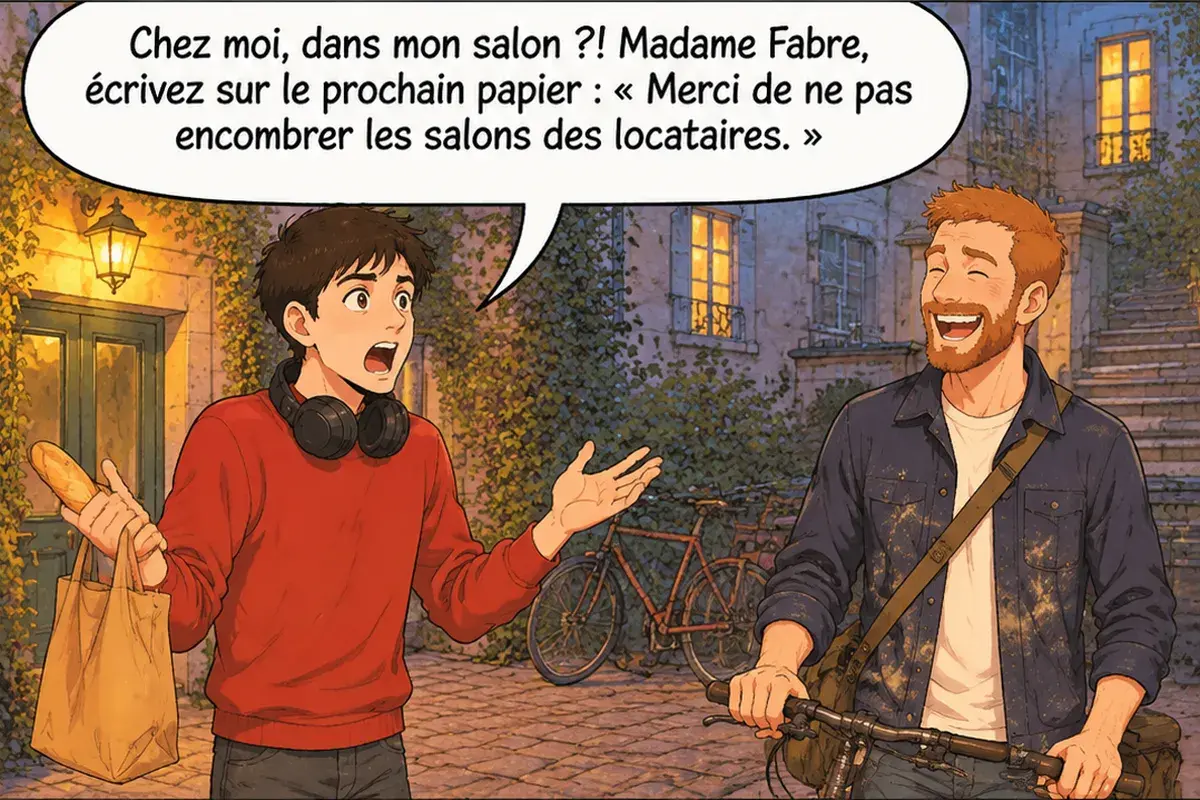
- Pacha
Chez moi, dans mon salon ?! Madame Fabre, écrivez sur le prochain papier : « Merci de ne pas encombrer les salons des locataires. »
At my place, in my living room?! Madame Fabre, write on the next notice (formal): "Please don't block the tenants' living rooms."
Grammar for this text
- Il est rappelé que les parties communes ne sont pas un garage — Please remember that the common areas aren't a garage.
il est rappelé queis a fixed notice formula: no author is named (it is a passive). A normal form (indicative) follows it.les parties communesare the courtyard, the stairs, the basement: whatever everyone uses. - Merci de ne pas encombrer la cour ni l'escalier — Please don't block the courtyard or the stairs. In a notice,
merci de+ infinitive means "please";ne passtay together before the infinitive. Don't mix it up with "thank you for...":merci de votre aide. - Quiconque laisse un vélo dans la cour doit le retirer dans la semaine — Anyone who leaves a bike in the courtyard must remove it within a week.
quiconquemeans "anyone who" and takes a singular verb. This is how rules are written; in speech people saycelui qui…. Herelemeans "it" (the bike), not "the". - Un règlement, ça se respecte — Rules are there to be followed.
se respectedoesn't mean "respects itself" but "people follow it": theseform for a general rule. - seuls les copropriétaires votent — Only the co-owners vote. At the general meeting only owners vote; a tenant can come with a proxy (
une procuration), and the landlord will go herself.le syndicis the property management company (a person or a firm). - le syndic veille seulement à ce que le règlement soit respecté — The property management company only makes sure the rules are followed.
veiller à ce que+ subjunctive:soitcomes fromêtre.soit respectéis the passive in the subjunctive. - en petit comité — in a small group.
- nos doléances — our complaints.
doléancesis a bookish word; in plain speech people saynos plaintes. - le tapage nocturne — late-night noise.
Words and grammar of the unit: Settle a dispute in your building.
Learn the words from the texts with flashcards
In the app, you can tap any word in a text to see its translation, forms and examples, and new words stick with flashcards. 15 minutes a day.
Start for freeEverything is open for free. No card needed to sign up.