
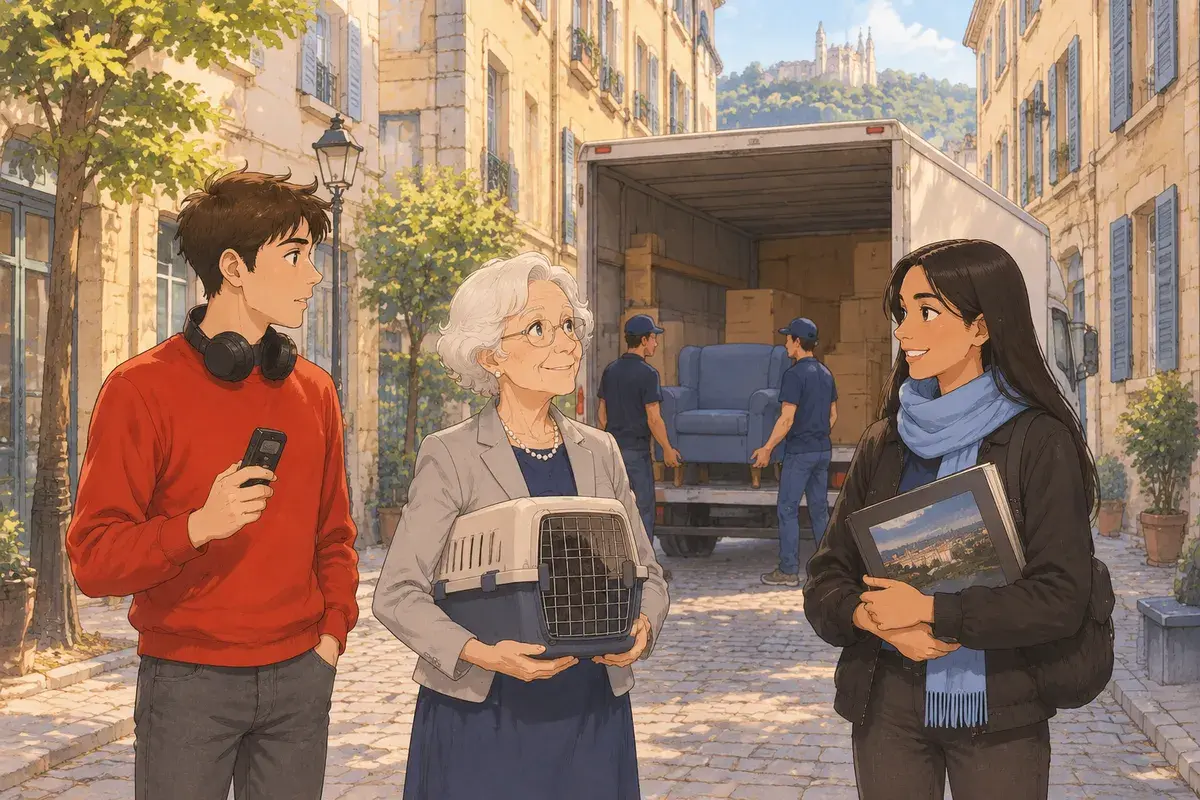
French story with translation · B2 · 18 lines
Les cinq étages, une dernière fois The five floors, one last time
Comic · 18 panels
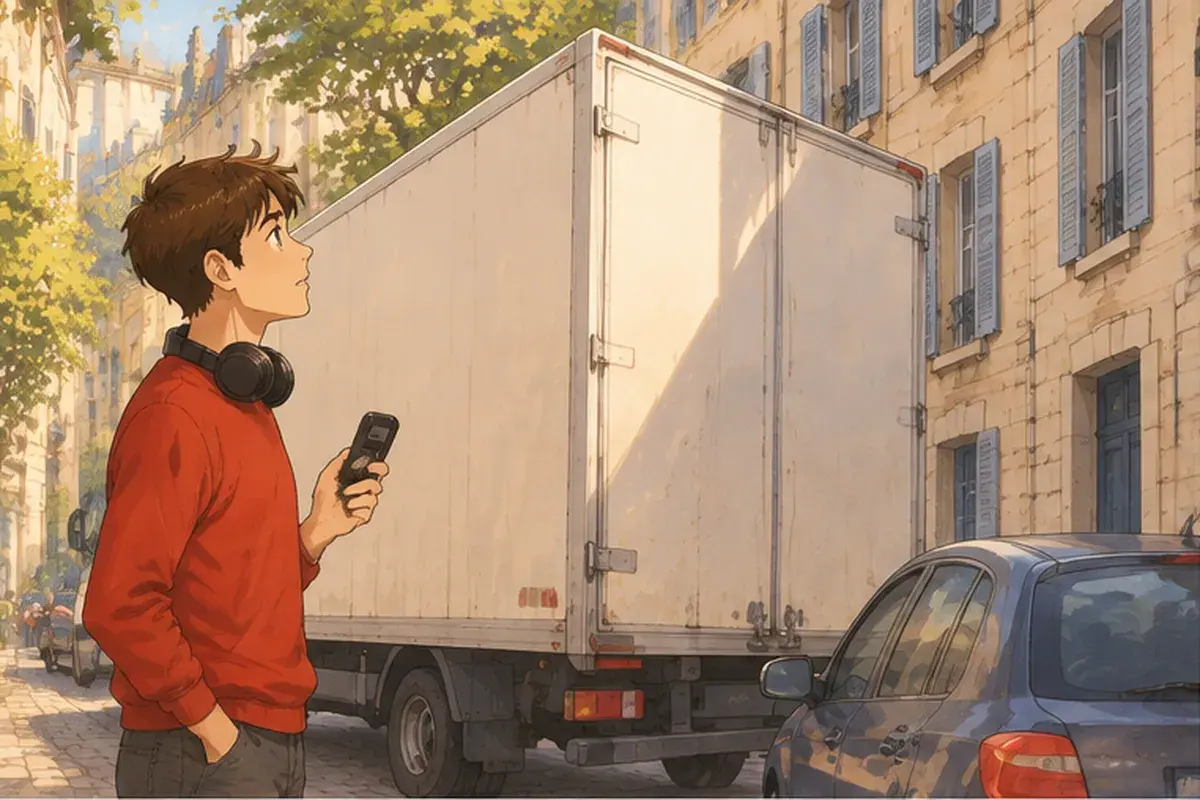
Samedi à neuf heures, la camionnette des déménageurs s'est arrêtée devant le 18 de la rue des Cascades. Le véhicule était si grand qu'aucune voiture ne passait plus.
Saturday at nine o'clock, the movers' van stopped in front of number 18, rue des Cascades. The vehicle was so big that no car could get past anymore.

Il n'y avait toujours pas d'ascenseur, et c'était la dernière fois que je montais ces cinq étages. Je les ai comptés un par un, comme on dit au revoir à quelqu'un.
There was still no elevator, and it was the last time I was climbing those five floors. I counted them one by one, the way you say goodbye to someone.
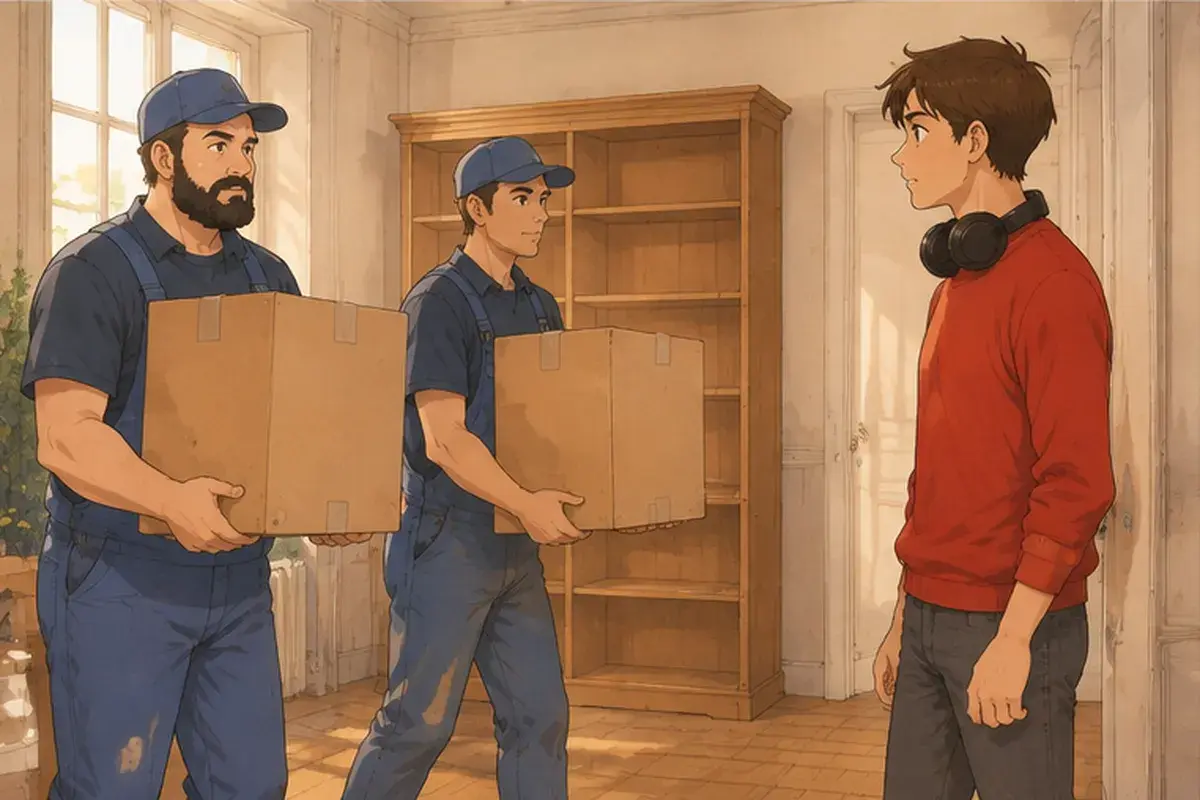
Les déménageurs ont commencé par démonter la bibliothèque, puis ils ont chargé les premiers cartons dans la camionnette.
The movers started by taking the bookcase apart, then they loaded the first boxes into the van.
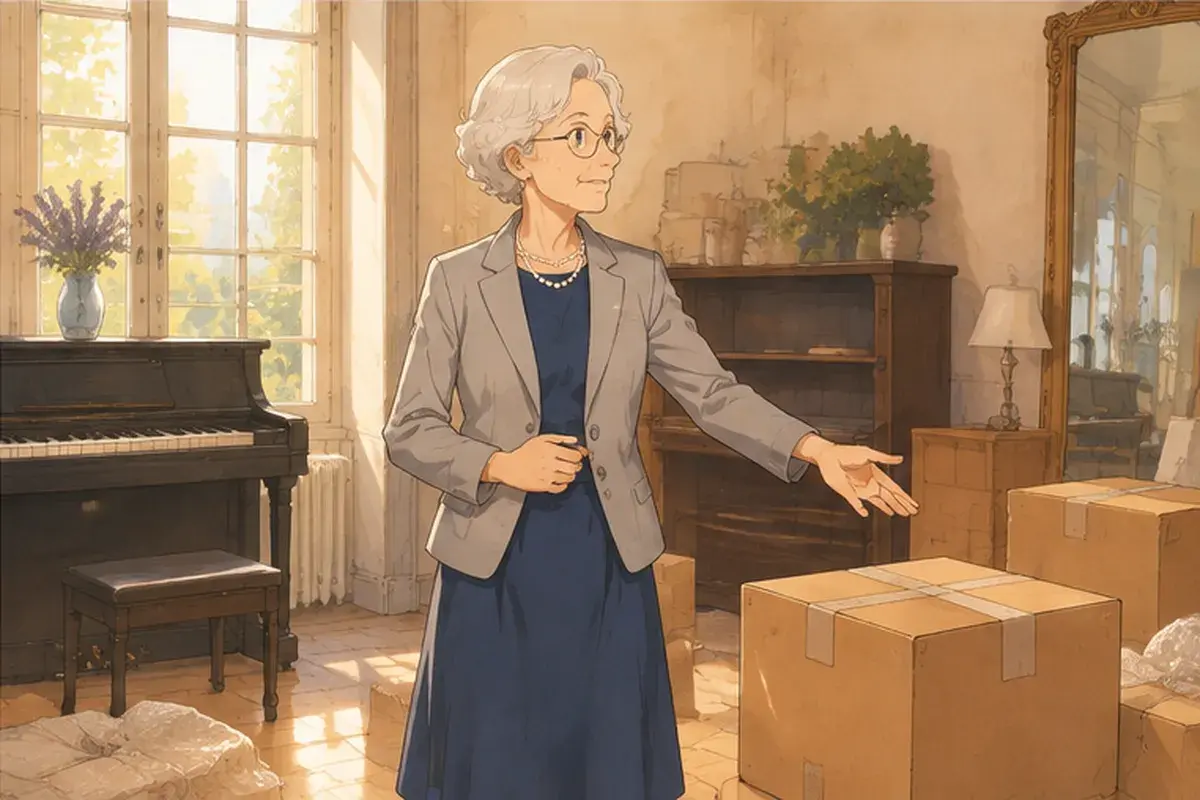
Madame Morel suivait chaque carton du regard : « Celui des bibelots se porte à deux mains. Celui du débarras peut tomber. »
Madame Morel followed each box with her eyes: "The one with the knickknacks is carried with two hands. The one from the storage closet can fall."
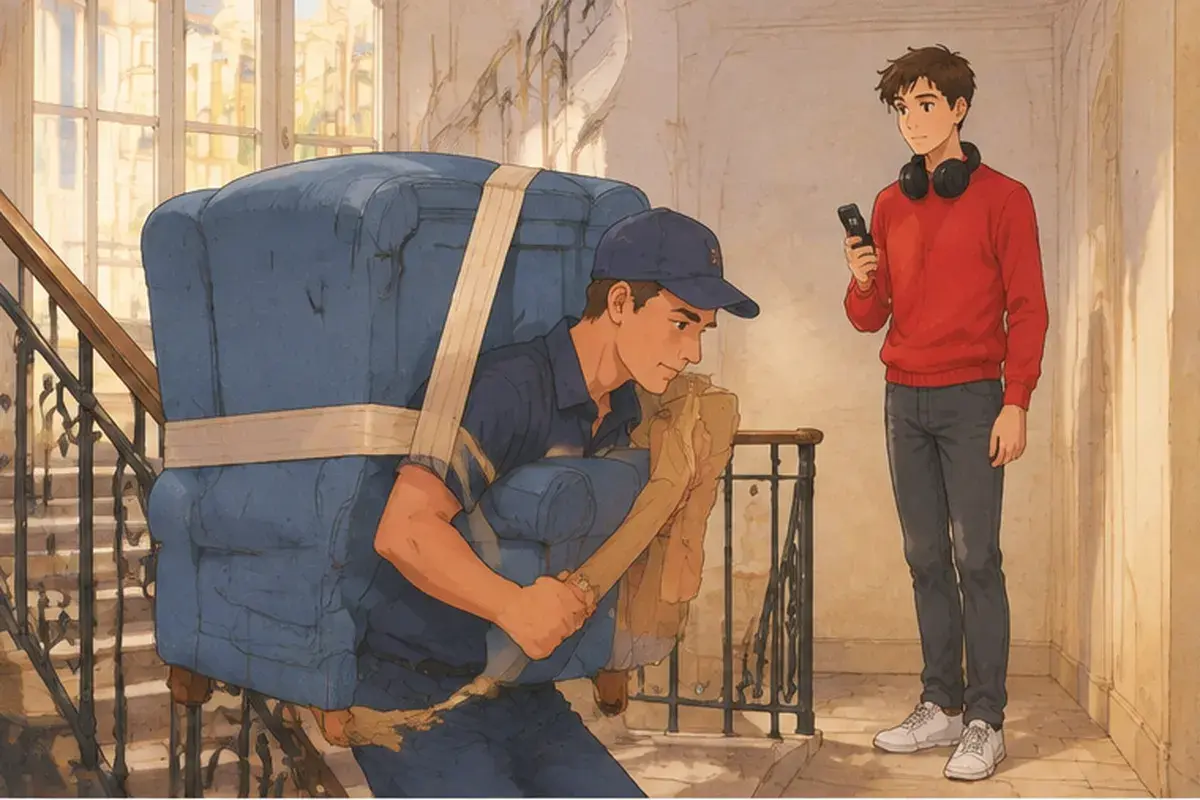
Le fauteuil bleu est descendu sur le dos d'un déménageur, avec des sangles autour des bras, comme un roi qu'on emmène en voyage.
The blue armchair came down on a mover's back, with straps around the arms, like a king being taken on a trip.
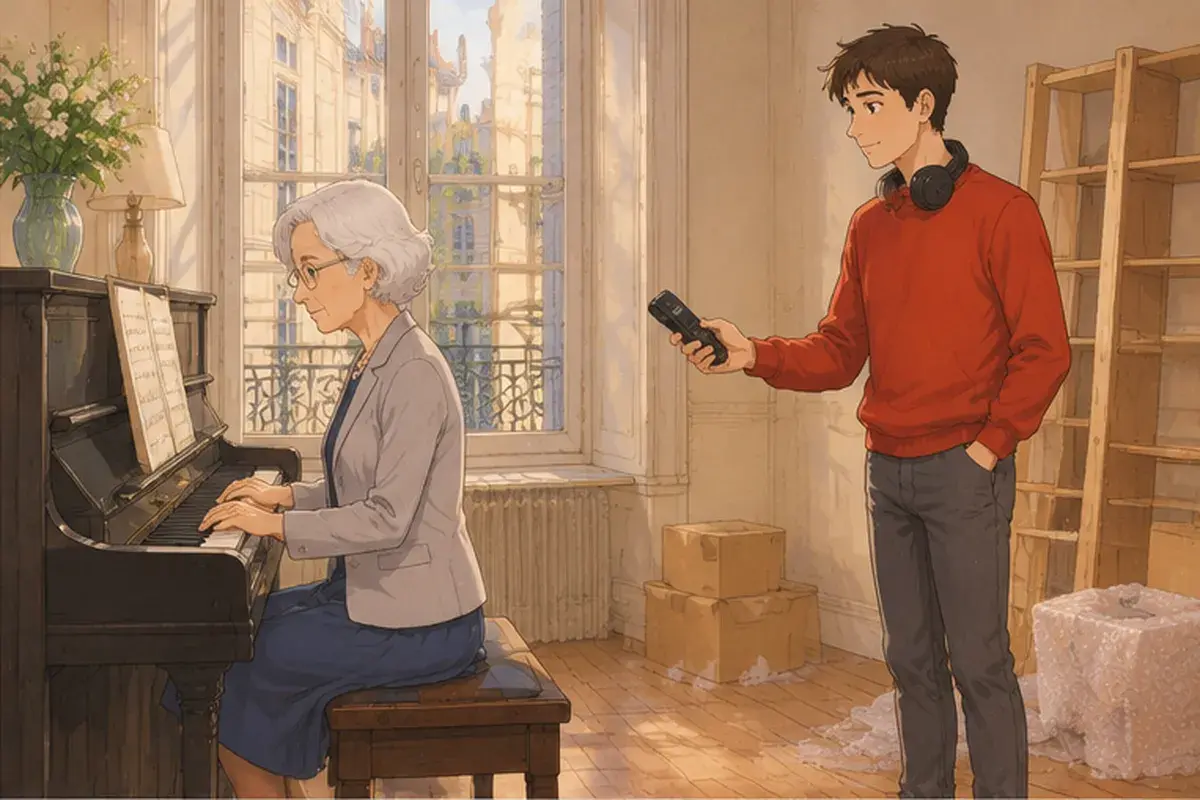
Avant que le piano parte, Madame Morel s'est assise devant lui et elle a joué un morceau très court. J'ai enregistré sans rien dire ; elle m'a vu : « Éteignez ce micro, Pacha. » Puis, doucement : « Non. Gardez-le. »
Before the piano left, Madame Morel sat down in front of it and played a very short piece. I recorded without saying anything; she saw me: "Turn off that microphone, Pacha." Then, softly: "No. Keep it." (formal)
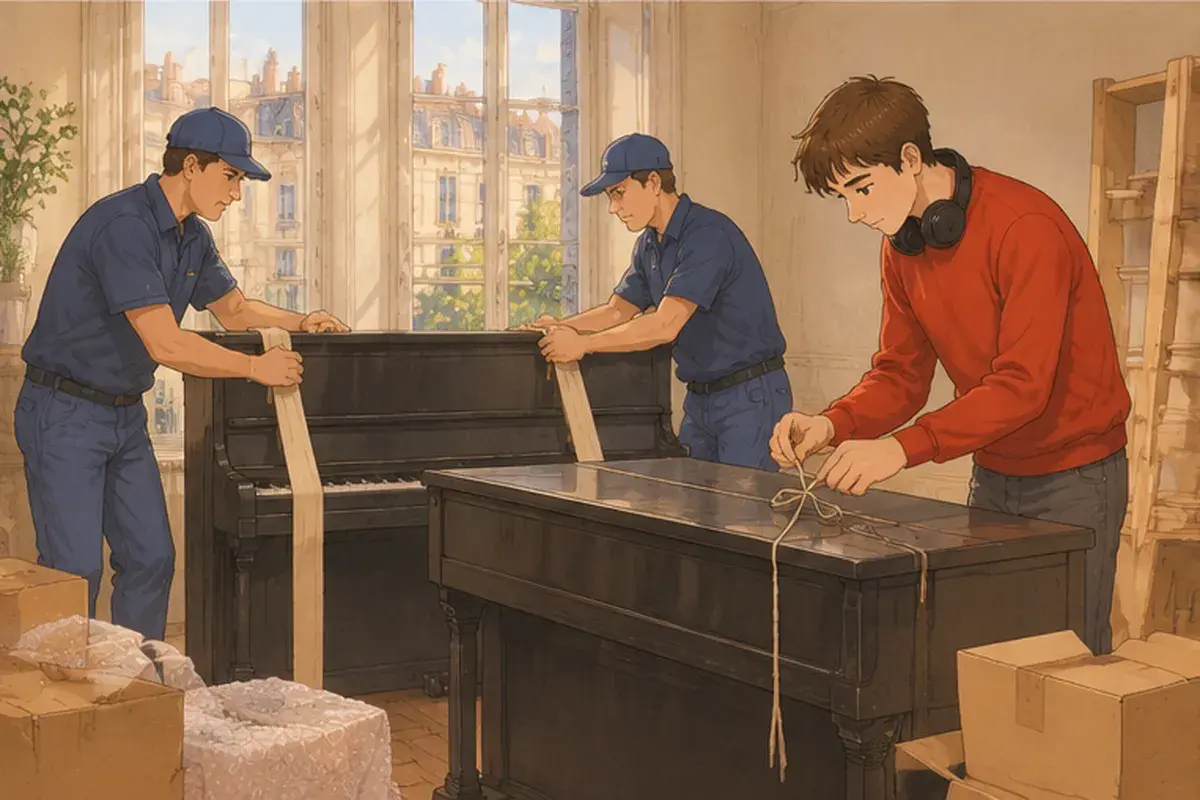
Le piano était trop encombrant pour l'escalier. Les déménageurs ont passé des sangles autour de lui, et moi, j'ai fermé le piano avec de la ficelle, pour qu'il ne s'ouvre pas en route.
The piano was too bulky for the stairs. The movers put straps around it, and I closed the piano with string, so it wouldn't open on the way.
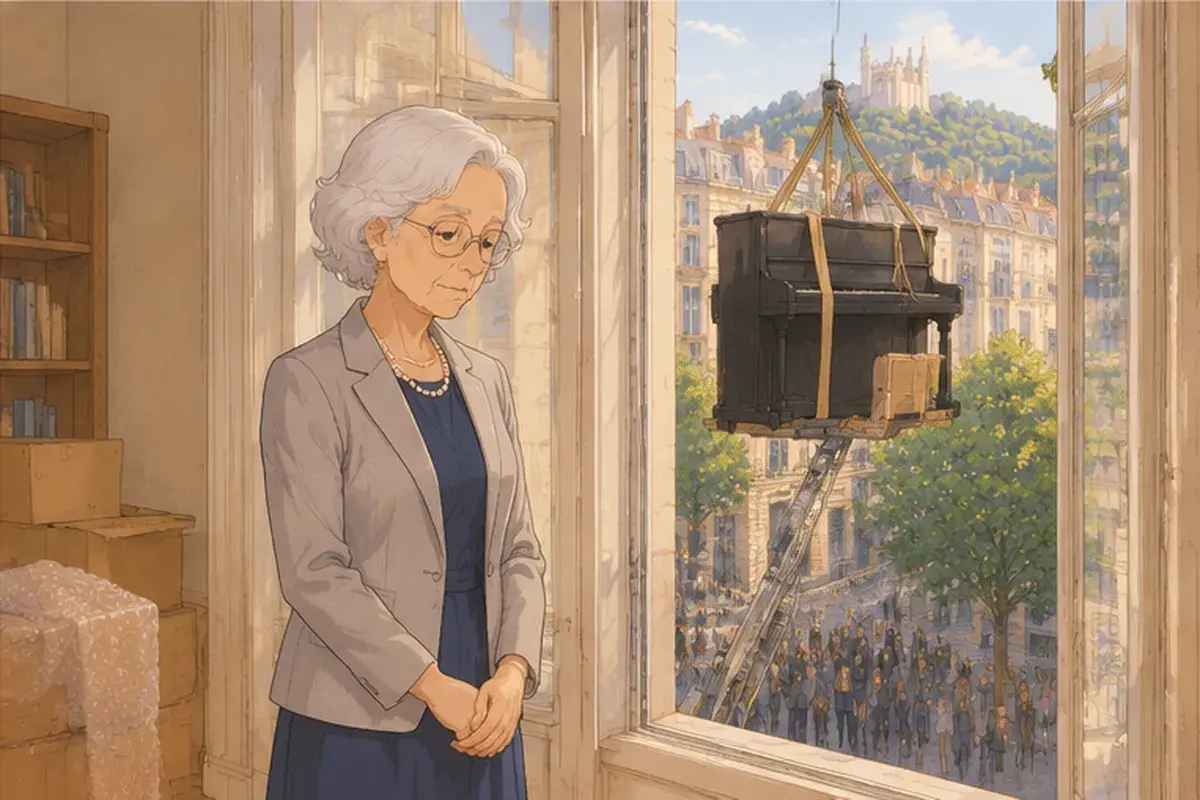
Il est parti par la fenêtre du cinquième, au bout du monte-meuble, et toute la rue a regardé passer le piano. Madame Morel, elle, regardait ailleurs.
It left through the fifth-floor window, on the end of the furniture lift, and the whole street watched the piano go by. Madame Morel, for her part, looked elsewhere.

Pendant ce temps, Inès faisait le tri de ce qui restait : une collection de petites tasses et un album de vieilles photos.
Meanwhile, Inès was sorting through what was left: a collection of little cups and an album of old photos.

Dans l'album, il y avait un jeune homme avec une guitare. « Mon mari, a dit madame Morel. Il avait vingt-cinq ans et il tenait sa guitare comme un parapluie. »
In the album, there was a young man with a guitar. "My husband," Madame Morel said. "He was twenty-five, and he held his guitar like an umbrella."
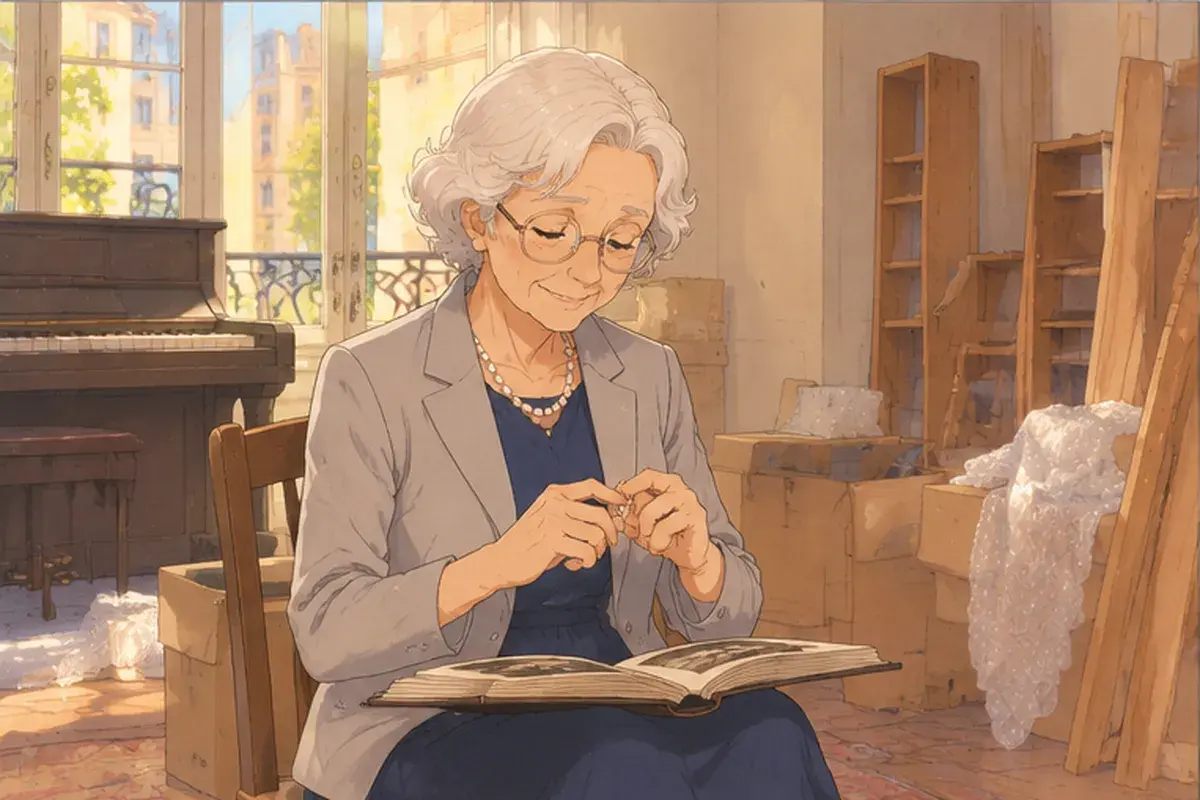
Madame Morel est veuve depuis longtemps, mais elle n'avait jamais ouvert cet album devant nous. Elle tournait sa bague autour de son doigt, comme chaque fois qu'elle parlait de lui.
Madame Morel has been a widow for a long time, but she had never opened that album in front of us. She was turning her ring around her finger, like every time she talked about him.

Elle m'a dit : « On ne quitte pas seulement des gens. On quitte aussi un escalier, une cuisine, une fenêtre. »
She told me: "You don't only leave people. You also leave a staircase, a kitchen, a window."
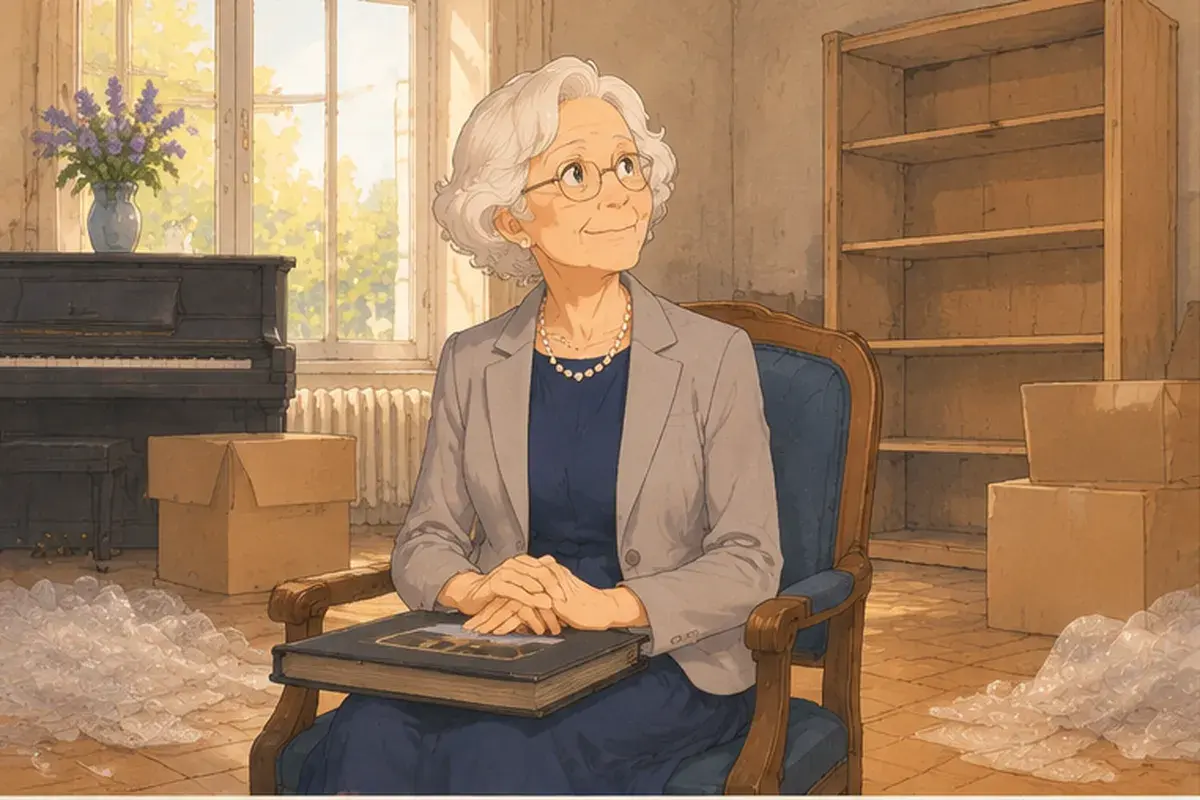
Elle a ajouté, sans tristesse, qu'elle s'était débarrassée de tous ses vieux papiers avant de signer chez le notaire : « Un peu d'ordre, c'est une politesse pour ceux qui arrivent. »
She added, without sadness, that she had gotten rid of all her old papers before signing at the notary's: "A little order is a courtesy to those who are coming."
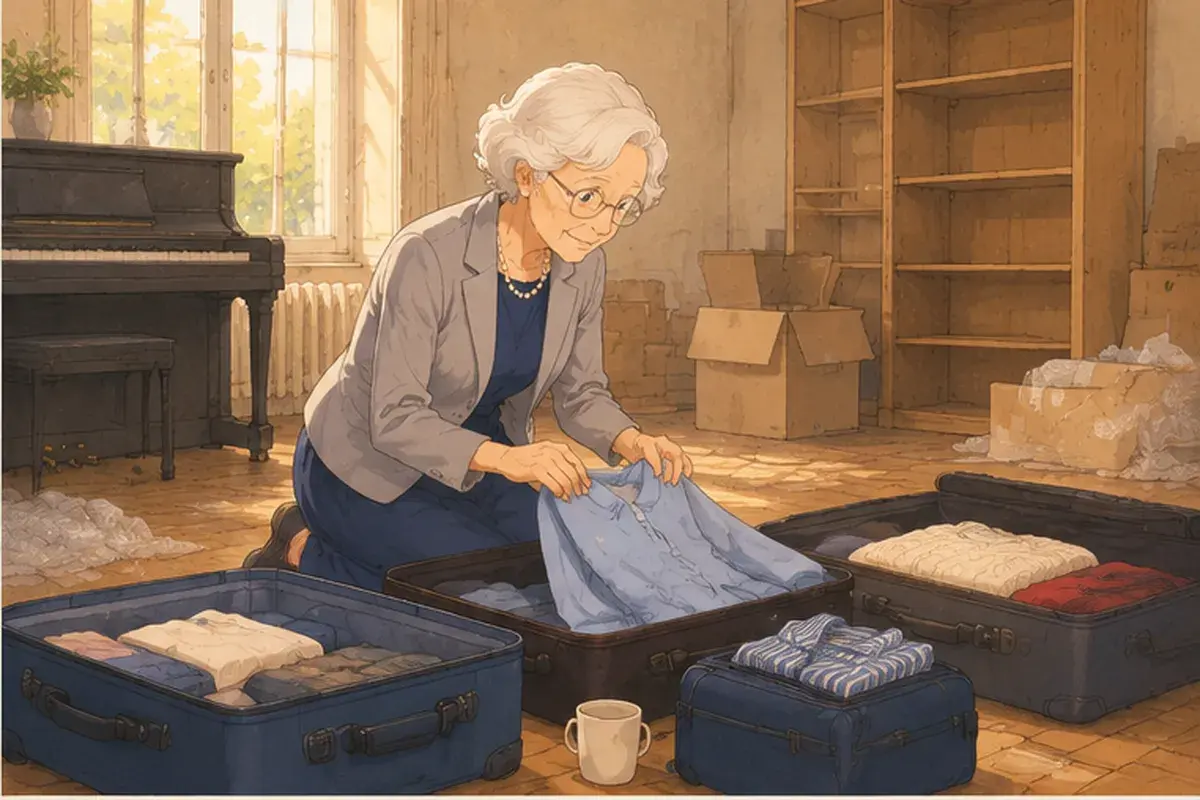
À midi, elle avait plié elle-même ses habits dans trois valises. Dans le petit sac préparé spécialement pour la première nuit à Lyon, il y avait un pyjama, une tisane et la tasse préférée de son mari.
By noon, she had folded her clothes herself into three suitcases. In the little bag packed specially for the first night in Lyon, there were pajamas, an herbal tea, and her husband's favorite cup.
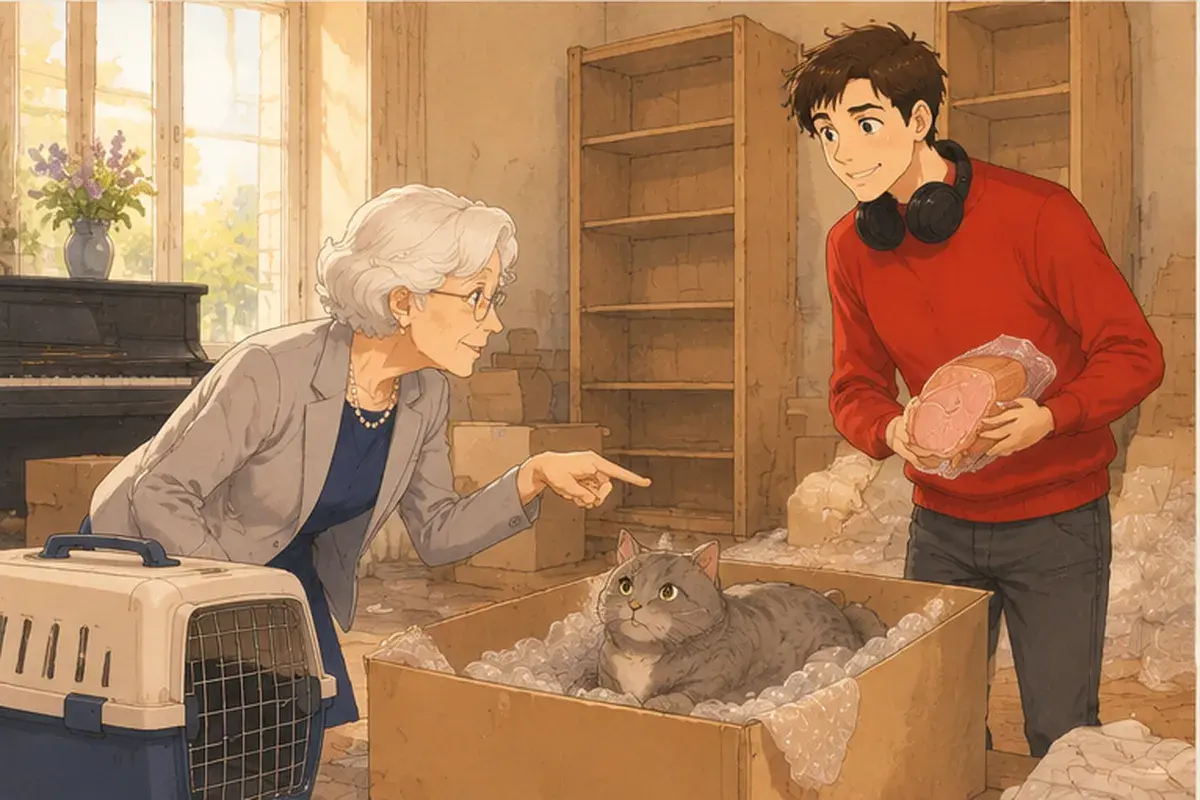
Il restait le chat. Il avait refusé de se laisser transporter dans son sac et s'était caché sur le papier bulle, dans le carton des bibelots. « Pacha, dans le sac ! » a crié madame Morel, et j'ai presque sauté dedans moi-même ; un morceau de jambon l'a convaincu.
The cat was still there. He had refused to let himself be carried in his bag and had hidden on the bubble wrap, in the box of knickknacks. "Pacha, into the bag!" Madame Morel shouted, and I almost jumped in myself; a piece of ham convinced him.
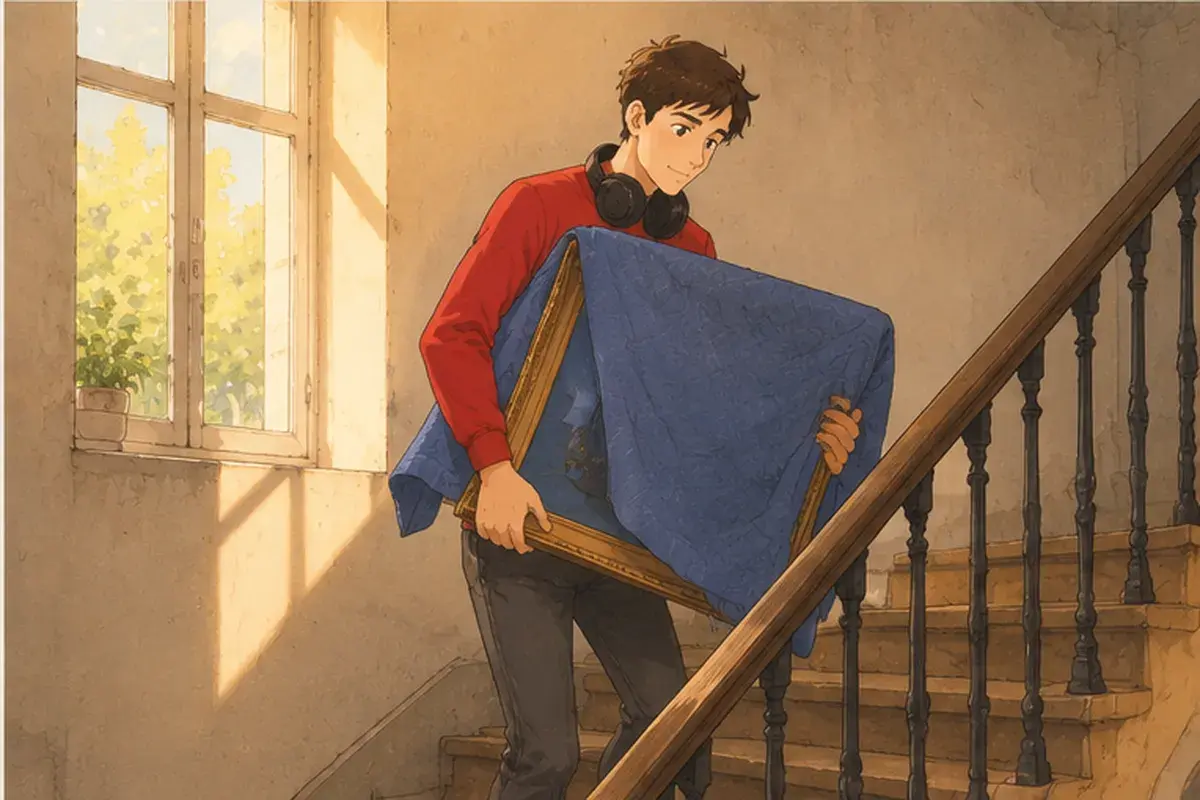
Le tableau de la Saône vue de Fourvière voyageait dans mes bras, sous une couverture : Madame Morel n'a pas voulu le laisser dans la camionnette.
The painting of the Saône seen from Fourvière was traveling in my arms, under a blanket: Madame Morel didn't want to leave it in the van.

Le soir, la camionnette est repartie vers Lyon. Les déménageurs déchargeront tout lundi dans la maison voisine de celle de Jeanne ; Madame Morel, le chat et moi, nous avons pris le train, avec le tableau et deux sacs.
In the evening, the van left again for Lyon. The movers will unload everything Monday at the house next to Jeanne's; Madame Morel, the cat and I took the train, with the painting and two bags.

Dans mon enregistrement, il y a cinq étages de marches, un chat qui crie, et une voix qui dit à la fin : « Allons-y. » Si j'avais coupé le chat, j'aurais perdu le meilleur. Je le garderai toujours.
In my recording, there are five floors of steps, a cat yelling, and a voice saying at the end: "Let's go." If I had cut the cat, I would have lost the best part. I'll always keep it.
Grammar for this text
- s'est arrêtée — stopped.
s'arrêterusesêtrein the past, socamionnette(feminine) needsarrêtée. - Celui des bibelots se porte à deux mains — The one with the knickknacks is carried with two hands.
se porternames no one doing the action: "people carry it that way". It tells how something is done (unit 8,ça se fait).celui des bibelotsmeans "the one with the knickknacks". - Avant que le piano parte — Before the piano left.
avant que+ the subjunctive:partefrompartir(B1, unit 14). - encombrant — bulky.
- au bout du monte-meuble — at the end of the furniture lift.
le monte-meubleis a machine with a lift that raises and lowers things through a window when the stairs are too narrow. - Inès faisait le tri de ce qui restait — Inès was sorting through what was left.
faire le trimeans "to sort through": what to keep, what to give away, what to throw out.Le tridoesn't change;fairedoes (elle fait le tri,on a fait le tri). - On ne quitte pas seulement des gens. On quitte aussi un escalier… — You don't only leave people. You also leave a staircase…
quittermeans "to leave": not only a person, but also a place.Onmeans "people in general, all of us". - elle n'avait jamais ouvert cet album — she had never opened that album. This is the past perfect: "never before".
- qu'elle s'était débarrassée de tous ses vieux papiers — that she had gotten rid of all her old papers.
se débarrasser demeans "to get rid of".s'était débarrasséeis the past perfect of a reflexive verb (the helping verb isêtre); the participle agrees withelle:débarrassée.avant de+ infinitive means "before".Ceux qui arriventmeans "those who are coming" (the new owners of the apartment). - Les déménageurs déchargeront tout lundi — The movers will unload everything Monday. This is the future tense of
décharger.Déchargeris the opposite ofcharger. - Allons-y — Let's go. It's the nous command with
y("there"); the hyphen is the same as in a command with a pronoun. - Si j'avais coupé le chat, j'aurais perdu le meilleur — If I had cut the cat, I would have lost the best part. This is "if" about the past:
si+j'avais coupé(past perfect), thenj'aurais perdu(past conditional). He didn't cut the cat, so the recording is safe.
Words and grammar of the unit: Organize a move.
Learn the words from the texts with flashcards
In the app, you can tap any word in a text to see its translation, forms and examples, and new words stick with flashcards. 15 minutes a day.
Start for freeEverything is open for free. No card needed to sign up.