
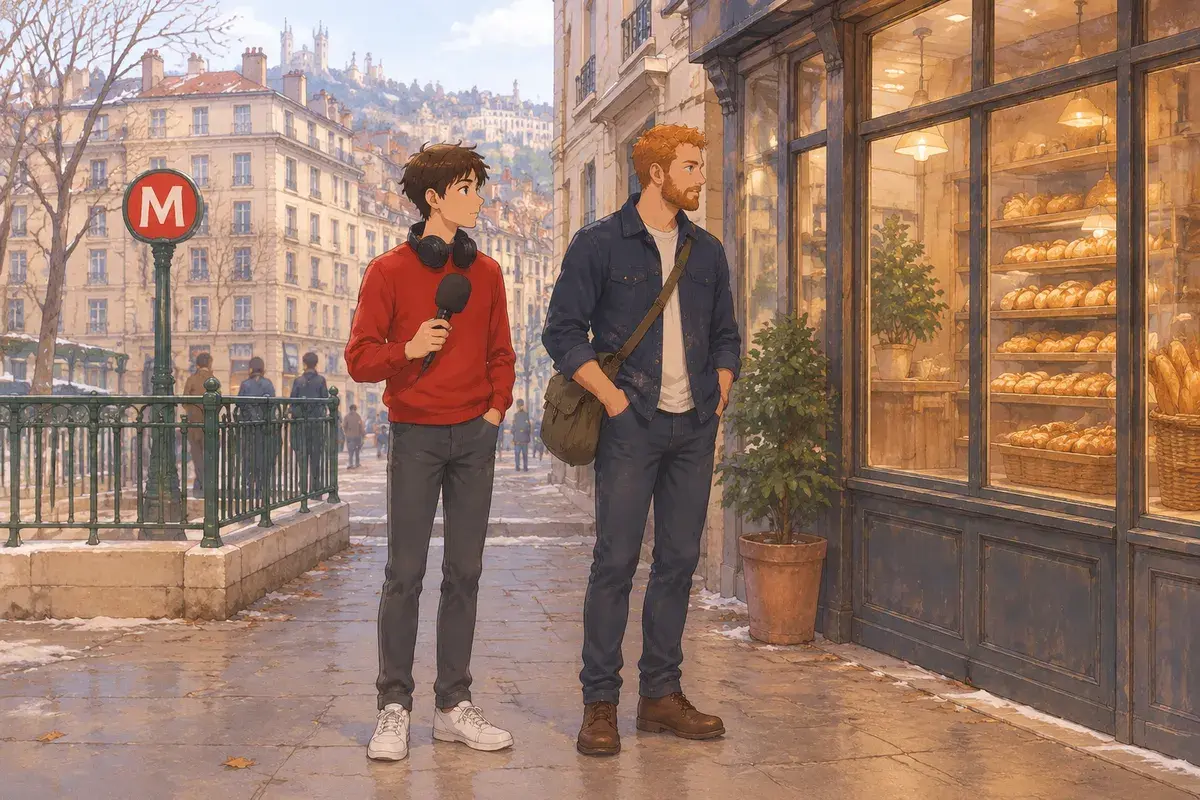
French dialogue with translation · B2 · 18 lines
Si j'étais resté au bureau… If I had stayed at the office…
Comic · 18 panels
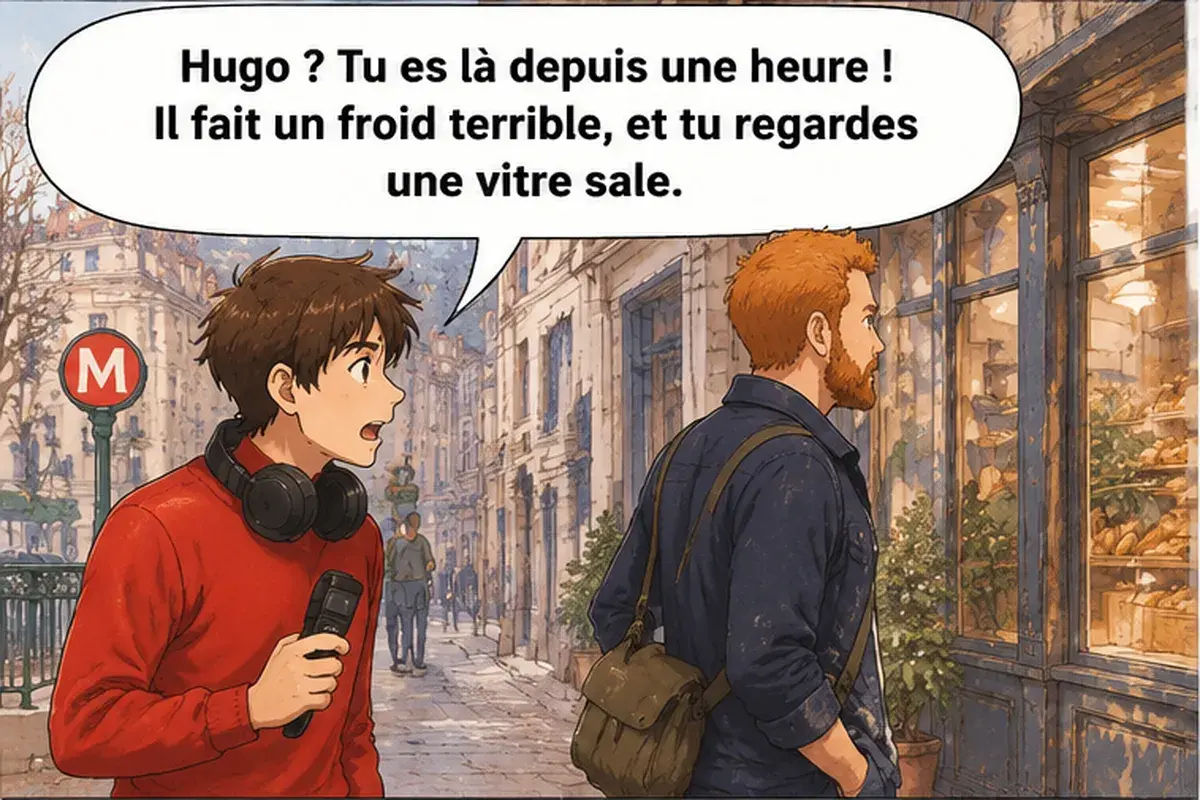
- Pacha
Hugo ? Tu es là depuis une heure ! Il fait un froid terrible, et tu regardes une vitre sale.
Hugo? You've been here for an hour! It's terribly cold, and you're looking at a dirty window.
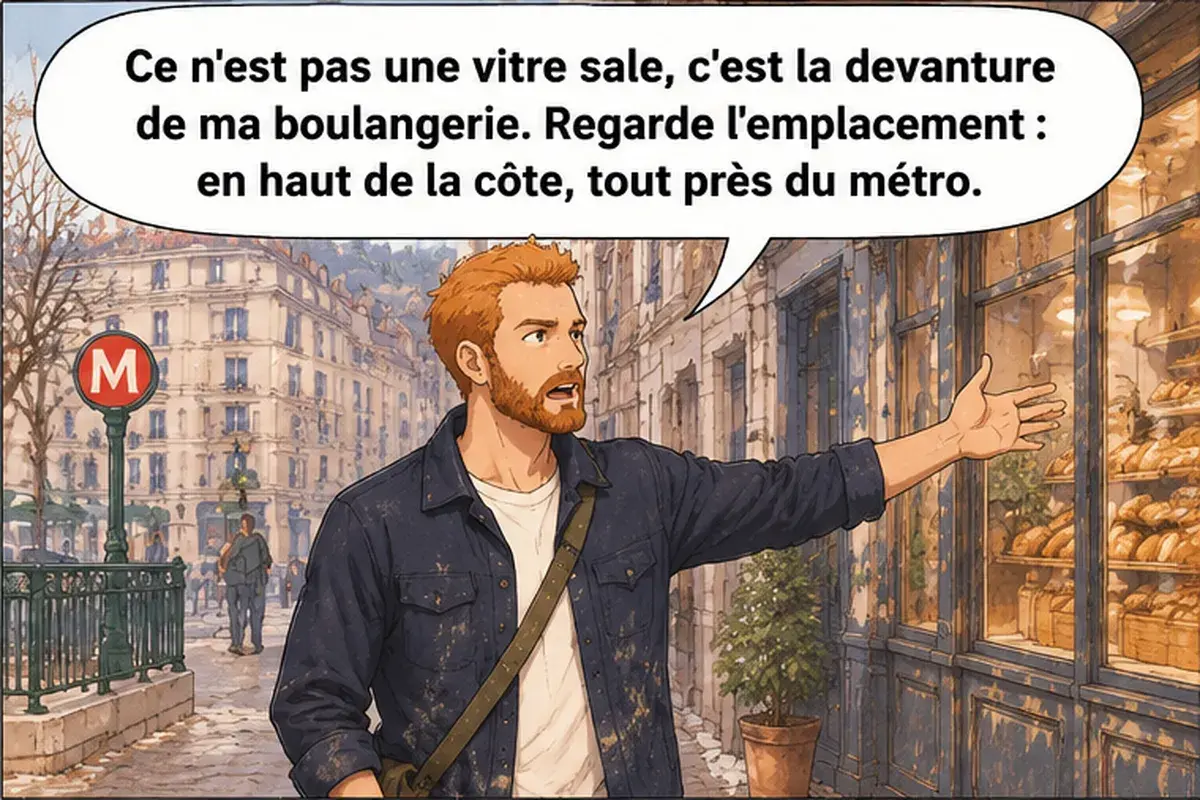
- Hugo
Ce n'est pas une vitre sale, c'est la devanture de ma boulangerie. Regarde l'emplacement : en haut de la côte, tout près du métro.
It's not a dirty window, it's the storefront of my bakery. Look at the location: at the top of the hill, right next to the metro.
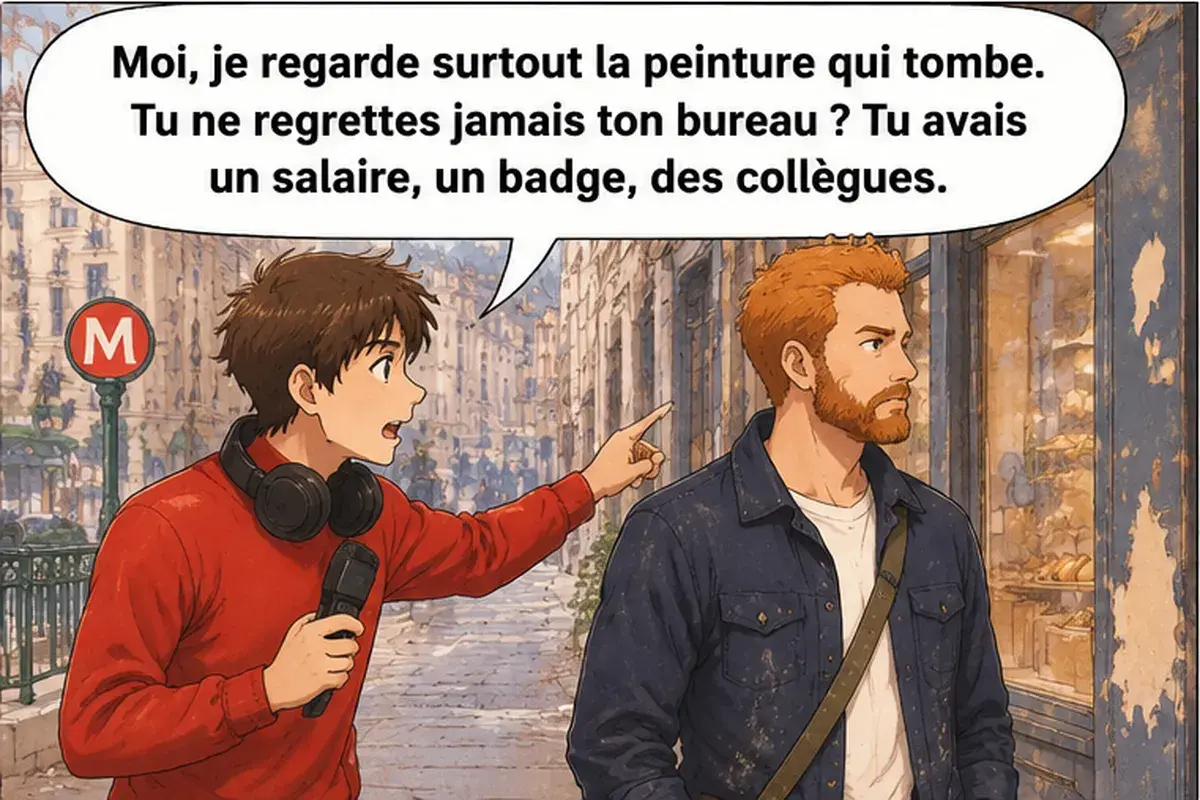
- Pacha
Moi, je regarde surtout la peinture qui tombe. Tu ne regrettes jamais ton bureau ? Tu avais un salaire, un badge, des collègues.
Me, I mostly look at the paint that's falling off. Don't you ever regret your office? You had a salary, a badge, coworkers.
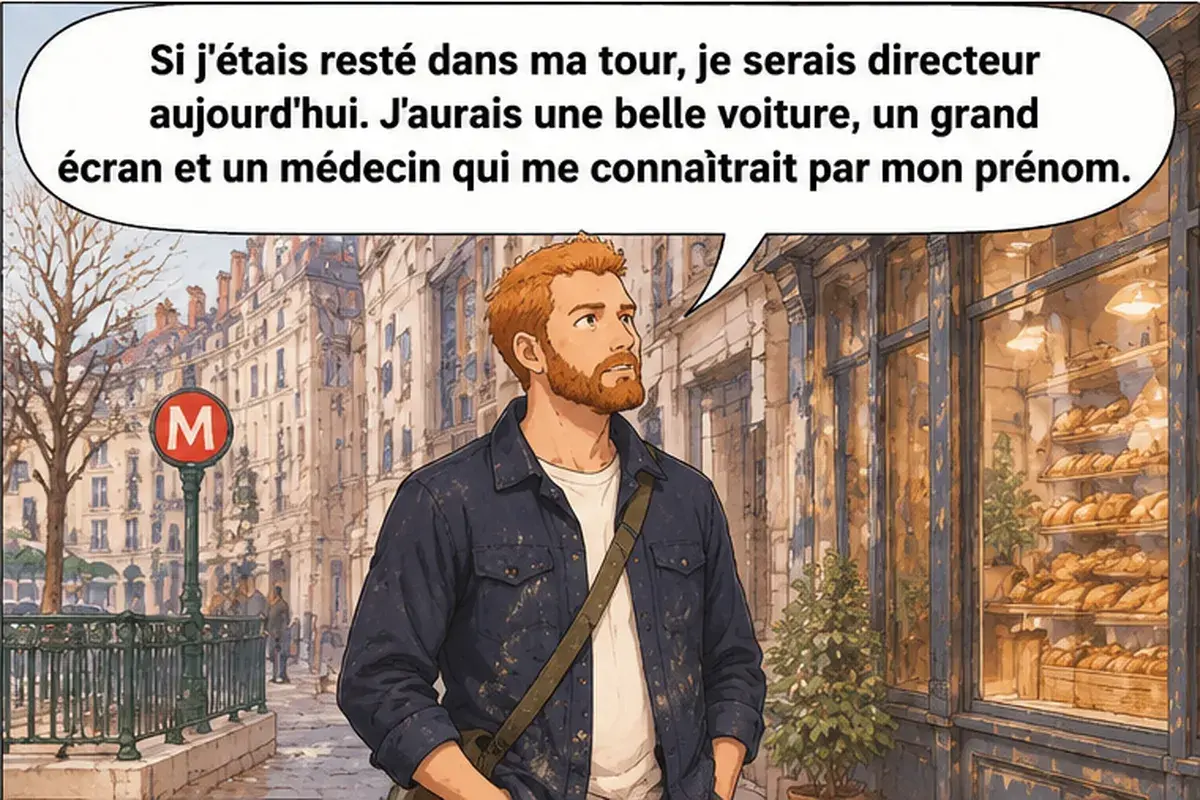
- Hugo
Si j'étais resté dans ma tour, je serais directeur aujourd'hui. J'aurais une belle voiture, un grand écran et un médecin qui me connaîtrait par mon prénom.
If I had stayed in my tower, I'd be a director today. I'd have a nice car, a big screen, and a doctor who would know me by my first name.
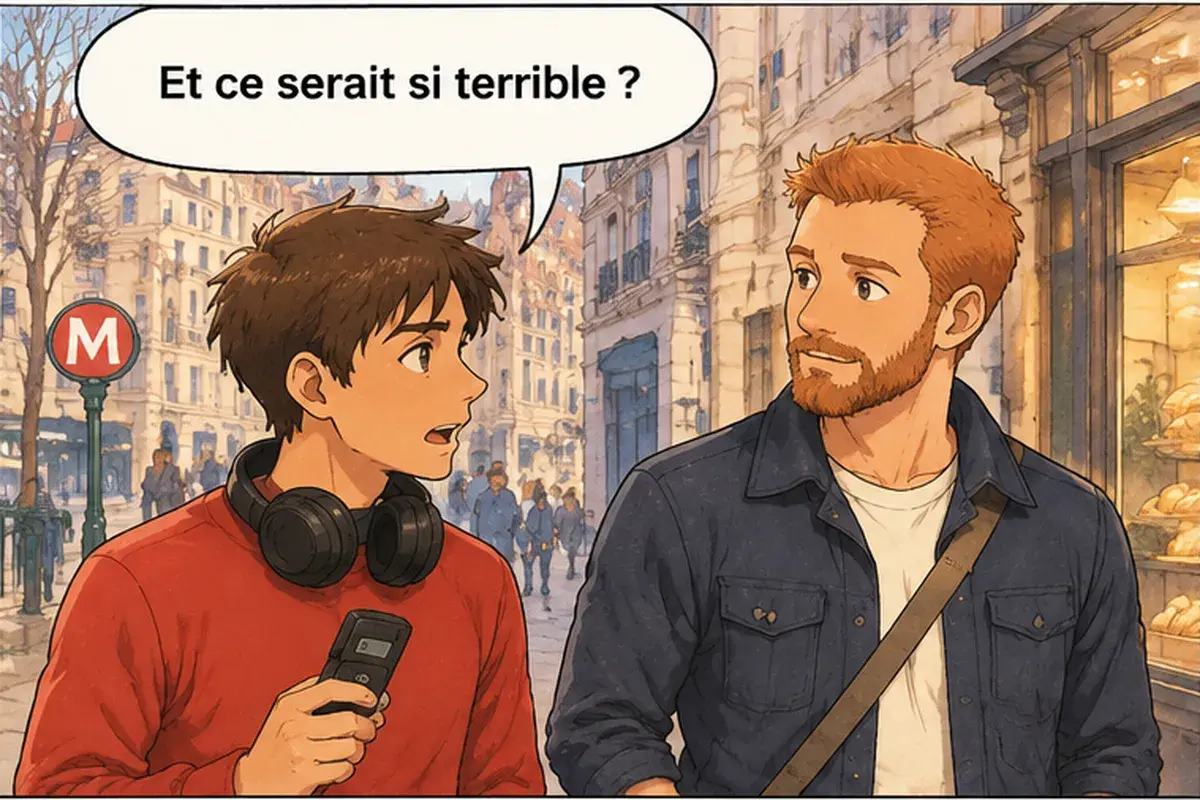
- Pacha
Et ce serait si terrible ?
And would that be so terrible?
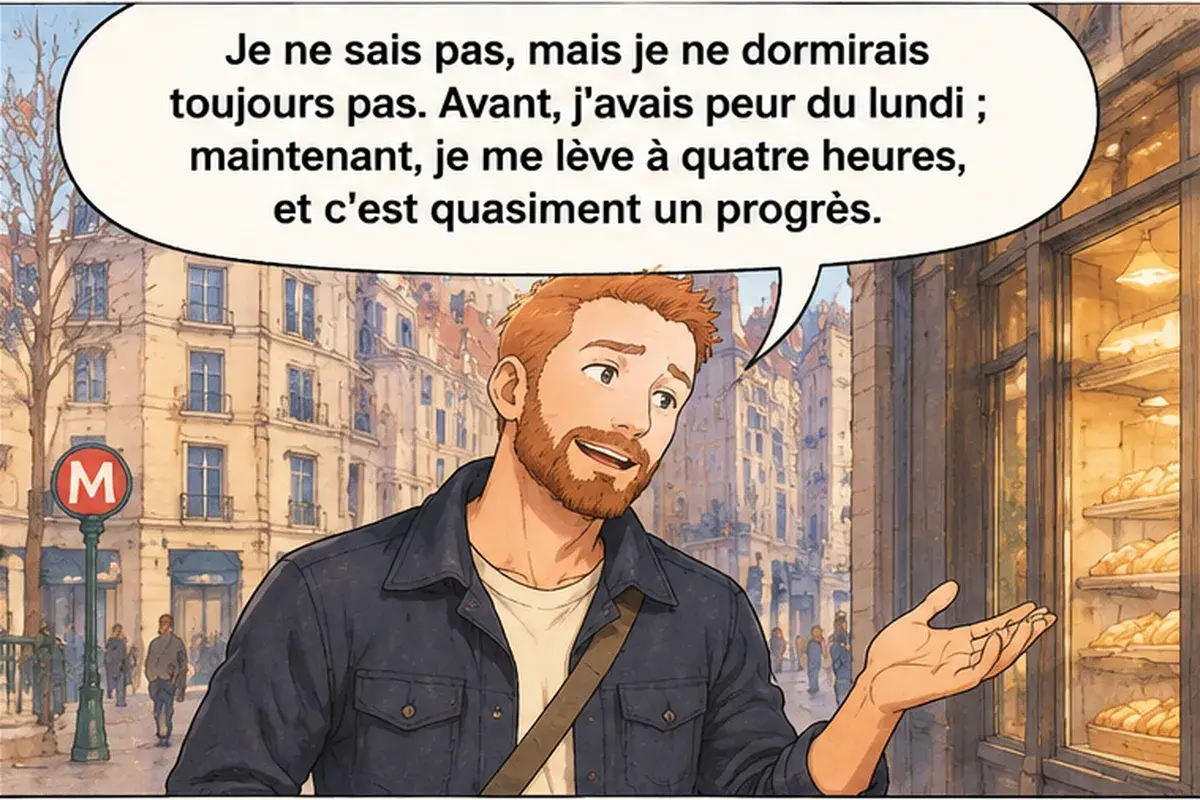
- Hugo
Je ne sais pas, mais je ne dormirais toujours pas. Avant, j'avais peur du lundi ; maintenant, je me lève à quatre heures, et c'est quasiment un progrès.
I don't know, but I still wouldn't be sleeping. Before, I was afraid of Monday; now I get up at four, and that's practically progress.
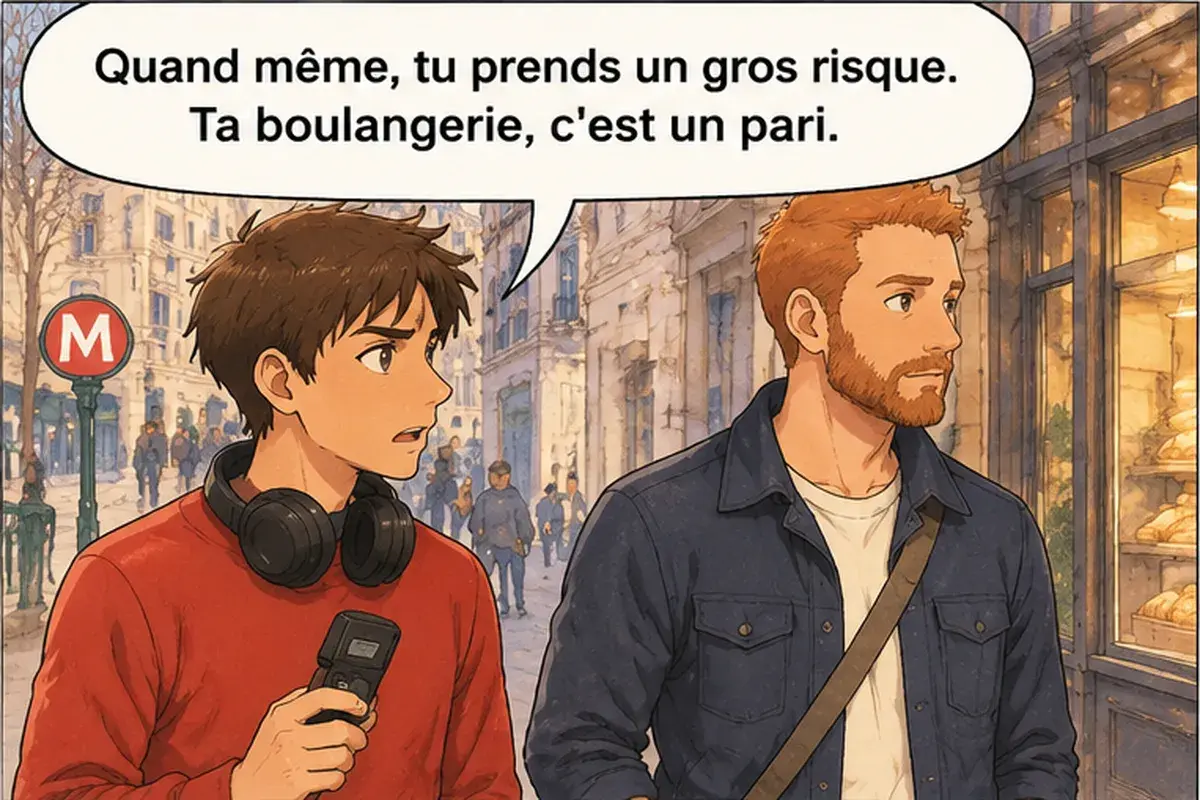
- Pacha
Quand même, tu prends un gros risque. Ta boulangerie, c'est un pari.
Still, you're taking a big risk. Your bakery is a bet.
- Hugo
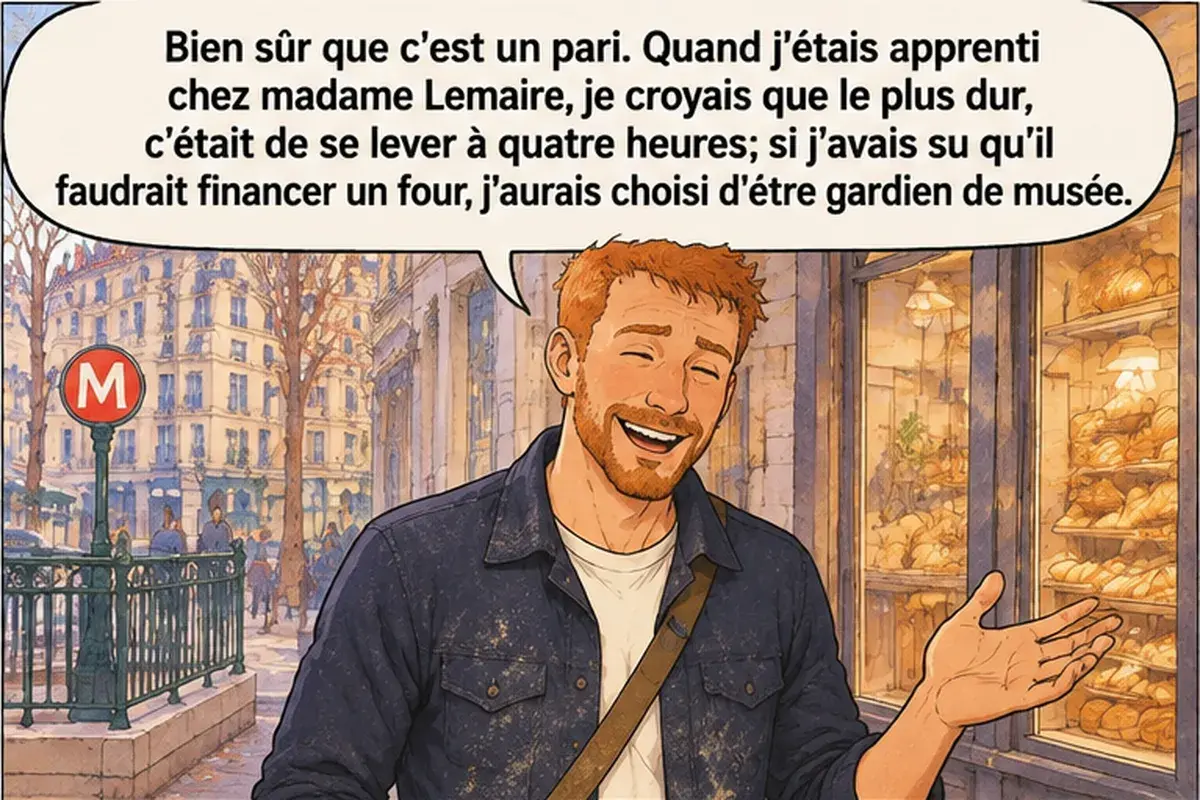
Bien sûr que c'est un pari. Quand j'étais apprenti chez madame Lemaire, je croyais que le plus dur, c'était de se lever à quatre heures ; si j'avais su qu'il faudrait financer un four, j'aurais choisi d'être gardien de musée.
Of course it's a bet. When I was an apprentice at Madame Lemaire's, I thought the hardest part was getting up at four; if I had known I'd have to finance an oven, I would have chosen to be a museum guard.
- Pacha
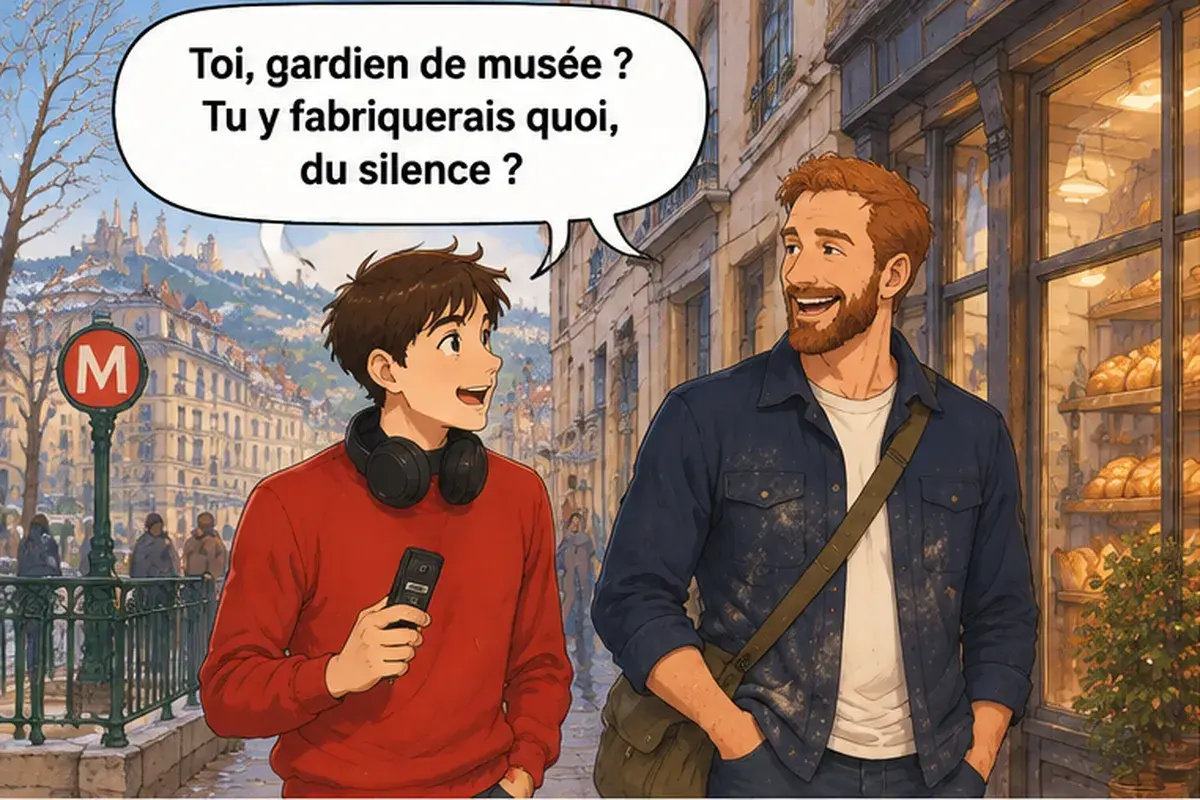
Toi, gardien de musée ? Tu y fabriquerais quoi, du silence ?
You, a museum guard? What would you make there, silence?
- Hugo
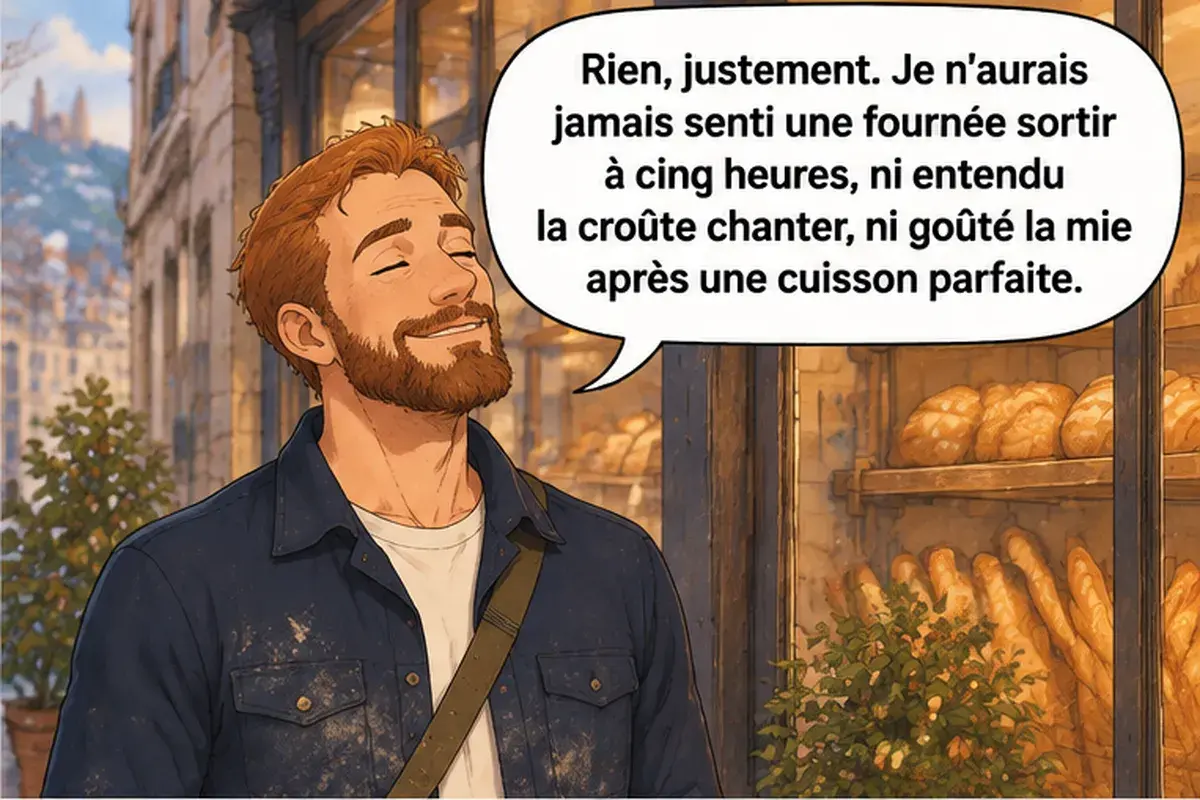
Rien, justement. Je n'aurais jamais senti une fournée sortir à cinq heures, ni entendu la croûte chanter, ni goûté la mie après une cuisson parfaite.
Nothing, and that's the point. I would never have felt a batch come out at five, or heard the crust sing, or tasted the crumb after a perfect bake.

- Pacha
La croûte qui chante, je l'enregistre quand tu veux. Mais vous allez commencer avec quoi ?
The singing crust, I'll record it whenever you want. But what are you going to start with? (to several people)
- Hugo
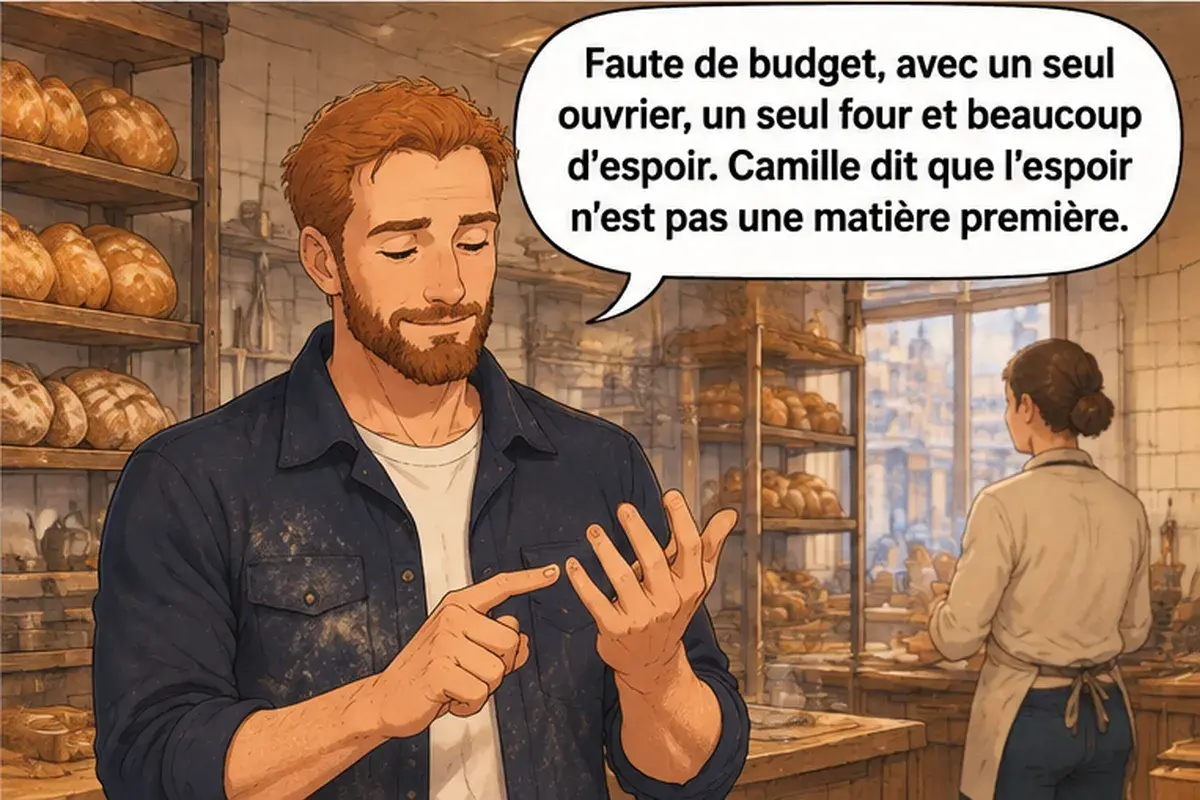
Faute de budget, avec un seul ouvrier, un seul four et beaucoup d'espoir. Camille dit que l'espoir n'est pas une matière première.
For lack of budget, with a single worker, a single oven and a lot of hope. Camille says hope isn't a raw material.
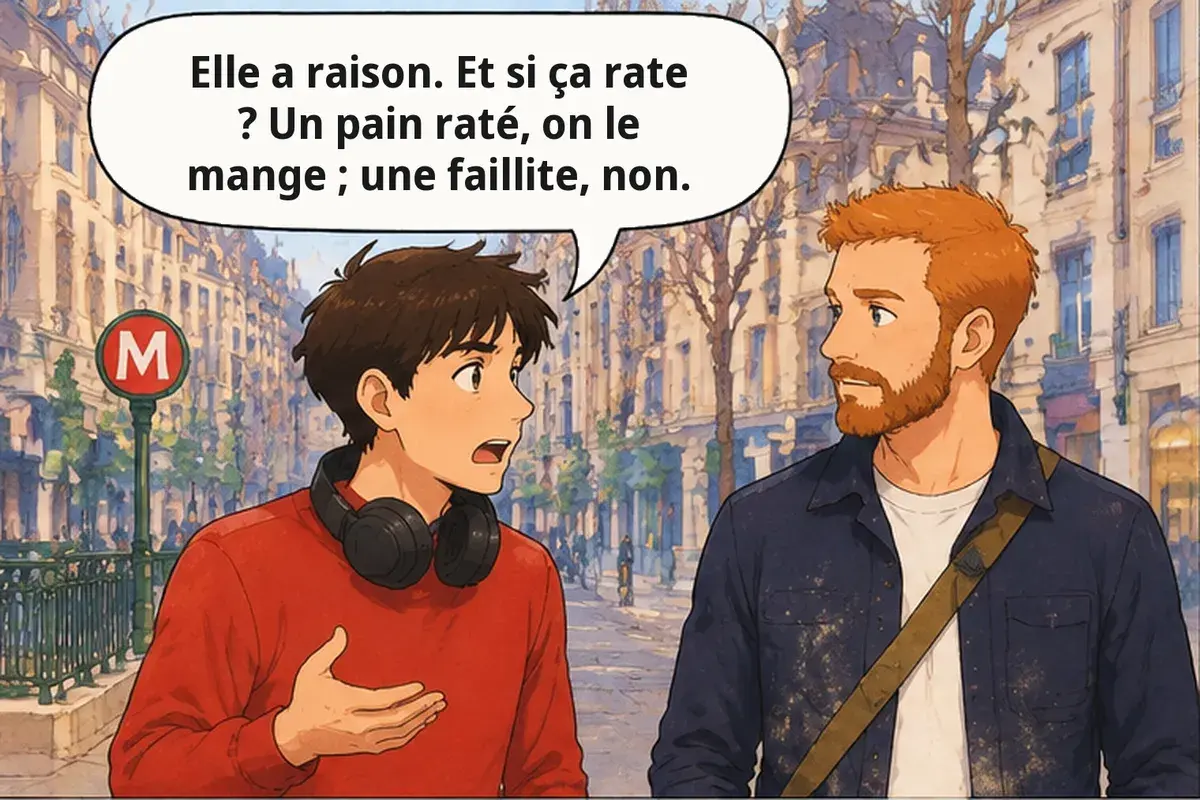
- Pacha
Elle a raison. Et si ça rate ? Un pain raté, on le mange ; une faillite, non.
She's right. And what if it fails? A failed loaf, you can eat; a bankruptcy, you can't.
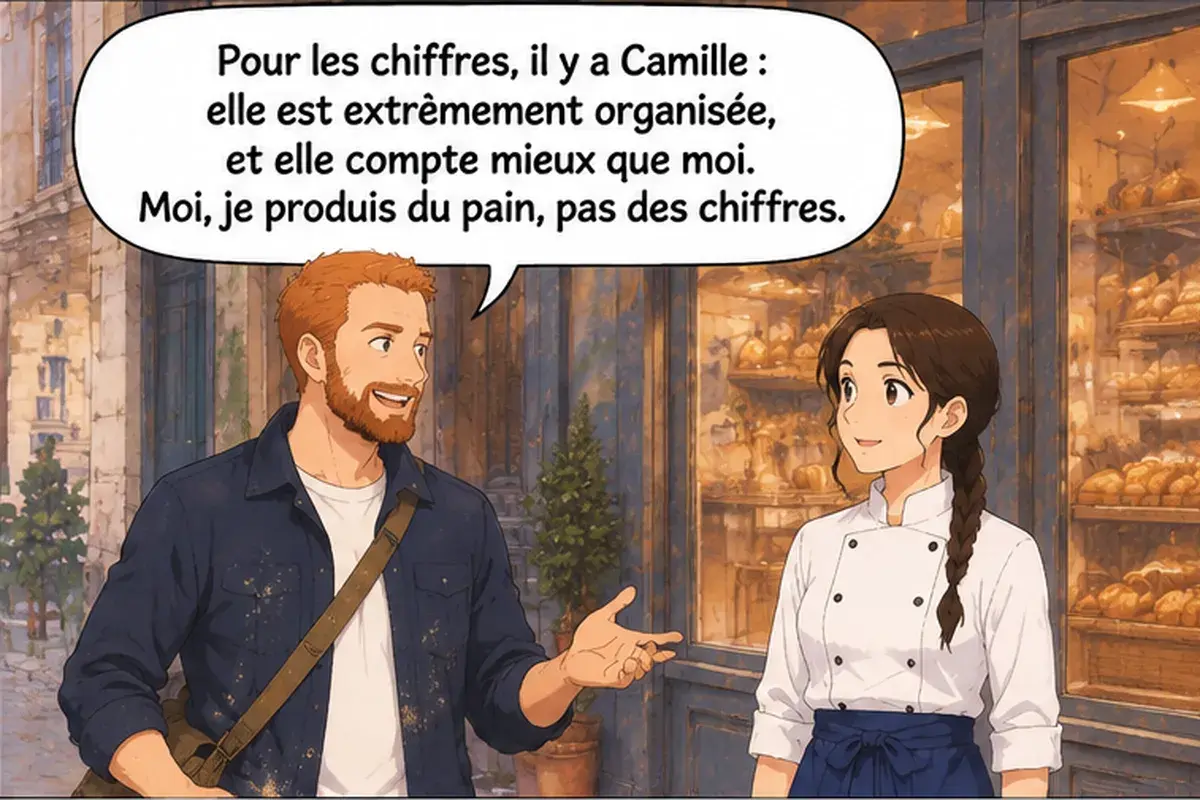
- Hugo
Pour les chiffres, il y a Camille : elle est extrêmement organisée, et elle compte mieux que moi. Moi, je produis du pain, pas des chiffres.
For the numbers, there's Camille: she's extremely organized, and she counts better than I do. Me, I produce bread, not numbers.
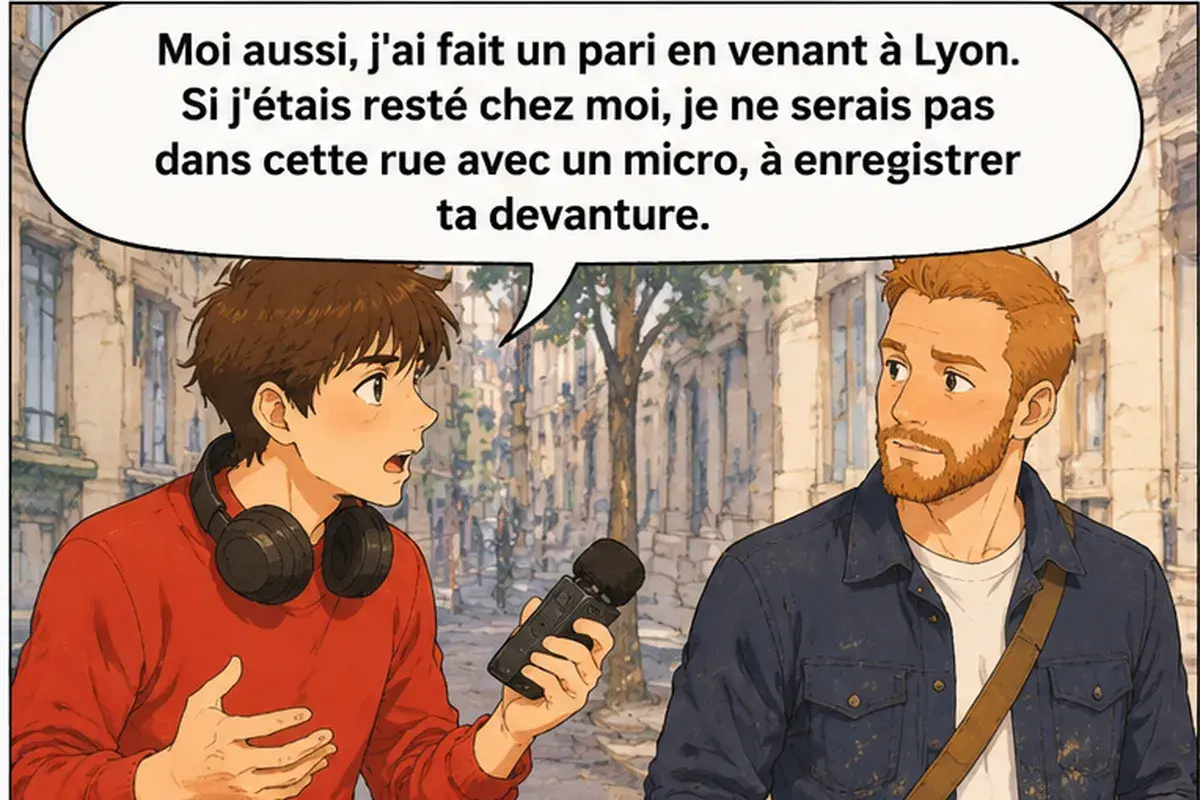
- Pacha
Moi aussi, j'ai fait un pari en venant à Lyon. Si j'étais resté chez moi, je ne serais pas dans cette rue avec un micro, à enregistrer ta devanture.
I made a bet too when I came to Lyon. If I had stayed home, I wouldn't be on this street with a microphone, recording your storefront.
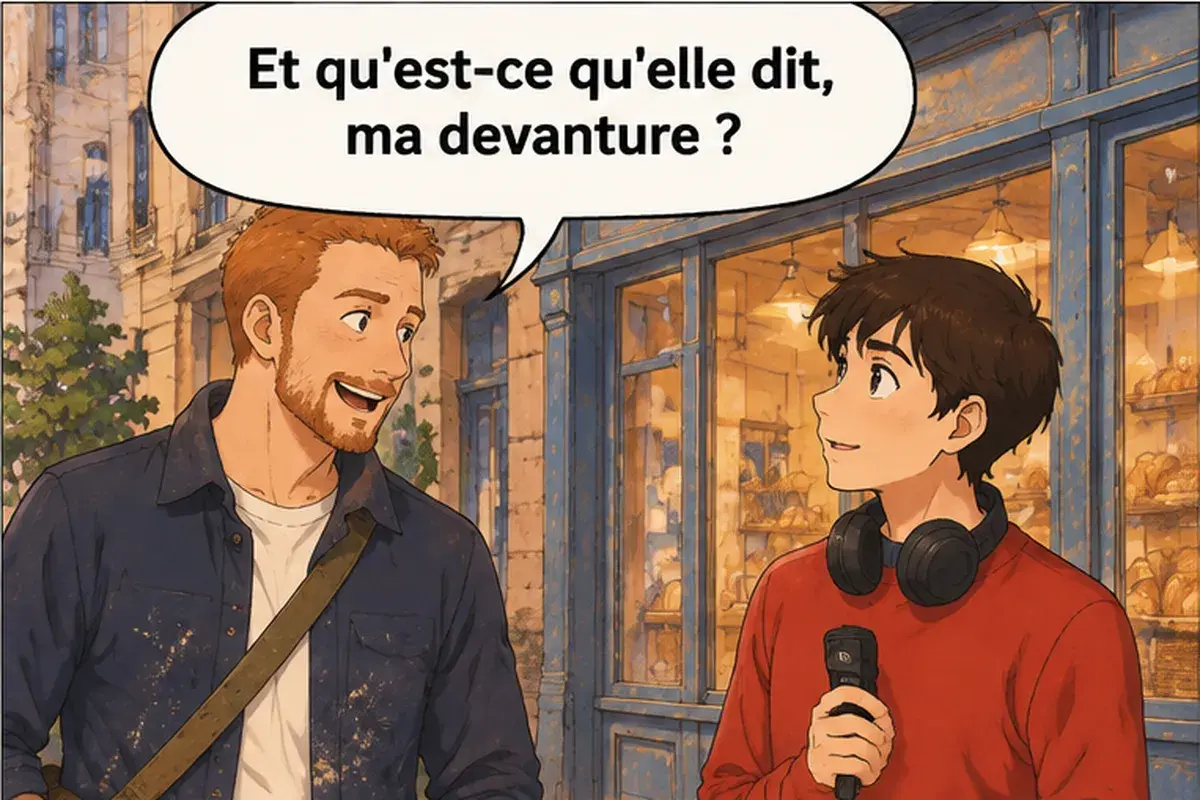
- Hugo
Et qu'est-ce qu'elle dit, ma devanture ?
And what does it say, my storefront?
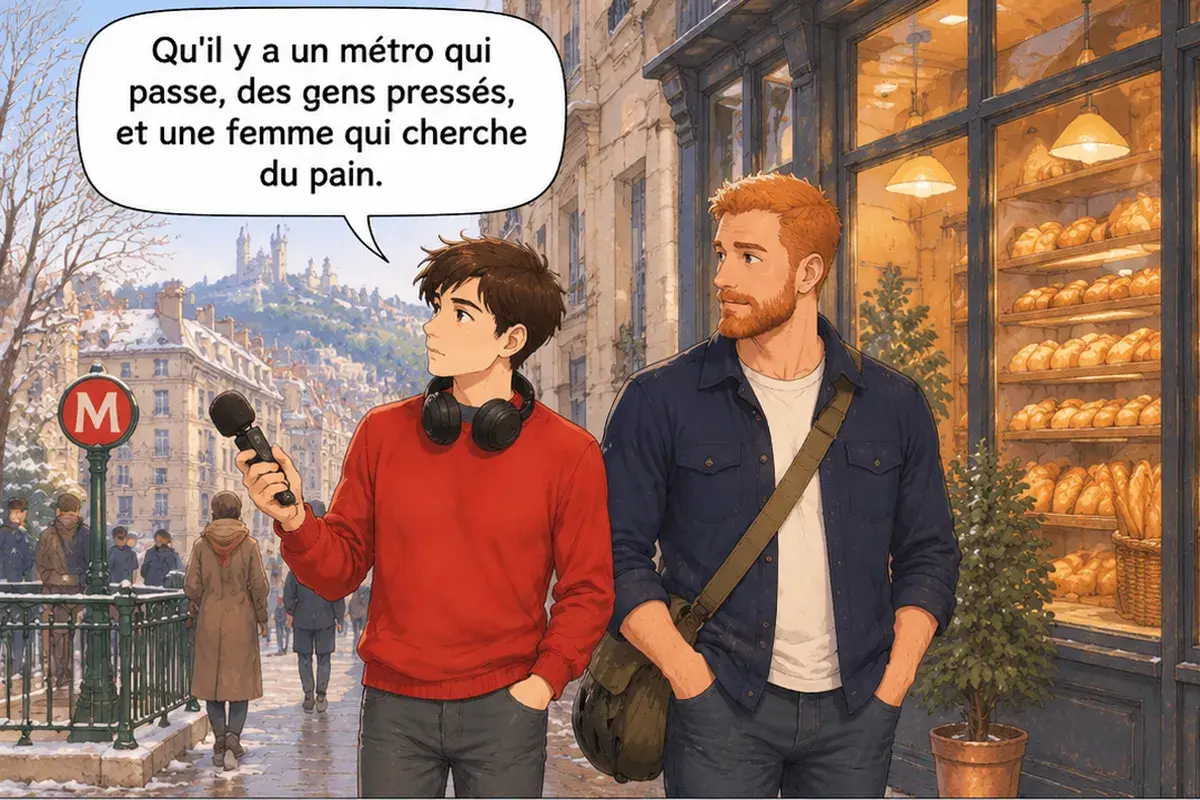
- Pacha
Qu'il y a un métro qui passe, des gens pressés, et une femme qui cherche du pain.
That there's a metro going by, people in a hurry, and a woman looking for bread.
- Hugo
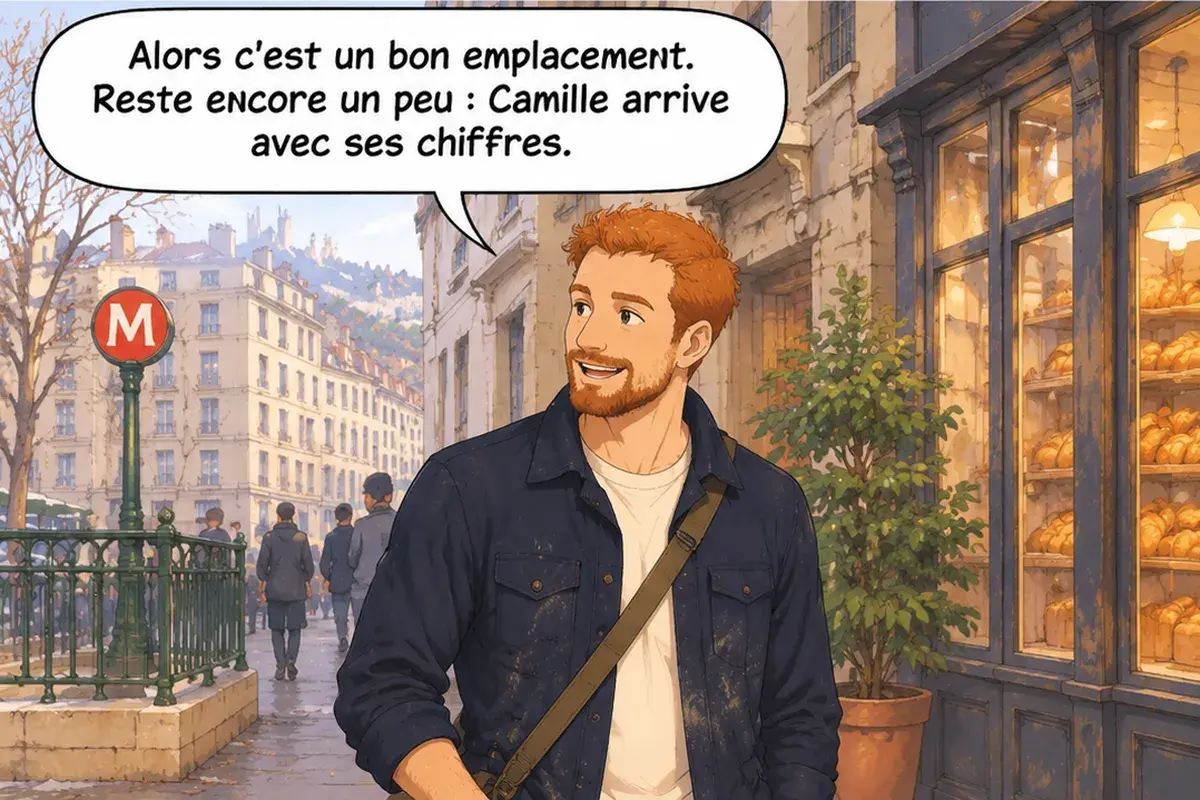
Alors c'est un bon emplacement. Reste encore un peu : Camille arrive avec ses chiffres.
Then it's a good location. Stay a little longer: Camille is coming with her numbers.
Grammar for this text
- Si j'étais resté dans ma tour, je serais directeur aujourd'hui. — If I had stayed in my tower, I would be a director today. The condition is in the past (
j'étais restéis the past perfect ofrester), the result is today (je seraisis the conditional). More in the block on mixed if-sentences. - c'est quasiment un progrès — it's practically progress.
quasimentmeans practically, almost; Hugo jokes with a straight face. - si j'avais su qu'il faudrait financer un four, j'aurais choisi d'être gardien de musée — if I had known I'd have to finance an oven, I would have chosen to be a museum guard.
j'avais suis the past perfect ofsavoir,j'aurais choisiis the past conditional.il faudraitis the future seen from the past: back then it was still ahead (il faudrabecomesil faudrait), just like English will becomes would. - Tu y fabriquerais quoi, du silence ? — What would you make there, silence? Here
ymeans there (in the museum);fabriqueraisis the conditional offabriquer. The joke: a guard makes nothing. - Faute de budget — For lack of budget.
faute deis followed by a noun with no article. - Un pain raté, on le mange ; une faillite, non. — A failed loaf, you can eat; a bankruptcy, you can't.
ratéis the past participle ofrater(to fail);lemeans it (the bread). - Si j'étais resté chez moi, je ne serais pas dans cette rue — If I had stayed home, I wouldn't be on this street. The same mixed case;
ne … pasgoes aroundserais.
Words and grammar of the unit: Talk about what would have happened if.
Learn the words from the texts with flashcards
In the app, you can tap any word in a text to see its translation, forms and examples, and new words stick with flashcards. 15 minutes a day.
Start for freeEverything is open for free. No card needed to sign up.