

French dialogue with translation · B2 · 17 lines
Pourriez-vous m'écrire avant vingt heures ? Could you write to me before eight in the evening? (formal)
Comic · 17 panels

- Aïcha
Tu as une drôle de tête, Pacha. Mauvaise nuit ?
You look off, Pacha. Bad night?
- Pacha
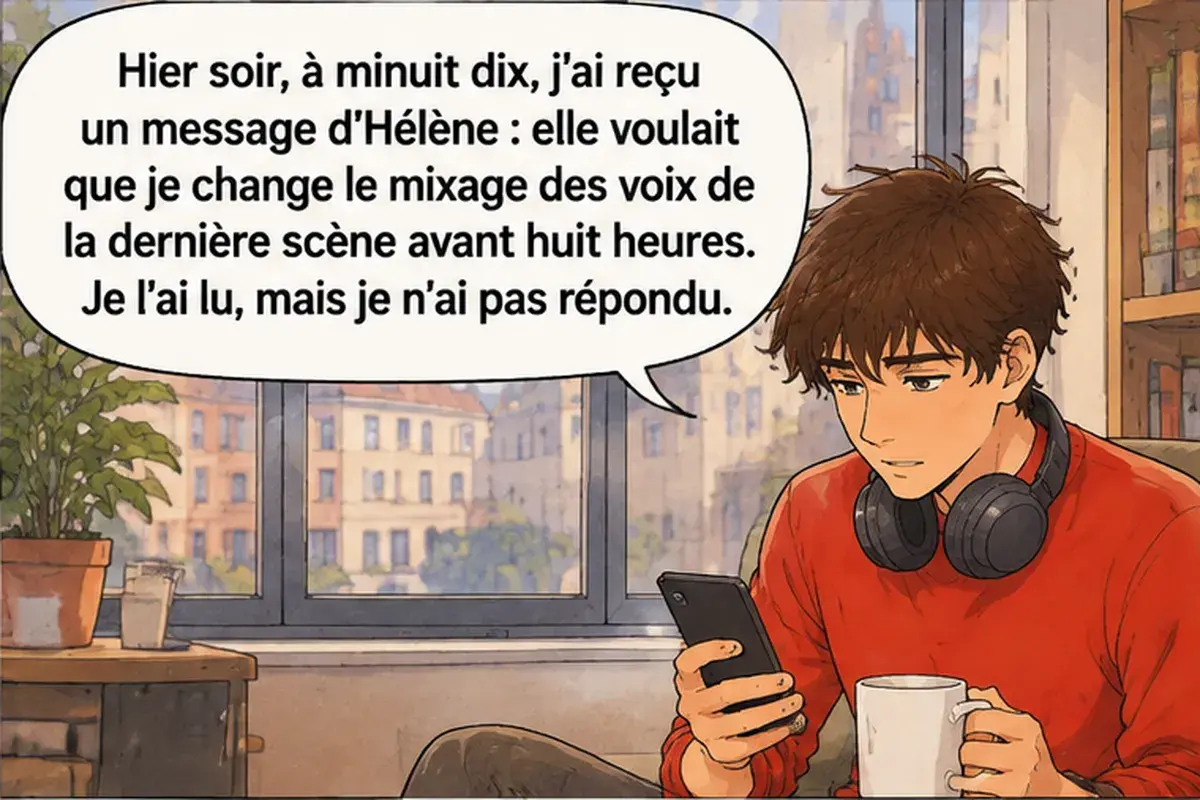
Hier soir, à minuit dix, j'ai reçu un message d'Hélène : elle voulait que je change le mixage des voix de la dernière scène avant huit heures. Je l'ai lu, mais je n'ai pas répondu.
Last night, at ten past midnight, I got a message from Hélène: she wanted me to change the voice mix of the last scene before eight. I read it, but I didn't reply.
- Thomas
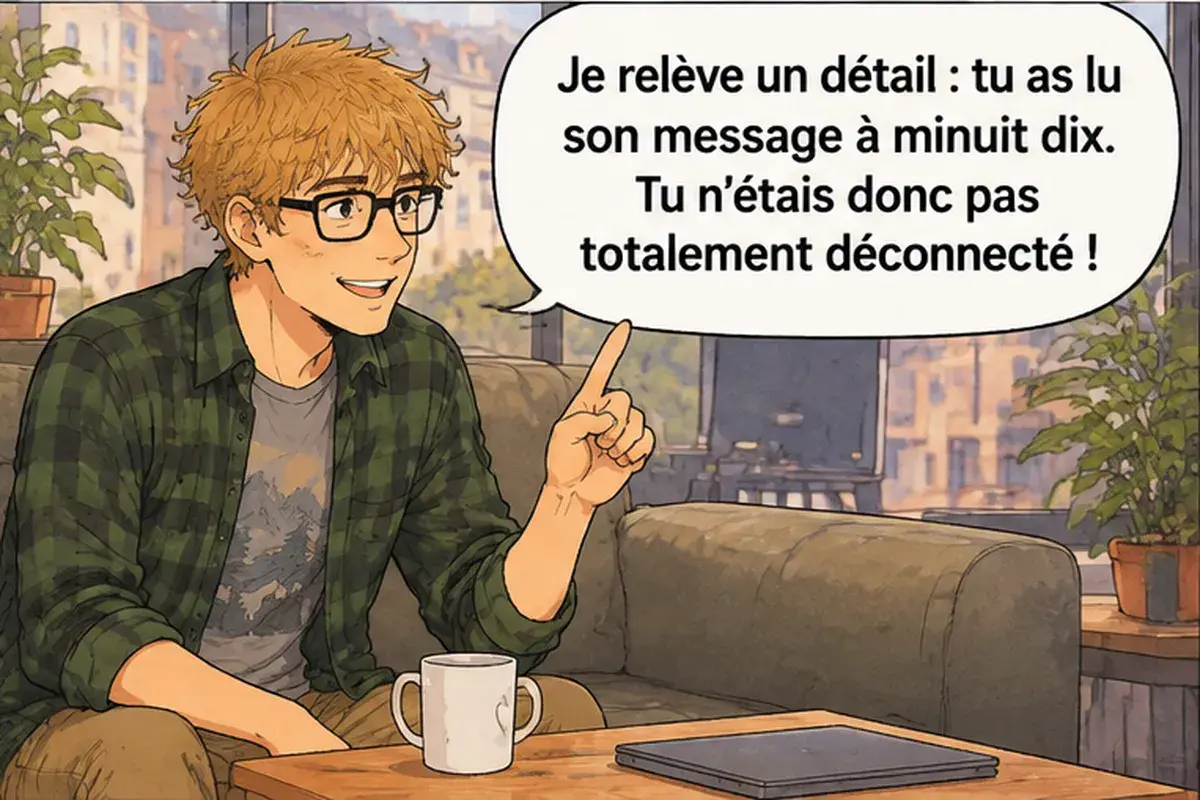
Je relève un détail : tu as lu son message à minuit dix. Tu n'étais donc pas totalement déconnecté !
I notice one detail: you read her message at ten past midnight. So you weren't totally disconnected! (to a man)
- Pacha
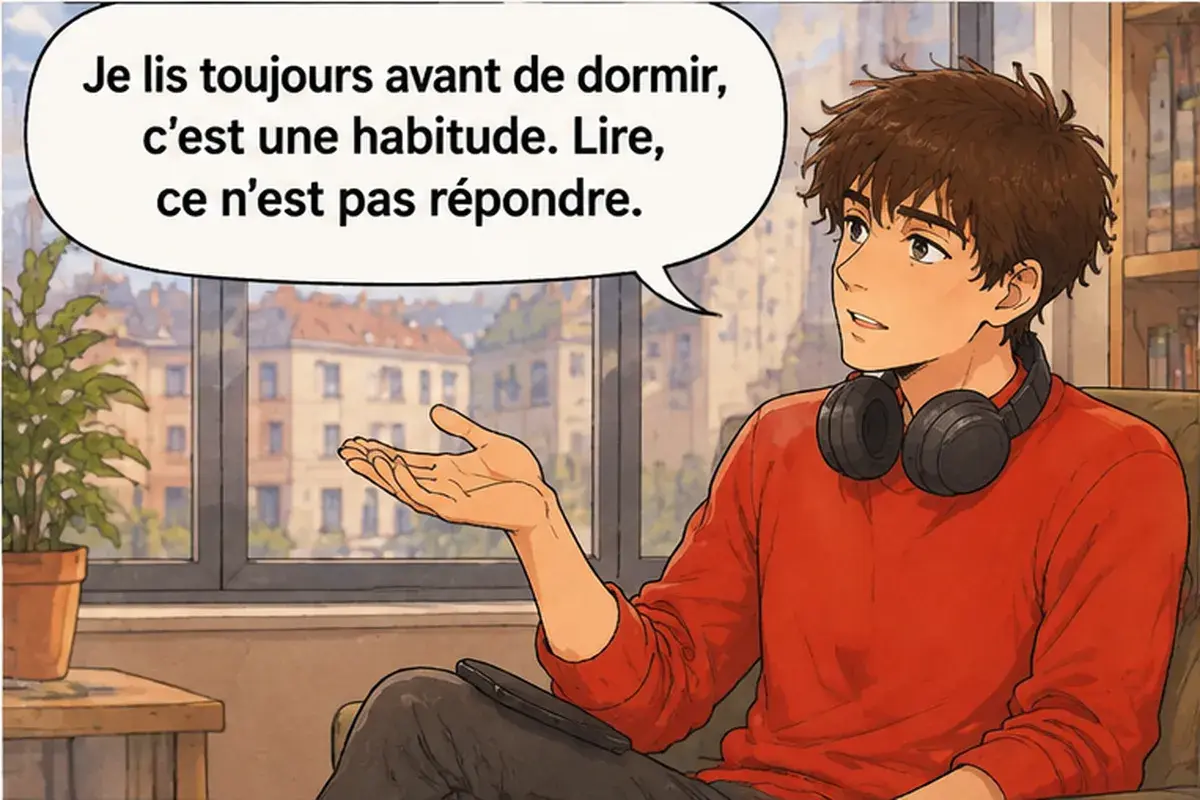
Je lis toujours avant de dormir, c'est une habitude. Lire, ce n'est pas répondre.
I always read before going to sleep, it's a habit. Reading isn't replying.
- Aïcha
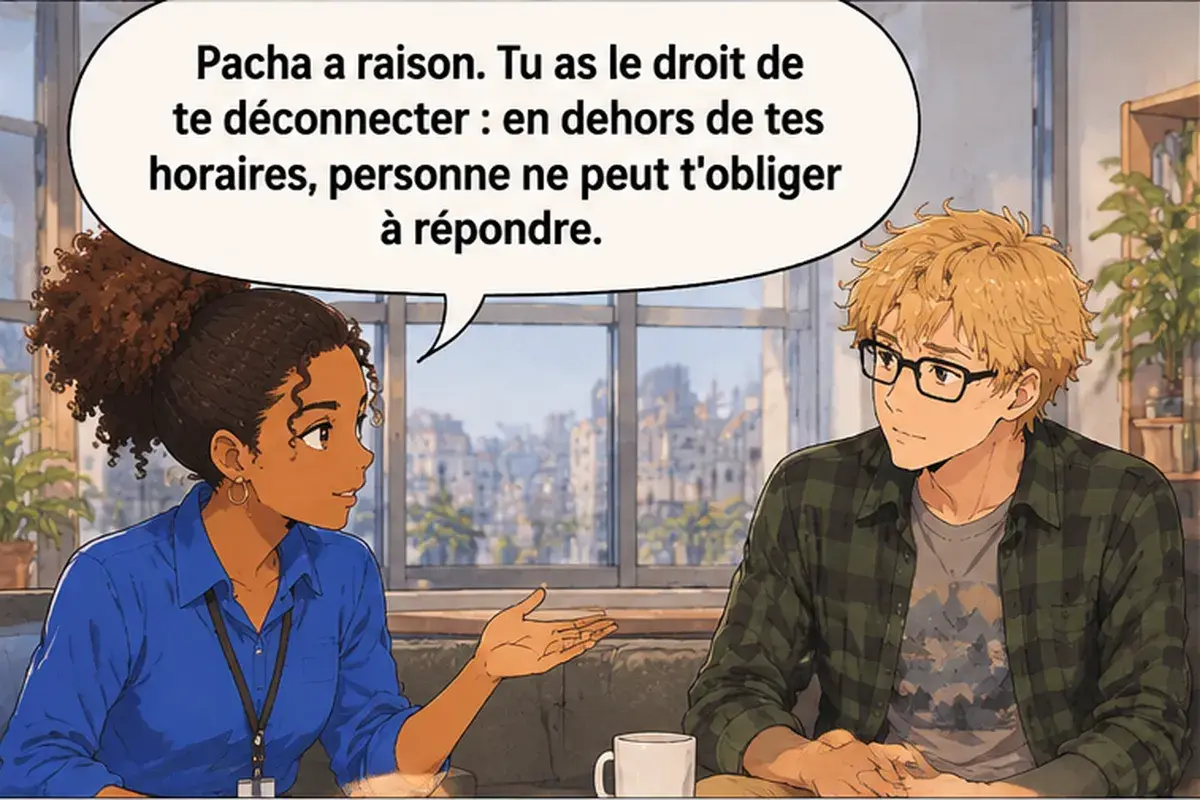
Pacha a raison. Tu as le droit de te déconnecter : en dehors de tes horaires, personne ne peut t'obliger à répondre.
Pacha is right. You have the right to disconnect: outside your hours, no one can force you to reply.

- Thomas
En théorie. En pratique, si tu ne réponds jamais, on parlera de ta disponibilité au prochain bilan.
In theory. In practice, if you never reply, they'll talk about your availability at the next review.
- Aïcha
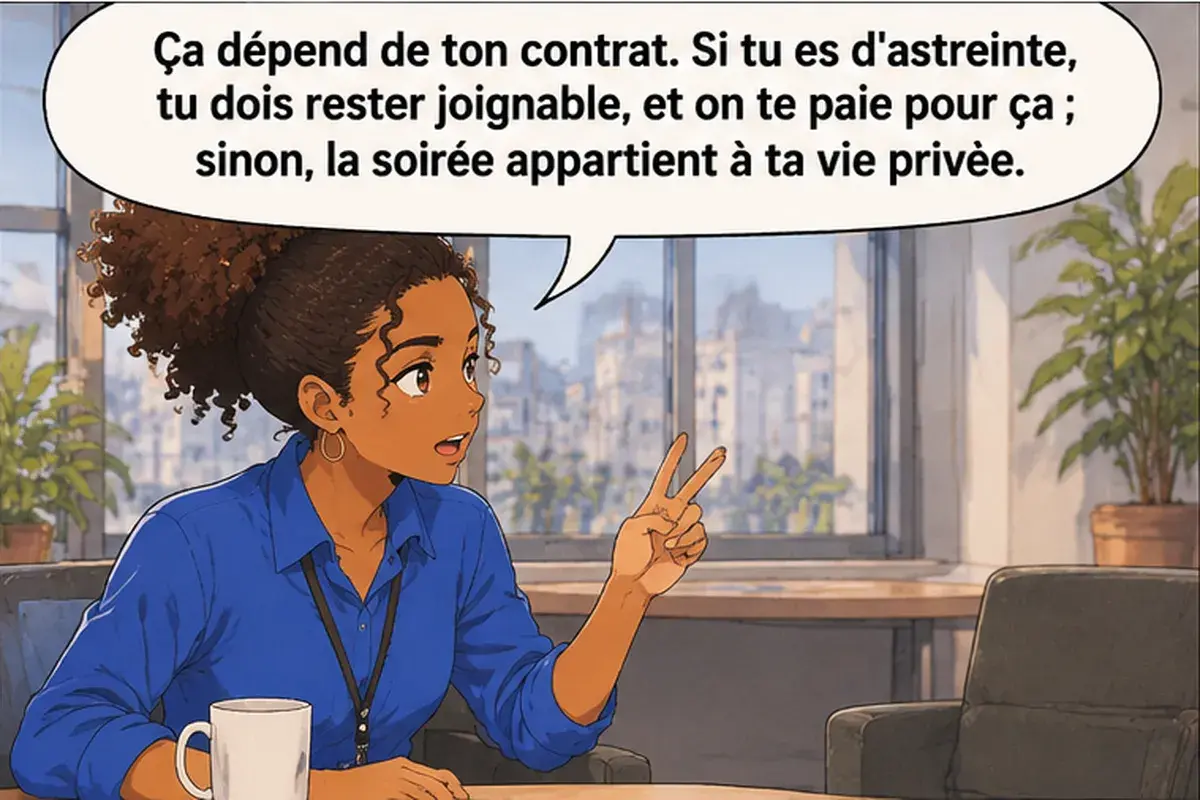
Ça dépend de ton contrat. Si tu es d'astreinte, tu dois rester joignable, et on te paie pour ça ; sinon, la soirée appartient à ta vie privée.
It depends on your contract. If you're on call, you have to stay reachable, and you're paid for it; otherwise, the evening belongs to your private life.
- Pacha
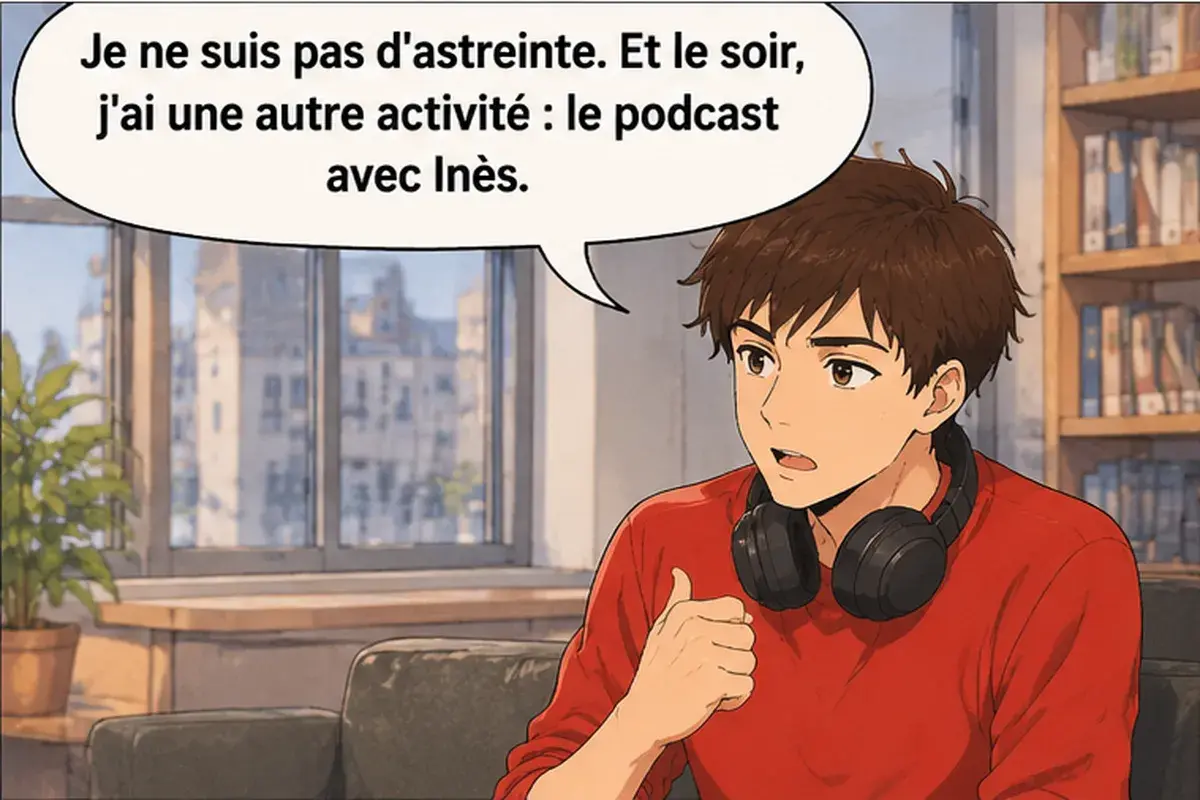
Je ne suis pas d'astreinte. Et le soir, j'ai une autre activité : le podcast avec Inès.
I'm not on call. And in the evening, I have another activity: the podcast with Inès.
- Thomas
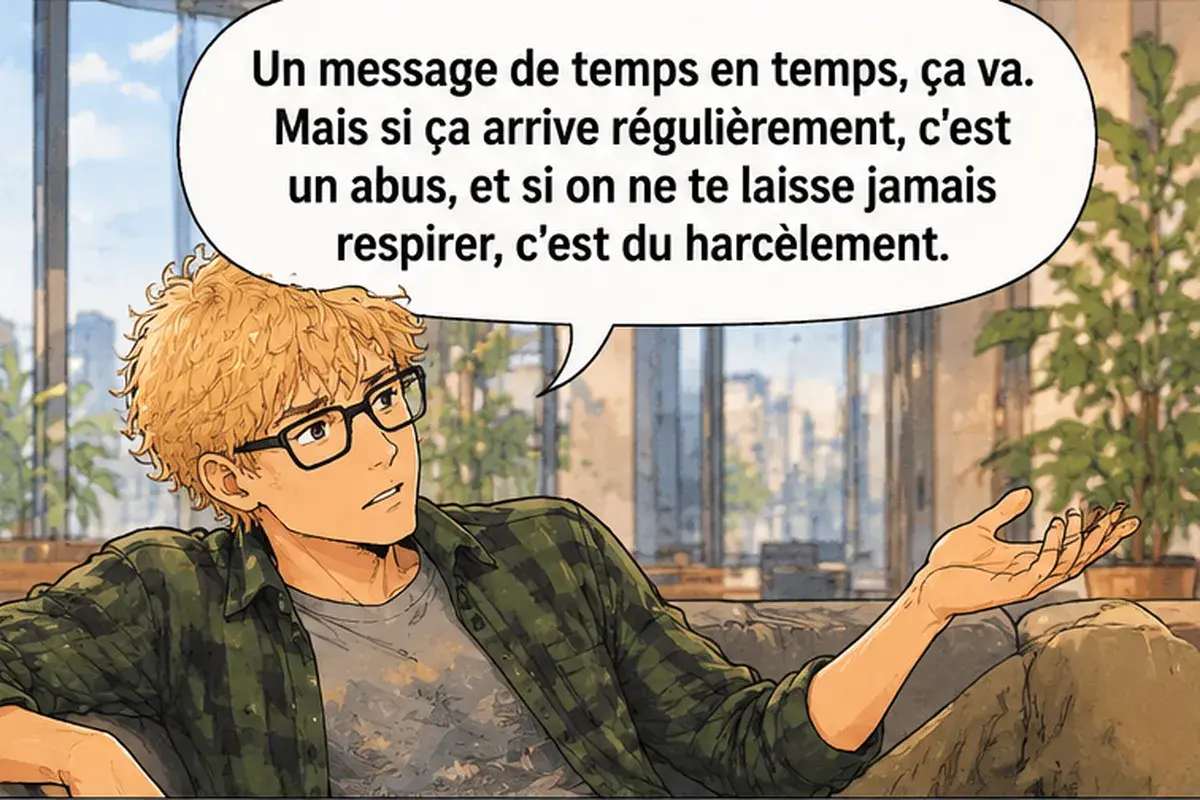
Un message de temps en temps, ça va. Mais si ça arrive régulièrement, c'est un abus, et si on ne te laisse jamais respirer, c'est du harcèlement.
A message now and then is fine. But if it happens regularly, it's an abuse, and if they never let you breathe, it's harassment.
- Aïcha
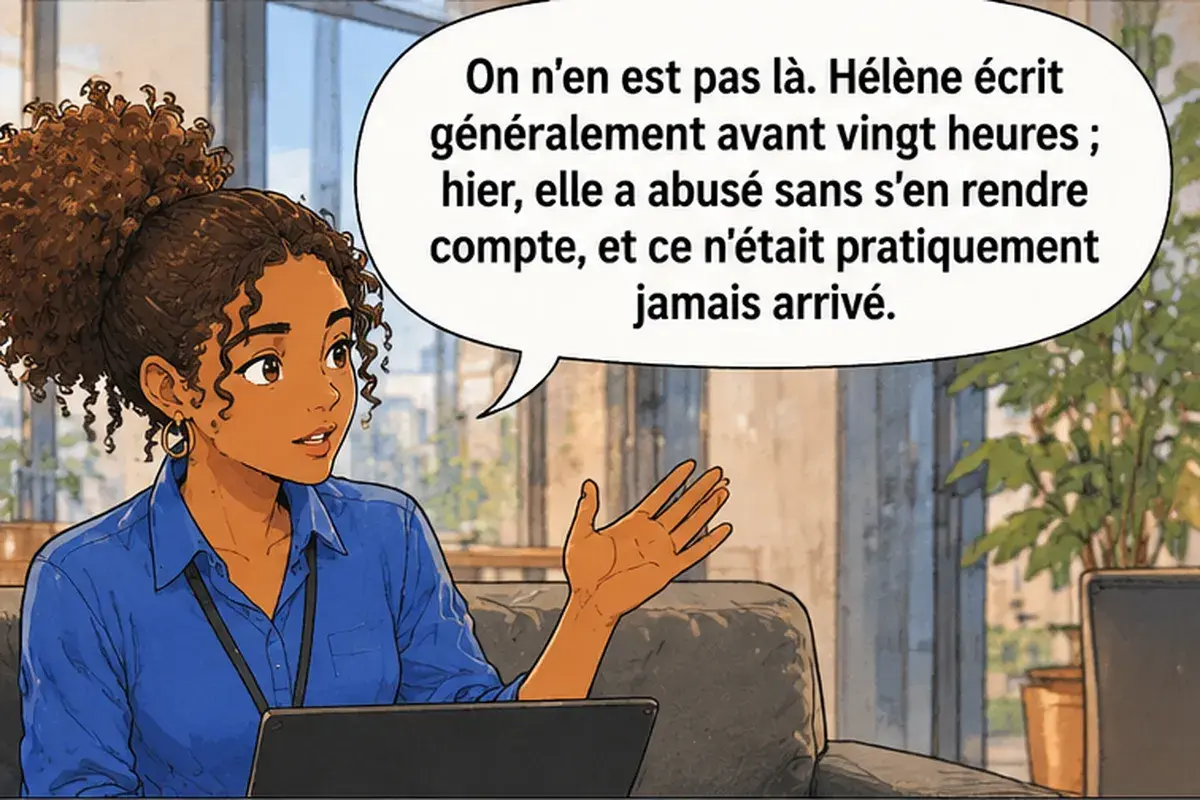
On n'en est pas là. Hélène écrit généralement avant vingt heures ; hier, elle a abusé sans s'en rendre compte, et ce n'était pratiquement jamais arrivé.
We're not there yet. Hélène generally writes before eight in the evening; yesterday, she overstepped without realizing it, and it had practically never happened.

- Pacha
Alors je lui dis quoi ? Je n'ai pas envie de dire « vous abusez » à ma cheffe.
So what do I say to her? I don't feel like saying "you're overstepping" (formal) to my boss.
- Thomas
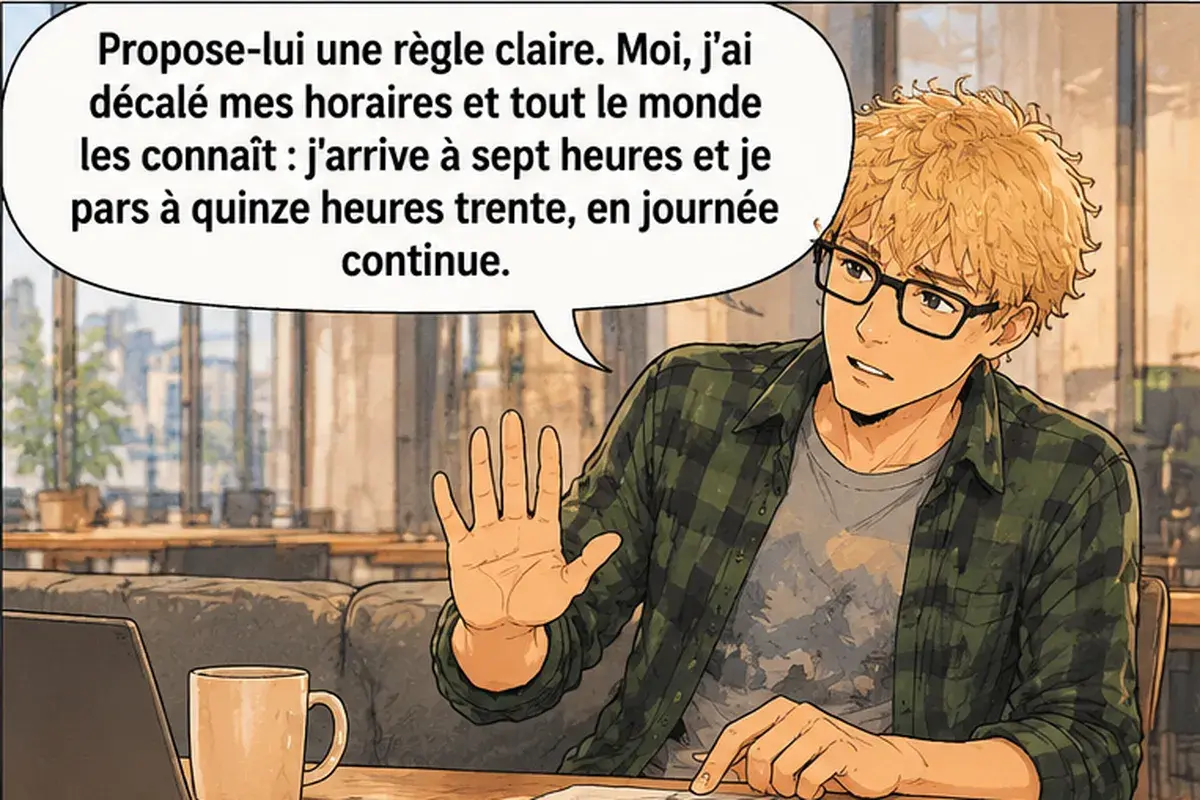
Propose-lui une règle claire. Moi, j'ai décalé mes horaires et tout le monde les connaît : j'arrive à sept heures et je pars à quinze heures trente, en journée continue.
Suggest a clear rule to her. Me, I shifted my hours and everyone knows them: I arrive at seven and I leave at three thirty, on a continuous workday.
- Aïcha
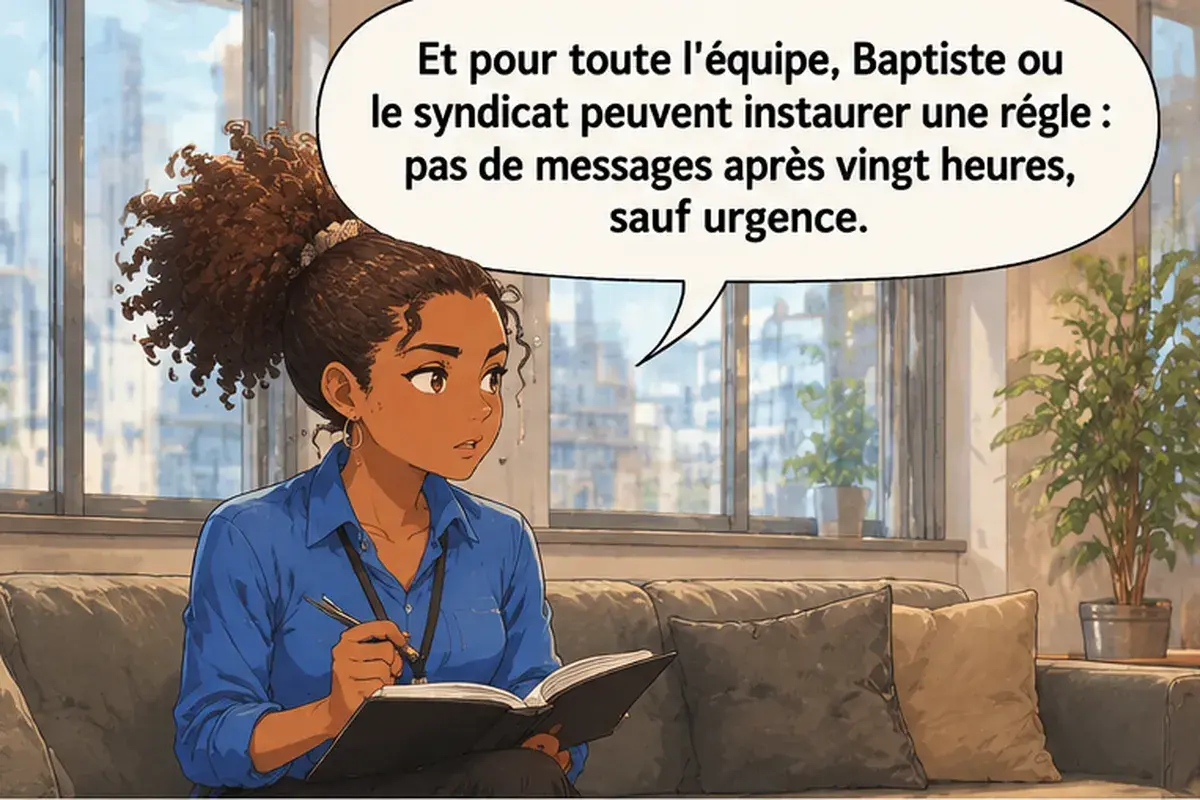
Et pour toute l'équipe, Baptiste ou le syndicat peuvent instaurer une règle : pas de messages après vingt heures, sauf urgence.
And for the whole team, Baptiste or the union can introduce a rule: no messages after eight in the evening, except in an emergency.
- Thomas
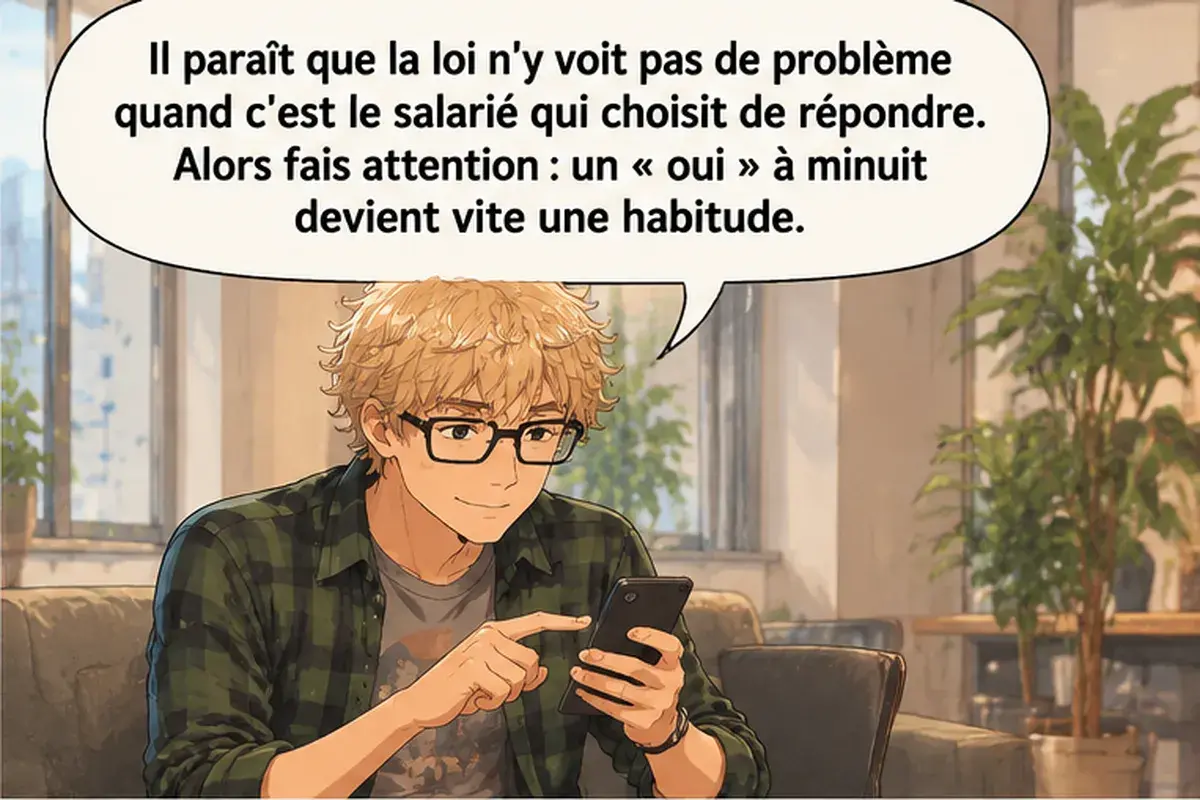
Il paraît que la loi n'y voit pas de problème quand c'est le salarié qui choisit de répondre. Alors fais attention : un « oui » à minuit devient vite une habitude.
I hear the law doesn't see a problem when the employee is the one who chooses to reply. So be careful: a "yes" at midnight quickly becomes a habit.
- Pacha
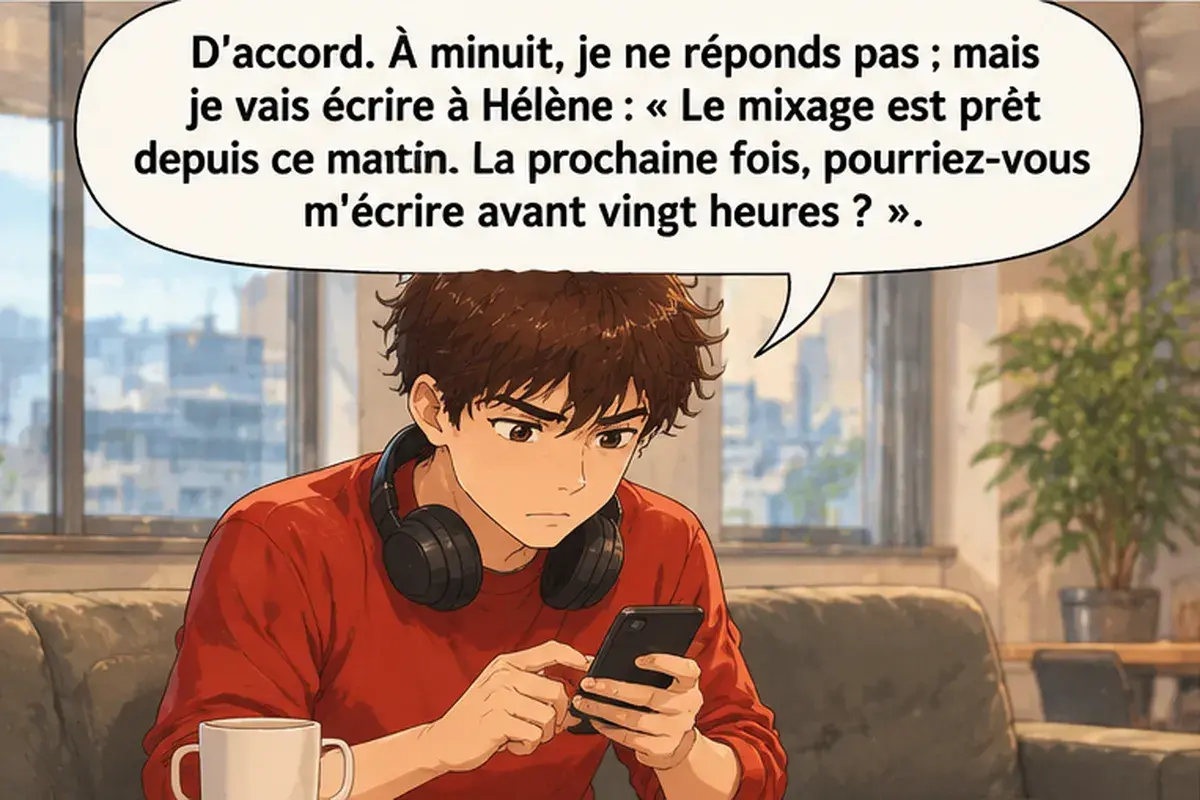
D'accord. À minuit, je ne réponds pas ; mais je vais écrire à Hélène : « Le mixage est prêt depuis ce matin. La prochaine fois, pourriez-vous m'écrire avant vingt heures ? »
OK. At midnight, I don't reply; but I'm going to write to Hélène: "The mix has been ready since this morning. Next time, could you write to me before eight in the evening?" (formal)

- Thomas
Elle va te répondre à minuit dix pour te dire merci.
She'll reply to you at ten past midnight to say thank you.

- Aïcha
Dans ce cas, tu ne réponds pas : tu lui dis merci demain matin.
In that case, you don't reply: you say thank you to her tomorrow morning.
Grammar for this text
- Tu as une drôle de tête — You look off. It is casual speech.
- elle voulait que je change — she wanted me to change.
vouloir que+ subjunctive; with -er verbs it sounds just like the present tense. - Je relève un détail — I notice one detail. Here
relevermeans "to notice". - te déconnecter — to disconnect.
se déconnectermeans "to switch off from work contact": the right not to reply outside working hours. - d'astreinte — on call.
être d'astreintemeans "to be on call and reachable": you are paid for it. - s'en rendre compte — to realize it.
enstands for "about it". - un abus, du harcèlement — an abuse, harassment. The second word is strong: it is about pressure that keeps repeating.
- Il paraît que la loi n'y voit pas de problème — I hear the law doesn't see a problem.
il paraît quemeans "I hear that" (unit 8). - en journée continue — on a continuous workday, without a long lunch break.
décalémeans "shifted". - pourriez-vous m'écrire — could you write to me. It is the polite conditional (B1, unit 3): this is how you gently ask your boss.
Words and grammar of the unit: Stand up for your time.
Learn the words from the texts with flashcards
In the app, you can tap any word in a text to see its translation, forms and examples, and new words stick with flashcards. 15 minutes a day.
Start for freeEverything is open for free. No card needed to sign up.