

French dialogue with translation · B2 · 18 lines
Et si on se trompe quand même ? And what if we're wrong anyway?
Comic · 18 panels
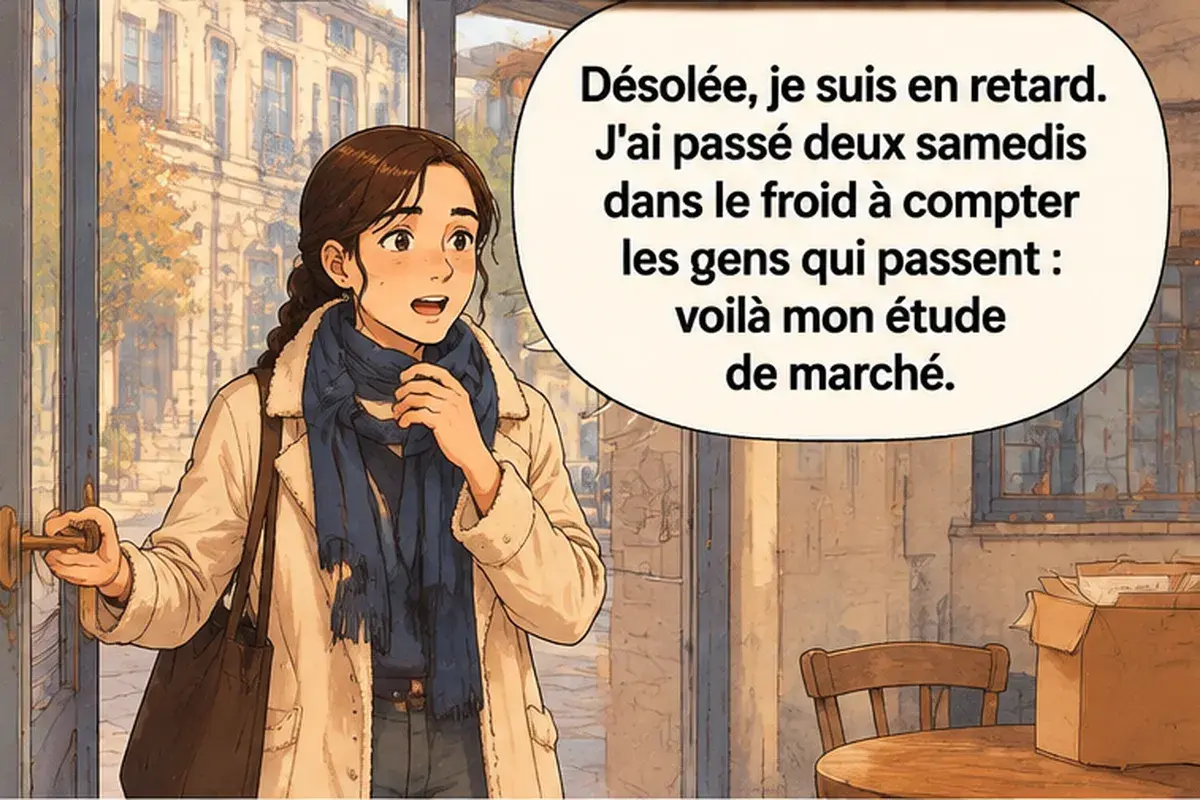
- Camille
Désolée, je suis en retard. J'ai passé deux samedis dans le froid à compter les gens qui passent : voilà mon étude de marché.
Sorry, I'm late (woman speaking). I spent two Saturdays out in the cold counting the people walking by: here's my market study.
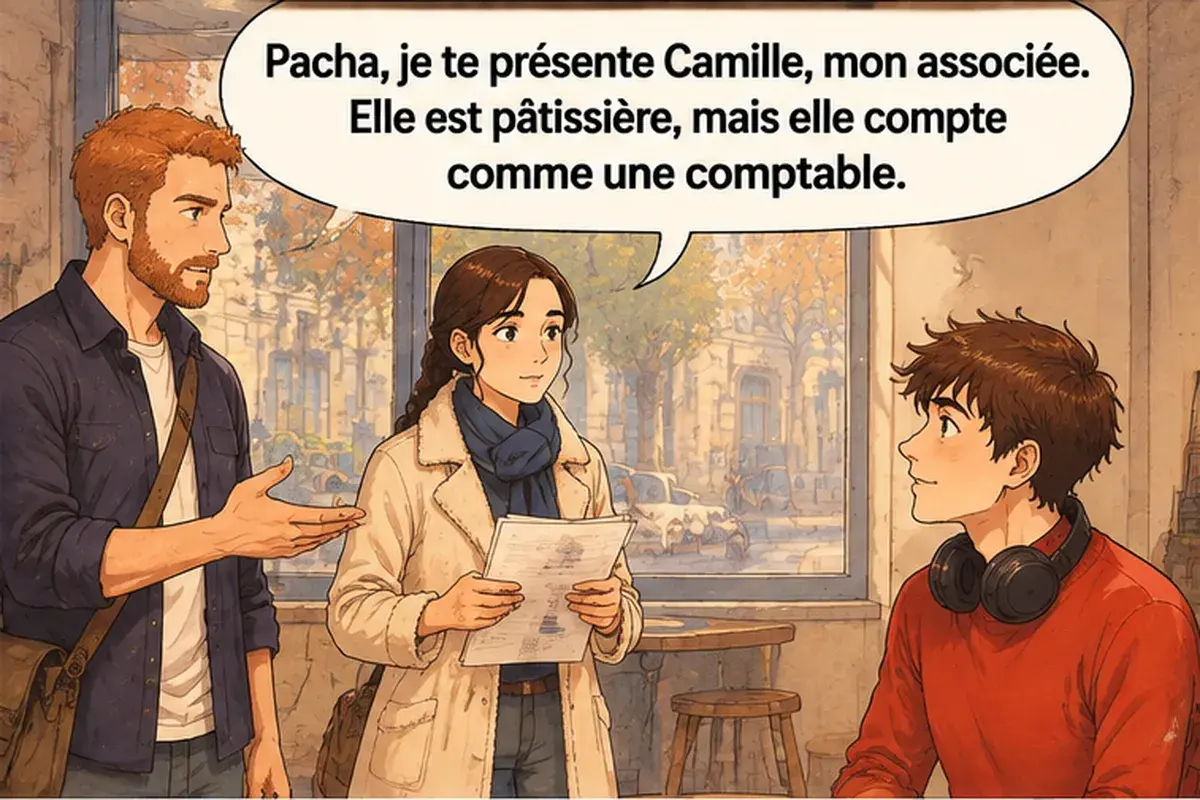
- Hugo
Pacha, je te présente Camille, mon associée. Elle est pâtissière, mais elle compte comme une comptable.
Pacha, this is Camille, my business partner. She's a pastry chef, but she counts like an accountant.
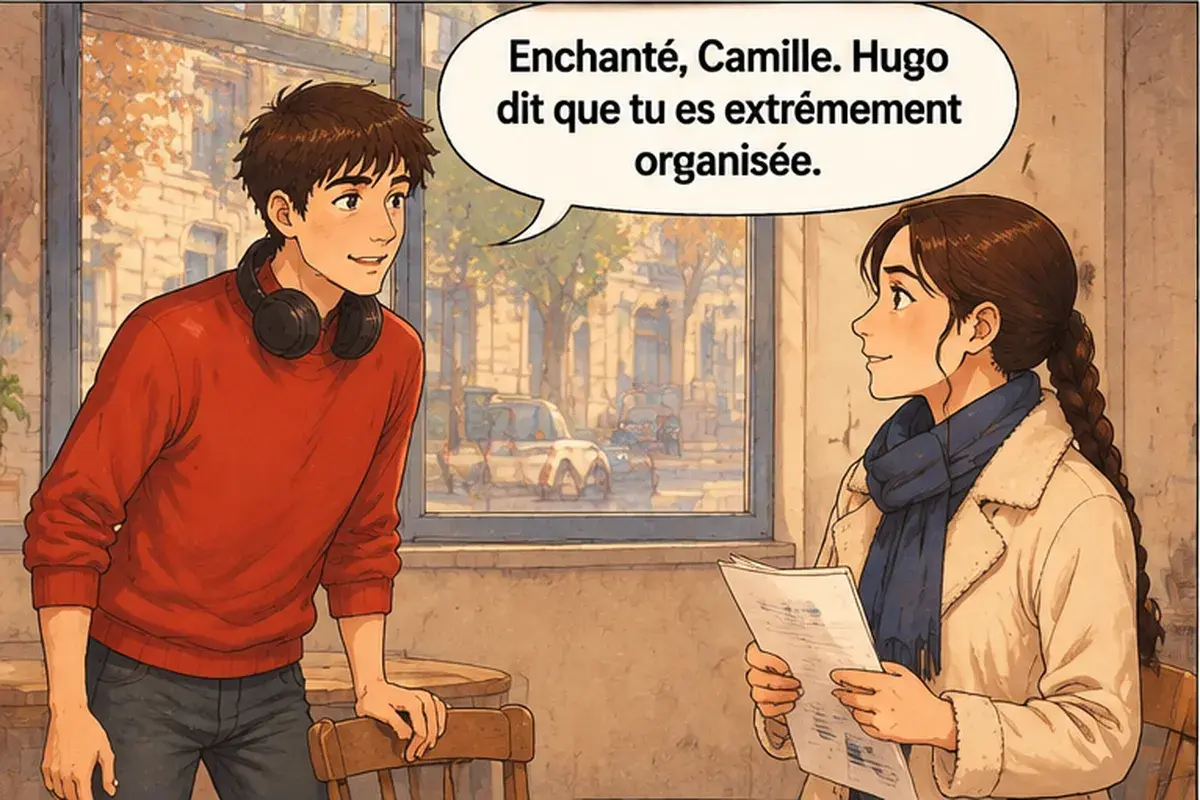
- Pacha
Enchanté, Camille. Hugo dit que tu es extrêmement organisée.
Nice to meet you, Camille (man speaking). Hugo says you're extremely organized (to a woman).
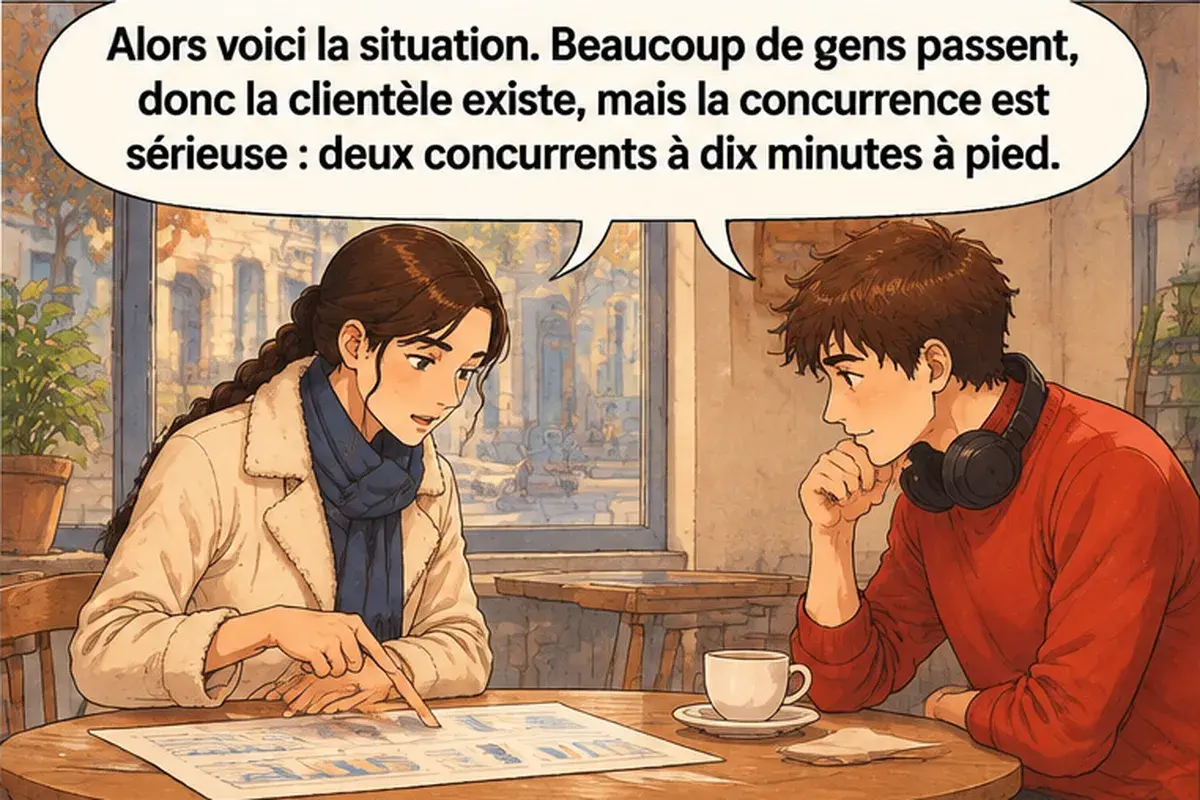
- Camille
Alors voici la situation. Beaucoup de gens passent, donc la clientèle existe, mais la concurrence est sérieuse : deux concurrents à dix minutes à pied.
So here's the situation. Lots of people walk by, so the customer base exists, but the competition is serious: two competitors ten minutes away on foot.
- Hugo
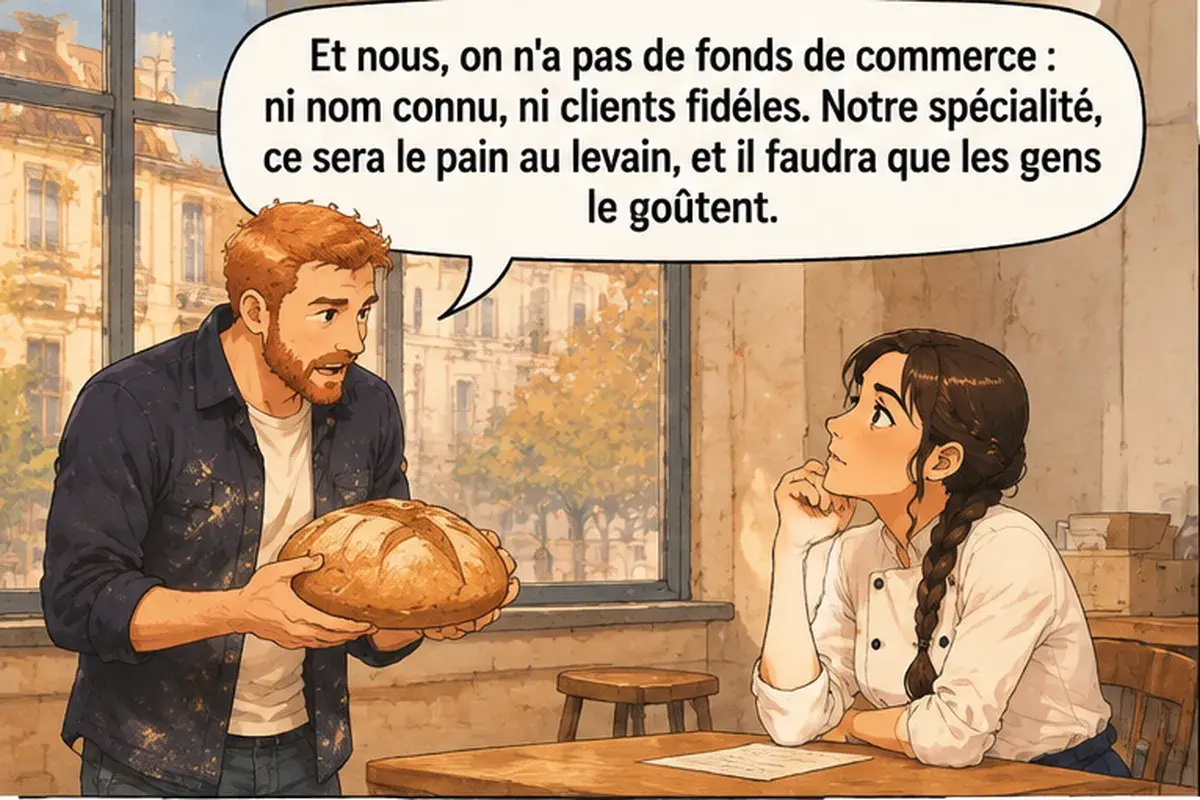
Et nous, on n'a pas de fonds de commerce : ni nom connu, ni clients fidèles. Notre spécialité, ce sera le pain au levain, et il faudra que les gens le goûtent.
And we don't have an established business: no known name, no loyal customers. Our specialty will be sourdough bread, and people will have to taste it.
- Camille
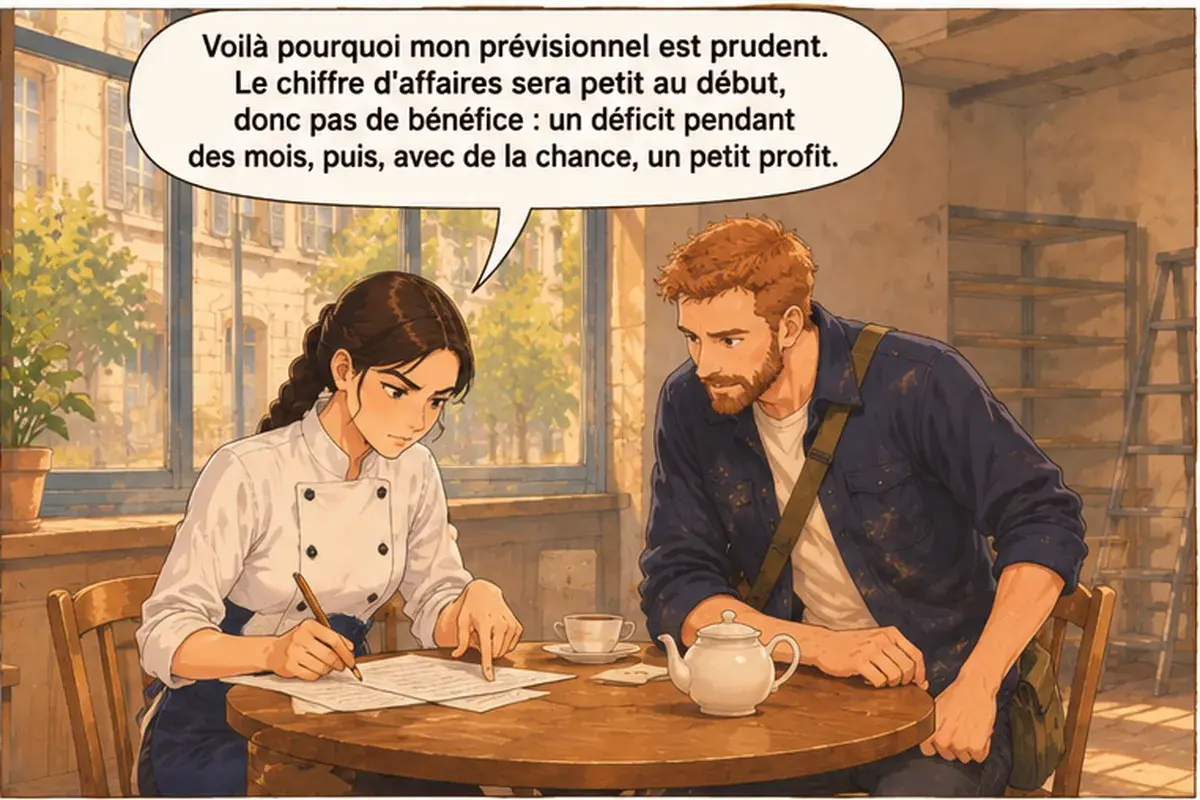
Voilà pourquoi mon prévisionnel est prudent. Le chiffre d'affaires sera petit au début, donc pas de bénéfice : un déficit pendant des mois, puis, avec de la chance, un petit profit.
That's why my forecast is cautious. Revenue will be small at the beginning, so no profit: a deficit for months, then, with luck, a small profit.
- Pacha
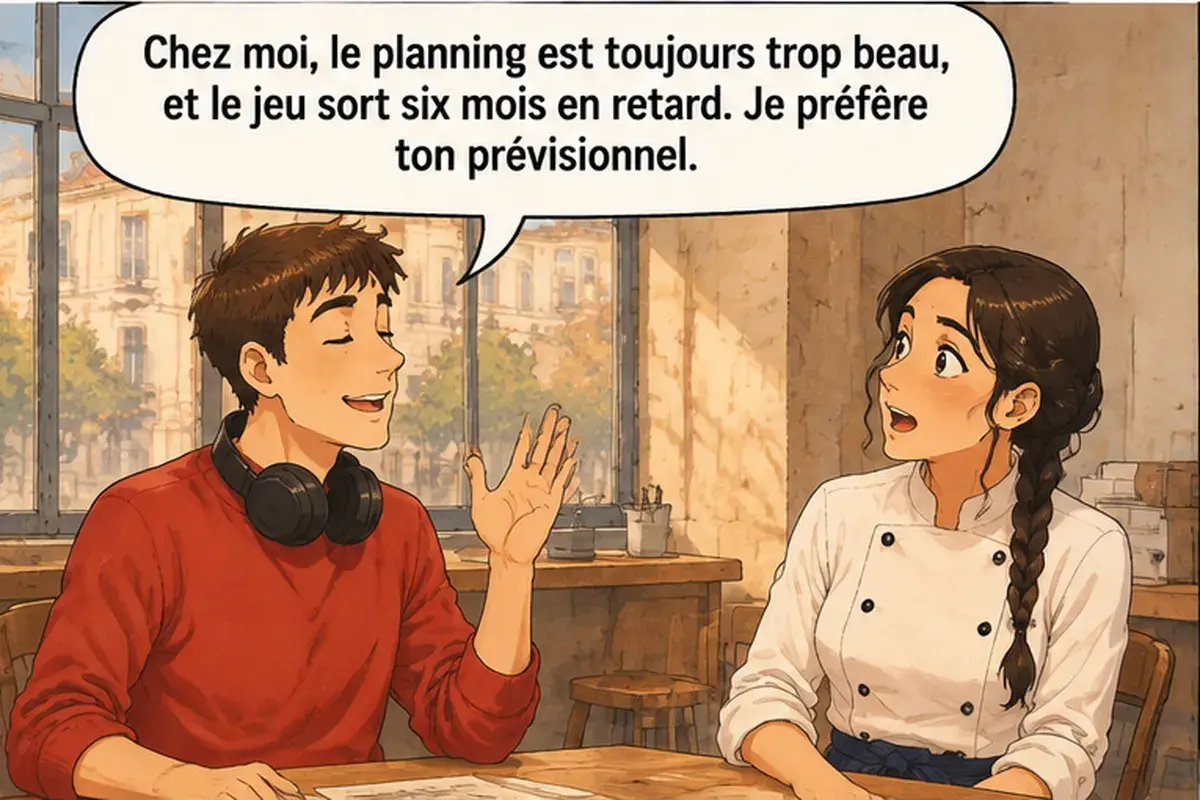
Chez moi, le planning est toujours trop beau, et le jeu sort six mois en retard. Je préfère ton prévisionnel.
Where I work, the schedule is always too rosy, and the game comes out six months late. I prefer your forecast.
- Camille
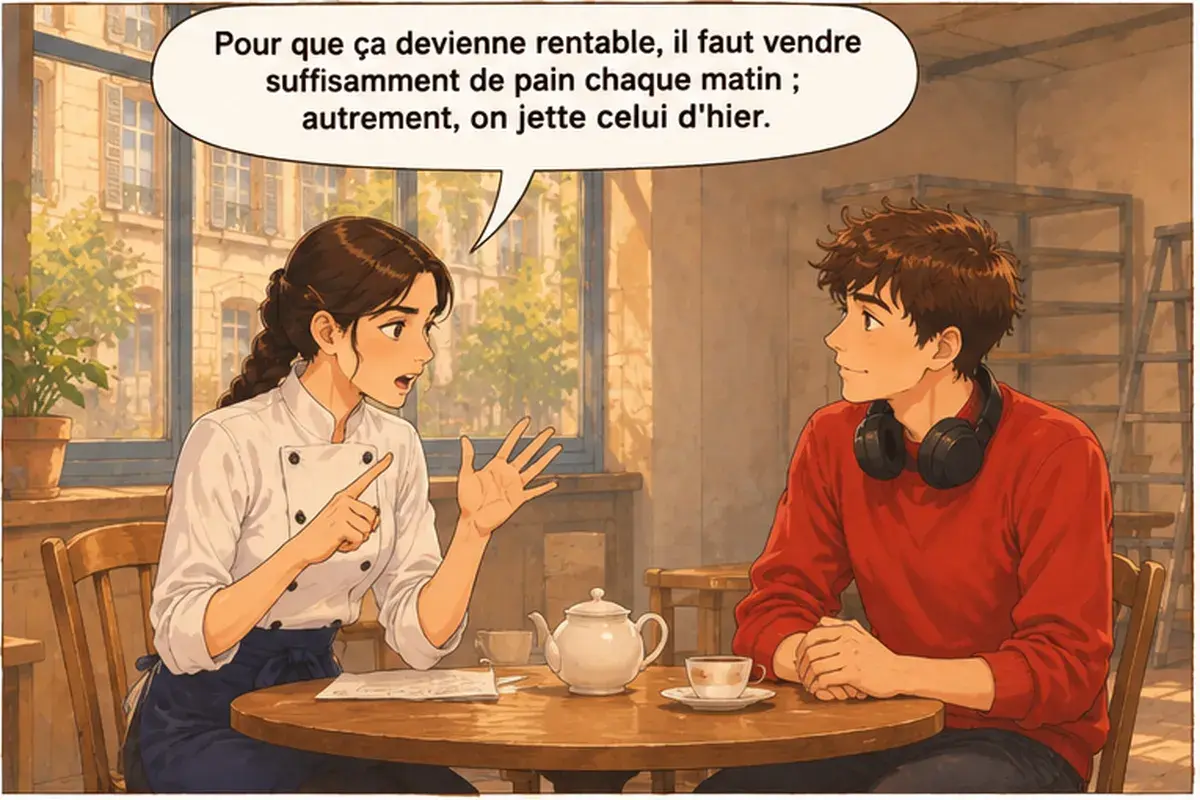
Pour que ça devienne rentable, il faut vendre suffisamment de pain chaque matin ; autrement, on jette celui d'hier.
For this to become profitable, you have to sell enough bread every morning; otherwise, we throw out yesterday's.
- Hugo
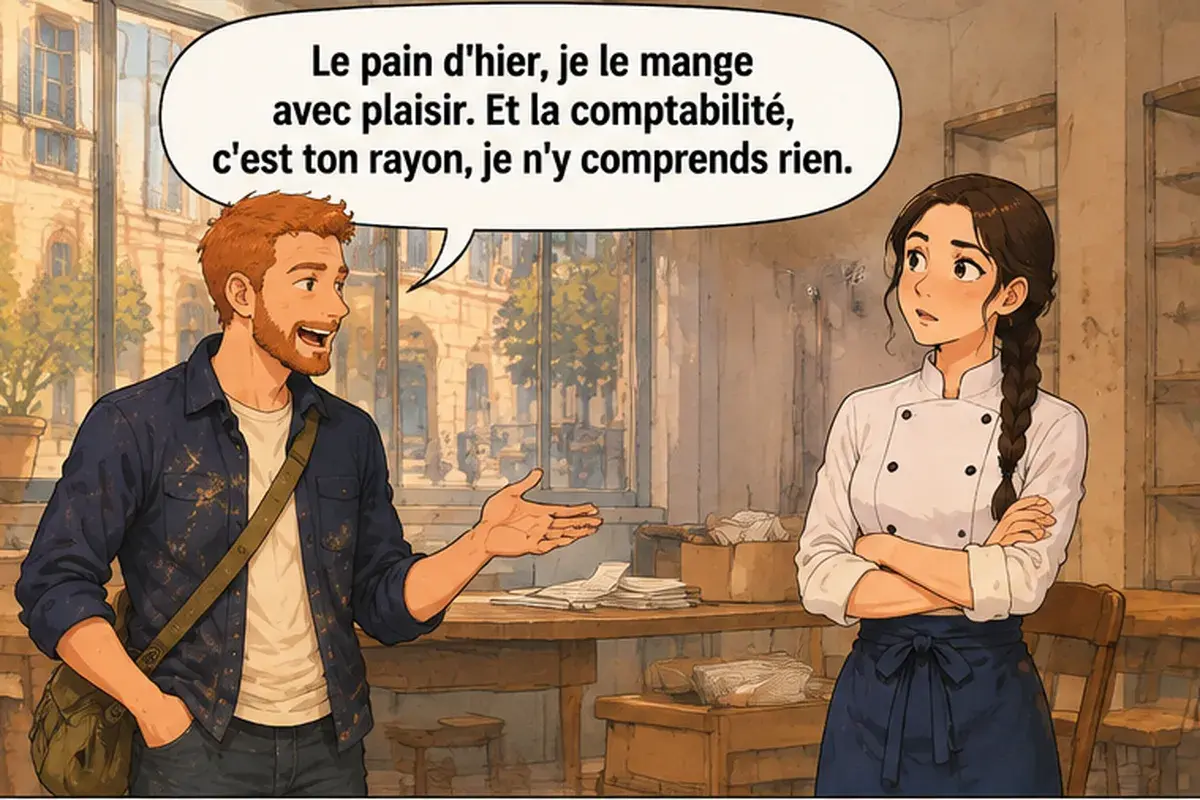
Le pain d'hier, je le mange avec plaisir. Et la comptabilité, c'est ton rayon, je n'y comprends rien.
Yesterday's bread, I eat it with pleasure. And accounting is your department, I don't understand any of it.
- Camille
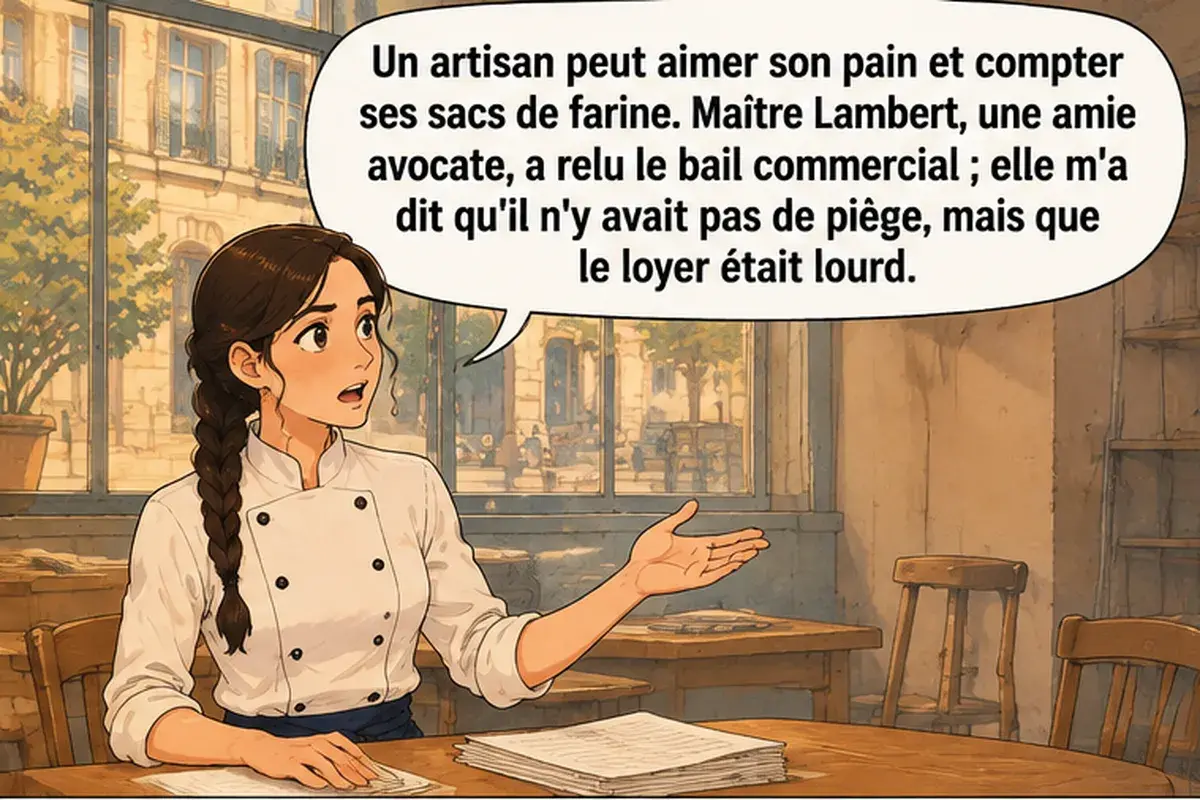
Un artisan peut aimer son pain et compter ses sacs de farine. Maître Lambert, une amie avocate, a relu le bail commercial ; elle m'a dit qu'il n'y avait pas de piège, mais que le loyer était lourd.
An artisan can love their bread and count their sacks of flour. Maître Lambert, a lawyer and a friend, reread the commercial lease; she told me there was no trap, but that the rent was high.
- Pacha
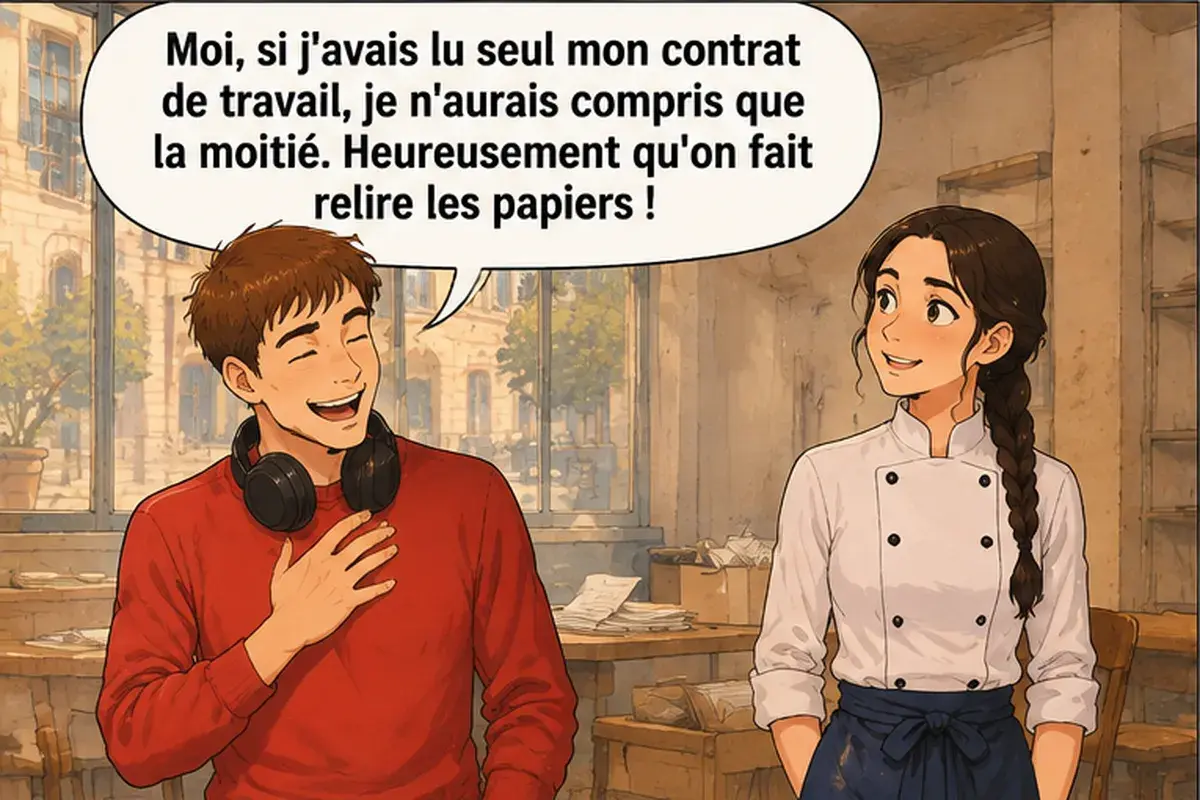
Moi, si j'avais lu seul mon contrat de travail, je n'aurais compris que la moitié. Heureusement qu'on fait relire les papiers !
Me, if I had read my employment contract alone, I would have understood only half. Good thing we have someone reread the papers!

- Camille
Et cette rue ? Si on avait pris la rue d'à côté, le loyer aurait été moins lourd, mais personne ne serait passé devant la porte.
And this street? If we had taken the street next door, the rent would have been lower, but no one would have walked past the door.
- Hugo
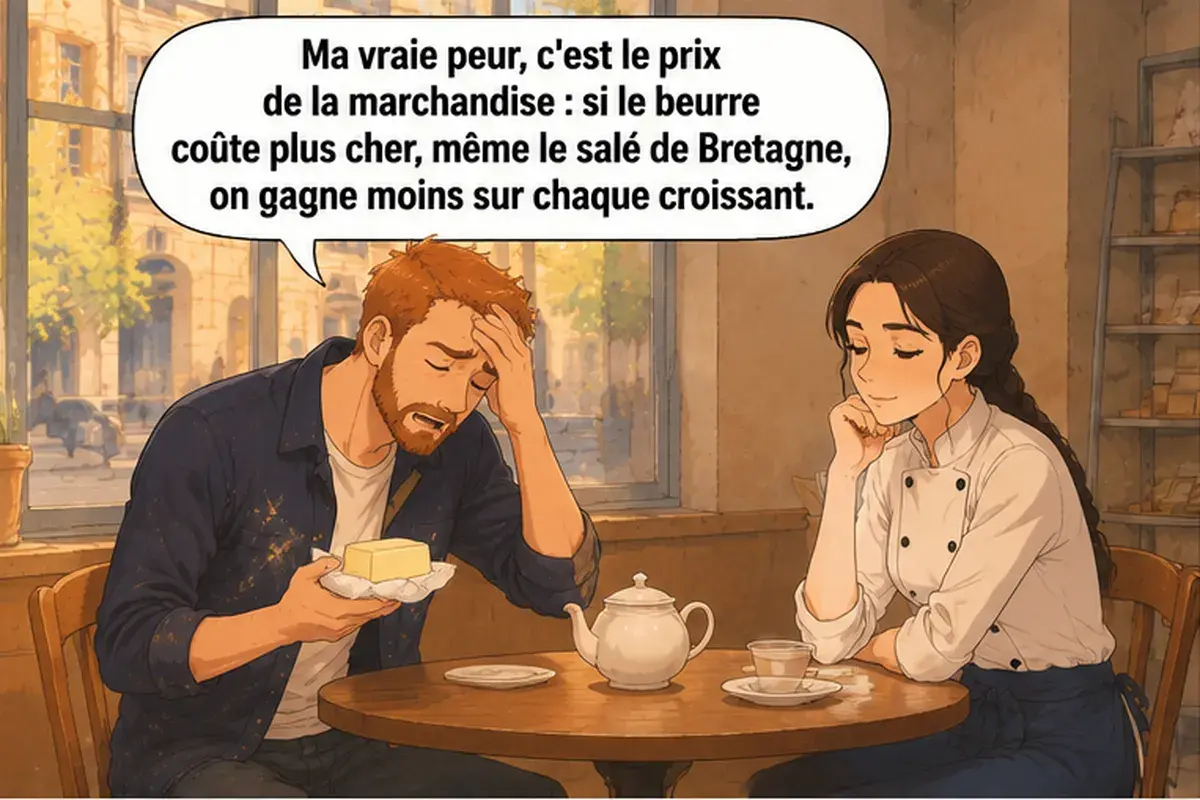
Ma vraie peur, c'est le prix de la marchandise : si le beurre coûte plus cher, même le salé de Bretagne, on gagne moins sur chaque croissant.
My real fear is the price of the goods: if butter costs more, even the salted kind from Brittany, we earn less on each croissant.
- Pacha
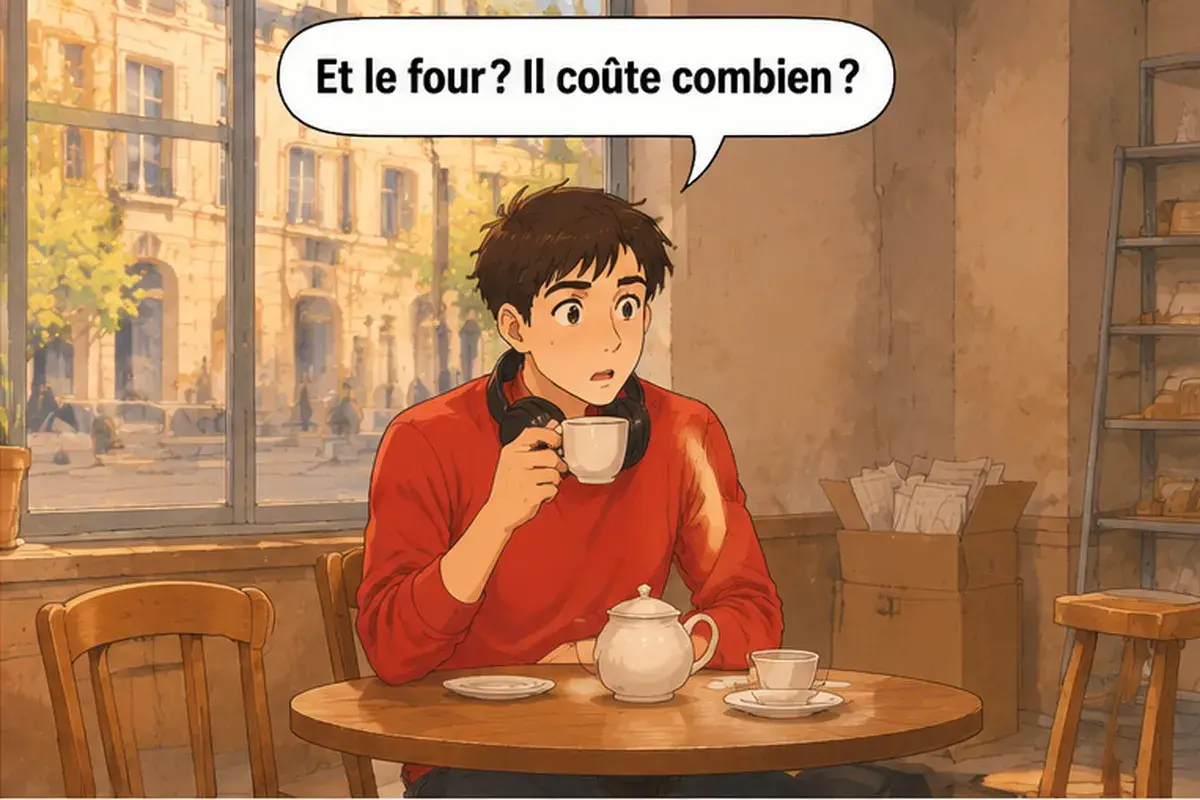
Et le four ? Il coûte combien ?
And the oven? How much does it cost?
- Camille
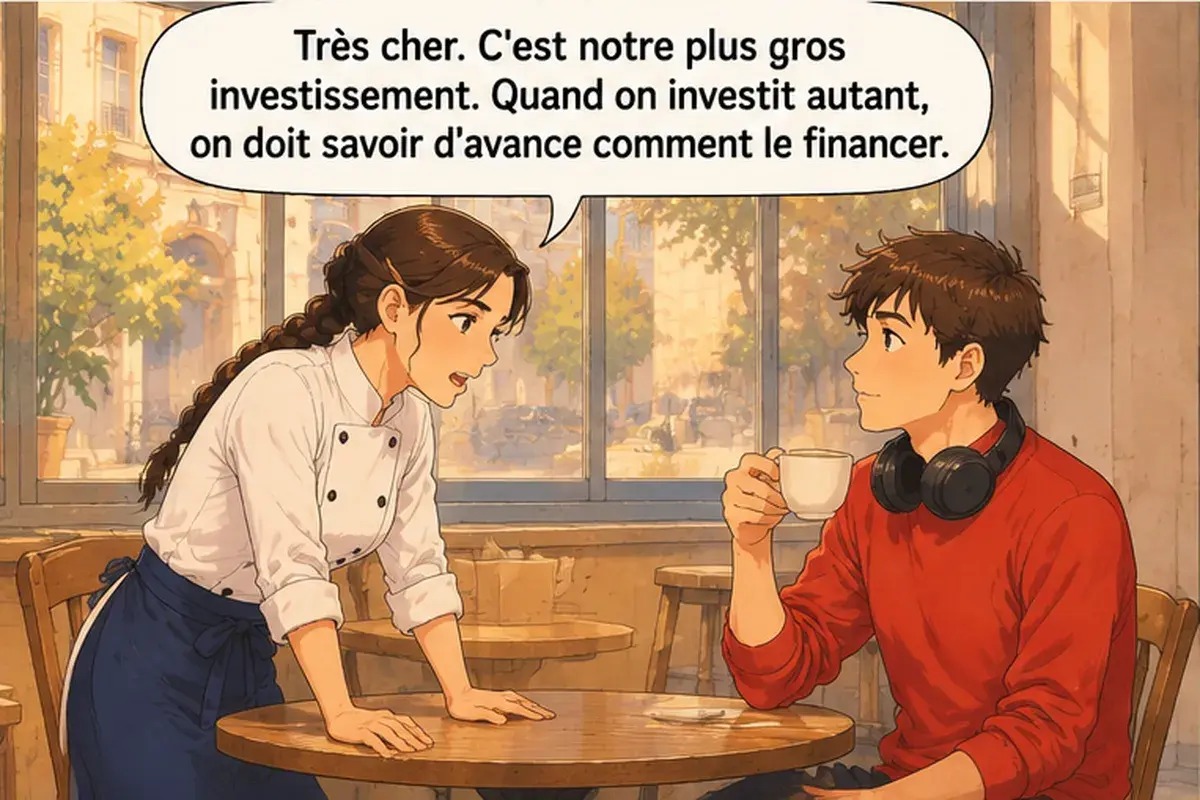
Très cher. C'est notre plus gros investissement. Quand on investit autant, on doit savoir d'avance comment le financer.
Very expensive. It's our biggest investment. When you invest that much, you have to know in advance how to finance it.
- Hugo
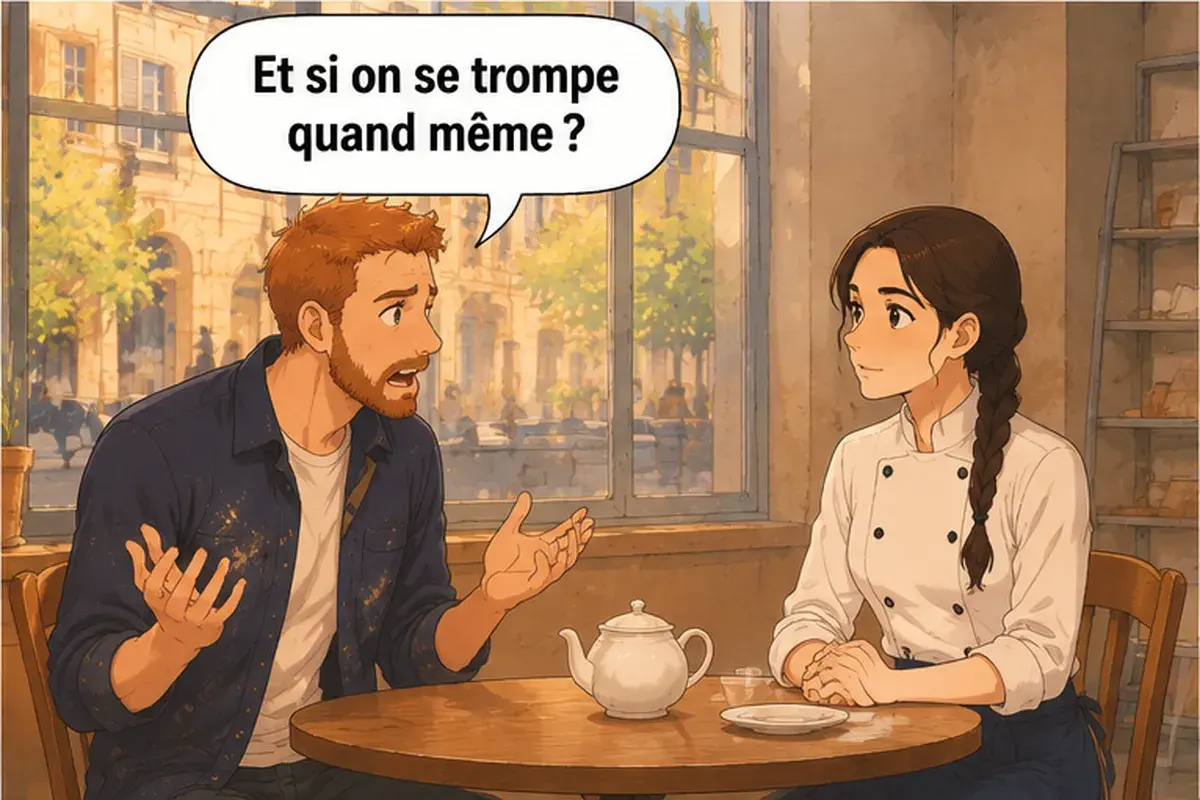
Et si on se trompe quand même ?
And what if we're wrong anyway?
- Camille
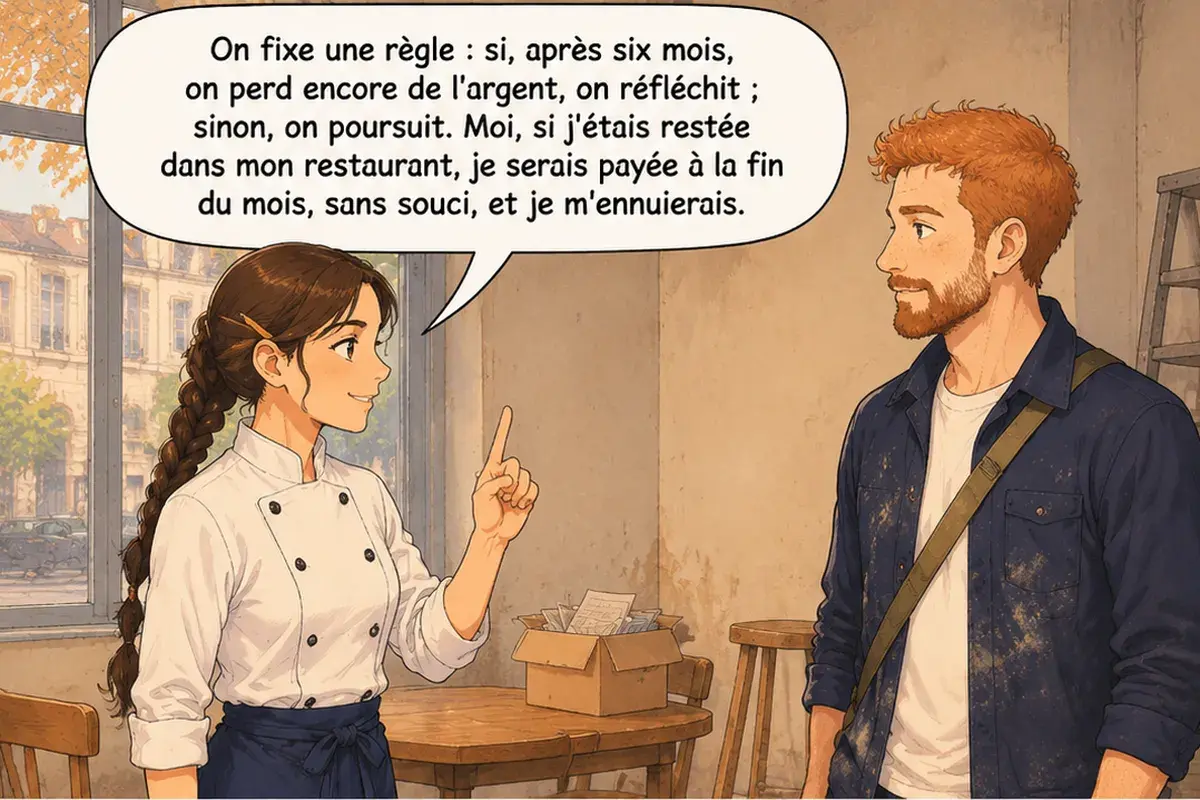
On fixe une règle : si, après six mois, on perd encore de l'argent, on réfléchit ; sinon, on poursuit. Moi, si j'étais restée dans mon restaurant, je serais payée à la fin du mois, sans souci, et je m'ennuierais.
We set a rule: if, after six months, we're still losing money, we think it over; otherwise, we continue. Me, if I had stayed in my restaurant, I'd be paid at the end of the month, no worries, and I'd be bored (woman speaking).

- Pacha
Alors vous avez une règle, un prévisionnel et une avocate. Il ne manque que le thé, et le thé, c'est moi qui l'ai.
So you have a rule, a forecast and a lawyer (to several people). All that's missing is the tea, and the tea, I'm the one who has it.
Grammar for this text
- J'ai passé deux samedis dans le froid à compter les gens qui passent — I spent two Saturdays out in the cold counting the people walking by.
passer+ a length of time +à+ a verb means to spend time doing something.les gens qui passentmeans people walking by. - Elle est pâtissière, mais elle compte comme une comptable. — She's a pastry chef, but she counts like an accountant.
pâtissièreis the feminine ofpâtissier;comptableis the same for a man and a woman, anduneshows it's a woman. - on n'a pas de fonds de commerce — we don't have an established business.
fonds de commerceis what makes a business alive: the name, the customers, the equipment. Thedand thesinfondsare silent. Hugo and Camille have none of it: everything starts from zero. - il faudra que les gens le goûtent — people will have to taste it.
il faudra queis followed by the subjunctive; for-erverbs theils goûtentform is the same as the normal one. - autrement, on jette celui d'hier — otherwise, we throw out yesterday's.
autrementmeans otherwise, and it's more formal thansinon;celui d'hiermeans yesterday's (bread). - elle m'a dit qu'il n'y avait pas de piège, mais que le loyer était lourd — she told me there was no trap, but that the rent was high. Reported speech in the past:
il n'y a pasbecomesil n'y avait pas,estbecomesétait. English shifts the same way.Maîtrebefore a surname is the title for a lawyer;bail commercialis a commercial lease. - Si on avait pris la rue d'à côté, le loyer aurait été moins lourd — If we had taken the street next door, the rent would have been lower. This is the past perfect plus the past conditional.
- si j'étais restée dans mon restaurant, je serais payée — if I had stayed in my restaurant, I'd be paid. This is the mixed case;
restéehas an -e because a woman is speaking.
Words and grammar of the unit: Talk about what would have happened if.
Learn the words from the texts with flashcards
In the app, you can tap any word in a text to see its translation, forms and examples, and new words stick with flashcards. 15 minutes a day.
Start for freeEverything is open for free. No card needed to sign up.